
Padel vs Pickleball: Which Racket Sport Should You Play?
The two fastest-growing racket sports on the planet — compared head to head on courts, rules, cost, learning curve, and which one fits your life.
Quick Navigation
If you have played any racket sport in the last few years, you have heard the buzz: padel is taking over Europe, the Middle East, and Latin America, while pickleball has become a genuine cultural phenomenon in the United States. Both are growing at a pace the sports world rarely sees. Both are social, beginner-friendly, and wildly fun. And both are competing for the same thing — your free evenings.
So which one should you actually pick up? The honest answer is that they are very different sports that happen to share a moment. Padel is an enclosed, wall-based doubles game with tennis-style scoring and a premium club culture. Pickleball is an open-court game with its own quirky scoring system, played on a compact court that fits almost anywhere, with a famously low barrier to entry.
This guide breaks down every meaningful difference — courts, equipment, rules, learning curve, fitness benefits, cost, and growth trends — so you can make the right call for your situation. No hype, no filler.
Head-to-Head Comparison Table
| Feature | Padel | Pickleball |
|---|---|---|
| Court size | 20 m × 10 m (66 × 33 ft) | 13.4 m × 6.1 m (44 × 20 ft) |
| Enclosed? | Yes — glass walls + mesh, walls in play | No — open court, like tennis |
| Players | Doubles only (almost always) | Singles or doubles |
| Scoring | Tennis scoring: 15–30–40, games, sets (Star Point at deuce since 2026) | Rally-style to 11, win by 2 (only serving side scores in traditional rules) |
| Serve | Underhand, ball bounced first, into diagonal box | Underhand, below waist, into diagonal box |
| Racket / paddle | Solid padel racket, 45.5 cm max, perforated face, wrist strap mandatory | Solid pickleball paddle, shorter and wider, no strings |
| Ball | Pressurized, slightly lower pressure than tennis | Perforated plastic (wiffle-style), indoor/outdoor variants |
| Signature shot | Off-the-wall returns, bandeja, vibora | Dinks, third-shot drops, kitchen play |
| Learning curve | Easy rallies fast; walls take time | Very easy — most rally within 30 minutes |
| Typical session | 90 minutes, 4 players, one court | 60–90 minutes, rotating games, many players |
| Starter equipment cost | Higher (racket €80–150+) | Lower (paddle $30–60 starter sets common) |
| Court access | Purpose-built clubs, booking platforms | Parks, gyms, converted tennis courts everywhere (US) |
| Strongest regions | Spain, Middle East, Latin America, now UK/Scandinavia | USA by far, growing in Canada, UK, Australia |
Court & Equipment Differences
The court is where the two sports diverge most dramatically — and it shapes everything else about how each game feels.
Padel: The Glass Cage
- 20 m × 10 m enclosed court — roughly a third the size of a tennis court
- Surrounded by glass walls (3 m high at the back) and metal mesh panels
- Walls are in play: after the bounce, the ball can rebound off glass and stay live
- Net height: 88 cm at center
- Surface: artificial turf, usually sand-dressed
- Building a court costs tens of thousands — they only exist at purpose-built clubs
Pickleball: The Open Court
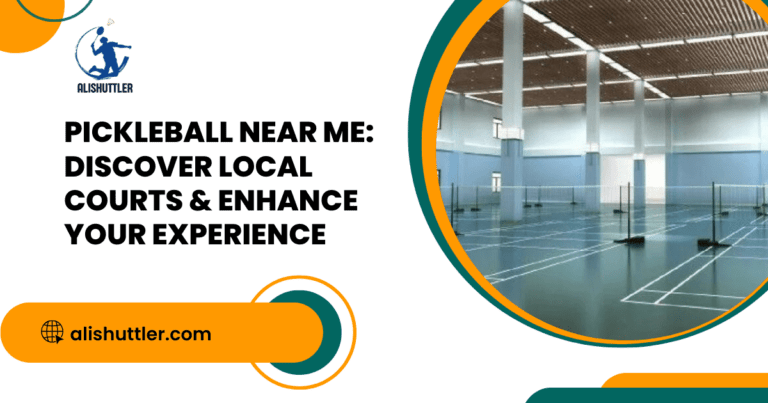
- 13.4 m × 6.1 m (44 × 20 ft) — about a quarter of a tennis court
- Open court, no walls; played like a shrunken tennis court
- A 2.13 m (7 ft) non-volley zone (“the kitchen”) on each side of the net
- Net height: 91 cm at sidelines, 86 cm center
- Surface: hard court, gym floor, or converted tennis/basketball courts
- Courts can be taped onto almost any flat surface — parks, driveways, gyms
The wall is padel’s defining feature and its biggest tactical layer. Shots that would be winners in any other racket sport stay alive in padel — the ball kisses the glass and comes back into play, rewarding anticipation and turning defense into attack. It also means rallies last longer and the game has a distinctive rhythm: hard shots, wall rebounds, lobs to reset, then attack again. Players describe it as chess with smashes.
Pickleball’s defining feature is the opposite: the kitchen. You cannot volley while standing in the non-volley zone, which kills the big-server, big-hitter dynamic and forces the game’s signature soft exchanges — dinks — delicate shots arcing just over the net. The result is a game of touch, placement, and patience punctuated by sudden speed-ups. The small court means even beginners can cover it, and the plastic ball travels slowly enough that rallies start immediately.
The Equipment
Padel rackets are solid-faced (no strings), up to 45.5 cm long, with a perforated hitting surface and a mandatory wrist strap. They come in round, teardrop, and diamond shapes, weigh 340–390 g, and use carbon fiber faces with EVA foam cores — closer to a high-tech composite tool than a toy. A decent beginner racket starts around €80–100 (Decathlon’s Kuikma range disrupted this segment), while tour-level rackets run €250–400. Padel balls look like tennis balls but are manufactured at slightly lower internal pressure.
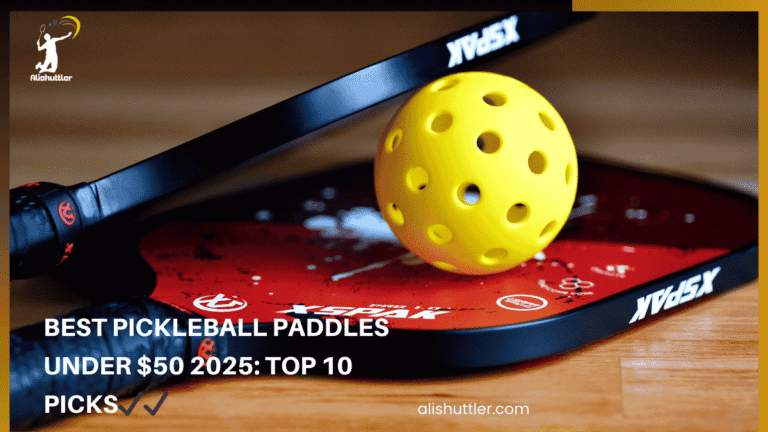
Pickleball paddles are shorter, wider, and lighter — typically 40 cm long, 200–230 g, with a honeycomb polymer or Nomex core and a fiberglass, carbon, or graphite face. There are no strings and no holes (unlike padel). Entry-level paddles cost $30–60, and even premium paddles rarely exceed $150–200. Pickleballs are perforated plastic — outdoor balls have smaller, more numerous holes for wind resistance; indoor balls have larger holes for a softer game. They cost a few dollars each and last a long time.
Rules & Scoring Compared
Padel Scoring: Tennis DNA, With a 2026 Twist
Padel uses the scoring system tennis players know by heart: points go 15–30–40–game, games build to sets (first to 6, two-game margin, tiebreak at 6–6), and matches are best of three sets. Serves are underhand — the ball must be bounced and struck below waist level into the diagonally opposite service box.
The big 2026 change: the Star Point replaced the golden point. At deuce (40–40), instead of the receiving team choosing which side to receive from, the serving position is now prescribed based on the points played in the game — a move by the International Padel Federation to remove the receiver’s structural advantage. A second 2026 change tightened the serve: the ball may not cross any court line in the air before the receiver contacts it, outlawing extreme slice serves that bent around the service box.
Walls add padel’s unique rules layer: the serve must bounce before touching any wall, but after the serve, balls may rebound off the glass and remain live. Players can even leave the court through side gates to chase down balls — producing some of the sport’s most spectacular rallies.
Pickleball Scoring: Quirky but Simple
Pickleball scoring confuses newcomers for exactly one session, then clicks forever. Games go to 11 points, win by 2. Under traditional rules, only the serving side can score — if the receiving side wins the rally, they win the serve (a “side out”) but no point. This is the single strangest rule for converts from other sports, and it creates long, tactical service rotations.
The score is called as three numbers — server’s score, receiver’s score, then server number (1 or 2, since in doubles each partner serves except on the first service of the game). So “4–2–1” means: serving team has 4, receiving team has 2, first server. It sounds like algebra; in practice you pick it up within a game or two.
Serves are underhand, struck below the waist, into the diagonal box — and must clear the non-volley zone. The famous double-bounce rule requires each side to let the ball bounce once on the first two shots of the rally (serve and return), which prevents serve-and-volley domination and guarantees the soft game develops.
Which Is Easier to Learn?
Both sports market themselves as beginner-friendly, and both are telling the truth — but in different ways and on different timelines.
Pickleball: The 30-Minute Sport
Pickleball has arguably the fastest path to a real rally of any racket sport. The court is small, the paddle is short and forgiving, and the plastic ball floats slowly through the air — slow enough that a complete beginner can track it, position themselves, and make clean contact within minutes. Most new players are sustaining rallies inside their first half hour. The underhand serve is easy, the double-bounce rule slows the game down for everyone, and the kitchen prevents stronger players from simply smashing beginners off the court.
The learning ceiling, though, is real. Dinking — the soft touch game at the net — takes months to develop. Third-shot drops, resets, and the transition game separate casual players from strong ones. But the genius of pickleball is that you don’t need any of that to have fun on day one.
Padel: Easy Rallies, Tricky Walls
Padel is also easy to start. The court is small, serves are underhand, and the enclosed walls mean the ball stays in play longer — beginners get more hits per rally and fewer frustrating chases. Four beginners can have a genuinely enjoyable game within their first session, especially since padel is essentially always doubles, so a weaker player is carried by the team dynamic.
But padel has a second learning curve: the walls. Using the glass — letting balls rebound, playing off the back wall, defending with the walls — is a genuine skill that takes months. Beginners tend to treat the walls as obstacles; intermediate players treat them as teammates. Until the walls click, you’re playing maybe 70% of the sport.
Which Is Better Exercise?
Both will get your heart rate up, but they tax the body differently.
Padel: The Athlete’s Workout
Padel is the more physically demanding of the two. The court is bigger, the rallies are longer (walls extend points), and the movement is more explosive — hard lateral slides, quick recoveries, overhead smashes, and constant repositioning. A competitive 90-minute padel session is a serious interval workout: studies of racket sports consistently rank padel’s intensity above pickleball’s, with higher average heart rates and more distance covered per session. The overhead game (bandejas, viboras, smashes) also engages the shoulders and core far more than pickleball’s mostly waist-high exchanges.
The trade-off is impact. Padel’s hard stops and direction changes stress knees and ankles — proper court shoes with lateral support are genuinely important, not optional. Elbow and shoulder overuse injuries are also more common in padel because of the smash-heavy attacking game.
Pickleball: The Sustainable Workout
Pickleball’s exercise profile is moderate intensity, high consistency — and that consistency is its superpower. The small court means less sprinting, the plastic ball means softer impacts, and the kitchen-centered game means many rallies happen in a confined space with quick, short movements. It’s easier on joints than almost any other racket sport, which is a major reason it caught fire with the 50+ demographic.
Don’t mistake “joint-friendly” for “not a workout.” Competitive pickleball — fast hands battles, aggressive drives, covering the court in doubles — burns serious calories and demands real agility. But the floor is lower: you can play a relaxed social game that barely elevates your heart rate, or a tournament-intensity game that leaves you wrecked. The sport scales to the players.
Cost Comparison
Money matters, and here the two sports live in different brackets.
Equipment Costs
| Item | Padel (approx.) | Pickleball (approx.) |
|---|---|---|
| Beginner racket / paddle | €80–150 | $30–60 |
| Intermediate | €150–250 | $60–120 |
| Premium / tour-level | €250–400 | $120–200 |
| Balls (pack) | €8–12 (3 pressurized balls) | $8–12 (3–6 plastic balls, last much longer) |
| Shoes (court-specific) | €80–160 | $60–130 (many use existing court shoes) |
| Typical starter total | €170–320 | $100–200 |
Padel balls are pressurized and go flat — regular players replace them frequently. Pickleballs are plastic and essentially last until they crack, which takes a long time. Over a year of regular play, the ball-cost gap is meaningful.
Court & Session Costs
This is where geography decides everything. Padel requires a purpose-built court — glass walls, turf, enclosure — costing tens of thousands to build. You play at clubs, you book through platforms like Playtomic, and you pay per court per hour. In padel hotspots like Dubai, peak rates run roughly AED 300–500 per court per hour (split four ways, that’s AED 75–125 per player); off-peak can drop to AED 150–250. In Spain, padel’s heartland, municipal courts can be far cheaper; in newer markets like the UK, expect premium pricing while supply catches up.
Pickleball courts are nearly free to create. Lines taped on a tennis court, a portable net ($100–300 for a good one), and you’re playing. In the US, thousands of parks, community centers, and gyms offer free or near-free open play — many players’ only cost is showing up. Dedicated pickleball facilities with paid courts exist and are growing, but the sport’s culture is built on accessible public play in a way padel’s simply isn’t.
Which Is Growing Faster?
Both sports are growing at rates that make traditional sports executives dizzy — but in different places and in different ways.
Padel: The Global Build-Out
Padel’s growth story is about infrastructure. From its strongholds in Spain, Argentina, and Mexico, it has expanded into the Middle East, Scandinavia, the UK, and increasingly the US. Industry estimates put the global court count in the tens of thousands and climbing fast, with roughly a quarter of all courts added in a single recent year. The player base is estimated in the tens of millions globally — though, as with all racket-sport statistics, treat exact figures with caution.
What makes padel’s growth distinctive is the investment cycle: courts cost serious money to build, so growth is funded by clubs, developers, and hospitality groups betting on premium pricing and high utilization. The Middle East exemplifies this — the UAE alone counts roughly 950+ padel courts, with Saudi Arabia above 1,100, as luxury developments, hotels, and standalone clubs race to capture demand. The professional Premier Padel tour (25 events in 2026, including P1 stops in Riyadh, Kuwait, and Dubai) gives the sport a media product to sell alongside the grassroots boom.
Pickleball: The American Wildfire
Pickleball’s growth story is about people, not buildings. In the United States, participation estimates run into the tens of millions, with the sport repeatedly topping “fastest-growing sport in America” rankings for several consecutive years. The growth engine is accessibility: anyone can tape lines on a tennis court, paddles cost $30, and parks departments across the country have converted underused tennis courts by the thousand.
Pickleball’s professional scene — Major League Pickleball and the PPA Tour — has attracted celebrity owners, TV deals, and genuine prize money, but the sport’s center of gravity remains recreational. The demographic story is the headline: while it started with older players, the fastest-growing segments are now younger adults, and the social, doubles-heavy format has made it a default weekend activity in countless American suburbs.
Padel in the Middle East vs Pickleball in the USA
Where you live may decide for you — the two sports have almost mirror-image regional footprints.
Padel: Made for the Gulf
The Middle East — and the UAE in particular — is arguably padel’s most dynamic market outside Spain. Several forces converge: a large expat community already familiar with the sport, a climate that rewards indoor, air-conditioned venues (and the capital to build them), a culture of premium club and lifestyle sports, and booking platforms like Playtomic making court discovery frictionless. Dubai’s padel scene includes everything from rooftop hotel courts to the world’s first floating padel courts at JLT, with median peak rates around AED 247 per hour.
The Premier Padel P1 Dubai (November, at the Hamdan Sports Complex) has become a fixture — a week where the world’s best players compete in front of Gulf crowds, cementing the region’s status in the sport’s global calendar alongside stops in Riyadh and Kuwait. For a UAE resident, padel isn’t an emerging curiosity; it’s an established, well-served sport with deep infrastructure.
Pickleball: America’s Default
In the United States, pickleball’s penetration is on another level entirely. Dedicated facilities are opening in every metro area, parks departments have embraced it, and the social infrastructure — leagues, ladders, open-play sessions, tournaments for every level — is mature. Equipment is available in every sporting goods store, and the media ecosystem (podcasts, YouTube channels, instructional content) is enormous.
Outside the US, pickleball is growing but from a much smaller base — the UK, Canada, and Australia have active scenes, and Asia is waking up, but nothing approaches American density. In the Gulf, pickleball exists but is dwarfed by padel’s head start and investment.
Who Should Choose Which: The Decision Framework
Forget brand loyalty — run through these questions honestly and the answer usually picks itself.
Choose PADEL if…
- You love tennis — padel’s scoring, tactics, and shot-making feel like tennis distilled and intensified
- You want the harder workout — bigger court, longer rallies, more smashing
- You live in the Middle East, Spain, or Latin America — the infrastructure is already there
- You enjoy tactical depth — walls, lobs, bandejas, and positioning chess
- You always play doubles — padel is a four-player sport by design, perfect for a fixed group of friends
- Budget isn’t the constraint — you’re comfortable with club pricing and €150+ rackets
- You want a sport that keeps unfolding — the wall game takes years to master
Choose PICKLEBALL if…
- You want to play this weekend — fastest path from zero to real rallies
- Budget matters — $50 gets you started; free courts are everywhere (US)
- You live in the USA — the community density is unmatched
- Joints are a concern — the most joint-friendly racket sport going
- You like big social groups — rotating 8–12 players through quick games is pickleball’s native format
- You want singles options — real singles pickleball exists; singles padel barely does
- You value touch over power — the dink game rewards finesse and patience
The One-Line Test
Ask yourself: “Do I want the sport that feels like an athletic duel in a glass cage, or the sport I can teach my parents in an afternoon?” The first is padel. The second is pickleball. Both answers are excellent.
Can You Play Both?
Absolutely — and many racket-sport obsessives do. But go in with your eyes open about the technique conflicts:
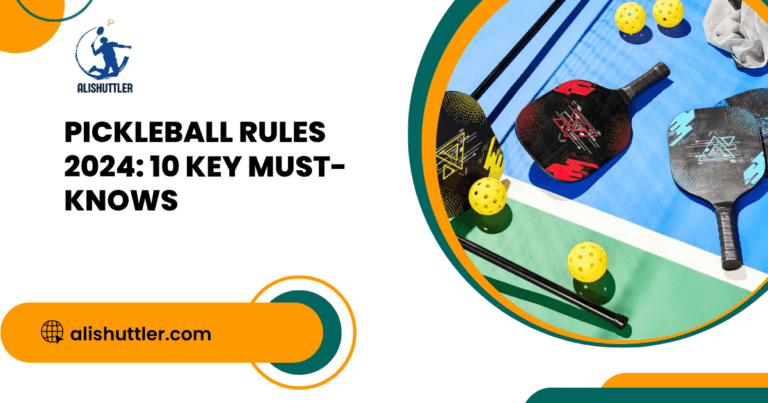
- The kitchen vs. the net: Pickleball trains you to stay out of the non-volley zone; padel rewards aggressive net play and overheads. Switching between the two requires a mental reset each session.
- Touch vs. power: Pickleball’s dink game develops soft hands that actually help padel’s touch shots — but padel’s smash-heavy instincts can make you impatient in pickleball rallies.
- Footwork patterns: Padel’s lateral slides and wall recoveries differ from pickleball’s short, kitchen-centered steps. Your legs will adapt, but expect a session or two of feeling clumsy when switching.
- Equipment: No crossover — you need a full separate setup for each sport.
The players who thrive at both tend to be strong all-court athletes who enjoy the contrast: padel for intensity and tactics, pickleball for social volume and touch. If you have the time and budget, playing both makes you a more complete racket-sport player — each sport exposes habits the other punishes.
→ Browse Padel Rackets for Every LevelFrequently Asked Questions
Padel is more physically demanding and tactically complex — the walls, the bigger court, and the smash-heavy attacking game ask more of beginners as they improve. Pickleball has the gentler learning curve and is easier on day one. Both are easy to start; padel asks more long-term, which many players find more rewarding.
Pickleball, by a wide margin. A beginner pickleball setup costs roughly $100–200 total, and courts are often free (especially in the US). Padel starter equipment runs €170–320, balls need frequent replacement, and court time at clubs typically costs €/AED 40–125 per player per session depending on region and peak hours.
Tennis players adapt to padel fastest — the scoring, tactics, and stroke mechanics transfer directly; the main adjustments are the walls and the underhand serve. Tennis players picking up pickleball must unlearn power habits: the plastic ball and kitchen rules punish big hitting and reward the soft game, which frustrates power players for the first few weeks.
Padel delivers the harder workout per hour — more sprinting, longer rallies, overhead smashing, and greater distance covered. Pickleball is the more sustainable, joint-friendly option that players can enjoy for decades. Competitive pickleball is still a real workout; casual pickleball barely elevates the heart rate. Choose intensity (padel) or longevity (pickleball).
Pickleball leads in absolute player growth, driven overwhelmingly by the United States. Padel leads in infrastructure investment and geographic spread — new courts are rising across the Middle East, Europe, and Latin America, backed by the professional Premier Padel tour. They’re growing in different places more than competing head-to-head — for now.
For padel, yes — proper court shoes with lateral support and herringbone outsoles matter because of hard lateral slides on abrasive turf; ankle rolls are the sport’s most common injury. For pickleball, any decent court shoe works for most players, though dedicated pickleball shoes offer better lateral stability for competitive play.