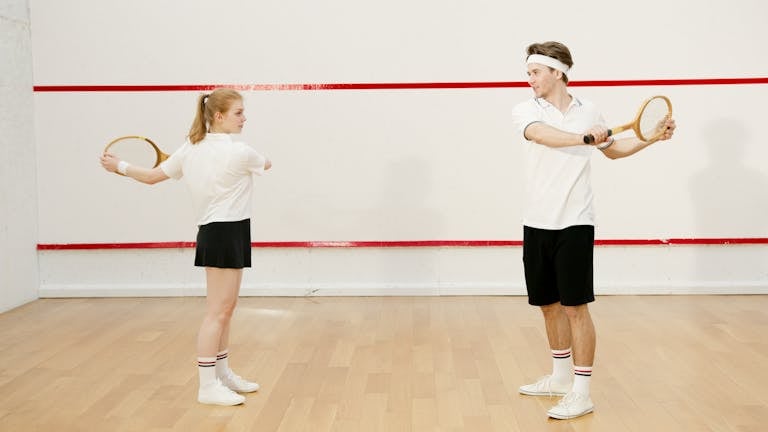
Your first squash shoe is the most important equipment decision you will make this year — more important than the racket. Squash movement is lunges to the front corners, hard sideways cuts and constant turning on a wooden floor, and it is done in a shoe built for exactly that: a non-marking indoor outsole, real lateral support and a low, planted base. This guide ranks seven first court shoes for the adult beginner on the specifications their makers actually publish — stated weights with their size basis, named cushioning and support systems, and fit options in the makers’ own terms.
⚡ TL;DR — The Short Answer
For the best all-round first shoe, buy the ASICS Upcourt 6 — the entry model the specialist squash source SquashChamps points beginners to, with ASICS’ broad mesh paneling for a softer, adaptable fit and a non-marking gum-rubber outsole. The lightest maker-stated shoe here is the Mizuno Cyclone Speed 4 at 275 g on Mizuno’s own listing, a shoe Mizuno itself calls “the perfect first pair” for beginners, built on a completely flat, flexible sole. The only shoe here designed and described by its maker specifically for beginners is the Yonex Power Cushion Strider Flow — Yonex calls it an entry shoe that provides stability while minimizing wobbling. The grip-and-cushioning step-up is the Babolat Shadow Spirit 2 (295 g in an EU 42.5, as Babolat states it, with a Michelin indoor outsole), the structured-support card is the Victor A170 II, the widest stable base is the Mizuno Thunder Blade Z, and the stability step-up is the ASICS Gel-Tactic 12 with its TRUSSTIC midsole.
Quick Picks — Best Squash Shoes for Beginners at a Glance
ASICS’ entry indoor shoe: broad mesh paneling for a softer, adaptable fit, midfoot support panels and a non-marking gum-rubber outsole.
275 g as Mizuno states it and a completely flat, flexible sole — Mizuno calls it the perfect first pair of shoes for beginners.
Described by Yonex as an entry shoe for beginner and indoor shoe users, built to provide stability while minimizing wobbling.
295 g in EU 42.5 per Babolat, a rocker-shaped EVA midsole and a Michelin rubber outsole developed for all indoor courts.
An EVA + ENERGYMAX + Nylon Sheet midsole and Victor’s U-Shape 3.0 last — the most structured build at the entry end of this guide.
A wide outrigger forefoot and a TPU midfoot stabilizer, per Mizuno — positioned by Mizuno’s retail partners as the ideal entry-level shoe.
TRUSSTIC midsole stability and GEL cushioning in the forefoot and rearfoot, per ASICS — the step-up once you know you will play weekly.
In This Guide
The Beginner Decision: A Court Shoe First, Everything Else Second
Most beginners make the same first mistake: they walk onto a squash court in whatever trainers they already own. The construction of those shoes argues against it, in the makers’ own terms. A running shoe is built around forward motion — a raised, cushioned heel, a sole shaped to roll from heel strike to toe-off, and tread patterned for grip in one direction. Squash movement is the opposite of that brief. You split-step at the T, drive sideways, lunge long and low into the front corners, land on the outer edge of the foot, and turn — dozens of times a game, on a polished indoor floor. A court shoe is built for that movement instead: a low, flat base that keeps the foot planted rather than perched, a non-marking gum-rubber outsole that grips a wooden court without scuffing it (most clubs require non-marking soles outright), lateral support across the midfoot and forefoot for the sideways load, and an upper reinforced where a lunging player drags the inside of the shoe along the floor. Every card in this guide publishes that construction in its maker’s own specification — that, and not the sport printed on the box, is what qualifies a shoe for a beginner’s first season of squash.
This guide is deliberately narrower than our all-player ranking. The best squash shoes pillar owns the full selection — every level, every playing style, ranked for all players — and the best squash shoes for women guide owns its segment in the same way. Both are summarised here and linked, and none of their models is re-carded below. What this page owns is the first-shoe decision only: seven shoes a beginner can buy with confidence, chosen because their makers publish something specific for a new player — a beginner positioning stated by the maker itself, an entry-level construction, a stated weight a first-time buyer can actually compare, a fit menu that includes real options. If you are buying the rest of your first kit at the same time, our ranking of best squash rackets for beginners applies the same maker-spec discipline to frames, and if your game is at the stage where you are still learning the movement these shoes are built for, start with our guide on how to play squash. At the other end of the experience ladder, our best squash shoes for seniors guide covers the stability-and-fit decision for senior players — the two guides share no product cards.
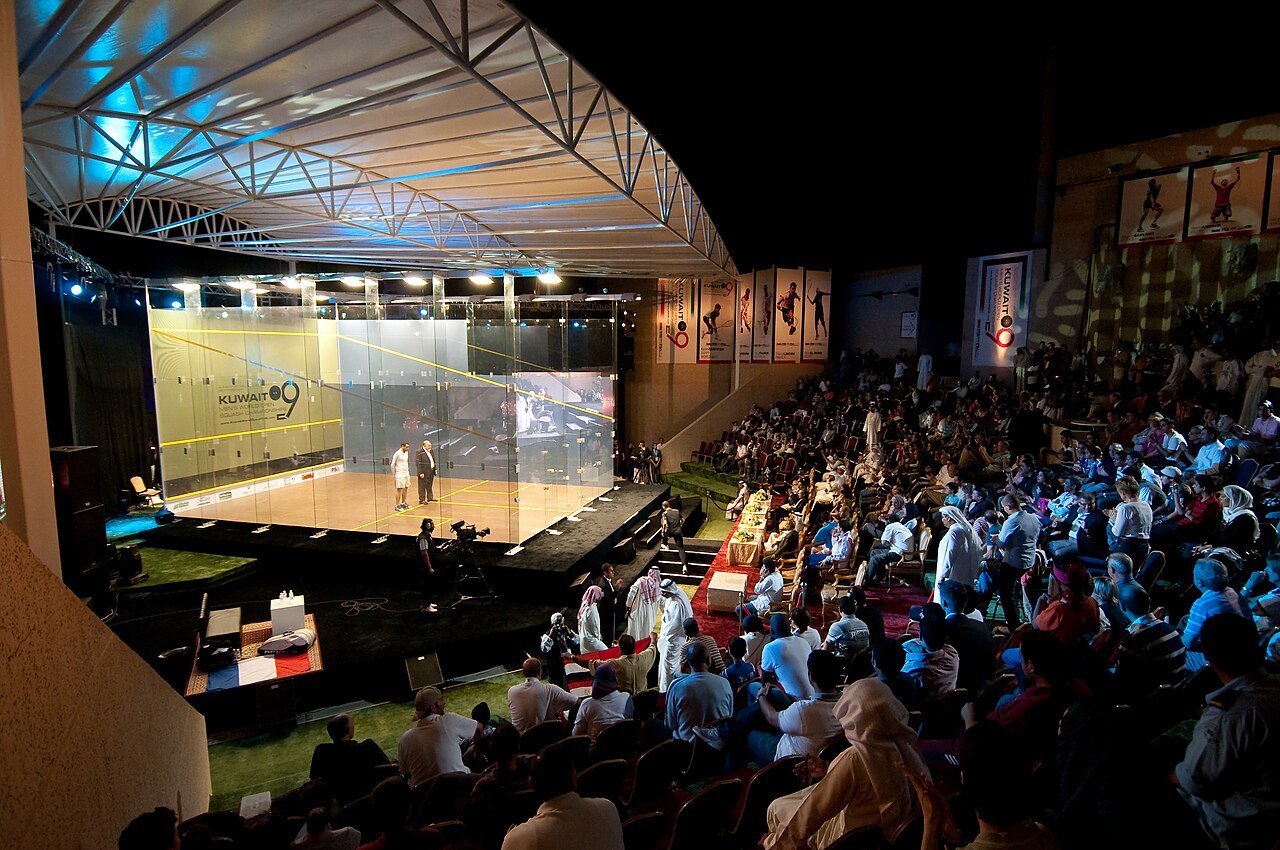
One honest word on crossovers, because it shapes this whole list. Squash is a small footwear market, and most of the world’s best indoor-court shoe engineering is published under badminton and all-court indoor lines. ASICS, to take the clearest example, sells no dedicated squash line at all — the specialist squash source SquashChamps makes exactly this point in its ASICS model comparison, noting that several of the brand’s indoor court shoes, from entry models upward, are the ones squash players actually wear. Five of the seven cards below come from badminton or all-court indoor lines (both Mizuno cards, the Babolat, the Victor and the Yonex) and two are ASICS indoor court models with long squash followings. That is not a compromise to apologise for — it is where the beginner court-shoe market actually lives, and it is why this guide judges every card on published construction: a non-marking indoor outsole as the maker states it, a named cushioning system, lateral support described in engineering terms, and a fit you can check before you buy.
Reading the Spec Sheet: Non-Marking, Weights and Fit Menus
“Non-marking” is the first line to check. It is the maker’s statement that the outsole rubber will not leave scuff marks on an indoor court, and most squash clubs require it as a condition of playing. Makers state it in their own words — a non-marking gum-rubber outsole (ASICS’ entry line, per its specification), a non-marking rubber outsole for strong grip (Mizuno’s Thunder Blade Z page), Michelin rubber developed for all indoor courts (Babolat). Read the outsole chip on each card as the maker’s own description, because that is what it is, and before buying any indoor shoe, confirm the current listing for your colourway states the outsole your court requires — compounds and descriptions change between production runs.
Weight, with its basis. A shoe weight is only comparable when you know the size it was weighed in and who published it. In this guide, two makers state a weight with a basis you can use: Babolat states 295 g in an EU 42.5 for the Shadow Spirit 2, and Mizuno states 275 g for the Cyclone Speed 4 on its own store listing without naming a size basis — we print both exactly that way. Three makers here (ASICS, Yonex and Victor) publish no weight at all for these models; where that happens the card says so plainly, and any number printed comes from a named specialist source, labelled as estimated. A beginner does not need the lightest shoe in the shop — but a maker that prints its weight, with its basis, is giving you the more useful number, whatever it says.
Cushioning is a name; support is a structure. The cushioning line on a spec sheet (EVA, GEL, POWER CUSHION, ENERGYMAX) describes what sits under the foot. The support a squash lunge actually loads comes from structures: a TRUSSTIC application in the midsole (ASICS’ Gel-Tactic 12), a TPU stabilizer and a wide outrigger forefoot (Mizuno’s Thunder Blade Z), a Lateral Shell on the outer forefoot (Yonex’s Strider Flow), midfoot panels tied into the lacing system (ASICS’ Upcourt 6), a nylon sheet inside the midsole stack (Victor’s A170 II). The cards keep the two separate, so you can see which part of each shoe does which job — and a first shoe needs both jobs done, in that order of honesty: structure first, softness second.
Fit is a menu, not an adjective. “Comfortable fit” is marketing; a published last, width or construction is a fact. The fit facts in this guide are literal spec-sheet items: Victor builds the A170 II on its U-Shape 3.0 last, Mizuno lists the Cyclone Speed 4 in a standard Men’s-D width, Yonex shapes the Strider Flow with its Ergoshape toe design, and Mizuno flares the Thunder Blade Z’s forefoot into a wide outrigger — a wider base, note, which is a stability feature, not a wide fitting. Where a card offers no width option, the card says that too. For a first purchase, the practical fit checks are simple: room at the toes for the lunge, a heel that stays seated when you push sideways, and a midfoot that locks down without numbness. The cards tell you which published construction answers each one.
The 7 Best Squash Shoes for Beginners, Compared
Seven first court shoes, one shared brief — a non-marking indoor outsole as its maker states it, published support for squash’s lunging movement, and a fit a first-time buyer can verify before ordering. Read the card that matches your feet and your plans first.
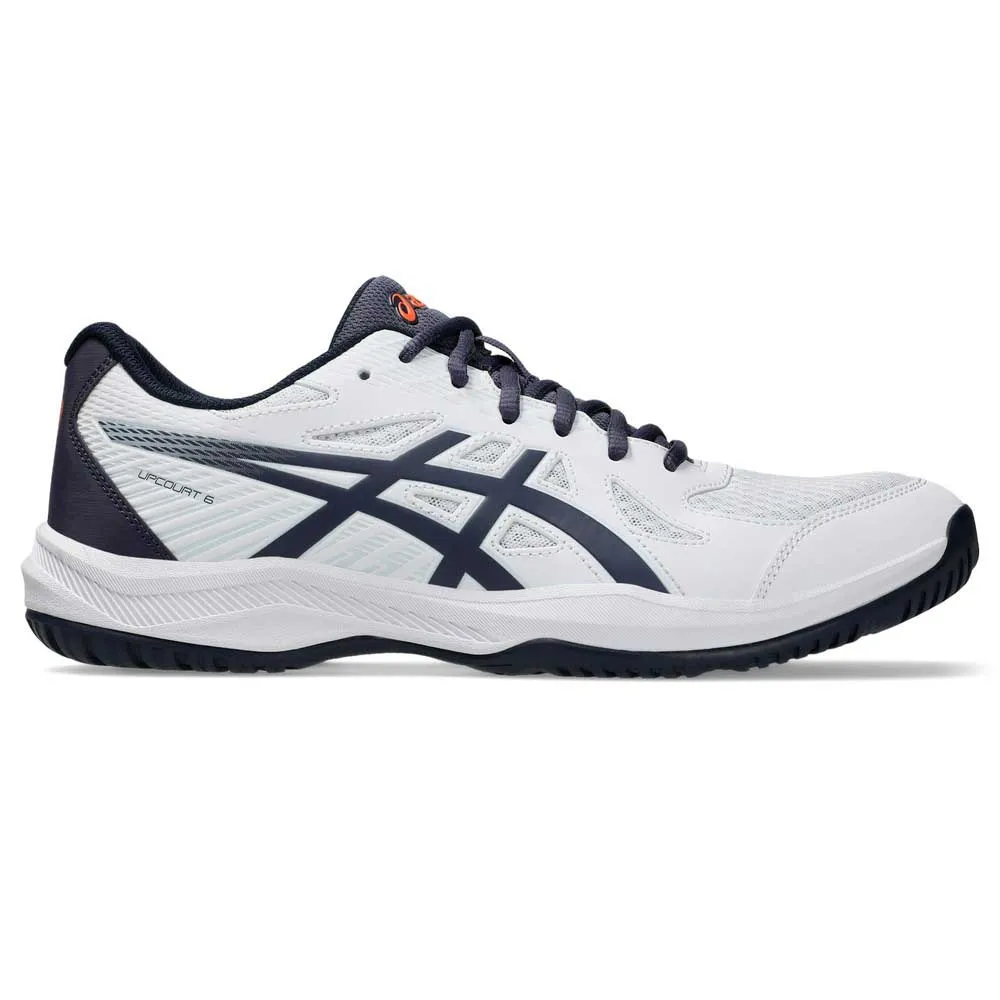
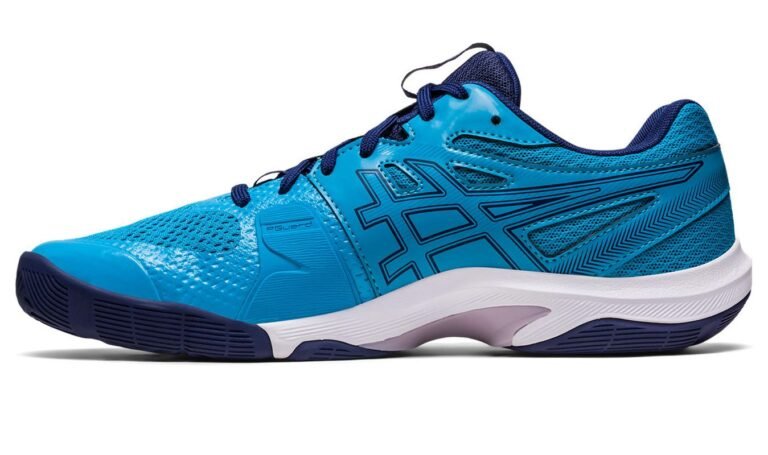
ASICS Upcourt 6
The default first squash shoe — ASICS’ entry indoor model, positioned for beginners by the specialist squash source SquashChamps, with a soft, adaptable mesh fit and a non-marking gum-rubber outsole.
Start where most beginners should start. ASICS describes the Upcourt 6 in its own words as a lightweight design that offers flexibility and a comfortable fit, and the specialist squash source SquashChamps, in its ASICS model comparison, positions it exactly where a first-time squash player needs it: an entry-level indoor shoe for beginners and casual players, with an EVA midsole, good basic traction from its non-marking gum-rubber outsole, and durability rated honestly as low-to-moderate — a first shoe, priced and built as a first shoe, not a flagship in disguise. For squash, that specification is the whole brief: a low, flexible court shoe that grips a wooden floor, leaves no marks on it, and lets a new player learn the lunge and the split-step without a stiff, heavy shoe arguing back.
The fit is the detail ASICS itself leads with. The upper carries a broad section of mesh paneling that helps create a softer and more adaptable fit, over breathable mesh underlays — a forgiving first-wear feel that suits a beginner whose feet are not yet conditioned to court shoes. Support is placed where a squash player loads it: per ASICS’ description, supportive panels in the midfoot integrate with the lacing system for stability during dynamic movements, and durable reinforcements cover the high-wear areas — the toe and inner forefoot zones a lunging player drags. The sockliner is produced with a solution dyeing process that ASICS states reduces water usage by approximately 33% and carbon emissions by approximately 45% compared with conventional dyeing. On weight, the transparency rule applies: ASICS publishes no weight for the Upcourt 6. SquashChamps puts it at around 10 to 11 oz — printed here as the specialist estimate it is, and consistent with ASICS’ own lightweight positioning. One fit note from ASICS retailer Road Runner Sports: the men’s version runs long, and it advises considering sizing down — treat that as retailer fit guidance and check the current size guide before ordering.
What we like
- Positioned for beginners by a specialist squash source, on ASICS’ own entry-level specification
- Broad mesh paneling for a softer, adaptable fit from the first session, per ASICS
- Midfoot support panels tied into the lacing system, plus reinforcements in the high-wear zones
- Non-marking gum-rubber outsole — the construction squash clubs ask for
Worth knowing
- ASICS publishes no weight; the ~10–11 oz figure is SquashChamps’ estimate, not an ASICS number
- The flexible mesh upper is the lightest structure in this guide — players who already know they want maximum lateral hardware should read the Gel-Tactic 12 card
As an Amazon Associate we earn from qualifying purchases.
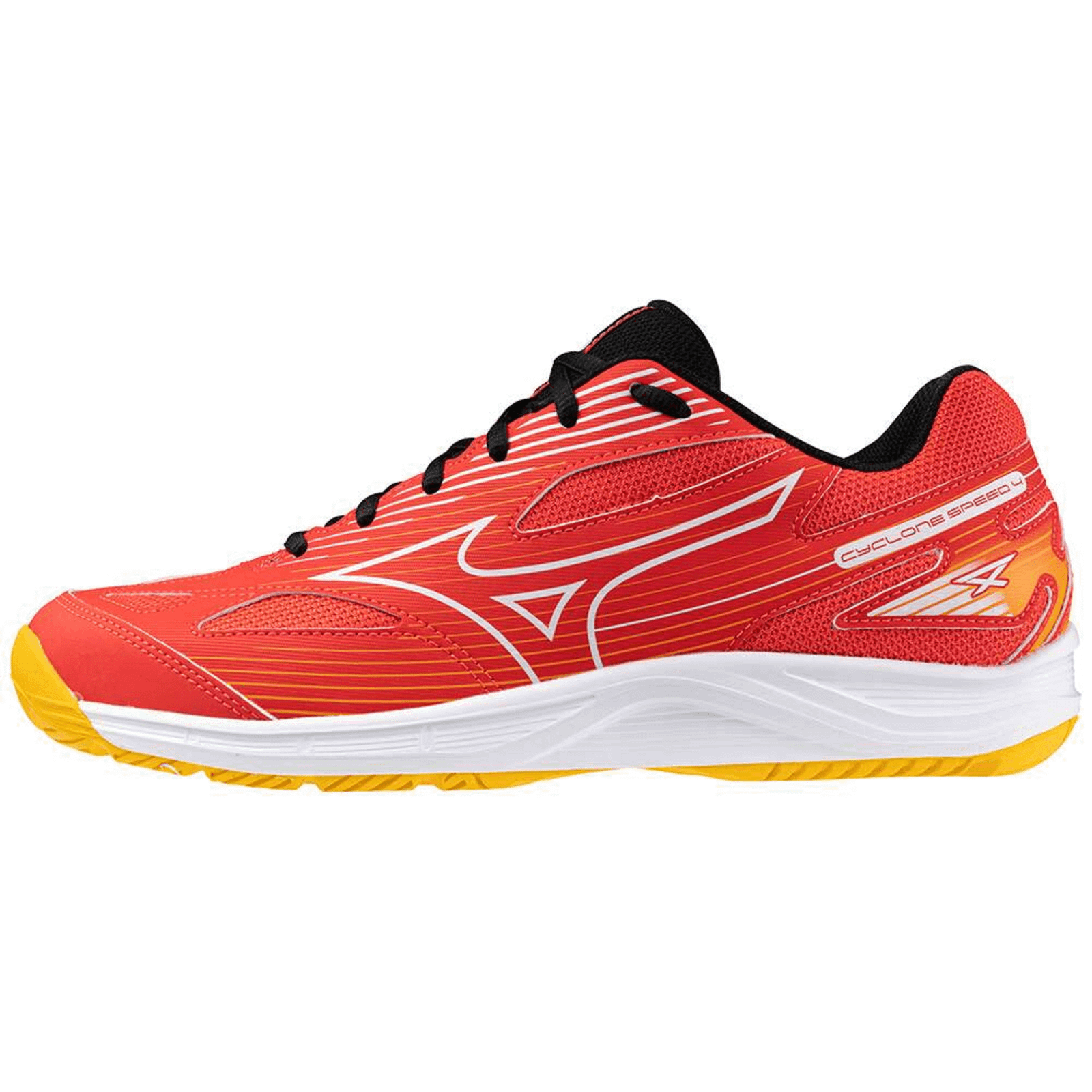
Mizuno Cyclone Speed 4
Mizuno’s own beginner shoe — “the perfect first pair” in Mizuno’s words — at a maker-stated 275 g, on a completely flat, flexible sole built to teach your feet the court.
No shoe in this guide states its beginner brief more plainly than this one. On Mizuno’s own store listing, the Cyclone Speed 4 is introduced as “the perfect first pair of volleyball shoes for beginners” — and while the sport named there is volleyball, the construction Mizuno publishes is precisely the indoor court construction squash asks for, which is why the card earns its place on construction rather than category. Mizuno’s stated benefit is excellent flexibility at the forefoot while still having amazing cushioning, designed so that players who are still developing their strength — Mizuno names beginners explicitly — can bend the shoe with light force and learn fundamental movement in it. For a new squash player, whose first months are mostly footwork, that published flexibility-first brief is a feature, not a compromise.
The numbers Mizuno does publish are the most complete at this end of the guide. The listing states a weight of 275 g — the listing does not state a size basis, and we print it exactly that way — making this the lightest maker-stated shoe here. The platform is low and flat: an 11.5 mm heel-toe measurement, a fully flat outsole with a rounded heel that Mizuno designs for a stable base and smooth heel contact, smooth bending grooves in the forefoot for flexibility, and rubber deliberately reduced to keep the shoe light. The midsole is an EVA Mizuno describes as soft and responsive, the upper combines artificial leather and mesh for durability with breathability, the fit is a standard Men’s-D width in a unisex build, and Mizuno states more than 50% recycled content in the upper’s synthetic leather. One disclosure, printed in the same spirit as the rest of this guide: the women’s squash shoe guide on this site cards the newer Cyclone Speed 5 Women — a different generation and a different shoe. This card is the Speed 4, carded on Mizuno’s own beginner positioning for this model. Mizuno lists no separate wide fit for it; wider feet should start with the Thunder Blade Z’s broader base or the Victor card.
What we like
- Mizuno itself positions the shoe for beginners — “the perfect first pair,” in its own listing
- 275 g as Mizuno states it: the lightest maker-stated weight in the guide
- A fully flat sole with forefoot flex grooves, built for learning movement, per Mizuno
- A complete published spec — weight, stack, width and materials — rare at the entry end
Worth knowing
- Mizuno’s listing states the 275 g weight without a size basis — compare it against other shoes’ weights with that in mind
- No separate wide fit is listed, and Mizuno reduced the outsole rubber to save weight — the lightest build here is also the least armoured
As an Amazon Associate we earn from qualifying purchases.
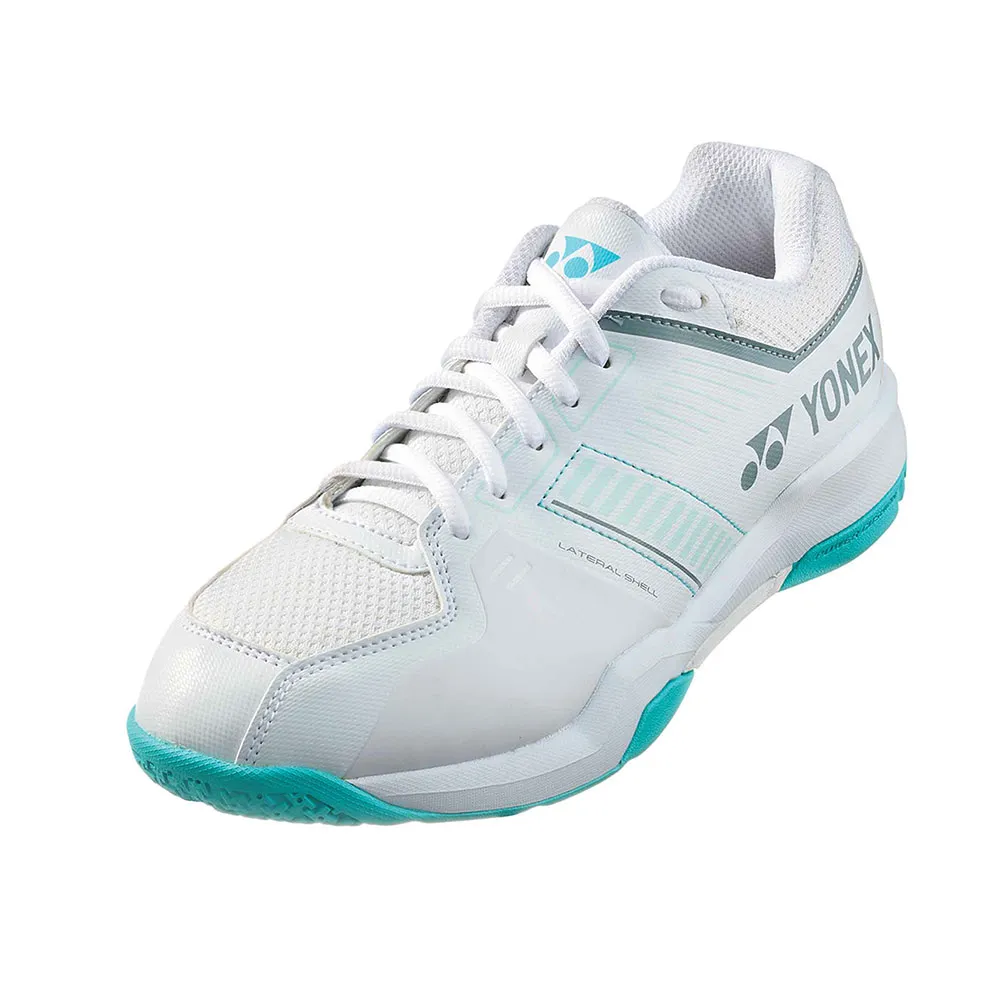
Yonex Power Cushion Strider Flow
The only shoe here its maker designed and described specifically for beginners — an entry shoe, in Yonex’s words, that provides stability while minimizing wobbling.
Every other card in this guide is an entry model a beginner can use. This one is an entry model a maker built for beginners on purpose, and said so. Yonex’s published description of the Power Cushion Strider Flow reads: “All-around model for beginner and indoor shoe users. Entry shoes that provide stability while minimizing wobbling.” That second sentence is the whole beginner problem stated by a manufacturer: a new player’s footwork is unsteady, their lunges land at imperfect angles, and the shoe’s first job is to keep the platform stable while they learn. Yonex answers it with construction, not cushioning claims — a Lateral Shell on the outer forefoot that supports the foot during sideways movement, an Ergoshape toe design shaped for a gentler, more comfortable fit at the front of the shoe, and a Round Sole edge profile designed so the shoe rolls through court movement without a sharp edge catching.
Underfoot, the midsole material is Yonex’s POWER CUSHION — the company’s long-running cushioning material, here in its entry application — over a One Piece Outsole in rubber with Yonex’s Radial Blade Sole grip pattern, the blade arrangement Yonex fits for grip in multiple directions; retailer spec tables carrying Yonex’s listing state a non-marking outsole. The published specification is plainly stated: upper of synthetic fiber, midsole of synthetic resin, rubber outsole, in sizes running from 22.0 to 31.0 cm on Yonex’s listing. On weight, the honest position, printed the same way as every card here: Yonex publishes no weight for the Strider Flow, so none is claimed. Judge this card on what Yonex does publish — the only beginner-specific design brief in the guide, from a maker whose court shoes are worn at the top of racket sport. If your first season will be spent drilling footwork and learning to lunge properly, this is the shoe whose maker designed it for exactly that stage.
What we like
- The only maker-stated beginner design brief here: stability while minimizing wobbling, per Yonex
- Lateral Shell support on the outer forefoot — structure aimed at the beginner’s sideways movement
- POWER CUSHION in an entry shoe, with a Radial Blade grip pattern and a one-piece outsole
- Ergoshape toe design for a gentler front-of-shoe fit, per Yonex
Worth knowing
- Yonex publishes no weight for this model — there is no maker number to compare
- It sells through racket-sport retailers rather than general sports stores in most markets — expect to order from a specialist
As an Amazon Associate we earn from qualifying purchases.
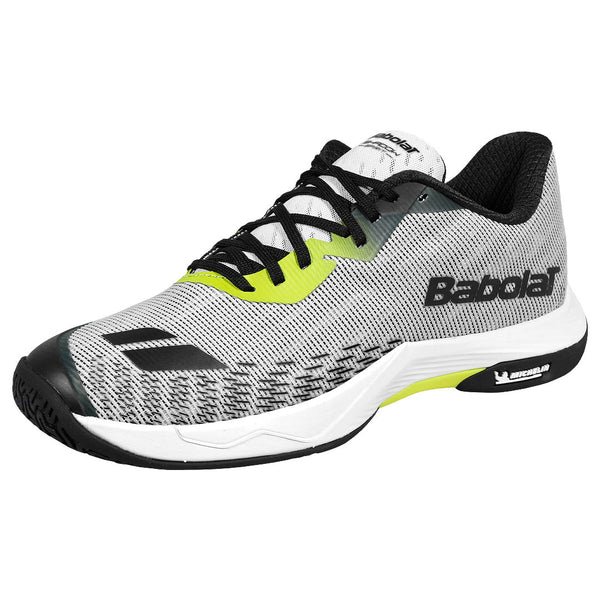
Babolat Shadow Spirit 2
The first step up from a first shoe — 295 g as Babolat states it, a rocker-shaped EVA midsole and a Michelin rubber outsole developed for all indoor courts.
If the first three cards are about starting, this one is about the beginner who has started — a few months in, playing twice a week, and ready for a shoe with more under it. Babolat states the cleanest weight claim in this guide: 295 g in an EU size 42.5, printed with its size basis attached. (Retailer Merchant of Tennis lists the same shoe at 10.4 oz in a US men’s 10.5 — the same figure in other units, which is what a consistent spec looks like.) Babolat describes the second-generation Shadow Spirit as supple, lightweight, breathable and flexible, built around an ultralight mesh upper that conforms to the contours of the foot — and one clarification for readers of our other guides: this is the Shadow Spirit 2, the comfort-and-dynamism model in Babolat’s indoor range, not the Shadow Tour 5 carded in our seniors guide. Different shoe, different brief, no overlap.
The engineering step-up is in the sole. Babolat says the sole design was completely redesigned for this generation: a rocker shape combined with the properties of the EVA midsole that, in Babolat’s description, lets you transition from a defensive phase to an attacking phase in a fraction of a second — squash’s recover-and-drive rhythm, described by a maker in movement terms. The outsole is Michelin rubber: through Babolat’s collaboration with Michelin, the rubber composition and the stud pattern were improved to deliver the balance of grip and durability, in Babolat’s words, tailored for all indoor courts. Around the foot, the Active Sculpture 3D construction is Babolat’s adjustable structure for fast movements and sudden changes of direction, an Ortholite insole sits underfoot per Babolat’s technology list, and retailer spec summaries of Babolat’s data note a reinforced toe area — the drag zone again, addressed in the build. For a beginner whose game is growing faster than their first shoe, this is the published step up: same indoor brief, more sole, more grip programme, and a weight stated the way weights should be stated.
What we like
- The cleanest weight claim here — 295 g with its EU 42.5 basis published by Babolat
- Michelin rubber outsole developed for all indoor courts, per Babolat’s collaboration with Michelin
- A rocker-shaped EVA midsole described in squash’s own terms: defence to attack, quickly
- Active Sculpture construction and an Ortholite insole at an entry-step-up position
Worth knowing
- A step-up card, not a first pair for everyone: its sole programme is tuned for players already moving at pace
- No separate wide version is published for the Spirit 2 — check the fit against the standard last before ordering
As an Amazon Associate we earn from qualifying purchases.
Victor A170 II
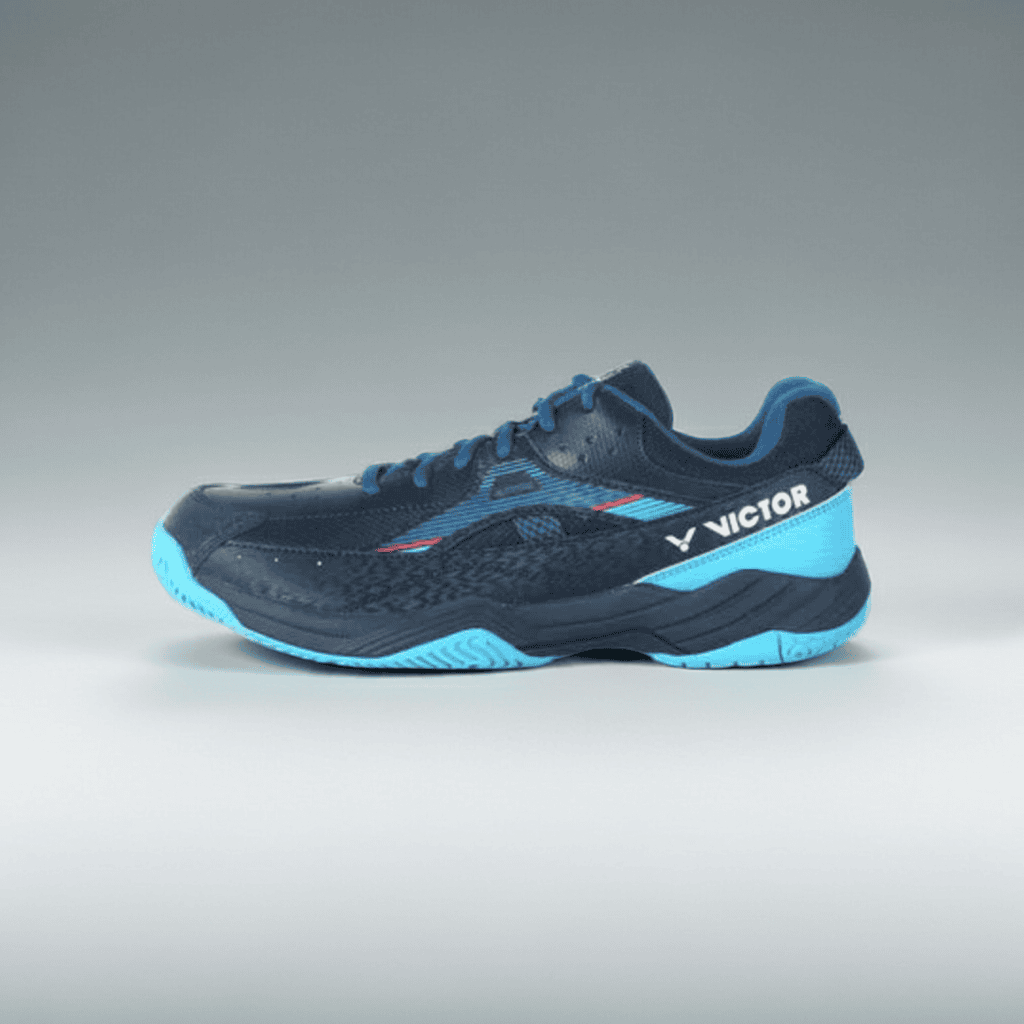
The structured build at the entry end — an EVA + ENERGYMAX + Nylon Sheet midsole and Victor’s U-Shape 3.0 last, from Victor’s beginner-to-intermediate A-series.
Victor’s A-series is the brand’s all-round line, and its listings position the A170 II where this guide needs it: for beginner and intermediate players. What earns the card its award is how much structure Victor publishes inside an entry shoe. The midsole is a three-part stack — EVA with an ENERGYMAX layer and a Nylon Sheet. Each part has a published job in Victor’s terms: the EVA is the base cushioning, ENERGYMAX is Victor’s cushioning material (the same material family Victor uses across its court range), and the nylon sheet is the stiffening element inside the stack — the component that resists the midsole twisting when a beginner lands a lunge at an imperfect angle. Most entry shoes publish a foam and stop there. Victor publishes a structure, and for a new player learning to move sideways at speed, that sheet is the most honest piece of engineering on this card.
The fit is a published fact rather than an adjective: the A170 II is built on Victor’s U-Shape 3.0 last, the standard-volume last in Victor’s fit system (Victor’s scale runs from the tighter shapes up to its wide 3.5 and 4.0 lasts — the fit menu is the maker’s, and the card prints where this model sits on it). The upper pairs PU leather with mesh — leather where the shoe needs to hold its shape and resist the inner-forefoot drag of the lunge, mesh where it needs to breathe — and the outsole is rubber, with Victor’s A-series specification describing the tread as a radiation pattern with a small lump pattern for grip in multiple directions. On weight, the same transparency as the Yonex card: Victor publishes no weight for the A170 II, so none is claimed here. Buy this shoe for its published structure — a layered, sheet-stiffened midsole and a named last — not for a number its maker does not state.
What we like
- The most structured entry build here: EVA + ENERGYMAX + a nylon sheet in one published stack
- A named last — U-Shape 3.0 — inside a maker fit system you can compare across Victor’s range
- PU leather where the lunge drags, mesh where the foot breathes
- Positioned by Victor’s own listings for beginner and intermediate players
Worth knowing
- Victor publishes no weight for this model — there is no maker number to compare
- The U-Shape 3.0 is Victor’s standard-volume last, not a wide fitting; wider feet should note where it sits in Victor’s fit scale
As an Amazon Associate we earn from qualifying purchases.
Mizuno Thunder Blade Z
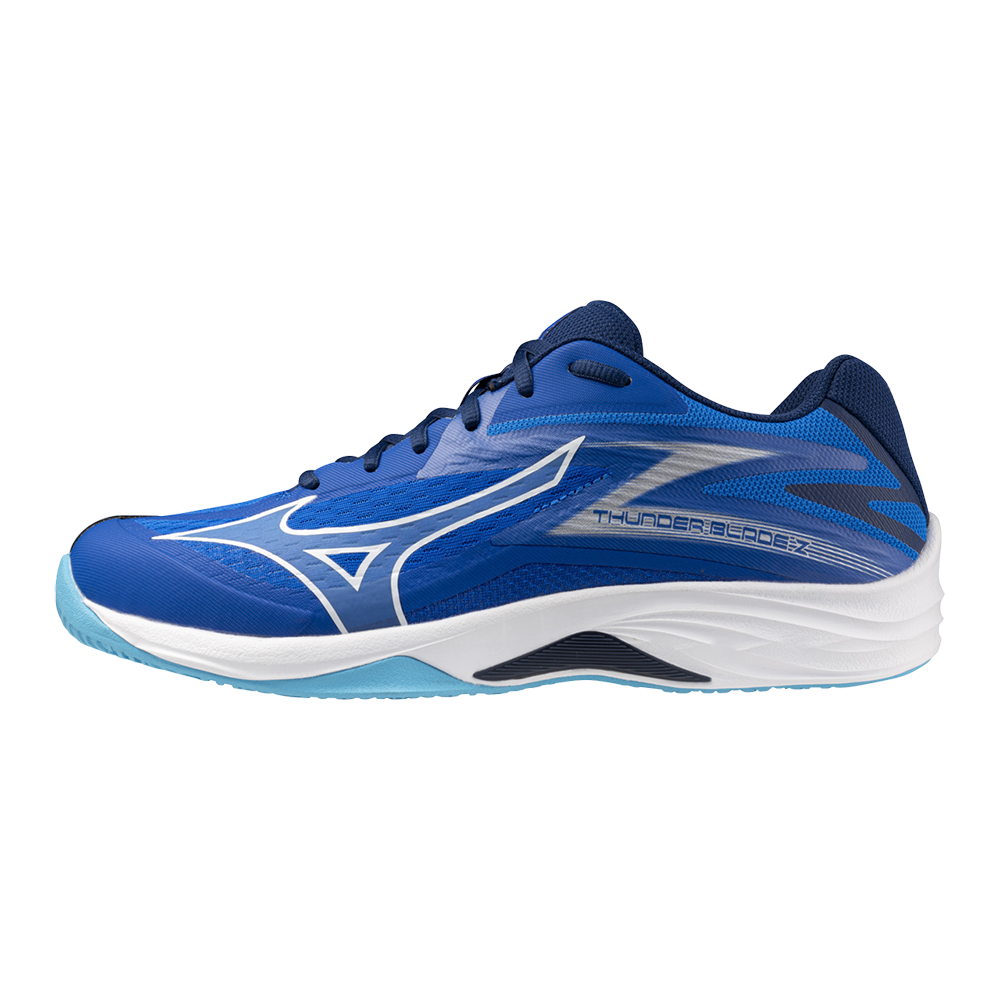
The broad, planted platform — a wide outrigger forefoot and a TPU midfoot stabilizer per Mizuno, in the shoe Mizuno’s partners position as the ideal entry-level model.
Where the Cyclone Speed 4 teaches the foot to flex, the Thunder Blade Z teaches it to plant. Mizuno’s own product page describes a shoe completely redesigned from upper to sole as its optimal model for comfort and lightness — and then publishes the stability hardware this award is based on: a wide outrigger in the forefoot, flaring the base where a lunging player lands, and a TPU stabilizer in the midfoot, so the platform holds its shape in the moments Mizuno says balance matters most. Mizuno’s retail partners position the result plainly as the ideal entry-level shoe, recommended for school sports and entry into club sports — a beginner brief stated by the channel that sells it, on top of a stability construction stated by the maker that builds it.
The comfort side of the spec is equally published. A stress-free upper construction pairs with a soft injected EVA midsole and a lightweight outsole, so the player can, in Mizuno’s words, focus on the game; the sculpted midsole and carved outsole keep the shoe cushioned and light; and a 5 mm removable insole over a U4icX strobel board gives the softer step-in feel — removable matters to a beginner, because it is also the part you replace first when it packs down. The outsole is non-marking rubber, which Mizuno states directly on the product page, for strong grip on the court. On weight: Mizuno publishes no figure for the Thunder Blade Z on its product page. A retailer technical listing puts the women’s version at 235 g, with no size basis stated — printed here as a retailer figure, not a Mizuno one. Judge the card on its published platform: the widest, most explicitly stabilised base in this guide, in an entry-level shoe.
What we like
- A wide outrigger forefoot and a TPU midfoot stabilizer — named stability hardware, per Mizuno
- Positioned as the ideal entry-level shoe in Mizuno’s own retail channel
- Non-marking rubber outsole stated directly on Mizuno’s product page
- A 5 mm removable insole over a U4icX strobel board — replaceable where shoes wear first
Worth knowing
- Mizuno publishes no weight; the 235 g figure is a retailer listing for the women’s version with no basis stated
- The outrigger is a wider base for stability, not a wide fitting — the shoe itself is a standard fit
As an Amazon Associate we earn from qualifying purchases.
ASICS Gel-Tactic 12
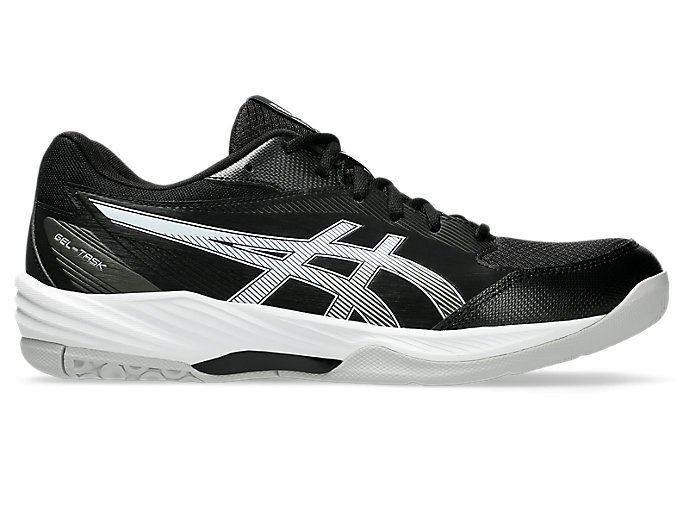
The step-up stability card — a TRUSSTIC application in the midsole and GEL in the forefoot and rearfoot, per ASICS, for the beginner who already knows this game is staying.
Every beginner guide needs one card for the player who is only technically a beginner — three months in, hooked, playing league nights already, and buying a shoe they intend to keep for a full season. In ASICS’ indoor range that shoe is the Gel-Tactic 12, and ASICS publishes the step-up in the midsole: a TRUSSTIC application — ASICS’ midfoot stability component — fitted, in ASICS’ description, to help improve stability during quick transitions. That is precisely the load a developing squash player puts on a shoe: not the steady rally, but the sudden change — the held shot, the wrong-footed recovery, the lunge that lands mid-turn. Where the Upcourt 6 answers with flexibility, the Tactic answers with a published stabilising structure, and SquashChamps’ ASICS comparison places it a clear tier above the entry models in support and durability terms.
Cushioning is ASICS’ signature system, stated plainly: GEL technology in the forefoot and rearfoot, which ASICS describes as creating a softer feeling at footstrike, inside a supportive upper construction with a wrap-up heel design that holds the rear foot as the shoe flexes. The outsole is non-marking rubber per ASICS’ listings — the club requirement, stated. On weight, the pattern of this guide’s ASICS cards holds: ASICS publishes no weight for the Gel-Tactic 12. SquashChamps puts the men’s shoe at about 12 to 13 oz and positions it as the heavier, more substantial option next to the entry models — printed here as the specialist estimate it is, and read correctly it supports the card’s role: this is the most shoe in the guide, and it is meant to be. Buy it when your footwork has stopped being the thing you are learning and started being the thing you are loading.
What we like
- TRUSSTIC midsole stability for quick transitions — the clearest published step-up in the guide, per ASICS
- GEL cushioning in both the forefoot and the rearfoot, per ASICS
- A supportive upper with a wrap-up heel, in a shoe built to outlast a first season
- Non-marking outsole stated on ASICS’ listings
Worth knowing
- ASICS publishes no weight; the specialist estimate (~12–13 oz) makes it the heaviest card here — a deliberate trade, not a flaw
- More structure than a true first-month player needs; genuine beginners should start at the Upcourt 6 or Cyclone Speed 4 cards
As an Amazon Associate we earn from qualifying purchases.
Side-by-Side Comparison Table
| Model | Best For | Weight (as stated) | Fit / Width Options | Cushioning / Support | Outsole (as maker states) |
|---|---|---|---|---|---|
| ASICS Upcourt 6 | Best overall first shoe | Not published by ASICS (~10–11 oz, SquashChamps) | Standard; men’s and women’s versions | EVA + midfoot panels tied to lacing | Non-marking gum rubber |
| Mizuno Cyclone Speed 4 | Beginner court feel | 275 g (Mizuno; size basis not stated) | Men’s-D (Standard), unisex | EVA, soft and responsive | Fully flat rubber, rounded heel, flex grooves |
| Yonex Power Cushion Strider Flow | True beginner design | Not published by Yonex | Standard; Ergoshape toe design | POWER CUSHION + Lateral Shell | Rubber sole, Radial Blade pattern, non-marking per listings |
| Babolat Shadow Spirit 2 | Grip & cushioning step-up | 295 g, EU 42.5 (Babolat) | Standard (no wide version published) | Rocker EVA + Active Sculpture | Michelin rubber, for all indoor courts |
| Victor A170 II | Structured support | Not published by Victor | U-Shape 3.0 last (standard volume) | EVA + ENERGYMAX + Nylon Sheet | Rubber, radiation-pattern tread |
| Mizuno Thunder Blade Z | Wide stable base | Not published by Mizuno (235 g women’s, retailer listing) | Standard fit; wide outrigger base | Soft EVA + TPU midfoot stabilizer | Non-marking rubber |
| ASICS Gel-Tactic 12 | Step-up stability | Not published by ASICS (~12–13 oz, SquashChamps) | Standard; supportive upper | GEL forefoot + rearfoot + TRUSSTIC | Non-marking rubber (maker listings) |
Read the weight column the way this guide prints it everywhere: a figure belongs to the name beside it. A maker’s stated weight, a retailer’s listed weight and a specialist’s estimated weight are three different kinds of fact, and the table labels which is which on every row.
Buying Guide: Getting Your First Pair Right
- Buy a court shoe, not a cheaper running shoe. The construction is the difference: a low, flat base instead of a raised heel, a gum-rubber outsole patterned for multi-directional grip instead of forward tread, and lateral support across the midfoot for the lunge. If a listing does not publish those three things, it is not a squash shoe, whatever its title says — every card in this guide publishes all three in its maker’s own specification.
- Confirm “non-marking” before anything else. Most squash clubs require non-marking soles as a condition of playing. The makers here state it their own way — non-marking gum rubber (ASICS), non-marking rubber (Mizuno’s Thunder Blade Z), Michelin rubber developed for all indoor courts (Babolat) — so check the current listing for your colourway against your club’s rules before you order, because compounds and descriptions change between production runs.
- Read every weight with its basis attached. Babolat’s 295 g is an EU 42.5; Mizuno’s 275 g for the Cyclone Speed 4 carries no stated size basis; ASICS, Yonex and Victor publish nothing for these models at all, and this guide prints attributed specialist estimates only where a named source offers one. A first shoe does not need to be the lightest on the shelf — it needs to be light enough that you forget it, and honest enough that you can compare it.
- Fit for the lunge, not for the shop floor. Check three published things: room at the toes for the long forward stride (Yonex shapes the Strider Flow’s toe with its Ergoshape design), a midfoot that locks down (the Upcourt 6’s panels tie into its lacing system; Victor names the A170 II’s last — U-Shape 3.0 — outright), and a base that stays planted when you push sideways (Mizuno’s Thunder Blade Z flares its forefoot into a wide outrigger with a TPU stabilizer). If you wear a genuinely wide fitting, note that none of these seven publishes a separate wide version — start from the widest published lasts and bases, and size-check in person where you can.
- Match the shoe to your next twelve months, not your next twelve years. A true beginner is best served by the flexible, forgiving cards — the Upcourt 6, the Cyclone Speed 4, the Strider Flow. A beginner who already plays weekly and is starting to load their movement should step straight to the structured cards — the Shadow Spirit 2, the A170 II, the Thunder Blade Z or the Gel-Tactic 12. Buying one tier up is sensible; buying three tiers up is how a new player ends up in a stiff flagship that teaches their feet nothing.
Frequently Asked Questions
Can I play squash in running shoes or regular trainers?
The construction argues against it, in the makers’ own terms. A running shoe is built for forward motion: a raised, cushioned heel, a sole shaped to roll from heel strike to toe-off, and tread patterned for grip in one direction. Squash movement is sideways and rotational — split-steps, hard lateral cuts, long lunges and constant turning on a wooden floor — and most clubs also require non-marking soles, which running shoes do not state. A court shoe publishes the opposite construction: a low, flat base, a non-marking gum-rubber outsole, and lateral support across the midfoot. Every card in this guide states that construction in its maker’s own specification, which is the standard a first squash shoe should be bought against.
Which of these shoes are genuinely made for beginners?
Three cards carry a beginner brief stated by the maker or its channel, rather than one we assigned. Mizuno calls the Cyclone Speed 4 “the perfect first pair” for beginners on its own store listing, and describes its forefoot flexibility as designed for players still developing their strength. Yonex describes the Power Cushion Strider Flow as an all-around model “for beginner and indoor shoe users” — entry shoes that provide stability while minimizing wobbling. Mizuno’s retail partners position the Thunder Blade Z as the ideal entry-level shoe for school sports and entry into club sports. The other four cards are entry or step-up indoor models that specialist sources and maker ranges place at the start of the ladder: the Upcourt 6 (an entry model per SquashChamps), the Shadow Spirit 2, the A170 II (positioned for beginner to intermediate players in Victor’s listings) and the Gel-Tactic 12 as the step-up.
How much do beginner squash shoes weigh?
Two makers state a weight here, and both are printed with their basis. Mizuno states 275 g for the Cyclone Speed 4 on its own listing, without naming a size basis, and Babolat states 295 g in an EU 42.5 for the Shadow Spirit 2. ASICS publishes no weight for the Upcourt 6 or the Gel-Tactic 12 — the specialist squash source SquashChamps estimates around 10 to 11 oz for the Upcourt 6 and about 12 to 13 oz for the men’s Gel-Tactic 12, printed in this guide as attributed estimates. Yonex publishes no weight for the Strider Flow and Victor none for the A170 II, so no figure is claimed for either. Mizuno publishes none for the Thunder Blade Z; a retailer listing puts the women’s version at 235 g with no basis stated.
What does “non-marking” mean, and which of these shoes state it?
“Non-marking” is the maker’s statement that the outsole rubber will not leave scuff marks on an indoor court — which is why clubs require it. Makers state it in their own terms, and this guide prints each card’s outsole as its maker describes it: a non-marking gum-rubber outsole on the Upcourt 6 (per ASICS’ specification), non-marking rubber on the Thunder Blade Z (stated on Mizuno’s product page), Michelin rubber developed for all indoor courts on the Shadow Spirit 2 (per Babolat), a non-marking outsole on the Strider Flow (per Yonex’s listings), and non-marking rubber on the Gel-Tactic 12 (per ASICS’ listings). The Cyclone Speed 4 and the A170 II are printed with their makers’ outsole descriptions — a fully flat rubber sole and a rubber radiation-pattern tread — so check the current listing for your colourway against your court’s rules before buying any indoor shoe.
How should a first squash shoe fit?
Fit for the movements squash repeats: room at the toes for the long lunge into the front corners, a midfoot that locks down so the foot does not slide inside the shoe on a sideways cut, and a heel that stays seated on the recovery step. The makers publish the constructions that answer each check: Yonex shapes the Strider Flow’s toe with its Ergoshape design, ASICS ties the Upcourt 6’s midfoot panels into its lacing system, Victor builds the A170 II on a named U-Shape 3.0 last, and Mizuno gives the Thunder Blade Z a wide outrigger base with a TPU midfoot stabilizer. None of the seven publishes a separate wide version, so if you wear a wide fitting, start from the widest published lasts and bases and size-check in person where you can. One attributed fit note: ASICS retailer Road Runner Sports says the men’s Upcourt 6 runs long and advises considering sizing down.
Are badminton and volleyball shoes acceptable for squash?
On construction, often yes — and the makers’ own positioning says so. ASICS sells no dedicated squash line at all; the specialist squash source SquashChamps notes that its indoor court models are the shoes squash players wear, from entry models upward. Mizuno publishes the Cyclone Speed 4 and Thunder Blade Z as indoor court shoes, and Babolat describes its Michelin outsole as developed for all indoor courts. What qualifies any indoor court shoe for squash is the published construction: a non-marking indoor outsole as the maker states it, lateral support systems, and a low, flat, planted base. Five cards in this guide come from badminton or all-court indoor lines (both Mizuno cards, the Babolat, the Victor and the Yonex) and two are ASICS indoor court models — each card prints the maker’s own specification so you can judge the construction, not the category.
How is this guide different from the all-player squash shoe guide?
The all-player guide owns the full selection — the court shoes ranked for every level and playing style of squash player, and the women’s guide owns its segment in the same way. This guide narrows the same market to one decision: the first shoe an adult beginner should buy, judged only on what makers publish — stated weights with their basis, named cushioning and support systems, beginner positioning stated by the makers themselves, and fit options a first-time buyer can verify. The guides share no product cards: the models ranked in the pillar and the women’s guide are summarised and linked here, never re-carded. If you want the complete market view, start with the pillar; if this is your first pair, this page is the one written for it.
The Verdict
Buy the construction, not the category. The ASICS Upcourt 6 is the default first shoe — ASICS’ adaptable mesh fit, midfoot support tied into the laces, and a non-marking gum-rubber outsole on the entry model a specialist squash source points beginners to. The Mizuno Cyclone Speed 4 is the lightest maker-stated card and the best teacher: 275 g as Mizuno states it, a completely flat and flexible sole, and Mizuno’s own verdict — the perfect first pair. The Yonex Power Cushion Strider Flow is the only shoe here designed for beginners on purpose, stability brief and all. The Babolat Shadow Spirit 2 owns the step-up on grip and sole programme, the Victor A170 II owns published structure, the Mizuno Thunder Blade Z owns the wide, planted base, and the ASICS Gel-Tactic 12 owns stability for the beginner who is already hooked. Read the card whose published facts match your feet, your court and your next twelve months — that match, and nothing else, is the right first shoe.
Affiliate disclosure: AliShuttler is a participant in the Amazon Services LLC Associates Program. Links marked “Check Price on Amazon” are affiliate links — if you buy through them, we may earn a commission at no additional cost to you. Every specification in this guide is taken from the maker’s or its retailers’ published listings at the time of writing; where a maker publishes no weight, the guide says so and attributes any figure to the named source that estimated or listed it.