The best squash shoes do three things an ordinary gym trainer cannot: bite a polished wooden floor without leaving a mark, hold your ankle through a full-stretch lunge, and survive the toe drag that shreds ordinary uppers in a single season. These seven do all three — picked for gum-rubber grip, lunge support, toe armour and cushioning that stands up to hard courts.
The Short Answer
For most players, the Asics Gel-Blade 8 is the best squash shoe on this list: a genuinely squash-first design with GEL cushioning, a torsion shank for lunges, a guidance outsole that grips and pivots cleanly, and an Ortholite insole you can swap for your own orthotics. Competitive players who live on court should look at the UNSQUASHABLE FAST-TEC PRO, the specialist flagship with a carbon torsion unit and full gum-rubber AbraZone outsole. Players with tired knees get the plushest ride from the Salming Kobra 3, speed players get the lightest feel from the Salming Viper 5, and anyone starting out gets proper squash footwear for the least money with the Asics Gel-Task 4.
Our Top Picks at a Glance
Asics Gel-Blade 8
The complete squash shoe: GEL cushioning, torsion control, guidance outsole and a swappable Ortholite insole.
UNSQUASHABLE FAST-TEC PRO
A squash-only flagship: low-profile SPEED-TEC midsole, carbon torsion unit and full gum-rubber grip.
Salming Kobra 3
Recoil foam plus a SoftFOAM heel insert under a serious stability package — the kindest ride here for sore knees.
Salming Viper 5
Low, light and close to the floor on a 6 mm drop, with a breathable ViperSKIN upper for fast movers.
Eye Rackets S-Line 2.0
Squash-only design with a dedicated Toe Shield over the drag zone and Torq Control for the deepest lunges.
Asics Gel-Task 4
Forefoot GEL and a wrap-up forefoot in Asics’ value indoor shoe — real squash footwear without the flagship bill.
In This Guide
Why Squash Destroys Ordinary Indoor Shoes
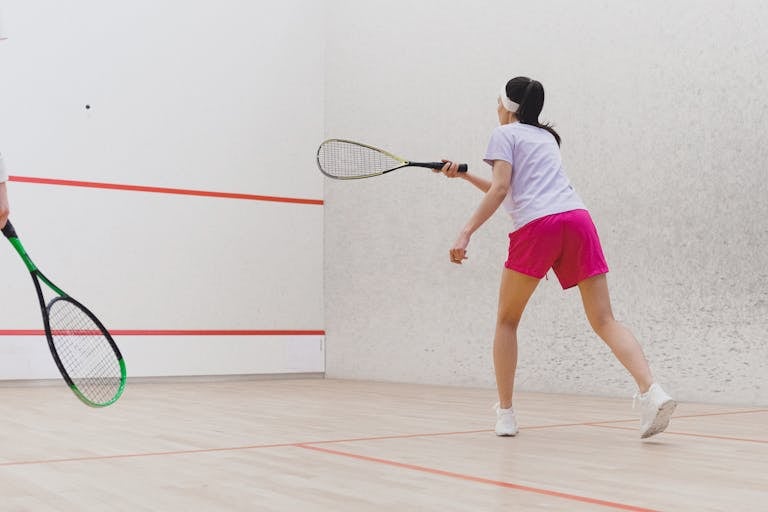
Squash movement is unlike any other racket sport. You sprint three steps, lunge to full stretch at the front wall, recover backwards to the T, then do it again — hundreds of times a match, in every direction, on a polished wooden floor that punishes both too little grip and too much. The lunge is the killer: your leading leg plants hard with the knee tracking over a fully stretched ankle, your trailing foot drags its toe along the floorboards, and your weight tries to roll the shoe over its outside edge. Ordinary trainers fail that pattern in predictable ways. Running shoes are built for straight lines, with tall, soft heels that tip over in a lateral plant. Fashion court shoes grip acceptably but have no toe protection, so the drag wears a hole through the mesh within weeks. Even generic indoor shoes often lack the torsion control that keeps a shoe stable when your foot lands at an angle.
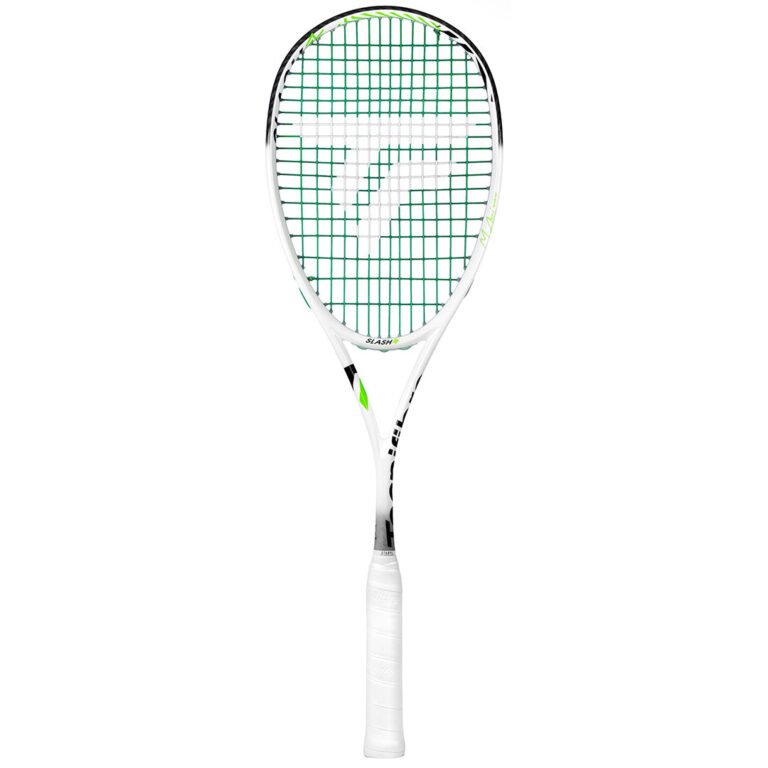
A proper squash shoe is engineered around exactly those three loads. The outsole is gum rubber or a gum-style compound with a tread that bites wood and releases for the pivot. The midsole sits low for stability but still carries real cushioning, because squash landings are heel-heavy and the floor is unforgiving. And the upper is reinforced where the game attacks it — across the drag toe, around the midfoot, and at the heel. If you are new to the game, pair this guide with our how to play squash walkthrough for the movement pattern itself, and with our best squash rackets for beginners guide for the other half of your kit. Players crossing over from other racket sports will also find our squash vs racquetball comparison useful — the footwear logic overlaps, but squash’s longer lunges demand more from the shoe.
What Makes a Great Squash Shoe
1. Gum-rubber, non-marking grip comes first
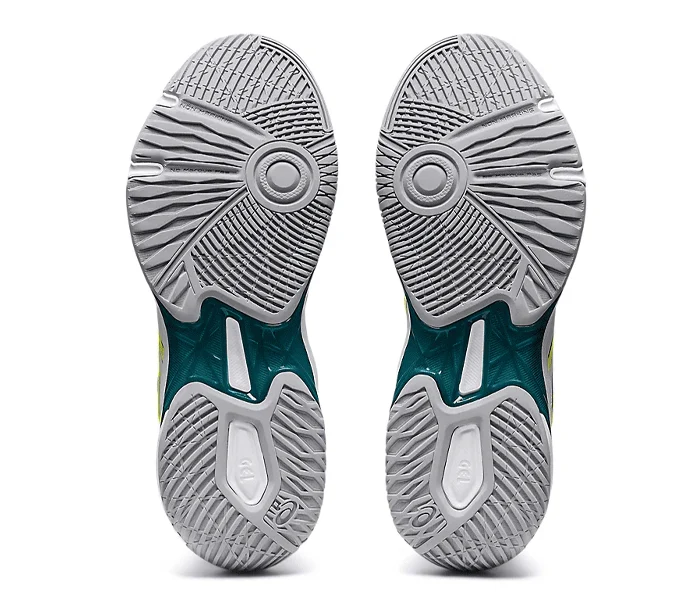
Every shoe on this list wears a non-marking outsole, because most clubs will not let you on court in anything else — and because gum rubber genuinely grips polished wood better than coloured compounds. What separates the good from the great is the tread layout: deep flex grooves in the forefoot for the lunge plant, a pivot point under the ball of the foot so turns happen without wrenching your knee, and an outsole that wraps slightly up the sides so the shoe still grips when it rolls onto its edge mid-lunge. The FAST-TEC PRO’s all-gum AbraZone hexagon pattern and the Gel-Blade 8’s X GUIDANCE grooves are the two most squash-specific interpretations of that brief here.
2. Lateral support for the lunge
The lunge loads a shoe sideways harder than any move in badminton or tennis. Look for a torsion unit or shank through the midfoot (TRUSSTIC on the Blade 8, a carbon plate on the FAST-TEC PRO, Salming’s LMS unit on both its shoes), an outsole that flares or wraps at the forefoot, and a heel counter that genuinely locks the rear of the foot. Eye’s Torq Control exists for exactly this moment — holding the foot stable at full dynamic stretch. A shoe that twists like a towel when you wring it in your hands will twist under your lunge too.
3. Toe-drag durability
Watch any squash player’s trailing foot during a forehand lunge and you will see the inside of the toe scrape the floor on almost every shot. That drag zone — the medial side of the toe box — is where squash shoes die. The fixes are a reinforced drag guard (the Blade 8’s seamless no-sew overlays), a welded or fused upper (the FAST-TEC PRO’s TPU), or a dedicated shield (Eye’s Toe Shield on the S-Line 2.0). Plain engineered mesh with no overlay in that zone is a countdown timer.
4. Cushioning for hard courts — without the wobble
Squash courts are sprung timber, but the landings are still harsh, repetitive and heavily heel-loaded on the recovery step. GEL (Asics), Boost (adidas), Recoil foam (Salming) and U-FOAM (Unsquashable) all mute that impact. The trade-off is height: stack too much soft foam underfoot and the shoe starts to feel tippy exactly when you plant laterally. The shoes here keep their platforms low and put the softness in targeted inserts rather than a tall, marshmallow midsole — the Kobra 3’s SoftFOAM pocket sits inside the heel rather than lifting the whole shoe.
5. Fit: lockdown beats roominess
A squash shoe should feel like a climbing shoe’s polite cousin — snug through the midfoot and heel, with just enough toe room to avoid black toenails when you brake at the front wall. Internal booties (Kobra 3), knit uppers (Stabil Next Gen) and neoprene linings (S-Line 2.0) all chase the same sock-like hold. Watch the individual fit notes on each card: Salming and Asics both run slightly long for many players, and SquashGear flags that the Eye S-Line 2.0 fits about a full size small. The detailed sizing section below the comparison table pulls all of that together.
6. Weight class and court feel
Squash players split into two camps. Speed players want the lowest, lightest shoe they can plant confidently — the Viper 5 and FAST-TEC PRO live here, both built close to the ground. Power and durability players accept a little more shoe — the Kobra 3 and Stabil Next Gen — in exchange for cushioning and structure over a five-game match. Neither is wrong; what matters is that the shoe’s weight class matches how you move. A heavy shoe on a retriever feels like ankle weights by the fourth game.
7. One honest word on crossovers
Most of this list is squash-first design, but two picks — the Salming Viper 5 and the adidas Stabil Next Gen — are indoor-court shoes that their makers explicitly rate for squash among other sports, and both earn their place on squash-specific merits: gum-style grip, torsion control and lunge-proof uppers. The same logic applies to support flagships from other indoor sports — the Victor P9200 III we carded in our badminton shoes guide is the shoe to look at if maximum ankle support outranks everything else for you. What never works is the reverse compromise: a running shoe or a trainer with a dark, marking sole. Grip pattern and sole compound matter more than the sport printed on the box.
The 7 Best Squash Shoes, Reviewed
Asics Gel-Blade 8 — The Complete Squash Shoe
Asics’ squash-first flagship: guidance outsole, torsion shank, swappable insole
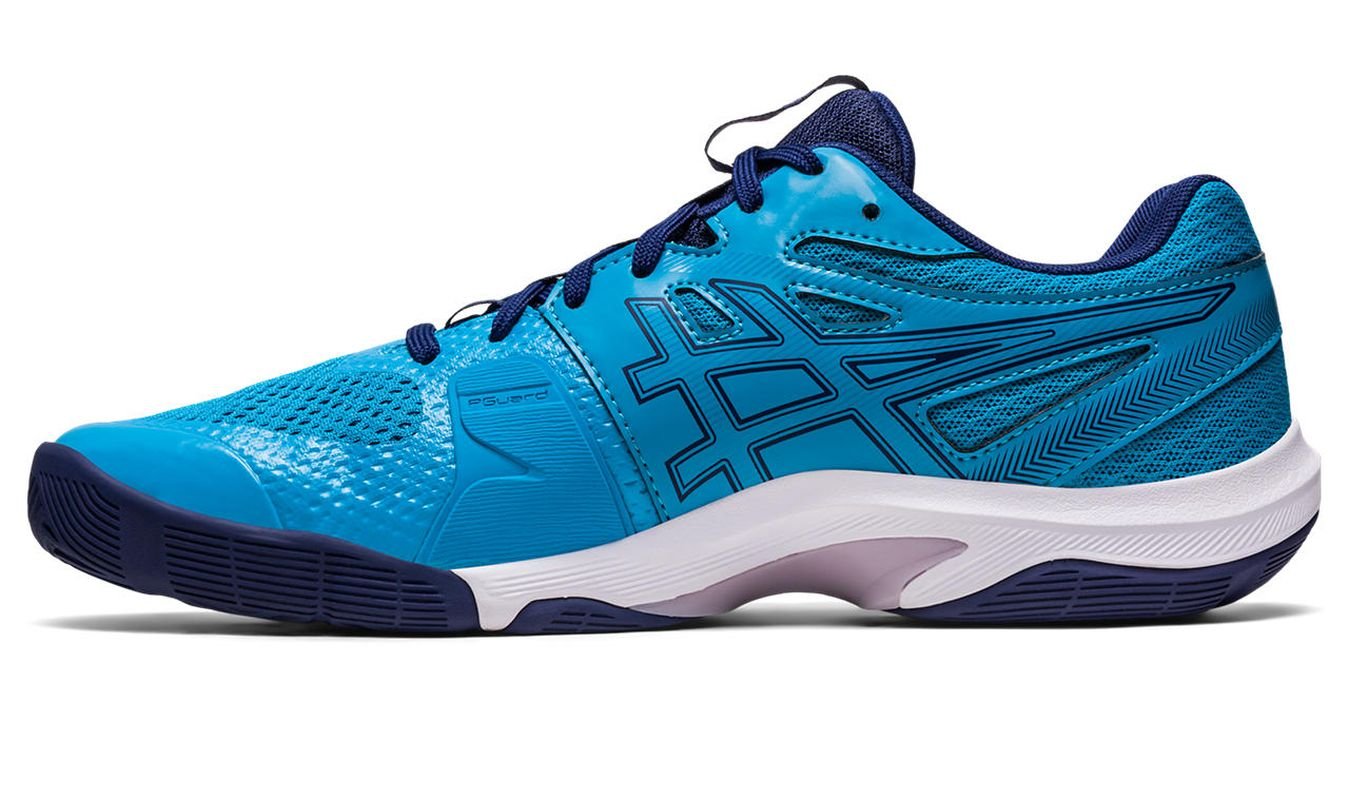
The Blade line is what Asics builds when it designs for squash first and everything else second, and the eighth generation is the most complete club player’s shoe on this list. Every system in it answers a squash problem: the outsole steers your movement, the shank controls the lunge, the GEL absorbs the landing, and the insole comes out if your feet need custom orthotics. Men (1071A066) and women (1072A072) both get a dedicated version.
The outsole is the cleverest part. Asics’ X GUIDANCE design cuts flex grooves into the forefoot in the pattern your foot actually bends through during a lunge and a pivot, so the shoe folds with your stride instead of fighting it — you feel the grip release for the turn and bite again for the plant, rather than the all-or-nothing grab of a flat herringbone. Through the midfoot, a TRUSSTIC resin shank (the system Asics labels TWISTRUSS on some listings) stops the shoe twisting when your weight lands at an angle, and the GEL unit in the midsole takes the sting out of heel-first recovery steps on hard courts.
The upper is a single seamless piece with no-sew overlays, which matters twice over for squash: there are no stitched seams to split in the drag zone, and nothing to rub raw across the top of your toes during long matches. A raised heel collar wraps the ankle for a locked feeling, and the ORTHOLITE insole pulls straight out — Asics explicitly builds the footbed for players who replace it with their own orthotics, which makes the Blade 8 the default recommendation for anyone whose physio already has opinions about their feet. It is not the lightest shoe here, and Asics’ indoor lasts run slightly long for some players, but as a single answer to “which squash shoe should I buy,” nothing else on this list is as complete.
What we like
- X GUIDANCE outsole grips, flexes and pivots exactly the way squash movement demands.
- TRUSSTIC shank keeps lunges planted instead of rolling.
- Removable Ortholite insole welcomes custom orthotics.
- Seamless upper has no stitched seams to split in the drag zone.
Worth knowing
- Runs slightly long for some players — between sizes, try the smaller one.
- Midweight rather than featherweight; pure speed players may prefer the Viper 5.
Live price shown on Amazon · men’s and women’s versions available
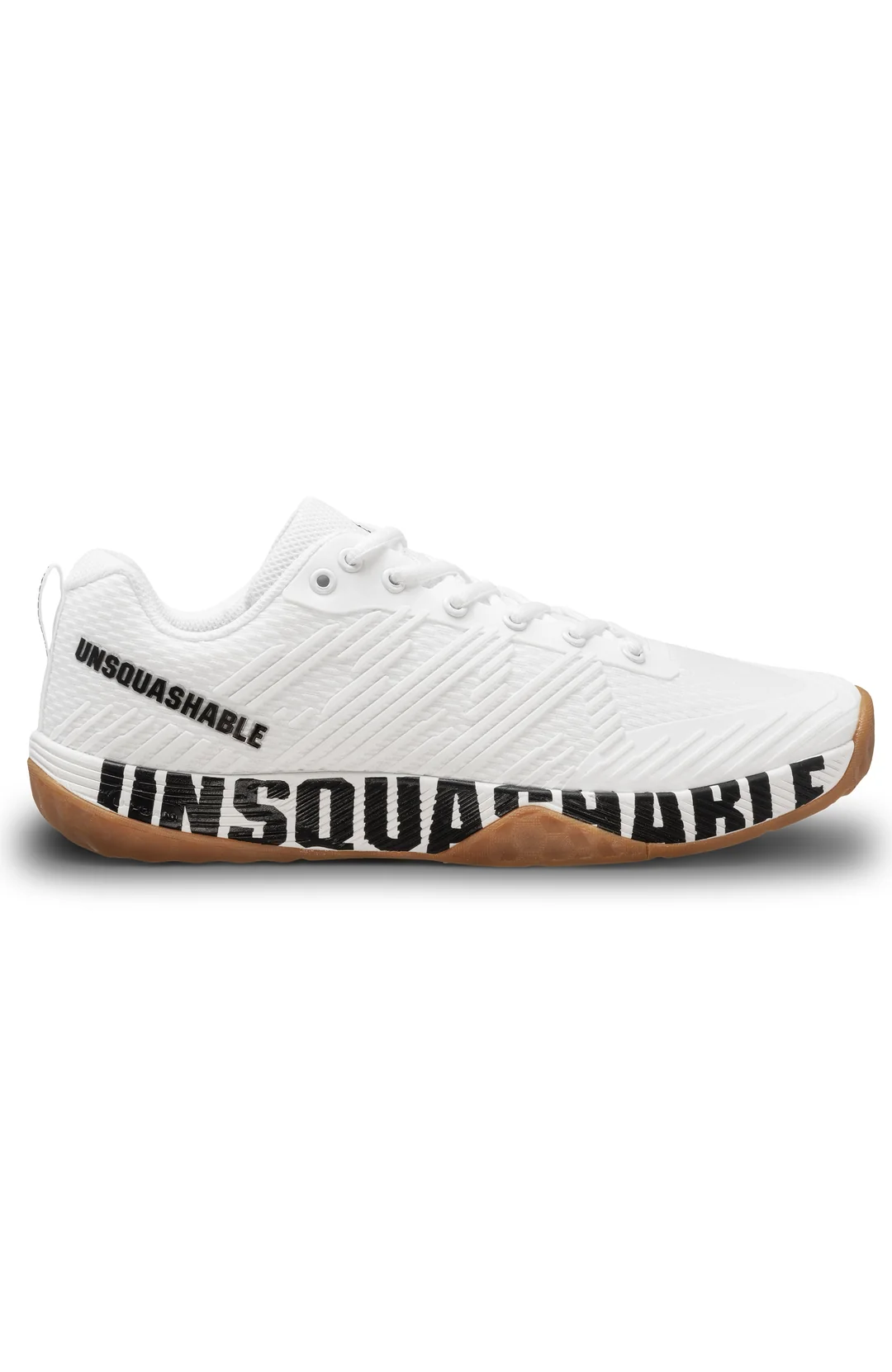
UNSQUASHABLE FAST-TEC PRO — The Pro’s Squash-Only Flagship
Carbon torsion unit, AbraZone gum rubber, developed with Miguel Rodríguez
Unsquashable makes nothing but squash equipment, and the FAST-TEC PRO is what that focus produces: an ultra-light, low-profile shoe built with input from PSA tour players including Miguel Rodríguez, whose whole game is explosive movement. If you play competitively and want a shoe designed for squash and absolutely nothing else, this is it.
The headline is what the sole is made of: full natural gum rubber across the whole outsole, cut in Unsquashable’s AbraZone hexagon pattern. Hexagons grip in every direction without a directional bias, which suits squash’s chaotic footwork, and natural gum is the tackiest compound you can put on polished wood. Above it sits the SPEED-TEC midsole, deliberately low-profile so your foot stays close to the floor — court feel here is instant, with none of the delay a tall midsole introduces between deciding to move and moving. A carbon torsion unit links heel and forefoot while still letting them move independently, so the shoe stays composed through twisted landings without feeling like a plank.
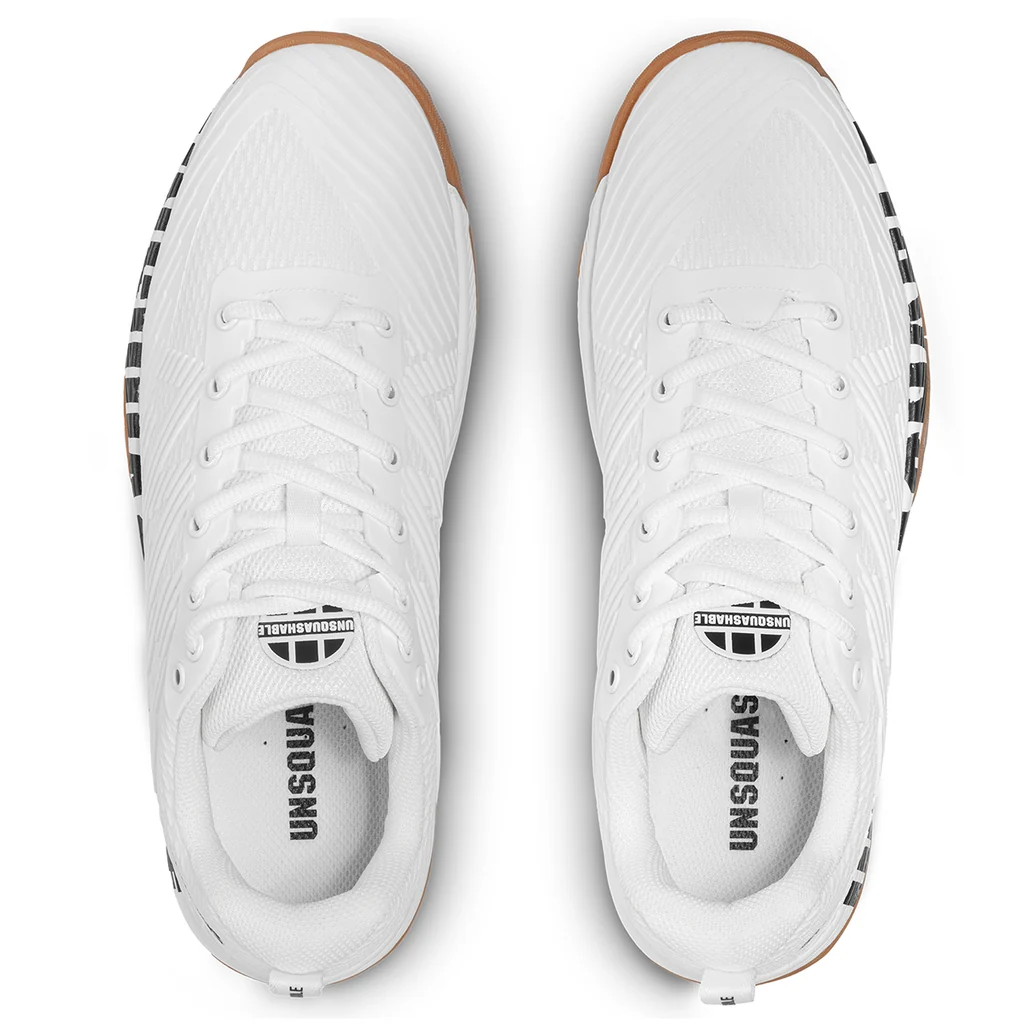
Cushioning comes from U-FOAM pods in the forefoot and rearfoot rather than a thick midsole — enough to take the edge off landings while keeping the low stance. The upper is a welded TPU construction (no stitches to burst), the heel is a moulded Custom-Fit cup, and the heel itself is rounded so your foot rolls into the recovery step instead of snagging. The trade-offs are honest ones: the low, minimal platform gives the least impact protection here for players with cranky knees, and as a specialist brand its sizing runs through fewer retailers. For fit players who move like the shoe was designed for, nothing else on this list feels as purpose-built.
What we like
- Full natural gum rubber outsole — the tackiest grip on this list.
- Carbon torsion unit stabilises twisted landings while keeping forefoot freedom.
- Ultra-low, ultra-light build for the fastest court feel here.
- Designed with PSA tour players; squash-only, no crossover compromises.
Worth knowing
- Minimal platform is the least forgiving here for sore knees and heels.
- Specialist brand — fewer retailers stock it, so size exchanges take longer.
Live price shown on Amazon · specialist model — check your size is stocked
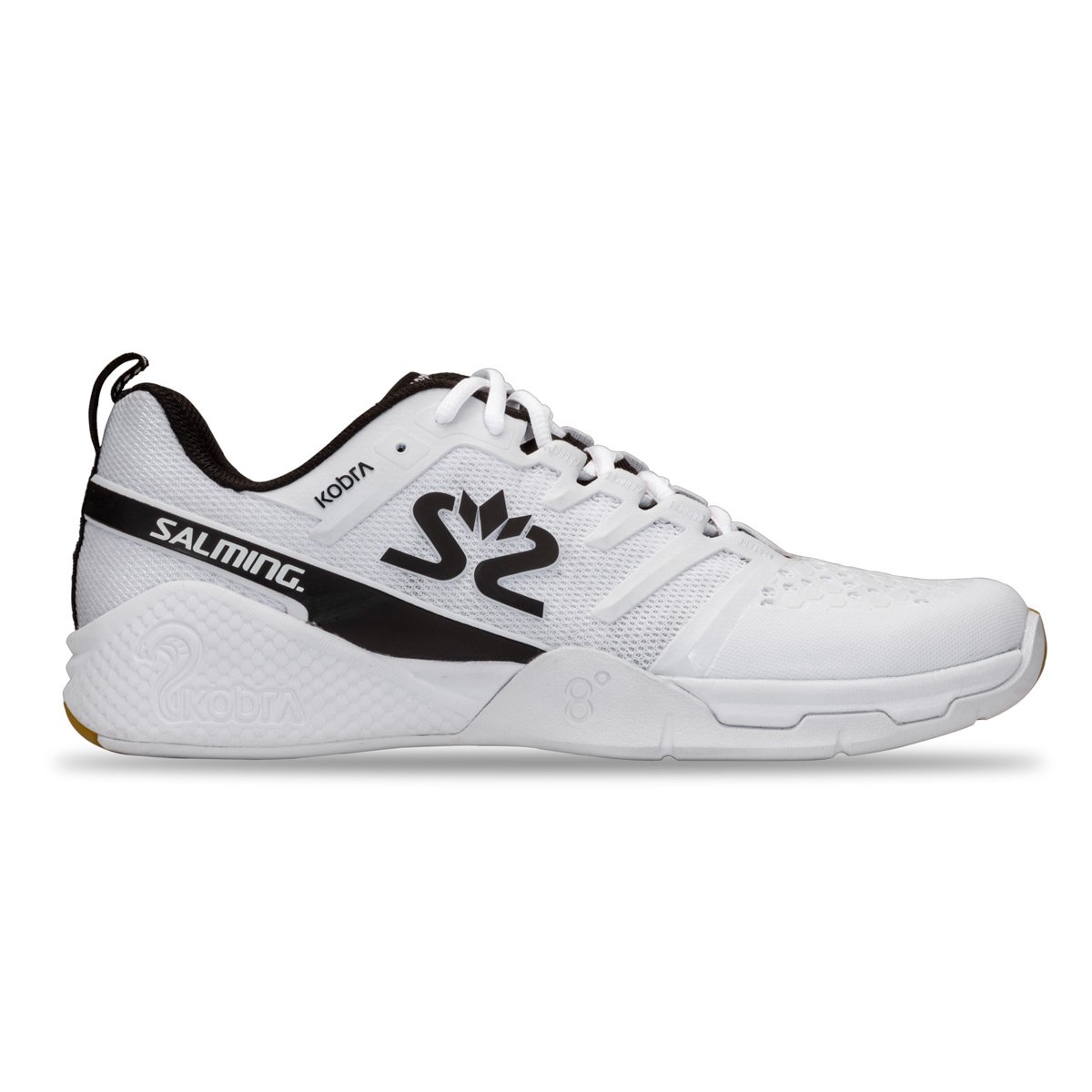
Salming Kobra 3 — The Protective, Planted One
Recoil foam, SoftFOAM heel, LMS torsion system — the heavyweight support pick
The Kobra 3 is the shoe for players who land hard and lunge deep: the most protective package on this list, built around Salming’s Recoil energy-return foam and a stability system that attacks the ankle-roll problem from three directions at once.
Start underfoot. The midsole is Salming’s Recoil foam, tuned for energy return so the shoe gives something back on the push-off instead of only absorbing, and inside the heel sits a SoftFOAM insert that Salming says absorbs shock markedly better than a standard EVA heel (the brand quotes 70% higher shock absorption for the material). For players whose knees and heels file a complaint after every hard session, this is the kindest landing in the guide. The TGS 72/75 design splits the sole at a 75° angle so the rear 28% stays rigid for stability while the front 72% flexes for the push-off — stability where you land, bend where you launch.
The anti-roll engineering is the Kobra’s signature. The LMS torsion unit stiffens the midfoot, while LMS 8° angles the lateral edge of the sole to reduce the force that tips an ankle outward, and the RollBar rounds that outer forefoot edge so a lateral plant rolls through rather than catching. The HexaGrip outsole uses Salming’s XR110 rubber in a hexagon layout developed with Michelin compound expertise for wet-and-dry court grip. Up top, an ExoSkeleton lacing structure and an internal bootie hold the whole foot, finished with an Ergo Heelcup. It is the heaviest-feeling shoe here and it runs slightly long in common with all Salming’s indoor line — but if your priority is arriving at game five with your joints and ankles intact, this is the pick.
What we like
- SoftFOAM heel insert gives the softest landing on this list.
- Three-part anti-roll system (LMS, LMS 8°, RollBar) for committed lungers.
- Internal bootie plus ExoSkeleton lacing = zero in-shoe slide.
- HexaGrip compound developed with Michelin rubber expertise.
Worth knowing
- The most substantial shoe here — not the pick for pure speed players.
- Salming sizing runs slightly long; many players drop half a size.
Live price shown on Amazon · men’s and women’s versions available
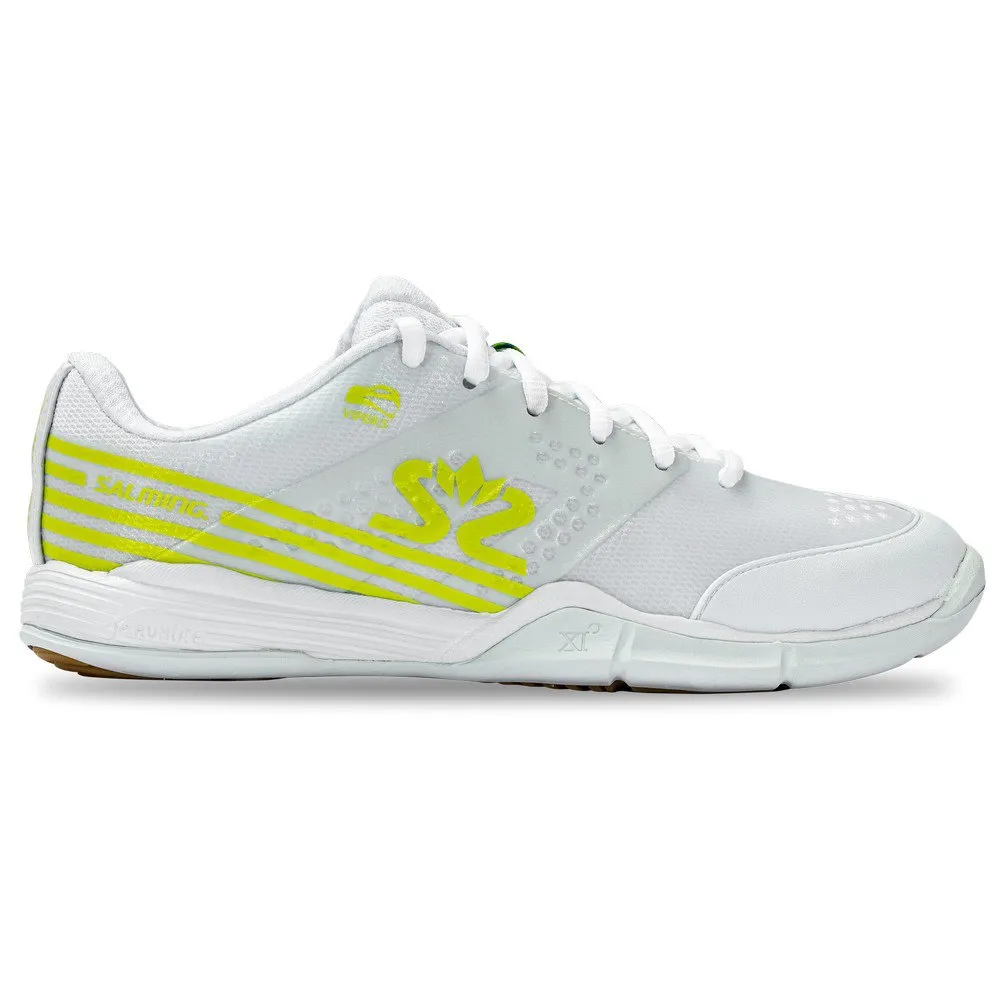
Salming Viper 5 — Low, Light, Gone
6 mm drop, ViperSKIN upper, XR110 grip — the retriever’s shoe
Where the Kobra 3 is Salming’s shield, the Viper 5 is its rapier: a low-slung speed shoe for players whose game is built on getting to balls nobody else reaches. It sits just 20 mm off the floor at the heel and 14 mm at the forefoot, and that closeness is the whole point.
A 6 mm heel-to-toe drop keeps your weight naturally forward and your first step explosive, and the RunLite2 midsole is firmer and more responsive than a plush foam — it returns energy quickly rather than soaking it up, which is what a speed shoe should do. Retailers list the Viper 5 at roughly 336–350 g depending on the size run, which puts it firmly in the lightweight class; on court it disappears in the way only genuinely light shoes do. Grip comes from the same XR110 rubber family as the Kobra, cut in a HexaGrip pattern with lateral support built in for side-to-side loads.
The upper is Salming’s ViperSKIN — a synthetic wrap designed to be thin, breathable and durable enough for court sport — and a moulded TPU heel counter plus a wraparound tongue keep the rear of the foot from swimming when you change direction. Salming rates the Viper 5 for squash among several indoor sports, and its following on handball courts (where the movement pattern is similarly violent) is part of its reputation. The compromises are the classic speed-shoe ones: less underfoot softness for heavy heel strikers, and an upper that prioritises lightness over drag-zone armour, so dedicated toe-draggers should look at the Eye S-Line or the Blade 8 first.
What we like
- Low 6 mm drop stance for explosive first steps and quick recoveries.
- Lightweight build that disappears during long retrieving rallies.
- XR110 HexaGrip outsole with genuine lateral support.
- Breathable ViperSKIN upper for hot courts and long sessions.
Worth knowing
- Firmer ride — heavy heel strikers may want the Kobra 3’s cushioning instead.
- Upper prioritises lightness over toe-drag armour.
Live price shown on Amazon · men’s and women’s versions available
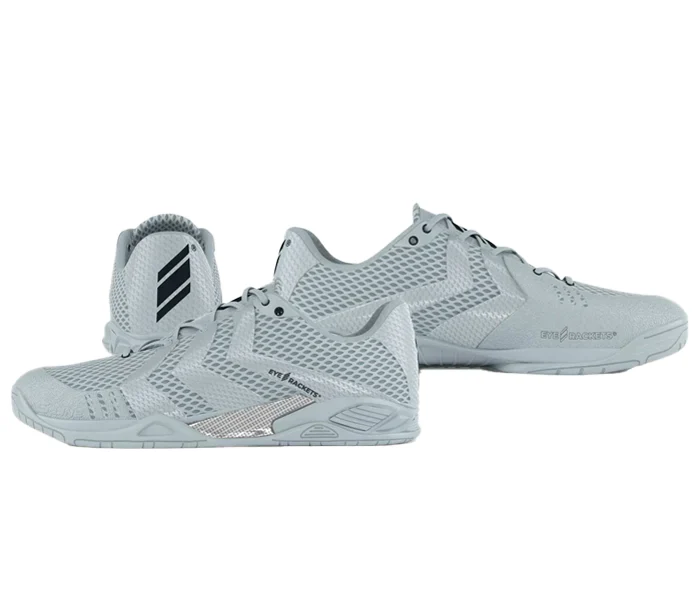
Eye Rackets S-Line 2.0 — Built by Squash People
Toe Shield drag protection, Torq Control lunge stability, neoprene hold
Eye is a squash-only brand from the game’s heartland, and the S-Line was designed from a blank sheet for squash movement — including the one feature no crossover shoe bothers with: a shield over the exact patch of upper your trailing foot drags across the floor.
That Toe Shield is the S-Line’s calling card. Where ordinary shoes put bare mesh over the drag zone and let you grind through it, Eye armours the area against foot-drag wear, which is why the S-Line has a loyal following among hard-playing club regulars who were tired of buying shoes quarterly. The rest of the design is equally squash-literate: Torq Control holds the foot stable in a full dynamic lunge, a torsion system resists lateral twisting, and the sole is a durable gum rubber compound chosen for tack on wood and for longevity.
Comfort details are thoughtful rather than flashy: a Biomesh upper for breathability, a neoprene inner lining that wicks moisture and keeps the foot fixed inside the shoe, a padded heel counter, a seamless tongue so tight lacing doesn’t bite, reinforced metal eyelets that survive aggressive lace tension, and a dense foam insole that removes cleanly if you run custom inserts. Two practical notes: sizing runs from UK 4 to UK 12, and SquashGear — the biggest US squash retailer — flags plainly that the S-Line 2.0 fits about a size small, so order a size up from your usual. Do that, and you get the most squash-purist design on this list at a mid-range price.
What we like
- Toe Shield directly answers squash’s number-one shoe killer.
- Torq Control is designed for the full-stretch lunge specifically.
- Gum rubber sole prioritises both grip and sole lifespan.
- Neoprene lining keeps the foot fixed and dry through long matches.
Worth knowing
- Fits about a size small per SquashGear guidance — order up.
- Fewer stockists than the big brands; colour choice is narrower.
Live price shown on Amazon · remember to order a size up
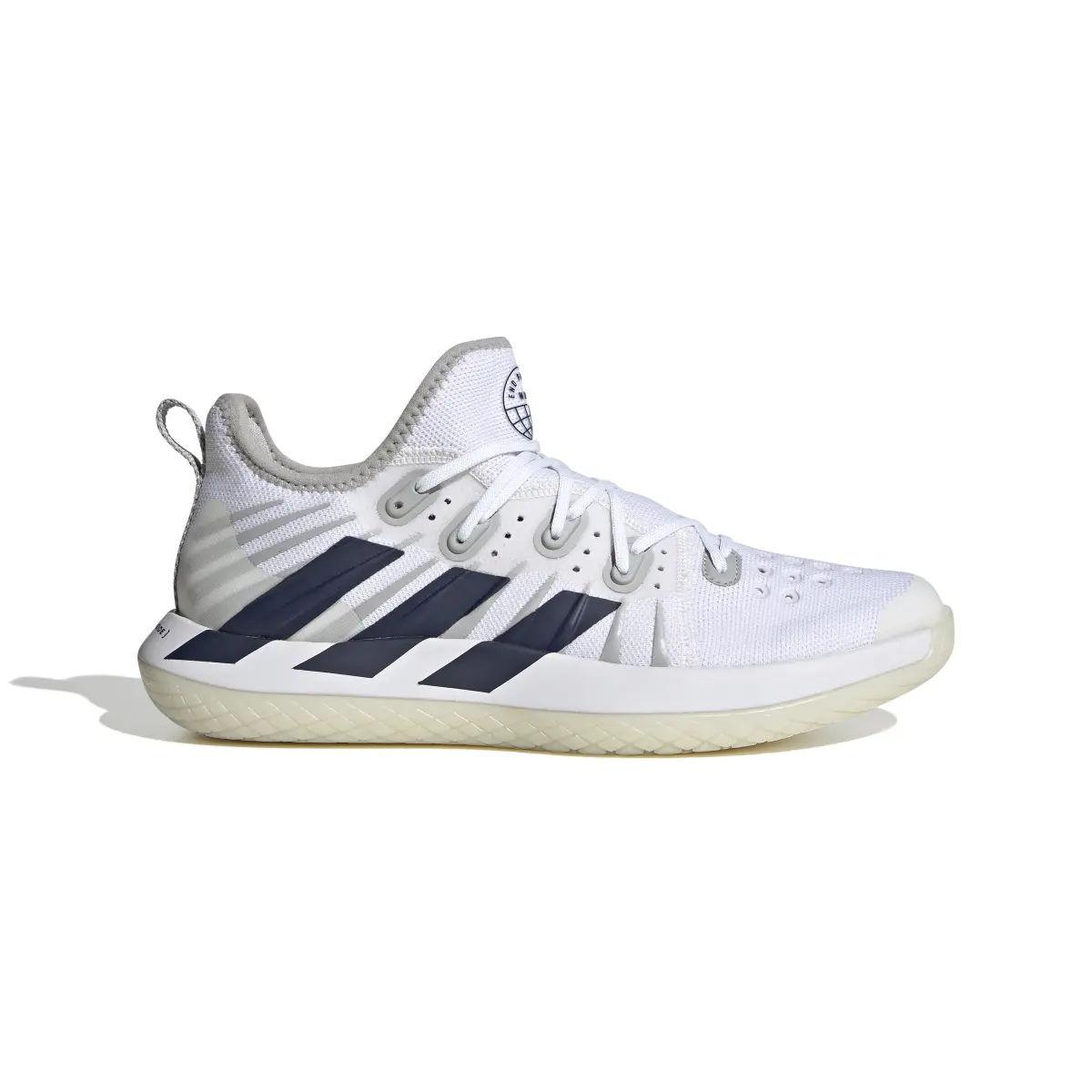
adidas Stabil Next Gen — Boost Comfort, Court Manners
Primeknit lockdown, Boost insert, EVA frame — adidas rates it for squash
The Stabil line has been the default indoor shoe for generations of handball players, and the Next Gen version brings adidas’ best comfort technology with it. If you want the softest step-in feel on this list inside a shoe whose maker explicitly lists squash among its sports, start here.
The comfort comes from a Boost insert in the midsole — adidas’ energy-returning foam — framed by an EVA stabilisation frame so the softness never gets sloppy: you land on Boost, the frame keeps the platform honest, and the outsole’s rounded (radiused) outside edges let lateral plants roll through instead of catching, the same philosophy as Salming’s RollBar executed in adidas language. The outsole itself is a non-marking rubber with a 360-degree grip pattern, so traction doesn’t quit when your foot lands at an odd angle mid-rally.
The upper is a forged Primeknit textile that hugs the midfoot like a sock, with heat-pressed sidewalls and an integrated lateral support system worked into the lacing to stop the foot sliding inside the shoe during direction changes — the detail that separates a proper indoor shoe from a comfortable trainer. The Stabil Next Gen is a crossover rather than a squash-only design, so it doesn’t get a dedicated drag guard, and heavy toe-draggers will wear its knit faster than the Eye or Blade uppers. But for players whose squash sits inside a general indoor-sport life — or who simply value comfort over a long evening of league matches — it is a genuinely excellent, widely available answer.
What we like
- Boost insert gives the plushest step-in comfort here.
- EVA frame and radiused edges keep lateral plants controlled.
- Primeknit upper locks the midfoot down like a sock.
- The easiest shoe on this list to find in shops and sizes.
Worth knowing
- No dedicated toe-drag guard — committed draggers will wear the knit.
- Crossover design: slightly less squash-specific than the top two picks.
Live price shown on Amazon · men’s and women’s versions available
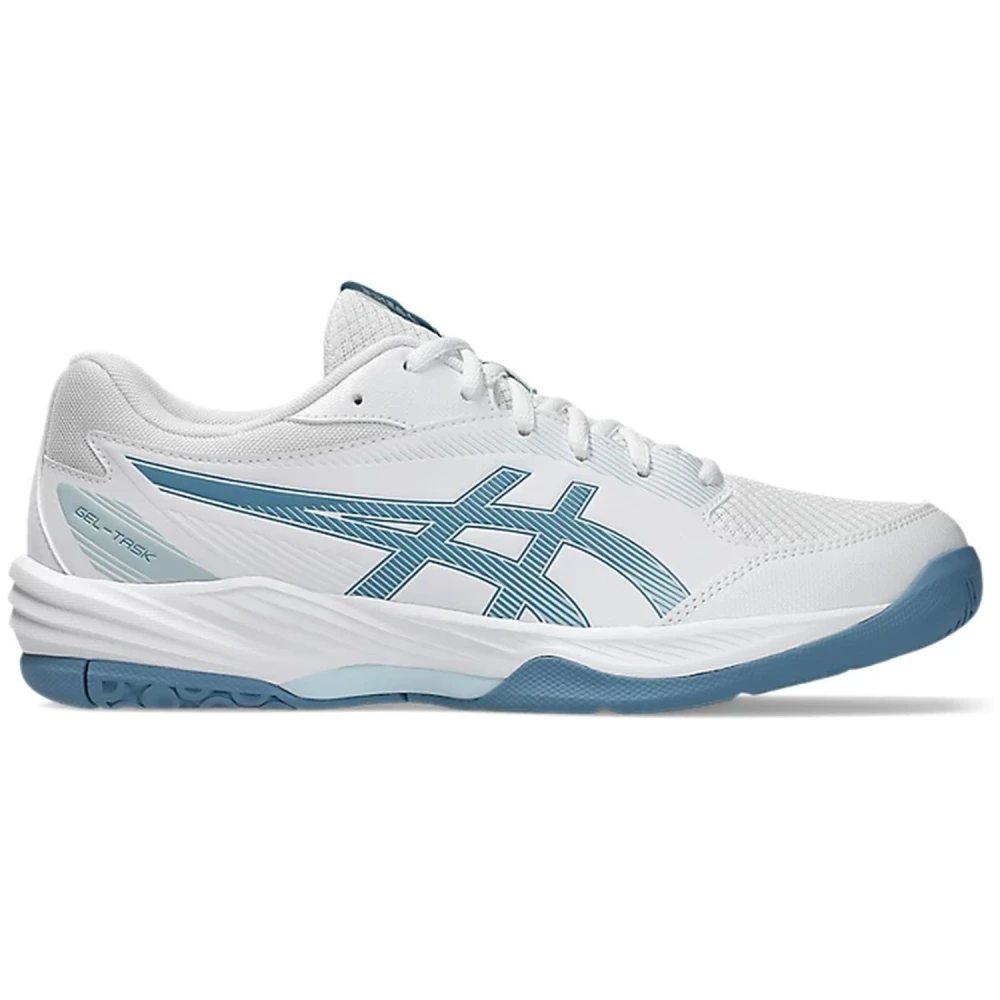
Asics Gel-Task 4 — Proper Squash Footwear, Smallest Bill
Forefoot GEL, wrap-up forefoot, non-marking sole — the smart first pair
Every recommendation list needs an honest entry point, and the Gel-Task 4 is Asics’ current one: a real indoor court shoe with real GEL cushioning and a non-marking sole, at the price players actually starting squash are willing to spend.
What you get for the modest money is more than the price suggests. GEL in the forefoot softens the plant at the front of the court where beginners actually land hardest, and the shoe’s signature wrap-up forefoot construction curls the outsole up over the front of the shoe — Asics designed it for the scuffing and dragging that indoor sports inflict on the toe area, which for a learning squash player (whose drag is usually heavier, not lighter, than an advanced player’s) is exactly the right kind of cheap insurance. The upper combines synthetic leather with mesh, so it breathes and holds its shape without the premium materials bill.
The outsole is non-marking, as every club demands, and the shoe comes in men’s and women’s versions (a mid-cut MT variant also exists for players who like ankle coverage). What you give up versus the Blade 8 is sophistication: no guidance-groove outsole, a simpler stability picture, and less targeted drag armour. That’s a fair trade for a first or second pair — and when you’re ready to upgrade, the Blade 8 at the top of this list is the natural next step inside the same brand’s sizing.
What we like
- Genuine GEL cushioning at an entry-level price.
- Wrap-up forefoot resists toe scuffing and early drag wear.
- Non-marking sole keeps every club happy.
- Men’s, women’s and mid-cut options — rare at this price.
Worth knowing
- Simpler stability package than the Blade 8 — heavy players will outgrow it.
- Less drag armour than the specialist picks for daily play.
Live price shown on Amazon · men’s and women’s versions available
Head-to-Head: All Seven Compared
| Shoe | Best for | Outsole | Cushioning | Key strength |
|---|---|---|---|---|
| Asics Gel-Blade 8 | Most players | X GUIDANCE, non-marking | GEL + Ortholite | Complete, squash-first balance |
| UNSQUASHABLE FAST-TEC PRO | Competitive specialists | Full gum rubber, AbraZone hex | U-FOAM pods | Grip + carbon torsion control |
| Salming Kobra 3 | Cushioning & support | HexaGrip XR110 | Recoil + SoftFOAM heel | Three-part anti-roll system |
| Salming Viper 5 | Speed players | XR110 HexaGrip | RunLite2 | 6 mm drop, lightweight feel |
| Eye Rackets S-Line 2.0 | Toe-drag durability | Durable gum rubber | Dense foam insole | Toe Shield drag armour |
| adidas Stabil Next Gen | Cushioned crossover | Non-marking, 360° grip | Boost insert | Comfort + easy availability |
| Asics Gel-Task 4 | Budget / first pair | Non-marking rubber | Forefoot GEL | Value + wrap-up forefoot |
Fit, Sizing & Care
How a squash shoe should fit. Snug through the heel and midfoot with no sideways slide — any lateral movement inside the shoe becomes a blister or a rolled ankle at full lunge — and roughly a thumb’s width of space in front of your longest toe so hard braking at the front wall doesn’t blacken toenails. Try shoes on in the evening, in your playing socks, and do a few lunges in the shop or on your hallway floor: the heel should stay locked and the toe should brush, not slam, the end of the shoe.
Brand-by-brand sizing notes. Asics indoor shoes run slightly long and slightly narrow for many players — between sizes, start with the smaller one. Salming’s indoor line also runs long; plenty of players drop half a size from their trainer size, and the bootie fit of the Kobra 3 makes that easier to get away with. Eye is the outlier in the opposite direction: SquashGear advises that the S-Line 2.0 fits about a full size small, so order up. The adidas Stabil’s Primeknit stretches a little with wear, so a snug-but-not-tight first fit is right. Whatever you buy, wear them for two or three gentle sessions before a full match — new court shoes are stiffest exactly where the lunge bends them.
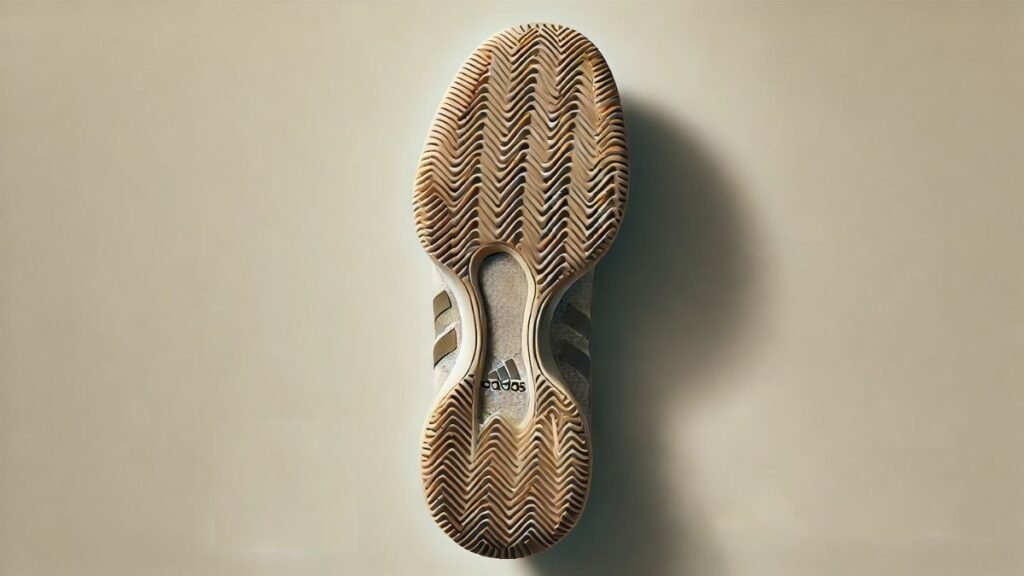
Making them last. Keep squash shoes for squash only — walking to the club on pavement grinds the gum tread and packs grit into it, and outdoor grit carried onto a wooden floor ruins your grip and the court’s surface alike. After playing, open the laces fully and air them out rather than leaving them sealed in a kit bag; damp uppers rot from the inside, and the drag zone always fails first once the material is weakened. Wipe the outsoles with a damp cloth when grip starts to feel dusty — most “worn out” soles are just dirty ones. Replace the shoe when the pivot point under the ball of the foot is worn smooth, when the midsole creases stay compressed, or when the upper splits at the drag zone; by then the support systems have gone too, and an ankle injury costs more than any shoe on this list.
When to upgrade. If you’re a beginner in the Gel-Task 4 playing twice a week and loving it, the Blade 8 is your graduation shoe. If your singles game has become about retrieving and counter-attacking, the Viper 5 or FAST-TEC PRO matches that identity better. And if five-game matches are leaving your knees talking to you, the Kobra 3’s cushioning is the upgrade that matters most. Match the shoe to the player you’re becoming, then complete the kit with our beginner squash racket guide.
Squash Shoes: Frequently Asked Questions
Can I play squash in running shoes or trainers?
It’s a bad idea, and many clubs will stop you at the door. Running shoes have raised, cushioned heels that tip over under lateral load — exactly what a squash lunge applies — and most have soles that mark wooden floors, which is why clubs insist on non-marking court shoes. A trainer’s upper also has no answer for the toe drag, so it wears through quickly. Any shoe on this list, including the budget Gel-Task 4, is safer, grippier and cheaper in the long run than sacrificing a pair of runners.
Why do squash shoes need gum rubber soles?
Gum rubber is the tackiest common outsole compound on polished wood, and in its natural tan form it doesn’t leave marks — the two things a squash court demands most. Coloured rubber compounds can grip nearly as well in their non-marking versions, which is why several picks here use them, but a full gum outsole like the FAST-TEC PRO’s remains the grip benchmark. What matters most is that the sole is non-marking and the tread has a pivot point and flex grooves, not the colour itself.
Are badminton shoes OK for squash?
Mostly, yes — the two sports share gum or non-marking soles, low profiles and lateral movement, and plenty of players wear one pair for both. The differences are emphasis: squash lunges are longer and lower, and the toe drag is heavier, so squash-specific shoes add torsion control and drag-zone armour that some badminton shoes skip. If you play both, a shoe like the Gel-Blade 8 covers squash brilliantly and handles badminton easily; a very light badminton speed shoe may wear its toe out fast on a squash court.
How should squash shoes fit?
Locked at the heel and midfoot, with about a thumb’s width before your longest toe. Your foot must not slide sideways inside the shoe at full lunge — that’s where blisters and ankle rolls come from — but toes need braking room at the front wall. Brand quirks matter: Asics and Salming run slightly long for many players, while the Eye S-Line 2.0 fits about a size small according to SquashGear, so order that one a size up. Always try on in playing socks, ideally later in the day when your feet are at their largest.
How long do squash shoes last?
It depends on hours and habits rather than months. A player on court three or four times a week usually wears through the drag zone or flattens the cushioning within a season or two; a once-a-week player can get considerably longer. Shoes kept for court use only, aired out after play and with soles wiped clean last far longer than shoes walked to the club in. Retire them when the pivot point tread is smooth, the upper splits at the toe, or the midsole no longer springs back — past that point you’re trading ankle safety for savings.
What is the best squash shoe for beginners?
The Asics Gel-Task 4. It gives a new player the essentials — a non-marking sole the club will accept, forefoot GEL for the heavy front-court landings beginners make, and a wrap-up forefoot that shrugs off the scuffs and drags of learning footwork — without a flagship price while you’re still deciding how deep into the game you’ll go. When you upgrade, the Gel-Blade 8 is the natural next step. Our how to play squash guide pairs well with your first pair.
Do I need different shoes for squash and racquetball?
Not necessarily — both sports are played on wooden indoor courts with non-marking soles and reward grip, lateral support and cushioning, so any shoe here crosses over comfortably. Squash’s lunges are longer and its rallies move you deeper, which is why this list favours torsion control and toe armour; racquetball’s slightly more vertical game is a touch kinder to uppers. If you play both seriously, buy for squash and let the shoe double up. Our squash vs racquetball breakdown covers the other kit differences.
Final Verdict: Which Squash Shoe Should You Buy?
If you only read one paragraph, make it this one. Buy the Asics Gel-Blade 8 if you want the safest all-round answer — it is the most complete squash shoe here, and its removable Ortholite insole makes it the default for orthotics wearers too. Buy the UNSQUASHABLE FAST-TEC PRO if you play competitively and prize grip and court feel above cushioning. Buy the Salming Kobra 3 if your knees, heels or ankles need the protective option, and the Salming Viper 5 if your game is built on speed and retrieving. Buy the Eye S-Line 2.0 (a size up) if your shoes keep dying at the toe, the adidas Stabil Next Gen if comfort and easy availability top your list, and the Asics Gel-Task 4 if you’re starting out and want proper squash footwear at the friendliest price. Whichever you choose, keep them for the court only — and spend the money you saved on soles you didn’t ruin on the racket upgrade in our squash racket guide.
Affiliate Disclosure: AliShuttler.com is reader-supported. When you buy through links on this page we may earn an Amazon commission at no additional cost to you. All seven shoes above are current models selected on their manufacturer specifications and squash-specific design merits; prices and availability are shown live at Amazon.