Every frame below is here because a current source — a brand store, a specialist retailer or the player’s own words — confirms a top PSA player actually plays it today. No pairings from memory, no legends’ old rackets, no guesswork: just the seven pro-spec frames you can genuinely buy, what their spec sheets tell you about the pro game, and the honest translation for the rest of us.
TL;DR — The short answer
The modern pro game runs on frames between 115 g and 132 g — far lighter than most club players expect. Mostafa Asal, the world No.1, plays the Tecnifibre Slash 120 Control, a small-headed 461 cm² control frame. The most-played racket family on tour is Tecnifibre’s Carboflex: Mohamed ElShorbagy (125 X-Top V2), Nour El Sherbini (125 NS X-Top V2) and Marwan ElShorbagy (120 X-Top V2) all carry versions of it. Diego Elias is the control outlier on a closed-throat Dunlop Sonic Core Ultimate 132, Paul Coll plays the 115 g Eye V.Lite 115 Control, and Joel Makin the Karakal Raw Pro 2.2. Buying your first serious racket instead? Start with our best squash rackets for beginners guide — this page explains what the pros choose, and which of their choices would actually help you.
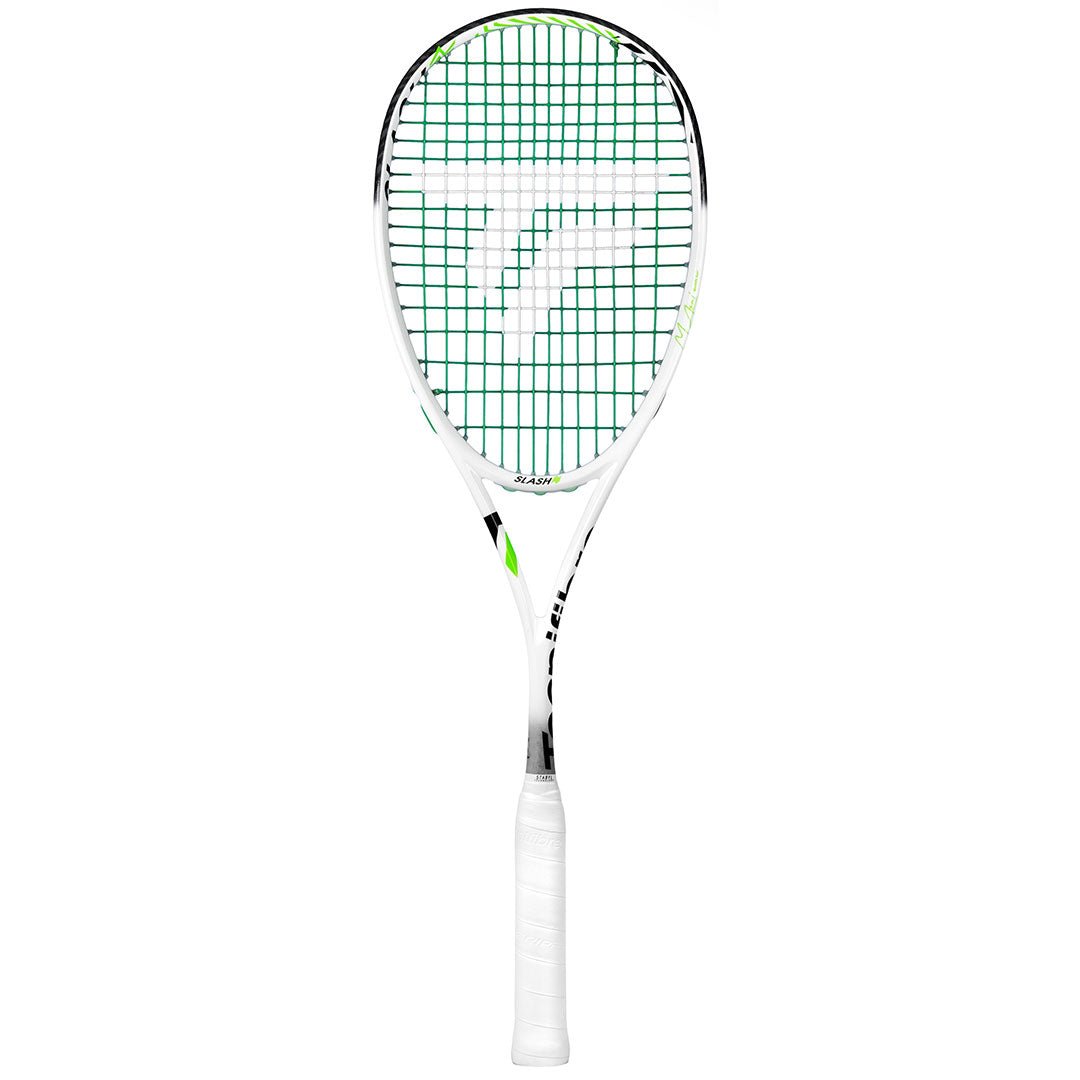
Tecnifibre Slash 120 Control
Mostafa Asal’s signature: 120 g, a small 461 cm² head and a control brief. The sharpest tool on this page.
Tecnifibre Carboflex 125 X-Top V2
Mohamed ElShorbagy’s signature and the tour’s default teardrop: 125 g, 500 cm², dead-even balance.
Tecnifibre Carboflex 125 NS X-Top V2
Nour El Sherbini’s NS edition — the same 125 frame with a slimmer grip for smaller hands and shorter swings.
Tecnifibre Carboflex 120 X-Top V2
Marwan ElShorbagy’s pick: the 120 g Carboflex, built for maximum swing speed and counter-attacking.
Dunlop Sonic Core Ultimate 132
Diego Elias’s closed-throat frame: the heaviest and densest-patterned racket here, strung 16×19.
Eye V.Lite 115 Control
Paul Coll’s signature: a 115 g frame with no bumper strip and a fan string pattern. Quick hands required.
Karakal Raw Pro 2.2
Joel Makin’s 2025/26 signature: 120 g, 480 cm², an oval handle shaped to his own hand.
On this page
- What the pro spec sheet actually looks like
- 1. Tecnifibre Slash 120 Control — Mostafa Asal
- 2. Tecnifibre Carboflex 125 X-Top V2 — Mohamed ElShorbagy
- 3. Tecnifibre Carboflex 125 NS X-Top V2 — Nour El Sherbini
- 4. Tecnifibre Carboflex 120 X-Top V2 — Marwan ElShorbagy
- 5. Dunlop Sonic Core Ultimate 132 — Diego Elias
- 6. Eye V.Lite 115 Control — Paul Coll
- 7. Karakal Raw Pro 2.2 — Joel Makin
- Comparison table
- The honest translation for amateurs
- Strings, balls and the rest of the pro setup
- FAQs
What the pro spec sheet actually looks like
Line the seven rackets up and the pro game stops looking mysterious. Four patterns repeat so consistently that they amount to a formula — and each one has a reason rooted in how squash at the highest level is actually played: rallies built on taking the ball early, volleying from the mid-court, and hitting hundreds of full-speed shots a week without the frame becoming the story.
Pattern one: the frames are light — genuinely light. Every racket on this page sits between 115 g and 132 g of frame weight. That surprises club players who assume power comes from mass. At pro level it comes from racket-head speed: a lighter frame accelerates faster, recovers quicker between shots and can be manoeuvred in the cramped front corners where, as Tecnifibre’s own research for the Slash range puts it, a huge share of shots are played in confined space. The trade is stability — a light frame twists more on off-centre contact — and the pros solve that problem with technique, not grams. Their contact is so reliably central that the forgiveness a heavier frame buys is forgiveness they never cash in.
Pattern two: balance clusters around even. Five of the seven frames balance at or near the middle (345–350 mm), one is head-light (Elias), and the head-heavy sledgehammers of amateur imagination are entirely absent — even Asal, the most physical power player of his generation, plays a 350 mm balance. An even balance is the compromise that serves both halves of the pro game: enough mass in the head to drive through the ball from the back, little enough to keep the racket fast at the front. Head-heavy frames generate length for developing swings; pros generate length with their legs, their swing and a full follow-through, and spend the saved weight on speed.
Pattern three: head size splits the tour in two. The Carboflex and Dunlop frames run the maximum practical 500 cm² teardrop (or conventional) heads, while the control specialists — Asal at 461 cm², Coll at 477 cm², Makin at 480 cm² — deliberately play smaller heads. A smaller head shortens the string bed, firms up the response and shrinks the trampoline: less free power, more say over exactly where the ball goes. That is a trade only a player with a grooved, full swing can afford, which is why it is the single clearest dividing line between pro spec and club spec on this page.
Pattern four: the strings are part of the spec, not an afterthought. Every frame here arrives with a named premium string — Tecnifibre’s Dynamix V.P. or 305, Dunlop’s Iconic Pro AF, Karakal’s Hot Zone 120, Eye’s multifilament — because pros treat the string bed as the component that actually touches the ball. And they manage it obsessively: Paul Coll told Squash Player magazine that he travels with six rackets “freshly strung and weighed identically”, prepared by his stringer so there is no difference between any of them. The frame gets the posters; the string job gets the precision. One more honest note before the cards: a pro’s retail frame is the same mould and layup you can buy — Eye’s founder has made a point of saying its pros use the exact racket customers buy — but tensions, grips and string choices are personalised on top of it. You are buying their frame, not their string bed.
Tecnifibre Slash 120 Control
Played by: Mostafa Asal — World No.1
The Slash range was developed in collaboration with Asal to harness the most physical, power-first game on the men’s tour — and his signature model is, counterintuitively, the control one. A 120 g frame with a small, round 461 cm² head: the sharpest, most demanding tool on this page, built for a player who generates his own power and wants the racket to add nothing but direction.
The geometry explains the brief. Tecnifibre’s Yoke Control design shrinks and rounds the head, enlarges the yoke area for stability and thins the shaft (a 261 mm² cross-section, against 390 mm² on the power-biased Slash 135) for precision at impact. A Stabyl mesh above the handle stiffens the shaft so the small head doesn’t twist when Asal takes the ball at full stretch, and the X-Top construction inherited from the Carboflex line removes the plastic bumper entirely, replacing it with aramid fibres and a PTFE treatment — less dead weight at the top of the frame, more swing speed, and a head that slides along walls instead of catching on them. The factory string is Tecnifibre’s 305 in the fluorescent green Asal cuts his stencil into — the benchmark pro string, chosen for feel and control rather than durability.
Read the spec as a confession about where pro power comes from. Asal is arguably the hardest hitter in the sport, and his racket is engineered to restrain power, not create it: the smallest head here, a control pattern, a control string. His pace comes from strength, timing and a full-blooded swing; the frame’s job is to keep that pace on target. For a club player, this is the most aspirational and the most dangerous card on the page — mishit a 461 cm² head with a compact swing and the ball dies. Buy it because your contact is already clean and your game is built on taking balls early and volleying, and it will reward you like nothing else here. Everyone else should read it as a lesson, not a shopping list — a lesson the translation section below spells out.
Why pros choose it
- Smallest head here = the most precise response on tour
- Stabyl-reinforced shaft stays stable under full-power swings
- Bumperless X-Top head slides along walls and swings faster
- Strung with Tecnifibre 305, the pro-benchmark control string
The amateur catch
- 461 cm² sweet spot punishes ordinary contact, hard
- No free power — your swing supplies all of it
As an Amazon Associate we earn from qualifying purchases.
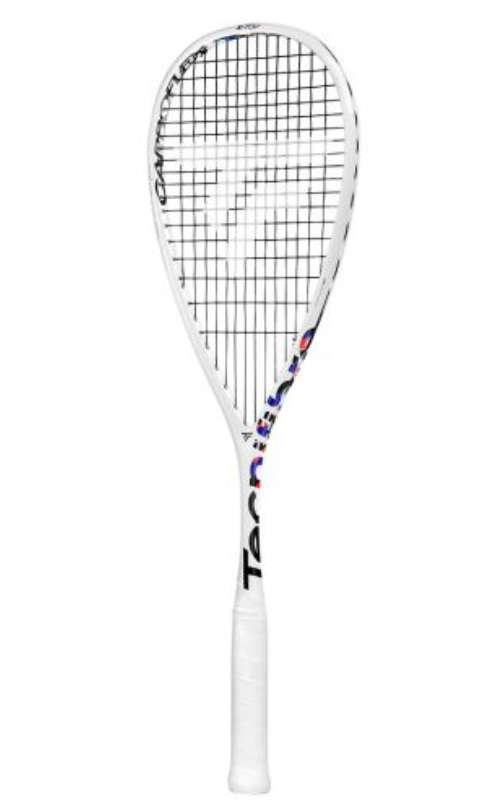
Tecnifibre Carboflex 125 X-Top V2
Played by: Mohamed ElShorbagy
If one racket defines the modern tour, it is this one. The Carboflex 125 is Mohamed ElShorbagy’s signature frame and the centre of the most-used racket family in professional squash — a 125 g, 500 cm² teardrop with a dead-even 350 mm balance that attacking players across the rankings have made their default.
The Carboflex formula is balance in the literal and figurative senses. The Airshaft frame geometry is shaped for aerodynamic speed, the shaft is reinforced on both sides by X-Arms to limit flex and hold the head stable through impact, and the X-Top head replaces the bumper with aramid fibres and PTFE so the frame accelerates faster and glides off the walls. Twelve Extended String Holes at 3, 9 and 12 o’clock are enlarged to let the strings move and breathe, adding elasticity, spin and a little extra tolerance on off-centre hits — the one deliberate nod to forgiveness in a range otherwise built for the clean strikers. Strung with Dynamix V.P., Tecnifibre’s most responsive multifilament, the whole package is aimed at ElShorbagy’s game: relentless front-court pressure, volleys taken early, and kills finished from mid-court before the rally can reset.
Why does this matter to a club player? Because of all the frames on this page, this is the pro spec that translates most honestly. The 500 cm² head is the same size as the friendliest rackets in our under-$100 guide, the even balance asks nothing exotic of your swing, and 125 g is light without being extreme. It is still a firm, fast frame that assumes you swing through the ball — it will not manufacture depth from a poked defensive jab the way a head-heavy frame does — but an improving player with a full swing can grow into it rather than around it. There is a reason the same mould, in its 120, 125, 125 NS, 130 and 135 versions, covers more of the tour than any rival: it is the pro game’s reference point, and the safest pro-spec buy on this page.
Why pros choose it
- The tour’s reference teardrop: speed, stability, even balance
- Extended String Holes add a touch of off-centre tolerance
- X-Top bumperless head for swing speed and wall glide
- Dynamix V.P. is Tecnifibre’s most responsive string
The amateur catch
- Firm, fast response assumes a full, committed swing
- Less depth on defensive jabs than a head-heavy frame
As an Amazon Associate we earn from qualifying purchases.
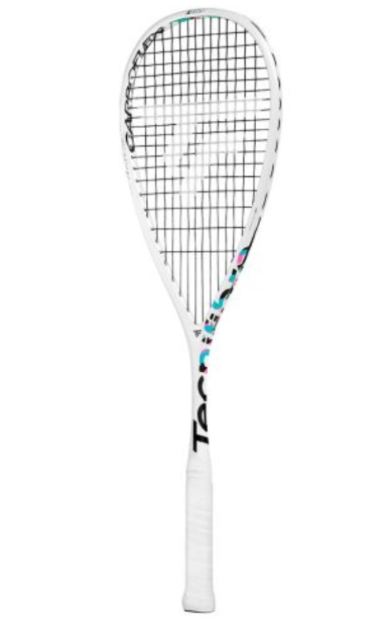
Tecnifibre Carboflex 125 NS X-Top V2
Played by: Nour El Sherbini
The NS is the Nour El Sherbini version of the world’s most-played frame: the identical 125 g, 500 cm² Carboflex mould as Mohamed ElShorbagy’s racket, with one change made for its namesake — a noticeably slimmer grip circumference, built for smaller hands and the shorter, wristier swing of the women’s No.1-calibre game.
Everything said about the standard 125 applies here — Airshaft aerodynamics, X-Arms shaft reinforcement, the bumperless X-Top head, Extended String Holes, Dynamix V.P. string — because it is the same frame. The NS exists because of a detail amateurs rarely think about and pros obsess over: grip size. A grip that is too thick for your hand stops the wrist working, blunts touch shots and forces the forearm to do the fingers’ job; Sherbini’s version trims the handle circumference so the racket sits deeper in a smaller hand and the wrist stays free for the deceptive flicks and holds that define her front-court game. Specialist listings describe the NS exactly this way — the Nour El Sherbini version of the 125, same weight and frame, thinner grip, its own cosmetic.
The lesson travels well beyond one player. If you have smaller hands — many women and junior players, and plenty of men — the standard grips on most tour frames are quietly sabotaging your touch game, and the NS is the pro-spec answer that doesn’t require a custom build. Pair it with the right footwear for the lunging it encourages — our best squash shoes guide covers the grip-and-support end of the equation — and you have the exact setup logic of the most successful women’s player of the modern era: a full-size head, an even balance, and a handle that actually fits the hand holding it. It is also, not coincidentally, the pro frame most often recommended to advanced women players by specialist retailers, because it is the one designed around one.
Why pros choose it
- Full Carboflex 125 performance in a slimmer-grip edition
- Frees the wrist for holds, flicks and deception
- Same 500 cm² head and even balance as the standard frame
The amateur catch
- Slim grip is wrong for large hands — check before you buy
- Same firm, fast brief as the 125: it rewards full swings
As an Amazon Associate we earn from qualifying purchases.
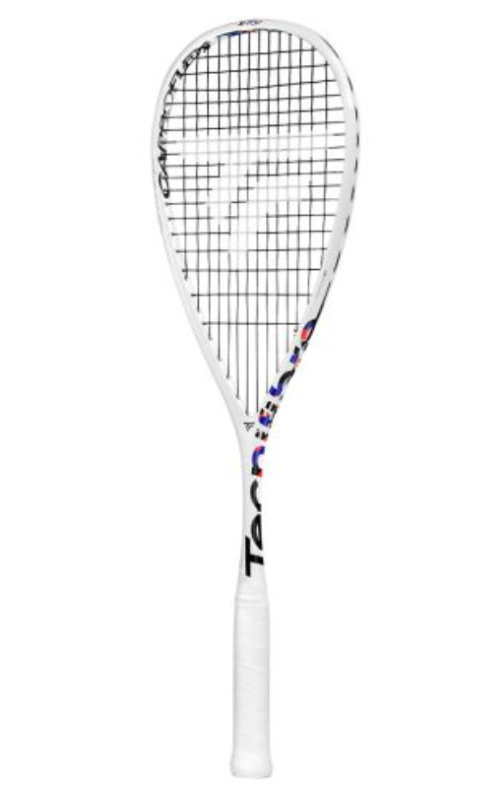
Tecnifibre Carboflex 120 X-Top V2
Played by: Marwan ElShorbagy
The third Carboflex on this page belongs to the other ElShorbagy brother. Marwan’s game is the tactical counterpoint to Mohamed’s assault — retrieval, patience and the sudden counter-kill — and his 120 is the lightest, fastest-swinging version of the family frame, built around Tecnifibre’s SpeedShaft for maximum acceleration.
When the X-Top V2 generation launched, the 120 was its headline act: a brand-new slim frame, the lightest advertised Carboflex ever at the time, created by stripping the design back around the SpeedShaft concept — a shaft profiled purely for swing acceleration. The rest of the family technology carries over: the bumperless X-Top head in aramid and PTFE, the 500 cm² teardrop, the 14×18 pattern and Dynamix V.P. string. What changes is intent. Where the 125 is the all-round reference, the 120 trades a measure of solidity for speed: quicker to prepare, quicker through the volley, quicker to recover for the next shot — the exact economy a counter-attacking retriever spends his matches trading in.
For amateurs, this is the borderline card. Five grams sounds like nothing, and on a spec sheet it nearly is — but it sits at the threshold where a frame stops forgiving tired technique. Early in a match, most strong club players will love the 120’s speed; late in the third game, when the swing shortens and contact drifts toward the frame’s edge, the 125’s extra stability starts winning points the 120 gives away. Marwan can hold his technique together for ninety minutes against the best movers in the world. Buy his racket if you honestly can too — or if your game is genuinely built on volleys and counter-punching rather than length. Otherwise his brother’s frame, one card up, is the same idea with a safety margin.
Why pros choose it
- Fastest swing in the Carboflex family — SpeedShaft design
- Full 500 cm² head keeps a usable sweet spot
- Even balance suits volley-and-counter games
The amateur catch
- Least stable Carboflex when technique tires late in matches
- Demands the racket-head speed it was designed around
As an Amazon Associate we earn from qualifying purchases.
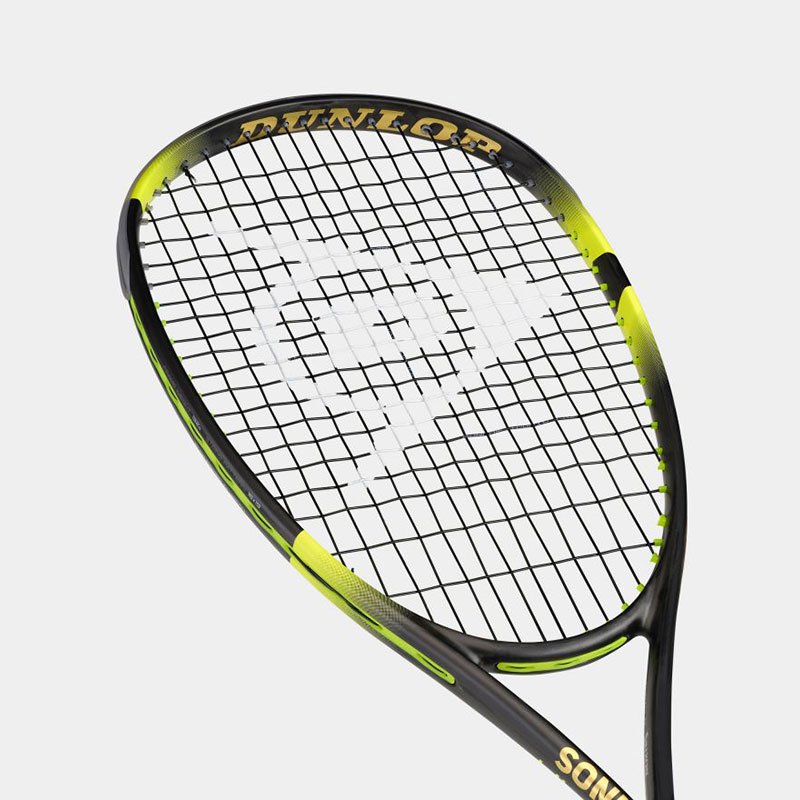
Dunlop Sonic Core Ultimate 132
Played by: Diego Elias — World Champion
Peru’s world champion plays the most old-school spec on this page: a 132 g frame — the heaviest here — with a conventional closed-throat head and a dense 16×19 string pattern borrowed from control-racket logic. In a field of featherweight teardrops, Elias’s Dunlop is the reminder that precision is also a power game.
Start with the throat, because it changes everything downstream. A closed throat shortens the main strings, which firms the string bed and shrinks the trampoline effect: the ball leaves the racket closer to where the face was pointing, with less of the teardrop’s catapult. The dense 16×19 pattern — the tightest on this page — doubles down on the same brief, holding the ball on the strings and flattening the trajectory. Against that control brief, Dunlop layers its comfort technology: Sonic Core Infinergy foam at 2 and 10 o’clock absorbs impact shock, and Flex Touch Resin in the shaft adds further damping, so the frame gives back feel instead of vibration. The balance is head-light at 367 mm, which keeps a 132 g frame manoeuvrable at the front, and the factory string is Dunlop’s Iconic Pro AF in the thicker 1.25 gauge — a durability-conscious choice that suits a player whose game is built on relentless, accurate length.
Elias’s nickname is the Peruvian Puma, earned for movement so smooth it looks effortless — and this racket is what that movement buys. A player who is never late and never off-balance doesn’t need a trampolining head to rescue bad positions; he needs the ball to obey the face angle exactly, rally after rally, which is what the closed throat and dense pattern deliver. The amateur translation is friendlier than it first looks: of the seven frames here, this one’s extra weight and control geometry are the closest to what a strong club player already knows, and its damping package is the kindest to the arm. If your game is built on length, patience and putting the ball in the back corners rather than killing it from mid-court, the world champion’s logic is your logic.
Why pros choose it
- Closed throat + 16×19 pattern: the most directional ball here
- Sonic Core and Flex Touch Resin mute vibration, keep feel
- Head-light balance keeps a 132 g frame quick at the front
The amateur catch
- Dense pattern gives back less free power on short swings
- Heaviest frame here — sluggish if your preparation is late
As an Amazon Associate we earn from qualifying purchases.
Eye V.Lite 115 Control
Played by: Paul Coll — former World No.1
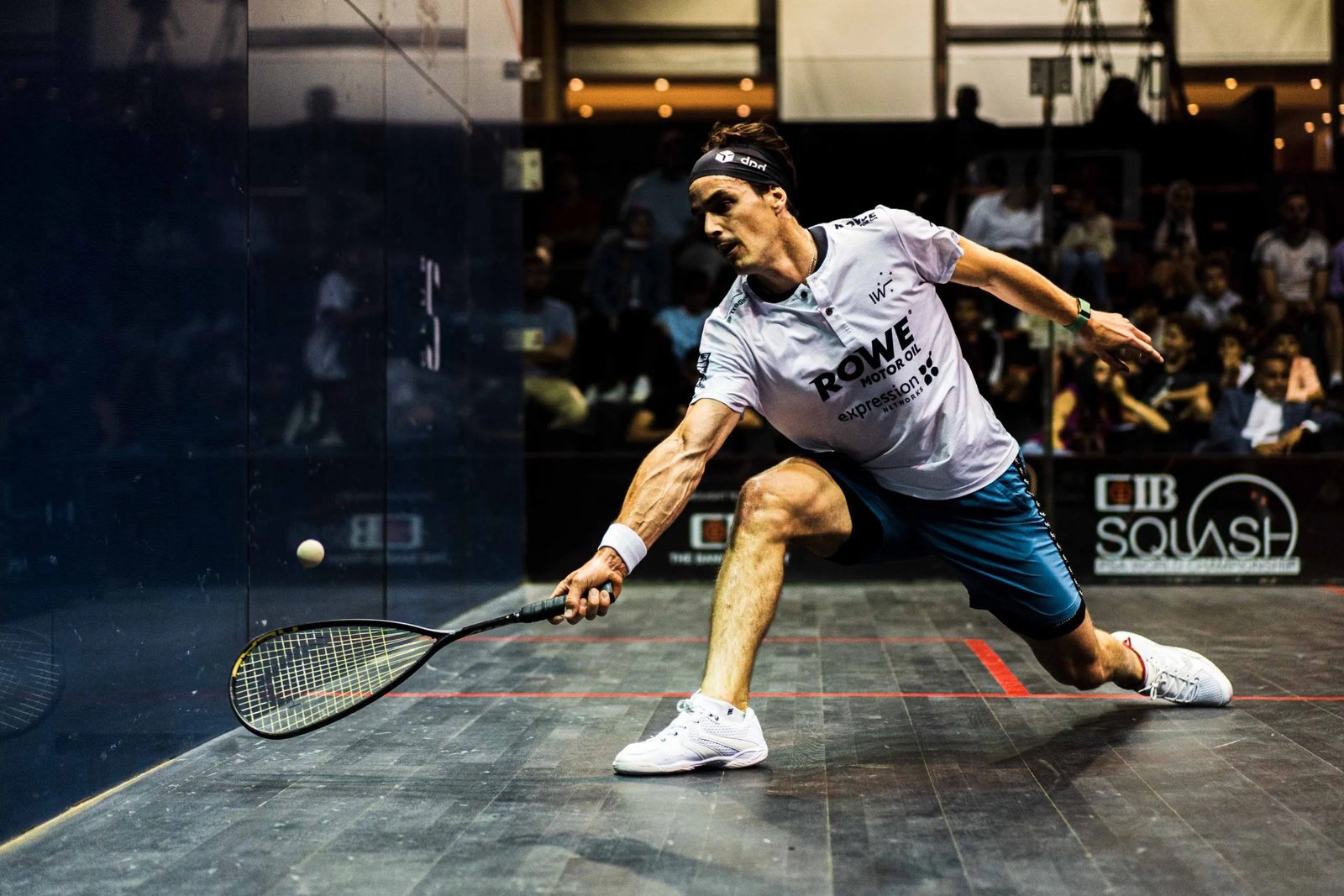
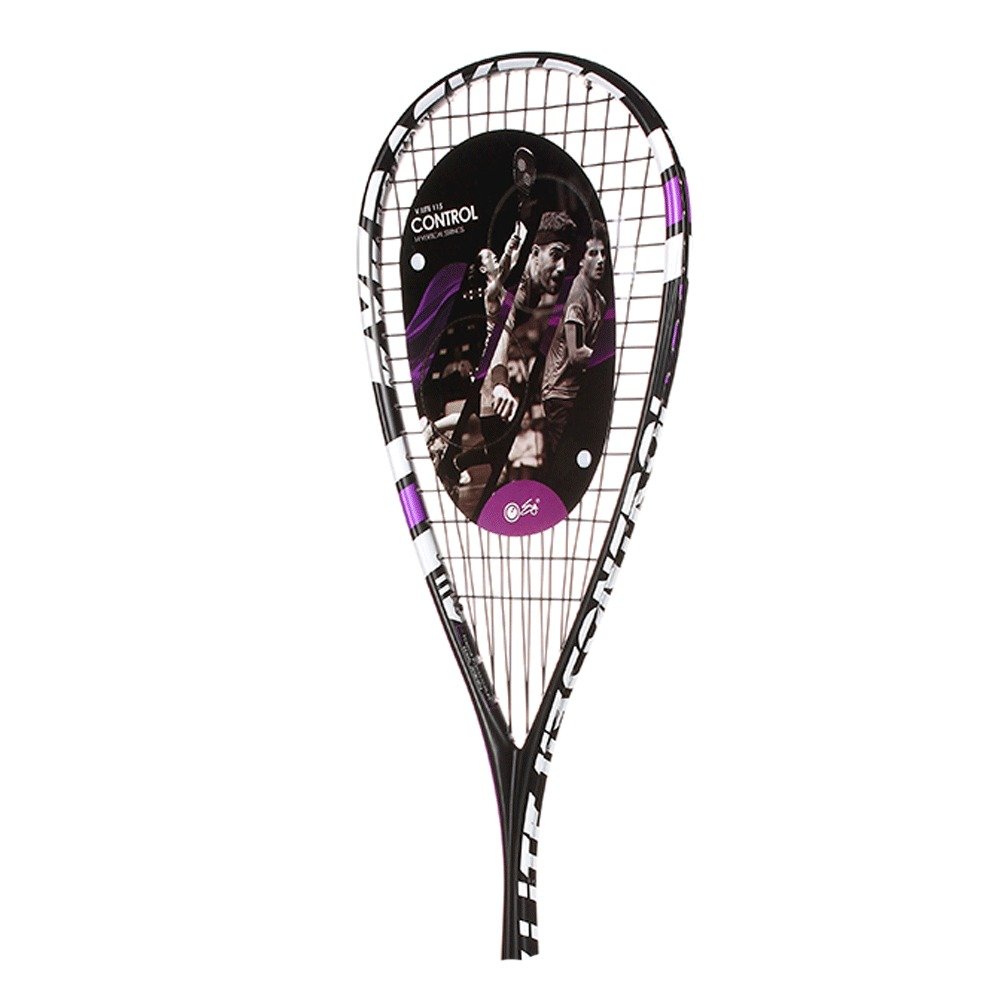
“Superman” signed with Eye in 2016 and the brand built this frame to his spec: a 115 g teardrop with a Control fan string pattern, a stiff direct response and — Eye’s signature heresy — no bumper strip at all. It is the lightest racket on this page and the one most completely shaped by a single player’s game.
The design logic is subtraction. Eye removes the bumper strip entirely — small individual eyelets protect the string holes instead — arguing the strip adds weight exactly where a fast racket least wants it and rarely prevents the breakages that actually kill frames, which happen lower on the head. The fan string pattern spreads the mains toward the top of the teardrop, lengthening them for a touch of extra life, and a comparatively thick shaft restores the balance and stiffness the missing bumper would otherwise take away; specialist measurements put the strung racket at 148–152 g with a 348–350 mm balance. The result is a frame that changes direction almost by thought — which is what a player whose defence involves diving across the front wall and recovering for the next shot actually needs. Coll’s own description of his setup discipline says the rest: six rackets, freshly strung and weighed identically, prepared by his personal stringer so no frame ever feels different from another.
And there is the catch, stated plainly: this is a 115 g frame with a 477 cm² head in the hands of one of the greatest athletes the sport has produced. Coll can defend with it because he arrives early, balanced, and strikes from the middle of a small string bed. A club player arriving late and lunging will find the same racket twisting on off-centre contact and returning balls with interest deducted. Eye itself makes the honest version of this argument — its pros play the exact retail racket, so what you buy is genuinely what Coll plays — but identical equipment is not identical outcomes. Treat the V.Lite 115 as the connoisseur’s pick: buy it when your movement and contact are already your strengths and you want a frame that stops slowing them down. It is also, for what it is worth, the racket of the player squash fans would most want to watch — with squash heading for its Olympic debut, our squash at LA 2028 guide explains how Coll’s generation of pros will qualify.
Why pros choose it
- Lightest frame here — unmatched change of direction
- Bumperless head keeps mass out of the tip
- Stiff, direct response for volleys and counter-hits
- Retail frame is the pro’s frame — no tour-only layup
The amateur catch
- 477 cm² head + 115 g = the least forgiving spec here
- Twists on the off-centre contact ordinary players make
As an Amazon Associate we earn from qualifying purchases.
Karakal Raw Pro 2.2
Played by: Joel Makin — Wales / British No.1
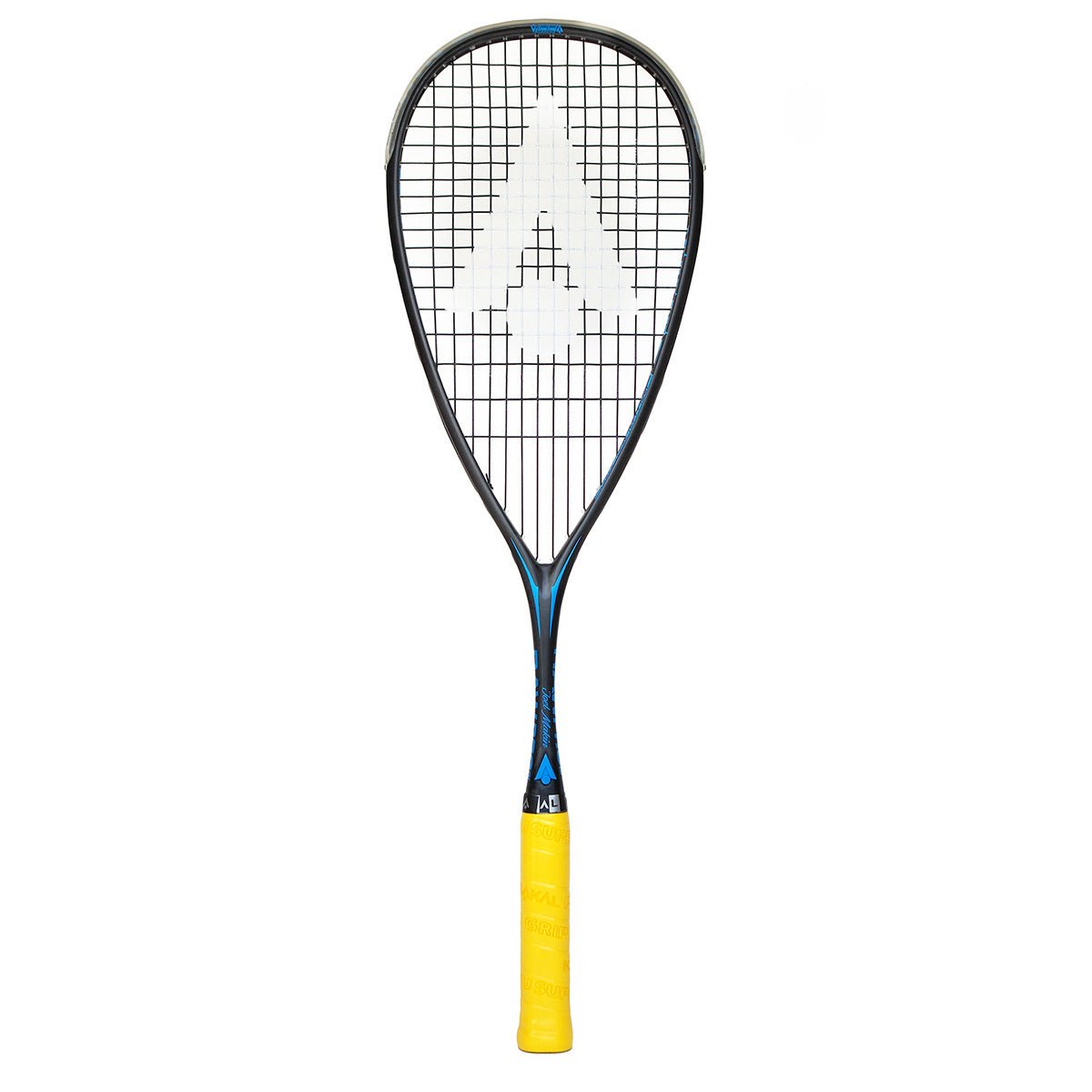
Joel Makin’s game is attrition: the longest rallies, the hardest retrieval, the opponent broken down by accumulation. His signature Karakal is built to tour spec with him — a 120 g frame in NEXGEN Fast Fibre graphite with a paint-free raw finish, an even 345 mm balance and a handle reshaped into the smooth oval his own hand prefers.
The 2.2, Karakal’s 2025/26 update of Makin’s signature, strips the cosmetics back to exposed carbon — “raw” is literal — and puts the engineering where a retrieving player needs it. NEXGEN Fast Fibre graphite is Karakal’s fast-recovery layup, marketed on returning to shape quicker after impact; a built-in frame anti-vibration dampener takes the buzz out of the mishits that even Makin makes at full stretch in the back corners; and the 480 cm² midplus head splits the difference between the 500 cm² power heads and Asal’s 461 cm² scalpel — a control-leaning size that still leaves a working sweet spot. The factory setup is complete and characterful: Hot Zone 120 braided string for touch and durability, Karakal’s PU Super Grip, and an eco fleece cover in the box. The oval handle, redesigned to Makin’s own ergonomic preference, is the detail that tells you this is a genuine signature rather than a licensing exercise.
Of the control-leaning frames on this page, this is the one a strong club player can most plausibly grow into: the head is small but not tiny, the balance is neutral, and the string and grip package is chosen for durability as much as feel — appropriate for a racket that will spend its life being swung hard, late, and into the occasional wall. What it won’t do is flatter a short swing: like every 120 g frame here, it asks for a full preparation and a committed follow-through, and it answers anything less with a shorter ball. Makin has built a top-ten career on never giving that shorter ball away. If your honest self-assessment says your game is fitness, patience and pressure rather than first-strike kills, his frame is the pro spec with your name on it — almost literally.
Why pros choose it
- 480 cm² head: control bias with a working sweet spot
- Oval handle shaped to the player’s own ergonomic spec
- Built-in dampener for full-stretch, off-centre defence
- Durability-minded factory string and grip package
The amateur catch
- 120 g and control-leaning: no depth without a full swing
- Smaller US retail footprint than Tecnifibre or Dunlop
As an Amazon Associate we earn from qualifying purchases.
The pro rackets, side by side
| Player | Racket | Frame weight | Head size | Balance | String pattern | Club-player translation |
|---|---|---|---|---|---|---|
| Mostafa Asal | Tecnifibre Slash 120 Control | 120 g | 461 cm² | 350 mm | 14 × 18 | Experts only — the least forgiving spec here |
| Mohamed ElShorbagy | Tecnifibre Carboflex 125 X-Top V2 | 125 g | 500 cm² | Even, 350 mm | 14 × 18 | The safest pro-spec buy for strong improvers |
| Nour El Sherbini | Tecnifibre Carboflex 125 NS X-Top V2 | 125 g | 500 cm² | Even, 350 mm | 14 × 18 | The 125 with a slimmer grip — smaller hands start here |
| Marwan ElShorbagy | Tecnifibre Carboflex 120 X-Top V2 | 120 g | 500 cm² | Even | 14 × 18 | For volley-and-counter players with clean technique |
| Diego Elias | Dunlop Sonic Core Ultimate 132 | 132 g | 500 cm², closed throat | Head light, 367 mm | 16 × 19 | Length-and-accuracy players; kindest on the arm |
| Paul Coll | Eye V.Lite 115 Control | 115 g | 477 cm² | Head light, 348–350 mm | Control fan, 14 × 18 | Connoisseur’s pick — movement and contact first |
| Joel Makin | Karakal Raw Pro 2.2 | 120 g | 480 cm² | Even, 345 mm | 14 × 18 | Grinders and retrievers with a full swing |
The honest translation for amateurs — what to copy, what to leave
Strings, balls and the rest of the pro setup
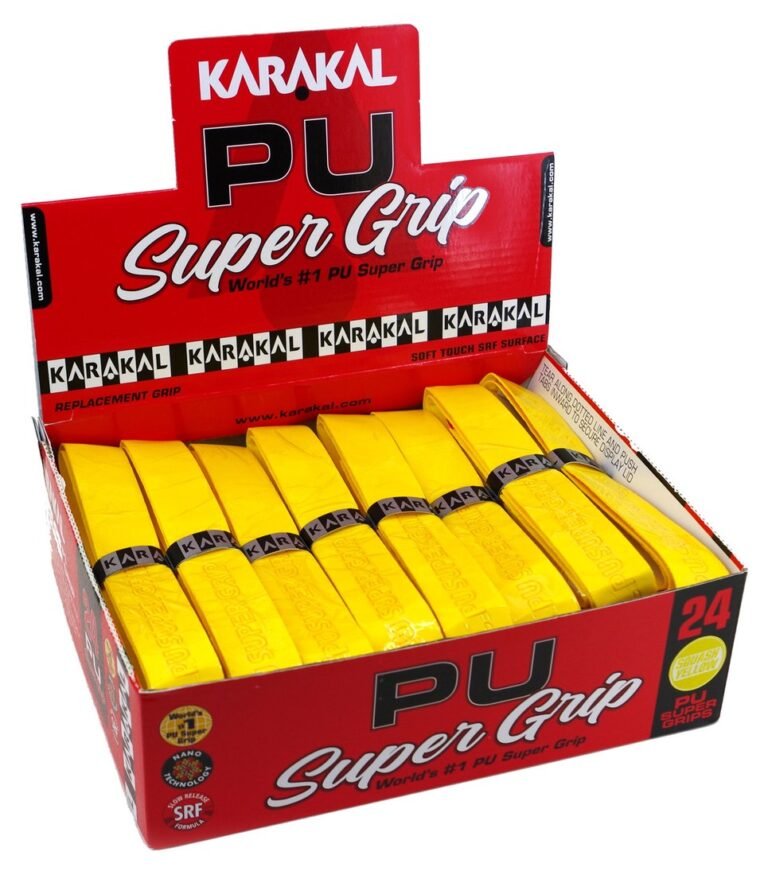
A pro’s racket is a system, and the frame is only the visible part. Strings: the frames above arrive with Tecnifibre Dynamix V.P. or 305, Dunlop Iconic Pro AF, Karakal Hot Zone 120 or Eye multifilament — when you restring, replacing like for like (or with another quality multifilament) preserves the feel the frame was designed around, and a fresh string job restores more performance than any other spend. Balls: the tour plays a double yellow dot, but that ball only performs when it is properly warm and hit hard; most club rallies are livelier and longer with a single yellow dot, which is the ball the majority of these pros’ club-level admirers should actually buy. Grips: pros replace grips constantly because a slipping grip quietly shortens every swing — a multi-pack of overgrips is the closest a club player can get to the pro habit for pocket change.
Tecnifibre 305 / Dynamix V.P.
The strings the tour’s most-played frames arrive with. Restring with the benchmark your racket was voiced for. Check on Amazon →
Dunlop Pro Squash Balls
The single yellow dot club standard — the right ball for rallies at club pace, from the maker of the tour ball. Check on Amazon →
Overgrips (Multi-Pack)
The pro habit you can afford: fresh tack, correct thickness, no slipping mid-swing. Swap them like the tour does — often. Check on Amazon →
Pro squash rackets — FAQs
What racket does Mostafa Asal use?
Mostafa Asal plays the Tecnifibre Slash 120 Control — his signature model from the Slash range Tecnifibre developed with him. It is a 120 g frame with a small 461 cm² head, a 350 mm balance, a 14×18 pattern and Tecnifibre’s 305 string: a control spec for the world No.1’s power game. Retail listings from PDHSports and Tecnifibre retailers confirm the pairing.
Do the pros really use the same rackets you can buy?
Essentially, yes. The frames on this page are retail products, and Eye’s founder has stated publicly that its pros use the exact racket customers buy. What differs is the setup layered on top: pros personalise string tension, string choice and grip build-up, and carry multiple matched frames. Paul Coll travels with six rackets freshly strung and weighed identically. You are buying their frame and their spec — not their stringer’s labour.
Why do pro squash players use such light rackets?
Because pro power comes from racket-head speed, not frame mass. Every racket on this page weighs 115–132 g: light frames accelerate faster, recover quicker between shots and manoeuvre better in the front corners. The cost is stability on off-centre hits — a cost pros barely pay, because their contact is consistently central. Club players with less reliable contact usually play better at 125–135 g.
Which pro racket is best for a club player?
The Tecnifibre Carboflex 125 X-Top V2 — Mohamed ElShorbagy’s frame — translates best: a full 500 cm² head, an even 350 mm balance and a mid-range 125 g weight. Players with smaller hands should look at Nour El Sherbini’s 125 NS version with its slimmer grip, and length-and-accuracy players at Diego Elias’s Dunlop Sonic Core Ultimate 132. The sub-120 g frames and Asal’s 461 cm² Slash are experts-only specs.
Should a beginner copy a pro’s racket?
Copy the principles, not the spec sheet. Even balance, a full-size head and a proper string are pro traits that help everyone. Ultra-light frames, small control heads and dense patterns are pro traits that punish developing technique. Beginners are better served by a forgiveness-first frame — our beginners’ racket guide ranks exactly that way — and can graduate to a pro spec once their contact is consistently central.
What strings do professional squash players use?
The frames on this page arrive with the strings their players’ brands voice them for: Tecnifibre’s Dynamix V.P. on the Carboflex models and the benchmark Tecnifibre 305 on Asal’s Slash, Dunlop’s Iconic Pro AF on Elias’s Ultimate 132, Karakal’s Hot Zone 120 on Makin’s Raw Pro 2.2 and Eye multifilament on Coll’s V.Lite. Pros restring constantly — freshness is the real pro habit worth copying.
Why do so many pros play Tecnifibre Carboflex rackets?
Because the Carboflex formula — a light teardrop, even balance, bumperless X-Top head and a responsive multifilament string — suits the modern game’s premium on swing speed, and the range offers it at 120, 125, 125 NS, 130 and 135 g so players can tune weight without changing families. On this page alone, Mohamed ElShorbagy, Nour El Sherbini and Marwan ElShorbagy play three different versions of it.
Do pros customise their rackets?
Yes — but mostly in setup, not structure. The retail frame is the pro’s frame; the customisation is matched sets (Coll’s six identically weighed, freshly strung rackets), personal string tensions, grip sizes and build-ups — El Sherbini’s signature NS model exists purely because she wanted a slimmer grip than the standard 125. Brands occasionally build a player’s preference into the retail version itself, as Karakal did with Joel Makin’s oval handle on the Raw Pro 2.2.
The verdict
Copy the Carboflex 125 X-Top V2 if you want the tour’s most-played frame in its most transferable spec — it is the pro racket a strong club player can actually use. Copy the 125 NS if your hands are smaller and touch is your game. Copy the Dunlop Ultimate 132 if length and accuracy are your weapons and your arm likes damping. Copy the Karakal Raw Pro 2.2 if you win by attrition. Admire, then think twice about, the Slash 120, the 120 Carboflex and the V.Lite 115 — they are the sharpest tools here, and sharp tools cut the hand that isn’t ready. The pros’ real secret is not on any spec sheet anyway: it is central contact, ten thousand times a week. Buy the frame that fits the contact you have today, restring it like you mean it, and let the spec sheet catch up with your game — not the other way round.
Affiliate disclosure: Alishuttler.com is a participant in the Amazon Services LLC Associates Program. The Amazon buttons on this page use our affiliate tag — if you buy through them, we may earn a commission at no extra cost to you. Prices shown on Amazon are live and may differ from any figures mentioned here.