The senior player’s squash decision is a specifications decision. Once the game becomes about court craft, length, boasts and volleys read early rather than rallies won by lunging harder, the rackets that fit are the ones their makers publish at the light end of the frame-weight scale, with head sizes that forgive and balances you can read on the spec sheet. This guide compares seven of them on exactly what their makers publish — frame weights as each maker states them, balance points, head shapes, head sizes and factory strings — and nothing else. Just the spec sheets, read properly.
⚡ TL;DR — The Short Answer
For the lightest complete senior specification, buy the Eye V.Lite 110 — a 110-gram frame, head-light and teardrop, with a 500 cm² head. The HEAD G.110 matches that 110-gram frame weight in a teardrop HEAD positions for volley play — its copy describes a head-heavy balance, and the card says so plainly. The Tecnifibre Dynergy APX 120 is the big-head option at 120 grams, the Oliver Apex 5.0 Pro the even-balance pick, and the Harrow Reflex 125 the bridged-throat control racket at a published 360 mm balance point. The Dunlop Blackstorm Graphite is the traditional-shape card, and the Black Knight Magnum Strike closes the list with the largest head here — 523 cm² — at 135 grams.
Quick Picks — Best Squash Rackets for Seniors at a Glance
110 g frame, head-light, teardrop, 500 cm² — the lightest complete spec in the guide.
110 g frame in a teardrop HEAD positions for volley play and swing speed.
A 490 cm² head at a 120 g frame weight, strung with X-One Biphase from the factory.
Even balance in Oliver’s own spec, with the maker’s SQ-X9 factory string.
125 g frame, closed throat bridge and a published 360 mm balance point.
Dunlop’s own feed calls the shape “Classic” — a 500 cm² head-light traditional frame.
523 cm² — the biggest head here — head-light and pre-strung with Ashaway SuperNick XL Ti.
In This Guide
The Senior Decision: Frame Weight First, As Makers State It
Every squash racket decision trades mass against manoeuvrability, but the senior player’s version starts in one specific place: the published frame weight. Club squash rackets span a wide band, and the makers build their lighter models deliberately — a V.Lite line from Eye, a G.110 from HEAD whose model name is its frame weight, an APX 120 from Tecnifibre. Those are catalogue decisions printed on spec sheets, and they are the honest starting point for a player whose game is built on taking the ball early, volleying, and moving the opponent with length rather than winning rallies with outright pace. The seven cards below run from 110 grams to 135 grams as their makers state the figures, and the guide is organised around that ladder first.
Read the weight figures the way this guide prints them: exactly as each maker states them, with the maker’s own labelling. Where a maker or its retailers state a frame weight, the card prints it as a frame weight; where a source states a figure as unstrung, the card says so; and where the sources do not label a figure at all — the Black Knight Magnum Strike’s 135 grams — the card prints it bare rather than guessing. One maker, Oliver, states weight in its own notation (“125N / 150B”), and its card prints that notation instead of converting it into a claim the maker never made. Where sources disagreed at build time — and squash spec sheets disagree more than most — this file’s header notes record it and the card prints the directed figure.
One boundary before the picks. This page owns the senior lightweight decision only. First-racket selection belongs to our guide to the best squash rackets for beginners, the middle rung to our guide to the best squash rackets for intermediate players, the advanced tier to our pro squash rackets guide, and the women’s segment to our guide to the best squash rackets for women — read those for their decisions, and this page for the senior specification. The same lightweight logic on a padel court is covered by our guide to the best padel rackets for seniors. None of the models carded in those guides is re-carded here; every card below is a fresh model chosen for this decision. If you are newer to the game itself than to this segment of it, our how to play squash guide covers the shots these rackets are built to play.
Head Shapes, Balance Points and Factory Strings
Head shape is the second decision, and this guide keeps it at buying-decision level. Most of the cards below are teardrops — the open-throated shape the makers position between the traditional and oversize ends of their ranges — alongside two deliberate exceptions: Harrow’s Reflex 125 pairs its teardrop head with a closed, bridged throat, and Dunlop’s own data feed classifies the Blackstorm Graphite’s shape as “Classic”, the traditional outline. Where a maker publishes no shape label at all — Tecnifibre publishes none for the Dynergy APX 120 — the card says so and describes the throat design instead of borrowing a retailer’s label. Shape and head size travel together: the heads here run from 490 cm² to the Black Knight’s 523 cm², and the card prints each maker’s figure where one is published — and states it plainly where, as with the Harrow, the maker publishes none.
Balance is the third decision, and this guide prints it with unusual care because the sources demand it. Four cards are head-light on their makers’ own descriptions. One — Oliver’s Apex 5.0 Pro — is published as even balance. And two cards carry balances their makers describe in head-heavy terms: HEAD’s copy for the G.110 describes a head-heavy balance pitched for volley play, and the Dynergy APX 120’s published balance point of 355 mm ±5 mm sits at the head-heavy end of the scale. Both are carded deliberately, on their frame weights and head sizes, and both cards flag the balance in their opening lines rather than smoothing it over. Where a maker publishes a balance point in millimetres, the card prints it — 355 mm for the Tecnifibre, 360 mm for the Harrow — because the figure is the fact, whatever label surrounds it.
The factory string is the quiet line on every spec sheet, and for this segment it matters. A senior player buying a light racket is rarely planning an immediate restring, so what the racket arrives strung with is what it will be played with for a long while. The cards print the factory string exactly as published: a named premium string where the maker names one — Tecnifibre’s X-One Biphase, Black Knight’s factory-fitted Ashaway SuperNick XL Ti, Oliver’s SQ-X9, Dunlop’s S-Gut per its spec feed — the maker’s own description where it describes rather than names (Eye’s “high quality multifilament”), and an unnamed synthetic gut where that is all the maker states (HEAD). Where published details conflict — a gauge or a factory tension stated two ways — the card prints the string’s name only and records the conflict in this file’s header.
Construction ties the decisions together, in the makers’ own materials language. The frames here are graphite and carbon builds — Eye’s 100% premium graphite, HEAD’s Graphene 360+, Tecnifibre’s Graphite & H.M.G. with its Jumbo Shaft, Dunlop’s Carbon Fibre with 4D Braided and ACS, Black Knight’s nano-Carbon XS and Quartz Carbon layup. The cards report those constructions as the makers name them, without translating marketing names into performance promises. Read each card the same way: weight first, balance second, shape and head size third, factory string fourth — and the comparison table below puts all four side by side.
The 7 Best Squash Rackets for Seniors, Compared
Seven rackets, one shared brief — published at the light end of their makers’ ranges, with head sizes and balances a senior player can plan a game around. Two cards carry head-heavy maker descriptions and are flagged in their opening lines. Read the card that matches your game first.
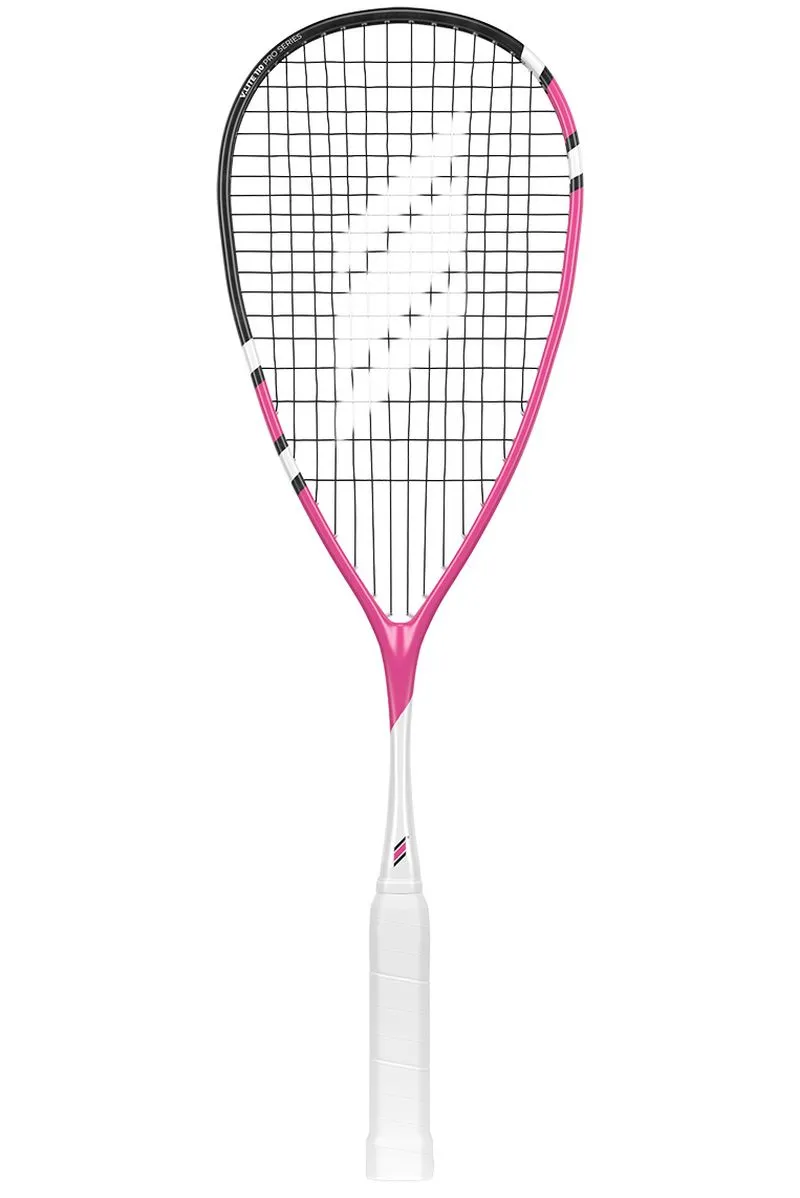
Eye V.Lite 110 (Pro Series)
The lightest complete specification in the guide — a 110-gram head-light teardrop with a 500 cm² head and no bumper fitted.
Start with the number Eye prints in the model name: a frame weight of 110 grams, which makes the V.Lite 110 the lightest card in this guide and one of the lightest full-specification rackets any maker publishes. Around that figure, Eye’s published sheet reads like the senior brief written out: a head-light balance, a teardrop head of 500 cm² — a full-size head, not a trimmed one — and a construction of 100% premium graphite. One retailer states the 110-gram figure as the unstrung weight; the card prints it as the frame weight the model is sold under and notes the labelling here rather than in fine print. For the senior player whose game is volleys, boasts and taking the ball early, this is the most direct route in the guide: the lightest frame, with the balance class that keeps a light frame quick to reposition.
The details are Eye’s published set for its V.Lite line. The string pattern is 14×18, which Eye itself names its “Control” pattern, strung with a factory multifilament the maker describes as high quality — described, not named, so the card prints the description and invents no name. The V.Lite line’s vertical stringing layout is part of the family’s published design, and one construction choice is worth its own line: Eye fits no bumper on this model, which is part of how the published weight stays at 110 grams — a deliberate trade the maker makes openly, and one the pros-and-cons box below keeps visible. If you want one racket that answers the whole lightweight decision, this is the card.
What we like
- The lightest published frame here: 110 g, with a full 500 cm² head
- Head-light balance — the handling class, on the lightest frame
- The maker names its own pattern: 14×18 “Control”
- A described factory multifilament rather than a basic synthetic
Worth knowing
- No bumper is fitted — part of how the weight is achieved, stated by the design
- One retailer labels the 110 g figure unstrung; makers’ labelling varies across this guide
- Eye publishes no balance-point figure in millimetres
As an Amazon Associate we earn from qualifying purchases.
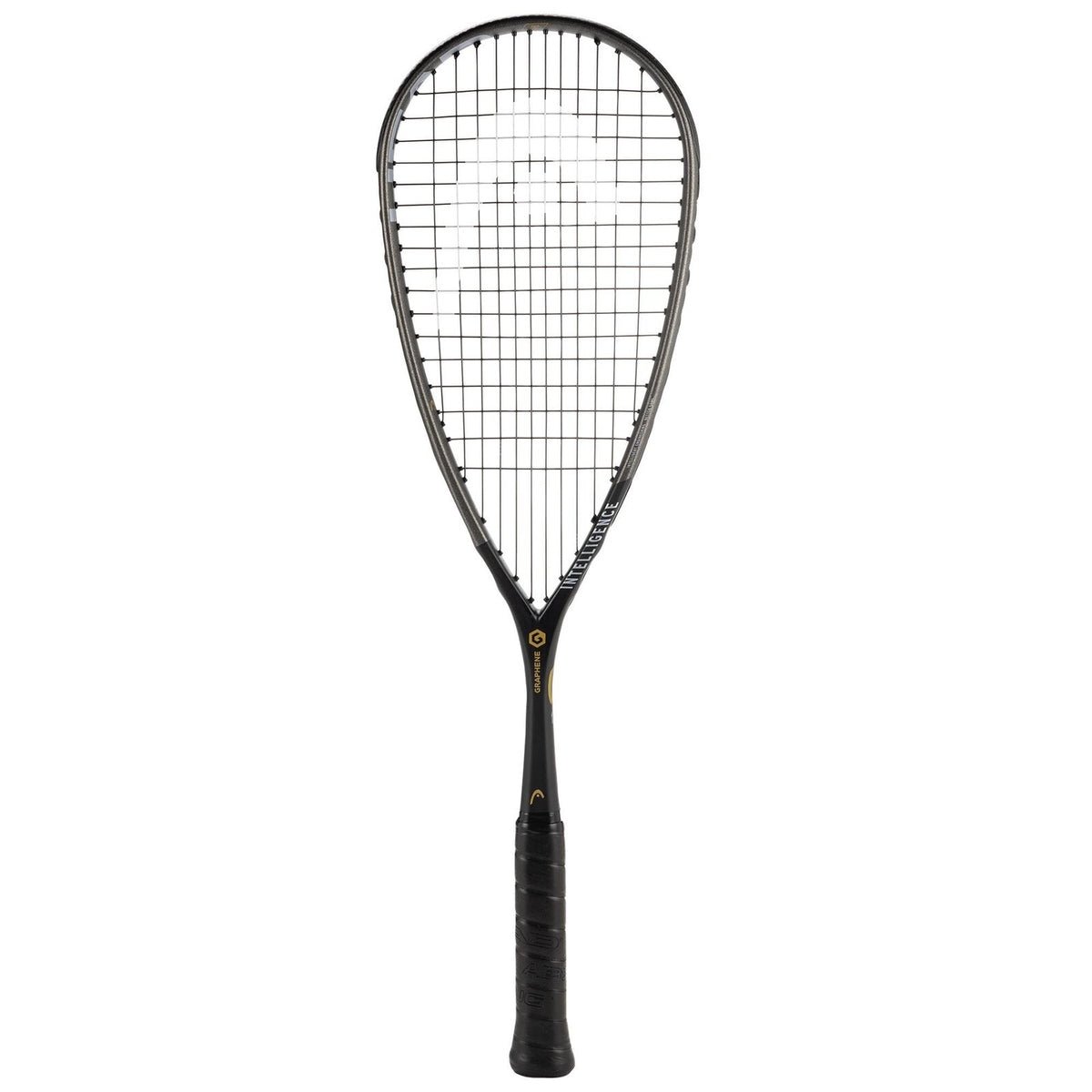
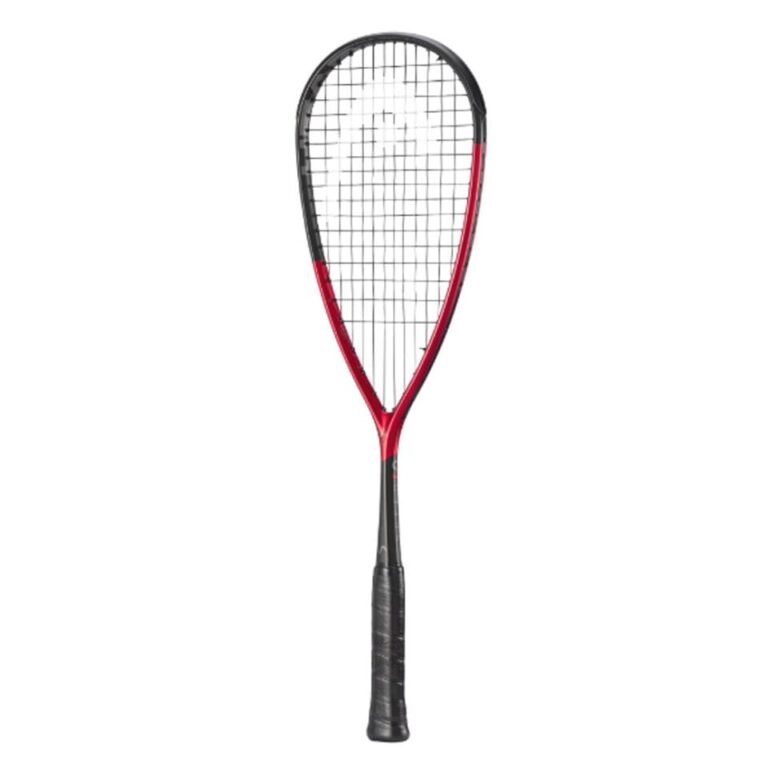
HEAD G.110
A 110-gram teardrop HEAD positions for volley play — with a head-heavy maker description this card states plainly rather than smoothing over.
The honest version of this card starts with its tension: the G.110 shares the guide’s lightest frame weight — 110 grams — and a teardrop head of 495 cm², but HEAD’s own copy positions the model as head heavy, pitching it for volley play and swing speed. HEAD’s reasoning, in its own terms, is that mass toward the head helps a player punch volleys away with a short swing — and for the senior player whose game is built at the front of the court, that is a coherent brief at a very light frame weight. The card keeps both facts in the same sentence deliberately: this is a 110-gram racket with a head-heavy maker description. If your game is built on repositioning and touch, the Eye above is your card; if it is built on volleying, HEAD has published a racket briefed for exactly that, and it weighs 110 grams.
The published construction is HEAD’s Graphene 360+ graphite build, strung from the factory with an unnamed synthetic gut — the card prints it as such, because that is all HEAD states. The string pattern is an open 12×17, the most open pattern in this guide, which the card reports as a published fact of the sheet. One sourcing warning matters at the listing: an older HEAD model, the i.110, circulates with different figures (a 500 cm² head, an even balance, a titanium construction) — those belong to a different racket, and the figures printed here are the G.110’s own, from the maker copy carried by HEAD’s current retailers in agreement. Check the “G.” prefix on the listing: G.110 is this card; i.110 is not.
What we like
- The joint-lightest frame here: 110 g
- A maker brief aimed at volley play — a senior game’s core skill
- The most open string pattern in the guide (12×17)
- Graphene 360+ construction at a light frame weight
Worth knowing
- HEAD’s own copy describes a head-heavy balance — the flagged exception in this guide
- Factory string is an unnamed synthetic gut
- The older i.110 is a different racket with different specs — check the prefix
As an Amazon Associate we earn from qualifying purchases.
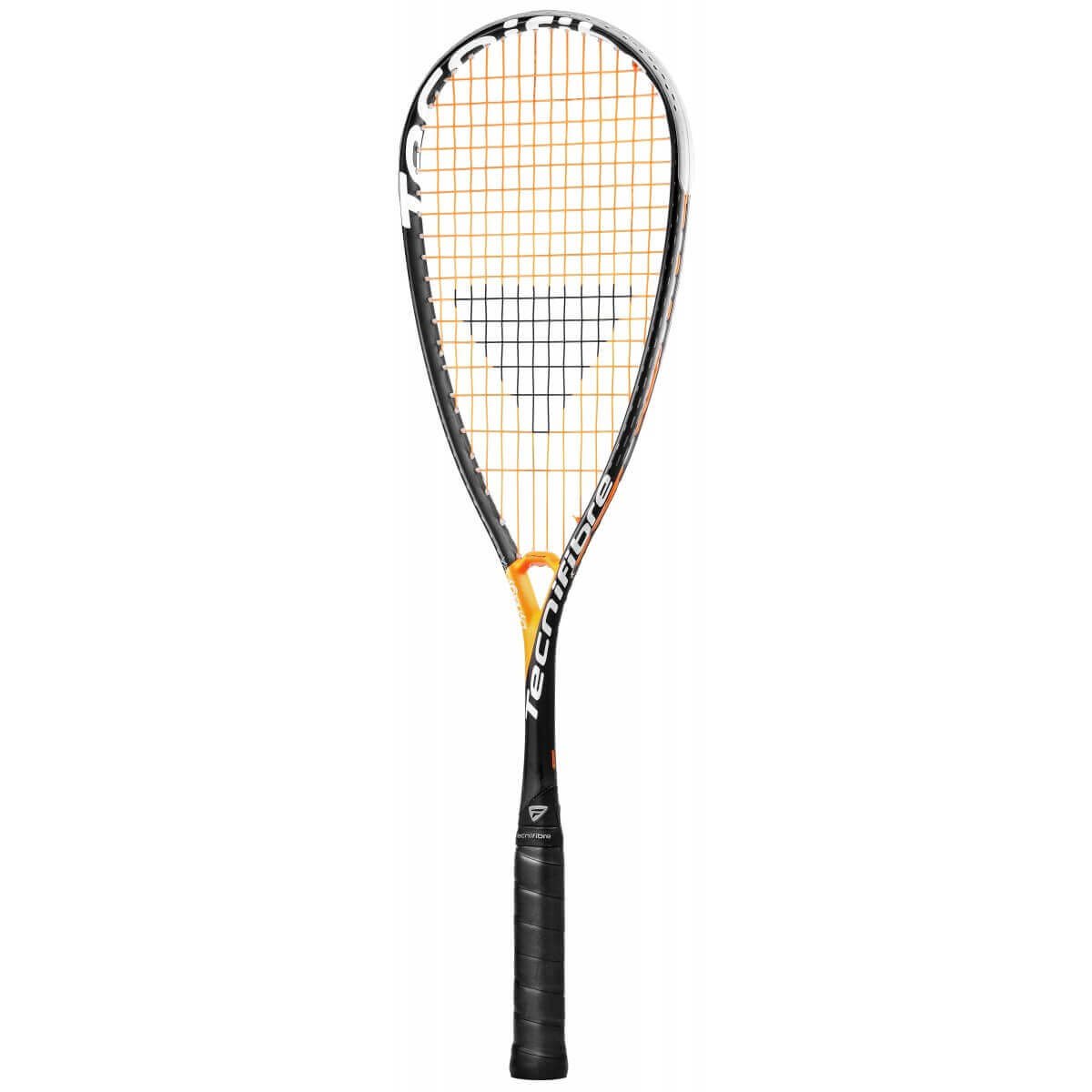
Tecnifibre Dynergy APX 120
A 490 cm² head and a premium factory string at a 120-gram frame weight — with a published 355 mm balance this card flags as head-heavy in effect.
Tecnifibre publishes this racket’s figures with tolerances attached, and the card keeps them: a frame weight of 120 grams ±5 g and a balance point of 355 mm ±5 mm. The balance figure is printed in the opening paragraph because it is the card’s honest caveat — 355 mm sits at the head-heavy end of the squash scale, and the guide does not pretend otherwise. What earns the APX 120 its place is what surrounds that figure: a 120-gram frame is a genuinely light build, the head is a full 490 cm², and the racket arrives strung from the factory with X-One Biphase — Tecnifibre’s named premium string, printed here by name only because the gauges published for the factory fitment conflict (1.18 mm against 1.25 mm) and the card will not pick one. For the senior player who volleys and drives with a compact swing and wants the lightest frame that still carries a big head and a premium string, this is a deliberate, defensible trade — as long as it is made with the balance figure in view.
The construction is Tecnifibre’s published APX set. The frame is Graphite & H.M.G., the shaft is Tecnifibre’s Jumbo Shaft design, a Superlight Bumper is fitted, and the throat is the Arch Power X design — which is also why the shape line reads the way it does: Tecnifibre publishes no shape label for this model, so the card describes it as a hybrid of the traditional and teardrop outlines around that throat, rather than borrowing a retailer’s word. The pattern is 14×17 (one outlier listing’s 16×16 was ignored at build time). Two family distinctions: this is the 2019 APX-generation 120, distinct from the AP 125 Power Ring, and distinct from the Dynergy APX 130 carded in our intermediate guide — check the number on the listing.
What we like
- A full 490 cm² head at a 120 g frame weight
- Arrives strung with a named premium string: X-One Biphase
- Figures published with tolerances (±5 g, ±5 mm) — the sheet is honest about variation
- Superlight Bumper fitted, unlike the bumper-less lightest card
Worth knowing
- The published 355 mm balance is head-heavy in effect — flagged, not hidden
- Tecnifibre publishes no shape label; the shape line describes the throat design instead
- Factory string gauge is published inconsistently — only the name is printed
As an Amazon Associate we earn from qualifying purchases.
Oliver Apex 5.0 Pro
The even-balance card — Oliver publishes the balance class itself, in a teardrop frame with the maker’s own SQ-X9 string.
Oliver states weight in its own notation, and this card prints it the maker’s way: the Apex 5.0 Pro’s published figure is “125N / 150B”, printed here as a 125 g frame weight with the maker’s notation alongside it — the guide does not convert the notation into a strung or unstrung claim Oliver never made. What Oliver does state plainly is the balance: even, the centred class, which makes this the guide’s even-balance card — neither the head-light handling bias of the Eye and Dunlop nor the head-heavy maker descriptions flagged on the HEAD and Tecnifibre. For the senior all-court player who plays the whole court — length from the back, volleys at the front — an even published balance at a mid-light frame weight is the specification that matches the game, and Oliver is the maker here that publishes exactly that combination.
The rest of the sheet is a mix of maker data and retailer tables, and the card keeps the two labelled. From Oliver itself: the Eplon™+K12 material and the factory string, Oliver’s own SQ-X9 — a named maker string, printed as published. From the agreeing retailer tables: the teardrop shape (Oliver’s own data states a “Mid Size” form rather than a shape label) and the 495 cm² head size, with a 14×18 pattern. That sourcing split is stated in the chips and here, because it is how this model’s specification genuinely exists in print. The Apex line is Oliver’s long-running series; the carded model is the 5.0 Pro — check the full name on the listing.
What we like
- The even-balance card — the centred class, published by the maker itself
- A named maker factory string (SQ-X9), not an anonymous fitment
- Mid-light frame weight in the maker’s own notation, printed honestly
- A full-size 495 cm² head per the retailer tables
Worth knowing
- Oliver’s weight notation (“125N / 150B”) is the maker’s own — no strung/unstrung label is published
- Shape and head size come from retailer tables; the maker states form and construction
- The Apex line has several siblings — check for “5.0 Pro”
As an Amazon Associate we earn from qualifying purchases.
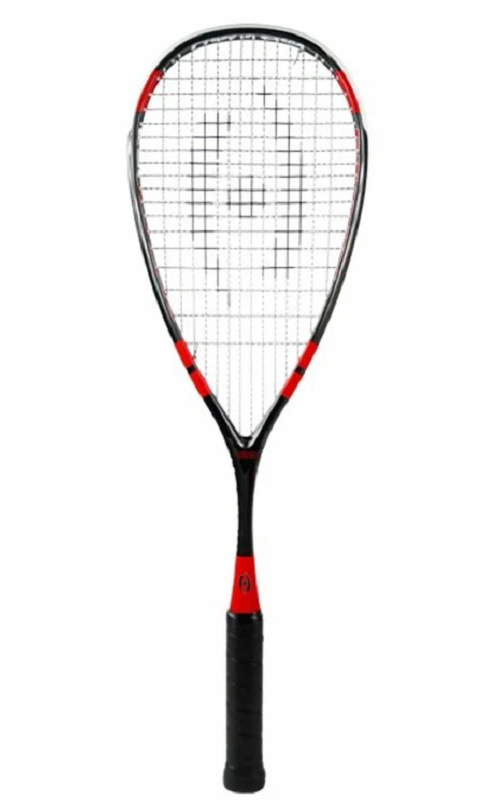
Harrow Reflex 125
Tarek Momen’s signature frame — a 125-gram teardrop with a closed throat bridge and a published 360 mm balance point.
The Reflex 125 is Harrow’s signature frame for Tarek Momen, and its published brief is control geometry: a frame weight of 125 grams, a teardrop head closed off by a bridged throat — the only bridged-throat card in this guide — and a balance point of 360 mm that no source disputes. The label around that figure is another matter, and the card prints the conflict rather than choosing a side: Harrow’s own copy describes the model as “slightly head heavy,” while a specialist retailer’s table classes the same racket head-light to even and measured its strung example at 356 mm. The figure — 360 mm — is the fact; the label depends on which published source you read, and the buying guide below explains how to read balance points against labels. What is not in dispute is the design intent both sources describe: a bridged-throat control frame at a mid-light weight.
Two publishing gaps are stated as gaps. Harrow does not publish a head size for the Reflex 125, so this card prints none — any figure attached to this model elsewhere is an estimate, and the guide does not deal in estimates. And the factory string, Harrow’s Barrage, is printed by name only, because the tensions published for the factory fitment conflict (25 lbs against 28 lbs). The 14×18 pattern rests on a single retail source and is labelled retailer-listed in the chips. The construction is Harrow’s published carbon/graphite build. Read this card as the guide’s control-geometry option: the player who values the bridged throat’s published design and a stated balance point over a printed head size will find the trade acceptable; the player who wants every figure published should shortlist the Eye or the Black Knight.
What we like
- The only bridged-throat design here — a control-geometry brief
- A balance point (360 mm) every source agrees on, whatever label they use
- A signature model with a long production presence
- Conflicts and gaps are printed in the card, not smoothed over
Worth knowing
- The balance label genuinely conflicts between the maker’s copy and retailer tables
- Head size is not published by Harrow — no figure is printed
- Factory string tension is published inconsistently — only the name is printed
As an Amazon Associate we earn from qualifying purchases.
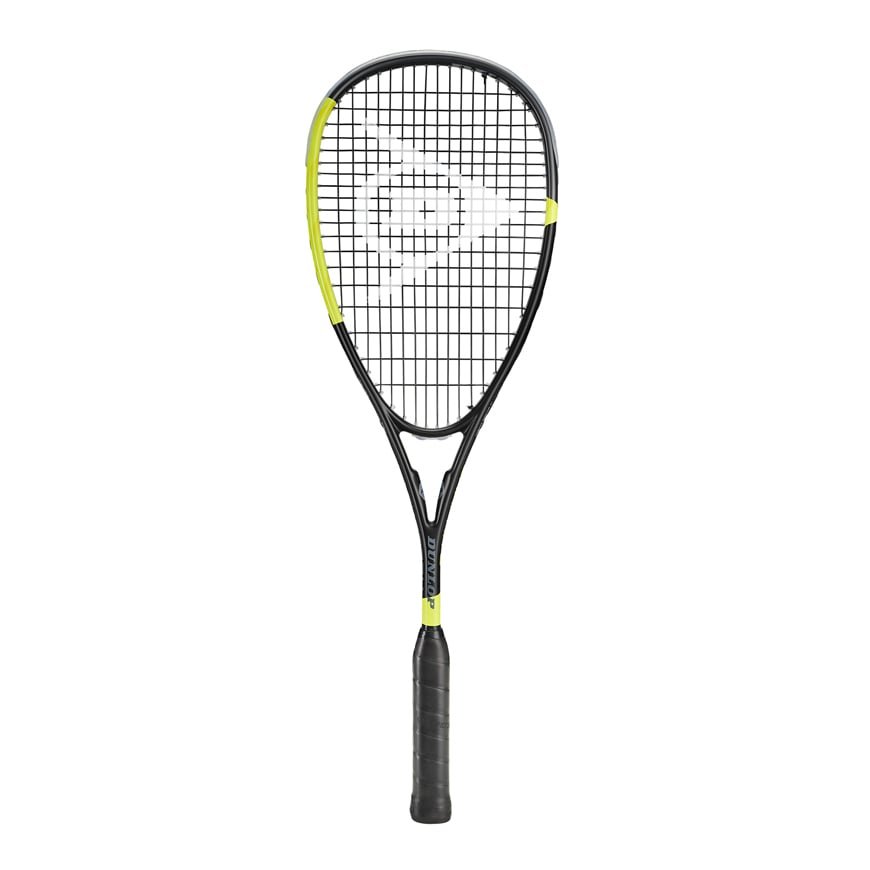
Dunlop Blackstorm Graphite
The traditional-shape card — Dunlop’s own feed calls it “Classic”: a 500 cm² head-light frame with a dense 16×19 pattern.
Every other head in this guide is a teardrop or a hybrid. The Blackstorm Graphite is the deliberate exception: Dunlop’s own specification feed classifies its shape as “Classic” — the traditional outline — and the card prints Dunlop’s word rather than the “teardrop” label some retailers editorialise onto the listing. Around that shape, the published sheet is complete: a 500 cm² head, a head-light balance (Dunlop’s feed states 360 ±7.5 mm), the densest string pattern here at 16×19, and a construction of Carbon Fibre with 4D Braided and ACS. For the senior player who has played traditional-shape rackets for years and wants the modern light version of that geometry rather than a change of shape, this is the card written for them.
The weight line needs its variant note, and the card prints it in the open: this model exists in two regional SKUs — the US SKU (10327809) at a frame weight of 135 grams, which is the figure this card prints, and a ZA/AU SKU (10343038) listed at 125 grams. Same model name, two published weights depending on the market the listing serves — check which SKU a listing is selling if the weight matters to your decision, because at this end of the guide ten grams is a real difference. The factory string is Dunlop’s S-Gut per the maker’s spec feed; Dunlop’s product pages leave the string unnamed, and the card sources the name to the feed rather than presenting it as page copy. The Blackstorm line carries several siblings (including carbon variants excluded from this guide’s pool at build time) — the carded model is the Blackstorm Graphite.
What we like
- The traditional “Classic” shape, in Dunlop’s own classification
- A complete maker spec feed: weight, balance with tolerance, head size, pattern
- The densest pattern here (16×19) in a head-light frame
- A named factory string in the maker’s own feed (S-Gut)
Worth knowing
- Two regional SKUs publish different weights (135 g US / 125 g ZA-AU) — check the listing’s SKU
- Some retailers mislabel the shape as teardrop; Dunlop’s feed says “Classic”
- At 135 g (US SKU) it is the joint-heaviest frame here
As an Amazon Associate we earn from qualifying purchases.
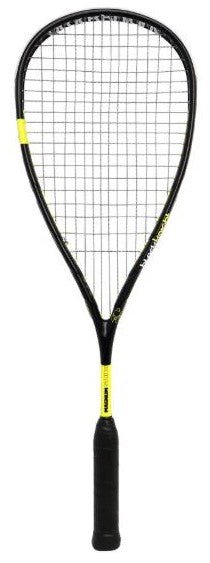
Black Knight Magnum Strike
The largest head in the guide — 523 cm², head-light and open-throated, pre-strung with a named premium string.
The Magnum Strike’s case is a single published figure: a head size of 523 cm², the largest in this guide by a clear margin, on a head-light teardrop frame with an open throat. For the senior player whose priority is the biggest string bed a light-class racket offers, Black Knight publishes exactly that combination, at a stated weight of 135 grams — printed bare, because Black Knight’s sources do not label the figure strung or unstrung and the guide does not guess. The pattern is 14×19, and the racket arrives pre-strung with Ashaway SuperNick XL Ti — a named premium string fitted at the factory, which matters in a segment where the factory string is the string most buyers will play with for a long while.
The construction is Black Knight’s published layup — nano-Carbon XS, Quartz Carbon and HMG with a Vibra Plate, as the maker’s specialist retailers list it — and one maker term is deliberately not printed as a specification: Black Knight’s “Dynamic Weight 130” is the maker’s swing metric, not a balance point, and this card does not convert it into one. The model-identity note is equally deliberate: the Magnum Strike (catalogue code BK-SQMAST-SS25) is the current model and replaces the Magnum 130 nXS, a 140-gram racket — the two are not the same frame, and listings that merge their figures should be read with care. Check for “Magnum Strike” in full on the listing.
What we like
- The largest published head here: 523 cm²
- Head-light balance on an open-throat teardrop
- Pre-strung with a named premium string (Ashaway SuperNick XL Ti)
- A layered published construction (nano-Carbon XS, Quartz Carbon, HMG, Vibra Plate)
Worth knowing
- The 135 g figure is not labelled strung or unstrung by its sources — printed bare
- No balance-point figure in millimetres is published
- Not the older Magnum 130 nXS (140 g) — check the full model name
As an Amazon Associate we earn from qualifying purchases.
Side-by-Side Comparison Table
| Model | Best For | Frame Weight (as maker states it) | Balance | Head Shape | Head Size |
|---|---|---|---|---|---|
| Eye V.Lite 110 | Lightest frame | 110 g | Head Light | Teardrop | 500 cm² |
| HEAD G.110 | Maker’s volley pick | 110 g | Head Heavy (maker copy) | Teardrop | 495 cm² |
| Tecnifibre Dynergy APX 120 | Big head at 120 g | 120 g ±5 g | 355 mm ±5 mm (head-heavy in effect) | Hybrid (no maker label) | 490 cm² |
| Oliver Apex 5.0 Pro | Best even balance | 125 g (maker: “125N / 150B”) | Even | Teardrop | 495 cm² |
| Harrow Reflex 125 | Best bridged throat | 125 g | 360 mm (label conflict — see card) | Teardrop, bridged throat | Not published |
| Dunlop Blackstorm Graphite | Best traditional shape | 135 g (US SKU; 125 g ZA/AU SKU) | Head Light | “Classic” traditional | 500 cm² |
| Black Knight Magnum Strike | Largest head | 135 g (unlabelled) | Head Light | Teardrop, open throat | 523 cm² |
Read the weight column as the makers print it: two cards publish a plain frame weight, one publishes its figure with a ±5 g tolerance, one publishes in its own notation, one publishes two weights for two regional SKUs, and one publishes a figure its sources leave unlabelled — the table states each case rather than tidying it away. Sorted by the printed figures, the ladder runs from the two 110-gram frames through the 120s to the pair at 135 grams. The balance column is where this guide earns its honesty: four head-light cards, one even balance, and two balances their makers describe in head-heavy terms, flagged in their cards and here. The head-size column runs 490–523 cm² where makers publish it — and says “not published” for the Harrow, because that is the truth of its spec sheet. Weight first, balance second, shape and head size third — the table is the whole guide in one view.
Buying Guide: Matching the Spec Sheet to Your Game
1. Start with the published frame weight — and read its label
The ladder in this guide runs 110 to 135 grams as the makers state the figures, and the first decision is simply where on it your game sits. The two 110-gram frames (Eye V.Lite 110, HEAD G.110) and the 120-gram Tecnifibre are the light end; the 125-gram Oliver and Harrow the middle; the 135-gram Dunlop and Black Knight the top. Then read the label attached to the number: a frame weight, a figure one retailer states as unstrung, a maker’s own notation, a regional SKU variant. A 125-gram Dunlop from one market and a 135-gram Dunlop from another are the same model name at two published weights — the label is part of the specification, and the cards print it for exactly that reason.
2. Balance: read the figure before the label
This guide contains the full vocabulary lesson in its own seven cards. Head-light is the handling class — four cards carry it on their makers’ descriptions. Even balance is the centred class, published by Oliver for the Apex 5.0 Pro. And two makers describe head-heavy balances at light frame weights — HEAD positions the G.110 that way for volley play, and Tecnifibre publishes a 355 mm balance point for the APX 120 — because a compact volleying swing can use head mass that a full swing does not need. Where a balance point in millimetres is published, trust the figure over the label: Harrow’s Reflex 125 is “slightly head heavy” in its maker’s copy, head-light-to-even in a retailer’s table, and 360 mm in both. The number is the common ground.
3. Shape and head size: teardrop choice, bridged control, traditional geometry
Five of the seven heads are teardrops or a teardrop hybrid, which reflects where the light end of the squash market is built. The two exceptions answer specific games: Harrow’s bridged throat is a control-geometry design, and Dunlop’s “Classic” traditional shape suits the player who has always played that outline. Head sizes run 490–523 cm² where published, and the spread is a real decision: the Black Knight’s 523 cm² is the largest string bed here, the Tecnifibre’s 490 cm² the most compact. And where a maker publishes no head size — the Harrow — treat the absence as information: buy that racket for its published geometry, not for a figure nobody states.
4. The factory string is the string you will play with — read its line
In this segment, the factory fitment is rarely a placeholder: senior players commonly play a light racket on its factory string for a long while, so the string line deserves the same attention as the weight line. The strongest published fitments here are named strings — Tecnifibre’s X-One Biphase and Black Knight’s factory-fitted Ashaway SuperNick XL Ti — followed by maker-described fitments (Eye’s multifilament, Oliver’s SQ-X9, Dunlop’s S-Gut) and HEAD’s unnamed synthetic gut. Where the published details conflict — a gauge or tension stated two ways — the cards print the name only. When the factory string eventually goes, it is also the honest upgrade trigger: a like-for-like restring of the named string returns the racket to its published specification.
5. Check the exact model name — squash runs on near-identical siblings
Nearly every card here has a sibling with a similar name and a different brief: G.110 against the older i.110; Dynergy APX 120 against the APX 130 carded for intermediates and the AP 125 Power Ring; Blackstorm Graphite against the Blackstorm Carbon variants; Magnum Strike against the older Magnum 130 nXS; Apex 5.0 Pro against the rest of the Apex line; and the Blackstorm’s two regional SKUs against each other. The suffix, the number or the SKU is the specification — it carries the weight, the shape or the string that put the racket in this guide. Confirm all of it on the actual listing before you pay: the full model name, the published weight with its label, and where it exists, the SKU. Thirty seconds on the listing is the difference between the racket this guide carded and its heavier namesake.
Frequently Asked Questions
What frame weight should a senior squash player look for?
Shop the published band this guide is built on: frames their makers state between 110 and 135 grams. The lightest published frames here are the Eye V.Lite 110 and the HEAD G.110, both at 110 grams; the Tecnifibre Dynergy APX 120 follows at 120 grams ±5 g; the Oliver Apex 5.0 Pro and Harrow Reflex 125 sit at 125 grams; and the Dunlop Blackstorm Graphite and Black Knight Magnum Strike close the ladder at 135 grams as published. Read the label attached to the figure as part of the specification — frame weight, unstrung figure, maker notation or regional SKU — because the makers in this guide state their weights in all of those ways.
Is a head-light or a head-heavy squash racket better for senior players?
It depends on where your points are won, and this guide prints both briefs honestly rather than pretending one answer exists. Head-light rackets — the Eye V.Lite 110, the Dunlop Blackstorm Graphite and the Black Knight Magnum Strike — keep the mass toward the hand, the handling class for repositioning and touch. But two light frames here carry head-heavy maker descriptions, carded deliberately and flagged in their cards: HEAD positions the 110-gram G.110 as head heavy for volley play with a compact swing, and the Tecnifibre Dynergy APX 120 publishes a 355 mm ±5 mm balance point at a 120-gram frame weight. Oliver’s Apex 5.0 Pro is the middle answer, published as even balance. Choose by your game: handling and touch say head-light; a front-court volleying game is the case the head-heavy pair is published for.
Should a senior player choose a teardrop or a traditional squash racket head?
Both shapes are carded here because both answer real games. Most of the light end of the market is teardrop — the Eye, the HEAD, the Oliver and the Black Knight are teardrops or a teardrop hybrid, and Tecnifibre publishes no shape label for the Dynergy APX 120 at all, describing its Arch Power X throat instead. The deliberate exceptions are Harrow’s Reflex 125, whose teardrop head is closed by a bridged throat in a control-geometry design, and Dunlop’s Blackstorm Graphite, which Dunlop’s own data feed classifies as “Classic” — the traditional outline. If you have played a traditional shape for years, the Dunlop is the modern light version of that geometry; if you are changing rackets anyway, the teardrop majority is where the makers concentrate their light models.
Does the factory string matter, and when should it be replaced?
It matters in this segment because the factory string is usually the string played with for a long while. The strongest published fitments here are named strings: Tecnifibre fits X-One Biphase to the Dynergy APX 120, and Black Knight pre-strings the Magnum Strike with Ashaway SuperNick XL Ti. Other cards carry maker-described fitments — Eye’s multifilament, Oliver’s SQ-X9, Dunlop’s S-Gut per its spec feed — and HEAD fits an unnamed synthetic gut to the G.110. Where published string details conflict, the cards print the name only. Replace the factory string when it no longer plays as published — and a like-for-like restring with the named string is what returns any of these rackets to its factory specification.
Why does the same Dunlop Blackstorm Graphite show two different weights?
Because Dunlop sells the model under two regional SKUs with two published weights. The US SKU (10327809) is listed at a frame weight of 135 grams — the figure this guide’s card prints — while the South Africa/Australia SKU (10343038) is listed at 125 grams. The rest of the published sheet is shared: a head-light balance, a “Classic” traditional shape per Dunlop’s own data feed, a 500 cm² head and a 16×19 pattern. If the weight decides your purchase, check which SKU a listing is actually selling; ten grams is a real difference at the light end of this guide, and both figures are genuinely Dunlop’s.
What does a balance point in millimetres mean on a squash racket?
It is the measured distance from the butt of the handle to the point where the racket balances, as published by the maker — the figure behind the head-light, even and head-heavy labels. This guide prints the figure wherever a maker publishes it: 355 mm ±5 mm for the Tecnifibre Dynergy APX 120, 360 mm for the Harrow Reflex 125, and 360 ±7.5 mm in Dunlop’s spec feed for the Blackstorm Graphite. The figure is worth more than the label around it — Harrow’s own copy calls the Reflex 125 “slightly head heavy” while a retailer’s table classes it head-light to even, and both are describing the same agreed 360 mm. Where no figure is published, the cards print the maker’s class label and say so.
What is the difference between this guide and the beginners squash racket guide?
The beginners guide owns first-racket selection, the intermediate guide owns the middle rung, and the pro guide owns the advanced tier. This guide narrows the same sport to one decision: the lighter frame weights, head sizes and balances the makers publish, compared for the senior game of court craft, length and early volleys — including the two head-heavy light frames the makers brief for volley play, flagged as such. No racket from the beginners, intermediate, pro, women’s or budget guides is re-ranked here, and none of this guide’s seven is carded there — read those pages for their decisions, and this page for the senior specification.
The Verdict
Buy the specification, not the story. The Eye V.Lite 110 is the lightest complete senior answer — 110 grams, head-light, with a full 500 cm² head. The HEAD G.110 matches that frame weight in the teardrop HEAD briefs for volley play, its head-heavy description printed in the open. The Tecnifibre Dynergy APX 120 is the big-head, premium-string option with its 355 mm balance flagged, the Oliver Apex 5.0 Pro the even-balance pick, and the Harrow Reflex 125 the bridged-throat control frame. The Dunlop Blackstorm Graphite is the traditional-shape card, and the Black Knight Magnum Strike closes the list with the largest head here. Seven rackets, four honest decisions — frame weight, balance, shape and factory string — every one of them printed as its maker states it.
Affiliate disclosure: AliShuttler is a participant in the Amazon Services LLC Associates Program. Links marked “Check Price on Amazon” are affiliate links — if you buy through them, we may earn a commission at no additional cost to you. Every specification in this guide is taken from the manufacturer’s own published listings, checked at build time in 2026; frame weights, balances, shapes and head sizes are
Similar Posts
Best Squash Shoes: Top Picks for Grip & Support
Buying Guide · 2026 Edition Best Squash Shoes: Top Picks for Grip & Support The…
Best Squash Rackets for Beginners: Top Picks
Beginner Guide Best Squash Rackets for Beginners: Top Picks Your first squash racket has one…
Best Squash Shoes for Women: Non-Marking Court Picks
Squash Gear · Shoes · 2026 Best Squash Shoes for Women: Non-Marking Court Picks A…
Best Squash Rackets for Kids: Junior Picks by Age
Squash Gear · Junior Rackets · 2026 Best Squash Rackets for Kids: Junior Picks by…
Best Squash Shoes for Beginners: First Court Picks
Squash Gear · Shoes · 2026 Best Squash Shoes for Beginners: First Court Picks Your…
Squash Doubles Rules: How the Four-Player Game Works
Rules Guide Squash Doubles Rules: How the Four-Player Game Works Four players, one bigger court,…