The senior player’s badminton decision is a specifications decision. Once the game becomes about court craft, doubles rotation and out-thinking the rally rather than out-hitting it, the rackets that fit are the ones their makers grade 4U or 5U, balance even or head-light, and build on medium or softer shafts. This guide compares seven of them on exactly what their makers publish — stated weight classes and gram figures, balance points, shaft flex grades, frame materials and grip sizes — and nothing else. Just the spec sheets, read properly.
⚡ TL;DR — The Short Answer
For the best all-round senior pick, buy the Yonex Nanoflare 270 Speed — sold in 5U (averaging 78 g) and 4U (83 g) versions with a medium-flex shaft and an even measured balance. The clearest head-light specification here belongs to the Babolat Satelite Lite, which Babolat itself classifies as head-light at 83 grams. The Yonex Nanoflare 170 Light is the easiest-handling card — 5U with Yonex’s Hi-Flex shaft — and the Li-Ning Windstorm 79 S the lightest flexible option at a maker-stated 79 grams with a small G6 grip. The Yonex Muscle Power 22 Light is the conventional 4U all-rounder, the Victor Brave Sword 12 Light the slim-grip even-balance choice, and the Yonex Arcsaber 71 Light the control classic from Yonex’s LIGHT series.
Quick Picks — Best Badminton Rackets for Seniors at a Glance
5U or 4U, medium flex, even measured balance — the complete senior spec in one Yonex speed frame.
83 g with Babolat’s own “−13 Head Light” balance class and a medium-flex MetricFlex shaft.
5U only, Hi-Flex shaft, head-light positioning — Yonex’s lightest brief in the Nanoflare line.
A maker-stated 79 g with a flexible shaft and a G6 grip, per Li-Ning’s own store.
4U, even balance at a measured 285 mm, medium flex and a G4 grip — the conventional formula.
4U with Victor’s slim G6 grip and an even balance on its response chart.
5U, medium flex, even balance — the LIGHT series’ control-first design.
In This Guide
The Senior Decision: Weight Class First, As Makers Grade It
Every badminton racket decision trades mass against swing speed, but the senior player’s version starts in one specific place: the published weight class. Makers grade badminton rackets in U classes — 3U (roughly 85–89 g) is the standard class most performance rackets are sold in, 4U (80–84 g) a step lighter, and 5U (75–79 g) the lightest mainstream class. The seven cards below are all graded 4U or 5U by their makers, or — in the Babolat’s case — published at a gram figure that sits in the 4U band. That is a deliberate catalogue decision by four different brands, and it is the honest starting point for a player whose game is built on quick hands in flat doubles exchanges, compact defensive swings and long rallies rather than full-length power strokes. A lighter published build is simply quicker to bring into position, shot after shot, and this guide is organised around that fact first.
Read the weight figures the way this guide prints them: exactly as each maker states them, as a class with its published average where the maker grades in U (Yonex’s 5U averaging 78 g, 4U averaging 83 g), as a single gram figure where the maker publishes one (Li-Ning’s 79 g for the Windstorm 79 S, Babolat’s 83 g ±2 g for the Satelite Lite), and as an approximate range where retailers’ measured figures span one (the Muscle Power 22 Light, listed between roughly 83 and 86 g). Where a maker publishes no gram figure at all — Victor grades the Brave Sword 12 Light by class only — the card prints the class and says so, rather than borrowing a retailer’s estimate. Where sources disagreed at build time, this file’s header notes record it and the card prints the directed figure.
One boundary before the picks. This page owns the senior lightweight decision only. First-racket selection belongs to our guide to the best badminton rackets for beginners, the step-up rung to our guide to the best badminton rackets for intermediate players, and the women’s segment to our guide to the best badminton rackets for women — read those for their decisions, and this page for the senior specification. The same lightweight logic in a neighbouring sport is covered by our guide to the best tennis rackets for seniors. None of the models carded in those guides is re-carded here; every card below is a fresh model chosen for this decision. And the racket is only half the court equation — our guide to the best badminton shoes covers the footwear side, and our how to play badminton guide covers the shots these rackets are built to play.
Balance, Shaft Flex and Grip Sizing
Balance is the second decision, and the makers describe it in three consistent classes. A head-light racket carries less of its mass in the head and is the class makers position for handling speed; an even-balance racket centres it; a head-heavy build loads the head for smashing leverage. This guide cards only the first two classes, and it applied that rule strictly at build time: several otherwise-light candidates were excluded because their makers publish head-heavy balances — Yonex’s own Astrox light models among them — and they are named in this file’s header notes rather than carded. Where a maker publishes a balance point in millimetres, the card prints it (the Nanoflare 270 Speed’s measured 283–285 mm, the Muscle Power 22 Light’s 285 mm, the Windstorm 79 S’s 298 mm); where the figure is disputed or unpublished, the card prints the maker’s class label and says why.
Shaft flex is the third decision, and the grade is the maker’s own word. A more flexible shaft bends further on the swing and returns its energy into the shuttle with less demand on swing speed — that is how the makers describe their flexible and Hi-Flex models, and this guide reports it as maker description. Six of the seven cards below are graded flexible, Hi-Flex or medium by their makers. The one exception is labelled honestly in its card: the Victor Brave Sword 12 Light’s shaft sits at medium-stiff on Victor’s own stiffness chart, the firmest grade here, and it is carded for its 4U class, even balance and slim grip — players who want medium-or-softer throughout should shortlist the other six. At the other end of the scale, Yonex’s Nanoflare 370 Speed was excluded at build time because Yonex grades its shaft Stiff: light weight alone does not qualify a racket for this guide.
Grip is a sizing decision, stated as sizing. Badminton grips are graded in G sizes, and the number runs opposite to intuition: a higher G number is a slimmer handle. The cards below span G4 (the Muscle Power 22 Light) through G5 (the Nanoflare 270 Speed, the Arcsaber 71 Light) to G6 (the Windstorm 79 S and the Brave Sword 12 Light, the two slim-grip options). Babolat uses its own designation — the Satelite Lite is listed at G1 — and one card, the Nanoflare 170 Light, is sold with different grip sizes in different markets, which its card states plainly. Treat the grip the way you treat a shoe size: a fit measurement to get right at the listing, using the published grade where one exists and an overgrip to build a slim handle up slightly if your hand prefers it.
Stringing advice ties the decisions together, so read it as part of the spec sheet. Each card prints the tension range its maker publishes — from the Nanoflare 170 Light’s 19–26 lbs to the 30 lbs maximums Li-Ning and Yonex state for the Windstorm 79 S and the Muscle Power 22 Light. The published range is the frame’s approved working band, not a target: most senior and club players string inside the lower half of a maker’s range, where the string bed does more of the work on clears. The cards keep the range printed exactly as the maker states it, so the comparison stays honest from model to model.
The 7 Best Badminton Rackets for Seniors, Compared
Seven rackets, one shared brief — graded 4U or 5U by their makers, balanced even or head-light, and built on medium or softer shafts, with one flagged exception. Read the card that matches your game first.
Yonex Nanoflare 270 Speed
The complete senior specification in one Yonex speed frame — two weight classes, a medium-flex shaft and an even measured balance.
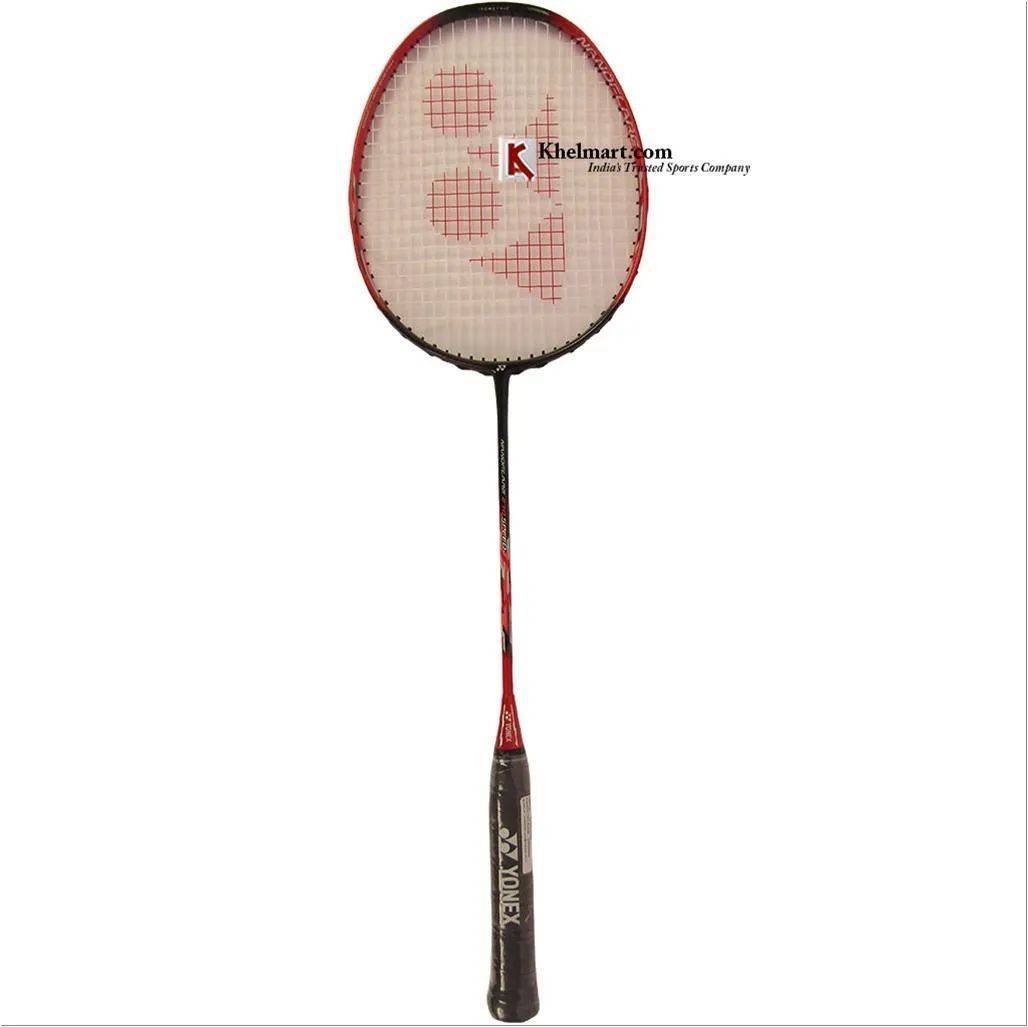
Start with the choice Yonex builds into this model: the Nanoflare 270 Speed is sold in two weight classes on one spec sheet — a 5U version averaging 78 grams and a 4U version averaging 83 grams, both with a G5 grip. That makes it the most adaptable card in the guide: the 5U answers the lightest brief here, and the 4U answers the player who wants the same frame with a little more substance behind it, without changing models. Authorised dealers measuring the racket record a balance point of 285 mm ±3 in 5U and 283 mm ±3 in 4U, labelled even balanced in the measured table — squarely in the middle class this guide is built on, with the mass centred rather than loaded into the head.
The rest of Yonex’s published sheet follows the same handling-first brief. The shaft flex is Medium — the grade Yonex positions between its flexible and stiff models — and the construction pairs an H.M. Graphite frame with Nanocell NEO and SUPER HMG over an H.M. Graphite shaft. Yonex positions the model for intermediate players, describing it in its line copy as a racket for players looking for greater distance on clears — maker positioning, reported as such. One labelling note, recorded in this file’s header: some retailers tag the 4U “head light,” reflecting the Nanoflare family’s head-light design lineage, against the measured table’s even-balance label and figures. The card prints the measured figures and the even label; either way, nothing about this racket is head-heavy. If you want one racket that answers the whole senior decision, this is the card.
What we like
- Two published weight classes — 5U (78 g avg.) and 4U (83 g avg.) — under one model name
- Even balance with measured figures printed by dealers: 283–285 mm
- Medium flex: the middle grade, neither whippy nor stiff
- Full Yonex spec table — weight, grip, flex, materials and stringing advice all published
Worth knowing
- Balance labelling differs by source (measured table: even; some retailers: head light) — figures agree
- Some markets list the 4U with a G4 grip against Yonex’s G5 table — check the listing
- Its Stiff-flex sibling, the Nanoflare 370 Speed, is a different brief — check the model number
As an Amazon Associate we earn from qualifying purchases.
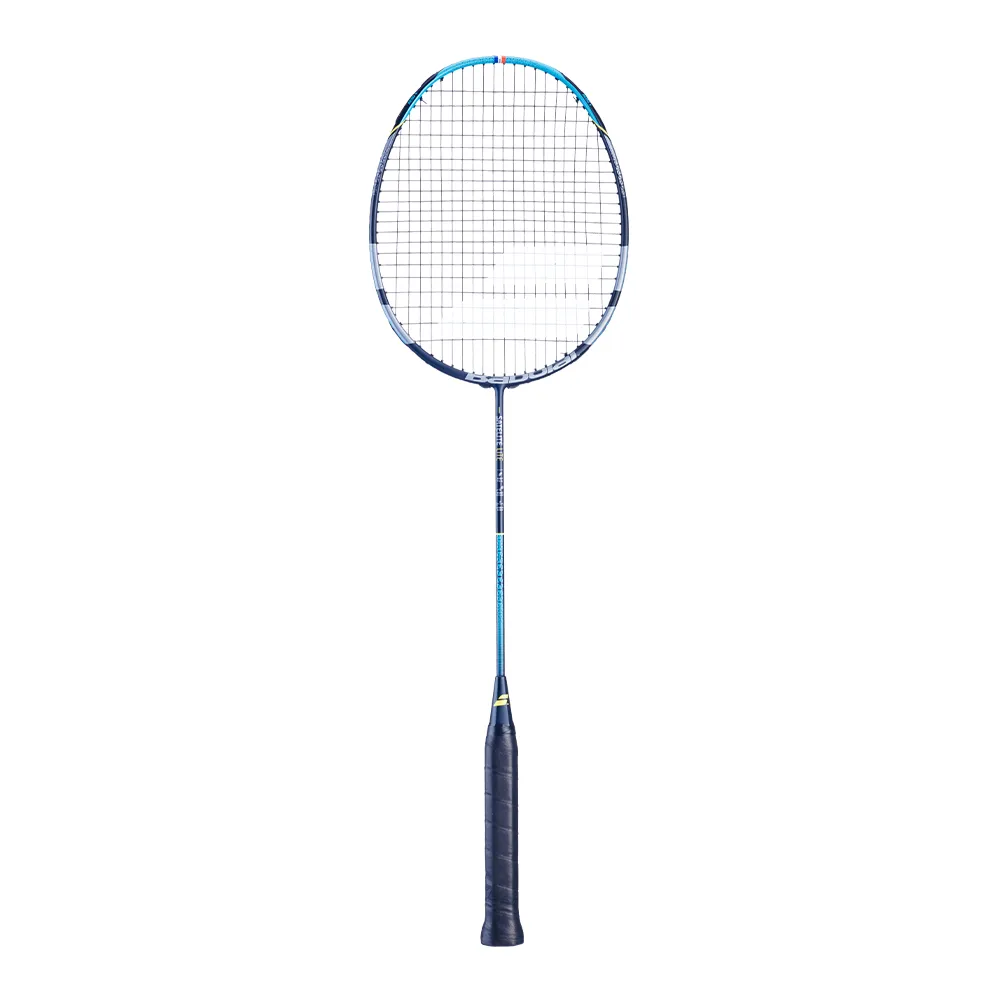
Babolat Satelite Lite
The clearest head-light specification in the guide — Babolat classifies the balance itself, and designs the model for defensive players.
Most balance claims in this category are a retailer’s interpretation. The Satelite Lite’s is Babolat’s own classification: the maker’s technical table publishes a balance point of 295 mm ±5 mm and a Balance Type of “−13 Head Light” — the head-light class, stated by the manufacturer in its own table, alongside a published weight of 83 grams ±2 g. Babolat does not grade the model in U classes; 83 grams sits in the band retailers call 4U, and the card prints Babolat’s gram figure rather than a borrowed grade. Babolat’s stated player typology completes the brief: the Satelite Lite is, in the maker’s own description, specially designed for defensive players seeking versatility and manoeuvrability — which is precisely the senior doubles game of fast hands, flat exchanges and quick repositioning at the net.
The shaft is Babolat’s MetricFlex design, graded Medium flex; Babolat describes the design as differentiating the shaft’s lateral and frontal flexibility, so the shaft’s response differs between shot planes — maker description, reported as such. The construction is High Modulus Graphite throughout (Babolat’s table does not separate frame and shaft materials), and the recommended tension is published as 8–12 kg, printed by retailers as 18–27 lbs. Two variant warnings matter at the listing: this is not the Satelite Origin Lite, a short-shaft (662 mm) flexible variant with a different brief, and not the Satelite Power — the Lite is sometimes sold on a combined listing, so confirm the model name on the actual page before you order.
What we like
- The head-light class is the maker’s own published classification, not a retailer’s label
- A precise published weight: 83 g ±2 g, tolerance included
- Maker-stated defensive typology matches the senior handling brief directly
- The cleanest verification in the set — one technical table, reproduced identically
Worth knowing
- Babolat publishes no U grade — compare it by its gram figure, not a class
- Grip size comes from a retailer listing (G1), not the maker’s own table
- Two near-name variants exist (Origin Lite, Power) — check the exact name
As an Amazon Associate we earn from qualifying purchases.
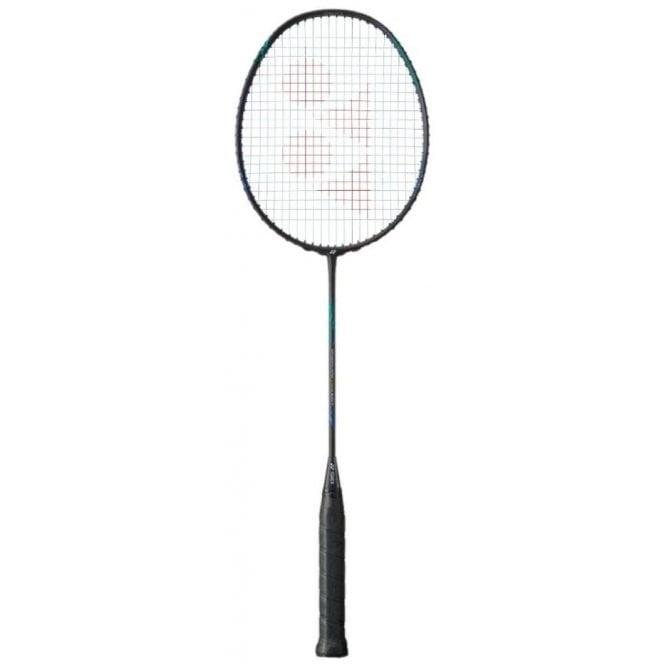
Yonex Nanoflare 170 Light
Yonex’s lightest brief in the Nanoflare line — 5U only, a Hi-Flex shaft and head-light positioning for beginning players.
If the Nanoflare 270 Speed is the complete specification, the 170 Light is the simplest one. Yonex builds it in a single weight class — 5U, averaging 78 grams — with a Hi-Flex shaft, the most flexible grade Yonex publishes, and positions the model in its launch line for beginning players who need lightness and manoeuvrability. That combination is the easiest-handling brief in this guide stated in the maker’s own terms: the lightest class, the softest shaft grade, and a head-light design brief. For the senior player returning to the game, or the social player whose rallies are won on placement rather than pace, this is the card written for them — and its position in the list reflects specification, not seniority: Yonex aims it at newer players, and experienced players who simply prefer the lightest, most flexible build will find the same spec sheet serves them.
The published construction is a graphite build — a frame of Graphite with Nanocell NEO and H.M. Graphite over a graphite shaft — with stringing advice of 19–26 lbs. Two honest labelling notes, both recorded in this file’s header. First, balance: the head-light class printed here is Yonex’s positioning for the model and the majority retailer label; one measured dealer table records a 290 mm balance point against it, so this card prints no balance-point figure for the model rather than choose between them. Second, the grip: listings in different markets show G4, G5 and G6 for this model, so the card prints the variation instead of a single grade — confirm the grip on the actual listing before you order, and fine-tune with an overgrip if the size that ships is slimmer than your hand prefers.
What we like
- The easiest-handling published brief: 5U class with Yonex’s Hi-Flex shaft grade
- Positioned by Yonex itself for players who need lightness and manoeuvrability
- A single weight class — nothing to decode at the listing
- Lower stringing band (19–26 lbs) suits a string bed that does more of the work
Worth knowing
- Balance-point figures conflict between sources, so none is printed — the class is maker positioning
- Grip size genuinely varies by market (G4/G5/G6) — check the listing, not the model name
- Yonex positions it for beginning players; the spec, not the label, is the reason to buy it
As an Amazon Associate we earn from qualifying purchases.
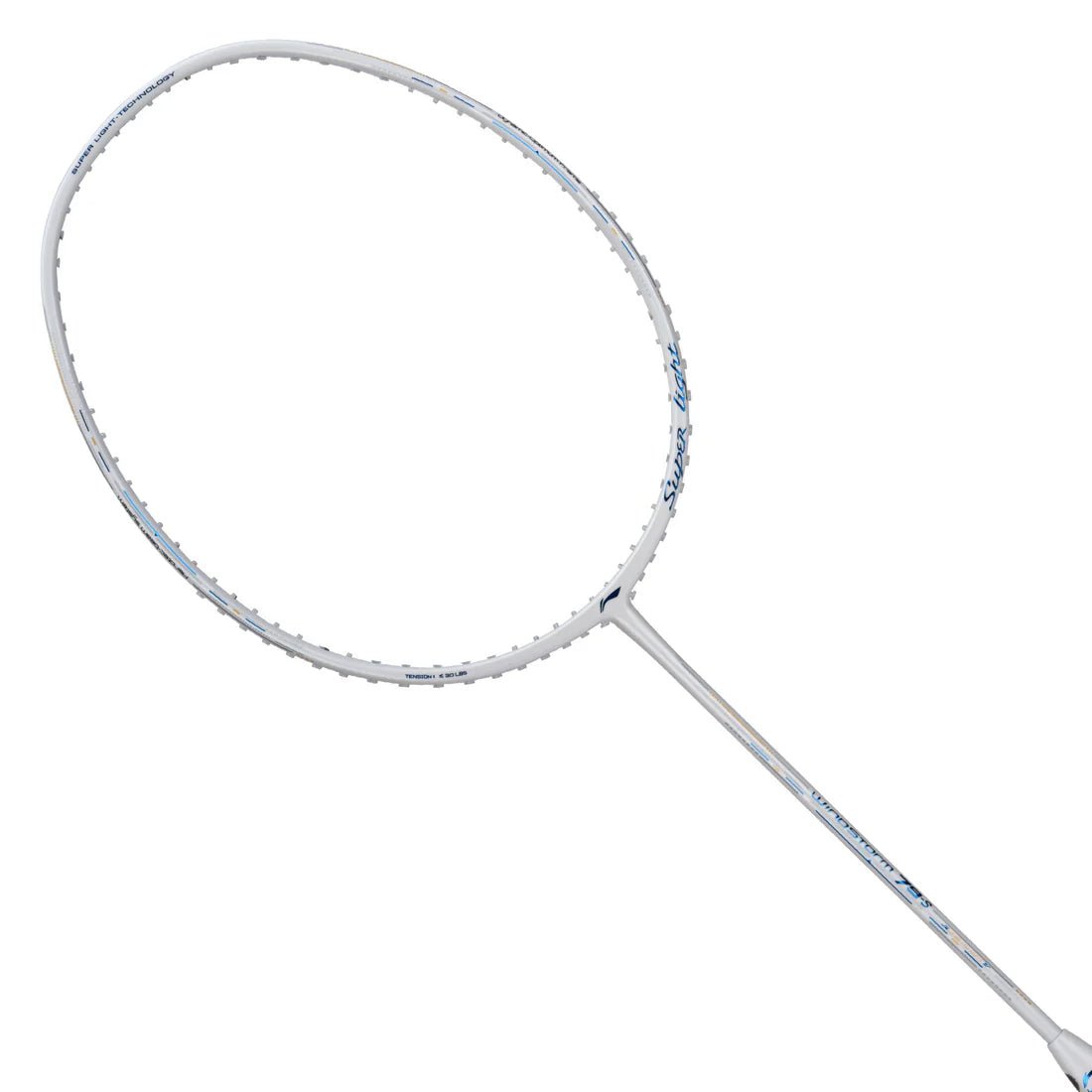
Li-Ning Windstorm 79 S
A maker-stated 79 grams with a flexible shaft and the guide’s smallest grip — the S variant only; the H is a different racket.
The numbers on this card come from Li-Ning’s own store, and they are the lightest complete set in the guide: a stated weight of 79 grams in the 5U class, a flexible shaft that Li-Ning describes as a soft shaft requiring less strength to generate power — the maker’s own description of its design intent — a G6 grip, the slimmest handle here, and a maximum tension of 30 lbs. The construction is carbon graphite in Li-Ning’s Dynamic Optimum Frame shape with a 7.0 mm shaft. For a senior player with a smaller hand who wants the lightest flexible build a major maker publishes with its own figures attached, this is the most direct card in the set.
One dispute is printed rather than hidden, because it sits inside Li-Ning’s own regional listings. The India manufacturer store — the figures this card prints — labels the balance Even Balance at a 298 mm balance point; Li-Ning’s UK arm lists the same model at 77 ±2 g with a head-heavy label. The 298 mm figure itself is not disputed, and 298 mm sits high for the “even” band by conventional measures, which is why the two arms label it differently. Read the card on the verifiable facts — 79 g, flexible, G6, 298 mm — and treat the balance label as genuinely contested between the maker’s own stores; the FAQ below returns to it. The variant warning is absolute: the Windstorm 79 H is a hard-shaft model and does not belong in this guide, and the Windstorm 78 S is listed by Li-Ning’s own store as head heavy at 300 mm. Only the 79 S is carded — check the letter on the listing.
What we like
- The lightest maker-stated gram figure here: 79 g from Li-Ning’s own store
- Flexible shaft, described by Li-Ning as needing less strength to generate power
- The slimmest grip in the guide (G6) for smaller hands
- A 30 lbs maximum tension gives stringers the widest published band here
Worth knowing
- The balance label is disputed between Li-Ning’s own regional stores (even vs head heavy)
- The 79 H (hard shaft) and 78 S (head heavy) are different briefs — only the 79 S qualifies
- Li-Ning’s table does not separate frame and shaft materials
As an Amazon Associate we earn from qualifying purchases.
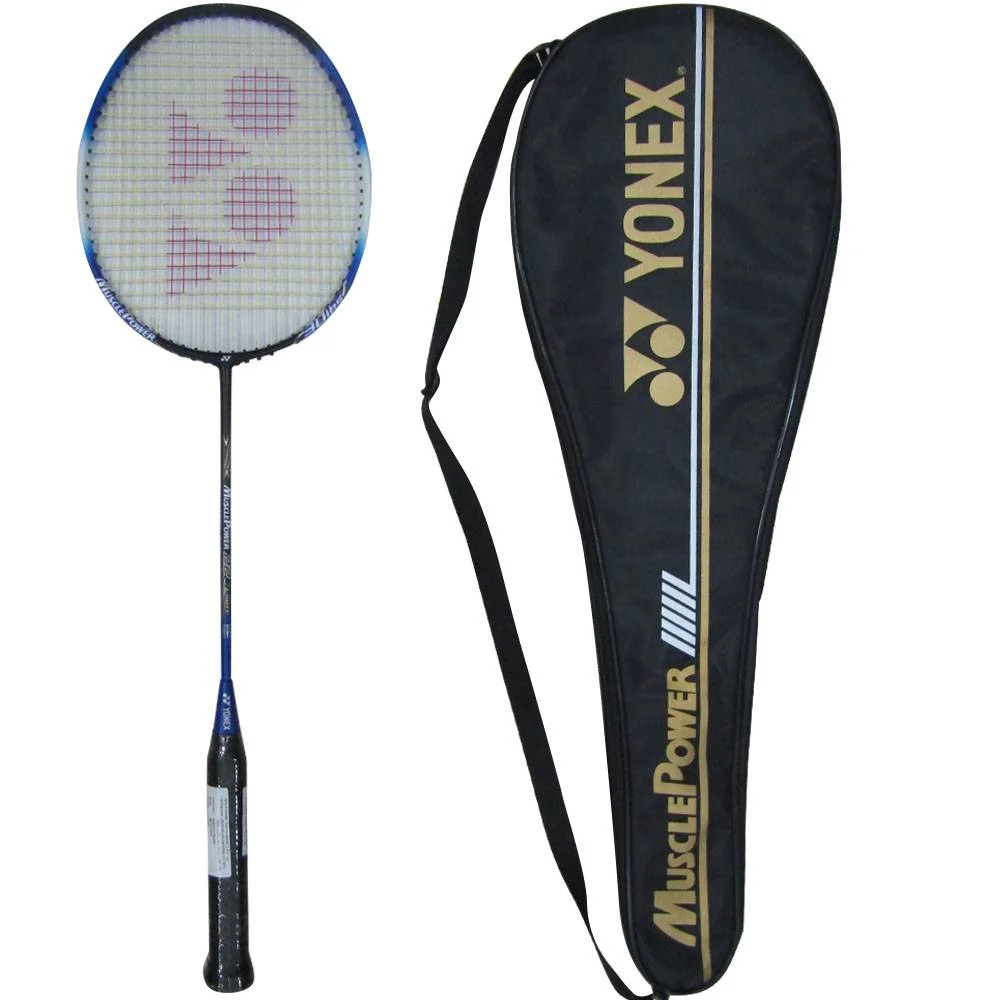
Yonex Muscle Power 22 Light
The conventional formula, kept light — a 4U even-balance all-rounder with a medium flex and the guide’s largest grip.
Not every senior player wants the lightest or the most flexible racket on the page — some want the classic all-round formula with the weight trimmed, and that is exactly the Muscle Power 22 Light’s published brief. The agreeing retailer tables put it in the 4U class with an even balance at 285 mm, a Medium flex shaft and a G4 grip — the largest handle in this guide, and the natural counterpoint to the two G6 cards. Retailers position it from beginner to intermediate, and the specification supports the all-round reading: nothing at either extreme, a centred balance, a middle flex grade, and a graphite / H.M. Graphite construction. Players who learned the game on conventional rackets and want that same balance of qualities a class lighter will recognise this card immediately.
Two figures are printed the way the sources require. The gram weight is given as approximately 83–86 grams because that is the span the agreeing retailers publish for the 4U class — the card prints the range rather than promoting one retailer’s figure to a maker spec. And the tension is printed as “up to 30 lbs” only: the stated stringing ranges disagree between listings (one gives 22–30 lbs, another 20–28 lbs), while the 30 lbs maximum is the figure the listings agree on. One naming note: Indian retailers list this model as both “Light” and “Lite” for the same racket — the two spellings are one model, so match the rest of the spec sheet (4U, G4, 285 mm) rather than the suffix when you compare listings.
What we like
- The conventional all-round formula — even balance, medium flex — in the 4U class
- A measured balance point the sources agree on: 285 mm
- The largest grip here (G4) for bigger hands
- A 30 lbs agreed maximum tension
Worth knowing
- Gram weight is a retailer span (approx. 83–86 g), not a single maker figure
- Listed as both “Light” and “Lite” in different markets — match the specs, not the spelling
- Stated stringing ranges disagree; only the 30 lbs maximum is consistent
As an Amazon Associate we earn from qualifying purchases.
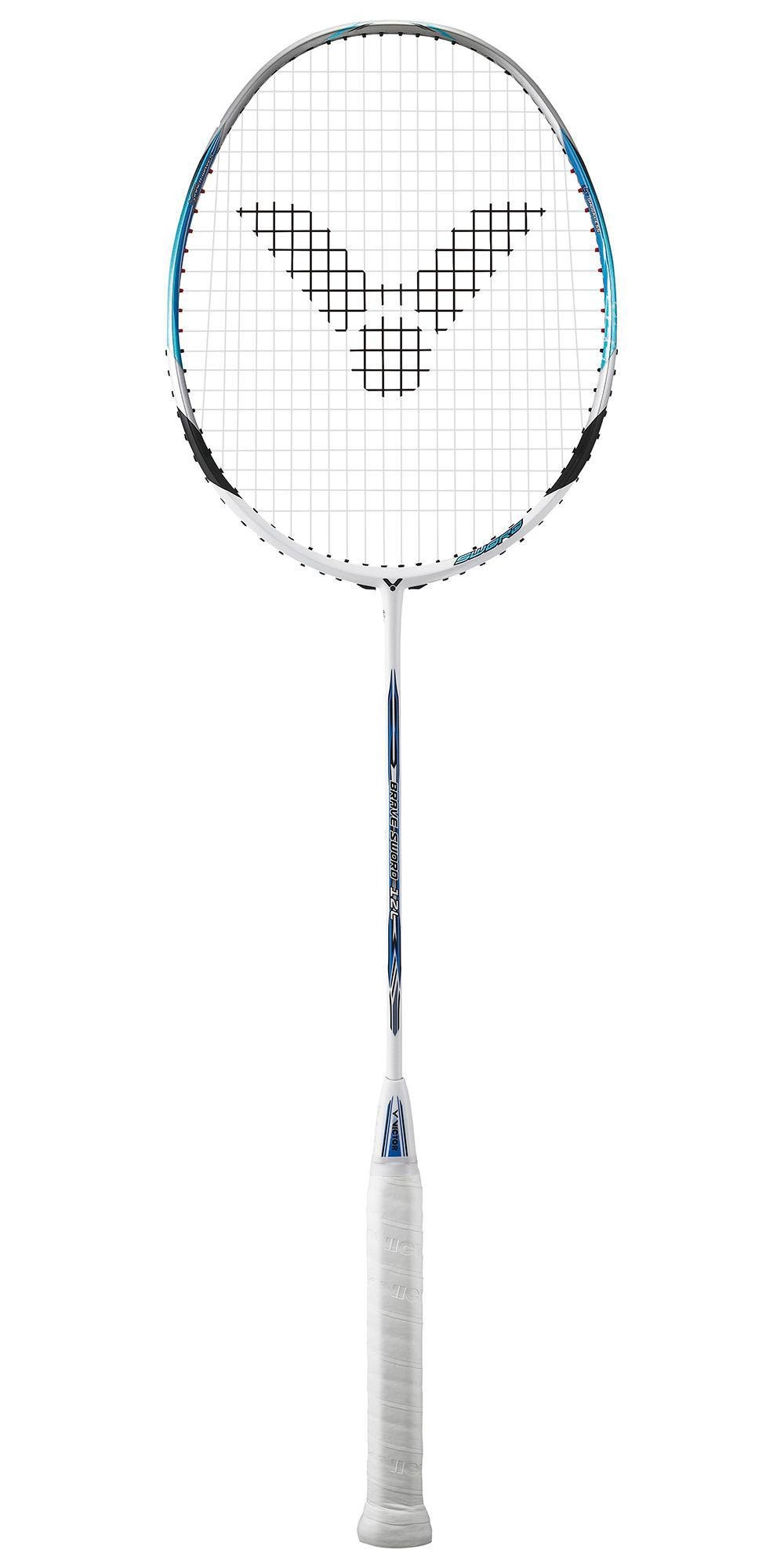
Victor Brave Sword 12 Light
Victor’s slim-grip speed frame — 4U, even balance on the maker’s chart, with the firmest shaft in the set, flagged as such.
This card is included for three published facts, and its one compromise is stated in its first paragraph rather than buried: the Brave Sword 12 Light is a 4U racket with Victor’s slim G6 grip and an even balance — Victor’s own response chart places both its balance and stiffness markers at the centre of their scales, and two specialist listings state the even balance in text. The compromise is the second of those centred markers: on Victor’s stiffness chart, centre reads medium-stiff, which makes this the firmest shaft in the guide. It is carded because everything else on its sheet answers the senior brief precisely — light class, centred balance, the slimmest grip, a thin 7.0 shaft — and because some senior players actively prefer a firmer shaft’s direct feedback. If your brief is medium-or-softer without exception, shortlist the other six and treat this card as the exception that proves the rule.
Victor’s published construction pairs High Resilience Modulus Graphite with Nano Resin in both frame and shaft (some retailer marketing copy upgrades the wording to “Ultra High Modulus”; the card prints the spec-table wording), at a standard 675 mm length, with a maximum tension of 28 lbs horizontal / 26 lbs vertical. Two sourcing notes. Victor publishes the weight as the 4U class only — a gram figure appears in one retailer’s copy, but it is not Victor’s, so this card prints no gram weight. And Victor’s positioning for the model is handling-led rather than level-led: its own copy describes a perfectly balanced racket with a thin grip allowing fast attacking play, and publishes no specific player level. A 3U listing of the same model exists in some markets — the carded version is the 4U, so check the class on the listing.
What we like
- Slim G6 grip with an even balance in the 4U class — a rare published combination
- Victor’s own response chart backs the balance and stiffness placement
- A thin 7.0 shaft in a High Resilience Modulus Graphite + Nano Resin build
- Horizontal and vertical tension limits both published
Worth knowing
- Medium-stiff shaft — the firmest grade here; the flagged exception to the medium-or-softer brief
- Victor publishes no gram weight — any gram figure you see is a retailer’s
- A 3U listing exists in some markets — confirm the 4U class before ordering
As an Amazon Associate we earn from qualifying purchases.
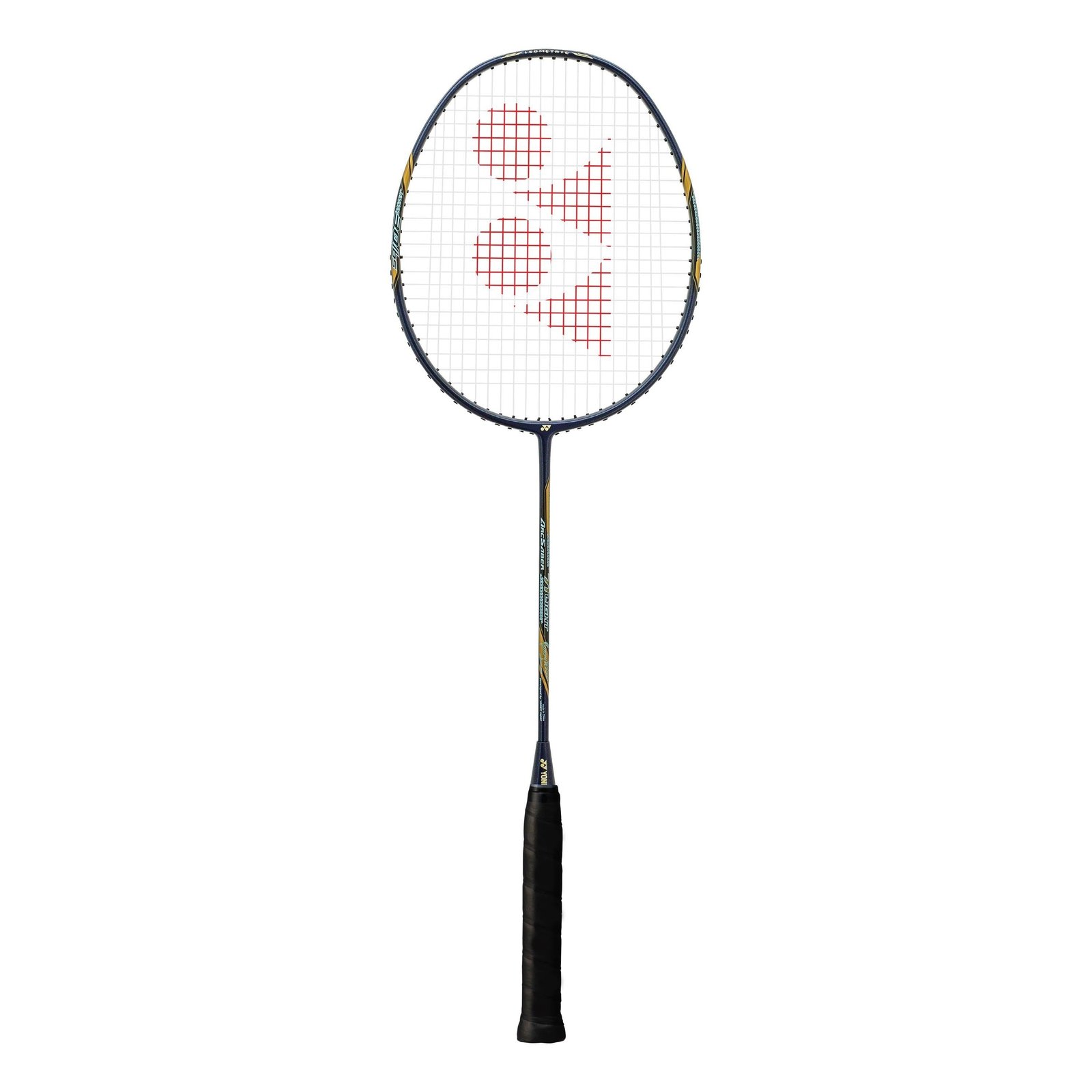
Yonex Arcsaber 71 Light
The control classic from Yonex’s LIGHT series — 5U, medium flex and even balance in the Arcsaber family’s placement-first design.
The Arcsaber family is Yonex’s control line, and the 71 Light is its lightweight member: the agreeing retailer tables reproduce Yonex’s specification exactly — 5U averaging 78 grams with a G5 grip, a Medium flex shaft and an even balance. It belongs to Yonex’s Arcsaber LIGHT series, the Rudy Hartono signature series, which Yonex describes as designed for beginners and casual players looking for an all-round, lightweight racket. The senior case for the card is the same one this guide makes throughout: the published specification — lightest class, middle flex, centred balance, control-family design — matched to a game built on placement and accuracy rather than on pace. It is the natural pick for the senior player whose scoring shots are drops, nets and drives placed into space.
The construction is an H.M. Graphite frame with NANOAIR SPRING over an H.M. Graphite shaft, and its stringing advice of 20–30 lbs is the widest published band in the guide — the frame is approved well beyond the tensions most players in this segment will ever use, which is a specification fact, not an instruction to string high. Verification is the reason this model holds the final slot: three specialist retailers reproduce the same Yonex table without a single conflicting field, which could not be said of the discontinued Carlton model it replaces in this slot (the swap is recorded in this file’s header notes). One distinction to keep at the listing: the Arcsaber 71 Light is a different model from the Arcsaber 11 Play carded in our beginners guide — check the number, not just the family name.
What we like
- The cleanest verification in the set — one Yonex table, three retailers, no conflicts
- Control-family design in the lightest class: 5U, even balance, medium flex
- The widest published stringing band here (20–30 lbs)
- Part of a named signature series with a clear beginner-to-intermediate positioning
Worth knowing
- Yonex positions the LIGHT series at beginners and casual players — buy it for the spec
- Not the Arcsaber 11 Play from the beginners guide — check the model number
- An even balance gives less head assistance on smashes than a head-heavy build, by design
As an Amazon Associate we earn from qualifying purchases.
Side-by-Side Comparison Table
| Model | Best For | Weight (as maker states it) | Balance | Shaft Flex | Grip |
|---|---|---|---|---|---|
| Yonex Nanoflare 270 Speed | Best overall | 5U (avg. 78 g) / 4U (avg. 83 g) | Even — 283–285 mm measured | Medium | G5 |
| Babolat Satelite Lite | Best head-light | 83 g ±2 g | Head Light (Babolat class) — 295 mm ±5 mm | Medium | G1 (listing) |
| Yonex Nanoflare 170 Light | Easiest handling | 5U (avg. 78 g) | Head-Light (positioning) | Hi-Flex | Varies by market |
| Li-Ning Windstorm 79 S | Lightest flexible | 79 g (5U) | Even — 298 mm (label disputed) | Flexible | G6 |
| Yonex Muscle Power 22 Light | Best all-rounder | 4U (approx. 83–86 g) | Even — 285 mm | Medium | G4 |
| Victor Brave Sword 12 Light | Best slim grip | 4U (class only) | Even (maker chart) | Medium-Stiff | G6 |
| Yonex Arcsaber 71 Light | Best control classic | 5U (avg. 78 g) | Even | Medium | G5 |
Read the weight column as the makers print it: three cards publish a class with its average, two publish a single gram figure, one publishes a class over a retailer-measured span, and one — the Victor — publishes a class with no gram figure at all, which the table states rather than fills in. Sorted by the published figures, the set ladders cleanly: the three 5U cards at a 78–79 gram average, then the 4U band at 83 grams and above. The balance column shows how each maker spends that mass — two head-light briefs, five even balances, and not one head-heavy build, because head-heavy candidates were excluded at build time however light they were. The flex column is the honest spread of the guide: Hi-Flex and Flexible at one end, Medium through the middle, and the Victor’s flagged Medium-Stiff at the other. Weight class first, balance second, flex third — the table is the whole guide in one view.
Buying Guide: Matching the Spec Sheet to Your Game
1. Start with the published weight class — 5U for the lightest brief, 4U for substance
The makers have done the first sort for you: every card here is graded 4U or 5U, a full class or two below the standard 3U performance class. Choose between them by the game you play. Flat, fast doubles with lots of defensive reaction shots points to the 5U cards — the Nanoflare 270 Speed in 5U, the Nanoflare 170 Light, the Windstorm 79 S and the Arcsaber 71 Light. A more all-court game with regular overhead work points to the 4U band — the 270 Speed in 4U, the Satelite Lite at its published 83 grams, the Muscle Power 22 Light and the Brave Sword 12 Light. Use the figures as printed: an average where the maker grades by class, a single figure where one is published, and no figure at all where the maker publishes none.
2. Balance: head-light for handling, even for the all-round game
Two cards carry a head-light brief — the Babolat Satelite Lite, whose head-light class is Babolat’s own published classification, and the Nanoflare 170 Light, which carries Yonex’s head-light positioning. The other five are even-balance builds, centred on their makers’ charts or measured tables. Head-light is the handling-first choice for net play and defence; even balance is the all-round choice that keeps a measure of head presence for clears and smashes without loading the head. What this guide deliberately contains none of is a head-heavy build: several light head-heavy models exist — Yonex’s Astrox light rackets among them — and they answer a power brief, not this one.
3. Shaft flex: read the maker’s grade, and know the one exception
Flex grades are the makers’ own words, and the spread here runs Hi-Flex (Nanoflare 170 Light) and Flexible (Windstorm 79 S) through Medium (four cards) to the Brave Sword 12 Light’s Medium-Stiff. A more flexible shaft is the grade makers describe as helping the shuttle on its way with less swing behind it; a firmer shaft is the grade makers describe in terms of direct response. Match the grade to your swing: shorter, compact swings belong at the flexible end of the table; a fuller, faster swing can use the medium grades. And if you shortlist the Victor, do it knowingly — its shaft is the firmest here, and its card says so.
4. Grip size: a fit measurement, not a feature
Grip grades run from G4 (largest here, on the Muscle Power 22 Light) through G5 to G6 (slimmest, on the Windstorm 79 S and the Brave Sword 12 Light); Babolat lists its own G1 designation for the Satelite Lite, and the Nanoflare 170 Light genuinely ships with different grips in different markets. Measure the handle of the racket you play with now before you order, compare it with the grade on the listing, and remember the adjustment runs one way: an overgrip builds a slim handle up slightly, but nothing trims a large handle down. The right grip is simply the right size of equipment — a sizing decision you make once, at the listing, and then stop thinking about.
5. Check the exact model name — this category runs on suffixes and letters
Nearly every card in this guide has a sibling with a similar name and a different brief: Nanoflare 270 Speed against the Stiff-flex 370 Speed; Windstorm 79 S against the hard-shaft 79 H and the head-heavy 78 S; Satelite Lite against the Origin Lite and the Power; Muscle Power 22 “Light” against the same model spelled “Lite”; Brave Sword 12 Light in 4U against its own 3U listing; Arcsaber 71 Light against the Arcsaber 11 Play. The suffix is the specification — it carries the flex grade, the balance or the weight class that put the racket in this guide. Confirm all of it on the actual listing before you pay: the full model name and variant letter, the weight class, and the grip size. Thirty seconds on the listing is the difference between the racket this guide carded and its heavier or stiffer namesake.
Frequently Asked Questions
What weight class should a senior badminton player choose — 4U or 5U?
Both classes are this guide’s territory, and the makers grade them clearly: 5U averages around 78 grams and 4U around 83 grams, a class below the standard 3U performance class. Choose 5U — the Nanoflare 270 Speed in 5U, the Nanoflare 170 Light, the Windstorm 79 S or the Arcsaber 71 Light — for flat, fast doubles and defensive reaction play. Choose 4U — the 270 Speed in 4U, the Satelite Lite at its published 83 grams, the Muscle Power 22 Light or the Brave Sword 12 Light — if your game includes regular overhead work and you want a little more substance behind the frame. There is no wrong class here, only the match to your game.
Is a head-light or an even-balance racket better for senior players?
It depends on where your points are won, and the makers describe the two classes in consistent terms. Head-light rackets — the Babolat Satelite Lite, whose head-light class is Babolat’s own published classification, and the Nanoflare 170 Light in Yonex’s positioning — carry less mass in the head and are the handling-first choice for net play and fast defensive exchanges. Even-balance rackets — the other five cards — centre the mass and keep a measure of head presence for clears and smashes. This guide cards no head-heavy builds at all: light head-heavy models exist, but they answer a power brief rather than the handling brief this page owns.
How flexible should the shaft of a senior player’s racket be?
Read the maker’s grade and match it to your swing. The flexible end of this guide — Yonex’s Hi-Flex on the Nanoflare 170 Light and Li-Ning’s Flexible on the Windstorm 79 S — is the grade makers describe as returning energy into the shuttle with less swing behind it, which suits shorter, compact swings. The four Medium cards are the middle grade for all-round play. The one exception is labelled in its card: the Victor Brave Sword 12 Light is Medium-Stiff on Victor’s own chart, the firmest shaft here, carded for its 4U class, even balance and slim G6 grip. Light but genuinely stiff models — Yonex’s Nanoflare 370 Speed among them — were excluded at build time.
What grip size should I choose — G4, G5 or G6?
Treat it as a fit measurement. In the G grading most makers use here, the higher number is the slimmer handle: G4 is the largest grip in this guide (the Muscle Power 22 Light), G5 the middle (the Nanoflare 270 Speed and the Arcsaber 71 Light), and G6 the slimmest (the Windstorm 79 S and the Brave Sword 12 Light). Babolat uses its own designation — the Satelite Lite is listed at G1 — and the Nanoflare 170 Light ships with different grips in different markets, so check the actual listing. Measure the handle you play with now before you order, and remember an overgrip can build a slim handle up slightly, while nothing trims a large handle down.
Why is the Li-Ning Windstorm 79 S listed as both even balance and head heavy?
Because Li-Ning’s own regional stores label it differently, and the guide prints the dispute rather than hiding it. Li-Ning’s India store — the source for this card’s figures — lists the 79 S at 79 grams with an Even Balance label and a 298 mm balance point. Li-Ning’s UK arm lists the same model lighter, at 77 ±2 grams, with a head-heavy label. The 298 mm figure is common ground, and it sits high for the even band by conventional measures, which explains the two labels. The verifiable facts are consistent — 79 grams in the listing used here, a flexible shaft and a G6 grip — so read the model on those, and treat its balance label as contested between the maker’s own stores.
What is the difference between the Nanoflare 270 Speed and the Nanoflare 170 Light?
They are two different briefs in Yonex’s speed family. The 270 Speed is sold in both 5U (averaging 78 grams) and 4U (83 grams) with a Medium-flex shaft and an even measured balance of 283–285 mm, and Yonex positions it for intermediate players. The 170 Light is 5U only, with a Hi-Flex shaft — the most flexible grade Yonex publishes — and head-light positioning, and Yonex positions it for beginning players who need lightness and manoeuvrability. Choose the 270 Speed for the complete all-round specification, in either weight class; choose the 170 Light for the easiest-handling published brief in the line.
What is the difference between this guide and the beginners badminton racket guide?
The beginners guide owns first-racket selection — the models a new player starts the game with — and the intermediate guide owns the step-up rung. This guide narrows the same sport to one decision: the lighter 4U and 5U builds, even and head-light balances and medium-or-softer shafts the makers publish, compared for the senior game of placement, rotation and court craft. No racket from the beginners, intermediate or women’s guides is re-ranked here, and none of this guide’s seven is carded there — read those pages for their decisions, and this page for the senior specification.
The Verdict
Buy the specification, not the story. The Yonex Nanoflare 270 Speed is the complete senior answer — two published weight classes, a medium flex and an even measured balance. The Babolat Satelite Lite carries the guide’s clearest head-light classification, Babolat’s own, and the Yonex Nanoflare 170 Light the easiest-handling brief. The Li-Ning Windstorm 79 S is the lightest flexible pick with the slimmest grip, the Yonex Muscle Power 22 Light the conventional all-rounder, the Victor Brave Sword 12 Light the slim-grip option with its firmer shaft honestly flagged, and the Yonex Arcsaber 71 Light the control classic. Seven rackets, four honest decisions — weight class, balance, flex and grip — every one of them printed as its maker states it.
Affiliate disclosure: AliShuttler is a participant in the Amazon Services LLC Associates Program. Links marked “Check Price on Amazon” are affiliate links — if you buy through them, we may earn a commission at no additional cost to you. Every specification in this guide is taken from the manufacturer’s own published listings, checked at build time in 2026; weights, balances, flex grades and grip sizes are printed exactly as their makers state them.