The senior player’s racket decision is a specifications decision. As the swing gets shorter and the game becomes about placement, reach and doubles craft, the frames that fit are published with lighter weights, larger heads and balance points that put the mass where a compact swing can use it. This guide compares seven of them on exactly what their makers publish — strung and unstrung weights labelled as the makers label them, head sizes, balance points, lengths and grip sizes — and nothing else. No health claims, no promises: just the spec sheets, read properly.
⚡ TL;DR — The Short Answer
For the best all-round senior pick, buy the HEAD Speed PWR — 255 grams unstrung under a 115 square-inch head, a 345 mm balance and grip sizes 1 to 5, with HEAD’s Auxetic 2.0 construction. The lightest strung classic is the HEAD Ti.S6, a 115 square-inch titanium-composite frame that has anchored this category for years. The Babolat Pure Drive 110 is the power pick at the same 255-gram unstrung mark, the Wilson Clash 108 v3 the flexible-feel pick, and the Wilson Triad Five the one built around a three-piece comfort construction, as Wilson describes it. The Yonex EZONE 105 is the controlled all-rounder at 275 grams, and the Tecnifibre T-Fit 290 Power Max is the ready-to-play option that arrives strung, with the most mass and stability in this guide.
Quick Picks — Best Tennis Rackets for Seniors at a Glance
255 g unstrung, a 115 in² head and grips 1–5 — the complete modern senior specification.
The long-running titanium oversize: strung examples measure about 252 g, per Tennis Warehouse.
255 g unstrung with a 110 in² head and Babolat’s HTR hoop — the Pure Drive brief, oversized.
SI3D bending technology in a 108 in² frame — Wilson’s most forgiving Clash, per Wilson.
A three-piece frame with Iso-Zorb pads between hoop and handle — comfort by construction, per Wilson.
275 g, a 330 mm balance and Yonex’s ISOMETRIC head — the measured middle of this guide.
Arrives pre-strung with an overgrip and dampener in the package, per Tecnifibre — at 290 g.
In This Guide
The Senior Decision: Weight, Head Size and Balance, As Makers State Them
Every racket decision is a trade between mass, head size and balance, but the senior player’s version of that trade has a distinct shape, and it is written in the makers’ own catalogues. The frames built for this segment cluster tightly: unstrung weights between 255 and 290 grams, heads between 103 and 115 square inches, and balance points at or above the even mark, because a lighter frame needs its mass toward the head to keep depth on a shorter swing. All seven cards below sit inside that published envelope — that is what makes them senior rackets, and it is a specification fact, not a marketing label.
What this guide does with those numbers matters as much as the numbers. Weights are printed exactly as each maker states them — strung where the maker states strung, unstrung where the maker states unstrung, and labelled either way on every card. Where a maker’s published frame weight and a specialist retailer’s measured strung weight differ, both are printed with their sources, because strung-versus-unstrung confusion is the single most common way senior buyers end up holding a heavier racket than they ordered. Grip sizes are treated the same way: as sizing information, printed as the ranges makers offer, so you can match the handle to your hand the way you would match a shoe to your foot.
One boundary before the picks. This page owns the senior lightweight, large-head decision only. The full all-player field belongs to our pillar guide to the best tennis rackets; the first-racket decision belongs to our guide to the best tennis rackets for beginners; the women’s segment has its own guide to the best tennis rackets for women; and players stepping up in level should read the best tennis rackets for intermediate players. None of their models is re-carded here. If you are returning to the game itself, our how to play tennis guide covers the strokes these frames are built to serve.
Strung vs Unstrung, Extended Lengths and Grip Sizes
Strung versus unstrung is the first spec to interrogate. Strings, dampener and overgrip add roughly 15 to 20 grams to a frame, which is why the same racket can be published at 255 grams by its maker (unstrung) and measured near 275 grams on a retailer’s scale (strung). This guide labels every weight on every card. HEAD publishes the Speed PWR and Babolat the Pure Drive 110 unstrung; Wilson publishes the Clash 108 v3 and Triad Five both ways; and the Ti.S6 card prints HEAD’s frame weight alongside Tennis Warehouse’s measured strung figure. Compare like with like and the seven cards sort cleanly: the 255-gram unstrung pair at the light end, the T-Fit 290 at the stable end.
Length is the quiet reach spec. The standard racket is 27 inches; four cards here are longer — the Speed PWR at 27.4, the Pure Drive 110 at 27.6, the Ti.S6 at 27.75 and the Triad Five and Clash 108 at 27.25. Makers publish those extra fractions for the reach and leverage they add on serve and at full stretch, and in doubles — where a step saved is a point kept — the extended cards are worth reading first. Balance completes the picture: the Triad Five’s 36.7 cm strung balance is the most head-heavy published figure here, the EZONE 105’s 330 mm the most even-handed, and the T-Fit 290’s 320 mm the only genuinely head-light spec in the guide, which is how a 290-gram frame stays manoeuvrable.
Grip size is a sizing decision, stated as sizing. The ranges makers offer differ more than buyers expect: HEAD publishes the Speed PWR in grip sizes 1 to 5 and Babolat the Pure Drive 110 in 0 to 5 — the two widest ladders here — while Yonex publishes the EZONE 105 in 0 to 4 and the T-Fit is commonly stocked in L2 and L3. The cards print each range as published. A grip that matches your hand is simply the correct size of equipment, the same way a shoe is; the buying guide below explains how the published numbers map to the L0–L5 labels on listings.
The 7 Best Tennis Rackets for Seniors, Compared
Seven frames, one shared brief — light as their makers publish it, large-headed, and balanced for a compact swing. Read the card that matches your game first.
HEAD Speed PWR
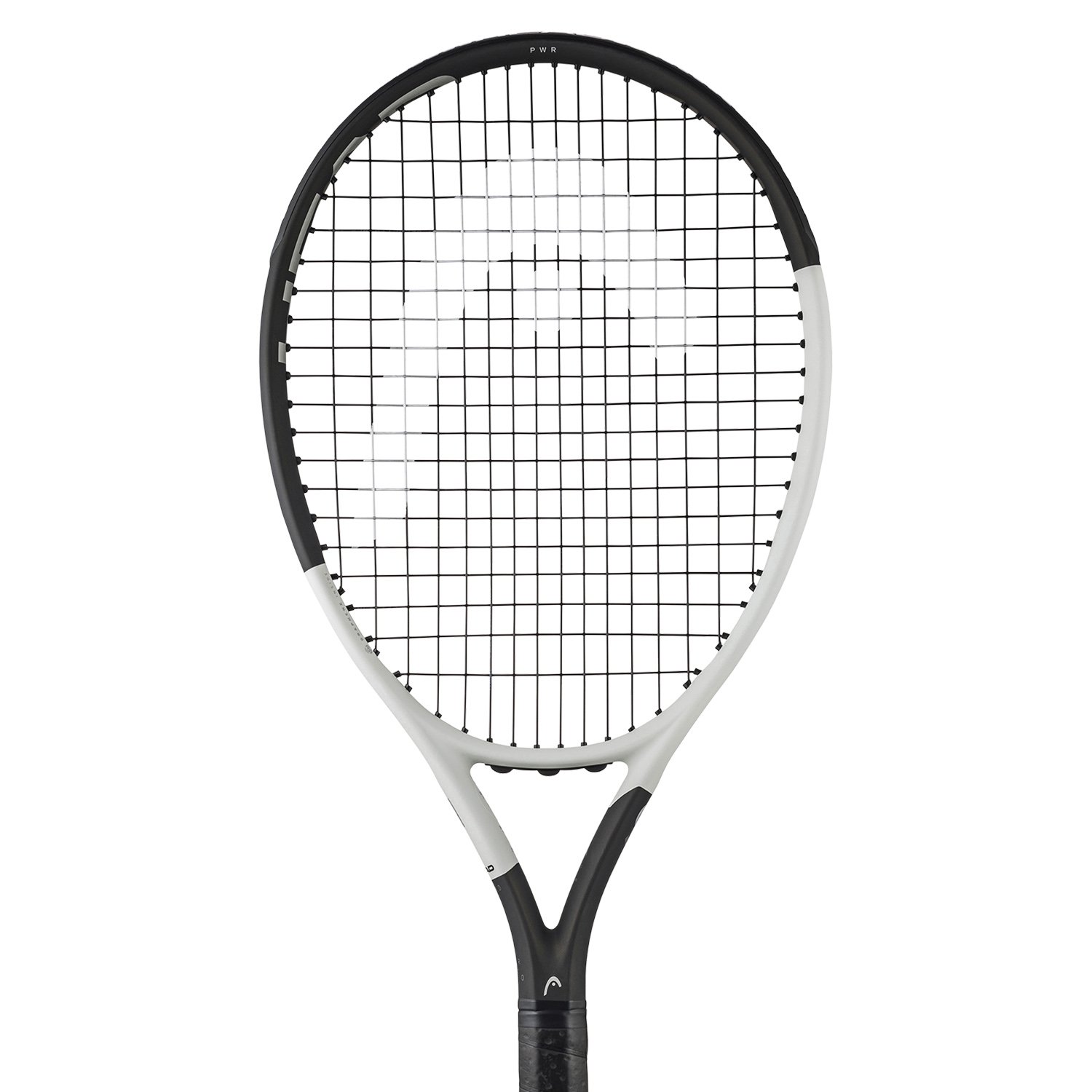
The complete modern senior specification — 255 grams unstrung, a 115 square-inch head, an even-to-head-heavy balance and the widest HEAD grip ladder.
HEAD’s PWR designation is its power-and-forgiveness end of the Speed family, and the current Speed PWR publishes the most complete senior specification in this guide. The numbers first, as HEAD states them: 255 grams unstrung, a 115 square-inch head — the joint-largest here — a 345 mm balance, a slightly extended 27.4-inch length, and a 26/26/28 mm beam on a 16×19 pattern. Nothing in that list asks for a long, fast swing: the head provides the hitting area, the balance puts mass where a compact stroke can use it, and the extra length adds reach. It is the spec sheet of a racket designed to contribute pace rather than demand it.
The construction is HEAD’s current Auxetic 2.0, which HEAD describes as its feel technology in the Speed line, in the black-and-white Speed cosmetics. Two practical points complete the card. The grip ladder runs sizes 1 to 5 — the full adult range, matched only by the Pure Drive 110 below — so hand size is no constraint. And because the published weight is unstrung, expect a strung example to land around the low 270s once strings and an overgrip are on; that is still the light end of adult tennis, and the comparison table prints the basis so the comparison stays honest. If you want one racket that answers the whole senior brief without a compromise to explain, this is the card.
What we like
- The complete published brief: 255 g, 115 in², 345 mm, extended length
- Full grip ladder, sizes 1 to 5
- Current-generation Auxetic 2.0 construction
- The largest head here, shared with the Ti.S6
Worth knowing
- Published weight is unstrung — strung examples land roughly 15–20 g higher
- Sold unstrung — budget a string job into the purchase
As an Amazon Associate we earn from qualifying purchases.
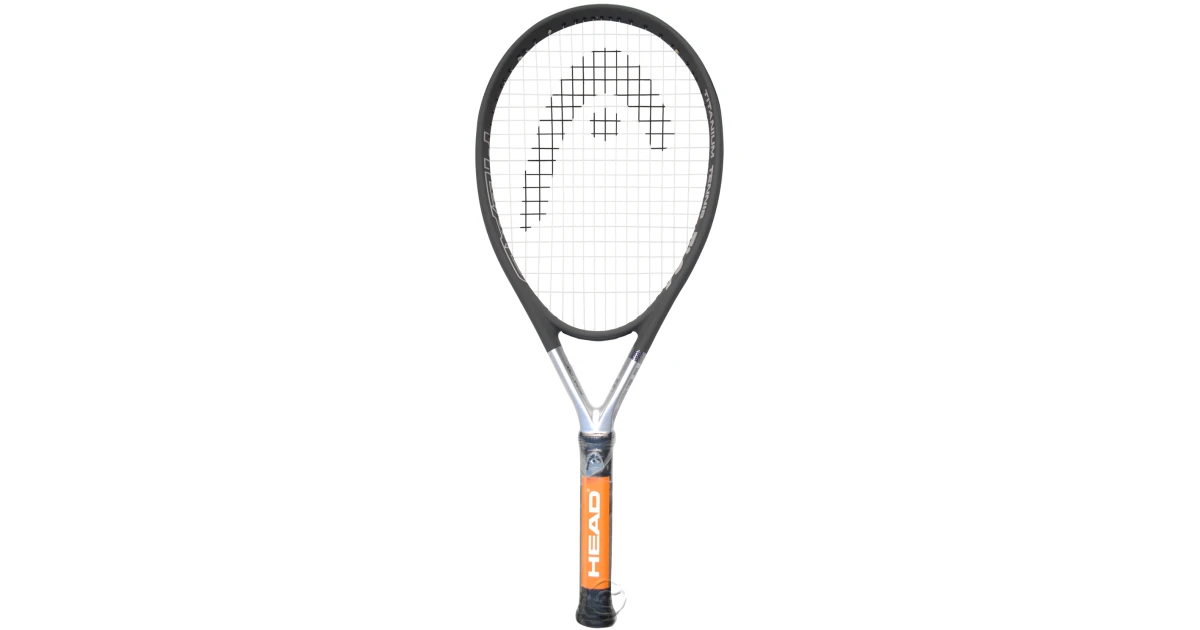
HEAD Ti.S6
The category’s long-running answer — a titanium-composite 115 head on a head-heavy balance, with strung examples measured at about 252 grams.
Some rackets define a category by outlasting it. The Ti.S6 has been HEAD’s ultra-light oversize answer for years — HEAD’s retailers describe it as the brand’s best-selling racket — and its published formula explains the longevity: a 115 square-inch head, the longest length in this guide at 27.75 inches, a distinctly head-heavy balance and a wide 28.5–29 mm beam, in a graphite-and-titanium composite weave that HEAD says keeps the frame light while holding its stiffness. For a player with a compact swing who plays at the net and in the forecourt, that is the whole senior brief in one long-running frame.
The weight needs the guide’s standard transparency, because two published figures exist and both are printed. HEAD’s own listing gives a 225-gram frame weight; Tennis Warehouse, which measures the rackets it sells, lists strung examples at about 252 to 254 grams. The strung figure is the one your arm meets, and even fully strung this is the lightest complete racket in the guide. HEAD’s listing adds the practical details: a SofTac cushion grip, factory stringing with HEAD synthetic gut, and a full cover in the package. Against the Speed PWR at #1, the trade is generation for simplicity — an older, proven construction, sold ready to play, against the current Auxetic build sold unstrung.
What we like
- Lightest strung figure in the guide, as measured by its retailer
- Longest length here — 27.75 in of published reach
- Arrives strung with a cover, per HEAD’s listing
- A proven, widely stocked specification — easy to replace like for like
Worth knowing
- Two published weights (225 g frame / ~252 g strung) — compare on the strung figure
- The head-heavy balance is the most pronounced here; demo it if you prefer even-balanced frames
- An older construction than the Auxetic card above it
As an Amazon Associate we earn from qualifying purchases.
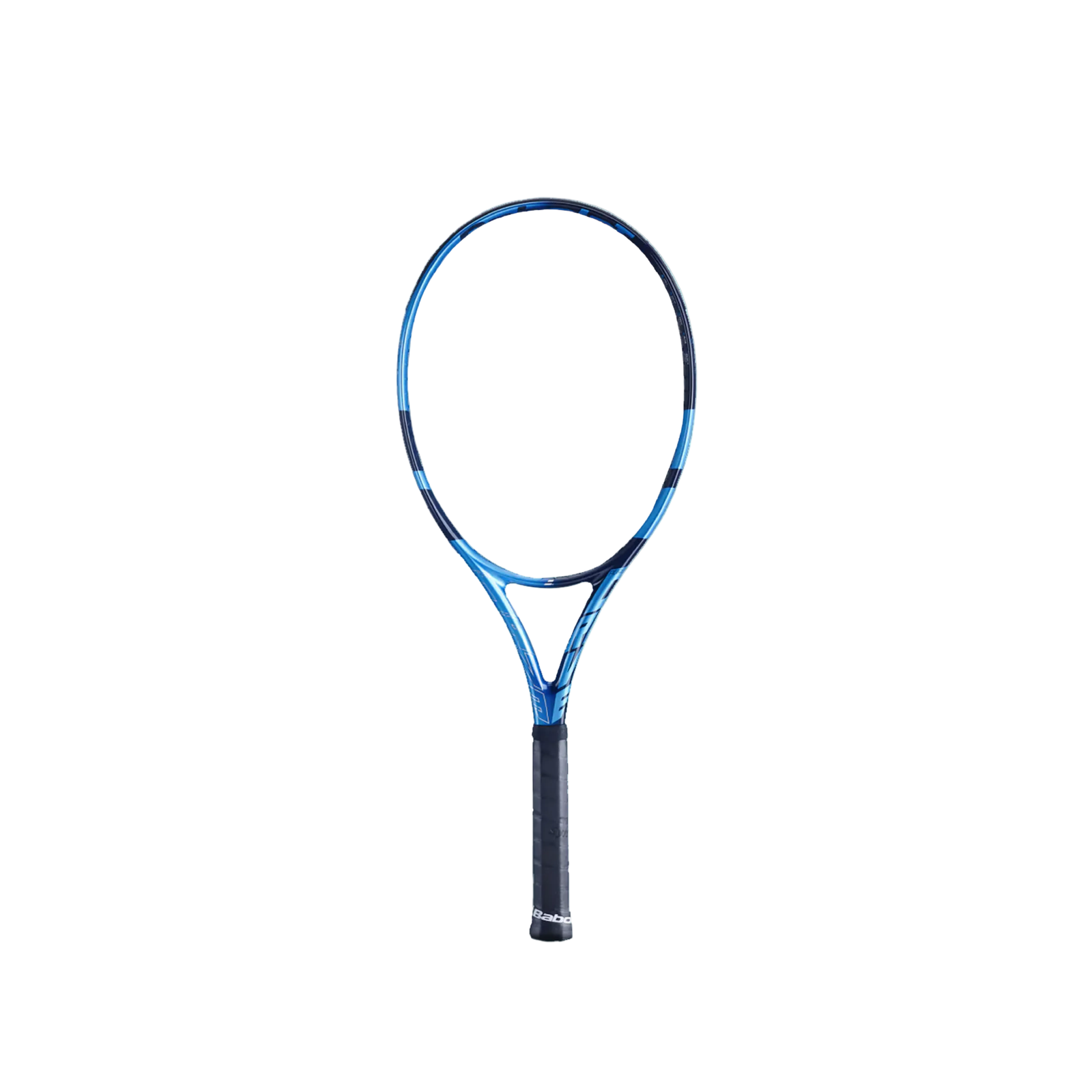
Babolat Pure Drive 110
The Pure Drive brief, oversized — 255 grams unstrung under a 110 head, with Babolat’s HTR hoop and the joint-widest grip ladder here.
Do not confuse this card with the standard Pure Drive — that 100 square-inch frame is carded in our pillar guide and is a different, heavier brief. The Pure Drive 110 is Babolat’s oversize member of the family: 255 grams unstrung, a 110 square-inch head, a 330 mm balance and an extended 27.6-inch length, published by Babolat as its comfort-racket end of the range. What it keeps from the family is the power engineering: the HTR System, a lay-up composition in the hoop that Babolat says increases rigidity for energy transfer, and FSI Power string-bed technology. If your game is built on taking the ball early and letting the racket supply the pace, this is the most powerful published specification in the guide.
Babolat’s feel technology is also in print: SWX Pure Feel, powered by SMAC’s dampening material integrated into the lay-up, which Babolat describes as its vibration-filtering system for feel at impact — Babolat’s published description of its construction, reported as such. The practical details are strong: grip sizes 0 to 5, the widest ladder here alongside the Speed PWR, and a Syntec Team grip. The honest counterweight is the published 72 RA stiffness — the firmest figure in this guide, and the mechanical source of the power. Players who prefer a softer response have two Wilson cards below built the opposite way; players who want the ball to leave the strings quickly will find this card’s spec sheet the most direct route.
What we like
- The most powerful published brief here: HTR hoop, 110 in², extended length
- Grip ladder 0–5 — the joint-widest in the guide
- 255 g unstrung matches the lightest unstrung figure here
- Babolat’s published feel system (SWX Pure Feel) in the lay-up
Worth knowing
- 72 RA is the firmest published stiffness here — the trade behind the power
- Not the pillar’s Pure Drive 100 — check the “110” on the listing
- Sold unstrung in most markets
As an Amazon Associate we earn from qualifying purchases.

Wilson Clash 108 v3
Wilson’s flexibility brief at oversize — SI3D three-dimensional bending in a 108 head, published at 280 grams unstrung by Wilson itself.
The Clash family exists for one published reason: flexibility. Wilson built the line around frame bending, and the 108 v3 is — in Wilson’s own words — the most forgiving frame of the Clash line, with a maximised sweet spot under its 108 square-inch head. The technology is named SI3D: Wilson says it optimises three-dimensional frame bending for power, spin and control, working with the FORTYFIVE lay-up and a Hit Stabilizer that adds inertia at 3 and 9 o’clock without changing balance or weight. Players who like a frame that visibly flexes and pockets the ball — the opposite sensation to the Pure Drive’s firmness — are this card’s audience, and the preference is a feel preference, stated as such.
Wilson publishes the fullest weight picture here: 280 grams unstrung, 296 grams strung, with a 34.5 cm strung balance — the heaviest strung figure in the guide, which the flexibility brief spends on stability rather than lightness. Two ownership details deserve print. The bumper and grommets are plant-based Agiplast and use Wilson’s Click & Go system, which Wilson says makes them easy to replace — a genuine long-term maintenance point on a frame bought to keep. And Parallel Drilling grommets are Wilson’s published route to a more consistent, forgiving string-bed response. Buy it for the bend, keep it for the replaceable parts.
What we like
- A published flexibility brief no other card here offers
- Wilson publishes both strung and unstrung weights — full transparency
- Click & Go replaceable bumper and grommets for long-term ownership
- Hit Stabilizer adds off-centre stability without added weight, per Wilson
Worth knowing
- The heaviest strung figure in the guide at 296 g
- The flexible feel divides players — it is a preference, not an upgrade
- Distinct from the Clash 100L v3 carded in the beginners guide — check the “108”
As an Amazon Associate we earn from qualifying purchases.
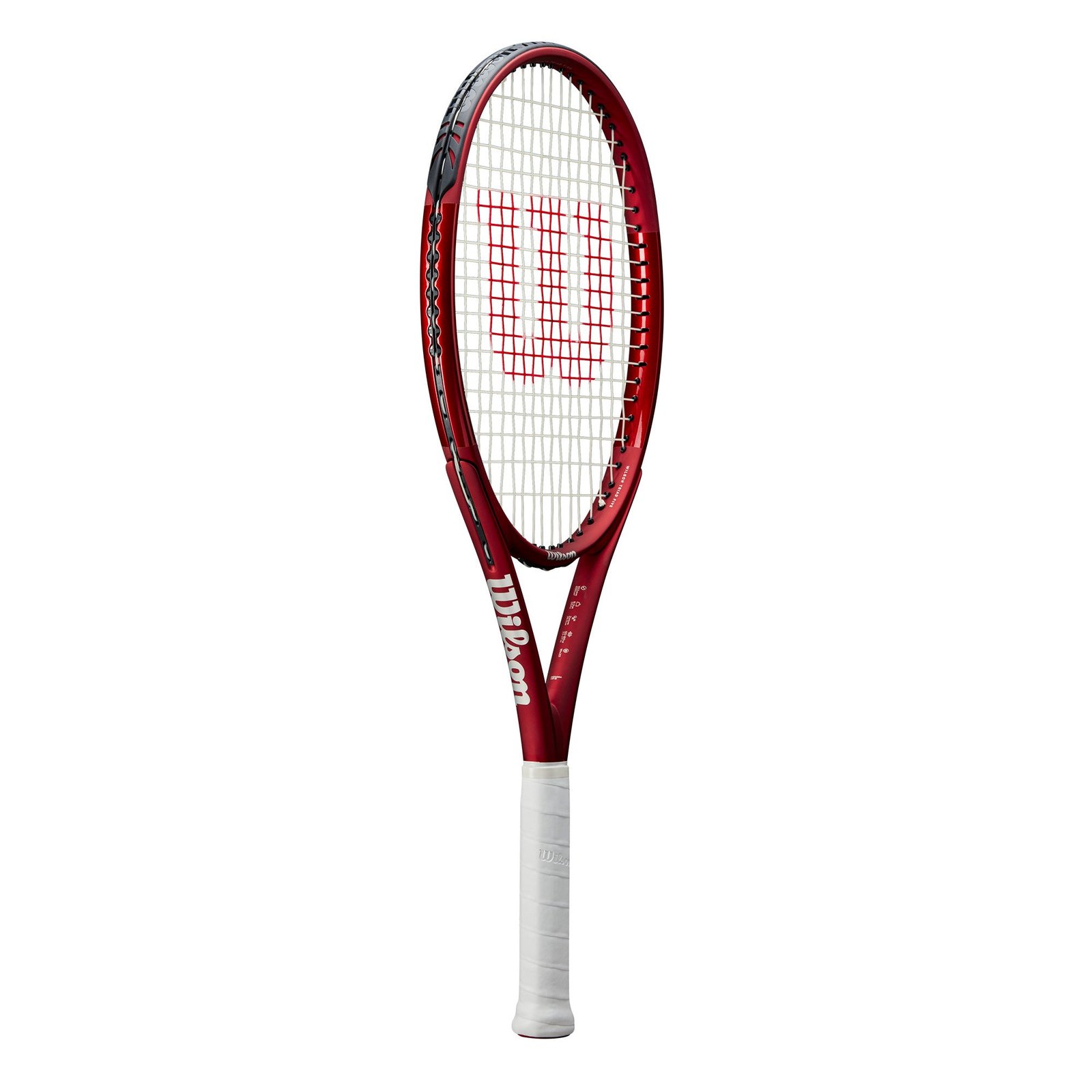
Wilson Triad Five
Comfort by construction, as Wilson publishes it — a three-piece frame with Iso-Zorb pads separating hoop and handle, at 280 grams strung.
This card is reported with deliberate care, because its maker’s marketing reaches further than this guide will. What is verifiable, and what the card stands on, is the construction: Wilson’s Triad system builds the racket in three pieces, with softer Iso-Zorb pads separating the hoop from the handle — a physical, inspectable design that Wilson positions as its comfort technology for this frame, blended with Hammer weighting that concentrates mass in the head. Wilson describes the result in comfort terms; this guide reports the construction and Wilson’s positioning, and makes no claim beyond them. As engineering, it is genuinely distinct — no other card here is built in pieces.
The published numbers suit the senior brief in a specific way. The head is the smallest here at 103 square inches, the pattern the densest at 16×20, and the strung balance the most head-heavy at 36.7 cm — a combination that reads as control at the head with pace supplied by the balance rather than the swing. Strung weight is 280 grams by Wilson’s own table, and the racket arrives pre-strung with Wilson Sensation, Wilson’s comfort-positioned string, per Wilson’s copy. Power Holes — elongated grommet holes Wilson says allow additional string movement — complete the published spec. For the player who wants the most control-oriented head in this guide without leaving the lightweight class, this is the card.
What we like
- A genuinely distinct published construction — three-piece frame, Iso-Zorb pads
- The most control-oriented head and pattern here: 103 in², 16×20
- Arrives pre-strung with Wilson Sensation, per Wilson
- Full Wilson spec table published, strung and unstrung
Worth knowing
- The smallest head here — less margin than the 115 in² cards
- The 36.7 cm head-heavy balance is a strong flavour; demo if you can
- Comfort here is reported as construction and maker positioning only
As an Amazon Associate we earn from qualifying purchases.
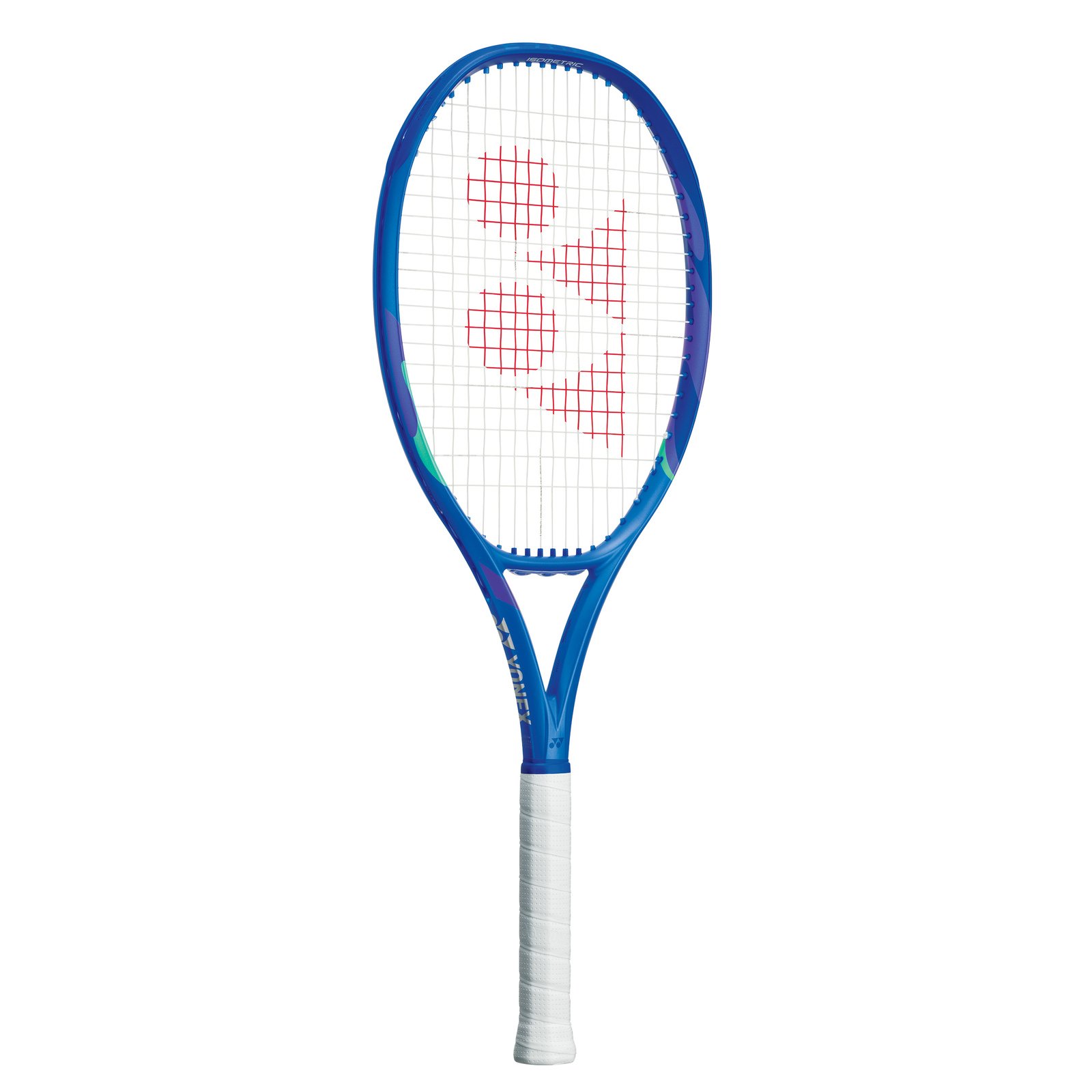
Yonex EZONE 105 (2025)
The measured middle — 275 grams, a 105 head and a 330 mm balance, with Yonex’s VDM mesh in the handle and a Japanese build.
Not every senior player wants the biggest head and the lightest frame — some want the racket that disappears and lets placement do the work. The EZONE 105 is that card: the eighth-generation EZONE’s oversize member, published at 275 grams unstrung with a 105 square-inch head and a 330 mm balance — the most even-handed specification in this guide, at the standard 27-inch length. Yonex’s ISOMETRIC head shape is its signature geometry, which Yonex says enlarges the sweet spot by optimising the intersection of main and cross strings. Against the 115-head cards, the trade is explicit: a smaller margin on off-centre hits, in exchange for the most controlled, least head-heavy swing here.
The materials list is Yonex’s current stack, published in full: HM Graphite with 2G-Namd Speed, which Yonex describes as its energy-transfer graphite; MINOLON, a material Yonex adds to the shaft in this generation; and VDM — Vibration Dampening Mesh — wrapped in the grip, which Yonex describes as its vibration-filtering mesh for touch and precision. Those are construction descriptions from Yonex’s own specification, reported as such. The practical details: grip sizes 0 to 4, stringing advice of 40–55 lbs, and a made-in-Japan build, as Yonex publishes for this line. Distinct from the pillar’s EZONE 100 and the women’s guide’s EZONE 100L — check the “105” on the listing.
What we like
- The most balanced published spec here: 275 g at a 330 mm balance
- Full materials stack published by Yonex, including VDM in the handle
- Made in Japan, per Yonex
- Grip ladder 0–4 covers smaller hands
Worth knowing
- A 105 in² head gives less margin than the 115 in² cards
- Standard 27-inch length — no extended-reach help
- Sold unstrung
As an Amazon Associate we earn from qualifying purchases.
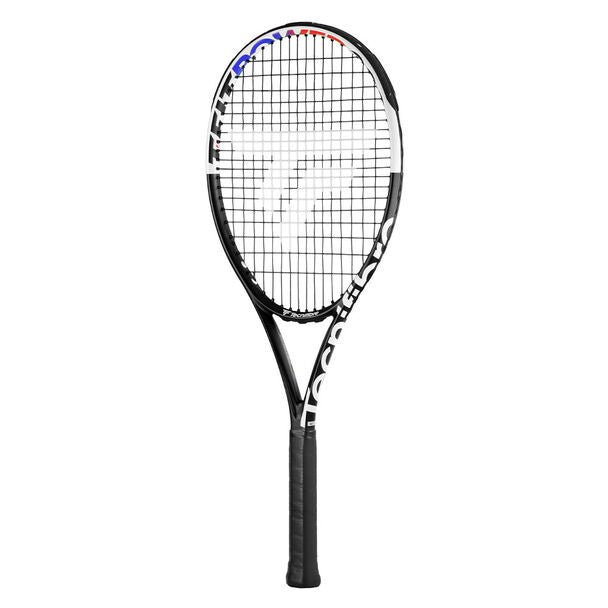
Tecnifibre T-Fit 290 Power Max
The stable, strung-and-ready option — 290 grams with a head-light 320 mm balance, a Synergy Link insert, and no stringing bill.
Every guide needs its honest outlier, and this is ours: the heaviest frame here at 290 grams, with the smallest head at 100 square inches. It earns its card on two published facts. First, the balance: at 320 mm, the T-Fit 290 is the only genuinely head-light specification in the guide, which is how a 290-gram frame keeps its manoeuvrability — the mass sits in the hand, not at the end of the lever, and Tecnifibre’s Velocity Shaft Design is its published aerodynamic shaping for swing speed. Second, the package: Tecnifibre supplies the racket pre-strung with synthetic gut, with an overgrip and a dampener included — the only card here that arrives ready to walk onto a court with nothing left to buy or book.
Tecnifibre positions the T-Fit 290 as its power-and-comfort compromise for regular and occasional players, built in 100% graphite with EZ Lock eyelets at the string bed and a Synergy Link — a PU insert around the string-contact area that Tecnifibre says absorbs the shock of ball impact; that is Tecnifibre’s published description of its insert, reported as attribution. Who is this card for? The senior player who tried the ultra-light end and found it unstable against heavy hitters, and who values a solid, ready-made setup over the last word in lightness. It is the stability anchor of the guide, and the comparison table prints its numbers without apology — read them, and choose with open eyes.
What we like
- Arrives ready to play: pre-strung, overgrip and dampener included, per Tecnifibre
- Head-light 320 mm balance keeps the 290 g manoeuvrable
- The most stable published brief here for facing pace
- Full Tecnifibre spec published, including the Synergy Link insert
Worth knowing
- The heaviest frame and smallest head in this guide — a deliberate stability trade
- Stocked mainly in grip sizes L2–L3 at most retailers
- Factory strings are a starting point, not a tailored setup
As an Amazon Associate we earn from qualifying purchases.
Side-by-Side Comparison Table
| Model | Best For | Weight (as maker states it) | Head Size | Balance | Grip Sizes |
|---|---|---|---|---|---|
| HEAD Speed PWR | Best overall | 255 g unstrung | 115 in² | 345 mm | 1–5 |
| HEAD Ti.S6 | Lightest strung classic | 225 g frame · ~252 g strung (measured) | 115 in² | Head-heavy, 380 mm | As listed |
| Babolat Pure Drive 110 | Best power | 255 g unstrung | 110 in² | 330 mm | 0–5 |
| Wilson Clash 108 v3 | Flexible feel | 280 g unstrung · 296 g strung | 108 in² | 34.5 cm strung | As listed |
| Wilson Triad Five | Comfort construction | 267 g unstrung · 280 g strung | 103 in² | 36.7 cm strung | As listed |
| Yonex EZONE 105 | All-round control | 275 g unstrung | 105 in² | 330 mm | 0–4 |
| Tecnifibre T-Fit 290 Power Max | Ready-to-play stability | 290 g | 100 in² | 320 mm | Mainly L2–L3 |
Read the weight column by its labels, not just its numbers: two cards publish unstrung figures only, two publish both, one publishes a frame weight with a retailer’s measured strung figure beside it, and one publishes a single all-in figure. Normalised honestly, the guide spans roughly 252 grams strung (the Ti.S6) to 296 grams strung (the Clash 108) — a 44-gram band that is the real senior market, whatever individual listings imply. The balance column explains how each maker spends that mass: HEAD and Wilson put it toward the head for pace on short swings; Yonex holds it even; Tecnifibre keeps it in the hand for stability.
Buying Guide: Matching the Spec Sheet to Your Game
1. Start with strung weight — the number your arm actually meets
Makers publish unstrung weights because that is the frame they manufacture; you play the strung one. Use this guide’s labelled figures and compare strung with strung: the Ti.S6 at roughly 252 grams measured, the Triad Five at 280 and the Clash 108 at 296 by Wilson’s own tables, with the 255-gram unstrung pair (Speed PWR, Pure Drive 110) landing in the low 270s once strung. If your current racket feels like hard work by the third set, shop the light end of that band. If balls from heavy hitters push your frame around, shop upward — the T-Fit 290 exists for exactly that complaint.
2. Head size: margin versus manoeuvrability
The 115 square-inch cards (both HEADs) publish the largest hitting areas here, and with them the largest stated sweet spots, in their makers’ descriptions — the natural starting point for a shorter swing and for doubles, where reactions are quick and contact is not always centred. The 103–105 cards (Triad Five, EZONE 105) trade some of that margin for a more controlled, even swing. Neither is better in the abstract: the question is whether your misses are contact misses (buy head size) or placement misses (buy control). Your last few matches answer it honestly.
3. Balance and length: the reach-and-pace pair
Head-heavy balances — the Ti.S6’s published 380 mm, the Triad Five’s 36.7 cm — put mass behind the ball on compact strokes, which is why this segment’s makers spec them. Extended lengths add the second half of the equation: the Ti.S6’s 27.75 inches and the Pure Drive 110’s 27.6 are published reach, most valuable on serve and on the stretch volley. If your game is baseline placement with a full swing, the even-balanced EZONE 105 at standard length is the cleaner tool; if your game is net craft and first-strike doubles, the head-heavy, extended cards are built for it.
4. Grip size: match the handle to your hand
Grip sizes are published as L-numbers on most listings: L0 is 4 inches, and each step adds an eighth of an inch — L1 is 4⅛, L2 is 4¼, L3 is 4⅜, L4 is 4½, L5 is 4⅝. The ladders differ by card: Babolat and HEAD publish the widest ranges here (0–5 and 1–5), Yonex 0–4, and the T-Fit 290 is stocked mainly in L2–L3. Measure before you order — the standard method is the distance from the tip of your ring finger to the main crease of your palm — and remember an overgrip adds roughly one-sixteenth of an inch. The right grip is simply the right size of equipment: too large or too small is a sizing error, and sizing errors are fixable at the listing, before you pay.
5. Strung or unstrung: the total cost of walking on court
Three cards arrive ready to play as published — the Ti.S6 (strung, with a cover), the Triad Five (pre-strung with Wilson Sensation) and the T-Fit 290 (pre-strung, with overgrip and dampener). The other four are sold unstrung in most markets, which means a string choice and a stringing fee stand between the box and the court — and a genuine opportunity: a senior player buying unstrung can choose a softer multifilament and a mid-range tension from day one, a setup decision our other guides cover. Either way, decide with the full picture printed: frame, strings, and the first restring cycle.
Frequently Asked Questions
What weight tennis racket should a senior player use?
Shop the published band this guide is built on: roughly 255 to 290 grams unstrung, which lands at about 252 to 296 grams strung depending on the model. The lightest complete option here is the HEAD Ti.S6, with strung examples measured at about 252 grams by Tennis Warehouse; the lightest unstrung frames are the HEAD Speed PWR and Babolat Pure Drive 110 at 255 grams. Always compare strung with strung — makers publish unstrung weights, and strings add roughly 15 to 20 grams.
What head size is best for senior tennis players?
The oversize end of this guide — 108 to 115 square inches — is where the makers aim this segment, because a larger head publishes a larger hitting area and sweet spot in their descriptions. The HEAD Speed PWR and Ti.S6 carry the largest heads here at 115 square inches. Players who prioritise control over margin can step down to the 103–105 square-inch cards — the Wilson Triad Five and Yonex EZONE 105 — which trade some forgiveness for a more even, controlled swing.
What grip size should I choose?
Match the grip to your hand measurement: the standard method measures from the tip of your ring finger to the main crease of your palm, and the result maps to the published grip sizes — L0 is 4 inches, L1 is 4⅛, L2 is 4¼, L3 is 4⅜, L4 is 4½ and L5 is 4⅝. Grip ranges differ by model: Babolat publishes the Pure Drive 110 in sizes 0 to 5, HEAD the Speed PWR in 1 to 5, and Yonex the EZONE 105 in 0 to 4. An overgrip adds roughly a sixteenth of an inch, so factor it in if you use one.
Are extended-length rackets better for seniors?
They are a published option worth considering, not a rule. Four cards here are longer than the standard 27 inches — the HEAD Ti.S6 at 27.75 inches, the Babolat Pure Drive 110 at 27.6, the HEAD Speed PWR at 27.4, and the Wilson pair at 27.25 — and makers publish the extra length for the reach and leverage it adds on serves and stretch volleys. Doubles players tend to value it most. If you play a full-swing baseline game, a standard-length, even-balanced frame such as the Yonex EZONE 105 may suit you better.
What is the difference between strung and unstrung weight?
The unstrung weight is the bare frame as the maker publishes it; the strung weight adds strings — and any dampener or overgrip — and is the figure you actually swing. The difference is roughly 15 to 20 grams. This guide labels every weight with its basis: Wilson, for example, publishes the Clash 108 v3 at 280 grams unstrung and 296 grams strung, and the HEAD Ti.S6 is listed at a 225-gram frame weight with strung examples measured at about 252 grams. Compare like with like before you buy.
Should a senior player buy a racket that arrives strung?
It is a genuine convenience with a real trade. Three cards here arrive ready to play as published: the HEAD Ti.S6 (strung, with a cover), the Wilson Triad Five (pre-strung with Wilson Sensation) and the Tecnifibre T-Fit 290 Power Max (pre-strung, with an overgrip and dampener included). The other four are sold unstrung in most markets, which costs a stringing fee but lets you choose your string type and tension from the first hit. Decide on the total picture — frame plus setup — rather than the frame alone.
What is the difference between this guide and the all-player tennis racket guide?
The all-player guide owns the full selection — the standard-weight performance frames most club players use — and ranks them for every level. This guide narrows the same sport to one decision: the lightweight, large-head frames makers publish for the senior game, compared on stated weights, head sizes, balances and grip ranges. No racket from the all-player, beginners, women’s or intermediate guides is re-ranked here — read those for their segments, and this page for the senior specification.
The Verdict
Buy the specification, not the story. The HEAD Speed PWR is the complete senior answer — 255 grams unstrung, 115 square inches, grips 1 to 5. The HEAD Ti.S6 is the lightest strung classic and the longest reach here. The Babolat Pure Drive 110 owns power, the Wilson Clash 108 v3 owns flexible feel, and the Wilson Triad Five is the three-piece construction Wilson positions for comfort — reported here as construction, exactly as published. The Yonex EZONE 105 is the balanced all-rounder, and the Tecnifibre T-Fit 290 Power Max is the stable, ready-strung anchor. Seven frames, four honest decisions — weight, head size, balance and grip — every one of them printed as its maker states it.
Affiliate disclosure: AliShuttler is a participant in the Amazon Services LLC Associates Program. Links marked “Check Price on Amazon” are affiliate links — if you buy through them, we may earn a commission at no additional cost to you. Every specification in this guide is taken from the manufacturer’s own published listings, checked at build time in 2026; weights are labelled strung or unstrung exactly as their makers state them.