There is no single best tennis racket — there is only the right frame for the decision in front of you. Do you need free power while your technique is still developing, precision for full, fast swings, heavy spin to pull the ball down, or a softer ride for a sensitive arm? These seven current-generation rackets are organised by exactly that decision.
⚡ TL;DR — The Short Answer
For easy power, buy the Babolat Pure Drive (2025) — the benchmark power frame, now with better vibration filtering. For heavy spin, the Babolat Pure Aero is still the specialist. Advanced players who swing fast and place the ball should take the Wilson Blade 98 v9 16×19. The Yonex EZONE 100 (2025) is the best all-rounder here, the HEAD Boom MP is the friendliest route into adult performance frames for developing players, the Wilson Shift 99 pairs modern spin with a more comfortable flex pattern, and the Tecnifibre TFight 300S is the control tweener for players who want a 98 head without a demanding weight.
Quick Picks — Best Tennis Rackets at a Glance
100 sq in, 300 g and a stiff, thick beam that turns a compact swing into depth. The power default.
An aerodynamic frame and open 16×19 bed built around one job: racket-head speed and heavy topspin.
A thin 20.6 mm beam and flexible feel for advanced strikers who generate their own power.
Controllable power, a forgiving ISOMETRIC head and a plush ride — the easiest recommendation for most club players.
295 g, a 100 sq in head and easy power with a softer touch — performance without punishment.
A 16×20 bed and a frame engineered to bend laterally for spin while staying stable through contact.
98 sq in precision at a manageable 300 g, with a foam-filled frame that keeps the feel solid and calm.
In This Guide
Start With the Decision, Not the Brand
Most racket regret comes from buying the frame a favourite player carries rather than the frame your own swing needs. A control racket rewards a long, fast swing with precision — and punishes a short, tentative one with balls that land halfway up the net. A power racket does the opposite trade: it donates depth and pace while your technique develops, then asks you to add spin and control as your swing grows. Neither is “better”. They are answers to different questions, so this guide is organised around four decisions: power for developing players, control for advanced strikers, spin for players who shape the ball, and comfort for arms that complain.
Every racket below is a current-generation adult performance frame from its maker’s main line — Babolat, Wilson, Yonex, HEAD and Tecnifibre — with specifications taken from the manufacturers’ published figures. Weights are unstrung unless a card says otherwise, because that is how the makers publish them and how you should compare them. One topic is deliberately not covered here: grip size. It matters, it is personal, and it has its own tool — use our Tennis Racket Grip Size Finder to get your size in one step, then come back and choose the frame.
If you have read our earlier roundup at Best Tennis Racquets, treat it as the archive it now is — a snapshot of older generations, including models that have since been discontinued; this page replaces it with the current line-up, organised by decision rather than by ranking alone.
The Four Specs That Actually Decide It
Head size sets forgiveness. A 100 sq in head gives you a larger sweet spot and more free power on off-centre contact; a 98 sq in head gives a tighter, more precise response when you strike cleanly. The gap sounds small and plays big. Weight sets the workload: around 295–300 g unstrung is the modern club-player centre of gravity — stable enough against heavy balls, light enough to swing fast for two hours. Heavier frames add plough-through and control but demand timing and strength.
Balance tells you where that weight sits. Head-light balances (the figures on the cards run from 315 mm to 320 mm unstrung) keep the head fast through the swing and kind at the net; more even balances put mass behind the ball for baseline weight of shot. String pattern is the spin dial: an open 16×19 bed lets the strings move and snap back for topspin and a higher launch, while denser patterns — the Shift’s 16×20 is the example here — flatten the trajectory and tighten placement. Beam width and stiffness sit behind all four: thicker, stiffer beams (the Pure Drive formula) return more energy to the ball; thinner, more flexible beams (the Blade formula) keep more of it in your hand as feel. The buying guide at the end turns each of these into a simple rule.
The 7 Best Tennis Rackets, Compared
Seven frames, four decisions. Read the card that matches your game first — the ranking order runs from the most universally useful power pick down to the specialist control tweener, not from “best” to “worst”.
Babolat Pure Drive (2025, Gen 11)
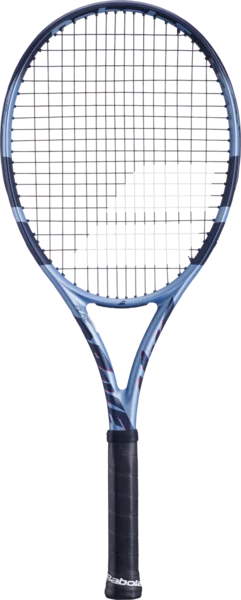
The power benchmark — effortless depth and pace, with the harshest edges of the old formula smoothed out.
The Pure Drive is the racket the power category is measured against, and the 2025 eleventh generation keeps the recipe intact: a 100 sq in head, a thick 23/26/23 mm beam and a stiff layup that returns energy to the ball instead of absorbing it. For a developing player that means depth from a three-quarter swing, serves that jump without a perfect toss-and-drive, and defensive balls that still clear the net when you are stretched wide. Babolat’s HTR System keeps the hoop torsionally rigid so that power stays accurate on contact outside the centre, and the FSI Power string-bed design works with the open 16×19 pattern to add spin to the pace.
The meaningful Gen 11 change is comfort. NF2 Tech 2.0 — flax-fibre inserts in the throat — filters the harsh vibrations a stiff frame produces, so this generation feels noticeably less brittle than older Pure Drives without giving up the crisp response players buy it for. It remains a firm racket, and the buying guide below is honest about who should look at the comfort picks instead. But if your problem is a ball that lands short and sits up, no frame on this page solves it more directly.
What we like
- The easiest power in the roundup — depth and serve pace from compact swings
- Large, stable sweet spot that forgives off-centre contact
- NF2 Tech 2.0 takes the sting out of the stiff layup
- Open 16×19 bed adds useful spin to the power
Worth knowing
- Still a firm frame — sensitive elbows should demo the comfort picks first
- Advanced flat hitters may find the launch high when they swing out
As an Amazon Associate we earn from qualifying purchases.
Babolat Pure Aero (Current Generation)
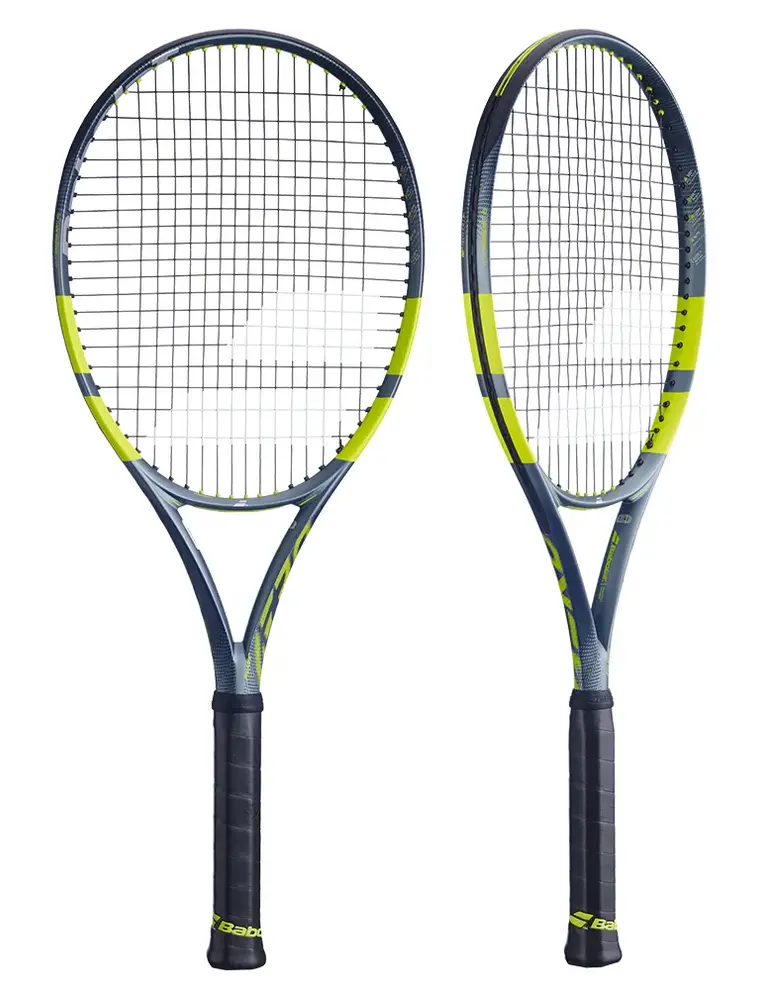
The spin specialist — an aerodynamic frame and an open bed engineered to whip, bite and dip.
Where the Pure Drive is about pace, the Pure Aero is about rotation. Its signature aerodynamic beam is shaped to cut through the air on the vertical swing path modern topspin requires, so the head arrives faster with the same effort — and racket-head speed is spin. The FSI Spin system pairs the open 16×19 pattern with grommet design that lets the mains move and snap back, gripping the ball long enough to load it with revolutions. The result is the classic Aero ball: it clears the net with margin, then dips hard inside the baseline and kicks up at the receiver.
The current generation tightened the string spacing slightly versus the most extreme earlier versions and added NF2 Tech flax inserts at the hoop and in the handle, which together give this Aero a cleaner, more controlled response than its reputation suggests. It is still a spin-first frame: players who hit flat and through the court will get more from the Blade or the TFight below. But for a baseline game built on heavy, arcing topspin — the game most club tennis is now played with — this remains the reference design.
What we like
- The heaviest topspin in this roundup, on groundstrokes and kick serves alike
- Aerodynamic frame genuinely helps a fast, vertical swing path
- Tighter modern spacing and NF2 Tech add control and feel versus older Aeros
- Same accessible 300 g / 100 sq in platform as the Pure Drive
Worth knowing
- High launch angle frustrates flat hitters
- Firm layup — pair it with a sensible string choice if your arm is sensitive
As an Amazon Associate we earn from qualifying purchases.
Wilson Blade 98 v9 16×19
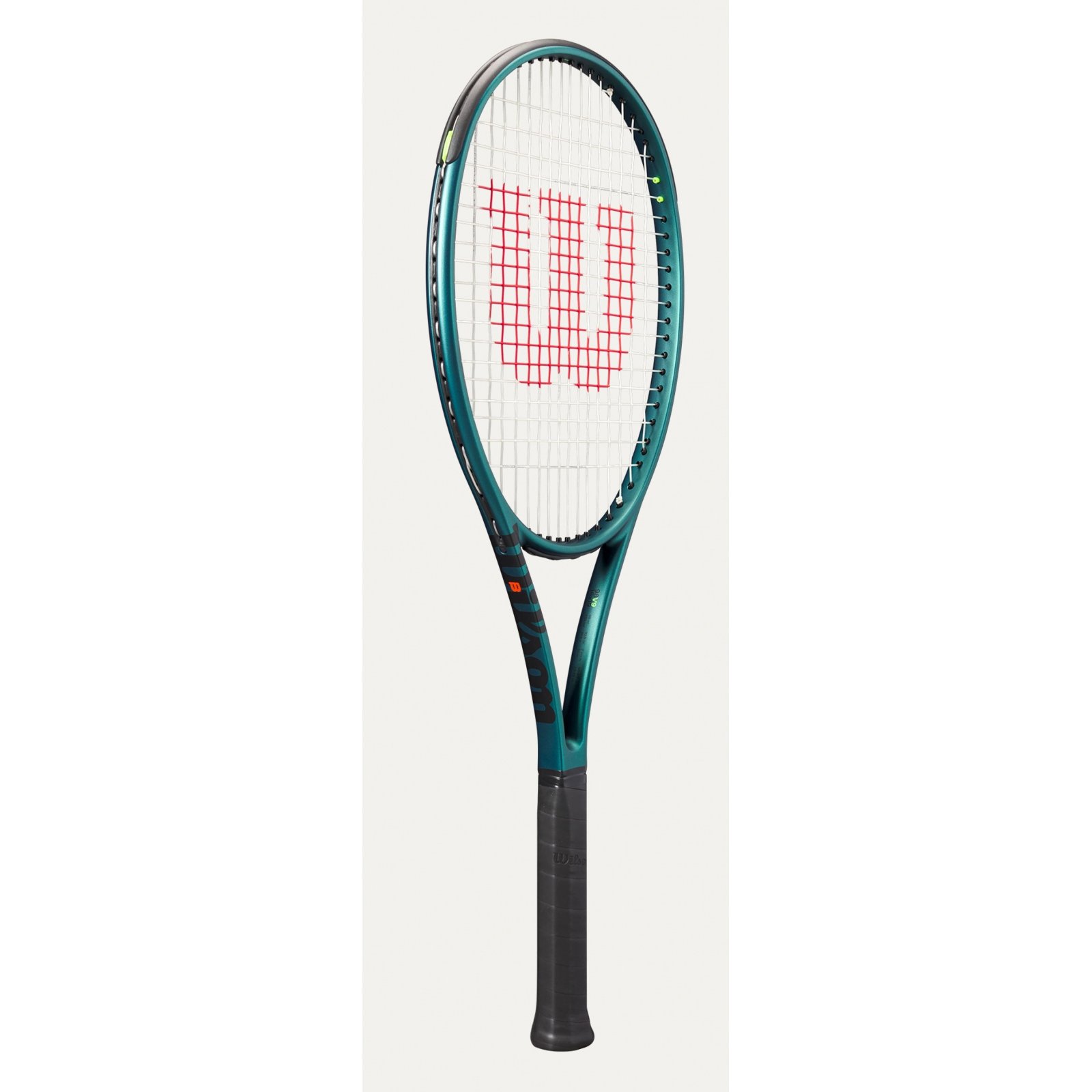
The advanced striker’s scalpel — thin beam, flexible feel and placement you can trust at full swing.
The Blade brief has never changed: give the player who supplies their own power a frame that adds nothing and hides nothing. The v9’s 20.6 mm beam is the thinnest here by a distance, and the flexible braided graphite and basalt layup keeps the ball on the strings long enough for you to feel exactly where it is going. Wilson’s v9 additions serve that brief — StableFeel firms up the response so the frame feels more connected and less wobbly on hard contact, while DirectConnect extends the carbon handle to the end cap for torsional stability, and the FORTYFIVE layup complements the modern vertical swing without stiffening the frame into a power racket.
Choose the 16×19 version carded here if you want the Blade’s precision with a little more spin and forgiveness than the denser sibling offers. Be honest about the trade: at 305 g with a 98 head and a low-powered response, the Blade rewards full, committed swings and exposes short ones. If that is your game — or the game you are deliberately building — nothing in this roundup places the ball better. Wilson fans comparing the whole current range will find our best Wilson tennis racquet guide a useful companion read.
What we like
- The most precise, connected ball placement in the roundup
- Thin, flexible beam gives genuine feel on touch shots and volleys
- StableFeel makes the v9 response crisper than earlier Blades
- 16×19 pattern keeps spin access open for a control frame
Worth knowing
- Low free power — short swings get punished
- 98 sq in head is the least forgiving here on off-centre hits
As an Amazon Associate we earn from qualifying purchases.
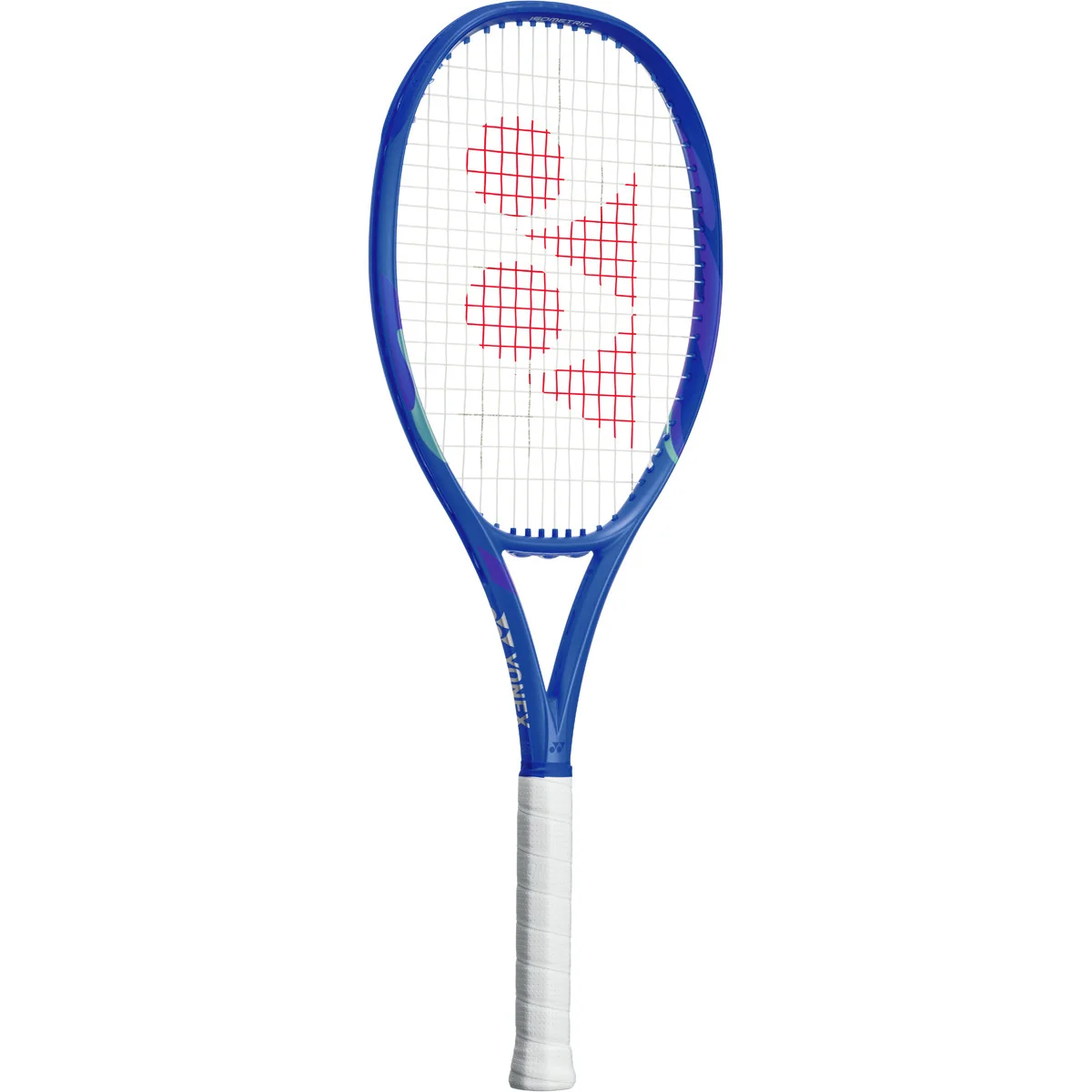
Yonex EZONE 100 (2025)
Controllable power with a plush ride — the racket we would hand to the widest range of club players.
The EZONE 100 sits in the productive middle of this line-up and owns it. It has the 100 sq in head and 300 g platform of the Babolat power frames, but Yonex tunes the response differently: the ISOMETRIC head shape squares off the top of the frame to enlarge the sweet spot, and the launch angle stays lower and more predictable than the Pure Aero’s, so the power arrives with direction attached. Flat and driven shots are this frame’s home turf, and it changes direction at the net with a speed that belies its stability.
Comfort is the other half of the 2025 update. Minolon — ultra-fine fibres woven into a net-like structure in the shaft — joins 2G-Namd Speed graphite and Yonex’s vibration-dampening mesh in the handle to take harsh buzz out of contact, giving the EZONE a plushness the stiff power frames cannot match. A thicker beam in the upper hoop adds stability and pop for 2025 without disturbing that feel. If you play an all-court club game and want one frame that never feels like the wrong tool, start your demo list here.
What we like
- Power with a lower, more predictable launch than the spin frames
- ISOMETRIC head makes the sweet spot feel bigger than 100 sq in
- The plushest ride of the 100 sq in power group
- Fast and stable at the net as well as from the baseline
Worth knowing
- Spin ceiling is below the Pure Aero’s for heavy-topspin specialists
- Players raised on oval heads need a session to trust the squared hoop
As an Amazon Associate we earn from qualifying purchases.
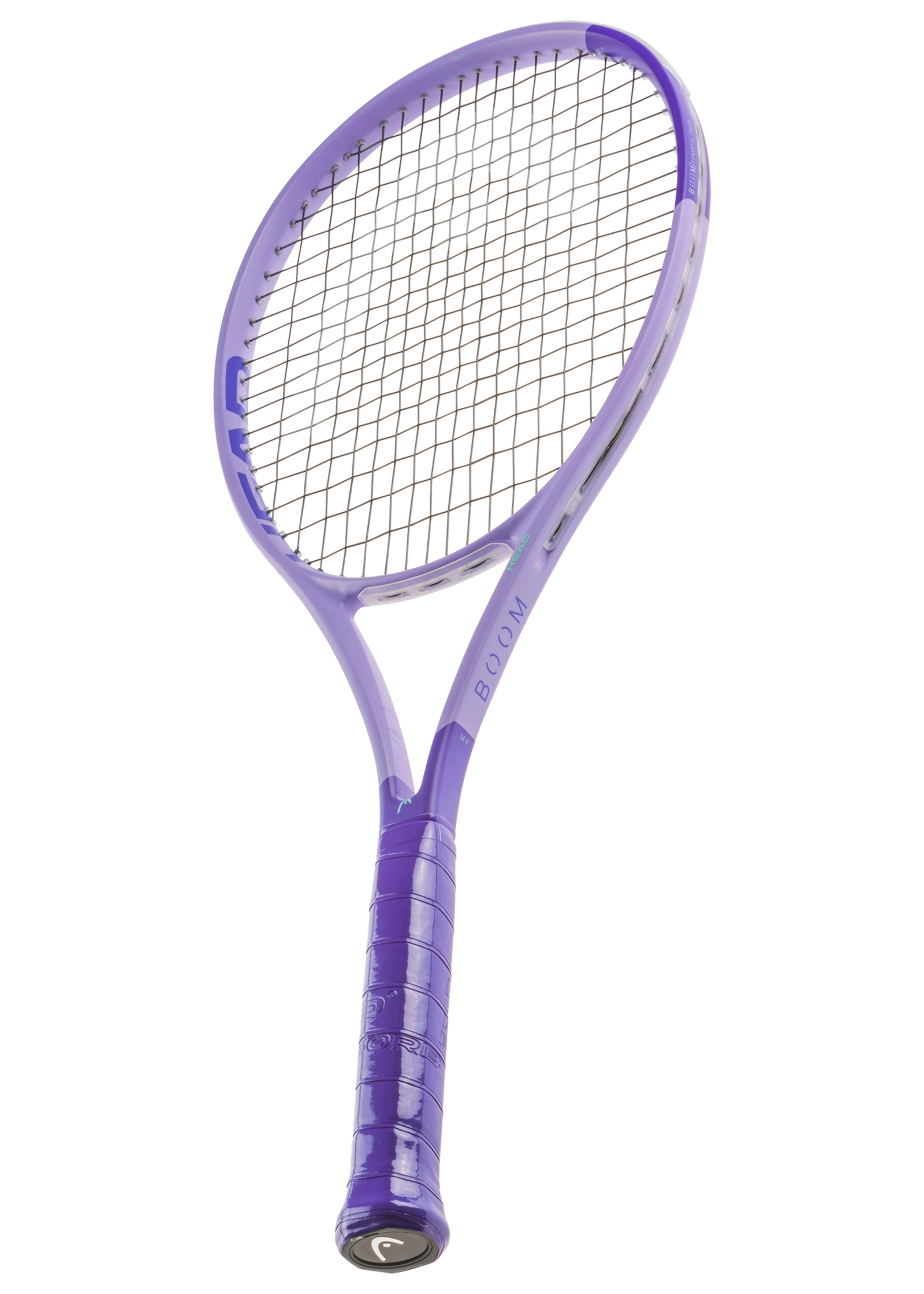
HEAD Boom MP (Current Generation)
Easy power with a friendly touch — the performance frame that meets a developing swing halfway.
The Boom MP is HEAD’s answer to a very common player: past the beginner stage, swinging more fully every month, but not yet ready for a 305 g control frame — and not served by a featherweight beginner racket either. At 295 g with a head-light 315 mm balance, it swings noticeably easier than the 300 g frames above while still carrying enough mass to stand up to adult pace. The 100 sq in head and 24 mm beam return easy power and a generous margin on contact, which is exactly the combination that turns practice-court strokes into match-court strokes.
What separates the Boom from the pure power frames is touch. HEAD tunes the Boom line for a softer, more plush connection at impact — HEAD calls the concept powerful touch — so blocked returns, drop shots and volleys feel less like collisions and more like placements. For a developing player building an all-court game rather than only a baseline one, that feedback teaches faster. It is also the natural stepping stone in this list: the player who outgrows a Boom MP in two seasons is precisely the player the Blade and TFight below are waiting for.
What we like
- Lightest, fastest-swinging performance frame in the roundup
- Easy power and forgiveness without a beginner-racket feel
- Soft, confidence-building touch around the net
- Head-light balance keeps long sessions easy on the arm
Worth knowing
- Advanced players will overpower it and want more mass against heavy hitters
- Less inherent stability than the 300 g+ frames on stretched defence
As an Amazon Associate we earn from qualifying purchases.

Wilson Shift 99
The modern spin frame with a comfort twist — built to bend the way the vertical swing asks it to.
The Shift began as a Wilson Labs project built around one observation: the modern swing travels vertically, brushing up the back of the ball, while traditional frames were designed to bend for a flatter hit. Wilson’s ARC 3D geometry makes the Shift torsionally stiff — stable and honest when you drive through the ball — but laterally flexible, so it flexes with an upward swing, holds the ball a fraction longer and returns it with spin. In plain terms, it is engineered to add rotation without asking for a wide-open string bed.
That bed is the other half of the design: the 16×20 pattern sits between the open 16×19 norm and a dense control pattern, so the launch stays controlled while the lateral flex does the spin work. The practical result is a frame that suits the player who loves the Aero idea but wants a flatter safety margin — and the flex profile, combined with the head-light balance, makes it the gentlest ride among this list’s spin options. At 99 sq in and 300 g it asks for an intermediate-or-better swing, but it pays that swing back in shape and margin.
What we like
- Spin generated by frame design, not just an open bed — control comes with it
- 16×20 pattern keeps the launch lower than 16×19 spin frames
- Lateral flex profile is kind to arms that dislike stiff power frames
- Stable and honest when you flatten the ball out
Worth knowing
- 99 sq in head and modern brief reward an already-vertical swing
- Feel is distinctive — demo it if you are switching from a traditional frame
As an Amazon Associate we earn from qualifying purchases.
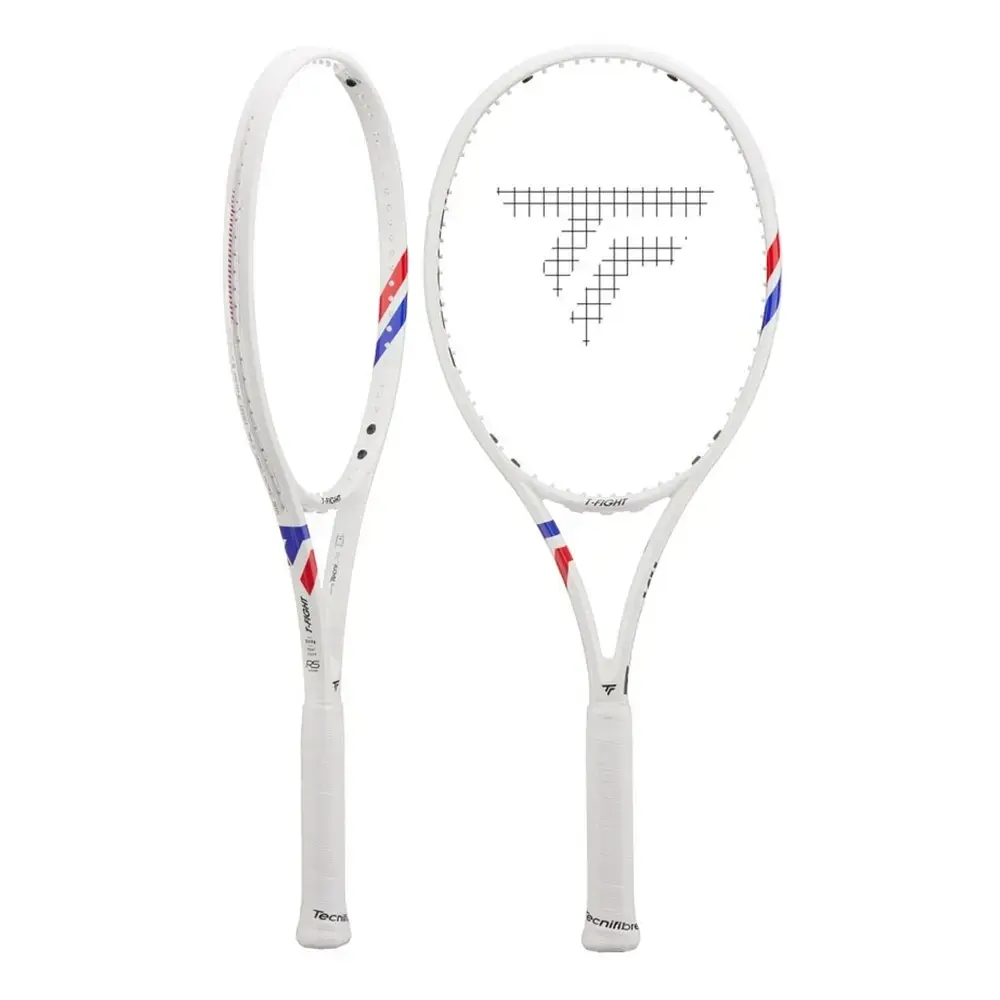
Tecnifibre TFight 300S (2025)
98-head precision at a 300 g weight your arm can live with — the control frame for real club schedules.
Control frames usually make you pay for precision in grams. The TFight 300S refuses that trade: it pairs a proper 98 sq in head and a 22.5 mm RS beam — Tecnifibre’s hybrid of square and round sections, tuned for stability and control — with a 300 g unstrung weight that swings like a tweener. For the intermediate-to-advanced player who places the ball, changes direction early and plays three or four times a week, that combination is the sweet spot the Blade’s extra mass overshoots.
The 2025 update stiffened and thickened the RS beam slightly for a welcome touch more free power, and the frame is foam-filled, which gives contact a solid, muted thud rather than a hollow ping. ISOFLEX technology varies the layup around the head to even out the string bed’s response, softening the penalty on the off-centre hits every 98-head player still makes. It is the least famous name in this roundup and, for the control-minded club competitor, possibly the smartest buy on the page.
What we like
- Genuine 98-head precision at an arm-friendly 300 g
- Foam-filled frame feels solid and calm at contact
- ISOFLEX evens the response across the string bed
- 2025 beam update adds a little free power to the control brief
Worth knowing
- Less free power than the 100 sq in frames — you supply the pace
- Smaller retail footprint than the big four brands in some regions
As an Amazon Associate we earn from qualifying purchases.
Side-by-Side Comparison Table
| Model | Best For | Head | Weight (Unstrung) | Balance | Pattern | Beam |
|---|---|---|---|---|---|---|
| Babolat Pure Drive (2025) | Power | 100 sq in | 300 g | 320 mm | 16×19 | 23/26/23 mm |
| Babolat Pure Aero | Spin | 100 sq in | 300 g | 320 mm | 16×19 | 23/26/23 mm |
| Wilson Blade 98 v9 16×19 | Control | 98 sq in | 305 g | 320 mm | 16×19 | 20.6 mm |
| Yonex EZONE 100 (2025) | All-round | 100 sq in | 300 g | 320 mm | 16×19 | 24.5/26.5/23 mm |
| HEAD Boom MP | Developing players | 100 sq in | 295 g | 315 mm | 16×19 | 24 mm |
| Wilson Shift 99 | Spin + comfort | 99 sq in | 300 g | 32.4 cm strung | 16×20 | 23.5 mm |
| Tecnifibre TFight 300S | Control tweener | 98 sq in | 300 g | 320 mm | 16×19 | 22.5 mm |
Buying Guide: Head Size, Weight, Balance and Pattern
1. Head size: forgiveness versus precision
Stay at 100 sq in if your contact point still wanders — which, honestly, describes most of us on a bad day. The larger bed returns more balls with interest and donates power on defence. Move to 98–99 sq in when your contact is grooved and you are choosing targets rather than zones: the smaller head answers with a tighter, more predictable launch and better feel, and it will not cover for a late swing. There is no virtue in suffering with a small head early; plenty of professionals built their games on 100 sq in frames.
2. Weight: the heaviest frame you can still swing fast, late in a match
Use unstrung weight as your comparison number. Around 295 g (the Boom MP) suits developing players and anyone whose swing speed drops late. 300 g is the modern centre — five of these seven frames sit there — and fits the widest range of adult club players. 305 g and up (the Blade) belongs to strong, advanced strikers who want mass behind the ball and can keep the head moving in the third set. Strings, overgrip and dampener add roughly 25–30 g on top of the published figure, so judge the finished racket, not the brochure.
3. Balance: where the weight works
Two rackets of identical weight can swing completely differently. A more head-light balance — the Boom MP’s 315 mm and the Shift’s 6-points-head-light strung figure are the examples here — whips through the contact zone, reacts quickly at the net and feels easier on the wrist. A more even balance puts mass behind baseline shots and adds stability against heavy incoming pace, at the cost of manoeuvrability. Developing players and doubles players should lean head-light; established baseliners can trade a little of that speed for plough-through.
4. String pattern: set your launch and spin
An open 16×19 — six of the seven frames here — is the default for a reason: the mains move, snap back and impart topspin, and the launch angle helps clear the net with margin. Choose the denser 16×20 of the Shift if your ball flies long when you swing out, or if you hit flatter and want the trajectory to stay down. Remember that strings themselves are the other half of this dial: the same frame plays spinnier or softer depending on what you put in it, and tension and string choice are cheaper experiments than a new racket.
5. Beam and stiffness: the feel decision
Thick, stiff beams (Pure Drive, Pure Aero: 23/26/23 mm, RA 69) are power tools — they return energy and hold up on off-centre hits, and they ask your arm to absorb more of the shock that remains. Thin, flexible beams (Blade: 20.6 mm; TFight: 22.5 mm, RA 66) bend, dwell and feed information back to your hand. If you have a history of elbow or wrist complaints, weight the comfort end of this list — the EZONE 100’s dampening package, the Shift’s lateral flex, the Boom MP’s softer touch — and treat string choice as part of the prescription, not an afterthought.
Frequently Asked Questions
What is the best tennis racket for beginners moving to an adult performance frame?
Look at the HEAD Boom MP first: at 295 g with a 100 sq in head and a head-light 315 mm balance, it offers easy power and forgiveness while still swinging like a proper performance racket. The Babolat Pure Drive is the step after — or the alternative if you already swing confidently and want maximum free power.
Is a 98 or 100 sq in head better?
Neither is better in absolute terms. A 100 sq in head gives a larger sweet spot, more forgiveness and more free power, which suits developing and intermediate players. A 98 sq in head gives a tighter, more precise response that advanced players with grooved contact prefer. Match the head to the consistency of your contact point, not to your ambition.
How heavy should my tennis racket be?
Most adult club players land between 295 g and 305 g unstrung. Around 300 g is the modern centre of the market and the weight of five of the seven rackets in this guide. Go lighter if swing speed or your arm demands it, heavier only if you are an advanced player who keeps the head speed up late in matches.
Which racket here is best for tennis elbow or a sensitive arm?
Start with the comfort end of the list: the Yonex EZONE 100 (2025) with its Minolon and vibration-dampening package, the Wilson Shift 99 with its lateral-flex design, and the HEAD Boom MP with its softer touch and head-light balance. Pair any of them with a softer string setup, and treat persistent pain as a medical question, not an equipment one.
What string pattern gives the most spin?
An open 16×19 pattern lets the main strings move and snap back, which is why the Babolat Pure Aero — a 16×19 frame shaped for racket-head speed — is this guide’s spin pick. The Wilson Shift 99 generates its spin differently, through a laterally flexible frame with a denser 16×20 bed, trading a little launch for control.
Pure Drive or Pure Aero — which should I choose?
Choose the Pure Drive if your priority is pace and depth: flat and driven balls, strong serves, power from a compact swing. Choose the Pure Aero if your game is built on topspin shape — high net clearance, a dipping ball and kick serves. They share a 100 sq in, 300 g platform, so the decision is purely about the ball you want to hit.
How do I choose the right grip size?
Grip size is personal and measurement-based, so we keep it out of this guide on purpose: use our Tennis Racket Grip Size Finder tool, linked in the introduction, to get your size in one step before you order any of these frames.
The Verdict
Buy by decision and you will not go far wrong. The Babolat Pure Drive (2025) remains the power answer — the frame for the player whose ball lands short. The Pure Aero owns spin, the Wilson Blade 98 v9 owns control, and the Yonex EZONE 100 is the all-rounder we would hand to the widest range of club players without a second thought. Developing players should start with the HEAD Boom MP, spin players with sensitive arms should look hard at the Wilson Shift 99, and the control-minded competitor who plays too often for a heavy frame should find the Tecnifibre TFight 300S. Seven current frames, four honest decisions — pick the one that matches the ball you are trying to hit.
Affiliate disclosure: AliShuttler is reader-supported. When you buy through links on this page we may earn an Amazon commission at no extra cost to you. Specifications are taken from manufacturers’ published product information and were verified at the time of writing; manufacturers revise models and cosmetics between generations, so confirm the exact specification on the product page before ordering.