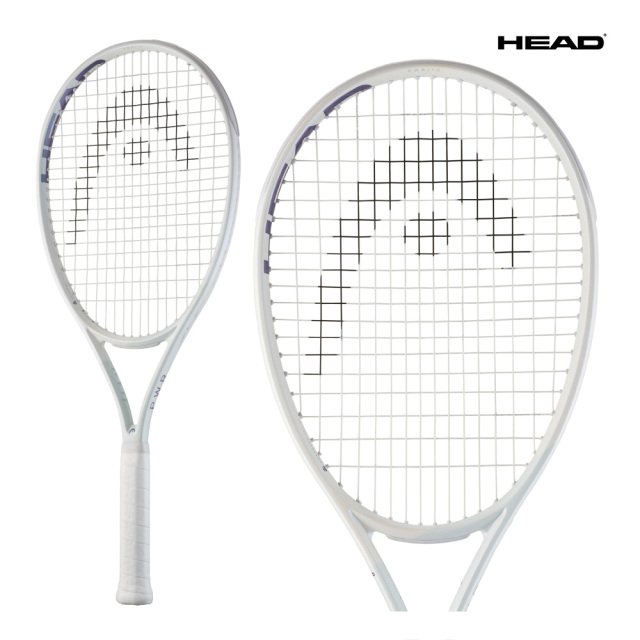
Most “best racket” lists quietly assume a 300 g frame and a medium-large hand. If your hand is smaller, your swing is still building speed, or a standard frame leaves your arm tired by the second set, the right shortlist looks different: lighter unstrung weights, balances that keep the head easy to move, and grip ranges that actually start at the small end. These seven current frames are organised by exactly that decision.
⚡ TL;DR — The Short Answer
For light, easy power, buy the Babolat Pure Drive Lite (2025) — the Pure Drive formula at 270 g. For maximum forgiveness, the HEAD Boom Team L pairs the lightest weight here (260 g) with the biggest head (107 sq in). The Yonex EZONE 100L (2025) is the plush all-rounder at 285 g, the Wilson Ultra 100L v5 the fast, powerful 280 g option, and the HEAD Gravity MP L the comfort-and-control pick with the widest published grip range (0–5). The Tecnifibre Tempo 270 V2 comes from a line Tecnifibre designs specifically for women, and the Dunlop FX 500 Lite is the firm-feeling power frame for players who want a simple, fast spec sheet.
Quick Picks — Best Tennis Rackets for Women at a Glance
270 g, a 100 sq in head and the Pure Drive’s stiff power beam — depth and serve pace without the 300 g workload.
The lightest frame here at 260 g, with a 107 sq in head and a slightly longer 27.4 in length for reach and leverage.
285 g of plush, controllable power with Minolon dampening and published grip sizes from 0 (4 in) upward.
280 g, a head-light balance and SI3D frame bending — the quickest-feeling power frame in this list.
A flexible 22 mm beam, a denser 16×20 bed and grip sizes 0–5 — control for smaller hands and sensitive arms.
From Tecnifibre’s Tempo line, designed by the maker specifically for women: 270 g, with grips starting at L0.
270 g with a firm 23/26/23 mm beam and Sonic Core dampening — crisp power in the lightest Dunlop Power Series frame.
In This Guide
The Decision This Guide Owns
This site already has three tennis racket guides, and each owns a different question. Our best tennis rackets pillar compares the current performance frames for all players. Our best tennis rackets for beginners guide owns the first-racket decision, and our intermediate players’ guide owns the step up from there. This page owns the question none of them isolates: which adult performance frames come in lighter weights and smaller grips, without dropping to a beginner racket?
That gap is real. The standard versions of the famous frames sit at 295–305 g unstrung, and their published grip ranges often centre on the middle sizes. Plenty of women play beautifully with exactly those rackets — hand size and swing speed, not gender, are what decide a frame. But if your hand measures for an L0 or L1 grip, or your swing is compact and still developing, the lighter sibling models are not “easier versions for lesser players”. They are the same engineering, rebalanced around a faster, lighter swing — and they are what this guide compares. Not one model below is carded in the pillar, beginners or intermediate guides: this is a separate shortlist, built for a separate decision.
Two topics are deliberately handled at summary level here. Grip measurement itself belongs to our Tennis Racket Grip Size Finder — use it to get your size, then check it against the grip ranges on the cards. And the strings that complete the setup are covered by our guide to the best tennis strings; a softer string at sensible tension matters at least as much to a lighter frame’s comfort as the frame itself.

Weight, Balance and Grip: the Three Numbers That Matter
Unstrung weight is the headline number, and every frame here sits between 260 g and 285 g — a full step below the 295–305 g performance standard. Lighter does not mean flimsy: it means the racket head arrives at the ball sooner for the same effort, reactions at the net are quicker, and the arm does less work across a long match. The trade is stability against genuinely heavy hitting, which is why the guide ends at 285 g rather than chasing the lightest frames on the market — below this range you are in beginner-racket territory, and that decision belongs to the beginners guide linked above.
Balance decides how that weight feels. The head-light frames here (the Ultra 100L v5 at 325 mm, the EZONE 100L at 325 mm) keep the head fast and the wrist free — the manoeuvrable end of the list. The more even balances (the Boom Team L at 340 mm, the Pure Drive Lite and FX 500 Lite at 330 mm) put a little more mass behind the ball, donating depth on groundstrokes and a touch more help on the serve. Neither is better; they are the two directions this decision splits into, and the cards are ordered to make the split obvious.
Grip size is the number most shortlists skip entirely, and it is the one this audience asks about first. Grip sizes run from L0 (4 inches) upward in eighth-inch steps. Where a maker publishes the model’s grip range, the cards state it: Yonex lists the EZONE 100L in sizes 0–4, HEAD lists the Gravity MP L in sizes 0–5, and Tecnifibre’s Tempo 270 V2 is offered from L0. A grip that is too large forces the hand to work to hold on, slows the wrist, and is a common hidden cause of forearm fatigue; a grip one size small can be built up with an overgrip, while a grip one size large cannot be made smaller. Measure first with the finder tool — then buy the frame that actually offers your size.
The 7 Best Tennis Rackets for Women, Compared
Seven frames, one decision each. Weights are unstrung and balances are unstrung, as the makers publish them. Read the card that matches your game first; the order runs from the most universally useful light power pick through forgiveness, comfort and control to the specialist choices.
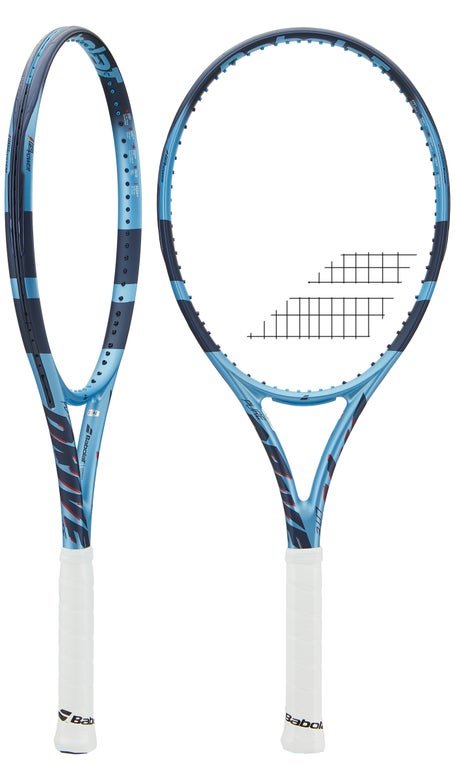
Babolat Pure Drive Lite (2025, Gen 11)
The power benchmark at 270 g — the frame for a player whose ball lands short but whose arm is done with 300 g rackets.
The standard Pure Drive anchors our all-player pillar at 300 g; this Lite version keeps the recipe — the thick 23/26/23 mm beam, the stiff layup, the open 16×19 bed with FSI Power grommets — and removes 30 g. What survives the weight cut is the thing players buy a Pure Drive for: depth and serve pace that arrive without a full-blooded swing. Balls that would land mid-court with a softer, lighter frame carry to the baseline here, and the HTR System’s torsional stiffness keeps that power pointing where you aimed it on contact outside the centre of the strings.
The 2025 generation’s meaningful change is comfort. NF2 Tech 2.0 — flax-fibre inserts in the throat and handle — filters the harsh edge of the stiff beam, which matters more, not less, in a lighter frame: less mass means less of the racket absorbs impact for you. It remains a firm racket, and the honest guidance stands — if your elbow already complains, demo the Gravity MP L or EZONE 100L below first. But for a developing or returning player who wants genuine power in a frame she can swing fast for two sets, this is the most complete answer in the roundup, and the natural lighter alternative for anyone who liked the pillar’s Pure Drive verdict but not its weight.
What we like
- Real Pure Drive power and depth at 270 g
- Stiff, stable hoop keeps off-centre power accurate
- NF2 Tech 2.0 smooths the stiff frame’s harsh edge
- Open 16×19 bed adds topspin to the pace
Worth knowing
- Still a firm frame — sensitive elbows should demo the comfort picks first
- Even 330 mm balance feels less whippy than the head-light options here
As an Amazon Associate we earn from qualifying purchases.
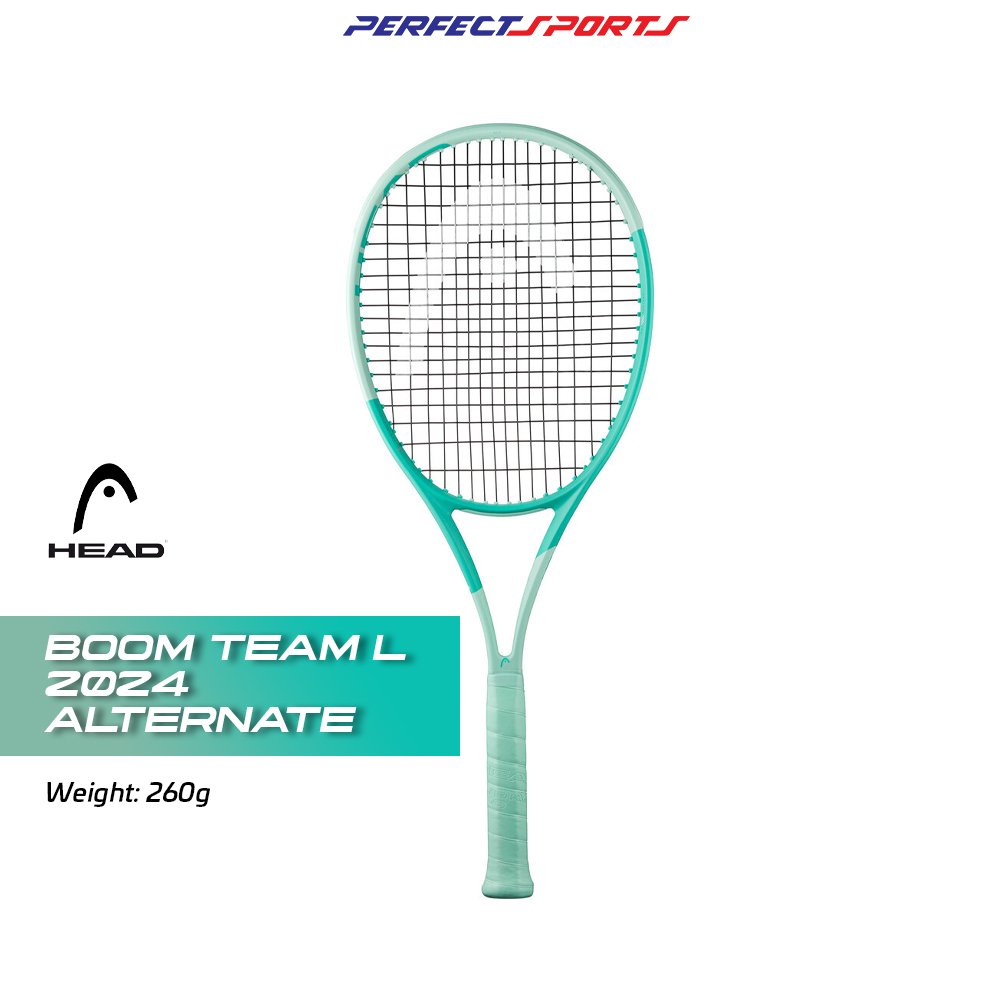
HEAD Boom Team L (2024)
The lightest frame in this guide with the biggest head — 260 g and 107 sq in of margin for error.
Every other frame here is a lightened version of a 100 sq in formula. The Boom Team L starts from a different brief: an oversize 107 sq in head, the joint-lightest workload in this guide at 260 g, and an extra 0.4 inches of length that buys reach on stretched returns and leverage on the serve. Its even 340 mm balance puts what little mass it has behind the ball, so groundstrokes carry depth without a big backswing — the combination is aimed squarely at the player whose contact point still wanders and whose swing is still being built, but who has outgrown the feel of a starter racket.
HEAD’s Auxetic 2.0 construction — now in both the yoke and the handle — is the comfort story: the layup actively responds at impact, widening under tension and contracting under compression, which HEAD pairs with its Morph Beam and Uni Pattern string bed for a consistent, plush response across the big head. The pillar’s Boom MP covers the 295 g member of this family for developing players generally; the Team L is the one to choose when lightness and forgiveness outrank everything else, or when a smaller player wants the extra length’s help on serve and overhead.
What we like
- Lightest frame here (260 g) with the largest sweet spot (107 sq in)
- Extra 0.4 in of length helps reach and serve leverage
- Even balance donates depth from a compact swing
- Auxetic 2.0 keeps the oversize head’s feel soft and connected
Worth knowing
- Less inherent stability against genuinely heavy hitters
- The longer length takes a session to adjust timing at the net
As an Amazon Associate we earn from qualifying purchases.
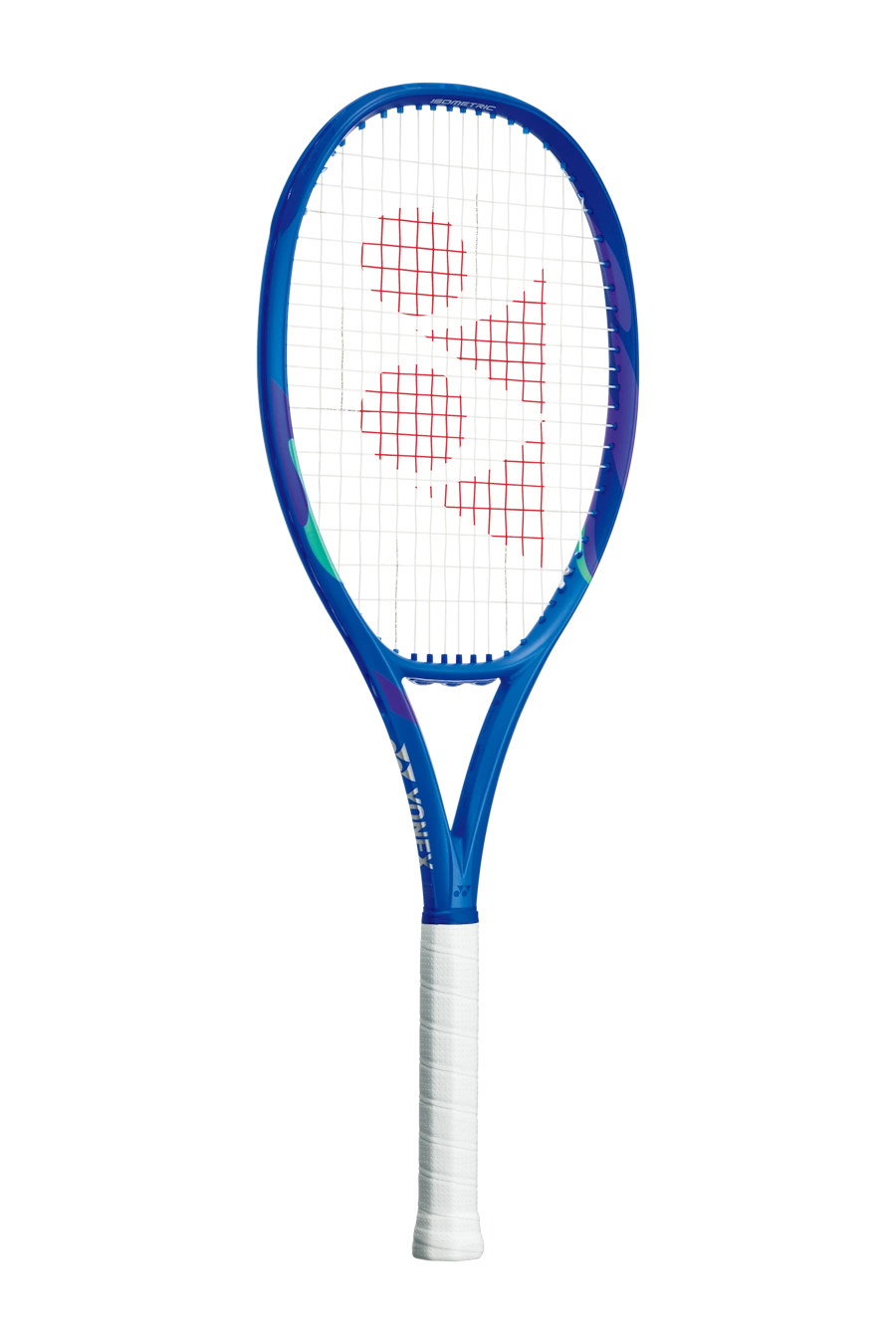
Yonex EZONE 100L (2025)
Plush, controllable power at 285 g — the heaviest frame here, and the easiest recommendation for an all-court club game.
The EZONE 100 is the pillar’s all-rounder at 300 g; the 100L keeps its character and trims 15 g. The character is worth keeping: the ISOMETRIC head shape squares the top of the frame to enlarge the sweet spot, the launch stays lower and more predictable than the spin-first frames, and the ride is the plushest in the 100 sq in class. For 2025 Yonex added Minolon — ultra-fine fibres woven into the shaft — alongside 2G-Namd Speed graphite and the VDM dampening mesh in the handle, and thickened the upper hoop for stability. In a lighter frame, that dampening package is doing real work: it is the difference between “light and lively” and “light and tinny”.
Two practical points put this card third overall and first for many readers. Yonex publishes this model’s grip range openly — sizes 0 to 4, starting at a true 4-inch L0 — so a smaller-handed player can order her measured size with confidence. And at 285 g with a head-light 325 mm balance, the 100L is the frame on this page closest to the performance standard: strong intermediate players who find 300 g frames a fraction heavy late in matches will feel at home immediately, with no beginner-racket compromises anywhere in the spec sheet.
What we like
- The plushest ride of the light power frames — Minolon, VDM and 2G-Namd Speed
- Published grip range starts at size 0 (4 in)
- Predictable, lower launch than the spin-first frames
- Head-light balance keeps 285 g feeling quick
Worth knowing
- Heaviest frame in this guide — try the 270 g picks if fatigue is the issue
- Spin ceiling sits below the Pure Aero-class frames in the pillar
As an Amazon Associate we earn from qualifying purchases.
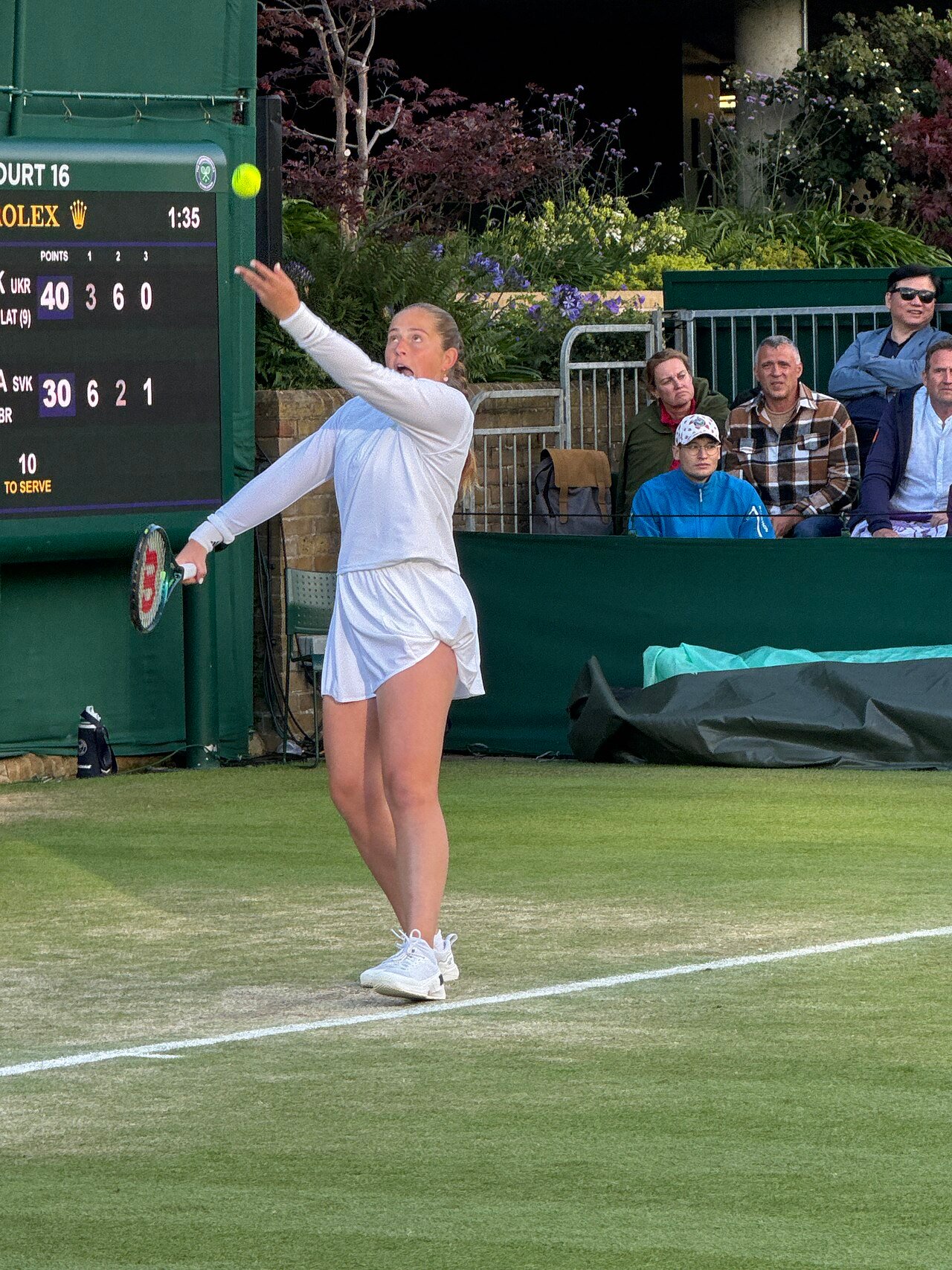
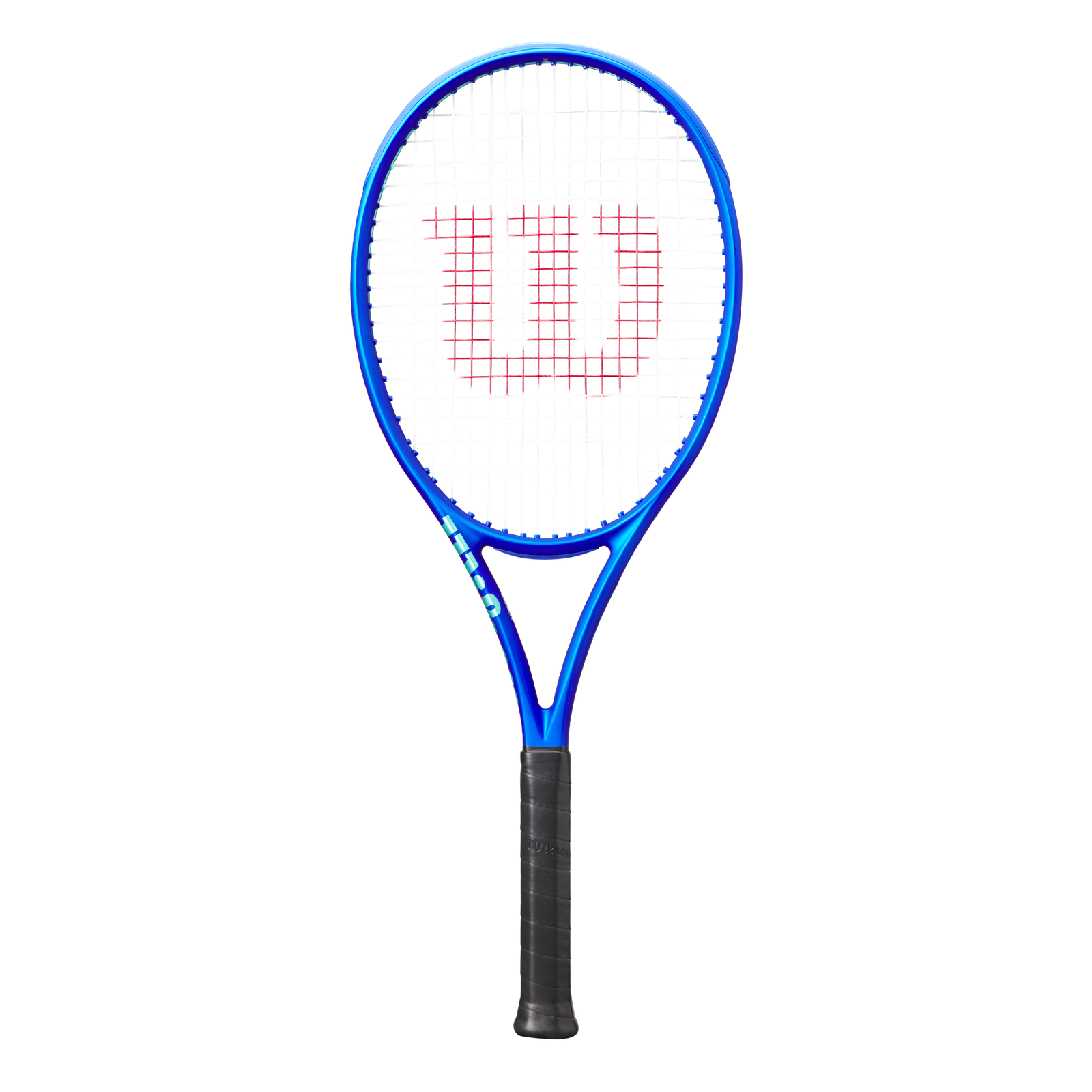
Wilson Ultra 100L v5
The quickest-feeling power frame here — 280 g, head-light, and built to be swung fast.
Wilson’s Ultra line is the power family, and the v5’s light model is engineered around swing speed. The headline technology is SI3D, a frame layup designed to bend in three dimensions — Wilson says it blends power, spin and control rather than trading one for another — supported by the FORTYFIVE layup for vertical-swing stability and Crush Zone grommets that compress at impact to lengthen dwell time. On paper that is marketing vocabulary; in the spec sheet it translates to a 280 g frame with a genuinely head-light 325 mm balance and a thick dual-taper beam, which is the geometry of a racket that wants to be whipped through the ball.
Choose this card if your game is built on taking the ball early and redirecting pace: the head-light balance is the fastest here at the net and on reaction volleys, and the open 16×19 bed keeps topspin accessible. Players cross-shopping the older Ultra 100L v4 — carded in our beginners guide as a step-up bridge — should note the v5’s refinements are in the layup and grommet system rather than the headline numbers; Wilson fans comparing the whole current range will also find our legacy best Wilson tennis racquet guide a useful companion, though its line-up predates this v5 light model.
What we like
- Fastest, most manoeuvrable feel of the 280 g group
- SI3D bending profile blends power with pocketing
- Crush Zone grommets soften the power frame’s impact
- Strong at the net and on early, redirected balls
Worth knowing
- Power-first tuning asks you to add your own control as your swing grows
- Less plush than the EZONE 100L on off-centre contact
As an Amazon Associate we earn from qualifying purchases.
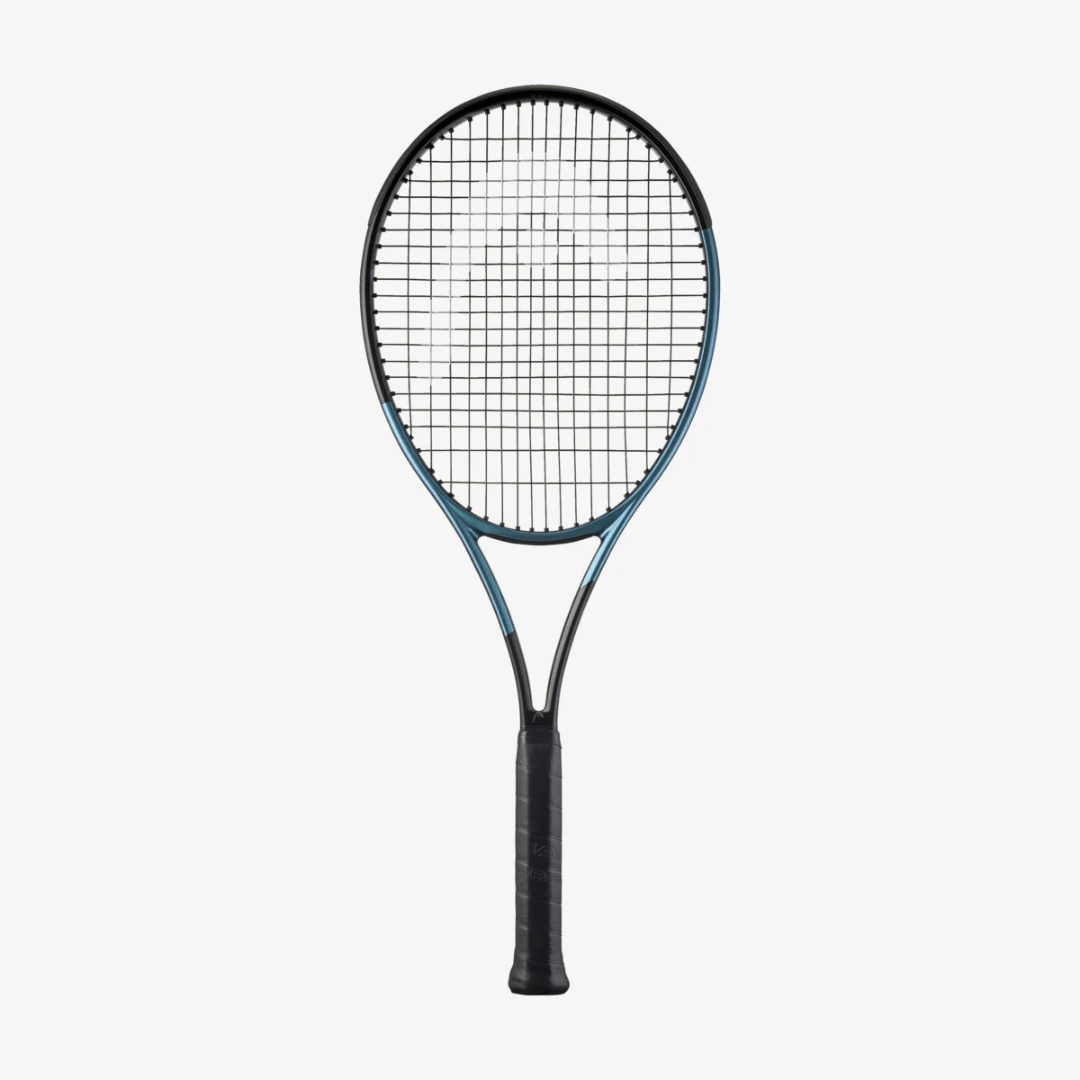
HEAD Gravity MP L (2025)
The control-and-comfort end of this list: a thin, flexible beam, a denser string bed, and the widest published grip range here.
Every other frame here uses an open 16×19 bed and a beam of 23 mm or thicker. The Gravity MP L goes the other way: a slim 22 mm elliptical beam that flexes, and a denser 16×20 pattern that flattens the launch and tightens placement. The Gravity family’s rounded, teardrop head shape puts a larger, responsive contact area higher in the hoop, and HEAD’s Auxetic 2.0 construction in the yoke and handle is tuned for feedback rather than raw energy return. The result is the calmest ball in this roundup — less free power than the Pure Drive Lite, and more say in exactly where the ball goes.
For this guide’s audience, the decisive line on its spec sheet may be the last one: HEAD publishes grip sizes 0–5 for this model, the full range from a 4-inch L0 to a 4⅝-inch L5. Combined with the flexible beam’s friendlier impact, that makes the Gravity MP L the default recommendation for two readers at once: the smaller-handed player who wants a control frame that actually comes in her size, and the player whose arm has ruled the stiff power frames out. The standard-weight Gravity MP is compared in our intermediate guide; this L version is the one that belongs in the lighter conversation.
What we like
- Full published grip range, 0–5 — the widest here
- Flexible 22 mm beam and Auxetic 2.0 give the softest, calmest impact in this list
- Denser 16×20 bed flattens trajectory and tightens placement
- Rounded Gravity head keeps the sweet spot generous high in the hoop
Worth knowing
- Least free power here — you supply more of the pace
- Rewards a fuller swing; very compact strokes will prefer the Boom Team L
As an Amazon Associate we earn from qualifying purchases.
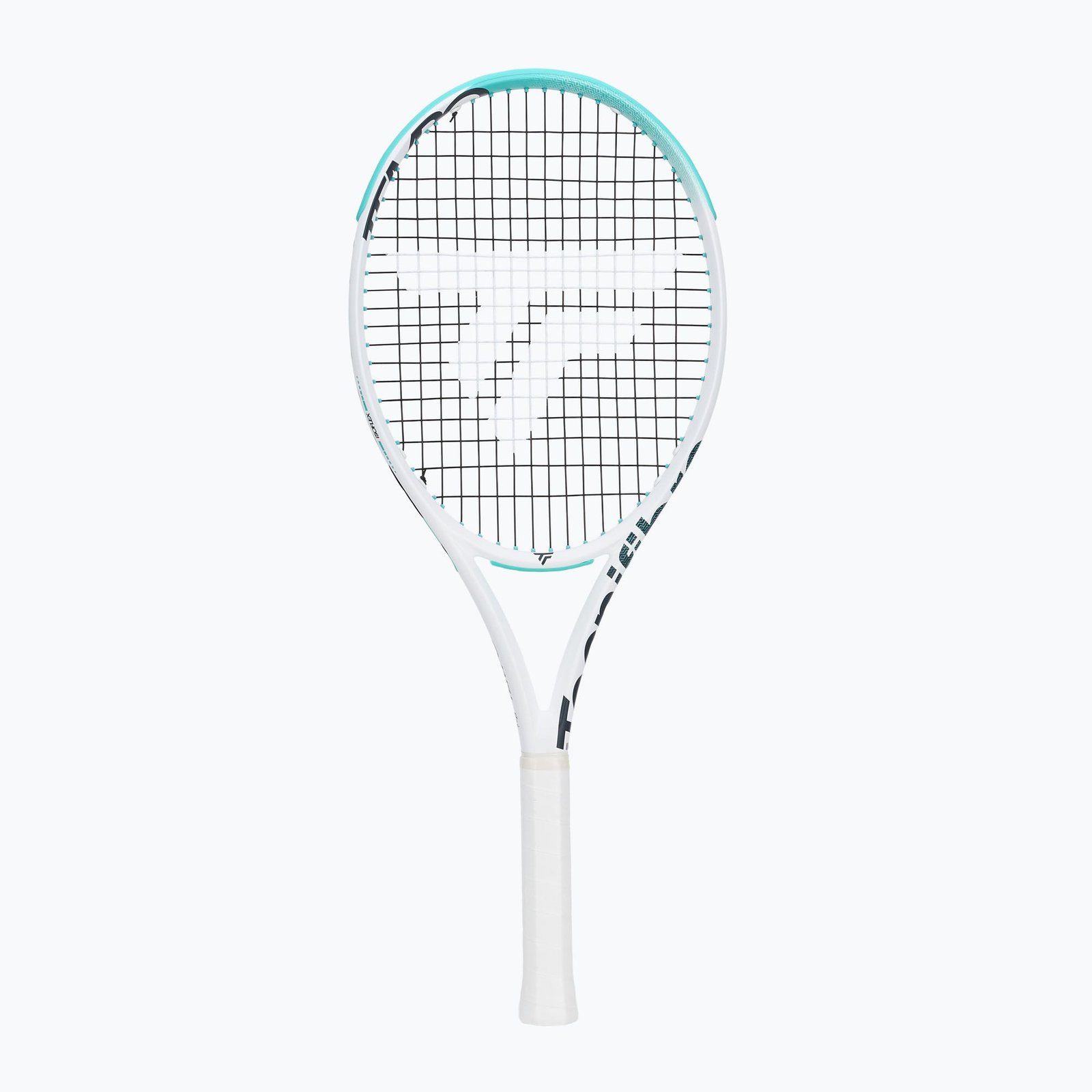
Tecnifibre Tempo 270 V2
From the one line in this guide designed for women from the drawing board — Tecnifibre’s Tempo range, at 270 g.
Most frames in this guide are light versions of unisex lines. The Tempo is different in kind: Tecnifibre positions the Tempo range as its women’s line, designed specifically for women players, and the 270 V2 is its centre-weight model. The design choices follow that brief rather than a colour scheme — a 270 g frame with a head-light 325 mm balance for manoeuvrability, Isoflex technology that varies the frame’s cross-section stiffness around the head to even out the string bed’s response, and a Superlight Cap bumper that trims weight at the very top of the frame, where every gram costs swing speed.
The practical details matter as much as the concept. Grip sizes for the V2 start at L0 — the 4-inch size smaller-handed players are most often told to “make do” without — and the 100 sq in head with an open 16×19 bed keeps the frame in the same performance class as everything else here rather than in beginner territory. Tecnifibre’s TFight frames in our pillar serve the control-minded advanced player; the Tempo 270 V2 is the same maker’s answer when the brief is a lighter, faster frame designed around a woman’s hand and swing from the start.
What we like
- Designed by Tecnifibre specifically for women — not a repaint
- Grip sizes start at L0 (4 in)
- Head-light 325 mm balance is quick at the net and on the return
- Isoflex evens the response across the string bed
Worth knowing
- Smaller retail footprint than the big four brands in some regions
- Less free power than the Pure Drive Lite at the same weight
As an Amazon Associate we earn from qualifying purchases.
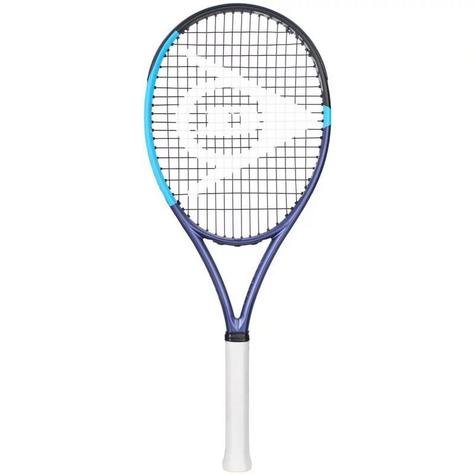
Dunlop FX 500 Lite
Crisp, firm power at 270 g — the lightest frame in Dunlop’s Power Series, with comfort tech doing the softening.
Dunlop’s FX Power Series is the firm’s answer to the Pure Drive formula, and the FX 500 Lite is its lightest rung: the same 100 sq in head, firm 23/26/23 mm beam and open 16×19 pattern as the standard FX 500, at 270 g with an even 330 mm balance. Dunlop positions it for game improvers, intermediate players and advanced juniors — which, translated out of catalogue language, means exactly this guide’s reader: a player past her first racket who wants a full-performance power frame her swing can actually accelerate.
The comfort engineering is the interesting part of the card. Sonic Core — a BASF Infinergy material placed in the frame — is Dunlop’s vibration-dampening answer to the firm beam, and the PowerBoost frame geometry and PowerGrid String Tech work on the sweet spot’s size and string movement. None of that turns a firm power frame into a soft one, and this guide will not pretend otherwise; what it does is take the Lite’s crispness from harsh to honest. If the Pure Drive Lite is the famous name in this slot, the FX 500 Lite is the same decision from the other historic power-racket maker — and Dunlop’s even lighter FX 500 Super Lite, carded in our beginners guide, is the step below it for first-racket buyers.
What we like
- Firm, crisp power at an accessible 270 g
- Sonic Core dampening takes the edge off the stiff beam
- Even balance donates depth on groundstrokes and serve
- The lightest rung of a proper performance series — room to step up within the line
Worth knowing
- Firm feel — arm-sensitive players should start with the Gravity MP L or EZONE 100L
- Less famous than the Babolat equivalent; demo access varies by region
As an Amazon Associate we earn from qualifying purchases.
Side-by-Side Comparison Table
| Model | Best For | Head | Weight (Unstrung) | Balance | Pattern | Published Grip Range |
|---|---|---|---|---|---|---|
| Babolat Pure Drive Lite (2025) | Lightweight power | 100 sq in | 270 g | 330 mm | 16×19 | Full Babolat range |
| HEAD Boom Team L (2024) | Forgiveness | 107 sq in | 260 g | 340 mm | 16×19 | Full HEAD range |
| Yonex EZONE 100L (2025) | All-round comfort | 100 sq in | 285 g | 325 mm | 16×19 | 0–4 |
| Wilson Ultra 100L v5 | Speed & power | 100 sq in | 280 g | 325 mm | 16×19 | Full Wilson range |
| HEAD Gravity MP L (2025) | Comfort & control | 100 sq in | 280 g | 330 mm | 16×20 | 0–5 |
| Tecnifibre Tempo 270 V2 | Women-specific design | 100 sq in | 270 g | 325 mm | 16×19 | From L0 |
| Dunlop FX 500 Lite | Firm-feeling power | 100 sq in | 270 g | 330 mm | 16×19 | Full Dunlop range |
Read the grip column carefully: it records what each maker publishes for the model. Where a maker does not publish a model-specific range, the table says so rather than guessing — those frames are sold in the maker’s standard grip range, and the small sizes (L0/L1) are the ones to confirm with the retailer before ordering. The three models with published small-end ranges — EZONE 100L (0–4), Gravity MP L (0–5) and Tempo 270 V2 (from L0) — are the safest orders for a player who has measured an L0 or L1 hand.
Buying Guide: Finding Your Weight and Your Grip
1. Start from your current frame’s problem, not from a ranking
Every switch in this guide solves one of three problems. If your current racket’s ball lands short and your swing is compact, you need the frame to donate power: the Pure Drive Lite, FX 500 Lite or Boom Team L. If your arm or shoulder is tired by the second set, the problem is workload and impact: the Gravity MP L and EZONE 100L are built around softening both. If you are late on balls at the net and on returns, the problem is preparation speed: the head-light balances of the Ultra 100L v5, EZONE 100L and Tempo 270 V2 are the answer. Name the problem first; the card follows from it.
2. The weight ladder: 260, 270, 280, 285
Use the ladder honestly. 260 g (Boom Team L) suits smaller players, returning players, and anyone whose technique is still forming — paired with the biggest head here, it is the forgiveness pick. 270 g (Pure Drive Lite, Tempo 270 V2, FX 500 Lite) is this guide’s centre: light enough to swing fast all match, substantial enough for club pace. 280–285 g (Ultra 100L v5, Gravity MP L, EZONE 100L) is for established players who want a lighter version of the performance standard, not a different class of racket. Strings, grip and dampener add roughly 25–30 g to every figure, so judge the finished racket, not the brochure.
3. Grip size: measure, then check the range before you fall in love
A grip size too big is the quietest equipment mistake in tennis: the hand works overtime to hold on, the wrist stiffens, and forearm fatigue gets blamed on the frame. Measure your hand with our Tennis Racket Grip Size Finder before shopping, and then check the measured size against the published ranges in the table above. If your size is L0 or L1, shortlist the models whose makers publish that end of the range — and remember the asymmetry: a grip one size small can be built up with an overgrip, but a grip one size large can never be reduced.
4. Balance is the feel decision
Two 270 g rackets can feel like different sports. Head-light balances (325 mm: Ultra, EZONE, Tempo) whip through contact, react at the net and feel kindest on the wrist. Even balances (330–340 mm: Pure Drive Lite, FX 500 Lite, Gravity MP L, Boom Team L) put mass behind the ball for baseline depth and serve help. Doubles players and net-rushers should lean head-light; baseline players who trade from the back should lean even. If you play both, the 330 mm group is the compromise the market has settled on.
5. Finish the setup: strings and shoes
A light frame strung with a stiff polyester at high tension gives back every comfort problem you just solved. Pair these frames with a softer string setup — our guide to the best tennis strings covers the comfort end of the string market — and treat tension as a dial you can turn down. The other half of a lighter setup is under your feet: quick, lateral movement is the whole point of a fast frame, and our guide to the best tennis shoes covers the court shoes that support it. For a sense of where this guide sits in the family, the older archive at Best Tennis Racquets remains a snapshot of previous generations; the current decisions live in the pillar, the beginners and intermediate guides, and here.
Frequently Asked Questions
What weight tennis racket should a woman choose?
There is no women’s weight — there is the weight your swing and schedule support. The frames in this guide run from 260 g to 285 g unstrung, a step below the 295–305 g performance standard. Choose 260–270 g if you are smaller, returning to the game, or still building your swing; 280–285 g if you are an established club player who wants the standard’s stability with less workload late in a match. Strings and grips add roughly 25–30 g to every published figure.
Do I need a racket designed specifically for women?
No — you need a racket whose weight, balance and grip size fit you, and most of those are light versions of unisex lines, which is why five of the seven cards here are exactly that. One card is different in kind: Tecnifibre’s Tempo range is designed by the maker specifically for women, and the Tempo 270 V2 pairs that design brief with grip sizes starting at L0. Judge every frame on its published specs, not on its label.
What grip size do most women need?
It varies by hand, which is the point of measuring rather than guessing. Smaller hands typically measure L0 (4 in) or L1 (4 1/8 in) — sizes some performance frames do not publish at all. Use our Tennis Racket Grip Size Finder to measure, then check the model’s published range: in this guide the Yonex EZONE 100L lists grips 0–4, the HEAD Gravity MP L lists 0–5, and the Tecnifibre Tempo 270 V2 starts at L0. A grip one size small can be built up with an overgrip; one size large cannot be reduced.
Is a lighter racket better for tennis elbow?
Lighter is not automatically kinder. What helps a sensitive arm is a combination: a flexible rather than stiff frame, a softer string setup at sensible tension, and a grip size your hand does not have to fight. In this guide that points to the HEAD Gravity MP L (flexible 22 mm beam, denser 16×20 bed) and the Yonex EZONE 100L (Minolon and VDM dampening), strung softly. Persistent pain is a medical question, not an equipment one — treat it as such.
What is the difference between this guide and your best tennis rackets guide?
Scope. The best tennis rackets pillar compares the current performance frames for all players at their standard weights (295–305 g). This guide owns the lighter decision only: lighter sibling models and a women-specific line, all between 260 g and 285 g, checked for smaller grip availability. No model is carded in both, and the beginners and intermediate guides own their own segments the same way — each page answers one question rather than re-ranking the others.
Lighter racket or standard racket — how do I decide between the Lite and the regular version?
Demo both if you can, back to back, in the third set of a long session rather than the first ten minutes. The standard version will feel more stable against heavy balls and calmer on off-centre hits; the Lite will feel faster to prepare, easier at the net and fresher at the end. If your matches are decided by balls you were late on, choose the Lite. If they are decided by balls that pushed you around, choose the standard — and read the pillar for that shortlist.
Can a lighter racket still generate power?
Yes — power comes from racket-head speed as much as from mass, and a frame you can swing faster often produces the heavier ball. The power frames here (Pure Drive Lite, Ultra 100L v5, FX 500 Lite) pair their lighter weights with thick, stiff beams and open 16×19 beds precisely so the frame donates energy your swing has not yet supplied. What light frames give back is stability against an opponent’s pace, which is a defence problem, not a power problem.
The Verdict
Buy the frame that matches your hand, your swing and your problem. The Babolat Pure Drive Lite (2025) is the default answer — famous power at 270 g. The HEAD Boom Team L is the forgiveness answer for smaller or returning players, the Yonex EZONE 100L the plush all-rounder with a grip range that starts at a true L0, and the Wilson Ultra 100L v5 the fastest-feeling power frame of the set. Arms and control-minded players should start with the HEAD Gravity MP L; players who want a frame designed for women from the drawing board should start with the Tecnifibre Tempo 270 V2; and the Dunlop FX 500 Lite is the firm, crisp alternative in the power slot. Measure your grip first — it is the one number on this page that cannot be compromised — then pick the weight your third set can still swing.
Affiliate disclosure: AliShuttler is reader-supported. When you buy through links on this page we may earn an Amazon commission at no extra cost to you. Specifications are taken from manufacturers’ published product information and were verified at the time of writing; manufacturers revise models and cosmetics between generations, so confirm the exact specification on the product page before ordering.