The senior player’s shoe decision is a specifications decision. Table tennis is played in short side-steps, split-steps, lunges to the wide forehand and quick recoveries back to the ready position, so the shoes that fit it are published with dedicated indoor court-shoe construction — thin, flat, gum-rubber outsoles that grip a hall floor, low profiles that keep you close to the ground, and uppers built to hold the foot through lateral movement rather than the forward roll of a running shoe. This guide compares seven on exactly what their makers publish: stated weights with their size basis, fit and width options, cushioning systems by name, and outsole designs as the makers state them. No health claims, no promises: just the spec sheets, read properly.
⚡ TL;DR — The Short Answer
For the best all-round senior pick, buy the Mizuno Wave Drive 9 — about 235 grams for one shoe at 26.0 cm as Mizuno states it, with a Mizuno Wave plate, a PoWnCe midsole and an XG Rubber outsole in a standard fit. The widest published fits belong to Mizuno as well: the Wave Medal 8 Wide and the Wave Kaiserburg 8 are both built on 3E wide lasts. The Butterfly Lezoline Gigu is the maximum-cushioning pick, with the thickest sole in Butterfly’s Lezoline series, and the Butterfly Lezoline Rifones the pro-level grip-and-support build. The JOOLA SM4SH is the modern lightweight design — a Pebax shank and a sandwich-mesh upper — and the JOOLA Pro Blast the lateral-support pick. One discipline runs through the guide: every weight is printed exactly as its maker or listing states it, and where a maker publishes no weight, the card says so.
Quick Picks — Best Table Tennis Shoes for Seniors at a Glance
About 235 g as Mizuno states it, with a Wave plate, PoWnCe midsole and XG Rubber grip in a standard 2E fit.
A 3E wide last with 6 mm more instep girth than the standard Medal 8, per Mizuno Japan, over ENERZY NXT cushioning.
The thickest sole in Butterfly’s Lezoline series, with a B-Absorber cushioning sponge in the forefoot.
JOOLA’s signature shoe: a Pebax elastomer shank, CMEVA midsole and a breathable sandwich-mesh upper.
B-Absorber, Wing Grip and a B-Armor reinforced upper — Butterfly’s flagship support build, at about 274 g per specialist listings.
Mizuno’s lightweight-and-wide line: about 245 g on a 3E last, as Mizuno Japan states it.
Built for lateral support with an ultra-flexible, non-slip outsole and breathable mesh inserts, per retailer listings.
In This Guide
- The Senior Decision: Dedicated Table Tennis Shoes, As Makers Describe Them
- Reading the Spec Sheet: Weight, Widths and Gum-Rubber Outsoles
- The 7 Best Table Tennis Shoes for Seniors, Compared
- Side-by-Side Comparison Table
- Buying Guide: Matching the Spec Sheet to Your Game
- Frequently Asked Questions
- The Verdict
The Senior Decision: Dedicated Table Tennis Shoes, As Makers Describe Them
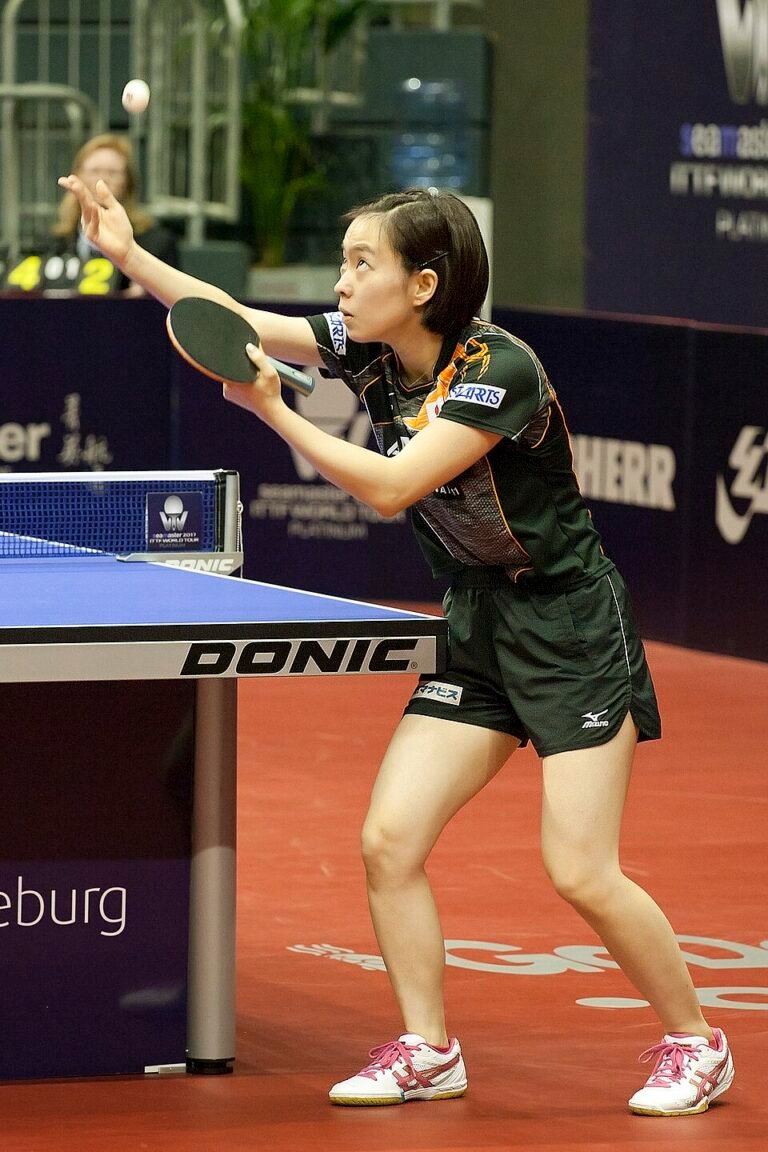
Start with the construction, because the specialist makers draw a clear line between a table tennis shoe and everything else in the sports hall. A running shoe is built around forward motion: a thick, curved, cushioned sole that rolls the foot from heel strike to toe-off. A table tennis shoe is built around lateral motion at close range. The movement pattern is side-steps and cross-steps, a split-step before every shot, a lunge out to a wide ball and a controlled recovery — all of it on an indoor floor, all of it a metre or two from the table. The published answer, across Mizuno, Butterfly and JOOLA alike, is a low, flat shoe with a thin gum-rubber outsole patterned for grip in every direction, and an upper reinforced to hold the foot when the movement goes sideways. The flat base, the low profile and the lateral reinforcement are not styling. They are the published definition of a table tennis shoe, and all seven cards below are built that way.
Weight is the second part of the senior decision, and it is a published number, not a feel. A long club session is hundreds of short steps, holds and recoveries rather than a handful of long strides, so the mass you lift on every step is the mass on the spec sheet. This guide prints every weight exactly as its maker or listing states it, with the size basis attached. Mizuno is the most complete publisher here: it states a weight for one shoe at 26.0 cm for every model in its line — about 235 g for the Wave Drive 9, about 245 g for the Kaiserburg 8, about 275 g for the Medal 8 family. Butterfly and JOOLA publish no weights for the shoes carded here, and their cards say so plainly; the one figure printed for a Butterfly shoe — about 274 g per shoe for the Rifones — comes from specialist retailer listings and is attributed as such. Compare like with like, and the seven cards sort honestly.
Cushioning is the third part, and here the rule is strict: cushioning systems are reported by the names their makers give them — Mizuno’s ENERZY NXT and PoWnCe, Butterfly’s B-Absorber sponge, JOOLA’s CMEVA midsole — as construction descriptions, exactly as published. A named foam or sponge unit is a spec you can compare across listings; it is not a health claim, and this guide makes none. The same discipline applies to fit. Mizuno is one of the very few makers that publishes width grades for table tennis shoes at all: a standard 2E last on most of its line, and genuine 3E wide lasts on the Medal 8 Wide and the Kaiserburg 8. Butterfly sells the Lezoline line in a standard width only, per its listings, and its cards say that too. If width decides your shortlist, the published width grades — not marketing adjectives — are where the decision lives.
One boundary before the picks. This page owns the senior lightweight, wide-fit table tennis shoe decision only. The full all-player field belongs to our pillar guide to the best table tennis shoes, and the women’s segment has its own guide to the best table tennis shoes for women. None of their models is re-carded here. Building the rest of the senior kit alongside the shoes? Our guide to the best table tennis bats for seniors owns the bat decision, and our how to play table tennis guide covers the footwork patterns these outsoles are patterned for.
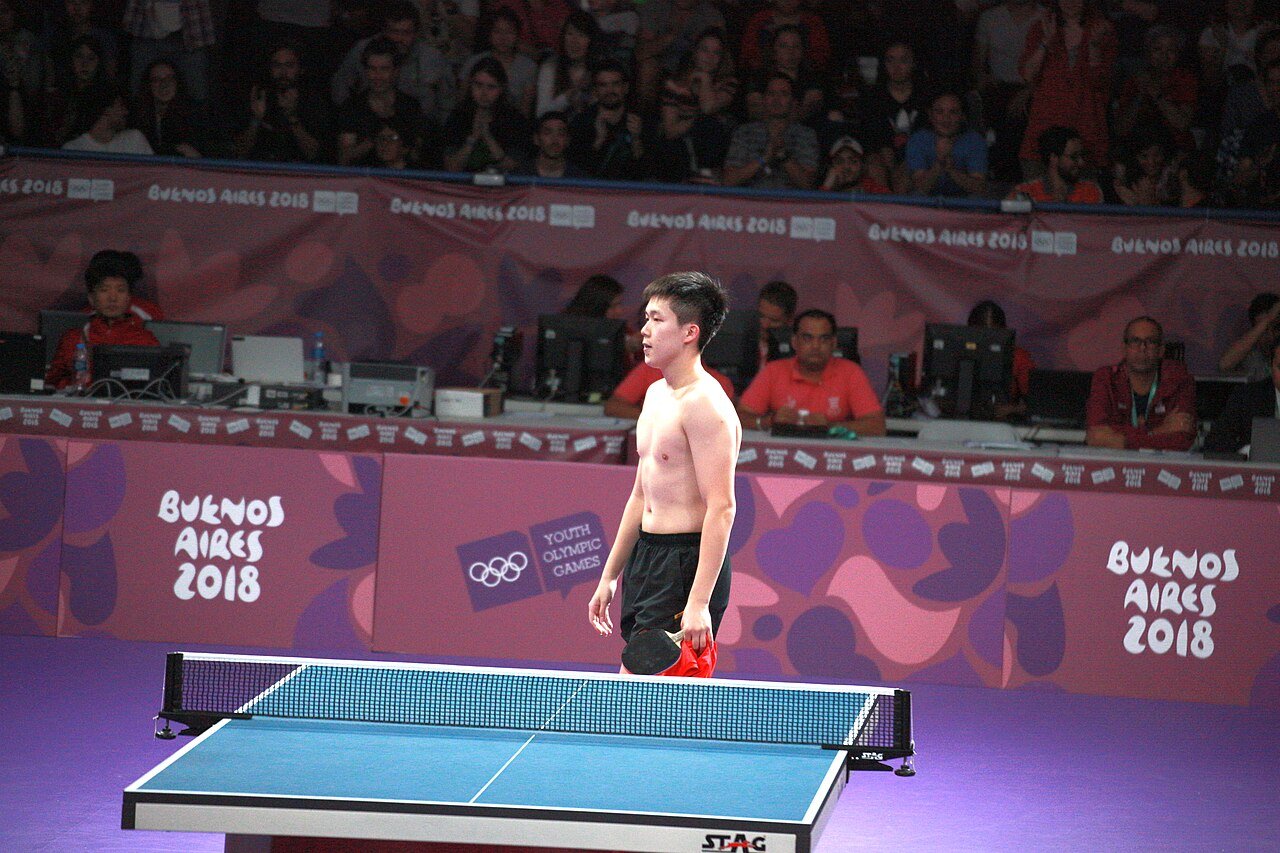
Reading the Spec Sheet: Weight, Widths and Gum-Rubber Outsoles
Weight first, with its size basis attached. A published weight is meaningless without the size it was weighed in, because the same model gains weight with every size. Read the cards the way the most complete maker publishes them: Mizuno states each figure for one shoe at 26.0 cm — about 235 g for the Drive 9, about 245 g for the Kaiserburg 8, about 275 g for the Medal 8 and the Medal 8 Wide. Mizuno’s own lineup table also tells you what the grams buy: it groups the Drive family as lightweight and flexible, the Medal family as stability and cushioning, and the Kaiserburg as lightweight and wide. Where a maker publishes nothing — Butterfly and JOOLA, on the cards here — no number is invented to fill the gap; the card states the construction facts the maker does publish, and the one retailer-listed figure (the Rifones at about 274 g per shoe) is labelled with its source. A blank on a spec sheet is information too: it tells you which brands let you compare on paper and which make you compare on construction alone.
Widths are published in grades, and Mizuno is the maker that publishes them. On Mizuno Japan’s listings, 2E is the standard last fitted to most of the line — the Drive 9 and the standard Medal 8 — and 3E is the wide grade, offered on exactly two models: the Medal 8 Wide and the Kaiserburg 8. The Medal 8 Wide’s extra room is itself a published number: Mizuno Japan states its instep girth is 6 mm above the standard Medal 8 last, at the same stated weight. Butterfly takes the simpler route — its Lezoline shoes are sold in a standard (medium) width only, per retailer listings — and JOOLA publishes no width grades for the SM4SH or the Pro Blast. Three published answers to the same question: a graded wide last, a standard-only range, or no stated grade at all. The buying guide below maps them to how you shop.
The outsole is a gum-rubber indoor spec, and the makers describe it in their own terms. Table tennis shoes are indoor shoes: thin rubber outsoles that grip wooden and synthetic hall floors and do not mark them. Mizuno fits the Drive 9 with its XG Rubber outsole and a D-Flex Groove, which Mizuno describes as a diagonal groove that assists smooth weight transfer through the foot. Butterfly patterns its outsoles for multi-directional grip — the Wing Grip on the Rifones, the Wingrip original rubber sole on the Gigu. JOOLA publishes the SM4SH’s outsole as non-marking, lightweight and high-traction, built, in JOOLA’s words, to stop short, change direction and explode into position. What none of these shoes is built for is outdoor concrete or asphalt: a thin gum-rubber sole is an indoor instrument, and the cards treat it as one.
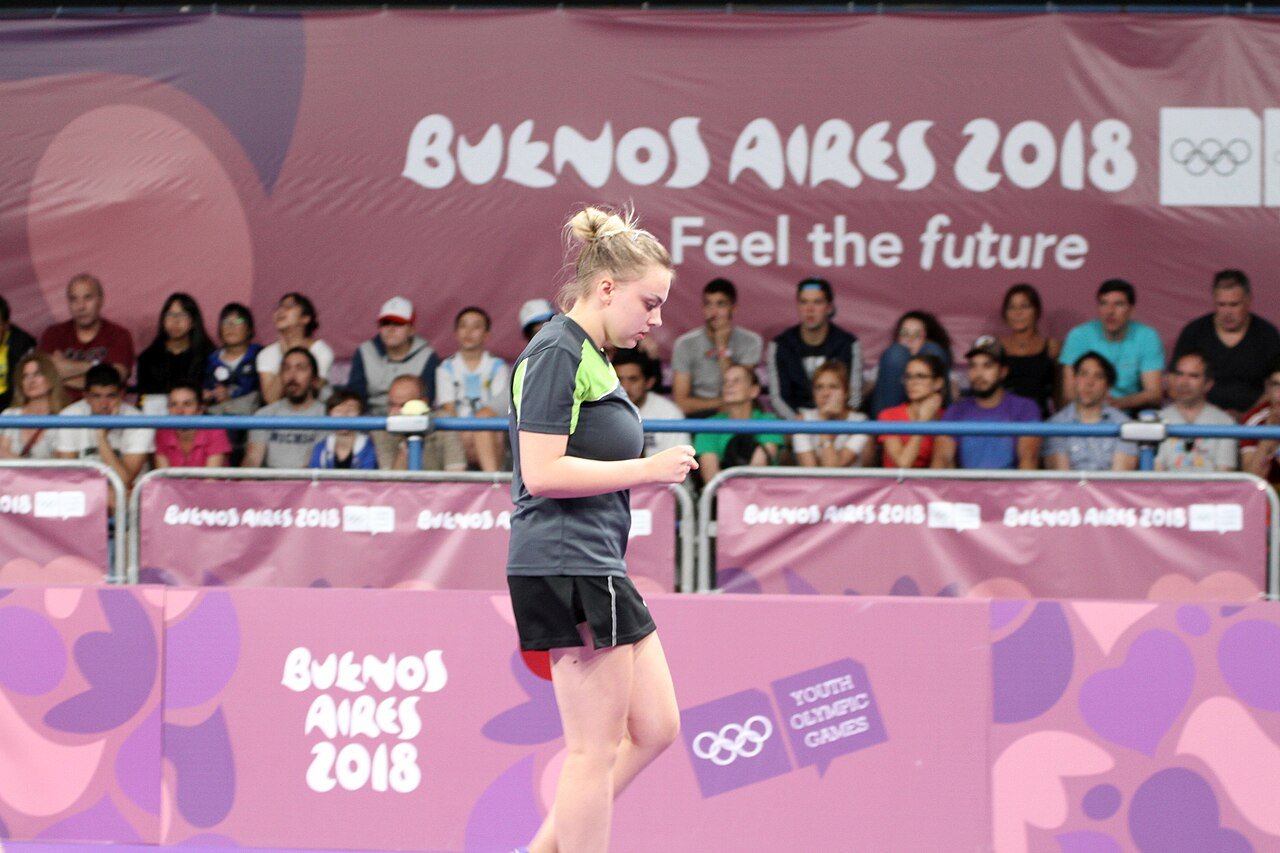
The 7 Best Table Tennis Shoes for Seniors, Compared
Seven dedicated table tennis shoes, one shared brief — built for lateral movement as their makers describe it, light as their makers state it, and fitted with the wider options their makers actually offer. Read the card that matches your feet and your hall first.
Mizuno Wave Drive 9
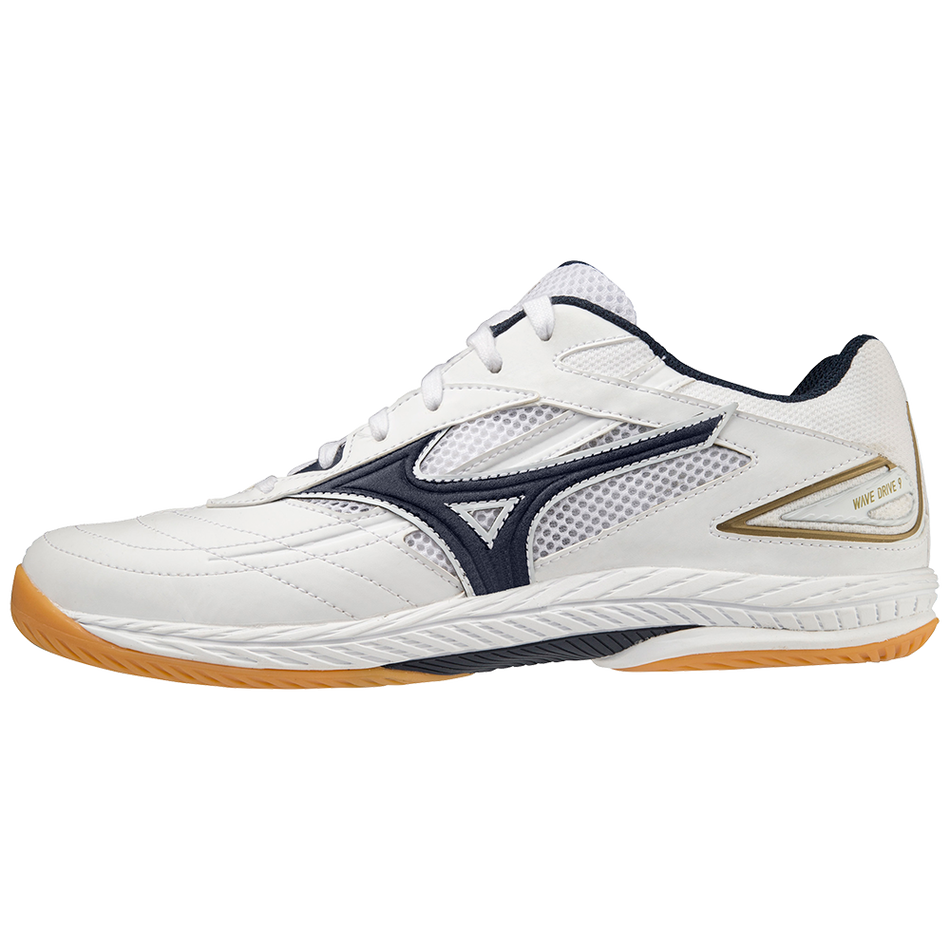
The complete senior specification in the lightest fully-published package here — about 235 g as Mizuno states it, a Wave plate, PoWnCe cushioning and XG Rubber grip.
The Drive 9 is the ninth generation of Mizuno’s Drive line, and it leads this guide because it is the most completely specified lightweight table tennis shoe a senior player can buy on paper. The numbers first, as Mizuno states them: about 235 grams for one shoe at 26.0 cm — the lightest maker-stated weight in this guide — in a standard 2E fit, Mizuno Japan’s standard last, with a low 9.0 mm stack height that keeps the shoe close to the floor in the way table tennis footwork asks for. Mizuno groups the Drive family in its own lineup as the lightweight, flexible, barefoot-feel line, and the Drive 9 is its current flagship: a unisex indoor shoe whose published brief is lightness and flexibility rather than maximum structure.
The construction under that brief is named, piece by piece, on Mizuno’s own pages. The midsole pairs the Mizuno Wave plate with PoWnCe, Mizuno’s lightweight midsole material, which Mizuno states is about 10% lighter than its ap+ material at the same level of energy return. The outsole is Mizuno’s XG Rubber for grip, with a D-Flex Groove — a diagonal groove Mizuno describes as assisting natural, smooth weight transfer through the foot during quick movement. The upper carries more than 50% recycled content, per Mizuno. Nothing on this card needs a retailer to interpret it: weight, width, stack, materials and technologies are all on the maker’s own listing, which is exactly what a specifications-first senior guide is for. That is why it leads.
What we like
- The lightest maker-stated weight here: about 235 g at 26.0 cm
- Every key spec published by Mizuno itself — weight, 2E width, 9.0 mm stack
- Wave plate and PoWnCe midsole, both named on Mizuno’s listing
- XG Rubber outsole with a D-Flex Groove for weight transfer
Worth knowing
- Standard 2E fit only — wide feet should start at the Medal 8 Wide or Kaiserburg 8 cards
- Sold through Mizuno’s international and specialist channels rather than Mizuno USA, which does not list table tennis shoes — check the seller’s sizing (Mizuno lists sizes in centimetres) and returns before ordering
As an Amazon Associate we earn from qualifying purchases.
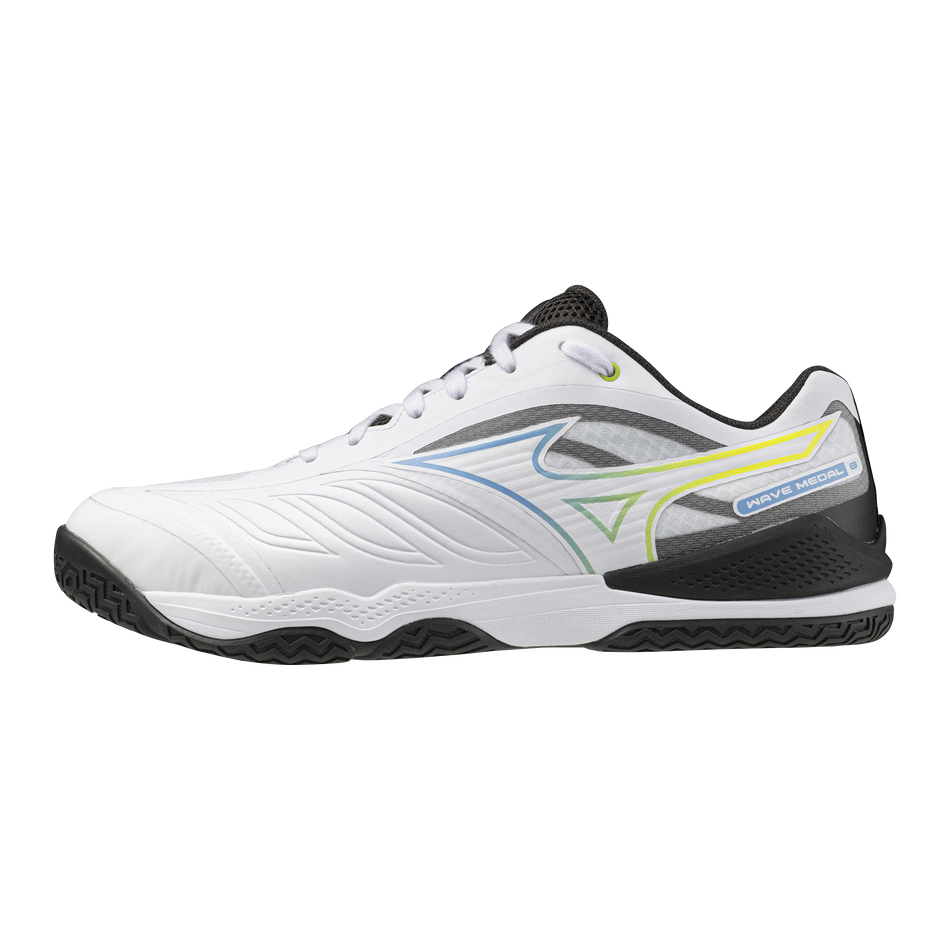
Mizuno Wave Medal 8 Wide
The true wide-last pick — a 3E last with 6 mm more instep girth than the standard Medal 8, per Mizuno Japan, over the ENERZY NXT cushioning of Mizuno’s stability family.
Wide-fit table tennis shoes are rare enough that a maker publishing a genuine wide grade is the headline. The Medal 8 Wide is the wide-last version of Mizuno’s Medal 8: Mizuno Japan lists it in a 3E width, with an instep girth 6 mm above the standard Medal 8 last — a published measurement of the extra room, not an adjective — at the same stated weight as the standard shoe, about 275 grams for one shoe at 26.0 cm. Mizuno groups the Medal family as its stability and cushioning line, and the Wide keeps the whole of that brief while changing only the last. For a senior player whose feet need space through the midfoot and toes, this is the card where the fit filter is answered in the maker’s own numbers.
Underfoot, the Medal 8 generation carries MIZUNO ENERZY NXT, which Mizuno notes is the first appearance of its ENERZY NXT cushioning material in a table tennis shoe — the softest, most cushioned build in Mizuno’s current line, as Mizuno positions the family. The outsole uses a flex-groove design Mizuno describes as securing grip at the toes during movement, and the heel is built with an enhanced construction for stability, in Mizuno’s published description. The honest trade is printed on the card: at about 275 g it sits at the heavy end of this guide, and the extra grams are the stability brief made visible. If your first filter is width and your second is a secure, structured feel, this is the most completely published answer in the guide.
What we like
- A genuine published wide grade: 3E last, with the +6 mm instep figure stated by Mizuno Japan
- ENERZY NXT cushioning — Mizuno’s first table tennis shoe with the material
- Enhanced heel construction and toe-grip flex grooves, as Mizuno describes them
- Same stated weight as the standard Medal 8 — the wide last costs no extra grams on the sheet
Worth knowing
- About 275 g is the heavier end of this guide — the stability build, not the lightweight one
- Like all Mizuno table tennis models, it is sold via international and specialist channels; sizes are listed in centimetres, so measure before ordering
As an Amazon Associate we earn from qualifying purchases.
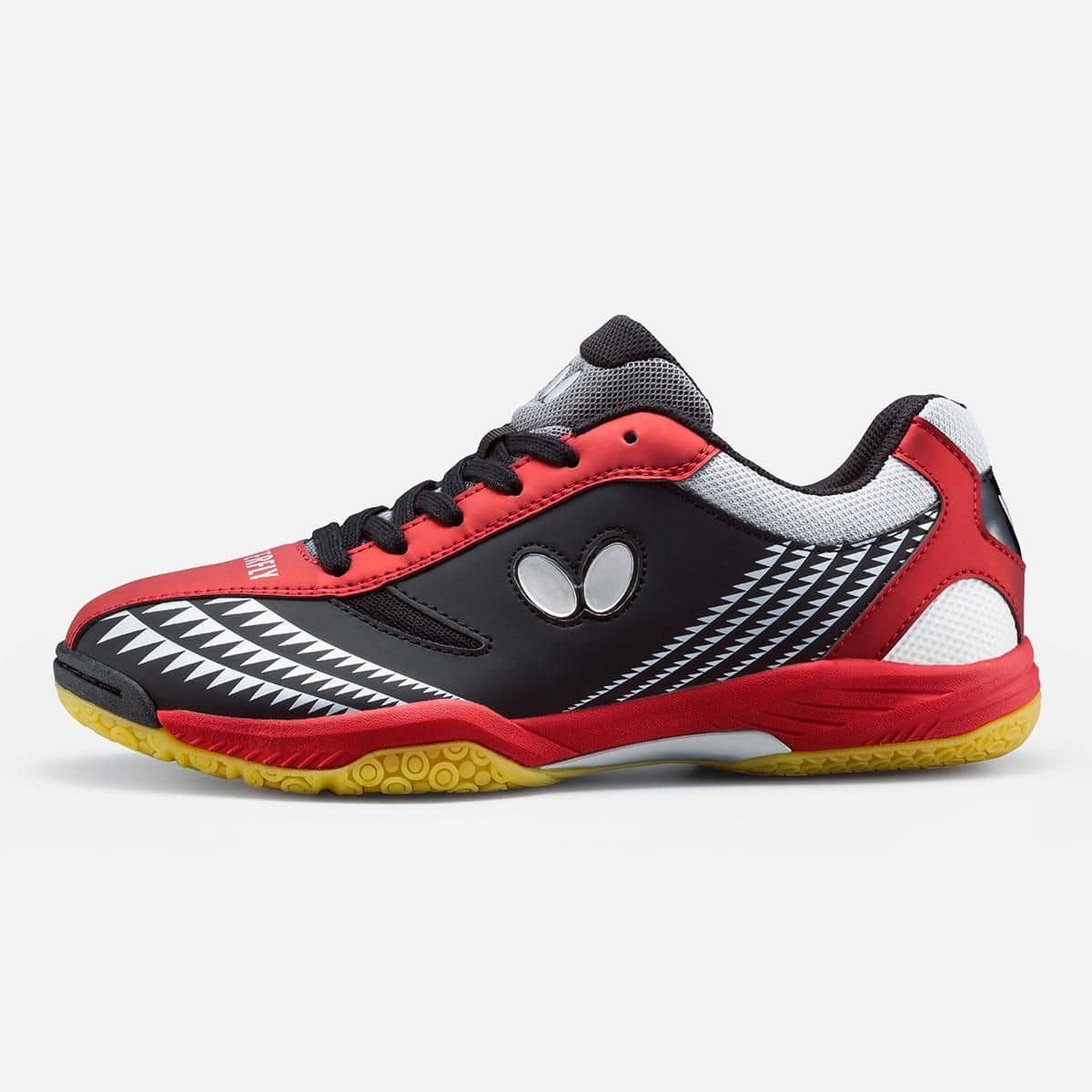
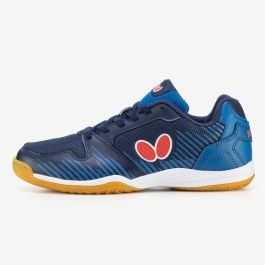
Butterfly Lezoline Gigu
The cushioning-first pick — the thickest sole in Butterfly’s Lezoline series, with Butterfly’s B-Absorber sponge in the forefoot and STB torsion protection.
Every Lezoline shoe answers a different playing brief, and Butterfly publishes the Gigu’s brief in one line: it has the thickest sole in the Lezoline series, and it is the model Butterfly positions for players who care most about cushioning. For a senior player who plays long sessions on hard hall floors and reads a spec sheet for underfoot substance first, that is the whole decision — this is the most cushioned construction Butterfly sells for table tennis, stated by Butterfly itself. The midsole pairs that thick sole with Butterfly’s B-Absorber, a cushioning sponge set into the forefoot between the outer and mid sole, where the foot loads during the lunges and split-steps of table tennis footwork.
The rest of the build is Butterfly’s standard Lezoline hardware, published on its listings: STB torsion protection in the midsole, which Butterfly describes as guarding the shoe’s shape against twisting during movement; a Wingrip-patterned original rubber outsole for grip on indoor floors; and an upper in synthetic fibre and artificial leather. Two honest notes belong on this card. Butterfly publishes no weight for the Gigu — a thicker-soled shoe will not be the lightest here, and no figure is invented to fill the space — and the Lezoline line is sold in a standard width, so wide feet are better served by the two 3E Mizuno cards. Within its published brief — maximum cushioning from the sport’s most established footwear name — the Gigu is the clear pick.
What we like
- The thickest sole in the Lezoline series, positioned by Butterfly for cushioning-first players
- B-Absorber cushioning sponge placed in the forefoot, per Butterfly
- STB torsion protection and a Wingrip outsole — Butterfly’s published hardware set
- Synthetic fibre and artificial leather upper from the sport’s specialist maker
Worth knowing
- Butterfly publishes no weight for this shoe — compare it on construction, not grams
- Standard width only, per Butterfly’s listings — no wide version is offered
As an Amazon Associate we earn from qualifying purchases.
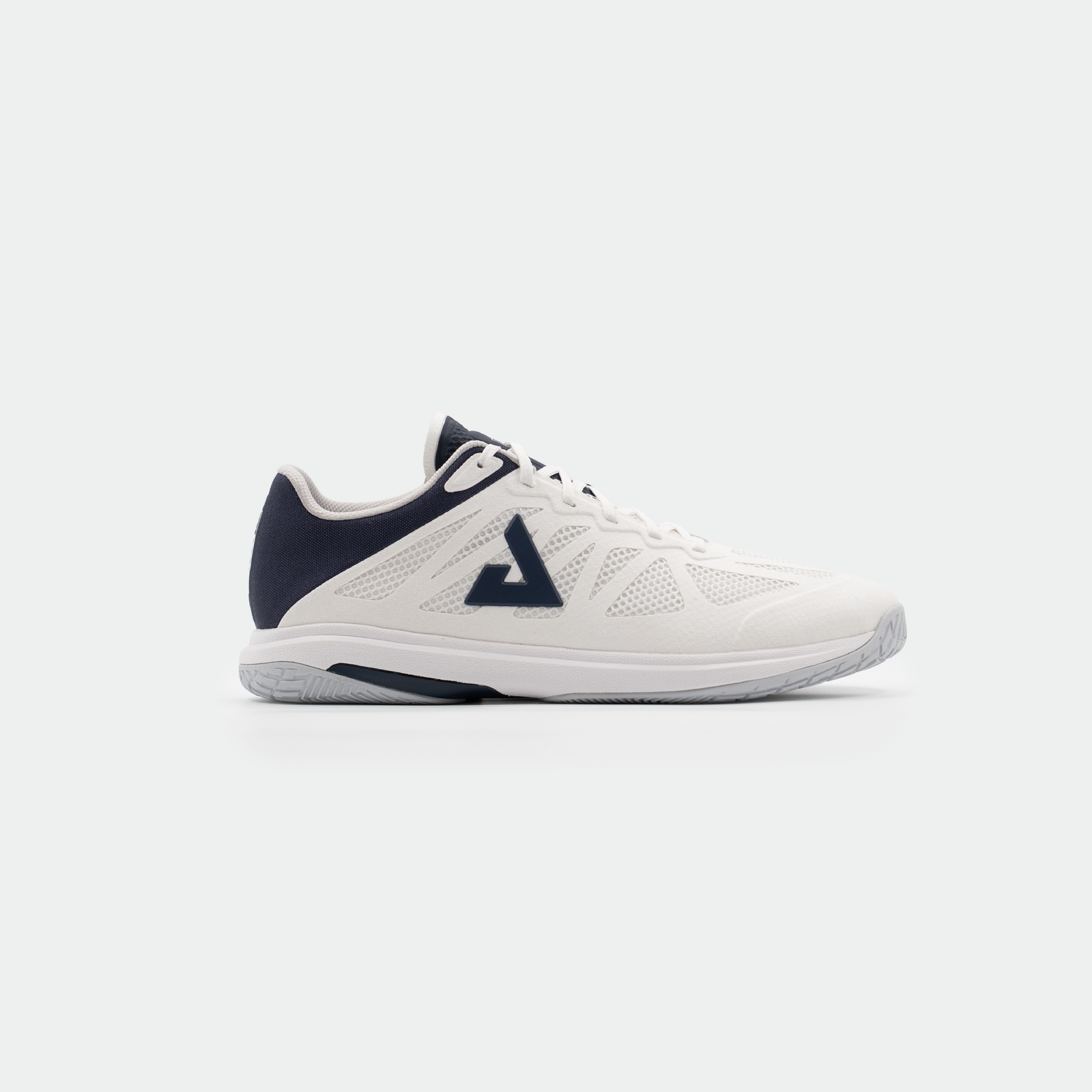
JOOLA SM4SH
The ground-up modern build — JOOLA’s first signature table tennis shoe, with a Pebax elastomer shank, a CMEVA midsole and a breathable sandwich-mesh upper.
The SM4SH is the newest thinking in this guide. Launched by JOOLA in September 2026 as its first signature table tennis shoe, it was, in JOOLA’s published account, engineered for table tennis from the ground up rather than adapted from another sport’s platform, and co-developed with tour players including Hugo Calderano, Liam Pitchford and Lily Zhang. JOOLA positions it among the lightest table tennis shoes available — a positioning statement this card reports as such, because JOOLA publishes no numeric weight for it. What JOOLA does publish is a modern component list, and it reads like a senior brief written by a footwear engineer: light where the shoe can be light, structured where the movement demands it.
The structure is a Pebax Elastomer Shank built into the sole, which JOOLA describes as giving lightweight torsion control — letting the foot move naturally through pivots while holding the shoe stable through fast in-and-out footwork. Over it sits a CMEVA midsole JOOLA describes as tuned for court feel and responsive cushioning, and a sandwich-mesh Secure Fit Upper that JOOLA says delivers breathable airflow and contains the foot with no dead space, with heel containment built in for lateral shuffles. The outsole is non-marking, lightweight, high-traction rubber, per JOOLA. For a senior player who wants the current generation of table tennis footwear design — and is comfortable that its lightness is a maker’s positioning rather than a printed gram figure — this is the card.
What we like
- Designed for table tennis from the ground up, per JOOLA — not adapted from another sport
- Pebax elastomer shank for lightweight torsion control, as JOOLA describes it
- Breathable sandwich-mesh upper with published heel containment
- Non-marking high-traction rubber outsole, per JOOLA
Worth knowing
- No numeric weight is published — JOOLA’s lightweight claim is a positioning statement, not a spec
- Sizes are listed in EU sizes with a fit guide on JOOLA’s store; check the conversion before ordering
As an Amazon Associate we earn from qualifying purchases. Model shown may differ from the current listing; check seller details.
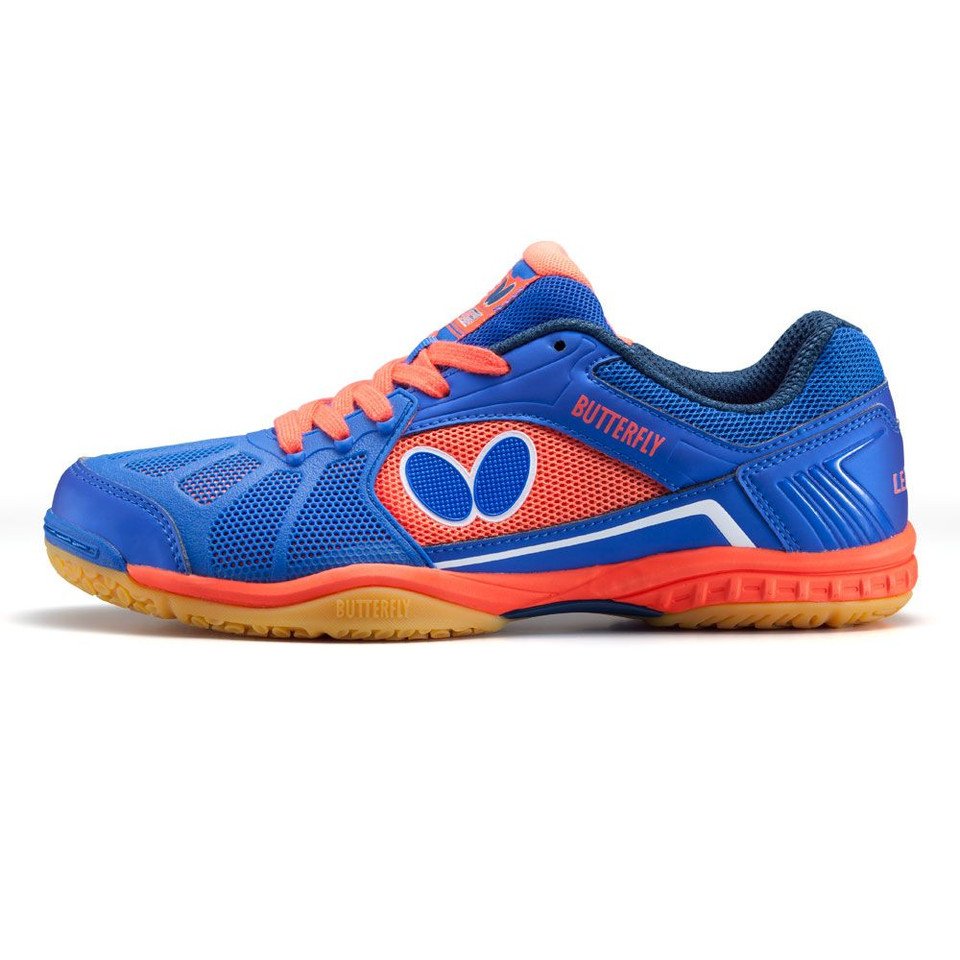
Butterfly Lezoline Rifones
The flagship support build — B-Absorber, Wing Grip and a B-Armor reinforced upper, at about 274 g per shoe by specialist retailer listings.
Where the Gigu is Butterfly’s cushioning brief, the Rifones is its flagship brief — the model Butterfly builds around grip and support, and the one senior players who still train hard will read first. Butterfly describes it as pursuing grip and shock absorption together while supporting intense movement. The hardware is the full Lezoline set: a B-Absorber sponge in the midsole for cushioning, a Wing Grip outsole for the lateral plants and recoveries of table tennis footwork, STB torsion protection in the midsole, and the detail that separates this card from the rest of the Butterfly range — B-Armor, a reinforced panel system in the upper that Butterfly positions for greater durability and support through hard lateral movement.
The one number on this card needs its source printed next to it, and it is: about 274 grams per shoe, from specialist retailer listings — Butterfly itself publishes no official weight for the Rifones, and the listings that carry the figure do not state the size it was weighed in. Read it as an approximate class marker, not a comparable spec: it places the Rifones alongside the Medal 8 Wide at the structured end of this guide, well clear of the Drive 9’s 235 g. The fit is a standard width, per retailer listings. Buy this card for what Butterfly itself publishes — the grip-and-support construction — and treat the weight as the one figure in the guide that arrives with an asterisk.
What we like
- Butterfly’s grip-and-support flagship, as Butterfly positions the model
- B-Armor reinforced upper — the durability and support detail unique to this card
- B-Absorber, Wing Grip and STB in one build — the full Lezoline hardware set
- Retailer-listed at about 274 g per shoe — in the same class as the Medal stability line
Worth knowing
- Butterfly publishes no official weight; the 274 g figure is retailer-sourced and its size basis is not stated
- Standard width only, per retailer listings — no wide version
As an Amazon Associate we earn from qualifying purchases.
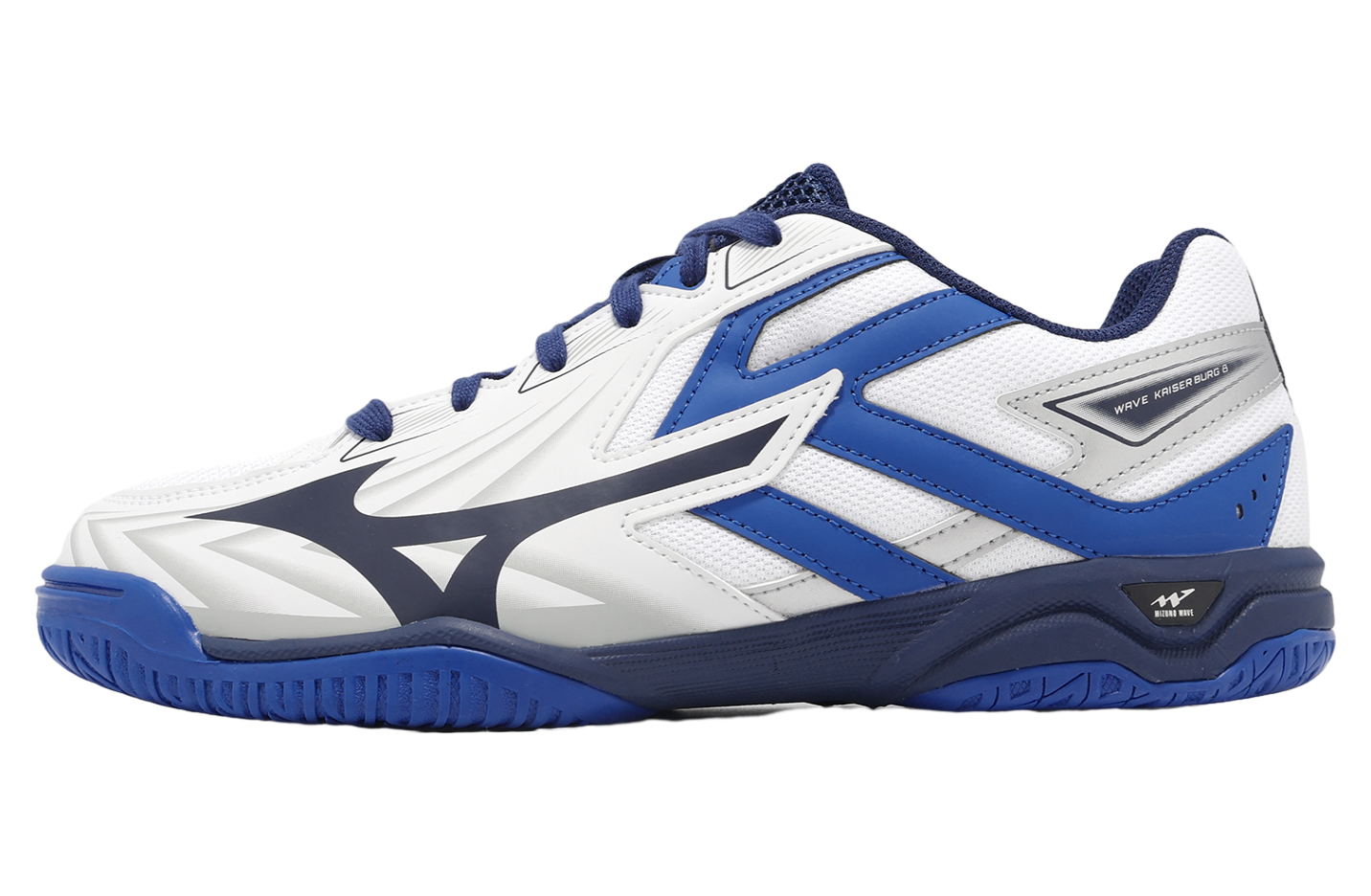
Mizuno Wave Kaiserburg 8
The lightweight-and-wide combination in one card — about 245 g as Mizuno Japan states it, on a genuine 3E wide last.
Two of this guide’s seven cards are wide. One of them asks you to accept the guide’s joint-heaviest stated weight for its stability. The other — this one — asks for no such trade. The Kaiserburg is the line Mizuno describes as its lightweight-and-wide design, and Mizuno Japan’s listing puts both halves of that phrase in numbers: about 245 grams for one shoe at 26.0 cm, on a 3E wide last. Put it beside the Medal 8 Wide and the senior wide-fit decision becomes a clean fork between two maker-stated builds: 245 g and the lightweight brief, or 275 g and the stability brief, on the same maker’s wide grade. No other brand in this guide offers the choice at all.
The Kaiserburg 8 is the current generation of a line Mizuno has run for wide-footed players across several iterations, and its published facts are exactly the two that decide this category — weight and width grade, both stated by the maker, both near the top of what a senior player can ask a spec sheet for. The card is shorter on named cushioning technologies than its Mizuno stablemates, and it says so: Mizuno Japan’s listing leads with the line’s lightweight-and-wide position rather than a materials glossary. If your feet are wide and your sessions are long, this is the lightest published way to have both — 10 grams above the Drive 9, with a full width grade more room.
What we like
- Lightweight and wide in one maker-stated card: about 245 g on a 3E last
- Only 10 g above the standard-fit Drive 9 — the wide grade costs almost nothing in weight
- Both decision numbers published by Mizuno Japan itself
- A long-running dedicated wide-fit line, not a one-off wide colourway
Worth knowing
- Mizuno Japan’s listing gives fewer named-technology details than the Drive and Medal cards — compare it on weight and width
- Like the other Mizuno models, it is an international-channel shoe; sizes in centimetres
As an Amazon Associate we earn from qualifying purchases.
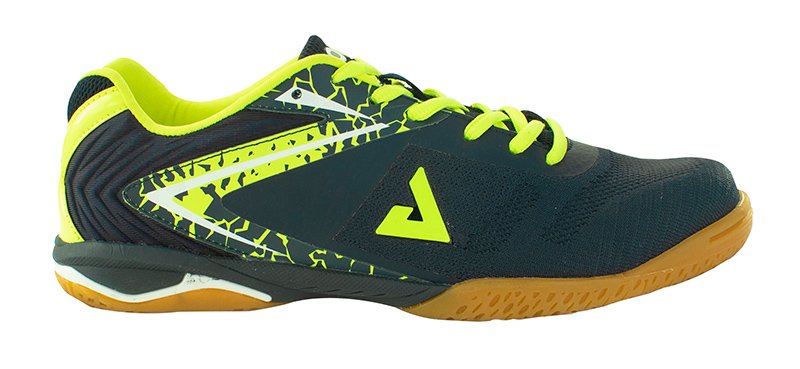
JOOLA Pro Blast
The lateral-support pick — JOOLA’s established performance shoe, described on specialist listings as built for lateral support with an ultra-flexible, non-slip outsole.
The Pro Blast is JOOLA’s established performance shoe, and its published brief is the most movement-specific in this guide: specialist retailer listings describe it as designed for lateral support — the side-to-side load path that defines table tennis footwork — with an ultra-flexible, non-slip rubber outsole and breathable mesh inserts in the upper. Where the SM4SH card above is JOOLA’s new-technology story, this is the proven one: a support-led shoe from the same specialist stable, sold through JOOLA’s North American store and its specialist retailers, in EU sizing.
Two disciplines of this guide apply to this card in full. JOOLA publishes no weight for the Pro Blast, and no width grade either — the card prints neither, because neither exists on a spec sheet to print. What is published, by the retailers who carry it, is a coherent construction brief aimed squarely at the lateral game: support through the upper, flexibility and grip through the outsole, ventilation through the mesh. For a senior player whose game is built on side-to-side coverage and who shops JOOLA’s range, this is the support-first alternative to the SM4SH’s lightness-first brief — and the comparison between the two JOOLA cards is a tidy summary of the whole guide: choose by the published brief that matches your movement, not by a number that was never published.
What we like
- A lateral-support design brief, stated on specialist listings — the movement table tennis is made of
- Ultra-flexible, non-slip outsole, per retailer listings
- Breathable mesh inserts for long hall sessions
- JOOLA’s established performance model — the proven alternative to the new SM4SH
Worth knowing
- No weight and no width grade published by JOOLA — compare it on its construction brief
- Sold in EU sizes via JOOLA USA and specialist retailers — check the conversion chart
As an Amazon Associate we earn from qualifying purchases. Model shown may differ from the current listing; check seller details.
Side-by-Side Comparison Table
Every figure below is printed as its maker or listing states it. “Not published” means exactly that — no estimate has been substituted.
| Shoe | Weight, as stated | Width, as stated | Published cushioning / support | Outsole, as stated | Buy if… |
|---|---|---|---|---|---|
| Mizuno Wave Drive 9 | About 235 g, one shoe at 26.0 cm (Mizuno) | Standard 2E (Mizuno Japan) | Mizuno Wave + PoWnCe | XG Rubber | You want the lightest fully-published specification |
| Mizuno Wave Medal 8 Wide | About 275 g, one shoe at 26.0 cm (Mizuno) | 3E wide; instep +6 mm vs standard (Mizuno Japan) | MIZUNO ENERZY NXT; enhanced heel construction | Flex-groove design, toe grip | Your feet are wide and you want the stability build |
| Butterfly Lezoline Gigu | Not published by Butterfly | Standard width (Butterfly listings) | B-Absorber sponge; STB — thickest sole in the Lezoline series | Wingrip original rubber | Cushioning thickness is your first filter |
| JOOLA SM4SH | No numeric weight published by JOOLA | Not published (Secure Fit mesh upper) | Pebax Elastomer Shank; CMEVA midsole | Non-marking high-traction rubber | You want the newest ground-up design |
| Butterfly Lezoline Rifones | About 274 g per shoe (specialist retailer listings; size not stated) | Standard width (retailer listings) | B-Absorber; B-Armor upper; STB | Wing Grip | You train hard and want the grip-and-support flagship |
| Mizuno Wave Kaiserburg 8 | About 245 g, one shoe at 26.0 cm (Mizuno Japan) | 3E wide (Mizuno Japan) | Lightweight line; named systems not detailed on listing | Indoor gum rubber | Your feet are wide and you want the lightest wide option |
| JOOLA Pro Blast | Not published by JOOLA | Not published | Lateral-support design (retailer listings) | Ultra-flexible non-slip rubber | Lateral support is your first filter |
Buying Guide: Matching the Spec Sheet to Your Game
1. Decide your width first — it is the only filter that eliminates most of the guide
Seven cards become two the moment width is a real need, because only two models here are published in a wide grade. Both are Mizuno’s, and both are genuine published lasts rather than “runs wide” impressions: the Medal 8 Wide and the Kaiserburg 8, each in a 3E width per Mizuno Japan. The Medal 8 Wide even publishes the size of the difference — an instep girth 6 mm above the standard Medal 8. Everything else in the guide is a standard fit: the Drive 9 in Mizuno’s standard 2E, the Butterfly pair in a standard width per their listings, and the JOOLA pair with no width grade published at all. The shopping order that follows from the spec sheets is simple: if you need width, choose between the two 3E cards on their second number — 245 g (Kaiserburg, the lightweight brief) or 275 g (Medal Wide, the stability brief). If you do not need width, the full seven are open and the decision moves to weight and cushioning.
2. Compare weights only on their stated basis — and notice who states one
The published figures, with their bases attached: Drive 9, about 235 g at 26.0 cm (Mizuno). Kaiserburg 8, about 245 g at 26.0 cm (Mizuno Japan). Medal 8 Wide, about 275 g at 26.0 cm (Mizuno). Rifones, about 274 g per shoe from retailer listings with no size basis stated. Gigu, SM4SH and Pro Blast: no figure published. Two shopping rules fall out of that list. First, the three Mizuno figures are directly comparable with each other — same maker, same basis — and the ranking among them (235, 245, 275) is a real ranking. Second, every cross-brand comparison involving an unpublished or unbased figure is not a comparison at all: the Rifones’ 274 g cannot be ranked against the Drive 9’s 235 g, because only one of them carries a size basis. Buy the unpublished-weight shoes on their published construction — the Gigu’s thickest-in-series sole, the SM4SH’s Pebax shank, the Pro Blast’s lateral-support brief — and buy the Mizunos, if grams decide it, on the grams.
3. Read cushioning as named systems, not as promises
Each card names its maker’s system, and the names are the comparison: ENERZY NXT in the Medal 8 Wide, Mizuno’s current softest-cushioning material as Mizuno positions it, in its first table tennis shoe; PoWnCe with a Wave plate in the Drive 9, a lightweight build Mizuno quantifies against its own earlier material; B-Absorber sponge in both Butterfly shoes, set into the shoe Butterfly describes; a CMEVA midsole with a Pebax shank in the SM4SH. None of these names, on any maker’s page, is a medical statement, and this guide reports them as construction only. The practical read: a thicker, more cushioned construction (the Gigu’s series-thickest sole, the Medal’s ENERZY NXT) suits long sessions on hard floors as a matter of published build; a lower, lighter construction (the Drive 9 at a 9.0 mm stack) suits players who prioritise the close-to-floor feel the Drive line is published for. Match the named system to the session you actually play.
4. Respect the indoor spec — gum rubber belongs on hall floors
Every outsole in this guide is an indoor instrument: Mizuno’s XG Rubber, Butterfly’s Wing Grip and Wingrip patterns, JOOLA’s non-marking high-traction rubber, the Pro Blast’s ultra-flexible non-slip rubber. They are published for grip on wooden and synthetic sports-hall floors, and several are explicitly non-marking, as hall rules require. The buying consequence is a usage rule, not a preference: keep these shoes for the hall. Outdoor concrete and asphalt wear a thin gum-rubber sole quickly and unevenly, and a worn table tennis outsole loses the multi-directional grip it was patterned for. A dedicated indoor pair, changed into at the hall, is how the published spec stays true across a season — and it is also the cheapest performance decision in the guide, because it costs nothing but a shoe bag.
5. Order with the channel in mind — sizes are published in centimetres and EU
The practicalities differ by brand, and the cards flag them because senior buyers order these shoes online more often than they try them in a shop. Mizuno’s table tennis line is sold through its international and specialist channels — Mizuno USA does not list table tennis shoes — and its sizes are published in centimetres, which is the most precise sizing basis of the three brands if you measure your foot first. Butterfly sells the Lezoline line through its own stores and specialist retailers in standard sizing. JOOLA lists the SM4SH and the Pro Blast in EU sizes with fit guidance on its store. In every case: measure, convert from the maker’s own basis rather than a generic chart, and order from a seller whose returns policy lets you test the fit on a clean indoor floor. A table tennis shoe’s fit is its first specification; the returns policy is how you verify it.
Frequently Asked Questions
What is the lightest table tennis shoe for seniors in this guide?
By maker-stated weight, the Mizuno Wave Drive 9 — about 235 grams for one shoe at 26.0 cm, as Mizuno states it. The next lightest maker-stated figure is the Mizuno Wave Kaiserburg 8 at about 245 g on the same 26.0 cm basis. Butterfly and JOOLA publish no weights for the shoes carded here, so their models cannot be ranked on grams; the JOOLA SM4SH is positioned by JOOLA among the lightest table tennis shoes available, but that is a positioning statement, not a published figure.
Which table tennis shoes come in a wide fit for seniors?
Two models in this guide are published in a genuine wide grade, both from Mizuno: the Wave Medal 8 Wide and the Wave Kaiserburg 8, each built on a 3E wide last per Mizuno Japan. The Medal 8 Wide’s instep girth is stated as 6 mm above the standard Medal 8 last. The Butterfly Lezoline shoes are sold in a standard width only, per their listings, and JOOLA publishes no width grades for the SM4SH or Pro Blast.
Why do the weights in this guide all carry a note about who stated them?
Because a weight is only comparable with its size basis attached. Mizuno states each of its figures for one shoe at 26.0 cm, which makes its three figures — about 235 g, 245 g and 275 g — directly comparable. The Rifones figure of about 274 g per shoe comes from specialist retailer listings that do not state the size weighed, so it is printed as an approximate class marker. Where a maker publishes no weight at all, the card says so rather than estimating one.
Can seniors play table tennis in running shoes or trainers instead?
The specialist makers build table tennis shoes differently, and their published construction is the answer: a low, flat profile, a thin gum-rubber outsole patterned for multi-directional grip on hall floors, and uppers reinforced for lateral movement. A running shoe is built for forward motion, with a thicker, curved sole designed to roll from heel to toe. Table tennis movement is side-steps, split-steps, lunges and recoveries, so the dedicated construction — as Mizuno, Butterfly and JOOLA each describe their own shoes — is the published match for it.
Which shoe in this guide has the most cushioning?
On published construction, the Butterfly Lezoline Gigu: Butterfly states it has the thickest sole in the Lezoline series and positions it for players who care most about cushioning, with its B-Absorber sponge in the forefoot. The other maximum-cushioning build here is the Mizuno Wave Medal 8 Wide, which carries MIZUNO ENERZY NXT — the first table tennis shoe with that material, per Mizuno — in Mizuno’s stability-and-cushioning family. Both are reported as construction descriptions, exactly as their makers publish them.
Are these shoes suitable for outdoor use?
No — every shoe in this guide is an indoor court shoe. Their outsoles are thin gum rubber (Mizuno’s XG Rubber, Butterfly’s Wing Grip and Wingrip, JOOLA’s non-marking high-traction rubber) published for grip on wooden and synthetic hall floors, and several are non-marking as hall rules require. Outdoor concrete wears that rubber quickly and unevenly. Keep them as hall shoes and change into them at the venue.
How do I choose between the two wide-fit Mizuno shoes?
On the two numbers Mizuno Japan publishes for both: weight and brief. The Wave Kaiserburg 8 is about 245 g at 26.0 cm and is Mizuno’s lightweight-and-wide line. The Wave Medal 8 Wide is about 275 g at 26.0 cm, carries ENERZY NXT cushioning and an enhanced heel construction, and belongs to Mizuno’s stability family. Same 3E wide grade on both — choose the Kaiserburg for the lighter build, the Medal Wide for the stability build. Start with our how to play table tennis guide, linked above.
The Verdict
Buy the Mizuno Wave Drive 9 if you want the senior default this guide is built around: the lightest maker-stated weight here at about 235 g, a named Wave and PoWnCe midsole, XG Rubber grip and a complete, maker-published spec sheet in a standard 2E fit. Buy the Mizuno Wave Kaiserburg 8 if your feet are wide and your sessions are long — 245 g on a genuine 3E last is the lightest wide specification any maker publishes here. Buy the Mizuno Wave Medal 8 Wide if width comes with a stability brief: the same 3E grade, an instep measured 6 mm roomier than standard, and ENERZY NXT underfoot. Buy the Butterfly Lezoline Gigu if cushioning thickness is the first filter — the thickest sole Butterfly makes for table tennis. Buy the Butterfly Lezoline Rifones if you train hard and want the grip-and-support flagship with the B-Armor upper. Buy the JOOLA SM4SH if you want the newest ground-up design and its Pebax-and-mesh construction, and the JOOLA Pro Blast if lateral support is the brief you shop by. Seven shoes, three makers, one rule that held on every card: the numbers printed are the numbers the makers published.
Affiliate disclosure: Ali Shuttler is reader-supported. When you buy through links on this page we may earn an affiliate commission from Amazon, at no additional cost to you. Every specification in this guide — weights with their size bases, width grades, cushioning systems and outsole descriptions — is printed exactly as its maker or listing states it; where a maker publishes no figure, the guide says so rather than estimating one. Product images: maker’s product photography, except the two match photographs credited to Wikimedia Commons in their captions.