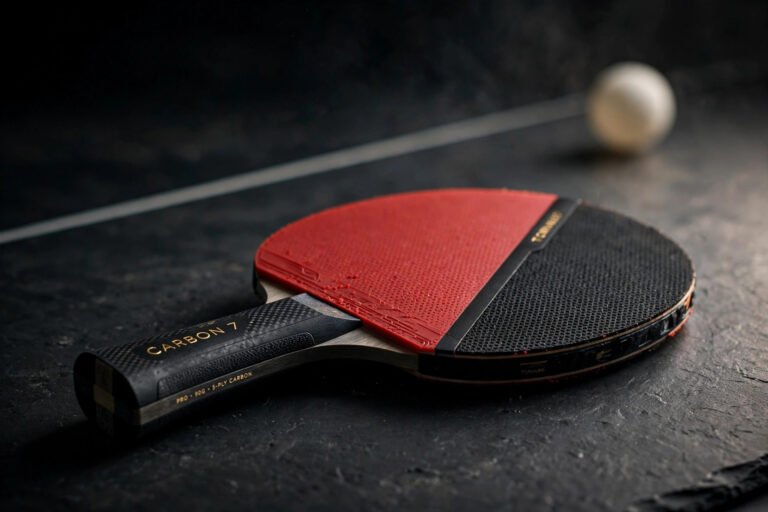
The senior player’s bat decision is a specifications decision. Once the game becomes about placement, rally craft and reading the ball early, the bats that fit are the ones their makers build lighter, rate control-first or all-round, and fit with handles shaped for a secure hold. This guide compares seven of them on exactly what their makers publish — total bat weight as each maker states it, rating figures inside each maker’s own scale, rubber names and sponge thicknesses, and handle shapes as makers offer them — and nothing else. Just the spec sheets, read properly.
⚡ TL;DR — The Short Answer
For the best all-round senior pick, buy the STIGA Summit — STIGA US publishes its weight at 159 grams, and control (80) is the leading figure in its maker’s own ratings, ahead of speed (65) and spin (52). The JOOLA Omega Control carries the highest control figure in the guide, 97 on JOOLA’s own 0–100 scale, and the Butterfly Timo Boll Bronze the most control-led Butterfly brief, rated 100 for control in Butterfly’s own figures for the line. The Donic Schildkröt Persson 600 is the cork-handle all-rounder, the Cornilleau Perform 600 the hollow-handle all-round pick, the STIGA Phoenix the balanced 159-gram step-up, and the Donic Schildkröt Waldner 800 the adjustable-balance option for the senior player who still plays an attacking game.
Quick Picks — Best Table Tennis Bats for Seniors at a Glance
A maker-published 159 g, with control leading STIGA US’s own ratings (80) on a 5-ply extra-light blade.
Control 97 in JOOLA’s own 0–100 system, on a 5-ply Basswood and Tungwood blade with 1.8 mm Vizon.
Butterfly rates the Bronze at Control 100 in its own figures — Addoy rubber on a thin 1.5 mm sponge.
A concave cork handle on an all-round brief: Speed 60, Spin 60, Control 70 in the maker’s Easy Choice system.
Cornilleau’s “all round racket” — 7.5 / 7 / 7.5 on its /10 scale, with a hollow Aero Soft handle.
Another maker-published 159 g, balanced 80 / 77 / 82 in STIGA US’s ratings on a balsa-based blade.
ABP lets you shift the balance point in the handle; 2.0 mm Vari Slick on a Tactic 5-ply.
In This Guide
The Senior Decision: Published Weight First, As Makers State It
Every bat decision trades mass against handling, but the senior player’s version starts in one place: the total weight the maker actually publishes. Most pre-made bats publish no weight at all — and the figures in listings are often a retailer’s measurement, or the weight of the parcel. This guide is organised around that problem honestly. Three of the seven cards carry a weight figure with a stated source: STIGA US publishes 159 grams for both the Summit and the Phoenix, and a specialist retailer’s Cornilleau spec table publishes 164 grams for the Perform 600, flagged as a retailer figure wherever it appears. The other four cards print “not published” — because their makers publish no bat weight — rather than borrowing a number from a listing. Where sources attached a packaged or gift-set weight to a model at build time, this file’s header notes record it, and the card ignores it.
Read the lighter builds in maker terms only: STIGA US calls the Summit’s blade 5-ply extra light and the Phoenix’s an ultra-light-weight balsa build; Cornilleau describes the Perform 600’s handle as hollowed out to be lighter. Those are construction descriptions — a ply layup, a wood choice, a hollow handle — and they are as far as this guide goes. A lighter published build is simply quicker to bring into position between shots in the short exchanges over the table where senior games are so often decided: the block, the push, the quick counter. The cards below are chosen on that published evidence — lighter all-round and control-leaning builds set against the standard offensive builds elsewhere in the same makers’ catalogues.
One boundary before the picks. This page owns the senior lightweight decision only. First-bat selection belongs to our guide to the best table tennis bats for beginners, the all-player field to our generic guide to the best table tennis bats, and the step-up rung to our guide to the best table tennis bats for intermediate players — read those for their decisions, and this page for the senior specification. The same lightweight logic in a neighbouring sport is covered by our guide to the best tennis rackets for seniors. None of the models carded in those guides is re-carded here. And if you are still building the strokes themselves, our how to play table tennis guide covers the technique these bats are specced to support.
Blade Classes, Sponge Thickness and Handle Shapes
The rating figures in this guide are never compared across brands, because the makers do not publish them on a shared scale. STIGA US and JOOLA each use their own systems, Butterfly publishes 0–100 figures for the Timo Boll line, Donic Schildkröt uses its Easy Choice system, and Cornilleau rates out of 10. A 97 from JOOLA and a 7.5 from Cornilleau are not two points on one line — they are positions inside two different catalogues. So each card prints its maker’s figures with the scale named, and uses them the way they can honestly be used: to place the bat inside its own maker’s range. Read that way, the set has a clear shape: control leads the published profile of the Summit (80, against a speed of 65), the Omega Control (97, against 75 for speed) and the Timo Boll Bronze (100, against 40 for speed), while the Waldner 800’s profile (80 / 80 / 60) is an attacking one — carded deliberately, for the senior player whose game is still built that way, and labelled as such in its card.
Sponge thickness is the second language of the senior brief, and the makers state it plainly. The set runs from the Timo Boll Bronze’s 1.5 mm Addoy — the thinnest fitment here, under the rubber Butterfly rates at Control 100 — through the 1.8 mm sponges of the Omega Control, the Persson 600 and the Perform 600, to the 2.0 mm fitments of the Summit, the Phoenix and the Waldner 800. Donic Schildkröt’s own pack copy explains the maker’s framing: the thicker the sponge, the more self-acceleration the bat has. That is the whole logic of this guide’s spread stated by a maker — thinner published sponges under the control-led cards, full 2.0 mm sponges where the brief is balance or attack — and every thickness printed here is the maker’s stated figure for that bat’s factory fitment.
Handles are a sizing and shape decision, stated as sizing and shape only. Every card here is a shakehand bat, in the two namings the makers use: STIGA US and JOOLA call the shape flared; Donic Schildkröt and Cornilleau’s tables use concave for the same shakehand flare; Butterfly’s markets split between the two words for the Bronze. Within that shape, three handles are genuinely different in construction. Donic Schildkröt’s Persson 600 pairs its concave shape with a cork handle surface — a material choice, printed as a material choice. The Waldner 800’s ABP handle contains a movable balance weight: unscrew the handle end, reposition the weight toward the blade or toward the handle end, and the bat’s balance point moves with it — a mechanical adjustment, described mechanically. And Cornilleau’s Aero Soft handle is hollow, which is how its maker accounts for part of the Perform 600’s build. Penhold players should note what the listings actually publish: no penhold version of any of these seven models is published in the listings checked at build time. Where makers do offer penhold handles — STIGA, for example, publishes penhold sizing for its Cybershape line — that is a different shortlist, and this guide reports the seven as their makers sell them.
ITTF status is printed per model, exactly as each maker states it — because the set genuinely splits. STIGA US describes both its cards’ rubbers as ITTF-approved; Butterfly’s Addoy is ITTF-approved; Donic Schildkröt’s pack data describes the Persson 600’s Prestige and the Waldner 800’s Vari Slick as ITTF-approved; Cornilleau describes the Perform 600’s covering as a four-star ITTF rubber. JOOLA states no ITTF status for the Omega Control on its product page, so its card prints “not stated” — a fact about the spec sheet, not a judgement on the bat. If you play sanctioned competition, check that line first.
The 7 Best Table Tennis Bats for Seniors, Compared
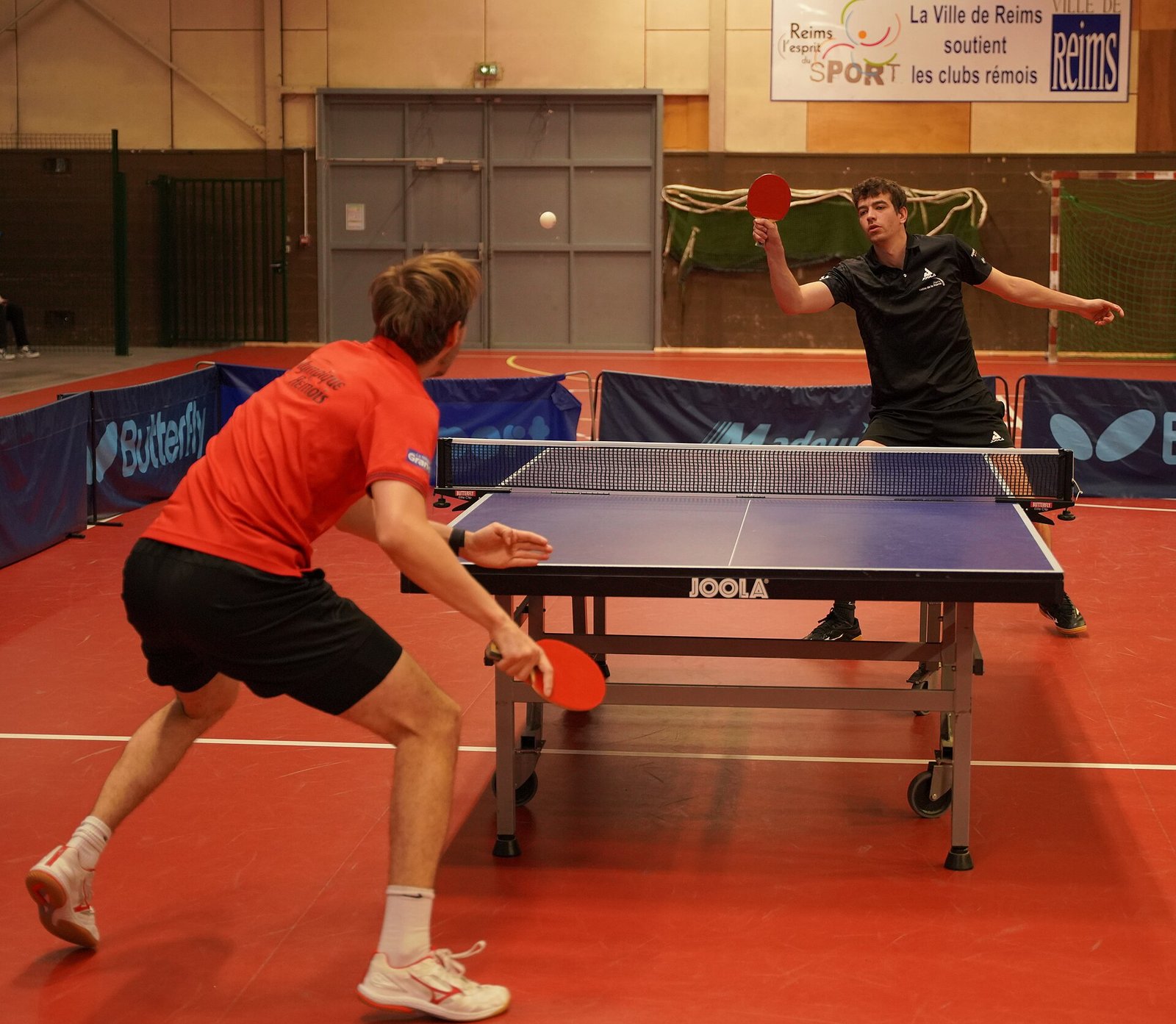
Seven bats, one shared brief — a lighter, easy-handling build as its maker publishes it, with control-leaning or all-round classes preferred and one attacking card. Ratings stay inside each maker’s own scale throughout.
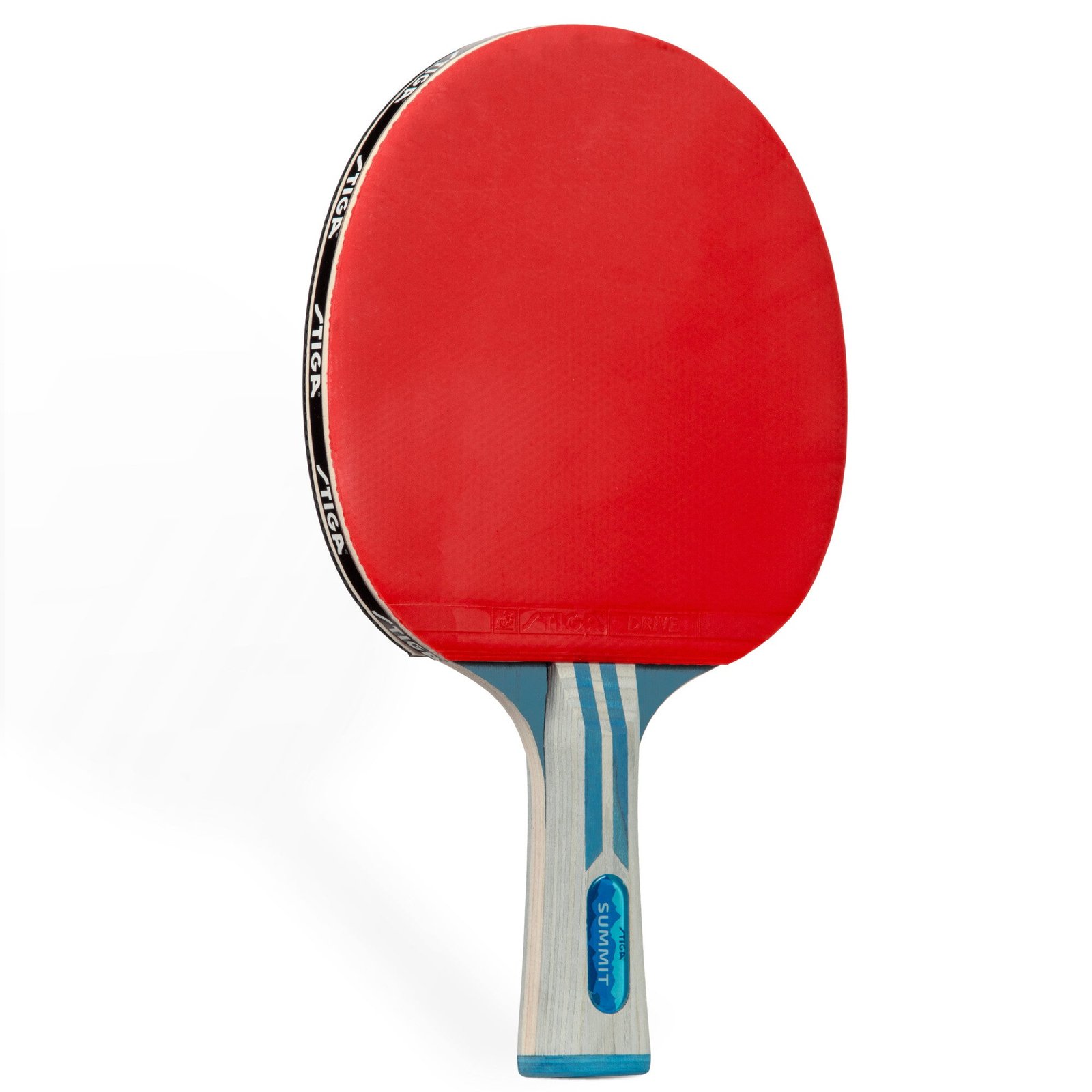
STIGA Summit
The complete senior specification — a maker-published 159 grams, control leading its maker’s own ratings, on a 5-ply extra-light blade.
Start with the two facts that lead this guide. STIGA US publishes this bat’s weight — 159 grams — one of only two maker-published weights in the set, so a player who cares about the number can plan around a fact instead of a retailer’s estimate. And in STIGA US’s own rating system, the Summit’s profile is control-led: Speed 65, Spin 52, Control 80 — the control figure is the highest of its three, the published shape of a handling-first brief. The construction matches: a 5-ply extra-light blade, in STIGA US’s own words, carrying the maker’s WRB and ACS technologies, a 2.0 mm sponge and a flared handle. STIGA US describes the rubber as smooth inverted and ITTF-approved, and positions the bat for tournament play.
One absence is printed as an absence: STIGA US publishes no rubber name for the Summit, so the card prints the rubber as the maker describes it and invents nothing — while everything this guide is organised around (weight, ply class, sponge, handle, the maker’s own ratings) is present and maker-stated. One distinction matters at the listing: the Summit is not the STIGA Pro Carbon carded in our intermediate guide — a different, carbon-built model with a different published profile (99 / 100 / 80 in the same maker system).
What we like
- A maker-published weight: 159 g — plan around a fact, not an estimate
- Control leads its maker’s own ratings (80, against Speed 65)
- A 5-ply extra-light blade, in the maker’s own description
- ITTF-approved rubber and a stated 2.0 mm sponge
Worth knowing
- STIGA US publishes no rubber name for this model
- Spin is the modest figure in its own system (52) — a control brief, by design
- Not the Pro Carbon from the intermediate guide — check the model name
As an Amazon Associate we earn from qualifying purchases.
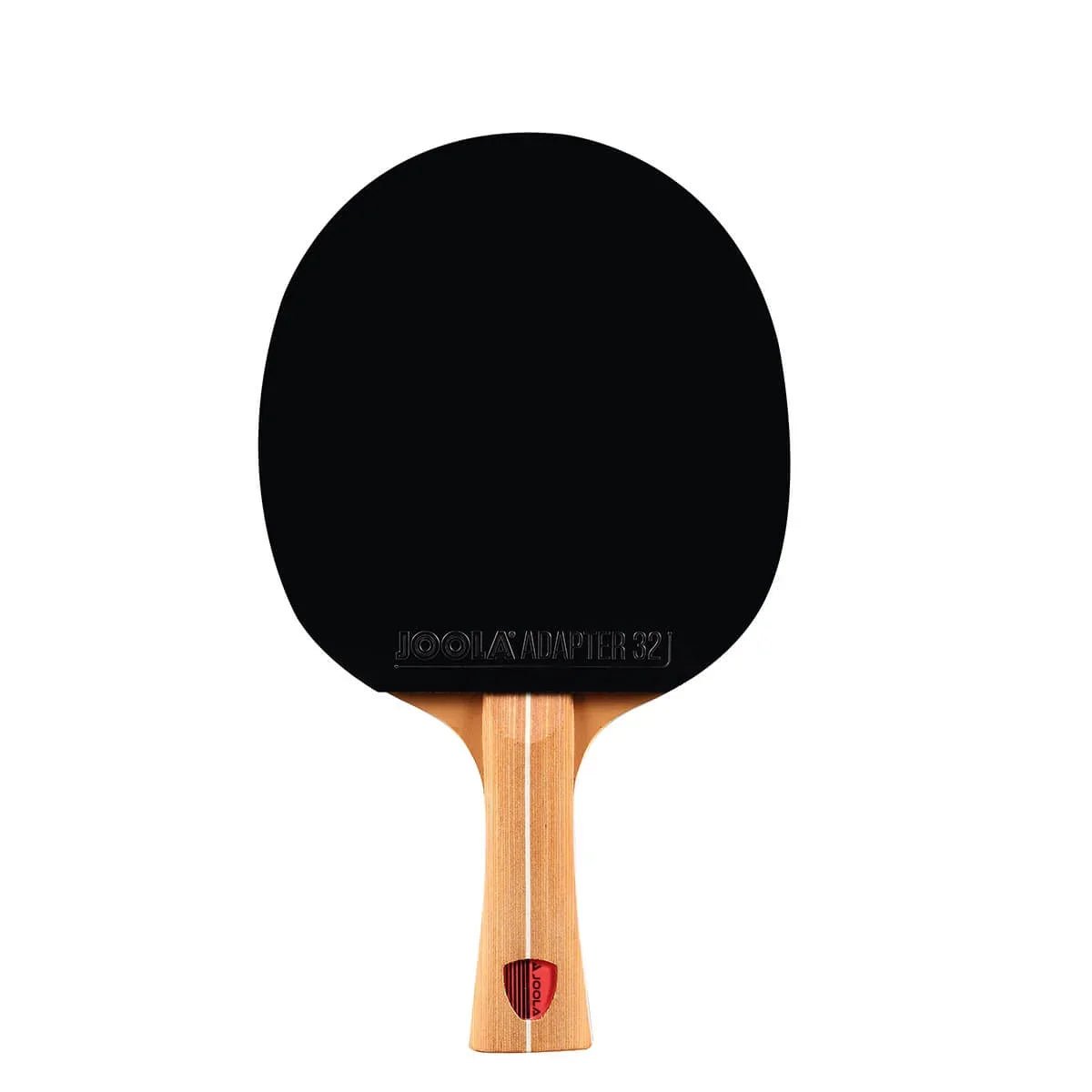
JOOLA Omega Control
The control-first card — Control 97 in JOOLA’s own rating system, on a 5-ply Basswood and Tungwood blade with 1.8 mm Vizon.
JOOLA publishes this bat’s profile in its own 0–100 system, and the profile is the point: Speed 75, Spin 75, Control 97. Inside JOOLA’s catalogue, that is a control figure in a different league from the bat’s own speed and spin figures — the published shape of a bat built for the short game. JOOLA’s own description follows the same brief: the Omega Control is assembled with pips-in Vizon rubber on both sides at 1.8 mm, the maker describes the softer sponge in terms of spin at lower speeds, and it describes the bat’s slower speed as suited to chopping, pushing and blocking — maker description, reported as such. The blade is a 5-ply wood construction, 5.7 mm thick, combining Basswood and Tungwood plies, which JOOLA names in its own listing. For the senior player whose game is built close to the table — pushes, blocks and placement over pace — this is the most direct card in the set.
Three fields are printed with their sourcing attached, because JOOLA’s own page leaves them open. The handle is flared per JOOLA’s Amazon brand listing; its product page does not name the shape. JOOLA states no ITTF status on its product page, so the card prints “not stated” rather than assuming one. And JOOLA publishes no weight — a 0.19 kg marketplace figure is a listing weight, not a maker bat weight, and is not printed as one. The core case stands: the highest control figure in this guide, in its maker’s own scale, on a named rubber and a named ply recipe.
What we like
- The highest control figure here — 97 in JOOLA’s own 0–100 system
- A named ply recipe: Basswood and Tungwood in a 5-ply, 5.7 mm blade
- Named Vizon rubber at a stated 1.8 mm, both sides
- JOOLA’s own brief suits the close-to-table game: push, block and chop
Worth knowing
- No maker-published weight
- JOOLA states no ITTF status for this model on its product page
- The handle shape comes from JOOLA’s brand listing, not its spec page — attributed in the card
As an Amazon Associate we earn from qualifying purchases.
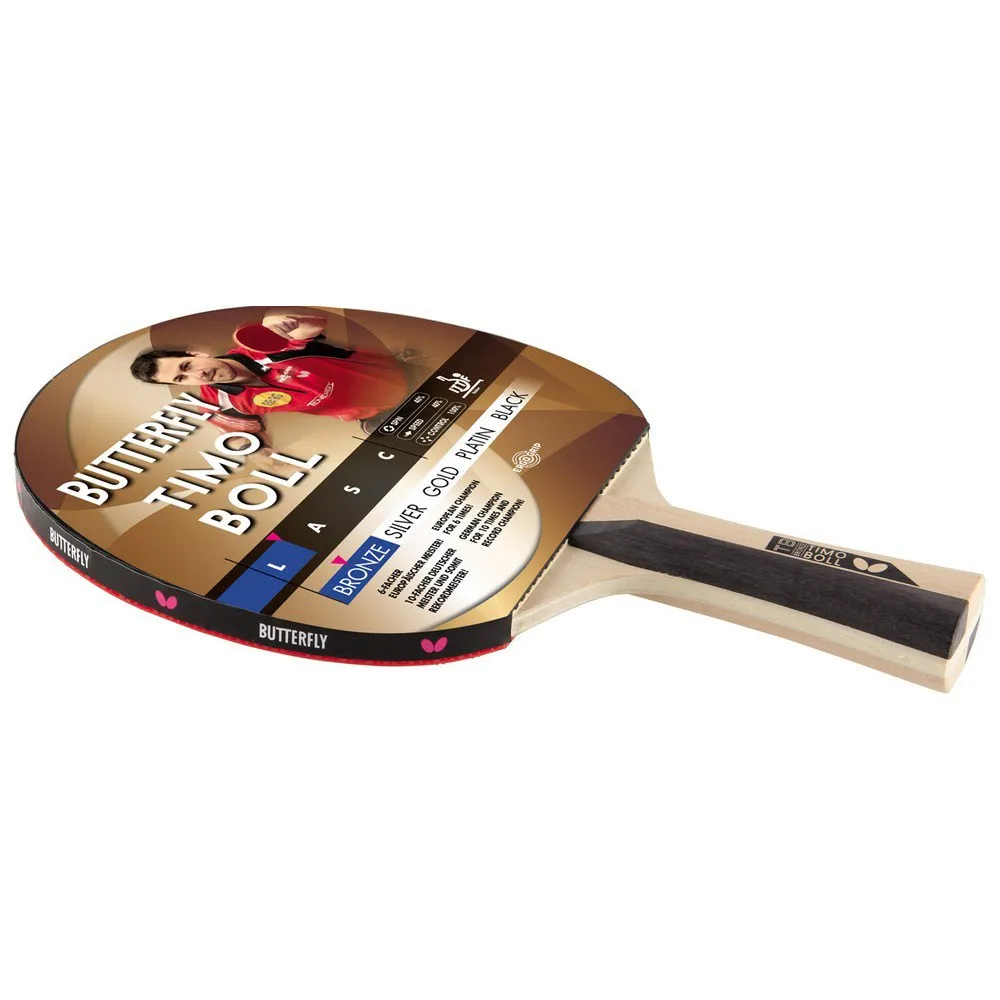
Butterfly Timo Boll Bronze
Butterfly’s easiest-handling brief — Control 100 in the maker’s own figures for the line, Addoy rubber on the thinnest sponge here.
Butterfly’s figures for this line are the most one-directional in the guide: the Timo Boll Bronze is rated Speed 40, Spin 40, Control 100 on Butterfly’s 0–100 scale — the maximum control figure the maker publishes for the line, with the speed and spin figures set far below it. That is a deliberate catalogue position, and the construction explains it: a 5-ply wood blade fitted with Butterfly’s Addoy rubber at 1.5 mm, the thinnest sponge in this set, with the rubber ITTF-approved. The handle carries Butterfly’s named Ergo Grip finish for the line. Butterfly positions the Bronze for recreational play; the specification, not the label, is the reason it is here — the lightest-touch published brief in this line, matched to a game built on keeping the ball on the table.
Two sourcing notes are printed rather than buried. The handle naming splits by market: UK listings for the Bronze say flared, while the Polish Butterfly distributor’s data says concave (CV) — the same shakehand shape under the two catalogue words the makers use, so the card prints both rather than choosing a market. And Butterfly publishes no weight for the model: a 167-gram figure in one retailer’s copy is explicitly labelled “including packaging” there, and this guide does not print a parcel as a bat. The family distinctions matter at the listing: the Bronze is not the Timo Boll Gold (Pan Asia rubber, rated 70 / 70 / 90 in the same system) and not the Silver — the Bronze’s 1.5 mm Addoy fitment and 40 / 40 / 100 profile are its own. Check the colour name and the article number, 85011.
What we like
- Control 100 — the maximum figure in Butterfly’s own ratings for this line
- The thinnest sponge here (1.5 mm) under a named, ITTF-approved rubber
- A simple, complete spec: 5-ply blade, named rubber, named handle finish
- The clearest family ladder to read — Bronze, Silver and Gold are rated in one system
Worth knowing
- No maker-published weight — the 167 g in circulation includes packaging
- Handle naming splits by market (flared in the UK, concave in EU distributor data)
- Butterfly positions it for recreational play — buy it for the spec, as this guide does
As an Amazon Associate we earn from qualifying purchases.
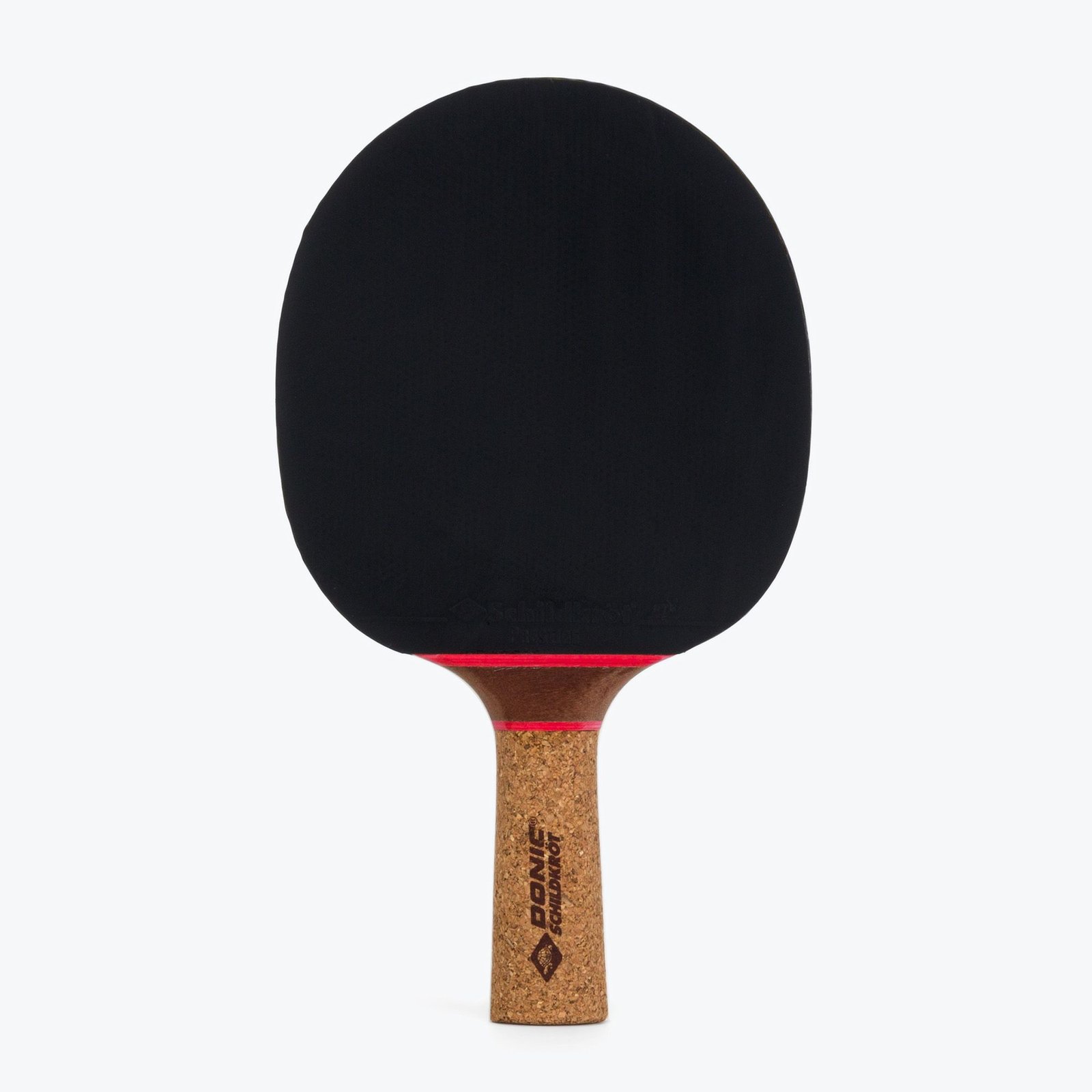
Donic Schildkröt Persson 600
The cork-handle all-rounder — a concave cork grip on Donic Schildkröt’s Allround brief, with control leading its Easy Choice figures.
One feature on this card exists nowhere else in the guide: a cork handle. Donic Schildkröt builds the Persson 600’s concave handle in cork, in its rounded ERGO shape — a material and shape choice, printed here exactly as that. The bat around it is the maker’s stated Allround brief: a Vario (5V) 5-ply wood blade, Prestige rubber at 1.8 mm which the maker pack describes as ITTF-approved, and Easy Choice figures of Speed 60, Spin 60, Control 70 — control leading the profile inside Donic Schildkröt’s own system, on the bat the maker describes as the one for learning all techniques with good spin. It is named for Jörgen Persson, and it is the card for the senior player who wants the all-round game — defence and attack in one published brief — with a handle material no other card here offers.
Three disciplines apply to this card, all recorded in this file’s header. First, the blade name: the majority of the maker pack data prints Vario (5V); one listing calls the wood Tactic (5T) — the card prints the majority pack figure and this guide does not hide the split. Second, the rubber name belongs to the standard pack: Prestige; Donic’s India site lists an “Elite” rubber for its regional version, which is a different market’s fitment and is not printed here. One Sportano listing for a different product code also prints a 1.6 mm sponge against the pack’s 1.8 mm — the pack figure is the one used. Third, the weight: no bat weight is published — the 360-gram figure attached to the gift set includes balls and case, and is never printed as a bat weight.
What we like
- A cork handle surface — unique in this set, in a rounded ERGO concave shape
- Control leads its maker’s own Easy Choice profile (70, against 60 / 60)
- A stated Allround brief: one bat for defence and attack, in the maker’s terms
- ITTF-approved Prestige rubber at a stated 1.8 mm
Worth knowing
- No bat weight is published — gift-set weights in listings are not the bat
- Blade naming splits in the sources (Vario 5V in the pack data; Tactic 5T in one listing)
- A regional version lists a different rubber name — check for Prestige on the listing
As an Amazon Associate we earn from qualifying purchases.
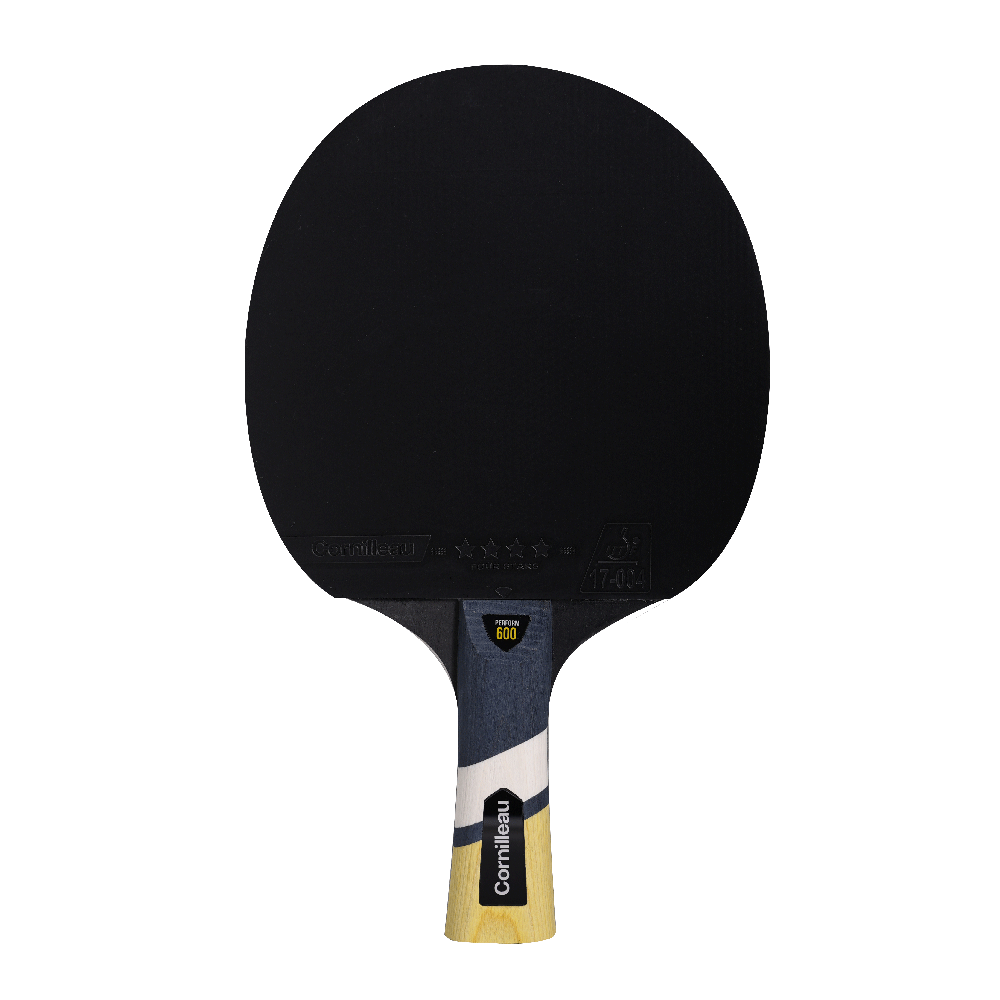
Cornilleau Perform 600
Cornilleau’s all-round card — the maker calls it “the all round racket,” with a hollow handle it describes as hollowed out to be lighter.
Cornilleau states this bat’s brief in one line on its own product page: the all round racket. Its /10 ratings in Cornilleau’s own system read Speed 7.5, Spin 7, Control 7.5 — an even profile, with control level with speed — over a 5-ply plywood blade and a four-star ITTF rubber on a 1.8 mm sponge. The handle is where this card earns its place in a seniors guide: Cornilleau’s Aero Soft design is a hollow handle, which the maker describes as hollowed out to be lighter — a construction description, in the maker’s own words, for how part of this build’s handling is achieved. Cornilleau names the blade concepts as AERO and OFC, with the Opti Feel Concept describing the alternating orientation of the wood fibres in each ply. For the senior player who plays a bit of everything, this is the balanced card.
The weight on this card carries the guide’s clearest label: Cornilleau publishes no weight for the Perform 600. The 164-gram figure printed here comes from the specialist retailer table-tennis-tables.co.uk’s Cornilleau spec table — a retailer-published figure, flagged as such in the chip and here, and the only retailer figure this guide prints. The handle word follows the same discipline: Cornilleau’s tables say flared, two retailers say concave — the same shape under the other catalogue word. The family distinction is absolute: the Perform 600 sits below the Perform 800 carded in our beginners guide and above the Perform 500 — check the number.
What we like
- A maker-stated all-round brief with an even published profile (7.5 / 7 / 7.5)
- A hollow Aero Soft handle, described by Cornilleau as hollowed out to be lighter
- A 4-star ITTF rubber at a stated 1.8 mm on a 5-ply blade
- Named blade concepts (AERO, OFC, Opti Feel) stated by the maker itself
Worth knowing
- Cornilleau publishes no weight — the 164 g here is a retailer-published figure, flagged as such
- Cornilleau publishes no rubber name — the 4-star rating is its specification
- Two sibling models (Perform 500 / 800) bracket it — check the number
As an Amazon Associate we earn from qualifying purchases.
STIGA Phoenix
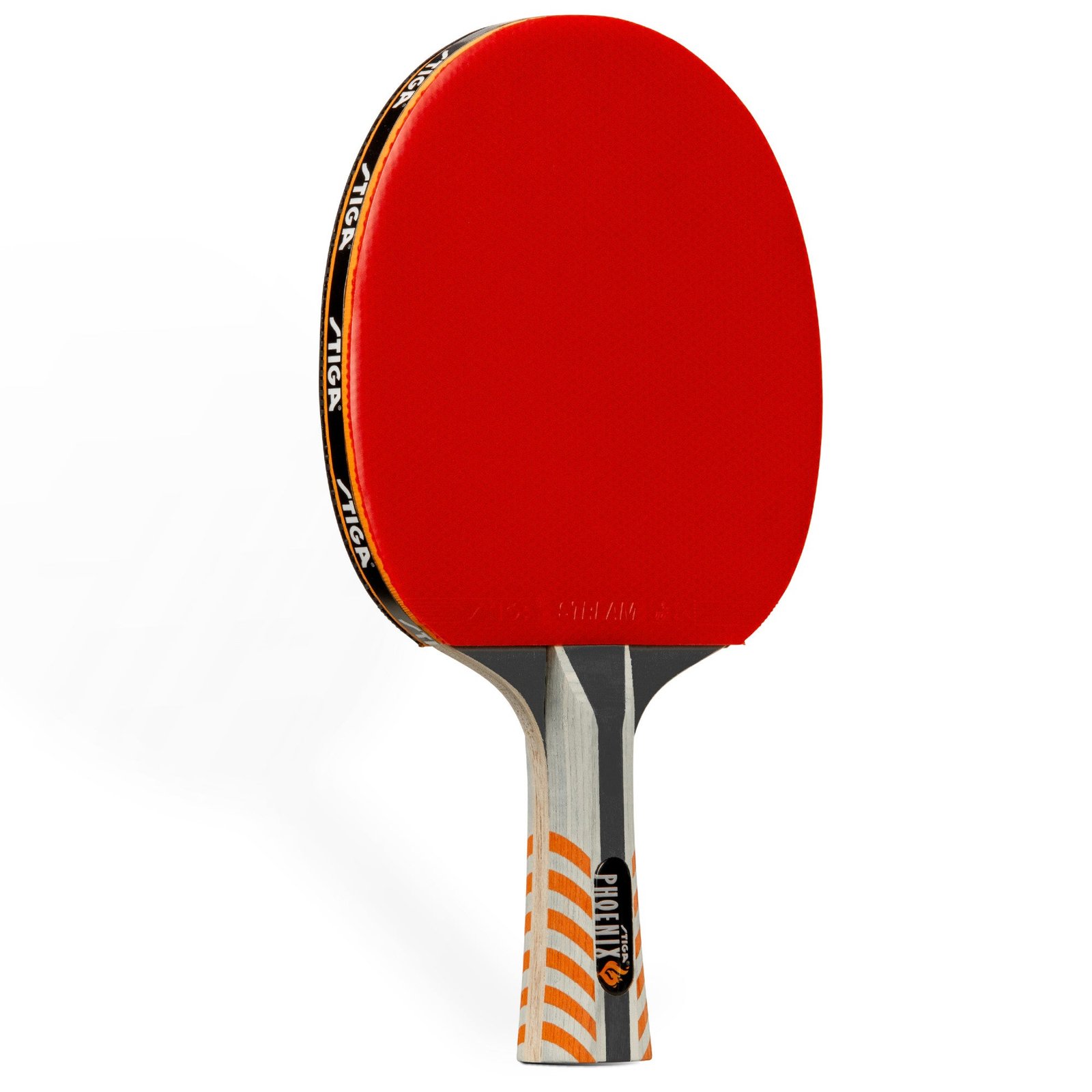
The balanced 159-gram card — the same maker-published weight as the Summit, with an even 80 / 77 / 82 profile for the all-court game.
The Phoenix answers the player who reads the Summit’s card and wants the same published lightness with a fuller game behind it. The weight is the same maker-stated fact — 159 grams, published by STIGA US in its own listing and comparison table — but the profile is different in kind: Speed 80, Spin 77, Control 82 in STIGA US’s own system, an even spread with control still, just, at the head of it. The blade is a 5-ply extra-light build that STIGA US describes as an ultra-light-weight balsa blade, carrying the maker’s WRB and Crystal technologies as STIGA names them, a 2.0 mm sponge and a flared handle. STIGA US describes the rubber as smooth inverted and ITTF-approved.
Read the two STIGA cards as two different models that happen to share a published weight, not two trims of one bat: the Summit pairs WRB with ACS and is rated control-led (65 / 52 / 80); the Phoenix pairs WRB with Crystal and is rated as the balanced all-court build (80 / 77 / 82). STIGA US publishes no rubber name for the Phoenix either, so the card prints the rubber as the maker describes it. Neither card is the Pro Carbon from the intermediate guide. If your game still covers the whole table — block, drive and counter in one rally — the Phoenix is the card written for it.
What we like
- A maker-published weight: 159 g, stated in STIGA US’s own table
- The most even profile here — 80 / 77 / 82, control still leading
- An ultra-light-weight balsa blade build, in the maker’s own description
- ITTF-approved rubber and a stated 2.0 mm sponge
Worth knowing
- STIGA US publishes no rubber name for this model
- A fuller pace profile than the Summit — the step-up, not the control-first, STIGA card
- Shares its published weight with the Summit — the models differ in ratings and technologies, so check the name
As an Amazon Associate we earn from qualifying purchases.
Donic Schildkröt Waldner 800
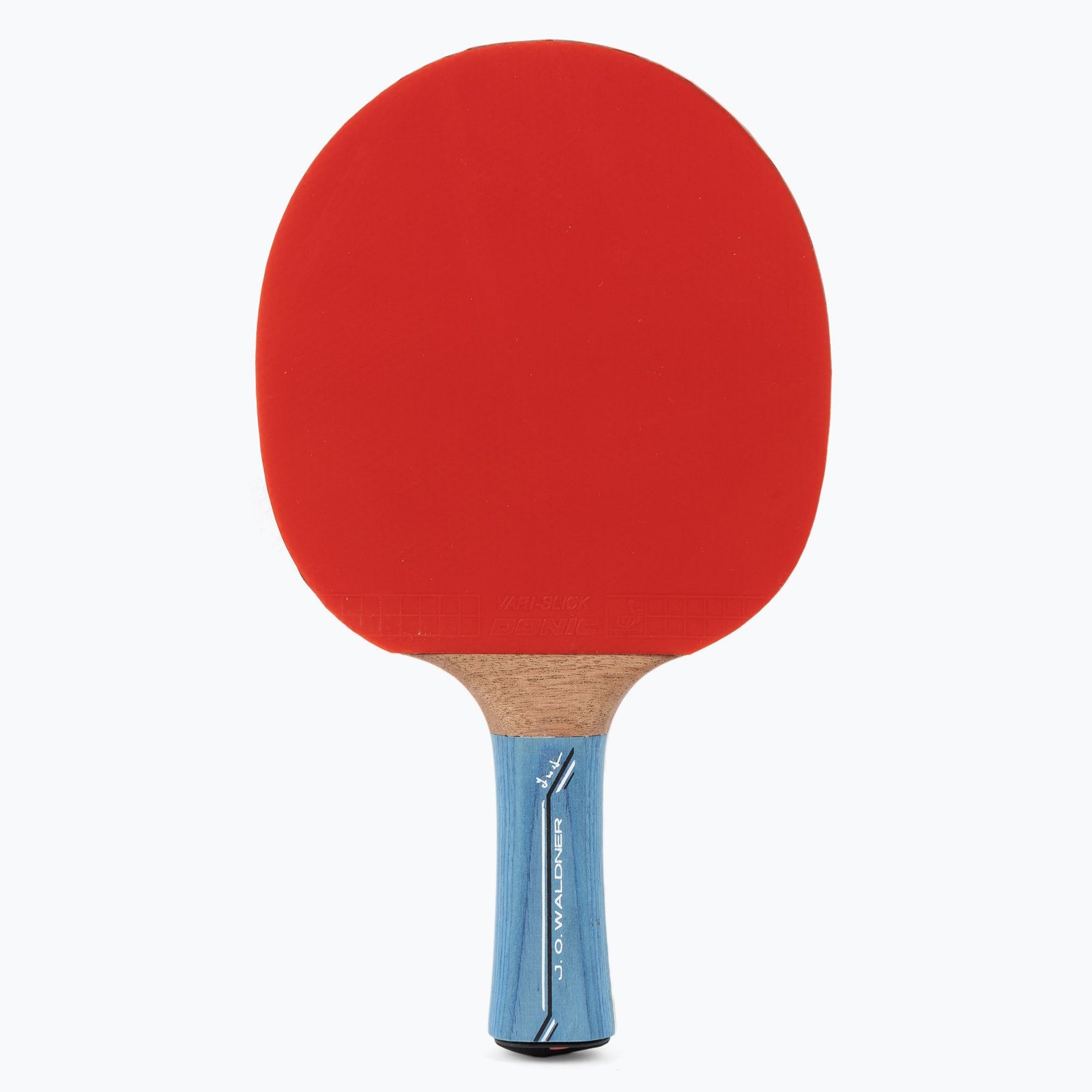
The attacking card, kept honest — an ABP handle that shifts the balance point, over 2.0 mm Vari Slick on a Tactic 5-ply.
Not every senior player wants the control end of the table, and this guide keeps one card for the player whose game is still built on attack — labelled as an attacking card from its first line. Donic Schildkröt’s maker pack classes the Waldner 800 as player type Attack, with Easy Choice figures of Speed 80, Spin 80, Control 60 in the maker’s own system: a Tactic (5T) 5-ply blade, Vari Slick rubber at 2.0 mm described by the pack as ITTF-approved, and a concave ERGO handle. The feature that earns its place in this guide is in that handle: ABP, an adjustable balance point. A weight inside the handle can be repositioned toward the blade end or toward the handle end, and the bat’s balance point moves with it — the maker’s pack describes the head-ward setting in terms of power and the handle-ward setting in terms of control. That is a mechanical adjustment, described mechanically: one bat, two balance settings, rather than a second purchase.
Three disciplines apply, all recorded in this file’s header. First, the brand and level lines: this is Donic Schildkröt, Donic’s leisure and pre-made arm, at Level 800 — and it is a different model from the Waldner 1000 carded in our intermediate guide, with a different rubber and sponge; the card does not borrow the 1000’s specification. Second, the current pack figures are the ones printed: Vari Slick at 2.0 mm — one retailer prints 2.1 mm and one older listing names an Alpha Slick rubber, both superseded by the current pack data reproduced across the listings checked. Third, the weight: no bat weight is published for the Waldner 800, and none is printed. Buy this card for what it verifiably is — the attacking brief with an adjustable balance — and check the article number, 754882, on the listing.
What we like
- ABP adjustable balance — a mechanical handle adjustment, unique in this set
- An honestly labelled Attack brief (80 / 80 / 60) for the attacking senior player
- ITTF-approved Vari Slick at a stated 2.0 mm on a named 5-ply blade
- A verifiable article number (754882) against the current pack specification
Worth knowing
- Control is the modest figure in its own system (60) — an attacking brief, by the maker’s design
- No bat weight is published
- Not the Waldner 1000 from the intermediate guide — check the level and article number
As an Amazon Associate we earn from qualifying purchases.
Side-by-Side Comparison Table
| Model | Best For | Weight (as published) | Rubber / Sponge | Maker Ratings (own scale) | Handle |
|---|---|---|---|---|---|
| STIGA Summit | Best overall | 159 g (maker-published) | Smooth inverted, ITTF-approved / 2.0 mm | 65 · 52 · 80 (STIGA US) | Flared |
| JOOLA Omega Control | Best control-first | Not published | Vizon / 1.8 mm | 75 · 75 · 97 (JOOLA 0–100) | Flared |
| Butterfly Timo Boll Bronze | Easiest handling | Not published | Addoy / 1.5 mm | 40 · 40 · 100 (Butterfly 0–100) | Concave (flared) |
| Donic Schildkröt Persson 600 | Best cork handle | Not published | Prestige / 1.8 mm | 60 · 60 · 70 (Easy Choice) | Concave, cork |
| Cornilleau Perform 600 | Best all-round | 164 g (retailer-published) | 4-star ITTF / 1.8 mm | 7.5 · 7 · 7.5 (Cornilleau /10) | Flared, hollow |
| STIGA Phoenix | Best balanced step-up | 159 g (maker-published) | Smooth inverted, ITTF-approved / 2.0 mm | 80 · 77 · 82 (STIGA US) | Flared |
| Donic Schildkröt Waldner 800 | Best adjustable balance | Not published | Vari Slick / 2.0 mm | 80 · 80 · 60 (Easy Choice) | Concave, ABP |
Read the weight column as this guide’s spine: two maker-published figures — both 159 grams, both STIGA US — one retailer-published figure, flagged as such, and four honest “not published” entries where the makers publish no bat weight at all. The ratings column is five separate catalogues, not one league table: STIGA US’s system, JOOLA’s and Butterfly’s 0–100 figures, Donic Schildkröt’s Easy Choice system and Cornilleau’s /10 scale each place their bat inside their own maker’s range. By published profile, the set ladders cleanly — three control-led cards (Summit, Omega Control, Bronze), two all-round cards (Persson 600, Perform 600), one balanced step-up (Phoenix) and one attacking card (Waldner 800). The sponge column shows the same ladder: 1.5 mm under the easiest-handling brief, 1.8 mm through the middle, 2.0 mm at the balanced and attacking end.
Buying Guide: Matching the Spec Sheet to Your Game
1. Start with the published weight — and know what “not published” means
The makers have done part of the sort for you, if you read the figures as printed. Where a maker publishes a total weight, it is a fact you can build on: 159 grams for both STIGA cards here. Where a specialist retailer’s table publishes one — 164 grams for the Perform 600 — it is printed flagged as a retailer figure. And where no figure exists, the card says “not published” — which tells you any gram figure a listing attaches to that bat is a measurement or a package weight, not a specification. A maker-published 159 and a packaged 360 from a gift set are not two points on one scale.
2. Choose your brief: control-led, all-round, balanced or attacking
The seven cards answer four versions of the senior game. If your points are won close to the table — pushes, blocks, placement — the brief is control-led: the Omega Control (Control 97 in JOOLA’s system), the Timo Boll Bronze (Control 100 in Butterfly’s) or the Summit (Control 80 in STIGA US’s). If you play a bit of everything, the brief is all-round: the Persson 600 or the Perform 600, both classed that way by their makers. If your game covers the whole table, the Phoenix’s even 80 / 77 / 82 is the balanced step-up. And if you still play on the front foot, the Waldner 800 is the attacking card — bought knowingly, with its maker’s own control figure of 60 printed rather than hidden.
3. Sponge thickness: read the ladder from 1.5 mm to 2.0 mm
Donic Schildkröt’s pack copy states the maker’s framing plainly — the thicker the sponge, the more self-acceleration the bat has — and this set is built along that ladder. The Bronze’s 1.5 mm fitment sits under the guide’s easiest-handling brief; the 1.8 mm sponges of the Omega Control, Persson 600 and Perform 600 are the middle of the ladder; and the 2.0 mm fitments of the Summit, Phoenix and Waldner 800 are its full-thickness end. Match the rung to your game rather than defaulting to the thickest: a senior player whose scoring shots are pushes and blocks is buying self-acceleration they do not use if they start at 2.0 mm, and the control-led cards exist precisely because the makers publish the thinner rungs.
4. Handles: shape first, then the three constructions that differ
Every card here is shakehand — flared in STIGA’s, JOOLA’s and Cornilleau’s vocabulary, concave in Donic Schildkröt’s and in Butterfly’s European data, for the same shape — so do not let the vocabulary split your shortlist, and do not assume a penhold version of any of these seven exists: none is published in the listings checked. Within the shakehand shape, choose on construction. The Persson 600’s handle surface is cork; the Perform 600’s is hollow; the Waldner 800’s contains the ABP balance weight you can reposition between head-ward and handle-ward settings. Those are three different physical answers to how a handle is built — pick the one whose description matches how you like a bat to sit in your hand, and treat the grip purely as what it is: a sizing and shape decision you make once, at the listing.
5. Check the exact model — this category runs on levels and numbers
Nearly every card here has a sibling with a similar name and a different brief: Timo Boll Bronze against the Gold (Pan Asia rubber, 70 / 70 / 90 in the same system); Perform 600 against the Perform 800 in the beginners guide and the Perform 500 below it; Waldner 800 against the Waldner 1000 in the intermediate guide; Persson 600 against regional versions listing a different rubber; Summit and Phoenix against each other and against the Pro Carbon. The level, the number and the article code are the specification — they carry the rubber, the sponge and the rating profile that put the bat in this guide. Confirm all of it on the actual listing before you pay: the full model name and level, the rubber name and sponge thickness against the card, and the ITTF line if you play sanctioned competition, since one maker here states no ITTF status for its card.
Frequently Asked Questions
What weight should a senior player look for in a table tennis bat?
Start with what the maker actually publishes, because most pre-made bats publish no total weight at all. In this guide, STIGA US publishes 159 grams for both the Summit and the Phoenix, and a specialist retailer’s Cornilleau table publishes 164 grams for the Perform 600, flagged here as a retailer figure. The other four cards print “not published” because their makers publish no bat weight — and any gram figure a listing attaches to those models is a retailer’s measurement or a package weight, not a specification. Choose between the published figures by brief: the 159-gram STIGA cards are the lightest maker-stated builds here, and the all-round and attacking cards without a published weight should be chosen on their classes, rubbers and handles instead.
Why can’t I compare speed, spin and control ratings between brands?
Because the makers do not publish them on a shared scale. STIGA US rates the Summit at Speed 65, Spin 52 and Control 80 in its own system; JOOLA rates the Omega Control at 75, 75 and 97 on its 0–100 scale; Butterfly rates the Timo Boll Bronze at 40, 40 and 100 in its figures for that line; Donic Schildkröt rates the Persson 600 at 60, 60 and 70 and the Waldner 800 at 80, 80 and 60 in its Easy Choice system; and Cornilleau rates the Perform 600 at 7.5, 7 and 7.5 out of 10. Each set of figures places its bat inside its own maker’s range and nowhere else. Compare bats across brands on construction instead: published weight, ply recipe, rubber name, sponge thickness and handle shape.
Is a thinner sponge better for a senior player’s game?
It depends on where your points are won, and the makers state the trade themselves: Donic Schildkröt’s pack copy explains that the thicker the sponge, the more self-acceleration the bat has. This guide’s ladder runs from the Timo Boll Bronze’s 1.5 mm Addoy — under the rubber Butterfly rates at Control 100 — through the 1.8 mm fitments of the JOOLA Omega Control, the Donic Schildkröt Persson 600 and the Cornilleau Perform 600, to the 2.0 mm sponges of the STIGA Summit, the STIGA Phoenix and the Donic Schildkröt Waldner 800. A close-to-table game of pushes, blocks and placement maps to the thinner end; a game built on driving and counter-hitting maps to the full-thickness end. Neither end is a default — the rung is the decision.
Do any of these senior bats come in a penhold version?
None of the seven publishes one in the listings checked at build time. All seven are shakehand bats — STIGA US, JOOLA and Cornilleau use the word flared for the shape, and Donic Schildkröt and Butterfly’s European data use concave, for the same shakehand flare. That is a statement about these models’ published ranges, not about the brands’ wider catalogues: some makers publish penhold handles in other lines, STIGA’s Cybershape range among them. Penhold players should build a separate shortlist from models whose makers publish a penhold variant, rather than assuming one of these seven exists in that handle.
What is the difference between the STIGA Summit and the STIGA Phoenix?
They are two different models that share one published fact: STIGA US publishes 159 grams for both. Beyond the weight, their spec sheets diverge. The Summit is the control-led card — a 5-ply extra-light blade with WRB and ACS technologies, rated Speed 65, Spin 52 and Control 80 in STIGA US’s system. The Phoenix is the balanced step-up — a 5-ply extra-light balsa build with WRB and Crystal technologies, rated Speed 80, Spin 77 and Control 82. Both publish a 2.0 mm sponge, a flared handle and an ITTF-approved smooth inverted rubber whose name STIGA US does not publish. Choose the Summit for the control-first brief, the Phoenix for the all-court game — and check the model name, because the shared weight makes the two easy to confuse on a listing.
What does the ABP handle on the Donic Schildkröt Waldner 800 actually do?
ABP is Donic Schildkröt’s adjustable balance point system, and it is a mechanical feature: a weight inside the concave ERGO handle can be repositioned toward the blade end or toward the handle end, and the bat’s balance point moves with it. The maker’s pack describes the head-ward setting in terms of power for an attacking style and the handle-ward setting in terms of more accurate, controlled play. It is described in this guide in those mechanical terms only — one bat offering two balance settings without a second purchase. The Waldner 800 around it is the guide’s attacking card: a Tactic 5-ply blade, Vari Slick rubber at 2.0 mm, and Easy Choice figures of Speed 80, Spin 80 and Control 60.
What is the difference between this guide and the beginners and intermediate bat guides?
The beginners guide owns first-bat selection — the models a new player learns the strokes with — and the intermediate guide owns the step-up rung for a progressing club player. This guide narrows the same sport to one decision: the lighter, easy-handling builds the makers publish, compared on stated weights, control-leaning and all-round classes, sponge thicknesses and handle shapes for the senior game of placement, rally craft and quick handling. The generic best table tennis bats guide owns all-player selection across every level. No bat from those guides is re-ranked here, and none of this guide’s seven is carded there — read those pages for their decisions, and this page for the senior specification.
The Verdict
Buy the specification, not the story. The STIGA Summit is the complete senior answer — a maker-published 159 grams with control leading its maker’s own ratings. The JOOLA Omega Control carries the guide’s highest control figure and the Butterfly Timo Boll Bronze its easiest-handling brief, while the Donic Schildkröt Persson 600 is the cork-handled all-rounder and the Cornilleau Perform 600 the hollow-handled one. The STIGA Phoenix is the balanced step-up at the same published 159 grams, and the Donic Schildkröt Waldner 800 the honestly labelled attacking card with an adjustable balance. Seven bats, four honest decisions — published weight, maker class, sponge thickness and handle shape — every one of them printed as its maker states it.
Affiliate disclosure: AliShuttler is a participant in the Amazon Services LLC Associates Program. Links marked “Check Price on Amazon” are affiliate links — if you buy through them, we may earn a commission at no additional cost to you. Every specification in this guide is taken from the manufacturer’s own published listings, checked at build time in 2026; weights, blade classes, rubbers, sponge thicknesses and ratings are printed exactly as their makers state them, each rating in its own maker’s scale, and the one retailer-published weight is flagged as such wherever it appears.