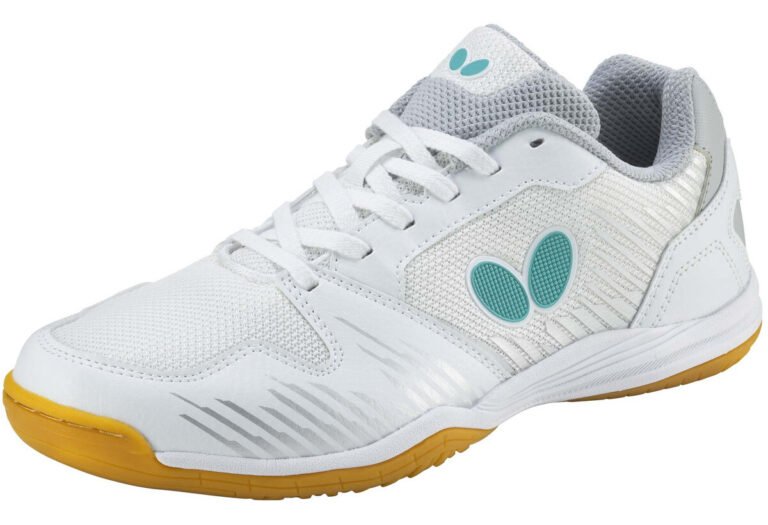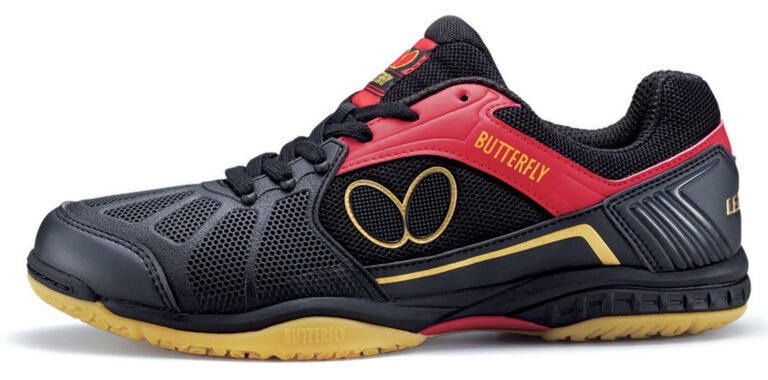

Seven table tennis shoes chosen on one honest measure: verified weight. Maker-stated grams with their size basis, named cushioning systems and thin grippy outsoles for indoor floors — and where a maker publishes no weight, the card says so instead of borrowing a number.
Table tennis shoes are thin and light by design — low profiles, flexible uppers, gum rubber outsoles built for hall floors. So a “lightweight” roundup that just lists seven popular models proves nothing. This guide takes the harder route: it ranks lightness itself. Every shoe below was checked against manufacturer or retailer listings on build day, and it made the cut only if its lightness genuinely verifies — either as a maker-stated weight with its size basis, a clearly-labelled retailer figure, or a lightweight design the maker or specialist retailers explicitly describe. Shoes that failed that bar were left out, including the ones already ranked in our other guides: our pillar best table tennis shoes comparison, the women’s, beginners’, intermediate players’ and advanced players’ guides are summarised and linked, never re-carded. If you are still learning the footwork these shoes are built for — the chasse step, the cross-step, the quick pivot — our how to play table tennis guide covers the movement patterns first.
Two things this guide will not do, so you know where you stand. It will not dress a heavy shoe in lightweight adjectives: Mizuno’s Wave Medal 8, for example, carries a maker-stated 275 g, but Mizuno’s own lineup positions it as the stability flagship — the heaviest of the brand’s standard table tennis models — so it is not a “lightest” pick. The ASICS Gel-Blade 8 is a fine indoor shoe, but it is a 296 g squash and badminton shoe, not a table tennis shoe, and the adidas Speedex 23 is a boxing shoe with no published weight at all. And it will not invent grams where the makers publish none: Mizuno, Butterfly, Victas, GEWO, Yasaka and andro all keep their shoe weights off the official spec sheets for most of the models here, so the cards below print “not published” where that is the truth, and name the size basis wherever a figure exists. Light is fast — but only when the number on the card is real.
TL;DR — The Short Version
Buy the Mizuno Wave Drive Neo 3 if you want the lightest verified figure here: 255 g on a retailer’s listing, with Mizuno’s own copy promising a lighter, more flexible, barefoot-feeling Drive. Buy the Butterfly Lezoline Groovy for the thinnest, most barefoot-feeling ride at ~265 g. Buy the Butterfly Lezoline Vilight for the original lightweight Lezoline concept — grippy outsole, light flexible midsole — at ~270 g in EU 43. Buy the Victas V-Shoes 614 if breathability matters as much as weight: side air inlets that save grams and move air. Buy the GEWO Speed-Flex Two for the flattest profile here — a direct floor feel on a two-zone natural rubber sole. Buy the Yasaka Jet Impact Neo for the durability-first lightweight build: PU and microfiber over a rubber outsole. And buy the andro Cross Step 3 if you want lightness with midfoot stabilisation — the TPU+ core keeps the light shoe from feeling loose on direction changes.
Quick Picks
In This Guide
- The weight decision: grams, size basis and who publishes them
- What a speed-first player should check before buying
- Mizuno Wave Drive Neo 3
- Butterfly Lezoline Groovy
- Butterfly Lezoline Vilight
- Victas V-Shoes 614
- GEWO Speed-Flex Two
- Yasaka Jet Impact Neo
- andro Cross Step 3
- Side-by-side comparison
- Lightweight buying guide: five checks before you pay
- Frequently asked questions
- The verdict
The Weight Decision: Grams, Size Basis and Who Publishes Them
Weight is the one shoe spec that looks like a fact and behaves like a rumour. A number printed without a size basis is nearly meaningless: a 270 g figure for a EU 43 is not the same shoe as a 270 g figure for a EU 46, because the materials scale with the size. Mizuno does this properly — its Japan listings give weight per shoe at 26.0 cm, one shoe, stated plainly — which is why the Mizuno figures in this guide are the cleanest. Butterfly, Victas, GEWO, Yasaka and andro publish no weights for the models carded here, full stop. That is not a scandal; it is the industry’s habit. It just means the honest card prints “not published” and describes what the maker does say about lightness, rather than smuggling in a number from a spreadsheet.
The second distinction is maker-stated versus retailer-stated. A maker-stated weight comes from the brand’s own product page — Mizuno’s 235 g for the Wave Drive 9, or the per-shoe-at-26.0-cm figures on Mizuno Japan’s lineup table. A retailer-stated weight comes from a shop’s spec sheet: contra.de’s 255 g for the Wave Drive Neo 3, the ~265 g for the Butterfly Lezoline Groovy, the ~270 g in EU 43 for the Lezoline Vilight. Retailer figures are not inventions — they are measurements or maker data republished by specialists — but they are one step removed from the source, so this guide labels them every time. When you see “255 g (retailer’s figure)” on a card, read it as exactly that: a real number from a real specialist listing, not the maker’s own page.
The third point is the category itself. The honest baseline for table tennis shoes is roughly 200–300 g per shoe — the industry’s own market data puts the current average under 300 g, and the whole category is built thin: low profiles, minimal heel lift, flexible uppers, gum rubber. That means “lightweight” inside the category is a relative claim. A 296 g indoor shoe is light for squash; in this guide it is the heavyweight, which is why the Gel-Blade 8 did not make the cut. Within the set below, the verified figures run from 255 g to ~270 g — a genuinely light tier, not just the category average with marketing on top.
Finally, the shape of the trade-off. Light shoes buy speed by removing material: thinner midsoles, lighter uppers, less structure. What you give up is cushioning depth and, sometimes, the midfoot structure that holds the shoe together on hard lateral plants. That is the real decision this guide frames. The andro Cross Step 3 exists because of it — lightness with a TPU+ core doing the stabilisation the missing grams would otherwise provide. The GEWO Speed-Flex Two exists at the other end — flat, minimal, direct. Neither is wrong; they are answers to different feet and different games. Read the cards as a spectrum, not a podium.
What a Speed-First Player Should Check Before Buying
Outsole: thin gum rubber, non-marking, matched to hall floors. The table tennis outsole is a thin layer of natural or synthetic rubber built for one surface: the indoor hall floor — wood, synthetic or the occasional slippery community-hall varnish. Every card below names the outsole as its maker states it: the GEWO’s two-zone natural rubber with GRIP-DOTS for lateral sidesteps and a rotational forefoot zone, the Victas V-Shoes 614’s grippy non-marking compound that holds even on poor floors, the Butterfly anti-skid KPU and rubber soles, the Yasaka rubber outsole. Non-marking matters because halls enforce it — a shoe that marks the floor gets you benched, not just embarrassed. Thin matters because stack height is distance between your foot and the floor, and table tennis footwork is all about staying close to it.
Flexibility for the chasse and the cross-step. Table tennis moves sideways. The chasse step — the shuffling lateral step that keeps the body square to the table — and the cross-step for wide balls both load the shoe in bending and torsion, not in straight-line impact. That is why Mizuno builds the Drive line around “light weight, flexibility, and barefoot feel” as one concept, and why Butterfly’s Vilight concept pairs a “light and flexible midsole” with a grippy outsole. When a card says flexible, read the mechanism: Mizuno’s new Drive sole, Butterfly’s EVA midsoles, the Victas reduced-weight construction. A shoe that bends with the forefoot on pivots keeps you fast; a shoe that fights the bend slows every step.
Cushioning systems: learn the makers’ names. Light does not mean unprotected — it means the protection is named and minimal. The cards name each system exactly as its maker does: Mizuno’s midsole foams in the Drive line, Butterfly’s EVA inner soles and B-family systems, GEWO’s flat high-density phylon midsole, the andro 3D sole that cushions midfoot and rear while keeping the forefoot fast. A thin EVA midsole absorbs the landing shock of constant small jumps without the stack height of a running shoe. Read cushioning as philosophy — plush, firm, flat, responsive — and match it to your session length: the longer the evening, the more the thin shoes ask of your feet.
Upper: mesh, microfiber and the grams they save. The upper is where most of the weight difference lives. Butterfly’s Groovy and Vilight use mesh combined with reinforcing materials and synthetic leather — the mesh saves grams, the reinforcement keeps the lateral structure. Mizuno’s Neo 3 uses a bootie structure that wraps the foot with fewer separate panels, and non-connected eyelets that let the lacing adapt. The GEWO’s High-Peel PU is a fine-textured surface that stays dimensionally stable without heavy overlays. The Yasaka pairs PU and microfiber with breathable mesh. Ventilation is the bonus: the Victas side air inlets and the andro ventilation zones move air while saving the grams a solid panel would cost.
Stack height and drop: how close to the floor. Table tennis shoes run low — single-digit millimetre stacks in the forefoot, modest heel lift. Mizuno publishes the Neo 3’s stack as 14/23 mm and the Drive 9’s as 9.0 mm: numbers that tell you the shoe is built for ground feel, not for heel striking. The GEWO Speed-Flex Two’s whole concept is the flat midsole — maximum floor contact. Low stack is the other half of the barefoot-feel promise alongside low weight: less shoe between foot and floor means faster proprioception on the tiny adjustment steps that decide rallies. If you come from cushioned court shoes, the first session in a true lightweight will feel almost bare — that is the design, not a defect.
The Picks: 7 Lightweight Table Tennis Shoes Compared
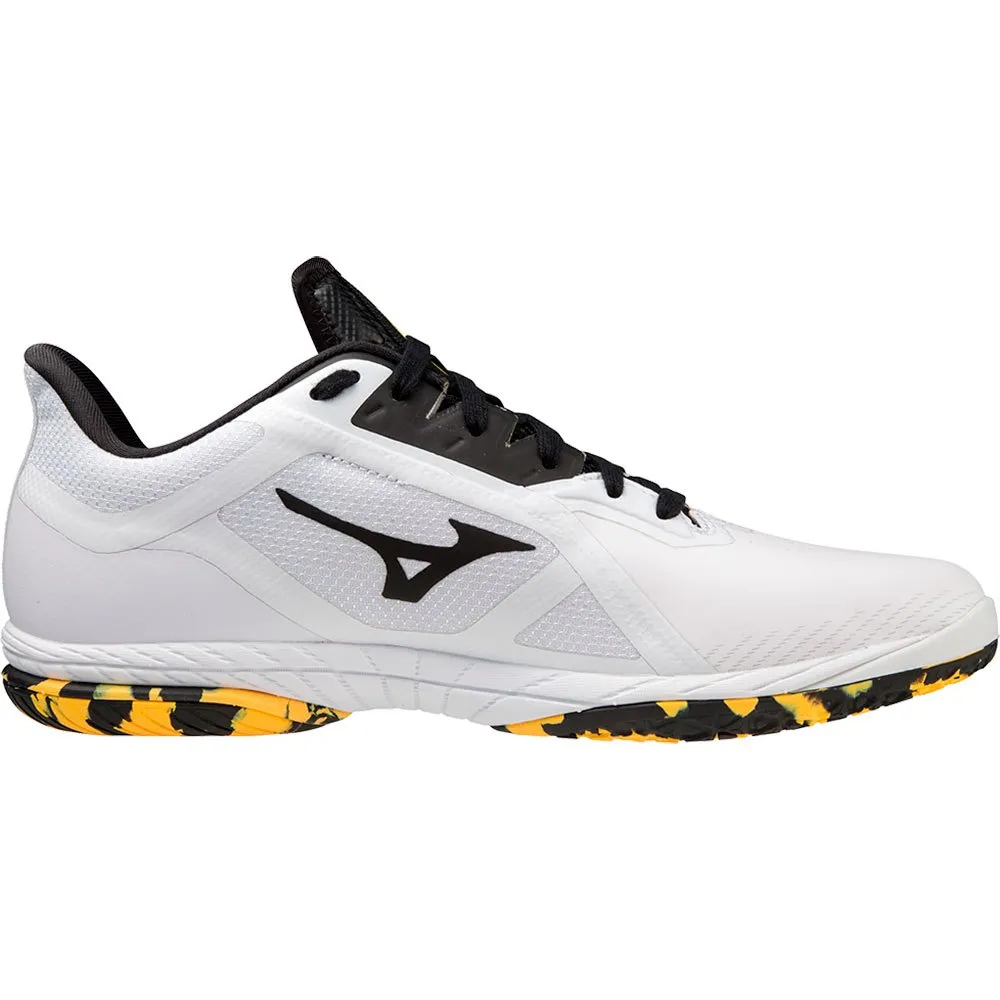
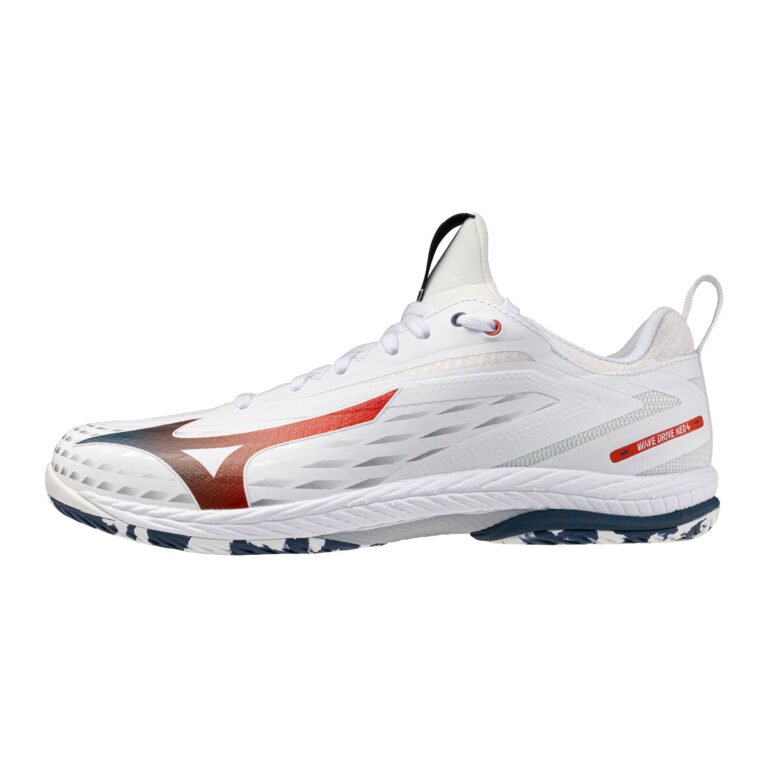
Mizuno Wave Drive Neo 3
The lightest verified figure in this guide: 255 g on a specialist retailer’s listing, with Mizuno’s own copy promising a lighter, more flexible, barefoot-feeling Drive.
The Wave Drive Neo 3 is the purest expression of Mizuno’s Drive philosophy: lightweight, flexible, barefoot feel, stated as one idea. Mizuno’s own copy says the next bootie structure gives a better fit and that the shoe has been made lighter than its predecessors, with the whole update aimed at enhancing “the light weight, flexibility, and barefoot feel for shoes that increase the performance of top players”. The new sole is built for both durability and flexibility — the two properties a table tennis outsole has to deliver at once — and the non-connected shoelace eyelets let the lacing adapt to the foot instead of forcing it. Mizuno lists the Neo 3 under Table Tennis on its European site, and the style code is 81GA2200.
On the number: 255 g is the figure a German table tennis specialist prints for this shoe, and it is labelled as such because Mizuno publishes no weight for the Neo 3 on its own pages — unlike the Drive 9’s maker-stated 235 g, this one comes one step removed from the source. The stack height Mizuno does publish, 14/23 mm, confirms the low, fast profile. One naming caution, because the Drive family is crowded: the intermediate guide cards the Wave Drive Neo 4, a different model — check the generation digit when ordering. Buy the Neo 3 if the brief is maximum lightness with the Drive line’s barefoot character: the lightest figure this guide could verify, from the maker that treats light, flexible and barefoot as a single design goal.
Pros
- 255 g on a specialist retailer’s listing — the lightest verified figure here
- Mizuno’s Drive concept stated plainly: lighter weight, flexibility, barefoot feel
- Bootie structure plus non-connected eyelets for an adaptive, wrap-like fit
- New sole built for durability and flexibility; low 14/23 mm stack
Cons
- Mizuno publishes no weight for the Neo 3 — the 255 g figure is a retailer’s
- The intermediate guide’s Neo 4 is a different model — check the generation
- Maximum-light philosophy means minimal structure: long-session players should read the trade-off section
As an Amazon Associate we earn from qualifying purchases.
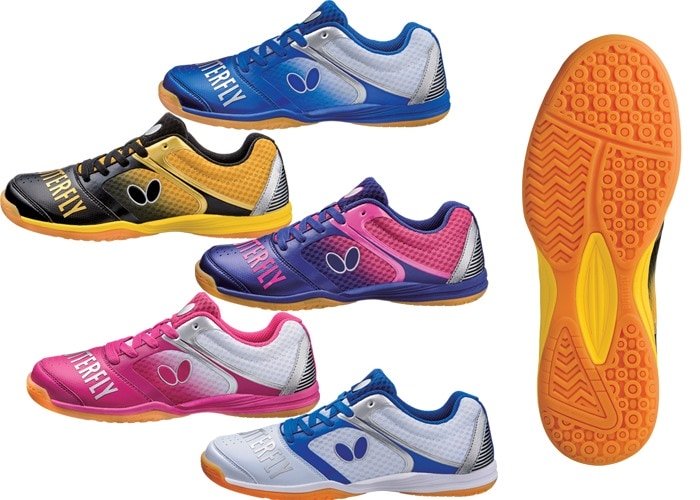
Butterfly Lezoline Groovy
The thinnest ride in the Butterfly line: ~265 g with a thin midsole built for a barefoot feel and an anti-skid KPU outsole.
The Lezoline Groovy is Butterfly’s answer to the player who wants to feel the floor. The concept is the thin midsole: an EVA inner sole kept deliberately slim so the foot sits close to the hall surface, which is where the “barefoot” description in the retailer copy comes from — not a marketing flourish but a stack-height fact. The outsole pairs an anti-skid KPU compound with rubber for the grip table tennis demands on indoor floors, and the whole construction is built from lightweight materials that keep the shoe in the ~265 g tier. It comes in the full Lezoline colour spread — black, blue, navy, pink, white — so the lightest Butterfly here is also the most colour-flexible.
At ~265 g it sits just above the Mizuno card on the scale and just below it on structure: the Groovy is the more minimal shoe, trading midsole depth for ground feel. That is a real choice with a real consequence — players who like to feel every adjustment step will love it; players who want cushioning under a long evening should look at the Vilight or the andro cards. Butterfly publishes no weight for the Groovy, so the ~265 g figure is labelled as a retailer’s. Buy the Groovy if barefoot feel is the priority: the thinnest, most direct Butterfly in the lightweight tier.
Pros
- ~265 g — the lightest Butterfly figure this guide could verify
- Thin EVA midsole for a genuine barefoot, close-to-the-floor feel
- Anti-skid KPU outsole with rubber for indoor-floor grip
- Five colourways — the widest choice in this guide
Cons
- Butterfly publishes no weight — the ~265 g figure is a retailer’s
- Minimal midsole means minimal cushioning: not the long-session pick
- Lightweight construction asks more of the foot over a full evening
As an Amazon Associate we earn from qualifying purchases.
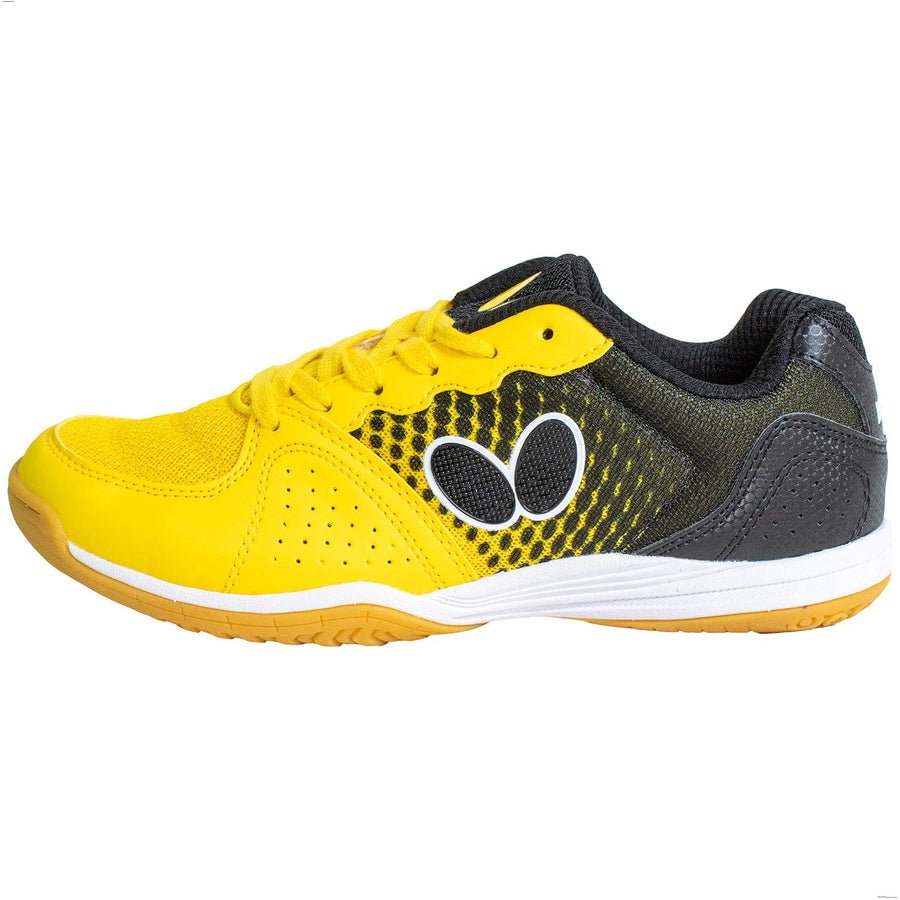
Butterfly Lezoline Vilight
The original lightweight Lezoline concept: ~270 g in EU 43, a grippy outsole, and a light, flexible midsole built for quick, precise movements.
The Vilight is the shoe Butterfly’s lightweight concept was written for. The maker’s concept statement is worth quoting in full because it is the whole design brief: a “lightweight model for quick and precise movements”, equipped with a grippy outer sole, a light and flexible midsole, and a lightweight but tough upper combining mesh and reinforcing materials. The upper pairs synthetic fiber and artificial leather; the sole is rubber and EVA; the style number is 8060 and the size run is a full 34–47 EU. Retailers who list the weight put it at about 270 g in a EU 43 — labelled here as a retailer’s figure, since Butterfly publishes none.
The Vilight sits between the Groovy’s minimalism and a cushioned trainer: more midsole than the Groovy’s thin EVA, more flex than a structured shoe, and the mesh-and-reinforcement upper is the classic lightweight compromise — grams saved where they can be, structure kept where it matters. One naming caution: the beginners guide cards the Lezoline Vilata, which is the wider redesign of the Vilight — a different model, so check the name when ordering. Buy the Vilight if you want the balanced lightweight: the concept shoe of the Lezoline light line, flexible rather than flat, grippy rather than minimal.
Pros
- Butterfly’s own lightweight concept: grippy outsole, light flexible midsole
- ~270 g in EU 43 on specialist retailer listings — a verified light figure
- Mesh plus reinforcement: grams saved without giving up lateral structure
- Full 34–47 EU size run under style 8060
Cons
- Butterfly publishes no weight — the ~270 g figure is a retailer’s, on a stated size basis
- The beginners guide’s Vilata is a different model — check the name
- Middle of the weight table here: lighter options exist above
As an Amazon Associate we earn from qualifying purchases.
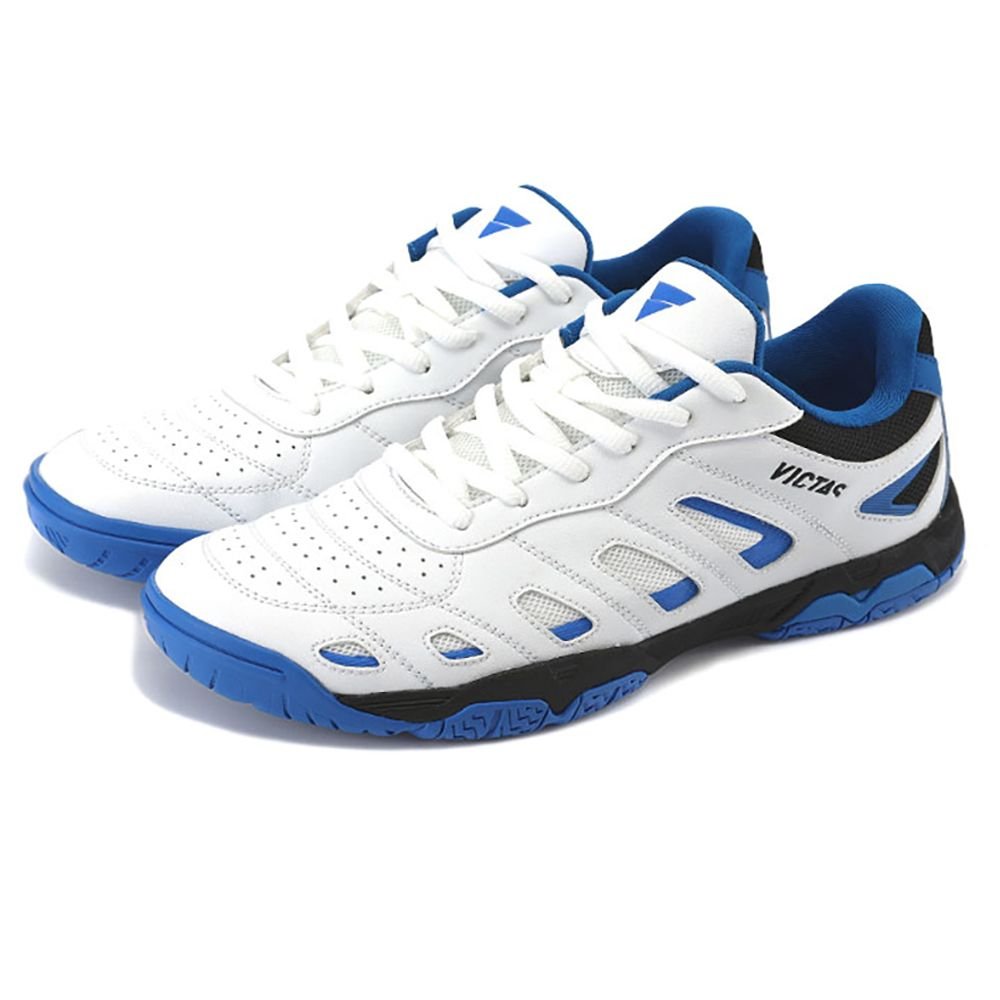
Victas V-Shoes 614
The ventilation-first lightweight: side air inlets that save grams and move air, on a grippy non-marking outsole that holds even on poor floors.
Victas is the Japanese brand behind some of the most technically specific shoes in table tennis, and the V-Shoes 614 is its lightweight statement: the maker and specialist-retailer line describes it as “a particularly lightweight table tennis shoe” whose reduced overall weight gives it a light, flexible feel without giving up the stability fast, dynamic movement needs. The signature detail is the side air inlets — cut-outs that do two jobs at once, improving breathability and removing the grams a solid panel would cost. An extra-soft heel padding takes care of comfort, and the grippy non-marking outsole is specified to hold even on poor floors — the honest detail for players whose halls are not all polished wood.
Victas publishes no weight for the 614, and this card will not invent one: the lightness here is a designed quality, described by the maker, not a number. The 614 sits in the EU 36–43 size run. One naming caution: the advanced guide cards the V-Shoes 612 — the range-topper’s sibling and a different model — so check the number when ordering. Buy the 614 if your hall runs hot and your feet run hotter: the lightest-feeling ventilated shoe in this guide, with an outsole specified for the floors other shoes complain about.
Pros
- Maker-described as particularly lightweight, with a light, flexible feel
- Side air inlets: breathability and weight saving in one detail
- Grippy non-marking outsole specified to hold even on poor floors
- Extra-soft heel padding for comfort over long sessions
Cons
- Victas publishes no weight — lightness is described, not numbered
- The advanced guide’s V-Shoes 612 is a different model — check the number
- Ventilation-first build: players wanting maximum structure should compare the andro card
As an Amazon Associate we earn from qualifying purchases.
GEWO Speed-Flex Two
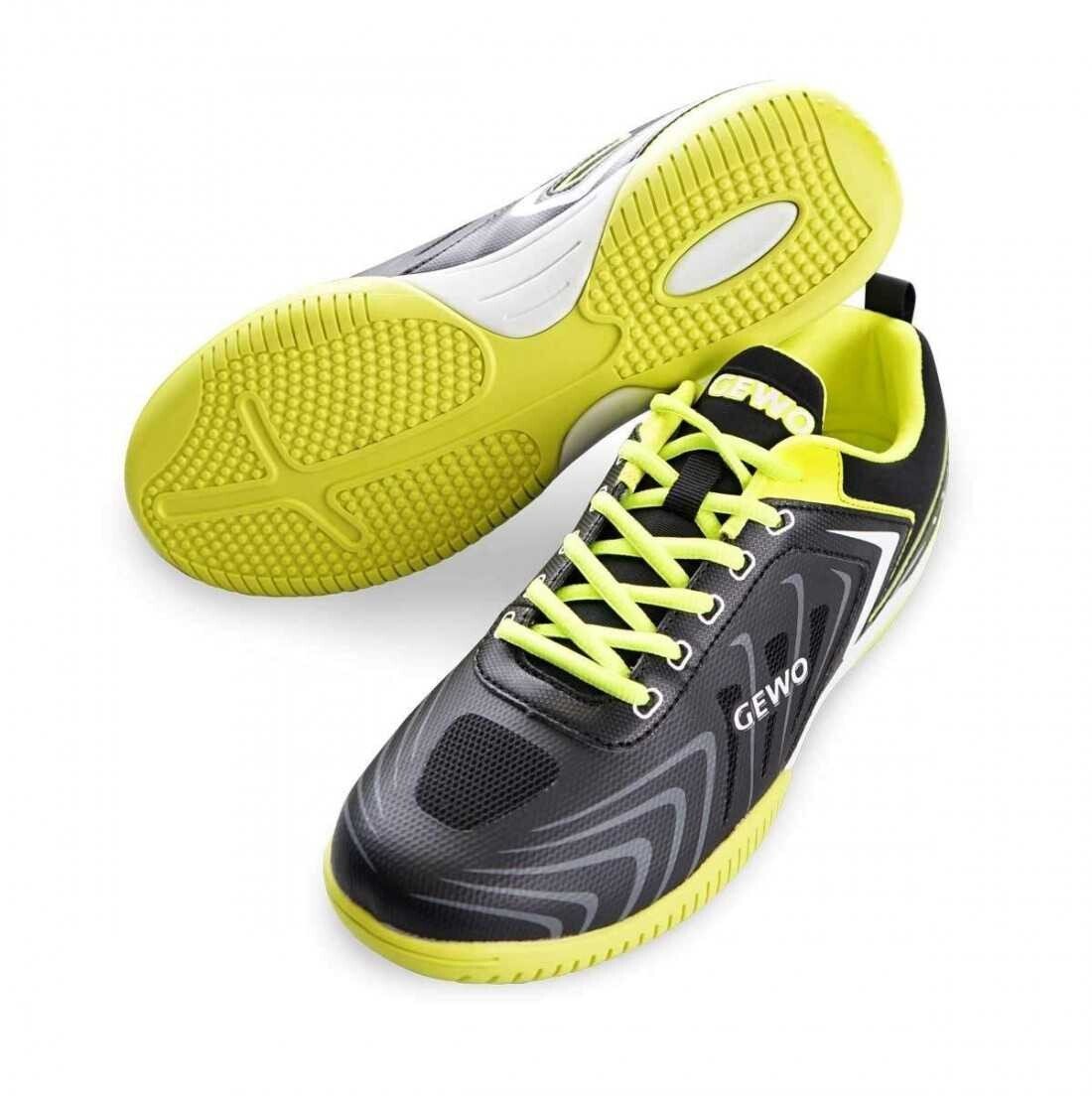
The flat, fast German build: a light, direct floor feel on a two-zone natural rubber sole — GRIP-DOTS for lateral steps, a rotational forefoot zone for pivots.
GEWO’s Speed-Flex line is built on a simple thesis: flat is fast. The Speed-Flex Two is, in the maker’s US copy, “a light and fast table tennis shoe” that “gives you everything you need in modern table tennis” — and the engineering is all about directness. The midsole is flat high-density phylon, a firm foam that absorbs impact energy without the stack height of a cushioned trainer; the CLAWFINGER construction grips the midfoot from inside and outside, holding the foot laterally despite the shoe’s lightness; and the upper is a fine-textured High-Peel PU that stays dimensionally stable without heavy overlays.
The outsole is the card’s best detail: a 2-zone-profile natural rubber sole, 100% non-marking, with Zone 1’s horizontally arranged GRIP-DOTS supporting lateral sidestep movements and Zone 2 supporting rotational movement and quick changes of direction through the ball of the foot — the two movement families of table tennis, engineered separately. Long-lasting grip comes from an abrasion-resistant rubber compound. GEWO publishes no weight, so the lightness here is the maker’s stated character, not a number — and the flat profile is the visible proof. One naming caution: the advanced guide’s GEWO Flex Force Pro I is a different model. Buy the Speed-Flex Two if directness is the goal: the flattest, most floor-connected ride in this guide.
Pros
- Flat high-density phylon midsole: maximum floor contact, minimum stack
- Two-zone natural rubber outsole — lateral GRIP-DOTS plus a rotational forefoot zone
- CLAWFINGER midfoot construction for lateral hold in a light shoe
- 100% non-marking, abrasion-resistant rubber for hall floors
Cons
- GEWO publishes no weight — lightness is the maker’s stated character, not a number
- The advanced guide’s Flex Force Pro I is a different model — check the name
- Flat and firm is a philosophy: cushioning-first players should look at the andro or Vilight cards
As an Amazon Associate we earn from qualifying purchases.
Yasaka Jet Impact Neo
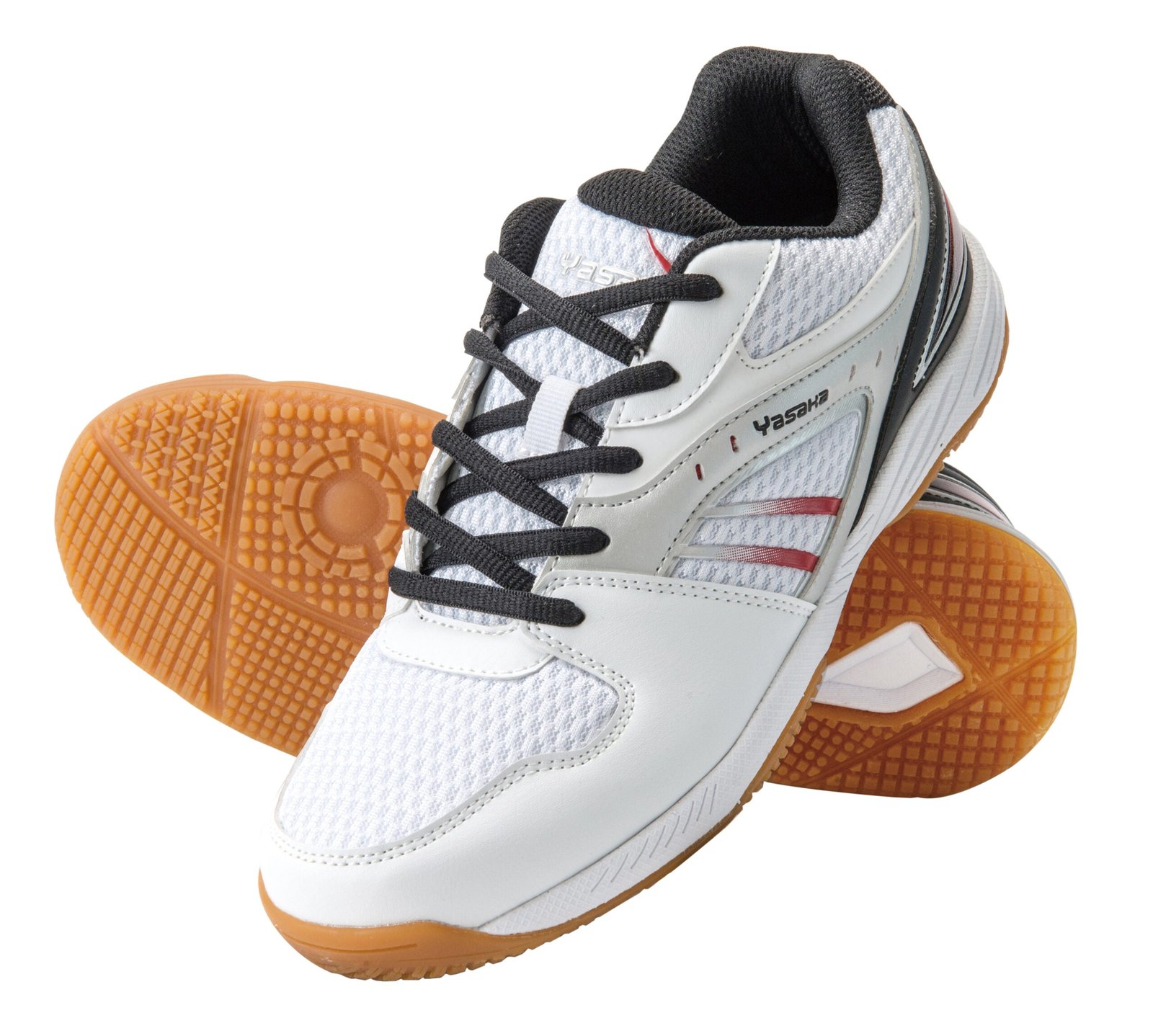
The durability-first lightweight: PU and microfiber over a rubber outsole, built light without giving up the materials that survive a season.
Yasaka is a Japanese maker with a long table tennis history, and the Jet Impact Neo is its lightweight built for players who wear shoes out rather than grow out of them. The recipe is straightforward: a lightweight design that does not compromise on support, an upper of PU and microfiber with breathable mesh panels for ventilation, and a rubber outsole engineered for grip on indoor surfaces. The maker’s positioning pairs comfort with durability — premium materials, an innovative design — rather than chasing the absolute minimum gram count. The style number is E-201.
Yasaka publishes no weight for the Jet Impact Neo, and the card prints that plainly: this is the pick for players who read “lightweight” as a construction philosophy — synthetic materials, breathable mesh, nothing unnecessary — rather than a number to win with. Against the Mizuno and Butterfly cards it is the sturdier-feeling option, the shoe for the player whose last pair died at the toe from dragging. Buy the Jet Impact Neo if your lightweight needs to last: the most durability-minded build in this guide’s light tier.
Pros
- Lightweight design with a durability-first material recipe
- PU and microfiber upper with breathable mesh panels
- Rubber outsole engineered for indoor-surface grip
- The sturdier-feeling option among the verified lights
Cons
- Yasaka publishes no weight — lightness is a design claim, not a number
- Not the absolute lightest figure here — the Mizuno and Butterfly cards win on grams
- Durability-minded means slightly more material than the minimalists
As an Amazon Associate we earn from qualifying purchases.
andro Cross Step 3
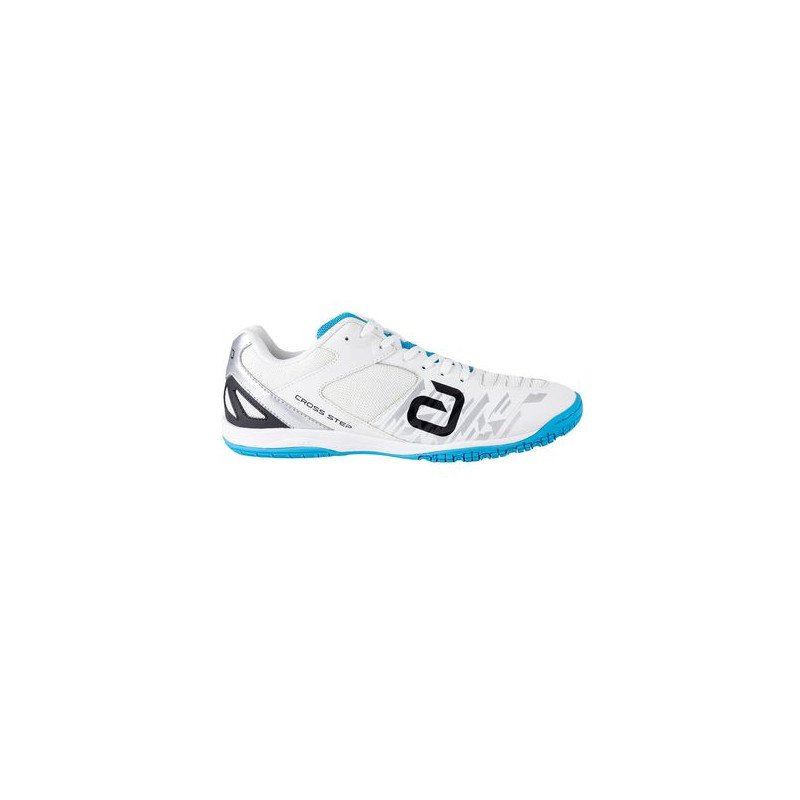
Lightness with a backbone: a lightweight, breathable upper over a TPU+ midfoot core that stabilises the fast direction changes a light shoe can otherwise lose.
The Cross Step is the shoe that made andro’s name in table tennis footwear — developed with a Japanese manufacturer, a long-time top seller in Japan — and the third generation keeps the formula: a lightweight, breathable upper with redesigned functional panels for fit and targeted stability, optimised ventilation zones for foot comfort in long matches, and the proven TPU+ core stabilising the midfoot through rapid changes of direction. The 3D sole splits the job: cushioning in the midfoot and heel, an explosive, rapid forefoot for the push-off. The insole is removable and anatomically shaped.
andro publishes no weight for the Cross Step 3, so the card is honest about that — the lightness here is the maker’s stated design, and the weight it saves is spent visibly on the stabilisation other minimal shoes skip. That is the card’s whole argument: light shoes are fast until a hard plant folds them, and the TPU+ core is the insurance. One naming caution: the advanced guide cards the Cross Step PRO — the Pro Team evolution and a different model — so check the generation. Buy the Cross Step 3 if you want the light shoe that still holds you: the best stability-to-weight ratio in this guide.
Pros
- Lightweight build with genuine midfoot stabilisation — the rare combination
- TPU+ core holds the shoe together on hard direction changes
- 3D sole: cushioned where you land, fast where you push off
- Breathable upper with ventilation zones for long sessions
Cons
- andro publishes no weight — lightness is stated, not numbered
- The advanced guide’s Cross Step PRO is a different model — check the generation
- More structure than the minimalists: not the barest ride here
As an Amazon Associate we earn from qualifying purchases.
Side-by-Side: The Seven Lightest Picks at a Glance
Every weight below is printed exactly as its source states it — maker-stated where the maker states one, a labelled retailer’s figure where the maker does not, or “not published” where nobody reliable prints a number. That is the whole honesty system of this guide, in one table.
| Shoe | Weight | Cushioning (maker-named) | Outsole | Best for | Key structure |
|---|---|---|---|---|---|
| Mizuno Wave Drive Neo 3 | 255 g (retailer’s figure; Mizuno publishes none) | Drive midsole foams | New Drive sole — durability + flexibility | Lightest verified | Bootie structure, non-connected eyelets |
| Butterfly Lezoline Groovy | ~265 g (retailer’s figure; Butterfly publishes none) | Thin EVA inner sole | Anti-skid KPU + rubber | Best barefoot feel | Thin midsole, lightweight synthetics |
| Butterfly Lezoline Vilight | ~270 g, EU 43 (retailer’s figure; Butterfly publishes none) | Light, flexible EVA midsole | Grippy rubber outsole | Best flexible lightweight | Mesh + reinforcement upper |
| Victas V-Shoes 614 | Not published | Light flexible construction | Grippy non-marking outsole | Best breathable light | Side air inlets, soft heel padding |
| GEWO Speed-Flex Two | Not published | Flat high-density phylon midsole | 2-zone natural rubber, non-marking | Best flat-profile light | CLAWFINGER midfoot, High-Peel PU |
| Yasaka Jet Impact Neo | Not published | Lightweight EVA-based build | Rubber outsole | Best durable light | PU + microfiber, breathable mesh |
| andro Cross Step 3 | Not published | 3D sole — cushioned mid/rear, fast forefoot | Indoor table tennis sole | Best stability-to-weight | TPU+ core, ventilation zones |
Lightweight Buying Guide: Five Checks Before You Pay
1. Read every weight with its size basis — or its absence. A gram figure without a size is decoration. Mizuno’s per-shoe-at-26.0-cm convention is the gold standard; the EU 43 basis on the Vilight figure is the next best thing. When a card says “not published”, that is not a gap in the guide — it is the maker’s gap, reported honestly. Be suspicious of any listing that prints a precise weight for the Victas, GEWO, Yasaka or andro models here without naming where the number came from: the makers publish none.
2. Match the lightness to your session length. The minimal shoes — the Groovy’s thin EVA, the GEWO’s flat phylon — are fastest in the first hour and most demanding in the third. If your evenings run long, the andro’s 3D sole, the Victas heel padding or the Vilight’s flexible midsole buy you comfort the minimalists trade away. Light is fast, but fatigue is slow: buy the lightest shoe you can wear for your whole session, not the lightest shoe on the table.
3. Check the outsole against your actual floor. Wood, synthetic, polished, dusty — hall floors vary, and grip is the lightweight shoe’s other job. The non-marking requirement is universal: every outsole here is built for indoor floors, and the Victas is explicitly specified for poor floors. If your hall is slippery, prioritise the grip-first cards (GEWO’s two-zone rubber, the Victas compound, Butterfly’s anti-skid KPU) over the last few grams.
4. Confirm the model, not just the family. Table tennis lineups are crowded with near-identical names, and this guide’s honesty depends on exact models: the Neo 3 is not the Neo 4, the Vilight is not the Vilata, the V-Shoes 614 is not the 612, the Speed-Flex Two is not the Flex Force Pro I, the Cross Step 3 is not the Cross Step PRO. Check the generation digit or number in the listing before checkout — the wrong sibling can be 30 g heavier with the same family name.
5. Fit light shoes snug, and expect a firm first session. Table tennis shoes run snug by design — the foot must not move inside a light shoe, because there is less structure to forgive movement. The Mizuno bootie structure, the GEWO CLAWFINGER and the andro TPU+ core all exist to lock the midfoot. Lace fully, play the movements from our how to play table tennis guide — chasse steps, cross-steps, pivots — and confirm the heel stays seated before the return window closes.
Frequently Asked Questions
How light is a lightweight table tennis shoe, in grams?
The honest range is roughly 200–300 g per shoe, with the current category average sitting under 300 g. The verified figures in this guide run from 255 g (Mizuno Wave Drive Neo 3, retailer’s figure) to ~270 g in EU 43 (Butterfly Lezoline Vilight, retailer’s figure). Anything under ~270 g with a stated size basis is genuinely light for the category; anything over 300 g is not a lightweight pick, whatever the marketing says.
Why do some cards say the weight is “not published”?
Because the maker publishes none. Mizuno is the exception in this guide — it lists weights per shoe at 26.0 cm on its Japan pages. Butterfly, Victas, GEWO, Yasaka and andro do not publish weights for the models carded here, so the cards print “not published” and describe the lightweight design instead. A guide that invents grams where the maker publishes none is guessing; this one labels the gap.
Does a lighter shoe mean less cushioning?
Usually, yes — lightness is bought by removing material, and cushioning depth is material. The thinnest cards here (Groovy, Speed-Flex Two) trade midsole depth for ground feel and speed; the andro Cross Step 3 and the Victas V-Shoes 614 keep more underfoot comfort through the 3D sole and heel padding. Match the cushioning philosophy to your session length, not just the gram count.
Can I wear these shoes for other indoor sports?
These are table tennis shoes, carded and compared as table tennis shoes — the thin profiles, flexible builds and indoor rubber outsoles here are specified for table tennis footwork on hall floors. Several of the outsoles (the non-marking compounds, the gum rubber patterns) are the same families of tread used across indoor court sports. If another sport is your main game, buy a shoe specified for it; if table tennis is the job, buy the lightness for table tennis.
What should the outsole look like for wooden hall floors?
Thin, rubber, and non-marking — the three non-negotiables. Hall floors are protected by a simple rule: non-marking soles only, and every shoe in this guide meets it. Beyond that, look for the pattern families the cards name: GEWO’s two-zone natural rubber with GRIP-DOTS for lateral steps and a rotational forefoot zone, Butterfly’s anti-skid KPU compounds, the Victas grippy compound specified for poor floors. Thin keeps you close to the floor; rubber grips it.
Should I just buy the lightest shoe available?
Not automatically. The lightest shoe is the fastest shoe only if you can wear it for your whole session — fatigue from an under-cushioned minimal shoe costs more speed than grams ever buy. The andro Cross Step 3 exists for exactly this trade-off: lightness with a TPU+ core doing the stabilisation the missing grams would otherwise provide. Buy the lightest shoe that still holds and cushions your foot for your real playing time.
Do lightweight shoes wear out faster?
Less material can mean a shorter life, but construction matters more than grams alone — the Yasaka Jet Impact Neo is carded here precisely as the durability-first lightweight, with PU and microfiber chosen to survive a season. This guide makes no durability promises for any shoe: rotate pairs if you play often, keep them off outdoor surfaces, and let the outsole — not the calendar — tell you when a pair is done.
The Verdict
If one number has to answer the lightness question, it is 255 g — the Mizuno Wave Drive Neo 3, the lightest verified figure in this guide, on a retailer’s listing with Mizuno’s own lighter-flexible-barefoot copy behind it. But the honest verdict in a weight guide is that grams are only half the answer. The Butterfly Lezoline Groovy (~265 g) is the barest ride here for feel-first players; the Butterfly Lezoline Vilight (~270 g in EU 43) is the balanced lightweight with the concept to match; the Victas V-Shoes 614 is the ventilated pick for hot halls and poor floors; the GEWO Speed-Flex Two is the flattest, most direct connection to the floor; the Yasaka Jet Impact Neo is the lightweight built to survive; and the andro Cross Step 3 is the light shoe that still holds you together on hard direction changes.
Still weighing the wider field? Our pillar comparison of the best table tennis shoes covers the all-round flagships this guide deliberately avoids repeating — including the Wave Drive 9 and Lezoline Rifones — the women’s table tennis shoes guide owns the women’s lasts, beginners should start with their own guide, the intermediate players’ guide owns the next step up, and the advanced players’ guide owns the top-tier purchase. Buy the grams that are actually published — with the size basis attached — and lightness stops being a marketing word and becomes seven clear answers.
How we built this guide: every weight above comes from the maker’s own listing or a specialist retailer’s spec sheet, attributed in the copy — and where a maker publishes no weight, the card says “not published” instead of borrowing a number. Three of the seven shoes carry verified weight figures (255 g, ~265 g, ~270 g in EU 43, all retailer’s figures with the maker publishing none); the other four are carded on explicitly described lightweight designs from the makers or specialist retailers. No model here is re-carded from our pillar, women’s, beginners’, intermediate or advanced guides — those are summarised and linked. We do not publish prices, we make no durability or medical claims, and nothing here is presented as hands-on testing. Some links on this page are affiliate links: if you buy through them, AliShuttler may earn a commission at no additional cost to you. As an Amazon Associate we earn from qualifying purchases.