
Table tennis shoes run narrow by design — thin, low-profile builds made for featherlight footwork. This guide cards only the models whose makers actually publish a wide or roomy fit: Butterfly’s wide-stated Vilata, Mizuno’s 3E Medal 8 Wide, and Mizuno’s wide-fit Crossmatch Sword 2 — with widths and weights stated exactly as the makers state them.
Here is the honest truth this guide is built on: almost nobody makes a wide table tennis shoe. The sport’s footwear is engineered for a low, thin, featherlight ride — gum rubber soles you can feel the hall through, uppers that wrap the foot like a second skin, and lasts drawn narrow so the shoe moves as one piece with your foot through chasse steps and cross-steps. That recipe is the reason table tennis shoes feel fast, and it is also the reason wide-footed players bounce off the category: the same shoe wall that serves every foot shape in running or tennis offers barely a handful of published wide answers in table tennis.
So this guide does not do what most “wide fit” roundups do. It does not take seven narrow shoes and describe them as roomy. It cards exactly the three models that genuinely verify as wide or roomy against maker-published listings at build time — two with explicit wide designations and one the maker itself marks as its wide-fit build. If the market grows, this guide grows with it; until then, three honest answers beat seven padded ones. The comparison is built only on what the makers themselves publish: stated widths, stated weights with their size basis, maker-named cushioning, and the thin indoor outsoles the sport requires. Where a maker publishes no figure, the card says so.
This post owns one decision only — the width and fit of a table tennis shoe. Our pillar comparison of the best table tennis shoes covers the all-player flagship selection, and every model below is different from the ones ranked there. First purchases belong to our best table tennis shoes for beginners guide, women players have their own segment in our best table tennis shoes for women comparison, and the top-tier race builds live in our best table tennis shoes for advanced players guide. If your footwork itself still needs work, our how to play table tennis guide walks through the chasse, the cross-step and the split-step every shoe below is built around. Read those for their jobs; read this one when the question is simply whether the shoe will fit a wide foot — answered in the makers’ own published terms.TL;DR — The Short Version
Buy the Butterfly Lezoline Vilata if you want the clearest wide answer in the sport: Butterfly’s own copy calls it the “lightweight and wide model,” with the foot circumference redesigned wider than its predecessor, built for players with wide feet or high insteps. Buy the Mizuno Wave Medal 8 Wide if you want a published width code you can check on the box — Mizuno Japan lists it at 3E, with Mizuno Wave cushioning and a stated weight of about 275 g (one shoe, 26.0 cm). Buy the Mizuno Crossmatch Sword 2 if you want the wide-fit entry build — Mizuno’s own comparison material marks the Crossmatch Sword line as wide-fit (幅広), in a lightweight entry shoe. That is the complete verified list; everything else in the category is a standard-narrow last as published.
Quick Picks
In This Guide
The Width Decision: Why Table Tennis Shoes Run Narrow
Start with the physics of the sport, because it explains everything about the shoe wall. Table tennis footwork is a sequence of tiny, violent movements: the split-step that loads both feet before every rally, the chasse — a sideways shuffle where the feet never cross — and the cross-step, where the trailing foot swings behind to cover wide balls. All three happen within a metre or two of the table, on polished hall floors, and the shoe’s job is to translate those movements into the floor instantly. Any slack between foot and shoe — any millimetre of slide — is a lost step, and at any serious level a lost step is a lost point.
So the makers build the shoe around that translation. The outsole is thin, because a thick stack would dull the feel of the floor; the profile is low, because a high platform would roll on a sideways plant; the upper wraps close, because a loose wrap would let the foot swim inside the shoe during a chasse. Gum rubber and non-marking indoor compounds grip hall floors without squeaking or scuffing. And the last — the foot-shaped form every shoe is built on — is drawn narrow, because a narrow last is the simplest way to ensure that locked-in, one-piece feel across the whole size run. This is not a defect of the category. It is the category’s design philosophy, and it is why the shoes feel so fast.
The consequence is that “wide” means something very specific here, and it pays to read it the way the makers write it. Mizuno publishes its table tennis widths as last codes: 2E is the standard width across its Japan table tennis line, and 3E is the wide step above it — the Medal 8 Wide and the Kaiserburg 8 are the only two current models Mizuno lists at 3E, and one of them is carded below. Butterfly does not use letter codes at all; instead it describes the Vilata’s foot circumference — the ball girth, the measurement around the widest part of the forefoot — as redesigned wider than the model it replaces, and states outright that the shoe is for players with wide feet or high insteps. Mizuno’s own comparison material marks the Crossmatch Sword with 幅広 — literally “wide width” — as a feature of the line. Those three statements, from two makers, are the entire published wide vocabulary of the category. Everything else on the shoe wall is a standard-narrow last as published, and this guide refuses to dress any of it up as roomy.
A word on why this guide has three cards instead of seven, since the shortfall is the point, not an embarrassment. At build time we checked every maker with a current table tennis shoe line: Stiga, Donic, JOOLA, Tibhar, andro, Victas and Yasaka publish no wide designation for any model. GEWO’s Gold Flex carries a “wide fitting” heading on a single retailer’s page — not in GEWO’s own copy — so it does not verify. An ASICS Gel-Renma 2E-wide SKU exists in sneaker marketplaces, but current specialist coverage says the line is not made in wide widths, and it is not a table-tennis-specific shoe in any case. The women’s guide on this site already owns its two published wide answers for that segment. What remains, verified and cardable, is exactly what follows: one Butterfly and two Mizunos. Accuracy over card count — always.
What a Wide-Foot Player Should Check Before Ordering
Read the width designation, not the model name. In this category the width lives in the code, not the marketing. Mizuno’s 3E is a published wide last — the Medal 8 Wide is sold as a separate SKU (81GA2583) from the standard Medal 8 (81GA2582), which is why it can be carded here without re-carding anything. Butterfly’s wide statement is descriptive rather than coded: “foot circumference (width) redesigned to be wider,” aimed at “players with wide feet or high insteps.” Mizuno’s 幅広 marking on the Crossmatch Sword is the same idea in the maker’s domestic vocabulary. If a listing does not carry one of these — a letter code above standard, a wider-girth statement, a wide-fit marking — the shoe is standard-narrow, whatever the adjectives around it say.
Toe-box volume and heel lockdown are two separate questions. The wide foot needs room at the ball of the foot and across the toes; it still needs the heel seated and the midfoot held, because the chasse and the cross-step are sideways movements and a shoe that is wide everywhere is a shoe that slides sideways. This is the engineering tension every wide model below has to resolve. Butterfly resolves it with an upper that pairs mesh for give with reinforcing materials for hold; Mizuno resolves it with the Medal line’s ergonomic heel cut and a structured synthetic upper over the wider 3E last. When you try any of these on, check the two zones independently: wiggle room at the forefoot, zero lift at the heel on a hard sideways push.
The outsole is non-negotiable and thin by design. Every maker here states it in its own way — Butterfly’s “outsole with excellent grip,” Mizuno’s rubber indoor sole — and the meaning is the same: thin, grippy, non-marking rubber built for hall floors, the kind that bites on clean wood or court matting and stays off outdoor concrete, which destroys it. None of the three cards below is a thick-stacked shoe; the category does not make one. If you are coming from a cushioned running or court shoe, expect to feel the floor through the sole. That is the sport’s trade, not a flaw in these models.
Cushioning is maker-named or it is not stated. Mizuno names its system — Mizuno Wave, the reactive wave-shaped cushioning structure, on the Medal 8 Wide — and the card prints it. Butterfly names no foam for the Vilata; its copy says “lightweight and supple midsole,” and the card prints exactly that instead of borrowing a technology name from the flagship Lezoline models (B-Absorber, Wingrip and B-Shank belong to the Levalis and its siblings, not to the Vilata, and this guide will not migrate them). The Crossmatch Sword 2 is an entry build; Mizuno’s chart describes it as lightweight and wide-fit, and the card does not invent a cushioning story beyond that. Read this the way the makers write it: a named system is a claim you can hold them to; an unnamed one is honesty about an entry shoe.
Weights, and their basis — read them like a contract. Only one shoe here carries a maker-stated weight: Mizuno Japan lists the Wave Medal 8 Wide at about 275 g for one shoe at 26.0 cm — a real, comparable figure on a stated basis. Butterfly publishes no weight for the Vilata, and Mizuno publishes none for the Crossmatch Sword 2 in the listings checked; both cards say so rather than borrowing numbers from marketplace listings. A missing weight is not a heavy shoe; in this category it is usually the opposite — the featherlight builds are the ones whose makers decline to compete on a number that shifts with every size.
The Picks: 3 Wide Table Tennis Shoes Compared
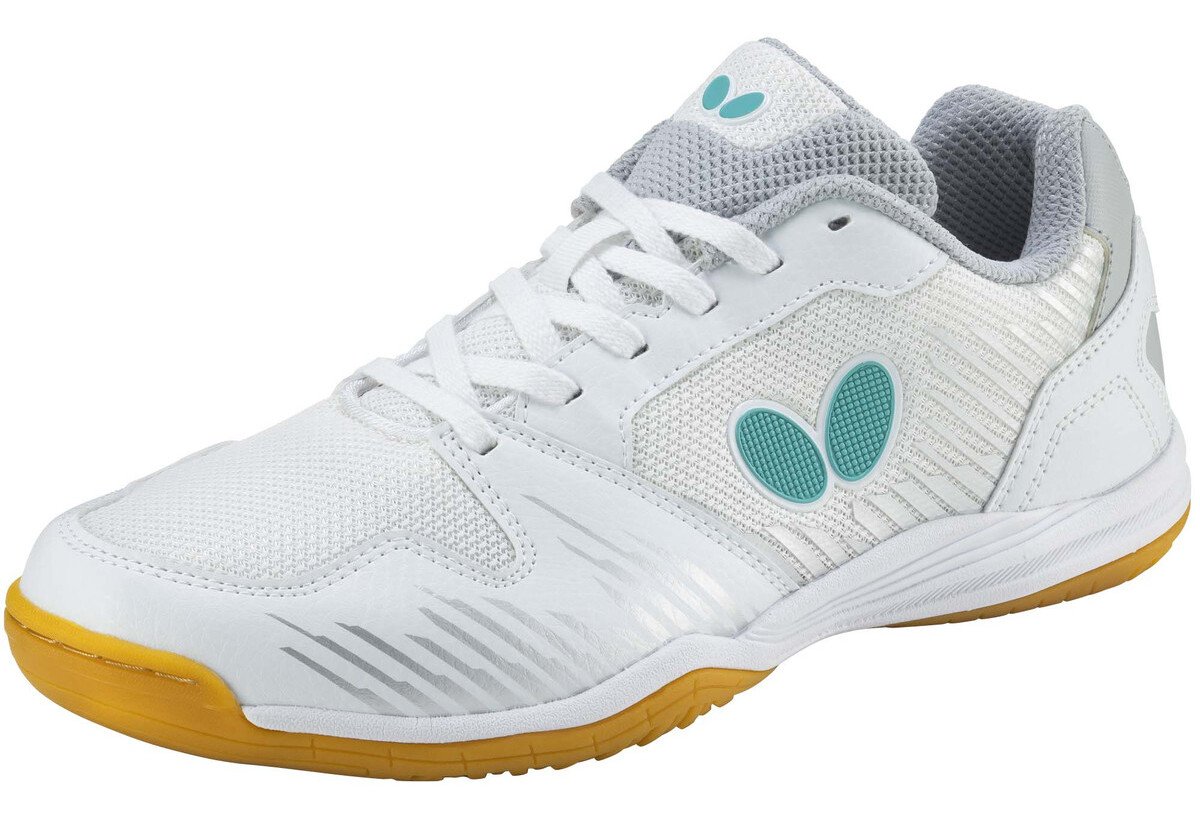
Butterfly Lezoline Vilata
The clearest wide answer in the sport: Butterfly’s own copy calls it the “lightweight and wide model,” with the foot circumference redesigned wider for players with wide feet or high insteps.
No other maker in table tennis says the word “wide” as plainly as Butterfly says it about the Vilata. The published copy — carried identically by Butterfly’s authorised retail channels — opens with the positioning: “Lightweight And Wide Model That Supports Quick And Accurate Movements.” Then the engineering sentence: “The foot circumference (width) of the Lezoline Vilata has been redesigned to be wider” than the Lezoline Vilight it replaces, so that “it provides comfort for players with wide feet or high insteps.” That is the whole width story, stated by the maker itself, with the predecessor named so you can check the claim’s meaning: this is not a shoe that happens to run generous; it is a shoe whose last was deliberately opened up. Note the careful pairing in the positioning line — wide and lightweight together — because that is the promise that matters: room without the bulk that would slow the footwork the shoe is built for.
The rest of the published spec is built around the same lightweight concept the line is known for. The outsole is described as having excellent grip — the thin, hall-floor rubber the sport demands, the kind that bites on clean wood and stays off outdoor surfaces. The midsole is described as lightweight and supple, and the card prints exactly those words: Butterfly names no foam technology for the Vilata, and this guide will not transplant the B-Absorber, Wingrip or B-Shank names from the flagship Lezoline models onto a shoe whose maker does not claim them. The upper combines lightness and strength through mesh and reinforcing materials, with the retail spec table listing synthetic fibers and artificial leather — the mesh gives where the forefoot needs volume, the reinforcements hold where the chasse needs structure. The published size run is US 4.5 to 12 (JPN 22.5 to 30.0), a full adult ladder rather than the truncated runs some wide models get.
Two honest cautions belong on this card. First, Butterfly publishes no weight for the Vilata — there is no figure in its copy or its retail spec tables, and the card will not estimate one; the shoe’s case is its width statement, and it does not need a borrowed number. Second, naming: this is the Vilata (SKU 93700), a different model from the Lezoline Unizes carded in our beginners guide and from the Vilight it replaces — if the listing in front of you does not say Vilata, it is not this shoe. Buy the Vilata if you want the widest-stated answer a table tennis maker currently publishes, from the brand whose shoes fill more club halls than any other: wide by design, light by philosophy, and honest about both.
Pros
- The plainest wide statement in the category — Butterfly’s own copy, naming wide feet and high insteps
- Width engineered as a wider ball girth versus a named predecessor, not a vague “roomy” adjective
- Lightweight concept kept intact: room without bulk for quick, accurate footwork
- Full adult size run (US 4.5–12) in the published spec table
Cons
- Butterfly publishes no weight for this model — the card cannot give you a number
- No named cushioning technology — the midsole is “lightweight and supple” in Butterfly’s own minimal wording
- Check the exact model name when ordering; the Lezoline family is crowded and the Vilata is SKU 93700
As an Amazon Associate we earn from qualifying purchases.
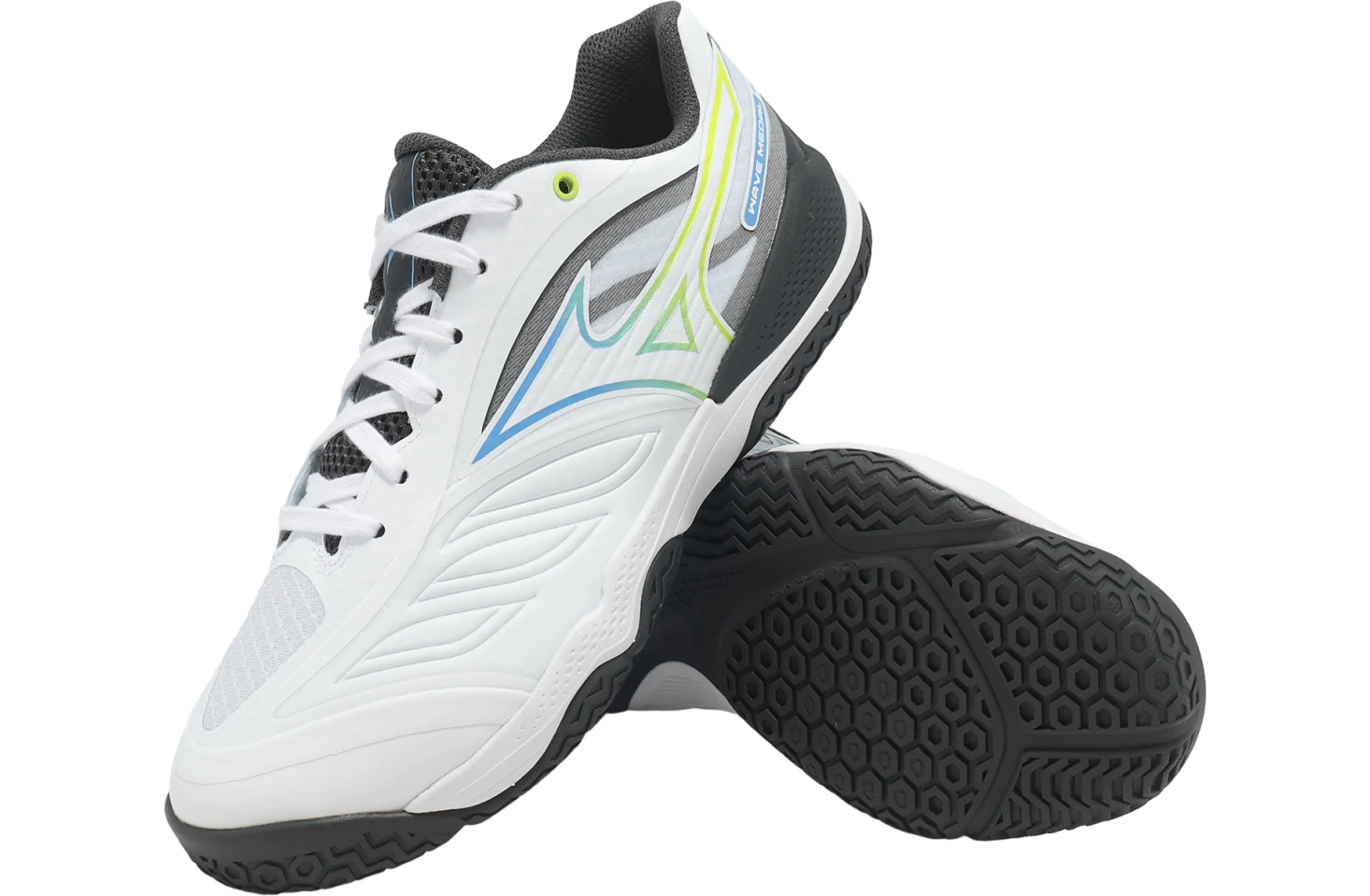
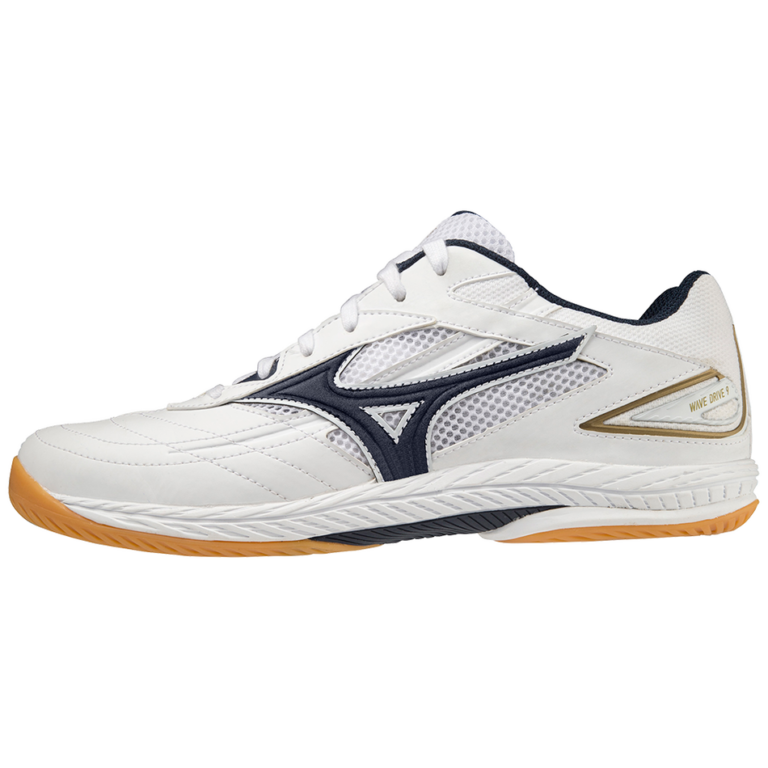
Mizuno Wave Medal 8 Wide
A width code you can check on the box: Mizuno Japan lists this as a 3E last — the wide step above its standard 2E — with Mizuno Wave cushioning and a stated weight.
If Butterfly’s wide answer is a sentence, Mizuno’s is a code — and for shoppers who have been burned by adjectives, a code is better. Mizuno Japan publishes its table tennis widths as last designations: 2E is the standard width across the line, and 3E is the wide step above it. The Wave Medal 8 Wide (81GA2583) is one of only two current models Mizuno lists at 3E, sold as its own SKU rather than a size option on the standard shoe. That matters for two reasons. First, it is checkable: the width is printed in the product code family and the spec table, not inferred from reviews. Second, it keeps this card clean of every other segment’s rankings — the advanced guide cards the Medal 8 BOA (81GA2692), a dial-fitted flagship on the standard last; the women’s guide cards the standard Medal 7. The Wide is none of those. It is the wide last of the Medal line, published as such.
The spec sheet is the most completely published of the three cards here, which is exactly what you want when you are buying fit by mail. Mizuno’s table gives the width (3E), the weight (about 275 g for one shoe at 26.0 cm — a real figure on a stated basis, the only one in this guide), and the size run (22.5 to 28.5 cm). The maker-named cushioning is Mizuno Wave, the reactive wave-shaped structure Mizuno builds its indoor shoes around, there to absorb the repeated landings of a full session and return the step. The upper is mesh and synthetic over the wider last, the outsole is Mizuno’s rubber indoor sole for hall floors, and the ergonomic heel cut is the part that answers the tension every wide shoe has to resolve: room at the forefoot, a seated heel, no sideways slide on the chasse. On weight, note the basis carefully — 26.0 cm is Mizuno’s standard reference size, and the figure moves with the size, as all such figures do.
The honest limitation of this card is availability geography, and it should be stated plainly. Mizuno’s table tennis line is published through Mizuno Japan and Mizuno Europe; Mizuno’s own US range covers tennis and pickleball, not table tennis, so American buyers order the Wide through import channels and specialist retailers rather than the domestic shelf. That is a sourcing fact, not a quality warning — the shoe is the same shoe wherever the box ships from — but it belongs in a buying guide before money moves. Buy the Medal 8 Wide if you want the most verifiable wide fit in the sport: a published 3E code, a stated weight on a stated basis, and the Medal line’s full cushioning recipe underneath it.
Pros
- Published 3E width — a checkable code, not an adjective; its own SKU (81GA2583)
- The only maker-stated weight in this guide: about 275 g (one shoe, 26.0 cm)
- Mizuno Wave cushioning with an ergonomic heel cut — forefoot room plus heel lockdown
- A different, explicitly wide model from the Medal 8 BOA in our advanced guide
Cons
- Mizuno publishes its table tennis line through Japan and Europe — US buyers order via import channels
- At about 275 g it is the substantial build here, not the featherlight one
- The 3E last is wide by code, but feet vary — confirm the fit on arrival before a return window closes
As an Amazon Associate we earn from qualifying purchases.

Mizuno Crossmatch Sword 2
The wide-fit entry build: Mizuno’s own comparison material marks the Crossmatch Sword line as wide-fit (幅広), in a lightweight shoe for the early years of the sport.
The third verified answer comes from the other end of Mizuno’s range, and it is worth understanding what “entry” means in this maker’s vocabulary. Mizuno Europe lists the Crossmatch Sword 2 under Table Tennis as its own model, and Mizuno’s published comparison material marks the Crossmatch Sword with 幅広 — wide-fit — as a feature of the line, alongside the lightweight positioning. This is not a letter code like the Medal 8 Wide’s 3E; it is the maker’s domestic wide marking, printed in the same comparison tables that list the line’s weight and positioning. For a buyer who wants the maker’s own word that the shoe is built wide, that marking is the verification — and it is the reason this card exists instead of a fourth narrow shoe with a hopeful adjective.
As an entry build, the Sword 2 is deliberately simple, and the card is deliberately honest about that simplicity. Mizuno publishes no named cushioning system for it and no weight in the listings checked — the card prints both blanks rather than dressing the shoe up. What the maker does publish is the concept: lightweight, wide-fit, built for the early years of table tennis — the club player building their footwork, the junior moving up, the returning player who needs room first and flagship technology later. The rubber indoor sole is the standard hall-floor build, and the low, flexible profile is the category’s standard trade: feel of the floor over stack height. If your wide-foot decision is also a first-serious-shoe decision, this is the card that pairs the two without asking you to pay for technology the maker does not claim.
Two notes for the careful shopper. First, regional codes differ the way they always do with Mizuno’s table tennis line — the European listing carries its own product code family, and Japanese comparison material references the line’s domestic code; buy by the model name “Crossmatch Sword 2” and confirm the wide-fit marking on the listing you order from. Second, this is the simplest shoe in the guide: players who already know they want the Medal line’s Wave cushioning and stated weight should take the Medal 8 Wide above. Buy the Crossmatch Sword 2 if you want a maker-marked wide fit at the honest end of the range — wide by the maker’s own marking, light by design, and simple on purpose.
Pros
- Maker-marked wide-fit (幅広) in Mizuno’s own published comparison material
- Lightweight entry concept — room without flagship pricing or unclaimed technology
- Listed by Mizuno Europe under Table Tennis as its own current model
- The natural first wide shoe for club players building their footwork
Cons
- Mizuno publishes no weight for the Sword 2 in the listings checked
- No named cushioning system — an honest entry build, not a technology showcase
- Regional product codes differ; confirm the model name and wide-fit marking on your listing
As an Amazon Associate we earn from qualifying purchases.
Side-by-Side: The Three Wide Shoes at a Glance
Every figure below is the maker’s own published specification. The wide column is the point of this guide: one maker-stated wide model, one published 3E code, one maker-marked wide-fit build — and weights printed exactly as honestly as the cards print them, which means one stated figure and two plain “not published” entries.
| Shoe | Best for | Cushioning (maker-named) | Outsole | Fit | Weight |
|---|---|---|---|---|---|
| Butterfly Lezoline Vilata | Best overall wide | Lightweight, supple midsole (Butterfly’s wording) | Rubber outsole with excellent grip | Maker-stated wide — wider ball girth than the Lezoline Vilight | Not published |
| Mizuno Wave Medal 8 Wide | Best published 3E width | Mizuno Wave reactive cushioning | Rubber indoor sole | 3E wide last (Mizuno Japan’s code), ergonomic heel cut | About 275 g, one shoe at 26.0 cm (Mizuno’s figure) |
| Mizuno Crossmatch Sword 2 | Best wide-fit entry | Lightweight entry build — no named system published | Rubber indoor sole | Maker-marked wide-fit (幅広) in Mizuno’s comparison material | Not published |
Wide-Fit Buying Guide: Four Checks Before You Pay
1. Read the width designation, not the size number. In this category the width lives in codes and maker statements, not in adjectives. Mizuno’s 3E is a published wide last with its own SKU; Butterfly’s “foot circumference redesigned to be wider” is a published engineering statement naming wide feet and high insteps; Mizuno’s 幅広 is the maker’s domestic wide marking. If the listing in front of you carries none of these, the shoe is standard-narrow as published — no matter how the surrounding copy reads. This is the single habit that protects every wide-footed buyer in table tennis.
2. Never size up for width — it breaks the shoe’s job. The temptation is universal: the forefoot is tight, so order a size longer. In a running shoe that mostly works. In a table tennis shoe it trades one problem for a worse one, because the extra length puts the flex point and the heel cup in the wrong places, and the sideways hold the chasse depends on disappears. A long-but-loose shoe slides laterally, and lateral slide is exactly what the narrow last exists to prevent. If a model is not published as wide, a bigger size of it is not a wide shoe — it is a long narrow shoe. Our women’s guide makes the same point for its segment: the honest next step past the published wide answers is an in-person fitting, not a size-up gamble.
3. Check heel lockdown separately from forefoot room. When any of the three cards above arrives, test the two zones independently before the return window closes. The forefoot should have genuine wiggle room across the toes and the ball of the foot — that is what you paid the wide designation for. The heel should stay seated through a hard sideways push, the movement that finds a loose heel first, and the midfoot should not swim when you brake. A wide shoe that passes the first test and fails the second is not a bargain; it is the wrong shoe, and the makers’ own designs — the Vilata’s reinforced upper, the Medal 8’s ergonomic heel cut — exist precisely to pass both.
4. Match the sole to your hall, and keep all three indoors. Every shoe here carries a thin indoor outsole — Butterfly’s grippy rubber, Mizuno’s indoor rubber — built to bite on clean hall floors and court matting. That rubber is soft by design, and concrete, asphalt and grit destroy it fast; these shoes live in the kit bag between sessions, never on outdoor courts. Before a match, wipe or brush the soles: hall dust is the most common reason a good indoor shoe stops gripping, and it has nothing to do with the shoe’s quality. Buy the width for your foot, then protect the sole the width rides on.
Frequently Asked Questions
Why do table tennis shoes run so narrow?
Because the sport demands it. Table tennis footwork — the split-step, the chasse, the cross-step — is a sequence of tiny, explosive sideways movements, and the shoe’s job is to translate them into the floor with zero slack. Makers build thin, low-profile shoes on narrow lasts so the shoe moves as one piece with the foot. That design philosophy is why the shoes feel fast, and it is also why published wide answers are so rare: only the three models in this guide verify as wide or roomy against maker-published listings.
Is the Wave Medal 8 Wide the same shoe as the Medal 8 BOA in your advanced guide?
No. This guide cards the Wave Medal 8 Wide (81GA2583): a 3E wide last with standard lacing, listed by Mizuno Japan at about 275 g for one shoe at 26.0 cm. The advanced guide cards the Wave Medal 8 BOA (81GA2692): a dial-fitted flagship on the standard last. Different SKUs, different widths, different closures — the Wide is the wide last of the Medal line, published as such, and it is not a re-card of the advanced guide’s pick.
Should I just order a bigger size instead of a wide model?
No — and this is the most expensive mistake in the category. A bigger size of a narrow shoe is a long narrow shoe: the flex point and heel cup land in the wrong places, and the lateral hold the chasse depends on disappears. The honest answers are the published wide models above; past those, our women’s guide reaches the same conclusion for its segment — an in-person fitting beats a size-up gamble every time.
Do any of these shoes publish a weight?
Only one. Mizuno Japan lists the Wave Medal 8 Wide at about 275 g for one shoe at 26.0 cm — a stated figure on a stated basis. Butterfly publishes no weight for the Lezoline Vilata, and Mizuno publishes none for the Crossmatch Sword 2 in the listings checked; both cards say so plainly rather than borrowing numbers from marketplace listings. A missing weight is not a heavy shoe — in this category it usually means the maker declines to compete on a number that shifts with every size.
What if none of the three fits — what is the honest next step?
First, confirm you ordered from the actual wide listing: the Vilata by its SKU (93700), the Medal 8 Wide by its 3E designation (81GA2583), the Sword 2 with its wide-fit marking — listings mix standard and wide variants freely. If the verified wide models genuinely do not fit, the next step is an in-person fitting at a table tennis specialist, not another online gamble: feet vary beyond what any last code captures, and a fitter can check forefoot volume against heel lockdown the way no size chart can. Our women’s guide covers two further published wide answers for women players — the ASICS Gel-Rocket 12 Women and the Mizuno Wave Medal 7 Wide — which are worth checking if that segment is yours.
The Verdict
Three shoes. That is the entire verified wide market in table tennis at build time, and this guide would rather hand you three honest answers than seven padded ones. If you want the plainest wide statement a maker currently publishes, buy the Butterfly Lezoline Vilata — Butterfly’s own copy names wide feet and high insteps, with the ball girth redesigned wider than its predecessor. If you want a width you can check on the box, buy the Mizuno Wave Medal 8 Wide — a published 3E last with Mizuno Wave cushioning and the only maker-stated weight in the guide. If you want the wide-fit entry build, buy the Mizuno Crossmatch Sword 2 — Mizuno’s own comparison material marks it wide-fit, in a lightweight shoe that does not pretend to be a flagship.
Still weighing the wider field? Our pillar comparison of the best table tennis shoes covers the all-player flagships this guide deliberately avoids repeating, the beginners guide owns the first-purchase decision, and the advanced players guide owns the top-tier race builds. Buy the width your foot actually needs, read the maker’s own designation before any listing’s adjectives — and the narrowest shoe wall in racket sports stops being a wall and becomes three clear answers.
How we built this guide: every width and fit claim above comes from the maker’s own published listing, spec table or product copy, or from an authorised retailer listing carrying the maker’s copy — and each is attributed in the verification notes. Butterfly publishes no weight for the Lezoline Vilata and Mizuno publishes none for the Crossmatch Sword 2 in the listings checked; we print that plainly rather than estimating. Only three models genuinely verify as wide or roomy, so this guide cards three — the comparison table and FAQ count match the card count. We do not publish prices, we make no durability or medical claims, and nothing here is presented as hands-on testing. Some links on this page are affiliate links: if you buy through them, AliShuttler may earn a commission at no additional cost to you. As an Amazon Associate we earn from qualifying purchases.