
Seven wide-fit court shoes from Asics, New Balance, K-Swiss, Head, Joma and Mizuno — compared only on what the makers and their spec tables actually publish: 2E width designations, relaxed wide lasts, herringbone outsoles for sand-dressed courts, the pivot and lockdown hardware, and the cushioning systems each brand names.
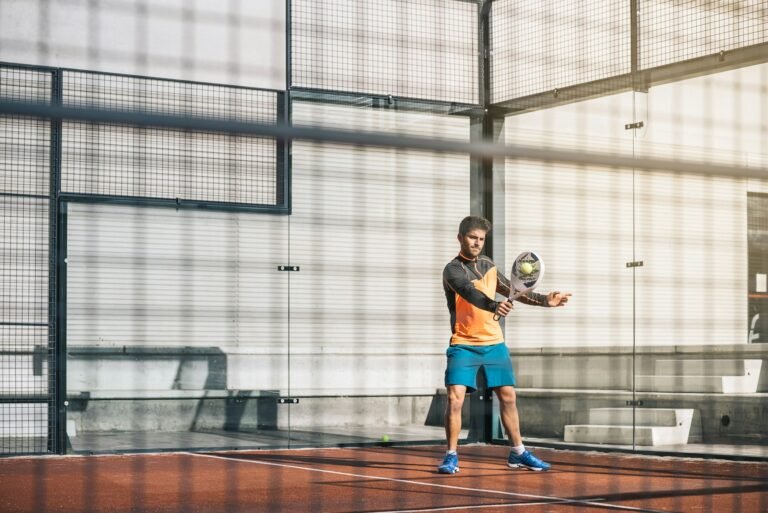
Padel is the most laterally demanding racket sport on the shoe. Every rally is a sequence of sideways plants, sudden brakes at the side glass, lunges into the net zone and quick pivots when the ball comes back off the back wall. In a standard-width shoe, a wider foot spreads over the midsole edge on exactly those movements — the foot lands on the rim of the platform instead of inside it. That is the whole of this guide’s subject: seven shoes whose width is not a guess. Each one carries a maker-stated wide option — a 2E width, a designated Wide version, a relaxed wide fit or a wide last — or a verifiably roomy build, and each card prints only what the maker or its spec table publishes.
This guide owns one decision only: width and fit for padel. Our main best padel shoes comparison covers the all-player flagship selection, and every model below is chosen for the wide-foot job rather than re-ranked from that guide. Women players have their own segment in our best padel shoes for women comparison, first purchases belong to our best padel shoes for beginners guide, and the top-tier performance decision sits with our best padel shoes for advanced players guide. If your movement patterns themselves still need work, our how to play padel guide walks through the lunges, pivots and net-play footwork every shoe below is built around. Read those for their jobs; read this one when the question is simply whether the shoe will fit a wide foot without compromise.
One promise before the picks, and it is the one that makes this guide different from a roundup: we card only what verifies. Every width claim below was checked against manufacturer or retailer listings on the build day — the Asics 2E, the New Balance 2E clay build, the K-Swiss 2E, Head’s designated Sprint Pro 4.0 Wide, Head’s “widest in the range” Revolt Evo 2.0, Joma’s wide last and Mizuno’s relaxed wide fit. Where a maker publishes no weight, the card says so instead of borrowing a number. Where a figure exists only in a retailer’s listing, it is labelled as the retailer’s figure with the size basis the retailer gives. The next section teaches you to read width the way the makers print it, before you spend anything.
TL;DR — The Short Version
Buy the Asics Gel-Resolution X (2E Wide) if you want the most completely specified wide build: an official Asics 2E width with DYNAWALL stability running into the heel, DYNALACING lockdown and forefoot GEL. Buy the New Balance Fresh Foam X CT Rally v2 (2E Clay) if your courts are sand-dressed — a 2E wide build with a full herringbone outsole designed for clay, on Fresh Foam X. Buy the K-Swiss Hypercourt Express 2 (2E) if you want a wide value pick — K-Swiss’s 2E SKU with a Surgelite midsole and a midfoot shank, and even its standard build is rated slightly wide. Buy the Head Sprint Pro 4.0 Clay Wide for speed in a designated Wide — Head’s own Wide version with a pure herringbone clay outsole, TRI-NRG foam and a Delta Strap. Buy the Head Revolt Evo 2.0 (Clay) if you want Head’s widest shoe — the widest in Head’s own range, with a Lockdown Strap and a clay-optimised tread. Buy the Joma Slam Classic if you want a padel-specific shoe built on a wide last, with DUAL REACTIVE cushioning and a herringbone clay outsole. And buy the Mizuno Wave Exceed Tour 5 CC for the lightest-feeling wide fit — Mizuno’s own “relaxed wide fit” on a clay-court build with ENERZY cushioning.
Quick Picks
In This Guide
- The wide-foot padel decision: why width is a padel problem first
- What the wide-fit spec sheet really tells you
- Asics Gel-Resolution X (2E Wide)
- New Balance Fresh Foam X CT Rally v2 (2E Clay)
- K-Swiss Hypercourt Express 2 (2E)
- Head Sprint Pro 4.0 Clay Wide
- Head Revolt Evo 2.0 (Clay)
- Joma Slam Classic
- Mizuno Wave Exceed Tour 5 CC
- Side-by-side comparison
- Wide-fit buying guide: five checks before you pay
- Frequently asked questions
- The verdict
The Wide-Foot Padel Decision: Why Width Is a Padel Problem First
Most sports load the shoe in one direction. Padel loads it in all of them, in the same rally. The bandeja sends you back at full stretch; the vibora asks for a sideways plant off a moving body; the net zone is a series of short lunges in any direction; and when the ball comes off the back glass, the recovery step is a pivot under load. A foot that is merely “accommodated” by a standard shoe behaves differently here than on a tennis baseline: the forefoot spills over the midsole edge on the sideways plant, the toes press into the upper on the brake, and by the second set the shoe is wider than it was at the start — but your foot hasn’t changed shape, the upper has just given up.
The usual advice — “size up half a size” — is the worst solution in padel. Length does not create width; it creates a longer shoe that still pinches across the metatarsals while the heel swims. A proper wide fit is engineered at the last: the form the shoe is built on is broader across the forefoot while the heel and midfoot keep their hold. That is exactly what the seven shoes below offer in four different maker languages: an explicit 2E width (Asics, New Balance, K-Swiss — the letter the industry uses for wide, with D as the men’s standard), a designated Wide version (Head’s Sprint Pro 4.0 Wide), a published “relaxed wide fit” (Mizuno), and a wide last built for the padel foot specifically (Joma). Different words, same job — and the job is verifiable, which is why this guide prints the source language for each.

The second half of the decision is the surface, and in padel it is rarely negotiable. The overwhelming majority of padel courts worldwide are artificial grass dressed with sand — a surface that behaves more like a clay court than a hard court under the shoe. The herringbone tread pattern, the zigzag chevron that bites into loose top surfaces and releases them, is the clay-court answer, and padel specialists sell it as such. Four of the seven shoes here carry a herringbone or clay-optimised tread by name — the New Balance and both Heads are listed for clay and sand-filled courts, and Joma states the herringbone on the Slam Classic outright. The three that don’t are still legitimate wide picks; they simply answer the fit question on an all-court tread, and the cards say so.
One boundary, stated plainly: this guide makes no claims about feet, only about shoes. Nothing here is advice about conditions, discomfort or how your feet should feel — it is a comparison of published widths, lasts, lockdown systems, outsoles and cushioning. Buy the width that the maker publishes for the foot you have, read the spec section below once, and the seven cards become seven clear answers instead of a wall of adjectives.
What the Wide-Fit Spec Sheet Really Tells You
Width designations are a language — learn the four dialects. The American system prints letters: men’s D is standard, 2E is wide, 4E wider still. Asics, New Balance and K-Swiss all sell explicit 2E builds of the shoes carded here — that letter is the strongest claim in this guide because it is a separate last, not a fit opinion. Head’s second dialect is the designated Wide version: the Sprint Pro 4.0 exists in standard and Wide builds, and this guide cards the Wide. Mizuno’s dialect is descriptive: “relaxed wide fit” on its own product page — a maker statement about the last, but not a separate SKU, so treat it as a direction rather than a grade. Joma’s dialect is the wide last: its padel shoes are built on a last Joma describes as wide for the foot’s shape. And the weakest signal of all — “roomy”, “generous”, “accommodating” in a retailer’s copy — appears nowhere in these seven cards, because it verifies nothing.
Toe-box volume is the wide foot’s real estate. The forefoot is where a wide foot lives or dies in padel: the sideways plant spreads the metatarsals, and a toe box that is merely “true to length” becomes a press across the knuckles of the toes. The 2E builds solve this by construction — the last is broader where the toes sit. The Head Revolt Evo 2.0 is the volume king here by the maker’s own positioning: Head’s channel copy calls it the widest shoe in the Head range, and its extra-wide fit is documented in the model’s product paperwork. The Joma answers the same problem padel-specifically: a wide last designed, in Joma’s retail copy, for the shape and anatomy of the foot. When you read a listing, look for the width letter or the last statement first and the comfort adjectives last.
Heel lockdown is the other half of the wide fit. A wider forefoot must not mean a looser shoe — in padel, the heel that lifts on the brake is the blister, the rolled ankle and the lost split-step. So read the lockdown hardware as carefully as the width. Asics answers with DYNALACING (and DYNAWRAP in its product copy): the lacing is engineered to hold when extra support is needed. Head gives the Sprint Pro 4.0 a Delta Strap and a Sock Support System, and the Revolt Evo 2.0 a Lockdown Strap integrated into the laces so the whole midfoot wraps when you pull them. K-Swiss runs DuraWrap Flex for a flexible but supportive upper. The principle is the same everywhere: width in the front, structure everywhere else. A wide shoe that cannot lock the heel is not a wide fit — it is a loose shoe.
Outsoles: herringbone is the sand answer, stated as such. On sand-dressed artificial grass, the tread that works is the one clay players have used for decades: the herringbone chevron, which bites the loose top layer and releases it instead of clogging. New Balance’s listing says it outright — the CT Rally v2’s full herringbone is “designed specifically for use on clay courts” — and Head’s padel specialists list the Sprint Pro 4.0 Clay’s pure herringbone as recommended for “sand-filled artificial grass”. Joma’s own blog confirms the Slam Classic’s herringbone (clay) outsole against the standard Slam’s Omni. The Asics 2E, K-Swiss 2E and Mizuno 5 CC are the three cards whose width answer comes on a non-herringbone tread — and note the Asics nuance: Asics makes a separate Gel-Resolution X Clay with the herringbone, but in the listings checked the wide 2E is the hardcourt build. Choose the tread for the court you actually play on; choose the width for the foot you actually have.
Cushioning, named — and the weight honesty this guide keeps. Every card below names the cushioning system the maker names: Asics’s forefoot GEL with a two-piece midsole, New Balance’s Fresh Foam X, K-Swiss’s Surgelite, Head’s TRI-NRG triple-density foam on both cards, Joma’s DUAL REACTIVE (phylon over REACTIVE BALL), Mizuno’s ENERZY with the Foam Wave. On weights, the wide segment is refreshingly honest: Head’s own European listing prints the Sprint Pro 4.0 Clay at 371 g in US 10.5 — a retailer figure, labelled as such — and the New Balance and K-Swiss 2E builds carry retailer figures of 15.8 oz and 13.0 oz in size 10.5. Asics, Joma, Head (on the Evo 2.0) and Mizuno publish no weight for their models in the listings checked, and the cards say so. A missing weight is not a heavy shoe; at this level it usually means the maker sells on fit and structure instead.
The Picks: 7 Wide-Fit Padel Shoes Compared
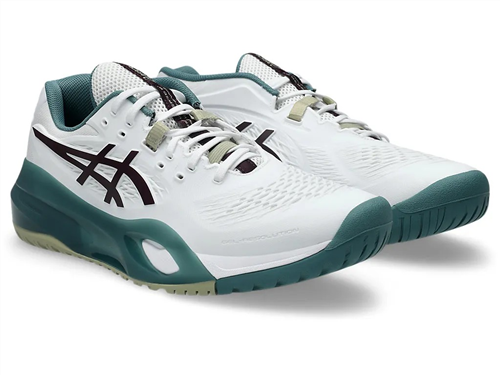
Asics Gel-Resolution X (2E Wide)
The most completely specified wide build in this guide: Asics’s official 2E width, DYNAWALL stability running into the heel, DYNALACING lockdown and forefoot GEL.
The Gel-Resolution X Wide is the baseline player’s stability shoe — and in the wide 2E build, it becomes the most completely specified answer in this guide for a wide foot. The width is not a fit note; it is a designation. Asics builds its men’s shoes on a D standard last and offers the Resolution X in a genuine 2E wide, which means the forefoot volume is engineered at the last rather than borrowed from a stretchy upper. On top of that width sits the full Resolution recipe: DYNAWALL technology in the midsole, now extended into the heel for added stability during lateral movements — the exact movement padel repeats all match — and DYNALACING (DYNAWRAP in Asics’s product copy), which Asics designs to hold when extra support is needed during transitions.
Underfoot, forefoot GEL technology handles impact at contact, the two-piece midsole design keeps landings stable, and the AHAR+ outsole rubber is Asics’s durability compound. A PGUARD toe protector armours the high-wear front of the shoe. Two honesty notes belong on this card. First, Asics publishes no weight for the Gel-Resolution X — the approx. 16.1 oz figure in men’s US 10.5 is the retail channel’s listing figure, not Asics’s, and it is labelled that way here. Second, the surface question: the 2E wide in the listings checked is the hardcourt build, while Asics makes a separate Gel-Resolution X Clay with a full herringbone outsole for clay courts. If your padel is played on sand-dressed artificial grass and you want the herringbone, the Clay is the build to ask about — but confirm the width, because the verified wide 2E is the hardcourt version. Buy this shoe if you want the widest choice with the most complete spec sheet behind it.
Pros
- Official Asics 2E width — a separate wide last, not a fit opinion
- DYNAWALL into the heel plus DYNALACING: the strongest lateral package here
- Forefoot GEL, two-piece midsole, AHAR+ rubber and PGUARD toe — the full stability recipe
- Retail listings describe a roomier forefoot than earlier Resolution generations
Cons
- Asics publishes no weight for this model — the card gives the retailer’s figure only
- The verified 2E wide is the hardcourt build; the herringbone Clay is a separate build to confirm for width
- A stability-first ride — players who want a light, fast feel should look at the Head or Mizuno cards
As an Amazon Associate we earn from qualifying purchases.
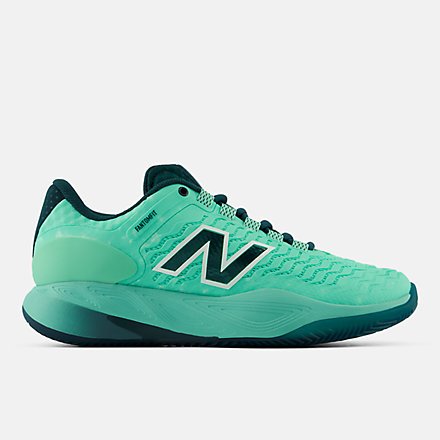
New Balance Fresh Foam X CT Rally v2 (2E Clay)
The sand-court wide: a 2E build with a full herringbone outsole designed for clay, on New Balance’s plush Fresh Foam X.
If your padel happens on sand-dressed artificial grass — and for most players it does — this is the most directly aimed wide shoe in the guide. New Balance’s CT Rally line is the fourth generation of the Fresh Foam Lav franchise, a series with a long reputation for comfort-first court shoes, and the clay build pairs two things wide-footed padel players rarely get together: an official 2E wide last and a full herringbone tread that the listing describes as designed specifically for use on clay courts. That herringbone is the pattern that bites loose top surfaces and releases them, which is exactly what sand-dressed turf asks for. The outsole rubber is New Balance’s NDurance, re-formulated for grip, and the listing notes the tread performs across court surfaces while being built for clay.
The ride is the plush one in this guide. Fresh Foam X is New Balance’s cushioning platform — the midsole material the brand positions for precise underfoot cushioning and energy return — and the upper runs FantomFit for a seamless, flexible wrap over the wide last, with NDure technology in the drag zones and a toe drag tip where padel’s lunges wear first. On weight, the card follows this guide’s rule: New Balance’s own listing gives no figure, and the 15.8 oz in size 10.5 is the retailer’s listing figure, labelled as such. One naming note for shoppers: Tennis Warehouse lists this generation as the “CT Rally 2” while New Balance’s own site carries the current line as the “Fresh Foam X CT Rally v2 Clay” in D and 2E widths — same franchise, same shoe family. Buy it if the combination you need is wide plus herringbone, without compromise on either.
Pros
- Official 2E wide last plus a full herringbone — the rare wide-and-clay combination
- Fresh Foam X midsole is the plushest cushioning recipe in this guide
- FantomFit upper with NDure drag zones and a toe drag tip for padel’s wear pattern
- Fourth generation of a comfort-first franchise, not a first attempt
Cons
- New Balance publishes no weight — the 15.8 oz figure is the retailer’s, not the maker’s
- Comfort-first build: maximum-stability players should compare the Asics card
- Watch the naming — “CT Rally 2” at retail vs “CT Rally v2” on NB’s own site
As an Amazon Associate we earn from qualifying purchases.
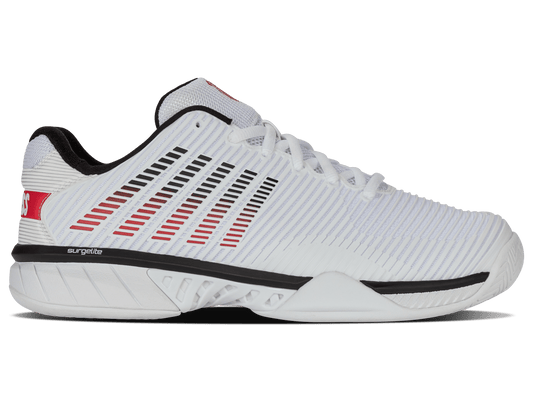
K-Swiss Hypercourt Express 2 (2E)
The wide value pick: K-Swiss’s own 2E SKU with a Surgelite midsole and a midfoot shank — and even its standard build runs slightly wide.
K-Swiss is the quiet wide-foot specialist of the tennis world, and the Hypercourt Express 2 shows why. The 2E is K-Swiss’s own wide SKU — a real stock number, not a fit description — and notably, even the standard build of this shoe is rated “slightly wide” by the retail channel, with a toe box that wide-footed players single out. That means the 2E starts from an already generous last and goes further: it is the extra-wide version of an already wide-friendly shoe, with an upper constructed to be even more flexible while staying supportive. The upper itself is seamless synthetic and mesh with DuraWrap Flex, plus added protection at the toe for the drag zone.
The engineering underneath is the honest mid-range recipe, named in full: a Surgelite midsole that K-Swiss positions for comfort, shock absorption and a light, speedy feel, a midfoot shank for stability against twisting, and an Ortholite liner for added cushioning. The outsole is K-Swiss’s Aosta 7.0 non-marking rubber in a modified herringbone tread — traction with a clay-court flavour, on an all-court shoe. The 13.0 oz weight in size 10.5 is the retailer’s listing figure (the 2E listing prints 13.2 oz); K-Swiss’s own listing gives none. Buy the Hypercourt Express 2 2E if you want the wide answer without paying the flagship premium — it is the least expensive way in this guide to get a genuine 2E last under a padel footwork pattern.
Pros
- A genuine K-Swiss 2E SKU — and the standard build is already rated slightly wide
- Full named recipe: Surgelite midsole, midfoot shank, Ortholite liner, DuraWrap Flex
- Aosta 7.0 rubber in a modified herringbone — grip with clay-court manners
- The value route to a true 2E last in this guide
Cons
- K-Swiss publishes no weight — the 13.0 oz figure is the retailer’s
- An all-court tread, not a dedicated clay herringbone like the New Balance or Head Clay builds
- Mid-range cushioning rather than a flagship foam stack
As an Amazon Associate we earn from qualifying purchases.
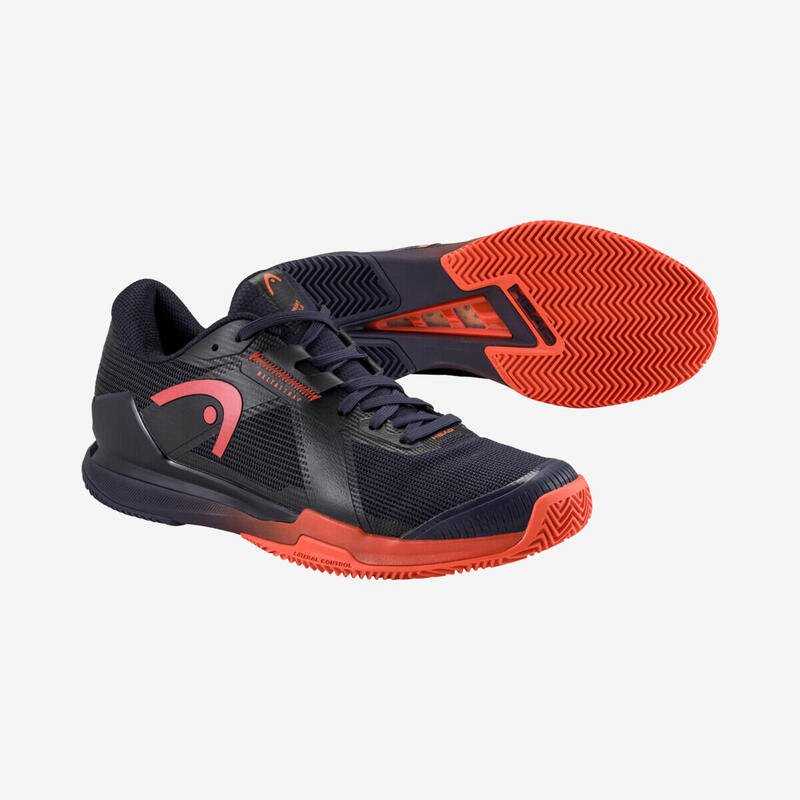
Head Sprint Pro 4.0 Clay Wide
Head’s own Wide answer for fast players: the designated Wide version with a pure herringbone clay outsole, TRI-NRG foam and a Delta Strap.
The Sprint Pro is Head’s speed shoe — low to the court, light, built for the player who lives on quick first steps — and the 4.0 exists in a designated Wide version that padel specialists list by its own Head reference. That matters because the standard Sprint Pro 4.0 Clay is, by its spec table, a “Performance Fit: snug, standard width” shoe; the Wide is the version that keeps the speed brief while opening the fit. The Clay build carries a pure herringbone outsole in Head’s Hybrasion+ rubber, and padel specialists recommend it explicitly for sand-filled artificial grass — the most common padel surface there is. The herringbone here is sharp and defined, the clay-court pattern, not a hybrid compromise.
Around the wide fit, Head keeps the lockdown serious: the Delta Strap adds lateral hold with bands inside and outside the shoe, the Sock Support System hugs the foot for a locked-in feel, a Heel Stabilizer closes the back of the shoe, and Drift Defense adds durability at the toes and the medial side where sliders wear through. TRI-NRG — Head’s three-density EVA — is the cushioning, tuned for energy return rather than plushness. The 371 g weight in US 10.5 comes from Tennis Warehouse Europe’s listing, labelled as the retailer’s figure; Head’s own listing gives none. Buy the Sprint Pro 4.0 Clay Wide if your game is speed-first and your foot is wide — it is the only shoe in this guide that answers both briefs from the same maker, in the same model.
Pros
- A designated Head Wide version — not a fit note, a separate build
- Pure herringbone clay outsole in Hybrasion+, recommended for sand-filled padel turf
- Delta Strap plus Sock Support System and Heel Stabilizer — lockdown kept serious on the wide fit
- The speed brief: low to the court, light, built for fast first steps
Cons
- Head publishes no weight — the 371 g figure is the retailer’s
- The standard Clay is a snug Performance Fit — make sure the listing says Wide before ordering
- A speed shoe first: maximum-cushion seekers should compare the New Balance or Evo cards
As an Amazon Associate we earn from qualifying purchases.
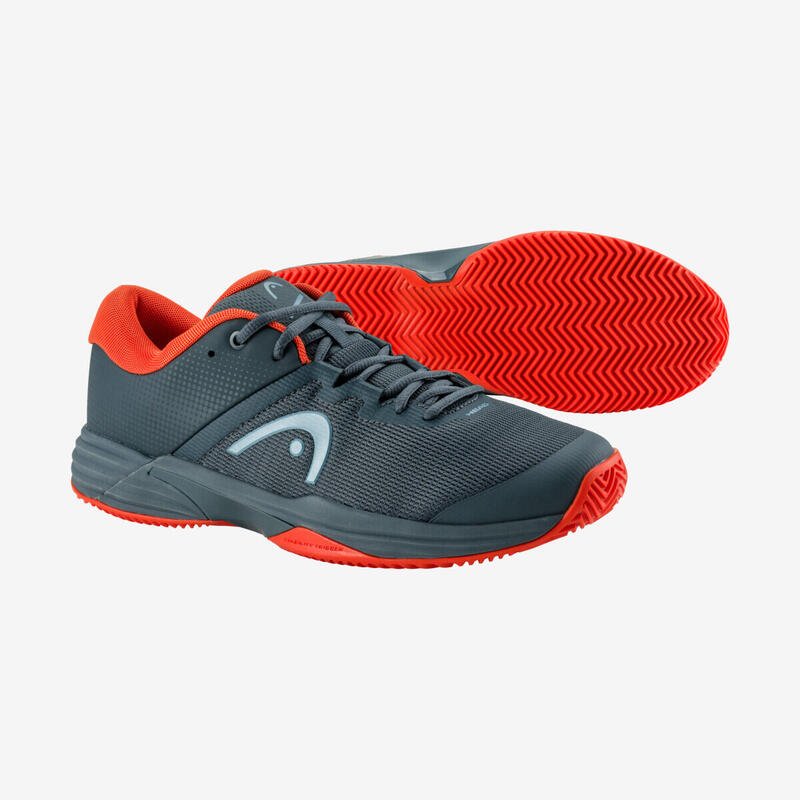
Head Revolt Evo 2.0 (Clay)
The widest shoe Head makes: an extra-wide fit with a Lockdown Strap, TRI-NRG cushioning and a clay-optimised tread.
Where the Sprint Pro is Head’s speed answer for wide feet, the Revolt Evo 2.0 is its comfort answer — and by Head’s own marketing, carried across its padel retail channel, these are “the widest shoes in the HEAD range”. The width claim here is unusually direct: a super wide fit, documented in the model’s own product paperwork as an extra-wide build, with a toe box that the retail channel’s wear notes describe as generous and wider than medium. It is the maximum-volume option in this guide, the shoe for the foot that finds even 2E builds snug across the forefoot.
The engineering is the comfort-first Head recipe: TRI-NRG cushioning over an EVA midsole, a 3D anti-torsion midfoot shank for rotational stability, and a lateral rubber outrigger for support on the sideways plant. The clever part is the Lockdown Strap — integrated into the laces so that pulling them tight wraps the whole midfoot, not just the top of the shoe, which is exactly the mechanism a maximum-volume shoe needs to keep the heel seated. The Clay version carries a clay-optimised tread — padel retail listings describe its zigzag pattern sole — for sand-dressed courts. Head publishes no weight for the Evo 2.0 in the listings checked, and the card says so. Buy it if width is your first, second and third priority and you want the maker’s own widest shoe doing the job.
Pros
- Head’s own widest shoe — the maximum-volume fit in this guide, documented as extra-wide
- Lockdown Strap wraps the whole midfoot through the laces — width without heel slip
- TRI-NRG cushioning, 3D anti-torsion shank and lateral outrigger — the comfort-stability recipe
- Clay version with a clay-optimised tread for sand-dressed courts
Cons
- Head publishes no weight for this model
- Maximum volume is a deliberate trade — precision-fit players should look at the Sprint Pro Wide
- A comfort build, not a speed build — know which camp your game is in
As an Amazon Associate we earn from qualifying purchases.
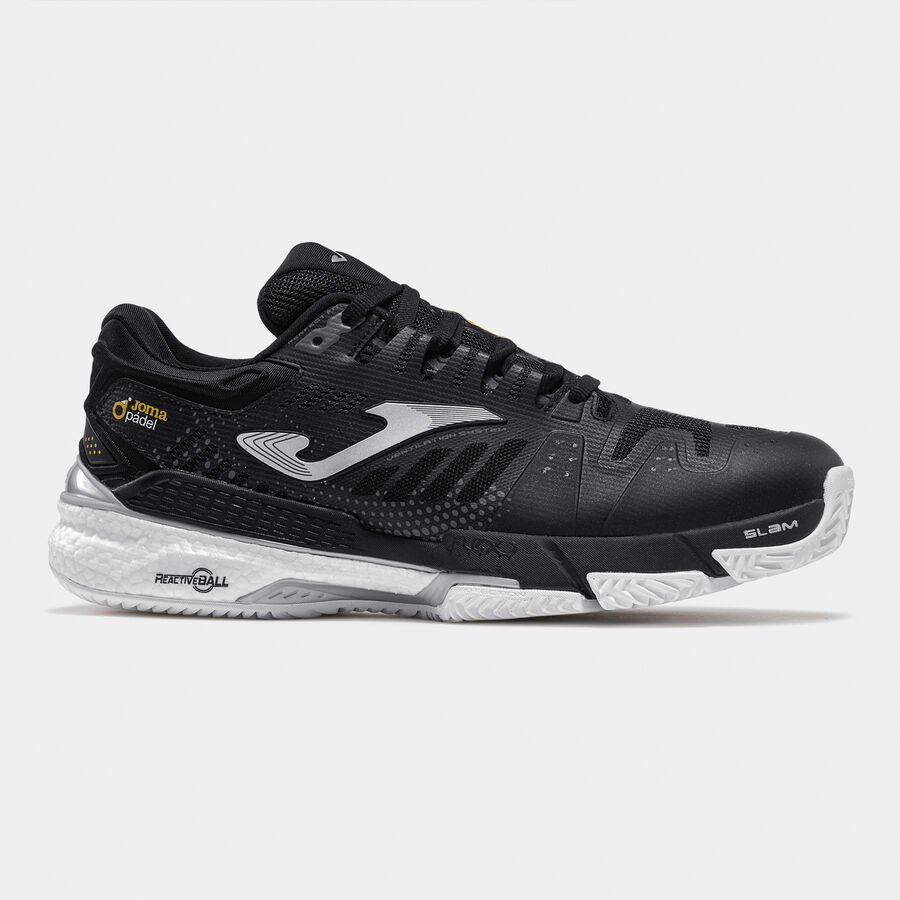
Joma Slam Classic
The padel specialist’s wide answer: a wide last built for the foot’s shape, DUAL REACTIVE cushioning and a herringbone clay outsole — stated by Joma itself.
Joma is the Spanish padel specialist — the brand that has built padel shoes for over a decade of professional competition — and the Slam Classic is the wide-footed player’s entry into that world. The width claim comes from Joma’s own retail copy: the shoes are designed to fit the shape and anatomy of the foot, on a wide last specifically designed for the job, with padded reinforcement in strategic areas for the fit. This is not a tennis shoe adapted to padel; it is a padel shoe from a padel brand, and the last is drawn for the sport’s movement. Joma’s own blog draws the line inside the Slam family that matters here: the standard Slam carries an Omni outsole, while the Slam Classic carries the herringbone (clay) outsole — the sand-court pattern, stated by the maker.
The technology stack is pure Joma, named in full. The midsole is DUAL REACTIVE: an upper phylon layer for stability with REACTIVE BALL compound below for cushioning and energy return. The STABILIS piece — a semi-rigid element in the midsole — acts as torsion control against the twisting loads of padel’s pivots, and the outsole carries a ROTATION geometric structure that Joma designs to ease turns during play. The upper runs breathable mesh with a jacquard finish, VTS perforations for ventilation, the SPORTECH heat-sealed adjustment system and PROTECTION reinforcement in the high-wear zones; the outsole rubber is Joma’s Durability compound. Joma publishes no weight in the listings checked. Buy the Slam Classic if you want the wide answer from inside padel itself — a padel last, a padel outsole, a padel brand’s technology.
Pros
- A wide last from a padel specialist — built for the sport’s foot, not adapted from tennis
- Herringbone clay outsole stated by Joma’s own blog — the sand-court pattern
- Full named stack: DUAL REACTIVE, STABILIS, ROTATION structure, SPORTECH, VTS
- PROTECTION reinforcement and Durability rubber for padel’s wear pattern
Cons
- Joma publishes no weight for this model
- The Slam family naming is crowded — the standard Slam is Omni-soled; make sure the listing says Slam Classic
- The wide-last claim is descriptive rather than a letter-graded width like 2E
As an Amazon Associate we earn from qualifying purchases.
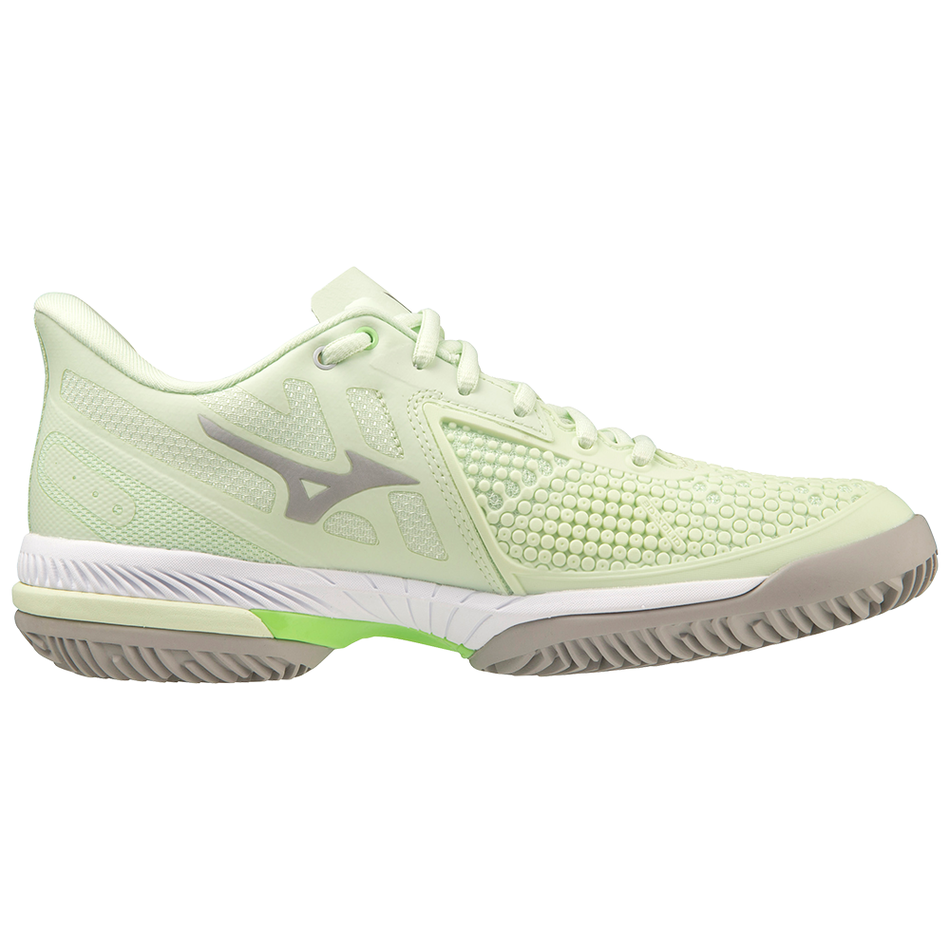
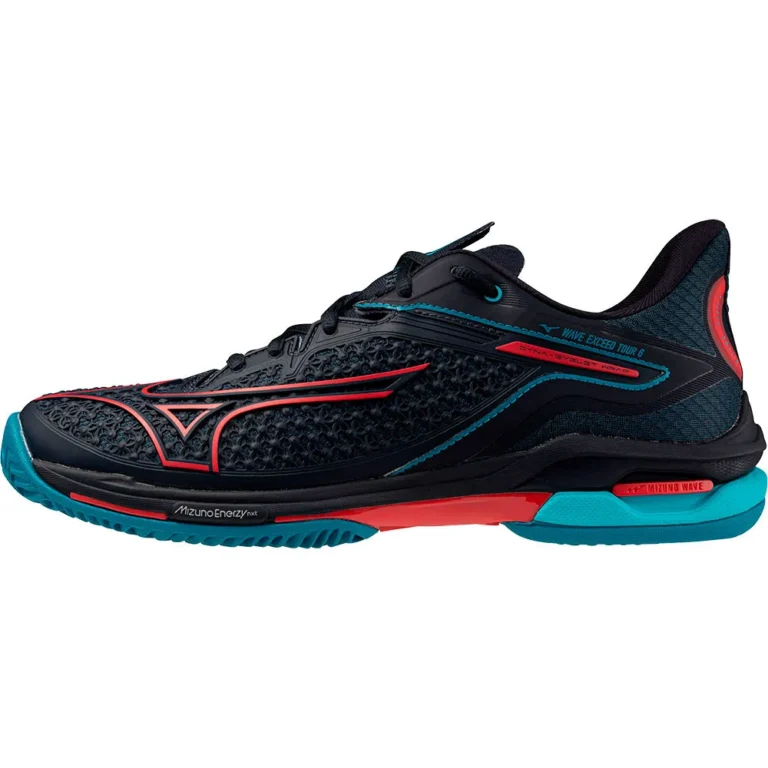
Mizuno Wave Exceed Tour 5 CC
The light wide: Mizuno’s own “relaxed wide fit” on a clay-court build, with ENERZY cushioning and the Foam Wave.
The Wave Exceed Tour is Mizuno’s speed franchise — the light, first-step shoe of its tennis line — and the 5 CC is the generation where Mizuno states the wide fit outright. Its own product copy, carried on emea.mizuno.com, says it plainly: “Made with a comfortable last and a relaxed wide fit.” That is the maker’s own language for the last, and it sits on the CC — the clay court build — which makes this the light wide with a sand-court outsole. The upper is a mesh construction that Mizuno describes as offering softness from the initial fit, and an engineered diagonal groove in the midfoot is designed to let the player turn at speed by transferring body movement efficiently — the pivot hardware, in Mizuno’s terms.
Underfoot, MIZUNO ENERZY sits in the heel for energy return and responsiveness, working through the Foam Wave — the Wave plate loaded with ENERZY foam — for the cushioning-and-stability combination the Wave line is known for. A removable Mizuno Energy insole sits on top of the stack. Mizuno publishes no weight on a stated per-shoe basis in the listings checked, and the card says so rather than borrowing a figure. One context note for shoppers comparing generations: the newer Exceed Tour 7 measures as a snug, medium-to-narrow fit in independent lab testing — the 5’s relaxed wide fit is the wide choice in this family, which is exactly why it is carded here and the 7 is not. Buy the 5 CC if you want width without the substantial build — the lightest-feeling wide fit in this guide.
Pros
- “Relaxed wide fit” in Mizuno’s own product copy — the maker’s width statement
- Clay court (CC) build — a sand-court outsole on a light shoe
- ENERZY heel with the Foam Wave — Mizuno’s responsive cushioning recipe
- The wide choice in its family — the newer generation measures snug
Cons
- Mizuno publishes no weight on a stated per-shoe basis
- A descriptive wide fit rather than a letter-graded 2E width
- A speed-first build — maximum-cushion players should compare the New Balance card
As an Amazon Associate we earn from qualifying purchases.
Side-by-Side: The Seven Wide-Fit Shoes at a Glance
Every figure below is the maker’s own published specification or the width designation the maker sells. Weights are printed exactly as honestly as the cards print them — retailer figures labelled with their size basis, and plain “not published” where the maker gives none.
| Shoe | Best for | Cushioning (maker-named) | Outsole | Fit | Weight |
|---|---|---|---|---|---|
| Asics Gel-Resolution X (2E Wide) | Best overall wide | Forefoot GEL, two-piece midsole | AHAR+ rubber | 2E wide — Asics’s official wide designation | Not published by Asics; retailers list approx. 16.1 oz (US 10.5) |
| New Balance Fresh Foam X CT Rally v2 (2E Clay) | Best clay-court wide | Fresh Foam X | NDurance rubber, full herringbone for clay | 2E wide — New Balance’s official wide | 15.8 oz (size 10.5) — retailer’s figure |
| K-Swiss Hypercourt Express 2 (2E) | Best wide value | Surgelite midsole + Ortholite liner | Aosta 7.0 rubber, modified herringbone | 2E wide SKU; standard build rated slightly wide | 13.0 oz (size 10.5) — retailer’s figure |
| Head Sprint Pro 4.0 Clay Wide | Best speed wide | TRI-NRG three-density EVA | Hybrasion+ rubber, pure herringbone (clay) | Designated Wide version (Head ref 273935) | 371 g (size US 10.5) — retailer’s figure |
| Head Revolt Evo 2.0 (Clay) | Best comfort wide | TRI-NRG with EVA midsole | Hybrasion+, clay-optimised tread | Extra-wide fit — widest in Head’s range | Not published by Head |
| Joma Slam Classic | Best padel-specific wide last | DUAL REACTIVE (phylon + REACTIVE BALL) | Durability rubber, herringbone (clay) | Wide last, specifically designed (Joma) | Not published by Joma |
| Mizuno Wave Exceed Tour 5 CC | Best lightweight wide | MIZUNO ENERZY heel + Foam Wave | Clay court (CC) build | Relaxed wide fit (Mizuno’s own copy) | Not published by Mizuno |
Wide-Fit Buying Guide: Five Checks Before You Pay
1. Buy the width letter, not the size-up. A 2E is a separate last; going up half a size in a D is a longer shoe that still pinches across the metatarsals while the heel swims. The three 2E builds here — Asics Gel-Resolution X, New Balance CT Rally v2 and K-Swiss Hypercourt Express 2 — are the strongest claims in the guide because the letter is verifiable on the box. The Head Sprint Pro 4.0 Wide is the same idea in Head’s language: a designated Wide build with its own reference number. Descriptive claims — Mizuno’s “relaxed wide fit”, Joma’s wide last — are genuine maker statements, but they are directions, not grades; read them as such.
2. Match the outsole to your court before you match the shoe to your foot. On sand-dressed artificial grass, the herringbone is the pattern that works — it bites the loose top layer and releases it. The New Balance 2E Clay, the Head Sprint Pro 4.0 Clay Wide and the Head Revolt Evo 2.0 Clay all carry clay-aimed treads, and Joma’s own blog confirms the Slam Classic’s herringbone clay outsole. The Asics 2E, K-Swiss 2E and Mizuno 5 CC answer the fit question on non-herringbone treads. Note the Asics nuance: Asics makes a Gel-Resolution X Clay with the herringbone, but in the listings checked the verified 2E wide is the hardcourt build — confirm both halves of the brief before ordering.
3. Check the lockdown the way a third set will. Width without heel hold is a loose shoe, and padel’s braking lunges find a loose heel first. Dial in the hardware: Asics’s DYNALACING, Head’s Delta Strap and Sock Support System on the Sprint Pro, the Lockdown Strap integrated into the Evo 2.0’s laces, K-Swiss’s DuraWrap Flex. In the shop or on first wear, brake hard sideways and feel for heel lift — that is the movement that decides whether a wide fit is a fit or a compromise.
4. Read the cushioning by its maker name, and the weight by its basis. Fresh Foam X, TRI-NRG, Surgelite, DUAL REACTIVE, ENERZY with the Foam Wave, forefoot GEL — these are the actual recipes, and they genuinely differ in character: plush (New Balance), responsive (Head, Mizuno, Joma), stable (Asics). On weights, this guide contains three retailer figures with stated size bases and four shoes with no published weight at all. That is normal, not a warning — but any listing that prints a precise weight for the Asics, Joma, Head Evo or Mizuno without naming a source is inventing one.
5. Confirm the exact build on the listing before you order. Wide versions share listings with their standard siblings, and the names are close: Sprint Pro 4.0 Clay vs Clay Wide, Gel-Resolution X vs X Clay, Slam vs Slam Classic, CT Rally 2 vs CT Rally v2. Check for the 2E, the Wide, the Clay or the Classic in the product title — the cards above give you the exact build names — because the standard version of a great wide shoe is just a great shoe that doesn’t fit you.
Frequently Asked Questions
Do I need a 2E wide shoe, or will a roomy standard model work for padel?
It depends on how the width is stated. A 2E is a separate last — the shoe is built broader across the forefoot — and the Asics Gel-Resolution X, New Balance CT Rally v2 and K-Swiss Hypercourt Express 2 all sell genuine 2E builds, which is the strongest claim a maker can print. A designated Wide version, like the Head Sprint Pro 4.0 Wide, is the same idea in Head’s language. Descriptive claims — Mizuno’s “relaxed wide fit”, Joma’s wide last — are real maker statements about the last, but not separate SKUs. What never verifies is a retailer’s “roomy” or “generous” — this guide cards none of those.
Is a 2E the same width across Asics, New Balance and K-Swiss?
No. 2E is a width grade, not a measurement — each maker cuts its own last, so an Asics 2E, a New Balance 2E and a K-Swiss 2E are three different shapes that share a grade. They also start from different standards: K-Swiss’s standard Hypercourt Express 2 is already rated slightly wide, so its 2E starts from a generous place. If you know one brand’s 2E fits you, don’t assume another’s will — check the fit notes on the card, and try before committing where you can.
Which outsole is best for wide feet on sand-dressed padel courts?
The herringbone. Sand-dressed artificial grass behaves more like a clay court than a hard court under the shoe, and the herringbone chevron is the clay-court pattern: it bites the loose top layer and releases it instead of clogging. In this guide the New Balance CT Rally v2 2E Clay carries a full herringbone designed for clay, the Head Sprint Pro 4.0 Clay Wide carries a pure herringbone in Hybrasion+ rubber recommended for sand-filled turf, the Head Revolt Evo 2.0 Clay carries a clay-optimised tread, and Joma’s own blog confirms the Slam Classic’s herringbone clay outsole. Width and tread are separate decisions — the right shoe answers both.
Head Sprint Pro 4.0 Clay or Clay Wide — which one should I buy?
Buy the Clay Wide if you have wide feet. The standard Sprint Pro 4.0 Clay is, by its spec table, a “Performance Fit: snug, standard width” shoe — a speed shoe built close to the foot. The Clay Wide (Head ref 273935) is the designated Wide version of the same shoe: same TRI-NRG cushioning, same Delta Strap, same pure herringbone clay outsole, on a wider build. If the listing in front of you doesn’t say Wide, it’s the snug one.
Does the Asics Gel-Resolution X 2E come in a clay version?
Asics makes a Gel-Resolution X Clay with a full herringbone outsole for clay courts — that’s a verified separate build with DYNAWALL, DYNALACING and AHARPLUS rubber. But in the listings checked on the build day, the wide 2E is the hardcourt build; the Clay is listed in the standard width. If you need both the 2E and the herringbone, confirm the width on the Clay listing before ordering — and if it doesn’t verify, the New Balance CT Rally v2 2E Clay is the card in this guide that pairs both.
Should wide-foot players just size up half a size instead?
No — and this is the single most common wide-fit mistake in padel. Length doesn’t create width: sizing up in a standard D gives you a longer shoe that still presses across the metatarsals on the sideways plant while the heel swims on the brake. A proper wide fit is engineered at the last — broader across the forefoot with the heel and midfoot hold intact. Buy the 2E, the Wide version or the wide last; don’t buy length and hope.
How will I know when my wide padel shoes need replacing?
No maker in this guide publishes a lifespan, and we won’t invent one. The honest checks are the ones you can make yourself: whether the outsole still bites on your court the way it did when new, whether the midsole still feels like the cushioning system you bought, and whether the upper still holds your foot without the laces or straps at their limit. When the herringbone chevrons smooth out or the forefoot starts spreading over the midsole edge again, the shoe’s engineering is no longer reaching the floor — and that’s the replacement signal.
The Verdict
If one shoe has to answer the wide-foot question most completely, it is the Asics Gel-Resolution X (2E Wide) — an official 2E last with the full Resolution stability recipe behind it. But the honest verdict in a fit guide is that the best shoe is the one that answers your half of the brief. Wide plus sand-dressed courts? The New Balance Fresh Foam X CT Rally v2 (2E Clay) pairs the 2E with a full herringbone. Wide on a value brief? The K-Swiss Hypercourt Express 2 (2E). Wide and fast? The Head Sprint Pro 4.0 Clay Wide. Maximum volume? The Head Revolt Evo 2.0 — Head’s own widest shoe. A padel last from a padel brand? The Joma Slam Classic. Width without the substantial build? The Mizuno Wave Exceed Tour 5 CC.
Still weighing the wider field? Our pillar comparison of the best padel shoes covers the all-player flagships this guide deliberately avoids re-ranking, the best padel shoes for advanced players guide owns the top-tier performance decision, and first purchases belong to our best padel shoes for beginners guide. Buy this guide’s decision for the fit — buy the width the maker publishes, on the tread your court needs, and the wide-foot question stops being a compromise.
How we built this guide: every width claim above was verified against manufacturer or retailer listings on the build day — the Asics, New Balance and K-Swiss 2E designations, Head’s designated Sprint Pro 4.0 Wide, Head’s “widest in the range” positioning for the Revolt Evo 2.0, Joma’s wide last and Mizuno’s “relaxed wide fit” product copy. Every cushioning, stability and outsole technology is named as the maker names it. Where a maker publishes no weight — Asics, Joma, Head on the Evo 2.0, Mizuno — we print that plainly; retailer-listed weights are labelled as retailer’s figures with the size basis the retailer gives. We do not publish prices, we make no medical or foot-condition claims, and nothing here is presented as hands-on testing. Some links on this page are affiliate links: if you buy through them, AliShuttler may earn a commission at no additional cost to you. As an Amazon Associate we earn from qualifying purchases.