Most beginners play their worst padel in the first ten minutes — stiff legs, late swings, a bandeja attempted at full stretch before their shoulder has swung once. This routine fixes the start of your session: ten timed minutes that take you from the bench to match-ready in four blocks — move, shadow, rally, serve — with the intensity rising in steps instead of arriving all at once.
Watch the first game of almost any beginner session and you will see the same pattern. Four players walk from the car park straight onto the court, knock a few balls around for a minute, and start keeping score. Within five rallies someone is sprinting for a lob they cannot reach, someone else swings a full-power overhead at a ball their shoulder has not been asked to touch yet, and everyone plays a level below what they will be playing by game four — not because they are bad at padel, but because their bodies were asked to go from rest to match speed with nothing in between.
The fix is not fitness, flexibility or talent. It is sequence. Watch any experienced pair prepare and you will see the same quiet order: they move first, swing second, rally third and serve last, and each stage is a little faster than the one before. This page turns that order into a routine you can follow with a phone timer: four blocks, ten minutes, each block with a job to do — and a named beginner error it exists to prevent.
Two boundaries before the routine. First, this is a pre-match routine, not a practice session: it groves the shots you already have rather than teaching new ones. If you are still learning what to do in your first games — the grip, the glass, playing with a partner — that material lives in our guide to padel for beginners, and how a match itself works, serve rules included, is covered in how to play padel. Second, everything here is general pre-match practice of the kind coaches use with new players; it is preparation, not medical advice, and nothing in it asks you to push through pain. If something hurts, stop — that rule outranks this routine.
The routine in 30 seconds
Minutes 0–2½: move and mobilise — light jogging, side steps, arm circles, hip openers, nothing held, nothing static. Minutes 2½–4½: shadow swings — drives, volleys and the bandeja shape with no ball, half speed building to three-quarter speed. Minutes 4½–8: cooperative rallies in four steps — drives, volleys, lobs and bandejas, then the glass — each step a touch faster. Minutes 8–10: serves at building pace, a few cooperative returns, and your first points start warm. One rule runs through all of it: intensity only ever goes up.
In this guide
- Why ten minutes changes your first games
- The routine at a glance
- Block 1: Move and mobilise (0:00–2:30)
- Block 2: Shadow swings (2:30–4:30)
- Block 3: Cooperative rallies (4:30–8:00)
- Block 4: Serves and first balls (8:00–10:00)
- Short on time: the 5-minute and 2-minute versions
- After the match: two minutes for tomorrow
- Padel warm-up FAQs
Why ten minutes changes your first games
A warm-up does three simple jobs, and beginners feel all three when they are missing. It raises your temperature and breathing gradually, so the first sprint of the match is your twentieth effort rather than your first. It walks your joints through the ranges the game is about to demand — the shoulder rotation of an overhead, the hip turn of a drive, the ankle work of split-steps and side-steps — while the loads are still small. And it reconnects your timing: the first twenty balls you strike in a session are always your worst-timed, so a routine makes sure those twenty balls are practice balls, not the opening points of the match.
None of that requires a lecture in physiology, and you do not need to believe anything on faith — run the routine once and compare your first two games with your usual first two games. What players consistently report is mundane and valuable: shots feel grooved sooner, the legs arrive under the ball earlier, and the clumsy, cold first game largely disappears. The professionals you watch on tour do not start cold either; the difference is only that their preparation is longer and theirs is coached. Yours fits in ten minutes and a phone timer.
The reason the usual beginner knock-up fails is that it does the jobs in the wrong order and at the wrong intensity. Two minutes of loose hitting is nearly all rallying — job three — done before any movement (job one) or rehearsal (job two), and within a minute somebody hits a winner and the knock-up quietly becomes a match played by cold bodies. The routine below is simply the knock-up rebuilt in the right order, with the competitive part fenced off until the final block. Keep score out of the first eight minutes and the whole thing works.
Move & mobilise
Light movement and moving mobility — jogging, side steps, arm circles, hip openers. Purpose: temperature up, joints walked through their ranges. Prevents: the cold sprint.
Shadow swings
Drives, volleys and the bandeja shape with no ball, half speed rising to three-quarter speed. Purpose: grooved shapes before timing matters. Prevents: the first full swing being a match swing.
Cooperative rallies
Four rally steps — drives, volleys, lob-and-bandeja, then the glass — each a little livelier. Purpose: timing back at rising pace. Prevents: the knock-up becoming a mini-match.
Serves & first balls
Serves at building pace, gentle returns, two cooperative points. Purpose: the first serve of the day happens in practice. Prevents: the cold double-fault start.
The routine at a glance
| Block | Clock | What you do | What it prepares | Error it prevents |
|---|---|---|---|---|
| 1. Move & mobilise | 0:00–2:30 | Easy laps of the court, side steps, arm circles, hip openers, walking lunges, ankle bounces — everything moving, nothing held | Temperature, breathing, and the shoulder, hip and ankle ranges padel uses | Starting cold at full pace — the first effort of the day being a sprint |
| 2. Shadow swings | 2:30–4:30 | Forehand and backhand drives, volleys, then the bandeja shape — no ball, half speed up to three-quarter speed | The stroke shapes and footwork patterns, grooved before timing is tested | Your first full swing of the day being a match bandeja off the glass |
| 3. Cooperative rallies | 4:30–8:00 | Cross-court drives → net volleys → lob and bandeja exchanges → rallies using the back glass, each step a little faster | Timing, spacing and the ready position at rising intensity | The first rally being played at match intensity — winners by minute two |
| 4. Serves & first balls | 8:00–10:00 | Serves from easy pace up to match pace, gentle cooperative returns, then two unscored serve-and-rally points | The serve action and the first-ball rhythm of a real point | Your first serve of the day arriving cold, in game one, with score attached |
Run it with the timer on your phone, started when you step on court, and treat the block changes as cues rather than exams — drifting twenty seconds over on the rally block because a rally is flowing is fine. What matters is the order and the slope: movement before swinging, swinging before rallying, rallying before serving, and nothing at full pace until the final block.
One piece of logistics makes the whole routine easier in the UAE: court time is booked and paid by the session, and the clock usually starts whether you are ready or not. Do blocks 1 and 2 outside the cage — on the walkway, by the bench, wherever there is room to move and swing safely — while you wait for your court, and your booked hour buys playing time instead of warm-up time. If you are comparing venues and session lengths, our breakdown of padel court booking in the UAE covers how sessions are structured; the short version is: arrive ten minutes before the booking, not at it.
Block 1: Move and mobilise (0:00–2:30)
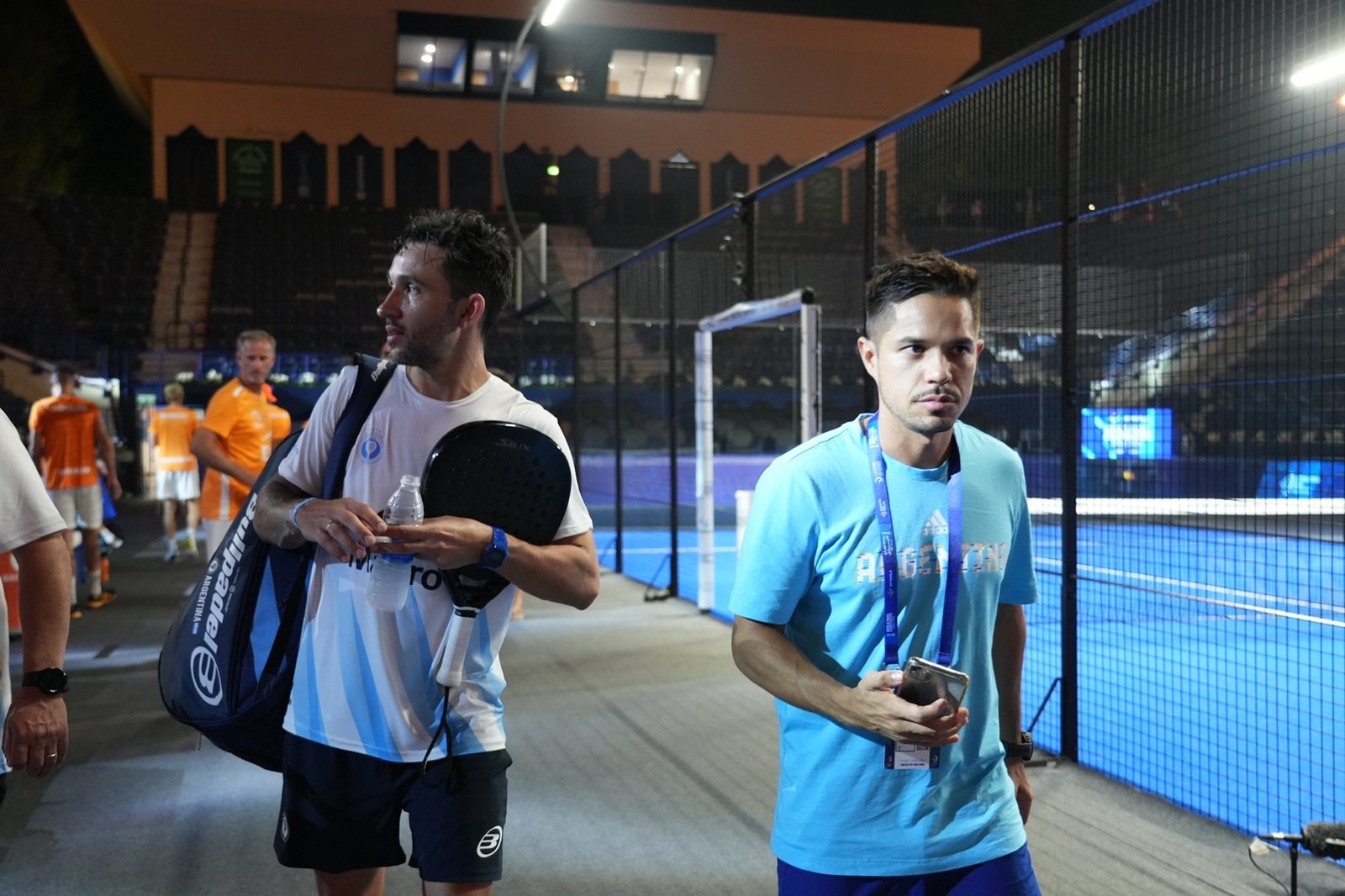
The first block has one rule: never stand still. Everything in it is movement — the moment you are stationary, holding a position and pulling on a limb, you have left the warm-up and gone back to the old routine. Work through this sequence at a pace that raises your breathing without tiring you:
Easy laps (about 40 seconds). Jog gently around the inside of the court — or along the walkway if you are warming up outside the cage — forwards, then a few steps backwards, then back to forwards. You are telling your body the session has started, nothing more.
Side steps and crossovers (about 30 seconds). Move sideways along the baseline with proper side steps — feet never crossing, knees soft — then return leading with the other side. Add a few light crossover steps each way if you know them. This is the exact footwork of defending the back of the court, done slowly while it costs nothing.
Arm circles and shoulder rolls (about 30 seconds). Small arm circles growing into large ones, forwards then backwards, then a handful of big shoulder rolls. The overhead shots ask a lot of the shoulder’s range; this is where the shoulder finds that range at walking pace instead of at full stretch under a lob.
Hip openers and walking lunges (about 30 seconds). Lift each knee and open it out to the side as if stepping over a low hurdle, a few each leg, then take four to six slow walking lunges with a gentle turn of the chest over the front leg. Keep them shallow — this is a rehearsal of the lunge you will use at the net, not a workout.
Ankle bounces (about 20 seconds). Light, quick bounces on the balls of your feet, then a few small side-to-side hops. Finish the block bouncing gently in your ready position, racket in hand if you have picked it up — split-stepping in place to an imaginary rally.
By the end of two and a half minutes you should feel warm in the plainest sense: breathing clearly up, the first hint of sweat, joints that feel oiled rather than creaky. If you feel none of that, you moved too gently — extend the laps next time. If you are breathing hard, you overdid a warm-up: the pace should leave you fresher than it found you, just warmer and looser.
A word on footwear, because this block is where it shows: side steps, lunges and split-steps are lateral movements, and they are exactly what your shoes are on court to support. If your feet slide or your ankles feel unsupported during block 1, that is information worth acting on — the movements only get faster from here, and our guide to the best padel shoes explains what proper court grip and lateral support look like.
Block 2: Shadow swings (2:30–4:30)
Shadow swinging — rehearsing the stroke with no ball — feels faintly silly the first time and indispensable the tenth. Without a ball there is no timing to fail and no result to chase, so your attention lands where it should: on the shape of the swing and the feet underneath it. Two minutes, four shapes, each done slowly first and a little quicker as the block goes on. Stand in open court space, well clear of your partners — shadow swings with three other rackets nearby need room, so spread out.
Drives (about 40 seconds). Six to eight forehand drives and the same on the backhand, at half speed: turn the shoulders, step in, swing through an imaginary ball at knee-to-waist height, recover to ready. Half speed is the point — a shape you cannot perform slowly is a shape you do not own at speed.
Volleys (about 30 seconds). Move a few steps forward into a net position and shadow forehand and backhand volleys: short punch, racket head up, a small split-step between each. The volley is a compact shot; rehearse it compact.
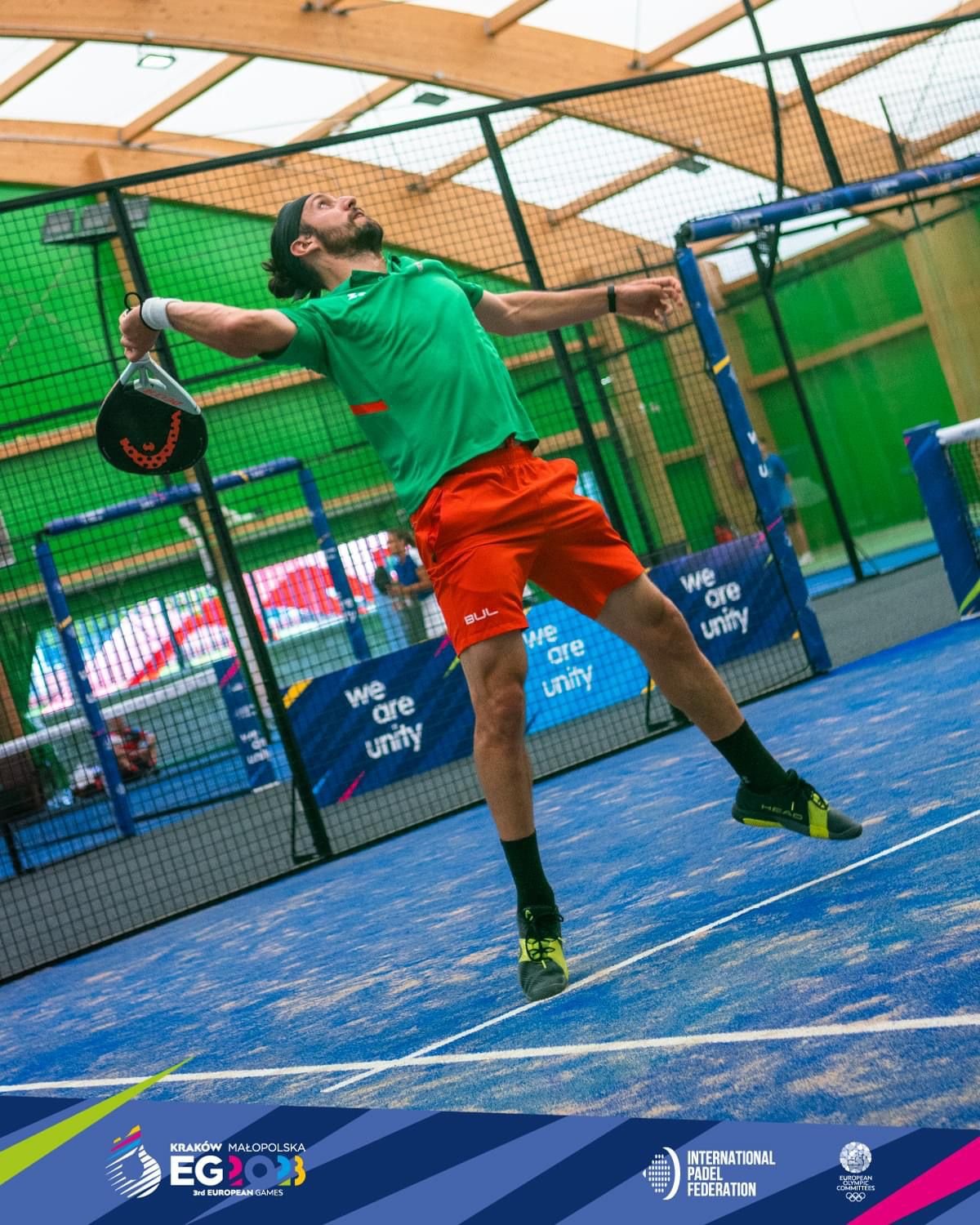
The bandeja shape (about 30 seconds). This is the swing the block exists for. Turn side-on, point at the imaginary lob with your non-racket hand, take the racket up and back behind your head, and swing through in the bandeja’s flatter, slicing arc — contact imagined out in front, not above your skull. The bandeja is the overhead beginners meet first and mishit most, usually because the first one they attempt each day is a real one, at a real lob, with their shoulder cold. Shadow it ten times here and the first real one in block 3 already feels familiar.
A few split-steps and shadows combined (about 20 seconds). Finish by moving: split-step, shadow a drive, recover; split-step, shadow a volley, recover. The swing in padel is never a statue — it lives at the end of footwork — and the last twenty seconds of the block stitch the two together.
Block 3: Cooperative rallies (4:30–8:00)
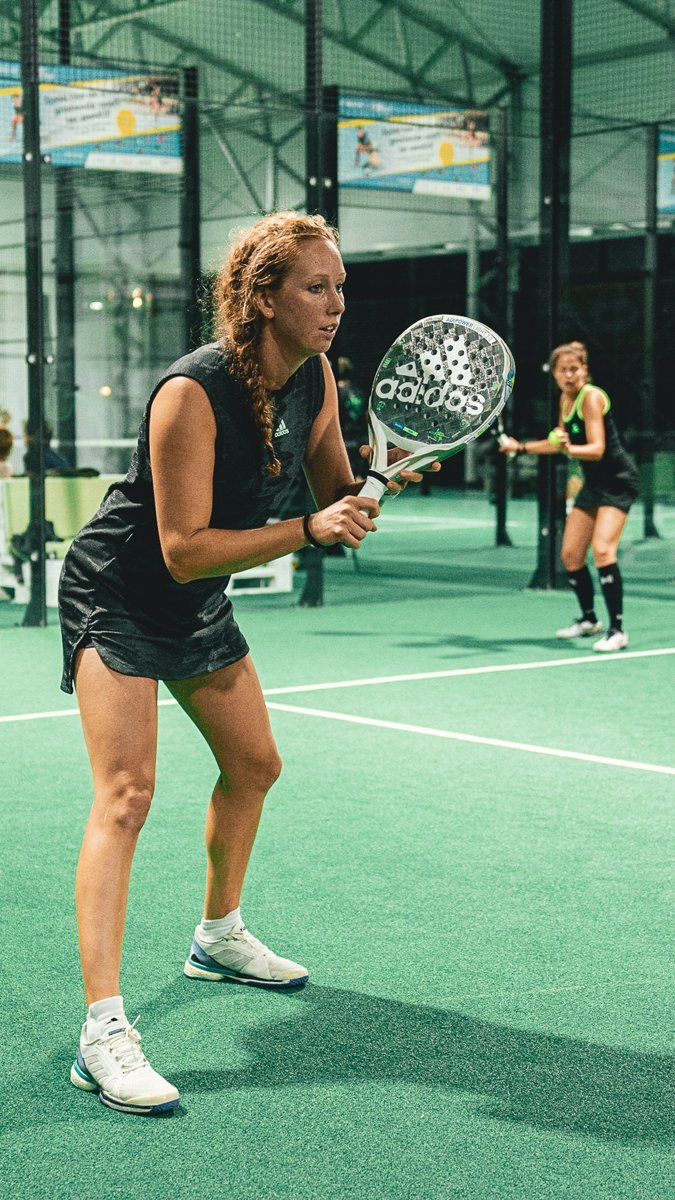
Now the ball arrives — with one condition that makes the whole block work: for three and a half minutes, everybody is feeding, nobody is winning. A cooperative rally is a rally with a shared target: keep it going. Each of the four steps below adds one layer of the real game, at a pace slightly above the step before. If a step falls apart into errors, that is the routine telling you to stay at that step a little longer, not a failure.
Step 1 — Cross-court drives (about 1 minute)
Pair up diagonally. Drive forehands cross-court to each other at about half pace, aiming for a comfortable bounce in front of your partner, and count the rally rather than chasing the corners: twenty balls in a row is a better warm-up score than one winner. Switch to backhands for the second half-minute. This is your timing coming back online at a price you can afford.
Step 2 — Volleys at the net (about 45 seconds)
One pair comes to the net, the other stays back and feeds steady drives at them. The net pair volleys everything back to the feeders — controlled, placed, no put-aways — while the feeders keep the balls coming at a friendly height. Swap roles after twenty balls or so. Net players: notice the split-step arriving before each volley without being asked for, a leftover of block 2 doing its quiet work.
Step 3 — Lobs and bandejas (about 1 minute)
The back pair now feeds lobs — high, deep, easy to read — and the net pair answers with bandejas played back into the middle of the court, where the feeders can lob again. Nobody smashes, nobody hits a winner; the exchange is a loop, lob–bandeja–lob, and its job is to connect the shadow shape from block 2 to a real ball at maybe two-thirds pace. Swap after eight to ten lobs each. Of the four steps, this is the one beginners most want to skip and most benefit from keeping, because the bandeja is the shot that punishes a cold shoulder hardest.
Step 4 — Add the glass (about 45 seconds)
Finish the block with free cooperative rallying from the back of the court, with one rule change: let the ball come off the back glass before you play it whenever it is heading that way. Playing off the glass is padel’s signature skill and its timing is the last thing to wake up — the pause between bounce, glass and swing feels endless when you are cold and automatic once you have done it a dozen times. A dozen gentle ones here are worth more than the first pressurised one in game one.
Block 4: Serves and first balls (8:00–10:00)
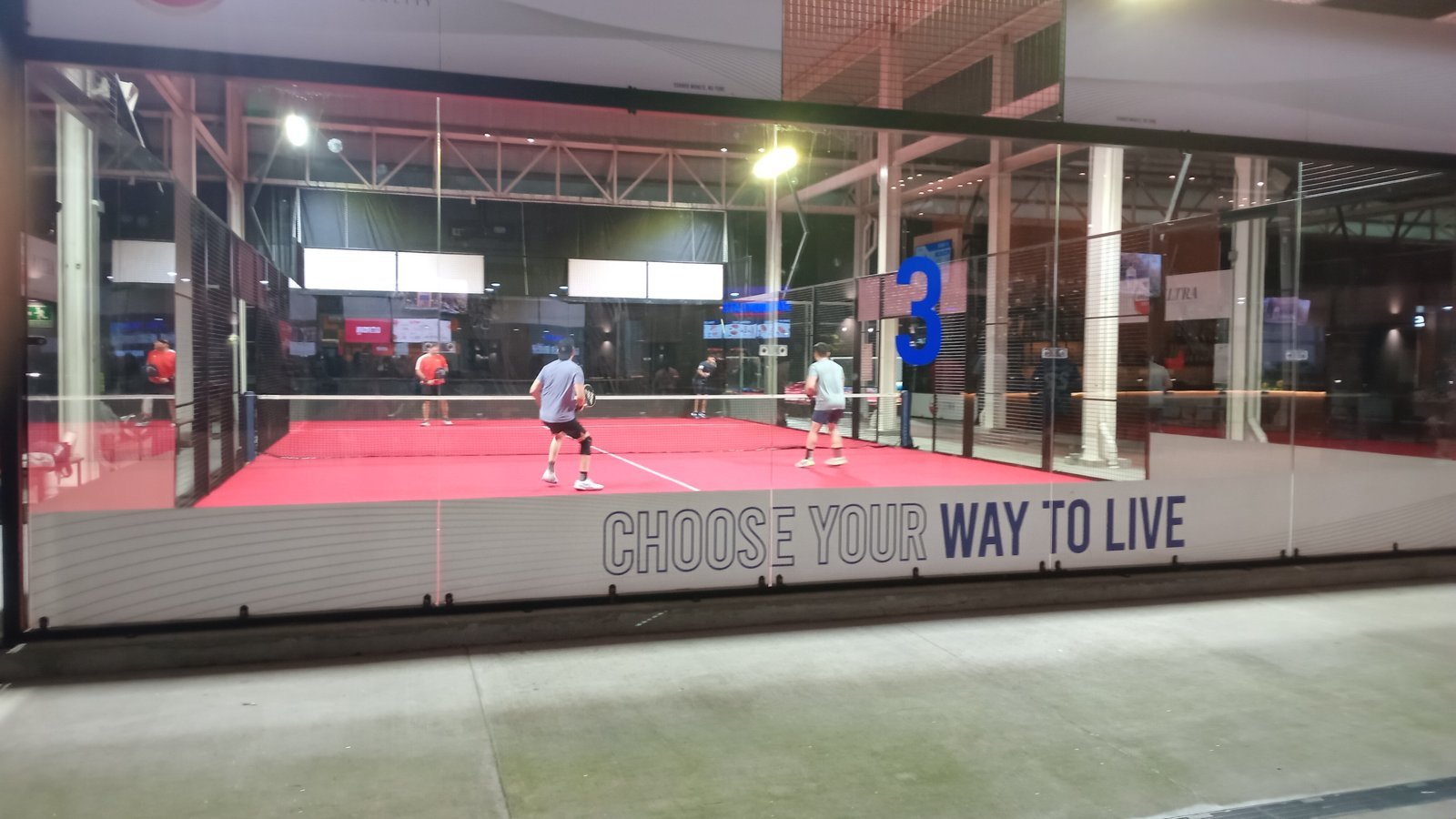
The serve is the only shot in padel that begins from a standstill, which is precisely why it cannot be left to warm itself up: there is no rally to ease you into it, and the first serve of the match arrives with the score attached. So the final block gives it two minutes of its own.
Serves at building pace (about 1 minute). Each player serves four to six balls, alternating ends if both pairs want to serve. Start the first two at roughly two-thirds of your normal pace — the full action, the full shape, just dialled down — then let each serve come a little closer to match pace, so the last two are the real thing. Receivers: stand in your return position and track the ball, but let these go or catch them; returning is the next step, not this one. If the mechanics of the serve itself — the underarm action, the bounce, where you may stand — are still new to you, they are set out properly in how to play padel; this block assumes the action and simply wakes it up.
Returns and first balls (about 40 seconds). Now the receivers return — gently, played back to the server or cross-court to keep the ball alive — and each server plays one first ball after the return before the rally is killed and reset. Serve, return, one more shot: that three-ball rhythm is the heartbeat of the opening of every real point, and two minutes of it teaches your feet where a point actually starts.
Two cooperative points (about 20 seconds). Finish with two points played at three-quarter pace, serve included, score ignored. Then stop. The timer ends, the warm-up ends, and the match begins with every player having already moved, swung, rallied off the glass and served at something close to full pace — which is the entire point.
Short on time: the 5-minute and 2-minute versions
Some days the court, the traffic or a late partner eats your ten minutes. The routine compresses by a simple rule: shorten every block, never delete the order. The sequence — move, shadow, rally, serve — is the routine; the timings are just its generous setting.
The 5-minute version
1 minute of movement (laps, side steps, arm circles, a few hip openers — skip the lunges and bounces). 1 minute of shadow swings (drives and the bandeja shape only). 2 minutes of cooperative rallying (drives, then lob-and-bandeja; add the glass only if the steps feel smooth). 1 minute of serves — three each, the last one at full pace. Five minutes done this way still beats ten minutes of unstructured knocking up, because the order survived.
The 2-minute emergency version
Sixty seconds of movement — genuinely moving, the whole time — then four shadow bandejas and four shadow drives, then straight into cooperative drives for the remaining seconds and your first serves when the match starts, taking the first game as your rally block: play the opening points a touch conservatively, at the pace your preparation actually reached. Arriving late and pretending you are warm is how the mini-match error gets invited back in; arriving late and honestly building through game one is the grown-up version of the same routine.
And if you are the early one, waiting on three partners? Run blocks 1 and 2 solo — they need nobody — then, once you have the court, feed yourself a few balls off the back glass and practise serves into the empty service box. A solo start still delivers the order; the rally block simply joins when the second player does.
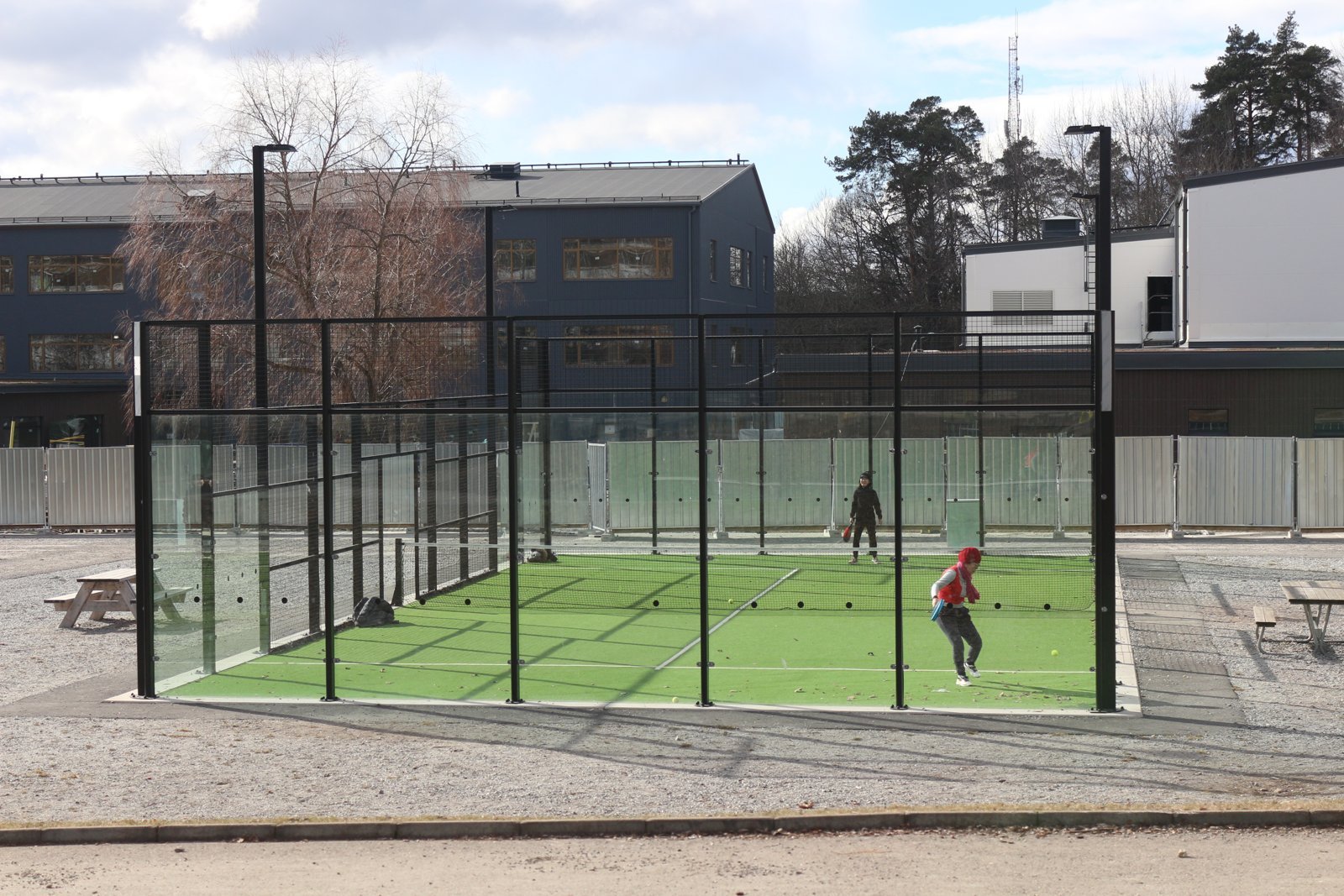
After the match: two minutes for tomorrow
The warm-up has a small mirror image, and it takes two minutes when the match ends. Walk a slow lap or two of the court while your breathing settles — chat about the match, by all means, just keep moving while you do it. Then, and only now, bring in the static stretches the old routine used to start with: calf against the fence, quad, hip flexor, and a gentle shoulder and forearm stretch, each held easily for twenty to thirty seconds a side. Muscles that have worked for an hour respond to held stretches in a way cold muscles at the start of a session simply are not being asked to here — before play we move, after play we hold.
Keep it genuinely gentle: a cool-down stretch should feel like a release, never a contest, and anything that produces sharp discomfort is a stop signal, not a target. Two minutes, a bottle of water, and you leave the court having closed the session as deliberately as you opened it. Tomorrow’s first game will feel the difference even if today’s body only notices that it did not stiffen up on the drive home.
The verdict
The warm-up is not a ritual, a fitness test or a medical intervention — it is an order of events. Move before you swing, swing before you rally, rally before you serve, and let the pace climb in steps. Do that for ten honest minutes and the cold, clumsy first game that beginners accept as normal mostly stops happening.
- Arrive ten minutes before the booking, not at it — blocks 1 and 2 need no court.
- Intensity only ever goes up: the first match-pace effort belongs in the last block.
- Cooperative until block 4: a warm-up rally has a shared target — keep it going.
- Serves always included: the day’s first serve should cost nothing.
- Short of time? Compress the blocks — never delete the order.
Padel warm-up — FAQs
How long should a padel warm-up be for a beginner?
Ten minutes is the sweet spot for a beginner: long enough to move, rehearse your swings, rally cooperatively and serve a few balls, short enough to fit before any booked session if you arrive slightly early. If you only have five minutes, run the shortened version in this guide — shorten every block rather than skipping the early ones. The order (move, shadow, rally, serve) matters more than the exact number of minutes.
Is the knock-up before a match enough of a warm-up on its own?
Not quite. The knock-up is only the rally block of a warm-up: it skips the movement and mobility that should come first and the shadow swings that groove your shots, and because it is unstructured it usually escalates to match intensity within a minute or two. Keep the knock-up, but treat it as block three of four rather than the whole preparation.
Should I stretch before playing padel?
Before play, warm up with movement rather than long static stretches: light jogging, side steps, arm circles and other moving mobility work, as in block 1 of this routine. Static stretches — the held, pull-and-count kind — are better placed after the match, when you are cooling down. That is the standard order in general coaching practice: dynamic first, static last.
Can I do this warm-up on my own if my partners are late?
Yes — the first two blocks need nobody else. Move and mobilise, then shadow your drives, volleys and bandeja shape solo. Once you have the court, you can feed balls to yourself off the back glass and serve into the empty service box. The cooperative rally block is the only part that truly needs a second player, and it can join the routine whenever they arrive.
What if our court booking starts the moment we arrive?
Do blocks 1 and 2 outside the cage — on the walkway or by the benches — while you wait, so your booked time is spent playing rather than preparing. If you arrive with no margin at all, run the two-minute emergency version: a minute of genuine movement, a few shadow swings, then cooperative drives, and play the first game at a slightly reduced pace as your rally block.
Do I need any special equipment for a padel warm-up?
No. The full routine needs only your racket, balls and the shoes you play in — blocks 1 and 2 do not even need the balls. There is no band, ladder or cone in it. The one equipment point that matters is footwear: the side steps, lunges and split-steps are lateral movements, so proper court shoes with grip and support are worth having, as the movement block will quickly tell you if yours are not up to it.
Should I warm up differently on a very hot day?
Adjust the first block, keep the order. In serious heat — a UAE summer afternoon, say — your body arrives part-warmed by the weather, so trim the movement block to the mobility essentials, take the rally steps a little more gently, and drink water before you start and at every break. The shadow swings and the serve block stay the same: heat changes how much movement you need, not the sequence your shots need.
About this guide: This routine follows standard coaching practice for pre-match preparation in racket sports: light movement and mobility first, stroke shapes rehearsed without a ball, cooperative rallying at rising intensity, and serves last. The timings are session structure — a routine to follow — not performance statistics, and nothing here is medical advice or a promise about injury: warm up within your own limits and stop if anything hurts. First-game skills are covered in our padel-for-beginners guide and the laws of the game in our how-to-play-padel guide, both on Alishuttler.com.