
Padel destroys regular court shoes. These 10 are engineered for lateral movement, sand-dressed turf grip, and the hard stops that define padel footwork — with every spec verified against manufacturer and retailer listings.
TL;DR — The Short List
- Best overall stability: ASICS Gel-Resolution X Padel — DYNAWALL lateral cage, padel-specific herringbone outsole
- Best for speed: Babolat Jet Premura 3 — Michelin padel sole, ultra-lightweight, co-designed with Juan Lebrón
- Best value: Joma Slam — STABILIS anti-twist system and pro-level build at a mid-tier price
- Best custom fit: Head Motion Pro Padel 1.5 BOA — Dual BOA Li2 dials, outsole developed with MONDO
- Best cushioning: Adidas Crazyquick Boost Padel — BOOST midsole and Slingframe, worn by Ale Galán
- Best for clay courts: Nike Vapor Lite 3 Clay — Claybreaker herringbone; Nike lists it for clay and padel surfaces
- Best comfort / wide feet: Skechers Viper Court Pro 2.0 — Goodyear Gold outsole, Arch Fit insole, Relaxed Fit
- Best lightweight stability: Wilson Hurakn Pro V2 — Pro Torque Chassis Light, 9 mm drop, 339 g
- Best durability: Bullpadel Vertex Vibram 26V — Vibram X-ABRADE compound, Juan Tello’s line
- Best budget: Kuikma PS Stab — Pebax stability plate and Padel Dual Grip 2 sole at an entry price
Quick Navigation
Padel shoes take more punishment than any other racket-sport footwear. The constant lateral slides, hard stops on abrasive artificial turf, and explosive direction changes demand purpose-built padel shoes — not repurposed tennis or running shoes. The outsole has to bite into sand-dressed turf without clogging, the upper has to survive lateral forces that tear standard court shoes apart, and the midsole has to absorb repeated impact from jumping and stopping.
Below are 10 padel shoes from ASICS, Babolat, Joma, Head, Adidas, Nike, Skechers, Wilson, Bullpadel, and Decathlon’s Kuikma. Every model is real and currently listed by the manufacturer or major retailers, and every technical claim below is traceable to published specs — technology names, outsole types, weights, and fit notes come from the brands and their retail partners, not from personal wear-testing.
The 10 Best Padel Shoes

ASICS Gel-Resolution X Padel
Best overall stability — the benchmark support shoe
ASICS builds the Gel-Resolution X Padel around DYNAWALL — a midsole technology that extends into the heel to add stability during lateral movements, per ASICS. The midsole pairs FF BLAST+ cushioning with forefoot GEL for impact absorption, while the AHAR Plus rubber outsole uses a modified herringbone pattern designed for padel courts. A PGUARD toe protector shields the forefoot for players who slide and drag their toes.
The DYNALACING system lets the laces be cinched tightly without pressure points, and a two-piece midsole design is engineered for stable landings. Retailers list the fit as true to size with a snug medium width and note that a break-in period is normal — this is a substantial, stability-first shoe, not a featherweight.
✓ Pros
- DYNAWALL lateral stability system
- Padel-specific herringbone outsole
- Forefoot GEL + FF BLAST+ cushioning
- PGUARD toe protection for sliders
✗ Cons
- Heavier than speed-oriented models
- Premium-tier price point
- Retailers report a break-in period
Free returns · Prime shipping on eligible orders
Prices vary by retailer and region — check the current price on Amazon.
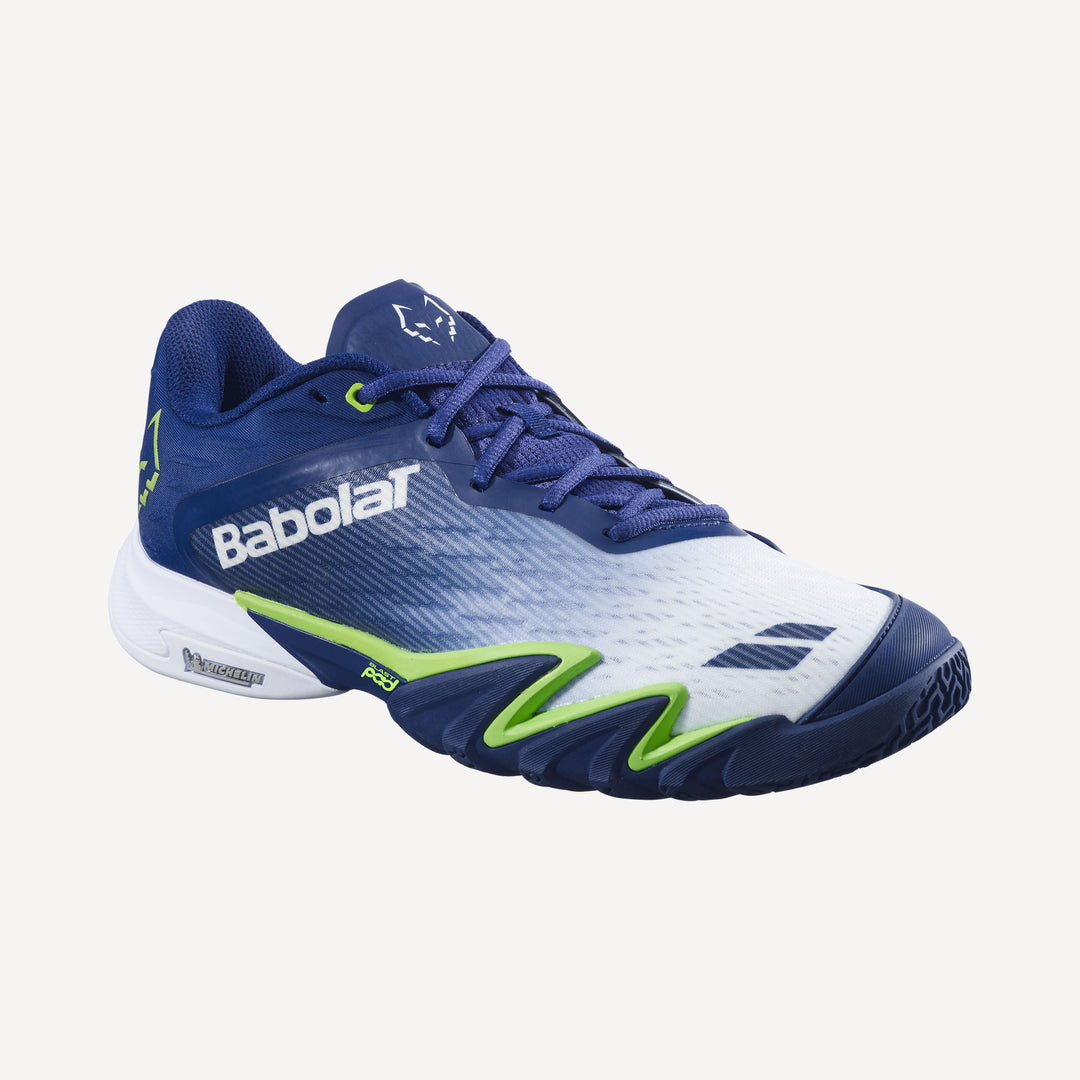
Babolat Jet Premura 3
Best for speed — co-designed with Juan Lebrón
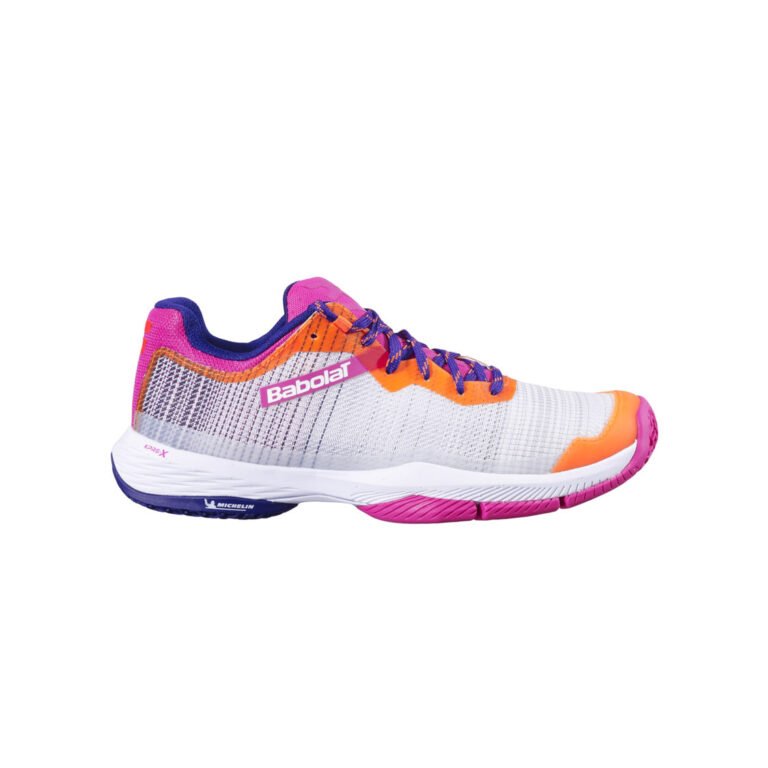
The Jet Premura 3 uses a Michelin padel-specific outsole — the result of Babolat’s collaboration with Michelin — with 360° Flex grooves cut into the forefoot to free up pivoting. The Matryx Micro upper (Babolat’s technical woven fabric) keeps weight down while ventilating, and KPRS-X heel cushioning uses an EVA insert to protect against impact. A moulded OrthoLite insole adds breathability.
Retailers describe this line as designed with Juan Lebrón for explosive padel performance, and the signature lateral forefoot reinforcements (“teeth”) carry over from the original Jet Premura — the model that put Babolat on the padel-footwear map. The trade-off for the low weight is less plush cushioning than stability-first rivals, so heavier players or hard-court hitters may prefer a more cushioned option.
✓ Pros
- Michelin padel-specific outsole
- Ultra-lightweight build
- 360° Flex forefoot grooves
- Breathable Matryx Micro upper
✗ Cons
- Less cushioning than ASICS or Adidas
- Premium-tier price point
- Lightweight build suits lighter players best
Free returns · Prime shipping on eligible orders
Prices vary by retailer and region — check the current price on Amazon.

Joma Slam
Best value — pro-level stability at a mid-tier price
The Joma Slam — the latest generation being the Slam Men 25 — is built on Joma’s STABILIS system, a TPU piece that stabilizes the tread and is designed to prevent incorrect foot and ankle movements. The midsole combines a FULL DUAL PULSOR dual-density phylon base with REACTIVE BALL, a material Joma describes as expanding easily to absorb impact and recover its shape quickly. The outsole uses DIN-40 high-abrasion-resistance rubber, and the forefoot gets injected-rubber Protection reinforcement where lateral slides wear shoes hardest.
Joma served as the official footwear of the World Padel Tour circuit, and the Slam line carries that heritage with endorsements from tour players including Alba Galán and Pincho Fernández, per retailers. A VTS ventilation system keeps airflow moving through the mesh upper. For players who want genuine padel engineering without paying top-tier prices, the Slam’s spec sheet is hard to argue with.
✓ Pros
- STABILIS anti-twist TPU system
- DIN-40 abrasion-resistant outsole
- WPT-circuit footwear heritage
- Strong spec sheet for the price tier
✗ Cons
- Less cushioned than premium rivals
- Fewer colorway options
- Harder to find outside Europe
Free returns · Prime shipping on eligible orders
Prices vary by retailer and region — check the current price on Amazon.

Head Motion Pro Padel 1.5 BOA
Best custom fit — dial it in mid-match
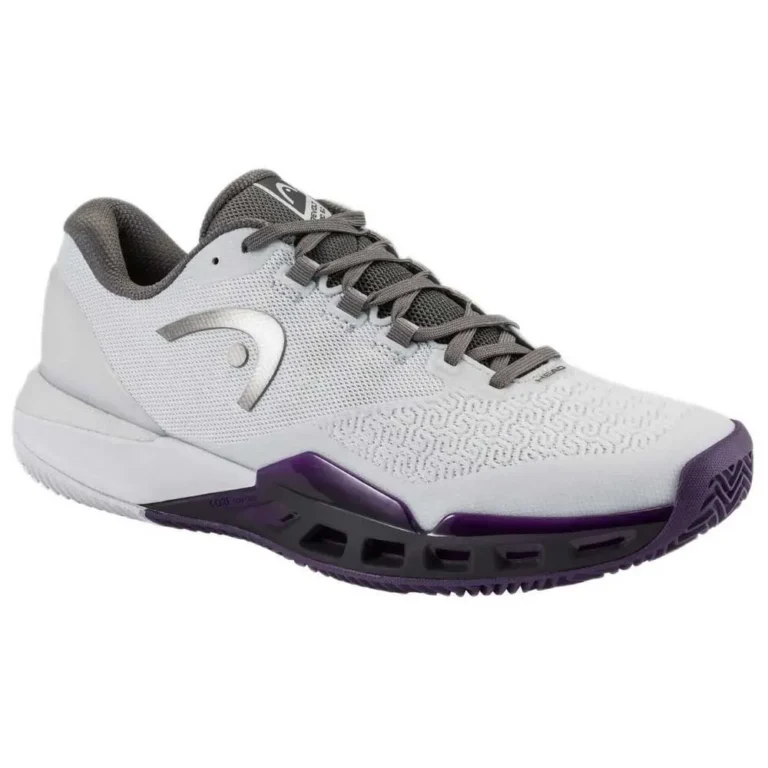
The Motion Pro Padel 1.5 BOA is the first padel shoe built around the Dual BOA Li2 Fit System — two dials that micro-adjust fit with even pressure distribution, and can be loosened gradually without untying. The outsole was developed in cooperation with MONDO, the Premier Padel tour’s official turf provider, with a 360° tread pattern designed for multidirectional padel movement. DynaFoam — a midsole made from tiny air cells — provides lightweight, responsive cushioning, and an OrthoLite sockliner adds breathability.
Stability comes from a TPU midfoot shank, a reinforced upper, and Lateral Control+ technology, while Drift Defense TPU toe protection covers the drag zone. A ventilated midfoot cooling system moves air through the shoe. The BOA system adds some weight versus lace versions, and replacement dials are a consideration if damaged — but for players who struggle with laces or have feet that standard lasts don’t fit, the dial system solves a real problem.
✓ Pros
- Dual BOA Li2 micro-adjustable fit
- MONDO-developed outsole
- DynaFoam responsive cushioning
- Lateral Control+ stability system
✗ Cons
- BOA hardware adds weight vs laces
- Dial replacement if damaged
- Premium-tier price point
Free returns · Prime shipping on eligible orders
Prices vary by retailer and region — check the current price on Amazon.

Adidas Crazyquick Boost Padel
Best cushioning — Ale Galán’s line
The Crazyquick Boost Padel is the shoe Adidas associates with Ale Galán — retailers list him as the associated player for the current SS26 and FW26 colorways. The BOOST midsole is made of expanded thermoplastic polyurethane capsules that compress on impact and return energy on push-off, which suits padel’s constant jumping and stopping. The Slingframe structure wraps the midfoot to stabilize it during lateral movements and explosive direction changes, per Adidas.
The Adiwear outsole is formulated specifically for padel courts with a high-resistance composition for wear performance, and an Adituff toe reinforcement protects the highest-wear area. The upper combines lightweight textile and synthetic mesh for breathability, and the shoe contains at least 20% recycled materials. Retailers list a classic last — players with wide feet should check sizing carefully, as this line runs on the snugger side of standard.
✓ Pros
- BOOST energy-return cushioning
- Slingframe midfoot stability
- Adiwear padel-specific outsole
- Adituff reinforced toe
✗ Cons
- Runs on the snugger side
- BOOST foam adds some weight
- Premium-tier price for the top model
Free returns · Prime shipping on eligible orders
Prices vary by retailer and region — check the current price on Amazon.

Nike Vapor Lite 3 Clay
Best Nike option — sand-clearing traction
Nike’s own product page lists the Vapor Lite 3 Clay as “designed for wear on clay and padel court surfaces” — the only shoe in this list whose manufacturer explicitly names padel in its intended use. The Claybreaker sharp herringbone tread is designed using traction and pressure maps to reduce clay and sand build-up in the grooves, which matters on sand-dressed padel turf where clogged tread loses grip. A Hart rubber compound improves outsole durability and protects the toe tip.
The full-length Phylon midsole gives a cushioned, plush feel, and the engineered mesh upper is reinforced around the toes for drag protection. Retailers list true-to-size length, medium width, and no break-in. It is not a padel-specific build in the way the ASICS or Babolat are — lateral support is standard court-shoe level — but for the price tier, the manufacturer-stated padel suitability and the sand-clearing tread make it the most sensible Nike pick for padel.
✓ Pros
- Nike states padel-court suitability
- Claybreaker sand-clearing tread
- True to size, no break-in
- Strong value in its tier
✗ Cons
- Not a padel-specific build
- Standard lateral support only
- Less durable compound than premium padel outsoles
Free returns · Prime shipping on eligible orders
Prices vary by retailer and region — check the current price on Amazon.

Skechers Viper Court Pro 2.0
Best comfort — roomy fit, podiatrist-recognized insole
Skechers markets the Viper Court Pro 2.0 for outdoor pickleball, padel, and tennis game play — padel is named in the official use case. The Goodyear Gold rubber compound outsole is built for controlled slides and quick stops, and the Arch Fit EVA insole system carries the American Podiatric Medical Association (APMA) Seal of Acceptance; Skechers states the Arch Fit design was developed with 20 years of data and 120,000 unweighted foot scans. The ULTRA GO foam midsole provides lightweight, responsive cushioning.
Relaxed Fit gives a roomy toe box and forefoot — the natural pick in this list for wide feet or feet that swell during long sessions. A rubber toe guard adds durability at the drag zone. The trade-off for the roomy, cushioned build is less aggressive lateral lockdown than padel-specific models, so explosive movers may prefer a more structured shoe.
✓ Pros
- Goodyear Gold durable outsole
- Arch Fit insole, APMA Seal of Acceptance
- Relaxed Fit suits wide feet
- Multi-court versatility
✗ Cons
- Less aggressive lateral support
- Bulkier than speed-oriented shoes
- Not a tour-level padel build
Free returns · Prime shipping on eligible orders
Prices vary by retailer and region — check the current price on Amazon.

Wilson Hurakn Pro V2
Best lightweight stability — speed without the wobble
The Hurakn Pro V2 centers on the Pro Torque Chassis Light — a lightweight chassis under the arch designed to prevent twisting during aggressive movements while keeping forward flexibility. Wilson’s DF2 geometry sets a 9 mm heel-to-toe drop, a middle ground the brand positions between cushioning and responsiveness. The Optimum Grip outsole uses a vortex tread pattern on forefoot and heel, biomechanically designed for padel’s pivots and rotations, in Duralast high-density rubber.
The midsole is Fused 8 Foam (EVA with recycled content) and the insole is high-density OrthoLite, while the Endofit inner-sock construction wraps the foot to reduce in-shoe movement. Retailers describe the fit as normal to narrow, so wide-footed players should look elsewhere. Padel media lists the weight at 339 g in EU 44⅔ — firmly in speed-shoe territory.
✓ Pros
- Lightweight at 339 g with real stability
- Vortex-pattern pivot traction
- 9 mm balanced drop
- Endofit sock-like lockdown
✗ Cons
- Less cushioning than ASICS/Adidas
- Normal-to-narrow fit
- Mid-tier price for a lesser-known padel brand
Free returns · Prime shipping on eligible orders
Prices vary by retailer and region — check the current price on Amazon.
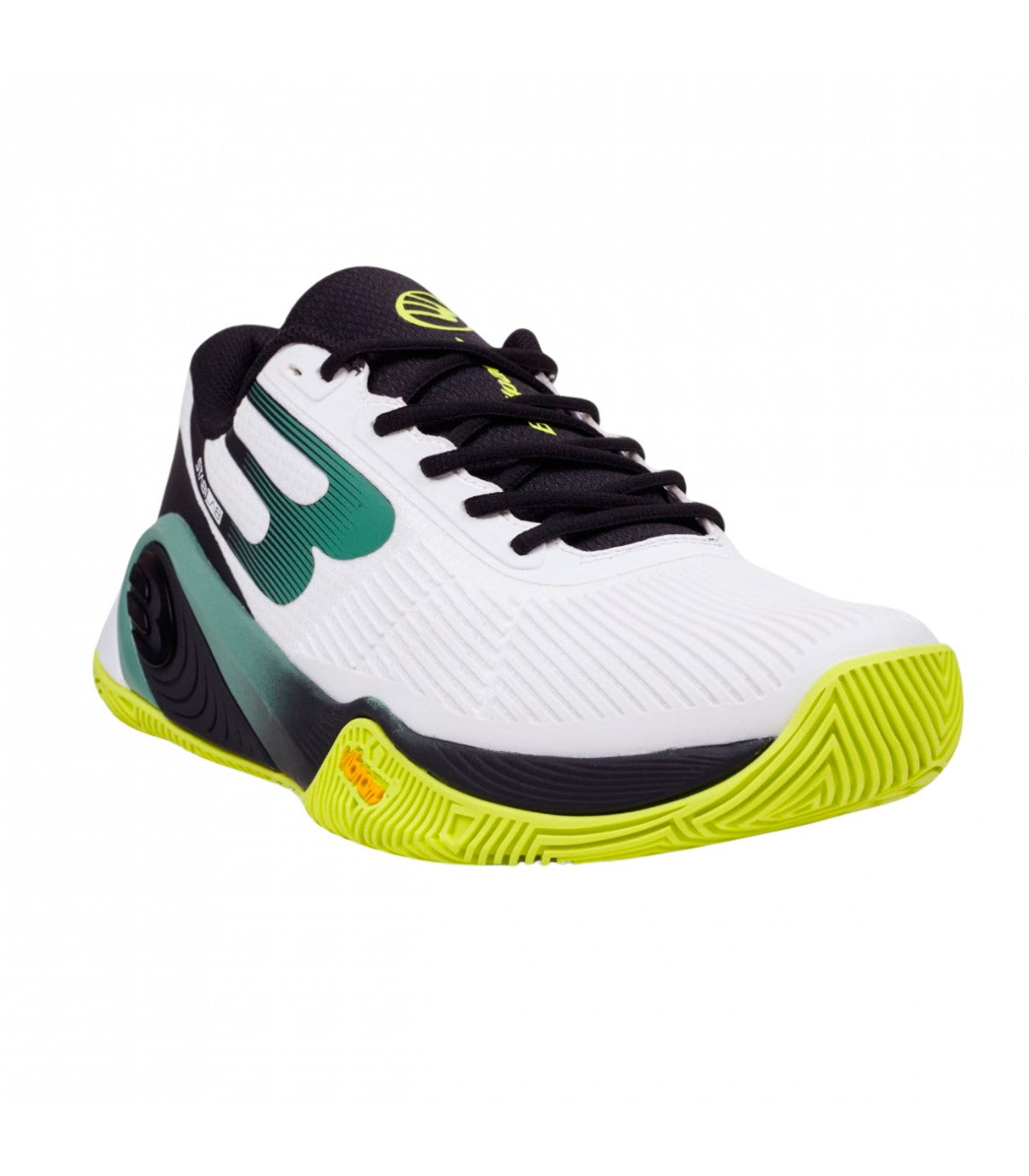
Bullpadel Vertex Vibram 26V
Best durability — built for heavy weekly volume
The Vertex Vibram 26V is the official shoe of Juan Tello, per Bullpadel and multiple retailers. Its defining feature is the Vibram X-ABRADE compound outsole in a 360° hybrid tread that mixes zigzag pattern with micro-studs — engineered for traction, multidirectional stability, and the wear resistance Vibram is known for. The CATAPULT system in the midsole acts as a stabilizing and propelling piece for push-offs, and the 2Dens dual-density midsole balances heel cushioning with forefoot response.
A seamless injected-rubber toe cap (Toughtoe) protects the drag zone, and the OrthoLite insole manages moisture. Retailers position this as an advanced/professional-level shoe for intensive use — the construction favors secure lateral movement and joint-friendly impact absorption over featherweight speed. Players who burn through outsoles will appreciate that the whole design brief is durability under volume.
✓ Pros
- Vibram X-ABRADE high-wear compound
- CATAPULT propulsion system
- 360° hybrid traction tread
- Built for intensive daily use
✗ Cons
- Heavier than speed-oriented models
- Some break-in expected
- Premium-tier price point
Free returns · Prime shipping on eligible orders
Prices vary by retailer and region — check the current price on Amazon.

Kuikma PS Stab
Best budget — genuine padel tech at an entry price
Decathlon’s Kuikma PS Stab packs a Pebax shank plate — the same class of material used in premium stability shoes — plus heel stiffeners to keep the shoe stable through lateral movement. The Padel Dual Grip 2 hybrid sole is, in Decathlon’s words, “designed to grip but not stick,” and H-Flex geometric flexion notches keep the forefoot moving naturally. M-Foam EVA cushioning handles impact absorption, and padel media notes a 9 mm drop on the current generation.
Kuikma is Decathlon’s racket-sports brand, and its ambassador roster includes tour player Coki Nieto — evidence the brand competes above its price tier. Decathlon lists the fit as true to size. Materials and finishing are a step below premium brands, and heavy weekly players will outgrow it — but as a first real padel shoe, the PS Stab’s spec sheet (Pebax plate, hybrid grip sole, 9 mm drop) reads like shoes costing far more.
✓ Pros
- Pebax stability plate at entry price
- Padel Dual Grip 2 hybrid sole
- True-to-size fit
- Tour-player ambassador program
✗ Cons
- Less premium materials and finish
- Decathlon-exclusive availability
- Not built for heavy weekly volume
Free returns · Prime shipping on eligible orders
Prices vary by retailer and region — check the current price on Amazon.
Side-by-Side Comparison Table
| Shoe | Price Tier | Best For | Standout Tech | Fit |
|---|---|---|---|---|
| ASICS Gel-Resolution X Padel | Premium | Competitive baseliners | DYNAWALL cage | True to size |
| Babolat Jet Premura 3 | Premium | Fast, agile players | Michelin sole | Standard |
| Joma Slam | Mid | Regulars on a budget | STABILIS | True to size |
| Head Motion Pro Padel 1.5 BOA | Premium | Hard-to-fit feet | Dual BOA Li2 | Micro-adjustable |
| Adidas Crazyquick Boost Padel | Premium | Maximum cushioning | BOOST foam | Classic last |
| Nike Vapor Lite 3 Clay | Budget–Mid | Clay / sandy courts | Claybreaker | True to size |
| Skechers Viper Court Pro 2.0 | Mid | Comfort / wide feet | Goodyear Gold | Roomy |
| Wilson Hurakn Pro V2 | Mid | Agile all-court play | Pro Torque chassis | Normal–narrow |
| Bullpadel Vertex Vibram 26V | Premium | Heavy weekly volume | Vibram X-ABRADE | Standard EU |
| Kuikma PS Stab | Budget | Beginners | Pebax plate | True to size |
Padel Shoe Buying Guide
Picking padel shoes comes down to four things: the outsole, lateral support, cushioning, and fit. Get those right for your game and your courts, and the brand on the box matters far less.
1. Outsole & Traction — the #1 Priority
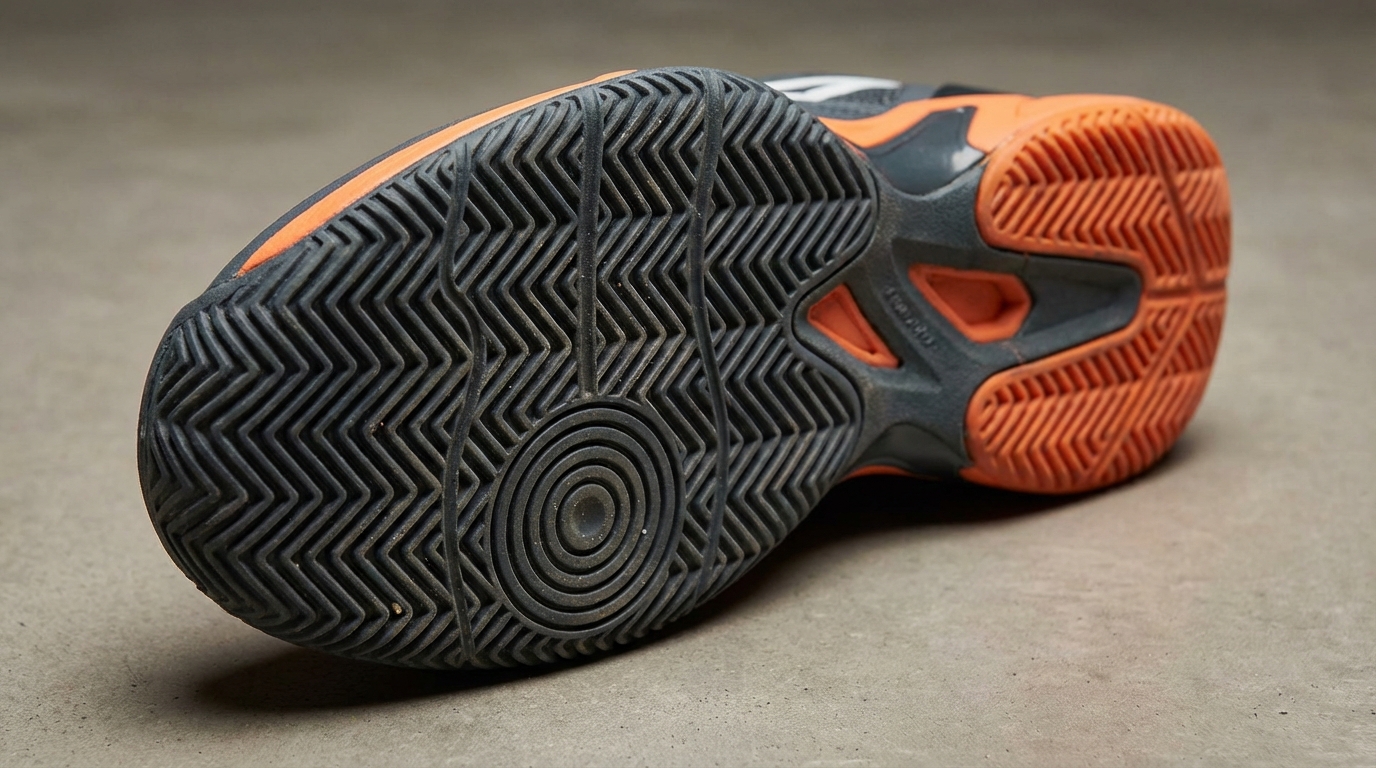
Most padel courts use sand-dressed artificial turf, and the tread pattern decides how the shoe behaves on it. Herringbone (espiga) patterns bite into sand-dressed turf; omni patterns with small studs suit harder, sand-free surfaces; hybrid patterns (like Bullpadel’s 360° hybrid with zigzag + micro-studs) try to cover both. Nike’s Claybreaker tread is specifically designed to shed sand and clay build-up from the grooves — clogged tread is the main reason grip fades mid-session.
Compound matters as much as pattern. Abrasive turf eats soft rubber, so padel brands formulate for wear resistance: Vibram X-ABRADE (Bullpadel), Michelin padel rubber (Babolat), Goodyear Gold (Skechers), AHAR Plus (ASICS), Duralast (Wilson), and Adiwear (Adidas). If you play outdoors on sandy courts, prioritize these compounds — they are engineered for exactly that abrasion.
2. Lateral Support & Stability
Padel is a lateral sport: slides, hard stops, and explosive direction changes load the sides of the shoe. Manufacturers address this with lateral cages and TPU reinforcements — ASICS DYNAWALL, Joma STABILIS, Adidas Slingframe, Head Lateral Control+, Wilson Pro Torque Chassis Light, Bullpadel X-Trabase, and Kuikma’s Pebax shank plate all serve the same purpose: keeping the foot from rolling over the edge of the midsole. Torsional shanks (Head’s TPU midfoot shank, for example) stop the shoe twisting under load.
Why it matters: uncontrolled lateral roll is how ankle injuries happen in court sports. A shoe with a real lateral support structure is not marketing fluff — it is the single most padel-specific thing about padel footwear.
3. Cushioning & Comfort
Padel’s jumping and hard stopping punish joints, so midsole cushioning earns its keep. The technologies differ by chemistry: Adidas BOOST (expanded TPU capsules) and ASICS FF BLAST+ plus GEL target energy return and impact absorption; Head DynaFoam and Skechers ULTRA GO foam aim for lightweight responsiveness; Joma REACTIVE BALL, Kuikma M-Foam, and Wilson Fused 8 foam are EVA-based systems tuned for padel’s stop-start rhythm.
Insoles matter too: OrthoLite (Babolat, Head, Wilson, Bullpadel) wicks moisture and resists packing out, while Skechers Arch Fit adds contoured arch support with the APMA Seal of Acceptance. If you play long sessions, prioritize cushioning and insole quality over shaving grams.
4. Fit & Court Surface
Buy your normal court-shoe size as the starting point, then adjust by brand: Decathlon lists Kuikma as true to size; retailers list the Nike Vapor Lite 3 Clay as true to size with medium width; the ASICS Gel-Resolution X Padel runs true to size with a snug medium width; Skechers Relaxed Fit is deliberately roomy; Wilson’s Hurakn Pro V2 suits normal-to-narrow feet; and the Head BOA system micro-adjusts around hard-to-fit feet. Leave roughly a centimeter of toe space — padel’s hard stops push feet forward — and make sure the heel is locked down, because heel slip causes blisters and kills lateral stability.
Match the shoe to your surface: sand-dressed outdoor turf (the most common) rewards herringbone patterns and high-abrasion compounds; clay padel courts suit the Nike Claybreaker-style sand-clearing tread; indoor courts are gentler on soles, so comfort and fit can take priority over maximum durability.
Why Padel Shoes Are Different From Tennis Shoes
Many players start padel in tennis shoes. Here is why purpose-built padel shoes are worth the investment:
Outsole Compound
Padel courts use sand-dressed artificial turf — significantly more abrasive than hard tennis courts. Standard court outsoles wear smooth quickly on it. Padel-specific compounds (Vibram X-ABRADE, Michelin padel rubber, Goodyear Gold, AHAR Plus, Duralast, Adiwear) are formulated for high abrasion resistance, which is why they appear across this entire list.
Lateral Reinforcement
Padel involves far more lateral sliding than tennis. The enclosed court and wall play create constant side-to-side movement, while tennis is built around forward sprinting and split-steps. Padel shoes reinforce the lateral forefoot with TPU cages, shanks, and extended outsoles — structures tennis shoes simply don’t include, because tennis doesn’t need them.
Herringbone Depth & Sand Clearing
Padel tread patterns are designed to bite into sand-dressed turf and shed the sand — Nike’s Claybreaker and Decathlon’s “grip but not stick” Dual Grip 2 philosophy both address the same problem. Shallow tennis herringbone clogs with sand and loses grip.
Durability Zones
Padel shoes reinforce the medial toe (the drag zone for slides) and the lateral forefoot (the push-off zone) — see PGUARD on the ASICS, Drift Defense on the Head, Adituff on the Adidas, and injected rubber toe caps on the Bullpadel. These are the two areas where standard court shoes fail first on padel courts.
How to Choose: 5-Step Decision Framework
Step 1: How often do you play?
- Once a week, casual: Kuikma PS Stab or Nike Vapor Lite 3 Clay — the budget tier covers you
- 2–3x per week, regular: Joma Slam, Skechers Viper Court Pro 2.0, or Wilson Hurakn Pro V2 — the mid tier’s sweet spot
- 4+ times per week, serious: ASICS Gel-Resolution X Padel or Bullpadel Vertex Vibram 26V — durability and support matter most
Step 2: What’s your foot shape?
- Wide feet: Skechers Viper Court Pro 2.0 (Relaxed Fit); ASICS runs snug-medium
- Narrow feet: Wilson Hurakn Pro V2 (normal-to-narrow); Babolat Jet Premura 3 (standard)
- Hard to fit: Head Motion Pro Padel 1.5 BOA — dial adjustment instead of laces
- Standard feet: Joma Slam, Adidas Crazyquick, Bullpadel Vertex, Kuikma PS Stab — all listed true to size or standard
Step 3: What’s your playing style?
- Speed and agility: Babolat Jet Premura 3, Wilson Hurakn Pro V2 (lightweight builds)
- Power and heavy hitting: ASICS Gel-Resolution X Padel, Adidas Crazyquick Boost Padel (cushioning + stability)
- All-court balance: Joma Slam, Head Motion Pro Padel (balanced spec sheets)
- Comfort-first social play: Skechers Viper Court Pro 2.0 (cushioning + roomy fit)
Step 4: Indoor or outdoor?
- Mostly outdoor, sandy turf: prioritize high-abrasion compounds — Vibram X-ABRADE, Michelin, Goodyear Gold
- Clay padel courts: Nike Vapor Lite 3 Clay — sand-clearing Claybreaker tread, manufacturer-listed for padel surfaces
- Mostly indoor: any quality padel shoe works; prioritize comfort and fit
- Both: Bullpadel Vertex Vibram 26V or ASICS Gel-Resolution X Padel — durability plus all-round design
Step 5: Budget reality check
The mid tier (Joma, Skechers, Wilson) is the sweet spot for most regular players — genuine padel engineering without premium pricing. The budget tier (Kuikma, Nike Clay) covers casual and beginner play honestly. The premium tier (ASICS, Babolat, Head, Adidas, Bullpadel) makes sense when you play often enough for durability, support, and cushioning to pay off — roughly 3+ sessions a week. Prices vary by retailer and region, so check the current price on each product card before deciding.
Shoes on the Pro Circuit
Tour players play 5–6 days a week and won’t tolerate bad shoes — so what they actually wear is a useful sanity check. These associations are confirmed by the brands and retailers:
| Player | Shoe | Why It Fits Their Game |
|---|---|---|
| Juan Lebrón | Babolat Jet Premura 3 | Retailers list the Premura 3 as co-designed with Lebrón — ultra-lightweight for his agile, fast style |
| Ale Galán | Adidas Crazyquick Boost Padel | Adidas lists Galán as the associated player — BOOST cushioning for a heavy match schedule |
| Juan Tello | Bullpadel Vertex Vibram 26V | Bullpadel’s official Tello line — Vibram durability for high training volume |
| Coki Nieto | Kuikma (ambassador) | Padel media confirms Nieto as a Kuikma ambassador — proof budget-tier shoes compete at tour level |
Key insight: even at the pro level there is no single “best” — Galán’s line prioritizes cushioning, Lebrón’s prioritizes speed, Tello’s prioritizes durability. Match the shoe to your priorities, not theirs. (Note: sponsorships change — Arturo Coello, for example, now wears On for footwear while Head remains his racket sponsor — so treat any “pro wears” list as a snapshot, not gospel.)
Caring for Your Padel Shoes
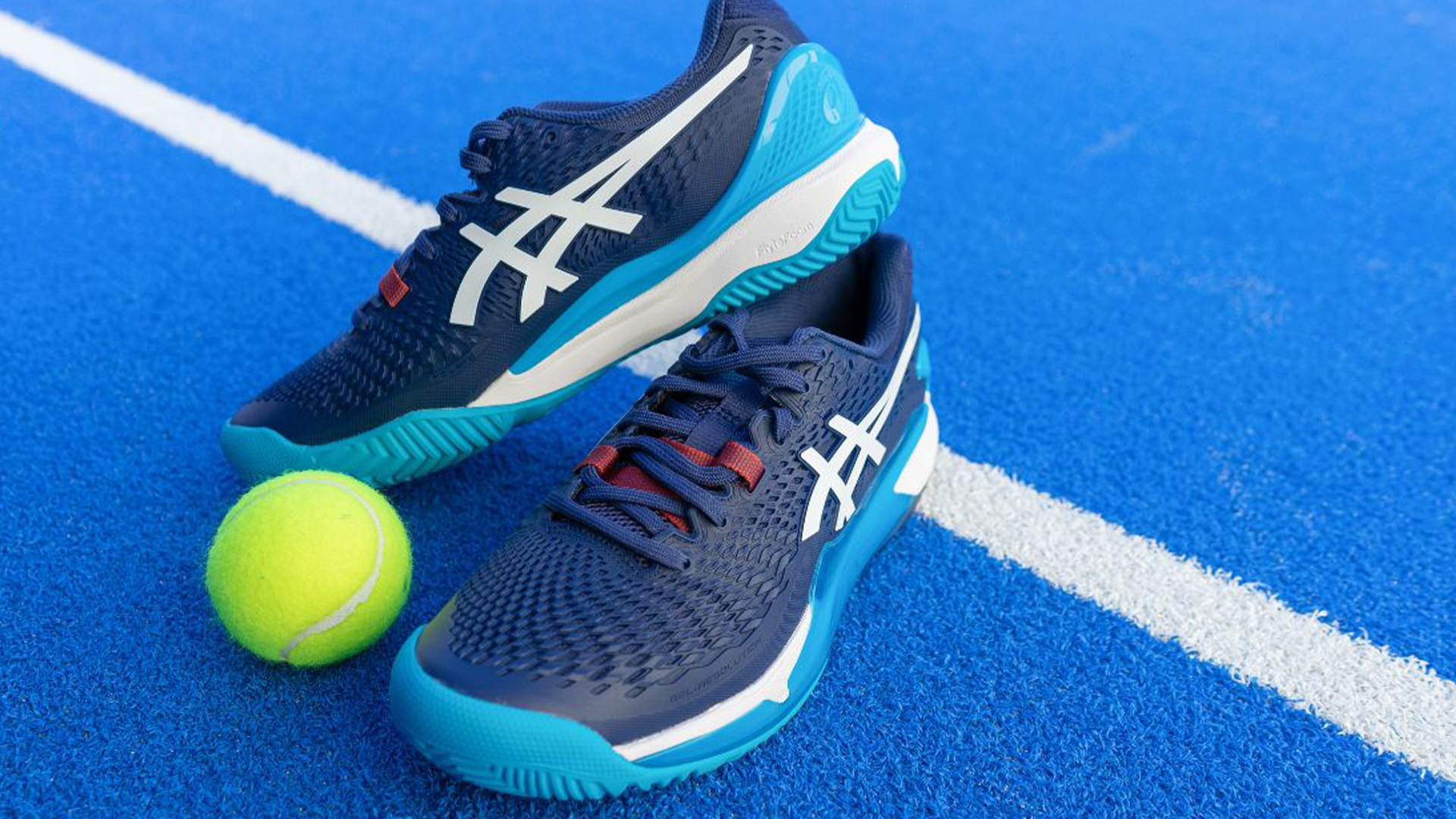
- Knock off sand after every session — sand trapped in herringbone grooves accelerates wear and kills grip
- Rotate pairs if you play several times a week — rest days between sessions let midsoles recover their shape
- Don’t use them for running — lateral support structures are engineered for side-to-side loads, not forward-only impact
- Replace insoles when they pack out — stock insoles compress before outsoles wear through
- Air dry only — never put padel shoes in the dryer; heat destroys adhesives and TPU components
- Watch the wear zones — when the herringbone wears smooth in high-contact areas or lateral support feels compromised, it’s time for a new pair
Frequently Asked Questions
You can, but purpose-built padel shoes perform better. Padel shoes use herringbone or hybrid outsoles designed for sand-dressed turf, reinforced lateral support for slides, and high-abrasion compounds (Vibram, Michelin, Goodyear Gold, AHAR Plus) for the rough surface. Tennis shoes wear out faster on padel courts and lack the lateral reinforcement padel’s side-to-side game demands.
With regular play (2–3 times a week), most players replace padel shoes every 6–12 months. Replace them when the tread pattern wears smooth in high-contact zones, or when the lateral support feels compromised. Players on abrasive outdoor turf — and heavier players — will go through outsoles faster.
The Skechers Viper Court Pro 2.0 in Relaxed Fit is the roomiest option in this guide, designed with extra space in the toe box and forefoot. The Head Motion Pro Padel 1.5 BOA is worth considering too — its Dual BOA Li2 dials micro-adjust around feet that standard laces don’t fit well. Avoid narrow-lasted models like the Wilson Hurakn Pro V2 if you have wide feet.
The same herringbone padel shoes work for both, but outdoor sand-dressed courts are more abrasive — prioritize high-abrasion compounds (Vibram X-ABRADE, Michelin, Goodyear Gold) for outdoor play. Indoor courts are gentler on soles, so comfort and fit can take priority. For clay padel courts specifically, the Nike Vapor Lite 3 Clay’s sand-clearing Claybreaker tread is worth a look.
Snug but not tight. Leave roughly a centimeter of toe space — padel’s hard stops push your feet forward — while the midfoot and heel must be locked down. Heel slip causes blisters and reduces lateral stability. If you’re between sizes, going up is usually the safer call, especially on models with snug lasts.
Padel shoes prioritize lateral support and turf grip — herringbone or hybrid outsoles for sand-dressed artificial grass, plus reinforced lateral structures for slides. Pickleball shoes are designed for hard courts with flatter outsoles and more forward cushioning. The Skechers Viper Court Pro 2.0 is a rare crossover: Skechers markets it for outdoor pickleball, padel, and tennis. Don’t wear hard-court pickleball shoes on padel turf — the wrong tread wears fast and grips poorly.
For the right player, yes. The Head Motion Pro Padel 1.5 BOA’s Dual BOA Li2 dials deliver micro-adjustable, even-pressure fit — useful if laces never quite lock your heel down or you have hard-to-fit feet, and you can adjust mid-match without retying. The trade-offs: the dial hardware adds weight versus laces, and a damaged dial needs replacement. If standard laces fit you fine, a lace-up padel shoe gives you the same court performance for less money.
Ready to upgrade your padel game? Pair the right shoes with one of our top padel rackets for the complete setup.