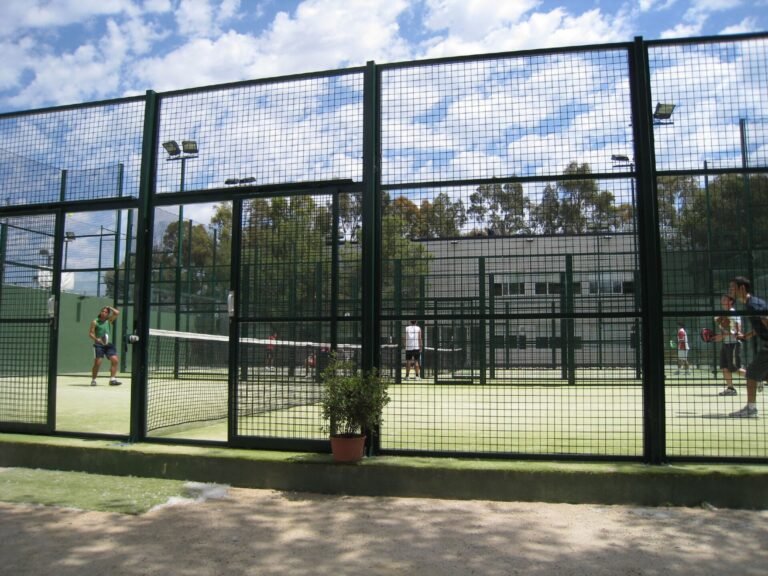
Your beginner racket taught you the game. Now it’s holding you back. These seven teardrop, hybrid and step-up rackets add the carbon faces, weight and balance your improving technique is ready for — every spec verified from current brand and retailer listings.
TL;DR — The short answer
Best overall step-up: Nox AT10 Genius 12K Alum XTREM 2026 — the teardrop benchmark: 12K carbon faces, HR3 Black EVA core, and a counterweight system that lets you tune the balance as your game evolves. Best value step-up: Kuikma PR 990 Hybrid Soft (teardrop, 362g, 12K carbon) delivers the same material jump for far less money. Best control: HEAD Gravity Motion, the round, low-balance precision pick. Strong intermediates who already strike cleanly can look at the diamond end of the list — the Babolat Technical Veron 3.0, Wilson Bela Pro V2 and Adidas Metalbone 2026. Full breakdowns, a comparison table and an honest “when not to step up” section below.
Nox AT10 Genius 12K 2026
Teardrop, 360–375g, 12K carbon. The hybrid benchmark everyone measures against.
Kuikma PR 990 Hybrid Soft
Teardrop, 362g, 12K carbon over soft EVA. Carbon tech without flagship money.
HEAD Gravity Motion
Round, 355g, low balance. Precision and a huge sweet spot for placement players.
Adidas Metalbone 2026
Diamond, head-heavy, adjustable weights. The ceiling of this list — handle with care.
Wilson Bela Pro V2
Diamond, 370g, firm EVA. Crisp, precise, and honest about mishits.
On this page
- The signs you’ve outgrown your beginner racket
- What actually changes at intermediate level
- 1. Nox AT10 Genius 12K — Best Overall Step-Up
- 2. Kuikma PR 990 Hybrid Soft — Best Value Step-Up
- 3. Babolat Technical Veron 3.0 — Best for Developing Attackers
- 4. HEAD Gravity Motion — Best Control
- 5. Adidas Metalbone 2026 — Best for Strong Intermediates
- 6. Wilson Bela Pro V2 — Best Precision
- 7. Bullpadel Vertex 05 Hybrid — Best Power-Control Middle Ground
- Comparison table
- When NOT to step up yet
- The progression path
- FAQs
The signs you’ve outgrown your beginner racket
Nobody tells you when to upgrade, but your game does. The first sign is subtle: your rallies stop ending on your own errors. A season ago you lost points because the ball sprayed off the frame; now you lose them because your shots sit up, your bandeja lacks bite, or your smash comes back one time too many. That’s the racket’s ceiling showing, not yours. A beginner frame is built to forgive — soft face, low balance, giant central sweet spot — and forgiveness, once you can strike the ball cleanly, starts to feel like a limiter.
The second sign shows up at the net. Round beginner rackets keep their weight close to your hand, which is wonderful for reactions and terrible for finishing. Volleys that should punch through instead float; overheads that should end the point get one more look. Players describe it as the racket feeling “vague” — you swing with intent and the ball leaves politely. The third sign is material. Fiberglass faces flex and absorb; that softness protected your arm while you learned, but it also eats the pace and spin you’re now capable of producing. If your technique has moved on and your equipment hasn’t, you’re paying for power you’re not receiving.
If that sounds familiar, this is your list. Every racket below assumes you’ve got the fundamentals — consistent contact, a working bandeja, some idea of positioning — and want equipment that rewards them. If you’re still shopping for a first racket, start with our best padel rackets guide instead, and if budget is the main constraint on the step up, our best budget padel rackets roundup covers the value end of the same jump — one pick below even appears on both lists, for good reason.
What actually changes at intermediate level
Stepping up is not about buying a “better” racket — it’s about changing five specific variables, each of which you can feel within a single session. Understand them and the seven reviews below read themselves.
Shape: round gives way to teardrop and hybrid
The round shape concentrates the sweet spot low and central: maximum forgiveness, minimum leverage. The teardrop (or hybrid) outline shifts that sweet spot higher up the face and adds head mass where overheads are struck, trading a little forgiveness for real help on smashes, bandejas and aggressive volleys. It’s the natural second-racket shape because it doesn’t demand a new technique — it rewards the one you’re building. Our padel racket shapes guide breaks down the geometry in full; the short version is that shape decides where the racket helps you and where it leaves you alone.
Face material: fibreglass gives way to carbon
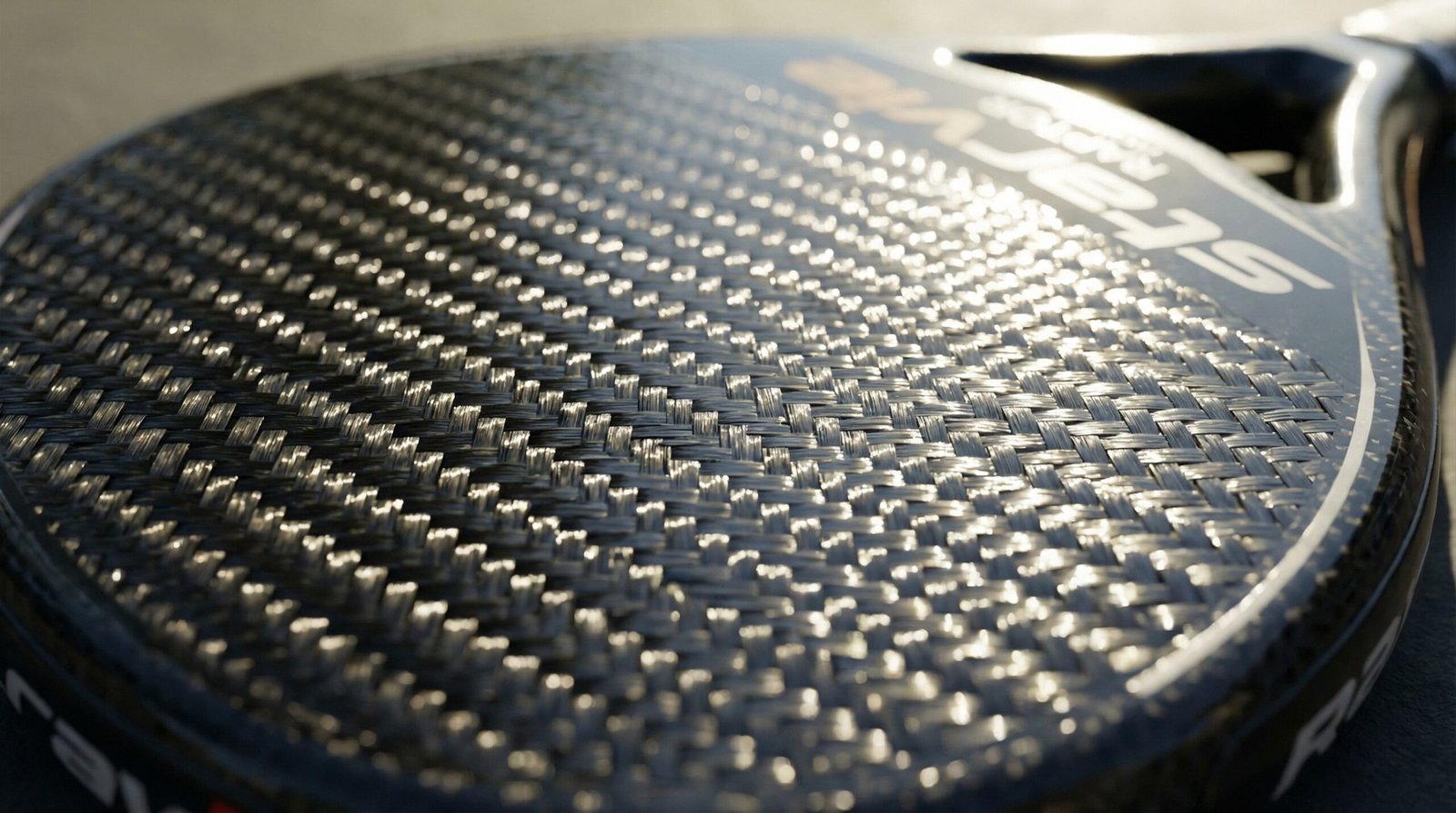
Fibreglass flexes on contact: the ball dwells, pace is absorbed, the feel is soft and muted. Carbon — especially the 12K weaves on most of this list — is stiffer and more direct. The ball leaves faster, spin bites harder off the rough finishes, and you get honest feedback about where on the face you struck it. That honesty is the point. An intermediate player is refining contact, and a carbon face tells the truth about every shot while returning energy a fibreglass face would swallow.
Core density: soft foam gives way to layered EVA
Beginner rackets use soft, low-density foam that trampolines slow balls back and forgives everything. Intermediate rackets move to firmer or multi-density EVA cores — Nox’s HR3 Black EVA, Bullpadel’s MultiEva sandwich, Wilson’s firm EVA — which respond in proportion to your swing: gentle on a block, alive on a full strike. You lose the free help on lazy shots and gain control over pace, which is exactly the trade a developing player should want.
Weight: a deliberate +5–10g
Most players start around 350–360g. The step-up rackets here cluster at 360–375g, and that small increase is deliberate: mass is stability. A slightly heavier racket holds its line against hard-hit balls, puts more behind your volleys, and stops the head fluttering on off-centre contact. It also changes your timing — the swing takes a fraction longer to start — which is why the jump should be small. Going from a 350g round frame straight to a 375g diamond is how shoulders get sore and technique gets worse.
Balance point: the weight creeps up the racket
Beginner rackets balance low, around 255–265mm, keeping the head light and quick. Step-up models nudge that point upward — medium and medium-high balances around 265mm and beyond put more of the racket’s mass behind overhead shots. You feel it as authority on the smash and effort on fast defensive scrambles. Adjustable systems (Nox’s Weight Balance, Adidas’s Weight & Balance System, Bullpadel’s Custom Weight) exist precisely because this variable is personal: they let the same racket grow with you instead of being replaced.
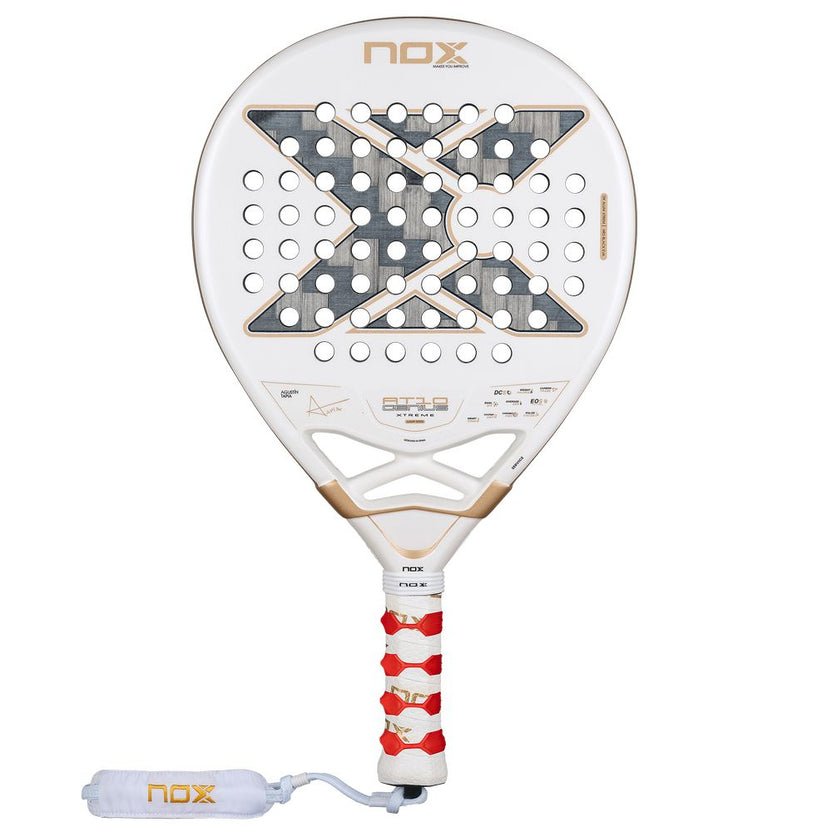
Nox AT10 Genius 12K Alum XTREM 2026
The hybrid benchmark, by Agustín Tapia
If one racket defines the intermediate step-up, it’s this one. The AT10 Genius pairs a teardrop shape with aluminised 12K carbon faces and a multilayer HR3 Black EVA core — a firm, responsive combination that plays every phase of the rally well, which is precisely why it has become the reference point for all-round rackets.
What separates the AT10 from cheaper teardrops is how complete the package is. The Dual Spin surface (a 3D texture plus a sanded finish) gives sliced bandejas and viboras real grip. The Weight Balance system ships with small counterweights you can add or remove, so the same racket can start life even-balanced and take on more head weight as your overhead game matures — a genuine answer to the balance question above. A longer grip than standard suits two-handed backhands and bigger hands, and the Pulse System inserts are there to take vibration out of the frame before it reaches your arm.
The honest framing: Nox rates this a professional-level racket, and the firm HR3 core does ask for decent contact — mishits low on the face feel dead in a way a soft beginner foam never did. But the teardrop shape keeps the sweet spot generous enough that most solid intermediates adapt within a few sessions, and the payoff is a racket with no obvious ceiling. Buy it once and it will still be the right racket two levels from now.
Pros
- The all-court benchmark: no weak phase of the game
- Adjustable balance via Weight Balance counterweights
- 12K Alum XTREM carbon stays consistent across temperatures
- Dual Spin surface for genuine spin grip
Cons
- Firm core punishes lazy contact more than soft foam
- Flagship pricing — the premium pick on this list
As an Amazon Associate we earn from qualifying purchases.
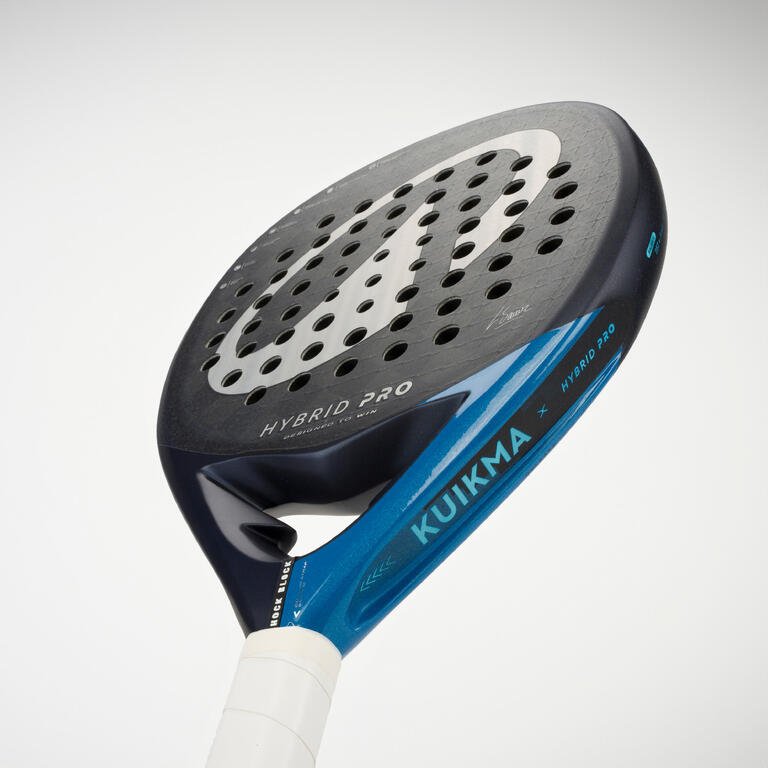
Kuikma PR 990 Hybrid Soft
The material jump, without the flagship bill
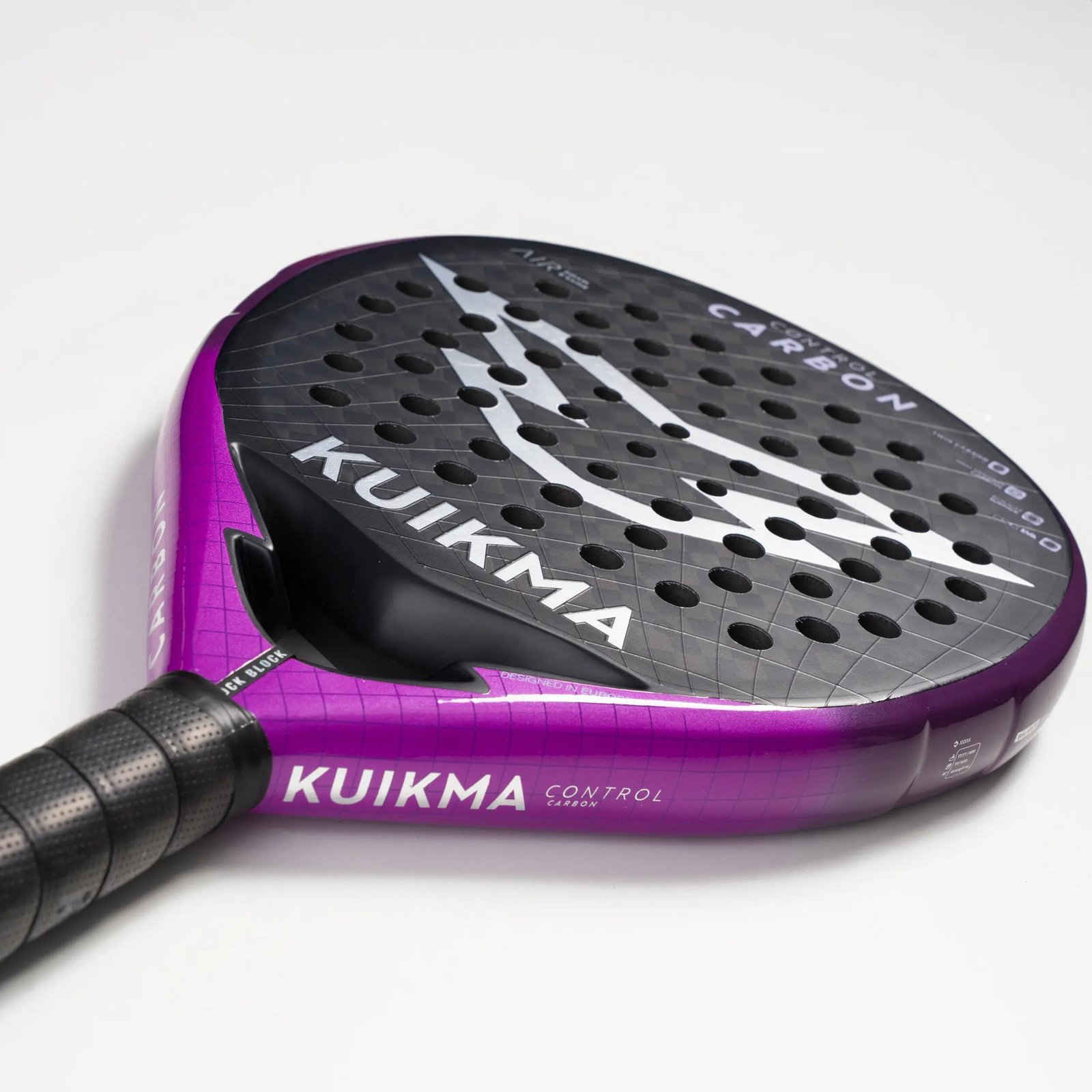
Decathlon’s Kuikma line exists to embarrass expensive rackets, and the PR 990 Hybrid Soft is its step-up argument: teardrop shape, 12K carbon faces, a soft EVA core and an even balance, in a racket priced like a beginner model from the big brands.
The design brief here is clearly “first carbon racket.” The 12K carbon gives you the crisper exit and spin surface of the premium tier, while the soft EVA core deliberately keeps the forgiveness of the racket you’re leaving behind — off-centre hits still come off the face with shape on them. At 362g with the balance sitting neutral at 265mm, nothing about the swing will surprise you; what changes is what the ball does when you connect. Bandejas hold their line, volleys punch a little deeper, and the whole racket feels like your old one after a material upgrade — because that’s exactly what it is.
It anchors our Kuikma padel rackets review as the range’s sweet spot, and it’s the pick we’d hand to any improving player whose budget is real. The compromises are cosmetic and commercial rather than structural: the finish is plain next to a Nox or Bullpadel, and resale values on Decathlon rackets are softer. On court, neither matters.
Pros
- 12K carbon at a fraction of flagship prices
- Soft EVA core keeps the step-up forgiving
- Neutral 362g / 265mm numbers — an easy transition
- Rough surface adds spin from day one
Cons
- Plain finish and lower resale value
- Softer core caps top-end power for strong hitters
As an Amazon Associate we earn from qualifying purchases.
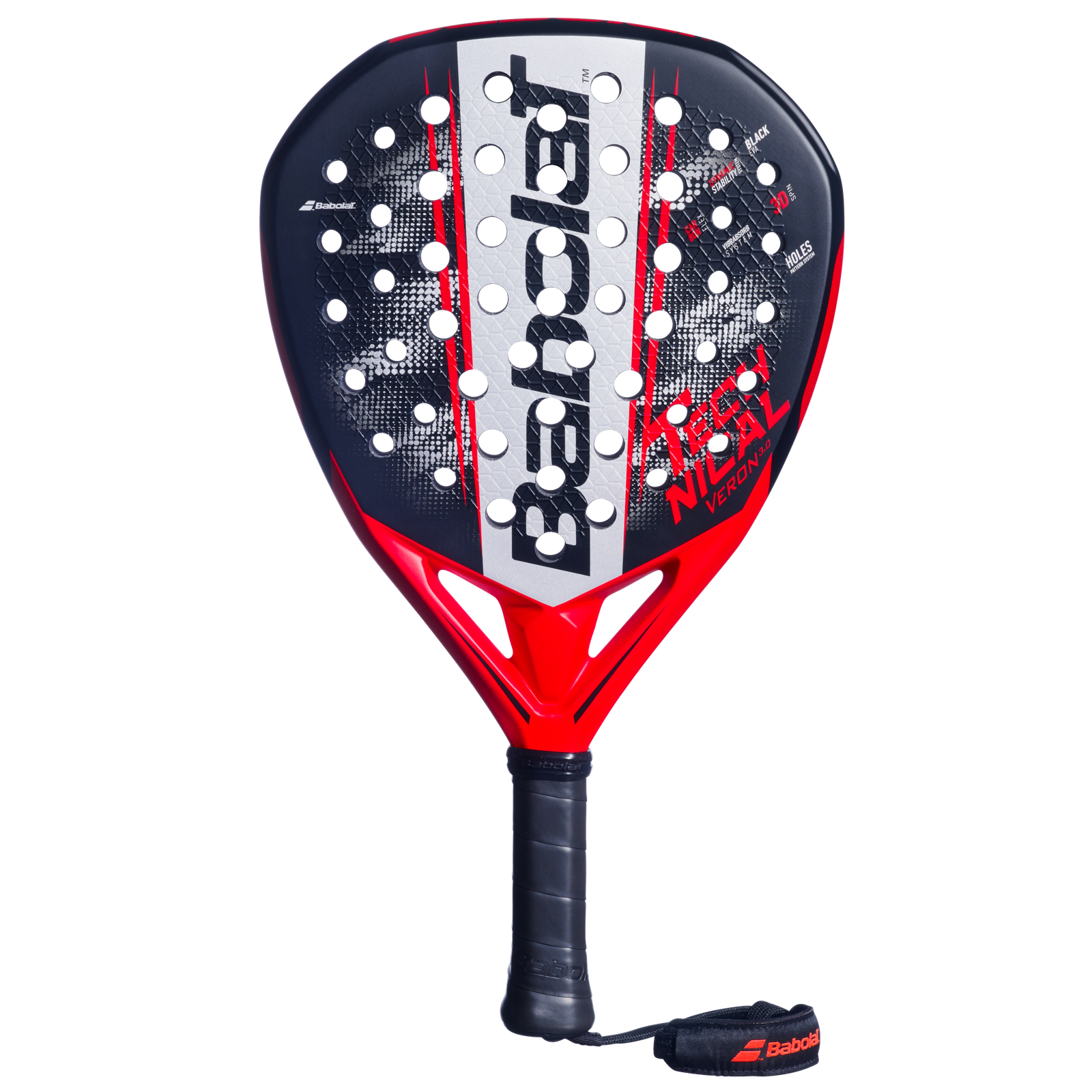
Babolat Technical Veron 3.0 2026
A diamond shape with a forgiving face
The Technical Veron is Babolat’s answer to a real problem: intermediates who attack need a diamond’s leverage but can’t yet live with a diamond’s stiffness. Its Carbon Flex face — carbon and fibreglass woven together — delivers dynamic power with a noticeably friendlier touch than full-carbon attacking rackets.
Let’s be precise about what this racket is: a diamond, with the high balance and high sweet spot that implies. What makes it the right first diamond for many players is everything around that geometry. The Carbon Flex surface flexes a touch on contact, so power arrives without the board-like feedback of Babolat’s own Viper line, and the elastic Black EVA core keeps touch shots playable at the net. The 3D Spin+ relief bites on viboras, the hole pattern is drilled specifically for the diamond outline, and the Vibrabsorb system (an elastomer integrated into the core) takes the edge off off-centre hits.
Retailers rate it for intermediate-to-advanced “technical strikers” — players whose points are built on placement first and finished with power. If that’s your trajectory, this is the gentlest on-ramp to diamond padel on this list. If your defence is still your weakness, stay with the teardrops above: a high balance is unforgiving when you’re stretched at the back of the court.
Pros
- Diamond power with a flexier, friendlier face
- Carbon Flex + Black EVA: power without Viper-level stiffness
- 3D Spin+ surface and shape-specific drilling
- Vibrabsorb damping for off-centre hits
Cons
- High balance still demands real technique in defence
- Less all-court neutral than the teardrop picks
As an Amazon Associate we earn from qualifying purchases.
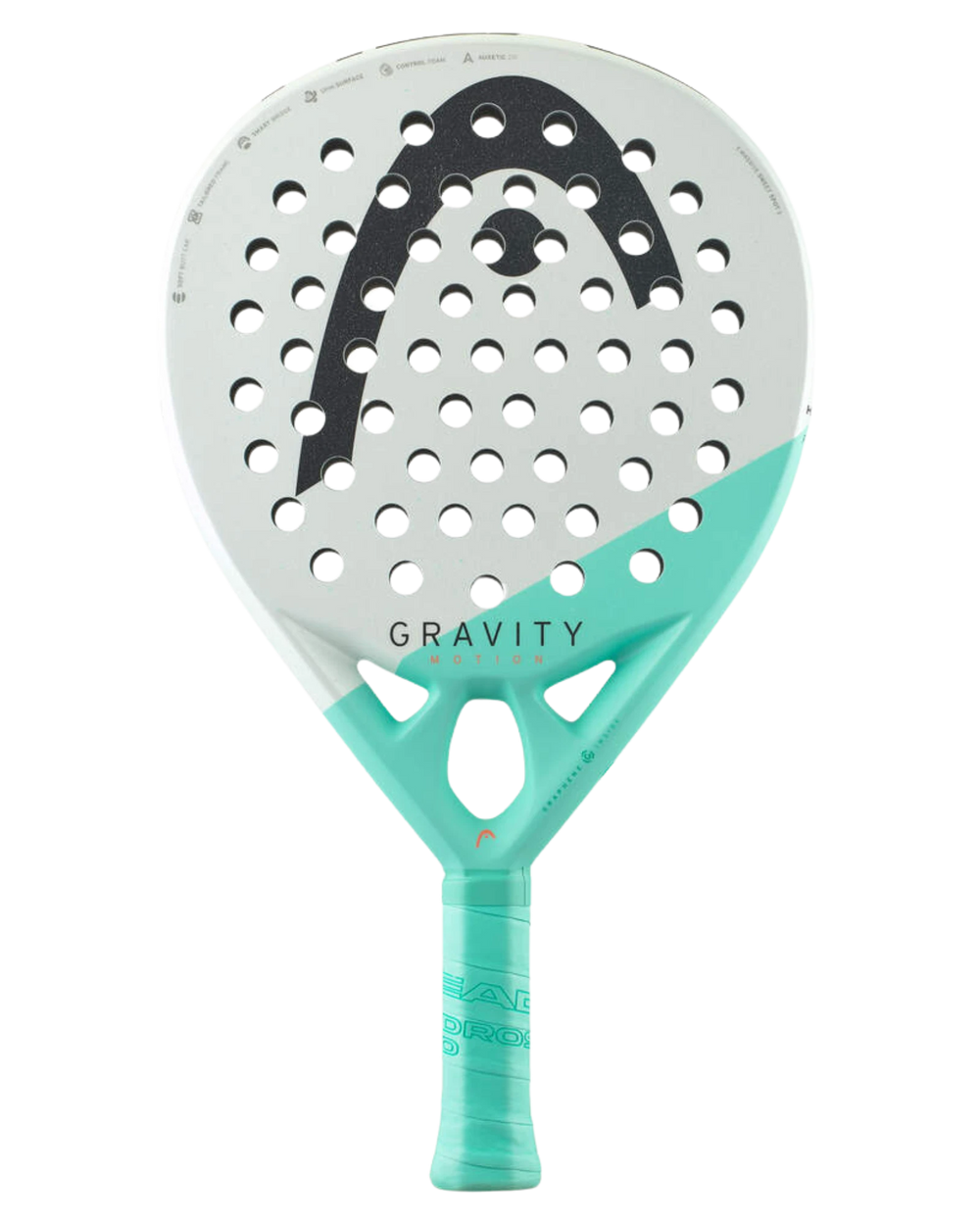
HEAD Gravity Motion
The control specialist’s step-up
Not every step up means chasing power. The Gravity Motion keeps the round shape and central sweet spot you learned on, then upgrades everything else: lighter 355g build, low 265mm balance, Auxetic 2.0 frame technology and a Control Foam core tuned for placement over pace.
Why does a round racket belong on a step-up list? Because for the control player, the upgrade isn’t the shape — it’s the response. The Gravity’s 498 cm² head keeps the sweet spot where your muscle memory expects it, while the Auxetic 2.0 construction (a frame material that reacts differently under tension and compression) sharpens the feedback at contact: you feel where the ball met the face with a clarity cheap foam rackets never give. The rough surface adds cut to slices and bandejas, and at 355g with the weight held low, this is the quickest racket on the list in fast net exchanges.
Be clear-eyed about the trade: the fiberglass face and control brief mean the Gravity Motion will not add finishing power — your smash is your smash. What it adds is placement, consistency and defensive reliability, which is how most intermediate matches are actually won. If your game is built on errors forced rather than winners hit, this is your step up; the Gravity Pro above it in Head’s range adds a hybrid woven face if you later want the same idea with more carbon in it.
Pros
- Huge, familiar sweet spot — zero relearning curve
- 355g and low balance: fastest handling here
- Auxetic 2.0 gives clear, honest contact feedback
- Rough surface for slice and bandeja cut
Cons
- No free power — finishing is on you
- Fiberglass face, if carbon is the upgrade you want
As an Amazon Associate we earn from qualifying purchases.
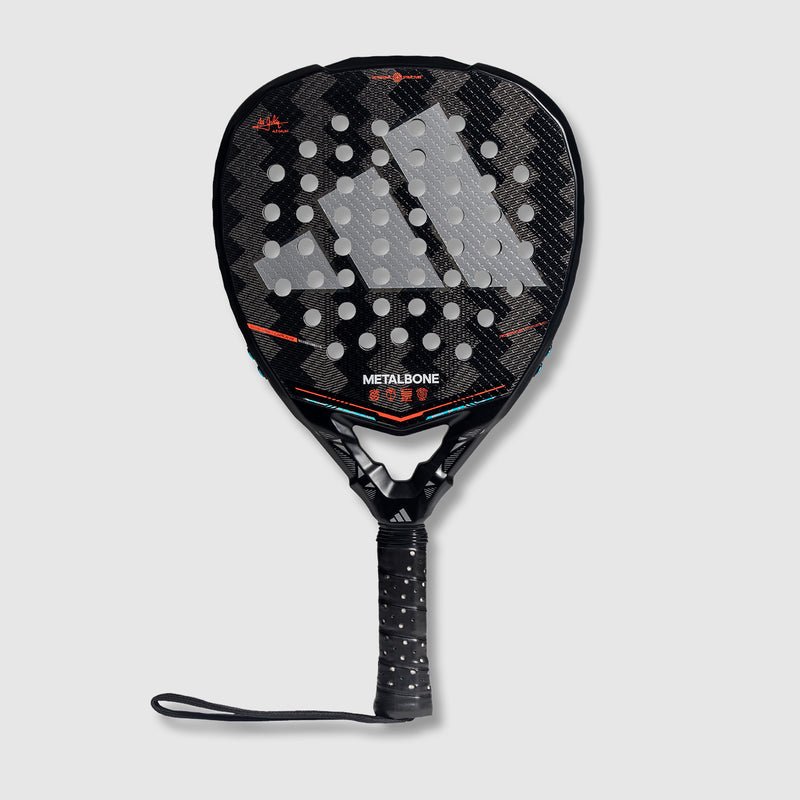
Adidas Metalbone 2026
Ale Galán’s adjustable diamond — the ceiling of this list
The Metalbone is a professional attacking racket that earns its place here for one reason: its Weight & Balance System lets you add up to 11.2g of removable weights, so a strong intermediate can start it tame and tune it more aggressive as technique catches up. Treat it as the destination, not the default.
Everything about the Metalbone is engineered for the overhead game: diamond outline, high sweet spot, an aluminised 16K carbon face for stiffness, a Power Groove rail and octagonal frame structure to stop the head twisting on full-blooded smashes, and an extended Extra Power Grip that adds swing inertia. The surprise is the core — EVA Soft Performance is a low-density foam, so touch shots and blocks keep some feel instead of the plank-like response of hard-core pro frames. The weight system is the headline for our purposes: screws and plates on the frame let you shift both total weight and balance point, which almost no other racket at any price offers.
Now the honesty this pick requires. The Metalbone is a professional’s racket (Galán’s signature line), and in untrained hands a head-heavy diamond produces late volleys, sprayed defences and a tired arm. It belongs on this list for the strong intermediate — the player winning at their level, striking the sweet spot most rallies, whose limiting factor genuinely is overhead authority. If you’re not sure that’s you, it isn’t yet: buy the Nox or the Kuikma, and let the Metalbone be next year’s argument.
Pros
- Weight & Balance System: tune weight and balance yourself
- 16K aluminised carbon and pro-grade frame structure
- Soft Performance core keeps some touch at the net
- Serious overhead authority for strong players
Cons
- Head-heavy diamond punishes developing technique
- Easy to buy too early — the most demanding pick here
As an Amazon Associate we earn from qualifying purchases.
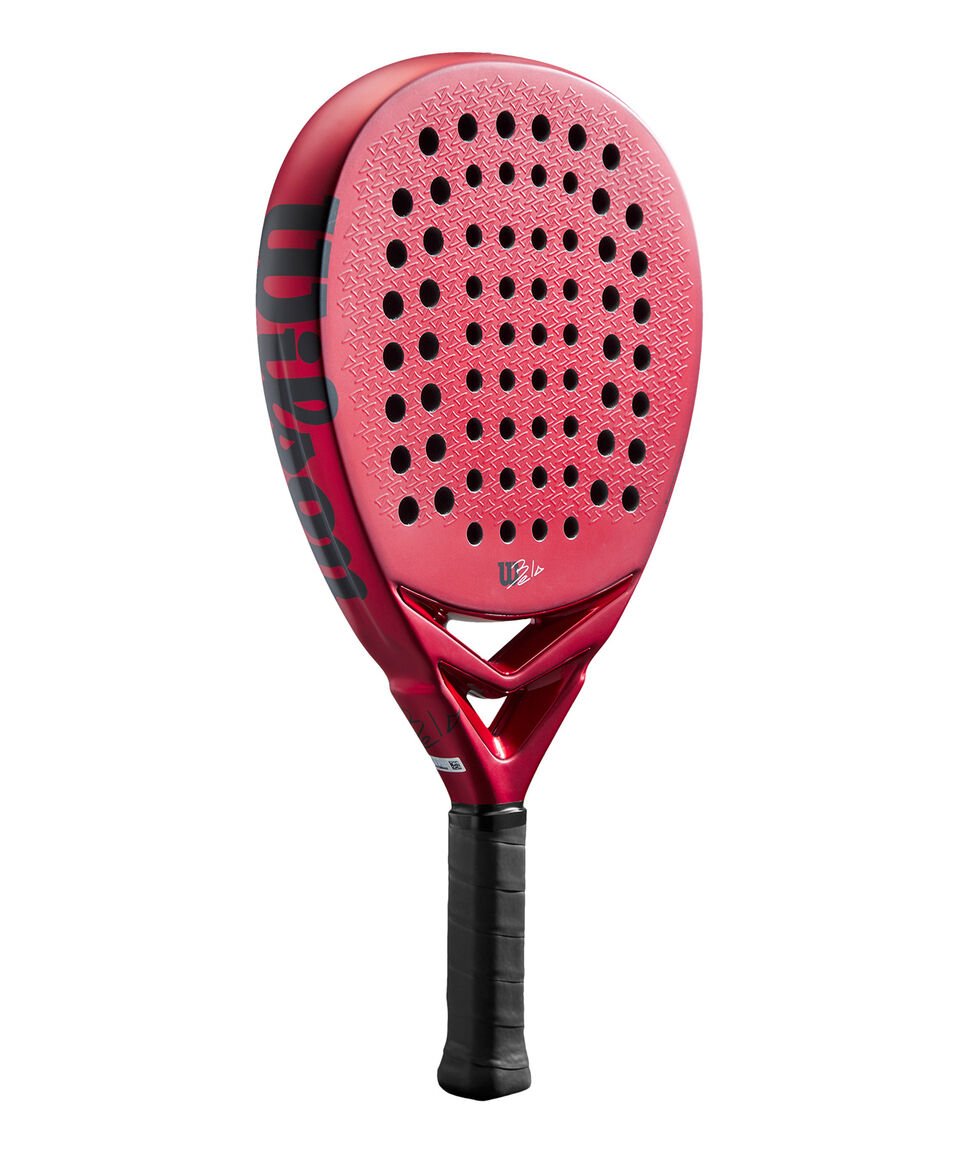
Wilson Bela Pro V2
Firm, precise, and honest — Belasteguín’s brief
Co-designed with Fernando Belasteguín, the Bela Pro V2 is the connoisseur’s pick on this list: a diamond frame in 3K Primero Carbon over a firm EVA core, built for players whose contact is already clean and who want the ball to do exactly — and only — what they intended.
The Bela Pro V2’s character comes from its firmness. Where soft-core rackets cushion and rebound, the firm EVA and 3K carbon face give a solid, crisp strike with minimal dwell: the ball goes where the face pointed it, at the pace your swing produced. Wilson widens the sweet spot relative to most diamonds and keeps the balance at a moderate 265mm rather than the extreme head-heavy end, so the precision is usable rather than theoretical. The SpinEffect signature texture and Sharp Hole drilling pattern add bite on cut shots — fitting for a racket shaped by the most tactically precise player the sport has had.
Who should skip it: anyone whose contact still wanders. Firm rackets tell the truth, and the truth at 370g in a diamond outline is that off-centre hits come off dead and low. But for the advanced-intermediate whose errors are now about decisions rather than contact, the Bela Pro V2 offers something the friendlier picks can’t — a racket that disappears, leaving just you and the shot you chose.
Pros
- Crisp, direct response — placement you can trust
- Wider sweet spot than most diamond frames
- Moderate 265mm balance for a diamond
- SpinEffect texture and Sharp Hole pattern for cut
Cons
- Firm EVA is unforgiving of wandering contact
- 370g diamond is a real step up in demand
As an Amazon Associate we earn from qualifying purchases.
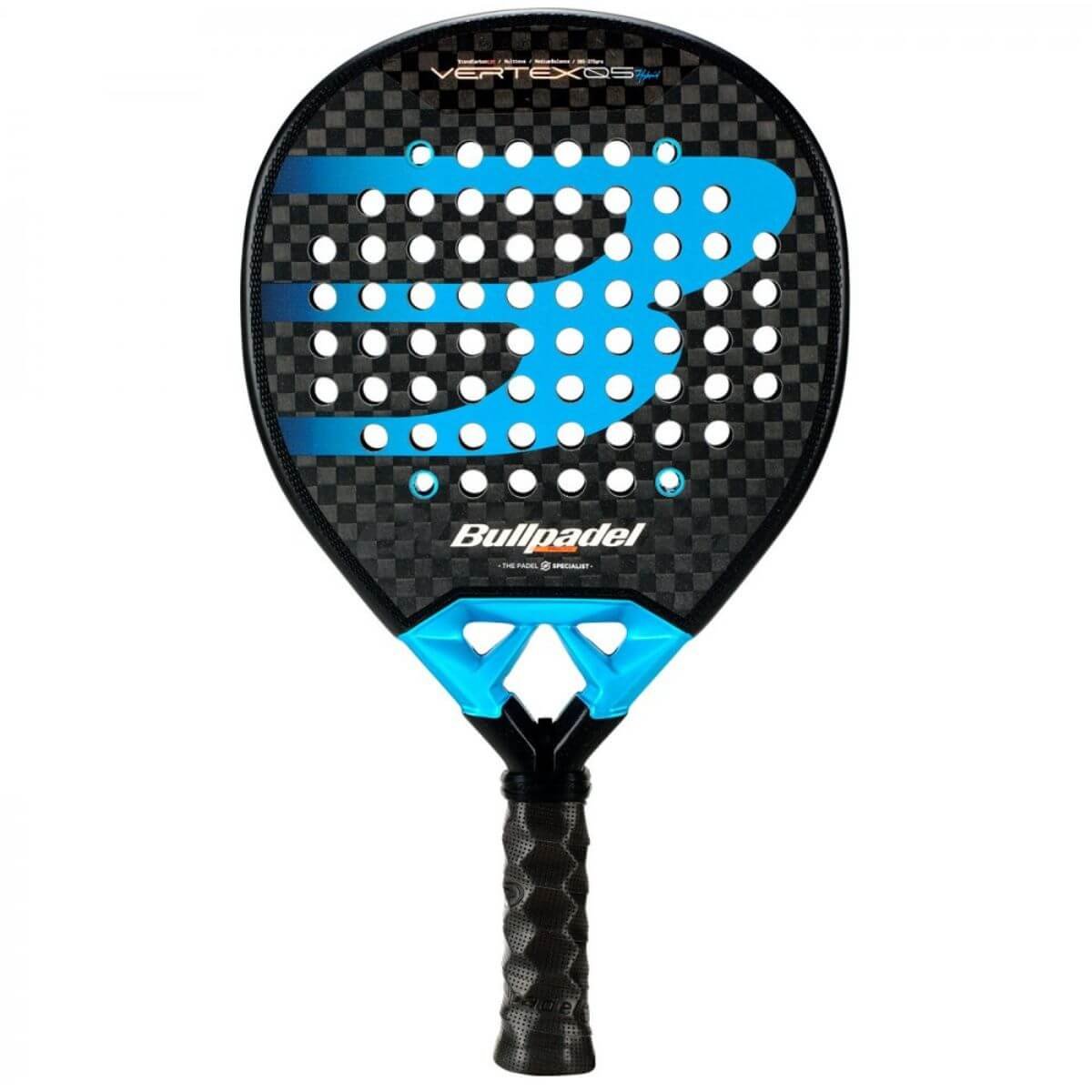
Bullpadel Vertex 05 Hybrid 2026
Total play: the tactical all-rounder
Bullpadel’s Vertex line is famous for power; the 05 Hybrid is the version re-engineered for the complete game — a hybrid shape, medium balance, Xtend Carbon 12K faces and a three-layer MultiEva core that fires on attack and cushions on defence.
The MultiEva core is the clever part: two firmer outer EVA layers sandwich a softer low-density layer, so the racket responds in proportion to the shot — punchy when you swing through a volley, plush when you’re absorbing pace at the back. Around it, Bullpadel stacks its full technology deck: the twisted Curv:Aktiv side profile resists torsion, the Air Power channel trims weight from the lower frame for faster handling, the Top Spin grain works on cut shots, and the Custom Weight system accepts 3g plates so you can nudge the balance as your game develops. The Hesacore grip and Vibradrive handle insert handle the comfort side of the ledger.
Against the Nox at the top of this list, the Vertex 05 Hybrid is the slightly more tactical, slightly more customisable alternative — and against the standard diamond Vertex 05, it’s the one an intermediate can actually defend with. Bullpadel rates the line for professional play, so buy it as a racket to grow into over two or three seasons rather than one that flatters you this month. If your game plan is “win from anywhere on the court,” this is the most complete expression of it here.
Pros
- MultiEva core adapts: firm on attack, soft on defence
- Custom Weight plates for balance tuning
- Full Bullpadel tech stack (Curv:Aktiv, Air Power, Top Spin)
- Hybrid shape suits genuine all-court play
Cons
- 365–375g is at the heavier end for a step-up
- Pro-rated frame — rewards patience, not instant results
As an Amazon Associate we earn from qualifying purchases.
Intermediate padel rackets compared
| Racket | Shape | Weight | Face / Core | Best for |
|---|---|---|---|---|
| Nox AT10 Genius 12K 2026 | Teardrop | 360–375 g | 12K carbon / HR3 Black EVA | Best overall step-up |
| Kuikma PR 990 Hybrid Soft | Teardrop | 362 g | 12K carbon / soft EVA | Value step-up |
| Babolat Technical Veron 3.0 | Diamond | 360 g | Carbon Flex / Black EVA | Developing attackers |
| HEAD Gravity Motion | Round | 355 g | Fiberglass / Control Foam | Control and placement |
| Adidas Metalbone 2026 | Diamond | 345–360 g + weights | 16K carbon / EVA Soft Performance | Strong intermediates, power |
| Wilson Bela Pro V2 | Diamond | 370 g | 3K carbon / firm EVA | Precision, clean strikers |
| Bullpadel Vertex 05 Hybrid | Hybrid | 365–375 g | Xtend Carbon 12K / MultiEva | Power-control middle ground |
When NOT to step up yet
Honesty section, because the wrong upgrade makes players worse. If your rallies still end with the ball hitting the frame, the tape or the side glass more often than the strings of your intention, your current racket is not your problem — contact is, and a stiffer, head-heavier frame will punish exactly the shots you’re still grooving. A diamond in particular is a magnifier: it takes a centred strike and makes it a weapon, and takes a late, low strike and makes it a donation. The sweet spot sits high and small, and no technology on this page changes that geometry.
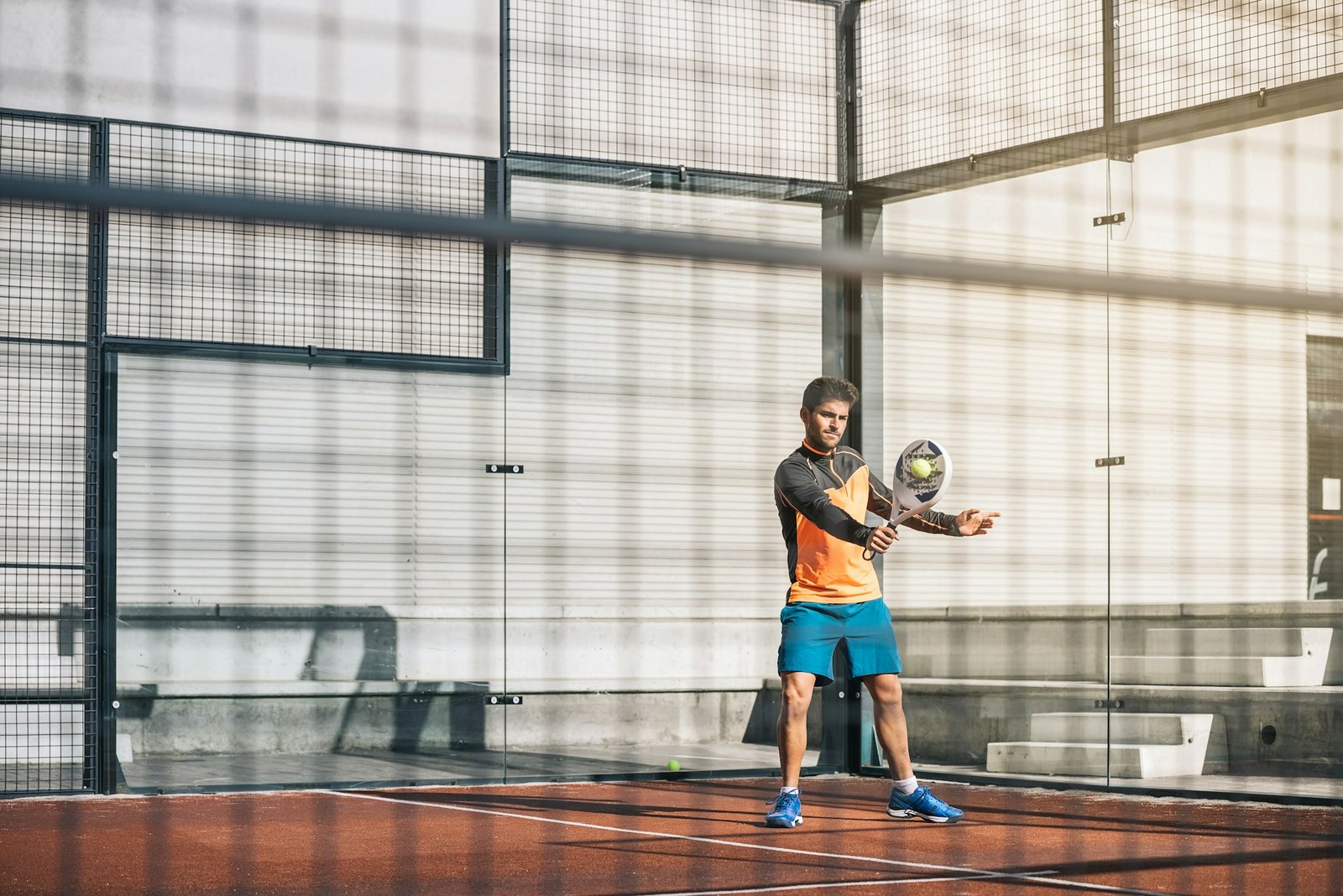
Two more reasons to wait. If you’re playing less than once a week, your timing won’t stabilise enough to adapt to a firmer face, and the adjustment period will feel like a downgrade. And if your arm is already complaining — sore elbow, tired shoulder after sessions — moving up in weight and stiffness is the wrong direction entirely; a lighter, softer control racket like the Gravity Motion, or even staying put, is the smarter play. When in doubt, re-read the shape guide and be honest about which shape your current contact quality has earned. The rackets above will still be here in three months, and the right one bought at the right time is worth several bought early.
The progression path: where this list fits
Think of racket progression as three stages, and this post as the middle one. The mistake is skipping it — jumping from a soft round starter straight to a pro diamond is the most common (and most expensive) equipment error in club padel.
| Stage | Shape | Face | Typical weight / balance | From this list |
|---|---|---|---|---|
| Beginner | Round | Fiberglass, soft foam | 320–360 g, low balance | — (see the budget guide) |
| Intermediate | Teardrop / hybrid (round for control players) | Carbon or carbon-flex, layered EVA | 355–375 g, even to medium-high balance | Nox AT10, Kuikma PR 990, Gravity Motion, Vertex 05 Hybrid |
| Advanced | Diamond | Stiff carbon, firm EVA | 365–375 g, high balance | Technical Veron 3.0, Bela Pro V2, Metalbone 2026 |
One pairing note before you check out: a new racket is only half the upgrade. Fresher balls change ball exit more than most players expect — our best padel balls guide covers which to pair with a step-up frame — and the footwork a heavier racket demands is only possible in proper footwear, which is what the padel shoes guide is for. Upgrade the contact point and the foundation together, and the step up actually sticks.
Intermediate padel racket FAQs
When should I upgrade from a beginner padel racket?
When the racket — not your contact — becomes the limit. The reliable signs: your rallies end on your opponent’s winners rather than your own errors, your volleys and bandejas feel like they lack bite despite clean strikes, and your round frame’s low balance leaves finishing shots sitting up. If mishits are still your main problem, keep the beginner racket and upgrade later.
Teardrop or diamond for an intermediate player?
Teardrop for most. It moves the sweet spot higher and adds overhead help without shrinking your margin for error. Diamond only suits intermediates who already strike the centre consistently and play an attacking game — and even then, a forgiving diamond like the Babolat Technical Veron 3.0 (Carbon Flex face) is a smarter first step than a firm pro frame.
Does a carbon face really make a difference?
Yes — it’s the most noticeable single change in a step-up racket. Carbon is stiffer than fibreglass, so the ball leaves the face faster, spin bites harder on rough finishes, and you get clearer feedback about contact quality. The trade-off is honesty: carbon rewards clean strikes and exposes sloppy ones, which is why it belongs on a second racket rather than a first.
How heavy should an intermediate padel racket be?
Most intermediates land between 360g and 375g — roughly 5–15g heavier than a typical starter racket, enough for stability against hard-hit balls without wrecking your timing. Control-focused players can stay lighter (the 355g HEAD Gravity Motion), and balance matters as much as the number: an even balance at 370g swings easier than a head-heavy 360g.
Can an intermediate use a professional diamond racket?
A strong intermediate can — with eyes open. Pro diamonds like the Adidas Metalbone 2026 and Wilson Bela Pro V2 have small, high sweet spots and firm cores that punish late or low contact, especially in defence. If you’re winning at your level and striking cleanly most rallies, they’re legitimate targets. If you’re still building consistency, they’ll slow your progress down.
Is Kuikma good enough for intermediate players?
Yes. The PR 990 Hybrid Soft pairs a teardrop shape with 12K carbon faces and a soft EVA core at 362g — the same material recipe as rackets several times its price. The compromises are in finish and resale value, not in how it plays. For value-conscious intermediates it’s the easiest recommendation on this page; our full Kuikma review covers the range in depth.
How long does a beginner racket usually last before upgrading?
There’s no fixed lifespan — players upgrade for two different reasons. The racket wears out (the core softens and the face loses its liveliness with heavy use), or the player outgrows it, which for someone playing regularly often happens within their first season or two. Judge it by the signs in this guide — a power ceiling and a vague feel at the net — rather than by the calendar.
The verdict
Buy the Nox AT10 Genius 12K if you want the complete step-up with no ceiling. Buy the Kuikma PR 990 Hybrid Soft if you want the same material jump on a real-world budget. Buy the HEAD Gravity Motion if your game is control and placement. Buy the Babolat Technical Veron 3.0 if you’re an attacker ready for a first diamond. Buy the Bullpadel Vertex 05 Hybrid if you play every phase of the rally. And buy the Metalbone or Bela Pro V2 only if your contact is already clean — they’re destinations, not shortcuts. The right step up is the one your current technique has earned.
Affiliate disclosure: Alishuttler.com is a participant in the Amazon Services LLC Associates Program. The Amazon buttons on this page use our affiliate tag — if you buy through them, we may earn a commission at no extra cost to you. Prices shown on Amazon are live and may differ from any figures mentioned here.