
Same racket, same court, same four players — and the match still feels completely different depending on which tube of balls you open. This guide explains pressurised vs pressureless in plain terms, decodes the speed grades, and ranks the seven balls worth your money in 2026.
TL;DR — The short answer
Best overall: HEAD Padel Pro S. It is the fast, lively pressurised match ball that competitive padel has standardised on — the safe default for league and club play. Want something calmer and more controlled? The HEAD Padel Pro+ is the all-round sibling built for placement. On a budget, the Kuikma PB Control delivers genuine FIP-approved performance for Decathlon money, and if you are learning or feeding drills, the pressureless Dunlop Eco trades match-day liveliness for a slower, longer-lasting training ball. Everything else — speed grades, felt, when a ball is actually dead — is explained below.
HEAD Padel Pro S
Pressurised, fast. The competitive default for club and league matches.
HEAD Padel Pro+
Pressurised, thinner wall. The all-rounder for placement players.
Bullpadel Premium Pro
Pressurised, synthetic felt. Built for players who practise hard and often.
Adidas Speed RX
Pressurised, FIP approved. Pace and bounce for quicker surfaces.
Kuikma PB Control
Pressurised, FIP approved. Premium spec sheet at a Decathlon price.
Dunlop Eco
Pressureless. Slower, lower bounce — forgiving while you learn.
On this page
- Pressurised vs pressureless explained
- Speed grades explained
- Felt and durability
- 1. HEAD Padel Pro S — Best Overall
- 2. HEAD Padel Pro+ — Best Control
- 3. Bullpadel Premium Pro — Durability-Leaning
- 4. Adidas Speed RX — Best for Fast Courts
- 5. Wilson X3 — Best Widely Available
- 6. Kuikma PB Control — Best Value
- 7. Dunlop Eco — Best Pressureless
- Comparison table
- How many to buy + when to change them
- FAQs
The ball is half the game feel
Here is the most common beginner mistake in padel, and almost nobody warns you about it: your first rallies were probably played with a dead ball, or the wrong-speed ball, and you blamed your racket. Balls are the one piece of equipment that touches every single shot. A fresh, lively pressurised ball comes off the glass with zip and rewards a compact swing. A tired ball sits, dies in the corner, and forces you to swing out of your shoes — and your technique quietly warps around compensating for it.
The fix costs less than one court booking. A tube of proper match balls is the cheapest performance upgrade in the sport, which is why choosing the right one matters more than its price suggests. Pair this guide with the right frame — our best padel rackets guide covers the flagship tier and our intermediate padel rackets guide covers the step-up tier — and you control both halves of every contact: the racket you swing and the ball that answers it.
Pressurised vs pressureless padel balls, explained
Every padel ball on sale is one of two constructions, and the difference decides how it bounces, how it feels, and how its performance changes over time.
Think of it as two different bargains. A pressurised ball gives you the real game — the bounce height, speed off the racket and liveliness off the glass that padel is designed around — in exchange for a limited window of peak performance. From the first session it is gently fading: a little less bounce this week than last, a slightly duller sound, a fraction less help on your bandeja. Nothing dramatic fails; the ball simply retires in slow motion, and regular players open fresh tubes for matches while relegating older sets to warm-ups and drills.
A pressureless ball makes the opposite bargain. Its bounce on day thirty is close to its bounce on day one, because the rubber wall does the work. But that bounce starts lower and slower than a fresh pressurised ball, rallies feel heavier, and the ball can feel harsh on contact. For a coach feeding hundreds of balls a week, or a beginner whose rallies are short and whose priority is a predictable, gentle ball to groove strokes against, that trade makes sense. For a competitive match, almost nobody chooses it — which is why six of our seven picks are pressurised, and the one pressureless pick is labelled honestly as a training and learning ball.
One more thing worth knowing: padel’s official ball specification (the size, weight and rebound ranges a ball must meet to be competition-legal, the context covered in our padel rules guide) is written around pressurised match balls. FIP-approved badges on the pressurised picks below mean the ball has been measured against that spec. Pressureless training balls sit outside that match framework by design.
Speed grades explained: standard, fast and “S”
Within pressurised balls there is a second choice that confuses new buyers: speed. Brands sell standard versions and faster versions of the same ball — HEAD’s Pro versus Pro S is the classic pairing, and Kuikma splits its line into PB Control and PB Speed on exactly the same logic. A faster ball is built to exit the racket and the court quicker: rallies shorten, smashes carry further, and defensive margins shrink. A standard or control-leaning ball does the opposite — it buys you time.
Match the grade to your conditions, not your ego. Kuikma’s own guidance is the clearest in the industry: its PB Speed is designed for slow playing conditions — lower temperatures, sea level, humidity — where a normal ball gets sluggish, while the PB Control is designed for fast conditions such as warm temperatures and altitude, where the ball naturally flies. A fast ball on a fast court in summer heat produces chaotic padel that even strong players struggle to control; a standard ball on a cold, damp, slow court produces rallies that die before they start.
That is directly relevant if you play in Dubai or the Gulf. Heat thins the air and speeds the game up, and most padel courts in Dubai play quick in the evening warmth — so a control-leaning ball like the HEAD Pro+ or Kuikma PB Control often produces better padel here than an S-grade speed ball, even for advanced players. Save the fastest balls for sluggish conditions: heavy air, slower sanded courts, winter mornings. Beginners everywhere should start on standard-speed balls — extra pace is a problem to manage, not a feature, while you are learning the glass.
Felt and durability: what actually wears out
Two things age a padel ball: the pressure inside it and the felt outside it. Pressure loss is invisible and gradual. Felt wear is the part you can see and feel. The felt is a woven cloth — blends of wool, nylon and polyester in varying ratios — wrapped around the rubber core. Kuikma publishes its PB Control recipe openly: 27% wool, 25% polyester, 48% polyamide. Bullpadel goes the other direction with the Premium Pro, using a premium synthetic felt with deliberately low wool content, because synthetic fibres resist abrasion better on sandy artificial turf.
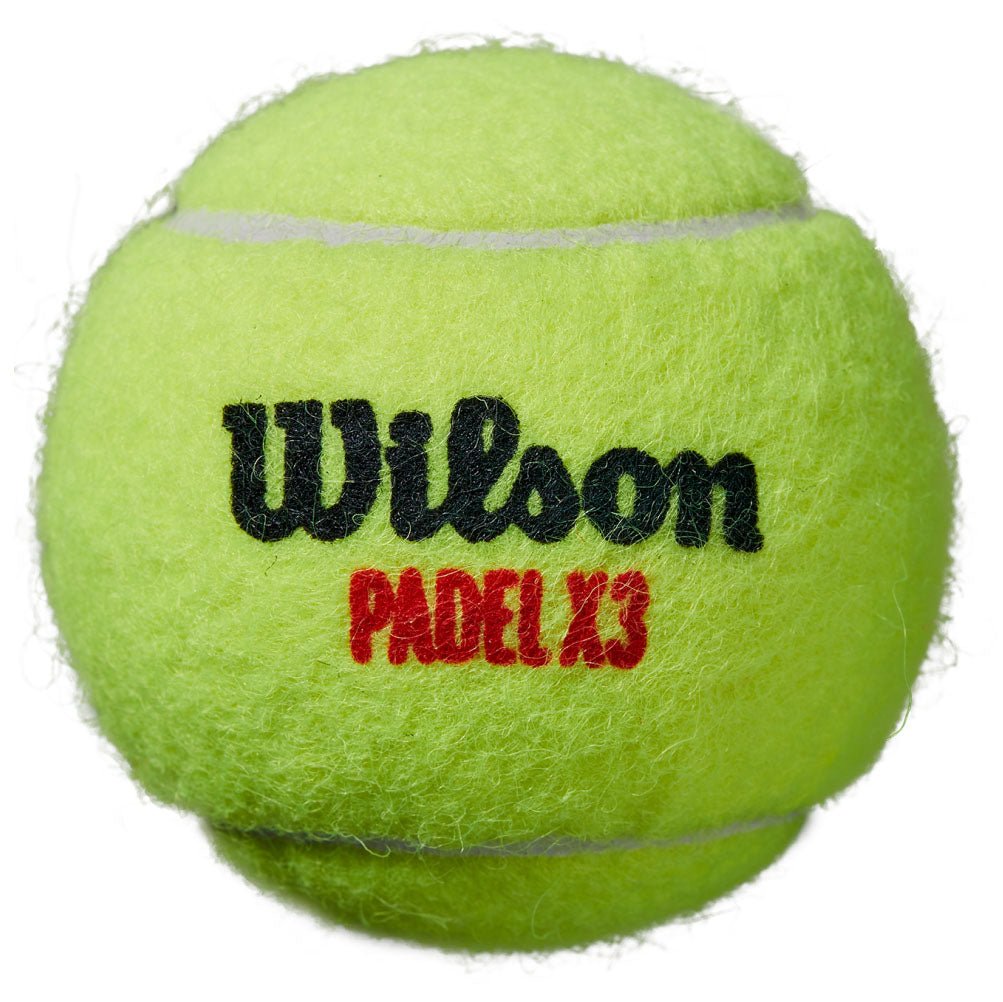
Why it matters: fresh felt grips. It bites on a sliced bandeja, holds on the racket face a fraction longer on touch shots, and flies true. As the felt fluffs up and then wears smooth, the ball skids more, spins less and starts to feel inconsistent — sometimes before the pressure has noticeably gone. Court surface drives the wear rate: heavily sanded turf is abrasive, which is why durability-leaning felts (Bullpadel’s synthetic, Wilson’s tightly wrapped Dura-Weave on the X3) are marketed to frequent players. Storage matters too. Heat is the enemy — a tube left in a hot car boot ages fast — and pressure-preserving storage containers exist as a product category for players who want to slow the fade between sessions. They are a reasonable accessory, not a miracle: they can slow pressure loss, they cannot restore a ball whose felt is gone.
A note on honesty, because this category attracts invented numbers: you will see exact lifespan claims — a specific number of hours or matches — attached to padel balls all over the internet. Treat them as marketing. How long a ball stays match-worthy depends on level, court surface, temperature and how hard the four of you hit it. What we can give you is the reliable, observable stuff — the signs of a dead ball and a sensible buying rhythm — in the guide section after the reviews.
The 7 best padel balls, reviewed
Every pick below was verified against a live brand or retailer listing at build time: type, tube size, felt and core claims all come from the manufacturer’s own product pages, not from roundup sites. Six are pressurised match balls at different speeds and price points; one is the pressureless exception, clearly labelled.
HEAD Padel Pro S
The fast match ball competitive padel standardised on
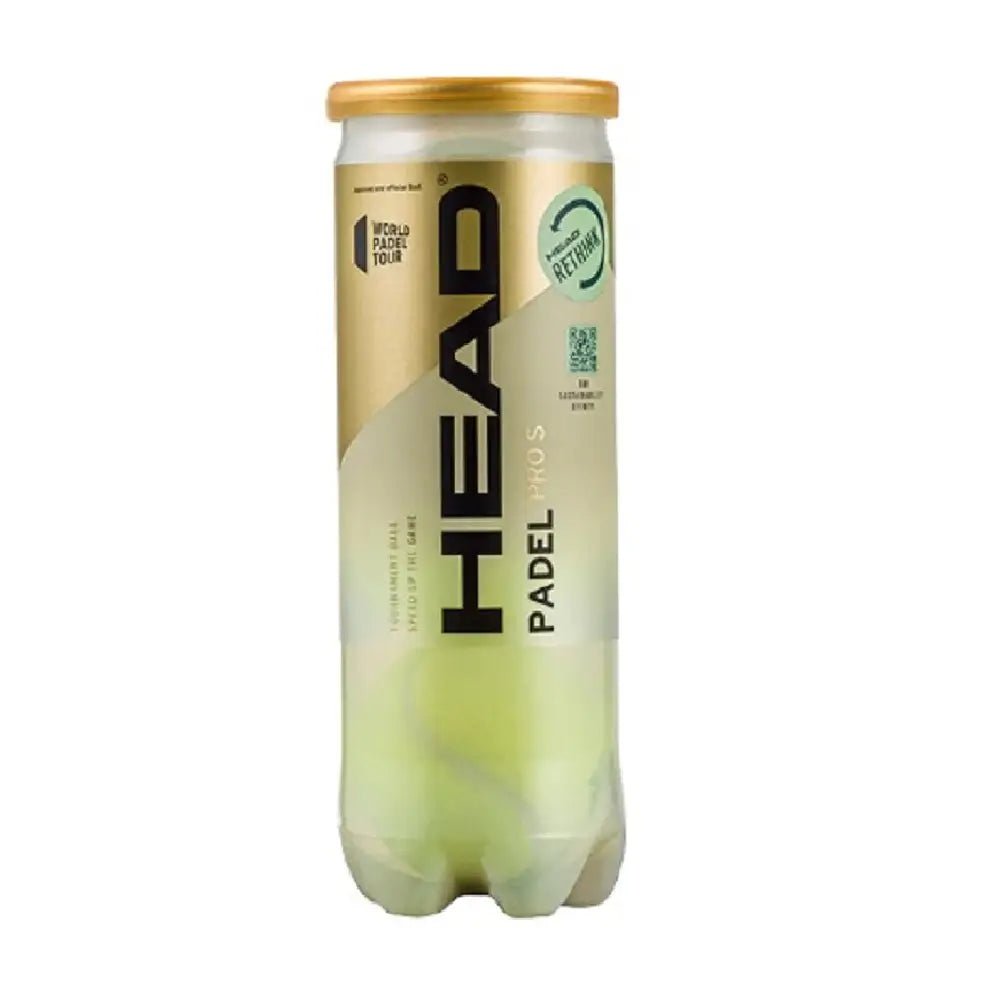
If one ball defines club-level competitive padel, it is this one. The Pro S is HEAD’s faster evolution of the Padel Pro — the ball long associated with the professional World Padel Tour — tuned for greater speed and a livelier playing character than the standard version.
The Pro S exists for players who find standard balls a touch sedate. It accelerates harder off the racket face, which flatters attacking volleys, víboras and smashes, and it keeps rallies honest in conditions that slow the game down — cooler evenings, heavier air, slower courts. HEAD positions it squarely at intermediate-to-competition players, and that positioning is accurate: beginners will find the extra pace makes the glass harder to judge, while experienced players get the tempo modern padel is played at.
Why is it our number one rather than just our fastest pick? Because it is the reference point. When a club, coach or league says “match balls” without further specification, this class of ball — fast, pressurised, consistent — is what they mean, and the Pro S is its most proven example. If you play competitive padel and simply want the default answer, this is it.
Pros
- Lively, fast response for attacking padel
- The proven competitive reference ball
- Performs in slower conditions that dull standard balls
- Consistent bounce and flight from a pressurised core
Cons
- Extra pace is a handful for beginners
- Like all pressurised balls, it fades once opened
As an Amazon Associate we earn from qualifying purchases.
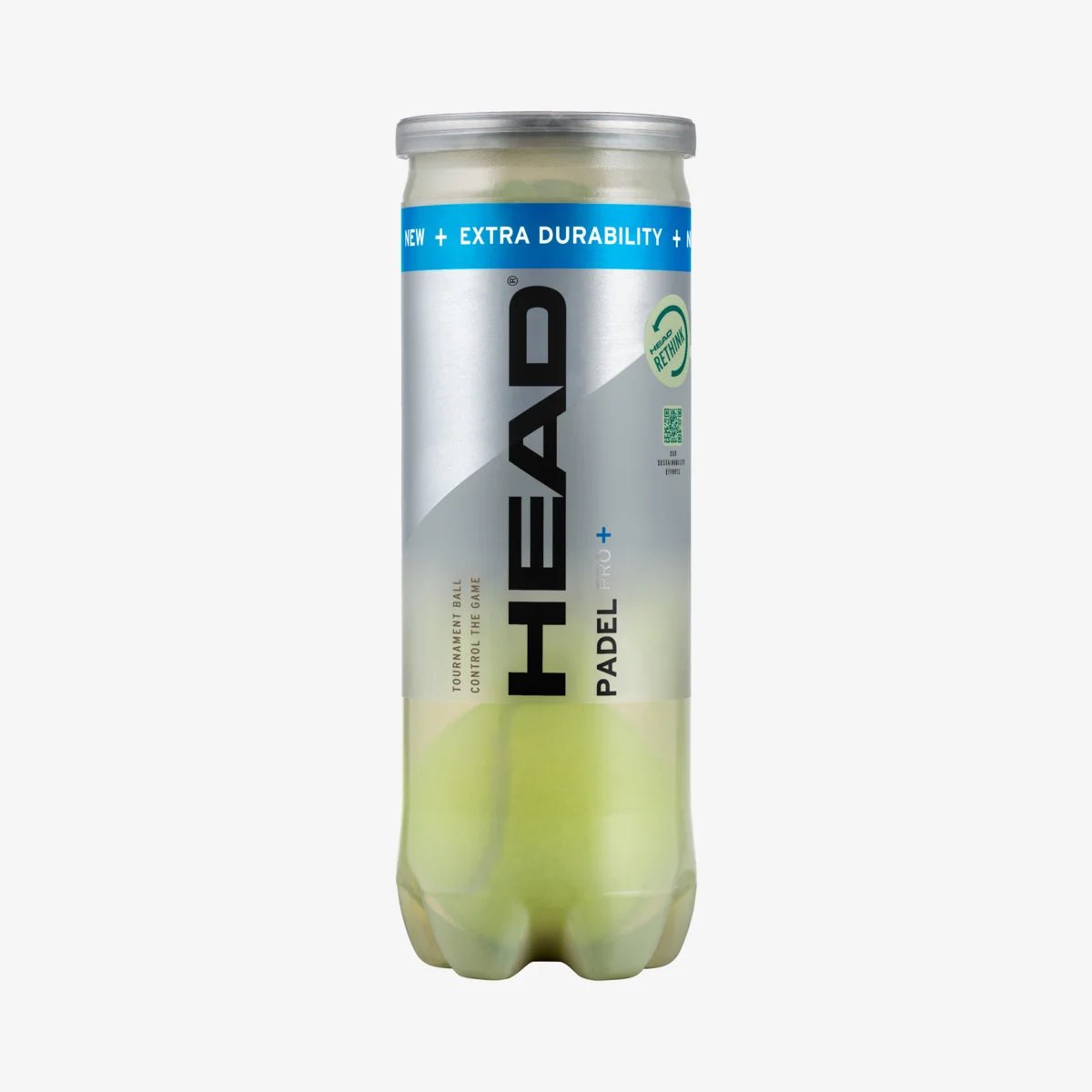
HEAD Padel Pro+
The current all-rounder — control first, pressure held longer
HEAD’s current all-round match ball and the modern successor in the famous Padel Pro line: a new core formula designed to hold pressure longer, an exclusive padel felt, and a thinner wall construction engineered for control. It is also the official ball of the Spanish Padel Federation.
Where the Pro S adds pace, the Pro+ adds precision. The thinner wall is HEAD’s control mechanism — the ball responds in a calmer, more placement-friendly way, which suits players whose game is built on bandeja accuracy, lobs that actually land in the corner, and long constructed rallies rather than first-strike pace. The new core formula addresses the oldest complaint about the original Pro line: how quickly the pressure — and with it the bounce — softened after opening.
Choose this over the Pro S if you play on fast courts, in warm conditions (Gulf evenings included), or if your four plays long rallies where control errors, not ball speed, decide the outcome. HEAD even sweated the packaging: the can uses 35% pre-consumer recycled PET with a shorter recyclable sleeve. Small thing, but it signals where the line is heading.
Pros
- Control-leaning response for placement players
- New core formula designed to hold pressure longer
- Official ball of the Spanish Padel Federation
- Better choice than S-grade balls on fast, hot courts
Cons
- Less free pace for power-first players
- Positioned at advanced/tournament level
As an Amazon Associate we earn from qualifying purchases.
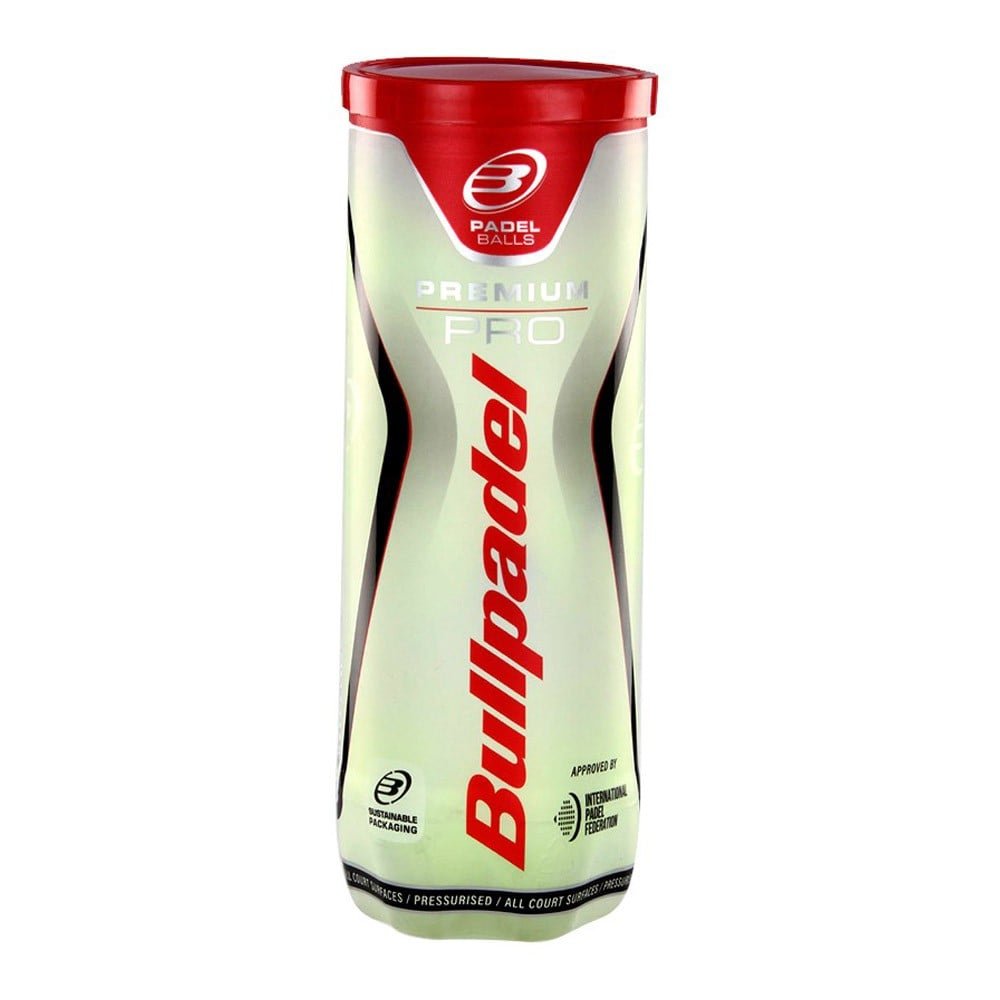
Bullpadel Premium Pro
High pressure, synthetic felt, built for heavy use
Bullpadel builds this ball around one idea: frequent, intensive play. A high-density pressurised rubber core, high internal pressure for speed, and a premium synthetic felt with low wool content chosen specifically because synthetic fibre resists the abrasion of sandy padel courts better than wool-rich felts.
The engineering logic is sound and worth understanding. Felt dies by abrasion; wool-heavy felts feel lovely but wear fluffy and smooth on sanded turf. By flipping the recipe toward synthetic fibre, Bullpadel trades a little of that plush first-day feel for a ball whose playing surface holds its character deeper into its life. The high-density core works the other side of the problem, holding pressure and shape against repeated impacts. The result is a fast, lively ball — this is a high-pressure ball, so expect pace — that suits players who train several times a week and are tired of balls feeling tired first.
It carries official-ball credentials from the Spanish Padel Federation, and Bullpadel rates it for both low and high altitude use. If your priority order is speed plus staying power — and you already control fast balls well — this is the durability-leaning pick of the list.
Pros
- Synthetic low-wool felt resists sandy-court abrasion
- High-density core holds pressure and shape
- Fast, lively character for attacking players
- Federation-certified match ball
Cons
- High pressure = quick ball; not a beginner’s friend
- Firmer synthetic feel than wool-rich felts
As an Amazon Associate we earn from qualifying purchases.
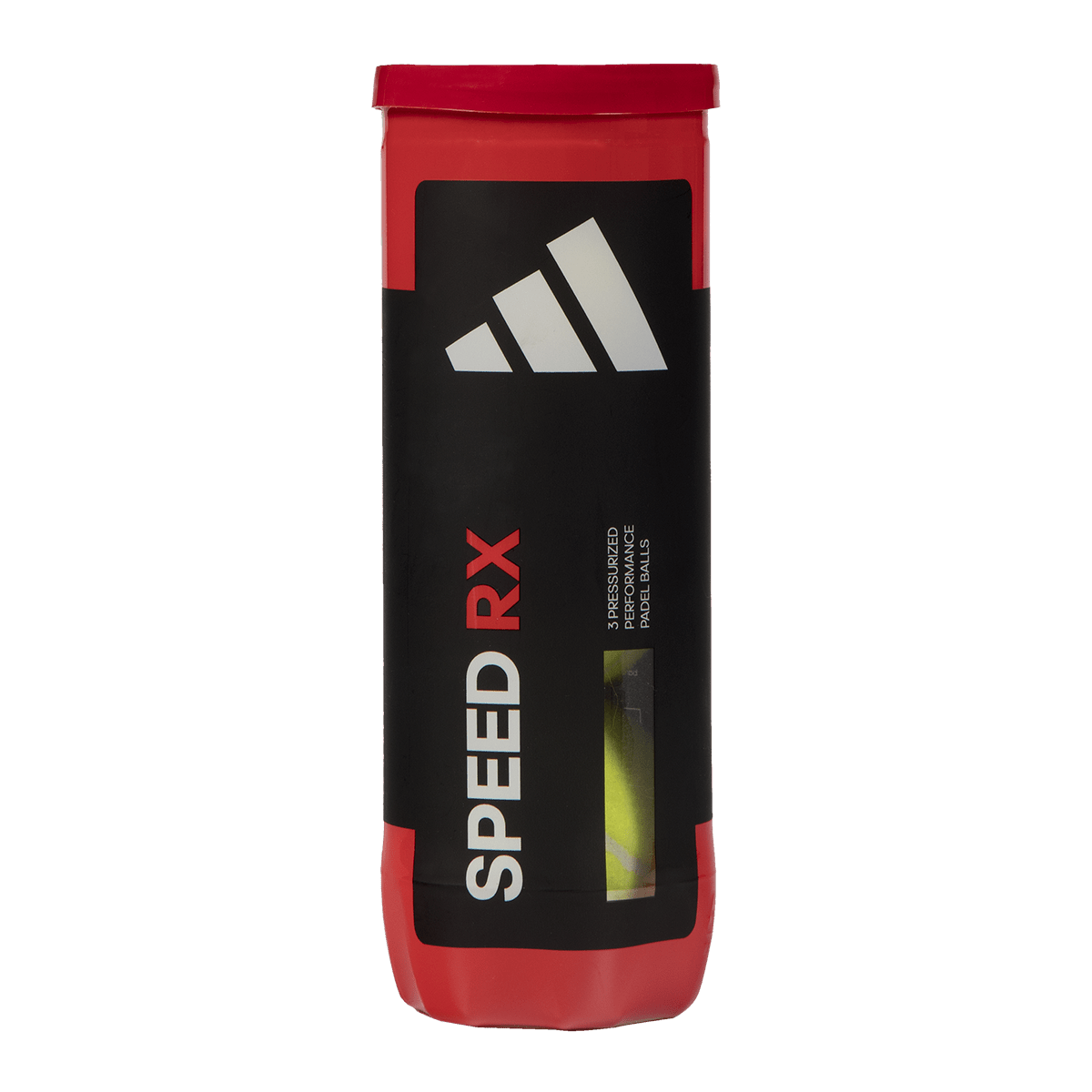
Adidas Speed RX
FIP-approved pace with a published spec sheet
Adidas builds the Speed RX for the modern, quicker game: a high-density rubber core, a lightweight wool-and-nylon felt, and full FIP approval for official competition. It is aimed at intermediate and advanced players who want speed and bounce they can trust.
Credit to Adidas for publishing real numbers: 6.75 cm diameter, roughly 58 g per ball, and a bounce rated at 144–147 cm on retailer spec sheets — the livelier end of the official rebound window. On court that translates to a ball that comes off the back glass with enough energy to keep attacking options open, and rewards players who take the ball early at the net. The lightweight felt is the durability half of the design: woven for abrasion resistance so the speed survives contact with sandy turf.
Pick the Speed RX if your home court already plays quick and your group plays an assertive, net-first game — or if you want one tournament-legal ball that works indoors and out. If your rallies currently end with balls flying long, step down to a standard-speed option like the Pro+ instead; the RX will not forgive a loose swing.
Pros
- FIP approved for official competition
- Published specs: 6.75 cm, ~58 g, lively bounce rating
- Abrasion-resistant lightweight felt
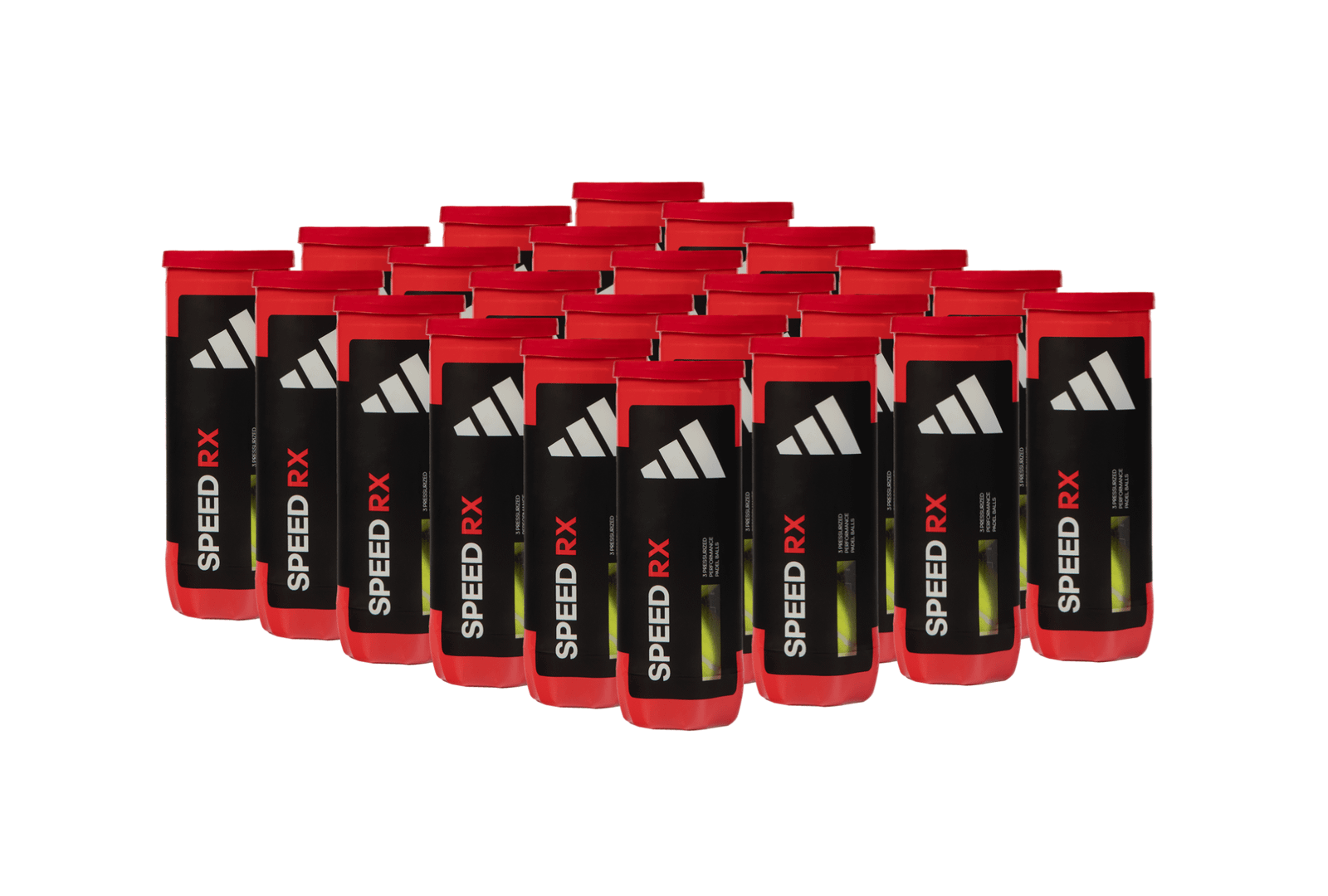
- Single tubes and 24-can cases available
Cons
- Quick ball — punishes loose technique
- Best suited to intermediate and advanced players
As an Amazon Associate we earn from qualifying purchases.
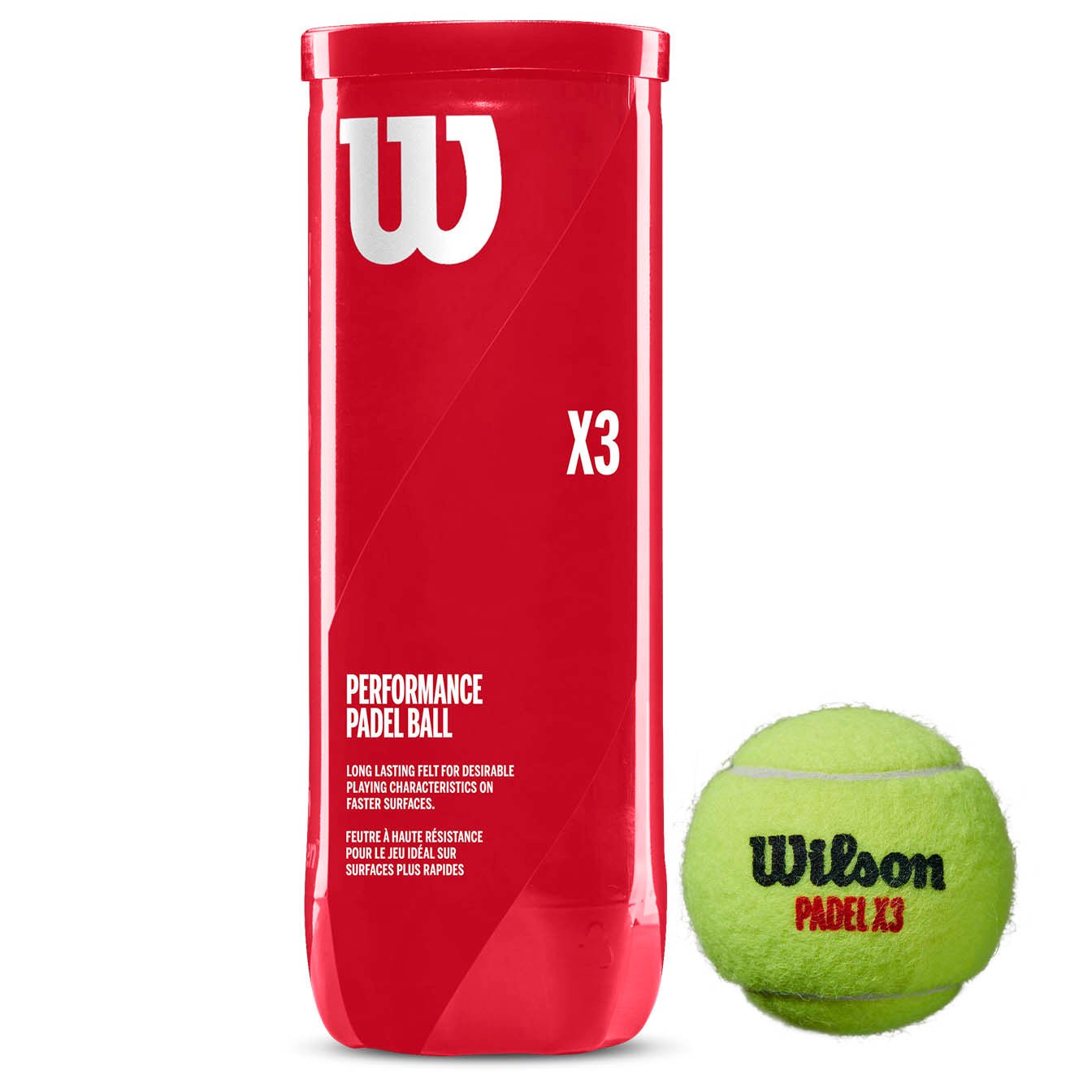
Wilson X3
The easy-to-find FIP ball with durability felt
Wilson’s X3 is the ball many players meet first, because Wilson’s distribution puts it everywhere padel gear is sold. It earns its shelf space: FIP-approved, pressurised, and wrapped in Dura-Weave felt — a tightly wrapped cloth engineered for durability and speed, even in slower conditions.
Wilson describes the X3 as built for longer, intense matches and training on faster surfaces, and the Dura-Weave story is the reason it holds up there: a tighter wrap means the felt presents a harder-wearing face to the court while keeping the ball’s response lively. There’s also a faster sibling, the X3 Speed, if you deliberately want the quicker grade — for most club players the standard X3 is the right side of lively, and it doubles as a sensible default for mixed groups where one tube has to suit everyone.
The practical argument is availability. Balls are a consumable you reorder constantly; a ball you can actually buy this week, in single tubes or dozen packs, beats a marginally preferred ball that is out of stock. The X3 is that ball in most markets — including for US readers, where Wilson’s padel range is the most widely stocked of the major brands.
Pros
- FIP approved and easy to find in most markets
- Dura-Weave felt built for durability and speed
- Lively response even in slower conditions
- Sensible all-group default tube
Cons
- Lively character is a step up for raw beginners
- Check you are buying X3 vs the faster X3 Speed
As an Amazon Associate we earn from qualifying purchases.
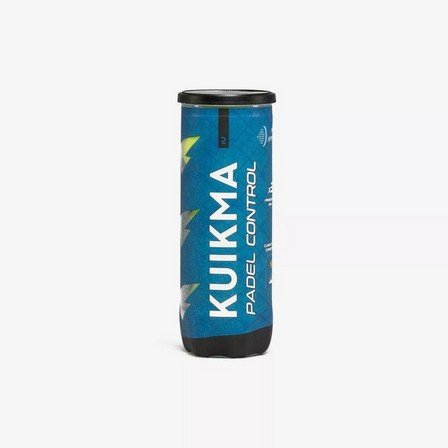
Kuikma PB Control
Decathlon’s FIP-approved ball for fast conditions
Kuikma does to balls what it did to rackets: publishes the recipe, gets it FIP-approved, and prices it below the big brands. The PB Control is designed for advanced players who want to keep control of the ball in fast playing conditions — warm temperatures and altitude — exactly the conditions Gulf players live in.
The published felt composition is the tell that this is a serious ball, not a supermarket own-brand: a wool-polyester-polyamide blend over a rubber core, balanced — in Decathlon’s own words — between speed, control and robustness. Its sibling, the PB Speed, flips the brief for slow conditions (cold, sea level, humidity), so the pair covers the whole climate map between them. If you have read our Kuikma padel rackets review, the philosophy will be familiar: near-premium engineering, Decathlon distribution, honest pricing.
For Dubai and Gulf readers the PB Control is arguably the smartest buy on this page — a ball deliberately tuned for warm-weather pace control, sold through Decathlon and Azadea locally. US readers will find Kuikma balls thinner on the ground (marketplace sellers rather than Decathlon stores), which is the only reason this is pick six and not higher.
Pros
- FIP-approved performance at a value price
- Tuned for warm, fast conditions — ideal for the Gulf
- Full felt composition published by Decathlon
- PB Speed sibling covers slow conditions
Cons
- Harder to source in the US than the big brands
- Aimed at advanced players; beginners try standard balls first
As an Amazon Associate we earn from qualifying purchases.
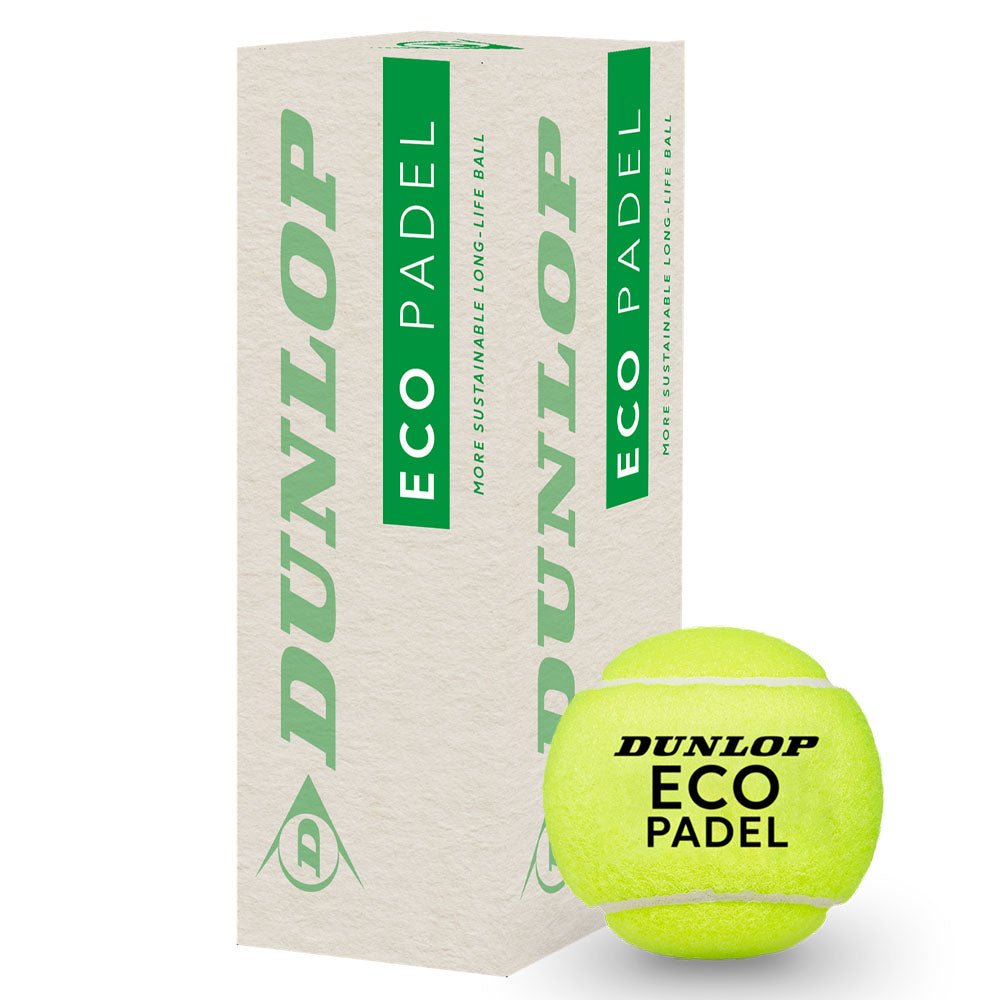
Dunlop Eco
The pressureless pick — slower, lower, longer-lasting
The one pressureless ball on this list, included because a real, currently sold model exists: Dunlop’s Eco is a pressureless padel ball with a high-quality synthetic cloth, deliberately slower and lower-bouncing, built for learning technique and shot control — and packaged in 100% recyclable, plastic-free packaging.
Everything the explainer section promised about pressureless balls is true here, and Dunlop does not pretend otherwise: no internal pressure means nothing to leak, so the bounce you get in month two is close to the bounce you got in week one — the consistency that makes it genuinely useful for drilling, coaching baskets and first lessons. The slower speed and lower bounce are features for that job: a learner gets more time on the ball, rallies last longer at beginner pace, and nobody is fighting a lively match ball while trying to learn what the glass does.
Be clear-eyed about the boundary: this is not a match ball, and experienced players will find it flat and heavy-feeling in competitive rallies. Buy it as what it is — the training and learning option, and the most forgiving first tube a genuine beginner can open — and it is excellent value. Buy it expecting league-night liveliness and you will be disappointed.
Pros
- Pressureless bounce stays consistent — nothing to leak
- Slower, lower bounce is forgiving for learners
- Durable synthetic cloth for heavy training use
- Plastic-free, fully recyclable packaging
Cons
- Not a match ball — flat feel in competitive rallies
- Lower bounce than any pressurised pick here
As an Amazon Associate we earn from qualifying purchases.
Padel balls compared
| Ball | Type | Speed | Felt / Cloth | Tube | Best for |
|---|---|---|---|---|---|
| HEAD Padel Pro S | Pressurised | Fast | Durable padel felt | 3 balls | Competitive matches, the default |
| HEAD Padel Pro+ | Pressurised | Standard / control | Exclusive padel felt | 3 balls | Placement players, hot fast courts |
| Bullpadel Premium Pro | Pressurised | Fast, high pressure | Premium synthetic, low wool | 3 balls | Frequent intensive play |
| Adidas Speed RX | Pressurised | Fast | Wool & nylon, lightweight | 3 balls | Fast courts, tournament-legal pace |
| Wilson X3 | Pressurised | Lively | Dura-Weave | 3 balls | All-group default, easy to buy |
| Kuikma PB Control | Pressurised | Control in fast conditions | Wool/polyester/polyamide blend | 3 balls | Value pick, warm climates |
| Dunlop Eco | Pressureless | Slow, low bounce | Synthetic cloth | 3 balls | Beginners, coaching, drills |
How many balls to buy — and when to change them
How many tubes do you actually need?
A match needs one tube of three. A sensible personal stock is two to four tubes: one fresh tube reserved for matches, one in play for regular sessions, and a spare so you are never the player who arrives with dead balls. If you play several times a week, multi-tube packs and 24-can cases drop the per-tube cost meaningfully — balls are the one padel purchase where bulk genuinely pays, because you will use every one of them. Coaches and clubs should be thinking in cases, plus a pressureless stock like the Dunlop Eco for feeding drills, so match tubes are not burned on basket work.
The signs a ball is dead (no stopwatch required)
Forget fixed-hour rules — judge the ball in front of you. The bounce test: drop a used ball and a ball from a fresh tube side by side from the same height; if the used ball clearly bounces lower, it has lost its match-day pressure. The sound: fresh pressurised balls make a crisp, hollow “pop” off the racket; tired balls thud. The felt: fluffed, patchy or shiny-smooth felt that no longer grips or spins the ball is done, whatever the pressure feels like. The game itself: when all four players start over-swinging just to get the ball over the net, or lobs that used to reach the glass keep dying mid-court, the balls are telling you something. Retire them to warm-ups and drills rather than the bin — a faded pressurised ball is still a perfectly good practice ball.
Storage that actually helps
Keep unopened tubes sealed until match day — the seal is the pressure. Store balls cool and dry, out of the car boot and away from direct heat. Between sessions, pressure-preserving containers can slow the fade of an opened tube; they maintain, they do not resurrect. And rotate your stock: play the oldest opened balls in training, keep the newest tube for the matches that count.
Choosing gear across racket sports? The same verified-first approach runs through our best badminton rackets for beginners guide, if your household plays both.
Padel ball FAQs
What is the difference between pressurised and pressureless padel balls?
A pressurised ball gets its bounce from gas sealed inside a hollow rubber core at above-atmospheric pressure. It plays lively and true to the official game, but the pressure slowly escapes once the tube is opened, so performance fades gradually. A pressureless ball gets its bounce from a thicker rubber wall instead — there is nothing to leak, so the bounce stays consistent for much longer, but it starts slower and lower and feels flatter in match play. Pressurised is for matches; pressureless is for training and learning.
How long do padel balls last?
There is no honest fixed number — it depends on your level, how hard your group hits, the court surface and the temperature. What is reliable is the trend: a pressurised ball is at its best fresh from the tube and fades a little with every session, while felt wear adds a second decline you can see. Judge by the signs instead of the calendar: a clear drop in the bounce test against a fresh ball, a duller thud instead of a pop, and felt that has gone fluffy or smooth. When all three show up, the ball is a practice ball now.
Padel balls vs tennis balls — can I use tennis balls for padel?
They look similar but they are not the same ball. Padel balls are slightly smaller than tennis balls and are built and pressurised for a lower, more controlled bounce suited to a smaller court with walls in play. A tennis ball in padel flies too fast and bounces too high, changing the game and the rally patterns completely. For anything beyond a casual first hit-around, use proper padel balls — every pick in this guide is a genuine padel ball.
What do the speed grades on padel balls mean?
Speed grades describe how quickly the ball plays. Faster versions — like HEAD’s Pro S or Kuikma’s PB Speed — exit the racket and court quicker and suit slow conditions: cold weather, humidity, sea level, sluggish courts. Standard and control-leaning versions — HEAD Pro+, Kuikma PB Control — buy you time and suit fast conditions such as warm temperatures and altitude. Match the grade to your conditions and level, not your ambitions: beginners should start with standard-speed balls.
How do I know when padel balls are dead?
Three checks. First, the bounce test: drop the used ball next to one from a fresh tube — a clearly lower bounce means the pressure has gone. Second, listen: fresh balls pop, dead balls thud. Third, look at the felt: fluffed, patchy or worn smooth means grip and spin are gone. When the whole group starts over-swinging to clear the net, that is the fourth and most honest signal. Move old balls to warm-ups and drills rather than throwing them away.
How many balls are in a tube, and how many tubes should I buy?
Almost all padel balls — including all seven picks in this guide — come in tubes of 3 (Kuikma also sells a 4-ball club format). One tube covers a match. For personal stock, two to four tubes is the practical range: a fresh match tube, one in rotation for regular sessions, and a spare. Frequent players save meaningfully with multi-tube packs and 24-can cases, because the per-tube price drops and balls are a consumable you will definitely use up.
Do padel balls play differently in hot weather?
Yes. Heat speeds the game up: warm air and warm rubber make balls livelier and quicker, which is why brands build control-leaning balls specifically for fast, warm conditions — Kuikma designs its PB Control for warm temperatures and altitude, and it is a smart default for Gulf and summer play. In hot conditions, drop a speed grade rather than fighting a fast ball, and keep spare tubes out of hot cars, because storage heat ages balls before you ever open them.
The verdict
Buy the HEAD Padel Pro S if you play competitive club padel and want the default match ball. Buy the HEAD Padel Pro+ if your game is control, or your courts play hot and fast. Buy the Bullpadel Premium Pro if you train hard and often and want durability-leaning felt. Buy the Adidas Speed RX if you want FIP-approved pace with published specs. Buy the Wilson X3 if you want the lively ball you can always find in stock. Buy the Kuikma PB Control if value matters — especially in the Gulf heat. Buy the Dunlop Eco if you are learning, coaching, or feeding drills. And whoever you are: match ball fresh, old balls to practice, and never blame your racket for a dead tube again.
Affiliate disclosure: Alishuttler.com is a participant in the Amazon Services LLC Associates Program. The Amazon buttons on this page use our affiliate tag — if you buy through them, we may earn a commission at no extra cost to you. Prices shown on Amazon are live and may differ from any figures mentioned here.