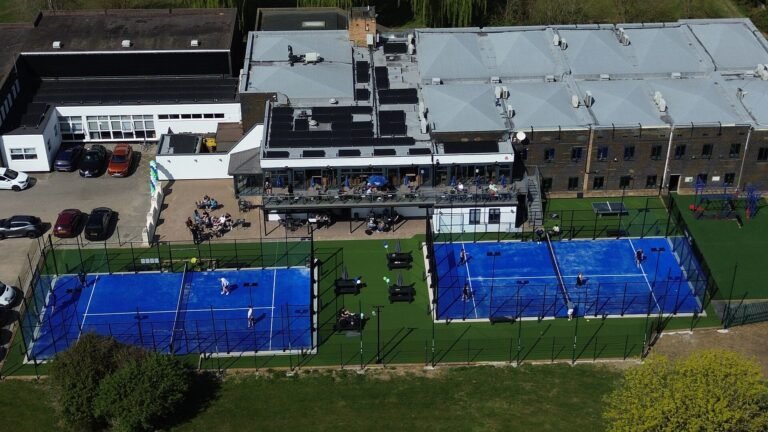
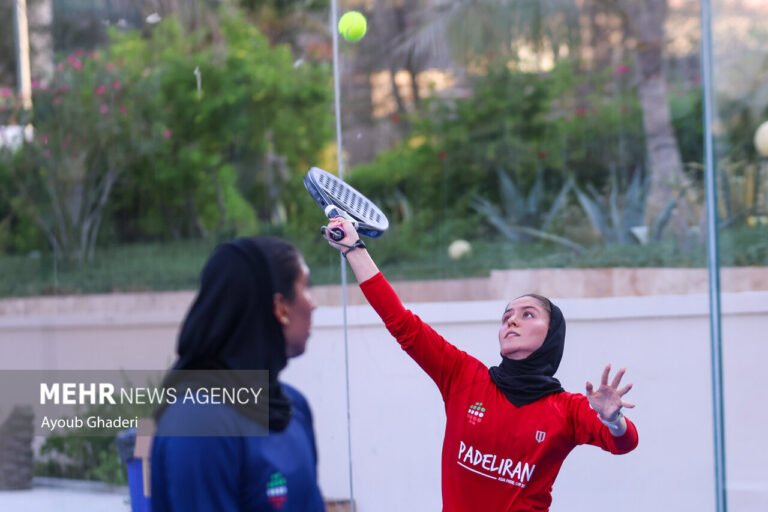
Everything a first-time player actually needs: how the glass cage works, how the underarm serve is taken, why the ball is still alive after it hits the wall, where four players stand, how the tennis-style scoring runs — and how to walk into your first session already knowing the etiquette.
Padel is the easiest racket sport in the world to start and one of the hardest to describe to someone who has never seen the court. Four players inside a glass box, a net down the middle, rallies that ricochet off the walls — and then, just as a rally looks finished, somebody lets the ball sail past them, turns, and plays it off the glass behind their own back. From outside the cage it looks like beautiful chaos. From inside, it runs on a compact set of rules borrowed mostly from tennis, with one big idea of its own: the walls are part of the game.
This guide teaches you the game the way a good club player would before your first session — the official version, checked against the current FIP (International Padel Federation) Rules of Padel, but explained in plain language with the examples that make the strange parts click. By the end you will know how to serve legally, how to keep a rally alive off the glass, where to stand as one half of a pair, how games and sets are scored, and what a “let” actually is.
One boundary before we start: this page is about playing your first game. The rulebook itself keeps evolving — new serve interpretations, scoring experiments — and our complete padel rules guide tracks the deep detail, including the Star Point scoring system and the golden point. Read this page to play; read that one to argue.
The whole game on one card
Padel is doubles, 2 against 2, on a 20 × 10 metre court inside glass and mesh walls. Every point starts with an underarm serve: bounce the ball behind the service line, strike it at or below waist height, and land it in the diagonal service box — you get two serves, as in tennis. The returner must let the serve bounce first. After that, the rally obeys one law: the ball must bounce once on your opponents’ floor before it touches anything else — but after that bounce it may rebound off the glass or mesh and still be in play, and you may even play the ball off your own back glass to send it back over. Hit it into the opponents’ wall before a bounce, let it bounce twice on your side, or touch the net, and the point is gone. Scoring is tennis scoring — 15, 30, 40, game; sets to 6 games; matches the best of 3 sets. That is padel. Everything below is the detail that makes those sentences work on a real court.
Bounce first, then walls
The ball must bounce on the opponents’ floor before any wall counts. After the bounce, the glass is your friend — on both sides of the net.
Underarm, two chances
Bounce it, strike it at or below waist height, diagonally into the service box. Miss once and you get a second serve — miss twice and the point is lost.
Tennis scoring, smaller court
Points run 15, 30, 40, game. Sets go to 6 games with a tie-break at 6-all. If you can follow tennis on TV, you already know this part.
Two players, one unit
Padel is always doubles. You and your partner move together — up to the net to attack, back to the glass to defend — and cover the court as a pair.
In this guide
Padel in 30 seconds
Strip padel down and it is tennis played as doubles inside a walled court. The server starts each point by sending the ball diagonally into the opponents’ service box. From there the pairs alternate shots: every shot must cross the net and bounce on the opponents’ side of the floor. Once it has bounced, the walls join in — the ball can rebound off the glass or mesh and still be played, and it stays alive until it bounces on the floor a second time. A rally ends when somebody fails to return the ball legally, and the winners of the rally take the point.
Three ideas do most of the work in that paragraph, and they are worth defining properly, because every call on a padel court comes back to them:
Notice what is not restricted once the rally is running: which walls you use, how high you hit, whether you volley (you may, at any moment except on the return of serve), or which member of your pair plays the ball — as long as your pair strikes it once, in turn. That freedom inside a small, enclosed court is the tactical game: you are trying to make the ball finish somewhere awkward — tight on the glass, dying in a corner, or fired past the pair at the net — while four players share 200 square metres. It is also why padel rallies run long and why complete beginners can enjoy real rallies in their first hour: the walls keep rescuing shots that would end a tennis rally on the spot.
The court: a glass box, 20 by 10
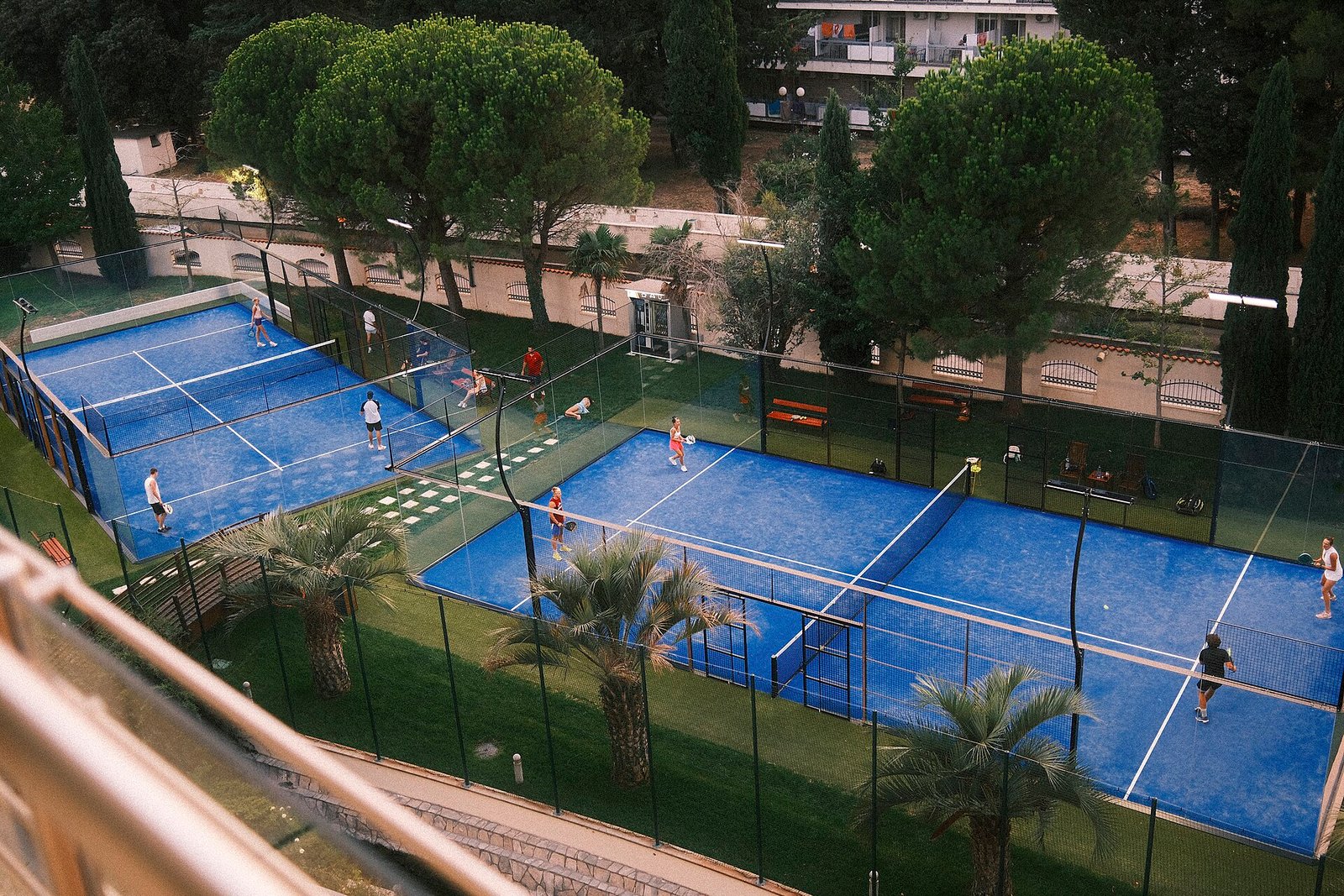
A padel court is a rectangle 20 metres long by 10 metres wide (interior measurements, per the FIP court specification), split in half by a net and completely enclosed by walls and metallic mesh. It is roughly a third of the footprint of a doubles tennis court — which is exactly the point. The small court puts every ball within a few steps; the enclosure puts every wall within the rules.
The net and the lines
The net is 10 metres long and stands 0.88 metres high at the centre, rising to a maximum of 0.92 metres at the ends — a touch lower than a tennis net, and low enough that net play is the attacking heart of the game. On each side, a service line runs across the court 6.95 metres from the net, parallel to it. A central service line runs from the net to each service line, splitting that strip into the two service boxes. Those boxes matter for exactly one shot — the serve, which must land in one. In open play the lines mean almost nothing: a rally shot may bounce anywhere on the opponents’ floor.
The walls: glass below, mesh above
The two ends of the court — the walls behind each baseline — rise 4 metres in total: the first 3 metres are solid wall, on modern courts almost always tempered glass, and the top metre is metallic mesh. The sides step down in profile: glass panels run from each back corner along the side (3 metres high for 4 metres in the all-glass design), then mesh completes the enclosure, reaching 4 metres near the ends and 3 metres along the middle. The glass gives a true, predictable rebound; the mesh gives a dead, scruffy one — the ball drops off it with barely a bounce, which is why players aim to keep the ball off the mesh defensively and use it ruthlessly in attack.
Everything inside the enclosure is the court: the insides of the glass and mesh, the floor, and the net itself. Play therefore has no “out” in the tennis sense once a rally is running — a ball that would fly long on a tennis court simply meets the back glass and comes back into play. The only true outs are the ones the fault definition covers: a shot that reaches the opponents’ wall before bouncing, a ball struck out of the enclosure without bouncing, or a ball hit into the net.
| Feature | FIP specification | What it means for your game |
|---|---|---|
| Court size | 20m × 10m | Every ball is a few steps away; positioning beats raw speed |
| Net height | 0.88m centre, 0.92m ends | Low enough that the net position is where points are won |
| Service lines | 6.95m from the net | With the centre line, they draw the two service boxes |
| End walls | 4m: 3m glass + 1m mesh | Your backboard — let deep balls bounce off it and play them coming back |
| Side walls | Glass at the ends, mesh stepping down to 3m mid-court | Corner glass defends; the mesh kills the ball dead |
| Free height | Minimum 6m, nothing obstructing | The lob is always on — there is no ceiling in the way indoors or out |
The racket and the ball
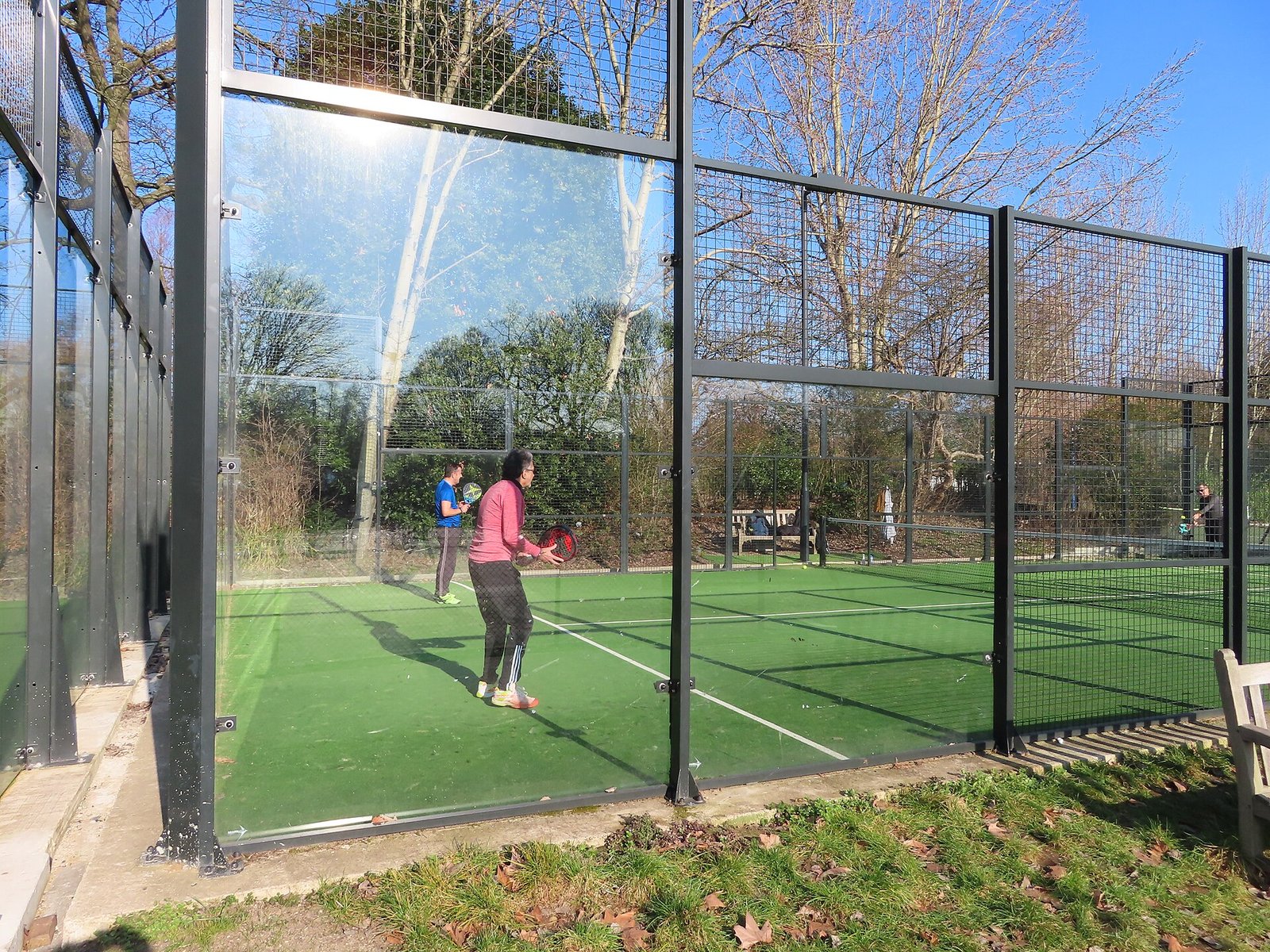
The racket is solid and stringless — a perforated foam-and-composite bat, with a head drilled with holes. Under the FIP equipment rules it may not exceed 45.5 cm in total length or 26 cm in width. Two details beginners miss. First, every padel racket has a safety cord fixed to the handle (non-elastic, maximum 35 cm), and wearing it around your wrist is not advice, it is obligatory under the rules — a racket that leaves your hand in a glass cage is a hazard to three other people. Second, the obligation has teeth: if your cord breaks or you drop your racket during a point, your pair loses that point on the spot.
The ball looks like a tennis ball and is built to the same 6.35–6.77 cm diameter, but it is specified with slightly less internal pressure — which is why padel balls feel a fraction deader and sit up a fraction less than a fresh tennis ball. It is a deliberate choice: on a court a third of the size, a livelier ball would end every rally at the net. Use proper padel balls rather than tennis balls; the game is calibrated for them, and most clubs will insist.
The serve, step by step
Every point in padel begins with the serve, and the serve is where beginners relax once they hear the words “underarm” — then tense up again over the details. The details are few and fixed. The serve is a placement shot, not a power shot: its job is to start the rally legally and let your pair take the net. Learn the sequence until it is automatic.
How a legal serve works
Step 1 — Stand behind the line. Take your position behind the service line, in the half of your court you are serving from — bounded by the side wall and the imaginary extension of the centre line — and stay there until the ball is struck. Your feet must not touch the service line, that imaginary centre line, or stray into the other half before contact (FIP Rule 6). First point of a game? You serve from the right side; after each point, the serve alternates sides.
Step 2 — Bounce the ball. Unlike tennis, there is no throwing the ball up. You must bounce the ball on the ground, inside your serving area, before you strike it — and the ball may not cross the service line or the imaginary centre line before you hit it.
Step 3 — Strike at or below waist height. At the moment of contact the ball must be at or below waist level, and you must have at least one foot on the ground. This is the whole secret of the padel serve: a waist-high underarm swing, more like a gentle bowling action than a tennis smash. If you swing and miss the ball completely, that is a fault — the attempt counts.
Step 4 — Send it diagonally into the box. The serve must cross the net and bounce inside the receiver’s service box diagonally opposite you — the box on the other side of the centre line, between the net and their service line. The lines are your friends here: a serve that bounces on a box line counts as in.
Step 5 — Respect the mesh. After bouncing in the box, the ball may run on and hit the glass — that is fine, the rally is live. But if the bounced serve touches the metallic mesh before its second bounce, the serve is a fault. It is the one wall that is out of bounds on a serve, and the surprise in most beginners’ first match.
Step 6 — Two serves, no more. Fault on the first serve and you take a second serve, exactly as in tennis. Fault on both — a double fault — and the point goes to the receiving pair. Before each set, your pair chooses which of you serves first; that order then stays fixed for the whole set, partners alternating game by game.
The receiver’s side of the bargain is just as fixed. The receiver must wait for the serve to bounce in the box and play it before the second bounce — the serve is the one shot in padel that may never be volleyed (Rule 8). If the serve hits you or your racket before bouncing, the point is the server’s, however unfair that feels. The receiving pair also picks, in the first game of each set, which partner receives the first serve of each game, and that arrangement holds for the set — padel pairs are creatures of fixed sides: a right-side player and a left-side player, usually for the whole match.
One kindness the rules build in: the server must not serve until the receiver is ready, and if a serve is delivered to a receiver who clearly is not ready and makes no attempt at it, the serve is replayed as a let rather than scored. But the protection cuts both ways — if you attempt the return, you cannot then claim you were not ready. As the receiver, get set early, racket up, weight forward; as the server, a glance up before you bounce the ball is all the courtesy the rulebook asks.
And a beginner’s aiming note while all this becomes habit: depth and the glass are your weapons, not pace. A serve that lands deep in the box and dies towards the back glass forces a weak, defensive return; a serve blasted at the receiver’s chest usually comes back at your feet while you are still admiring it. Serve to start the rally on your terms, then go and join your partner at the net.

The rally: bounce first, then walls
Once the serve is returned, the rally runs on the law you have already met: floor first, then walls. Your shot must bounce on the opponents’ floor before it touches anything else on their side. From that bounce onwards, almost everything is legal and the court opens up. The ball may rebound off their glass or their mesh and still be played. It may touch the net tape or a net post on its way over and still count. It may even die in the corner angle where the wall meets the floor — a cruel little shot players call a winner precisely because it barely bounces at all.
Playing the ball off your own walls
The defensive half of the law is the part that feels like cheating the first time you see it. A deep ball is heading past you towards your back glass. You are allowed — expected, eventually — to let it bounce, let it rebound off your own glass, and play it as it comes back towards the net. The glass turns an impossible retrieval into a routine shot; it is the single biggest difference from tennis, and the reason padel rewards patience. You can go further still: pinned in the back corner, you may deliberately hit the ball into your own back glass first and send it over the net off the rebound — a legal return, provided it then bounces on the opponents’ floor (Rule 14). And if a ball with heavy spin bounces in your opponents’ court and spins back over the net to your side, your opponent may reach over and play it — provided they touch neither the net, the posts, nor your court while doing so.
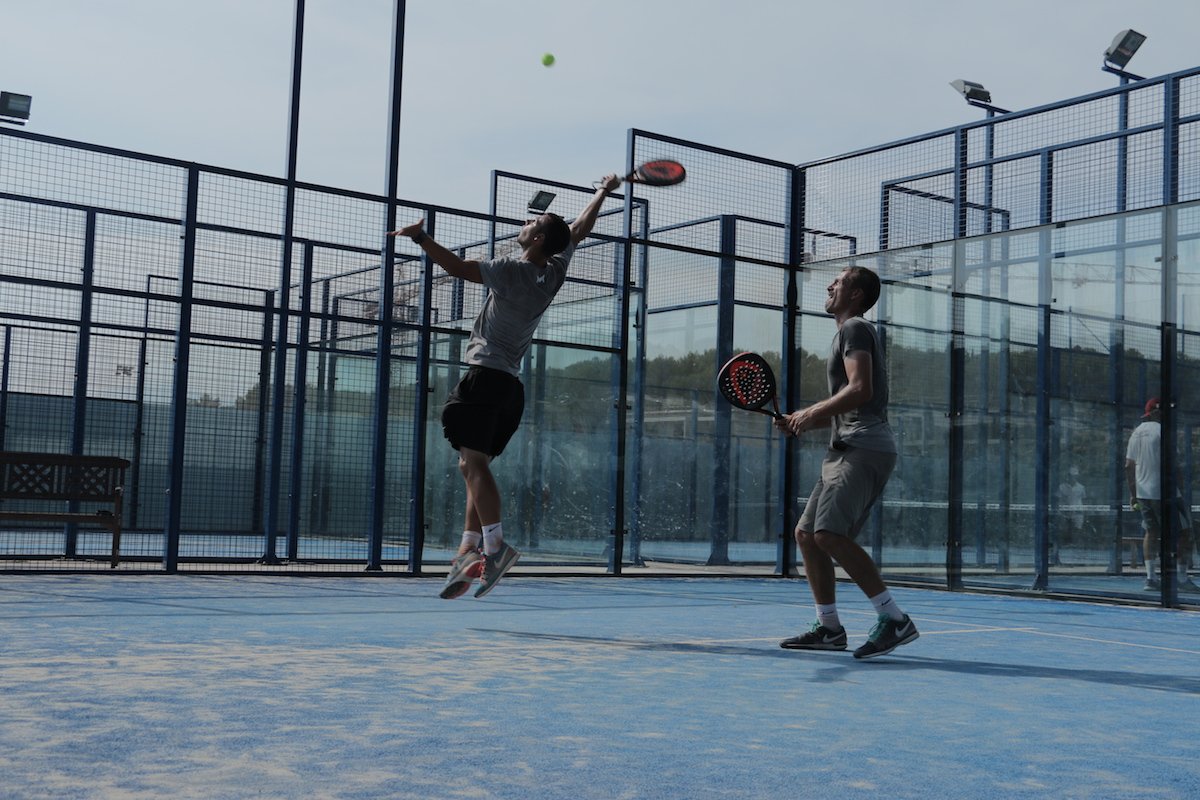
Volleys complete the picture. At any moment except the return of serve, you may strike the ball before it bounces — that is how the pair at the net finishes points. The limits sit on the other side of the ledger: you may not hit the ball before it has crossed the net (the spin-back exception aside), you may not strike it twice, and in a pair only one of you may strike it per shot — if both partners swing and connect, simultaneously or one after the other, the point is lost (Rule 12, Rule 13).
How a rally ends
Every rally resolves into one of a short list of endings. Learn them and you will follow any match — and call your own casual games fairly without an umpire.
Second bounce. The ball bounces twice on one pair’s floor before being played. The most common ending of all — the point goes to the other pair.
Wall before floor. A shot flies over the net and strikes the opponents’ glass or mesh without bouncing first. Spectacular-looking, completely dead: point to the defending pair. The same fate meets a ball returned off your own walls that flies into their wall without a floor bounce in between.
Into the net, or out of the cage. A shot that fails to cross, clips the net and drops, or is driven clean out of the enclosure without bouncing in the opponents’ court first. (A ball that bounces in their court and then leaves the court is a different matter — see out-of-court play below.)
Body contact. The ball touches any part of a player, their clothing, or anything they are carrying — other than the racket — and the point ends against that player. This includes the serve hitting a receiver before bouncing, and includes your own shot rebounding into you or your partner.
Net contact. While the ball is in play, any touch of the net, the posts, the tension cable, or any part of the opponents’ court by a player, their racket, or anything they wear costs the point. Leaning on the net for balance between rallies is fine; during one, the net is lava.
Self-inflicted endings. A double hit, a thrown racket connecting with the ball, jumping over the net, striking the ball while a foot or any part of your body is outside your own court (out-of-court play excepted) — and the dropped-racket rule from the equipment section: lose your racket or snap your wrist cord mid-point and the point is immediately your opponents’.
Doubles positioning: who stands where
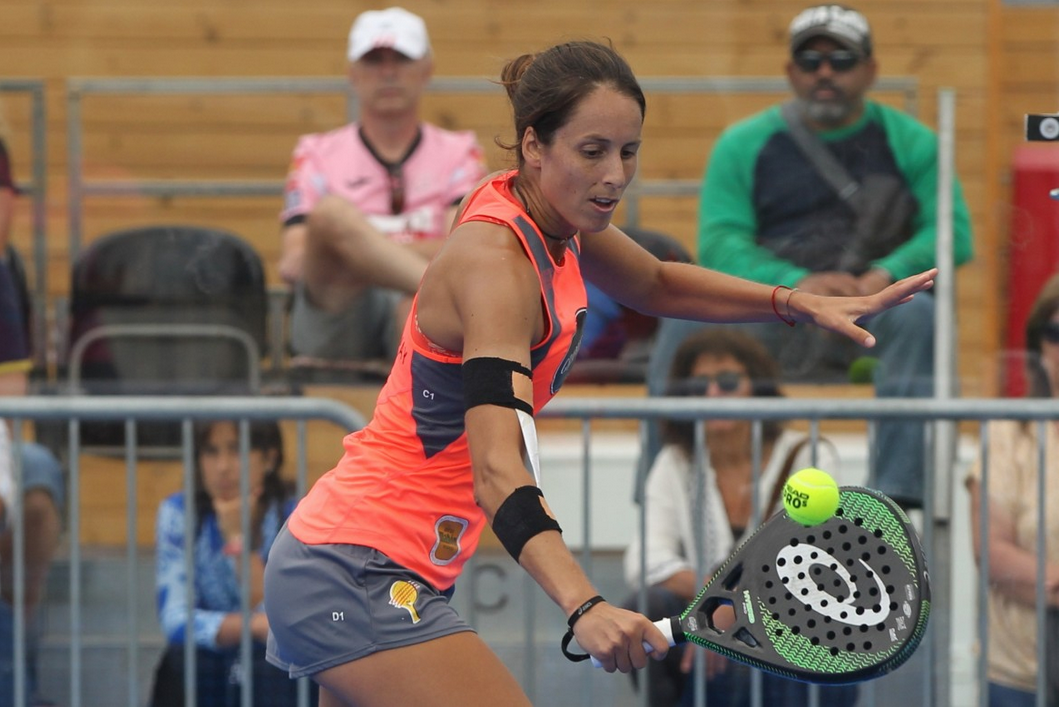
The rulebook is relaxed about positioning: beyond the server’s spot behind the line, the receiver, the receiver’s partner and the server’s partner may all stand anywhere on their own side of the court (Rule 3). Nobody will whistle you for standing in the “wrong” place. But thirty years of doubles padel have converged on a formation that works, and your first games will run far better if you start in it and learn why it is shaped that way.
The shape of a pair
Serving pair. The server starts at the back, behind the service line, on the side the score dictates. The server’s partner starts at the net, a step or two back from it, on the opposite side of the court. The moment the serve is away, the server advances and joins the partner at the net — padel is attacked from the net and defended from the back, so the serving pair’s first job after every serve is to own the net together, side by side, covering the middle as one wall of two.
Receiving pair. The receiver starts deep — behind the service line, close to the back glass on their side — because the serve must bounce before it can be played and depth buys time against it. The receiver’s partner usually starts further forward, around the service line or just behind it, ready to move up if the return is strong or drop back if it is weak. After the return, the receiving pair’s whole project is to dislodge the servers from the net: a good return at the server’s feet as they advance, or a lob over the net pair’s heads, and then both receivers come forward together.
Right side and left side. Before the first game, decide who plays which side and keep it: the right-side (deuce-side) player is typically the steadier, more defensive partner — the one who builds rallies and covers the middle with their forehand; the left-side player typically plays further forward and finishes points, taking overheads down the middle on their forehand. Left-handers are gold in this sport precisely because a left-hander on the right side puts both forehands in the middle. Whatever your pairing, the arrangement also fixes your serving and receiving turns: the partner who receives first in a game receives the first serve of every game that set, and the serving order you choose at the start of a set cannot be rearranged mid-set when it stops working.
Move as one. The principle that organises everything else: a pair should be at the net together or at the back together, shifting side to side in tandem, never one up and one back for long — the gap between a split pair is where experienced opponents aim every ball. When a lob goes over your partner’s head, both of you retreat; when your pair wins the net, both of you hold it. Call it early and call it plainly — “mine”, “yours”, “leave” (for a ball heading out into the mesh or glass long) — and after each point, reset together. The pairs who talk are the pairs who stop colliding in the middle of the court, which in a 10-metre-wide cage is a genuinely valuable outcome.
Scoring: points, games, sets and the tie-break
If you have ever watched tennis, you already own this section; padel took its scoring wholesale. Points run 15, 30, 40, game — win four points with a two-point margin and the game is yours. At 40-all, the score is deuce, and under the classic scoring option the game continues with advantage until one pair strings together two points in a row (Rule 1).
Games build into sets: the first pair to 6 games, always with a minimum margin of two, wins the set. At 5-all the set simply extends — 7-5 settles it. At 6-all, a tie-break decides: first pair to 7 points with a two-point margin, with the pair due to serve starting it (one serve, from the right side), service then rotating in two-point turns, and the pairs changing ends every 6 points; the set is recorded 7-6. A match is the best of 3 sets — first pair to two. In friendly play with a booking clock running, best-of-3 with a shortened final set or a match tie-break instead of a third set is a perfectly respectable arrangement; agree it before the first serve, as with every house rule.
Two rhythm details keep a self-officiated game honest. First, call the score before you serve, server’s score first (“30-15”), every point, without being asked — half of all casual scoring arguments are really memory failures, and the call prevents them. Second, know the change of ends: pairs swap sides after the 1st, 3rd and every subsequent odd game of a set (Rule 5) — the moment to take water, towel down, and quietly redesign whatever is not working. In formal play the changeover is capped at 90 seconds, sets end with a 120-second break, and points are meant to follow each other within about 20 seconds; on a club booking, simply keep the game flowing and nobody will reach for a stopwatch.
Lets, faults and replays
“Let” is padel’s word for that point does not count — play it again. Tennis players know it from the net-cord serve; padel uses the same idea slightly more widely, and then surrounds it with a discipline squash players would recognise: claim it immediately, or lose the right to claim it. If play rolls on and you only raise the let after the rally turns against you, there is no let (Rule 10).
The net-cord serve
The commonest let in the game. A serve that touches the net — or the net posts — and then lands in the receiver’s service box, without touching the metallic mesh before its second bounce, is called a “net” and is replayed (Rule 9). The fine print matters to beginners because it feels generous: if the let happens on your first serve, the whole point restarts and you have two serves again; if it happens on your second serve, you retake only the second serve. If the serve brushes the net and then lands out of the box, or goes on to touch the mesh, no let saves it — it is a plain fault. And the receiver-not-ready case from the serve section is the same machinery: a serve delivered to a receiver who is clearly not ready and who makes no attempt at it is replayed as a let; attempt the return and the protection is gone.
Lets during a rally
Mid-rally lets are rarer and always about the game being interrupted by something that is not the players’ fault (Rule 10). The rulebook’s list, in club language: the ball splits or breaks during the rally; a foreign element invades the court — a ball rolling in from the next court is the everyday case; an unexpected interruption unconnected to the players stops play; or the ball in play strikes an object lying on the opponents’ court floor — typically the spare ball somebody left in a corner — in a way that could interfere or be dangerous. Any of these, called at once, and the point is replayed from the serve, with the same server and the same serve count (first or second) as when it stopped.
Interference — when a player gets in the way
Padel has no squash-style stroke system, but it does have an interference rule (Rule 11), and in a cage shared by four athletes it earns its place. If a player’s action — deliberate or not — puts off an opponent during the execution of a shot, that is interference. The outcomes are short and sharp: deliberate interference gives the point to the opponent, full stop. Involuntary interference — an honest stumble into the wrong square metre — is a let, and the point is replayed. But the rule has a memory: a second involuntary interference by the same pair in the match costs them the point. In casual games this mostly translates into a social contract: give your opponents room to swing, don’t wander across the hitting zone admiring your own lob, and if you genuinely baulked someone’s shot, offer the replay before they have to ask. Offered lets are the lubricant of every club night.
Your first session: etiquette and what to bring
You can now play a legal game of padel. Playing a good one — the kind where three strangers become your regular Thursday four — needs the layer the rulebook assumes and club culture enforces.
Warm up properly, but briefly. Padel balls, like squash balls, are not at their best cold out of the can, and neither are you. Formal FIP play builds in a short courtesy rally before the first serve (three minutes under the current rules); on a booking, do the human version — a few easy rallies from the back, some volleys at the net, a handful of practice serves each — and start. Four or five minutes of knock-up is plenty, and it is shared: feed balls your partners can hit, do not spend the warm-up rehearsing your smash at them.
Strap on, every point. It bears repeating from the equipment section, because it is the rule beginners break first: the racket’s safety cord goes around your wrist before every point. It is an FIP obligation, it protects the three people sharing a glass box with your backhand, and if your racket leaves your hand mid-point — cord broken, racket dropped — the point is instantly lost. Make it as automatic as closing the gate behind you, which is the second habit: courts have access gates or door openings, and a closed gate keeps balls in and rallies unbroken.
Call your own faults. No umpire will watch your Tuesday booking. Casual padel runs on honesty about the two calls only you can make: the serve that clipped the mesh (fault — say so), and the ball you played after its second bounce (theirs — say so). Call the score out loud before every serve, give the benefit of genuine doubt to a replay rather than an argument, and you will be invited back. Nothing in the sport spreads faster than a reputation for either fairness or the opposite.
Respect the cage, and the clock. Never lean a full shoulder into the glass to show off; the walls are for rebounds, not impacts, and running into them at beginner speed is how first sessions end in A&E stories. Between points, keep things moving — formal play allows about 20 seconds, and bookable court time is expensive everywhere. If you are playing in the Gulf, our guide to padel courts in Dubai covers the clubs, surfaces and booking habits worth knowing before your first session there.
What to bring. A padel racket — solid, perforated, with its wrist cord; if you have not bought one yet, most clubs rent them, and when you do buy, our guide to the best padel rackets and the padel racket weight guide will help you pick the right shape and grams rather than the loudest paintwork. A tube of proper padel balls (three is standard; write your initials on them, because every court in the building uses the same yellow). Court shoes with a grippy, non-marking sole — the artificial turf surface is sand-dressed and slick in worn trainers, and padel’s short lateral shuffles punish running shoes’ high, narrow heels. Water, a towel for the changeovers, and clothing that lets you lunge and reach overhead — the rulebook asks only for suitable sports clothing and footwear, and that is genuinely all the dress code there is. Arrive a few minutes changed and ready: on a one-hour booking, admin is the only opponent who beats everyone.
The beginner’s checklist
Pin this version to the inside of your head for your first month:
- Serve: behind the line, bounce the ball, strike at or below waist height, diagonally into the box — glass after the bounce is fine, the mesh is a fault. Two serves; use the second safely.
- Rally: floor first, then walls. Let deep balls come off your own glass and play them coming back; volley anything except the serve.
- Pairs: pick a side (right or left) and keep it; take the net together after serving, retreat together when lobbed, and talk — “mine”, “yours”, “leave”.
- Score: tennis scoring — 15, 30, 40, game; sets to 6, tie-break at 6-all, best of 3. Call the score before every serve, and change ends after odd games.
- Lets: net-cord serve that lands in = replay (first serve restarts the point; second serve retakes only itself). Broken ball or a stray ball on court = replay. Claim it at once or not at all.
- Safety: wrist cord on for every point — lose the racket mid-point and you lose the point. Never swing at a ball you cannot see, and never charge the glass.
How to play padel — FAQs
Is padel always played as doubles?
Yes — the official FIP game is doubles, 2 against 2, on the standard 20 × 10 metre court, and the FIP Rules of Padel are written for pairs: serving and receiving orders are set per pair, and points can be lost for both partners striking the same ball. A handful of clubs have narrower singles courts for training, but matches, leagues and bookings are doubles by default — bring three friends, or expect the club to match you with partners.
Can the ball hit the glass walls in padel?
Yes — that is the point of the sport. After your shot has bounced on the opponents’ floor, it may rebound off their glass or mesh and remain in play, and on your own side you may let the ball bounce and then play it off your own back glass. The order is everything: a shot that hits the opponents’ wall before bouncing on their floor is a fault, and on the serve, a ball that bounces in the box and then touches the metallic mesh (rather than the glass) is also a fault.
Can you volley in padel?
Yes, at almost any time — volleying is how the pair at the net finishes points. The single exception is the return of serve: the serve must be allowed to bounce in the service box before it is played, and a serve that hits the receiver or their racket before bouncing is the server’s point (FIP Rules, Rule 8). You may not volley a ball before it has crossed the net, spin-back balls aside.
How many serves do you get in padel?
Two — a first and a second serve, exactly as in tennis. The serve is underarm: the ball is bounced on the ground behind the service line and struck at or below waist height into the diagonal service box. A fault on the first serve gives you the second; faults on both are a double fault and the point goes to the receiving pair (FIP Rules, Rules 6–7).
What happens if a padel serve hits the net?
If the serve touches the net or posts and then lands in the receiver’s service box without touching the metallic mesh, it is a “net” — the serve is replayed. A net-cord on your first serve restarts the whole point, so you serve twice again; on your second serve, only the second serve is retaken. If the serve hits the net and then lands outside the box, or goes on to touch the mesh, it is a fault instead (FIP Rules, Rule 9).
How does scoring work in padel?
Padel uses tennis scoring: points run 15, 30, 40 and game, with deuce and advantage at 40-all; a set goes to the first pair to win 6 games with a two-game margin, with a tie-break to 7 points at 6-all; and a match is the best of 3 sets. The FIP rulebook also sanctions the golden point and the Star Point for settling deuce games — the Star Point, new for 2026, allows two advantage cycles before a deciding point. Our complete padel rules guide covers those systems in full.
Can you hit the ball off your own back wall in padel?
Two ways, both legal. Defensively, you can let a deep ball bounce, rebound off your own glass, and play it as it comes back towards the net — the signature padel recovery. Deliberately, you may also strike the ball into your own wall first and send it over the net off the rebound, as long as it then bounces on the opponents’ floor (FIP Rules, Rule 14). What you can never do is beat the second bounce: once the ball has bounced twice on your side, the point is over.
What do I need to start playing padel?
Very little: a solid, perforated padel racket with its wrist safety cord (wearing the cord is obligatory under the FIP rules, and dropping your racket mid-point loses the point), proper padel balls — same size as tennis balls but slightly lower pressure — non-marking court shoes with real grip for the sand-dressed turf, and sportswear you can lunge in. Most clubs rent rackets and sell balls at the desk, so your first session needs nothing bought at all. When you are ready to buy, our guides to the best padel rackets and to padel racket weight cover the shapes, weights and balances that suit a first season.
About this guide: The rules summarised here follow the International Padel Federation’s Rules of Padel (review of application 01.01.2026) and the FIP court and equipment specifications; where your club or league uses local conventions (golden point scoring, out-of-court play, court surface), those take precedence on the day. This page links only to guides on Alishuttler.com — any affiliate relationships are disclosed on the pages concerned.