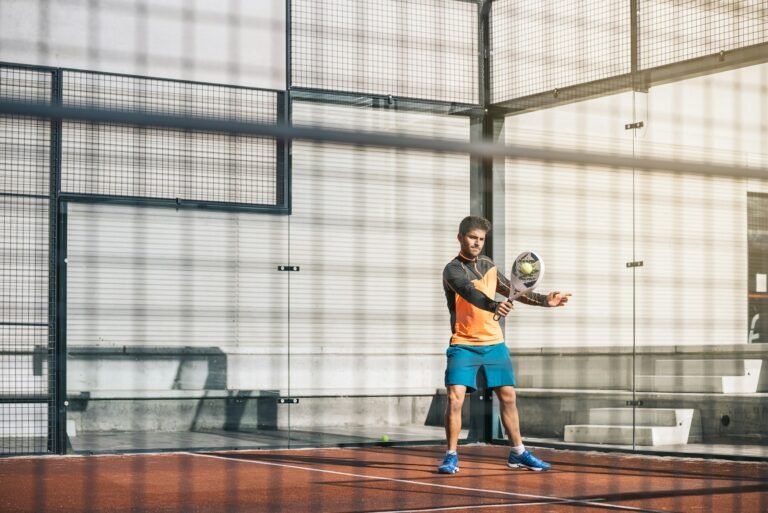
Your first padel shoe is a different decision from your second. Right now the job is not marginal gains — it is learning how padel actually moves: short lateral shuffles, hard stops against the glass, pivots under the bandeja and quick steps into the net, all on sand-dressed artificial turf that punishes the wrong outsole from the first rally. This guide compares seven proper first court shoes on exactly what their makers publish — the outsole pattern as each maker states it, the cushioning system by the name each maker gives it, the lateral-support structure as each maker describes it, the overall weight exactly as each maker states it (or an honest “not published” where a maker states none), and the fit as each maker labels it — and nothing else. No prices, no health claims, no invented numbers: just the spec sheets, read the way a first-time player needs them.
⚡ TL;DR — The Short Answer
For the best all-round first padel shoe, buy the ASICS Gel-Dedicate 8 Padel — the shoe ASICS itself calls “a baseline padel shoe for the entry-level player,” with a herringbone padel outsole, GEL cushioning and a TRUSSTIC midfoot unit. The Mizuno Wave Exceed Court Padel is the lightweight pick at a maker-published 255 grams, running the same sole design as Mizuno’s top padel model. The Joma Master 1000 is the designed-for-beginners pick — Joma’s own listing calls it an entry-level model, built around a phylon midsole and a herringbone DURABILITY sole. The NOX Nerbo is the cushioned-comfort pick, with NOX’s AGG geometry and an OrthoLite insole. The Bullpadel Next 25i is the stability-first pick from Bullpadel’s stability line. The Wilson Hurakn Lite is the pivot pick, with a vortex-pattern Optimum Grip outsole. And the Babolat Jet Tere 2 is the lightweight alternative — 320 grams as Babolat publishes it, with the clay-soled version the one to choose for padel courts.
Quick Picks — Best Padel Shoes for Beginners at a Glance
ASICS’s own entry-level padel shoe — herringbone grip, GEL cushioning and TRUSSTIC support in one honest starter spec.
A maker-published 255 g, ENERZY cushioning and the same sole design as Mizuno’s top padel model.
Joma’s own entry-level model: a phylon midsole, a raised lateral side and a sand-clearing herringbone sole.
NOX’s comfort line — AGG geometry, Lateral Support and an OrthoLite insole over a herringbone-and-stud sole.
Bullpadel’s stability line: a TPU Support Arch, an outer flap and a hybrid herringbone-and-stud sole.
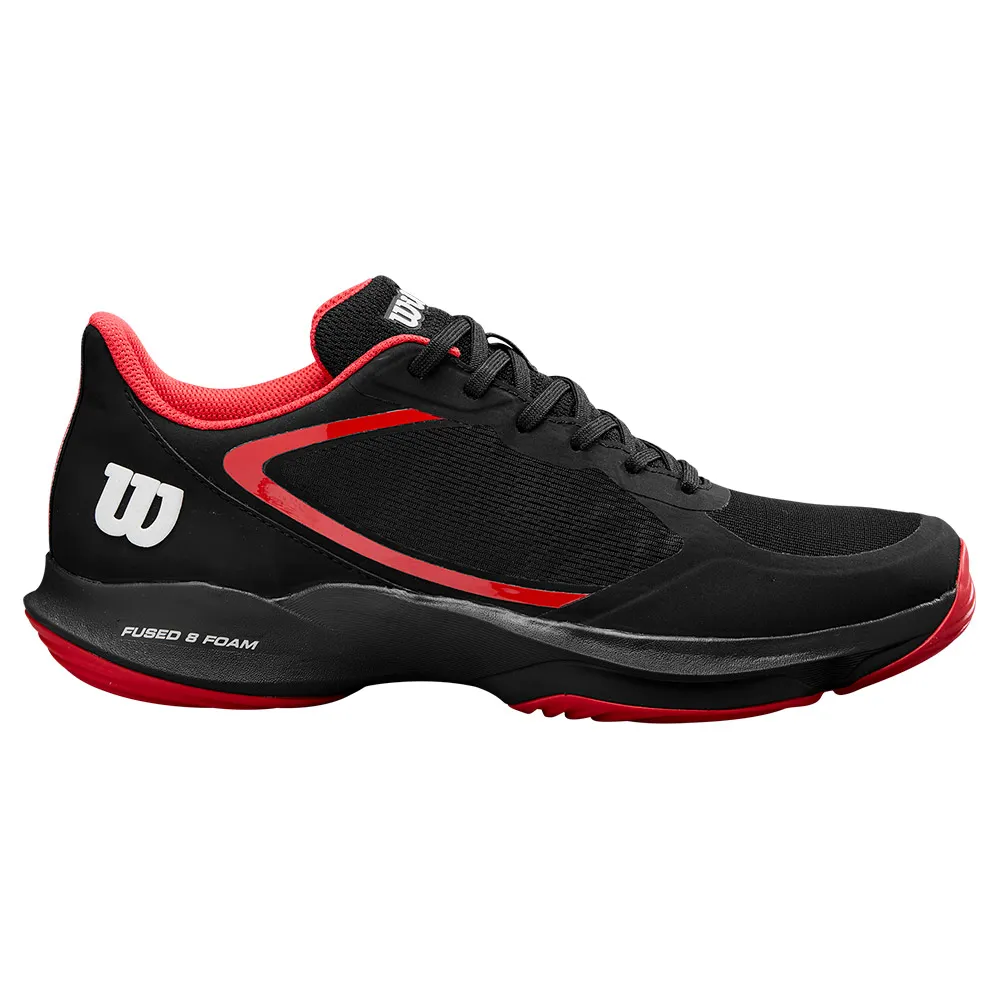
A vortex-pattern Optimum Grip outsole and a Pro Torque Chassis Light, built for rotation, per Wilson.
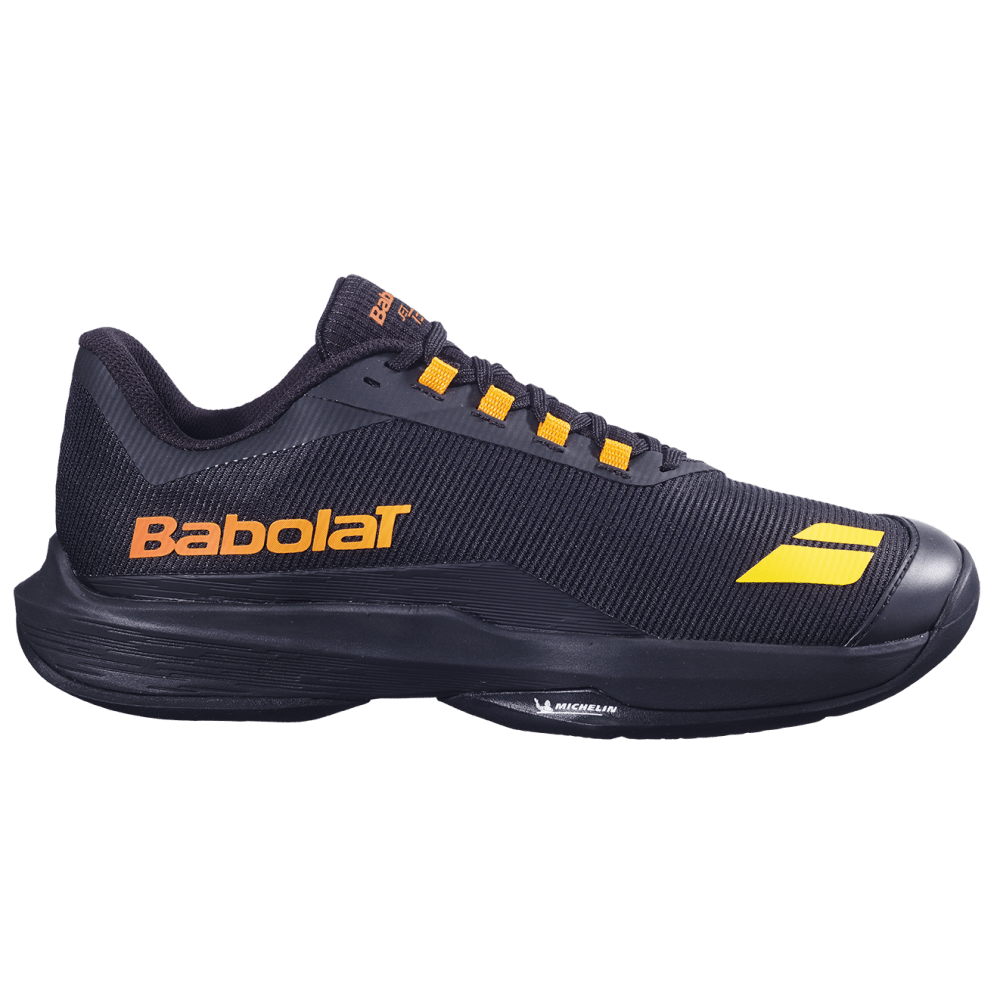
320 g as Babolat publishes it, KPRS-X cushioning and a Michelin sole — choose the clay version for padel.
In This Guide
The First Padel Shoe Decision: Why a Court Shoe, and Why Not Your Running Shoes?
Almost every beginner’s first instinct is to play their first padel sessions in the trainers already in the cupboard — usually running shoes. It is an understandable instinct and a poor one, and the reason is written in how the two shoe types are constructed. A running shoe is built for one repeated motion: straight ahead. Its outsole tread is patterned for forward grip on road and track, its midsole is stacked high and soft at the heel for straight-line landings, and its upper is a light mesh designed to flex forward, not to hold a foot that is stopping sideways. Padel asks for the opposite of all three. The game is played on sand-dressed artificial turf inside glass walls, and its movement loop is lateral: side-to-side shuffles along the baseline, hard two-foot stops, lunges toward the glass, pivots under overheads and short forward steps to the net. Makers build court shoes for that loop with a recognisable toolkit — a clay-style herringbone or omni outsole that grips sanded turf and still releases into a controlled slide, a lateral support structure that holds the foot on the shoe’s platform through sideways stops, and a named cushioning system in the midsole. Every card in this guide publishes all three, as its maker states them. That is the entry ticket, and it is a construction fact, not a marketing label.
The beginner’s version of the decision has its own shape, and it is simpler than the experienced player’s. You do not yet know whether your game will be built on net rushes or baseline patience, so the first shoe’s job is coverage, not specialisation: a proper padel outsole for the courts at your club, enough published stability structure to learn lateral movement in, a cushioning system you can read by name, and a fit you can buy with confidence from a size chart. Weight matters, but read it the way this guide prints it — exactly as each maker states it, with the size basis where the maker gives one. Three of the seven makers here publish no weight at all for the model carded, and those cards say so in plain words rather than borrowing a number from somewhere else. A first purchase made on honest specs beats a first purchase made on borrowed numbers every time, because the second shoe — the one you buy once you know your game — will be chosen against the same columns.
One boundary before the picks. This page owns the first-shoe decision only. The full all-player field belongs to our pillar guide to the best padel shoes, where the flagship models from every major maker are compared; the women’s fit and size-range decision belongs to our guide to the best padel shoes for women; and the comfort-and-support decision for veteran players is covered in our guide to the best padel shoes for seniors. None of their models is re-carded here — every shoe below is a different model, chosen because its maker positions it for, or its published specification suits, a player buying their first proper padel shoe. If you are new to the sport itself, start with our padel beginners tips and our guide on how to play padel: the footwork they teach is exactly the movement these seven outsoles and support structures are built to serve.
How to Read a Padel Shoe Spec Sheet: Outsoles, Cushioning Names and Honest Weights
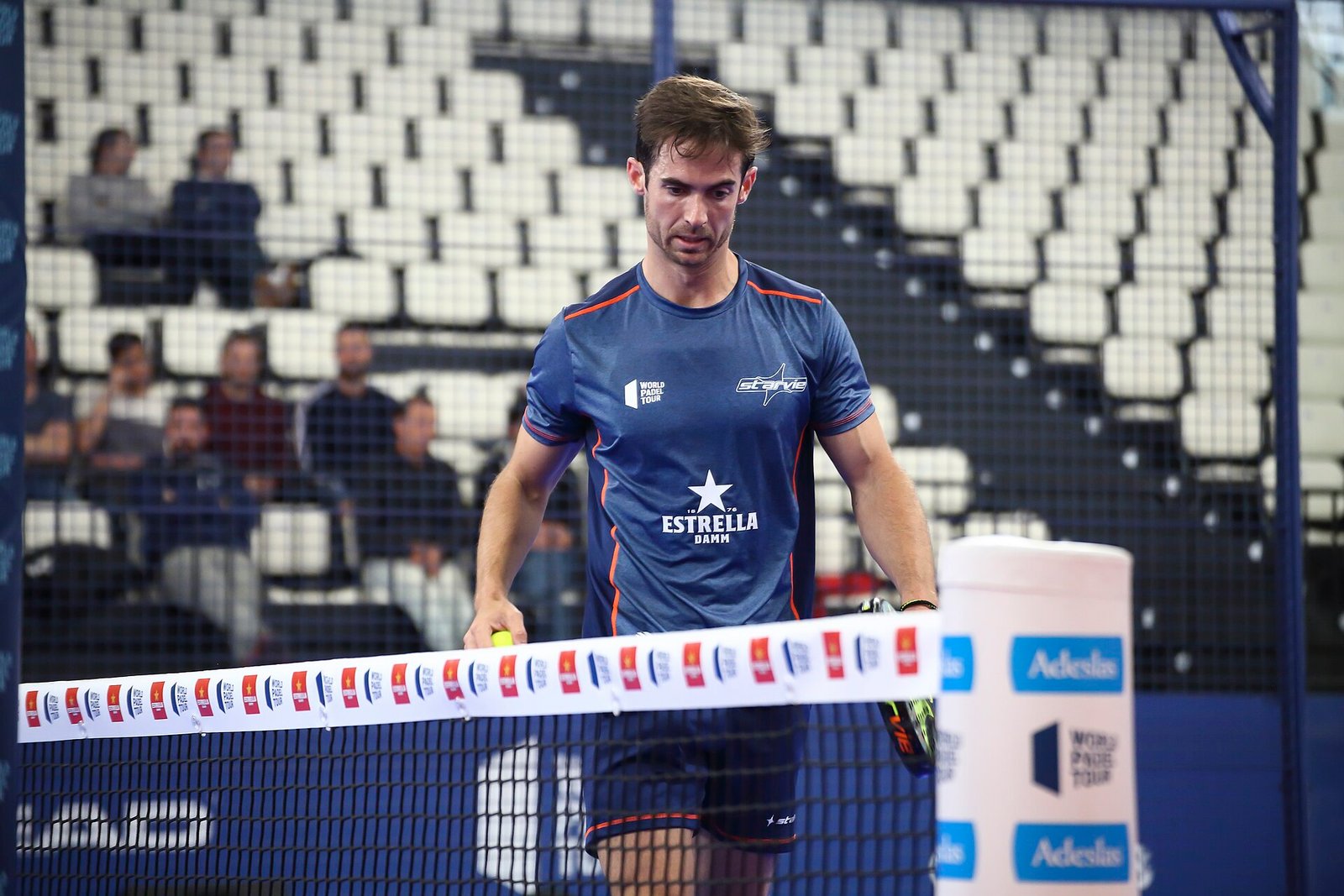
The outsole pattern is the first spec, because it is the padel-specific one. Makers describe three families of pattern in this guide. The herringbone (clay) pattern — deep zig-zag grooves, as on the ASICS, the Joma and half of the NOX and Bullpadel soles — channels the loose sand that sits on top of padel turf out of the tread, so the shoe grips and then releases into a controlled slide rather than either skating or jamming. The omni pattern — small studs, as on the stud areas of the NOX Nerbo’s and Bullpadel Next’s soles — bites through the sand layer to the turf beneath. And the rotational pattern — the Wilson Hurakn Lite’s vortex grooves — is built around the pivot: padel players turn under the ball constantly, and a circular pattern under the forefoot and heel is the makers’ mechanical answer. None of the three is universally best for a beginner; the buying guide below matches each to the courts you will actually play on and the footwork you are learning.
Cushioning and stability are vocabularies, not scores. Each maker names its own systems, and the names are not interchangeable grades of the same thing: ASICS’s GEL is a cushioning technology set in an EVA midsole, Mizuno’s ENERZY is a midsole material, Babolat’s KPRS-X is an EVA insert positioned under the heel, NOX’s AGG is a geometry — a heel-to-toe shape — rather than a foam at all. Stability names work the same way: ASICS’s TRUSSTIC is a rigid bridge under the midfoot, Joma’s PROTECTION is a raised lateral side, Bullpadel’s Support Arch is a TPU support in the arch with an outer flap, Wilson’s Pro Torque Chassis Light is an underfoot frame. The cards print each system as its maker describes it, attributed, so you can compare structures rather than slogans. Weight is the last spec to interrogate, and the least standardised. Mizuno publishes 255 grams for its card here without stating a size basis on the listing; Babolat publishes 320 grams for a size EU 42.5; ASICS publishes nothing, so its card prints a retailer-listed figure, labelled as one; Joma, NOX, Bullpadel and Wilson publish nothing for their models in the listings checked, so their cards print no weight at all. Read the basis on each card, compare like with like, and never let a listing’s shipping weight stand in for a maker’s specification.
The 7 Best Padel Shoes for Beginners, Compared
Seven shoes, one shared brief — a padel outsole, a named cushioning system and a published support structure, read the way a first-time buyer actually uses them. Start with the card that matches your first season.
ASICS Gel-Dedicate 8 Padel
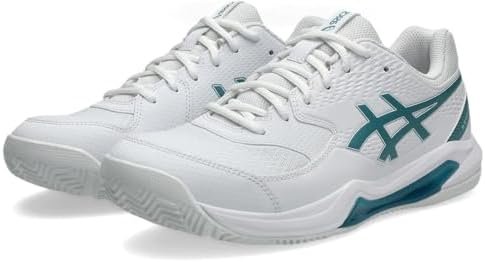
The maker’s own starter shoe — ASICS calls it “a baseline padel shoe for the entry-level player,” and its spec sheet is the complete beginner brief in one card.
Start where ASICS itself starts: this is the padel edition of its entry-level court shoe, positioned by its maker for the entry-level player, and it earns the #1 card here because its published specification covers the whole beginner decision without a single gap a new player has to guess at. The outsole is the padel-specific part — a herringbone tread in AHAR, ASICS’s high-abrasion rubber compound, built for the sand-filled artificial grass of club padel courts, in a wrap-up design whose rubber rises slightly at the edges, which supports the foot exactly where a lateral push-off loads it. That is the correct first answer to the surface question, from the maker’s own range: not a hard-court tennis tread, not a road pattern, a padel tread.
The support and cushioning systems are ASICS’s established names, carried down from its more expensive stability shoes. The TRUSSTIC unit is a rigid bridge under the midfoot that resists twisting through the middle of the shoe — the structural half of learning to move sideways without the shoe rolling under you. GEL technology sits in the EVA midsole as the cushioning system, and the upper pairs breathable mesh with synthetic leather overlays around the toe and sides, with PGUARD toe protection on retailer specification sheets for players who drag a foot through volleys and lobs. Two honest notes close the card. ASICS publishes no weight for this model, so the figure printed here is the one Tennis Warehouse Europe lists — about 356 grams in a men’s US 10.5 — labelled as a retailer figure wherever it appears. And before you order, check the listing says Padel: ASICS sells a same-named hard-court tennis version and a clay version, and only the Padel edition carries this outsole.
What we like
- Positioned by ASICS itself for the entry-level player — the beginner brief, from the maker
- A genuinely padel-specific herringbone outsole in high-abrasion AHAR rubber
- TRUSSTIC and GEL are established ASICS systems, not starter-line inventions
- Wrap-up outsole edges and synthetic overlays support lateral learning
Worth knowing
- ASICS publishes no weight — the 356 g figure is a retailer’s, labelled as such
- Three same-named versions exist (Padel, hard-court, Clay) — check “Padel” in the listing title
As an Amazon Associate we earn from qualifying purchases.
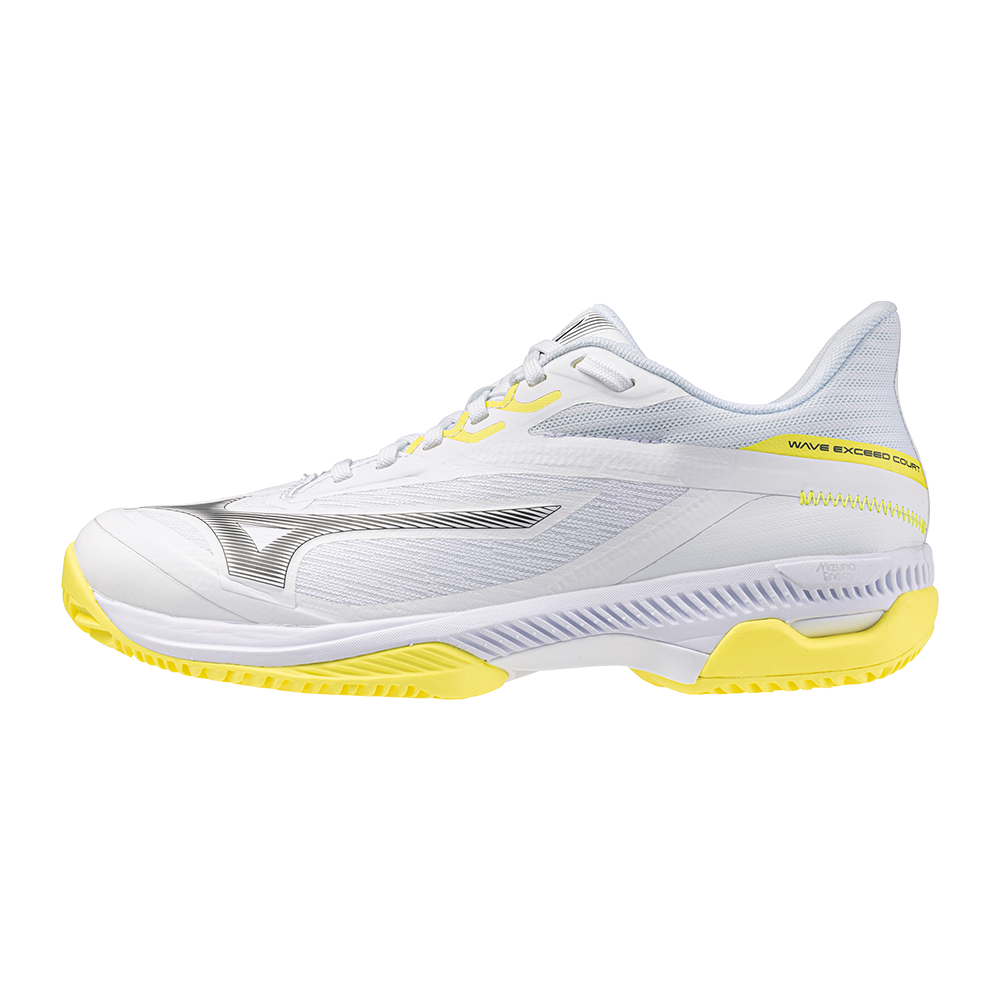
Mizuno Wave Exceed Court Padel
The lightest published shoe in the guide — 255 grams on Mizuno’s own listing, with the sole design of Mizuno’s top padel model underneath.
Every figure on this card comes from Mizuno’s own listing, and the headline figure is the lightest maker-published weight in this guide: 255 grams. One transparency note, printed the way this guide always prints it: Mizuno’s listing states the weight without giving a size basis, so the number is comparable as a maker’s published figure but not as a like-for-like laboratory measurement — it still places this shoe clearly at the light end of the beginner market, which is where its design brief sits. Mizuno describes the model as its lightweight and speed shoe, crafted to enhance changes of direction and swift movements — precisely the footwork a beginner is on court to learn, and a lighter shoe is the forgiving tool for learning it in.
The specification underneath is borrowed from the top of Mizuno’s range, which is what makes the card interesting at this level. Mizuno states the shoe uses the same sole design as its top padel model, with X10 carbon rubber — Mizuno’s durable rubber compound — in the high-wear areas. Cushioning is MIZUNO ENERZY in the forefoot plus a MIZUNO ENERZY INSOLE, a pairing Mizuno positions for the quick changes of direction a speed model is built for, over Mizuno’s Wave technology, which Mizuno describes as a midsole shape that provides both cushioning and stability. The D-Flex Groove — a diagonal groove engineered into the midfoot — is Mizuno’s published turning feature, designed to let the player rotate through direction changes. The published stack height is 11.0 mm, and the upper is a two-colour mesh. For a beginner whose first instinct is that padel shoes feel heavy and clunky next to their trainers, this is the card that answers it with a number.
What we like
- The lightest maker-published weight here — 255 g on Mizuno’s own listing
- The same sole design as Mizuno’s top padel model, per Mizuno
- ENERZY forefoot cushioning plus an ENERZY insole, both named on the listing
- D-Flex Groove addresses the turning movement beginners practise most
Worth knowing
- Mizuno states the 255 g weight without a size basis — compare it as a published figure, not a lab measurement
- A speed-and-lightness brief: players who want maximum structure should read the Bullpadel card
As an Amazon Associate we earn from qualifying purchases.
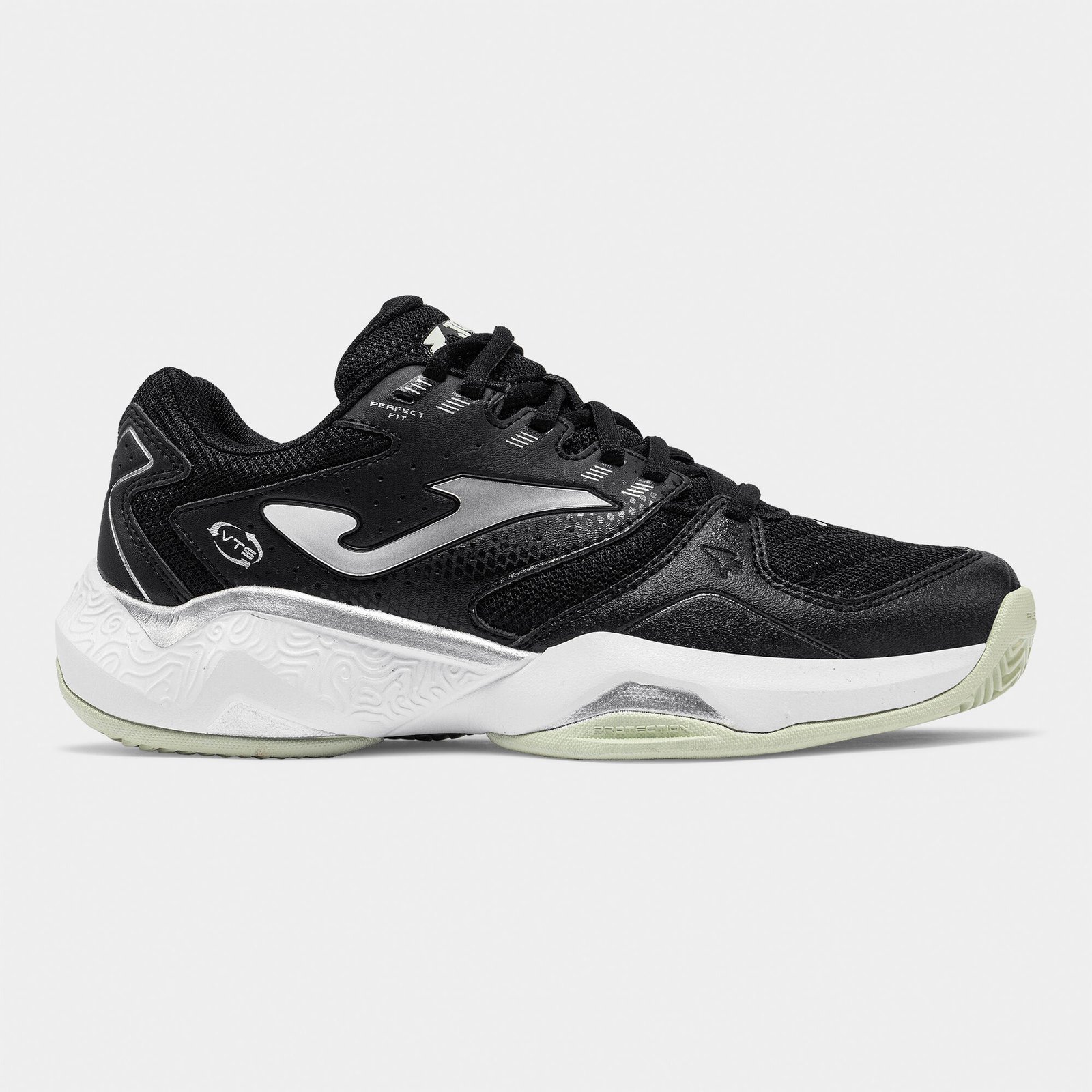
Joma Master 1000
The purpose-built starter — Joma’s own listing calls it an entry-level model and “an ideal option for beginners,” and the construction backs the label.
Most shoes in a beginners guide are general models that happen to suit beginners. This one is the exception, and the claim is its maker’s, not ours: Joma’s own product listing describes the Master 1000 as an entry-level model, “an ideal option for beginners,” built from durable materials with — in Joma’s words — a structure that promotes stability during short, rapid movements. Short, rapid movements are a fair one-line description of beginner padel footwork, and the rest of Joma’s published specification reads like it was written against the same brief. The midsole is phylon, which Joma describes as lightweight and flexible cushioning material. The lateral side of the shoe is built with greater height under Joma’s PROTECTION technology — a raised side wall on the side a lunging, side-stepping player loads hardest.
The outsole is the other half of the beginner case. Joma’s DURABILITY rubber sole carries a herringbone, or clay, pattern, which Joma describes as providing the grip needed on slippery, sand-dressed surfaces by expelling sand from the sole as you move, while still allowing slides on the court without difficulty — the two-part behaviour a new player has to learn: grip to stop, release to slide. The upper is a lightweight, flexible semi-microfibre Joma rates for durability, with its VTS perforation system placed in strategic areas for ventilation. The honest limit is this guide’s standard one: Joma publishes no weight for the Master 1000, so none is printed here — the card stands on its maker’s positioning and its published construction, which for a true first shoe is a defensible basis all by itself.
What we like
- The only card whose maker positions the model explicitly for beginners
- A herringbone sole Joma describes as expelling sand while allowing controlled slides
- PROTECTION raises the lateral side — structure aimed at padel’s sideways movement
- Simple, readable spec: phylon midsole, semi-microfibre upper, VTS ventilation
Worth knowing
- Joma publishes no weight for this model — none is claimed here
- The plainest cushioning specification in the guide: a single phylon midsole
As an Amazon Associate we earn from qualifying purchases.
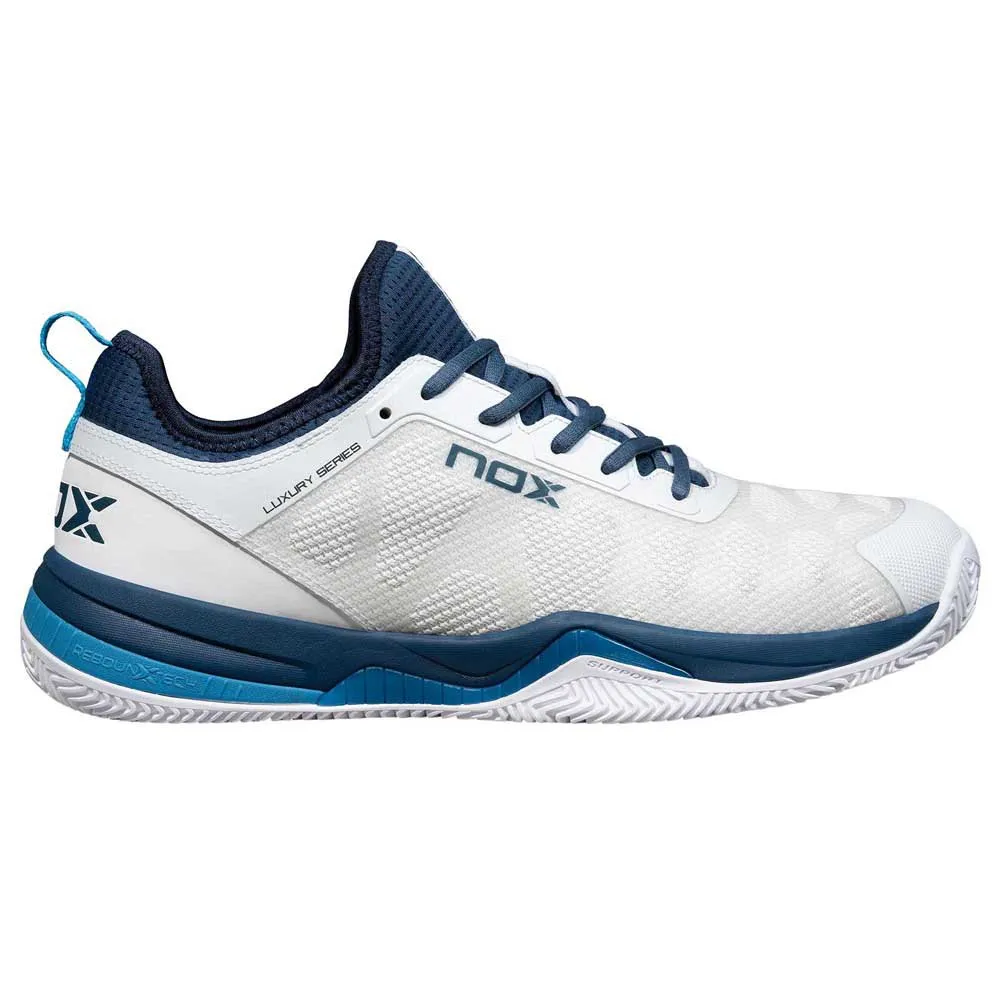
NOX Nerbo
The comfort end of a specialist padel brand’s range — NOX’s geometry-led design, a herringbone-and-stud sole and an OrthoLite insole.
NOX is a padel-only specialist, and the Nerbo is the line its range description positions around lightness and comfort — a sock collar, a light and flexible sole and a breathable mesh upper with TPU reinforcement. For a beginner, that positioning is the card’s argument: the first months of padel are long sessions of learning movement, and this is the card built around the underfoot and step-in specification. The named centrepiece is AGG — Advanced Gravity Geometry — NOX’s heel-to-toe geometry, which NOX describes as setting the player’s ready position by building a greater drop between heel and forefoot into the shoe’s shape. It is a geometry, not a foam, and it is reported here exactly as NOX names and describes it: a stance shape moulded into the shoe.
The rest of NOX’s published technology set is equally specific. Lateral Support is NOX’s stability system, designed — in NOX’s description — to increase the sole’s contact surface with the ground during lateral movement. The Optimal Grip outsole combines the two classic padel pattern families in one sole: a herringbone pattern with small integrated studs, so the tread both channels sand and bites through it. AbraXone is NOX’s abrasion-resistant reinforcement in the high-wear zones of the upper, toe and sides included, and inside sits an OrthoLite insole, NOX’s published cushioning layer. NOX also publishes that its shoe designs are certified by the INESCOP Footwear Technology Centre — a certification fact about the design process, reported as NOX states it. The standard honest limit applies: NOX publishes no weight for the Nerbo in the listings checked, so this card cannot be weight-shopped against the Mizuno or the Babolat; buy it on its geometry and its comfort brief.
What we like
- A padel-only brand’s comfort line — sock collar, light flexible sole, per NOX’s range description
- AGG gives a named, published geometry rather than a vague comfort claim
- Optimal Grip runs both classic padel patterns — herringbone plus studs — in one sole
- AbraXone reinforcement covers the toe and side wear zones, per NOX
Worth knowing
- NOX publishes no weight for the Nerbo — none is claimed here
- A comfort-first brief; players who want maximum published structure should read the Bullpadel card
As an Amazon Associate we earn from qualifying purchases.
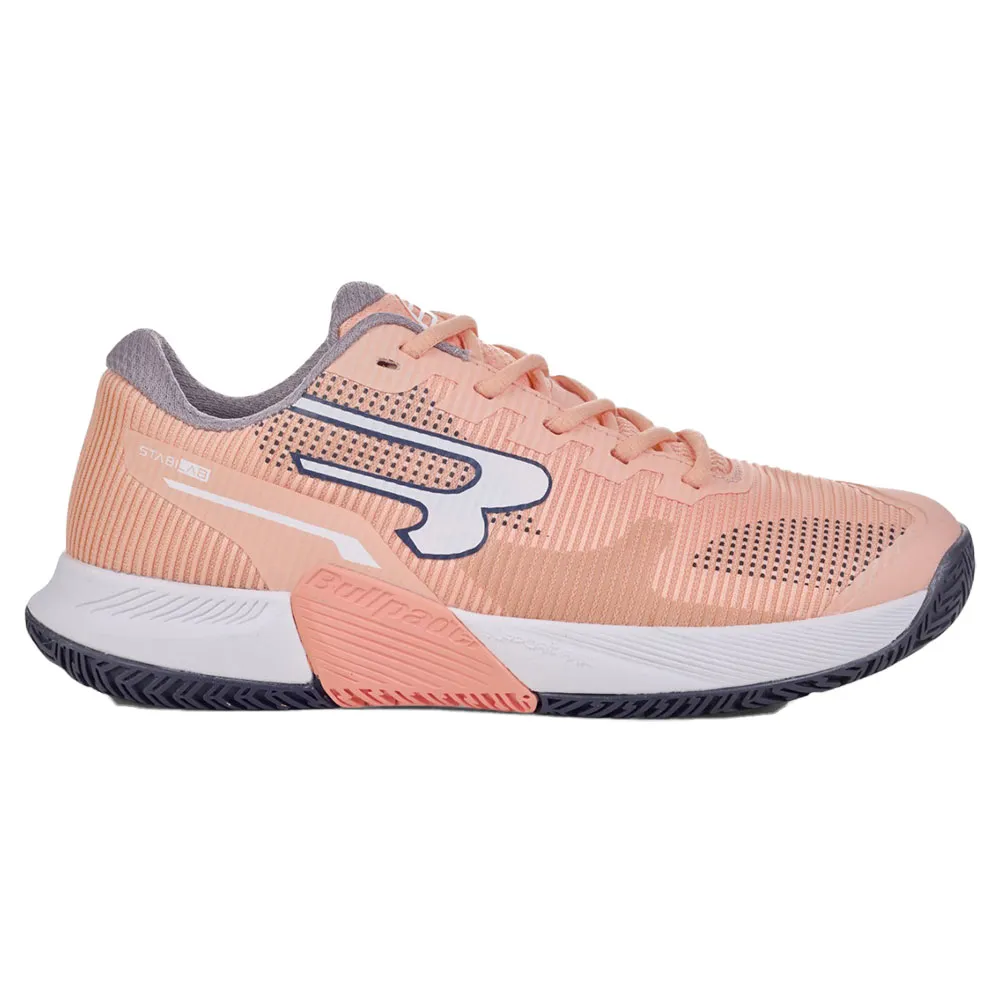
Bullpadel Next 25i
The structure pick — Bullpadel’s stability line, built around a TPU arch support, an outer flap and a hybrid sole with a rotation disc.
Some beginners want the lightest shoe they can find; others — often the ones arriving from other sports, or simply the ones who feel every sideways stop — want to feel structure under and around the foot from the first session. Bullpadel builds a named line for that preference, and the Next sits in it: Bullpadel’s own description positions the model for players who need solid support on the court and seek increased stability, who play at a medium pace and prefer greater control. The named system is the Support Arch: a TPU support in the arch of the foot paired with an outer flap on the sole, which Bullpadel describes as promoting stability — underfoot frame and outer wall working together, the most explicit stability construction in this guide.
The outsole is Bullpadel’s Hybrid 360º pattern, and Bullpadel splits its duties explicitly: the herringbone area provides the grip, while the micro-stud area adds grip plus the release for lateral movements and turns — both classic padel pattern families in one sole, with a Rotox rotation disc set into it to favour fast turns. Bullpadel states the sole is suited to all synthetic turf courts, especially those with less sand — a surface note worth matching to your club. Flex Rift cross channels favour the foot’s natural flexion, Sole Shield raises the sole’s sides and toe cap against contact with the court walls, the Stitch Insole is EVA with textile reinforcement, the lining is Bullpadel’s Breathmesh, and the upper is a seamless Thermo Sealed construction. Bullpadel publishes no weight for the model in the listings checked, so none is printed: this card is bought on structure, and its structure is published in full.
What we like
- The most explicit stability construction here: TPU arch support plus an outer flap
- Hybrid 360º combines herringbone grip and micro-stud release in one sole
- Rotox rotation disc addresses the pivot, per Bullpadel
- Sole Shield and a seamless Thermo Sealed upper address wear and fit in print
Worth knowing
- Bullpadel publishes no weight for this model — none is claimed here
- Bullpadel states the sole suits lower-sand courts best — check your club’s courts
As an Amazon Associate we earn from qualifying purchases.
Wilson Hurakn Lite
The rotation pick — a vortex-pattern outsole and a light chassis, from the light end of Wilson’s padel range.
Padel’s signature learning curve is rotational: the pivot under a bandeja, the turn out of a back-wall defence, the spin on the spot at the net. Wilson’s Hurakn Lite is built around that movement, and Wilson’s own technology descriptions say so plainly. Its Optimum Grip outsole is, per Wilson, a biomechanically engineered design with vortex patterns in the forefoot and heel, built to optimise grip for rotation and pivot movement on the padel court — the circular-pattern family of this guide’s outsole map, and the only card here whose maker’s whole outsole brief is turning. The rubber is Duralast, Wilson’s high-density compound, which Wilson describes as providing abrasion resistance and traction across court surfaces. For a beginner whose early sessions are mostly footwork lessons, a shoe whose published brief matches the lesson is a rational pick.
The underfoot frame is the Pro Torque Chassis Light, Wilson’s lightweight chassis, which Wilson describes as built for speed and flexibility with stability and torsional control for quick movements. Cushioning is Fused 8 Foam — Wilson describes it as an EVA midsole foam integrating recycled plastic wire material, for responsiveness — over an OrthoLite sockliner, and the upper is an engineered mesh Wilson positions for breathability and a light fit. Two clarifications keep this card honest. It is a distinct model from the Hurakn Pro V2 carded in our pillar guide and from the Hurakn 2.0 in our women’s guide — the Lite is the light, accessible end of the same family name, not a re-card of either. And Wilson publishes no weight for this model in the listings checked, so none is claimed; a figure on one retailer page belongs to the women’s SKU sheet and is deliberately not borrowed.
What we like
- The only fully rotation-first outsole brief in the guide, per Wilson
- Pro Torque Chassis Light publishes its brief: speed, flexibility, torsional control
- Fused 8 Foam and an OrthoLite sockliner give a named, layered cushioning spec
- Engineered mesh upper keeps the light brief consistent top to bottom
Worth knowing
- Wilson publishes no weight for this model — none is claimed here
- A rotational outsole is a preference: players who want pure herringbone bite should read the ASICS and Joma cards
As an Amazon Associate we earn from qualifying purchases.
Babolat Jet Tere 2
Babolat’s lightest court shoe at a published 320 grams — carded openly as a tennis-line shoe whose clay version is the padel-court configuration.
This card is reported with deliberate transparency, in the same form this site used for the clay-court card in our seniors guide. Babolat positions the Jet Tere 2 as a tennis shoe — it is, per Babolat, the lightest model in its court-shoe lineup — and it is carded here for two published reasons. First, the specification is fully documented on Babolat’s own product data: 320 grams for a size EU 42.5, a KPRS-X cushioning system, a Michelin Premium rubber outsole whose tread Babolat says is thickened in high-wear areas, a single-layer mesh upper with Matryx on the forefoot, Active Flexion support technology and an OrthoLite Molded insole. Second, the line includes a Clay version, whose herringbone sole belongs to the same clay-pattern family as the padel-specific cards above — and the clay version is the one to buy for padel courts, a distinction this card states in plain words rather than leaving the reader to discover it.
Babolat’s own description fills out the beginner case. It describes the Jet Tere 2 as made for quick, nimble players, with a soft, breathable mesh upper that wraps the foot, integrated side reinforcements on both the inside and outside of the shoe for stability and support, and an EVA midsole for soft cushioning at each step. Retailer fit notes for the model list a snug medium width, true length and no break-in period — useful published facts for a first purchase made online. Read the card’s limits as carefully as its specs: Babolat’s own padel-specific range is carded in our pillar and women’s guides, not here, and this shoe earns its place as the lightweight, fully-documented alternative for a beginner whose club also runs clay-style courts — bought in its Clay configuration, with its positioning understood.
What we like
- A fully published Babolat spec sheet — weight with its size basis included
- The lightest documented build here after the Mizuno: 320 g (EU 42.5)
- Michelin Premium rubber and KPRS-X are Babolat’s established court systems
- The Clay version’s herringbone is a classic padel outsole family
Worth knowing
- Babolat positions the line for tennis — buy the Clay version for padel, and check “Clay” on the listing
- Retailer notes list a snug medium width — generous feet should read the fit notes first
As an Amazon Associate we earn from qualifying purchases.
Side-by-Side Comparison Table
| Shoe | Weight | Outsole, As Maker States | Stability Tech | Cushioning | Fit |
|---|---|---|---|---|---|
| ASICS Gel-Dedicate 8 Padel Best Overall | Not published — ~356 g per retailer (US 10.5) | Herringbone · AHAR · Wrap-up | TRUSSTIC midfoot unit | GEL in EVA midsole | Medium (retailer notes) |
| Mizuno Wave Exceed Court Padel Best Lightweight | 255 g (published, basis not stated) | Top-model sole design · X10 rubber | Wave plate shape · D-Flex Groove | ENERZY · ENERZY INSOLE | Standard |
| Joma Master 1000 Best Designed for Beginners | Not published | DURABILITY rubber · Herringbone (clay) | PROTECTION raised lateral side | Phylon midsole | Standard |
| NOX Nerbo Best Cushioned Comfort | Not published | Optimal Grip — herringbone + studs | Lateral Support · AGG geometry | OrthoLite insole | Sock collar (per NOX) |
| Bullpadel Next 25i Best Stability-First Build | Not published | Hybrid 360º — herringbone + micro studs · Rotox | Support Arch (TPU + outer flap) | Stitch Insole EVA | Standard |
| Wilson Hurakn Lite Best for Pivots & Turns | Not published | Optimum Grip vortex · Duralast | Pro Torque Chassis Light | Fused 8 Foam · OrthoLite | Standard |
| Babolat Jet Tere 2 Best Lightweight Alternative | 320 g (published, EU 42.5) | Michelin Premium rubber (Clay version: herringbone) | Active Flexion · Side reinforcements | KPRS-X | Snug medium (retailer notes) |
Read honestly, the table teaches the beginner market’s real shape. The published-weight column has exactly two entries — Mizuno’s 255 grams, stated without a size basis, and Babolat’s 320 grams for an EU 42.5 — plus one retailer-listed figure for the ASICS. Four makers publish no weight at all for these models, and this guide prints that fact in the table rather than filling the gaps with estimates: a first-time buyer comparing beginner shoes anywhere else should expect the same honesty and be suspicious of any table that has a precise weight for every row. The outsole column is where the real choice lives: pure herringbone on the ASICS and Joma, herringbone-plus-studs hybrids on the NOX and Bullpadel, a rotational vortex on the Wilson, Mizuno’s top-model sole design, and a Michelin tread whose clay configuration joins the herringbone family. The fit column is the quietest and often the deciding one — standard lasts almost everywhere, a sock collar on the NOX, a snug medium on the Babolat — so if fit has ever been your problem in court shoes, read that column first and the technology columns second.
Buying Guide: Matching Your First Shoe to Your Game
1. Start With the Outsole — and Your Club’s Sand
Ask one question at your club before you open a single product page: how much sand sits on the turf? On sand-heavy courts, herringbone and stud patterns earn their place — the ASICS and Joma herringbones channel the sand out of the tread, the NOX and Bullpadel hybrids add stud bite on top of the herringbone base, and Bullpadel itself notes its Hybrid 360º sole suits lower-sand courts best, which makes the pure herringbone cards the sand-heavy choice. On cleaner, newer courts, the rotational brief comes into its own: the Wilson’s vortex pattern is Wilson’s published design for pivoting, and Mizuno’s sole — the same design as its top padel model, per Mizuno — is its answer for current-generation surfaces. Match the pattern family to the court first; every other column in the table is secondary to the one that touches the ground.
2. Decide How Much Structure You Want to Feel
Every card holds the foot on its platform — they just publish different machinery for the job, and for a beginner the choice is about how much guidance you want while you learn. Raised sides and walls (Joma’s PROTECTION lateral side, the ASICS’s wrap-up outsole edges) build the containment into the shoe’s shape. Underfoot frames (ASICS’s TRUSSTIC bridge, Bullpadel’s Support Arch, Wilson’s Pro Torque Chassis Light) control the platform itself. Geometry (NOX’s AGG) shapes your stance before you move at all. None of these routes is presented anywhere in this guide as anything other than construction — they are three published engineering answers to one mechanical question: how does the shoe keep foot and platform aligned through a lateral stop? If you are arriving from running and like a shoe that disappears, start at the Mizuno and NOX cards; if you want to feel the shoe working, start at the Bullpadel and ASICS cards.
3. Read Every Weight With Its Basis — and Respect “Not Published”
Weight is the spec beginners compare most and makers standardise least. Of the seven cards here, two carry maker-published weights (Mizuno 255 grams, basis not stated; Babolat 320 grams in an EU 42.5), one carries a retailer-listed figure (the ASICS at about 356 grams in a US 10.5), and four carry none, because their makers publish none. Compare published with published and retailer with retailer, treat a cross-basis comparison as approximate, and treat any listing that invents a precise weight for the Joma, NOX, Bullpadel or Wilson cards as a listing to distrust — if the maker has not published it, nobody else knows it either. For a first shoe, the practical read is simple: the Mizuno and Babolat are the documented light builds; the rest are bought on outsole, structure and fit.
4. Fit Is a Specification: Buy the Last, Not Just the Length
A padel shoe has to hold your foot centred on its platform for lateral stops, with the shoe’s structure — not overtightened laces — doing the holding. The published fit facts in this guide are few and worth using: the ASICS is listed by retailers as true to length with a medium width; the Babolat as a snug medium with no break-in; the NOX wraps the ankle in a sock collar, per NOX’s range description; the rest are standard lasts. If you sit between sizes, decide with the socks you play in, on the maker’s own size chart for the men’s or women’s version you are buying — the two runs differ. And if your current trainers let your foot slide sideways inside them on a hard stop, that is the sensation a court shoe’s support structure exists to remove; it is the first thing to check when your first pair arrives.
5. Cross-Check the Version Before You Buy
Beginner padel shoes are bought by name and played by version, and the version decides whether you get the shoe this guide carded. Check for the surface or edition word in the listing: the ASICS must be the Padel edition (ASICS sells a same-named hard-court tennis shoe), and the Babolat must be the Clay version. Check the weight basis the same way: if a listing quotes a weight its maker does not publish, treat it as the retailer’s figure, not the maker’s. And if you are new to the sport’s footwork entirely, read our how to play padel guide and our padel beginners tips before your first session — the movement patterns they teach are the ones every outsole and stability structure above was designed around, and learning them early is worth more than any single spec on this page.
Frequently Asked Questions
Can I play padel in running shoes?
Running shoes are built for straight-ahead motion: a forward-grip tread, a high soft heel stack and a flexible mesh upper. Padel is lateral — shuffles, hard stops, lunges and pivots on sand-dressed turf — and makers build court shoes for it with herringbone or omni outsoles, lateral support structures and lower, platform-based builds. Every shoe in this guide publishes that court-shoe construction; a running shoe publishes none of it. Your first sessions deserve the right tool, and the entry-level cards here are priced and specced for exactly that step.
Herringbone, studs or vortex — which outsole should a beginner choose?
Match the pattern to your courts. Herringbone (clay) patterns, like the ASICS and Joma soles, channel loose sand out of the tread and allow a controlled slide — the classic choice for sand-dressed club courts. Hybrid soles, like the NOX Nerbo’s and Bullpadel Next’s, add small studs to the herringbone for extra bite. Vortex and circular patterns, like the Wilson Hurakn Lite’s Optimum Grip, are designed by their makers for pivoting and rotation. Sand-heavy courts reward herringbone and hybrid bite; a footwork-heavy learning game rewards the rotational brief.
How much do beginner padel shoes weigh?
Only two makers here publish a weight: Mizuno lists the Wave Exceed Court Padel at 255 grams (without stating a size basis on the listing), and Babolat lists the Jet Tere 2 at 320 grams for a size EU 42.5. ASICS publishes no weight for the Gel-Dedicate 8 Padel, so its card prints a retailer-listed figure of about 356 grams in a men’s US 10.5, labelled as a retailer figure. Joma, NOX, Bullpadel and Wilson publish no weight for the Master 1000, Nerbo, Next 25i and Hurakn Lite in the listings checked, and none is claimed for them.
How should my first padel shoe fit?
Fit is a sizing question, and the published facts are the fit labels and retailer fit notes: the ASICS is listed as true to length with a medium width, the Babolat as a snug medium with no break-in, the NOX with a sock collar, and the rest as standard lasts. The shoe should hold your foot centred on the platform for lateral stops, with its support structure — raised sides, a midfoot bridge, a chassis or a belt of overlays — doing the holding rather than overtightened laces. Try them with the socks you play in, and use the maker’s size chart for the men’s or women’s version you are buying.
Can I use tennis shoes for padel?
Some clay-court tennis shoes are retailed for padel, and one is carded in this guide with its positioning stated openly: the Babolat Jet Tere 2, whose Clay version carries a herringbone sole from the same pattern family as the padel-specific cards. The test is the maker’s own published data — outsole pattern, stability structure and fit — not the retailer’s shelf label. A hard-court tennis outsole is a different pattern family from anything carded here, and a same-named shoe in the wrong version is the most common beginner buying mistake: check for the words “Padel” or “Clay” in the listing before you order.
How does this guide relate to your other padel shoe guides?
This page owns the first-shoe decision only: beginner-positioned models, read on maker-published outsoles, cushioning names, support structures, weights and fits. The all-player field is covered in our best padel shoes pillar guide, the women’s fit decision in our best padel shoes for women guide, and the senior decision in our best padel shoes for seniors guide. None of their models is re-carded here — all seven shoes in this guide are different models.
When should I replace my first padel shoes?
Watch the outsole and the upper, not the calendar. When the herringbone or stud tread has worn smooth in the forefoot, the pattern can no longer channel sand or bite through it, and grip falls away — that is the clearest replacement signal a maker-independent eye can use. Brush sand out of the tread between sessions so the pattern can do its work, let the shoes dry naturally rather than on a heat source, and when you do replace them, your second pair can be chosen as a specialisation — lighter, more structured or more rotational — against the same spec columns this guide uses, now that you know your game.
The Verdict
Buy the ASICS Gel-Dedicate 8 Padel if you want the maker’s own answer to the beginner question: ASICS positions it for the entry-level player, and its herringbone padel outsole, TRUSSTIC support and GEL cushioning cover the whole first-shoe brief in one card. Buy the Mizuno Wave Exceed Court Padel if lightness is your first filter: 255 grams as Mizuno publishes it, ENERZY cushioning and the sole design of Mizuno’s top padel model. Buy the Joma Master 1000 if you want the shoe actually designed for beginners — Joma says so in its own listing — with a sand-clearing herringbone sole and a raised lateral side. Buy the NOX Nerbo if comfort is the decision: NOX’s comfort line, with AGG geometry, Lateral Support and an OrthoLite insole. Buy the Bullpadel Next 25i if you want the most published structure: a TPU Support Arch, an outer flap and a hybrid sole with a rotation disc. Buy the Wilson Hurakn Lite if your learning game is built on turns — its vortex outsole is Wilson’s published rotation brief. Buy the Babolat Jet Tere 2 if you want a documented light build from a major maker’s full spec sheet — 320 grams with its basis printed — in its Clay configuration, with its tennis-line positioning understood. Seven first shoes, seven different first filters: read the column that matches yours, check the version before you order, and your first pair will teach you what your second pair should be.
Affiliate disclosure: Ali Shuttler is a participant in the Amazon Associates Program. Product links on this page are affiliate links — if you buy through them we may earn a commission, at no additional cost to you. Rankings are editorial: they follow the manufacturers’ published specifications checked at build time, not commission rates. Specifications, weights and fit options can change between model years; always confirm the current listing’s spec sheet before buying. This guide reports construction and specification facts only and makes no health claims of any kind.