Everything a first-time player actually needs: how to serve legally (the open palm, the 16 cm toss, no hiding the ball), how scoring to 11 and deuce work, who serves when in doubles, what a let really is, why an edge ball counts but a side ball doesn’t — and the expedite rule almost nobody meets until it decides a match.
Table tennis hides a strict rulebook inside a friendly game. Most casual rallies run happily on guesswork — serve however you like, first to 21, argue about the net cord later — until the day somebody plays a serve straight out of a closed fist, or claims the game at 11–9, or insists a ball that clipped the table’s edge was out. All three moments have official answers, and they are simpler than the arguments they end.
This guide teaches the game the official way, checked against the current ITTF Laws of Table Tennis (Chapter 2 of the ITTF Statutes 2026), but explained in plain language with the examples that make the awkward parts stick. By the end you will know how to start a rally legally, how points are won and lost, how the serving order rotates in singles and doubles, and how to settle the edge-ball and net-cord questions without a committee meeting.
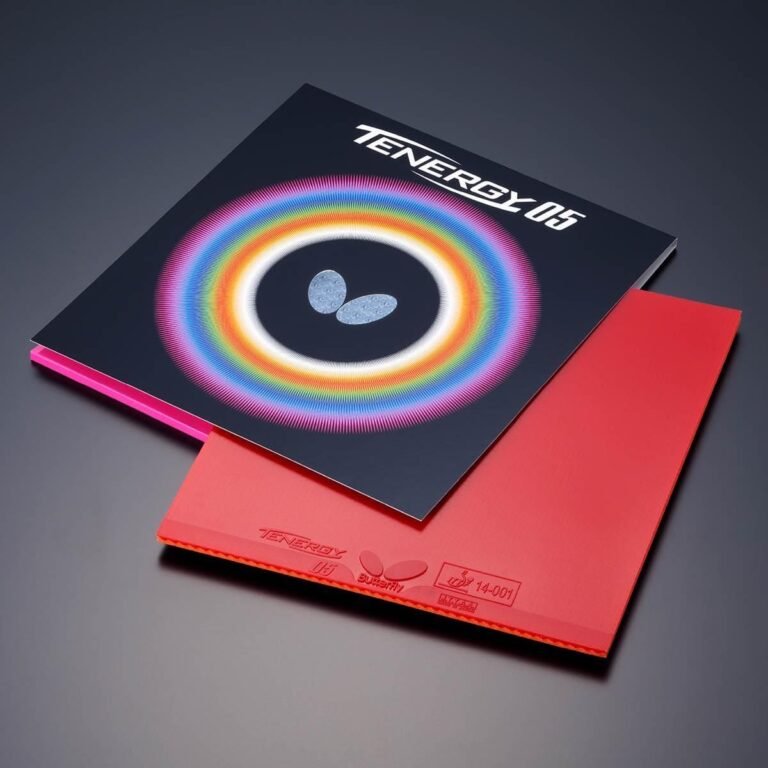
One boundary before we start: this page is about how the game is played, not what to play it with. Equipment choices live in their own guides — our breakdown of the best table tennis tables if you are setting up at home, and the best table tennis rubbers guide when you are ready to build or upgrade a bat. Here, the gear appears only where the Laws themselves have something to say about it.
The whole game on one card
Serve from an open, flat palm: toss the ball near vertically, at least 16 cm up, without spin, and strike it as it falls so it bounces once on your side, then once on your opponent’s side — all of it behind your end line and in plain view. Each player serves 2 points in a row, then the serve swaps. A game is won by the first player to 11 points; at 10-all you need a 2-point lead and serve alternates every point. A rally is replayed — a let — if a good serve clips the net, the receiver wasn’t ready, or play is disturbed from outside. A ball that catches the top edge of the table counts; one that hits the side below the edge does not. There are no volleys: the ball must bounce on your side before you strike it. That is table tennis. Everything below is the detail that makes those sentences work on a real table.
Open palm, 16 cm toss
Ball resting on a flat open palm, tossed near vertically without spin, struck on the way down — behind the end line, never hidden.
First to 11, win by 2
Every rally is worth a point. Serves swap every 2 points — and every single point once the score reaches 10-all.
Let on serve, live in a rally
A serve that clips the net and lands correctly is replayed. The same clip mid-rally is simply part of the game — play on.
Top edge counts, side doesn’t
The playing surface includes the table’s top edges but not its vertical sides. Edge ball: point stands. Side ball: it never legally arrived.
In this guide
- Table tennis in 30 seconds
- The table, net, ball and racket
- The serve, step by step
- The rally: returns and rally-enders
- Scoring: games, deuce and matches
- Lets: when a rally is replayed
- Edge balls and side balls
- Doubles: rotation and the diagonal serve
- The expedite system
- Your first match: etiquette and habits
- FAQs
Table tennis in 30 seconds
Strip table tennis down and it is a turn-taking game played across a net on a raised table. The server starts each rally with a carefully regulated serve. From there the players alternate: each return must cross (or go around) the net and land on the opponent’s side of the table, after bouncing exactly once on your own side. A rally ends when somebody fails to do that — nets it, hits it off the end, strikes it before it bounces, or touches the ball with anything that isn’t the racket — and the winner of the rally scores a point.
Four ideas carry almost every rule that follows, and the rulebook defines them precisely:
Notice the rhythm the definitions create: bounce, then strike. Your opponent’s shot must be allowed to land on your side; only then is it yours. Almost every beginner argument — “but it was going wide anyway”, “I hit it just over the line” — is answered by that one sequence. If it had not touched your court yet and you touched it, you obstructed it, and the rally is over.
The table, net, ball and racket: what the Laws require
You can play a perfectly good game on almost any table — but if you want to know what “regulation” actually means, the first four Laws are a specification sheet. They also settle two arguments beginners have constantly: how high the net should be, and whether a ball that hits the table’s edge was ever really “on” the table.
The table
The playing surface is a rectangle 2.74 metres long by 1.525 metres wide, lying horizontally 76 cm above the floor (Law 2.1.1). It must yield a uniform bounce of about 23 cm when a standard ball is dropped from 30 cm (2.1.3) — a useful home test for a table that feels dead in one corner. The surface is uniformly dark coloured and matt, with a white side line 2 cm wide along each long edge and a white end line 2 cm wide along each short edge (2.1.4). Those lines are part of the table: a ball landing on a line is on the table.
One clause matters more than all the dimensions: the playing surface does not include the vertical sides of the tabletop (2.1.2). The top edges belong to the surface; the vertical skirt below them does not. Keep that in your pocket — the whole edge-ball section below hangs on it. For doubles, a white centre line 3 mm wide runs down the middle, splitting each side into two half-courts; it counts as part of each right half-court (2.1.6).
The net
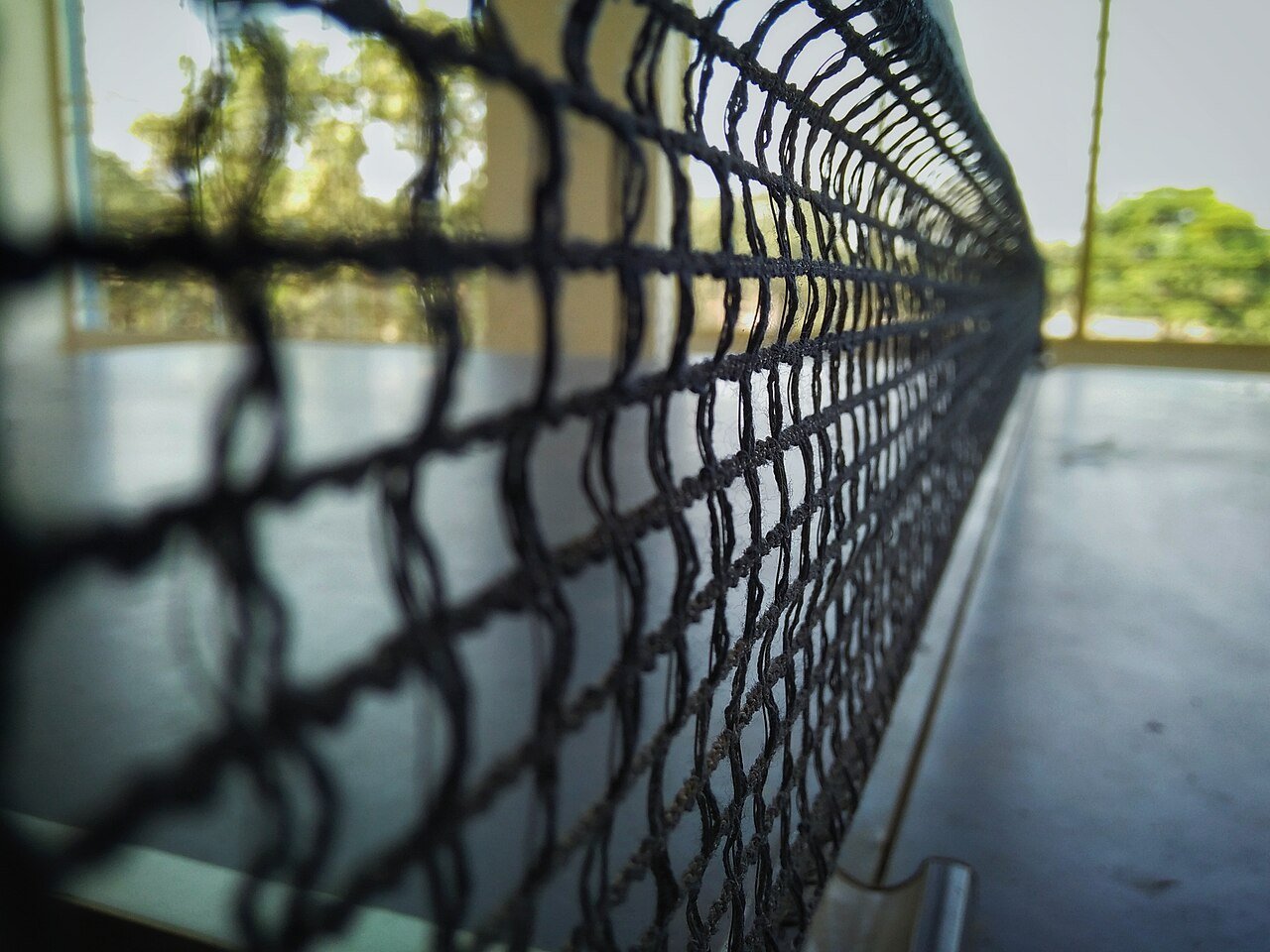
The net assembly — net, cord, posts and clamps — divides the table into two equal courts (2.1.5, 2.2.1). The top of the net is 15.25 cm above the playing surface along its whole length (2.2.3), and the posts stand 15.25 cm outside the side lines (2.2.2), which is what makes “around the net” shots geometrically possible. The bottom of the net should sit as close to the surface as possible along its length (2.2.4). Most nets come with a height gauge; if yours sags in the middle, every net-cord call on that table is a negotiation instead of a measurement.
The ball
The ball is spherical, 40 mm in diameter, weighs 2.7 g, and is made of plastic, white or orange, and matt (2.3.1–2.3.3). That is the whole spec — the modern plastic “40+” ball is this Law’s ball. Balls differ in seam and roundness between grades, and our guide to the best table tennis balls covers which ones are worth buying; the Laws only care that the sphere in play matches those five facts.
The racket
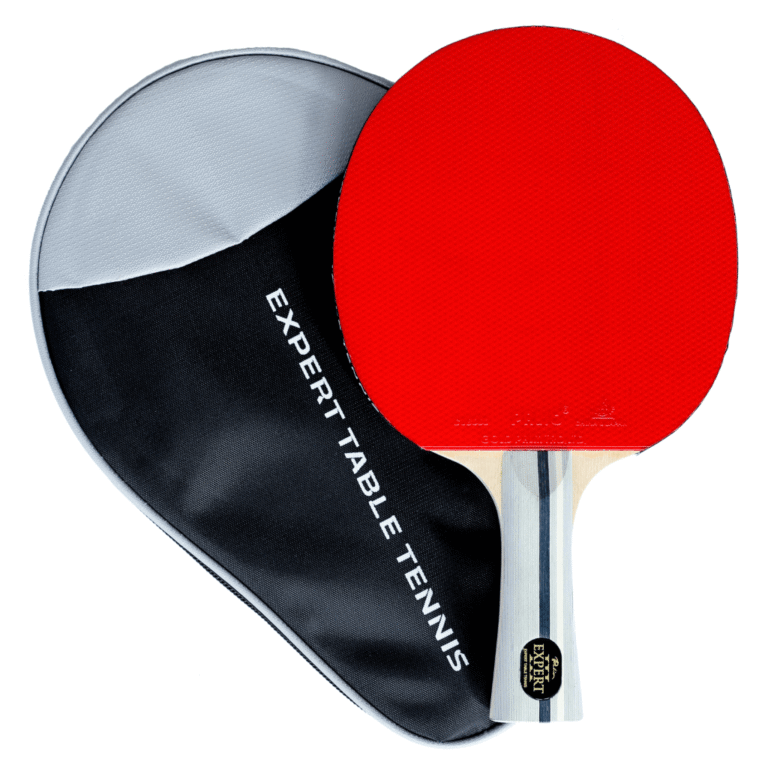
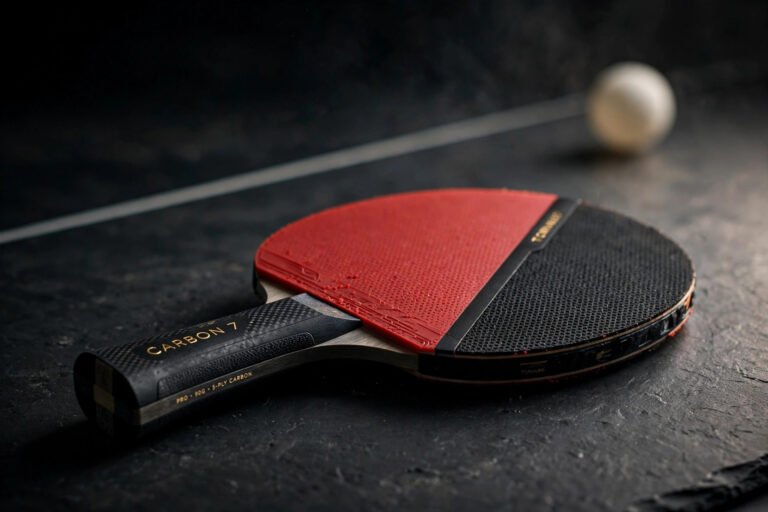
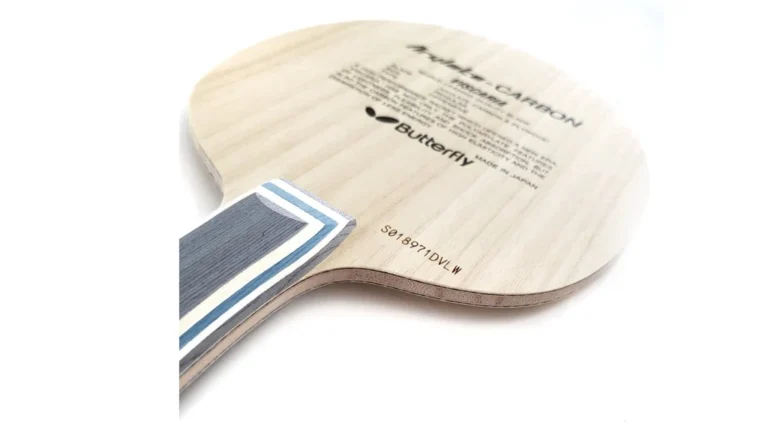
The racket may be of any size, shape or weight, but the blade must be flat and rigid, and at least 85% of the blade by thickness must be natural wood (2.4.1–2.4.2) — the composite layers in modern blades live inside that 15% allowance. The striking surfaces are rubber: ordinary pimpled rubber (pimples out, no sponge) is capped at just under 2.05 mm total thickness including adhesive, and sandwich rubber (pimples in or out, over sponge) at just under 4.05 mm (2.4.3). One side of the racket must be black; the other must be a bright colour clearly distinguishable from black and from the colour of the ball (2.4.6), so your opponent can tell which rubber just hit the ball. And before a match, you must show your racket to your opponent and the umpire and let them examine it (2.4.8) — in a friendly game that is simply handing it over without flinching when asked.
| Item | ITTF specification | Why it matters to you |
|---|---|---|
| Table | 2.74m × 1.525m, surface 76cm high | The regulation footprint a real table should match |
| Bounce test | ≈23cm rebound from a 30cm drop | How to spot a dead patch on an old table |
| Net height | 15.25cm above the surface | Set it with the gauge — sagging nets corrupt every net-cord call |
| Ball | 40mm, 2.7g, plastic, white or orange, matt | The “40+” ball on the packet is this ball |
| Blade | Any size/shape/weight; ≥85% natural wood | Oversized and defensive blades are legal |
| Rubber thickness | <2.05mm pimples-out; <4.05mm sandwich, adhesive included | The cap that stops sponge being stacked indefinitely |
| Rubber colours | Black one side; a clearly different bright colour the other | So the receiver can read which rubber struck the ball |
The serve, step by step
No shot in any racket sport is as precisely choreographed as the table tennis serve. Law 2.6 devotes seven clauses to it because the serve is where deception lives: a hidden ball or a spun toss can steal the receiver’s half-second of reading time. The Laws answer by making every stage of the serve visible and standardised. Learn the sequence until it is automatic and your serve will survive any umpire — or any suspicious opponent.
How a legal serve works
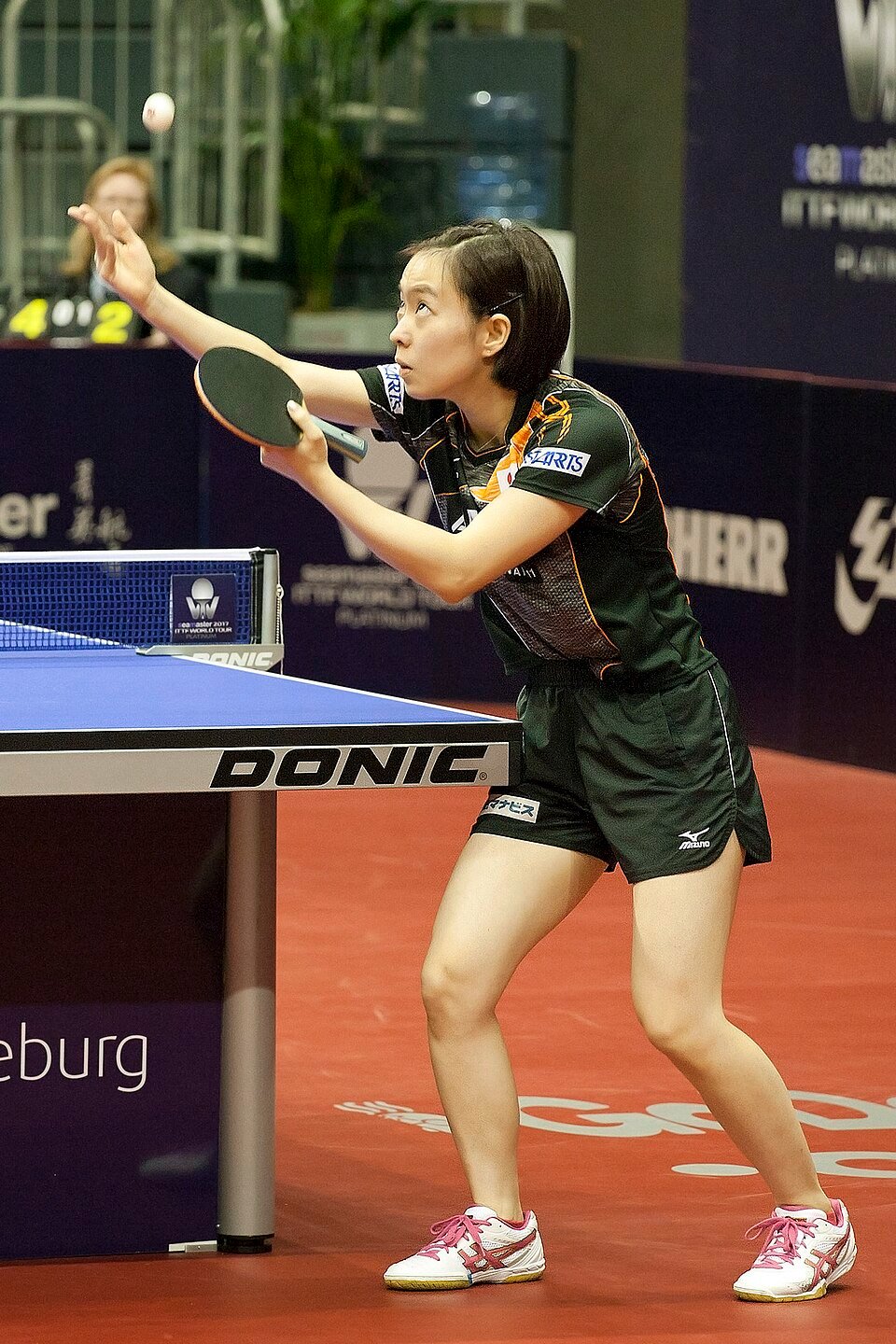
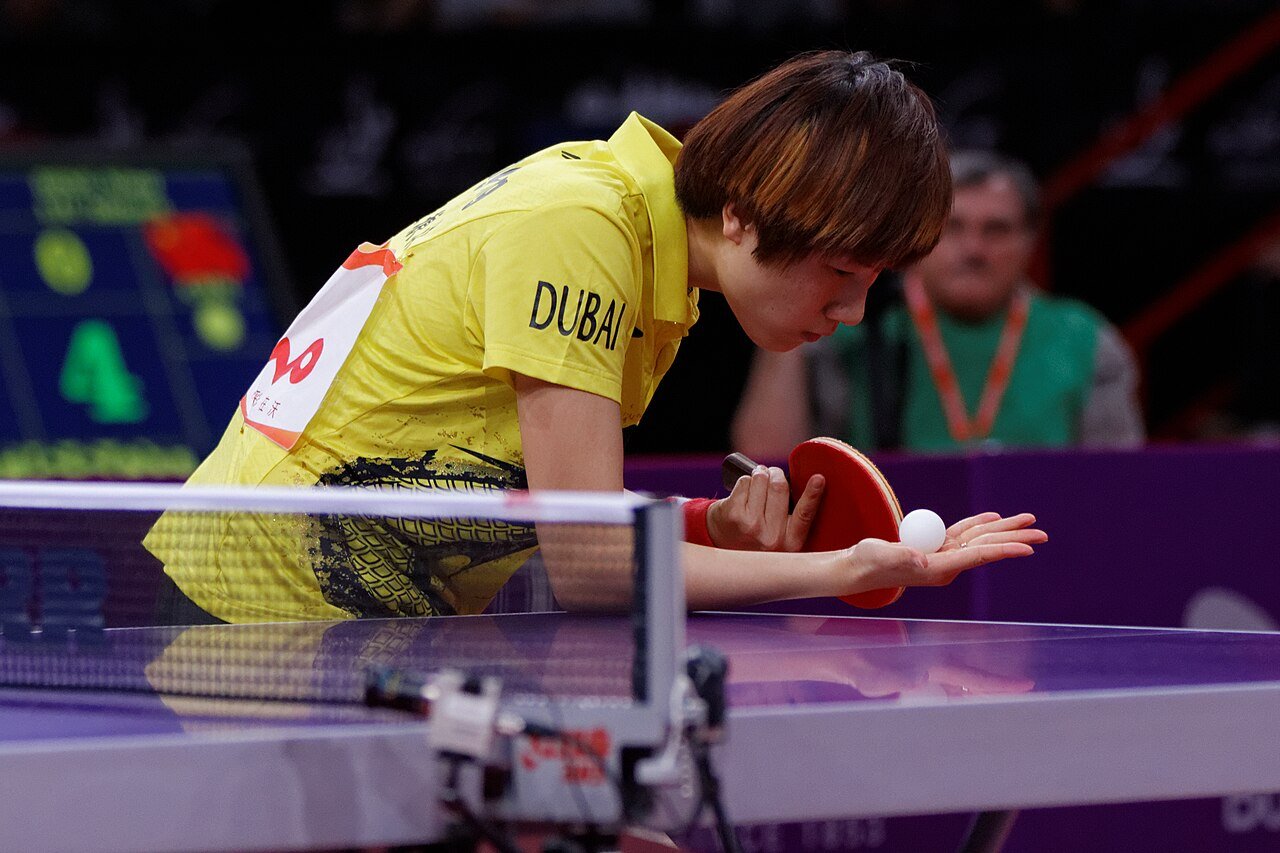
Step 1 — Ball on the open palm. The service starts with the ball resting freely on the open palm of your stationary free hand (Law 2.6.1). Not pinched between fingers, not cupped, not already moving: sitting still on a flat, open palm, which makes it impossible to spin the ball with your fingers as you release it.
Step 2 — The toss. Project the ball near vertically upwards, without imparting spin, so that it rises at least 16 cm after leaving your palm and then falls without touching anything before being struck (2.6.2). Sixteen centimetres is roughly the height of the net and a half — about the distance from your wrist to your elbow crease is far more; a good visual anchor is the top of the net: if your toss doesn’t clearly clear an invisible line well above net height, throw it higher. A dribbled toss straight off the palm is the most common illegal serve in the casual game.
Step 3 — Strike it on the way down. As the ball is falling, strike it so that it touches first your own court and then, directly, your opponent’s court (2.6.3). You may not catch it on the rise, and you may not volley it onto their side. In doubles, the two bounces are prescribed: the ball must touch successively the right half-court of the server and the right half-court of the receiver — the diagonal, covered fully in the doubles section below.
Step 4 — Behind the line, above the table, in plain view. From the start of the service until the ball is struck, it must be above the level of the playing surface and behind your end line, and it must not be hidden from the receiver by you, your doubles partner, or anything either of you wears or carries (2.6.4). No serving from behind your back, no leaning over the table to start the toss, no screening the ball with your shoulder at the moment of contact.
Step 5 — Clear the free arm away. As soon as the ball has been projected, your free arm and hand must be removed from the space between the ball and the net (2.6.5). The tossing hand drops or folds away instantly; leaving it hovering beside the ball is the classic club-level fault, because it masks exactly the moment the receiver needs to see.
Two protective rules complete the picture. If an umpire is not sure a serve was legal, the first time in a match they may simply warn the server; but any later serve by that player — or their doubles partner — that is not clearly legal counts as an incorrect service and loses the point (2.6.6.1). And the umpire may relax the service requirements where a physical disability genuinely prevents compliance (2.6.7). In a friendly game, adopt the same shape: query a serve once, politely; after that, a serve you still can’t see or that still leaves a closed hand is a fault, and you are entitled to say so.
What does a fault serve cost? There is no second serve in table tennis. An incorrect service — toss too low, ball hidden, free arm left in the way, serve struck from in front of the end line, or the ball missing your own side or the receiver’s — simply loses the rally: a point to your opponent under Law 2.10.1.1. The only serve that is replayed rather than lost is the let serve, coming up in the lets section.
The rally: returns and rally-enders
Once the serve is away, the rally obeys one loop: bounce on your side, then strike it over (or around) the net onto your opponent’s side. A correct return is a ball struck so that it touches the opponent’s court, either directly or after touching the net assembly (Law 2.7.1). Two consequences hide in that sentence. First, a rally shot that clips the net and drops over is good — there is no let in open play; your opponent plays it or loses the point. Second, “directly” means the ball may also travel around the net assembly — below net height, outside the post — and still be a legal return if it lands on the opponent’s court; the around-the-net shot is spectacular and entirely lawful.
Equally important is what the return is not. The ball must bounce on your side first. Strike it in the air over the table — before it has touched your court — and you have obstructed it (2.5.8) and lost the point (2.10.1.6), even if your shot then lands perfectly. The single exception-shaped situation: a ball hit so wide or so long that it has already passed beyond your end line without touching your court has already won the point for your opponent (2.10.1.4) before you touch it — catching it then is tidiness, not a fault, because the rally was already decided.
Every rally ends in one of a short list of ways. These are Law 2.10’s point-scoring events, translated:
| Rally-ender | Who scores | The rule in plain words |
|---|---|---|
| Incorrect service | Receiver | Any breach of the serve sequence in Law 2.6 (2.10.1.1) |
| Failed return | The other player | The ball nets, flies off the end, or never reaches the opponent’s court (2.10.1.2) |
| Ball touches anything else | The other player | After your shot, the ball touches anything but the net assembly before your opponent strikes it — a wall, the ceiling, you (2.10.1.3) |
| Ball passes beyond the end line untouched | The striker | Your opponent’s shot sails over your court and past your end line without landing (2.10.1.4) |
| Ball goes through the net | The other player | Through the mesh, between net and post, or between net and surface (2.10.1.5) |
| Obstruction (the “volley”) | The other player | Touching the ball in the air over the table before it has bounced on your court (2.10.1.6) |
| Double hit | The other player | Deliberately striking the ball more than once in succession (2.10.1.7) |
| Free hand on the table | The other player | Your non-racket hand touches the playing surface while the ball is in play (2.10.1.11) |
| Moving the table / touching the net | The other player | You or anything you wear or carry shifts the surface or touches the net assembly (2.10.1.9–2.10.1.10) |
Three of these deserve emphasis because beginners breach them weekly. The free hand rule: you may lean on the table between rallies all you like, but the moment the ball is live, your free hand must not touch the playing surface — steadying yourself on the table mid-stretch is a point gone. The double hit: “deliberately” is the operative word — a ball that strikes your racket, flicks onto your racket-hand finger below the wrist and rebounds once is a single legal strike, but two distinct swipes are not. And the racket hand below the wrist counts as the racket (2.5.7), which is why a ball glancing off your knuckles and landing on the table is still in play — your opponent has to keep playing it.
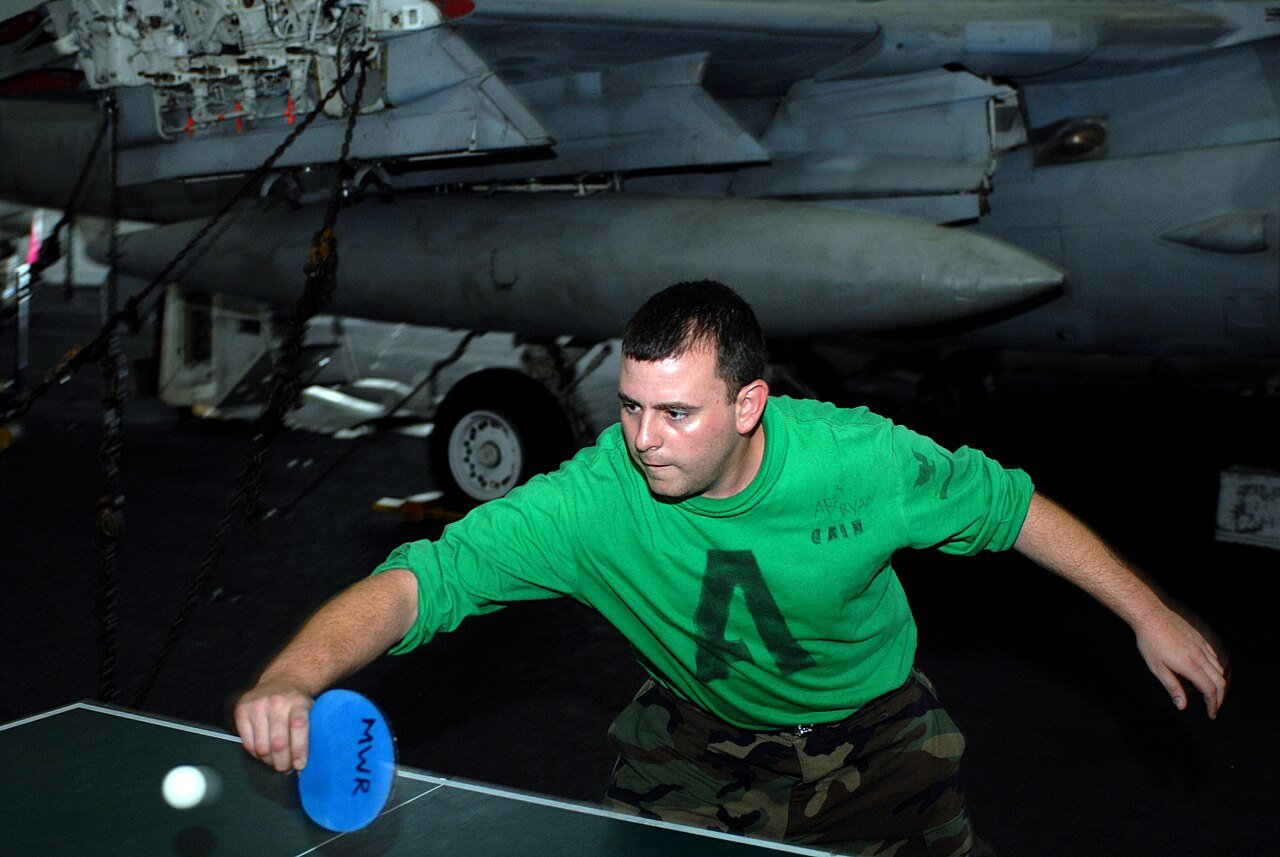
Scoring: games, deuce and match formats
Scoring in table tennis is point-a-rally, like almost every modern racket sport: every rally won is a point scored, whoever served it. The architecture built on top of that is three numbers — 11, 2 and 2 — and one special state called deuce.
Games to 11
A game is won by the player or pair first scoring 11 points, unless both players or pairs reach 10 points, in which case the game is won by the first to gain a lead of 2 points (Law 2.11.1). So 11–9 ends a game; 11–10 does not. At 10-all — deuce — play continues through 11–10, 11–11, 12–11… until somebody strings two points together. There is no cap and no tiebreak; a game can, in principle, run to any score, though the expedite system (below) exists to stop it running to any length.
Who serves: two each, then swap
The right to serve first is decided by lot — a coin, or the clubhouse habit of hiding the ball in one hand under the table and having the other player guess; the winner may choose to serve, to receive, or to start at a particular end (2.13.1). After that, the rotation is mechanical: after each 2 points have been scored, the receiver becomes the server, and so on to the end of the game (2.13.3). Serve twice, receive twice, repeat — if you lose track, the score tells you: with the first server serving at even pairs of points, the server at any moment is recoverable from the score alone.
Deuce changes the rhythm: once both players reach 10 points (or expedite is running), the sequence is unchanged but each player serves for only 1 point in turn (2.13.3). This is the detail casual games most often get wrong — serving your usual pair at 10-all hands your opponent a genuine grievance, because the rule deliberately tightens the rotation when the game is on the line.
Ends, and what happens if the order goes wrong
Players change ends after every game, and in the last possible game of a match they change ends again as soon as one player or pair first scores 5 points (2.13.7) — a mid-game switch that exists so neither player finishes the decider disadvantaged by a draughty end or a glaring light. If the serving, receiving or ends order goes wrong mid-game, play stops when the error is spotted, the correct order is restored at the score reached, and — the merciful clause — all points scored before the discovery stand (2.14). Nobody rewinds a game for an honest muddle.
Match formats
A match consists of the best of any odd number of games (2.12.1) — the Laws fix the grammar, not the length. In practice, sanctioned competition settles on two formats: best of 5 games for most events and early rounds, and best of 7 for major finals and championship singles. Club and social play adds best of 3 for short sessions. Whichever you choose, agree it before the first serve, along with who keeps score — the two pre-match sentences that prevent every end-of-match dispute there is.
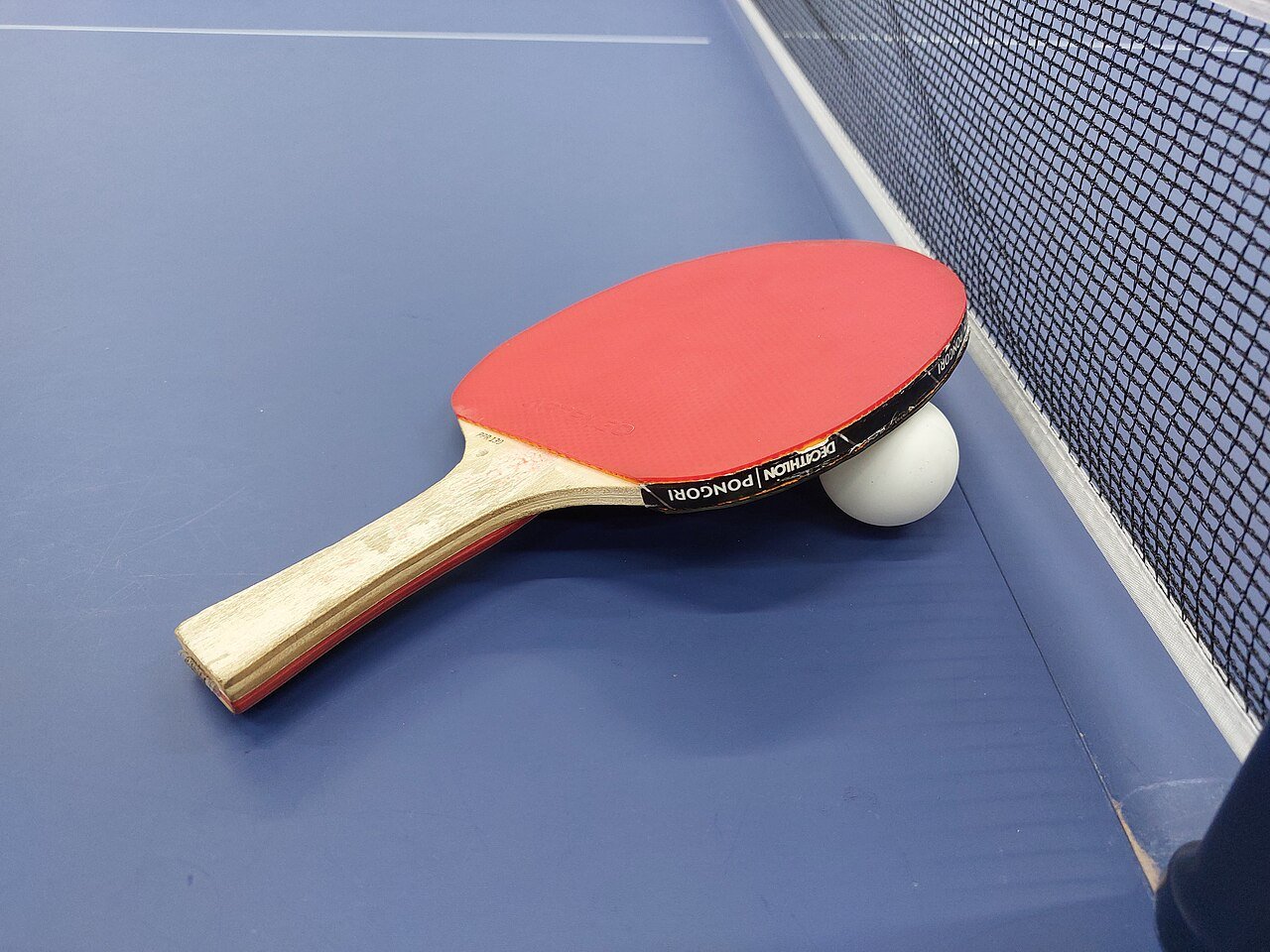
Lets: when a rally is replayed
A let is a rally whose result is not scored (Law 2.5.3): the rally is struck off, nobody gains a point, and the same server serves again. Lets exist because some interruptions are nobody’s fault. The Laws list them precisely, and the precise list is worth knowing because casual players both over-claim lets (“the ball clipped the net in the rally — replay it!” — it isn’t) and under-claim them (“my serve brushed the net and went on — my point!” — it isn’t that either).
The let serve
The famous one: if, in service, the ball touches the net assembly, provided the service is otherwise correct, the rally is a let (2.9.1.1). Two halves of that sentence matter equally. The serve must be otherwise correct — good toss, bounce on your side, and the ball going on to touch the receiver’s court. A serve that clips the net and lands in is a let: serve again. A serve that clips the net and then misses the far court is not a let at all; it is simply a failed return of your own making, and the point goes to the receiver under 2.10.1.2. Net cord plus in equals replay; net cord plus out equals point against you.
The same clause covers the receiver catching or stopping a net-cord serve — because the ball touched the net assembly, the receiver may “obstruct” it without penalty once the serve is otherwise correct (2.9.1.1), which is why experienced players calmly catch a let serve and toss it back instead of swatting at it.
The other lets
Receiver not ready. If a service is delivered when the receiving player or pair is not ready — and neither the receiver nor their partner attempts to strike the ball — the rally is a let (2.9.1.2). The condition cuts both ways: if you weren’t ready but swung anyway, you played it, and the result stands. As a server, the courtesy and the law agree: glance up before you start the routine.
Disturbance outside your control. If a failure to serve, return or comply with the Laws is due to a disturbance outside the control of the player (2.9.1.3), the rally is a let. This is the clause for the stray ball rolling in from the next table, the hall door banging mid-toss, the ball breaking in play. And play may be interrupted generally where the conditions of play are disturbed in a way which could affect the outcome of the rally (2.9.2.4) — the umpire stops it, and it resumes as a let.
Official interruptions. If play is interrupted by the umpire or assistant umpire (2.9.1.4) — to correct a serving-order error, to introduce expedite, to warn a player (2.9.2) — the interrupted rally is a let. The practical beginner’s translation: when somebody in authority stops a rally, it never counts against anyone.
Edge balls and side balls: the thinnest argument in sport
Somewhere in your first month of table tennis, a ball will kiss the far end of the table so finely that one player hears a click and the other hears nothing at all. The ruling, when it happens, is absolute — and it comes straight from the clause you met in the equipment section: the playing surface does not include the vertical sides of the tabletop (Law 2.1.2).
Top edge: in
A ball that strikes the top edge of the table has touched the playing surface, because the top edge is the boundary of that surface — the white line itself is part of the court (2.1.4). It counts fully: as a serve, it is a good serve; as a return, it is a good return, and the receiver must play a ball that is now skidding off the edge at a horrible angle. Spectators call it lucky. The Laws call it in, and the rally’s result stands either way.
Side below the edge: never arrived
A ball that strikes the vertical side of the tabletop, below the top edge, has not touched the playing surface at all. It does not matter how close to the edge it felt, or that it changed direction prettily: in the eyes of the Laws the shot simply never landed on the court, and the point is decided as a failed service or failed return against the player who struck it. Watch the ball’s behaviour to tell the two apart at speed: a top-edge ball deflects downwards and onwards, dropping off the edge; a side ball deflects sideways or back, bouncing off the skirt like a wall. Down means edge; out means side.
Two neighbours of this rule complete the picture. A serve or return that passes around the net — outside the post, even below net-top height — and lands on the top surface is good (2.7.1); the side of the table is out of bounds, not the air beside the net. And a ball struck so that it passes over the opponent’s court and beyond their end line without touching it has simply never landed either: the point goes against the player who struck it (2.10.1.4). Edge cases all resolve the same way: did it touch the top surface, or didn’t it?
Doubles: the diagonal serve and the four-player rotation
Doubles table tennis is a different sport wearing the same clothes: one table, four players, and a strict striking sequence that turns every rally into a small choreography problem. Only three rules really change — the serve goes diagonal, partners must alternate, and the serving rotation runs through all four players — but each of them causes maximum confusion until it is written down once, clearly.
The diagonal serve
In doubles, the serve’s two bounces are fixed: the ball must touch successively the right half-court of the server and the right half-court of the receiver (Law 2.6.3) — right to right, across the centre line, diagonally. This is why the centre line exists (2.1.6). A doubles serve that lands in the receiver’s left half is a fault, exactly as if it had missed the table. Everything else about the serve — open palm, 16 cm toss, no hiding, behind the end line — is identical to singles.
Alternation: your partner is half of every rally
The order of play in doubles is a fixed four-beat sequence: the server serves, the receiver returns, the server’s partner returns, the receiver’s partner returns — and thereafter each player in turn in that sequence (2.8.2). Partners must strictly alternate; a doubles player who strikes the ball twice in a row, or takes a ball that was their partner’s turn in the sequence, has struck out of sequence and loses the point (2.10.1.12). This is the rule that produces doubles’ distinctive ballet: after playing your shot you must get out of the way — sideways, backwards, anywhere — because your partner’s turn is next and they may need the exact patch of floor you are standing on.
The serving rotation, once and for all
At the start of each game, the pair with the right to serve first choose which of them serves first, and the receiving pair choose which of them receives first (2.13.4). From there the cycle drives itself. At each change of service, the previous receiver becomes the server, and the partner of the previous server becomes the receiver (2.13.5). Write the four players of a game as Server 1 serving to Receiver 1, and the rotation unfolds like this:
| Service turn | Server | Receiver | How it follows |
|---|---|---|---|
| 1st (2 points) | Pair A, player 1 | Pair B, player 1 | The pairs’ opening choices |
| 2nd (2 points) | Pair B, player 1 | Pair A, player 2 | Previous receiver serves; previous server’s partner receives |
| 3rd (2 points) | Pair A, player 2 | Pair B, player 2 | Previous receiver serves; previous server’s partner receives |
| 4th (2 points) | Pair B, player 2 | Pair A, player 1 | Previous receiver serves; previous server’s partner receives |
| 5th (2 points) | Pair A, player 1 | Pair B, player 1 | The cycle completes — eight points, back to the start |
Two refinements keep the system fair across a match. In every game after the first, the first receiver is fixed by the previous game: it is the player who served to the chosen first server in the preceding game (2.13.4), so a pair cannot dodge a bad match-up by re-choosing. And in the last possible game, the pair due to receive next must change their order of receiving as soon as one pair scores 5 points (2.13.6) — at the same moment the pairs also change ends (2.13.7) — so the deciding game’s second half runs with fresh pairings. At deuce, as in singles, the pairs serve one point each in turn (2.13.3), in the same rotation.
One freedom beginners often don’t realise they have: apart from the serve’s diagonal, there are no fixed positions in doubles. The receiver’s partner may stand anywhere; the server’s partner may stand anywhere; either player may return a wide ball, subject only to the striking sequence. Positions are tactics, not rules — what the Laws police is whose turn it is, not where anybody stands.
The expedite system: the rule that ends endless rallies
Table tennis has a self-defence mechanism against the rally that never ends. If a game is still unfinished after 10 minutes of play, the umpire introduces the expedite system (Law 2.15.1) — unless at least 18 points have already been scored in that game (2.15.2), in which case the game is clearly progressing and is left alone. Either pair can also request expedite earlier, if both agree (2.15.1).
Under expedite, two things change. The serve alternates every single point instead of every two (2.15.4). And the receiver gains a weapon: if the receiving player or pair makes 13 correct returns in a rally, the receiver scores the point (2.15.4). The server is thereby forced to attack — keep pushing the ball back safely and your opponent simply counts to thirteen and takes the rally off you. Once introduced, expedite remains in operation until the end of the match (2.15.6); there is no going back to normal scoring for the decider. You will rarely meet it in social play, but in push-heavy defensive match-ups it has decided league matches for decades — and it is the reason a game to 11 can never genuinely last forever.
Your first match: etiquette and habits
You now know what is legal. Playing a good first match — the kind where a stranger becomes a regular opponent — needs the layer the Laws assume and club culture enforces.
Agree the format before the first serve. Best of 3 or best of 5, games to 11, who serves first decided by lot or by hiding the ball. Thirty seconds of agreement up front prevents the only arguments that actually ruin club nights. If your opponent suggests games to 21, smile and clarify — it is a house format, not the Laws, and it is fine if you both choose it, as long as you both did choose it.
Call the score, every point. The server announces the score before each service, server’s points first (“7–5”). It feels formal for one game; after that it is simply how both players stay certain — and certainty about the score quietly prevents disputes about the serving rotation too, because the score and the server always agree with each other.
Serve visibly, or expect to be asked. Most casual serves are technically illegal in small ways — a low toss, a ball palmed in fingers, a free arm left drifting. Nobody sensible faults a beginner’s first friendly game over it; but building the legal shape from session one (open palm, high toss, arm away, behind the line) costs nothing now and saves relearning the most grooved habit in the sport later.
Concede your own edges and faults. If your serve dribbled off a closed hand, if the ball grazed the side of the table on your winner, if your free hand brushed the surface mid-stretch — say so and give the point. In unofficiated games the whole system runs on this honour code, and the players who practise it are the ones whose close calls get believed when it matters.
Fetch balls, mind the neighbouring table, keep breaks short. Retrieve strays promptly but never walk behind a live rally on the next table — wait for their rally to end; that is the disturbance clause (2.9.1.3) being prevented by courtesy instead of invoked by an umpire. Between games, the sanctioned-game rhythm is a towel break and straight back on; socially, a minute or two is plenty.
Sort the equipment once, then forget it. A legal bat and a round ball are all you need — and if you are upgrading, do it via the guides that own that territory: the best table tennis rubbers breakdown for the surfaces that grip, spin and wear, and the best table tennis balls guide for the grades of ball worth stocking. Rules knowledge first, gear second: a player who knows it is their serve, and why, beats a better-equipped guesser on club night surprisingly often.
The beginner’s checklist
Pin this version to the inside of your head for your first month:
- Serve: ball resting on a flat open palm, tossed near vertically at least 16 cm with no spin, struck on the way down — behind the end line, above the table, in plain view, free arm swept away.
- Bounces: the serve bounces once on your side, then once on theirs. Every return bounces once on the striker’s side first — there are no volleys; an aerial interception is obstruction and costs the point.
- Score: every rally is a point; games to 11; at 10-all you need two clear points and serves alternate one by one. Serves swap every 2 points otherwise.
- Lets: a good serve that brushes the net is replayed; receiver not ready is replayed; outside disturbance is replayed. A net cord during a rally is live — play it.
- Edges: top edge is in, side below the edge never landed. Around-the-net returns are legal if they touch the top surface.
- Hands: free hand off the table while the ball is live; the racket hand below the wrist counts as the racket.
- Doubles: serve diagonally right-to-right, partners alternate strikes, and at each change of service the receiver becomes the server.
Table tennis rules — FAQs
How many points do you need to win a game of table tennis?
A game is won by the first player or pair to score 11 points. If both reach 10 points, the game continues until one player leads by 2 clear points (ITTF Laws, 2.11.1). A match is the best of any odd number of games — usually best of 5, or best of 7 in major finals.
How high do you have to toss the ball when serving?
At least 16 cm after the ball leaves your palm. The serve must start with the ball resting freely on the open palm of your stationary free hand; you then project it near vertically upwards without imparting spin, and strike it as it falls so it bounces first on your side and then on your opponent’s side (Law 2.6.1–2.6.3).
How many serves does each player get in a row?
Two. After each 2 points scored, the receiver becomes the server (Law 2.13.3). Once both players reach 10 points — deuce — or the expedite system is in operation, each player serves for only 1 point in turn.
What happens if the serve hits the net?
If the serve touches the net assembly but is otherwise correct — it goes on to land on the receiver’s side — the rally is a let and the serve is replayed with no score (Law 2.9.1.1). If the serve hits the net and then fails to reach the receiver’s court, it is not a let: the point goes to the receiver.
Is an edge ball in or out in table tennis?
A ball that strikes the top edge of the table is in — the top edge is part of the playing surface, and the white lines belong to the court. A ball that strikes the vertical side of the tabletop below the edge is not in: the Laws state the playing surface does not include the vertical sides (Law 2.1.2), so the shot counts as never having landed, and the point goes against the striker.
Can you hit the ball before it bounces (volley) in table tennis?
No. Touching the ball while it is above the table or travelling towards it, before it has bounced on your side, is obstruction (Law 2.5.8) and loses you the point (Law 2.10.1.6). Every shot you play must first bounce on your own side of the table.
What are the serving rules in doubles?
The serve must bounce in the server’s right half-court and then the receiver’s right half-court — diagonally across the centre line (Law 2.6.3). Partners must strike the ball alternately in a fixed sequence (2.8.2), and at each change of service the previous receiver becomes the server while the previous server’s partner becomes the receiver (2.13.5).
What is the expedite system in table tennis?
If a game is still unfinished after 10 minutes of play — and fewer than 18 points have been scored — the expedite system is introduced (Law 2.15.1–2.15.2). Players then serve one point each in turn, and if the receiver makes 13 correct returns in a rally, the receiver scores the point (2.15.4). Once introduced, expedite stays in force for the rest of the match (2.15.6).
About this guide: The rules summarised here follow the Laws of Table Tennis in Chapter 2 of the ITTF Statutes 2026 (the current ITTF Handbook laws chapter); where your club or league uses house conventions — 21-point games, relaxed serve enforcement on social nights — those take precedence on the day. Competition regulations (Chapter 3 of the Handbook: time-outs, intervals, advice) sit on top of these Laws and are flagged as regulations where mentioned. This page links only to guides on Alishuttler.com — any affiliate relationships are disclosed on the pages concerned.