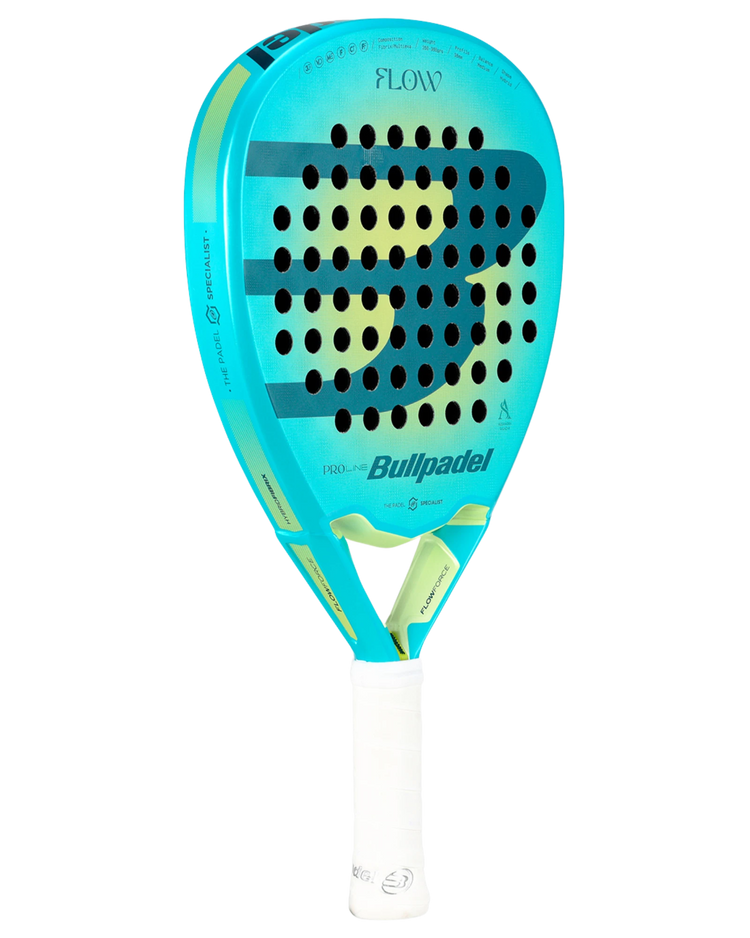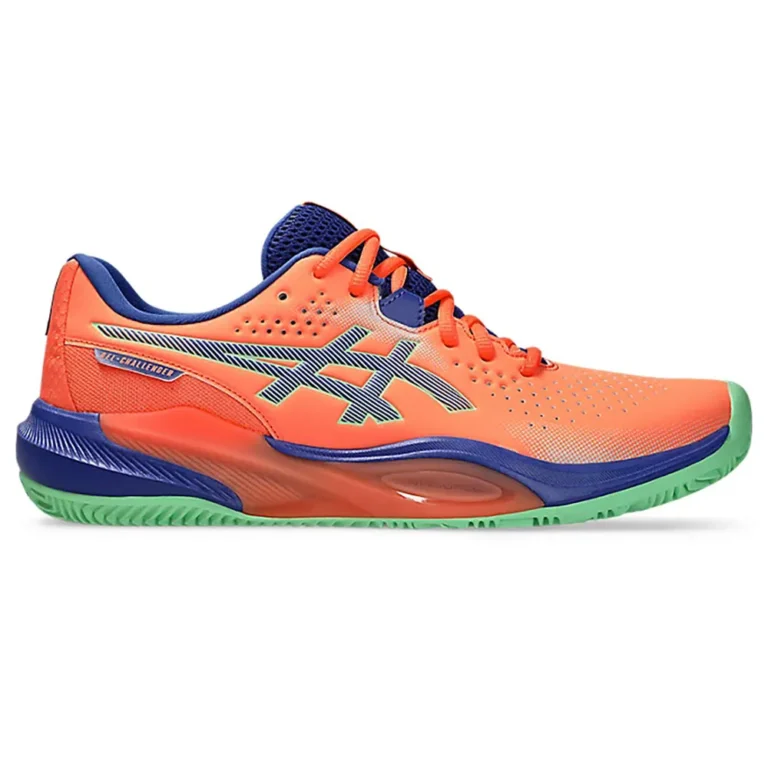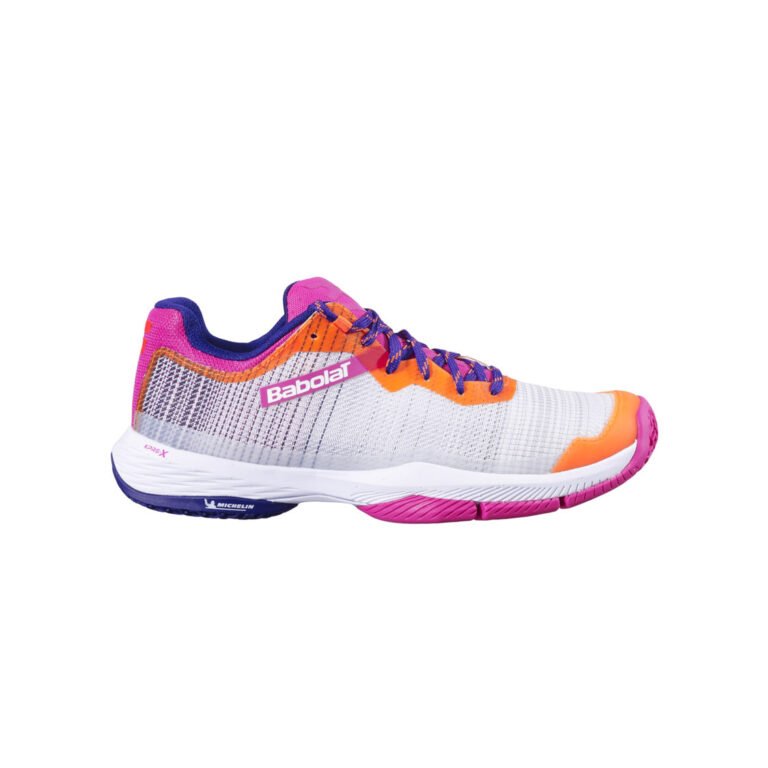

Your third or fourth padel shoe is a different decision from your second. The step-up shoe was bought against the wear map of your first; this one is bought against the demands of a game that has sped up around you — heavier weekly hours, full-speed direction changes, lunges held at the glass, turns taken under a bandeja rather than after it. At this level the spec sheet stops being a comfort list and becomes a structures list: the outsole pattern family your courts demand, the stability system that holds the platform when you plant at speed, the cushioning a maker names rather than implies, and a weight read honestly — as documented, or as an honest “not published” where a maker states none. This guide compares seven advanced shoes on exactly what their makers publish, and nothing else. No prices, no health claims, no invented numbers: the tournament tier, read the way a player buying for it actually needs it read.
⚡ TL;DR — The Short Answer
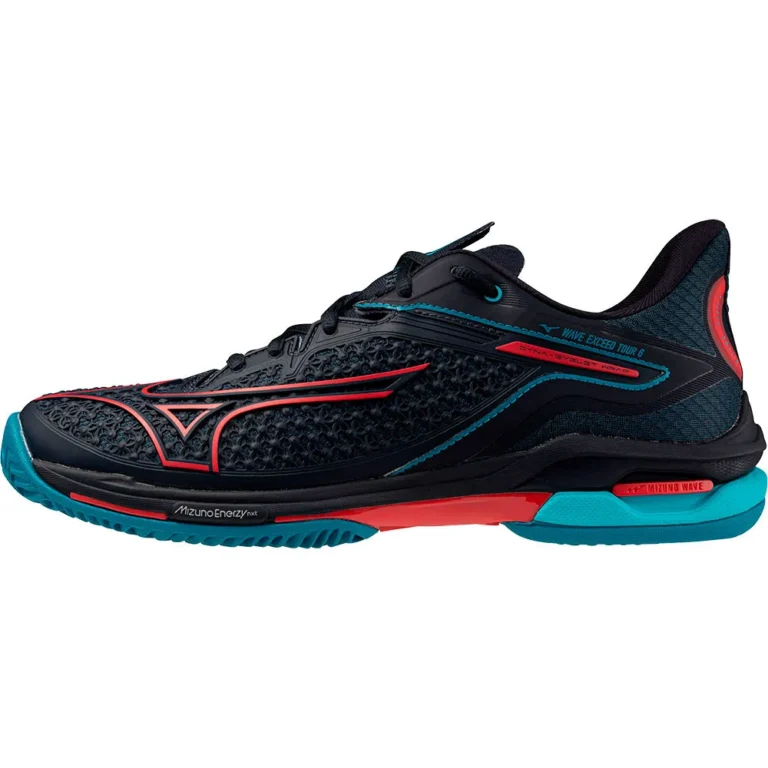
For the best all-round advanced shoe, buy the HEAD Revolt Pro 5.0 Clay — HEAD’s newest flagship stability build, with a TRI-NRG triple-density midsole, a Core Control 3D sidewall, Lateral Control+, Lockdown Straps and a full herringbone Hybrasion+ outsole, carded openly in its clay configuration. The Wilson Bela Tour is the pivot pick — a 4D Support Chassis and a circular-groove outsole built for rotation, co-designed with Fernando Belasteguín. The NOX ML10 Hexa is the grip pick, Miguel Lamperti’s signature line on a hexagonal-pattern Optimal Grip sole. The Munich Atomik is the wide-fit pick — the generous last the intermediate guide’s snug card already pointed wide feet towards. The Kuikma PS Dynamic is the lightweight pick and the only shoe here with a maker-stated weight: 330 grams in a size 43, as Decathlon lists it. The Puma Nova Elite is the lockdown pick, built around PUMA’s WEBCAGE+ cage and PWRPRINT over a PROFOAMLITE midsole. And the Bullpadel Ionic 26V is the rotation-disc pick, with Bullpadel’s ROTOX disc set into a hybrid herringbone-and-stud sole.
Quick Picks — Best Padel Shoes for Advanced Players at a Glance
TRI-NRG midsole, Core Control 3D sidewall, Lateral Control+ and a full herringbone outsole — the fullest stability package in the guide.
A 4D Support Chassis and a circular-groove outsole designed for grip and rotation, in Belasteguín’s signature line.
A hexagonal-pattern Optimal Grip sole with AGG geometry and Lateral Support — Lamperti’s signature shoe.
The generous forefoot last in Munich’s range, on a Grip Line double herringbone with rotation points.
330 grams in a size 43 as Decathlon itself states — with a Dual Grip sole and an integrated TPU shank.
A WEBCAGE+ and PWRPRINT cage over a full-length PROFOAMLITE midsole, on an engineered herringbone tread.
Bullpadel’s ROTOX rotation disc in a hybrid sole, with Mid-Stab and BPS stabilisers above it.
In This Guide
The Advanced Step: What Changes When the Game Gets Fast
An intermediate shoe stops being enough at a specific, recognisable moment — and it is rarely the moment the shoe wears out. It is the moment your game starts asking questions the shoe’s spec sheet never promised to answer. Your weekly hours have settled at three, four, five sessions. Your defensive position is no longer “somewhere near the back” but a deliberate metre from the glass, which means your first movement is a full-speed lateral drive, not a shuffle. Your turns at the net happen under the ball, loaded, with your weight committed — and a shoe whose stability system was described in general terms starts to feel general at exactly the moment you need it to be specific.
That is what the advanced tier actually sells: specificity. Read the seven cards below and notice how enumerated the structures become. Not “lateral support” but a named TPU sidewall positioned in the lateral forefoot. Not “a stable chassis” but an asymmetrical chassis that extends under the foot, with a separate flexible arch chassis inside the same shoe. Not “good grip” but five different mechanical answers to the grip question — a full herringbone, a hexagonal pattern, a circular groove map, a hybrid stud mix, and a literal rotation disc set into the sole. The advanced decision is choosing which specific structure answers the specific way your game loads a shoe.
It is also the tier where the honesty rules matter most, because this is where comparison content most often invents precision. Of the seven makers in this guide, exactly one publishes a weight for its shoe. One more has a figure in print from a magazine’s test bench. The other five publish nothing at all — and any table elsewhere that shows seven neat weights for this market has manufactured five of them. This guide prints the two documented figures with their sources and bases, prints “not published” five times, and treats that column as information rather than embarrassment: it tells you which brands are willing to be measured.
One scope note before the cards. This guide owns the advanced, tournament-level decision only. The all-player field is covered by our best padel shoes pillar guide, the step-up decision by our best padel shoes for intermediate players, the first-shoe decision by our best padel shoes for beginners, and the women’s fit decision by our best padel shoes for women guide. None of their models is re-carded here — all seven shoes below are different models, chosen because their makers publish an advanced-tier structure worth reading. If you are still learning the sport itself, start with our how to play padel guide and come back when your second shoe starts asking questions.
How to Read an Advanced Spec Sheet: Five Grip Answers, Four Stability Philosophies, Two Honest Weights
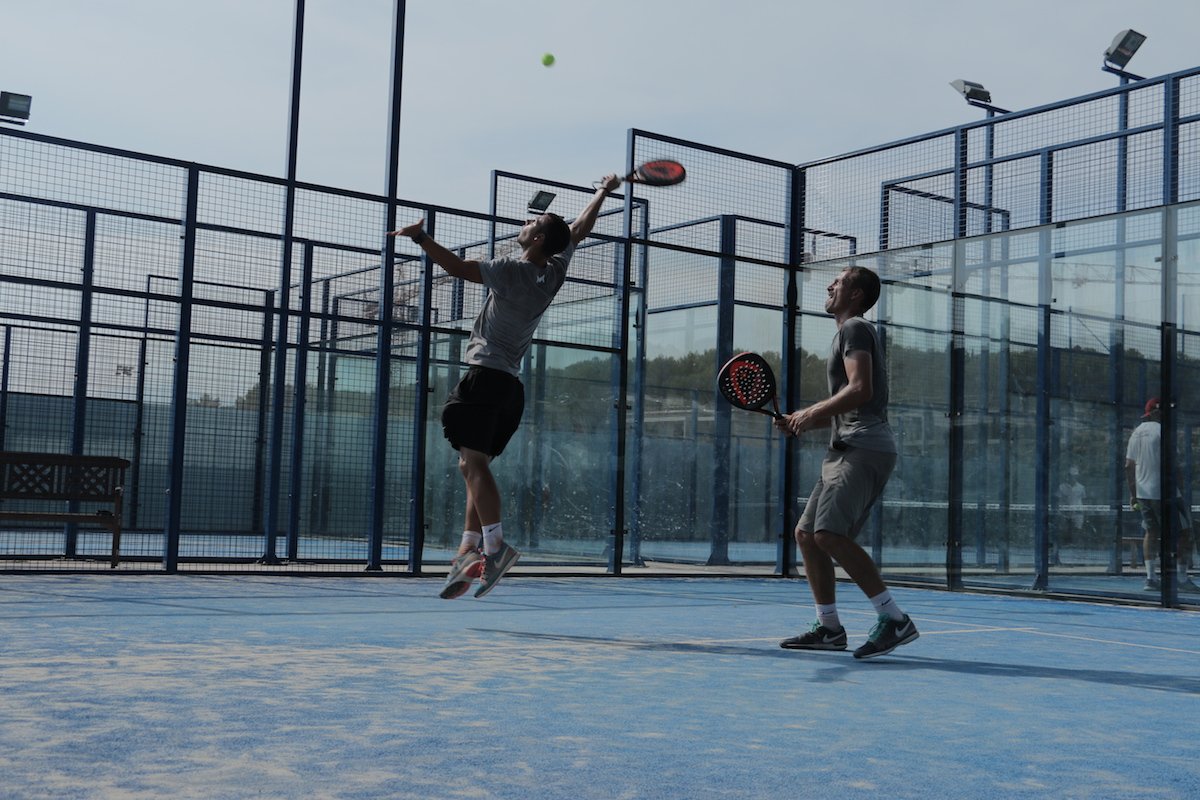
The outsole is a pattern family, not a checkbox. Every advanced shoe grips; the question is how. The full herringbone — the HEAD and the Kuikma here — channels loose sand out of deep grooves and releases into a controlled slide: the sand-court, glass-defence answer. The hybrid stud mix — the NOX’s hexagonal pattern and the Bullpadel’s herringbone-and-micro-stud sole — trades some slide for bite, suiting players who plant and drive. The circular groove map on the Wilson and the rotation disc on the Bullpadel are built around the turn itself: grip arranged radially, so rotation is the designed movement rather than a tolerated one. And the engineered herringbone on the Puma and the double herringbone on the Munich sit between the families — traction first, with rotation points or studs added where the maker wants the turn helped. Match the family to your courts and your defensive style before you read a single cushioning name.
Stability is four different philosophies. Walls: HEAD’s Core Control 3D sidewall and Lateral Control+ physically fence the lateral forefoot. Chassis systems: Wilson’s 4D Support Chassis extends under the foot while its Kaos Chassis flexes at the arch, and Bullpadel splits the job between a central Mid-Stab and a rear BPS stabiliser. Cages and frames: PUMA wraps the midfoot in a WEBCAGE+ and PWRPRINT construction laced into the closure, and Munich builds its hold from injected TPU reinforcement and a rigid heel counter. Geometry: NOX widens the sole’s contact patch with Lateral Support and tilts the whole shoe forward with its AGG drop. None is “the best” in the abstract — each answers a different failure mode of the shoe you are replacing.
Cushioning names are claims about structure, so read them as such. A triple-density midsole (HEAD’s TRI-NRG) is a promise that heel, midfoot and forefoot are tuned differently. A named foam (PUMA’s PROFOAMLITE, Wilson’s Fused 8 Foam, Munich’s X-LITE, Bullpadel’s low-density Phylon, Kuikma’s dense compressed EVA) is a promise about one material doing the whole job consistently. Neither promise can be verified from a listing — which is why this guide reports the names and the architecture exactly as makers state them, and never converts them into comfort scores.
Weights: two documented, five not published. Decathlon states 330 grams in a size 43 for the Kuikma PS Dynamic — the only maker-stated weight in this guide, printed with its basis. Padel Magazine’s published test of the Wilson Bela Tour measured 362 grams in an EU 45 — a tester figure, printed as one. HEAD, NOX, Munich, PUMA and Bullpadel publish no weight for the Revolt Pro 5.0 Clay, ML10 Hexa, Atomik, Nova Elite or Ionic 26V in the listings checked, and this guide claims none on their behalf. When a rival comparison shows you a precise gram count for all seven, ask it the question this guide asks of every figure: whose is it, and in what size was it taken?
The 7 Best Padel Shoes for Advanced Players, Compared
HEAD Revolt Pro 5.0 Clay
Best Overall Advanced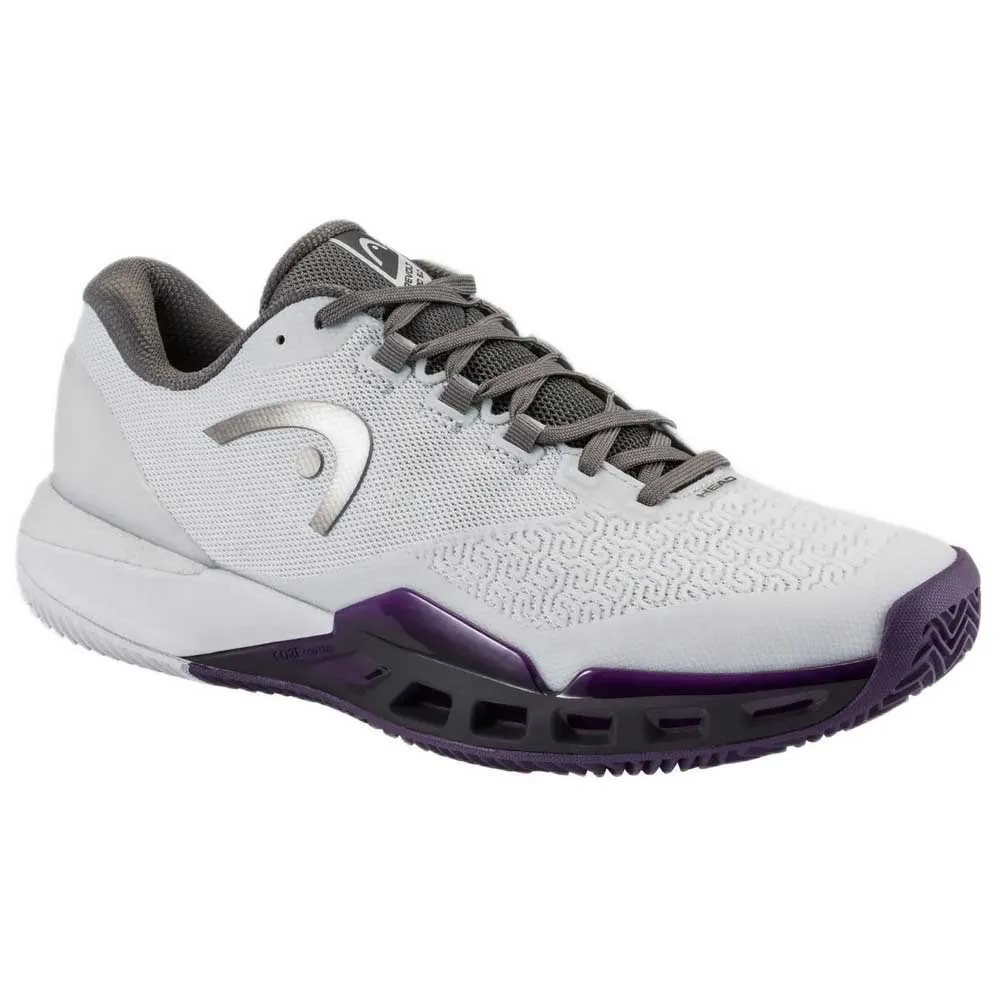
HEAD’s newest flagship stability build — a triple-density midsole, a TPU sidewall, lockdown straps and the deepest support vocabulary in this guide, on a full herringbone sole.
The Revolt Pro line is HEAD’s durability-and-stability flagship, and the 5.0 is a ground-up rebuild of the 4.5 our intermediate guide carded: the architecture is recognisable, the components are new. The midsole is TRI-NRG, HEAD’s triple-compound system — an impact-neutralising heel, a rigid midfoot and an energy-generating forefoot, in HEAD’s own description — with Dynafoam, its air-cell foam, doing the cushioning work. Around that midsole sits the guide’s most enumerated stability package: a Core Control 3D TPU sidewall positioned in the lateral forefoot, Lateral Control+ reinforcement behind it, Lockdown Straps integrated into the lacing, a ventilated 3D anti-torsion midfoot shank, a 3D-TPU heel counter and Drift Defense abrasion protection across the toe and medial forefoot, where toe drags eat shoes.
The outsole is a full herringbone in Hybrasion+, HEAD’s high-abrasion rubber — the deepest sand-channelling pattern family in this guide, and the reason the shoe is carded openly in its clay configuration: on sand-dressed padel courts, this is the pattern that bites through the loose layer and releases into the slide. A 360° Cooling System — perforations through outsole, midsole and sockliner under a breathable mesh upper — handles the heat that a moulded-PU chassis shoe would otherwise hold. HEAD positions the Revolt Pro for aggressive players who live on the baseline and slide into their shots; read for padel, that is the glass-defence profile with the heaviest weekly hours.
What we like
- The most complete enumerated support package in the guide — sidewall, straps, shank and heel counter
- Full herringbone in a high-abrasion compound: the sand-court pattern, in the durability build
- Drift Defense targets the toe-drag wear zone directly
- A triple-density midsole is a structural promise, not a single-foam claim
Worth knowing
- Carded in its Clay configuration — check the listing says “Clay,” not the all-court version
- HEAD publishes no weight, and none is claimed here
As an Amazon Associate we earn from qualifying purchases.
Wilson Bela Tour
Best for Pivot & Net Play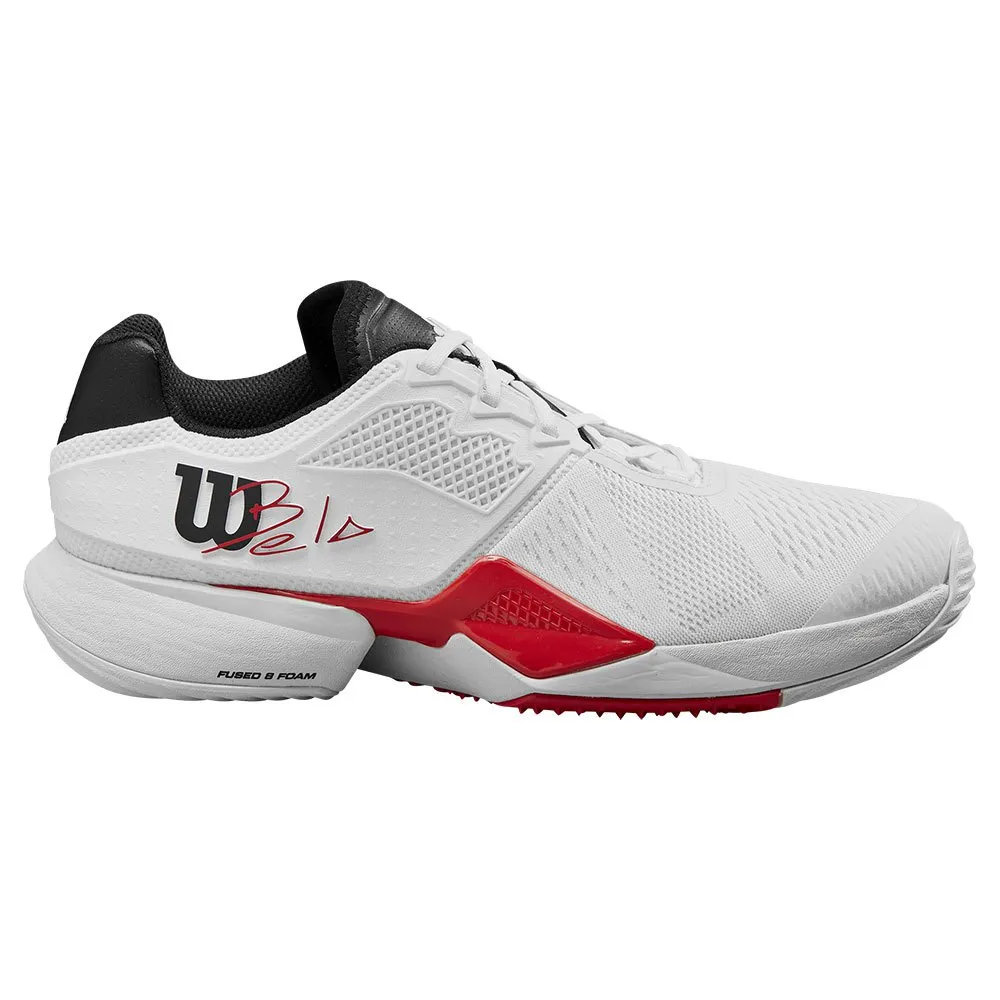
Belasteguín’s tour line, built around the turn: an asymmetrical support chassis, a flexible arch chassis and a circular-groove outsole that treats rotation as the primary movement.
Most stability systems are designed to stop movement; the Bela Tour’s is designed to control a specific one. The 4D Support Chassis is asymmetrical and extends under the foot — Wilson describes it as limiting supination to deliver pivot control — while the Kaos Chassis inside the same shoe does the opposite job at the arch, flexing for agility and adding lateral torsion control. Two chassis, two directions of work: that split is the most mechanically literate stability brief in this guide, and it is aimed squarely at the advanced player’s defining actions — the loaded turn at the net, the bandeja recovery step, the lunge that has to become a pivot without a pause.
The outsole completes the argument: a circular groove pattern in Wilson’s Duralast high-density rubber, arranged radially so grip is organised around rotation rather than against it. Above it, the DF2 geometry sets a maker-stated 9 mm drop, the midsole is the Fused 8 Foam named on the shoe itself, and the upper is a minimally layered Sensifeel 2.0 synthetic over an Endofit inner sleeve that Wilson describes as a second-skin fit. It is co-designed with Fernando Belasteguín — the longest-serving world number one the sport has had — and positioned by Wilson’s retailers for advanced, aggressive players.
What we like
- The only outsole here designed radially — rotation is the brief, not a by-product
- Two chassis doing opposite jobs: supination control underfoot, flex at the arch
- A documented weight exists and is printed with its basis and source
- Endofit sleeve fit suits players whose step-up shoe slipped at the heel
Worth knowing
- The 362 g figure is a published test measurement (EU 45), not a Wilson-published spec — Wilson states none
- A different model from the seniors guide’s Bela Pro Padel — check the listing says “Tour”
As an Amazon Associate we earn from qualifying purchases.
NOX ML10 Hexa
Best All-Court Grip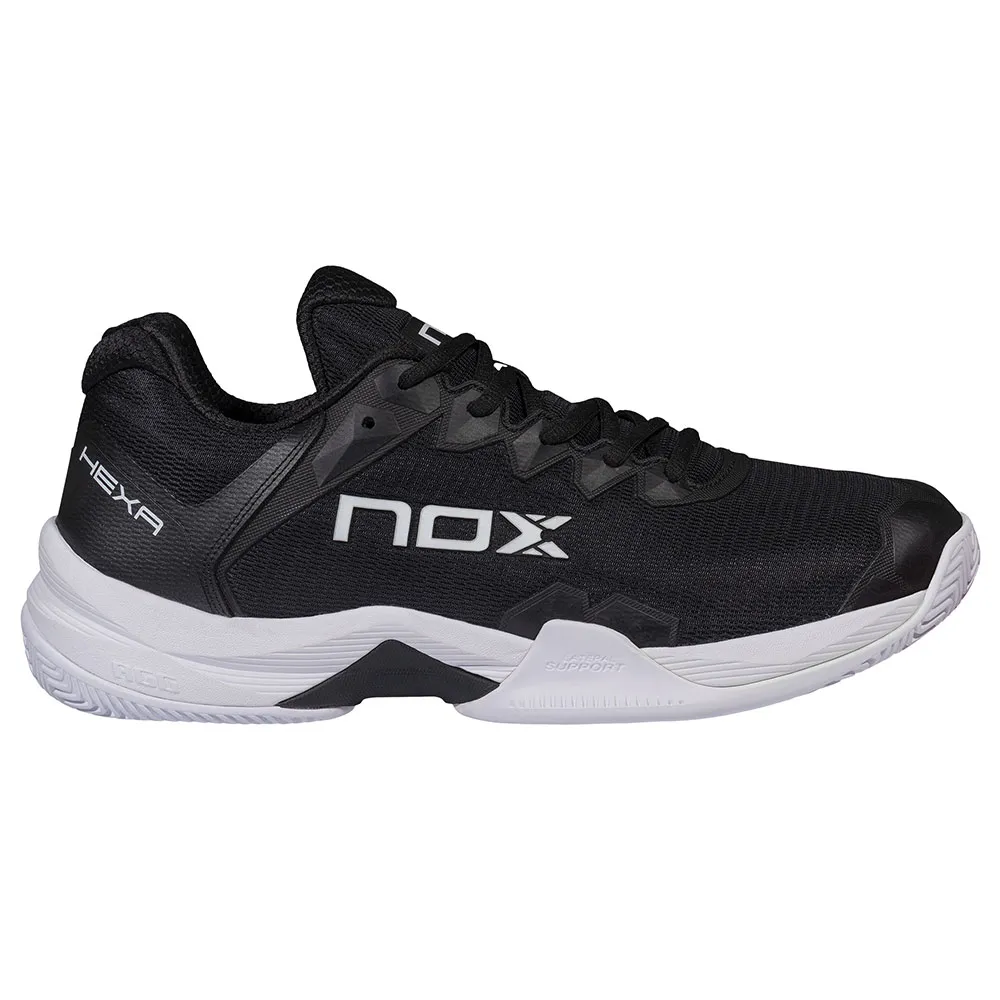
Miguel Lamperti’s signature line on a hexagonal-pattern sole — NOX’s geometry-first stability philosophy in its most distinctive tread.
The ML10 name is padel heritage: it is Miguel Lamperti’s signature line, and the Hexa is its shoe — a different model from the AT10 PRO our intermediate guide carded, built around a different idea. Where the AT10 line stacks reinforcement, the Hexa starts from the ground. Its Optimal Grip sole combines a hexagonal pattern with herringbone zones — a hybrid tread NOX positions for all court surfaces, from sand-dusted courts to textured turf. Hexagons grip in every direction at once rather than favouring one axis, which is the tread equivalent of Lamperti’s own game: defence that can become attack from any position.
Above the sole, NOX’s published set is its familiar geometry vocabulary. AGG (Advanced Gravity Geometry) builds a higher heel-to-toe drop that NOX describes as holding the player in an alert, forward ready position for explosive starts. Lateral Support widens the sole’s contact area with the ground for stability across side-to-side movement. The midsole is NOX’s high-cushioning build with an Ortholite insole over it. A note on sourcing, in line with this site’s NOX cards before: NOX markets this shoe with clinical-certification and injury language; that language is the maker’s marketing, it is not a specification, and it is not repeated here — the card stands on the published construction alone.
What we like
- The only hexagonal tread in the guide — multi-directional grip by geometry, not depth
- AGG’s forward-tilted stance suits the net-first ready position
- An all-court brief: one shoe for sand-dressed and textured-turf venues
- A signature line with a defensive identity — rare in a power-led market
Worth knowing
- NOX publishes no weight for this model — none is claimed here
- NOX’s certification marketing is deliberately not repeated; judge the construction
As an Amazon Associate we earn from qualifying purchases.
Munich Atomik
Best Wide Fit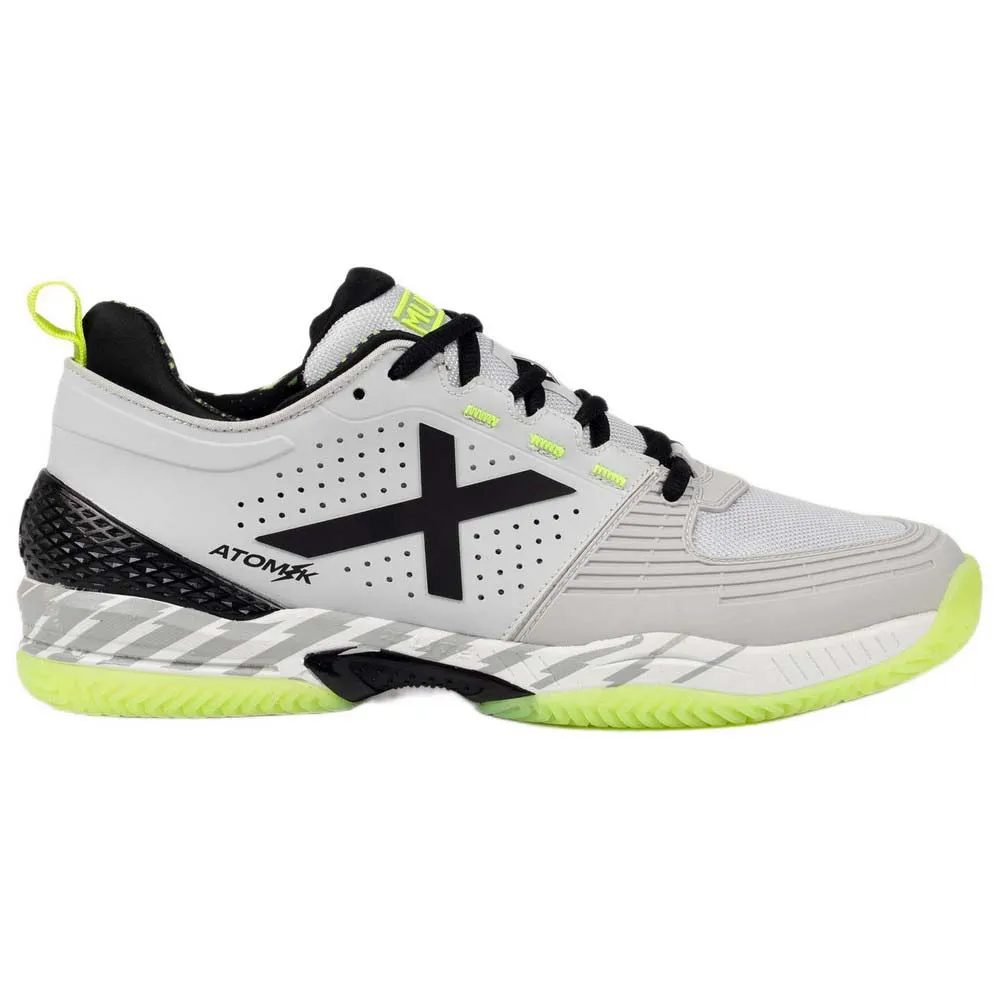
The wide-fit answer in Munich’s range — a generous forefoot last on the same Grip Line platform as the snug Padx, built for advanced, intensive play.
This card has a history on this site: our intermediate guide’s Munich Padx card carried a caveat — snug fit, and wide feet were directed to Munich’s wider Atomik instead. This is that shoe, carded on its own merits for the advanced tier. Munich’s own retailer comparison is explicit about the split: the Atomik is the wide last in the range — a generous forefoot and toe box — against the Padx’s closer fit, and Tradeinn lists the Atomik’s player type as advanced and intensive players. At this level, fit is not a comfort footnote; a wide foot in a snug shoe loses its stability platform before any technology in it gets to work, which makes the Atomik the most consequential card in this guide for a specific, common foot.
The platform under the wide last is Munich’s full published set. A Grip Line double herringbone outsole with small studs and dedicated rotation points; an X-LITE expanded-EVA midsole with an Anti-Shock heel insert; TPU reinforcement across the toe and side; a rigid heel counter; and, on the current Atomik 51 generation, a seamless elastic mesh upper with injected TPU reinforcements and a 360° padded collar. It is the comfort-leaning of Munich’s two advanced lasts — more cushioning, more room — without giving up the rotation-point sole the net game needs.
What we like
- The only genuinely wide last in the guide — a fit decision, not a size-up workaround
- Same Grip Line rotation-point platform as the snug Padx; nothing is traded away
- 360° padded collar and seamless upper suit long tournament days
- Positioned by its retailers for advanced, intensive players explicitly
Worth knowing
- Munich publishes no weight for this model — none is claimed here
- Narrow feet should read the intermediate guide’s Padx card instead — same range, opposite last
As an Amazon Associate we earn from qualifying purchases.
Kuikma PS Dynamic
Best Lightweight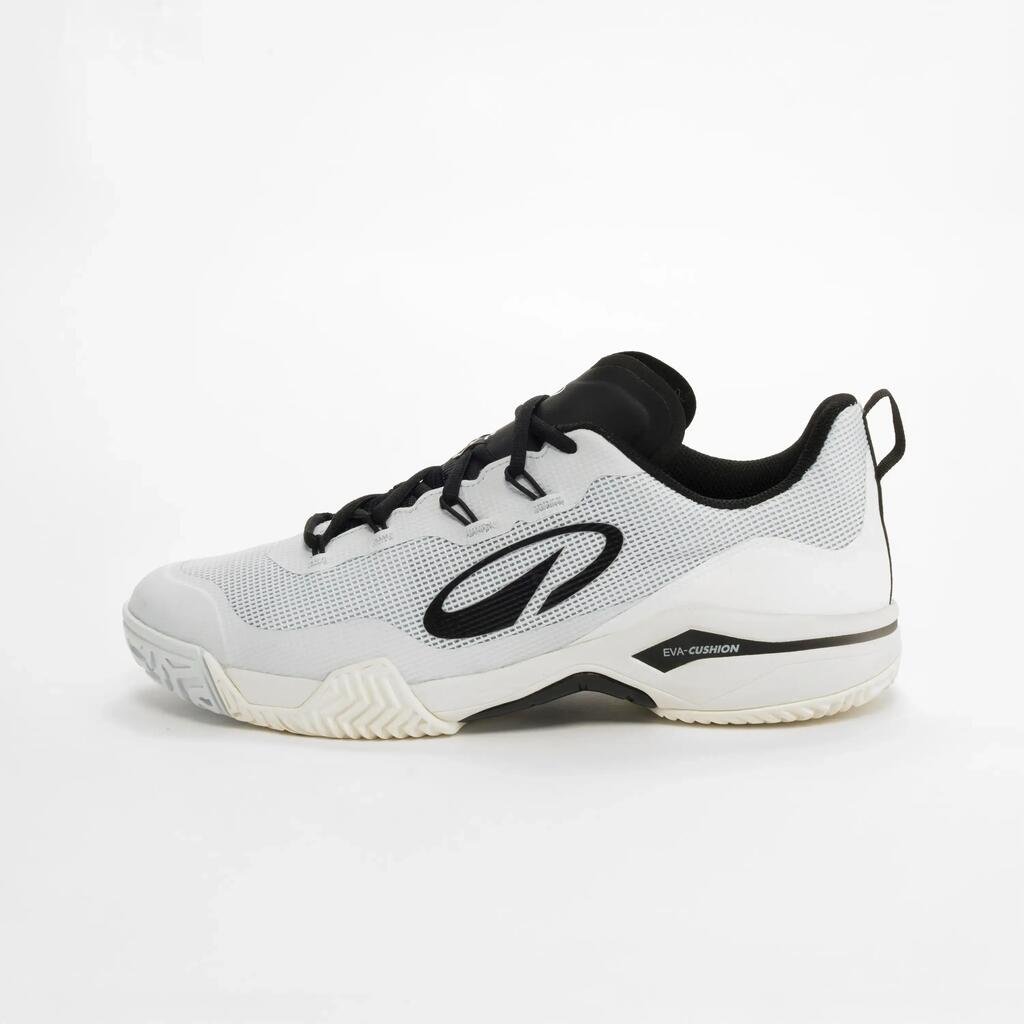
Decathlon’s advanced-tier speed shoe — and the only card in this guide whose maker actually publishes a weight: 330 grams in a size 43, on Decathlon’s own page.
Kuikma runs two advanced shoes on two philosophies. The PS Stab — carded in our pillar guide — is the structured stability model. The PS Dynamic is this guide’s: Decathlon positions it for advanced padel players seeking lightness, dynamism and comfort, and publishes the number to prove the first of those: 330 grams in a size 43. In a guide where five makers publish nothing, that single stated figure — with its size basis attached — is worth pausing on. It is also why the Dynamic, and not the Stab, is the Kuikma in this lineup: the advanced speed player is the one who weighs shoes, and this is the one that can be weighed from its maker’s page.
The construction underneath is Decathlon’s published set: a Dual Grip herringbone sole optimised for traction on sandy courts — Kuikma’s own pattern family for the sand-dressed surface — a dense compressed EVA foam midsole Decathlon describes as delivering dynamic comfort and energy return, an integrated TPU shank stiffening the midfoot, and anti-abrasion reinforcements built for intensive use. One lineage note for buyers comparing older coverage: the earlier PS 990 Dynamic generation was quoted elsewhere at slightly different figures — 335 grams as announced, 345 grams in one magazine’s hands. Those belong to the earlier generation; the figure on this card is Decathlon’s current listing for the current shoe, and it is the only one this guide prints.
What we like
- The only maker-stated weight in the guide — 330 g with its size basis published
- Dual Grip is a padel-specific sandy-court pattern, not a borrowed tennis sole
- An integrated TPU shank gives the light shoe a torsional spine
- Anti-abrasion reinforcement briefs it for intensive weekly use
Worth knowing
- The lightest brief here trades the sidewall-and-chassis structures of the top cards for a shank
- Older PS 990 Dynamic figures in circulation belong to the earlier generation
As an Amazon Associate we earn from qualifying purchases.
Puma Nova Elite
Best Lockdown & Speed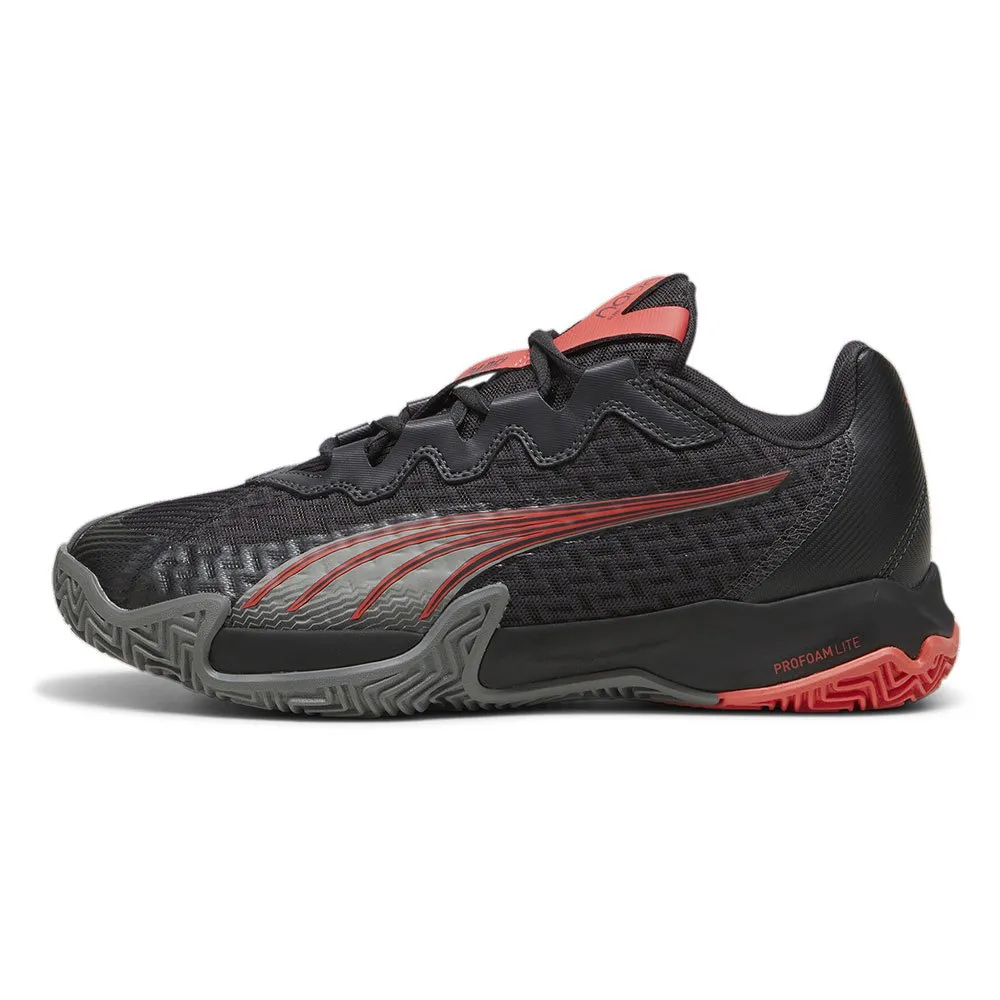
PUMA’s padel flagship: a lacing-integrated cage and printed lockdown over a full-length lightweight EVA midsole — the hold-the-foot answer to advanced speed.
The Nova Elite’s stability philosophy is neither wall nor chassis — it is the closure itself. PUMA’s WEBCAGE+ is a lacing-integrated cage that wraps the midfoot, and PWRPRINT prints structured support onto the upper, so the harder the shoe is laced the more completely the midfoot is held — lockdown that scales with the player rather than arriving as a fixed frame. It is the right idea for the fastest profile in this guide: the player whose game is built on first steps and recoveries, and whose stability problem is not the platform tipping but the foot moving inside the shoe at the moment of the cut.
Under the cage, a full-length PROFOAMLITE midsole — PUMA’s extremely lightweight EVA — keeps the build minimal, and an engineered herringbone rubber tread handles grip and quick changes of direction; retailer specifications put the drop at 8.0 mm. The upper is synthetic and textile, made with at least 30% recycled materials on PUMA’s own account, and PUMA states the fit plainly as regular. One honesty note that belongs on the card: PUMA publishes no weight for the Nova Elite — review coverage confirms the brand simply does not specify one — so “lightweight” here is PUMA’s description of its midsole foam, not a gram figure, and this guide prints none.
What we like
- Lockdown that scales with lacing — the cage tightens the midfoot hold itself
- A full-length single-foam midsole keeps the build simple and low
- Maker-stated regular fit and a stated recycled-content share — published, checkable claims
- An engineered herringbone keeps the speed shoe in the right grip family
Worth knowing
- PUMA publishes no weight — the “lightweight” language is the foam’s, not a figure
- A cage holds the midfoot; it is not a substitute for a sidewall if your shoe tips
As an Amazon Associate we earn from qualifying purchases.
Bullpadel Ionic 26V
Best Rotation Disc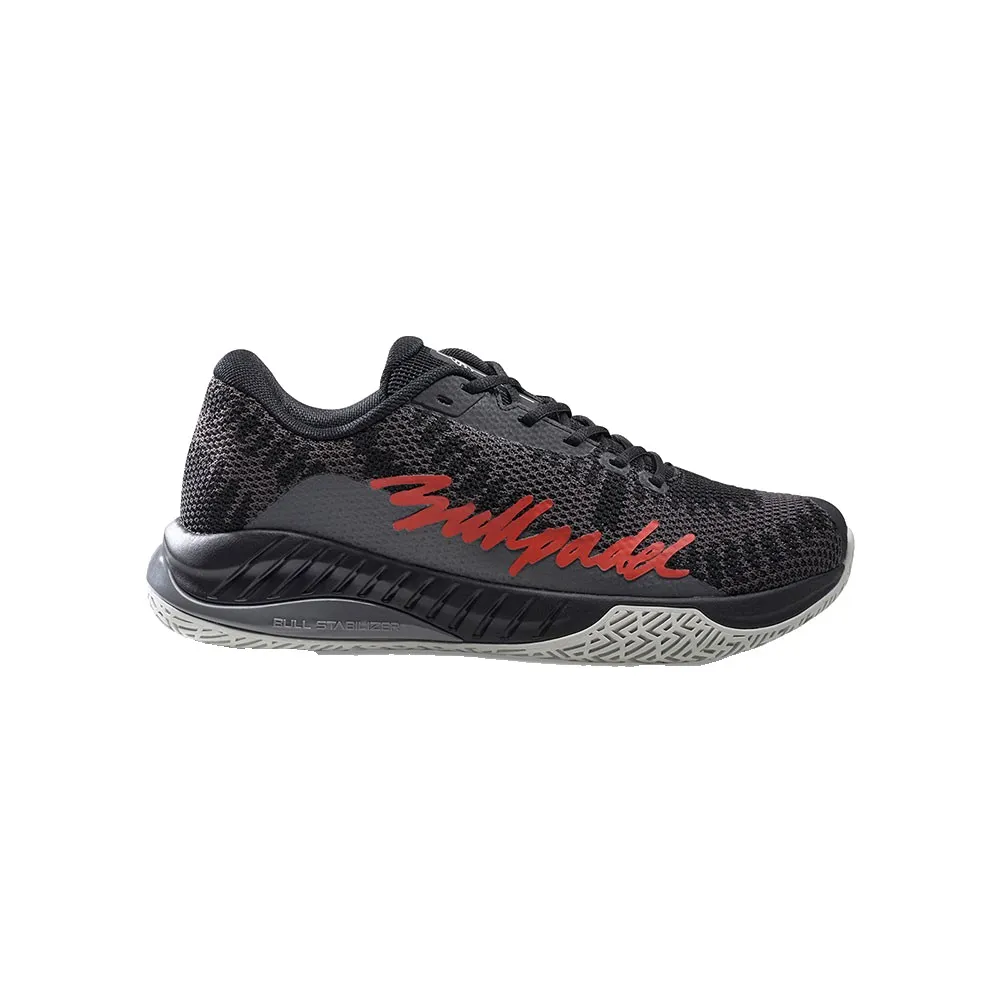
Bullpadel’s hybrid-sole technician: a rotation disc, two stabilisers and raised abrasion armour in one seamless upper — worn on the professional circuit.
The Ionic is where Bullpadel puts its sole engineering, and the 26V’s published set reads like a checklist of the advanced game’s failure modes, answered one by one. Rotation: the ROTOX disc set into the forefoot, a dedicated pivot point for turns taken under load. Grip around it: the New Padel hybrid sole, herringbone channels carrying micro-studs — slide family and bite family in one tread. Twist: a Mid-Stab central TPU stabiliser, backed by a BPS rear stabiliser for the heel. Wear: Sole Shield raised protection up the side and toe, where drags and court contact abrade. Retailer listings name Premier Padel players Pablo Cardona, Alex Arroyo and Javier Leal among the model’s players — tour usage is a listing claim, printed as one, but it matches the shoe’s brief: Tradeinn profiles it for players seeking a dynamic, stable game.
Above the sole, a low-density Phylon midsole carries the cushioning, and the upper is Jacquard mesh with Thermofit seamless construction — Bullpadel describes the result as a glove-like, custom fit — finished with a rubber toe cap and elevated side walls. Set it against the Vertex Vibram in our pillar guide: the Vertex is Bullpadel’s maximum-structure shoe; the Ionic is its rotation-first technician, and an advanced player chooses between them by asking whether their game turns or braces more often.
What we like
- The only true rotation disc in the guide — a pivot point, engineered in
- Two stabilisers split the job: Mid-Stab centrally, BPS at the heel
- Sole Shield answers the exact abrasion zones advanced play wears
- A seamless Thermofit upper removes the stitch lines that rub over long days
Worth knowing
- Bullpadel publishes no weight for this model — none is claimed here
- A different model from the pillar guide’s Vertex Vibram 26V — check the listing says “Ionic”
As an Amazon Associate we earn from qualifying purchases.
Side-by-Side: The 7 Advanced Padel Shoes Compared
| Shoe | Weight, As Documented | Outsole, As Maker States | Stability Tech | Cushioning | Fit |
|---|---|---|---|---|---|
| HEAD Revolt Pro 5.0 Clay | Not published | Full herringbone · Hybrasion+ | Core Control 3D · Lateral Control+ · Lockdown Straps · Anti-torsion shank | TRI-NRG triple-density · Dynafoam | True length, medium width (retailer notes) |
| Wilson Bela Tour | 362 g (EU 45) — tester-measured | Circular groove pattern · Duralast rubber | 4D Support Chassis · Kaos Chassis | Fused 8 Foam · DF2 9 mm drop | Endofit inner sleeve (per Wilson) |
| NOX ML10 Hexa | Not published | Optimal Grip — hexagonal + herringbone | Lateral Support · AGG geometry | High-cushioning midsole · Ortholite insole | True to size (retailer reviews) |
| Munich Atomik | Not published | Grip Line double herringbone · Rotation points | TPU toe + side reinforcement · Rigid heel counter | X-LITE EVA · Anti-Shock heel | Wide — generous forefoot (per Munich retailers) |
| Kuikma PS Dynamic | 330 g (size 43) — maker-stated | Dual Grip herringbone (sandy courts) | Integrated TPU shank | Dense compressed EVA foam | Standard (per Decathlon listing) |
| Puma Nova Elite | Not published | Engineered herringbone rubber | WEBCAGE+ lacing cage · PWRPRINT | PROFOAMLITE (full-length EVA) | Regular (per PUMA) |
| Bullpadel Ionic 26V | Not published | New Padel hybrid sole · ROTOX rotation disc | Mid-Stab TPU · BPS rear stabiliser · Sole Shield | Lo-Dens Phylon | Thermofit seamless (per Bullpadel) |
The weight column is the most honest row in this guide: one maker-stated figure (Kuikma’s 330 grams in a size 43), one published test measurement (the Bela Tour’s 362 grams in an EU 45, from Padel Magazine’s test bench — a different size from Kuikma’s, so the two figures flank each other rather than compete), and five makers who publish nothing. Read the outsole column as five pattern families rather than one ranking: full herringbone (HEAD, Kuikma) for sand and slide; radial and disc designs (Wilson, Bullpadel) for the turn; hybrids and hexagons (NOX, Bullpadel, Munich) for bite; engineered herringbone (PUMA) for the speed profile. And read the stability column as the real advanced decision — sidewall, chassis, cage or geometry — because at this level the cushioning names are the least differentiating thing on the page.
Buying Guide: Matching the Shoe to Your Tournament Game
The glass defender with heavy hours: the HEAD Revolt Pro 5.0 Clay. Your wear map is the outsole edge and the medial toe, your load case is the full-speed plant — and HEAD’s is the only package here that answers with a sidewall, straps, a shank and a high-abrasion herringbone simultaneously. It is also the natural replacement for the 4.5 in the intermediate guide: the same philosophy, rebuilt.
The net player who turns under the ball: the Wilson Bela Tour or the Bullpadel Ionic 26V — decide by mechanism. The Bela arranges its whole outsole radially and splits its chassis work between supination control and arch flex; the Ionic sets a literal disc under the forefoot and guards the twist with two stabilisers. If your turns are the whole game, the radial sole is the purer answer; if your turns come with heavy drag wear, the Ionic’s Sole Shield argues back.
The all-court mover between venues: the NOX ML10 Hexa. A hexagonal hybrid tread is the one pattern family here briefed for every surface at once, and AGG’s forward stance suits a player whose home court changes weekly.
The wide foot: the Munich Atomik, without a size-up gamble. A wide last is a platform, not a compromise — and at advanced loads, the platform is the stability system every other technology stands on.
The speed-first player who weighs everything: the Kuikma PS Dynamic if you buy on published numbers — 330 grams, stated, with a sandy-court sole and a shank — or the Puma Nova Elite if your real problem is movement inside the shoe: the WEBCAGE+ cage is the only lockdown here that tightens with your laces. Buy the Kuikma for the documented lightness, the PUMA for the documented hold, and do not let anyone quote you a gram figure for the PUMA — its maker does not publish one.
Whichever you choose, run the same three checks. First, the version: “Clay” on the HEAD, “Tour” on the Wilson, “Ionic” on the Bullpadel, “PS Dynamic” and not “PS Stability” on the Kuikma — at this tier, sibling models differ by exactly the structures you are paying for. Second, the weight basis: if a listing shows a weight for the five unpublished models, it is the retailer’s number, not the maker’s — use it only against the same retailer’s other listings, in the same stated size. Third, the last: width and fit briefs at this level are published for four of these seven (wide, true, medium, regular) — order against the maker’s own statement, not against the size you wore in a different brand’s advanced shoe.
Frequently Asked Questions
What makes a padel shoe “advanced” rather than intermediate?
Specificity of structure. Intermediate shoes publish general support language; the advanced tier publishes enumerated systems — a named TPU sidewall (HEAD’s Core Control 3D), a split chassis design (Wilson’s 4D Support and Kaos chassis), a lacing-integrated cage (PUMA’s WEBCAGE+), a rotation disc (Bullpadel’s ROTOX) or a geometry system (NOX’s AGG and Lateral Support). The advanced decision is matching the specific structure to the specific way your game loads a shoe.
Which advanced padel shoe is best for wide feet?
The Munich Atomik. Munich’s own retailer comparison lists the Atomik as the wide last in its range — a generous forefoot and toe box — against the snugger Padx carded in our intermediate players guide, and Tradeinn lists the Atomik’s player type as advanced and intensive players. A proper wide last preserves the stability platform that sizing up in a narrow shoe does not.
Why do most of these shoes list no weight?
Because their makers do not publish one. Of the seven shoes in this guide, only Decathlon states a weight for its shoe (330 g in a size 43 for the Kuikma PS Dynamic), and the Wilson Bela Tour’s 362 g at EU 45 comes from a magazine’s published test, not from Wilson. HEAD, NOX, Munich, PUMA and Bullpadel publish no weight for these models, so this guide prints “not published” rather than estimate — a weight without a source and a size basis is not a specification.
Is the HEAD Revolt Pro 5.0 Clay really a padel shoe?
It is carded openly in its Clay configuration, the same treatment this site’s intermediate guide gave the 4.5 generation. The test is the maker’s own published data: a full herringbone Hybrasion+ outsole — the sand-court pattern family — with a triple-density midsole, a TPU lateral sidewall, Lateral Control+, Lockdown Straps and an anti-torsion shank built for aggressive lateral play. Check that the listing says “Clay”: the hard-court version is a different outsole and a different purchase.
Which shoe should a net player who pivots a lot choose?
The Wilson Bela Tour or the Bullpadel Ionic 26V. The Bela Tour’s circular groove outsole arranges grip radially around rotation, with a 4D Support Chassis Wilson describes as limiting supination for pivot control. The Ionic sets a ROTOX rotation disc into a hybrid herringbone-and-stud sole, with Mid-Stab and BPS stabilisers controlling the twist. Choose the radial sole for pure turning, the disc shoe if your turns come with heavy drag wear.
Kuikma PS Dynamic or PS Stab — what is the difference?
Two philosophies in Decathlon’s advanced tier. The PS Stab, carded in our best padel shoes pillar guide, is the structured stability model. The PS Dynamic in this guide is the speed model: Decathlon positions it for advanced players seeking lightness and dynamism, states its weight at 330 grams in a size 43, and builds it on a Dual Grip herringbone sole with a dense compressed EVA midsole and an integrated TPU shank.
How do I know when an advanced padel shoe is finished?
Judge the shoe, not the calendar — makers publish no lifespan figure. The reliable markers are physical: herringbone or stud depth worn smooth at the forefoot and lateral heel, a midsole that has lost the response its maker describes, an upper that has stretched past its lacing or cage range, and a wear hole opening at the toe-drag zone. When two of those appear together, the structures you bought the shoe for are no longer doing their published work.
The Verdict: Buy the Structure Your Game Actually Loads
The advanced market rewards a specific kind of honesty. One maker in this guide publishes a weight; one more has a test-bench figure in print; five publish none — and the correct response to that is not to fill the gaps but to move the decision to the ground where the data is complete: outsoles, stability systems, fits. On that ground the seven separate cleanly. The HEAD Revolt Pro 5.0 Clay is the default advanced buy — the fullest structure set here, in the durability build, for the player whose hours and plants are heaviest. The Wilson Bela Tour owns the turn, the Bullpadel Ionic 26V owns the turn with armour, the NOX ML10 Hexa owns the mixed-surface week, the Munich Atomik owns the wide foot, the Kuikma PS Dynamic owns the documented-light brief, and the Puma Nova Elite owns the foot that moves inside its shoe. Name the failure your current shoe showed you, and the card above it has already been written — that is what the advanced tier is for.
Affiliate disclosure: Alishuttler is reader-supported. When you buy through links on this page we may earn an Amazon commission at no extra cost to you. Every shoe above was compared on its maker’s published specifications; no product was supplied by a brand, and no ranking here was paid for.