Matches teach you what you cannot do yet. Drills are how you fix it. This page gives you seven structured drills — three you can run alone against the glass, four cooperative patterns for two players — each with a setup, a counted target, a progression for when it gets easy, and the beginner error it exists to correct.
Ask a group of beginners how they practise and most will describe the same session: they book a court, rally for a while, play a few games, and go home. There is nothing wrong with it as recreation — but as practice it has a structural flaw. A rally gives you whatever shots the rally happens to produce, at whatever pace your partner sets, and the shots you are worst at are precisely the ones you quietly steer away from. You can play a hundred social matches and take almost no bandejas from the position where bandejas are actually played, because the lobs never quite arrive there.
A drill is the opposite of that. It takes one pattern — one shot, from one position, with one intention — and repeats it on purpose, with a target you can count. Ten minutes of cross-court drives with a streak to beat will do more for your drive than a month of hoping drives turn up in matches. The good news is that beginner drills need no coach, no machine and no basket of sixty balls: a couple of balls, one cooperative partner for half of them, and the glass that is already behind you.
Two boundaries before the drills themselves. First, drills assume a body that is ready to move: run the ten-minute routine in our padel warm-up for beginners before any practice session — it is the before-you-start step, and this page deliberately does not repeat it. Second, this page owns structured practice only. The laws of the game — scoring, serve rules, what counts as in or out off the walls — live in how to play padel, and the broader first-game skills, from the grip to playing alongside a partner, are covered in our guide to padel for beginners. Here, we drill.
The drills in 30 seconds
Solo: glass rebounds for back-court control, a self-fed drive ladder for clean contact, and self-fed lobs for the bandeja shape. Partner: cross-court drive streaks, volley-to-volley at the net, a lob-and-bandeja feeding loop, and a glass-defence exchange. Every drill runs in short sets against a counted target — a streak, a tally, a number of clean balls in a row — and gets harder only when you beat the target twice. Cooperative first, competitive later: in a drill, your partner’s job is to help you repeat the shot, not to beat you with it.
In this guide
- How a good drill works: the five rules
- The seven drills at a glance
- Solo drill 1: Glass rebounds
- Solo drill 2: The self-fed drive ladder
- Solo drill 3: Self-fed lobs and the bandeja
- Partner drill 1: Cross-court drive streaks
- Partner drill 2: Volley-to-volley
- Partner drill 3: The lob-and-bandeja loop
- Partner drill 4: The glass-defence exchange
- A weekly practice structure
- Padel drills FAQs
How a good drill works: the five rules
Every drill on this page is built the same way, and the construction matters more than any individual exercise. A drill that ignores these rules quietly degrades into the unstructured hitting it was meant to replace — usually within five minutes. Run all seven drills by the same five rules and they will keep their shape.
Rule 1 — One pattern at a time. Each drill isolates a single shot from a single position: drives from the baseline, volleys at the net, bandejas off a fed lob. The moment a drill becomes “a bit of everything,” it stops repeating anything, and repetition is the entire mechanism. If you want to train two shots, run two drills back to back rather than blending them into one rally.
Rule 2 — Cooperative before competitive. In partner drills, the feeder’s job is to deliver the ball the drill asks for — at the agreed pace, to the agreed place — not to win the exchange. This feels unnatural to competitive beginners and it is the rule that breaks first, so agree it out loud before you start: we are building a shot, and the contest comes later, in the progression, once the pattern is stable.
Rule 3 — Count something. Every drill here carries a target you can count: balls in a row without an error, successful shots out of ten, minutes completed at the set pace. Counting is what separates practice from knocking up. It tells you when to progress, it tells you whether last week’s session actually moved anything, and it gives a solo session a shape when there is no scoreboard to supply one.
Rule 4 — Short sets, frequent resets. Beginners’ technique decays fast under fatigue: the tenth tired drive teaches your body a different, worse swing than the first fresh one. Work in short sets — a couple of minutes, or a fixed number of balls — then stop, collect the balls, breathe, and restart. Three fresh sets teach more than one long grind, and they keep the quality of every repetition close to your best rather than your most exhausted.
Rule 5 — Progress only on evidence. Each drill below has a progression: a way to make it harder. Use it only when you have beaten the current target twice in a row — two consecutive sets, not one lucky one. Progressing too early is the classic beginner trap: the drill gets more exciting and less useful in the same moment, because the shot was never stable enough to survive the extra difficulty.
Glass rebounds
Feed the ball off the back glass to yourself and play controlled drives off the rebound. Fixes: panicking at the glass — turning a defensive wall into a wall you use.
Cross-court drive streaks
Diagonal drives against a counted streak — twenty in a row beats one winner. Fixes: hitting every drive at full pace with no target and nowhere to aim.
Volley-to-volley
Fast, soft hands at close range, both players at the net. Fixes: standing still between shots — the exchange punishes anyone who stops moving.
The lob-and-bandeja loop
One feeds lobs, the other bandejas them back to be lobbed again. Fixes: practising only your favourite shots — the loop gives both players their weakest pattern.
The seven drills at a glance
| Drill | Format | Target to count | Progression | Error it fixes |
|---|---|---|---|---|
| S1. Glass rebounds | Solo | 8 controlled drives in a row off the rebound | Alternate forehand and backhand; step further from the glass | Rushing the ball off the glass instead of letting it come to you |
| S2. Self-fed drive ladder | Solo | 7 of 10 self-fed drives landing past the service line, cross-court | Alternate corners; move the feed wider | Contact made late and behind the body because nothing set the feet |
| S3. Self-fed lobs & bandeja | Solo | 6 of 10 bandejas played deep, off your own lob off the glass | Feed from deeper; aim bandejas to alternate sides | The first bandeja of the day only ever happening in a match |
| P1. Cross-court drive streaks | Partner | A streak of 20 drives in a row, both directions | Add pace in steps; shrink the target to one third of the court | Full pace, no target — every rally dying inside five shots |
| P2. Volley-to-volley | Partner | 30 volleys in a row without the ball touching the floor | Close the distance; one player back, one at net | Big backswings at the net and feet that stop after each volley |
| P3. Lob-and-bandeja loop | Partner | 10 consecutive lob–bandeja exchanges before a reset | Feeder varies lob height and side; bandeja aims at the feeder’s feet | Practising only favourite shots — nobody feeds you your weakest one |
| P4. Glass-defence exchange | Partner | 8 of 10 defensive balls returned from behind the service line | Feeder mixes drives and lobs without warning | Defending from wherever you happen to be standing, mid-court and exposed |
One session note before the detail: you do not need all seven drills in every session, and trying to fit them all in is how each one ends up rushed. A good beginner session picks three — one solo or warm-through drill, one baseline pattern, one net or overhead pattern — and gives each its full sets. The weekly structure at the end of this page shows how to rotate them across a week so every pattern gets its turn.
Solo drill 1: Glass rebounds
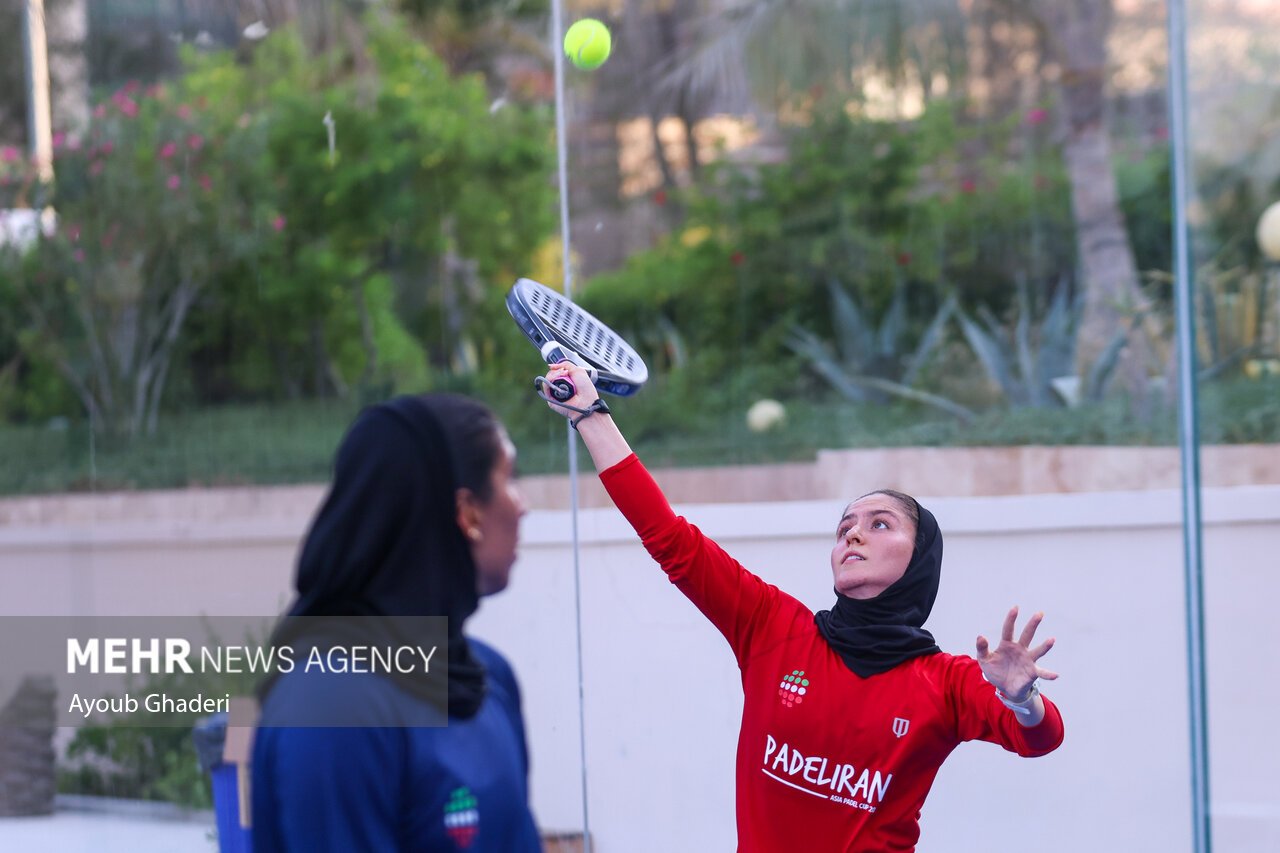
Setup. Stand in the back third of the court, a couple of metres in front of the back glass, racket ready. Throw or drop-hit the ball against the back glass above head height so it rebounds out toward you, let it bounce once, and play a controlled drive back up the court — cross-court if you are on a diagonal, down the middle if you are practising alone on a half court. Collect, reset your feet, repeat. This is the one padel drill that genuinely needs nobody else, and it trains the shot beginners find strangest: the ball that comes off the wall behind you.
Target. Eight controlled drives in a row off the rebound — controlled meaning the ball travels up the court at a pace you chose, past the service line, without you lunging or snatching at it. Count clean contacts, not attempts: a drive played off-balance with a stretched arm does not extend the streak even if it lands in.
Progression. When you hit eight in a row twice, alternate sides — one rebound played as a forehand, the next fed to your backhand side. Later, start each repetition a half-step further from the glass, so the rebound travels further and arrives with more pace to judge.
Solo drill 2: The self-fed drive ladder
Setup. Stand just behind the service line on one side of the court. Drop the ball in front of you with your free hand, let it bounce, step to it — actually move your feet to it, do not reach — and drive it cross-court toward the opposite back corner. Walk back to the start position after every single ball. The reset walk is part of the drill: it forces each repetition to be a complete unit of move, set, swing, recover, exactly as a rally demands.
Target. Seven of ten drives landing beyond the far service line in the cross-court half. Keep a running tally per set of ten and write it down or say it aloud — the number is the session’s memory, and watching it move across weeks is what tells you the practice is working.
Progression. Alternate your target corner every ball — cross-court, then down the line — so every swing needs a fresh decision and fresh feet. Then move the drop wider, forcing a longer step to reach the ball, which exposes any habit of leaning instead of moving.
Solo drill 3: Self-fed lobs and the bandeja
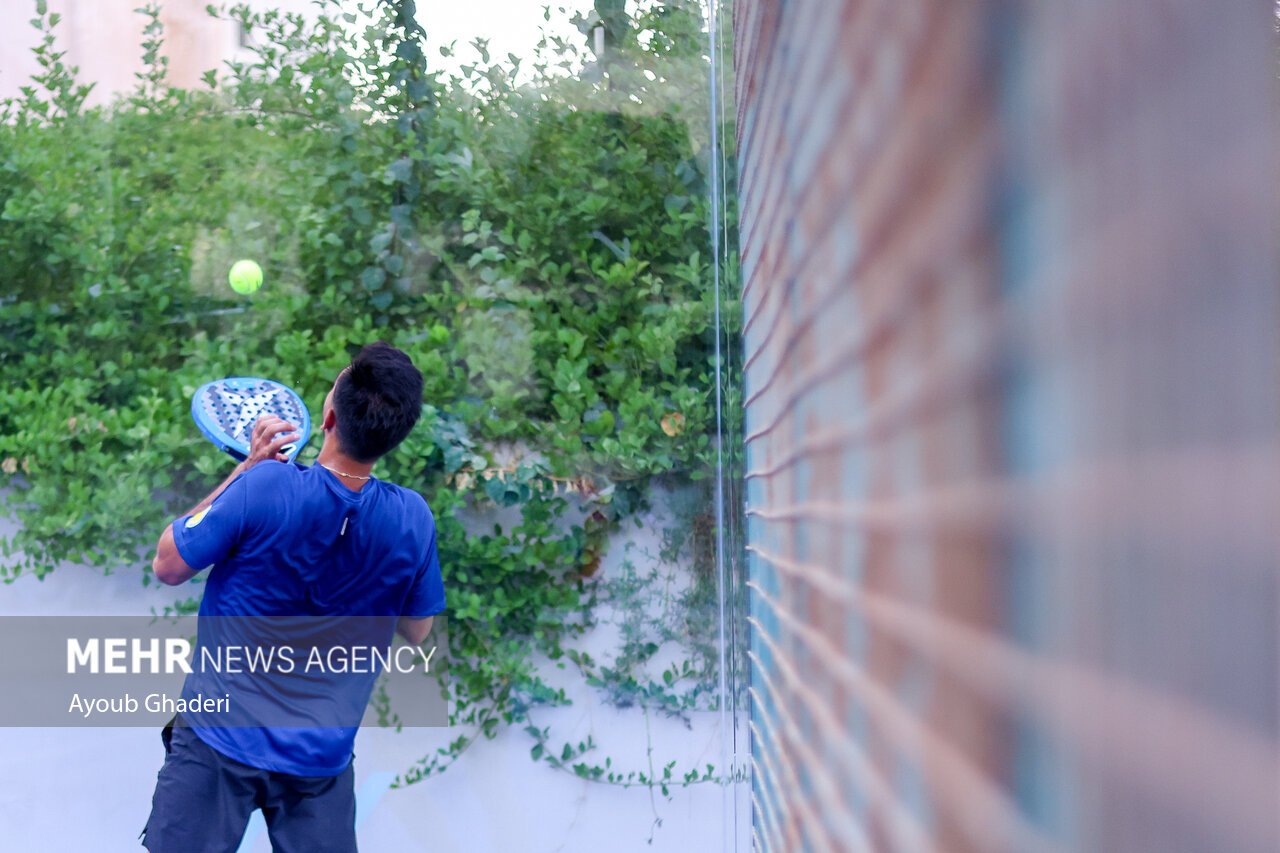
Setup. Stand at the net position, a step or two back from the net itself. Toss the ball high off the back glass — a gentle throw that arcs up, strikes the glass and drops back toward the net zone — then move under it, turn side-on, and play a bandeja: the flatter, sliced overhead that sends the ball deep while you hold your position. If the throw-off-the-glass feels fiddly at first, simply toss the ball high in front of you instead; the overhead pattern is the point, the self-feed is just the delivery method.
Target. Six of ten bandejas landing deep — beyond the service line at the far end — with your feet ending balanced and your body still at the net, not dragged backwards by the swing. Depth is the bandeja’s entire job; a bandeja that lands short is a gift to your opponents no matter how elegant it looked.
Progression. Start the drill a step deeper each set, so you must move forward into the shot rather than waiting under it. Then alternate your bandeja target — one deep to the backhand corner, one deep to the forehand corner — which forces the side-on turn to happen in both directions.
Partner drill 1: Cross-court drive streaks
Setup. Both players take the back of the court on the same diagonal — forehand corner to forehand corner. Drive cross-court to each other, cooperatively, at a pace both of you can sustain, and count the rally out loud. When it breaks down, note the number, restart, and try to beat it. Switch diagonals after two sets so the backhand cross-court gets equal work — the side you avoid is, as ever, the side that needs the drill.
Target. A streak of twenty drives in a row — ten from each player — without a net or an out. Twenty sounds modest and feels anything but the first time you count honestly: most beginner pairs discover their real rally length is closer to six, which is exactly the information the drill exists to deliver.
Progression. Raise the pace one small step at a time while keeping the streak target — the drill is working when the streak survives the extra pace. Then shrink the target: agree that only balls landing in the back third count toward the streak, which rewards depth over mere survival.
Partner drill 2: Volley-to-volley
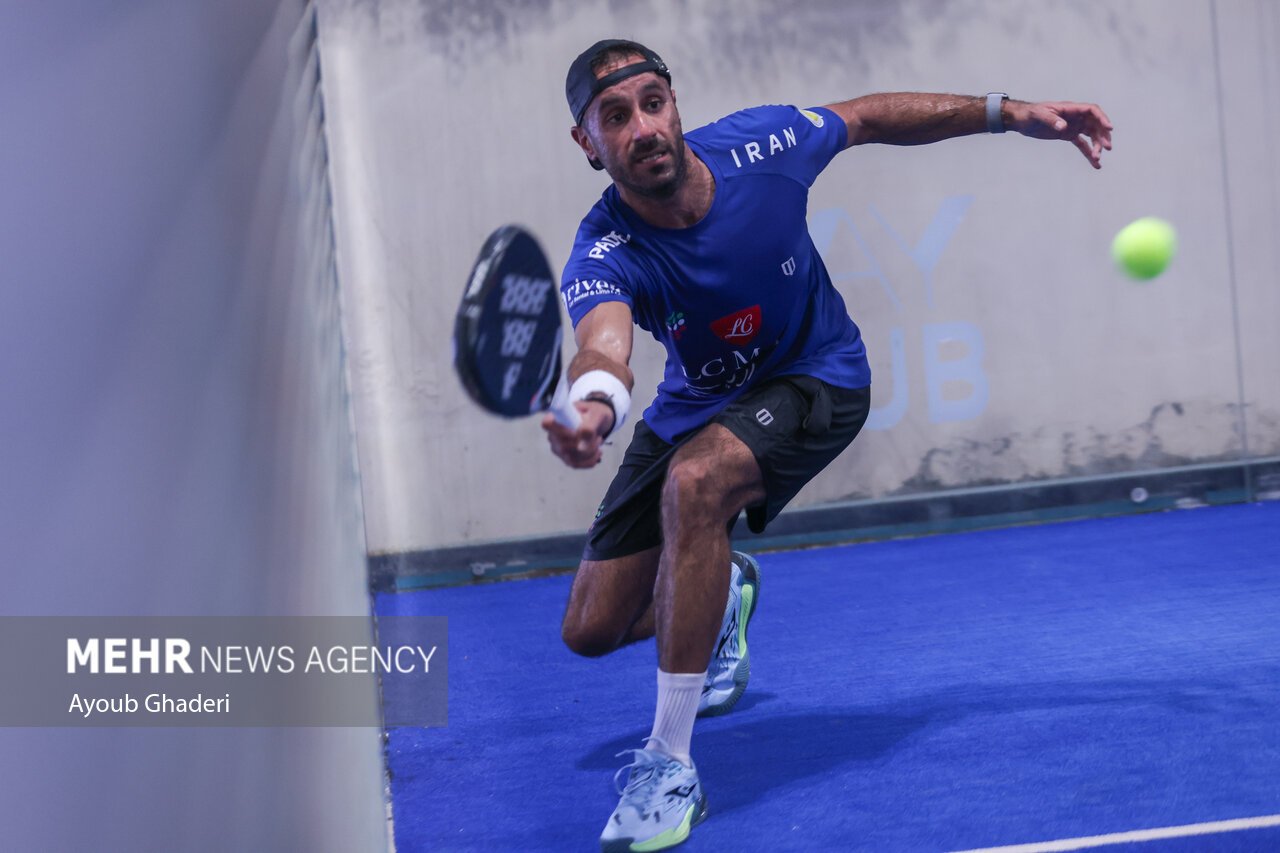
Setup. Both players stand at the net, a comfortable volleying distance apart across it — close enough that the exchange is quick, far enough that nobody is swatting at point-blank range. Volley the ball straight back and forth without letting it bounce, softly at first: the aim is a rally of hands, not a contest of reactions. Split-step lightly between every contact, even though the ball comes back fast — especially because it comes back fast.
Target. Thirty volleys in a row between you without the ball touching the floor or the net. If thirty is out of reach at first, count your best streak of each set instead and chase that number set by set.
Progression. Step a half-pace closer and feel the exchange quicken; your hands will shorten their swings on their own, which is the lesson. Then change the geometry: one player drops back to the service line and drives at the net player, who volleys everything back to the driver’s hitting zone — the classic one-up, one-back pattern that fills real rallies.
Partner drill 3: The lob-and-bandeja loop
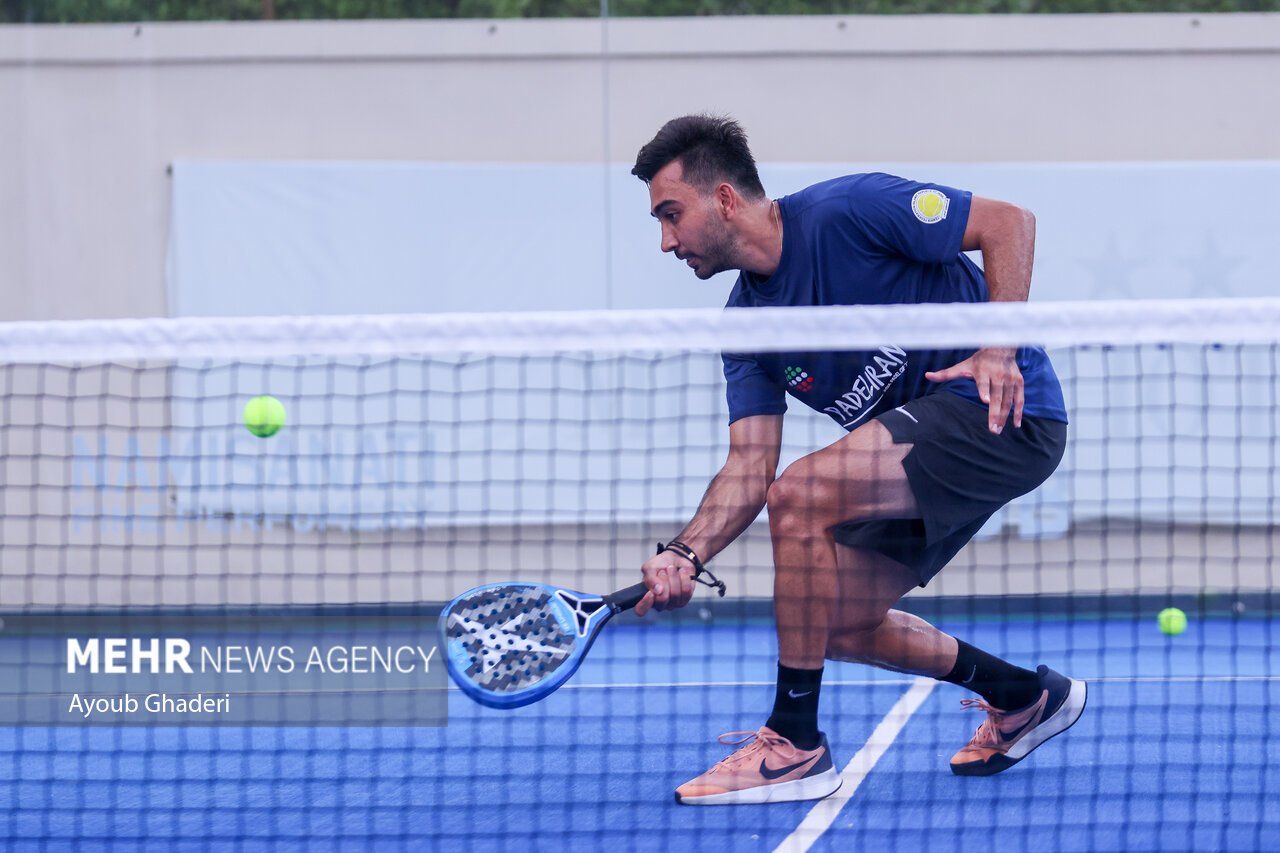
Setup. One player takes the net position; the other stands at the back. The back player feeds a lob — high and deep enough to push the net player back a step or two. The net player answers with a bandeja played deliberately back into the back player’s hitting zone, deep and controlled. The back player lobs again. That is the whole drill: lob, bandeja, lob, bandeja — a closed loop in which both players rehearse a match pattern that repeats in almost every real rally, with nobody trying to end it. Swap roles every ten exchanges: the player who only ever lobs in this drill never learns the overhead, and vice versa.
Target. Ten consecutive exchanges before the loop breaks — the lob too short, the bandeja in the net, the feed unreachable. Count exchanges, not individual shots: the loop is the unit.
Progression. The feeder begins varying the lob — a little higher, a little wider, one to each side — so the bandeja player must move and re-set rather than groove one identical swing. Then the bandeja player aims lower and closer to the feeder’s feet, making the next lob harder to take comfortably, while the feeder’s job stays the same: keep the loop alive.
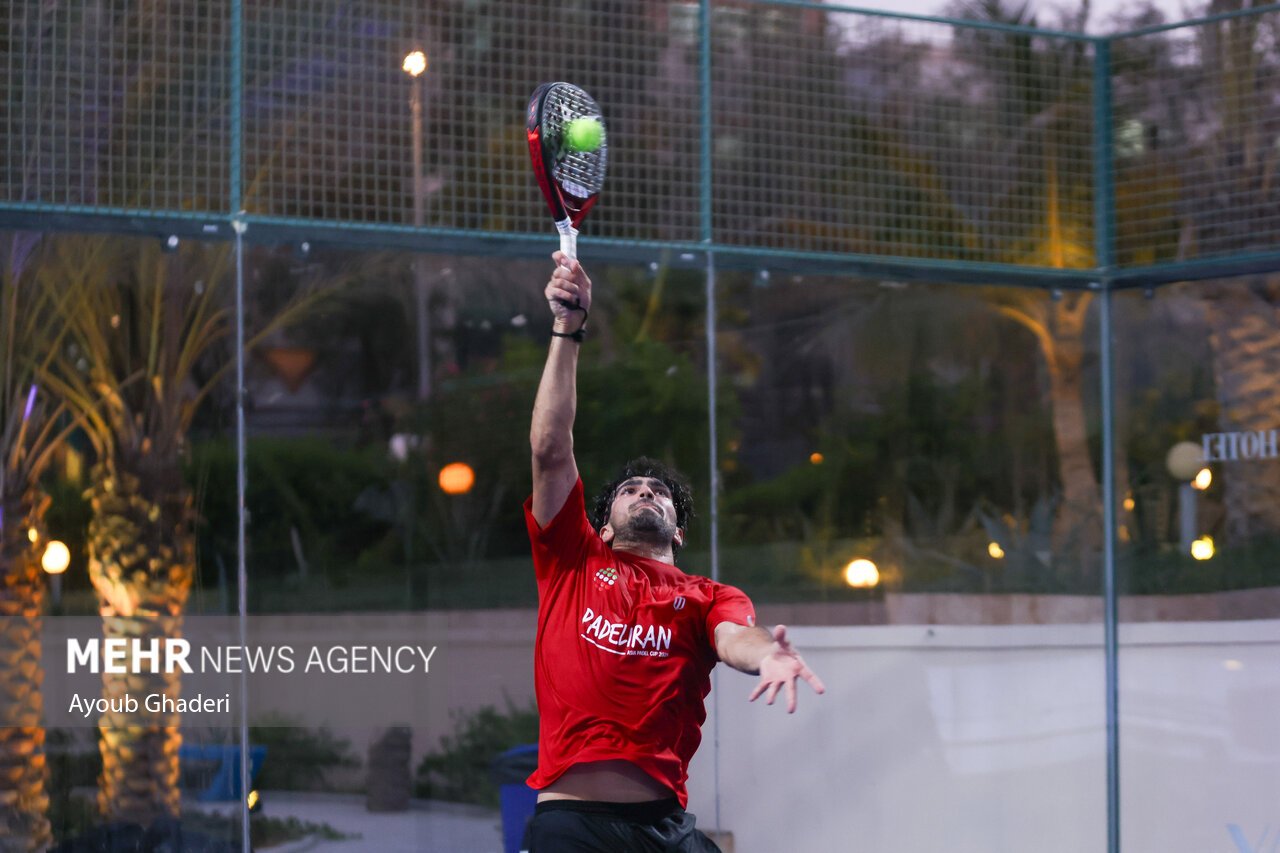
Partner drill 4: The glass-defence exchange
Setup. The defender starts behind the service line, in proper back-court position. The feeder, from mid-court, drives balls at the back glass — firm enough to carry past the defender and rebound off the glass with something on them. The defender lets each ball pass, turns, lets it come off the glass, and plays it back up the court to the feeder’s zone. Ten balls, then swap. The feeder’s discipline matters: every feed must genuinely reach the glass, or the defender is rehearsing the wrong shot.
Target. Eight of ten defensive balls returned up the court — past the service line, under control, from behind it. Judge control strictly: a ball scrambled back while falling backwards is a match situation survived, perhaps, but it is not the repeatable defensive shape this drill is building.
Progression. The feeder mixes the diet without warning — mostly drives off the glass, but one ball in three played shorter, or lobbed, so the defender must read each feed rather than settle into a rhythm. Defence in matches is a reading skill as much as a hitting one, and this progression is where the drill starts to teach it.
A weekly practice structure a beginner can actually follow
Drills only work if they happen, and they only happen if the week has a shape simple enough to survive contact with real life. The structure below assumes the realistic beginner case — one or two court sessions a week around work and social games — and it treats social matches as part of the week, not as a distraction from practice. Drilling and playing feed each other: matches show you what to drill, and drills give matches something new to show.
The single-session template (about 40 minutes of drilling)
Warm up first (10 minutes) — the pre-match routine from our warm-up guide, unchanged; drills are not a substitute for it. Drill one — back court (12 minutes): a solo glass drill or the cross-court drive streaks. Drill two — net or overhead (12 minutes): volley-to-volley, the lob-and-bandeja loop, or the self-fed bandeja if you are alone. Drill three — defence or the week’s weakness (8 minutes): the glass-defence exchange, or a repeat of whichever drill produced the worst numbers last session. Then play — games, a social set, points with your practice partner — with the drilled pattern in mind but the scoreboard back on. Total court time: roughly an hour and a half including play.
The two-session week
Session one (technique): run the template above with the full drill menu — glass rebounds, drive streaks, the loop. Session two (lighter, or solo): if you have a partner, repeat the template but swap in the drills you skipped; if you are alone, a solo session of drills S1–S3 in rotation is a complete practice on its own. Plus one social match whenever it naturally happens — and after it, write down, in one line, the shot that broke down most. That line picks next week’s drill three. This is the entire system: drill, play, notice, repeat.
What to do when a drill’s numbers stall: first, check the set length — stalling often means sets have quietly grown long and tired, and fresher, shorter sets unstick them. Second, check the target — a target you beat every time teaches nothing, and one you never touch teaches only frustration; adjust it until you succeed a little more than half the time. Third, give a pattern three honest sessions before judging it. Shots in padel are grooved over weeks of small, counted repetitions — not transformed in an afternoon — and the players who improve are simply the ones whose practice had a structure that kept them coming back.
The verdict
A drill is not a smaller, duller match — it is a shot, a setup and a number. Pick one pattern, feed it the same way, count what happens, and make it harder only when the count says you may. Do that for one structured session a week and your matches change character: the shots that used to arrive as surprises start arriving as repetitions.
- Warm up first, every time: the routine is the before-you-start step, not part of the drill count.
- Cooperative before competitive: your partner feeds the pattern; the contest comes later.
- Count everything: a streak or a tally is what turns hitting into practice.
- Short sets, honest resets: fresh repetitions teach; tired ones teach tired swings.
- Progress on evidence: beat the target twice before making the drill harder.
Padel drills — FAQs
How often should a beginner do padel drills?
Once a week is enough to make steady progress, provided the session is structured: a warm-up, three drills run in short counted sets, then play. Two shorter drill sessions a week work at least as well. What matters is regularity and counting — one honest session every week beats an occasional marathon, because each session’s targets tell you what the next one should work on.
Can I practise padel drills on my own?
Yes — padel is unusually solo-friendly because the glass works as your practice partner. The three solo drills in this guide (glass rebounds, the self-fed drive ladder and self-fed lobs for the bandeja) need no one else and only two to four balls. A solo session covers back-court control, drive contact and the overhead pattern; partner drills add the cooperative exchanges solo play cannot reproduce.
How many balls do I need for padel drills?
Two to four balls are enough for everything in this guide. Solo and partner drills here are built around short sets with frequent resets, so you collect balls between sets rather than feeding from a basket. A basket helps a coach run a session for a group, but for one or two beginners it mostly encourages long, tired sets — the opposite of what grooving a shot needs.
Should drills come before or after playing matches?
Before. Drill while you are fresh, when your technique is at its most repeatable, and let matches come afterwards as the test. Drilling after a match means practising with tired legs and decayed form, which groves exactly the shortcuts you are trying to remove. The structure in this guide — warm up, drill, then play — follows that order deliberately.
How do I know when a drill has become too easy?
When you beat its target twice in a row — two consecutive sets at or above the number, not one good set. That is the signal to use the drill’s progression: more pace, a smaller target, an extra decision, a mixed feed. Beating a target once is a good day; beating it twice is evidence. Progressing on one lucky set makes the drill harder before the shot is stable enough to survive it.
Are drills better than matches for improving at padel?
They do different jobs, and beginners need both. Matches teach positioning, shot selection and nerve, and they show you honestly which shots break down under pressure. Drills are where those shots get repaired, because only a drill repeats one pattern often enough to change it. A week with one structured practice session and one social match improves faster than a week of either alone.
Do I need a coach or a ball machine for these drills?
No. Every drill in this guide runs with one partner or none, and the glass replaces the machine for solo feeding. A coach adds value by spotting technical faults you cannot feel yourself, and a lesson now and then is money well spent — but the structure of good practice (one pattern, a counted target, short sets, progressions on evidence) is free, and it is what most of improvement is made of.
What is the best first drill for a complete beginner?
Cross-court drive streaks with a partner, if you have one: it trains the game’s most frequent shot, teaches rally patience, and the counted streak makes progress visible immediately. If you are practising alone, start with glass rebounds — the back-glass shot is the one with no equivalent in other racket sports, and learning to let the ball come off the wall calmly transforms a beginner’s defence within a few sessions.
About this guide: These drills follow standard coaching practice for structured racket-sport training: one shot pattern per drill, cooperative feeding before competitive play, counted targets so progress is visible, short sets with frequent resets, and progressions that raise difficulty only when the current target is met twice. Rep counts, streaks and timings are practice structure — a framework to follow — not measured performance statistics or a promise of results, and nothing here is medical advice. Warm up before drilling with the pre-match routine on this site, learn the laws of the game from our how-to-play-padel guide, and stop any drill if something hurts.