
Thinking about trying padel? Here’s everything a tennis player needs to know — what’s the same, what’s different, and the five adjustments that will save you months of frustration.
What You’ll Learn
Why Tennis Players Are Switching to Padel
Walk into any padel club and ask players where they came from. The overwhelming answer: tennis. Tennis players are padel’s number one conversion audience, and it’s not hard to see why.
First, there’s the accessibility factor. A decent club tennis player can rally in padel within their first session. The smaller court, the walls that keep the ball in play, and the shorter, lighter racket mean the learning curve is dramatically gentler than tennis’s notoriously brutal first year. Tennis players who remember spending months just trying to keep a rally going find padel’s instant playability almost shocking.
Second, there’s the social pull. Padel is almost exclusively doubles. That means every session is a social event — four people, constant interaction, shared laughs. For tennis players tired of drilling alone against a ball machine or struggling to find a reliable hitting partner, padel’s built-in social structure is a revelation. Many clubs run “open padel” sessions where you show up solo and get matched with players at your level. No scheduling nightmares, no partner hunting.
Third, there’s the physical reality. Tennis is punishing on joints — the hard courts, the explosive sprints, the overhead serves. Padel’s smaller court means shorter sprints, the underhand serve eliminates shoulder strain, and the doubles format halves your court coverage. Players in their 40s, 50s, and beyond who were scaling back tennis often find padel lets them compete hard again.
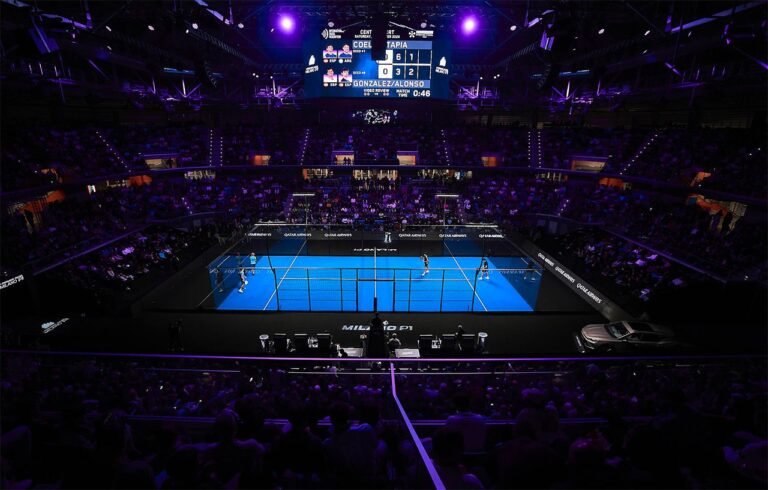
None of this means padel is “tennis-lite.” At the professional level — watch world No.1s AgustÃn Tapia and Arturo Coello against Ale Galán and Juan Lebrón — padel is ferociously athletic, tactically deep, and technically demanding. But the entry point is kinder, and that’s what’s driving the migration.
Padel vs Tennis: Quick Comparison
| Aspect | Padel | Tennis |
|---|---|---|
| Court size | 20m × 10m, enclosed | 23.77m × 10.97m (doubles), open |
| Walls | In play after bounce — core to the game | Not applicable |
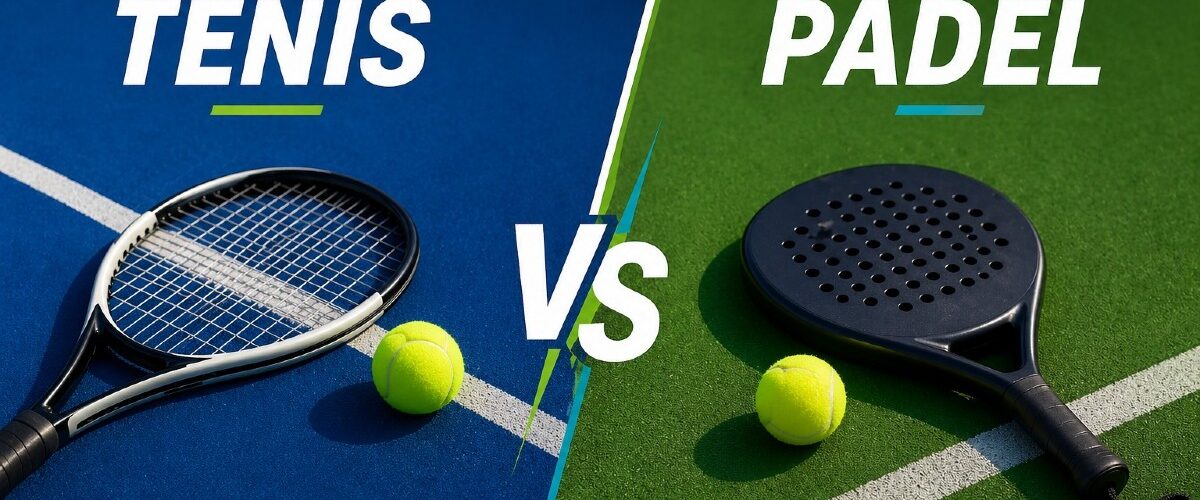
| Racket | Solid, short (max 45.5cm), no strings, holes in face | Strung, longer (max 73.66cm / 29in) |
| Wrist strap | Mandatory | Not used |
| Balls | Slightly lower pressure than tennis balls | Standard pressurized |
| Serve | Underhand, ball bounced first | Overhand, tossed |
| Scoring | 15-30-40 + Star Point at deuce (from 2026) | 15-30-40 + advantage/deuce |
| Format | Almost always doubles | Singles and doubles |
| Net height | 88cm center / 92cm posts | 91.4cm center / 107cm posts |
| Learning curve | Rally in first session | Months to rally consistently |
| Key skill | Wall play, positioning, soft hands | Serve, groundstroke power, footwork |
| Joint impact | Lower (smaller court, underhand serve) | Higher (hard courts, overhead serve) |
Court & Equipment: What’s Actually Different
The Court
A padel court is 20 meters long and 10 meters wide — about a quarter smaller than a tennis court (23.77m × 10.97m for doubles). But the real difference isn’t size, it’s the walls.
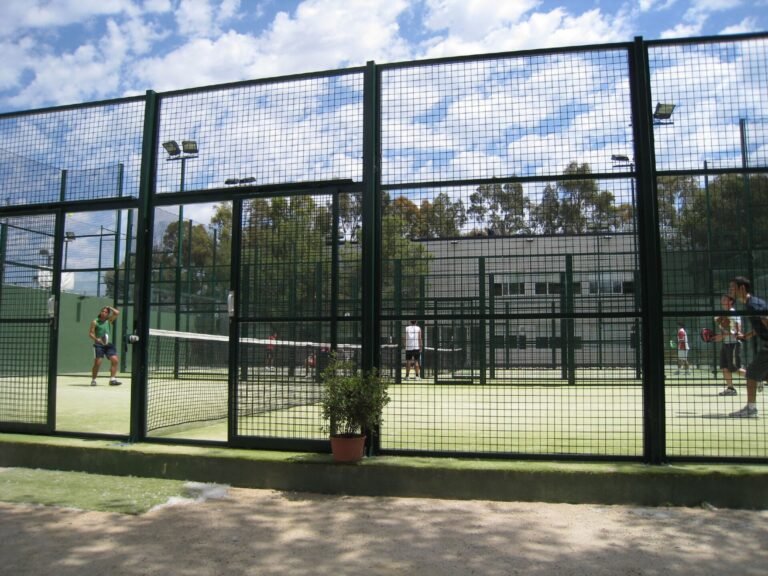
Padel courts are fully enclosed: glass walls 3 meters high at the back, with glass and metal mesh panels along the sides. These walls aren’t boundaries — they’re part of the playing surface. After the ball bounces on your opponent’s side, it can hit the back or side walls and remain in play. This single feature changes everything about how rallies develop.
For tennis players, the instinct when a ball sails past you is that the point is over. In padel, it’s just beginning. Learning to read the rebound off the back glass — judging the angle, the pace, whether to take it on the volley or let it come off the wall — is the steepest and most rewarding part of the transition.
The Racket (Not Racquet)
First, the vocabulary: padel players say “racket”, and the implement itself would look like a toy to a tennis player. Key specs:
| Spec | Padel Racket | Tennis Racquet |
|---|---|---|
| Length | Max 45.5cm (~18in) | Max 73.66cm (29in) |
| Width | Max 26cm | Max 31.75cm (12.5in) |
| Strings | None — solid face with holes | Strung bed (16×19, 18×20 patterns) |
| Wrist strap | Mandatory (safety regulation) | Not used |
| Weight | 340–390g typical | 260–340g typical (unstrung) |
| Shapes | Round, teardrop, diamond | Oval head, various sizes |
The short, stringless design means less power generation from the racket itself and a much shorter lever arm. Tennis players used to whipping a 27-inch frame will initially feel like they’re swinging a cutting board. The upside: it’s incredibly maneuverable at the net, where padel points are most often decided.
The wrist strap is non-negotiable — FIP regulations require it, and clubs enforce it. In an enclosed court, a flying racket is genuinely dangerous. Get in the habit from day one.
The Balls
Padel balls look nearly identical to tennis balls but are manufactured with slightly lower internal pressure. The result: a touch less bounce, a slightly deader feel off the racket face, and behavior that’s tuned for wall rebounds rather than pure pace. Using regular tennis balls on a padel court will feel wrong — bouncier, faster, harder to control off the glass.
Footwear
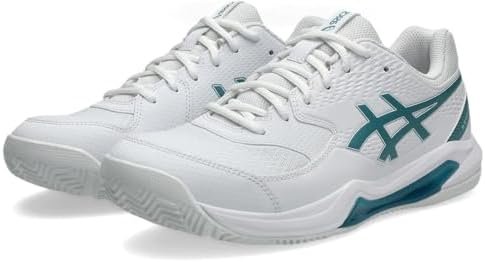
Both sports demand court shoes, but padel shoes are optimized for lateral movement on sand-dressed artificial turf with aggressive herringbone outsoles. Tennis shoes built for hard courts wear out quickly on padel turf and lack the lateral reinforcement padel’s constant side-to-side sliding requires. If you’re transitioning, budget for padel-specific shoes early — your ankles will thank you.
Rules & Scoring: Familiar Framework, Key Twists
Padel borrowed tennis’s scoring system wholesale — 15, 30, 40, game — so tennis players feel at home immediately. But the details diverge in important ways.
Scoring
Games, sets, and tiebreaks work exactly like tennis: first to 4 points wins a game, first to 6 games (with a 2-game margin) wins a set, best of 3 sets wins the match, tiebreak at 6–6. The one significant change arrived in 2026, when the FIP introduced the Star Point as the deuce format for Premier Padel events.
The Serve: Padel’s Biggest Rule Difference
This is where tennis players need to completely reset their muscle memory:
- Underhand only. The ball must be struck below waist level. No overhead serves, no exceptions.
- Bounce it first. You drop or bounce the ball, then hit it — you don’t toss it.
- Both feet behind the service line at the moment of contact.
- Diagonal service box, same as tennis — the serve must land in the diagonally opposite box.
For tennis players with big serves, this feels like having a superpower confiscated. The serve in padel is a rally starter, not a weapon. Aces are essentially nonexistent. The upside: no more double faults deciding matches, and no shoulder destruction from thousands of overhead motions.
Wall Rules: The Soul of Padel
- After bouncing on the opponent’s side, the ball may hit the glass walls and stay in play.
- On serve, the ball must bounce before touching any wall.
- A ball hit directly into the mesh fencing without bouncing is out.
- Players may leave the court through the side gates to play balls that bounce out — producing padel’s most spectacular retrievals.
- Like tennis, the ball may only bounce once on your side before you must hit it.
Faults and Lets
Service lets (ball clipping the net on serve and landing in) are replayed, same as tennis. Double faults on serve lose the point. Foot faults apply — both feet must stay behind the service line until contact.
Technique Transfer: What Your Tennis Game Gives You (and What It Costs You)
Tennis players don’t start padel from zero — but they don’t start from hero either. Here’s the honest breakdown.
What Transfers Beautifully
✓ Volleys
Your net game is your superpower. Tennis volley technique — continental grip, short punch, firm wrist — translates almost directly. Padel points are disproportionately decided at the net, so strong volleyers start with a massive advantage.
✓ Overheads / Smashes
The padel smash (including the spectacular bandeja) rewards tennis overhead technique. Your ability to track high balls and hit down on them transfers well — though you’ll need to learn padel-specific smashes that use the back glass.
✓ Footwork & Split-Step
Tennis footwork fundamentals — the split-step, recovery steps, crossover steps — all apply. You’ll move less distance per point, but the movement quality habits transfer completely.
✓ Reading the Ball
Years of tracking tennis balls give you superior anticipation: reading your opponent’s racket face, predicting direction, positioning early. Beginners can’t buy this — you’ve earned it over thousands of hours.
What Actively Hurts You
✗ Big Backswings
Tennis groundstrokes use long, loopy backswings to generate pace. In padel’s compressed court with a short racket, big backswings are too slow — the ball is on you before you’re ready. You must shorten everything. This is the number one adjustment and it feels terrible for the first month.
✗ Hitting Flat and Hard
Tennis rewards driving through the ball. In padel, flat rockets fly into the back glass and come straight back at you — or worse, set up your opponents. Padel rewards placement over power, angles over pace. Your instinct to crush every short ball will cost you points until you tame it.
✗ Ignoring the Walls
Tennis players let balls go once they pass. In padel, that’s surrendering points. Learning to play off the back glass — letting the ball come to you off the wall, using the rebound — is a completely new skill with no tennis equivalent. Expect 2–3 months before it feels natural.
✗ Serve Reliance
If your tennis game is built around a big serve + forehand one-two punch, padel will humble you. The underhand serve neutralizes your biggest weapon on day one. Padel points start neutral — you must construct advantages rather than serve your way into them.
Which Is Easier to Learn?
Padel, by a wide margin — and it’s not close. Here’s why:
- First rally: A complete beginner can sustain a padel rally in their first session. The walls keep errant shots in play, the smaller court means less running, and the short racket is easier to control. Tennis beginners routinely spend months before they can rally 10 balls.
- Serve: Padel’s underhand bounce-serve can be learned in minutes. The tennis serve is arguably the most technically demanding shot in all of racket sports — most recreational players never truly master it.
- Forgiveness: In padel, the walls forgive your mistakes. A shot that’s slightly off still comes back off the glass. In tennis, a shot that’s slightly off is in the next court.
The caveat: padel is easy to start but hard to master. The tactical depth — wall angles, the bandeja, the vibora, chiquita returns, net transitions — takes years. The learning curve is gentle at the start and steep at the top, which is the opposite of tennis’s brutal start and gradual mastery curve.
Physical Demands Compared
| Factor | Padel | Tennis |
|---|---|---|
| Court coverage | Smaller court + doubles = less running per point | Larger court, especially demanding in singles |
| Serve impact | Underhand — minimal shoulder stress | Overhead — leading cause of shoulder injuries in racket sports |
| Joint load | Shorter sprints, more controlled movements | Explosive sprints, hard stops on hard courts |
| Explosiveness needed | High — quick reactions, fast hands at net | High — plus sustained endurance in long rallies |
| Endurance | Moderate — points are shorter, doubles shares load | Higher — long singles rallies are grueling |
| Injury hotspots | Ankles (lateral rolls), elbows (vibration), knees | Shoulders (serve), knees, ankles, tennis elbow |
| Longevity | Players commonly compete hard into 50s–60s | Many scale back significantly after 40s |
The bottom line: padel is kinder to the body in the ways that matter most for longevity — shoulders, knees, and overall joint wear. It’s still a real workout (don’t let anyone tell you otherwise — competitive padel leaves you drenched), but the type of stress is more sustainable. This is a major reason tennis players in their 40s and 50s are migrating: padel lets them play hard without paying for it for three days afterward.
Cost Comparison: Equipment, Courts & Lessons
| Cost Item | Padel | Tennis |
|---|---|---|
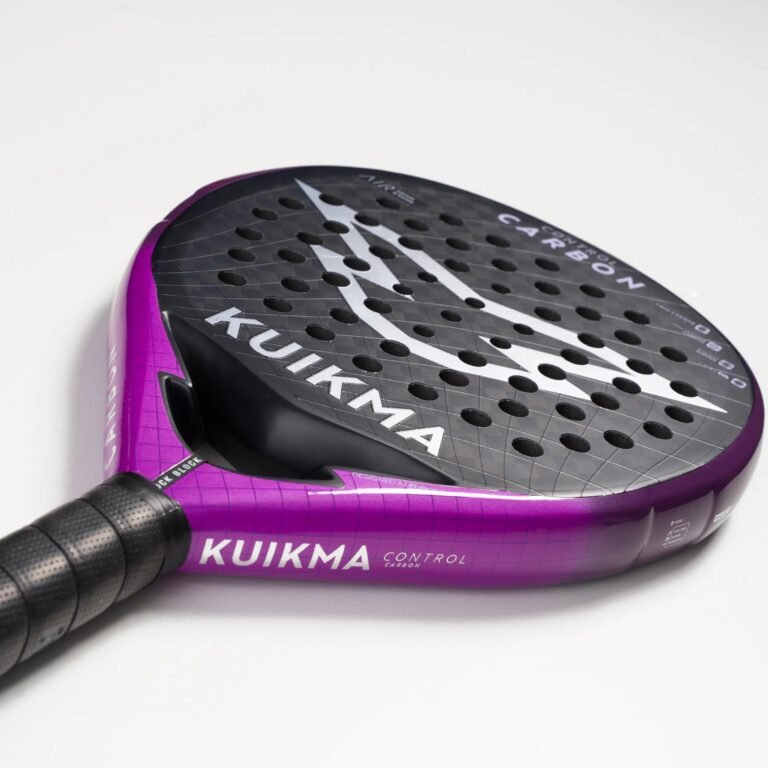
| Racket (beginner) | Budget options from ~€80–100 deliver genuine quality (e.g., Decathlon’s Kuikma range with Carbon 3K) | Decent beginner racquets start ~€80–120, but serious frames run €150–250+ |
| Racket (advanced) | €200–350 for tour-level (Head Coello Pro, Adidas Metalbone HRD) | €200–280 for pro frames, plus €15–30 per restring every few weeks |
| Restringing | None — solid face, zero maintenance | €15–30 per restring; frequent players restring monthly |
| Shoes | €80–160 for padel-specific (herringbone, lateral support) | €80–180 for quality court shoes |
| Court fees | Typically €/AED per court split 4 ways — works out cheaper per person. Dubai: peak AED 300–500/hr ÷ 4 = AED 75–125 each | Per-person or per-court; singles means you carry the full cost |
| Lessons | Group beginner sessions widely available; padel coaches often cheaper (newer market) | Established coaching market; private lessons €40–80+/hr typical |
| Balls | Similar cost to tennis balls; replaced slightly less often (lower pressure lasts) | Frequent replacement for serious players |
The verdict: Padel is generally cheaper per session — the doubles format splits court costs four ways, there’s no restringing expense, and quality beginner rackets cost less than their tennis equivalents. Tennis can be cheaper if you already own everything and play on free public courts, but for club players, padel usually wins on ongoing costs.
Social Aspects: Doubles Culture vs Singles Grind
This might be padel’s biggest advantage, and it’s structural, not incidental.
Padel is doubles by design. The court dimensions, the wall dynamics, the tactics — everything is optimized for four players. Singles padel exists but is rare and frankly awkward (the court feels wrong with two people). This means every padel session is inherently social: four people, constant communication, shared tactics, post-match analysis over coffee.
Tennis is singles-first. Doubles tennis exists and is wonderful, but the sport’s culture, rankings, and professional tour revolve around singles. Finding three other players at your level for doubles is a logistical project. Finding one hitting partner for singles is hard enough.
The practical difference is enormous:
- Padel clubs run “open” sessions — show up alone, get matched with three players at your level via apps like Playtomic. No partner needed, no scheduling group chats.
- Tennis clubs require you to arrange your own games. No-shows kill sessions. Skill mismatches ruin them.
- Padel’s smaller community (for now) means you quickly know everyone at your level. Regular foursomes form organically.
- Mixed play thrives in padel — the smaller court and doubles format make mixed-gender games more balanced and common than in tennis.
Which Is Growing Faster?
Padel, by orders of magnitude. Tennis is a mature, stable global sport. Padel is in hypergrowth.
The numbers tell the story: padel has surpassed 77,300 courts worldwide with roughly 26% court growth in a single recent year, and an estimated 19.4 million players globally. The UK alone saw 872 padel planning applications in the first seven months of 2026 — more than double all of 2025. The UAE has over 950 courts as of 2026, with the Middle East and Africa posting a ~15.5% compound annual growth rate.
The professional scene is scaling too: the Premier Padel tour runs 25 events in 2026, including the P1 Dubai (November 9–15) at the Hamdan Sports Complex, with stars like Tapia, Coello, Galán, and Lebrón drawing arena crowds.
Tennis isn’t shrinking — it remains one of the world’s great sports with unmatched history and infrastructure. But its growth is flat in most markets. Padel is where the new courts, new players, and new investment are flowing. For a tennis player considering padel, this matters practically: more new courts near you, more beginners to play with, more coaching availability, and a sport whose best years are ahead of it rather than behind it.
Transition Guide: 5 Key Adjustments for Tennis Players
Adjustment #1: Shorten Your Swing — Then Shorten It Again
Your tennis backswing is too long for padel. Full stop. The court is smaller, the ball comes back faster (walls!), and the short racket punishes long preparations. Drill: practice volleys and half-volleys against the back glass with no backswing at all — just a blocking motion. Once compact feels normal, add a short take-back. Most tennis players need 4–6 weeks before their swing shortens instinctively.
Adjustment #2: Learn to Love the Back Glass
This is padel’s steepest learning curve and has zero tennis equivalent. When a ball passes you, don’t turn and watch — turn and prepare. Let it hit the back glass, read the rebound angle, and play it on the rise or after the bounce. Drill: stand 2 meters from the back glass and have a partner feed balls past you. Practice letting them rebound and playing controlled returns. Start with 15 minutes per session — within a month, wall play starts feeling natural instead of panicky.
Adjustment #3: Serve to Start, Not to Win
Forget everything your tennis serve taught you about free points. The padel serve is a neutral rally starter. Focus on placement (deep to the backhand), consistency (never double fault), and a quick transition to net position. The real “serve weapon” in padel is what you do with the third shot — the first volley after your serve. Practice serve + immediate net approach as a single combined movement.
Adjustment #4: Patience Over Power
Your tennis instinct says: short ball = crush it. In padel, the crushed ball hits the back glass and comes right back — often to your opponents’ waiting volleys. Instead, learn padel’s signature shots: the bandeja (a controlled overhead that keeps the ball low and forces opponents back), the chiquita (a soft lob return that neutralizes net rushers), and the vibora (an aggressive but controlled smash). Power has its place — but placement constructs points in padel.
Adjustment #5: Play as a Unit, Not an Individual
Tennis doubles has positioning, but padel doubles is synchronized movement. You and your partner move as a pair — forward together, back together, shifting laterally together. The classic formation is both at net (attacking) or both at baseline (defending); one-up-one-back is usually a losing position. Drill: practice “mirror movement” with your partner — no ball, just shadowing each other’s court positioning for 10 minutes. It builds the partnership instincts that win padel matches.
Frequently Asked Questions
To start: yes, dramatically. Beginners rally in their first padel session; tennis takes months. To master: both are deeply challenging. Padel’s gentle learning curve and steep mastery curve is the opposite of tennis’s brutal start and gradual progression.
Volleys, overheads, footwork, and ball-reading transfer beautifully. But big backswings, flat power hitting, and serve reliance actively hurt you. Expect 2–3 months to adapt your tennis instincts to padel’s demands — especially wall play, which has no tennis equivalent.
Yes — absolutely. Padel rackets are short (max 45.5cm), solid-faced with holes (no strings), and require a wrist strap. A tennis racquet is illegal in padel and would be unplayable anyway. Beginner padel rackets start around €80–100.
The court dimensions, wall dynamics, and tactics are all optimized for four players. Singles padel exists but the court feels oversized for two people and the wall angles don’t work the same way. The doubles format is also central to padel’s social appeal.
Not if you’re aware of the differences. The main risks: shortening your tennis backswing unconsciously, and flattening your tennis serve motion. Many dual-sport players report padel improves their tennis volleys, reflexes, and tactical thinking. Just keep the sports technically separated in practice.
Both are excellent workouts. Tennis (especially singles) burns more calories per hour due to greater court coverage and longer rallies. Padel delivers intense interval-style bursts with faster reactions and more explosive direction changes. Padel is kinder on joints — smaller court, underhand serve, shared doubles load — making it more sustainable long-term.
Introduced for 2026 in Premier Padel events, the Star Point works like this: at deuce (40–40), up to two advantage cycles are played first; if the game is still level, a single sudden-death Star Point decides it, and the receiving pair chooses the side to receive from. One deciding point, winner takes the game. The golden point (no-ad) format remains in use on the FIP Tour.
Most players don’t — they play both. Tennis offers the individual challenge, the serve weapon, and unmatched history. Padel offers instant social play, gentler joints, and explosive growth. They complement each other: padel sharpens your volleys and reflexes for tennis; tennis gives you the technical foundation that accelerates padel learning.