
Two enclosed courts, four walls, and a lot of confusion. Here’s every difference that matters — court, equipment, rules, pace, cost, and which one you should actually play.
In this guide
- Quick comparison table
- Court differences: dimensions, tin, ceiling
- Equipment compared: rackets, balls, shoes, eyewear
- Rules & scoring: PARS to 11 vs first to 15
- Gameplay style: chess vs cannon
- Which is harder to learn?
- Which is the better workout?
- Where is each sport popular?
- Cost comparison
- Who should choose which?
- Can you play both?
- FAQs
Walk into a sports club, see two enclosed glass-and-plaster boxes, hear rubber smacking walls, and you could be forgiven for thinking squash and racquetball are the same sport. They aren’t. They were born on different continents, use different equipment, score differently, and — most importantly — feel completely different to play.
Squash traces its roots to Harrow School in England in the 1830s, where schoolboys discovered that a punctured rubber ball “squashed” on impact and produced a far trickier game than rackets. Racquetball is the young upstart: invented in the 1950s by American Joseph Sobek, who wanted a faster, more explosive indoor game that combined handball’s court with a short racket.
Both are brilliant. But they reward different bodies, different temperaments, and different schedules. Let’s break it all down.
Quick Comparison Table
| Feature | Squash | Racquetball |
|---|---|---|
| Court dimensions (L × W × H) | 32 ft × 21 ft × 15 ft (front wall) | 40 ft × 20 ft × 20 ft |
| Ceiling | Out of bounds — ball must stay below the out lines | In play — the ceiling is a legal surface |
| Tin (low front-wall strip) | Yes — 19-inch tin; hitting it is out | None |
| Ball | Small (39.5–40.5 mm), 23–25 g, low bounce | Larger (57 mm), 39–44 g, very bouncy |
| Racket max length | 27 in (68.6 cm), narrow head | 22 in (55.9 cm), wider head |
| Racket weight (typical) | 110–170 g (lighter) | 150–185 g (heavier) |
| Scoring | Point-a-rally (PARS) to 11, win by 2; best of 5 | First to 15 (tiebreak to 11); best of 3; traditionally only the server scores |
| Serves | One serve only — no second chance | Two serves allowed (fault = second serve) |
| Ball must bounce before return | No — volleys allowed, serve can be volleyed | Yes — the serve must bounce before the return |
| Eyewear | Recommended (mandatory for juniors in many countries) | Mandatory in sanctioned play |
| Typical rally character | Long, tactical, attritional | Shorter, explosive, kill-shot driven |
| Global hotspots | UK, Egypt, Pakistan, Australia | USA, Canada, Mexico |
Court Differences: Dimensions, Tin, Ceiling
The courts look similar at a glance — four walls, a door at the back — but the dimensions change everything about how each game plays.
Size and shape
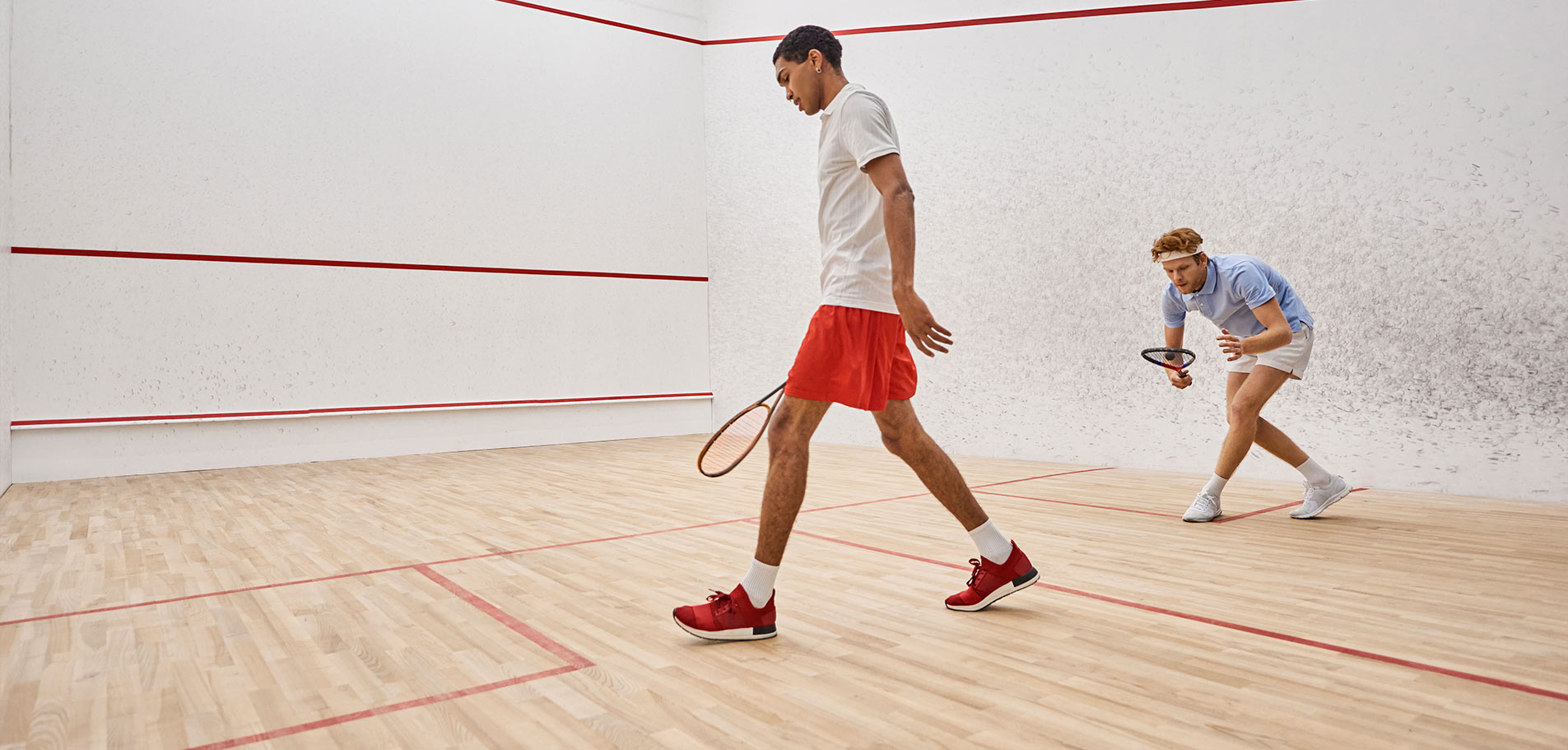
A squash court measures 32 feet long and 21 feet wide (9.75 m × 6.4 m). The front-wall out line sits 15 feet (4.57 m) high, with the side walls tapering down toward the back wall, whose out line is 7 feet (2.13 m) high. A racquetball court is bigger in every direction that counts: 40 feet long, 20 feet wide, and 20 feet high. The extra eight feet of length in racquetball is enormous in practice — it’s the difference between a ball dying in the back corner and a ball screaming off the back wall for another attacking opportunity.
The tin
Squash’s most distinctive feature is the tin: a 19-inch-high metal strip running across the base of the front wall. Any ball striking the tin or below it is out. The tin forces squash players to lift the ball — it kills flat, hard drives aimed at the bottom of the wall and rewards height, touch, and the famous “nick” shot where the ball dies where wall meets floor. Racquetball has no tin at all. Kill shots are meant to be hit as low and hard as possible, skimming the floor off the front wall. That single difference — tin vs no tin — is a big reason squash rallies are longer and more constructed while racquetball points end in explosions.
Lines and markings
A squash court is a map of red lines: the service line sits 5 feet 10 inches (1.78 m) up the front wall, the out line runs along the top of every wall, and the floor has a short line, half-court line, and two service boxes flanking the central “T” — the most important six inches of real estate in the sport. Racquetball’s markings are simpler: a service line marked on the floor 15 feet from the front wall, a short line on the floor, and service boxes near the back. Fewer lines, fewer restrictions, more chaos.
The ceiling
Here’s the philosophical split. In racquetball, the ceiling is in play — a legal hitting surface. Defensive ceiling shots that arc high and drop deep are a core racquetball skill, buying time and resetting the rally. In squash, anything above the out lines is out, and the ceiling is emphatically out of bounds. Squash is a game of walls; racquetball is a game of walls plus ceiling. That extra surface multiplies racquetball’s angles and escape routes — and it’s one reason beginners find racquetball more forgiving. You can always lob it high.
Equipment Compared: Rackets, Balls, Shoes, Eyewear
Rackets: long and light vs short and punchy
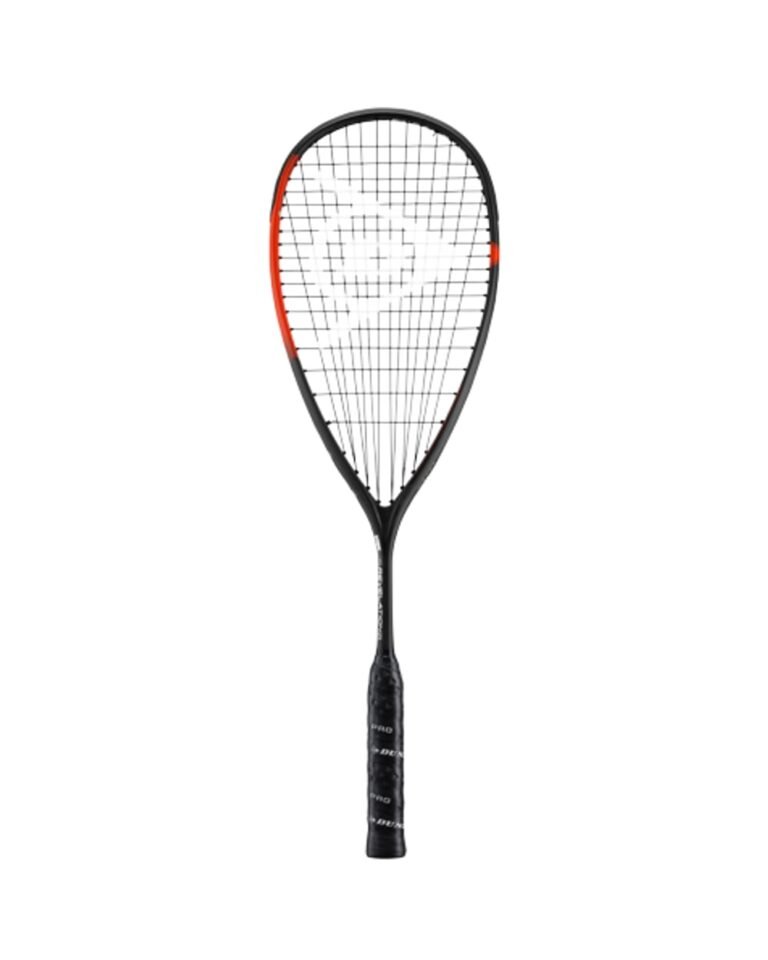
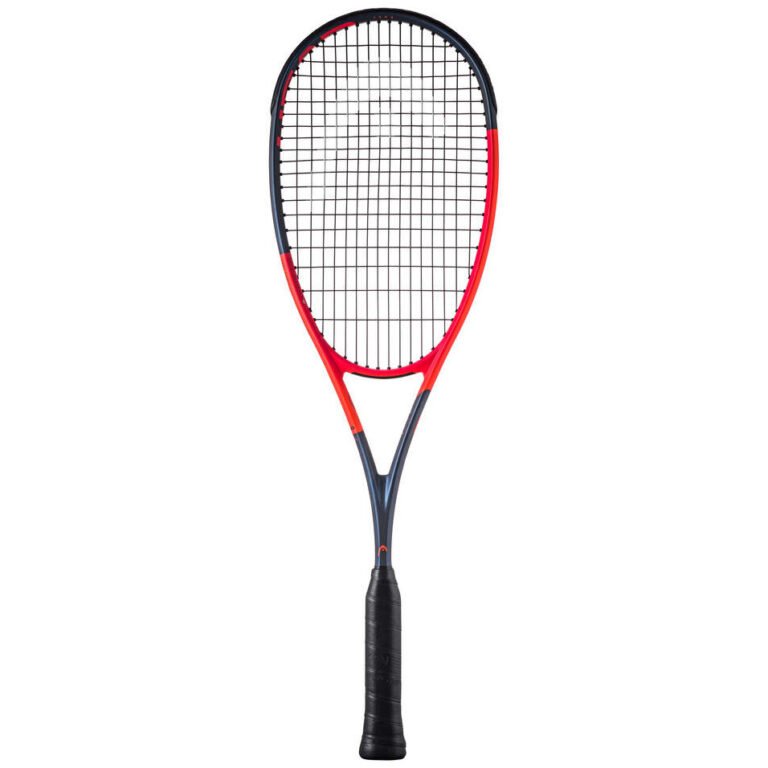
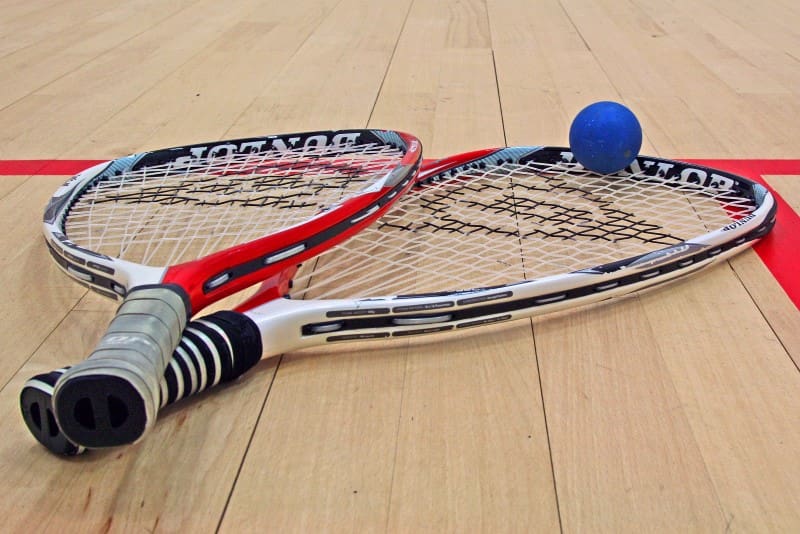
The rackets tell you what each sport values. A squash racket can be up to 27 inches (68.6 cm) long and 8.46 inches (21.5 cm) wide, with typical playing weights of 110–170 grams strung. The long, narrow frame — often with an open throat like a badminton racket — is built for reach, wristy deception, and touch at the front of the court.
A racquetball racquet is capped at just 22 inches (55.9 cm) in length (the USAR limit), is typically around 11.5 inches (29.2 cm) wide, and weighs 150–185 grams. Shorter, wider, heavier: it’s a power tool. The compact length suits the cramped, fast exchanges and the big string bed makes the larger ball easier to strike cleanly. As a rule of thumb, squash rackets reward finesse; racquetball racquets reward force.
Balls: dead vs lively
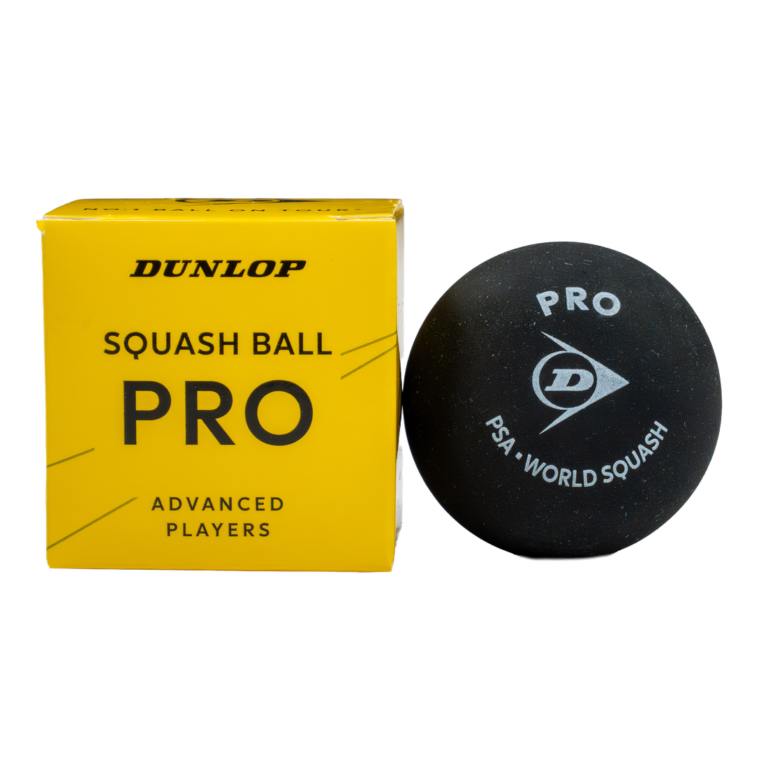
This is the single biggest equipment difference. A squash ball is small (39.5–40.5 mm diameter) and light (23–25 g), made of rubber that barely bounces when cold. Competitive players use the infamous double-yellow-dot ball — the slowest, least bouncy variant — which must be warmed up through several minutes of hard hitting before it plays properly. Beginners use bouncier blue or red-dot balls. The dead ball is why squash is so physically brutal: you have to generate everything, and the ball rewards only clean, well-struck shots.
A racquetball is a different animal: 57 mm in diameter (about 2.25 inches), 39–44 g, and extremely lively. The standard amateur ball is blue; tournament players use the faster purple pro ball; there’s even a slower black ball preferred by some older players. The ball’s liveliness means even mishits stay in play, rallies ignite instantly, and the pace of the game is ferocious from the first hit.
Shoes
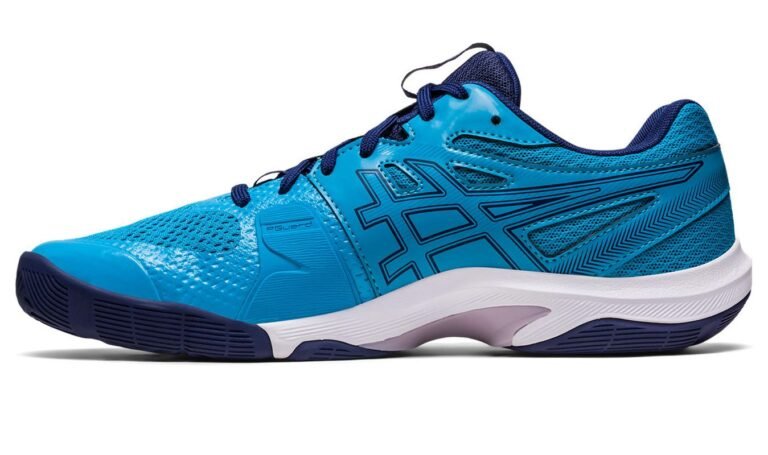
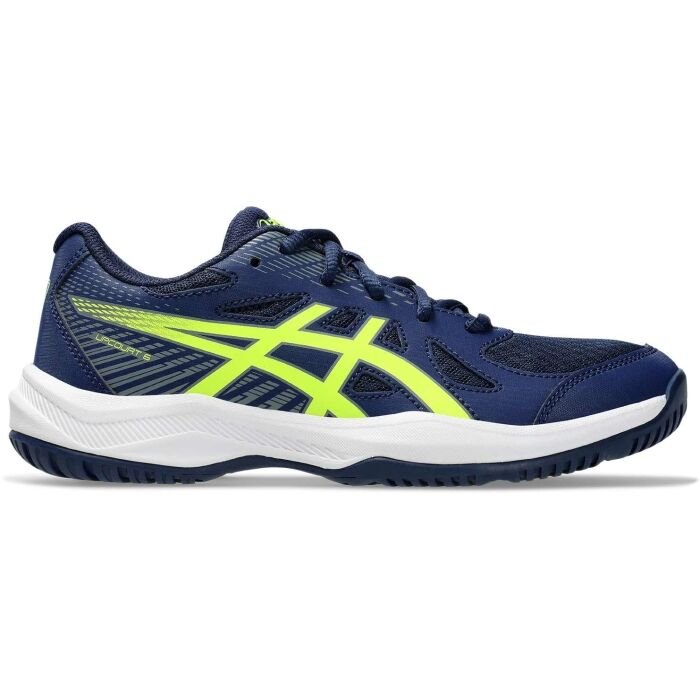
Both sports demand proper non-marking indoor court shoes with strong lateral support — the constant lunging, planting, and pivoting destroys running shoes and risks ankle injuries. Squash shoes tend to be lighter with gum-rubber soles for grip on wooden or synthetic floors. Racquetball shoes are similar, though the bigger court’s longer sprints make cushioning slightly more important. Either way: no black soles, no running shoes, no exceptions.
Eyewear: non-negotiable in racquetball
Both sports involve a hard rubber ball flying around an enclosed box at high speed, so eye protection matters in both. The difference is regulatory: racquetball mandates protective eyewear in sanctioned play — no goggles, no game. In squash, eyewear is strongly recommended and mandatory for juniors in many countries, but adult club players often skip it. Frankly, squash players should wear it too. A double-yellow dot to the eye at close range is a trip to the emergency room in either sport.
Rules & Scoring: PARS to 11 vs First to 15
Squash: point-a-rally to 11, best of five
Squash uses PARS — point-a-rally scoring. Every rally produces a point for someone, regardless of who served. Games go to 11 points; at 10-all you must win by two clear points. Matches are best of five games, so the first to three games takes the match. Between games, players get a 90-second rest.
The serve in squash is almost ceremonial compared to racquetball: the server stands with at least one foot in the service box, hits the ball directly onto the front wall between the service line and the out line, and the ball must land in the opposite back quarter (it may touch a side wall first). Only one serve is allowed — fault it and you lose the rally. The receiver, notably, may volley the serve before it bounces.
Racquetball: first to 15, best of three, server scores
Racquetball’s traditional scoring is first to 15 points, with matches best of three games (a deciding third game goes to 11). Classically — and this is the big one — only the serving player can score a point. Lose the rally as the receiver and you don’t concede a point; you simply win the serve (a “side out”) and your chance to score. This side-out structure makes holding serve enormously valuable and gives matches their distinctive momentum swings. (Some recreational leagues now use rally scoring, but side-out remains the traditional format.)
The serve itself is a weapon in racquetball in a way it never is in squash. The server must bounce the ball and drive it to the front wall, and two serves are allowed — a fault on the first earns a second serve rather than losing the rally. Serves can be hit with enormous pace and spin: drive serves, lob serves, and Z-serves that kiss three walls. And unlike squash, the receiver must let the serve bounce before returning it.
Squash scoring
- PARS: every rally scores
- Games to 11, win by 2
- Best of 5 games
- One serve only
- Serve can be volleyed
- Interference (“lets” and “strokes”) strictly refereed
Racquetball scoring
- First to 15 (tiebreak to 11)
- Best of 3 games
- Traditionally only server scores
- Two serves allowed
- Serve must bounce before return
- Hindrance calls exist but are looser
Interference and lets
Squash has the most developed obstruction rules in racket sports. Because players share a tiny court, the rules meticulously govern lets (replay the rally when a player was prevented from playing the ball) and strokes (award the point when the obstruction was deliberate or denied a winning shot). Learning to appeal for lets is part of learning squash. Racquetball has hindrance rules covering similar situations, but they’re enforced more loosely — the bigger court and faster game make stoppages less central to the sport’s fabric.
Gameplay Style: Chess vs Cannon
Ask players to describe each sport in one word and you’ll hear it: squash is chess, racquetball is cannon.
Squash: the attritional masterpiece
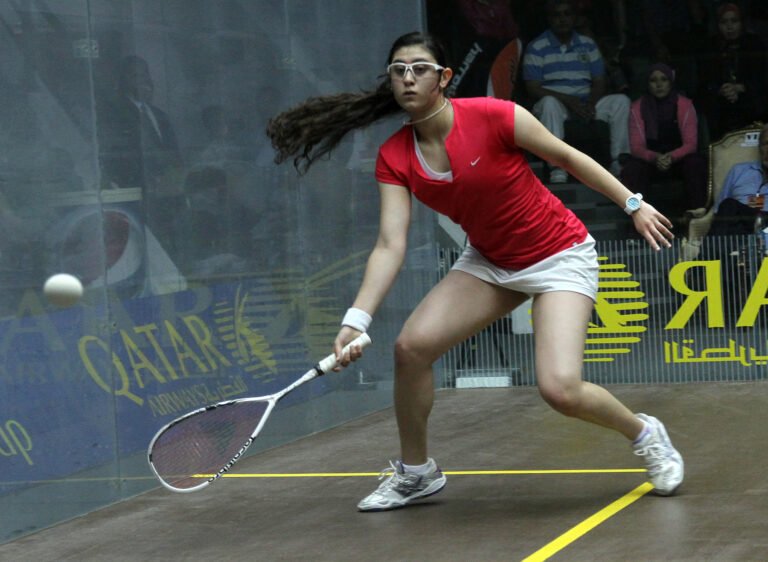
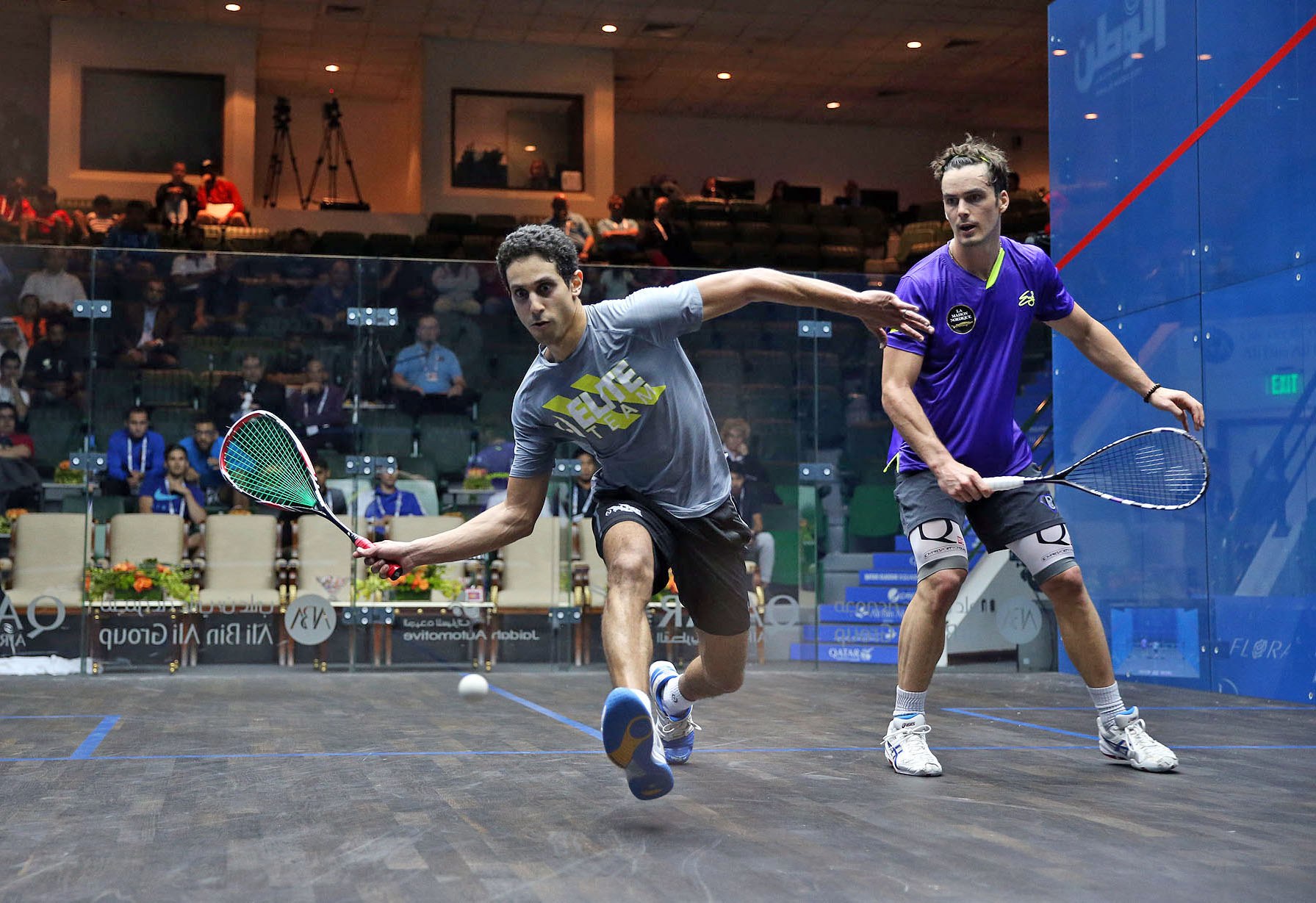
Squash is a game of geometry and patience. The dead ball and the tin punish recklessness, so rallies are constructed: players probe with length (deep drives to the back), attack with drops and boasts (side-wall angles), and hunt the nick — the perfect shot that hits the junction of wall and floor and dies. The “T” position at mid-court is home base; whoever controls the T controls the rally. Movement is constant — lunging, recovering, ghosting — and matches are wars of attrition where fitness and shot selection compound over 45–90 minutes. Deception is a high art: the wristy hold-and-flick that sends an opponent the wrong way is squash’s signature joy.
Racquetball: the explosive shootout
Racquetball is a game of first-strike power. The lively ball and absent tin mean the serve is a genuine weapon and the kill shot — a hard, low drive that dies off the front wall — ends points in a blink. Rallies are shorter but more violent: ceiling balls to reset, pinch shots into the corners, splats and Z-shots using every surface including the ceiling. Strategy exists — controlling center court, keeping the ball deep, varying serve placement — but the sport’s soul is aggression. Where squash players construct, racquetball players detonate.
Neither is “better”; they’re different answers to the same question. Squash rewards the tactician with endurance. Racquetball rewards the athlete with reflexes.
Which Is Harder to Learn?
Racquetball is easier to pick up; squash is harder to master. Almost every coach and crossover player agrees on this.
Racquetball’s learning curve is gentle because the equipment does the work for you: the big, bouncy ball stays in play off mishits, the wide racket head is forgiving, the ceiling offers an eternal escape route, and there are no fussy lines punishing your serve. A complete beginner can have a genuinely fun rally within their first session. The ceiling is high, though — elite racquetball’s kill shots, ceiling-ball control, and serve variety take years to develop.
Squash punishes beginners. The double-yellow ball barely bounces until it’s warm (and beginners can’t warm it), the tin swallows low shots, the narrow racket demands clean contact, and the footwork — the split-step, the lunge-and-recover, the ghosting patterns — is a skill in itself. Many clubs start newcomers on bouncier blue-dot or red-dot balls for exactly this reason. But here’s the trade: once the fundamentals click, squash’s learning curve becomes a long, rewarding staircase of tactical depth that keeps players engaged for decades.
Which Is the Better Workout?
Both are elite cardio workouts — but they tax the body differently, and the numbers favor squash slightly.
Squash consistently ranks among the highest calorie-burning sports in published estimates. A Forbes-commissioned survey once put squash at around 748 calories per hour, and activity calculators typically estimate 600–900 calories per hour for a 150-pound player at competitive intensity. The reason is structural: long rallies, minimal downtime between points, and constant lunging mean a high percentage of court time is spent at near-maximum effort.
Racquetball is no slouch. Estimates for intense play run around 340 calories per 30 minutes for a 155-pound player (roughly 680/hour at high intensity), with average recreational play closer to 470 calories per hour. Shorter rallies and slightly longer gaps between explosive points give the heart rate more chance to dip — though an aggressive singles game with a hard-hitting opponent will still leave you wrecked.
The honest answer coaches give: the better workout is the one you play harder, more often. Squash has the higher ceiling for calorie burn because of rally length and continuous movement; racquetball delivers more explosive, interval-style conditioning. Both build agility, leg strength, core stability, and cardiovascular fitness. Both are far better workouts than most gym sessions — because you forget you’re exercising.
Where Is Each Sport Popular?
Geography is one of the starkest differences between the two sports — and it often decides the question for you.
Squash: the Commonwealth game
Squash is a global sport with roughly 20 million players across 185 countries (World Squash Federation figures). Its heartlands are the UK (where it was born), Egypt (utterly dominant — Egyptian players have ruled the professional game for over a decade), Pakistan (home of the legendary Khan dynasty: Jahangir and Jansher), Australia, Malaysia, and increasingly the United States, where college squash — especially the Ivy League circuit — has boomed. The professional PSA World Tour runs events across the globe, and squash will make its Olympic debut at the Los Angeles 2028 Games, after the IOC approved its inclusion in October 2023.
Racquetball: the American game
Racquetball is concentrated in North America: the United States (its birthplace and stronghold), Canada, and Mexico (which produces world-class champions like Paola Longoria). It’s featured in the Pan American Games, the World Games, and the Central American and Caribbean Games, and the International Racquetball Federation runs world championships — but its footprint outside the Americas is small. If you live in the US, you’ll find racquetball courts in countless gyms and YMCAs; in London or Cairo, good luck.
Practical implication: check what’s near you before falling in love with either sport. Court availability beats theoretical preference every time.
Cost Comparison
Both are refreshingly cheap compared to golf or tennis-club memberships, but the cost structures differ.
Getting started
- Rackets: entry-level squash rackets start around $30–50; decent intermediate frames run $80–150. Racquetball racquets are similar: $40–60 to start, $100–180 for quality. Neither sport demands a $300 frame to begin.
- Balls: a tube of squash balls costs a few dollars; racquetballs are similarly cheap. You’ll lose and wear them, but slowly.
- Eyewear: $15–40 for certified protective glasses — mandatory for racquetball, strongly advised for squash.
- Shoes: proper non-marking court shoes, $60–130. Don’t skimp; ankle injuries cost more.
Ongoing costs
This is where geography bites. In the US, many gyms include racquetball courts in a standard membership — your marginal cost can be near zero. Squash in the UK often means club membership (£30–60/month is typical for a decent club) plus court fees or a booking system. In Egypt and Pakistan, squash is remarkably accessible through clubs and academies. Private coaching runs $40–80/hour in most markets for either sport.
Bottom line: startup costs are nearly identical — roughly $150–250 for racket, shoes, eyewear, and balls. Ongoing costs depend entirely on local court access, which loops back to the geography question above.
Who Should Choose Which? A Decision Framework
Choose SQUASH if you…
- Love tactical, strategic games (chess players, take note)
- Want the single best cardio workout in racket sports
- Enjoy a long mastery curve and technical depth
- Live in the UK, Egypt, or a city with squash clubs
- Prefer finesse, deception, and constructed rallies
- Want access to a global pro tour and club ladder culture
Choose RACQUETBALL if you…
- Want maximum fun in your very first session
- Love explosive, power-based sports
- Prefer shorter, high-intensity points over long rallies
- Live in the US, Canada, or Mexico with gym court access
- Like the idea of the ceiling as a legal weapon
- Want a lower technical barrier with a high athletic ceiling
Play BOTH if you…
- Have access to both court types (lucky you)
- Want squash’s tactics plus racquetball’s explosiveness
- Play seasonally — squash in winter leagues, racquetball in summer
One more consideration: your body. Squash’s constant lunging is notoriously hard on knees — players with knee issues sometimes find racquetball’s more upright movement kinder. Conversely, racquetball’s violent twisting and hard planting can trouble bad backs. If you have an injury history, try both gently before committing, and consider coaching early: good technique prevents most overuse injuries in either sport.
Can You Play Both? Skill Transfer
Yes — and each sport makes you better at the other, with caveats.
What transfers well: court awareness, reading angles off walls, split-step footwork, racket preparation, the competitive mentality of enclosed-court combat. A squash player’s length control and deception translate into devilish racquetball placement; a racquetball player’s explosive first step and kill-shot mentality add weapons to a squash game.
What clashes: the swing mechanics differ — squash’s longer, wristier stroke vs racquetball’s compact punch. Timing is the big one: squash players switching to racquetball consistently hit too early (the bouncy ball arrives later than expected), while racquetball players in squash whiff at balls that die instead of bouncing up. The serve is a complete reset in both directions. Most crossover players report needing 4–6 weeks of adjustment before the “wrong” instincts fade.
The verdict from dual players: playing both keeps you fresh, athletic, and tactically flexible — just don’t expect your squash rating to survive your first month of racquetball untouched, or vice versa. Treat the first few sessions as a new sport, not an extension of the old one.
Frequently Asked Questions
To learn, yes — squash’s dead ball, tin, and technical footwork make the first months tougher, while racquetball’s bouncy ball and forgiving court get beginners rallying fast. To master, both are brutally hard in different ways: squash demands tactical genius and endurance; racquetball demands explosive athleticism and split-second reactions.
Casually, yes — the squash court is slightly wider and shorter, which works for a friendly hit. But the 19-inch tin interferes with kill shots, the lower ceiling cramps the ceiling game, and the out lines restrict high defensive shots. For real play, use the proper court for each sport.
Squash generally burns more — estimates run 600–900 calories per hour for competitive play versus roughly 470–680 for racquetball — because squash rallies are longer with less downtime. But intensity matters more than the sport: a hard-fought racquetball match beats a lazy squash knockabout every time.
Racquetball has not yet been selected for the Olympic program — it appears in the Pan American Games and the World Games, but Olympic inclusion depends on IOC votes, global participation thresholds, and broadcast appeal. Squash, by contrast, will make its Olympic debut at the Los Angeles 2028 Games after the IOC approved its inclusion in October 2023.
For racquetball, protective eyewear is mandatory in sanctioned play — no exceptions. For squash, it’s strongly recommended and required for juniors in many countries, though many adult club players skip it. Our advice: wear it in both. A rubber ball at speed in an enclosed court is an eye injury waiting to happen.
They’re different sports with confusingly similar names. Racquetball (American, 1950s) uses a big bouncy ball on a 40×20 ft court with the ceiling in play. Racketball (British, 1976, now often called Squash 57) is played on a standard squash court with a larger, bouncier ball than squash but a shorter racket — and the ceiling is out. Don’t mix them up when booking a court!