
Six squash shoes chosen for one job — moving fast without carrying dead weight. Every weight below is printed exactly as its maker or a named retailer states it, with the size basis attached, and every outsole is named in the maker’s own words. No invented grams, no borrowed specs.
Squash is a game of repeated sprints from a standing start. The ghosting drill exists because the sport’s basic unit is the lunge-and-recover: explode to the ball, plant hard, push back to the T. Every gram on your foot gets accelerated and decelerated dozens of times a rally, and foot-end weight costs more energy per step than the same weight carried anywhere else on the body. That is the entire case for a lightweight squash shoe — not fashion, not marketing, but the physics of moving a mass at the end of a lever, hundreds of times a match.
But lightness is a trade, never a free lunch. The grams have to come from somewhere: thinner uppers, less rubber underfoot, lighter foams, fewer reinforcements. A shoe that weighs 240 grams will not protect your toes on a drag or cushion a deep lunge the way a 340-gram shoe does, and pretending otherwise is how players buy speed and get blisters. This guide owns the weight decision honestly — it shows you exactly where each shoe saved its grams, what the maker kept and what it gave up, and which trade suits the way you actually play.
This guide owns one decision only — the weight/speed purchase. It does not re-rank our segment guides: the all-player flagship selection lives in our best squash shoes comparison, women players have their own picks in our best squash shoes for women guide, first purchases belong to our best squash shoes for beginners guide, the step-up purchase is owned by our best squash shoes for intermediate players comparison, and the top-tier purchase is owned by our best squash shoes for advanced players guide. Every model below is different from the ones ranked in those guides. If you are learning the movement patterns these shoes are built for — the split step, the lunge, the recovery to the T — our how to play squash guide covers them. Read those for their jobs; read this one when the number on the scale is the first thing you check.
One promise before the picks: we card only what verifies as genuinely light. Three of the six weights below are the makers’ own published figures, printed with the size basis the maker measured. Two more are retailer figures, labelled as retailers’ figures with their size basis. One maker — UNSQUASHABLE — publishes no weight at all, and that card says so instead of borrowing a number. Where a shoe is a badminton or indoor-court crossover rather than a squash-specific build, the card says that too, with the honest trade-off spelled out. And where a parent-listed candidate failed verification — too heavy, already carded elsewhere, or unverifiable as a distinct model — it is not in this guide. Six verified cards beat seven padded ones.
TL;DR — The Short Version
Buy the Kanso DragonFly 2 if you want the best lightweight squash shoe from a squash-only maker — 295 g in a UK 8 with a weight-saving NexX4 outsole, SCF Rebound+ forefoot and a TPU torsion unit. Buy the Yonex Power Cushion Aerus Z2 if you want the lightest figure in this guide — 240 g on Yonex’s own 26.0 cm measure — accepting that it is a badminton shoe crossing over. Buy the Victor S99 Elite for 250 g with a genuine carbon anti-torsion plate — the lightest shoe here that still carries real midfoot structure. Buy the ASICS Blade FF 2 if you want the lightest all-rounder ASICS names for squash players — about 280 g with FLYTEFOAM, a Precision Sole and a non-marking rubber outsole. Buy the Babolat Shadow Tour 5 if you want featherweight with cushioning — Babolat’s own 280 g figure, KPRS-X dual-density EVA and a Michelin rubber sole. And buy the UNSQUASHABLE Cross-Tec if you want a squash-only build with a full gum-rubber hexagon outsole — the one card here whose maker publishes no weight, stated plainly.
Quick Picks
In This Guide
- The weight decision: what lightness actually buys you
- What a speed-focused player should check before buying
- Kanso DragonFly 2
- Yonex Power Cushion Aerus Z2
- Victor S99 Elite
- ASICS Blade FF 2
- Babolat Shadow Tour 5
- UNSQUASHABLE Cross-Tec
- Side-by-side comparison
- Lightweight buying guide: five checks before you pay
- Frequently asked questions
- The verdict
The Weight Decision: What Lightness Actually Buys You
A squash shoe’s weight is the only spec on the box that obeys simple physics in your favour. Everything else — cushioning, support, durability — is a judgement call about feel. Weight is a number, and in a sport built from lunges, it is the number that compounds. Biomechanists have measured this for decades: mass at the foot costs disproportionately more energy per step than the same mass carried at the torso, because the leg swings the foot through an arc on every stride. A shoe that is 60 grams lighter per foot — the gap between the heaviest and lightest cards in this guide — is weight you stop accelerating and braking several hundred times a match. That is not a marginal gain; over five games it is the difference between legs that still respond in the decider and legs that stopped answering two rallies ago.
But the number only means something with its size basis attached. Shoe weight scales with shoe size — a UK 12 is measurably heavier than a UK 8 of the same model — so a “280 g” printed without a size is a rumour, not a specification. The makers that publish weights do it on a stated measure: Yonex prints 240 g on the industry-standard men’s 26.0 cm shoe, Victor prints 250 g at 265 mm, Babolat prints 280 g in EU 42.5. Those three figures are directly comparable because the sizes are within half a size of each other. Retailer figures need the same discipline: the Kanso’s 295 g is a UK 8, the Blade FF 2’s approximate 280 g is a men’s EU 42.5. Read every weight in this guide with the basis in brackets beside it, and be suspicious of any listing elsewhere that prints a weight with no size at all — that number was weighed on somebody’s shoe, and you do not know whose.
The third thing to understand is where the grams went. Makers save weight in three places: the midsole foam (lighter compounds like Yonex’s Feather Light X, Victor’s nitrogen-infused NITROLITE, Kanso’s SCF Rebound+), the outsole (less rubber, lighter rubber — Kanso’s NexX4 exists specifically to cut outsole weight), and the upper (thinner meshes, fewer overlays, fused rather than stitched construction — the Aerus Z2’s seamless vacuum-pressed upper is the textbook example). Each saving has a cost centre. Lighter foam can mean less protection on deep lunges. Less rubber means a thinner wear layer between you and the court. Thinner uppers mean less material between your toes and the floor on a drag. The cards below name the saving and the cost for every shoe, because the right lightweight shoe is not the lightest one — it is the lightest one whose costs you do not pay.
One more distinction before the picks: a squash-specific lightweight shoe and a crossover lightweight shoe are different answers to the same question. The Kanso and the UNSQUASHABLE were designed for squash movement — the lunge, the plant, the push back to the T — and their support structures (torsion units, exo-skeleton cages, gum-rubber compounds) assume those loads. The Yonex, Victor, Babolat and ASICS cards are indoor-court shoes from badminton, volleyball and handball lineages that happen to be light, grippy and non-marking. They are legitimate squash footwear — clubs full of players wear them — but their lasts, drops and reinforcement patterns were drawn for different sports’ footwork. This guide cards both kinds and labels each plainly, because the honest version of “best lightweight squash shoe” includes the crossovers players actually buy, with the trade-offs stated instead of hidden.
What a Speed-Focused Player Should Check Before Buying
Weight with a size basis: the only number that matters, read properly. Three cards here carry maker-published weights — Yonex 240 g (26.0 cm), Victor 250 g (265 mm), Babolat 280 g (EU 42.5) — and those are the gold standard: the brand measured its own shoe and printed the size. Two cards carry retailer figures with their basis — Kanso 295 g (UK 8), Blade FF 2 around 280 g (EU 42.5) — which is the next best thing, labelled as such. One card, the UNSQUASHABLE, carries no figure because the maker publishes none, and this guide will not invent one. When you compare, compare like with like: a 240 g at 26.0 cm against a 250 g at 265 mm is a fair fight; a bare “280 g” against a “295 g (UK 8)” is not, because you do not know what size the 280 was weighed on. The comparison table at the end prints every basis so you can do this properly.
Outsole compound: gum rubber or named rubber, non-marking, stated by the maker. Squash is played on wood and synthetic floors that clubs protect with a simple rule: non-marking soles only. The traditional answer is gum rubber — the soft, pale natural-rubber compound that grips polished floors without streaking — and two cards here carry it by name: the UNSQUASHABLE’s full gum-rubber AbraZone hexagon outsole, and Babolat’s Michelin-developed rubber on a gum sole built for wood floors. The others carry the makers’ named indoor compounds: Kanso’s NexX4 liquid vacuum rubber, Victor’s VSR Anti-Slip Rubber (Victor’s retailer wording confirms a non-marking sole across the range), ASICS’s non-marking rubber Precision Sole, Yonex’s rubber sole (retailer listings state non-marking). What matters is not the marketing adjective but the compound family: soft indoor rubber grips the squash court; hard outdoor rubber skids on it. Every card names the compound so you can check it against your club’s rule before you buy.
Cushioning systems: learn the makers’ names, because foam is where the grams live. The lightest foams in this guide are also its headline technologies. Yonex’s Feather Light X is the material behind the 240 g figure — 12% lighter than the previous Aerus generation. Victor’s NITROLITE infuses EVA with nitrogen under pressure to make a foam that is lighter and more resilient than standard EVA. Kanso runs two named foams: SCF Super Critical Foam Rebound+ in the forefoot and SpeedLightFoam in the midsole. ASICS answers with FLYTEFOAM under a Precision Sole. Babolat’s KPRS-X is a dual-density EVA — softer in the heel for shock absorption, firmer in the forefoot for a dynamic push-off. UNSQUASHABLE’s U-FOAM sits in the rear and forefoot. A longer name is not a better foam; read each as a recipe with a weight cost attached. The plushest ride here belongs to the shoes that spent grams on foam (Babolat, UNSQUASHABLE); the fastest figures belong to the shoes that spent the least (Yonex, Victor).
Torsional and midfoot support: what the shoe does when you plant sideways. Lightness without structure is a sock, and the squash lunge loads the shoe sideways harder than any straight-line sport does. Read the support line on every card as carefully as the weight line. The Victor carries a genuine 1 mm Carbon Power plate — twice the standard thickness — for anti-torsion resistance. The Kanso has a TPU Torsion Unit plus a ripstop exo-skeleton cage wrapping the midfoot. The UNSQUASHABLE has its Carbon Torsion Unit. The ASICS has TPU SPEEDTRUSS with a wrap-up outsole and an outrigger construction for lateral stability. The Babolat has POWER STRAPS — two reinforcing straps built for lateral support — over its Active Sculpture construction. The Yonex has a 3D Power Graphite Sheet to resist twisting. These are the structures that keep a light shoe from folding when you plant; a featherweight with no torsion control is fast in a straight line and vague in a lunge.
Uppers and toe-drag protection: where light shoes show their cost first. The squash lunge drags the toe of the trailing foot along the floor, and it is the single most destructive thing a shoe endures in this sport. Heavy shoes answer with thick rubber toe caps; light shoes have to be cleverer. The Kanso carries dual-layer TPU toe protection plus welded TPU rubber reinforcements in the high-wear zones. The Babolat has its TOE BOX SHIELD — a resistant synthetic covering the inner forefoot to the toes. The Victor has V-Durable+ coating at the inner toe. The ASICS uses synthetic overlays over breathable mesh, and the Yonex fuses Durable Skin Light into its seamless upper. None of these is a heavy rubber bumper, because a heavy rubber bumper would cost the grams the shoe was built to save. If you are a chronic toe-dragger — the player whose shoes always die at the same spot — read this line first and buy the most protection you can get at your target weight, not the absolute lightest shoe.
The Picks: 6 Lightweight Squash Shoes Compared
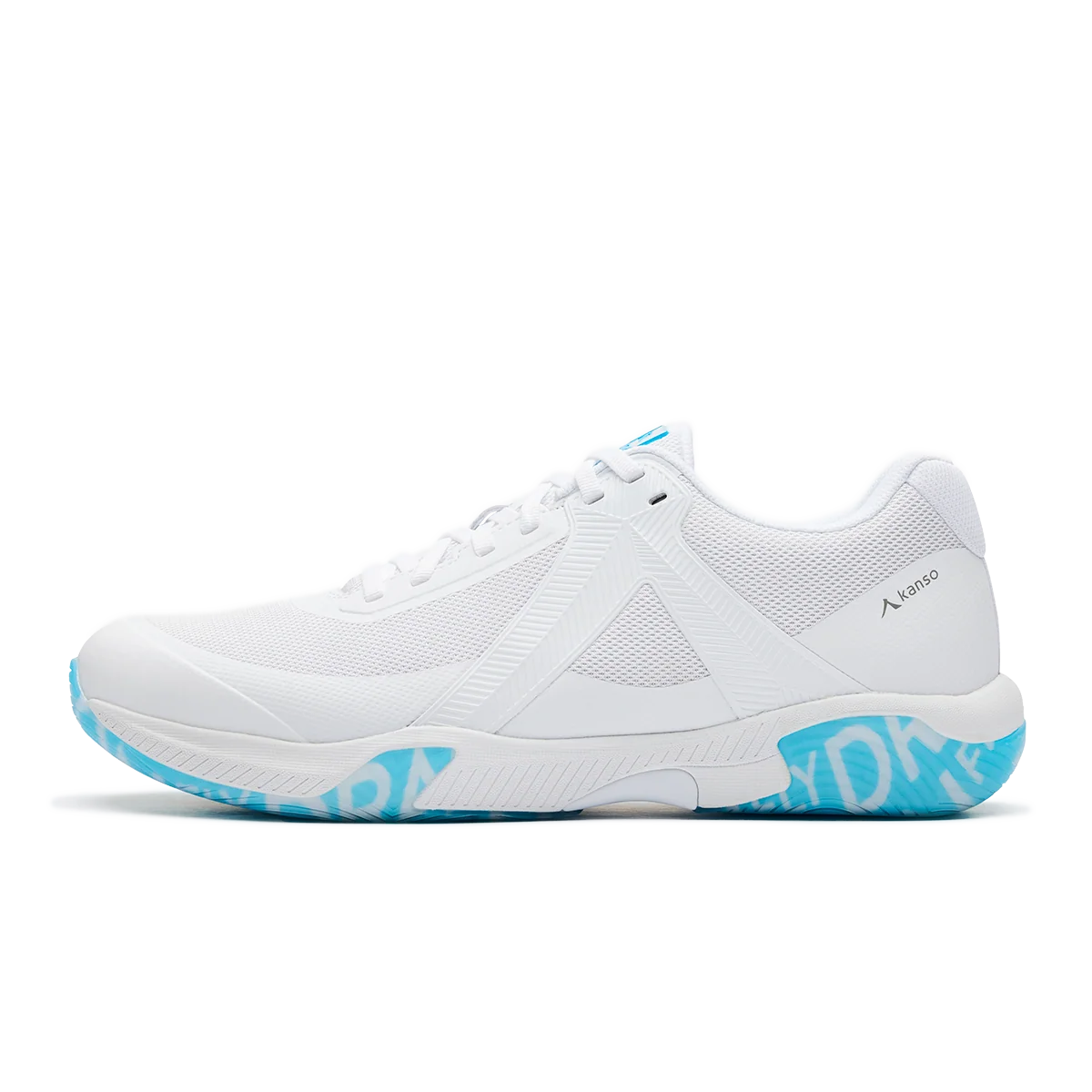
Kanso DragonFly 2
The squash-only answer: a Swedish indoor-court specialist’s speed shoe, new for the 2025/26 season, engineered for rapid multidirectional movement at 295 g.
Kanso is the only maker in this guide that builds shoes exclusively for indoor court sports, and the DragonFly 2 is its speed flagship — the shoe the brand points at when the brief is explosive movement in every direction. It is new for the 2025/26 season, a ground-up rework of the original DragonFly with a redesigned heel collar, an upgraded mesh upper and non-stretch laces for a locked-in fit. The weight story is told in the materials: the NexX4 liquid vacuum rubber outsole exists specifically to cut outsole weight — Kanso claims a 50% reduction against its previous outsole — while the forefoot carries SCF Super Critical Foam Rebound+, which the maker says is 29% lighter than traditional SLF foam with 13% more rebound. Under that sits a SpeedLightFoam midsole, 26% lighter than a standard midsole with 32% better compression. This is a shoe whose grams were engineered out layer by layer, not sanded off at the end.
The support recipe is properly squash-minded. A TPU Torsion Unit sits in the midfoot for torsional control on plants, and the three-layer DragonFly upper wraps the foot in a lightweight exo-skeleton cage made from ripstop material — structure without the weight of traditional overlays. The heel gets a tailored cup with a 12 mm high-density collar, T80 foam inside and an extra 4 mm of memory foam in the lining, plus SA+ heel pad inserts positioned to cushion the lunge. The toe — where squash shoes go to die — gets dual-layer TPU protection and welded TPU rubber reinforcements in the high-wear zones, with a streamlined TPU design new for this generation. An advanced woven mesh keeps the airflow moving. The honest trade-off: at 295 g this is not the lightest shoe in the guide — the badminton crossovers undercut it by 45 to 55 grams — because Kanso spent grams on squash-specific structure (the torsion unit, the toe protection, the heel cup) that the featherweights simply do not carry. Buy the DragonFly 2 if you want the lightest shoe here that was actually designed for squash movement rather than adapted to it.
Pros
- Squash-specific speed shoe from an indoor-court specialist — the brief matches the sport
- Weight engineered out at every layer: NexX4 outsole, SCF Rebound+ forefoot, SpeedLightFoam midsole
- Real squash structure: TPU Torsion Unit, ripstop exo-skeleton cage, tailored heel cup
- Dual-layer TPU toe protection plus welded reinforcements where the lunge drags
Cons
- Kanso publishes no weight — the 295 g figure is the retailer’s, on a UK 8 basis
- 45–55 g heavier than the badminton featherweights in this guide — structure costs grams
- Niche brand: fewer stockists and colourways than the big makers’ lines
As an Amazon Associate we earn from qualifying purchases.
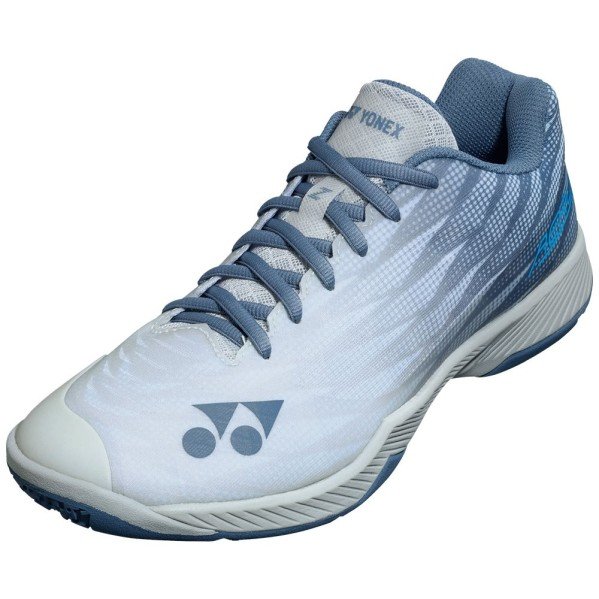
Yonex Power Cushion Aerus Z2
The number nobody beats: 240 g on Yonex’s own measure — a badminton shoe crossing over, carded with its trade-offs stated plainly.
Let us be precise about what this card is. The Aerus Z2 is a badminton shoe — the fifth generation of Yonex’s Aerus lightness line — and it is carded here because it is the lightest credible indoor-court shoe on the market and squash players do wear it. The weight is the maker’s own: 240 grams per shoe measured on the industry-standard men’s 26.0 cm, printed in Yonex’s launch materials. The material behind the number is Feather Light X, Yonex’s lightest midsole compound, which the maker says is 12% lighter than the previous Aerus generation while generating more repulsion. Around it: a seamless upper vacuum-pressed from Durable Skin Light and Double Russel Mesh (Yonex claims eight times the air exchange of ordinary mesh) built with 100% recycled materials, a Radial Blade Sole whose windmill-patterned grip Yonex says improves traction by about 3%, and the Power Cushion+ wedge in the heel that the maker positions for badminton footwork impact.
The support line is better than the weight suggests. A 3D Power Graphite Sheet — a carbon sheet in the sole — resists twisting during strenuous movements, the Toe Assist Shape cuts pressure on the big toe while bracing the midfoot and heel, the Round Sole is shaped for smooth multidirectional footwork, and the Synchro-Fit Insole lifts the mid-to-heel area to close the gap between foot and shoe. Retailer listings describe a non-marking rubber sole, which is what your club’s door check needs to hear. Now the honest trade-off, stated the way this guide promised: this is a badminton last, drawn for badminton’s footwork — lunges are shorter, plants are different, and the upper has no squash-style toe-drag armour beyond the fused Durable Skin Light. It will also feel minimal under a heavy squash lunge; 240 grams does not include deep-lunge cushioning. Buy the Aerus Z2 if the scale is your religion and you accept a crossover’s compromises — the fastest feet in this guide, with the thinnest margin for error.
Pros
- 240 g on Yonex’s own 26.0 cm measure — the lightest maker-stated figure in this guide
- Feather Light X midsole plus Power Cushion+ — the weight saving is engineered, not stripped
- 3D Power Graphite Sheet and Toe Assist Shape give a featherweight real torsional structure
- Seamless vacuum-pressed upper in recycled materials — minimal seams, minimal weight
Cons
- A badminton shoe crossing over — the last and reinforcements were drawn for badminton footwork
- No dedicated squash toe-drag armour; chronic toe-draggers should read the Kanso or Babolat cards first
- Minimal cushioning for deep squash lunges — lightness is the whole philosophy here
As an Amazon Associate we earn from qualifying purchases.
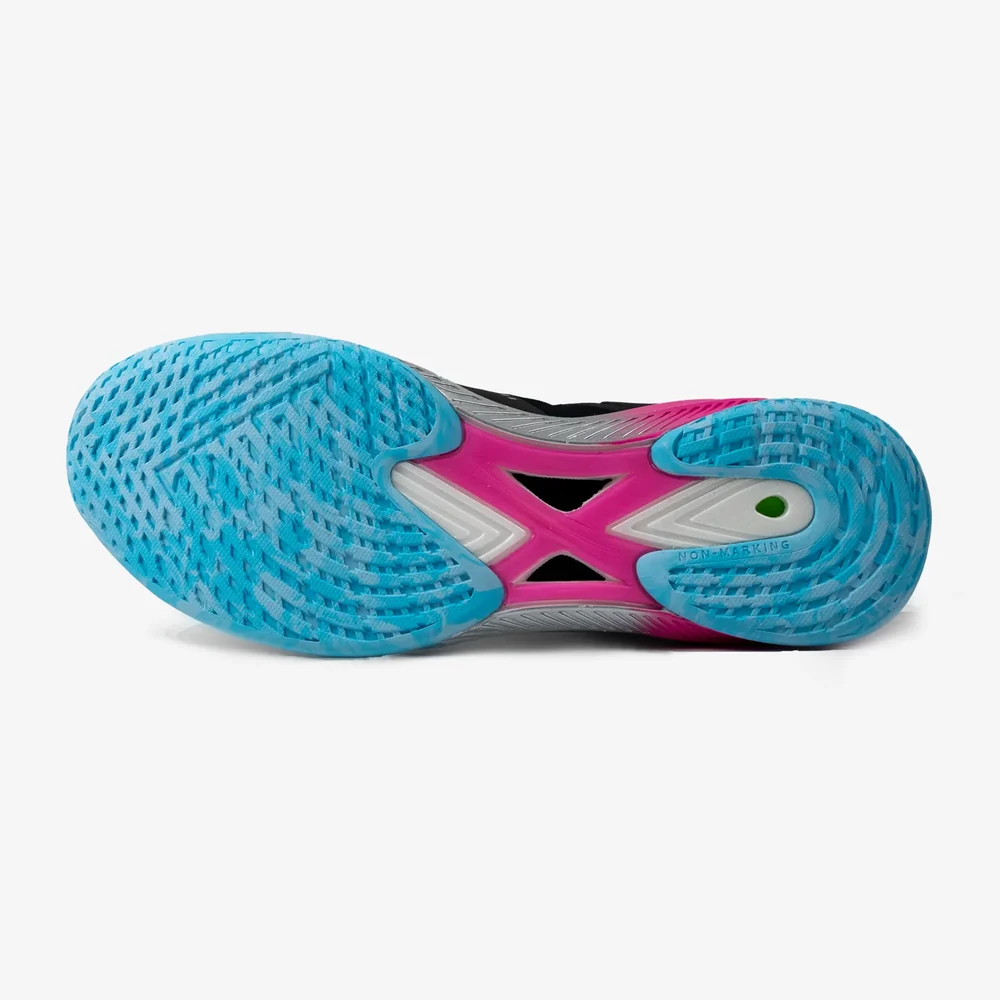
Victor S99 Elite
Victor’s lightest shoe ever at 250 g — and the rare featherweight that answers the structure question with a genuine carbon plate.
The S99 Elite is the flagship of Victor’s Speed series and, in Victor’s own words, the lightest badminton shoe the brand has ever made: 250 grams per shoe at 265 mm. The defining technology is NITROLITE — EVA impregnated with nitrogen under pressure, which Victor says creates a foam that is lighter, more resilient and more responsive than standard EVA. Since the midsole is roughly a quarter of a shoe’s total weight, a lighter midsole moves the whole number, and that is exactly what happened here. The upper follows the same philosophy: JACQUARD EM, a three-layer interlocked engineering mesh that Victor says replaces the usual mesh-plus-synthetic-leather construction at lower weight, with a TPU membrane in partial areas for shape retention. The heel carries ENERGYMAX V, the Speed series’ rebound compound, positioned for the impact of forward strides.
What separates this card from the Yonex above is the midfoot. The S99 Elite carries a 1 mm Carbon Power plate — twice the standard thickness Victor uses — combined with hard ESS materials for anti-torsion resistance in all directions. That plate is the structural backbone that lets the NITROLITE midsole be as light as it is: torsional rigidity from carbon rather than from heavy midsole material. The toe gets V-Durable+ protective coating, and the outsole is Victor’s VSR Anti-Slip Rubber — Victor’s retailer wording confirms a non-marking sole across the range, which is the squash-club requirement in writing. The honest trade-off: this is still a badminton shoe, and its V-Shape last runs narrow-to-standard — wider feet should look at the wide variants Victor sells rather than forcing the standard last. And like every 250-gram shoe, it trades cushioning depth for speed; the ENERGYMAX V heel is targeted, not plush. Buy the S99 Elite if you want featherweight with a backbone — the lightest shoe in this guide that still carries a real anti-torsion plate.
Pros
- 250 g at 265 mm on Victor’s own measure — the brand’s lightest shoe ever made
- 1 mm Carbon Power plate: genuine anti-torsion structure in a featherweight
- NITROLITE nitrogen-infused midsole — the weight saving is in the foam chemistry
- VSR rubber outsole with non-marking sole wording — the club-door requirement, stated
Cons
- A badminton shoe crossing over — drawn for badminton’s movement patterns, not squash’s lunge
- V-Shape last runs narrow-to-standard; wide feet need Victor’s wide variants, not this last forced
- Targeted heel cushioning rather than deep plushness — speed is the design brief
As an Amazon Associate we earn from qualifying purchases.
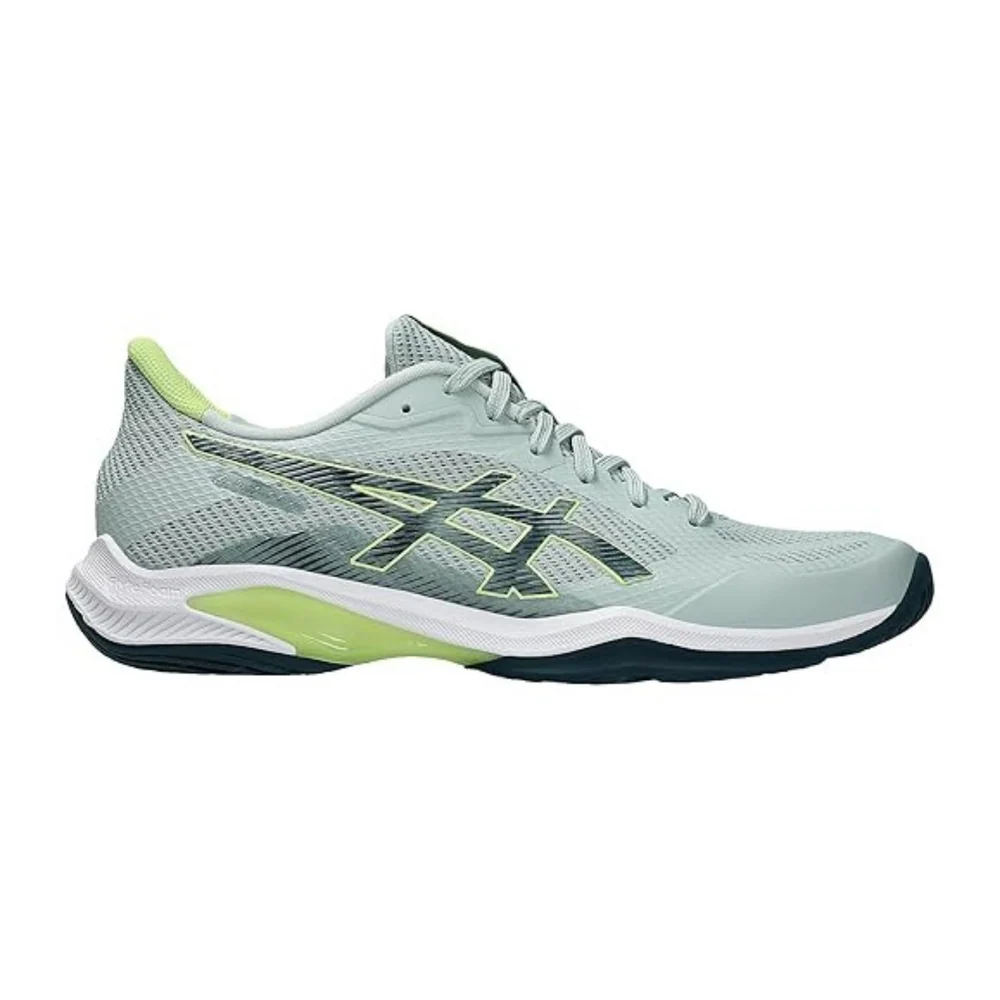
ASICS Blade FF 2
The lightest all-rounder ASICS names for squash players: about 280 g of FLYTEFOAM, Precision Sole grip and a non-marking rubber outsole.
The Blade line is ASICS’s speed answer for indoor court sports, and the FF 2 is its current generation — a different model from the original Blade FF carded in our intermediate guide, and a meaningful update: a raised 15 mm heel drop that sets the foot in a start-up position for moving forward quickly, a redesigned upper with minimal no-sew reinforcement films, and a reworked outsole. ASICS’s own copy names the shoe for “squash and badminton players engaging in multi-directional movements,” which makes this the rare crossover card whose maker actually says the sport’s name. The midsole is FLYTEFOAM — ASICS’s lightweight cushioning foam — under a PRECISION SOLE, a 3D-modeled outsole pattern the maker says balances flexibility, low weight and grip. Retailer specifications state a non-marking rubber outsole, and ASICS’s copy adds a wrap-up outsole with outrigger construction for stable lateral movement.
Support comes from TPU SPEEDTRUSS through the midfoot with X-GUIDANCE flex grooves in the outsole, which ASICS positions for faster forward transitions and better court coverage. The upper is breathable mesh with synthetic overlays — light, with the overlays placed where the shoe takes abuse. On weight, the honest line: ASICS publishes no figure for the Blade FF 2, and retailer figures cluster around 280 g in a men’s EU 42.5, with some listings running higher depending on size and colourway — which is exactly why this guide prints the basis and the attribution. The honest trade-off is the drop: 15 mm is high for a court shoe, and players who like a low, close-to-the-floor feel (the Kanso and UNSQUASHABLE cards sit lower) will notice the ramp. What you get for it is forward launch — the shoe is built to start moving, not to sit flat. Buy the Blade FF 2 if you want the complete lightweight package from a maker that names squash in its own copy: grip, cushioning, lateral structure and a start-up stance, at about 280 grams.
Pros
- ASICS’s own copy names squash players — the crossover with the sport in its brief
- FLYTEFOAM plus 3D-modeled Precision Sole: light cushioning with a designed grip pattern
- Non-marking rubber outsole with wrap-up support and outrigger for lateral stability
- 15 mm drop and X-GUIDANCE set the foot up for fast forward starts
Cons
- ASICS publishes no weight — the ~280 g figure is the retailer’s, on a stated size basis
- 15 mm drop is high for close-to-the-court players; low-profile fans should compare the Kanso card
- An indoor-court all-rounder, not a squash-specific build — no dedicated toe-drag armour
As an Amazon Associate we earn from qualifying purchases.
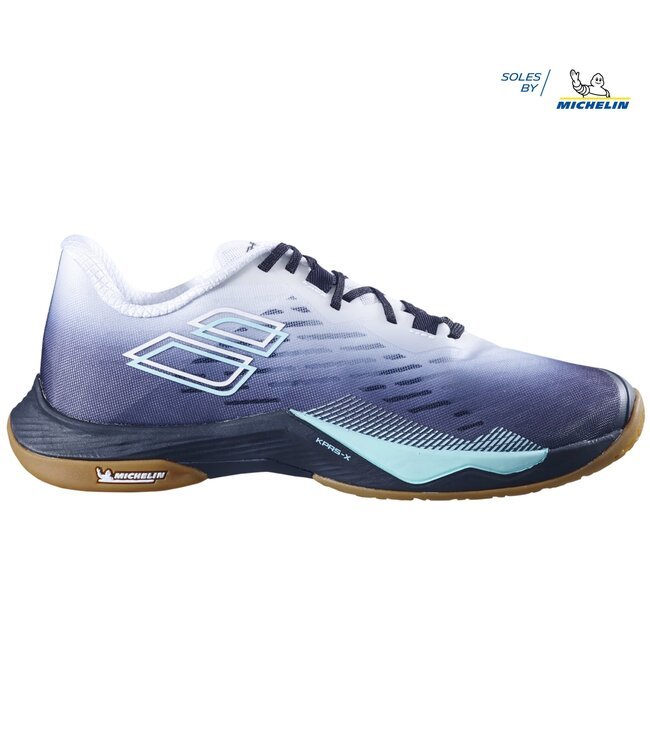
Babolat Shadow Tour 5
Featherweight with a conscience: Babolat’s own 280 g figure, dual-density KPRS-X cushioning and a Michelin rubber sole on a gum base.
The Shadow Tour 5 is the fifth generation of Babolat’s speed line, and the maker’s brief is explicit: designed for speed, lightweight and breathable without compromising performance. The weight is Babolat’s own published figure — 280 grams in EU 42.5, printed in the brand’s product copy — which makes this one of the three gold-standard numbers in the guide. What makes the card interesting is that Babolat spent its grams differently from the featherweights above: the midsole is KPRS-X, a dual-density EVA that is softer in the heel for shock absorption and firmer in the forefoot for dynamic recovery and speed, over an OrthoLite die-cut insole and a rocker-shaped sole the maker says moves you from defence to attack in a fraction of a second. This is the cushioned pick of the lightweight guide — the shoe for players who want low weight without a harsh ride.
Grip is the Babolat-Michelin collaboration: a Michelin rubber outsole the maker developed for the best combination of grip and durability on indoor courts, on a gum sole built for wood-floor play — the traditional squash-court answer, named as such. The tread is ACTIVE SCULPTURE, a three-dimensional construction Babolat positions for fast, powerful movements and sudden changes of direction. Lateral support comes from POWER STRAPS — two reinforcing straps the maker designed for the complex footwork of racket sports — over a Double Layer Mesh upper: a subtle mesh with a perforated reinforcement panel that Babolat says creates an ultralight, breathable upper with optimal support. The toe gets the TOE BOX SHIELD, a resistant synthetic covering the inner forefoot to the toes — the dedicated drag protection the badminton featherweights lack. The honest trade-off: the Shadow Tour was drawn for badminton first — the straps, the tread language, the product line all say so — and at 280 g with real cushioning it cannot match the 240–250 g figures above. What it offers instead is the most complete shoe in the guide: light, cushioned, gripped and protected, with the maker’s own weight figure to prove the first claim. Buy it if your feet want speed and forgiveness in the same shoe.
Pros
- 280 g in EU 42.5 on Babolat’s own measure — a maker-published featherweight figure
- KPRS-X dual-density EVA plus OrthoLite: the most cushioned ride among the true featherweights
- Michelin rubber on a gum sole for wood floors — the classic squash-court grip answer
- TOE BOX SHIELD and POWER STRAPS: real drag protection and lateral support at 280 g
Cons
- Drawn for badminton first — marketed for badminton and squash, with badminton leading
- 30–40 g heavier than the two lightest cards — cushioning and protection cost grams
- A different model from the beginners guide’s Shadow Spirit 2 — check the name when ordering
As an Amazon Associate we earn from qualifying purchases.
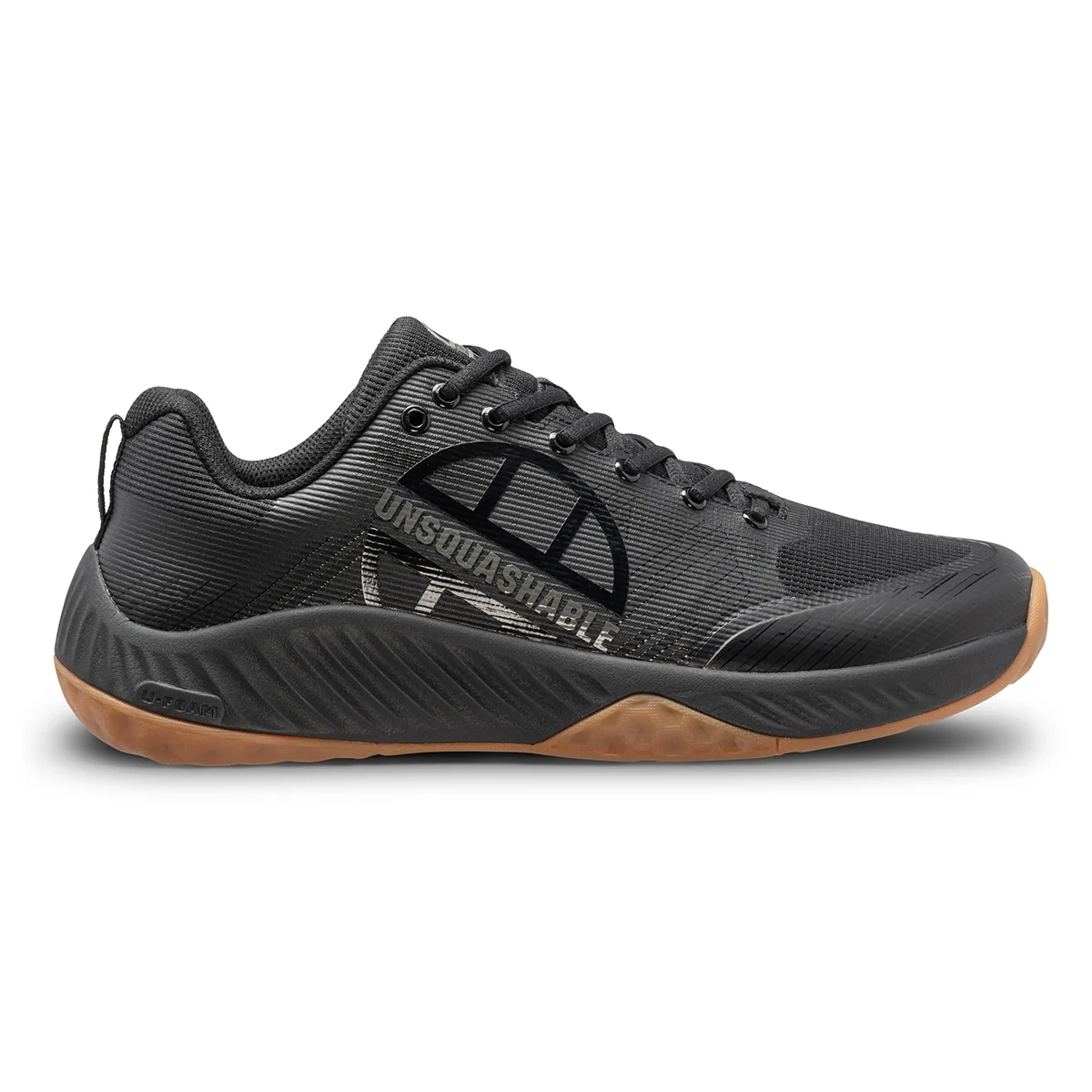
UNSQUASHABLE Cross-Tec
The squash-only combo: UNSQUASHABLE’s amalgam of its speed and stability lines, with a full gum-rubber hexagon outsole — weight not published, stated plainly.
UNSQUASHABLE makes exactly three squash shoes, and the brand’s own FAQ explains the range logic: TOUR-TEC for maximum stability and cushioning, FAST-TEC for maximum speed and agility, and CROSS-TEC as the amalgam of the two — the combination pick. That makes this card the range’s middle answer and, for this guide, the interesting one: the FAST-TEC PRO is carded in our pillar guide and the TOUR-TEC PRO in our intermediate guide, so the CROSS-TEC is the only UNSQUASHABLE left to card, and it is a different model from both. The maker’s copy describes “outstanding lightweight cushioning and stability” in a flexible, breathable DynamicFit upper — the lightweight wording is UNSQUASHABLE’s own, even though the brand publishes no gram figure to attach to it. This card will not invent one: the weight line above says not published, and the comparison table repeats it.
What the card can state is the build, and it is uncompromisingly squash. The outsole is a full gum-rubber AbraZone hexagon outsole — gum rubber named by the maker, in a hexagon pattern the brand positions for assured grip on all court surfaces. That is the traditional squash answer to the grip question, and it is the most explicitly squash-named outsole in this guide. Under it sits U-FOAM cushioning in the rear and forefoot for impact shock, and a Carbon Torsion Unit in the midfoot for the stability that lets the forefoot and rearfoot move independently — smoother, more agile movement in the maker’s words. The heel has a rounded radius for efficient movement, the drop is 12.5 mm per UNSQUASHABLE’s own FAQ, and the upper is a redesigned DynamicFit construction balancing breathability, support, flexibility and durability. The honest trade-off is the missing number: without a published weight, this card cannot prove its lightness the way the five above do — it argues it from the maker’s “lightweight cushioning” positioning and the combination brief instead. Buy the CROSS-TEC if you want a squash-only shoe with a gum-rubber outsole and pro-tour usage behind it, and you trust the maker’s positioning over a scale reading.
Pros
- Squash-only build from a squash-only maker — the brief, the outsole and the tour usage all match
- Full gum-rubber AbraZone hexagon outsole: the traditional squash grip answer, named by the maker
- Carbon Torsion Unit plus U-FOAM rear and forefoot — structure and cushioning in one combo
- A different model from the pillar’s FAST-TEC PRO and the intermediate guide’s TOUR-TEC PRO
Cons
- UNSQUASHABLE publishes no weight — the one card here that cannot prove its lightness in grams
- The combo brief means it is neither the lightest nor the most cushioned — the middle by design
- Heavier-looking build than the featherweights; speed purists should compare the Kanso card
As an Amazon Associate we earn from qualifying purchases.
Side-by-Side: The Six Lightweight Shoes at a Glance
Every weight below is printed with the honesty this guide keeps promising — the maker’s own figure with its size basis, a labelled retailer’s figure with its size basis, or “not published” where the maker publishes none. Compare figures only where the size bases are close.
| Shoe | Weight (as stated) | Cushioning (maker-named) | Outsole | Best for | Trade-off to know |
|---|---|---|---|---|---|
| Kanso DragonFly 2 | 295 g, UK 8 (retailer’s figure) | SCF Rebound+ forefoot + SpeedLightFoam midsole | NexX4 liquid vacuum rubber | Best lightweight squash shoe | Heavier than the featherweights — squash structure costs grams |
| Yonex Power Cushion Aerus Z2 | 240 g, men’s 26.0 cm (Yonex) | Feather Light X + Power Cushion+ | Radial Blade Sole, rubber (non-marking per listings) | Lightest overall | Badminton crossover — thinnest cushioning and no squash toe armour |
| Victor S99 Elite | 250 g, 265 mm (Victor) | NITROLITE + ENERGYMAX V heel | VSR Anti-Slip Rubber (non-marking sole) | Lightest with a carbon plate | Badminton crossover; narrow-to-standard V-Shape last |
| ASICS Blade FF 2 | ~280 g, men’s EU 42.5 (retailer’s figure) | FLYTEFOAM | Precision Sole, non-marking rubber | Best lightweight all-rounder | 15 mm drop suits forward launch, not low court feel |
| Babolat Shadow Tour 5 | 280 g, EU 42.5 (Babolat) | KPRS-X dual-density EVA + OrthoLite | Michelin rubber, gum sole for wood floors | Best cushioned featherweight | Drawn for badminton first; 30–40 g over the lightest cards |
| UNSQUASHABLE Cross-Tec | Not published by maker | U-FOAM, rear and forefoot | Full gum rubber AbraZone hexagon | Best squash-only combo build | No gram figure — lightness argued from positioning, not proven |
Lightweight Buying Guide: Five Checks Before You Pay
1. Read the weight with its size basis — or treat it as a rumour. The only weights worth comparing are the ones with a size attached: 240 g at 26.0 cm, 250 g at 265 mm, 280 g at EU 42.5, 295 g at UK 8. Those four are within half a size of each other, so the ranking they imply is real. A listing that prints “280 g” with no size is telling you the shoe was weighed on somebody’s foot and not telling you whose — and a UK 8 at 280 g is a lighter shoe than a UK 11 at 280 g. The UNSQUASHABLE card is the deliberate exception: no figure, stated plainly, because the maker publishes none and this guide does not borrow numbers.
2. Decide where you want the grams saved. Every shoe in this guide saved weight in a different place, and the saving tells you the shoe’s character. The Yonex and Victor saved it in the foam chemistry — Feather Light X and NITROLITE — which keeps the upper and outsole intact but leaves cushioning thin. The Kanso saved it across the whole construction — outsole, foams, upper — but spent some of it back on squash structure. The Babolat saved it in the upper while keeping dual-density cushioning. Ask yourself which cost you can afford: thin cushioning (the featherweights), a thinner outsole wear layer (all of them, to varying degrees), or less toe protection (the crossovers). The player who drags every lunge should buy protection first and lightness second.
3. Match the outsole to your club’s floor and its rule. Most squash clubs require non-marking soles, and most dedicated indoor shoes satisfy the rule in practice — but the wording on the listing is what a door check can verify. The UNSQUASHABLE names full gum rubber outright. Babolat’s Michelin rubber sits on a gum sole built for wood floors. Victor’s retailer wording confirms a non-marking sole across the range. ASICS’s and Yonex’s non-marking rubber is stated in retailer specifications. The Kanso’s NexX4 is the maker’s indoor-court compound, sold for squash by squash specialists. If your club is strict, buy the card with the clearest non-marking wording — the UNSQUASHABLE or the Victor — and confirm the exact colourway’s listing before you travel, because compounds are specified per model, not per brand.
4. Check the drop against the way you move. Heel-to-toe drop changes the shoe’s stance, and the range here is wide: the ASICS Blade FF 2 sits at 15 mm — a ramp built for forward launch — while the Babolat is at 10 mm and the UNSQUASHABLE at 12.5 mm. Higher drops favour the player who starts moving forward; lower, flatter builds favour the player who wants court feel and a stable platform under the lunge. Neither is better in the abstract. But do not buy a 15 mm shoe expecting a barefoot feel, and do not buy a flat shoe expecting a launch ramp. The drop is printed on five of the six cards — use it.
5. Try the crossover question honestly. Three cards here are badminton shoes and one is an indoor-court all-rounder; two are squash-specific. The crossovers win on the scale — 240 and 250 grams are numbers no squash-specific shoe in this guide touches — because badminton’s movement patterns let makers strip structure squash needs. If your game is built on deep lunges, hard plants and long matches, the squash-specific cards (Kanso, UNSQUASHABLE) spend their grams where your game spends its force. If your game is built on ghosting, quick feet and short sharp rallies, the featherweights’ trade is the right one. The wrong answer is buying the lightest number without asking what was removed to reach it.
Frequently Asked Questions
What counts as a genuinely lightweight squash shoe in grams?
There is no official threshold, but the working band in this guide runs from 240 g to about 300 g per shoe in men’s mid sizes. The lightest maker-stated figure here is the Yonex Aerus Z2 at 240 g (26.0 cm); the heaviest stated figure is the Kanso DragonFly 2 at 295 g (UK 8, retailer’s figure). Anything much above 320 g in a men’s mid size is a midweight or support shoe rather than a lightweight one — several well-known indoor shoes sit at 350 g and beyond, which is why this guide verified every candidate instead of trusting the word “light” in a product title.
Do lighter squash shoes wear out faster?
Usually, yes — and the mechanism is simple: the grams come out of the outsole rubber, the upper materials and the foam, which are the same parts that absorb wear. A thinner outsole has less rubber to lose before grip fades; a thinner upper has less material resisting the toe drag; a lighter foam can pack down sooner. That is the weight-vs-durability trade-off stated on every card. The Kanso and Babolat cards spend grams on toe protection to fight it; the 240–250 g featherweights accept it as the price of the number. Rotate two pairs if you play more than three times a week — alternating pairs extends the life of both.
Can I wear badminton shoes for squash?
Many players do, and three cards in this guide are badminton shoes — the Yonex Aerus Z2, the Victor S99 Elite and the Babolat Shadow Tour 5. They are light, grippy and non-marking, which covers the club-door requirements. The honest differences: badminton lasts and reinforcement patterns are drawn for badminton’s shorter lunges and different plant angles, badminton shoes rarely carry squash-style toe-drag armour, and their cushioning is tuned for a different impact profile. They are legitimate squash footwear, not a hack — but buy them knowing the trade, and chronic toe-draggers should prefer the squash-specific cards.
What does “non-marking” mean, and why do squash clubs require it?
A non-marking sole is made from a soft rubber compound that grips without leaving black streaks on the court floor. Squash is played on wood and synthetic floors that show every mark, so clubs protect their surface with a simple rule: non-marking soles only. The traditional compound is gum rubber — the pale, soft natural-rubber compound — and the UNSQUASHABLE card here names a full gum-rubber outsole outright. Modern makers also use named indoor compounds: Victor’s VSR rubber, ASICS’s non-marking rubber, Babolat’s Michelin rubber. Hard outdoor rubber is the thing to avoid — it skids on squash floors and marks them.
How do I compare shoe weights fairly between listings?
Only compare figures that state the size they were measured on, and only across nearby sizes. Yonex’s 240 g (26.0 cm), Victor’s 250 g (265 mm) and Babolat’s 280 g (EU 42.5) are directly comparable — the sizes sit within half a size. The Kanso’s 295 g (UK 8) and the Blade FF 2’s approximate 280 g (EU 42.5) are comparable with a small adjustment for the size gap. A bare figure with no size tells you nothing reliable, because weight scales with size. And where a maker publishes no figure — the UNSQUASHABLE here — treat “lightweight” in the marketing copy as positioning, not data.
Are the lightest shoes the best choice for beginners?
Not usually. Beginners benefit more from structure, cushioning and durability than from minimum weight — the first year of squash is when feet learn the lunge, and a forgiving shoe teaches better than a minimal one. Our best squash shoes for beginners guide owns that purchase, with sturdier picks at friendlier builds. Come back to this guide when your footwork is grooved and you know whether your game rewards featherweight speed or protected durability — most players discover the answer is somewhere in the middle, around the 280 g mark.
Why does this guide have six shoes instead of seven?
Because the seventh could not be verified as genuinely light without padding. Several candidates failed at verification: the ASICS Gel-Blast FF 3 weighed in around 380 g and the ASICS Gel-Renma around 340 g — neither is a lightweight shoe by any honest measure. The Head Sprint Pro 3.5 SF came in around 357 g and its generation already sits in our women’s guide. The Salming Kobra 3, adidas Stabil Next Gen and Eye S-Line 2.0 are carded in our pillar guide, the Salming Hawk in our women’s guide, and the Karakal KF ProLite in our intermediate guide — re-carding any of them would break this site’s one-model-one-guide rule. Six verified cards beat seven padded ones.
The Verdict
If one shoe has to answer the lightweight question for a squash player, it is the Kanso DragonFly 2 — the only card here designed for squash from the first sketch, with its grams engineered out at every layer and spent back on the structure squash actually needs: torsion control, a wrapped midfoot, a protected toe. But the honest verdict in a weight guide is that the scale has its own logic. If the number is the whole brief, the Yonex Power Cushion Aerus Z2 at 240 g is unanswerable — just know you are buying a badminton shoe and all that implies. The Victor S99 Elite splits the difference brilliantly: 250 g with a carbon plate, the featherweight for players who refuse to give up structure. The ASICS Blade FF 2 is the complete all-rounder at about 280 g, from the one maker here that names squash in its own copy. The Babolat Shadow Tour 5 is the cushioned answer at a maker-published 280 g — speed with forgiveness. And the UNSQUASHABLE Cross-Tec is the purist’s pick: squash-only, gum rubber, pro-tour proven, with no gram figure to hide behind.
Still weighing the wider field? Our pillar comparison of the best squash shoes covers the all-player flagships this guide deliberately avoids repeating, the women’s squash shoes guide owns the women’s lasts, beginners should start with their own guide, the intermediate players guide owns the step-up purchase, and the advanced players guide owns the top tier. Buy the weight whose trade-off you understand — grams saved somewhere are grams spent somewhere — and the scale stops being a marketing claim and becomes a specification.
How we built this guide: every weight above comes from the maker’s own published figure with its size basis (Yonex 240 g at 26.0 cm, Victor 250 g at 265 mm, Babolat 280 g at EU 42.5), from a named retailer’s figure with its size basis (Kanso 295 g at UK 8, ASICS Blade FF 2 around 280 g at EU 42.5), or is stated as not published where the maker publishes none (UNSQUASHABLE). Every outsole compound, cushioning system and support structure is named exactly as its maker names it. We do not publish prices, we make no durability or medical claims, and nothing here is presented as hands-on testing. Some links on this page are affiliate links: if you buy through them, AliShuttler may earn a commission at no additional cost to you. As an Amazon Associate we earn from qualifying purchases.