Your first racket has one job: keep the ball in play while your strokes are still forming. That means a bigger head, a lighter frame and a balance that donates depth when your swing is short — not the frame a tour player carries. These seven beginner rackets are organised by exactly that first-racket decision.
⚡ TL;DR — The Short Answer
For maximum forgiveness, buy the HEAD PWR 110 — a 110 sq in oversize head on a light, head-heavy frame built for slow, short swings. For the lightest starter, the Dunlop FX 500 Super Lite weighs just 255 g unstrung. The Babolat Boost Aero is the manoeuvrable all-rounder, the Yonex EZONE Ace the best first full-graphite racket, and the HEAD Extreme Team the spin-learner’s pick. Adult starters with a sensitive arm should start with the Wilson Clash 100L V3, and improving players who already swing with confidence should take the Wilson Ultra 100L v4 as the step-up bridge.
Quick Picks — Best Beginner Tennis Rackets at a Glance
110 sq in, 265 g and a head-heavy balance that turns a short swing into depth. The most forgiving frame here.
255 g unstrung — the lightest frame in Dunlop’s FX range, built for fast reactions and easy racket-head speed.
260 g, a 102 sq in head and Babolat’s Woofer System — light, lively and easy to reposition between shots.
An ISOMETRIC 102 sq in head and vibration-dampening mesh in a pre-strung, ready-to-play package.
A 105 sq in head, spin grommets and Auxetic 2.0 — HEAD’s spin line, tuned light for developing players.
The Clash formula in a 280 g frame: flexibility, stability and comfort for adult starters with sensitive arms.
Easy Ultra power at 280 g with a head-light balance — the beginner frame that still suits an improving player.
In This Guide
Start With the First-Racket Decision
A beginner’s problem is not a lack of power or control in the abstract — it is contact. In your first season the ball arrives faster than your feet expect, your swing is shorter than the one you are trying to learn, and half your shots land somewhere other than the middle of the strings. The right first racket is engineered around those three facts. It carries a larger head so off-centre contact still produces a usable ball. It stays light so you can get it into position on time, rally after rally, without your shoulder giving the session a deadline. And it leans head-heavy or even in balance, putting enough mass behind the ball that a compact swing still sends it deep instead of dropping it halfway up the net.
Every racket below is a current beginner or game-improver frame from its maker’s own line — HEAD, Dunlop, Babolat, Yonex and Wilson — with specifications taken from the manufacturers’ published figures. Weights are unstrung unless a card says otherwise, because that is how the makers publish them and how you should compare them. One topic is deliberately not covered here: grip size. It matters, it is personal, and it has its own tool — use our Tennis Racket Grip Size Finder to get your size in one step, then come back and choose the frame.
Know where this page sits, too. When a beginner frame starts to hold you back — your swing is longer, your contact cleaner, your targets smaller — the step up is our all-level guide to the best tennis rackets, where frames like the Babolat Pure Drive and the Yonex EZONE 100 anchor the power and all-round decisions for developing and advanced players. Buy for the player you are this season, not the player in the highlight reel: the frames below are how you become the player that guide is written for. Our older roundup at Best Tennis Racquets covers earlier generations if you are comparing a second-hand find against this current line-up.
The Four Specs That Decide a Beginner Racket
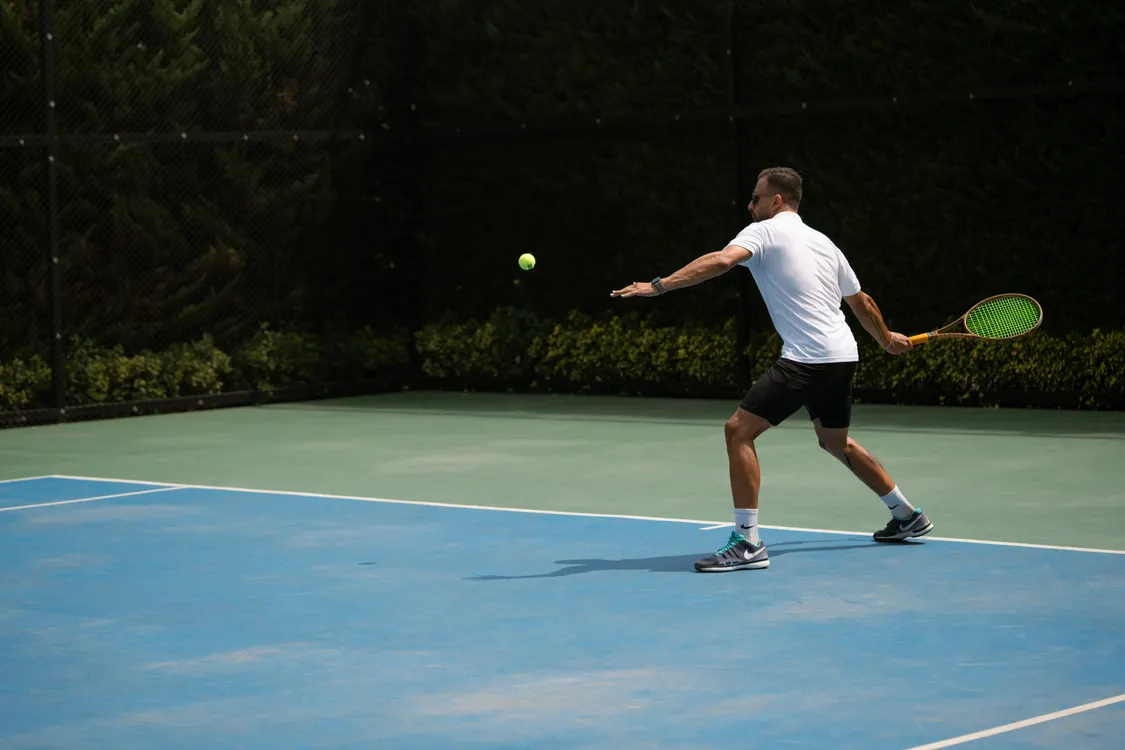
Head size is forgiveness you can measure. The rackets here run from 100 to 110 sq in, and the difference is real: a 110 sq in head gives you a materially larger sweet spot and more free power when contact drifts toward the frame, while a 100 sq in head answers with a slightly tighter, more predictable response once your contact point settles. Weight decides how long your technique survives a session. The frames below run from 255 g to 280 g unstrung — light enough to prepare early and swing repeatedly, heavy enough not to be pushed around by the ball.
Balance is where that light weight goes to work. A head-heavy balance — the PWR 110’s 345 mm and the EZONE Ace’s 345 mm are the clearest examples here — puts mass behind the ball, so depth arrives even when the swing does not. A head-light balance, like the Clash 100L V3’s 31.5 cm unstrung figure, keeps the head quick and the arm calm, which suits players who are already generating their own pace or protecting a sensitive elbow. String pattern sets the spin dial: almost every beginner frame here uses an open 16×19 bed that helps the ball climb and dip, while the Dunlop’s 16×18 spreads its crosses a touch wider still. Beam width sits behind all four — the thicker beams on these frames return energy to the ball, which is precisely what a developing swing needs donated. The buying guide at the end turns each spec into a simple rule.
The 7 Best Tennis Rackets for Beginners, Compared
Seven frames, five decisions. Read the card that matches your starting point first — the order runs from the most forgiving oversize frame down to the step-up bridge, not from “best” to “worst”.
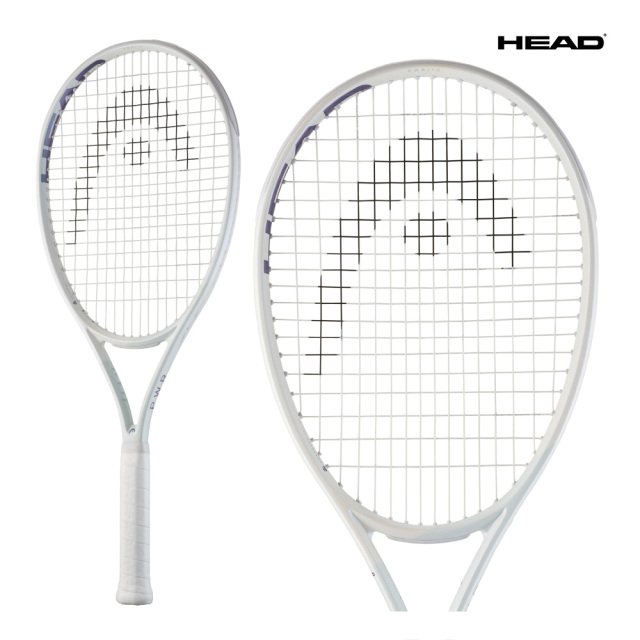
HEAD PWR 110
The maximum-forgiveness starter — a super-oversize head and head-heavy balance built for a slow, short swing.
Start with the maths of a first season: the bigger the head, the more of your imperfect contact still counts as a shot. The PWR 110 carries the largest head in this guide at 110 sq in, and HEAD positions it exactly where it belongs — HEAD says the PWR 110 is super-light and easy to swing, and offers effortless power for intermediate and beginner players with a slow and short swing. That is an honest description of most first-year tennis, and this frame is shaped around it: the oversize bed forgives contact out toward the frame, and the thick 26/25/23 mm beam returns energy that a compact swing has not yet learned to generate.
The balance does the second half of the job. At 345 mm the PWR 110 is the most head-heavy racket here, which puts mass behind the ball at contact — depth and stability arrive without you swinging harder, and blocked returns still travel. The trade is manoeuvrability: a head-heavy oversize frame is not the quickest tool at the net, and a player whose swing lengthens quickly will feel its ceiling within a season or two. But as a confidence machine for a genuine starter — the racket that turns “I keep missing” into rallies — nothing in this guide is more forgiving.
What we like
- The largest sweet spot in the guide — off-centre contact still produces a ball
- Head-heavy balance donates depth to short, compact swings
- Light 265 g frame is easy to get into position
- Thick beam returns free power on defensive shots
Worth knowing
- Head-heavy oversize frames are slower to manoeuvre at the net
- Fast-improving players will outgrow it sooner than the bridge picks below
As an Amazon Associate we earn from qualifying purchases.
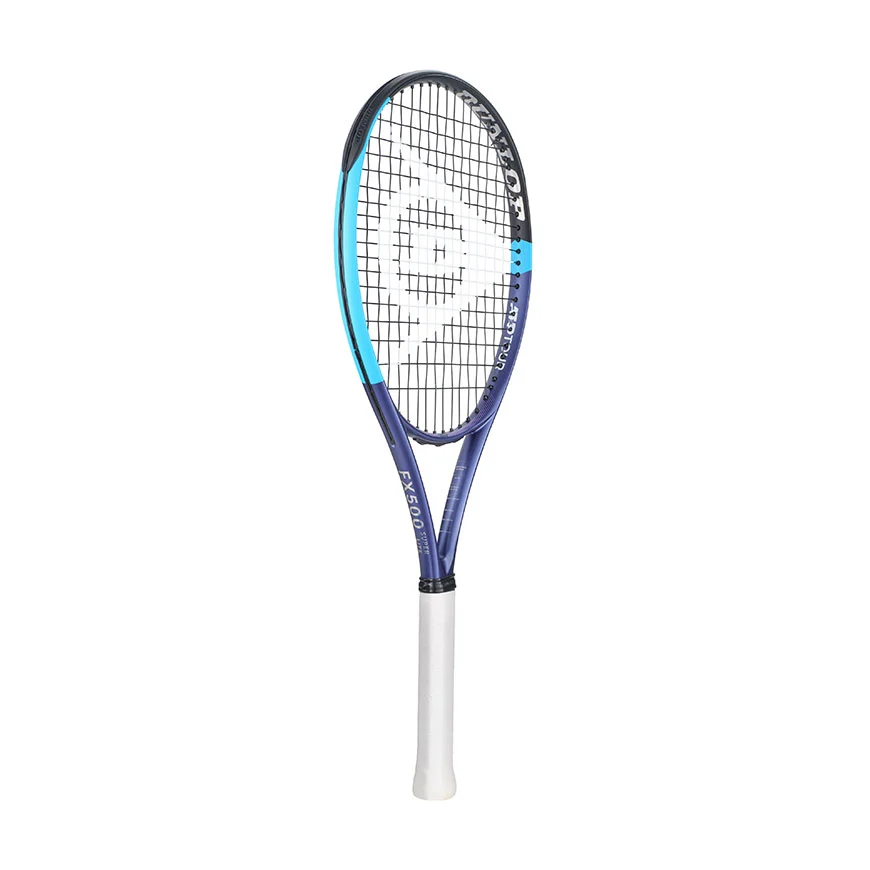
Dunlop FX 500 Super Lite
The lightest frame in Dunlop’s FX range — 255 g of easy swing speed for players still building timing.
Some beginners do not need a bigger head — they need a racket they can actually move. At 255 g unstrung the FX 500 Super Lite is, in Dunlop’s own words, the lightest frame in the FX lineup, and Dunlop publishes it for beginners, improving players and juniors who want a super-light, easy-to-use racket. The practical effect is preparation: a lighter frame gets turned, taken back and swung through on time, and on-time contact beats perfect contact that arrives late. The 100 sq in head keeps the shape of a modern performance racket, so the habits you build on it transfer directly when you step up.
Dunlop builds the forgiveness in through the frame rather than the dimensions. Sonic Core made with Infinergy sits at the sides of the head to absorb vibration and return energy, Vibroshield adds an anti-vibration layer, and the Power Wave grommet design is there to make power more consistent across the bed — Dunlop’s answer to the off-centre hits every beginner produces. The 16×18 pattern spreads the crosses slightly wider than the standard 16×19, helping the ball climb. Know the limit: 255 g is genuinely light, and stronger improvers facing heavier pace will eventually want the mass of the bridge frames below.
What we like
- The lightest racket in this guide — preparation and reactions stay easy
- Modern 100 sq in shape builds habits that transfer to performance frames
- Sonic Core and Vibroshield take vibration out of a light frame
- 16×18 pattern helps a developing topspin shape
Worth knowing
- Very light frames get pushed around by heavy incoming pace
- Smaller head than the oversize picks — less margin on wild contact
As an Amazon Associate we earn from qualifying purchases.
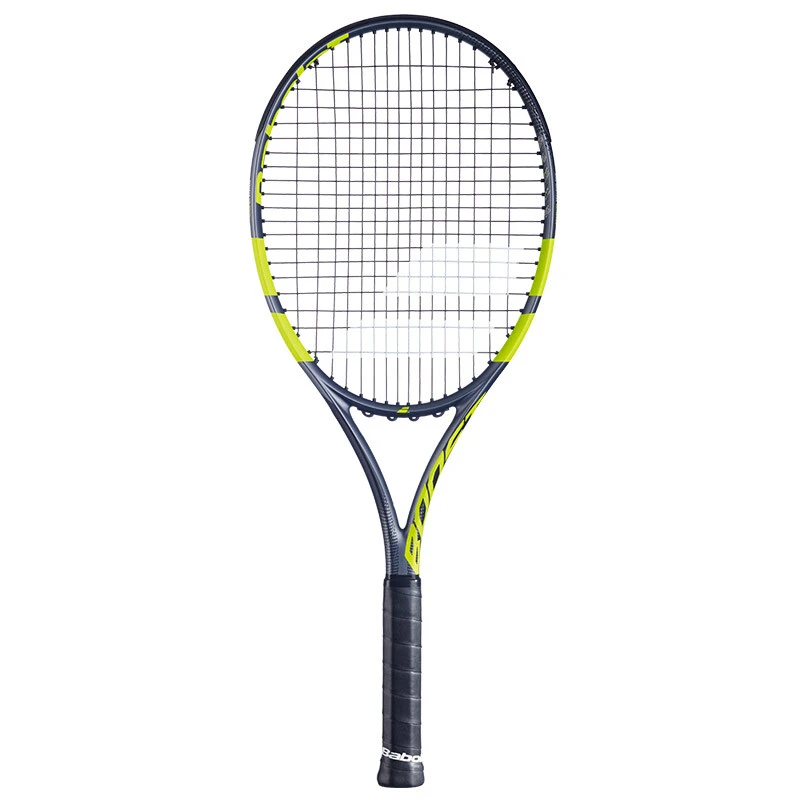
Babolat Boost Aero
Light, lively and easy to reposition — the beginner frame for players who want to move and swing, not just block.
The Boost Aero is Babolat’s beginner line wearing the Aero family’s colours, and its brief is manoeuvrability. At 260 g unstrung with a 102 sq in head, it sits a step above the featherweight frames: still light enough for a full session without shoulder fatigue, but with a midplus-plus head that gives contact a little more room than a standard 100. Babolat builds it in graphite rather than the aluminium of true toy rackets, so the response stays honest as your swing grows — the ball tells you where it met the strings, which is how technique actually improves.
Two Babolat details matter for a starter. The Woofer System — the frame-and-string interface Babolat uses across its ranges — lengthens ball-to-string contact time, which softens the feel and adds a measure of control to a lively frame. And the open 16/19 bed on a 340 mm balance gives the ball an easy, arcing flight: depth with net clearance, the exact ball shape a coach asks a beginner to hit. It arrives pre-strung, so the first session needs nothing but a court. Players who want maximum oversize forgiveness should take the PWR 110 above; players who want to swing, move and learn topspin shape should start here.
What we like
- 260 g graphite frame — light, but with an honest performance-racket response
- 102 sq in head adds margin over a standard 100 without going oversize
- Woofer System softens contact and adds control
- Pre-strung and ready to play out of the cover
Worth knowing
- Firm RA 70 layup — sensitive arms should compare the Clash below
- Light frames reward timing; they will not muscle a late swing into a winner
As an Amazon Associate we earn from qualifying purchases.
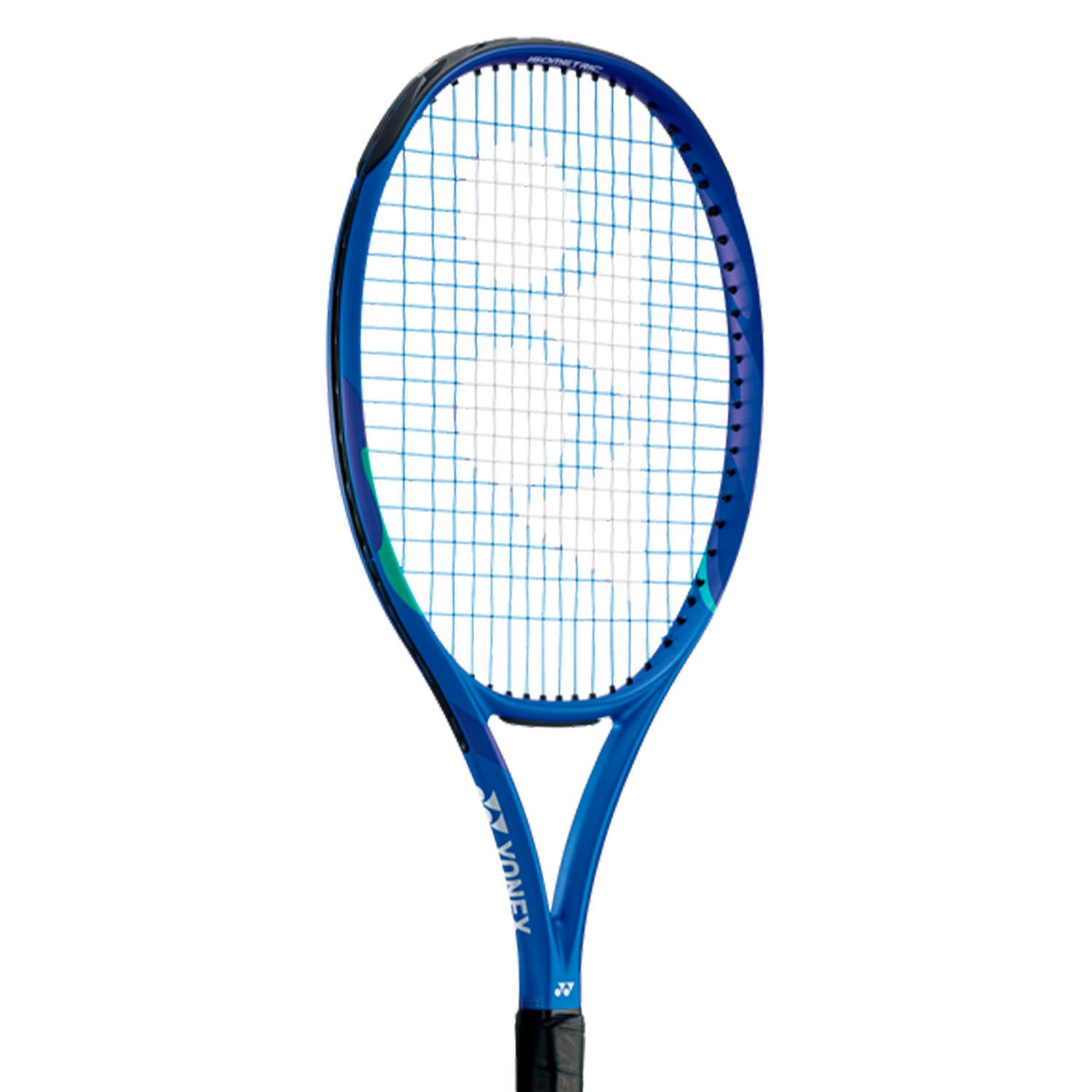
Yonex EZONE Ace
The ISOMETRIC sweet spot in a light, pre-strung package — the easiest route into a proper graphite frame.
The EZONE Ace takes the defining idea of Yonex’s flagship line — the ISOMETRIC head shape, which squares off the top of the frame to enlarge the sweet spot — and puts it in a 260 g beginner racket. For a new player that shape is not a gimmick: contact in the upper half of the bed is where developing forehands actually land, and the Ace’s squared hoop keeps those shots usable instead of dead. The 102 sq in head and head-heavy 345 mm balance work the same direction as the PWR 110’s, in a smaller, quicker package: easy depth from a compact swing, with stability donated by the balance rather than by frame weight your arm has to carry.
Comfort is the Ace’s second argument. Yonex fits Vibration Dampening Mesh in the handle to filter the buzz out of contact, and the graphite layup keeps the response cleaner than the price-point frames beginners often start on. It comes pre-strung from Yonex, so it is a genuine buy-and-play first racket — and because it shares its head shape and design language with the performance EZONEs, it is also the most natural-looking first step on a ladder that continues upward. If your priority is a forgiving first graphite racket that treats your arm kindly while your strokes form, this is the card to act on.
What we like
- ISOMETRIC head enlarges the sweet spot where beginners actually make contact
- Head-heavy 345 mm balance donates depth and stability at just 260 g
- Vibration Dampening Mesh keeps the ride calm
- Pre-strung by Yonex — ready for a first session immediately
Worth knowing
- Head-heavy balance is less nimble at the net than the head-light picks
- Factory strings are a starting point — plan a restring as you improve
As an Amazon Associate we earn from qualifying purchases.
HEAD Extreme Team (2024)
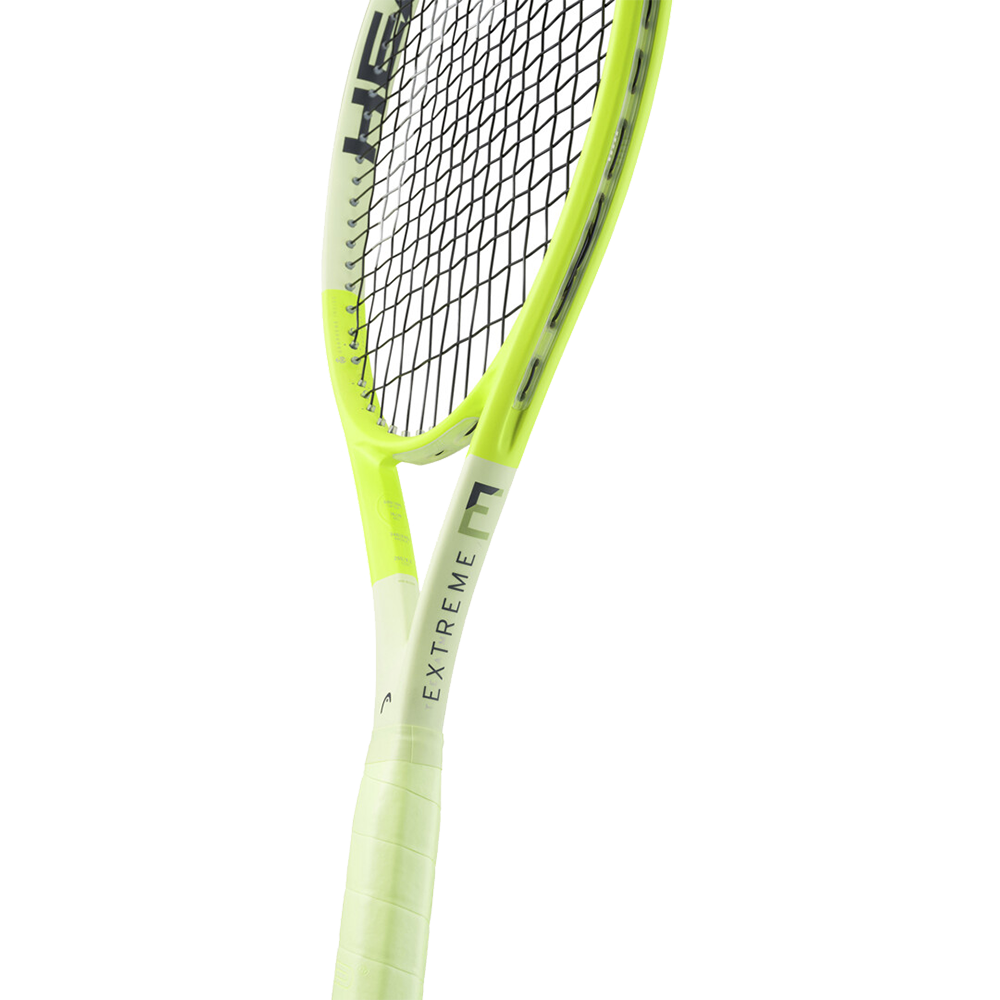
HEAD’s spin line, tuned light — a 105 sq in head and spin grommets for the beginner who wants to shape the ball.
Every beginner guide needs one racket for the player who is already brushing up the back of the ball in week three and asking why it will not dip. The Extreme Team is that racket. It comes from HEAD’s spin family — HEAD calls the current generation the ultimate spin machine for team players — and it carries the family’s tools in a beginner-weight package: a 105 sq in oversize head for margin, spin grommets that allow more string movement and a stronger trampoline effect on contact, and a shaft design HEAD builds to support topspin mechanics. At 265 g it stays quick enough for a developing swing to actually use those tools.
The 2024 update adds Auxetic 2.0, the material in the yoke and handle that HEAD uses to sharpen the connection between player and ball — for a learner, that feedback is coaching: you feel the difference between a brushed ball and a blocked one. The 340 mm balance keeps enough mass in the head for depth while the oversize bed forgives the contact errors that learning topspin guarantees, because brushing up means living nearer the edges of the strings. Choose it over the PWR 110 if your errors are about shape rather than contact, and over the Boost Aero if spin is the skill you most want your first racket to teach.
What we like
- Spin grommets and an open bed built for learning topspin shape
- 105 sq in head keeps margin while you brush nearer the edges
- Auxetic 2.0 feedback teaches the difference between brush and block
- 265 g keeps the head quick enough for a developing vertical swing
Worth knowing
- Spin-first design is wasted on a purely flat, blocking game
- Lively trampoline response takes a session to calibrate for touch shots
As an Amazon Associate we earn from qualifying purchases.
Wilson Clash 100L V3
The comfort specialist — the Clash blend of flexibility and stability, in the lightest Clash weight for adult starters.
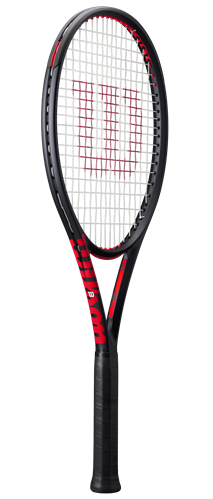
Adult beginners quit tennis for arms more often than for results. The Clash line exists for exactly that player: Wilson built the franchise on a frame that bends in a controlled way at contact, and Wilson says the V3 retunes that design for power, consistency and control, with a blend of flexibility, stability and comfort and enhanced forgiveness that makes more of the bed feel like the sweet spot. The 100L is the light version — 280 g unstrung with a strongly head-light 31.5 cm unstrung balance — so the comfort comes with easy handling rather than the sluggishness a soft, heavy frame can bring.
The supporting details are all aimed at a kinder, more forgiving contact. SI3D optimises the frame’s three-dimensional bending for targeted power, spin and control; the Hit Stabilizer adds inertia at the sides of the hoop to steady off-centre hits without adding weight or changing the balance; parallel drilling makes the string bed’s response more consistent. None of that makes the Clash a power frame — at 100 sq in it is the most performance-shaped head in this guide, and it asks a slightly fuller swing than the oversize picks. What it gives back is sessions that end because you are done playing, not because your elbow is. Pair it with a soft string setup from the start and it is the beginner racket an adult arm will thank you for.
What we like
- The most arm-friendly brief in this guide — flexibility with stability, by design
- Head-light balance keeps a 280 g frame quick and calm to swing
- Hit Stabilizer steadies the off-centre contact beginners live on
- 100 sq in performance shape grows with you longer than the oversize picks
Worth knowing
- Less free power than the head-heavy oversize frames — you supply more of the swing
- Distinctive flexible feel is worth a demo if your shop offers one
As an Amazon Associate we earn from qualifying purchases.
Wilson Ultra 100L v4
The bridge frame — Ultra easy power at a beginner-friendly weight, with enough stability to survive your improvement.
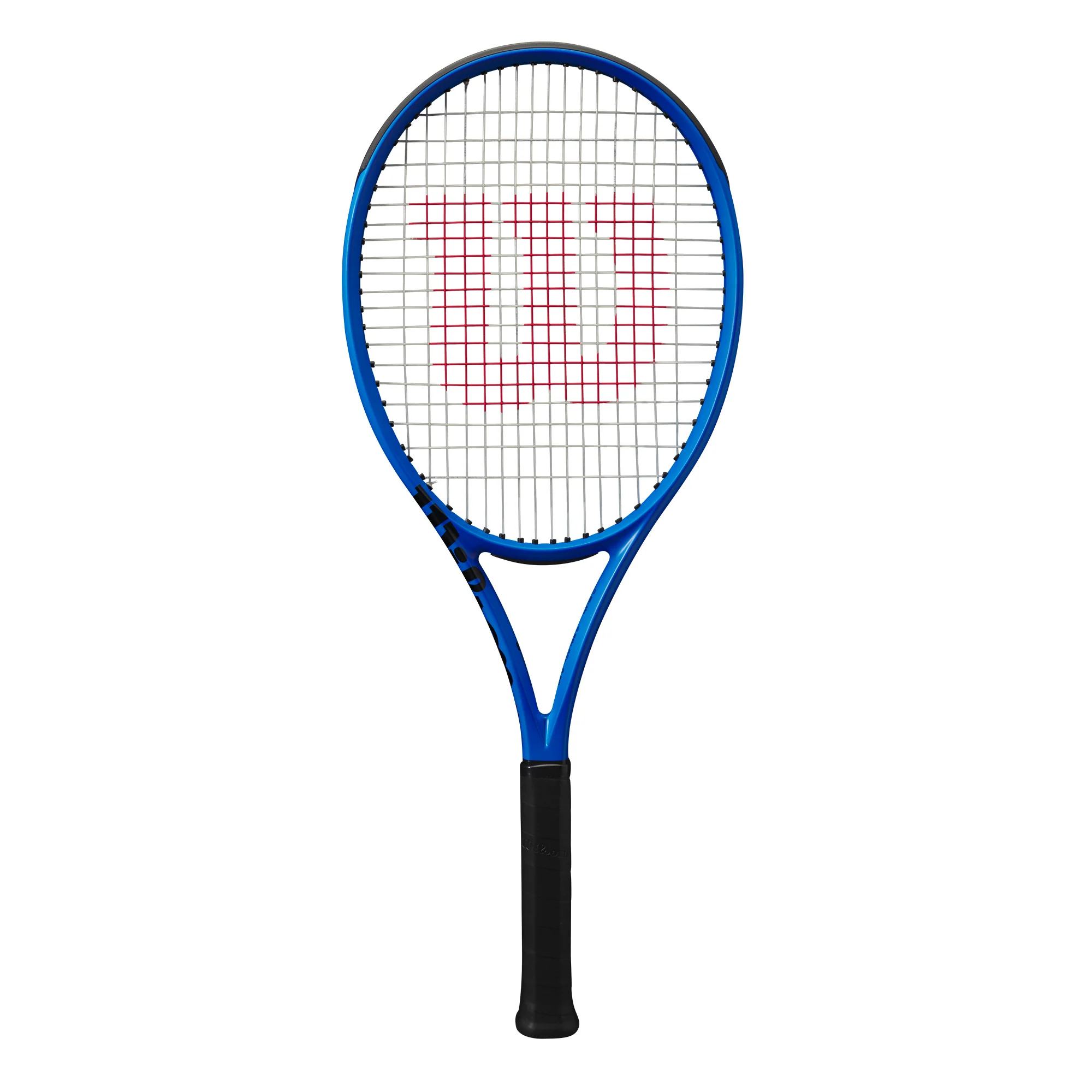
Some “beginners” are not really beginners: the returning player who played at school, the padel or squash convert with racket skills already in the hand, the strong improver six months in. For them the oversize frames above will feel like training wheels within a season. The Ultra 100L v4 is the bridge built for that player. Wilson describes it as the lighter alternative for players who want a more arm-friendly experience without compromising the ability to hit with pace and depth — a 280 g, 100 sq in performance shape with the Ultra line’s power geometry, in a weight a developing arm can swing all afternoon.
The design details support the bridge brief. FORTYFIVE construction is embedded in the layup for stability and comfort through the swing, the expanded Sweet Spot Channel adds power at the top of the hoop, and the Crush Zone grommet system compresses at impact to add dwell time — forgiveness, but delivered the performance-frame way rather than through sheer head size. The head-light 320 mm unstrung balance keeps it honest at the net and quick on defence. When this frame eventually feels light, you are ready for the full-performance end of the market — and Wilson’s wider current range, covered in our best Wilson tennis racquet guide, is the natural next read. Until then, this is the beginner racket least likely to need replacing.
What we like
- Performance shape and power at a weight a developing player can swing
- Head-light balance keeps volleys and defence quick
- Sweet Spot Channel and Crush Zone add forgiveness without an oversize head
- The longest useful life of any frame in this guide
Worth knowing
- 100 sq in head is the joint-smallest here — true first-month players get more margin above
- Asks for a fuller swing than the head-heavy donation frames
As an Amazon Associate we earn from qualifying purchases.
Side-by-Side Comparison Table
| Model | Best For | Head | Weight (Unstrung) | Balance | Pattern | Beam |
|---|---|---|---|---|---|---|
| HEAD PWR 110 | Oversize forgiveness | 110 sq in | 265 g | 345 mm | 16/19 | 26/25/23 mm |
| Dunlop FX 500 Super Lite | Lightest starter | 100 sq in | 255 g | 330 mm | 16×18 | 23-26-23 mm |
| Babolat Boost Aero | Manoeuvrable starter | 102 sq in | 260 g | 340 mm | 16/19 | 23-26-23 mm |
| Yonex EZONE Ace | First graphite racket | 102 sq in | 260 g | 345 mm | 16×19 | 24/26.5/23 mm |
| HEAD Extreme Team (2024) | Learning spin | 105 sq in | 265 g | 340 mm | 16/19 | 23/26/22 mm |
| Wilson Clash 100L V3 | Arm-friendly comfort | 100 sq in | 280 g | 315 mm | 16×19 | 24.5 mm |
| Wilson Ultra 100L v4 | Step-up bridge | 100 sq in | 280 g | 320 mm | 16×19 | 24/26.5/24.25 mm |
Buying Guide: Head Size, Weight, Balance and Pattern
1. Head size: buy the margin your contact needs today
Start at 105–110 sq in if you are a genuine first-season player: the PWR 110 and the Extreme Team exist because early contact wanders, and a larger bed converts more of those swings into rallies. Move to 102 sq in — the Boost Aero and EZONE Ace — if you played a little as a junior or your lessons are already grooving your contact point. Choose 100 sq in (the Dunlop, Clash and Ultra) when you want the shape your game will grow into and you accept a smaller margin while it does. The honest rule: a head that feels slightly too forgiving in month six is a better purchase than a head that punishes you in month one, because month one is when players quit.
2. Weight: light enough to prepare early, every time
Use unstrung weight to compare. 255–265 g (the Dunlop, HEAD pair and the two 260 g frames) suits new players, smaller adults, and anyone whose shoulder tires before their legs do — the racket arrives on time because it is light enough to move on time. 280 g (the two Wilsons) is the top of the beginner range: more stability against the ball and a longer useful life, in exchange for a fuller swing and a stronger arm. Strings, overgrip and dampener add roughly 25–30 g on top of the published figure, so judge the finished racket — and if you are between two weights, remember that fatigue degrades technique faster than a few grams of stability ever protected it.
3. Balance: let the frame donate the depth you cannot yet swing
Balance is the beginner’s cheat code. A head-heavy balance — 340–345 mm on the PWR 110, EZONE Ace, Boost Aero and Extreme Team — puts the mass where the ball is, so a short, careful swing still produces a deep, stable shot. That is the right default for a first racket. A head-light balance — the Clash at 315 mm unstrung, the Ultra at 320 mm — trades that donation for quickness and calm: the head whips through, volleys react faster, and the wrist and elbow do less work per shot. Pick head-light if you already generate pace, play a lot of doubles, or your arm has opinions. Pick head-heavy if your rally ball keeps landing in the service box.
4. String pattern: open beds teach the modern ball
Six of these seven frames use an open 16×19 pattern, and the Dunlop’s 16×18 is wider still. An open bed lets the mains move and snap back, lifting the ball over the net with margin and helping it dip inside the baseline — the safe, arcing ball shape that keeps beginner rallies alive. There is no beginner case for a dense pattern here: control you cannot yet swing fast enough to use is not control. What you should control instead is the string itself — a softer synthetic gut or multifilament at a moderate tension is the beginner default, and our guide to the best tennis strings explains the upgrade path when the factory set goes flat.
5. The step-up point: when a beginner frame stops suiting you
You have outgrown a beginner racket when three things happen together: your contact point has moved into the middle of the bed often enough that the oversize margin goes unused, your lengthening swing starts launching the ball long with a head-heavy frame, and you are choosing targets rather than just keeping the ball in. That is the moment the donation becomes a debt. Move first to a bridge frame like the Ultra 100L here, and when even that feels light and lively, continue to our all-level best tennis rackets guide, where the 295–305 g performance frames take over. Outgrowing a racket is a success, not a buying mistake — budget for it, and your first frame has done its job.
Frequently Asked Questions
What head size is best for a beginner tennis player?
Most beginners should start between 102 and 110 sq in. A 110 sq in oversize head, like the HEAD PWR 110, gives the largest sweet spot and the most forgiveness on off-centre contact. A 102 sq in head suits players whose contact is already settling, and 100 sq in is the step-up size for improvers who want a performance shape.
How heavy should a beginner tennis racket be?
Look for 255 g to 280 g unstrung. The frames in this guide run from the 255 g Dunlop FX 500 Super Lite to the 280 g Wilson Clash 100L V3 and Ultra 100L v4. Lighter is easier to prepare and swing for a full session; the heavier end adds stability and lasts longer as your swing develops.
Should a beginner choose a head-heavy or head-light racket?
Most first rackets should lean head-heavy or even in balance, because the mass in the head donates depth to a short swing. Choose head-light — like the Clash 100L V3 at 315 mm unstrung — if you already generate your own pace, play a lot of doubles, or want the calmest option for your wrist and elbow.
Which of these rackets is kindest to a sensitive arm?
Start with the Wilson Clash 100L V3: Wilson built the Clash line around a blend of flexibility, stability and comfort, and the 100L pairs it with a head-light balance. The Yonex EZONE Ace, with its vibration-dampening mesh, is the other comfort-led pick. Pair either with a soft string setup, and treat persistent pain as a medical question, not an equipment one.
When should a beginner move up from a beginner racket?
When your contact point is consistently near the middle of the strings, your longer swing starts sending balls long with a head-heavy frame, and you are aiming at targets rather than just keeping the ball in. Move to a bridge frame like the Wilson Ultra 100L v4 first, then to the 295 g to 305 g performance frames in an all-level guide.
Do beginner rackets come pre-strung?
Some do. The Babolat Boost Aero and the Yonex EZONE Ace in this guide arrive pre-strung and ready to play, while the Dunlop FX 500 Super Lite and the Wilson frames ship unstrung, so budget for a first stringing with a soft synthetic gut or multifilament at a moderate tension.
How do I choose the right grip size?
Grip size is personal and measurement-based, so we keep it out of this guide on purpose: use our Tennis Racket Grip Size Finder tool, linked in the introduction, to get your size in one step before you order any of these frames.
The Verdict
Buy by starting point and you will not go far wrong. The HEAD PWR 110 is the forgiveness answer — the frame for the player whose contact still wanders and whose swing is still short. The Dunlop FX 500 Super Lite is the lightest route onto the court, the Babolat Boost Aero the most manoeuvrable starter, and the Yonex EZONE Ace the first graphite racket we would hand a new player without qualification. The HEAD Extreme Team teaches spin, the Wilson Clash 100L V3 protects the arm, and the Wilson Ultra 100L v4 is the bridge that carries an improving player furthest before the step up. Seven current frames, five honest decisions — pick the one that matches the player you are this season, and go and play.
Affiliate disclosure: AliShuttler is reader-supported. When you buy through links on this page we may earn an Amazon commission at no extra cost to you. Specifications are taken from manufacturers’ published product information and were verified at the time of writing; manufacturers revise models and cosmetics between generations, so confirm the exact specification on the product page before ordering.