Most paddles are built around one default hand and one default weight — and if your hands are smaller, that default works against you on every swing. This guide ignores the marketing labels and works from the published numbers instead: seven paddles whose makers state a lighter weight, a smaller grip circumference, or a genuine thin-grip or light-weight option you can actually order.
⚡ TL;DR — The Short Answer
For the complete smaller-hands package, buy the Paddletek Bantam ALW-C 12.7 — the lightest paddle here at 7.5–7.8 oz, with a true 4-inch thin grip option. For the smallest grip of all, the Gearbox CX11 Quad Control goes down to 3 5/8 inches at 7.8 oz. The Selkirk SLK Halo Power Max pairs a 4-inch grip with a light 7.5–8.0 oz power build, the Engage Pursuit Pro EX in its LITE weight is the lightweight widebody, the JOOLA Graf Pro V 16mm is the elongated small-grip pick, the Diadem Warrior Edge is the small-grip control paddle, and the Vatic Pro Prism Flash 16mm brings a 4.125-inch grip to a value raw-carbon build.
Quick Picks — Best Pickleball Paddles for Women at a Glance
7.5–7.8 oz with a 4-inch thin grip option — the lightest paddle in this guide, and the only one that is light and thin-gripped at once.
Grip circumferences of 3 5/8 or 3 15/16 inches — smaller than anything else here — on a 7.8 oz quad-shape control paddle.
A 4-inch grip and a 7.5–8.0 oz build around a 13mm power core and a wide Max face.
The full 16 x 8 inch EX shape at a 7.5–7.8 oz LITE weight, with Engage’s soft-feeling Black core.
Elongated 16.5-inch reach with a 4 1/8-inch small grip — the combination elongated paddles rarely offer.
A 16mm control core and etched carbon face on a 4 1/8-inch grip, at an even 8.0 oz.
Raw Toray T700 carbon over a 16mm core, a 4.125-inch grip, and a hybrid shape that keeps hands quick at the net.
In This Guide
Start With Your Hands, Not the Label
There is no separate engineering category called a “women’s paddle”. What exists is a default: most performance paddles are published with a grip circumference around 4 1/4 to 4 3/8 inches and a weight somewhere in the low-to-mid 8-ounce range, because that default suits the average adult hand the industry designs for. If your hand is smaller than that default, two quiet problems follow. A grip that is too big forces your fingers to work just to hold on, which tightens the forearm and slows the wrist snap you need at the kitchen line. And a paddle at the heavier end of the range asks more of a smaller lever on every one of the hundreds of swings in a session. Neither problem shows up in a product title. Both show up in the spec table — which is why this guide is built entirely from spec tables.
So the seven paddles below were not chosen because a maker markets them to women. They were chosen because each one verifies, in its maker’s own published figures, at least one of three things: a lighter published weight (the lightest here start at 7.5 oz), a smaller published grip circumference (down to 3 5/8 inches at the extreme), or a real, orderable option — a thin grip or a LITE weight — that brings the paddle down to that territory. Where a maker publishes a standard grip and a thin grip for the same model, both figures are on the card, because the thin one is the one to order.
One boundary is worth stating plainly. Our pillar guide to the best pickleball paddles owns the all-player buying decision — every playing style, every budget tier, the full market. This page owns one narrower decision inside it: the lightweight, smaller-grip choice. If your hands are not small and weight is not your problem, the pillar is the right read and this page will feel like a detour. If you are new to the sport entirely, learn the strokes first with our guide on how to play pickleball, then come back and choose the paddle your hands actually need.

The Three Specs That Actually Decide It
Grip circumference is the headline spec on this page, and it is the one most roundups bury. It is the measurement around the handle, and it decides whether your fingers wrap with a relaxed overlap or perch on the surface. The mainstream default sits around 4 1/4 inches. Every paddle below beats or matches that figure with room to spare: the small-grip models publish 4 1/8 inches, the Halo Power Max publishes 4 inches in its Power configuration, the Paddletek offers a 4-inch thin grip as an orderable option, and the Gearbox goes smaller than the rest of the market at 3 5/8 or 3 15/16 inches. A grip that fits lets you hold the paddle loosely between shots and squeeze only at contact — the pattern that keeps volleys crisp and forearms fresh.
Weight is the second spec, and it is a range, not a single number, because makers publish it that way. Judge the bottom of the range: a paddle published at 7.5–7.8 oz will feel noticeably quicker through a kitchen exchange than one published at 8.1–8.5 oz, and it will ask less of your wrist and elbow across a long session. The honest trade is stability — a very light paddle gives back less help against hard-driven balls — which is why the buying guide below separates the genuinely light picks (7.5–7.8 oz) from the midweight small-grip picks (around 8.0–8.1 oz) instead of pretending one number suits everyone.
Shape is where the first two specs meet your game. A standard or widebody shape — the Paddletek, the Engage EX, the Halo Max and the Gearbox Quad all live here — puts the sweet spot closer to your hand and keeps the paddle quick and forgiving. An elongated shape — the JOOLA Graf Pro V and the Diadem Warrior Edge — trades a little of that hand speed for reach and leverage on serves, returns and two-handed backhands. Core thickness and face material then tune the feel: thicker 16mm cores lean control, thinner 12.7–13mm cores lean power, and the raw or etched carbon faces on every card below are there for spin and a direct connection to the ball. The cards state each maker’s materials exactly as the maker states them — nothing translated, nothing embellished.
The 7 Best Pickleball Paddles for Women, Compared
Seven paddles, one decision each. The order runs from the most complete smaller-hands package down to the value pick — read the card that matches your hands first, because on this page the right grip beats the right ranking every time.
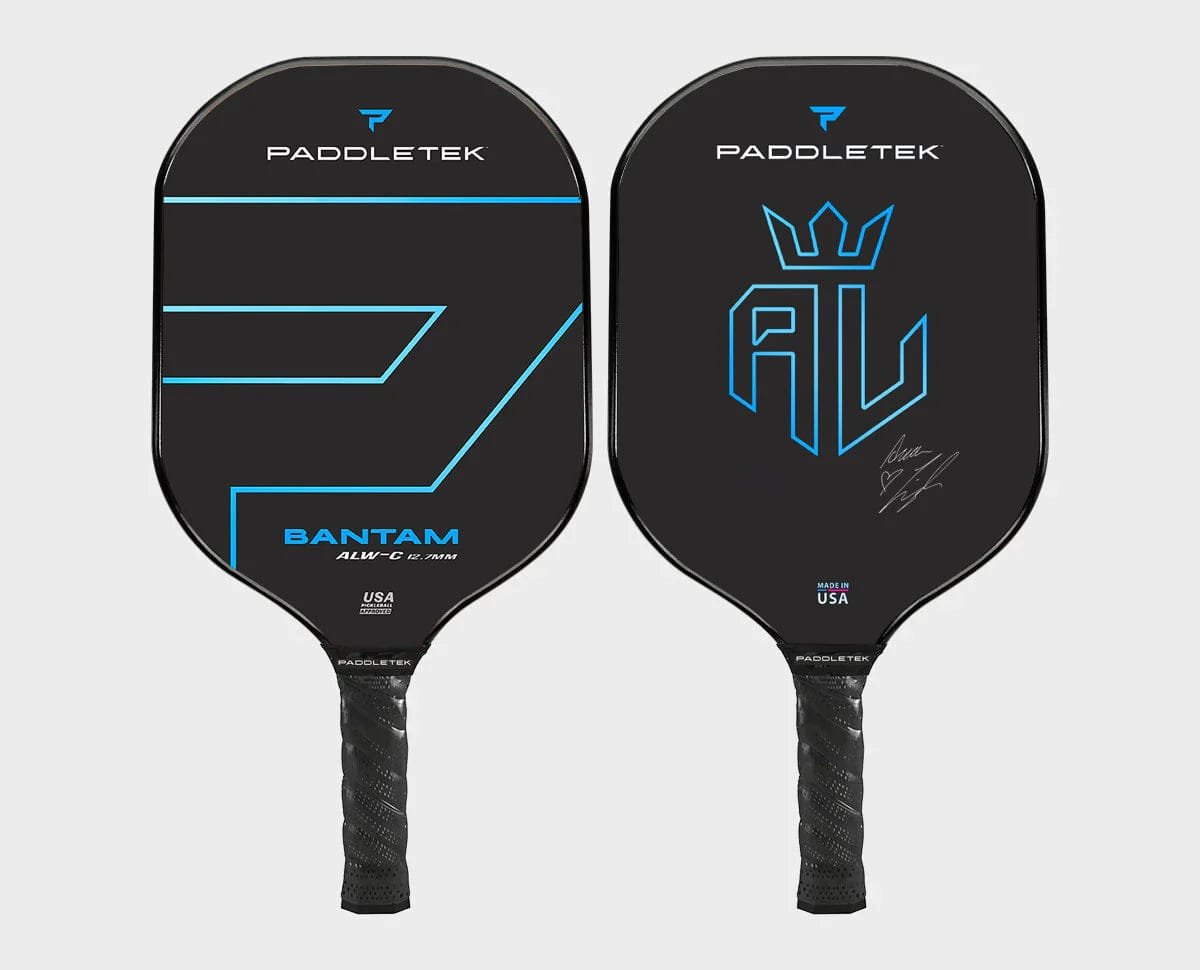
Paddletek Bantam ALW-C 12.7
The lightest paddle in this guide — and the only one that pairs that weight with a true 4-inch thin grip.
The ALW-C 12.7 earns the top card on this page by doing the two things this page exists for, simultaneously. Its published weight range of 7.5–7.8 oz is the lightest in the roundup, and Paddletek offers it with a thin grip of 4 inches alongside the standard 4 1/4-inch grip — so a smaller hand does not have to choose between the light paddle and the small grip. They arrive in the same paddle. Paddletek says the model was designed in conjunction with Anna Leigh Waters, and the build brief shows it: a thin 12.7mm core for a fast, direct response, in a compact 15 5/8-inch frame that keeps the paddle quick to manoeuvre at the net.
The construction is Paddletek’s established Bantam recipe stated in the maker’s own terms: a Bantam SRT core in advanced high-grade polymer composite honeycomb, faced with PT-700 unidirectional raw carbon fiber. In plain terms, that is a power-leaning core thickness wrapped in a spin-friendly raw carbon surface — a combination aimed at players who drive the ball and finish points rather than only absorbing them. Order the thin grip version (it ships with Paddletek’s High Tack Performance Grip rather than the cushioned grip on the standard version), and this is the most complete answer on the page to the smaller-hands question.
What we like
- Lightest published weight here: 7.5–7.8 oz
- A genuine 4-inch thin grip option, not just a small standard grip
- Raw carbon PT-700 face for spin on drives and serves
- Compact frame keeps hand speed high at the kitchen
Worth knowing
- The 12.7mm core leans power — control-first players should look at the 16mm cards below
- Order carefully: the standard grip version is 4 1/4 inches, so the thin grip must be selected
As an Amazon Associate we earn from qualifying purchases.
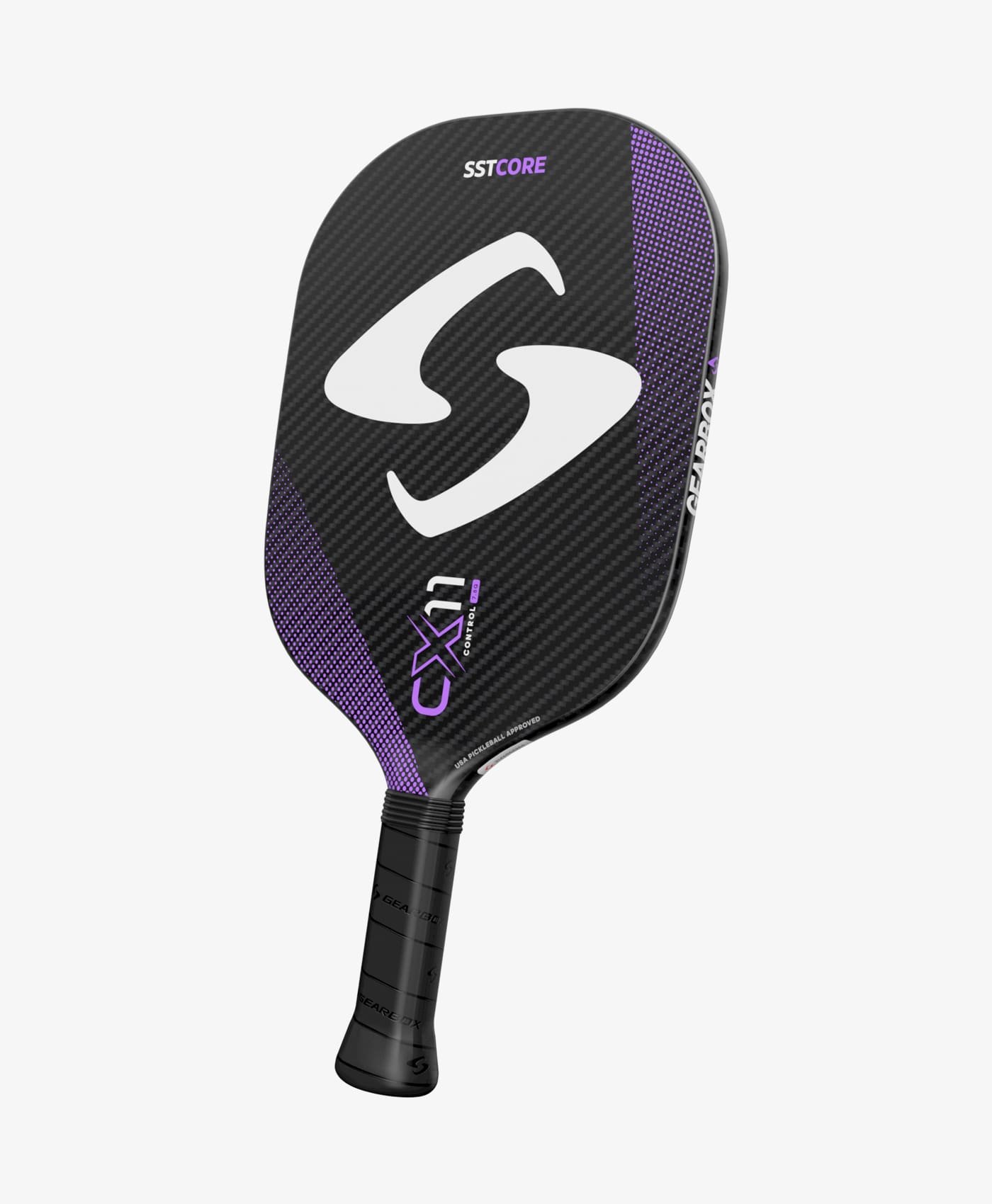
Gearbox CX11 Quad Control (7.8 oz)
Grip circumferences smaller than the rest of the market — 3 5/8 or 3 15/16 inches — on a proper control paddle.
If grip size is your whole problem, Gearbox is the answer the rest of the industry does not offer. The CX11 Quad Control is published with handle circumferences of 3 5/8 inches or 3 15/16 inches — both visibly, measurably smaller than the 4 1/4-inch default, and smaller than any other card in this guide. For a genuinely small hand, that is the difference between a grip your fingers close around and a grip your fingers merely rest on. The paddle around that handle is a 7.8 oz quad-shape control model: the wide 8-inch face and the Quadraform head put a broad, forgiving hitting area close to the hand, which is exactly where a control player at the kitchen line wants it.
Gearbox builds differently from everyone else here, and the card states it the way Gearbox states it: there is no honeycomb in this paddle. The core is Gearbox’s patented SST ribbed construction in Toray T-700 carbon fiber, with patented carbon fiber chambers, faced with 3K woven carbon fiber. Gearbox positions the Quad Control for precision and a soft touch, and the slim 11mm profile keeps the paddle fast through the hand. One practical note: with grips this small, many players add an overgrip for tack and sweat absorption, which nudges the circumference up slightly — start with the 3 5/8-inch option if you plan to do that, and the finished grip still lands below the standard default.
What we like
- The smallest published grips in this guide — a real solution for very small hands
- Wide 8-inch quad face gives a generous, close-to-hand sweet spot
- 7.8 oz keeps it quick for blocks, resets and dinking
- Carbon-chamber construction is a genuinely different build from honeycomb paddles
Worth knowing
- The shorter 4-3/4-inch handle leaves little room for two-handed backhands
- The 11mm profile is a control brief — power comes from your swing
As an Amazon Associate we earn from qualifying purchases.
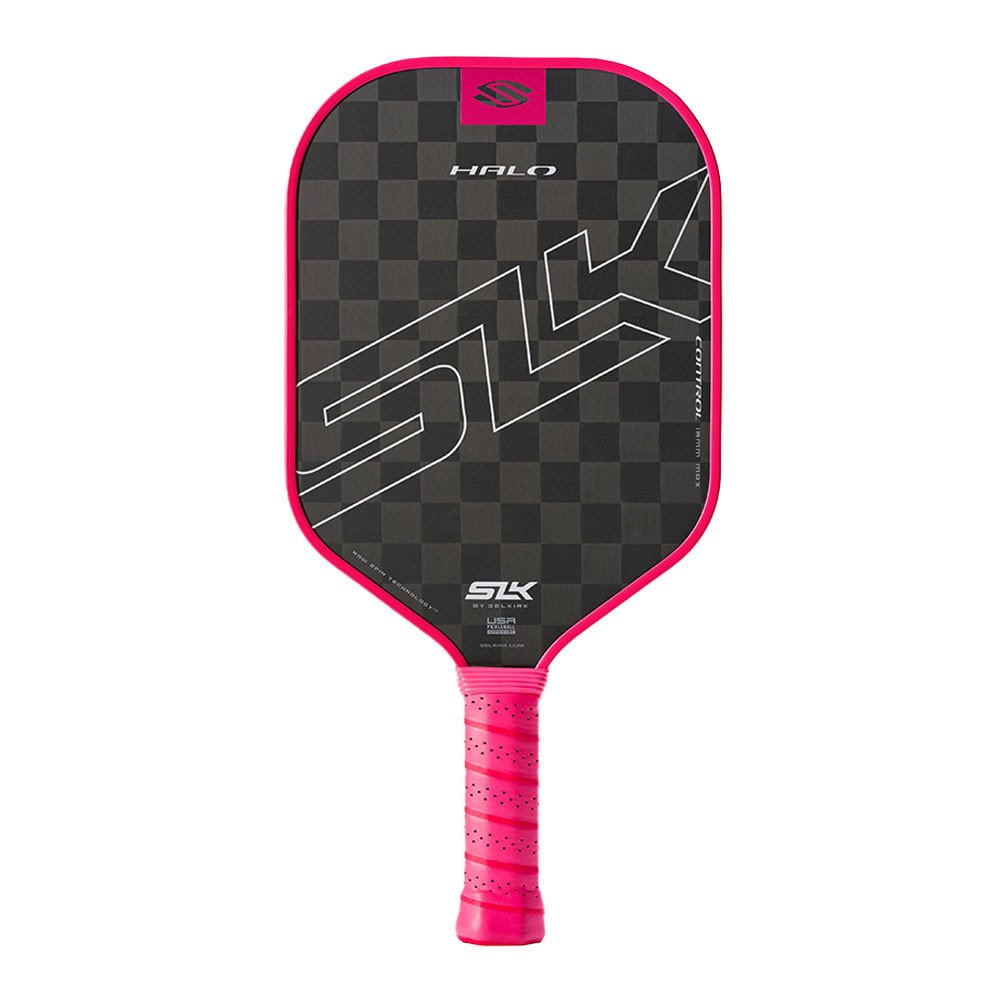
Selkirk SLK Halo Power Max
A 4-inch small grip and a 7.5–8.0 oz build around a 13mm power core and the wide Max face.
Selkirk’s Halo line is where the small-grip shopper should look inside the SLK range, because the Power configuration of the Halo Max publishes the figure this page cares about: a grip circumference of 4 inches, labelled Small in Selkirk’s own specification table, on a paddle whose weight range starts at 7.5 oz. That combination — light and small-gripped, in the maker’s standard line rather than a special order — is rare. The Max shape is the wide one in the Halo family at 16 x 7.85 inches, so the hitting area stays generous even as the handle shrinks, and the shorter 4.85-inch handle keeps the balance of the paddle close to the hand.
The Power version is built around Selkirk’s Rev-Core Power Polymer core at 13mm — the thinner, livelier of the two Halo Max configurations — with a T700 raw carbon fiber face and Selkirk’s Raw Spin Technology surface treatment, plus the low-profile EdgeSentry edge guard. Read the configuration carefully when you order: the same Halo Max name also covers a 16mm Control version, which publishes a larger 4.25-inch grip and a slightly heavier range. The card above is the Power configuration throughout, because the Power configuration is the one that answers this page’s question. Selkirk also describes an updated CarbonFusion face wording for the newest Halo Power production, so confirm the exact face description on the product page before ordering.
What we like
- 4-inch small grip published in Selkirk’s own spec table
- Weight range starts at 7.5 oz — joint lightest here
- Wide Max face keeps the sweet spot generous
- Raw carbon face and 13mm core give it a genuine power brief
Worth knowing
- The Control configuration of the same paddle has a bigger grip — check the version before buying
- Shorter handle suits one-handed play better than two-handed backhands
As an Amazon Associate we earn from qualifying purchases.
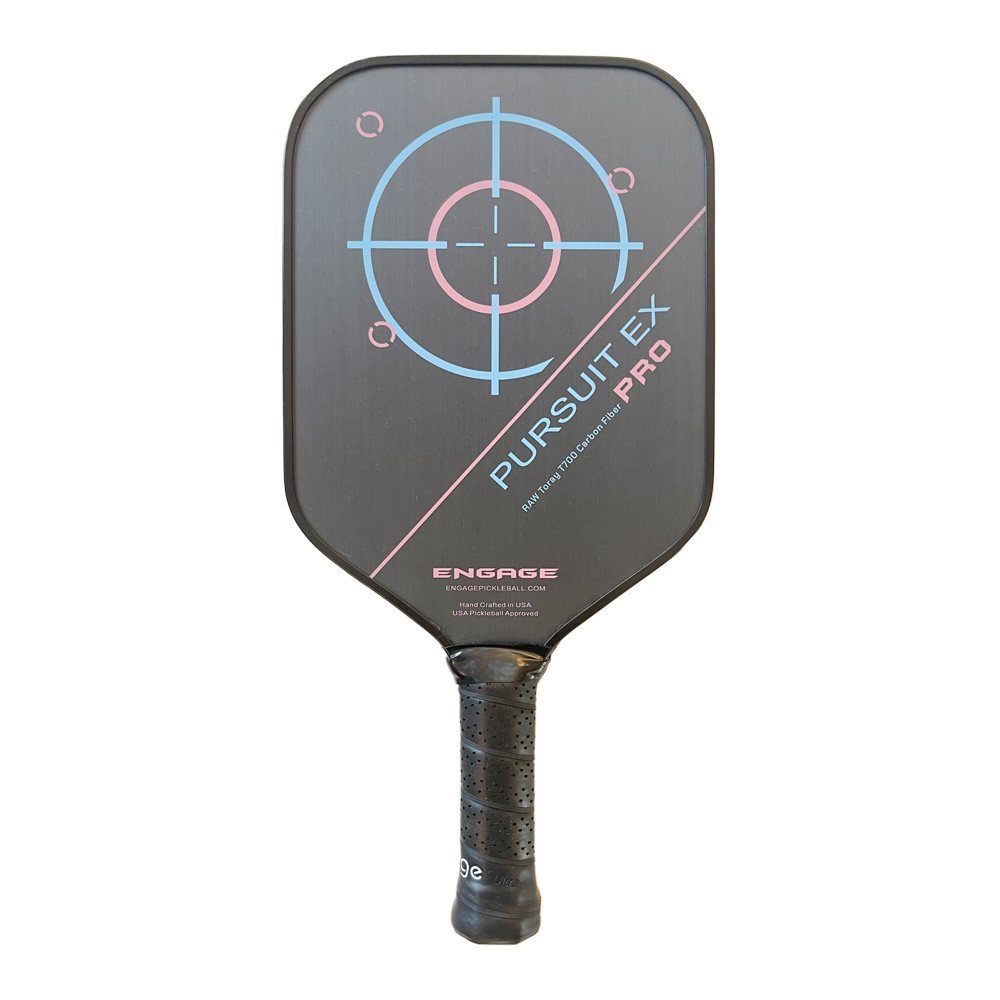
Engage Pursuit Pro EX (LITE Weight)
The full-size 16 x 8 inch EX shape at a 7.5–7.8 oz LITE weight — light hands, full paddle.
The Pursuit Pro EX makes this guide through its weight options rather than its grip. Engage publishes the EX in a Standard weight of 7.9–8.3 oz and a LITE weight of 7.5–7.8 oz, and the LITE is the version carded here: it brings one of the widest, most familiar shapes in the game — the 16 x 8 inch EX with a full 8-inch face — down into the lightest weight band in this roundup. For a player whose hands are average-sized but whose arm tires over a long session, or who plays a blocking, resetting game at the net and lives on hand speed, that trade is the right one: full-size paddle, light swing.
Engage’s build is stated in its own terms on the card: a proprietary polymer composite core using Engage’s Control Pro Black technology, which Engage describes as controlling the rate of compression and rebound, faced with raw Toray T700 carbon fiber over an inner application layer. Engage also lists Counter Balance Technology, which it describes as lowering the paddle’s balance point for quicker hand speed, and the grip circumference is the standard 4 1/4 inches — which is exactly why this card sits fourth rather than first. If your grip is the problem, the three cards above solve it more directly. If weight is the problem and your grip is fine, this is your paddle.
What we like
- LITE weight of 7.5–7.8 oz on a full 8-inch-wide face
- The wide EX shape is the most forgiving platform in this guide
- Raw Toray T700 face for spin and a direct feel
- Standard and LITE weights let you choose your side of the trade
Worth knowing
- Grip is the standard 4 1/4 inches — not a small-grip solution
- Make sure the listing you buy is the LITE weight, not the Standard
As an Amazon Associate we earn from qualifying purchases.
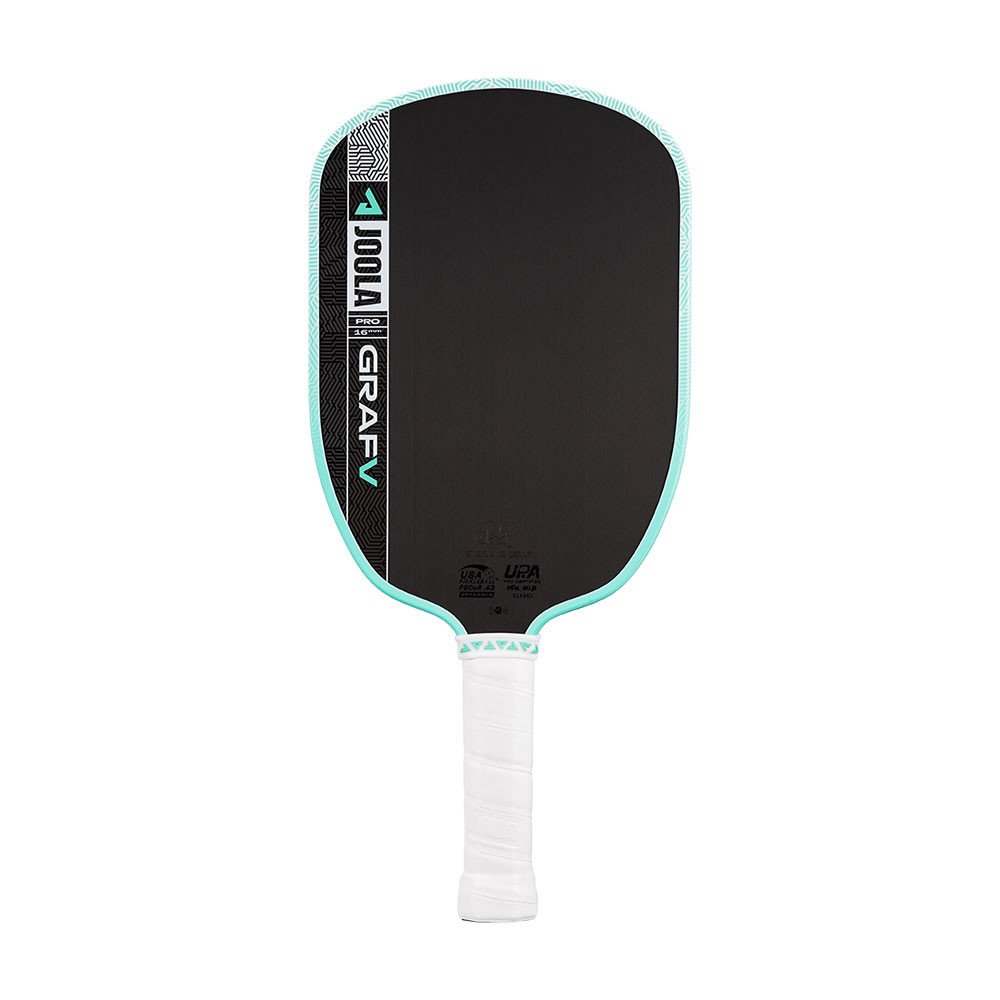
JOOLA Graf Pro V 16mm
Elongated reach and a pro-level 16mm build, with the grip sized down to 4 1/8 inches.
Elongated paddles usually ask smaller-handed players to accept the standard grip as the price of reach. The Graf Pro V is the exception in JOOLA’s line: a 16.5-inch elongated paddle whose published grip circumference is 4 1/8 inches, labelled Small. It is worth knowing how deliberate that is — on JOOLA’s own Agassi Pro product page, JOOLA directs shoppers looking for a 16mm core with a smaller grip to the Graf model. The Graf shape extends the sweet spot toward the upper edges and corners of the face, and the long 5.5-inch handle leaves genuine room for a two-handed backhand, which elongated players with smaller hands are so often denied by short handles on widebody paddles.
The build is JOOLA’s current pro platform as JOOLA states it: a Honeycomb Propulsion core with a Hyper-Foam Edge Wall, a textured carbon fiber face, and a thermoformed construction with JOOLA’s KineticFrame technology in the Pro V generation, over a 16mm core thickness that leans the paddle toward control and stability on resets and blocks. At an average of 8.1 oz it is the heaviest card in this guide — honest territory to flag. The weight buys stability against hard hitters and leverage on full swings, which is the game this paddle is for. If your priority is the lightest possible swing, stay with the first three cards. If your priority is reach with a grip that finally fits, this is the one.
What we like
- A true small grip on an elongated pro-level paddle — a rare combination
- Long 5.5-inch handle suits two-handed backhands
- 16mm core keeps resets and blocks composed
- Extended sweet spot toward the top of the elongated face
Worth knowing
- Heaviest card here at an 8.1 oz average — not the pick for a tired arm
- Elongated faces reward a grooved contact point more than widebody shapes do
As an Amazon Associate we earn from qualifying purchases.
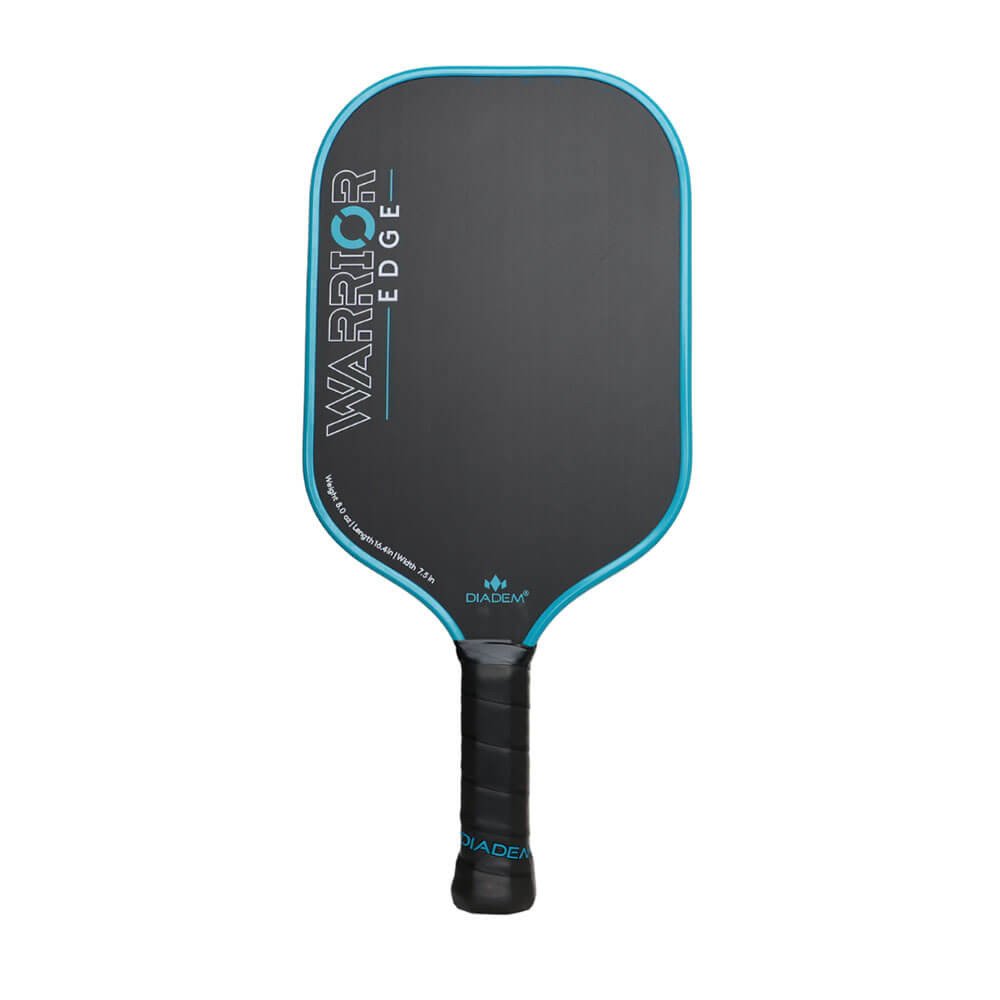
Diadem Warrior Edge
A 16mm control build and an etched carbon face, published with a 4 1/8-inch grip as standard.
Diadem publishes the Warrior Edge with a 4 1/8-inch grip size — Diadem labels it G1 — as the paddle’s standard specification, not as a special order. That single line in Diadem’s own spec table is why it belongs on this page. Around that grip sits an elongated 16.4 x 7.5-inch paddle at an even 8.0 oz on Diadem’s product page, built for the control side of the game: a 16mm polymer honeycomb core (Diadem lists the honeycomb density as 8mm PP) that takes pace off the ball at the kitchen, in a slightly slimmer take on Diadem’s original Warrior concept, with the Aero Guard channel edge guard Diadem introduced on this model.
The face is the other half of the brief. Diadem uses an etched carbon fiber face, and Diadem’s point about etching is durability of texture: the spin surface is machined into the face rather than applied on top of it. For the player this paddle suits — the one who wins points with resets, blocks and placement rather than raw pace — the combination is coherent: a thick, calm core, a face that keeps its texture, a midweight build that stays stable in a fast exchange, and a grip that a smaller hand can actually close around while doing all of it. Diadem fits its Comfort Max grip, and because the base circumference starts small, an overgrip for extra tack still leaves the finished grip below the usual default.
What we like
- 4 1/8-inch grip is standard spec, not a special order
- 16mm core is the control choice for the soft game
- Etched carbon face keeps its spin texture in the surface itself
- Even 8.0 oz keeps it stable without tipping into heavy
Worth knowing
- Control brief: power players should take the 13mm-class cards above
- Elongated face is narrower than the widebody cards — less margin on wide mishits
As an Amazon Associate we earn from qualifying purchases.
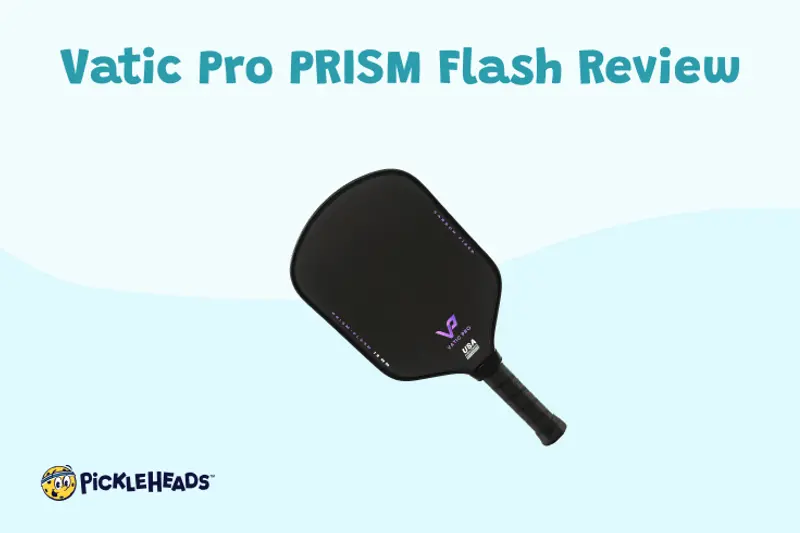
Vatic Pro Prism Flash 16mm
Raw Toray T700 carbon and a 16mm core with a 4.125-inch grip — the small-grip brief at a value brief.
Vatic Pro publishes the Prism Flash with a grip circumference of 4.125 inches across the Prism line, and that figure — smaller than the default, standard on every Flash — earns it the final card. The Flash shape is Vatic’s hybrid: at 16.2 inches long and 7.7 inches wide it sits between the widebody and elongated cards above, which makes it a sensible middle road for a player who wants some reach without giving up the quick hands a widebody gives back. In the 16mm version carded here, the published average weight range is 7.9–8.2 oz, so this is a midweight paddle: the small grip is the headline, the weight is the compromise, and the guide is honest about that ordering.
The construction is stated the way Vatic Pro states it: a raw Toray T700 carbon fiber surface with heat-compressed texturing, over an Optimized C7 polymer and high-grade performance honeycomb core, with unibody foam-injected walls that Vatic says increase the sweet spot and add control. Vatic also fits two polyurethane inserts in the grip, which Vatic says reduce shock. The Prism line’s whole proposition is that this specification — raw carbon, foam walls, a thick core — is offered at the value end of the market, paddle cover included, and for a smaller-handed player who wants to try the modern raw-carbon formula without paying the pro-tier toll, there is no cheaper verified route in this guide.
What we like
- 4.125-inch grip published as standard across the Prism line
- Raw Toray T700 carbon face at the value end of the market
- Hybrid Flash shape balances reach and hand speed
- 16mm core and foam-injected walls suit a control-leaning game
Worth knowing
- Midweight at 7.9–8.2 oz — the grip is small, the paddle is not the lightest
- The 14mm version is lighter on paper but gives up the 16mm core’s calm feel
As an Amazon Associate we earn from qualifying purchases.
Side-by-Side Comparison Table
| Model | Best For | Weight | Grip Circumference | Shape | Core | Face |
|---|---|---|---|---|---|---|
| Paddletek Bantam ALW-C 12.7 | Smaller hands overall | 7.5–7.8 oz | 4 in thin / 4 1/4 in standard | 15 5/8 x 7 3/4 in | 12.7mm Bantam SRT polymer honeycomb | PT-700 raw carbon fiber |
| Gearbox CX11 Quad Control | Smallest grip | 7.8 oz | 3 5/8 in or 3 15/16 in | Quad, 15-7/8 x 8 in | SST ribbed T-700 carbon fiber, 11mm | 3K woven carbon fiber |
| Selkirk SLK Halo Power Max | Lightweight power | 7.5–8.0 oz | 4 in (small) | Max, 16 x 7.85 in | Rev-Core Power Polymer, 13mm | T700 raw carbon fiber |
| Engage Pursuit Pro EX (LITE) | Lightweight widebody | 7.5–7.8 oz (LITE) | 4 1/4 in | EX, 16 x 8 in | Control Pro Black polymer composite, 1/2 in | Raw Toray T700 carbon fiber |
| JOOLA Graf Pro V 16mm | Elongated, small grip | 7.9–8.3 oz (avg 8.1) | 4 1/8 in (small) | Elongated, 16.5 x 7.5 in | Honeycomb Propulsion, 16mm | Textured carbon fiber |
| Diadem Warrior Edge | Small-grip control | 7.8–8.2 oz (avg 8.0) | 4 1/8 in (small) | Elongated, 16.4 x 7.5 in | Polymer honeycomb, 16mm | Etched carbon fiber |
| Vatic Pro Prism Flash 16mm | Value small grip | 7.9–8.2 oz | 4.125 in | Flash hybrid, 16.2 x 7.7 in | Optimized C7 polymer honeycomb, 16mm | Raw Toray T700 carbon fiber |
Buying Guide: Weight, Grip and Shape
1. Grip circumference: buy the number, not the label
Forget labels like “women’s” or “unisex” — buy the published circumference. As a working map of this guide: 4 1/4 inches is the mainstream default (the Engage card, and the Paddletek in its standard grip). 4 1/8 inches is the small-grip tier (JOOLA Graf Pro V, Diadem Warrior Edge, Vatic Prism Flash at 4.125). 4 inches is the thin tier (the Halo Power Max, and the Paddletek ordered with its thin grip). Below 4 inches is Gearbox territory alone, at 3 15/16 and 3 5/8 inches. If a standard grip has ever felt like holding a rolling pin, start one tier below the default and adjust from there. And note the asymmetry that governs everything: a grip can always be built up with an overgrip, but it can never be made smaller than the handle underneath — which is why starting small is the safe direction.
2. Weight: pick your side of the trade honestly
The genuinely light band in this guide is 7.5–7.8 oz — the Paddletek ALW-C, the Engage in LITE weight, and the bottom of the Halo Power Max range. Choose it if hand speed, long sessions or a sensitive wrist and elbow top your list. The around-8 oz band — the Gearbox at 7.8, the Warrior Edge at 8.0, the Graf Pro V and Prism Flash a touch above — trades a little of that speed for stability against hard-driven balls and a calmer face on blocks. Neither band is the “women’s” band; they are answers to different problems, and the cards above tell you plainly which problem each paddle solves. What you should not do is buy a midweight paddle and plan to make it lighter later — weight, like grip, only adjusts in one direction, with tape and overgrips adding mass.
3. Shape: standard for hands, elongated for reach
Choose a standard or widebody shape (Paddletek, Engage EX, Halo Max, Gearbox Quad) if your game lives at the kitchen line: the sweet spot sits closer to your hand, the paddle changes direction faster, and off-centre contact is punished less. Choose an elongated shape (Graf Pro V, Warrior Edge) if you play a driving game from the baseline, want the extra reach on returns and overheads, or use a two-handed backhand — both elongated cards here publish handle lengths of 5 inches or more for exactly that reason. The hybrid Flash shape of the Vatic is the honest middle: a little reach, a little forgiveness, no extremes in either direction.
4. Core thickness and face: set the feel
Thinner cores around 12.7–13mm (the Paddletek and the Halo Power Max) answer faster and hit with more pop; thicker 16mm cores (Graf Pro V, Warrior Edge, Prism Flash) absorb pace and reward placement. The Gearbox is the outlier at 11mm, in a carbon-chamber build rather than a honeycomb, and plays as the control specialist its name promises. Faces across this guide are carbon in three dialects — raw (Paddletek, Engage, Selkirk, Vatic), textured (JOOLA) and etched (Diadem) — all of them there to grip the ball for spin; the practical difference is texture life, where Diadem’s etched-into-the-face approach makes the longest-lasting claim, stated as the maker states it.
Frequently Asked Questions
What makes a pickleball paddle right for smaller hands?
Two published numbers: grip circumference and weight. A smaller circumference — 4 1/8 inches or below, against a mainstream default around 4 1/4 inches — lets your fingers wrap the handle without straining, and a lighter published weight asks less of your wrist across a session. None of the seven paddles in this guide carries a special women’s construction; each simply verifies on the small or light side of its maker’s own specification table.
What grip circumference should I look for?
Start one step below the 4 1/4-inch default: 4 1/8 inches (JOOLA Graf Pro V, Diadem Warrior Edge, Vatic Pro Prism Flash), 4 inches (Selkirk SLK Halo Power Max, or the Paddletek Bantam ALW-C with its thin grip), or below 4 inches (the Gearbox CX11 Quad Control, at 3 15/16 or 3 5/8 inches). A grip can be built up with an overgrip but never made smaller, so erring small is the safe direction. For exact hand measurement, use a grip sizing guide before you order.
Is a lighter paddle always better?
No. Lighter paddles — the 7.5–7.8 oz band in this guide — swing faster and tire the arm less, which suits quick kitchen exchanges and long sessions. Heavier paddles around 8.0–8.1 oz give back more stability against hard-driven balls and a calmer face on blocks. Choose the band that matches your problem: hand speed and comfort, or stability under pace.
Should I choose an elongated or a standard shape?
Choose a standard or widebody shape (Paddletek Bantam ALW-C, Engage Pursuit Pro EX, Selkirk SLK Halo Power Max, Gearbox CX11 Quad Control) for kitchen play, fast hands and a forgiving sweet spot close to your hand. Choose an elongated shape (JOOLA Graf Pro V, Diadem Warrior Edge) for reach, baseline leverage and room for a two-handed backhand. The Vatic Pro Prism Flash’s hybrid Flash shape sits between the two.
What is the difference between a 13mm and a 16mm core?
Thinner cores around 12.7–13mm respond faster and return more pace, which is why the power-leaning cards in this guide (Paddletek Bantam ALW-C 12.7, Selkirk SLK Halo Power Max) use them. Thicker 16mm cores absorb more pace and give a calmer, more controlled contact, which is why the control cards (JOOLA Graf Pro V, Diadem Warrior Edge, Vatic Pro Prism Flash 16mm) use them. Same player, different priority — match the core to the shots you play most.
Can I make my current paddle’s grip smaller with a new grip?
No — a replacement grip or overgrip can only maintain or increase the finished circumference, never reduce the handle underneath it. That is why this guide starts from paddles published with small grips. If your current paddle is otherwise right, our best pickleball grips guide covers the thinnest replacement options; if the handle itself is too big, the fix is a different paddle from this page, not a different wrap.
How is this guide different from your main best pickleball paddles guide?
Our main best pickleball paddles guide owns the all-player decision — every style, weight and grip across the market. This page owns one narrower decision inside it: lighter published weights and smaller grip circumferences for smaller hands. Every paddle here was required to verify a small grip, a light weight, or a thin-grip or LITE-weight option in its maker’s published figures; paddles that only win on general performance are in the pillar guide, not here.
The Verdict
Buy by hand size and the rest resolves itself. The Paddletek Bantam ALW-C 12.7 is the complete smaller-hands answer — lightest here, with a real 4-inch thin grip — and the paddle we would hand to most readers of this page first. The Gearbox CX11 Quad Control owns the very-small-hand end of the market outright. The Selkirk SLK Halo Power Max is the lightweight power pick with a 4-inch grip, the Engage Pursuit Pro EX in LITE weight is the light widebody for average grips and tired arms, the JOOLA Graf Pro V 16mm is the elongated reach pick that finally sizes its grip down, the Diadem Warrior Edge is the small-grip control paddle, and the Vatic Pro Prism Flash 16mm brings the same small-grip brief to a value raw-carbon build. Seven paddles, three honest specs — check the grip figure first, the weight second, and the shape third, and you will not buy the wrong one.
Affiliate disclosure: AliShuttler is reader-supported. When you buy through links on this page we may earn an Amazon commission at no extra cost to you. Specifications are taken from manufacturers’ published product information and were verified at the time of writing; manufacturers revise models, configurations and cosmetics between generations — the Selkirk SLK Halo line is one example, where the newest production carries updated face wording — so confirm the exact specification, weight option and grip option on the product page before ordering.