Every shot you hit passes through one thin layer of material: the grip. And the first decision is not which brand — it is which kind. Do you need a fresh overgrip wrapped over the top for tack, sweat control and a two-minute refresh, or a full replacement grip because the cushion underneath is worn, compressed or the wrong shape? These seven grips are organised by exactly that decision.
⚡ TL;DR — The Short Answer
For maximum tack, wrap the Tourna Mega Tac over your existing grip. If your hands sweat heavily, the original dry-feel Tourna Grip XL and the perforated Wilson Pro Overgrip Perforated are the two overgrips built around moisture. The Yonex Super Grap is the all-round overgrip with the most completely published spec sheet in the game. When the base grip itself is tired, replace it: HEAD HydroSorb Pro Pickleball for paddle feel, Wilson Cushion Pro for maximum cushioning, and Gamma’s Pickleball Honeycomb for a perforated, high-traction wrap.
Quick Picks — Best Pickleball Grips at a Glance
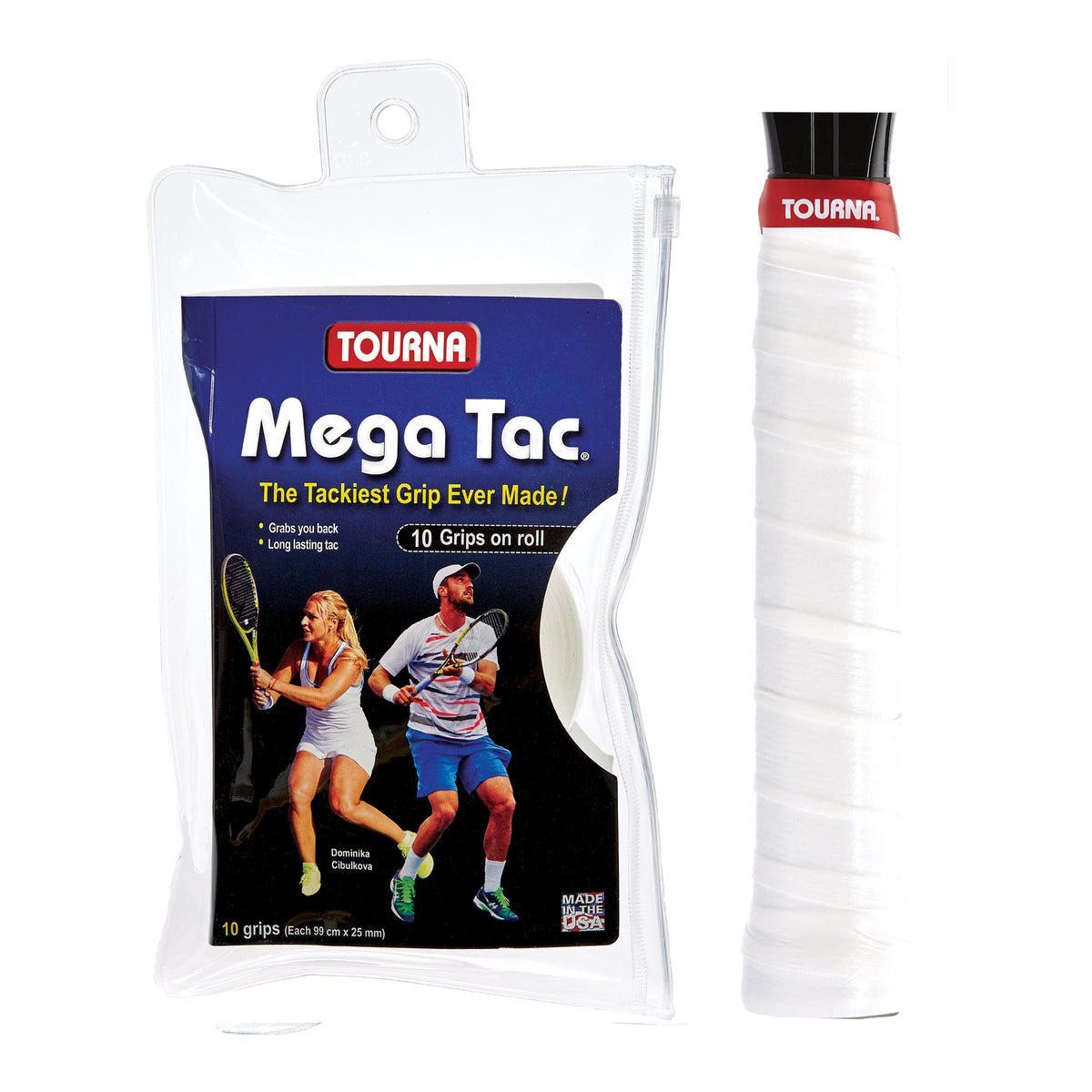
The extra-tacky wrap for players whose paddle twists in a relaxed hand. Tourna’s own listing puts it at 0.50 mm.
The famous dry-feel original in the long XL length, made for palms that sweat through tacky grips.
Wilson’s thin, stretchy tour overgrip with perforations Wilson says help it absorb moisture and dry faster.
Polyurethane, 0.6 mm, 1,200 mm long — every figure published by Yonex itself, in 3, 30 and 60 wraps.
A tacky replacement grip HEAD positions for direct feedback from the paddle, with moderate cushioning.
The thick-backed, extra-soft replacement grip for players who want padding under the hand.
A perforated, high-traction replacement wrap — 0.043 in thick, 31 in long — patterned with absorbent holes.
In This Guide
Overgrip or Replacement Grip? Start Here
An overgrip is a thin wrap that goes over the grip already on your handle. It is the wear layer: it takes the sweat, the friction and the dirt, and when its surface goes smooth you peel it off and wrap a fresh one in a couple of minutes. Because it sits on top of the existing grip, it also adds a small amount of thickness to the handle — useful if your grip feels fractionally small, a problem if it already feels big. A replacement grip is the base layer itself. It is thicker, cushioned, and shaped to define the bevels you feel through your fingers. You fit one when the original base grip is worn smooth, compressed unevenly, torn, or simply the wrong feel — and fitting one means removing the old grip entirely, not wrapping over it.
The practical rule is simple. If the cushion under your hand still feels even and springy but the surface is slippery, shiny or worn, you need an overgrip — that is four of the seven products below. If the handle itself feels hard, lumpy or dead, or the bevels have gone vague under a flattened base grip, no overgrip will rescue it: strip it and fit a replacement grip — the other three products below. Most players need overgrips far more often than replacement grips, which is why this guide leads with them.
If you have read our earlier roundup at 10 Best Pickleball Grip, treat it as the broader list it is; this guide is the narrower, decision-first version — overgrip versus replacement, tacky versus dry, perforated versus smooth — built on current manufacturer listings. And if the grip is right but the paddle is wrong, start from our pillar guide to the best pickleball paddles and come back here to finish the setup.
The Specs That Actually Decide It
Thickness is the feel dial. Overgrips are thin — the two makers who publish a figure here put theirs at 0.50–0.6 mm — so they refresh the surface while barely changing the handle. Replacement grips are substantially thicker constructions with cushioning built in, which is why they can restore bevel feel and absorb more of the hit. Thicker is not better or worse; it is a trade between cushioning and the directness of the feedback through your hand.
Surface and perforation decide how the grip handles sweat. A smooth, tacky surface grips back at your palm — it feels secure with a relaxed hand, which matters because a relaxed hand is a soft hand at the net. Perforations punch holes through that surface: Wilson says the holes in its perforated Pro Overgrip help the grip absorb moisture and dry faster, and Gamma builds its Honeycomb replacement grip around a run of absorbent holes through the centre of the wrap. Tacky versus dry is the third dial, and it is personal: tacky grips (Mega Tac, Super Grap) hold on to a dry or lightly sweating hand, while the dry-feel school (Tourna Grip) is built for palms that sweat enough to turn tack into slipperiness. The buying guide at the end turns each dial into a rule.
The 7 Best Pickleball Grips, Compared
Four overgrips first — the refresh layer most players actually need — then three replacement grips for when the base layer itself is done. Every specification below is a manufacturer-published figure; where a maker does not publish a number, the card says so rather than borrowing one from a retailer.
Tourna Mega Tac
Maximum tack for players whose paddle turns in the hand — the grip that holds on so your fingers don’t have to squeeze.
Tourna bills Mega Tac as, in its own words, “the tackiest grip ever made” — that is the maker’s claim, not a lab result, but it tells you exactly where this overgrip sits in the range: at the extreme-tack end of the market. Tourna’s own listing puts it at 0.50 mm, a typical overgrip thickness that refreshes the surface without meaningfully changing your handle size. The practical benefit of that much tack is a relaxed hand. If you find yourself squeezing harder as a rally goes on — and forearm tension creeping in with it — a high-tack wrap is the cheapest fix in pickleball, because the friction comes from the surface instead of your grip pressure.
Know its conditions, though. Tacky surfaces are at their best on dry or lightly sweating hands; in serious humidity, or if your palms run wet all match, the dry-feel and perforated options below are built for you instead. Mega Tac is sold by Tourna as a 10-pack on its own site, with smaller packs at retail — sensible, because a tacky overgrip is a consumable: the moment the surface stops feeling grabby, it is done, and the next one wraps on in minutes.
✅ What we like
- Extreme tack by design — the paddle stays put with a relaxed hand
- 0.50 mm keeps your handle size and bevel feel essentially unchanged
- Multi-pack format suits a grip you replace regularly
⚠️ Worth knowing
- Tack is the wrong tool for very wet palms — see picks 2 and 3
- A consumable by nature: budget for regular changes
As an Amazon Associate we earn from qualifying purchases.
Tourna Grip Original XL
The original dry-feel overgrip, in the long XL length — the classic answer for hands that sweat through everything else.
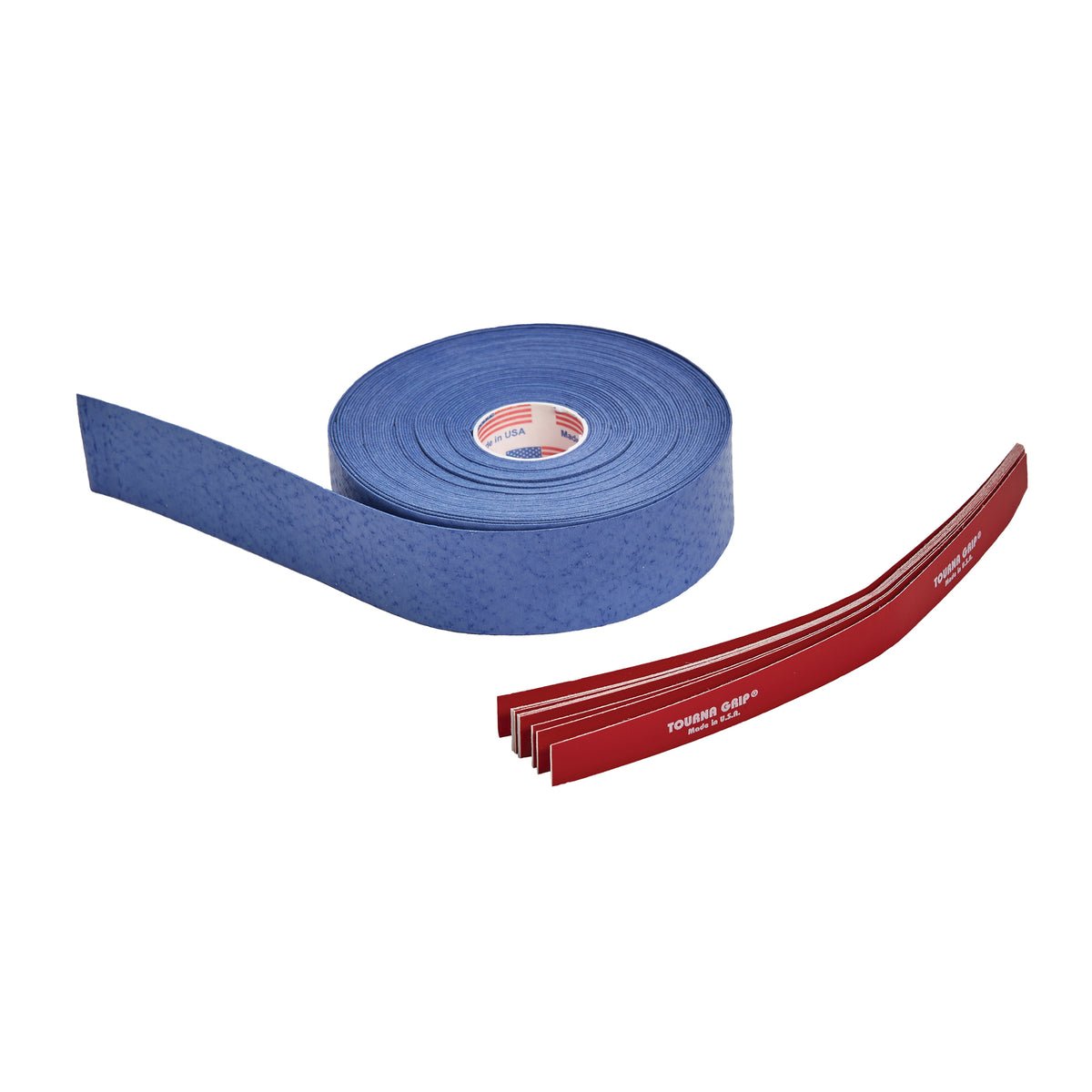
Tourna Grip is the light-blue overgrip that has been the default answer to sweaty hands in racket sports for decades, and the concept is the opposite of Mega Tac: instead of a sticky surface, it offers a dry, absorbent feel that — in the Tourna description repeated across its listings — gets tackier as it gets wet. For a pickleball player whose palms are the problem, that behaviour matters more than any other spec on this page. Buy the XL: retailer spec tables list the XL at 99 cm × 29 mm, and the shorter standard version is widely noted to wrap only part of a handle. On a pickleball paddle the XL length simply guarantees full coverage with overlap to spare.
One honest note on numbers: Tourna does not publish a thickness for this grip, and retailer spec tables conflict — you will see both 0.45 mm and 0.6 mm quoted. We card neither, because a figure the maker won’t stand behind is not a spec. What is not in dispute is the format: it is sold in multi-packs from 3 up to bulk rolls, which suits a grip whose job is to absorb sweat session after session and be swapped the moment it stops doing so.
✅ What we like
- The dry-feel benchmark for heavy sweaters
- XL length wraps a full paddle handle with overlap
- Sold in bulk formats that suit frequent changes
⚠️ Worth knowing
- No maker-published thickness — and retailer figures conflict
- Dry feel is a preference: players who like grab may find it plain
As an Amazon Associate we earn from qualifying purchases.
Wilson Pro Overgrip Perforated
Wilson’s thin, stretchy tour overgrip with airflow holes — the perforated route to a drier hand.
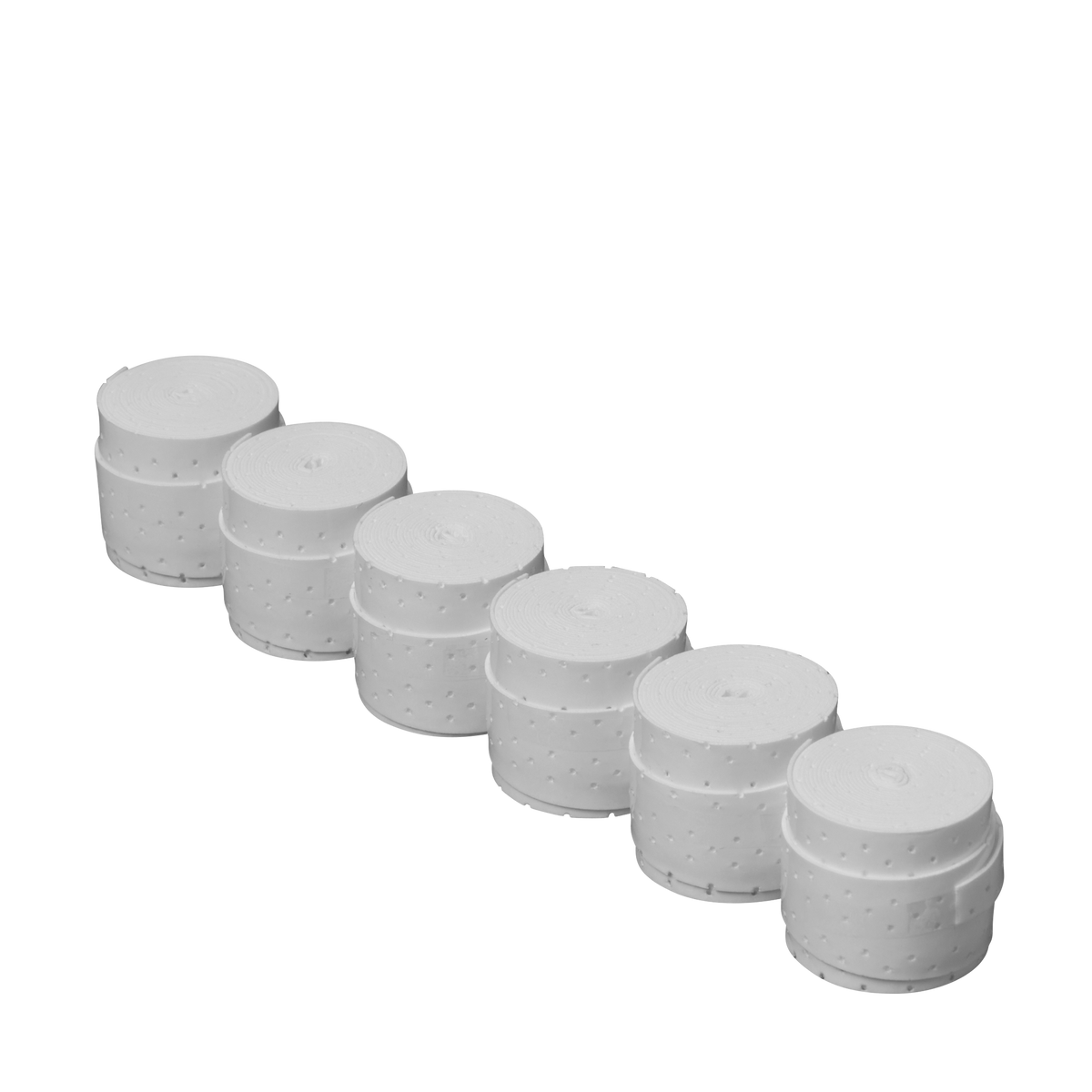
The perforated version is a distinct Wilson product — not the standard Pro Overgrip with holes poked in as an afterthought. On its own product page Wilson describes it as thin, stretchy and durable, and states the purpose of the perforations plainly: they help the grip absorb moisture and dry faster. That makes this the pick for the player who likes a conventional, slightly tacky overgrip feel but plays long sessions in warm conditions, where a smooth grip slowly turns against them. Wilson sells it in bulk as a 60-box under model WR8438000, and retailers also stock 3- and 12-packs of the perforated version if you want to try it before committing to a season’s supply.
Two honesty notes. Wilson does not publish a thickness or a material for this grip, and retailer figures for it conflict, so neither appears here as fact. And “used by many tour pros” is Wilson’s own line for the Pro Overgrip family — a popularity claim from the maker, included for what it is. What you can rely on is the construction: a thin overgrip, a perforated surface with a stated moisture job, and a tape strip in the box to finish the wrap.
✅ What we like
- Perforations with a stated job: absorb moisture, dry faster
- Thin, stretchy wrap that preserves bevel definition
- Available from trial 3-packs up to a 60-grip box
⚠️ Worth knowing
- No maker-published thickness or material
- Perforated feel differs from smooth tack — a preference call
As an Amazon Associate we earn from qualifying purchases.
Yonex Super Grap (AC102)
The best-selling overgrip in racket sports, with the most completely published spec sheet here — every figure from Yonex itself.
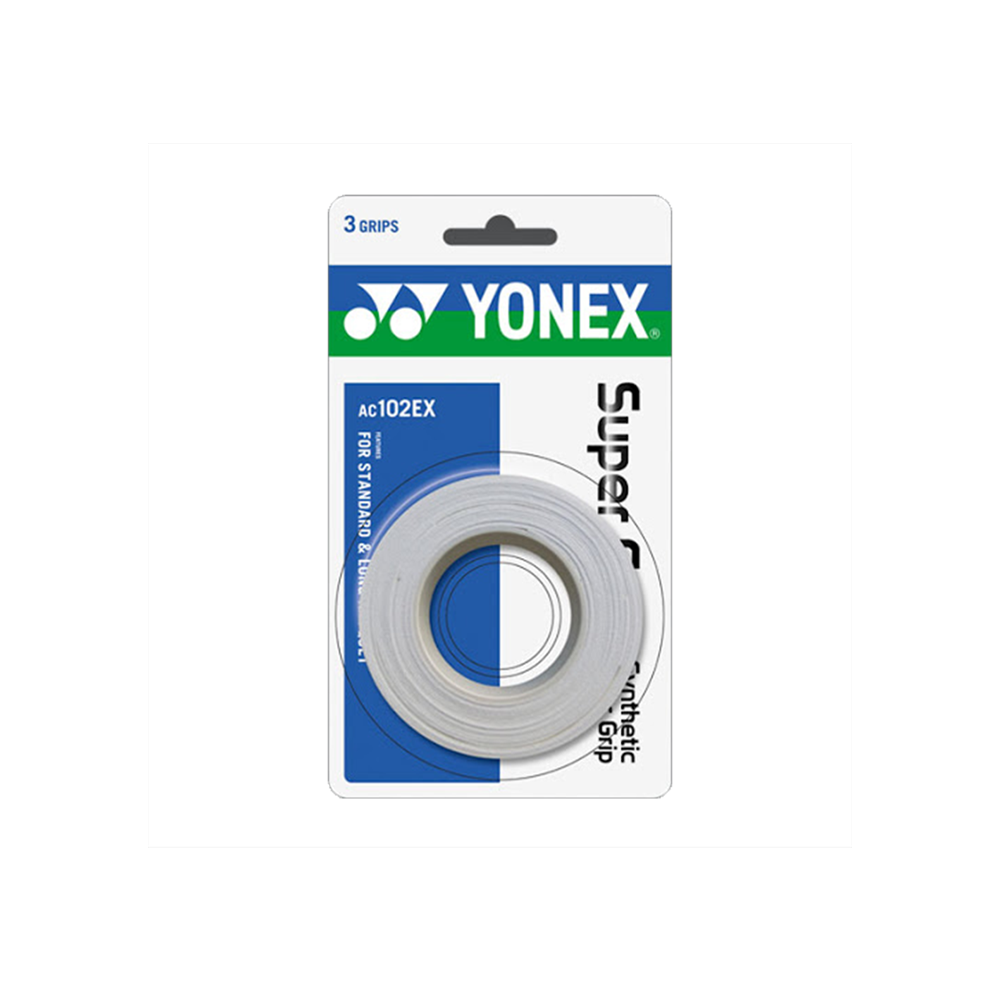
Super Grap has been on sale since 1987 — Yonex’s own line is that it “has sold enough grips to wrap around the world five times” — and it remains the default all-rounder because its specification is complete and balanced: polyurethane construction, 0.6 mm thick for a touch more substance than the thinnest wraps, a full 1,200 mm length, and a tacky feel that Yonex says absorbs shock and moisture for feel and control. On a pickleball handle, that extra length is genuinely useful: wrap with a comfortable overlap from butt to top without rationing the roll.
Note what Yonex does not say: the maker does not describe AC102 as perforated, so we do not either — this is a smooth, tacky wrap. It sits between the extremes of this list: tackier than the dry Tourna, less extreme than Mega Tac, a fraction thicker than Tourna’s listing figure, and sold in 3, 30 and 60-wrap formats direct from Yonex’s range. If you want one overgrip that simply works in most conditions and you are tired of guessing at specifications, this is the most transparently specified product in the guide.
✅ What we like
- Complete maker-published spec sheet — nothing left to guess
- Balanced tack and a full 1,200 mm length for easy wrapping
- Bulk 30- and 60-wrap formats for regular players
⚠️ Worth knowing
- Smooth surface — no perforations for very wet hands
- 0.6 mm adds a whisper more handle size than the thinnest wraps
As an Amazon Associate we earn from qualifying purchases.
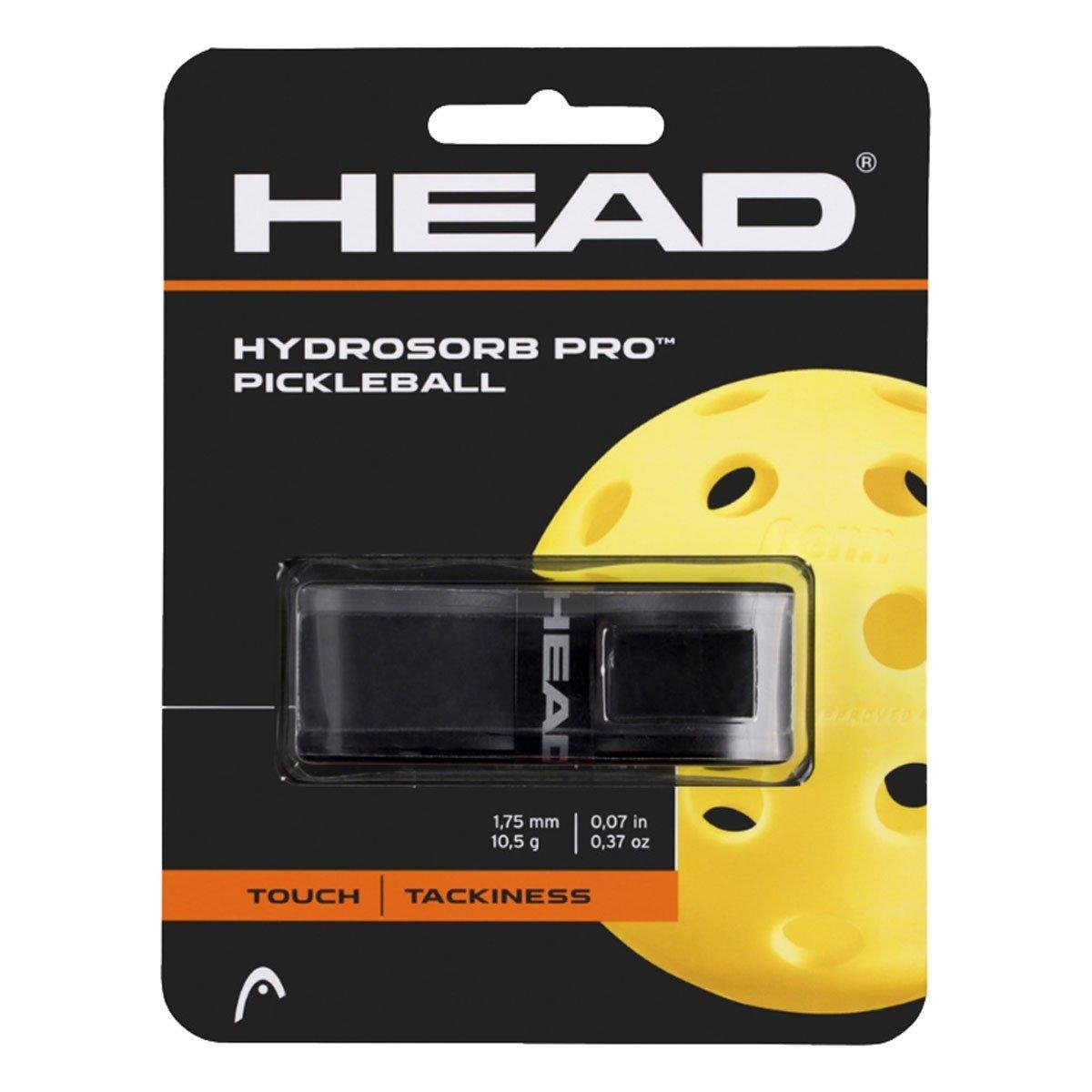
HEAD HydroSorb Pro Pickleball
The replacement grip for players who feel the shot through the handle — tacky, direct, and not over-padded.
HEAD makes a pickleball-specific version of its HydroSorb Pro — SKU 285781 — and its own product page is admirably clear about the intent: the grip “offers direct feedback from the paddle combined with optimum grip and comfort”. HEAD lists its characteristic as tackiness and its construction as Standard, which the maker itself glosses as moderate cushioning. Read together, that is a replacement grip designed to keep the bevels talking to your fingers: enough padding to be comfortable, not so much that touch shots at the net go numb. HEAD’s wider product description for the grip adds a more perforated surface and a twin-channel build for cushioning and airflow.
One warning that matters, because the error is all over the internet: the 1.75 mm thickness quoted for “Hydrosorb Pro” at retail belongs to HEAD’s tennis grip of the same name, a different product (SKU 285303). HEAD publishes no thickness for the pickleball 285781, so this card carries none. Buy the pickleball SKU by number, fit it in place of your old base grip — never over it — and what you get is a tacky, moderately cushioned foundation you can then leave bare or finish with a thin overgrip later.
✅ What we like
- Purpose-built pickleball SKU, positioned by HEAD for paddle feedback
- Tacky surface with moderate — not excessive — cushioning
- A proper base layer: restores bevel feel a worn grip has lost
⚠️ Worth knowing
- No maker-published thickness, material or dimensions
- Fitting means removing the old grip — a ten-minute job, not two
As an Amazon Associate we earn from qualifying purchases.
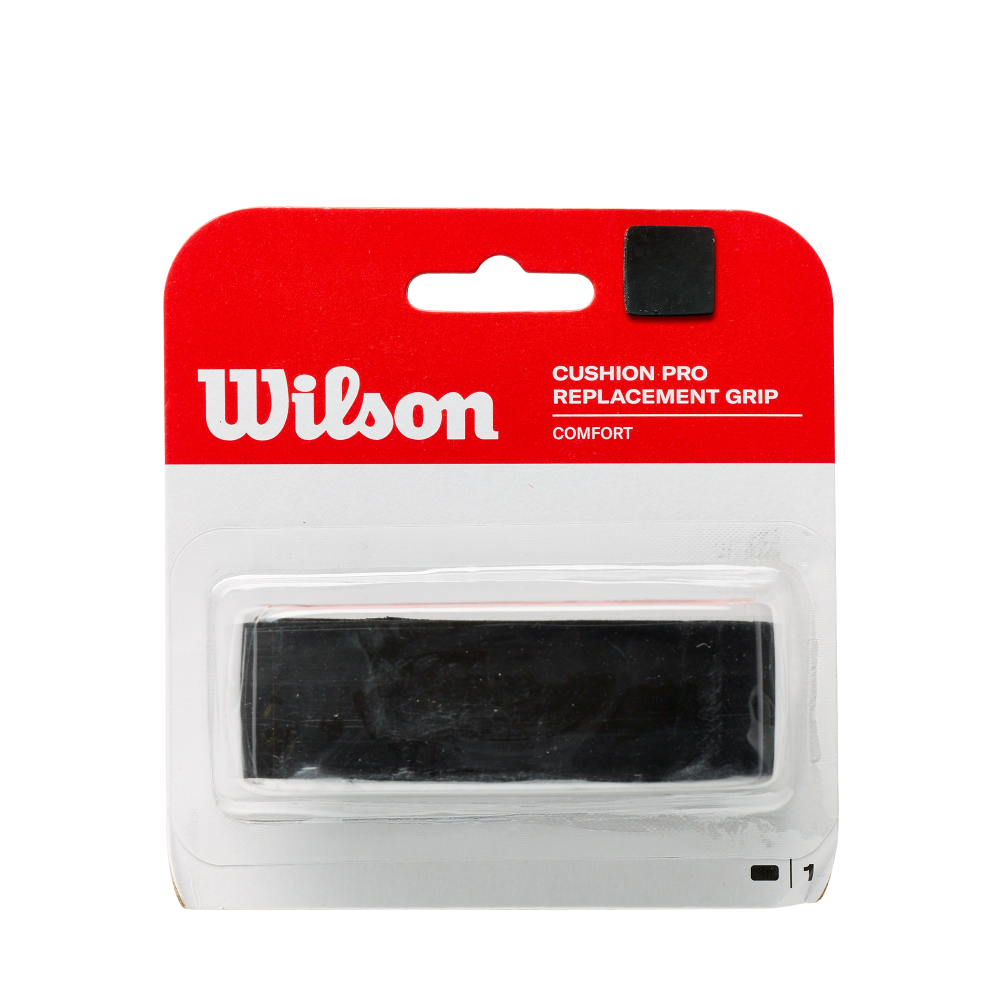
Wilson Cushion Pro Replacement Grip
The thick-backed, extra-soft base grip — maximum padding between the paddle and your palm.
Where the HEAD grip above is about feedback, the Cushion Pro is about comfort. Wilson’s own product copy leads with “a thick backing for extra cushioning” and an extra-soft texture, and describes it as a longtime favourite for players of all ages and abilities. Fit it when your current base grip feels hard and unforgiving, when long sessions leave your palm and fingers aching, or when you simply prefer a handle that feels padded rather than precise. Retailer spec tables list it at 2.0 mm — Wilson itself does not publish the figure, so treat that as a retail listing number; the maker’s own description of a thick backing tells the same story in words.
Understand the trade before you buy: cushioning is bought with feedback. A thick, soft base layer will mute some of the fine information that comes through the handle on dinks and resets, which is why it sits at the opposite end of this guide from the HydroSorb Pro. Neither is better — they are answers to different hands. If yours are sensitive, play long matches, or are coming back from hand and wrist niggles and want padding as the priority, this is the replacement grip built for you.
✅ What we like
- The most cushioned replacement grip in this guide, by design
- Extra-soft texture suits long sessions and sensitive hands
- Restores a worn, hardened base grip in one fitting
⚠️ Worth knowing
- Cushion mutes fine paddle feedback on touch shots
- Thickness figure is retailer-listed, not Wilson-published
As an Amazon Associate we earn from qualifying purchases.
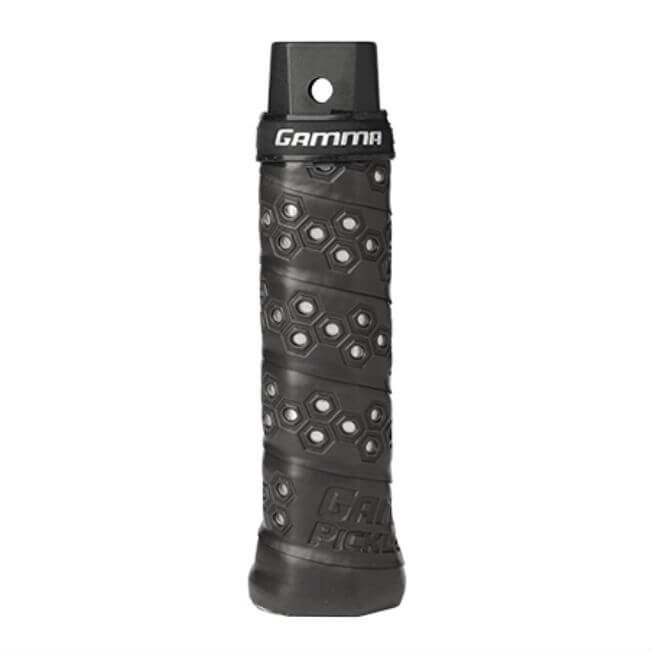
Gamma Pickleball Honeycomb Grip
A perforated replacement wrap patterned with absorbent holes — traction and airflow built into the base layer itself.
Gamma publishes the fullest replacement-grip specification here, and the design idea is in the name: the maker describes a proprietary wrap with “a series of absorbent holes that run throughout the center of the wrap”, finished with what Gamma’s spec table calls a “Stamped Tacky High Traction” surface. In plain terms, the perforations that most players get from an overgrip are built into this base grip itself — moisture management and grip in one layer, with nothing wrapped on top. Gamma’s published figures: 0.043 inches thick, 31 inches long, 1.06 inches wide — a full-length wrap sized for a paddle handle with room to spare.
That one-layer design is the decision here. Fit the Honeycomb and you can play it bare: no overgrip to buy, wrap or replace, and the traction surface is the grip itself. The flip side is wear economics — when the surface eventually tires, you are replacing the whole base grip rather than peeling off a cheap overgrip, and players who like to fine-tune feel with different overgrips give up that option. Gamma sells it as a single grip in a few colourways (black with blue or red, white with black), finishing tape included per retailer listings. For the heavy sweater who wants the simplest possible handle setup, it is the most thoughtfully specified option in this guide.
✅ What we like
- Perforated, high-traction surface built into the base grip
- Complete maker-published dimensions — nothing to guess
- One-layer setup: no overgrip needed on top
⚠️ Worth knowing
- When it wears, the whole grip is replaced, not just a wrap
- Gamma publishes no material for it
As an Amazon Associate we earn from qualifying purchases.
Side-by-Side Comparison Table
Only figures the makers themselves publish appear in the thickness column — “not published” is a specification fact too, and it is why some famous grips show a gap.
| Grip | Type | Feel / Surface | Thickness | Sold As |
|---|---|---|---|---|
| Tourna Mega Tac | Overgrip | Extra tacky, smooth | 0.50 mm (Tourna listing) | 10-pack on tourna.com |
| Tourna Grip Original XL | Overgrip | Dry feel | Not published | 3 to bulk packs |
| Wilson Pro Overgrip Perforated | Overgrip | Perforated | Not published | 60-box; 3/12-packs at retail |
| Yonex Super Grap AC102 | Overgrip | Tacky | 0.6 mm | 3, 30 or 60 wraps |
| HEAD HydroSorb Pro Pickleball | Replacement | Tacky, moderate cushion | Not published | Single grip |
| Wilson Cushion Pro | Replacement | Extra soft, thick backing | Not published by Wilson | Single grip |
| Gamma Pickleball Honeycomb | Replacement | Perforated, high traction | 0.043 in | Single grip |
Buying Guide: Feel, Thickness and Change Frequency
1. Diagnose before you buy: surface or foundation?
Run a thumb across your current grip. If the surface is smooth, shiny or slippery but the handle underneath still feels firm and even, the problem is the wear layer — buy an overgrip. If the handle feels hard, flattened, uneven or vaguely shaped, the base grip has compressed or worn, and an overgrip over the top will only hide it for a session or two. That is replacement-grip territory: picks 5 to 7.
2. Match the surface to your hands, not the weather report
Tacky surfaces (Mega Tac, Super Grap) reward a dry or lightly sweating hand with a hold that lets your fingers relax. Heavy sweaters should start at the other end: the dry feel of Tourna Grip, or a perforated surface — Wilson’s overgrip or Gamma’s replacement grip — where the holes give moisture somewhere to go. There is no universal winner here; there is only your palm.
3. Respect the thickness trade
Every overgrip adds its thickness to your handle — 0.50 to 0.6 mm on the two published figures in this guide — and every replacement grip redefines the handle’s size and cushion from scratch. If your grip already feels a touch large, a tacky overgrip is the wrong direction and a fresh, slim replacement grip is the fix. If it feels a touch small, an overgrip is the simplest build-up there is. Players chasing maximum feedback pick thinner and firmer; players chasing comfort pick cushion and accept the softer information.
4. Plan the change, not just the grip
Overgrips are consumables by design. There is no honest hours figure — sweat, climate and how hard you play vary too much — but the signal is unmissable: when the surface stops feeling the way it did new, its job is over. Buy the format that matches that reality — multi-packs and bulk boxes exist for Mega Tac, Tourna Grip, the Wilson perforated and Super Grap precisely because regular players change them often. Replacement grips are the opposite purchase: one fitting, played until the cushion or surface genuinely tires.
5. Finish the setup around the grip
A fresh grip pairs with fresh consumables: work through our guide to the best pickleball balls so a worn-out ball is not the weak link, and keep your paddles, spare grips and balls together in one of the bags from our pickleball bags guide — a spare overgrip in the bag is the difference between fixing a slippery handle between games and playing the whole session with it.
Frequently Asked Questions
What is the difference between an overgrip and a replacement grip?
An overgrip is a thin wrap fitted over your existing grip — it is the replaceable wear surface that provides tack and sweat control. A replacement grip is the cushioned base layer itself: fitting one means removing the old grip first. If your handle’s cushion still feels sound but the surface is slippery, you need an overgrip; if the base feels hard, flat or worn, you need a replacement grip.
Which pickleball grip is best for sweaty hands?
Start with a dry-feel or perforated surface. Tourna Grip Original is the classic dry-feel overgrip, and its maker-described behaviour is that it gets tackier as it gets wet. Perforated options give moisture an escape route: Wilson says the perforations in its Pro Overgrip Perforated help it absorb moisture and dry faster, and Gamma’s Honeycomb replacement grip is built around a run of absorbent holes. Very tacky smooth grips like Mega Tac suit dry or lightly sweating hands better.
How thick is a pickleball overgrip?
Of the overgrips here whose makers publish a figure: Tourna’s own listing puts Mega Tac at 0.50 mm, and Yonex publishes the Super Grap at 0.6 mm. Wilson and Tourna do not publish thicknesses for the perforated Pro Overgrip or Tourna Grip Original — retailer numbers for those conflict, so we do not present them as specifications. Gamma publishes its Honeycomb replacement grip at 0.043 inches.
Will an overgrip make my paddle handle bigger?
Yes, slightly — an overgrip adds its own thickness (roughly half a millimetre on the published figures here) around the handle. That is welcome if your grip feels fractionally small, and a reason to choose a fresh replacement grip instead if your handle already feels too large.
How often should I change my pickleball overgrip?
When the surface stops doing its job — the tack feels gone, the wrap looks shiny or smooth, or the paddle starts moving in your hand. Frequency depends on how much you sweat, your climate and how often you play, which is why the overgrips in this guide are sold in multi-packs: change on feel, not on a calendar.
Can I put an overgrip over a worn-out replacement grip?
You can, but it only postpones the real fix. An overgrip refreshes a surface; it cannot restore compressed cushioning or flattened bevels underneath. If the base grip feels hard, lumpy or vague, replace it first — the HEAD HydroSorb Pro Pickleball, Wilson Cushion Pro and Gamma Honeycomb above are the three routes in this guide — then add an overgrip later if you want one.
Are tennis overgrips the same as pickleball grips?
Largely, yes — most overgrips, including several in this guide, began life in tennis and transfer directly, because a pickleball handle needs the same things: tack, sweat control and the right thickness. The differences are in replacement grips, which are made per sport — HEAD’s HydroSorb Pro Pickleball (SKU 285781) and Gamma’s Honeycomb are pickleball-specific products, distinct from their makers’ tennis grips. Check the SKU, not just the name.
The Verdict
Decide the layer first, then the surface. Base grip sound but slippery? Wrap an overgrip: Tourna Mega Tac for maximum tack, Tourna Grip Original XL or the Wilson Pro Overgrip Perforated for sweaty hands, and the Yonex Super Grap as the transparently specified all-rounder. Base grip itself tired? Replace it: HEAD HydroSorb Pro Pickleball for feedback, Wilson Cushion Pro for padding, Gamma’s Honeycomb for a perforated one-layer setup. Whichever you choose, you are fixing the one part of the paddle your hand actually touches — start from the best pickleball paddles guide if the paddle itself is next.
Ali Shuttler is reader-supported. When you buy through links on our site we may earn an affiliate commission from Amazon, at no extra cost to you. Grip specifications are manufacturer-published figures checked at the time of writing; where a maker publishes no figure for a model, this guide says so rather than substituting a retailer number. This guide covers grips and overgrips only — paddle sizing and handle-fit guidance live in our paddle content.