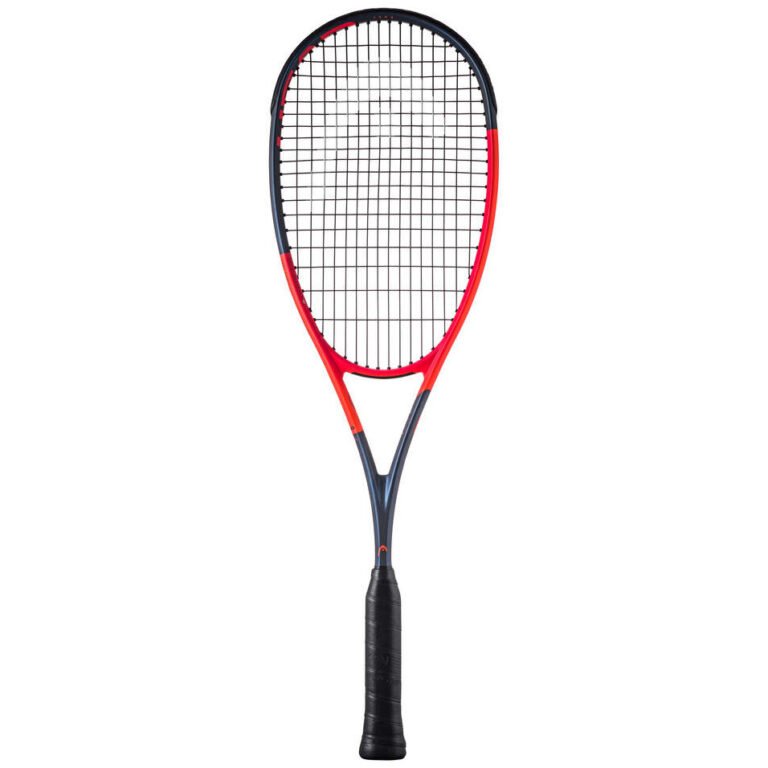
A standard adult squash racket is 27 inches long — nearly half as tall as the seven-year-old you might hand one to. Junior squash rackets fix the proportions honestly: shorter frames, 23.5 to 25 inches in this guide, with weights, head sizes and grip sizes published by their makers for junior hands. This guide compares the junior models the major makers actually publish, states every figure exactly as the maker states it, and is upfront about the models whose makers publish no age guidance at all.
⚡ TL;DR — The Short Answer
Size by length first, brand second. The shortest true junior frame here is the Karakal CSX 60 Junior (23.5 in, 180 g), which Karakal positions for players up to 9 years old. At 24 inches, the Black Knight Junior (Graphite) is a full-graphite 135 g frame — though Black Knight publishes no age guidance for it. At 25 inches the choice splits by material and level: the aluminium Dunlop Tristorm Junior 25 (160 g) for starters, the Oliver Junior Squash (115 g) which Oliver positions for ages 6 to 10, the head-heavy HEAD Extreme Junior (120 g), the Dunlop Sonic Core Revelation Junior (120 g graphite) aimed at advanced juniors, and the Tecnifibre Carboflex Junior X-Top (150 g), the top end of the junior ladder before a standard 27-inch frame.
Quick Picks — Best Squash Rackets for Kids at a Glance
23.5 in and 180 g in Alumag Alloy — Karakal positions it for players up to 9 years old.
Full graphite at 135 g with a 440 cm² head; no age guidance published by Black Knight.
160 g fused aluminium with a 500 cm² head — Dunlop’s starter junior at full junior length.
115 g frame in 100% HMG; Oliver positions it for children aged 6 to 10, on its own site.
120 g graphite with Innegra, head-heavy balance and a published 3 7/8 grip size.
120 g graphite with Sonic Core and Infinergy — a 25-inch version of the Revelation 125.
150 g, 500 cm² teardrop head — the junior take on the Carboflex the tour plays with.
In This Guide
Why Kids Need a Shorter Squash Racket
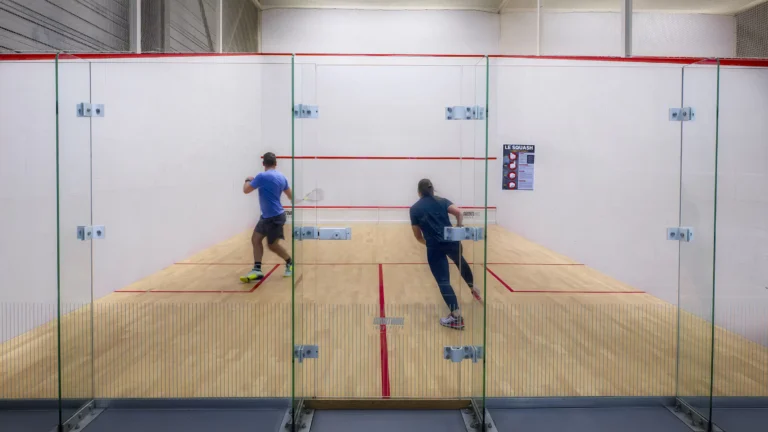
Squash is played in a walled box, at close quarters, with a swing that has to stay compact. An adult frame is 27 inches (686 mm) long — the maximum the game’s equipment rules allow — proportioned for an adult arm and an adult swing path. A child swinging a full-length frame has to manage the extra shaft on every shot near the side walls, and its leverage works against a player still learning where the ball is. Junior frames close that gap: every racket in this guide is shorter than the adult standard, from 23.5 inches up to 25, because that is the range the makers publish for their junior lines.
This guide owns the junior decision only. It does not re-rank adult rackets: our best squash rackets for beginners guide owns adult first-racket selection, and when a junior outgrows the frames below, that guide — not this one — is where the step-up is chosen. What this page does is lay out the junior options in the order a parent meets them: the shortest, simplest frames first, the most advanced junior frames last, using each maker’s own published dimensions. Where a maker publishes age guidance for its junior model, the copy attributes it to that maker. Where a maker publishes none — several do not — the copy says so plainly rather than grouping the racket into an age band by guesswork.
One practical point before the cards: squash’s junior ladder is much shorter than tennis’s — most makers publish exactly one junior length, so the differences between models at the same 25-inch length matter as much as length itself. The cards below state each model’s full published specification; learning the game itself is covered in our guide to how to play squash.
The Junior Sizing System: Length, Weight, Grip, Materials
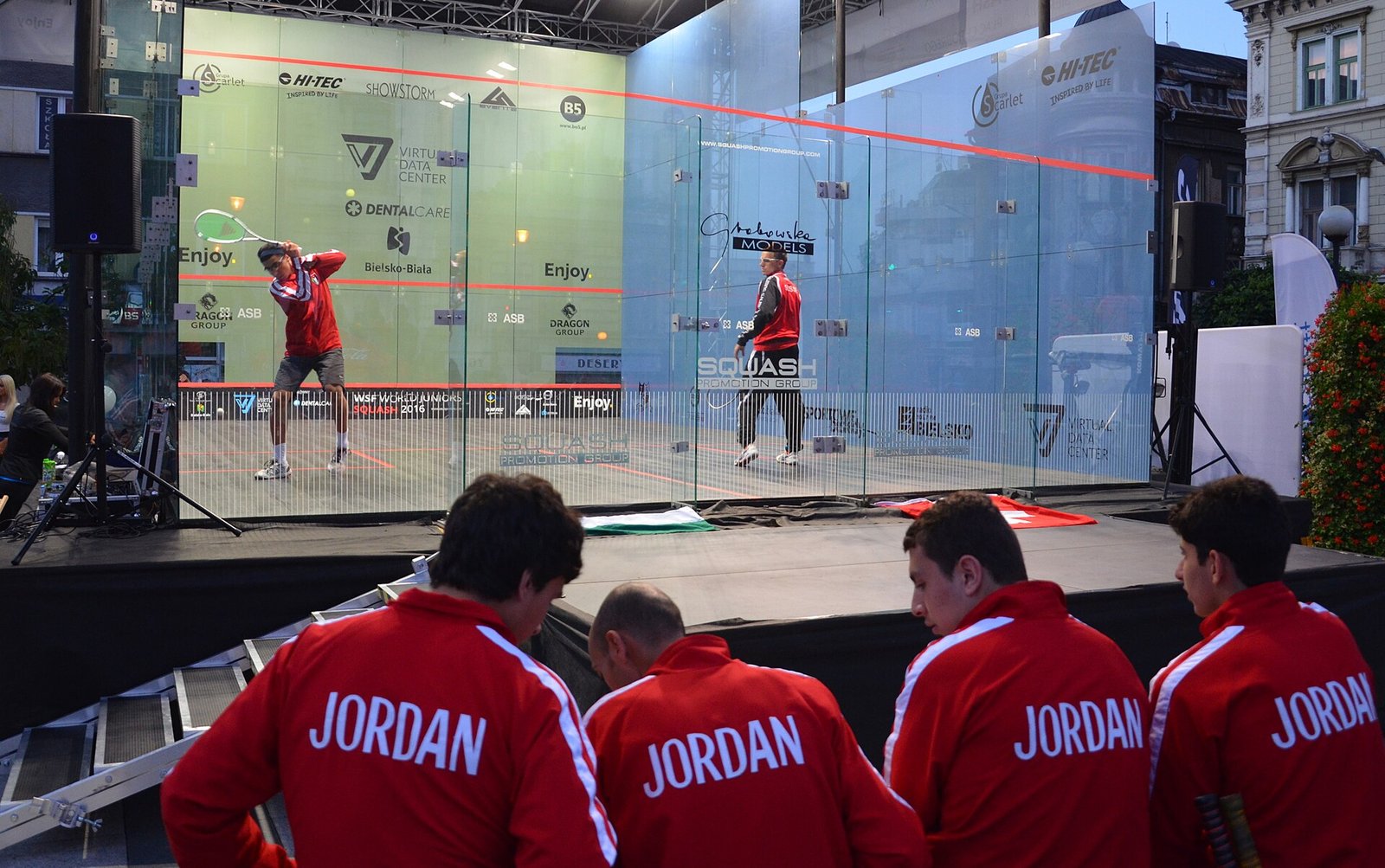
Length is the first sizing decision. The adult standard is 27 inches (686 mm). The junior frames the makers publish sit below it in a tight band: Karakal’s CSX 60 Junior at 23.5 inches (600 mm), Black Knight’s Junior (Graphite) at 24 inches (61 cm), and then a cluster at 25 inches (63.5 cm) — Dunlop’s Tristorm Junior 25 and Sonic Core Revelation Junior, Oliver’s Junior Squash and Tecnifibre’s Carboflex Junior X-Top all publish 25 inches. HEAD is the exception that proves the honesty rule on this page: HEAD’s own spec table for the Extreme Junior publishes no length, and retailer tables reproducing HEAD data list 62.5 cm on one listing and 63.5 cm on another, so this guide reports it as a 25-inch-class junior frame and says why, rather than printing one figure as settled fact.
Weight does not climb neatly with length — and that matters. Published frame weights here run from 115 g (Oliver) to 180 g (Karakal), and the heaviest frame is the shortest one, because the Karakal is an aluminium-alloy starter racket while several 25-inch frames are graphite. A child should be able to hold the racket out in one hand and swing it in a controlled arc close to a wall; if the head drags the arm down, the racket is too heavy for that player whatever its length. In squash, the material decision changes the weight more than the length decision does.
Grip size is published for some models and not others. HEAD publishes a 3 7/8 grip size for the Extreme Junior. Dunlop and Tecnifibre describe thinner grips for the Revelation Junior and the Carboflex Junior X-Top but publish no numeric size, so none is printed here. Karakal, Black Knight and Dunlop’s Tristorm list grip types rather than sizes. There is no junior grip standard to fall back on: check what the maker states for the specific model, and treat “thinner grip” claims as the maker’s description, not a measurement.
Materials split the junior range in two. The starter end is aluminium: Karakal builds the CSX 60 Junior in Alumag Alloy, and Dunlop builds the Tristorm Junior 25 in fused aluminium. The step up is graphite in its published forms: Black Knight’s full graphite, Oliver’s 100% HMG, HEAD’s graphite with Innegra, Dunlop’s graphite Revelation Junior with Sonic Core powered by Infinergy, and Tecnifibre’s graphite monoshaft with an aluminium head, built — Tecnifibre says — to add resistance where the head meets the walls. Neither material is “better” out of context: aluminium frames are the simple, heavier builds makers aim at starters, and graphite frames are the lighter builds aimed at juniors staying in the game. When a junior outgrows a junior frame: when the 25-inch frames feel short on reach at the front wall and the player’s control is limited by the frame rather than by technique — the next step is a standard 27-inch racket from the adult ranges, because the makers do not publish a longer junior model.
The 7 Best Squash Rackets for Kids, Compared
The order runs shortest first, then works through the 25-inch cluster from the aluminium starter to the most advanced junior frames — the ladder reads the way a family climbs it. Five of the seven cards share a 25-inch length, which is the honest shape of the junior squash market: at that length, the decision is weight, material, balance and grip, and each card states the maker’s published figure for all of them. Every age statement is attributed to the source that publishes it; every model without published age guidance is labelled as such on its card.
Karakal CSX 60 Junior
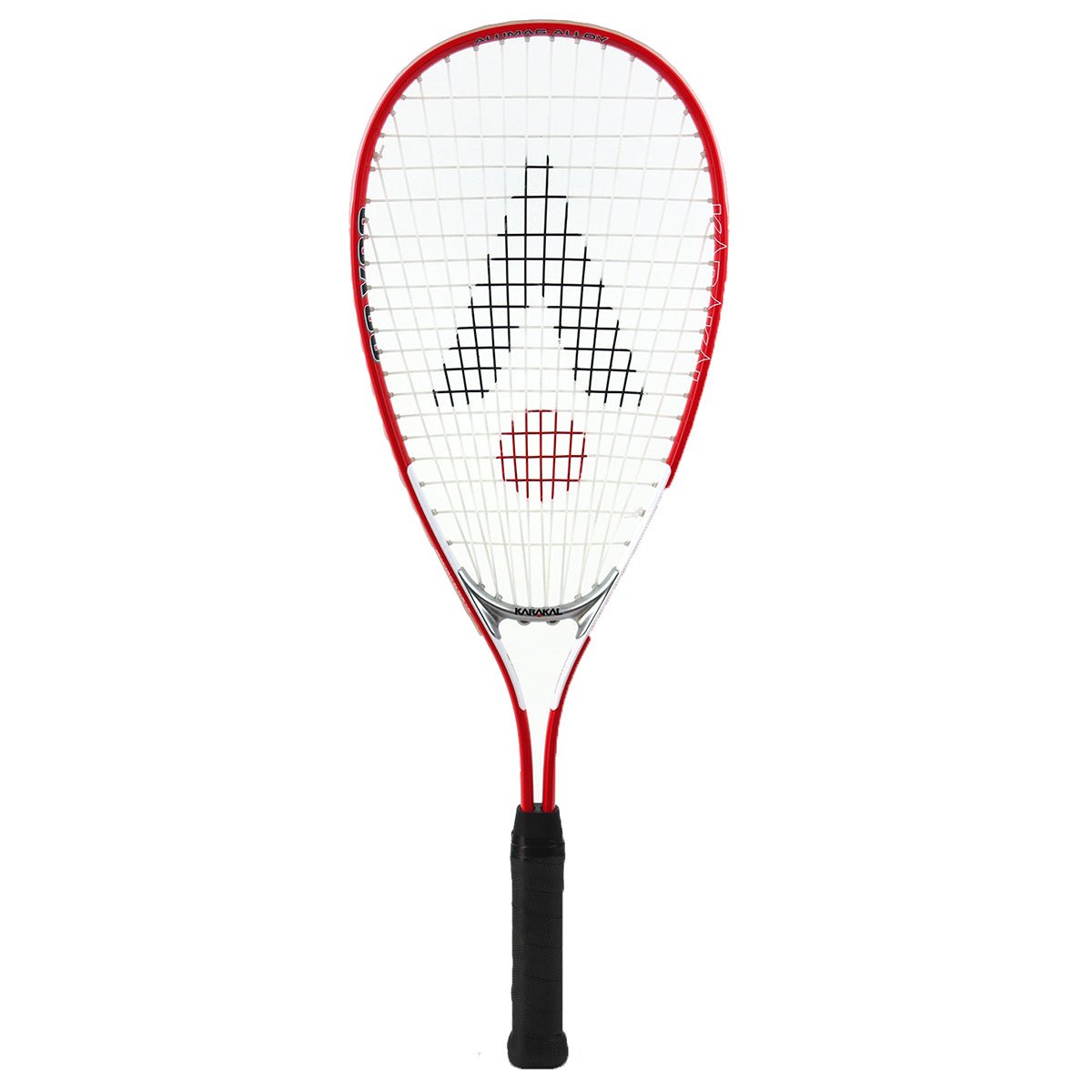
The shortest frame in this guide: 23.5 inches of Alumag Alloy, built as a three-quarter-length first racket.
Every junior range needs a genuine starting point, and Karakal’s CSX 60 Junior is this guide’s. At 23.5 inches it is three and a half inches shorter than an adult frame — Karakal describes it as a three-quarter-length racket — and it is the only card here under 24 inches. Karakal positions the model for beginners and improvers up to 9 years old: Karakal’s own junior positioning for the CSX 60, carried by its retailers, and the clearest age statement any maker publishes at this end of the market. The construction is Alumag Alloy, with an even balance and a fan-shaped string bed which Karakal says makes for a larger sweet spot.
The honest trade-off is weight. At 180 g unstrung, the CSX 60 is the heaviest racket in this guide — Karakal itself notes it is slightly heavier than alternative junior rackets, and says that weight provides more power. For a first racket, that is a real characteristic to weigh: a stronger child will get the benefit Karakal describes, while a smaller child may be better served by the lighter graphite frames further down this page, even at a longer length. Buy the Karakal for the young beginner it is positioned for; when its player is rallying confidently and the 23.5 inches start to cost reach, the 25-inch cards below are the next rung.
What we like
- Shortest true junior frame here (23.5 in) — a real first-racket size
- Maker-stated positioning: Karakal aims it at players up to 9 years old
- Even balance and a fan string bed Karakal says enlarges the sweet spot
- Simple aluminium-alloy build for the starter years
Worth knowing
- 180 g is the heaviest frame in this guide — check the player can swing it freely
- The shortest length is outgrown first; that is its job in the system
As an Amazon Associate we earn from qualifying purchases.
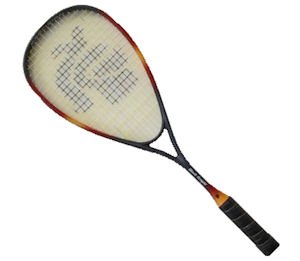
Black Knight Junior (Graphite)
A full-graphite junior at 24 inches and 135 g — the lightest short frame in this guide.
Black Knight takes the opposite route to the card above: where Karakal shortens the frame and accepts aluminium weight, Black Knight shortens the frame and keeps the material adult-grade. The Junior (Graphite) is 24 inches long with a full graphite construction, which Black Knight’s listing says allows for a better hit and minimal vibration compared to aluminium junior rackets — the maker’s own comparison, stated as the maker states it. At 135 g unstrung it is 45 g lighter than the Karakal despite being half an inch longer, and its published specification is unusually complete: a 440 cm² head, a Rigidity Index of 88, a Tuf Grip and Crossfibre factory string.
What Black Knight does not publish is any age or height guidance for this model — no band, no “up to” age, nothing this guide can attribute. So this card makes no age claim: size it by its dimensions. It suits the junior whose length says short frame but whose game — lessons, club sessions, regular rallies — makes an aluminium starter feel crude, and who is ready for the smaller 440 cm² head, the smallest in this guide. A first-day beginner is better matched by the Karakal above or the Tristorm below; this is the short frame for a young player already playing.
What we like
- Full graphite construction at a true junior length (24 in)
- 135 g — far lighter than the aluminium starter frames
- Complete published spec, rigidity index and factory string included
- The short-frame option for a junior already playing regularly
Worth knowing
- Black Knight publishes no age or height guidance for this model
- 440 cm² head is the smallest here — contact needs to be tidier
As an Amazon Associate we earn from qualifying purchases.
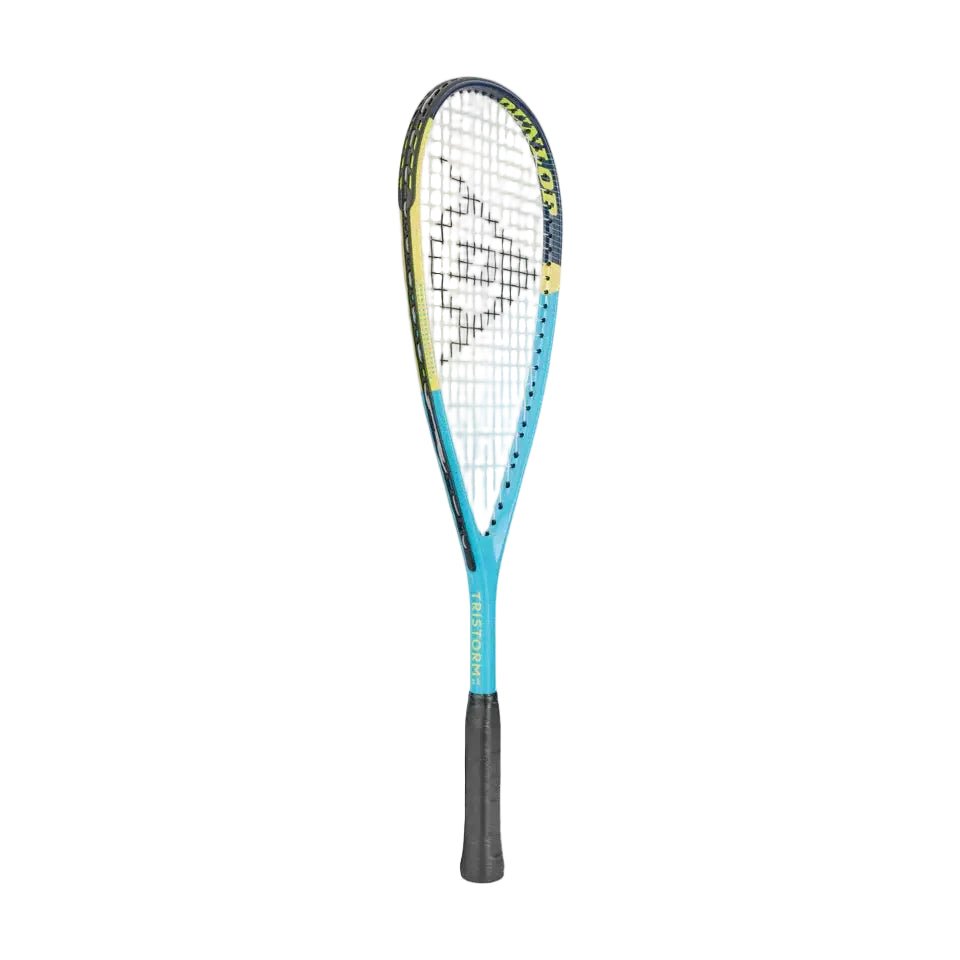
Dunlop Tristorm Junior 25
The starter at full junior length: a 160 g fused-aluminium frame with the joint-largest head in this guide.
Dunlop publishes two junior rackets in this guide, and they could hardly be more different. The Tristorm Junior 25 is the starter: a fused-aluminium frame at 160 g, strung with durable nylon string in a 14×20 pattern, with a Dunlop PU grip. Dunlop’s description, as its retailers carry it, presents it as a choice for kids just starting out, designed to help children learn correct stroke technique — Dunlop’s positioning, and the reason this card, not the graphite Dunlop further down, is the 25-inch starting point. The specification backs the brief: the 500 cm² head is the joint-largest in this guide, and Dunlop describes the head-light balance as making the Tristorm easy to swing.
Like the Black Knight, the Tristorm carries no published age guidance from Dunlop, so none is claimed here — Dunlop sizes it by its name and its numbers: 25 inches, 160 g, 500 cm². That makes it the natural card for the older or taller starter whose length already says 25 inches but whose game is at day one: the full junior length, in the simple material, with the big head. The player it is not for is the junior already competing at this length; Dunlop makes that player’s racket too, and it is card #6.
What we like
- 500 cm² head — joint-largest here, on a starter brief
- Head-light balance Dunlop describes as easy to swing
- Full published Dunlop spec: beam, pattern and grip included
- The honest 25-inch starting point in aluminium
Worth knowing
- Dunlop publishes no age guidance for this model
- Aluminium feel caps out for juniors already competing at this length
As an Amazon Associate we earn from qualifying purchases.
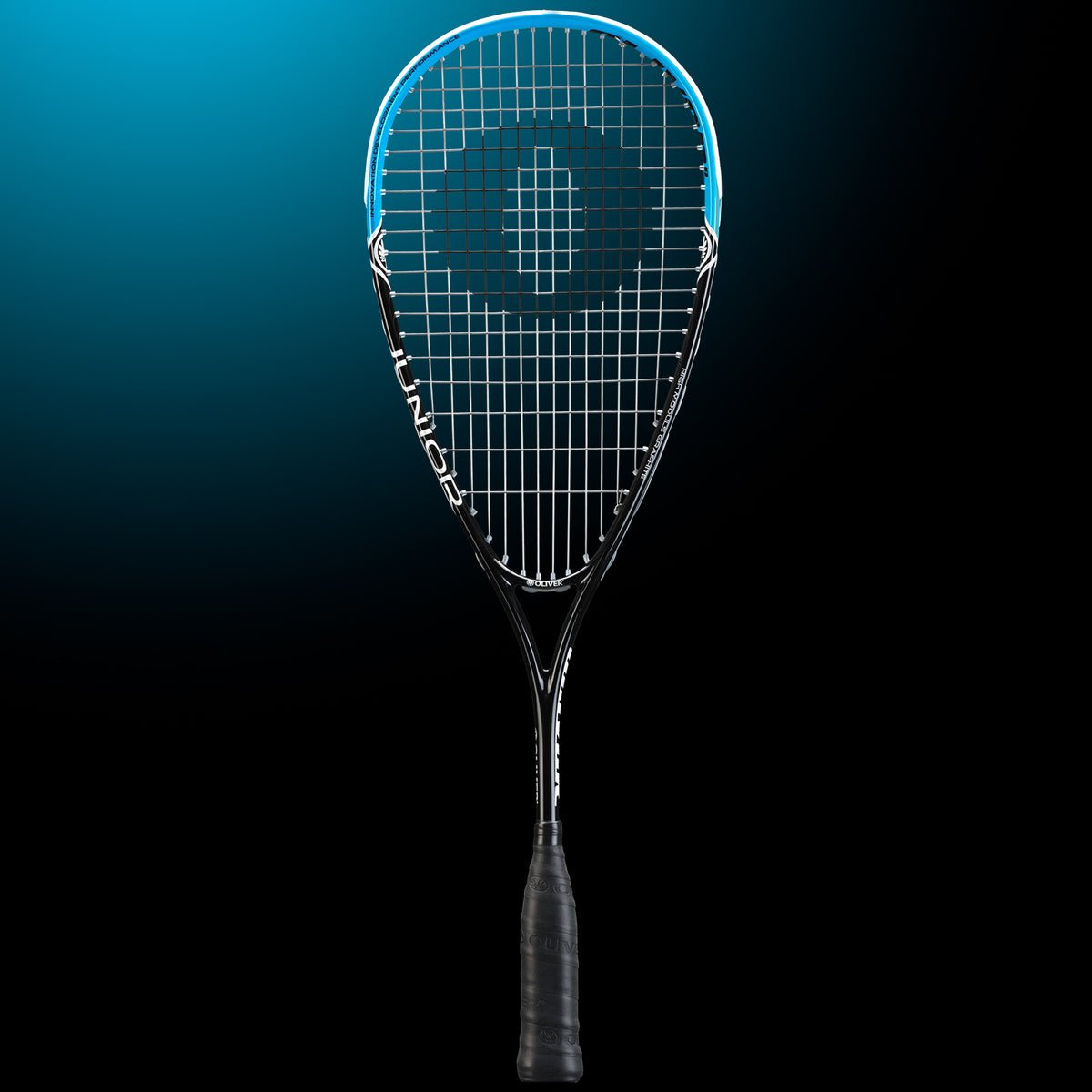
Oliver Junior Squash
The lightest frame here at 115 g, in 100% HMG — and the one card verified on the maker’s own website.
This is the card to read if you want to see how junior sizing should be published. On its own website, Oliver states the Junior Squash’s shortened length (63.5 cm), its material (100% HMG), its bridge form, its balanced construction and its weight in Oliver’s own notation — 115N / 145B, a 115 g frame weight — and then says plainly who it is for: children aged 6 to 10 who are starting out in squash. No inference, no guesswork: the maker’s guidance, on the maker’s page, attributed to the maker. Oliver describes the 100% HMG construction as making the racket especially durable and robust, and the bridge design as offering added stability.
At 115 g the Oliver is the lightest frame in this guide by 20 g — the gentlest 25-inch option for a younger or smaller player who measures for the length but not for the Tristorm’s 160 g or the Karakal’s 180 g. Its 478 cm² head (from retailer spec tables reproducing Oliver data) sits mid-pack. If your child is inside Oliver’s stated 6-to-10 band and starting out, this is the most completely maker-documented buy in the junior market — and the standard the other cards’ missing age guidance should be judged against.
What we like
- Full spec and age guidance verified on Oliver’s own site (ages 6–10)
- 115 g frame — the lightest in this guide
- 100% HMG construction with a bridge form for stability, per Oliver
- Balanced construction at full junior length
Worth knowing
- Oliver publishes no numeric grip size for this model
- The light frame gives back less help on off-centre contact than the 500 cm² cards
As an Amazon Associate we earn from qualifying purchases.
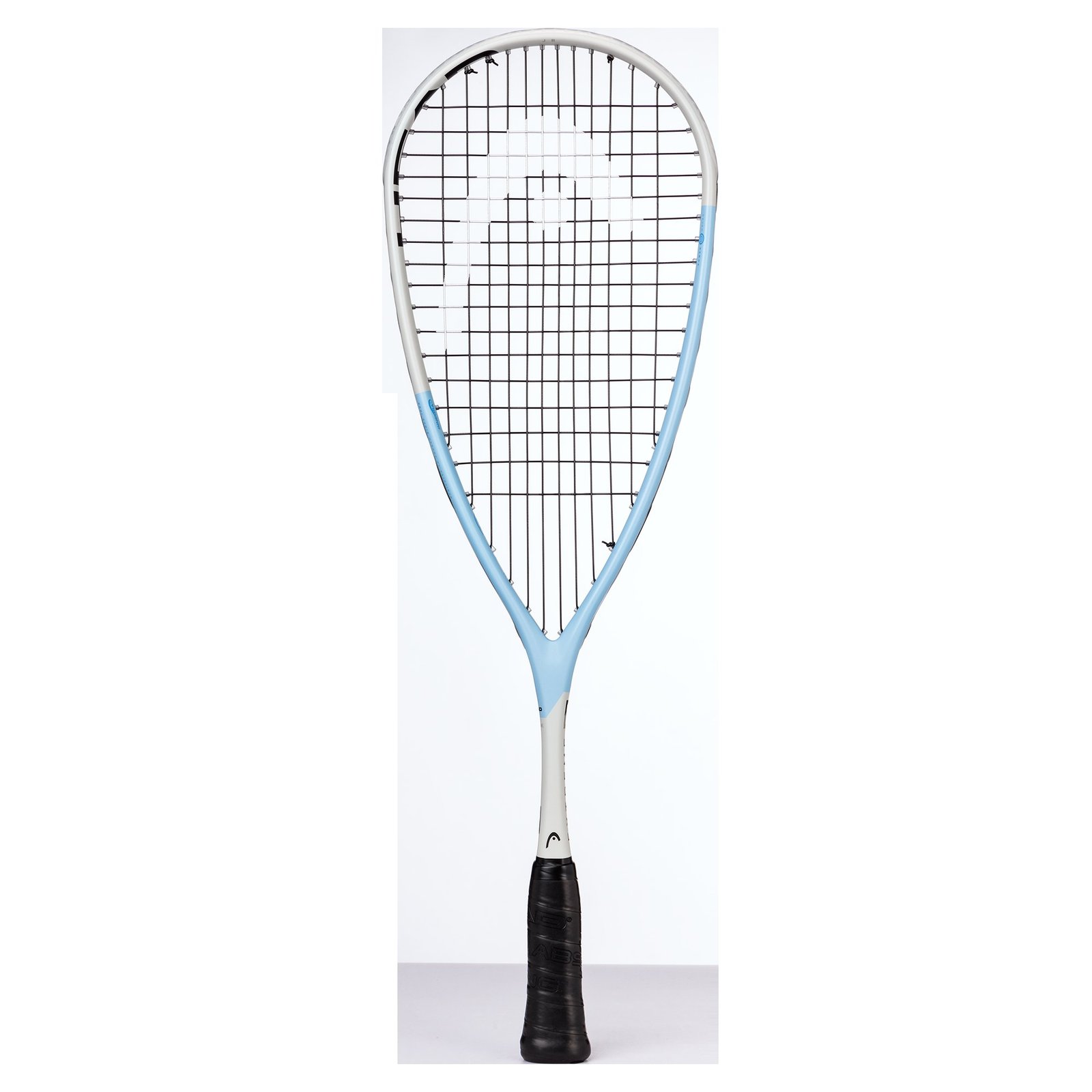
HEAD Extreme Junior
The junior take on HEAD’s Extreme 120: 120 g of graphite and Innegra, balanced head-heavy on purpose.
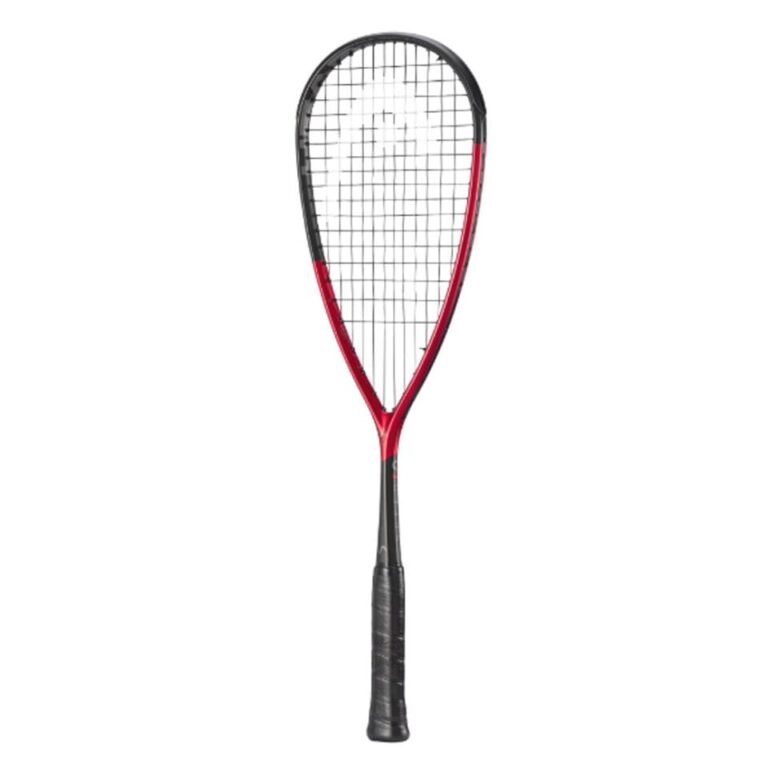
HEAD’s junior flagship brings the adult Extreme 120’s brief down to junior scale: HEAD says the Extreme Junior carries all the benefits and technologies of the adult model, in a lightweight graphite frame with a thinner shaft and the Innegra hybrid-composite structure HEAD integrates for shock absorption and stability. The published numbers are a serious junior specification — a 120 g frame weight, a 495 cm² head, an open 12/17 pattern, a head-heavy balance (340 mm in Sportano’s HEAD spec table) and the only numeric grip size in this guide, 3 7/8. HEAD positions the model for juniors looking for more power, and the head-heavy balance is the specification that delivers it.
Two honesty notes belong on this card. First, HEAD publishes no age guidance for the Extreme Junior, so none is claimed. Second, HEAD’s own spec table does not publish a length at all, and retailer tables reproducing HEAD data disagree — 62.5 cm on the current listing, 63.5 cm on the 2023 listing — which puts the frame in the 25-inch junior class without a single figure this guide can print as settled. Confirm the length on the product page before ordering. What is not in doubt is the rest of the spec, and on weight, head, grip and balance this is the most completely published power-leaning junior frame here.
What we like
- Adult Extreme technologies — Innegra, thinner shaft — at junior scale
- Only numeric grip size published in this guide (3 7/8)
- Head-heavy balance for the power-leaning junior game HEAD describes
- 120 g graphite frame with a near-maximum 495 cm² head
Worth knowing
- HEAD publishes no length and no age guidance for this model — retailer length figures vary (62.5–63.5 cm)
- Head-heavy balance is a deliberate brief; control-first players should read cards #6 and #7
As an Amazon Associate we earn from qualifying purchases.
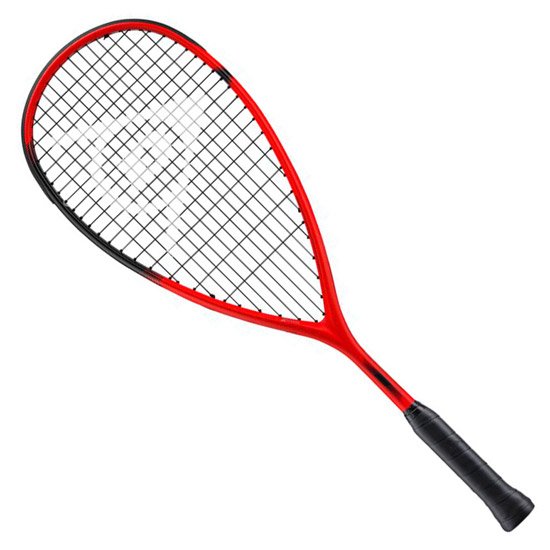
Dunlop Sonic Core Revelation Junior
A 25-inch version of the Revelation 125: 120 g of graphite with Sonic Core, for juniors beyond the starter stage.
Dunlop describes this model exactly as its name suggests: a 25-inch version of the Revelation 125, its adult performance frame, positioned for the advanced junior player. The published specification is an adult brief at junior length — a 120 g graphite frame, a 500 cm² teardrop head, a 14×18 pattern and an even balance — with Dunlop’s Sonic Core technology, powered by Infinergy foam developed by BASF, which Dunlop says gives better ball feel. RacquetGuys’ Dunlop spec table adds the playing detail that matters: the racket is shorter so younger players can handle swinging close to the wall, for better manoeuvrability.
Dunlop also fits this model with what its listings call a specially designed thinner grip — Dunlop’s description; no numeric grip size is published, so none is printed here. And like its Tristorm sibling, the Revelation Junior carries no published age guidance from Dunlop: the maker’s positioning is by level (advanced junior), not by birthday. Buy it for the junior who has come through a starter frame, plays club or school squash seriously, and is ready for an even-balanced graphite racket whose next step is not another junior model, but a standard-length adult frame from the beginner guide linked in the verdict.
What we like
- Adult Revelation brief scaled to 25 inches: 120 g, 500 cm², even balance
- Sonic Core with Infinergy and Glidepolymer carried from Dunlop’s performance range
- Thinner junior grip, as Dunlop describes it
- Clear maker positioning by level: the advanced junior’s Dunlop
Worth knowing
- Dunlop publishes no age guidance and no numeric grip size for this model
- More racket than a starter needs — Dunlop’s own Tristorm is card #3 for a reason
As an Amazon Associate we earn from qualifying purchases.
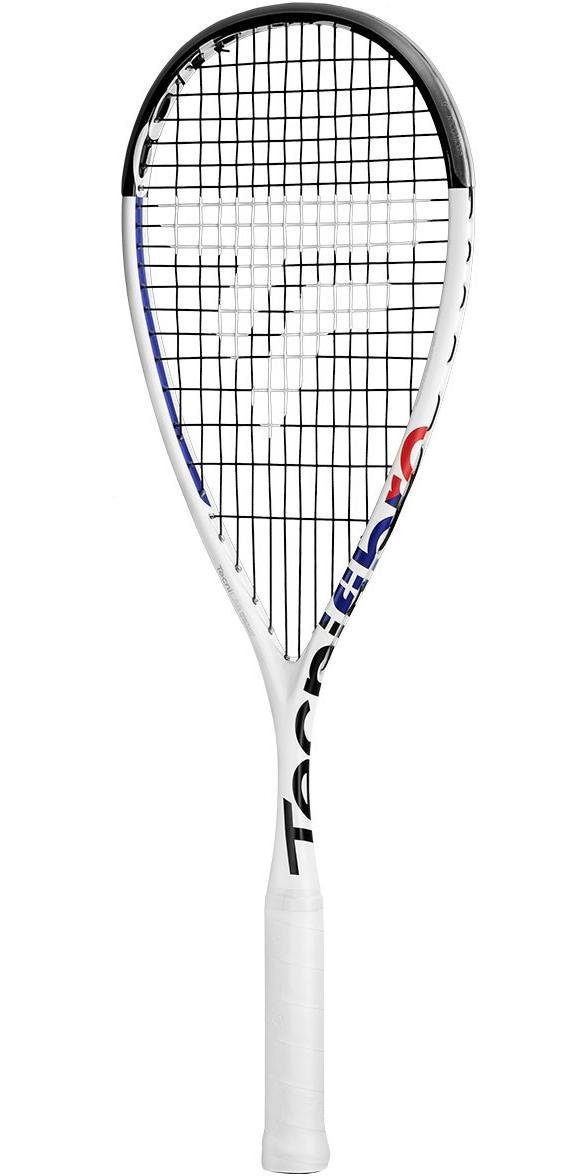
Tecnifibre Carboflex Junior X-Top
The junior Carboflex: a 150 g graphite-and-aluminium take on the most played racket family on tour, shortened by 5 cm.
Tecnifibre’s Carboflex is, in the maker’s own words, among the most played racket families on the tour — and the Junior X-Top is its deliberate adaptation for young players, not a relabelled adult frame. Tecnifibre builds it with a graphite monoshaft construction, which it says reinforces the flexibility of the frame and generates maximum power, and an aluminium head, which it says increases resistance especially in contact with the walls. The length tells the junior story on its own: 63.5 cm, shortened by 5 cm against the adult version in Tecnifibre’s listings, with a thinner grip Tecnifibre says makes the racket easier to hold and more manoeuvrable. The X-Top head, Airshaft section and extended string holes all carry down from the senior line.
At 150 g this is the heaviest of the 25-inch graphite-class cards — a frame built to be played hard by a junior near the top of the junior game, and Tennisnuts’ Tecnifibre listing positions the model for players aged 10 to 12. Note the attribution: that age band is the retailer’s positioning, because Tecnifibre publishes no age band on its own spec table, and no numeric grip size either. Treat this as the last junior racket on the ladder: the player who outgrows it steps up to a standard 27-inch racket — a choice owned by our adult beginner guide, and by the women’s guide linked below for the many junior girls graduating into the women’s game.
What we like
- Tour Carboflex technologies — X-Top, Airshaft, extended string holes — in a true junior frame
- Graphite monoshaft with an aluminium head, as Tecnifibre describes the build
- Full published spec: 150 g, 500 cm², 345 mm balance, 14×18 pattern
- Shortened by 5 cm against the adult version, per Tecnifibre’s listings
Worth knowing
- Tecnifibre publishes no age band and no numeric grip size; the 10–12 positioning is a retailer’s
- 150 g is the heaviest 25-inch frame here — built for the top of the junior game, not the start
As an Amazon Associate we earn from qualifying purchases.
Side-by-Side Comparison Table
| Model | Best For | Length | Weight | Head Size | Material | Maker’s Guidance |
|---|---|---|---|---|---|---|
| Karakal CSX 60 Junior | First junior racket | 23.5 in | 180 g | 460 cm² | Alumag Alloy | Up to 9 years old (Karakal) |
| Black Knight Junior (Graphite) | 24-inch graphite | 24 in | 135 g | 440 cm² | Full graphite | None published (Black Knight) |
| Dunlop Tristorm Junior 25 | Aluminium starter · 25″ | 25 in | 160 g | 500 cm² | Fused aluminium | None published (Dunlop) |
| Oliver Junior Squash | Maker-guided pick | 63.5 cm | 115 g | 478 cm² | 100% HMG | Ages 6 to 10 (Oliver) |
| HEAD Extreme Junior | Power-leaning junior | Junior (see card) | 120 g | 495 cm² | Graphite · Innegra | None published (HEAD) |
| Dunlop Sonic Core Revelation Junior | Advanced juniors | 25 in | 120 g | 500 cm² | Graphite | Advanced juniors (Dunlop) |
| Tecnifibre Carboflex Junior X-Top | Top-end junior | 63.5 cm | 150 g | 500 cm² | Graphite & Aluminium | None on maker’s table (retailer: 10–12) |
The last column is the one this guide refuses to tidy up. Only two makers — Karakal and Oliver — publish an age band for their junior model, and Dunlop positions the Revelation Junior by level rather than age. The “none published” entries are not gaps in our research; they are the makers’ actual published position, printed as found. Where guidance exists, buy by it. Where it does not, buy by the published dimensions: length first, then the weight the player can swing freely, then the material that matches their stage.
Buying Guide: Choosing on the Maker’s Numbers
1. Start with length — it is the junior decision
Every other specification is secondary to getting a frame shorter than the 27-inch adult standard into a junior’s hand. The published junior band runs from Karakal’s 23.5 inches through Black Knight’s 24 to the 25-inch cluster where most makers sit. There is no junior length above 25 inches in the current published ranges this guide verified: a junior who has outgrown 25 inches has outgrown junior rackets, full stop. Choose the length that matches the player now — the shortest frames for the youngest starters, 25 inches for juniors already rallying on a full court — and let the step up to a standard frame happen when it happens.
2. Weigh the racket, not just the tape measure
Squash breaks the pattern parents expect: here, the shortest frame in the guide (the 180 g Karakal) outweighs every 25-inch graphite frame on the page, because aluminium starter builds are heavier than graphite ones. So check both numbers on every card. The swing test needs no equipment: the player holds the racket out in one hand and swings it in a controlled arc, as if playing a drive off the front wall. If the head pulls the arm down, the frame is too heavy for that player today — whatever the length chart says.
3. Read the grip claims literally
Junior grip information is the least standardised part of the published specs. HEAD gives a number (3 7/8 on the Extreme Junior); Dunlop and Tecnifibre describe thinner grips without publishing a size; the rest name grip types. Read it literally: a published number can be compared, a description cannot — so where only a description exists, the in-hand test decides. Fingers wrapped with a small gap to the palm is right; fingertips digging in means too small, and a grip the player cannot close a hand around is too large.
4. Match the rest of the kit to the stage
A racket is one line of the junior kit. The ball matters as much as the frame at the starter stage — junior programmes introduce the game with bouncier balls before moving players toward the standard ball range, and our best squash balls guide runs the full progression. Court shoes that grip without marking belong on the list from the first session — see our best squash shoes guide — and many clubs require protective eyewear for junior play, so check your club’s rule before the first match. And if your family splits its racket-sport time across codes, the same discipline applies in all of them: our best badminton rackets for kids guide runs the junior badminton ladder with the same makers’-numbers-only rule.
Frequently Asked Questions
What size squash racket should my child use?
A junior frame shorter than the 27-inch adult standard. The makers in this guide publish junior lengths from 23.5 inches (Karakal’s CSX 60 Junior) and 24 inches (Black Knight’s Junior Graphite) up to the 25-inch frames most junior lines use (Dunlop, Oliver and Tecnifibre). Only two makers publish an age band: Karakal positions the CSX 60 Junior for players up to 9 years old, and Oliver positions its Junior Squash for children aged 6 to 10. Where a maker publishes no age guidance, choose by length and by whether the player can swing the frame’s published weight freely.
When should a junior move to a full-size adult squash racket?
When the 25-inch junior frames are outgrown — the player is limited by the frame’s reach and the junior grips and weights feel small rather than right. There is no junior length above 25 inches in the ranges verified for this guide, so the next step is a standard 27-inch adult racket, chosen from the adult ranges: our best squash rackets for beginners guide owns adult first-racket selection. Do not skip the junior stage to get there early; a full-length frame is proportioned for an adult swing.
Aluminium or graphite — which is better for a kids’ squash racket?
They belong to different stages, as the makers build them. The starter frames here are aluminium — Karakal’s CSX 60 Junior in Alumag Alloy and Dunlop’s Tristorm Junior 25 in fused aluminium. The graphite frames — Black Knight’s full graphite Junior, Oliver’s 100% HMG Junior Squash, HEAD’s graphite Extreme Junior and Dunlop’s graphite Revelation Junior — are lighter builds aimed at juniors who are playing regularly. Tecnifibre splits the difference with a graphite monoshaft and an aluminium head on the Carboflex Junior X-Top. Buy the material of the stage your child is at.
Why is the shortest junior racket in this guide also the heaviest?
Because in junior squash, material outweighs length. Karakal’s CSX 60 Junior is 23.5 inches long but built in Alumag Alloy, and Karakal publishes its unstrung weight at 180 g — heavier than every 25-inch graphite frame in this guide, which run from 115 g (Oliver) to 150 g (Tecnifibre). Karakal itself notes the model is slightly heavier than alternative junior rackets and says the weight provides more power. Always check a junior racket’s published weight alongside its length.
Do junior squash rackets have smaller grips?
Junior grips are smaller or thinner, but each maker states it differently. HEAD publishes a 3 7/8 grip size for the Extreme Junior. Dunlop describes the Revelation Junior as having a specially designed thinner grip, and Tecnifibre states the Carboflex Junior X-Top has a thinner grip — neither publishes a numeric size. Oliver, Karakal and Black Knight publish grip types rather than sizes. There is no junior grip standard, so check what the maker states for the specific model and test the grip in the player’s hand.
Which makers publish age guidance for their junior squash rackets?
Of the seven models in this guide, two makers publish an age band: Karakal (up to 9 years old for the CSX 60 Junior) and Oliver (ages 6 to 10 for the Junior Squash, stated on Oliver’s own site). Dunlop positions the Revelation Junior by level — for advanced junior players — rather than by age. Black Knight, HEAD and Tecnifibre publish no age guidance for the models carded here, and one retailer positions the Tecnifibre for ages 10 to 12. This guide attributes every age statement to its source and invents none.
Do these junior squash rackets come pre-strung?
Yes — the junior models in this guide are supplied strung with factory strings: Black Knight lists its Crossfibre factory string, Tecnifibre fits its Synthetic Gut 1.25 with a PU grip, and the Dunlop, HEAD, Karakal and Oliver junior models are likewise sold strung and ready to play. A junior can use the racket the day it arrives. Restringing is a later-stage concern; a junior frame is normally outgrown before its factory strings become the limiting factor in a child’s game.
The Verdict
Buy the frame that matches the player in front of you, on the maker’s numbers. The Karakal CSX 60 Junior starts the junior game at 23.5 inches, on Karakal’s own up-to-9 positioning. The Black Knight Junior (Graphite) is the light, short graphite alternative. At 25 inches, the Dunlop Tristorm Junior 25 is the aluminium starter, the Oliver Junior Squash the lightest and best-documented pick on Oliver’s ages 6–10 guidance, the HEAD Extreme Junior the power-leaning head-heavy brief, the Dunlop Sonic Core Revelation Junior the advanced junior’s graphite frame, and the Tecnifibre Carboflex Junior X-Top finishes the junior ladder at the top end. Beyond them, the step is a standard 27-inch adult racket: our best squash rackets for beginners guide owns that first adult choice, and our best squash rackets for women guide covers the women’s ranges many junior girls graduate into. Size honestly, by published length and weight — a child swinging the right proportions learns squash; a child swinging an adult frame learns to cope with one.
Affiliate disclosure: AliShuttler is reader-supported. When you buy through links on this page we may earn an Amazon commission at no extra cost to you. Specifications and sizing positions are taken from manufacturers’ published product information and were verified at the time of writing; manufacturers revise models between seasons, so confirm the exact specification on the product page before ordering.