
Pickleball is a sideways sport played in short bursts at the kitchen line. The right court shoe grips without grabbing, holds your foot through a hundred lateral shuffles, and still feels fresh in the third game. Here are the seven pairs that do their specific jobs best.
⚡ TL;DR — The Short Answer
Buy the Skechers Viper Court Pro if you play mostly outdoors and want one shoe that does everything: Goodyear Gold outsole for grip and controlled slides, podiatrist-certified Arch Fit support, and a roomy Relaxed Fit. Indoor players should start with the ASICS Gel-Renma 2, built around grip and multi-directional movement on wood and sport-court surfaces. Hard side-to-side movers get the HEAD Motion Pro‘s lockdown strap and lateral reinforcement; wide feet get the K-Swiss Express Light Wide (a true 2E/D model, not a size-up workaround). The rule underneath every pick: match the outsole to your surface first, then fit, then cushioning.
Quick Picks — Best Pickleball Shoes at a Glance
Goodyear Gold compound outsole, Arch Fit support and ULTRA FLIGHT cushioning in a roomy fit. The default recommendation.
Forefoot GEL, TRUSSTIC stability and a wrap-up outsole with flex grooves for fast, grippy indoor movement.
HEAD’s pickleball-only design: lockdown strap, reinforced sidewall and Lateral Control+ for kitchen-line shuffles.
A genuine wide model (men’s 2E, women’s D) of the first shoe designed specifically for pickleball.
4D Support Chassis controls torsion and supination through pivots; medial drag pad for toe-draggers.
Hands-free Slip-ins entry with Heel Pillow, ECO FLIGHT cushioning and the same Goodyear Gold outsole.
In This Guide
Start With Your Surface: Outdoor vs Indoor Courts
Pickleball shoes split first by where you play, because the two surfaces ask opposite things of an outsole. Outdoor courts are asphalt or textured concrete, often overlaid with acrylic paint: abrasive, hard on rubber, and unforgiving over a long session. Outdoor play demands a durable, high-density outsole compound, enough cushioning to take the sting out of a surface with no give, and tread that still bites when the court is dusty.
Indoor courts are wood or synthetic sport-court flooring: smooth, grippy, and clean. Indoor play rewards a softer, tackier outsole with fine tread and flex grooves that let the shoe bend with your foot through split-steps and shuffles — and a non-marking compound, because most facilities require it. A shoe that excels outdoors will feel clunky indoors; a soft indoor shoe will be chewed up by asphalt in a season. Decide your primary surface honestly — where do 80% of your games happen? — and buy for that. Players who genuinely split their week should look at the all-court designs in this guide (the Viper Court Pro and Rush Pro Ace Pickler) and accept the compromise knowingly.
How Pickleball Actually Moves Your Feet
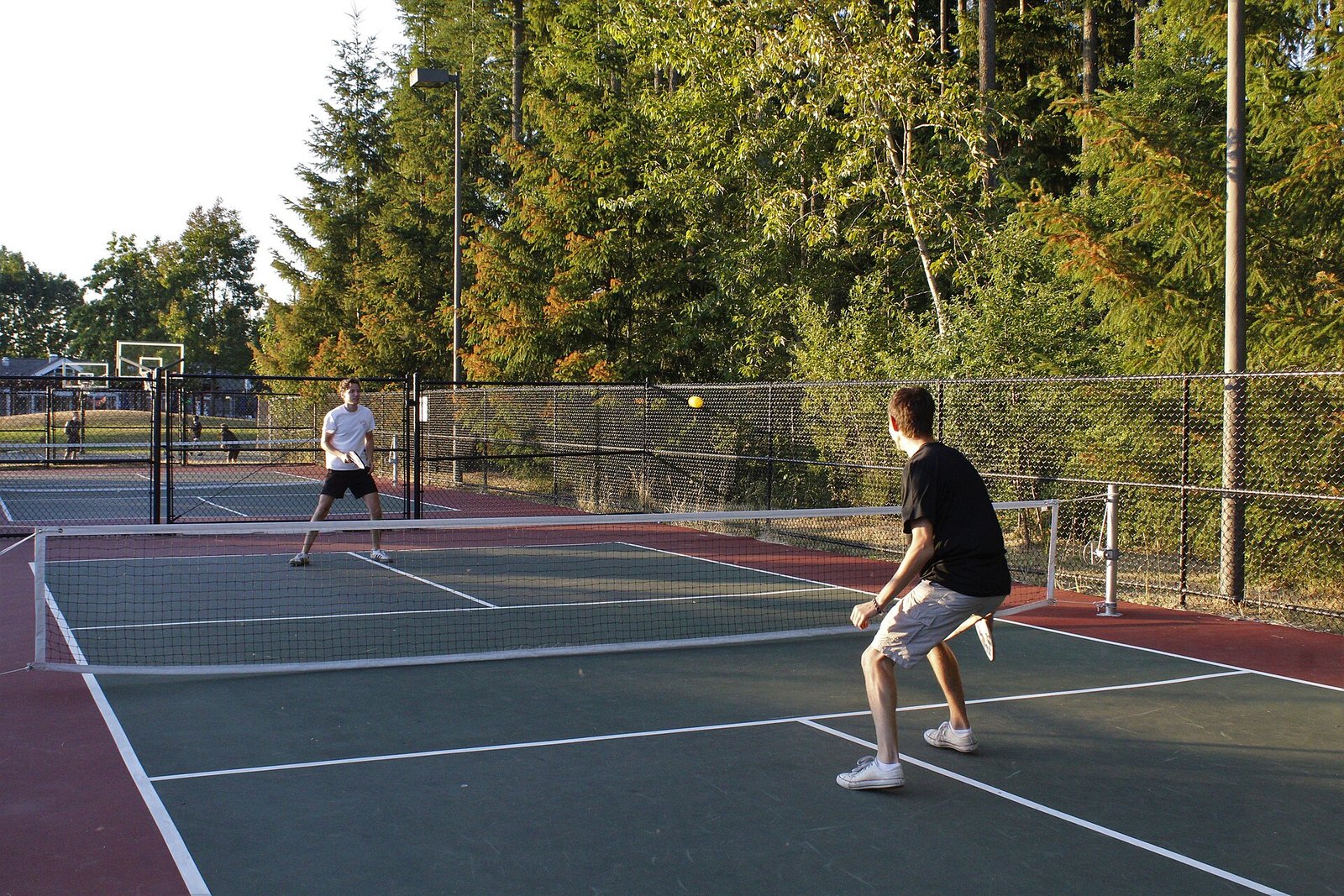
Pickleball is not running. After the serve, most points are won and lost within a step or two of the non-volley zone line, in movements that are overwhelmingly lateral: side shuffles along the kitchen, cross-steps into a dink exchange, sudden plants to change direction, and dozens of small split-steps per game. That movement profile is why running shoes — built to roll forward, with narrow bases and raised heels — are the wrong tool, and why every shoe in this guide is a court shoe: wide, stable bases; reinforced sides to stop your foot rolling over the edge of the shoe; and outsoles patterned for grip in every direction, not just forward.
Three design features do the work. Lateral support (sidewalls, straps, stability chassis) keeps the foot centred over the sole when you plant and push sideways. Cushioning decides how your knees and feet feel in game three of a long session — outdoor players on concrete need more of it. And outsole durability decides whether the grip is still there in month six, because toe-draggers and hard planters wear specific zones smooth long before the shoe looks finished. The picks below are organised by exactly these jobs — and if you are building your full setup, our best pickleball paddles guide covers the other half of the equation.
The 7 Best Pickleball Shoes, Compared
Every shoe below is a current model sold for pickleball or stocked for it by specialist pickleball retailers, with specifications from the manufacturer’s own published listing. They are ranked by the job each does best — start from your surface and your feet, not from the numbers.
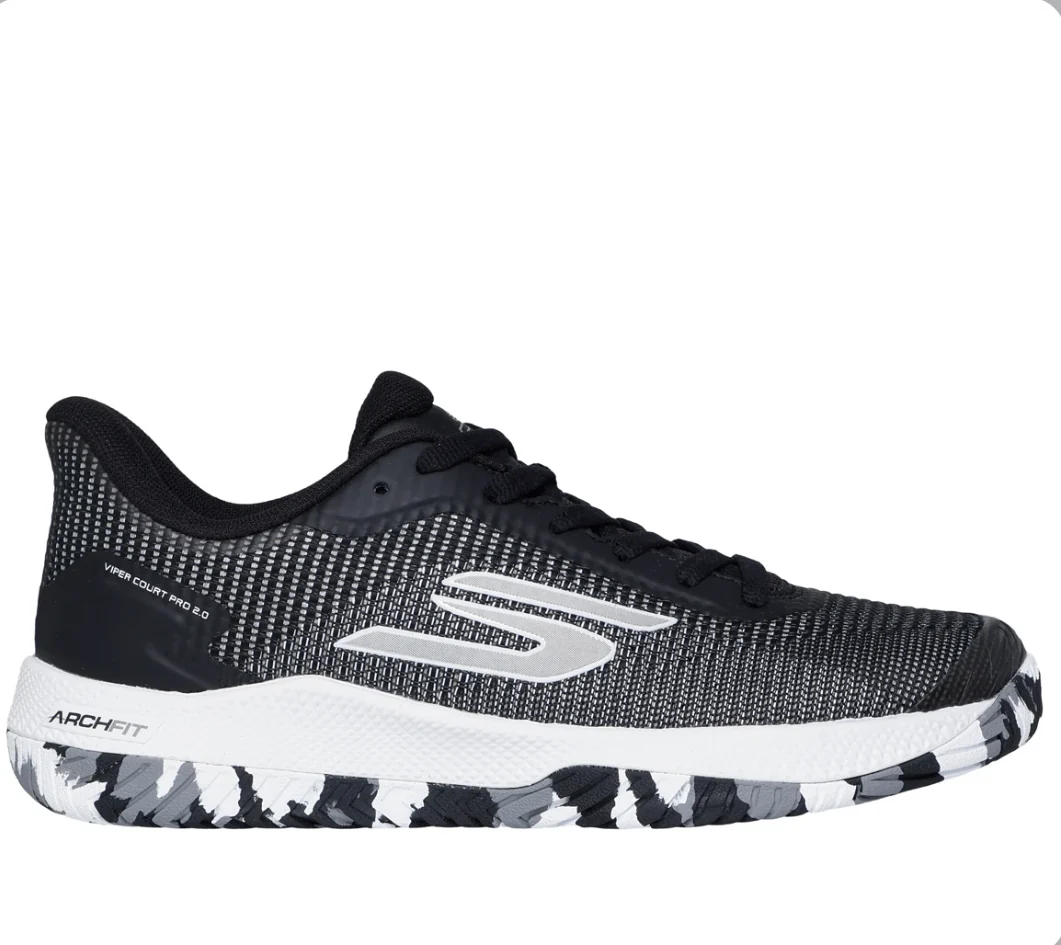
Skechers Viper Court Pro
The flagship pickleball shoe: Goodyear grip, certified arch support and room to move.
The Viper Court line is the shoe many players mean when they say “pickleball shoe”, and the Pro is its flagship. The headline is underfoot: a Goodyear Gold compound outsole — a genuine tyre-rubber compound — engineered to deliver traction and stability on court surfaces while still allowing the controlled slide you want when you arrive at a dink slightly hot, and to keep doing it outdoors where lesser rubber wears smooth.
Inside, Skechers’ patented Arch Fit insole provides podiatrist-certified arch support — Skechers says the shape was developed with 20 years of data and over 120,000 unweighted foot scans — and it is removable if you use your own orthotics. ULTRA FLIGHT cushioning handles the concrete, and the Relaxed Fit gives toes genuine room, which your feet will appreciate in game four. For seniors building a comfortable, supported setup, this is also the shoe we would point to first alongside the guidance in our pickleball for seniors guide.
What we like
- Goodyear Gold outsole: grip, controlled slides and outdoor durability in one compound
- Arch Fit support is certified and the insole is removable for orthotics
- Roomy Relaxed Fit suits long sessions and wider forefoots
- Featherweight-feeling ULTRA FLIGHT cushioning for hard outdoor courts
Worth knowing
- Relaxed Fit can feel loose on narrow feet — standard-fit players should try before committing
- Premium model in the Skechers range; the Elite 2.0 below trades some performance for comfort features
As an Amazon Associate we earn from qualifying purchases.
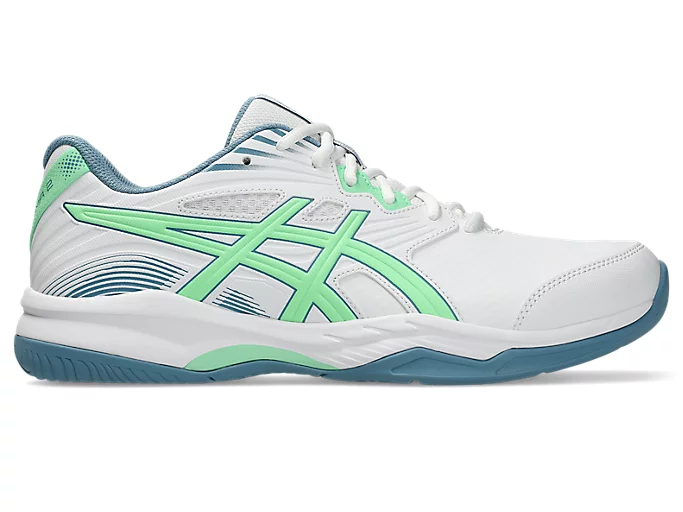
ASICS Gel-Renma 2
The indoor specialist — GEL cushioning, a stability system and an outsole shaped for wood and sport courts.
The Gel-Renma was one of the two real picks on the previous version of this page, and the Gel-Renma 2 is its proper successor — ASICS’ pickleball-specific design reworked for the indoor game. The outsole wraps up around the shoe with a wider gauge and flex grooves cut for multi-directional movement, which is exactly the pattern indoor play needs: maximum contact, easy bending, confident grip on wood and synthetic floors through split-steps and lateral pushes.
ASICS’ court-shoe DNA shows in the details: forefoot GEL for impact cushioning, the TRUSSTIC system in the midsole resisting twist, and synthetic leather overlays at the midfoot holding your foot through lateral moves. Even the sockliner is thought through — solution-dyed, using roughly a third less water and around 45% less carbon emissions than conventional dyeing processes per ASICS. If your pickleball life happens indoors, this is the shoe designed around your floor.
What we like
- Wrap-up outsole and flex grooves are a genuine indoor-grip formula
- TRUSSTIC stability plus midfoot overlays for lateral confidence
- Forefoot GEL takes the edge off hard landings and plants
- Light, no-sew upper keeps the fit clean and breathable
Worth knowing
- Indoor-leaning outsole will wear faster on rough outdoor asphalt — respect the surface split
- Fit is a conventional athletic fit; very wide feet should look at the K-Swiss below
As an Amazon Associate we earn from qualifying purchases.
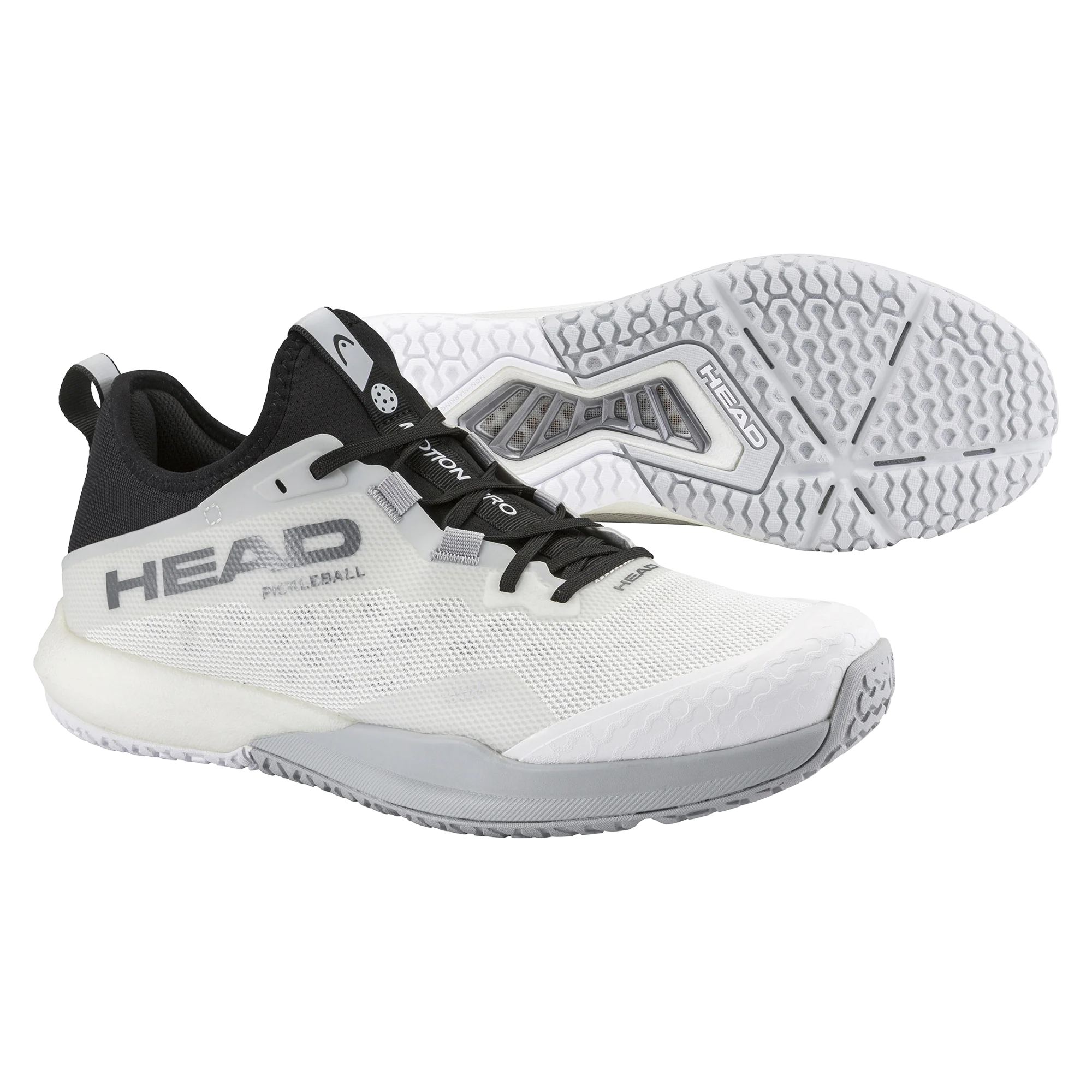
HEAD Motion Pro
HEAD’s first pure pickleball shoe — a lockdown strap, reinforced sidewalls and a 360° outsole for hard lateral players.
Most “pickleball shoes” began life as tennis shoes with new marketing. The Motion Pro is the exception: HEAD designed it from a blank sheet purely for pickleball, developing it with American pickleball players, and the brief shows in every decision. A lockdown strap works with the lacing to pin the midfoot; a reinforced sidewall and HEAD’s Lateral Control+ system resist the outward roll that hard kitchen-line shuffles produce; an internal TPU heel counter and a ventilated 3D anti-torsion shank keep the whole shoe honest under twisting loads.
The Hybrasion+ outsole runs a 360-degree pattern — grip in every direction, including the backwards recovery step nobody plans — and a hard-wearing reinforced toe cap shrugs off toe drag. The sock-fit mesh upper keeps it breathable, and the toe box is usefully wide. If your game is built on aggressive lateral movement and you have ever felt a shoe’s upper give up before your feet do, this is your pick.
What we like
- Designed purely for pickleball — not a relabelled tennis shoe
- Strap, sidewall and heel counter give the strongest lateral containment here
- 360° outsole pattern grips in every direction of pickleball movement
- Reinforced toe cap for players who drag
Worth knowing
- The locked-down fit is purposeful, not plush — comfort-first players may prefer the Elite 2.0
- Men’s weight is at the sturdy end of this guide (14.6 oz in size 10)
As an Amazon Associate we earn from qualifying purchases.
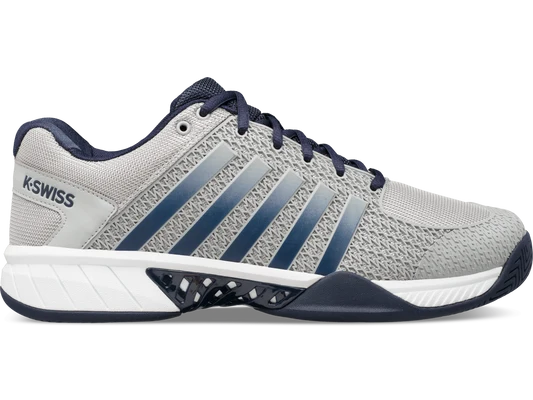
K-Swiss Express Light Pickleball — Wide
A true wide model (men’s 2E, women’s D) of the first shoe designed specifically for pickleball.
K-Swiss built the Express Light as the first court shoe designed specifically for pickleball — and, crucially for this pick, sells it in a genuine wide width rather than telling wide-footed players to size up and hope. Men’s wide is a 2E and women’s a D, built on the same performance chassis: a 180-degree Plantar Support Chassis for midfoot stability, K-EVA cushioning, and an Ortholite x40 sockliner.
The outsole is Aösta 7.0, K-Swiss’ high-density rubber, in a modified herringbone pattern aimed at hard and clay courts, with DragGuard in the toe and heel where pickleball players actually wear shoes out, plus Durawrap protection against toe-dragging. A heel-grip lining keeps the back of the shoe honest. Wide feet are common in pickleball’s core demographic and badly served by most court lines; this is the straightforward, purpose-built answer — and pairing it with the foot-care thinking in our injury prevention guide is a sensible way to keep long sessions enjoyable.
What we like
- Real wide widths (2E/D) — not a marketing stretch of a standard last
- High-density Aösta 7.0 outsole with drag protection where wear actually happens
- Plantar support chassis keeps wide feet stable, not sloppy
- Lightweight for a durability-spec shoe
Worth knowing
- Standard-width players: buy the regular Express Light, not this — wide lasts will feel loose
- Herringbone leans hard/clay court; pure indoor wood players have the ASICS above
As an Amazon Associate we earn from qualifying purchases.
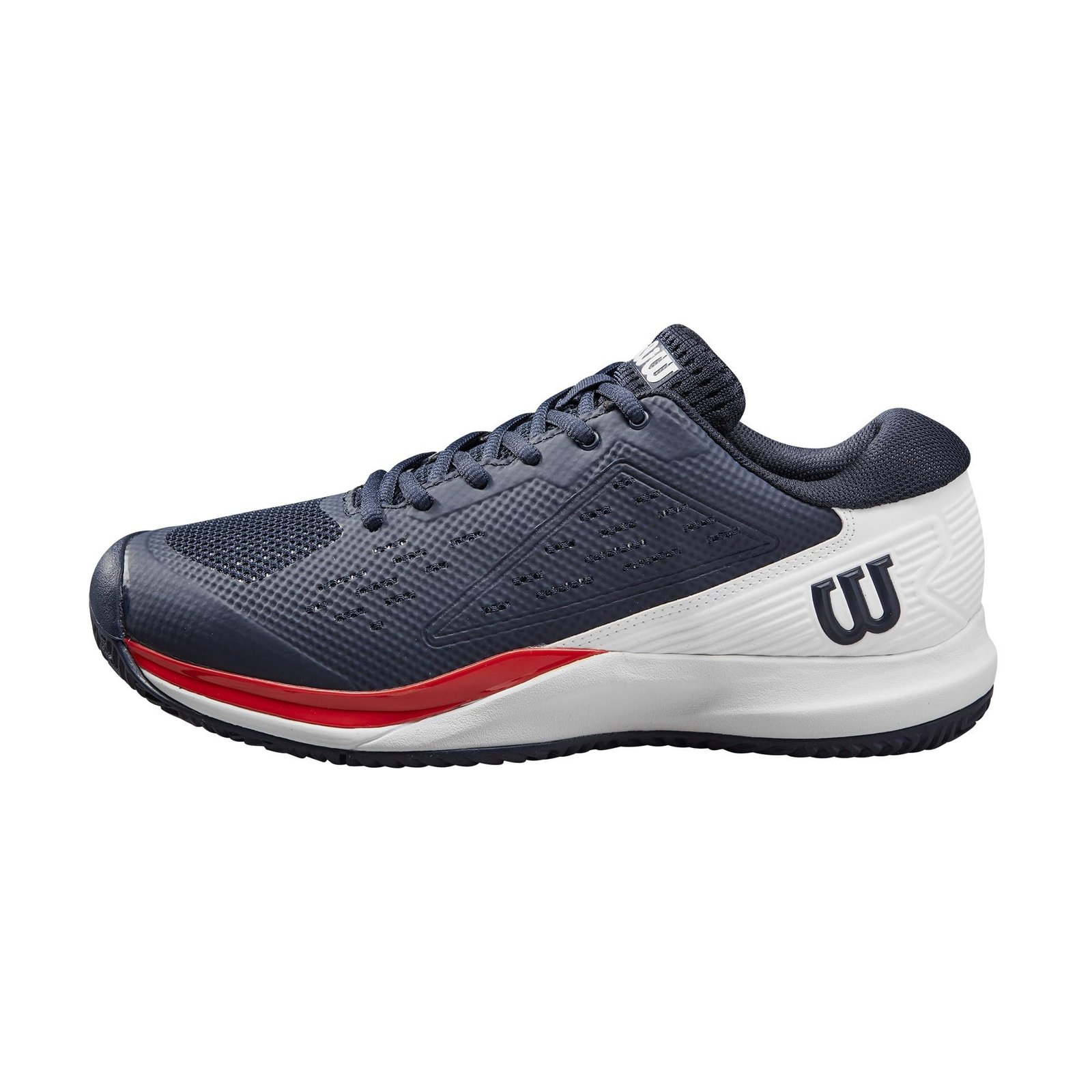
Wilson Rush Pro Ace Pickler
A stability chassis built for pivots, in the most generous fit of the Rush Pro family.
Wilson’s Pickler takes the Rush Pro — a respected court line — and tunes it for pickleball’s pivot-heavy movement. The centrepiece is the 4D Support Chassis, engineered to limit supination and control torsion: in plain terms, it stops the shoe twisting and your foot rolling outward when you plant and rotate, which is the exact load a kitchen-line cross-step applies. A rubber medial drag pad protects the inside of the shoe where draggers scuff.
The fit is the most generous in the Rush Pro family — a 2E width with a wide toe box — which makes this the second wide-friendly pick in the guide, differentiated from the K-Swiss by emphasis: the Wilson is the stability-and-pivot choice, with R-DST+ cushioning, a high-traction Duralast outsole Wilson describes as performing on all court surfaces, and a 9 mm heel-to-toe drop (DF2) that suits players who like a slightly lifted, ready stance. If your ankles have opinions about lateral movement, start here.
What we like
- 4D Support Chassis is a real anti-roll, anti-twist system for pivots
- Generous 2E fit and toe box without giving up stability
- Medial drag pad extends life for toe-draggers
- Duralast outsole is built for abrasion resistance across surfaces
Worth knowing
- Stability comes with structure — players who love a minimal, sock-like shoe should look at the Nike below
- 9 mm drop is more heel lift than low-profile court shoes; a preference, not a flaw
As an Amazon Associate we earn from qualifying purchases.
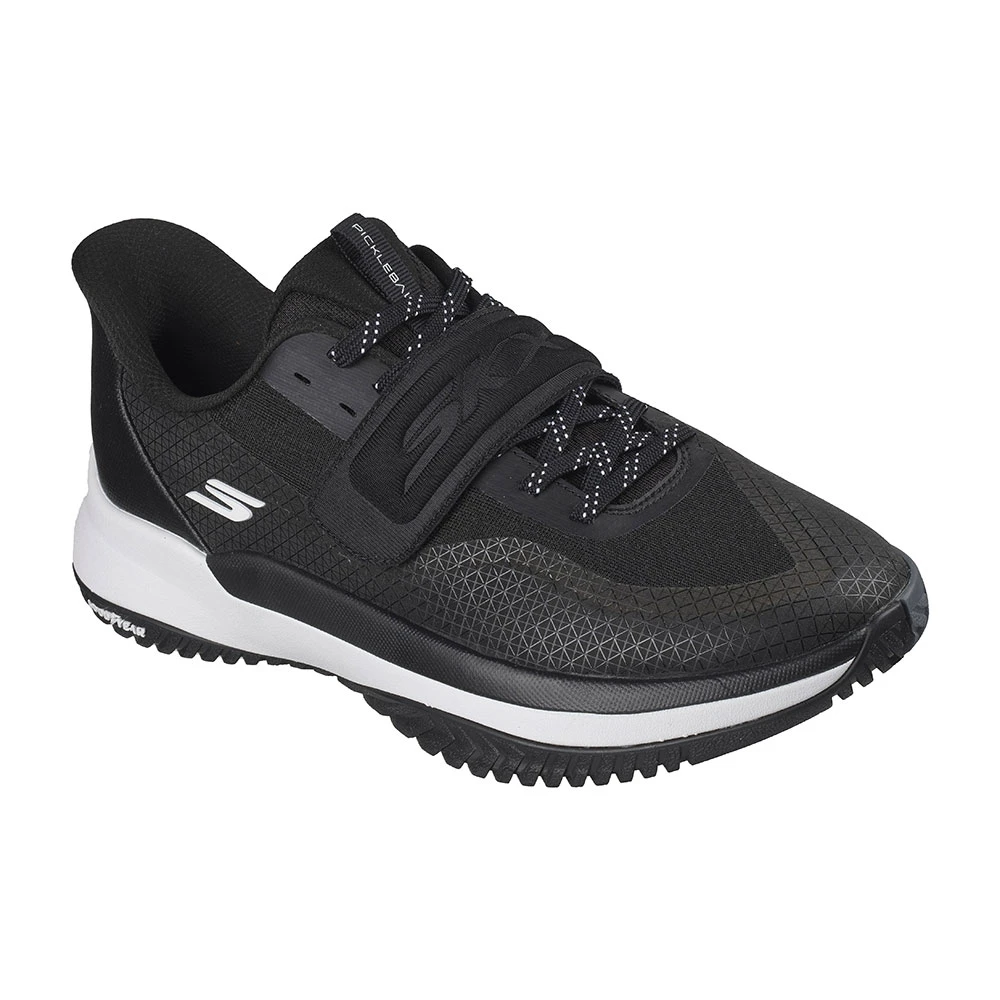
Skechers Viper Court Elite 2.0
Slip-ins convenience with a real court outsole — for players who value comfort and easy on-off above all.
Not everyone wants to wrestle a performance shoe on with a shoehorn mentality. The Elite 2.0 is Skechers’ comfort-first Viper Court: a Hands Free Slip-ins design with a moulded Heel Pillow that holds the heel once you are in, backed by adjustable laces and a top strap so “easy on” does not mean “loose at the kitchen line”. Underneath, it keeps the family’s serious hardware — the Goodyear Gold non-marking outsole and a removable Arch Fit insole.
Cushioning is ECO FLIGHT with Move Foam, the upper is athletic mesh with TPU overlays, and the Relaxed Fit gives toes the same room as the Pro. This is the pick for recreational regulars, players returning from a layoff, and anyone whose feet object to stiff performance shoes — comfort you will actually wear three times a week beats a race shoe that lives in the cupboard. It is also a natural recommendation inside our pickleball for seniors coverage for exactly that reason.
What we like
- Genuine slip-in convenience that still secures with laces and a strap
- Same Goodyear Gold outsole and Arch Fit support as the flagship line
- Plush, roomy comfort for long recreational sessions
- Non-marking outsole is indoor-facility friendly too
Worth knowing
- Comfort tuning means a softer ride than the Pro — aggressive movers should choose the Pro or the HEAD
- Slip-in heel design fits best on standard heel shapes
As an Amazon Associate we earn from qualifying purchases.
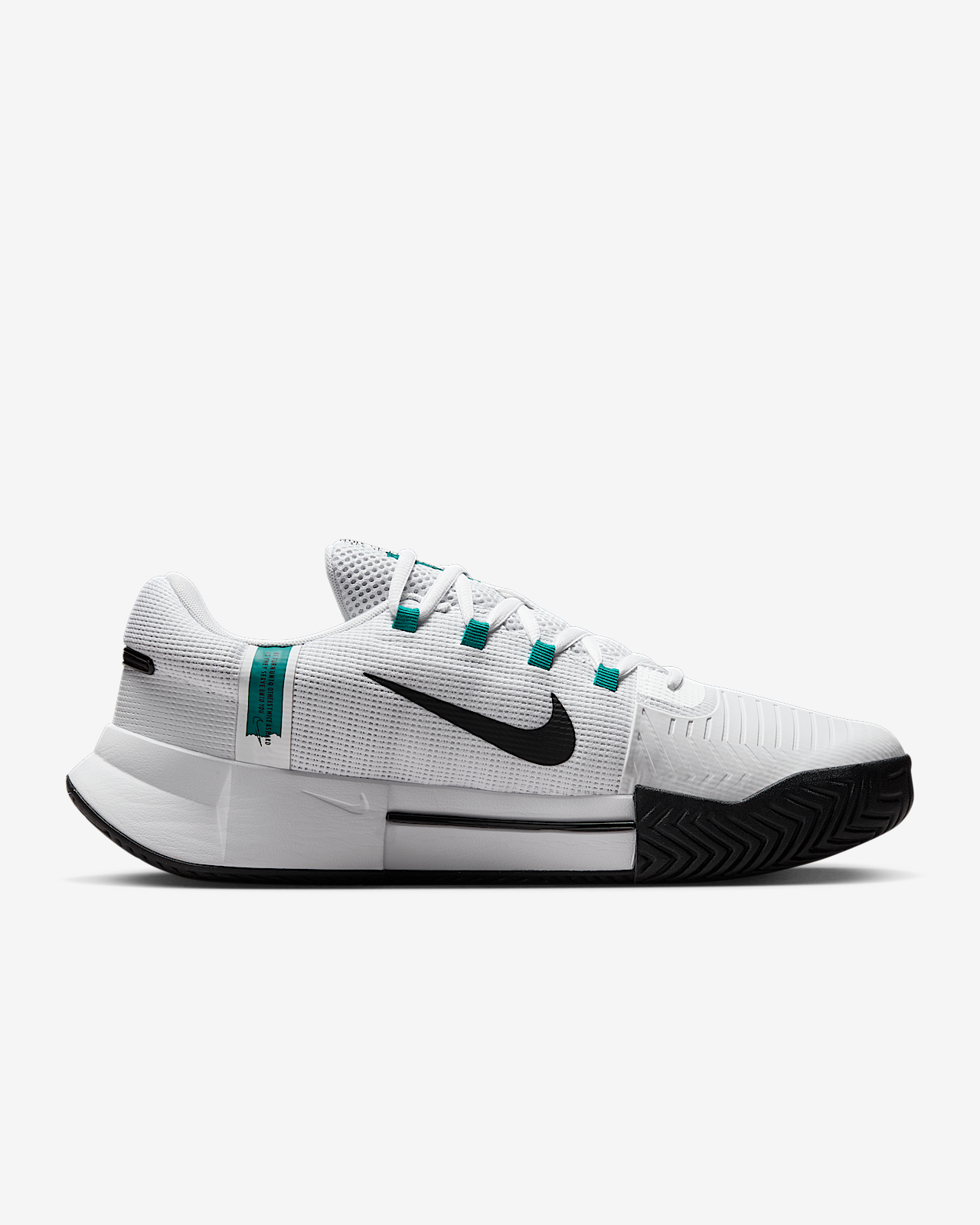
Nike Zoom GP Challenge 1
Zoom Air spring with a stability plate — the fast, responsive option pickleball retailers stock for quick movers.
Nike’s Zoom court line is the connoisseur’s fast shoe, and pickleball specialists stock the GP Challenge 1 for players who want that character at the kitchen line: Zoom Air units under the heel and forefoot for a responsive, springy ride, paired with a TPU plate for stability so the speed does not come at the cost of control. The one-piece outsole is built for all court surfaces, with extra rubber placed in the high-wear zones pickleball players actually burn through.
The upper is layered breathable mesh with a plush tongue and a U-shaped entry. Two fit notes from retailer data matter: the shoe runs slightly short — many players go up half a size — and the width is a true medium, so wide feet belong in the K-Swiss or Wilson above. For medium-footed players whose game is built on first-step quickness and who find traditional court shoes heavy, this is the responsive end of the guide.
What we like
- Zoom Air in heel and forefoot gives the liveliest ride here
- TPU plate balances the speed with real stability
- Extra rubber in high-wear areas respects pickleball’s wear pattern
- Light, breathable and sharp-looking on court
Worth knowing
- Runs slightly short — consider half a size up
- Medium width only; not the wide-foot answer
As an Amazon Associate we earn from qualifying purchases.
Side-by-Side Comparison Table
| Model | Best For | Key Outsole | Support System | Fit Notes |
|---|---|---|---|---|
| Skechers Viper Court Pro | Overall / outdoor | Goodyear Gold compound | Arch Fit insole | Relaxed Fit, roomy toe |
| ASICS Gel-Renma 2 | Indoor grip | Wrap-up, flex grooves | TRUSSTIC + GEL | Standard athletic fit |
| HEAD Motion Pro | Lateral lockdown | Hybrasion+ 360° pattern | Strap + sidewall + heel counter | Secure fit, wide toe box |
| K-Swiss Express Light Wide | Wide feet | Aösta 7.0 herringbone | 180 PSC chassis | Men’s 2E / women’s D |
| Wilson Rush Pro Ace Pickler | Pivot stability | Duralast high-density | 4D Support Chassis | 2E wide, 9 mm drop |
| Skechers Viper Court Elite 2.0 | Comfort / slip-in | Goodyear Gold, non-marking | Arch Fit insole | Relaxed Fit, slip-in entry |
| Nike Zoom GP Challenge 1 | Responsive speed | One-piece, reinforced wear zones | Zoom Air + TPU plate | Medium; runs slightly short |
Buying Guide: Grip, Support, Cushioning and Fit
1. Surface first, always
The single biggest predictor of whether you love a pickleball shoe is whether its outsole matches your floor. Outdoor asphalt eats soft indoor compounds; smooth indoor wood exposes hard outdoor treads as clumsy. Re-read the surface section at the top of this guide, buy for your 80% surface, and if you split venues evenly, choose an all-court design (Viper Court Pro, Rush Pro Ace Pickler) with your eyes open about the compromise.
2. Lateral support is the pickleball feature
Forward cushioning is a running-shoe conversation. Pickleball is decided sideways, so judge shoes on their side structures: reinforced sidewalls (HEAD), straps (HEAD, Elite 2.0), stability chassis (K-Swiss PSC, Wilson 4D) and heel counters. In the shop, plant your foot and push sideways against the floor — your foot should stay centred over the sole, not spill over its edge.
3. Cushioning: enough for your surface and session length
Concrete outdoors and three-hour sessions argue for more cushioning (Viper Court Pro’s ULTRA FLIGHT, Elite 2.0’s ECO FLIGHT); indoor players and quick movers may prefer a lower, more connected ride (Gel-Renma 2, Zoom GP Challenge 1). Removable insoles (both Skechers picks) let orthotic users bring their own support — if you wear orthotics, that feature is non-negotiable.
4. Fit: width is a model choice, not a size hack
Sizing up to get width buys you a shoe that is also too long — your foot slides, toes jam on stops, and the flex point lands in the wrong place. If you need width, buy a wide model: the K-Swiss Express Light Wide (2E/D) or the Wilson Rush Pro Ace Pickler (2E). Check length with your playing socks on, late in the day when feet are at their largest, with roughly a thumbnail of space ahead of your longest toe. And respect published fit notes — the Nike runs short; the Skechers Relaxed Fit runs roomy by design.
5. Know when a shoe is done
Court shoes rarely look dead when they are. The honest retirement signs are physical: outsole tread worn smooth in your plant or drag zones (grip goes first, and it goes quietly), a midsole that feels packed and unresponsive, or an upper that has stretched enough that your foot moves inside it on lateral plants. A shoe that no longer grips or holds is not a saving — it is a risk you wear. Rotating two pairs across a heavy week also gives foam a day to recover between sessions.
Frequently Asked Questions
Can I play pickleball in running shoes?
It is not a good idea. Running shoes are built to move forward: narrow bases, raised cushioned heels and soft sides. Pickleball moves sideways — shuffles, plants and pivots at the kitchen line — and a running shoe’s foot can roll over its edge on exactly those movements. A court shoe’s wide base, lateral reinforcement and multi-directional grip exist for this sport; any pick in this guide is a safer platform than a runner.
What is the difference between indoor and outdoor pickleball shoes?
The outsole. Outdoor courts (asphalt, concrete, acrylic) are abrasive, so outdoor shoes use durable high-density compounds and more cushioning against a surface with no give. Indoor courts (wood, sport court) are smooth, so indoor shoes use softer, tackier rubber with flex grooves and non-marking compounds for grip and bending. Wearing a soft indoor shoe outdoors wears it out quickly; wearing a hard outdoor shoe indoors sacrifices feel and grip.
Are pickleball shoes different from tennis shoes?
They are close cousins with different emphases. Tennis involves longer sprints and baseline slides on bigger courts; pickleball concentrates on short lateral movements, split-steps and pivots around the kitchen line. Purpose-built pickleball shoes (Skechers Viper Court, HEAD Motion Pro, K-Swiss Express Light) tune their outsoles, support and weight to that pattern. A good tennis court shoe still beats a running shoe for pickleball — but a pickleball-specific design matches the movement best.
What are the best pickleball shoes for wide feet?
Buy a genuine wide model rather than sizing up. The K-Swiss Express Light Pickleball Wide comes in men’s 2E and women’s D widths, and the Wilson Rush Pro Ace Pickler offers the most generous fit in its family (2E, wide toe box) with a stability chassis for pivots. Skechers’ Relaxed Fit models (Viper Court Pro and Elite 2.0) also suit wider forefoots in a standard width.
How long do pickleball shoes last?
It depends on your hours and surface — outdoor asphalt wears outsoles far faster than indoor wood — so judge by condition, not calendar. Retire a pair when the tread is worn smooth in your plant or drag zones, when the midsole feels packed and flat, or when the upper lets your foot shift on lateral plants. Grip and containment are safety features; once they are gone, the shoe is done.
Do I need arch support in a pickleball shoe?
If you play long sessions, support matters for comfort and foot fatigue. Skechers’ Viper Court line builds in a removable Arch Fit insole with podiatrist-certified support — removable matters if you use custom orthotics. Players with no foot issues may be happy in any well-fitting pick here; players who end sessions with tired arches should put the Skechers models and the K-Swiss (with its plantar support chassis) at the top of their list.
The Verdict
Pickleball shoes are a surface decision wearing a fit decision’s clothes. Get the outsole right for where you play, insist on lateral support because your game is sideways, and buy width as width. The Skechers Viper Court Pro is the all-round outdoor champion, the ASICS Gel-Renma 2 owns the indoor brief, the HEAD Motion Pro locks down hard lateral players, and wide feet finally have two honest options in the K-Swiss Express Light Wide and Wilson Rush Pro Ace Pickler. Match one to your courts and your feet, pair it with the right paddle, and the only thing moving at the kitchen line will be the ball.
Affiliate disclosure: AliShuttler is reader-supported. When you buy through links on this page we may earn an Amazon commission at no extra cost to you. Specifications are taken from manufacturers’ and specialist retailers’ published product information at the time of writing; weights are the publishers’ figures for the stated sizes. This guide replaces the previous version of this page — every model was re-verified against current listings, and no specification from the earlier version was carried forward unchecked.