The senior player’s shoe decision is a specifications decision. The game is played in short shuffles, split-steps and quick holds at the kitchen line, so the shoes that fit it are published with court-shoe construction — flat, wide-based outsoles built for side-to-side movement rather than the forward roll of a running shoe — in lighter weights, with named cushioning systems and, on the cards that matter most here, wider fits and roomier toe boxes as the makers offer them. This guide compares seven on exactly what their makers publish: stated weights with their size basis, fit and width options, cushioning by name, and indoor versus outdoor outsoles as the makers state them. No health claims, no promises: just the spec sheets, read properly.
⚡ TL;DR — The Short Answer
For the best all-round senior pick, buy the Skechers Viper Court Smash — 12.3 ounces in a men’s size 9 as Skechers states it, a Relaxed Fit that is roomy at the toe and forefoot, an X-Wide option on the listing, ULTRA FLIGHT cushioning and a non-marking outsole Skechers rates for indoor and outdoor courts. The widest published fit ladder belongs to the New Balance FuelCell 796v5, offered in D, 2E and 4E widths. The Skechers Viper Court Reload is the slip-in pick, with Hands Free Slip-ins and a Heel Pillow per Skechers. The Wilson Pickle Pro is the classic wide-toe-box pick, the ASICS GEL-GAME 9 Pickleball the lightest measured shoe here, the FitVille Wide Pickleball Shoes the widest toe box of the guide, and the Tyrol Drive V the outdoor specialist with a Vibram outsole Tyrol built for grit-treated courts.
Quick Picks — Best Pickleball Shoes for Seniors at a Glance
12.3 oz as Skechers states it, Relaxed Fit room in the forefoot and an X-Wide option on the listing.
FuelCell foam and an NDurance outsole, offered in D, 2E and 4E widths in New Balance’s listings.
Hands Free Slip-ins with a Heel Pillow and a removable Arch Fit insole, per Skechers — no bending to pull them on.
A widened toe box by design, per Wilson, with a Duralast outsole and OrthoLite foam underfoot.
Forefoot GEL and TRUSSTIC in a shoe measured at 10.8 oz in a men’s US 9 — ASICS’ indoor/outdoor pickleball model.
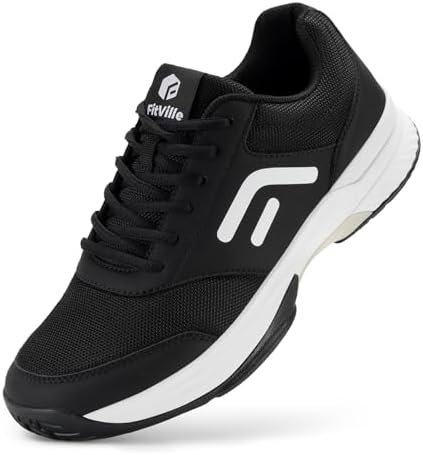
Built in Wide and Extra Wide fits only, with a dual-density EVA midsole and an anti-torsion TPU outsole, per FitVille.
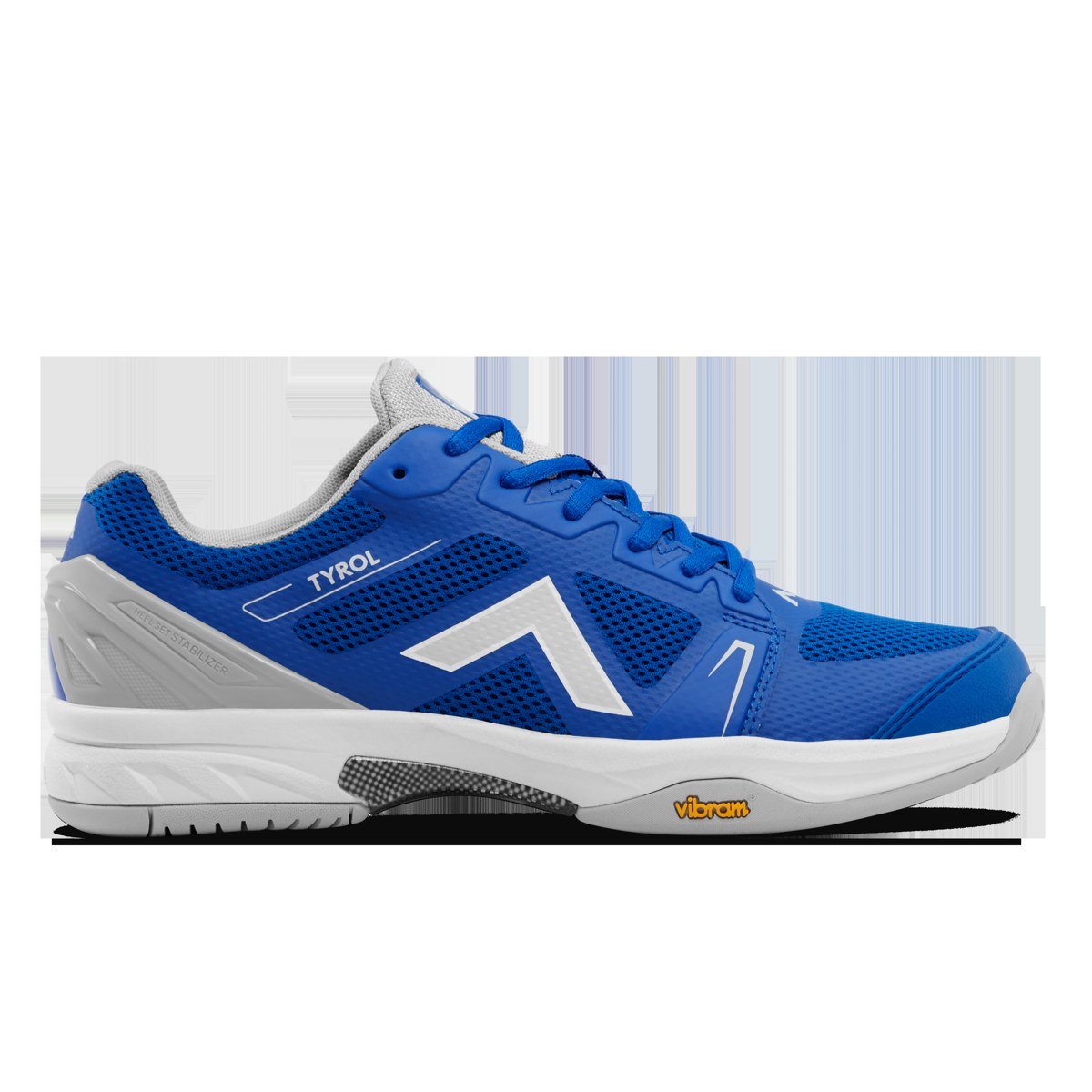
A Vibram X Abrade outsole Tyrol formulated for silica-grit outdoor courts, over a Phylon midsole and a wide, deep toe box.
In This Guide
- The Senior Decision: Court Shoes, Not Running Shoes, As Makers Describe Them
- Reading the Spec Sheet: Weight, Widths and Indoor vs Outdoor Outsoles
- The 7 Best Pickleball Shoes for Seniors, Compared
- Side-by-Side Comparison Table
- Buying Guide: Matching the Spec Sheet to Your Game
- Frequently Asked Questions
- The Verdict
The Senior Decision: Court Shoes, Not Running Shoes, As Makers Describe Them
Start with the construction, because every maker in this guide draws the same line. A running shoe is built around forward motion: a curved, cushioned sole that rolls the foot from heel strike to toe-off, with grip patterned for straight lines. A pickleball shoe is built around lateral motion. Tyrol — a brand that makes only pickleball footwear — states the distinction plainly in its own help pages: its shoes are designed for the sport’s rapid start-and-stop and quick side-to-side movement, with added width and height in the toe box and a stable playing platform with torsional support, where a running shoe is designed predominantly for forward action. Wilson makes the same point with the Pickle Pro: stable at the midfoot and wider around the toes, in Wilson’s words, because that is what the sport’s lateral demands require. The flat, wide-based outsole, the reinforced midfoot and the room at the forefoot are not styling. They are the published definition of a court shoe, and all seven cards below are built that way.
Weight is the second part of the senior decision, and it is a published number, not a feel. Pickleball footwork is hundreds of short steps, holds and recoveries rather than a handful of long strides, so the mass you lift on every step is the mass on the spec sheet. This guide prints every weight exactly as its maker or listing states it, with the size basis attached — Skechers states the Smash at 12.3 ounces in a men’s size 9; Tennis Warehouse lists the New Balance 796v5 in 2E at 12.9 ounces in a men’s 10.5; Tyrol publishes a full weight table, size by size. Where a maker publishes no weight — ASICS, for the GEL-GAME 9 Pickleball — the card says so and prints a named laboratory measurement instead, attributed as measured. Compare like with like, and the seven cards sort honestly from 10.8 ounces measured to the heavier, stability-built end of the guide.
Cushioning is the third part, and here the rule is strict: cushioning systems are reported by the names their makers give them — Skechers’ ULTRA FLIGHT, New Balance’s FuelCell, ASICS’ GEL technology, FitVille’s dual-density EVA, Tyrol’s Phylon — as construction descriptions, exactly as published. A named foam or gel unit is a spec you can compare across listings; it is not a health claim, and this guide makes none. The same discipline applies to fit. Wider options are printed as the makers offer them: Skechers’ Relaxed Fit and X-Wide option, New Balance’s D, 2E and 4E ladder, FitVille’s Wide and Extra Wide fits, Tyrol’s wide and deep toe box. If a card has no published wide version — the ASICS card — the card says that too.
One boundary before the picks. This page owns the senior lightweight, wide-fit court-shoe decision only. The full all-player field belongs to our pillar guide to the best pickleball shoes, and the women’s segment has its own guide to the best pickleball shoes for women. None of their models is re-carded here. Choosing the rest of the senior kit alongside the shoes? Our guide to the best pickleball paddles for seniors owns the paddle decision, and our how to play pickleball guide covers the footwork patterns these outsoles are patterned for.
Reading the Spec Sheet: Weight, Widths and Indoor vs Outdoor Outsoles
Weight first, with its size basis attached. A published weight is meaningless without the size it was weighed in, because the same model gains roughly half an ounce per size. Read the cards the way the makers publish them: Skechers states the Smash at 12.3 ounces in a men’s 9; the Pickle Pro is listed at 12.8 ounces in a men’s 10.5; Tyrol’s own table puts the Drive V at 392 grams in a men’s 9. The Reload card is the lesson in honest reading — Skechers classes it in the “Mid” band of its own guide and publishes no single weight, while Tennis Warehouse lists the women’s version at 11.4 ounces in an 8.5 and the men’s at 15.0 ounces in a 10.5. Both figures are printed on the card with their sources. Comparing a women’s 8.5 figure against another brand’s men’s 10.5 is not comparing shoes; it is comparing sizes. Line the sizes up first, then the ounces.
Widths are published in letters and names, and they are not interchangeable. New Balance uses the industry letter ladder — D is standard men’s width, 2E is Wide and 4E is Extra Wide — and offers the 796v5 across all three, the widest ladder here. Skechers uses fit names instead: Relaxed Fit means, in Skechers’ own description, a roomy comfort fit at the toe and forefoot, and the Smash listing adds a true X-Wide (WW) option beside it. FitVille builds only wide fits — Wide and Extra Wide — with a roomy toe box as the starting point. Tyrol takes the fourth route: no letter widths, but a toe box Tyrol describes as wide and deep, with extra depth Tyrol says accommodates a player’s own insole. Four published answers to the same question; the buying guide below maps them to how you shop.
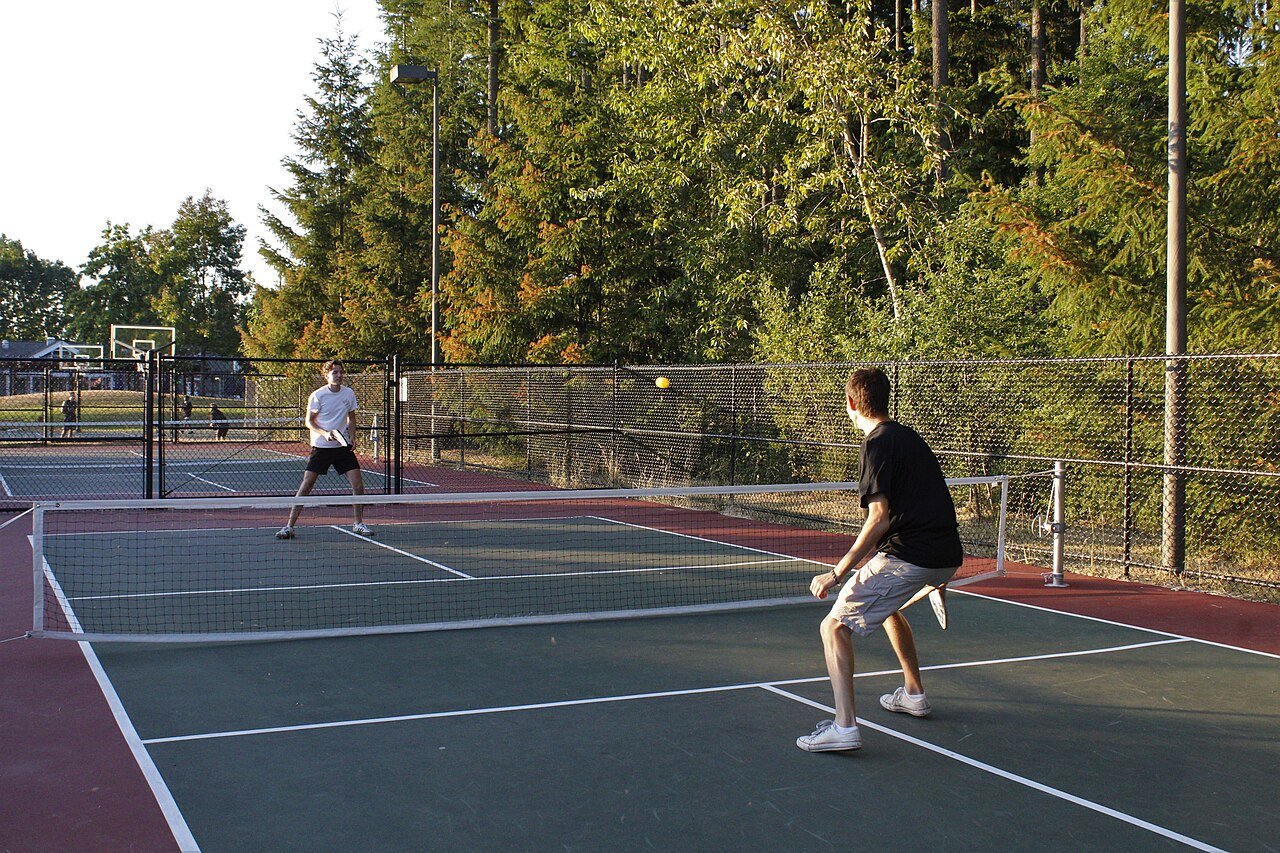
Indoor and outdoor outsoles are different compounds, and the makers say so. Tyrol’s published guidance is the clearest here: indoor shoes use a softer rubber compound with a wave pattern, outdoor shoes a harder compound with a chevron pattern — and Tyrol warns its indoor models may wear prematurely on silica-grit treated outdoor surfaces, which it compares to sandpaper. Its answer for outdoor play is the Drive V’s Vibram outsole, in a compound Tyrol says was formulated with Vibram for grit-treated courts. The other cards sit on the line as their makers state it: Skechers rates the Smash’s non-marking outsole for indoor and outdoor traction, ASICS positions the GEL-GAME 9 Pickleball for both, and the Reload’s Goodyear Performance outsole is non-marking, per Skechers — the property indoor venues ask for. Match the outsole to your surface; it is a stated spec, not a guess.
The 7 Best Pickleball Shoes for Seniors, Compared
Seven court shoes, one shared brief — built for lateral movement as their makers describe it, light as their makers state it, and fitted with the wider options their makers offer. Read the card that matches your feet and your court first.
Skechers Viper Court Smash
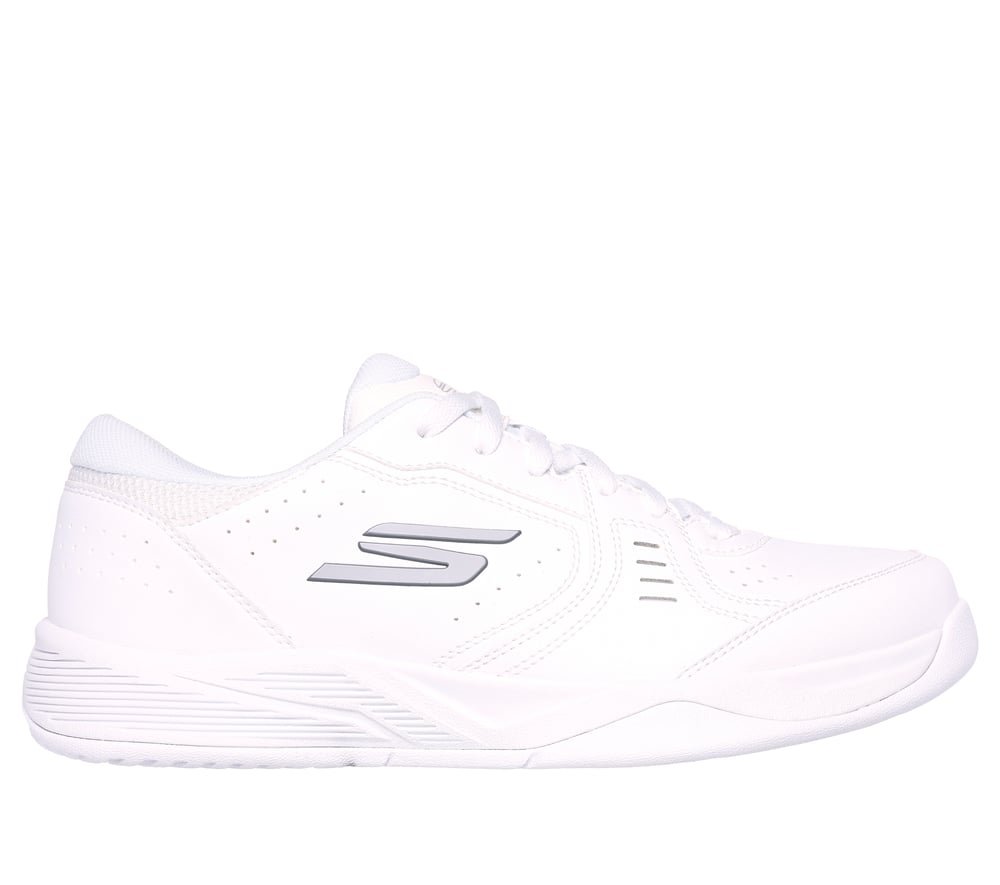
The complete senior specification in Skechers’ lightest stated package — 12.3 ounces, a Relaxed Fit forefoot, an X-Wide option and one outsole for indoor and outdoor courts.
The Smash is the member of Skechers’ Viper Court family built around a simple, published brief: keep the court-shoe construction, keep the weight down, and give the forefoot room. The numbers first, as Skechers states them: 12.3 ounces in a men’s size 9 — the lightest maker-stated men’s weight here — under a Relaxed Fit Skechers describes as roomy at the toe and forefoot. The fit story goes further than the fit name: the listing carries an X-Wide (WW) width option alongside standard width — one of only three cards here where a genuinely wider shoe, rather than a roomier standard shoe, is on the published menu. For a senior player whose feet need space at the front of the shoe, that combination — light, roomy, and available wider — is the whole decision in one card.
The rest of the spec sheet is equally direct. The cushioning is Skechers’ ULTRA FLIGHT, which Skechers describes as its lightweight, responsive cushioning, over a moulded EVA insole. The outsole is a non-marking rubber traction outsole that Skechers rates for indoor and outdoor play — one shoe for the community centre and the outdoor courts. The upper is a smooth synthetic in 100% vegan materials, per Skechers, and the whole shoe is machine washable, a small published detail that matters on a shoe worn several mornings a week. No strap systems or slip-in hardware to manage — the simplest card in the guide, and the one that answers the most of the senior brief at once. That is why it leads.
What we like
- The lightest maker-stated men’s weight here: 12.3 oz in a size 9
- Relaxed Fit room plus a published X-Wide (WW) option
- One non-marking outsole rated by Skechers for indoor and outdoor courts
- Machine washable, per Skechers — easy care for a several-days-a-week shoe
Worth knowing
- A simpler spec than Skechers’ Arch Fit models — the insole here is moulded EVA, per the listing
- The roomy forefoot suits wider feet; narrow feet may find it loose — use the standard width and lace it down
As an Amazon Associate we earn from qualifying purchases.
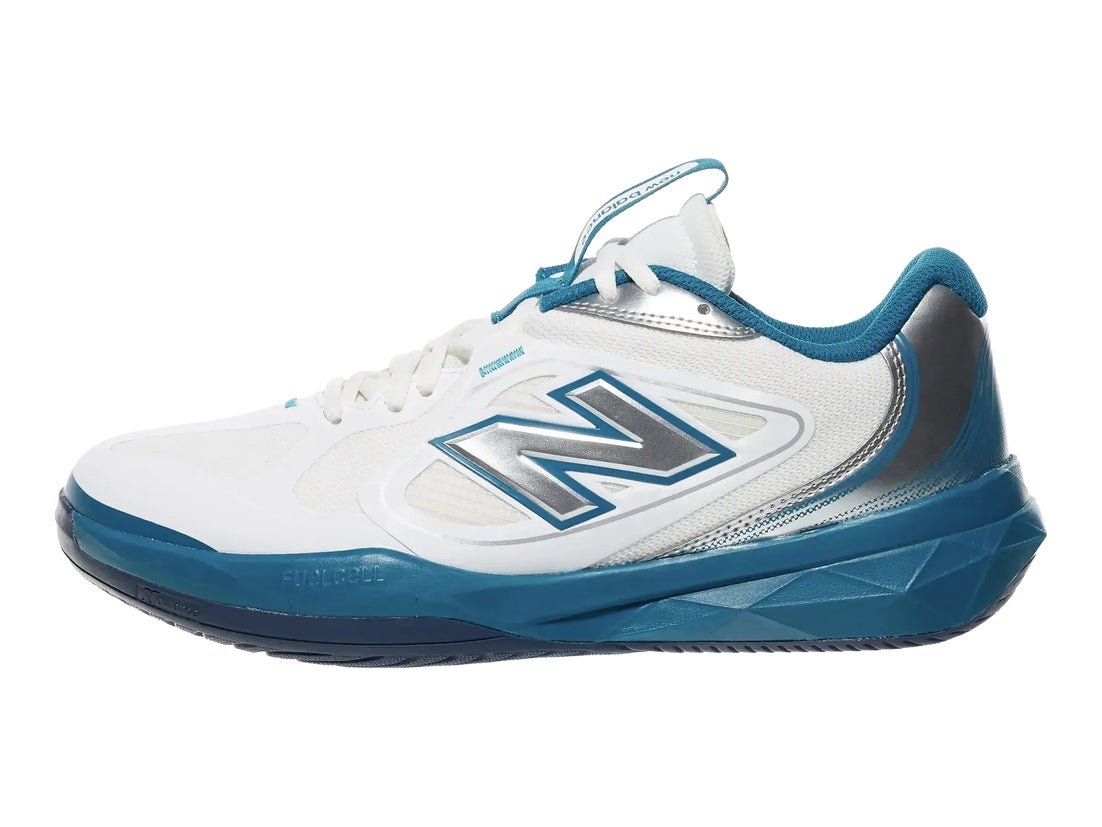
New Balance FuelCell 796v5
The width ladder pick — FuelCell foam over an NDurance outsole, in a model New Balance offers in D, 2E and 4E widths.
New Balance is the brand senior players with wide feet have bought for decades, and the 796v5 is why that habit transfers to pickleball. The published headline is the width ladder: the model is offered in D, 2E and 4E widths in New Balance’s retailer listings — standard, wide and extra wide versions of the same shoe, which no other card here matches. The 2E version is listed by Tennis Warehouse at 12.9 ounces in a men’s size 10.5, properly light for a wide court shoe, over a breathable mesh upper with synthetic overlays and no-sew construction, per New Balance’s listing copy. If width is your first filter — and for many senior players it is — this is the card where the filter stops being a compromise.
Underfoot, the midsole is New Balance’s FuelCell foam, which New Balance describes as its propulsive cushioning foam, delivering a cushioned feel with energy return into each step — its published description, reported as such. The outsole is New Balance’s NDurance rubber compound, placed in high-wear areas for durability, formed into a multi-directional tread pattern and published as non-marking — the combination an indoor/outdoor club player needs, stated on the listing rather than assumed. One honest note: the 796 line is New Balance’s recreational court platform, positioned by its retailers for players who want comfort and a lightweight feel. New Balance’s maximum-stability end is a heavier brief than this guide’s; within the lightweight brief, the 796v5 is the wide-fit answer.
What we like
- The widest published width ladder here: D, 2E and 4E in one model
- 12.9 oz in the 2E at a men’s 10.5 — light for a true wide shoe
- FuelCell foam and an NDurance outsole, both named on New Balance’s listing
- Non-marking, multi-directional tread for indoor and outdoor club play
Worth knowing
- Retailer fit guidance suggests ordering a half size up — check the listing’s fit notes before you buy
- A recreational platform, per its retailers — not New Balance’s stability flagship
As an Amazon Associate we earn from qualifying purchases.
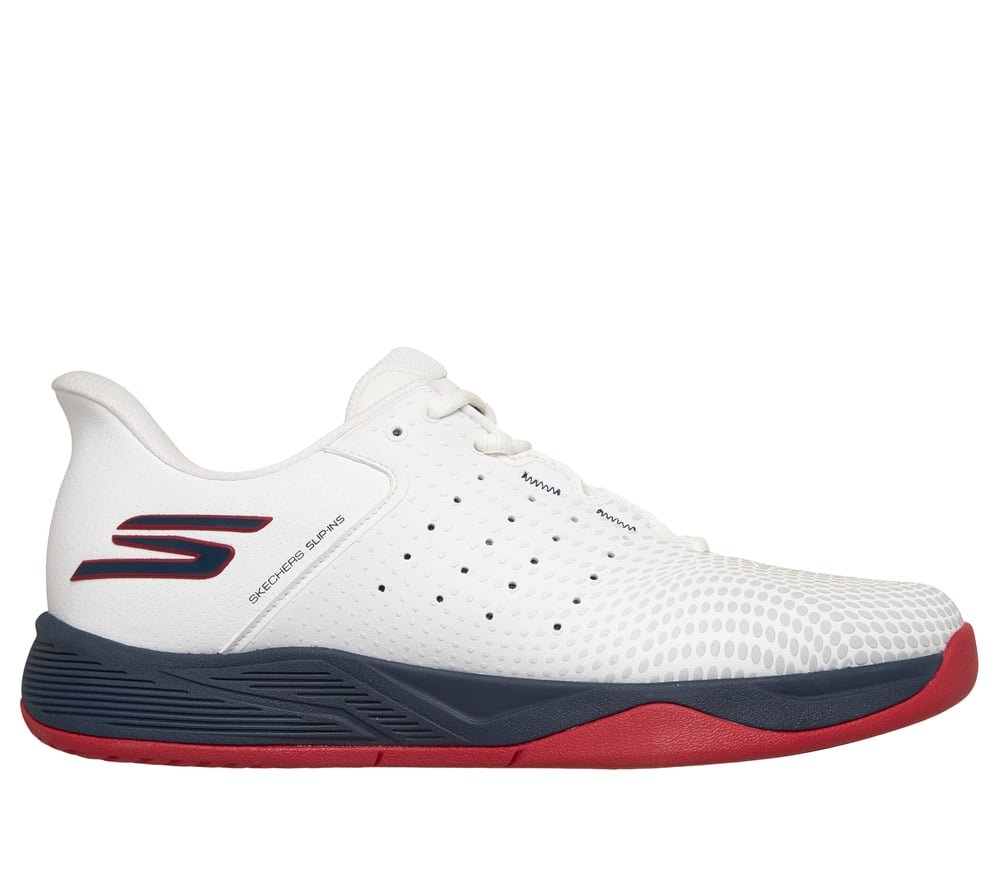
Skechers Viper Court Reload
The step-in pick — Hands Free Slip-ins with a Heel Pillow, a Relaxed Fit and a removable Arch Fit insole, per Skechers.
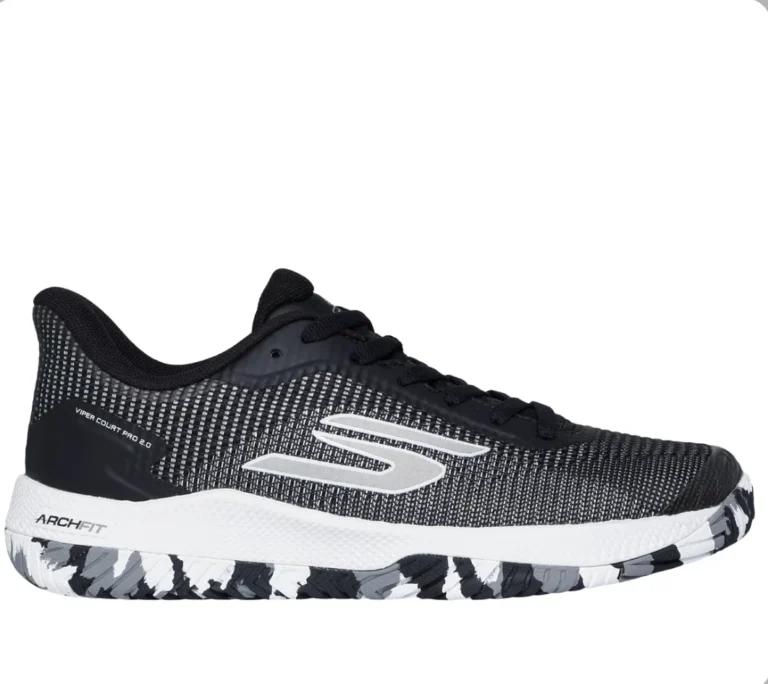
Some shoe decisions are about getting the shoe on. The Reload is built around Skechers’ Hands Free Slip-ins system: a structured heel with a Heel Pillow that Skechers says holds the foot securely in place while the shoe goes on without hands, over adjustable laces you set once. Skechers describes the model as created specifically for the movements of pickleball, in a Relaxed Fit roomy at the toe and forefoot. For the senior player who plays several mornings a week, that combination — step in, heel held, laces already set — is a genuine spec-sheet difference from every lace-up card here, and it is the reason this card exists.
The court credentials are Skechers’ standard Viper Court package: a removable Arch Fit insole — Skechers’ patented system, which Skechers describes as developed with 20 years of data and 120,000 unweighted foot scans — over lightweight ULTRA FLIGHT cushioning, and a non-marking Goodyear Performance Outsole that Tennis Warehouse describes as a dual-direction herringbone for pickleball surfaces. Now the weight, with this guide’s standard transparency. Skechers publishes no single weight and classes the Reload in the “Mid” band of its own guide; Tennis Warehouse lists the women’s version at 11.4 ounces (size 8.5) and the men’s at 15.0 ounces (size 10.5). The men’s figure is the heaviest listed here, and the card prints it without softening: buy the Reload for the step-in system and the roomy fit, with your eyes open about where it sits on the scale.
What we like
- The only hands-free step-in system in the guide, per Skechers
- Relaxed Fit room with a removable Arch Fit insole
- Goodyear Performance outsole, non-marking, per Skechers
- Sizing through US 14 and machine washable, per Skechers
Worth knowing
- The men’s listed weight (15.0 oz at 10.5, Tennis Warehouse) is the heaviest here — the slip-in hardware has a weight cost
- Skechers classes it “Mid” weight in its own guide; the Smash above is the lighter Skechers card
As an Amazon Associate we earn from qualifying purchases.
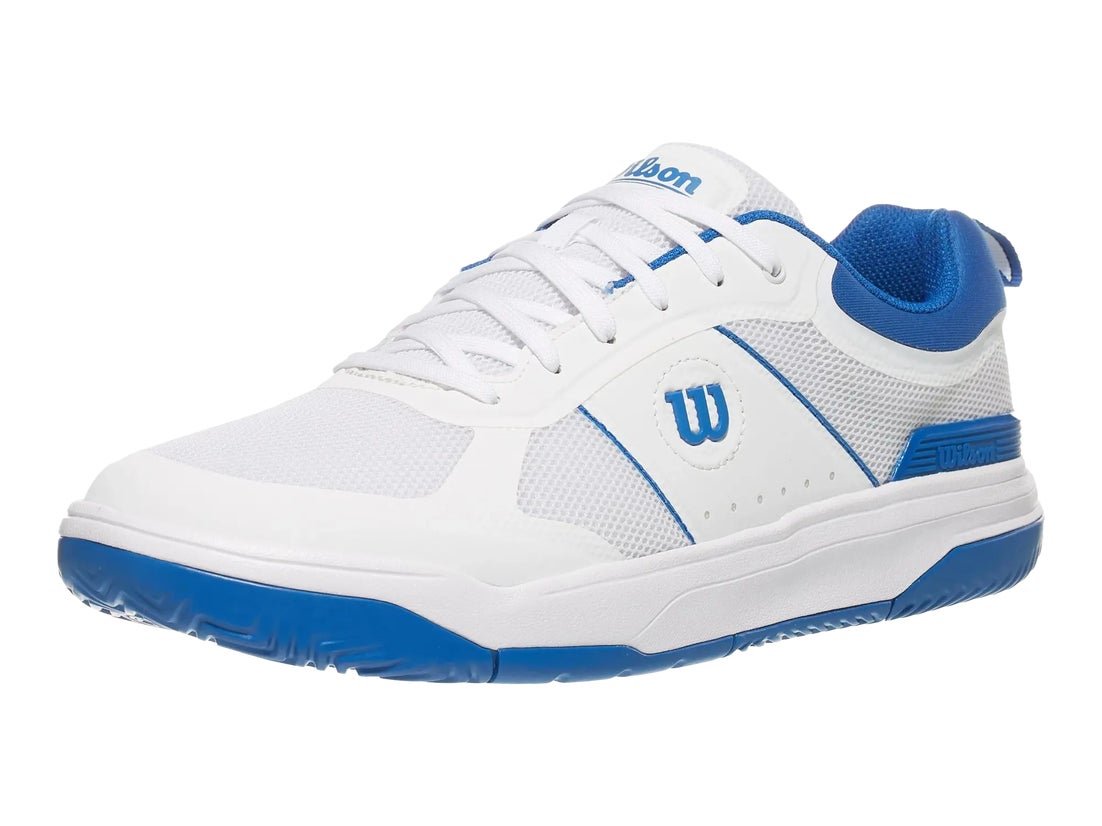
Wilson Pickle Pro
Wilson’s pickleball-specific classic — a widened toe box by design, a Duralast outsole and OrthoLite foam, at 12.8 ounces listed.
Wilson’s Pickle Pro is the traditionalist’s card: classic court-shoe styling from Wilson’s racquet-sports heritage, rebuilt as a pickleball-specific shoe. Wilson’s own description of the design is the headline — a widened toe box, which Wilson says increases accessibility and ease of play, on a shoe that is stable at the midfoot and wider around the toes for the sport’s lateral demands. That is a fit philosophy a senior player can shop with confidence, because it is published by the maker rather than inferred by a reviewer: room where the forefoot works, structure where the shoe holds the court. Tennis Warehouse’s listing puts the fit at Medium / Slightly Wide and the weight at 12.8 ounces in a men’s size 10.5 — squarely in this guide’s lightweight band, in a shoe that looks like the court shoes generations of players already trust.
The published components are Wilson’s standards. The outsole is Duralast, Wilson’s high-density rubber compound, positioned for traction and durability on court surfaces. Underfoot, OrthoLite foam in the midfoot is Wilson’s stated cushioning layer, and the upper is a breathable TPU mesh Wilson says promotes airflow, finished with a plush collar. Nothing on this card is experimental, and that is its appeal: a pickleball-specific last with a wider toe, a named outsole compound, a named foam, and a listed weight under 13 ounces. Set it against the Smash at #1 and the choice is character — Skechers’ modern, roomy, washable package against Wilson’s classic court profile with the widened toe box built in.
What we like
- A widened toe box published as a design feature by Wilson itself
- 12.8 oz listed at a men’s 10.5 — in the guide’s lightweight band
- Duralast outsole and OrthoLite foam — named components, no mystery materials
- Classic styling for players who prefer a traditional court shoe
Worth knowing
- No separate wide-width version is published — the width is in the last, not in a 2E option
- Listed for hard all-court use; indoor-only players should compare the non-marking statements on the Skechers and New Balance cards
As an Amazon Associate we earn from qualifying purchases.
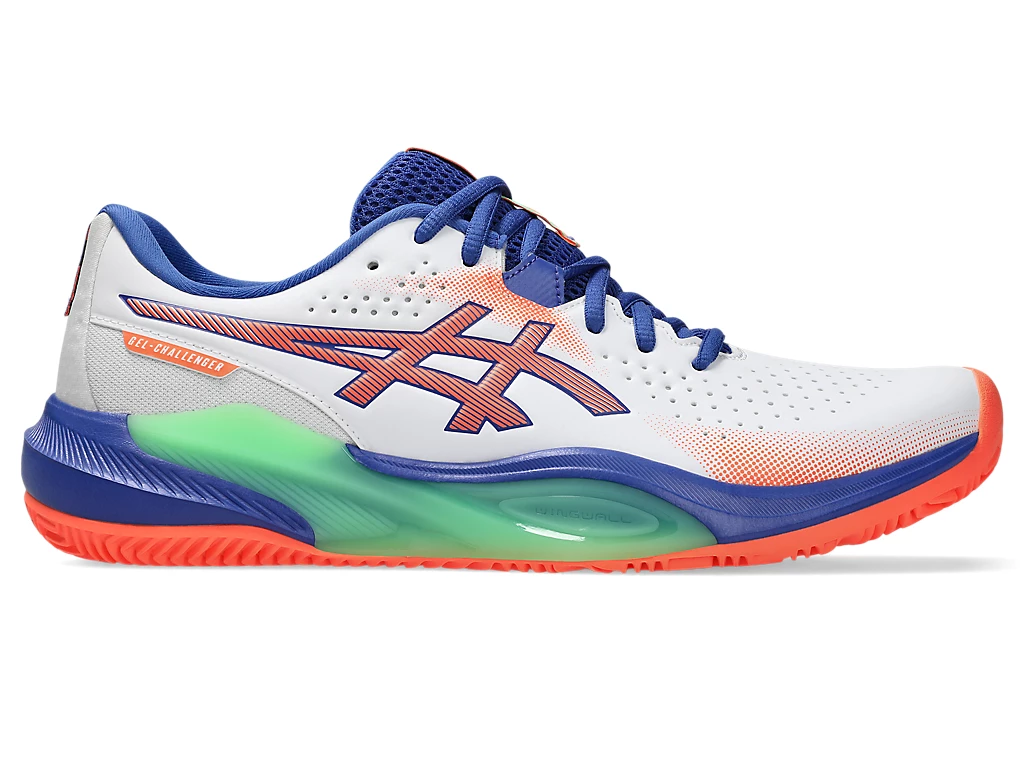
ASICS GEL-GAME 9 Pickleball
ASICS’ pickleball version of its recreational court shoe — forefoot GEL, TRUSSTIC and EVA, positioned by ASICS for indoor and outdoor courts.
ASICS adapts its GEL-GAME line specifically for pickleball, and its own pickleball guide describes the result precisely: a shoe for recreational athletes hitting the court several times per week, with a breathable open mesh design, EVA underfoot cushioning and forefoot GEL technology, plus stability from synthetic leather overlays, TRUSSTIC technology around the midsole and a polyurethane film coating. That is ASICS’ published construction, and it reads like a senior brief written by an engineer: light upper, named cushioning in the forefoot where pickleball players load the shoe at the kitchen line, and a midsole stability system for the side-to-side game. ASICS positions the model for indoor and outdoor courts alike, so one pair covers the full club calendar.
The weight needs this guide’s standard sourcing note. ASICS does not publish a weight for the GEL-GAME 9 Pickleball, so the card prints a measurement instead: RunRepeat’s laboratory weighed the GEL-GAME 9 at 10.8 ounces (306 grams) in a men’s US size 9 — the lightest figure attached to any card here, and labelled as measured rather than maker-stated wherever it appears in this guide. The honest counterweight is fit: ASICS publishes this model in a standard width, with no wide version listed. Senior players in standard-width feet who want the lightest shoe in the guide have found their card; players who need width have three cards above built for them, and this one is not a substitute. Read it that way and it is an excellent, honestly-bounded pick.
What we like
- The lightest figure in the guide: 10.8 oz measured in a men’s US 9
- Named ASICS systems — forefoot GEL and TRUSSTIC — on ASICS’ own listing
- Positioned by ASICS for indoor and outdoor courts
- Open mesh upper for warm-court breathability, per ASICS
Worth knowing
- No wide version is published — standard width only
- ASICS publishes no weight; the figure here is a third-party lab measurement, attributed as such
As an Amazon Associate we earn from qualifying purchases.
FitVille Wide Pickleball Shoes
The width specialist — a shoe line published only in Wide and Extra Wide fits, with a roomy toe box and a dual-density EVA midsole.
FitVille builds footwear around one published idea — width — and its pickleball shoe is the purest expression of it in this guide. There is no standard-width version to decode: FitVille’s listing offers the shoe in Wide and Extra Wide fits, with a roomy toe box FitVille says lets the toes spread freely, in a mesh and soft microfiber upper. Where the New Balance card at #2 wins on the width ladder of a mainstream court line, this card wins on specialisation: every size on the listing is a wide size, and the toe box is the design’s starting point rather than an option box. For the senior player who has spent years squeezing into standard court shoes, that is the entire purchasing decision, stated by the maker in its own listing.
The court construction is published in the same listing. The midsole is dual-density EVA, which FitVille describes as its shock-absorbing cushioning layer; the insole is a honeycomb design in OrthoLite material; and the outsole pairs that EVA with anti-torsion TPU rubber in a non-slip pattern FitVille says is built for all kinds of court surfaces. FitVille’s listing summary states the weight at about 720 grams per pair in a US size 9 — roughly 12.7 ounces per shoe by that per-pair figure — keeping even the widest shoe here inside the lightweight band. A sourcing note in the guide’s spirit: FitVille markets this line with condition-based language elsewhere in its catalogue; none of it is adopted here. The card stands on the published fit, the named materials and the stated weight.
What we like
- Wide and Extra Wide fits only — width is the design, not an upgrade
- The roomiest published toe box brief in the guide, per FitVille
- Named construction throughout: dual-density EVA, anti-torsion TPU, OrthoLite-material insole
- About 720 g per pair stated at a US 9 — light for an extra-wide shoe
Worth knowing
- A specialist wide-fit brand — try-on and returns matter more than with the mainstream cards; order your measured size and test the fit indoors first
- No standard-width version exists if a partner or teammate wants the same shoe in a regular fit
As an Amazon Associate we earn from qualifying purchases.
Tyrol Drive V
The outdoor specialist — a Vibram outsole formulated for grit-treated courts, over a Phylon midsole, with the widest, deepest toe box brief here.
Tyrol designs nothing but pickleball shoes, and the Drive V is its outdoor flagship — the card for senior players whose game lives on outdoor hard courts. The outsole is the story: a Vibram sole in the X Abrade compound, which Tyrol says it developed with Vibram specifically for painted, silica-grit treated pickleball courts, the abrasive surface Tyrol compares to sandpaper in its own guidance. Above it sits a Phylon midsole, a curved heel stabilizer and a torsion control shank, with a medial side power clip and an exterior heel counter — Tyrol’s published stability package, named part by part on its own product page. The fit brief matches: a wide, deep toe box that Tyrol says is designed to minimise toe jamming through side-to-side movement, with the extra depth Tyrol notes accommodates a player’s own insole, over a low 4 mm heel-to-toe drop that keeps the platform close to the court.
The weight is published with unusual completeness: Tyrol’s own table lists its men’s shoes size by size, with a men’s size 9 at 392 grams — about 13.8 ounces, the stability end of this guide’s band, spent on the Vibram outsole and stabilising hardware rather than bulk. Two pieces of Tyrol’s own guidance complete the card. First, sizing: Tyrol states the Drive V fits large because of its toe-box width and height, and recommends going down a half size from your usual athletic brand. Second, surfaces: Tyrol positions its Striker Pro V — built on the same platform, per Tyrol — for indoor courts, and the Drive V for outdoor play. This guide cards the outdoor one because that is where its published compound advantage lies. If your pickleball is outdoor, grit-surfaced and several times a week, this is the most specialised card here.
What we like
- A Vibram compound published specifically for silica-grit outdoor courts
- Wide, deep toe box with room for a player’s own insole, per Tyrol
- A full published weight table, size by size — the most transparent sourcing here
- Named stability hardware throughout: heel stabilizer, torsion shank, power clip
Worth knowing
- At 392 g in a men’s 9 it is the stability end of this guide, not the light end
- Tyrol says it fits large — follow Tyrol’s half-size-down guidance
- An outdoor brief: indoor-only players are Tyrol’s Striker Pro V audience, per Tyrol
As an Amazon Associate we earn from qualifying purchases.
Side-by-Side Comparison Table
| Model | Best For | Weight (as stated) | Fit / Width Options | Cushioning | Outsole (as maker states) |
|---|---|---|---|---|---|
| Skechers Viper Court Smash | Best overall | 12.3 oz, men’s 9 (Skechers) | Relaxed Fit · Standard + X-Wide | ULTRA FLIGHT | Non-marking, indoor/outdoor |
| New Balance FuelCell 796v5 | Wide-fit lightweight | 12.9 oz, men’s 10.5 in 2E (TW) | D · 2E · 4E | FuelCell | NDurance, multi-directional, non-marking |
| Skechers Viper Court Reload | Slip-in entry | 11.4 oz W 8.5 · 15.0 oz M 10.5 (TW) | Relaxed Fit | ULTRA FLIGHT + Arch Fit insole | Goodyear Performance, non-marking |
| Wilson Pickle Pro | Classic wide toe box | 12.8 oz, men’s 10.5 (TW) | Widened toe box · Medium/Slightly Wide | OrthoLite foam | Duralast, all-court (hard) |
| ASICS GEL-GAME 9 Pickleball | Lightest measured | 10.8 oz measured, men’s US 9 | Standard width only | Forefoot GEL + EVA | Indoor and outdoor, per ASICS |
| FitVille Wide Pickleball Shoes | Widest toe box | About 720 g per pair, US 9 (FitVille) | Wide + Extra Wide only | Dual-density EVA | Anti-torsion TPU, non-slip |
| Tyrol Drive V | Outdoor courts | 392 g, men’s 9 (Tyrol) | Wide, deep toe box | Phylon | Vibram X Abrade, outdoor grit courts |
Read the weight column by its labels, not just its numbers: three cards carry maker-stated weights in a stated size, two carry specialist-retailer listings in a stated size and width, one carries a laboratory measurement because its maker publishes none, and one carries a per-pair figure because that is how its maker states it. Normalised honestly, the guide spans 10.8 ounces measured (the ASICS, in a men’s 9) to the Reload’s 15.0-ounce men’s listing and the Drive V’s 392-gram stability build — and the spread is information, not noise. The light end buys easy footwork; the built end buys Tyrol’s outdoor compound and stabilising hardware, or Skechers’ slip-in system. The fit column is the second honest read: three different width systems (New Balance’s letter ladder, FitVille’s wide-only range, Skechers’ fit names plus an X-Wide option) against two roomy lasts and one standard-width shoe. Start from your feet, then your court, then the ounces, and this table lands you on the right card.
Buying Guide: Matching the Spec Sheet to Your Game
1. Start with construction: a court shoe, not a running shoe
The first filter is not a brand or a weight — it is the type of shoe. Every card in this guide is a court shoe: a flat, wide-based outsole, a reinforced midfoot and grip patterned for multi-directional movement, as their makers describe them. A running shoe’s curved sole and forward-roll geometry are the opposite published design. If a listing does not name a court outsole compound, a midfoot stability element or a lateral-movement design brief, it is not answering the pickleball question, whatever its cushioning is called. All seven cards here pass that filter on their makers’ own pages — that is what the cards were chosen for — so the decisions below are about fit, weight and surface, in that order.
2. Fit first: width letters, fit names and toe boxes
Senior feet are the fit problem this guide keeps returning to, because the makers publish four different solutions for different feet. If you know your width letter, shop the ladder: New Balance’s D, 2E and 4E versions of the 796v5 are the most precise published answer here. If your feet are wide without a letter you trust, shop the specialists: FitVille publishes only Wide and Extra Wide fits with a roomy toe box, and Skechers pairs its Relaxed Fit — roomy at the toe and forefoot, per Skechers — with an X-Wide option on the Smash. If your forefoot is the only issue, a widened last may be enough: Wilson publishes the Pickle Pro’s widened toe box as a design feature, and Tyrol builds a wide, deep toe box across its line. Measure your feet in the evening, in the socks you play in, and let the maker’s own fit statement make the final call.
3. Weight: read the ounces with the size attached
Weights only compare like with like. This guide prints each figure with its basis — maker-stated in a men’s 9, retailer-listed in a men’s 10.5 and width, laboratory-measured, or stated per pair — because a 12.3-ounce size 9 and a 12.9-ounce size 10.5 are closer than the numbers suggest, and a per-pair figure is roughly half per shoe. As a working band, the lightweight end of the senior market as published here runs from the ASICS’ 10.8 measured ounces to about 13 ounces in a men’s 9–10.5; beyond that, a card should be able to say what the extra ounces buy — and the two heavier cards here can: the Drive V spends them on a Vibram outdoor compound and stabilising hardware, the Reload on its slip-in heel system. It is the same discipline we apply across the site — our guide to the best tennis shoes for seniors reads tennis spec sheets exactly the same way, which is worth a look if your week includes both courts.
4. Match the outsole to your court: indoor vs outdoor
Outsole compounds are published for surfaces, and the surfaces differ more than most listings admit. Indoor courts — wood, tile and smooth concrete in community venues — reward the softer compounds and non-marking soles the makers state: the Reload’s non-marking Goodyear Performance outsole, the 796v5’s non-marking NDurance tread. Outdoor courts, especially silica-grit treated ones, are abrasive by design; Tyrol’s guidance warns that indoor outsoles wear early on them, and its Drive V exists precisely for that surface. Mixed schedules are covered too, on the makers’ own statements: Skechers rates the Smash’s outsole for indoor and outdoor traction, and ASICS positions the GEL-GAME 9 Pickleball for both. Buy for the court you play on most, and let the second court be the compromise.
5. Entry and insoles: the last two published details
Two smaller spec lines decide daily satisfaction. Entry first: six cards here are conventional lace-ups, and one — the Reload — publishes a hands-free slip-in system with a heel pillow and set-once laces, per Skechers. If pulling a shoe on is the slow part of your morning, that line outranks an ounce of weight. Insoles second: players who use their own insole need published room for it. Skechers lists the Reload’s Arch Fit insole as removable; Tyrol says its wide, deep build is made so players can remove the sockliner and fit their own; FitVille’s wide fits carry the forefoot volume for it. Where a listing does not state a removable insole, assume the fitted one is the plan. Decide both at the listing, before you pay.
Frequently Asked Questions
What makes a pickleball shoe different from a running shoe?
Construction, as the makers describe it. A running shoe is built for forward motion, with a curved sole that rolls the foot from heel to toe. A pickleball shoe is built for lateral motion: a flat, wide-based outsole, a reinforced midfoot and room at the forefoot for shuffle steps, split-steps and holds at the kitchen line. Tyrol, which makes only pickleball footwear, states the distinction in its own help pages — its shoes add width and height in the toe box and a stable platform with torsional support, where a running shoe is designed predominantly for forward action.
How light should a senior pickleball shoe be?
Shop the published band this guide is built on: roughly 11 to 14 ounces in a men’s size 9 to 10.5, with every weight read alongside its size basis. The lightest figures here are the ASICS GEL-GAME 9 Pickleball at 10.8 ounces measured in a men’s US 9 and the Skechers Viper Court Smash at 12.3 ounces stated by Skechers in a men’s 9. Heavier cards — the Tyrol Drive V at 392 grams in a men’s 9 — spend their weight on published stability hardware and outdoor outsole compounds, which is a legitimate trade when it is printed on the card.
Which pickleball shoes come in wide or extra-wide fits?
Three cards publish true width options. The New Balance FuelCell 796v5 is offered in D, 2E and 4E widths — standard, wide and extra wide versions of the same shoe. The FitVille Wide Pickleball Shoes are published only in Wide and Extra Wide fits, with a roomy toe box. The Skechers Viper Court Smash lists an X-Wide (WW) option beside its standard width, in a Relaxed Fit that is already roomy at the toe and forefoot. The Wilson Pickle Pro and Tyrol Drive V take the other route: no letter widths, but a widened or wide, deep toe box built into the last, as their makers describe it.
Are slip-in pickleball shoes secure enough for court play?
Judge the published system, not the category. The Skechers Viper Court Reload combines Hands Free Slip-ins entry with a Heel Pillow that Skechers says holds the foot securely in place, plus adjustable laces you set once — the slip-in replaces the pulling-on, not the lockdown. Skechers describes the model as created specifically for the movements of pickleball, with a Goodyear Performance outsole. If your game involves hard, competitive lateral cutting and you prefer the feel of a fully laced performance shoe, the lace-up cards in this guide are the more conventional choice.
Should I choose an indoor or an outdoor outsole?
Match the compound to your surface, using the makers’ own guidance. Tyrol states that indoor shoes use a softer rubber compound with a wave pattern, while outdoor shoes use a harder compound — and that indoor models may wear early on silica-grit treated outdoor courts. Its Drive V carries a Vibram X Abrade outsole Tyrol formulated for those grit-treated outdoor courts. If you play both, the Skechers Viper Court Smash publishes a non-marking outsole rated for indoor and outdoor traction, and ASICS positions the GEL-GAME 9 Pickleball for indoor and outdoor courts.
Can I use my own insole in these shoes?
On the cards whose makers publish a removable insole or the depth for one, yes. Skechers lists the Viper Court Reload’s Arch Fit insole as removable. Tyrol says its shoes are made wide, with a deep toe box, so players can remove the sockliner and use their own insole — and FitVille’s wide fits are built with the same kind of forefoot volume. Check the individual listing before you order: insole space is a published fit detail on some cards and not stated on others, and a thicker insole changes how the shoe fits at the laces.
What is the difference between this guide and the all-player pickleball shoe guide?
The all-player guide owns the full selection — the performance court shoes ranked for every level of player. This guide narrows the same sport to one decision: the lightweight court shoes makers publish with the fit options senior players shop for — stated weights with their size basis, wider fits and toe boxes as makers offer them, named cushioning systems, and indoor versus outdoor outsoles as makers state them. No shoe from the all-player or women’s guides is re-ranked here; read those for their segments, and this page for the senior specification.
The Verdict
Buy the specification, not the story. The Skechers Viper Court Smash is the complete senior answer — 12.3 ounces as Skechers states it, a Relaxed Fit forefoot, an X-Wide option and one outsole for indoor and outdoor courts. The New Balance FuelCell 796v5 owns the width ladder, D to 4E, and the Skechers Viper Court Reload owns easy entry with its published slip-in system. The Wilson Pickle Pro is the classic widened toe box, the ASICS GEL-GAME 9 Pickleball the lightest measured shoe here, the FitVille Wide Pickleball Shoes the widest fit of the guide, and the Tyrol Drive V the outdoor specialist with a Vibram compound built for grit-treated courts. Seven court shoes, four honest decisions — construction, fit, weight and surface — every one of them printed as its maker states it.
Affiliate disclosure: AliShuttler is a participant in the Amazon Services LLC Associates Program. Links marked “Check Price on Amazon” are affiliate links — if you buy through them, we may earn a commission at no additional cost to you. Every specification in this guide is taken from the manufacturer’s own published listings, checked at build time in 2026; weights are printed with the size basis and source their listings state them with.