The senior player’s shoe decision is a specifications decision. As the game becomes about doubles craft, placement and efficient movement, the shoes that fit are the ones published with lower weights, wider fit options, named cushioning systems and outsoles matched to the surface actually played on. This guide compares seven of them on exactly what their makers publish — weights with their size basis labelled, width options as listed, cushioning technologies by name, and outsole patterns by court surface — and nothing else. No health claims, no promises: just the spec sheets, read properly.
⚡ TL;DR — The Short Answer
For the best all-round senior pick, buy the Yonex Power Cushion Sonicage Wide — the lightest shoe in this guide at 11.5 ounces as listed for a US men’s 10.5, in Yonex’s Wide version, with Power Cushion+ cushioning and an Endurance Rubber herringbone outsole. The widest true width ladder belongs to New Balance: the FuelCell 796v5 comes in D, 2E and 4E, and the Fresh Foam X 1007 adds a 4E extra-wide option with the plushest published heel build here. The Wilson Rush Pro Ace is Wilson’s 2E generous-fit pick, the Mizuno Wave Exceed Court the lightweight comfort-last pick, the Babolat SFX 4 the cushioned wide pick from Babolat’s wide-fit SFX line, and the adidas GameCourt 2 the padded-collar value pick.
Quick Picks — Best Tennis Shoes for Seniors at a Glance
11.5 oz as listed (US men’s 10.5) in a Wide version — the lightest complete senior specification here.
A published D, 2E and 4E width ladder with FuelCell cushioning and an NDurance outsole.
Wilson’s 2E fit — the most generous fit in the Rush Pro line, per Wilson — at 12.3 oz as listed.
Mizuno’s comfort-last line with ENERZY NXT, a Foam Wave build and an X10 outsole, at 12.2 oz as listed.
Babolat’s wide-fit SFX line: Extra Cush foam, an 8 mm Ortholite insole and a Michelin outsole.
The only 4E extra-wide card here, with Fresh Foam X and a plush heel build, per New Balance.
Cloudfoam cushioning, a padded heel collar and an Adiwear all-court outsole, at 12.9 oz as listed.
In This Guide
The Senior Shoe Decision: Weight, Width and Entry, As Makers State Them
Every tennis shoe decision is a trade between weight, fit and surface grip, but the senior player’s version of that trade has a distinct shape, and it is written in the makers’ own catalogues. The shoes built for this segment cluster around three published facts: lower listed weights than the flagship stability models, wider fit options sold as named widths rather than vague promises, and cushioning systems with published names — FuelCell, Power Cushion+, Fresh Foam X, ENERZY — that let you compare construction instead of adjectives. All seven cards below were chosen inside that published envelope, and every number on every card is labelled with its source and its size basis.
The weight point needs one honest paragraph before the picks, because shoe weights are not published the way racket weights are. Most makers do not print a shoe weight at all, so this guide uses the figures Tennis Warehouse lists for each model — US men’s size 10.5 unless a card states otherwise — and labels them as retailer-listed wherever they appear. That keeps all seven cards on one measuring basis: the same retailer, the same reference size, the same column in the comparison table. On that basis the guide spans 11.5 to 15.6 ounces, and the spread itself is the story: the lightest cards are built on mesh and foam, the heaviest cards spend their ounces on width, cushioning stack and outsole rubber, and neither end is a mistake — they are different answers to the same published brief.
Width is the second decision, and it is the one senior buyers most often get wrong by guessing. A named width — New Balance’s D, 2E and 4E ladder, Wilson’s 2E fit on the Rush Pro Ace, Babolat’s wide-fit SFX line, Yonex’s Wide version of the Sonicage — is a manufactured difference in the last the shoe is built on, not a standard shoe that happens to feel roomy. The cards print each width exactly as its maker or retailer lists it, including the honest cases: the Mizuno is a comfort last rather than a lettered width, and the adidas is a published medium that earns its card on its collar and cushioning instead. Ease of entry completes the decision — padded collars, plush heel builds and traditional tongues are printed where makers list them, because a shoe you can put on without a fight is a specification, not a lifestyle claim.
One boundary before the picks. This page owns the senior shoe decision only. The full all-player field belongs to our pillar guide to the best tennis shoes; the women’s fit and size-range decision belongs to our guide to the best tennis shoes for women; junior footwear belongs to our guide to the best tennis shoes for kids; and the matching racket decision is covered in our guide to the best tennis rackets for seniors. None of their models is re-carded here. If you are returning to the game itself, our how to play tennis guide covers the movement these outsoles are built to serve.
Reading the Spec Sheet: Cushioning Names, Outsoles and Surfaces
Cushioning is a construction, and constructions have names. Each maker publishes its system and describes it in its own terms, and this guide reports those descriptions as attribution, never as therapy. New Balance builds the 796v5 on FuelCell, which it describes as its propulsive midsole foam, and the 1007 on Fresh Foam X, its plushest published ride. Yonex builds the Sonicage Wide on Power Cushion+ with Hyper msLite, which Yonex presents as its lightweight cushioning pairing. Wilson’s name is R-DST+, Mizuno’s stack combines ENERZY NXT with its Wave plate and PoWnCe, Babolat’s is Extra Cush foam over an 8 mm Ortholite insole, and adidas uses Cloudfoam. Read as engineering, those six names tell you where each shoe spends its weight — foam volume, plate, insole thickness — and that is all this guide claims for them.
The outsole is the surface decision, stated as tread. Hard courts are the default surface of senior club tennis, and most cards here are published for them: herringbone and modified-herringbone patterns in named rubber compounds — Yonex Endurance Rubber, New Balance NDurance, Wilson Duralast, Mizuno X10, Babolat’s Michelin Performance rubber and adidas Adiwear. Clay changes the requirement: a fuller herringbone that grips and releases the loose top layer, which is why two cards deserve a specific note — Wilson publishes the Rush Pro Ace’s herringbone Duralast as working across hard and clay, and HEAD-style hybrid patterns aside, the honest rule of this guide is to buy the outsole your club’s surface names, in the proportions you actually play them. A shoe published for hard courts, worn weekly on clay, is a spec mismatch, not a bad shoe.
Fit notes are published facts too — read them before the size run. Retailers list length, width and break-in for every card here, and the senior-relevant pattern is consistent: the wide cards (796v5 2E, Rush Pro Ace, SFX 4) list true length with little or no break-in, the 1007 lists no break-in in any of its three widths, and the GameCourt 2 lists a snug length in a bootie upper — a construction that holds the foot as one piece, and that some buyers will find slower to pull on than a traditional tongue. None of that is opinion; it is the listings’ own data, printed on the cards so the comparison stays honest from the first specification to the last.
The 7 Best Tennis Shoes for Seniors, Compared
Seven shoes, one shared brief — light as listed, wide where width is published, and cushioned by named systems. Read the card that matches your feet and your surface first.
Yonex Power Cushion Sonicage Wide
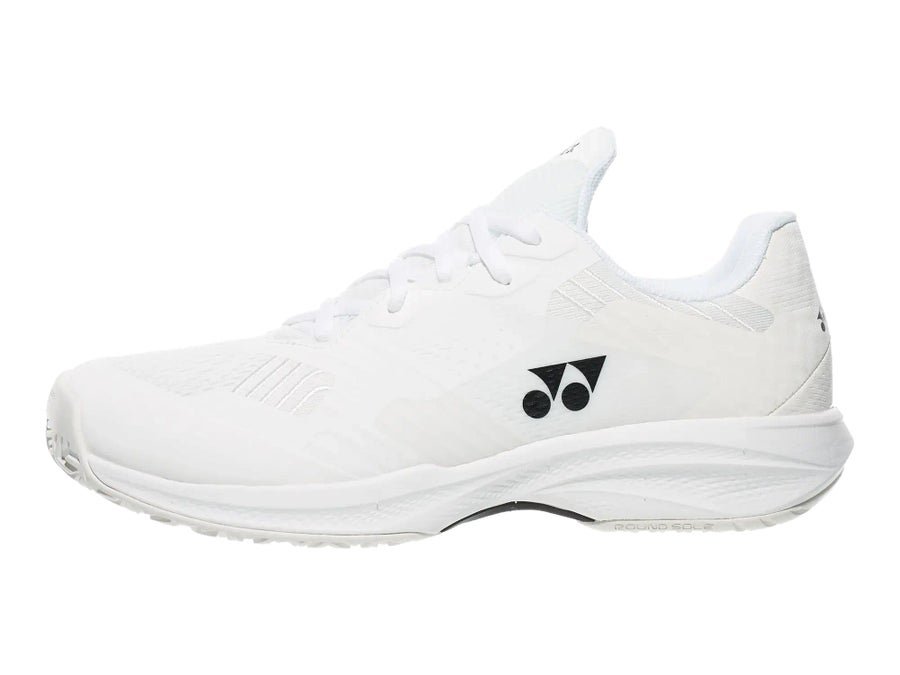
The complete senior specification — the lightest listed weight in this guide, in Yonex’s Wide version, with Power Cushion+ and an Endurance Rubber herringbone outsole.
Yonex builds the Sonicage line around one published idea — light weight with a structured cushioning system — and this Wide version publishes the most complete senior specification in the guide. Start with the number: 11.5 ounces for a US men’s 10.5, as Tennis Warehouse lists it, the lightest figure on any card here. That weight is not achieved by stripping the shoe down. The midsole pairs Power Cushion+ — Yonex’s named cushioning material — with Hyper msLite, which Yonex presents as its lightweight midsole compound, and a redesigned mid-foot shank that Yonex says is shaped to flex at its grooves for push-off while holding the midfoot stable. It is a speed shoe’s construction, published in a wider fit.
The fit is the second half of the card. This is the Wide version of the Sonicage, listed with a generous-medium width against the standard version’s narrower listing, in a Durable Skin Light and Double Raschel Mesh upper with added medial protection where the shoe drags. Underneath, the Endurance Rubber outsole runs a multi-directional herringbone pattern that the listing positions for hard courts and a variety of surfaces. Two honest notes complete the picture. The width is a wider version of a performance last, not a lettered 2E or 4E — buyers who need a true extra-wide should start with the New Balance cards below. And a separate women’s clay version of the Sonicage name is carded in our women’s guide; this card is the men’s Wide all-court shoe, a different model and surface brief.
What we like
- The lightest listed weight here: 11.5 oz (US men’s 10.5)
- A published Wide version, not a standard shoe sized up
- Named cushioning stack: Power Cushion+ with Hyper msLite
- No break-in listed — true length, per the listing
Worth knowing
- Generous medium is not a lettered 2E/4E — true extra-wide feet should read the New Balance cards first
- Published for hard courts; regular clay players should match the outsole to their surface
As an Amazon Associate we earn from qualifying purchases.
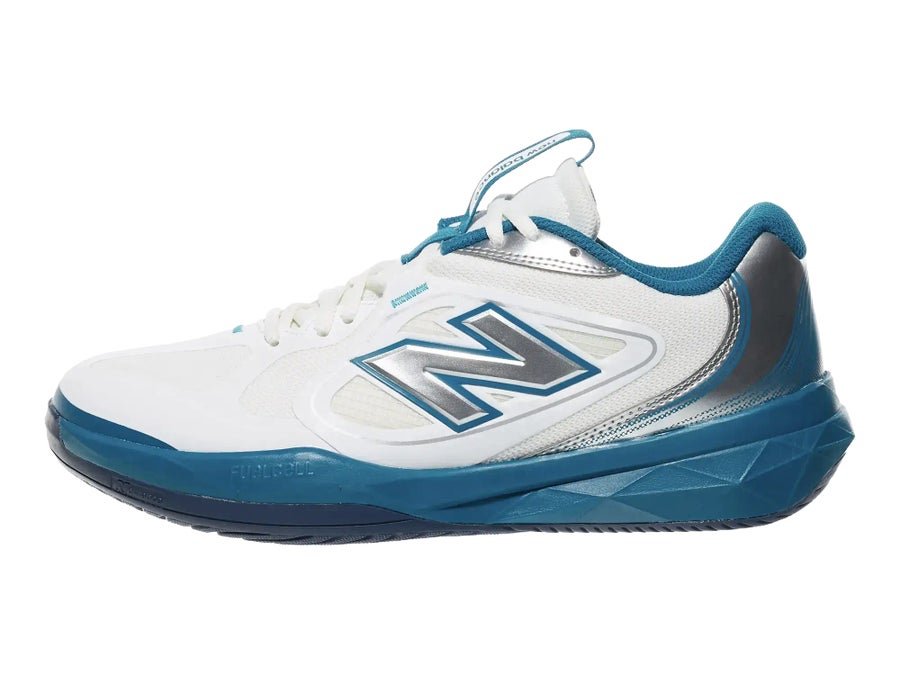
New Balance FuelCell 796v5 2E
The width-ladder pick — one model published in D, 2E and 4E, with FuelCell cushioning and an NDurance multi-directional outsole at 12.9 ounces as listed.
If your shoe decision starts and ends with width, start here. The 796v5 is the current generation of New Balance’s recreational court line, and its published width ladder is the widest in this guide: D (standard), 2E (wide) and 4E (extra wide), confirmed across New Balance’s retailer listings. That matters because it is a manufactured ladder — three lasts of the same shoe — so a player can move up a width without changing model, cushioning system or outsole. The carded version is the 2E, listed at 12.9 ounces for a US men’s 10.5 by Tennis Warehouse: mid-pack weight in this guide, bought with a mesh and synthetic upper built with no-sew overlays.
The engineering under the width is New Balance’s current court stack. The midsole is FuelCell, the foam New Balance describes as its propulsive cushioning technology, and the outsole is the brand’s signature NDurance rubber in a multi-directional tread pattern that the listing positions for a variety of surfaces, on a shoe published for hard, all-court use. The fit notes are senior-friendly as published: true length, a medium arch and only a slight break-in. Against the Sonicage at #1, the trade is explicit — roughly an ounce and a half more per shoe, in exchange for a true lettered width that the Yonex does not offer. For a wide foot, that is the right trade, and this is the card that makes it cleanly.
What we like
- A true manufactured width ladder: D, 2E and 4E in one model
- FuelCell cushioning and NDurance outsole, both named systems
- True length and slight break-in only, as listed
- The natural first card for genuinely wide feet
Worth knowing
- Heavier than the Yonex and Mizuno cards — width costs ounces
- Published for hard courts; the tread is multi-directional, not a clay-specific full herringbone
As an Amazon Associate we earn from qualifying purchases.
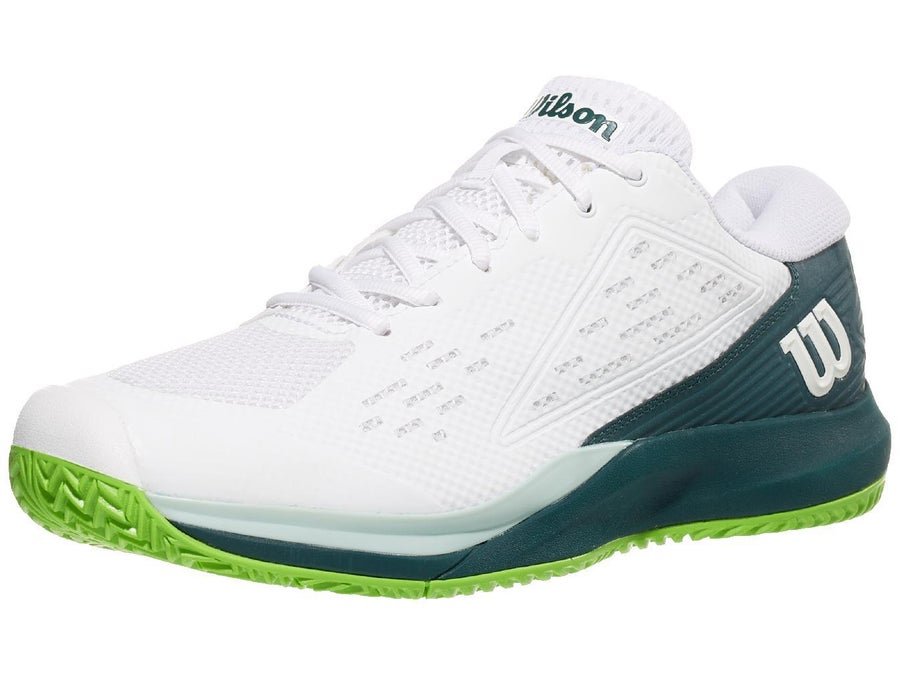
Wilson Rush Pro Ace
Wilson’s generous-fit Rush Pro — a published 2E fit with a wider toe box, R-DST+ cushioning and a Duralast herringbone that Wilson lists for hard and clay.
Wilson publishes this shoe with unusual clarity about who it is for: the Rush Pro Ace carries a 2E width fit, and Wilson describes it as the most generous fit in the Rush Pro line, built around a wider toe box. Tennis Warehouse’s fit listing agrees in its own language — a generous forefoot that narrows at the tip — and lists the shoe at 12.3 ounces for a US men’s 10.5, the second-lightest figure in this guide. For the senior player whose standard-width shoes have always pinched at the forefoot but who does not need a full extra-wide last, that combination — a named 2E fit at a near-lightest weight — is a genuinely distinct card, and it is why the Ace sits above heavier wide options.
The rest of the specification is Wilson’s Rush Pro toolkit, published in full. The midsole is R-DST+, Wilson’s cushioning foam, over an OrthoLite EVA molded sockliner, with a DF2 heel-toe drop of 9 mm that Wilson positions as its comfort-performance compromise. A 4D Support Chassis runs heel to toe for lateral stability, the upper is Wilson’s minimally layered Sensifeel construction with a medial rubber drag pad, and the Duralast outsole is formed into a traditional herringbone that Wilson’s listing presents as an easy transition between hard and clay courts — the broadest surface brief on any card here. The Junior version of this name is carded in our kids guide; this is the adult 2E model, and the distinction is printed on Wilson’s own spec.
What we like
- A published 2E fit at the second-lightest listed weight here
- Wilson’s full spec published: R-DST+, DF2 9 mm, 4D Support Chassis
- Herringbone Duralast listed for both hard and clay play
- Generous forefoot for players between standard and extra-wide
Worth knowing
- The forefoot narrows at the tip, per the fit listing — check toe length carefully
- Slight break-in listed, unlike the no-break-in cards
- Not the Junior model carded in the kids guide — check the listing
As an Amazon Associate we earn from qualifying purchases.
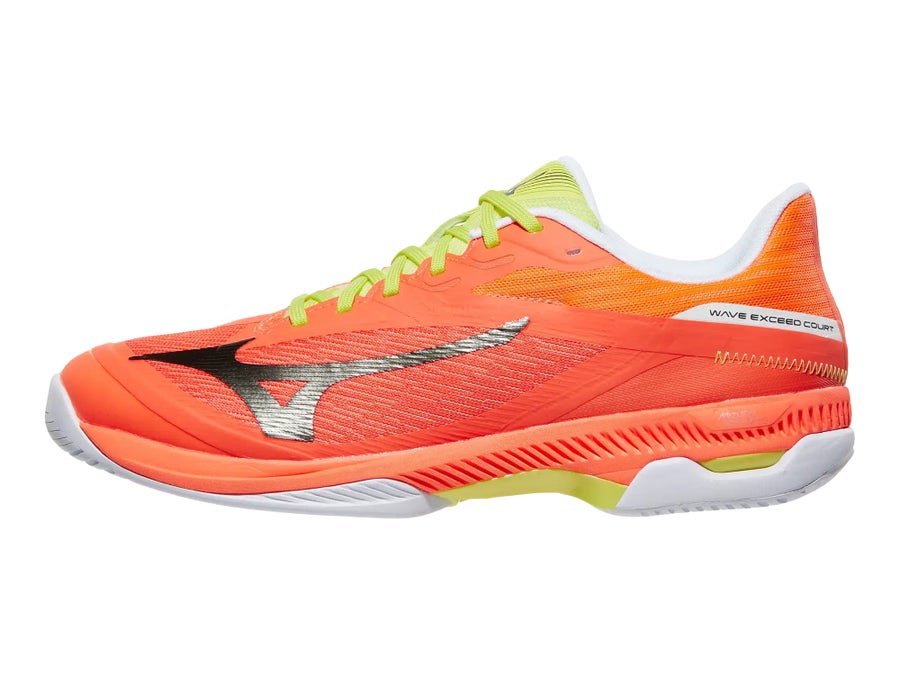
Mizuno Wave Exceed Court
Mizuno’s comfort-last lightweight — the Wave Exceed Light line under its current name, with ENERZY NXT, a Wave plate build and an X10 outsole at 12.2 ounces as listed.
Mizuno is the specialist name on this list, and its card is the lightweight comfort entry. The Wave Exceed Court is the current name for the line Mizuno built as the Wave Exceed Light, and Mizuno’s own catalogue describes that line plainly: a comfort last with a spacious width, an engineered mesh upper, and a midsole built as a Foam Wave — two layers of foam, U4icX over Mizuno Enerzy in the catalogue description — around the brand’s Wave plate. The current Court version updates the foam name to ENERZY NXT, keeps the Wave and PoWnCe elements, and lists at 12.2 ounces for a US men’s 10.5 at Tennis Warehouse, with no break-in required.
What that construction buys, in published terms, is a layered cushioning stack at a weight the stability shoes cannot reach — only the Yonex card is lighter here. The outsole is Mizuno’s X10 rubber, its durable carbon-rubber compound, in a modified pattern with rubber reduced in low-wear areas and kept in targeted zones, which the listing positions for any court surface. The honest limits are printed on the card: Tennis Warehouse lists the fit as medium, so despite Mizuno’s spacious comfort-last description, this is not a lettered wide shoe, and a true 2E or 4E foot belongs on the New Balance and Wilson cards. Buy the Mizuno for the lightest structured ride here in a standard-to-roomy fit — not as a wide shoe it never claimed to be.
What we like
- A layered, named cushioning stack at 12.2 oz as listed
- Mizuno’s comfort last with a spacious width, per Mizuno
- X10 carbon-rubber outsole with targeted durability zones
- No break-in required, as listed
Worth knowing
- Listed as a medium fit — not a lettered wide option
- The line’s name changed (Wave Exceed Light to Wave Exceed Court) — check the listing title
As an Amazon Associate we earn from qualifying purchases.
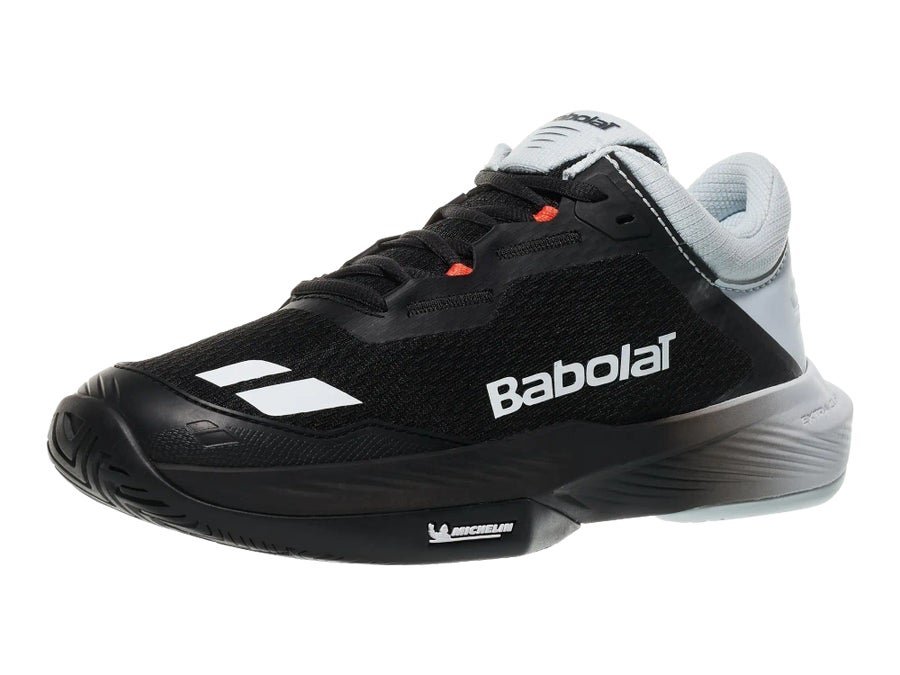
Babolat SFX 4 All Court
Babolat’s wide-fit line, fully cushioned — Extra Cush foam, an 8 mm Ortholite insole and a Michelin herringbone outsole, in a shoe Babolat builds wide from the last up.
Some wide shoes are a standard model with room added; the SFX is a line built the other way. SFX is Babolat’s wide-fit line, and the SFX 4 publishes the fullest cushioning specification in this guide: an Extra Cush foam midsole, a TPU shank plate through the midfoot, and an 8 mm Ortholite insole — the thickest published insole figure on any card here. The upper is mesh with a toe-box shield, and the outsole is Babolat’s long-standing Michelin Performance rubber, formed here as a two-piece outsole in a dense herringbone tread that the listing beefs up in high-wear zones. Every element of that list is a construction choice a buyer can verify on the listing itself.
The card’s honest counterweight is weight, and it is printed without softening: Tennis Warehouse lists the men’s SFX 4 at 15.0 ounces (US 10.5) and the women’s at 12.7 ounces (US 8.5). The men’s figure is the second-heaviest in this guide. That is where the cushioning stack, the wide last and the Michelin rubber live, and Babolat’s positioning of the shoe — for players who put a premium on cushioning and a wider fit — is consistent with its own spec sheet. If your priority order is width plus underfoot stack first and ounces second, this is your card; if ounces come first, the Yonex and Mizuno cards above are built the opposite way. Either way, the decision is visible in the numbers, which is the point of the guide.
What we like
- A purpose-built wide-fit line, not a widened standard shoe
- The fullest published cushioning stack here, including the 8 mm insole
- Michelin Performance outsole with reinforced high-wear zones
- No break-in listed, true length
Worth knowing
- The men’s listed weight, 15.0 oz, is the second-heaviest here — the trade behind the stack
- Published for hard courts despite the all-court name
As an Amazon Associate we earn from qualifying purchases.
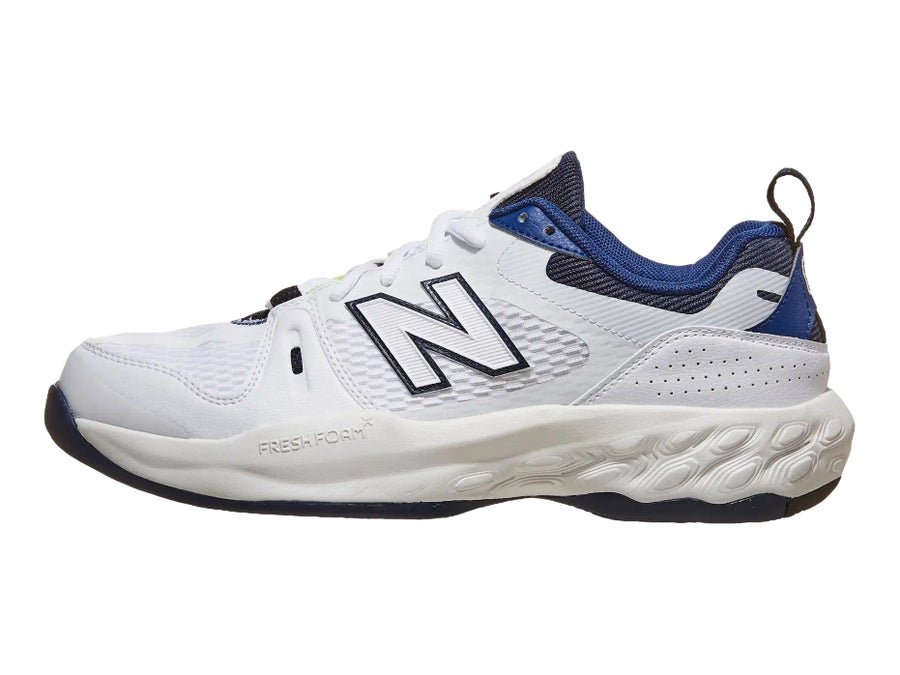
New Balance Fresh Foam X 1007
The maximum-width, maximum-stack anchor — the only 4E extra-wide card here, with Fresh Foam X, a plush heel build per New Balance, and an NDurance outsole guarantee.
Every guide needs its honest maximum, and this is ours: the heaviest shoe here, and the only one published in a 4E extra-wide fit. The 1007 carries New Balance’s one-thousand series brief — the line the brand positions around cushioning and room — into its current form: a Fresh Foam X midsole, which New Balance describes as its plush, energy-returning ride, under a synthetic and mesh upper that New Balance’s copy specifies as plush around the heel and ankle, with added protection around the toes. Tennis Warehouse lists the shoe at 14.7 ounces in D, 15.2 in 2E and 15.6 in 4E (US men’s 10.5), with no break-in in any width and a low arch. Those are stability-shoe numbers, published on a comfort brief.
Two further published facts complete the card. The outsole is New Balance’s non-marking NDurance rubber in its own tread design, and it is covered by New Balance’s NDurance 6-month outsole durability guarantee — the maker’s own guarantee, stated as such. And the width ladder means the 1007 and the 796v5 at #2 together cover the full senior width decision inside one brand’s sizing system: the 796v5 for the lighter, FuelCell version of wide, the 1007 for the widest and most built-up version. Who is this card for? The player whose feet have ended every other experiment — the widest published fit in the guide, bought knowingly at the heaviest published weight, with the guarantee printed on the box.
What we like
- The only 4E extra-wide option in this guide
- Fresh Foam X stack with a plush heel and ankle build, per New Balance
- New Balance’s 6-month NDurance outsole guarantee
- No break-in listed in any of its three widths
Worth knowing
- The heaviest card here in every width — a deliberate maximum-width trade
- Published for hard courts; not a clay-pattern outsole
As an Amazon Associate we earn from qualifying purchases.
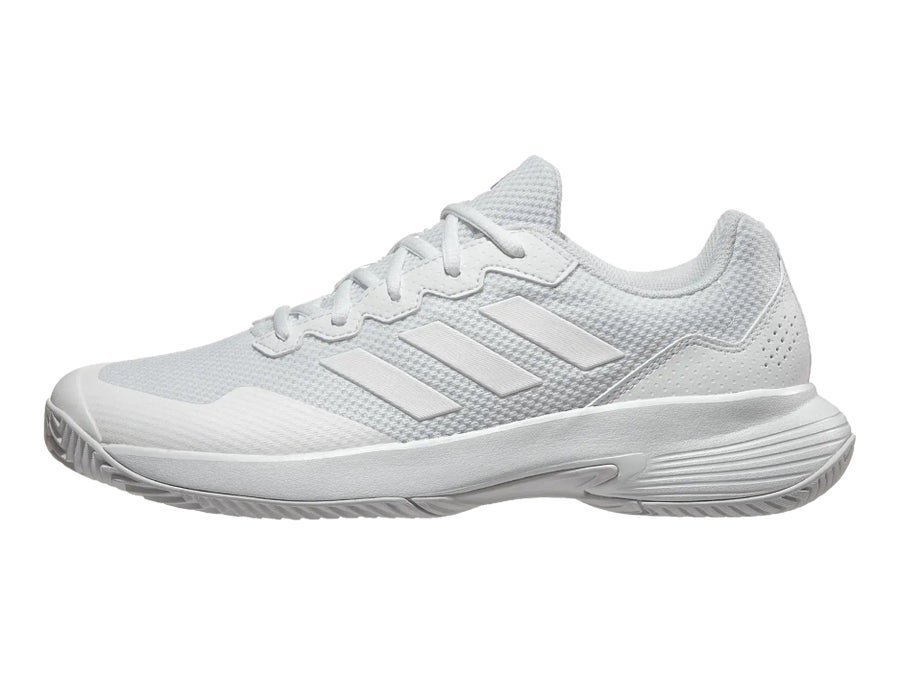
adidas GameCourt 2
The padded-collar value pick — Cloudfoam cushioning, a soft padded heel collar and an Adiwear all-court outsole, in adidas’ recreational court shoe.
Not every senior buyer needs a lettered width — some need a straightforward, cushioned recreational shoe whose published details suit an easier game, and that is the GameCourt 2’s card. adidas positions it as its value court shoe, and the specification is coherent: a Cloudfoam midsole, which adidas describes as its step-in cushioning foam; a padded heel collar that the listing specifies for a locked-in feel; and a non-marking Adiwear outsole in an all-court tread pattern, Adiwear being adidas’ published durable-rubber compound. Tennis Warehouse lists the men’s version at 12.9 ounces (US 10.5) and the women’s at 10.9 ounces (US 8.5), with no break-in — respectable, mid-guide numbers for a shoe at this end of adidas’ range.
The card also carries this guide’s clearest ease-of-entry caution, printed from the listing itself. The upper is a full bootie construction in mesh and synthetic material: it wraps the foot as one piece, which is why the listing also records a snug length and a medium width. A bootie has no separate tongue to open wide, so buyers who value the easiest possible entry — or who wear thicker socks or an insole of their own — should weigh the two wide-lasted, traditional-tongue cards above it first. For standard-width feet that want adidas’ simplest cushioned court shoe with a properly padded collar, the GameCourt 2 is the honest value card, cautions included.
What we like
- A padded heel collar and Cloudfoam stack, as published
- Adiwear outsole in a true all-court tread pattern
- Mid-guide listed weights in both men’s and women’s versions
- No break-in listed
Worth knowing
- Medium width and snug length only — no wide version is published
- The full-bootie upper is slower to pull on than a traditional tongue
As an Amazon Associate we earn from qualifying purchases.
Side-by-Side Comparison Table
| Model | Best For | Weight (as listed, Tennis Warehouse) | Fit / Width Options | Outsole | Cushioning |
|---|---|---|---|---|---|
| Yonex Power Cushion Sonicage Wide | Best overall | 11.5 oz (US men’s 10.5) | Wide version (Generous Medium) | Endurance Rubber herringbone | Power Cushion+ · Hyper msLite |
| New Balance FuelCell 796v5 2E | Best true wide fit | 12.9 oz (US men’s 10.5) | D · 2E · 4E | NDurance, multi-directional | FuelCell |
| Wilson Rush Pro Ace | Best generous toe box | 12.3 oz (US men’s 10.5) | 2E width fit (Wilson) | Duralast herringbone | R-DST+ |
| Mizuno Wave Exceed Court | Best lightweight comfort last | 12.2 oz (US men’s 10.5) | Medium · comfort last (Mizuno) | X10, modified pattern | ENERZY NXT · Wave · PoWnCe |
| Babolat SFX 4 All Court | Best cushioned wide | 15.0 oz men’s (US 10.5) · 12.7 oz women’s (US 8.5) | Wide | Michelin Performance herringbone | Extra Cush · 8 mm Ortholite insole |
| New Balance Fresh Foam X 1007 | Best maximum width | 14.7 oz D · 15.2 oz 2E · 15.6 oz 4E (US men’s 10.5) | D · 2E · 4E Extra Wide | NDurance | Fresh Foam X |
| adidas GameCourt 2 | Best padded-collar value | 12.9 oz men’s (US 10.5) · 10.9 oz women’s (US 8.5) | Medium | Adiwear, all-court tread | Cloudfoam |
Read the weight column by its basis, not just its numbers: every figure is Tennis Warehouse’s listing for the stated size, because the makers do not publish shoe weights — and on that single basis the guide spans 11.5 ounces (the Yonex) to 15.6 ounces (the 1007 in 4E). The width column explains most of that spread. The three lightest cards are a wide version of a speed shoe, a comfort-last mesh shoe and a 2E shoe built lean; the two heaviest cards are the ones that publish the deepest cushioning stack and the widest manufactured last. Neither end is the “right” end — the table’s job is to show what each ounce buys, in print, before you spend anything.
Buying Guide: Matching the Spec Sheet to Your Game
1. Start with width — the only fit fact that cannot be laced around
Length can be tuned with socks and lacing; a last cannot. Decide which published category your feet are in before you look at a single cushioning name. If you have always worn standard shoes comfortably, the medium and generous-medium cards (Yonex Wide, Mizuno, GameCourt 2) are your field. If standard shoes pinch at the forefoot, buy a manufactured width — the Wilson Rush Pro Ace’s published 2E or the Babolat SFX 4’s wide last. If you already know you take an extra-wide in street shoes, go straight to the New Balance ladder: the 796v5 for the lighter wide, the 1007 for the only 4E in this guide. Ordering a standard shoe a size long to fake width is the most common senior buying error, and every card here exists so you do not have to make it.
2. Match the outsole to the surface you actually play
Count your last ten sessions honestly. If they were hard courts, every card here is published for your surface, and the choice reverts to width and weight. If a meaningful share was clay, narrow the field to the outsoles published for it: the Rush Pro Ace’s herringbone Duralast, which Wilson’s listing presents across hard and clay, and full-herringbone patterns generally, which grip and release the loose surface layer the way clay footwork requires. If you split surfaces evenly, a multi-directional tread such as the 796v5’s NDurance is the published compromise. What not to do is buy a hard-court shoe for a clay season because the cushioning name appealed — the outsole is the one specification the court itself grades.
3. Spend weight deliberately: lightness versus stack
This guide’s 11.5-to-15.6-ounce spread is a menu, not a ranking. At the light end, the Yonex and Mizuno cards publish mesh uppers and foam-forward midsoles — the specification for players whose game is built on getting to the ball early and who feel every added ounce by the third set. At the built-up end, the SFX 4 and the 1007 publish deeper stacks, thicker insoles, shank plates and more outsole rubber — the specification for players who play long doubles sessions and value the published construction over the scale. Neither preference needs justifying; what needs doing is choosing it consciously, from the table, rather than discovering it on court. If in doubt, the middle of the table — the 796v5 and the Rush Pro Ace, both near 12.5 ounces with true widths — is where this guide’s centre of gravity sits.
4. Check the entry: collars, tongues and booties
Ease of entry is a published construction detail, and it differs across these seven cards more than buyers expect. Traditional tongues with padded collars — the GameCourt 2’s padded heel collar, the 1007’s plush heel and ankle build as New Balance describes it — open wide and lace conventionally. The Sonicage Wide and Rush Pro Ace use lower, performance-cut collars that prioritise hold. The GameCourt 2’s full-bootie upper is the one genuine caution: it wraps as a single piece, lists a snug length, and takes more effort to pull on than any tongue shoe here. None of this is hidden — it is on the listings, and on these cards — so read the entry construction with the same care as the outsole before you order.
5. Use the fit notes, then protect the purchase
Every card prints its listing’s length and break-in notes; use them. True-length, no-break-in shoes (Sonicage Wide, SFX 4, 1007, GameCourt 2, Wave Exceed Court) can be ordered in your measured size with confidence. The 796v5 lists a slight break-in and the Rush Pro Ace a slight break-in with a forefoot that narrows at the tip — order those with a fitting session in mind, late in the day, in your tennis socks. Finally, keep the guarantee facts attached to the right shoes: the 1007’s NDurance outsole carries New Balance’s own 6-month outsole durability guarantee, stated on its listing. Guarantees belong to specific models, not brands — one more reason the spec sheet, read card by card, beats the badge on the box.
Frequently Asked Questions
What are the best tennis shoes for seniors?
Start with the published facts that define this segment: a lower listed weight, a named width option and a cushioning system you can identify. In this guide the best all-round answer is the Yonex Power Cushion Sonicage Wide, listed at 11.5 ounces (US men’s 10.5) in a Wide version. Players who need a true lettered width should start with the New Balance FuelCell 796v5 (D, 2E and 4E) or the Wilson Rush Pro Ace (2E), and players who need maximum width with the New Balance Fresh Foam X 1007 in 4E.
Do senior tennis players need wide shoes?
Only if their feet need them — width is a fit fact, not an age category. Makers publish real width options for this segment: New Balance sells the 796v5 and the 1007 in D, 2E and 4E widths, Wilson sells the Rush Pro Ace in a 2E fit, Babolat builds its SFX line wide, and Yonex sells a Wide version of the Sonicage. If standard-width shoes fit you well, the medium-fit cards in this guide — the Mizuno Wave Exceed Court and the adidas GameCourt 2 — are built for exactly that foot.
How much should a senior tennis shoe weigh?
Compare on one basis: this guide uses the weights Tennis Warehouse lists for a US men’s 10.5, because makers do not publish shoe weights. On that basis the seven shoes here span 11.5 ounces (Yonex Sonicage Wide) to 15.6 ounces (New Balance 1007 in 4E). The lightest cards suit players who prioritise a low listed weight; the heaviest cards publish deeper cushioning stacks and the widest lasts. There is no single correct figure — there is a correct trade for your game, and the comparison table prints it.
Which tennis shoes are best for clay courts?
Match the outsole to the surface, as the makers publish it. In this guide, Wilson lists the Rush Pro Ace’s herringbone Duralast outsole for play across hard and clay courts, and full herringbone patterns generally are the published clay choice because the tread grips and releases the loose top layer. The remaining cards are published for hard, all-court use — the Yonex Sonicage Wide, both New Balance models, the Mizuno Wave Exceed Court, the Babolat SFX 4 and the adidas GameCourt 2 — and several are also sold in dedicated clay versions under the same model name.
What cushioning should senior players look for?
Look for a named system you can compare, described as its maker describes it. This guide’s cards use FuelCell and Fresh Foam X (New Balance), Power Cushion+ (Yonex), R-DST+ (Wilson), ENERZY NXT with a Wave plate (Mizuno), Extra Cush foam with an 8 mm Ortholite insole (Babolat) and Cloudfoam (adidas). Those names describe construction — foam type, plates and insole thickness — and this guide reports them as construction only. Choose by the build that matches your weight and width decision, not by the softest-sounding adjective.
Are lightweight tennis shoes less supportive?
Not by definition — support is published as construction, and the light cards here publish theirs. The 11.5-ounce Yonex Sonicage Wide lists a redesigned mid-foot shank and a Durable Skin Light upper; the 12.2-ounce Mizuno Wave Exceed Court lists its Wave plate and X10 outsole. Heavier cards such as the Babolat SFX 4 (15.0 ounces, men’s) publish a TPU shank plate and a deeper stack instead. Compare the named parts card by card: lightness and structure are separate specifications, and a shoe can publish both.
What is the difference between this guide and the all-player tennis shoe guide?
The all-player guide owns the full selection — the standard-width performance shoes most club players wear — and ranks them for every level. This guide narrows the same decision to the specifications senior players shop by: listed weight on a single size basis, published width options from generous-medium to 4E, named cushioning systems and outsole patterns matched to hard and clay surfaces. No shoe from the all-player, women’s or kids guides is re-ranked here — read those for their segments, and this page for the senior specification.
The Verdict
Buy the specification, not the story. The Yonex Power Cushion Sonicage Wide is the complete senior answer — the lightest listed weight here, a published Wide version, Power Cushion+ and an Endurance Rubber herringbone. The New Balance FuelCell 796v5 owns the true width ladder, the Wilson Rush Pro Ace the generous 2E toe box at a near-lightest weight, and the Mizuno Wave Exceed Court the lightweight comfort last. The Babolat SFX 4 is the cushioned wide build from Babolat’s wide-fit line, the New Balance Fresh Foam X 1007 the maximum-width 4E anchor with New Balance’s outsole guarantee, and the adidas GameCourt 2 the padded-collar value pick — bootie caution included. Seven shoes, four honest decisions — weight, width, surface and entry — every one of them printed as its maker or retailer states it.
Affiliate disclosure: AliShuttler is a participant in the Amazon Services LLC Associates Program. Links marked “Check Price on Amazon” are affiliate links — if you buy through them, we may earn a commission at no additional cost to you. Every specification in this guide is taken from the manufacturer’s own published listings, checked at build time in 2026; shoe weights are listed by Tennis Warehouse for the stated sizes, because the makers do not publish shoe weights, and are labelled as such wherever they appear.