The advanced player’s racket decision is a control decision. When you already generate your own pace and swing fast through the ball, the frame stops being an engine and becomes a sighting system — a smaller head, a thinner beam, a denser string bed and enough static weight to stay stable when the rally speeds up. This guide compares seven of those frames on exactly what their makers publish: head sizes from 95 to 100 square inches, weights labelled strung or unstrung as each maker labels them, balances, string patterns, beam widths and stiffness ratings. Read the spec sheets properly and the right frame for your game names itself.
⚡ TL;DR — The Short Answer
For the best all-round advanced pick, buy the Wilson Pro Staff 97 v14 — 315 grams unstrung under a 97 square-inch head, a 21.5 mm beam and a 16×19 pattern, the classic precision brief in its current form. The spin-control pick is the Babolat Pure Aero 98, the Aero family’s small-head, 16×20 member at 305 grams. The Yonex Percept 97 is the flexible-feel pick, the Yonex VCORE 95 the compact 95 with a 16×20 bed, and the HEAD Gravity Pro the 100 square-inch, 18×20 control frame with HEAD’s rounded head shape. The Tecnifibre TF40 305 (18×20) is the dense-pattern 98 at the lightest unstrung weight here, and the Dunlop CX 200 Tour (18×20) closes the guide as the thinnest-beamed 95 Dunlop publishes for big swings.
Quick Picks — Best Tennis Rackets for Advanced Players at a Glance
315 g unstrung, a 97 in² head and a 21.5 mm beam — the benchmark precision specification.
The Aero brief tightened: 98 in², a 16×20 pattern and a 21/23/22 mm section at 305 g.
310 g, a 21 mm beam and the softest published flex figure in this guide.
A true 95 in² head with a 16×20 bed — the smallest, fastest-swinging card here.
315 g, an 18×20 pattern and HEAD’s rounded head shape in a thin 20 mm beam.
305 g unstrung, a 22 mm beam and Foam Inside construction, per Tecnifibre.
315 g, a 20.5 mm beam and an 18×20 bed — Dunlop’s control flagship, per Dunlop.
In This Guide
- The Advanced Decision: Head Size, Weight and Pattern, As Makers State Them
- Beam Width, Stiffness and the Strung–Unstrung Question
- The 7 Best Tennis Rackets for Advanced Players, Compared
- Side-by-Side Comparison Table
- Buying Guide: Matching the Spec Sheet to Your Game
- Frequently Asked Questions
- The Verdict
The Advanced Decision: Head Size, Weight and Pattern, As Makers State Them
Start with the envelope, because the makers’ own catalogues draw it clearly. The frames built for advanced players cluster in a narrow band: heads between 95 and 100 square inches, unstrung weights between 305 and 315 grams, beams between 20 and 23 millimetres, and balances that sit head-light so the mass can be swung fast without the head lagging behind the hand. Every card in this guide sits inside that published envelope. That is not a coincidence and it is not marketing — it is what a control brief looks like once a maker removes the free power an intermediate frame is designed to donate and replaces it with stability, string-bed density and feedback.
Head size is the first fork, and this guide splits it deliberately into two camps so you can shop your own game honestly. The 95–98 square-inch camp — both Yonex 95 and 97 cards, the Pro Staff 97, the Pure Aero 98, the TF40 and the Dunlop 95 — trades hitting area for precision: a smaller head moves faster, twists less in the hand on off-centre contact as makers describe their geometry, and asks for the centred contact an advanced swing already produces. The 100 square-inch camp has exactly one card, the Gravity Pro, and it earns its place by pairing the larger head with the densest pattern here and the thinnest beam, so the control brief survives the bigger string bed. Neither camp is an upgrade on the other; they are two answers to the question of where your misses come from.
String pattern is the second fork, and it is the one advanced players feel first. An open 16×19 bed — the Pro Staff and the Percept — leaves wider gaps between strings, which makers describe as the livelier, more spin-accessible layout. A dense 18×20 bed — the Gravity Pro, the TF40 and the CX 200 Tour — tightens the grid, which makers describe as the flatter, more directional layout, with a lower launch off the strings. Between them sits the 16×20 compromise — the Pure Aero 98 and the VCORE 95 — twenty crosses for control with sixteen mains for string movement. This guide prints the pattern on every card and treats it as a primary spec, not a footnote, because at this level pattern choice changes your ball flight more than a few grams ever will.
One boundary before the picks. This page owns the advanced control decision only. The full all-player field belongs to our pillar guide to the best tennis rackets; players still building consistency should read our guide to the best tennis rackets for intermediate players; the first-racket decision belongs to the best tennis rackets for beginners; and the lightweight, large-head segment has its own guide to the best tennis rackets for seniors. None of their models is re-carded here. If you want the strokes these frames reward, our how to play tennis guide covers the full-swing game from the ground up.
Beam Width, Stiffness and the Strung–Unstrung Question
Beam width is the frame’s thickness, and thickness is leverage. The cards here run from the Dunlop’s 20.5 mm and the Gravity Pro’s 20 mm at the thin end to the Pure Aero 98’s 21/23/22 mm variable section at the thick end — a narrow spread that tells the segment’s story: advanced frames stay thin because a thin beam flexes more and feeds back more, as makers describe their layups, while a thicker beam holds its shape and returns more of the swing’s energy to the ball. Read the beam alongside stiffness and the seven cards sort into personalities: thin and flexible (Percept, Gravity Pro, CX 200 Tour), thin and firmer (Pro Staff), and moderate with a shaped section (Pure Aero 98, TF40, VCORE 95).
Stiffness ratings need their sources printed, so this guide prints them. Where a maker publishes an RA, the card uses it and says so — Babolat lists the Pure Aero 98 at 69 RA with a tolerance, Dunlop lists the CX 200 Tour at 65 RA on its own store, and Wilson’s published table for the Pro Staff sits at 66 RA. Where a maker does not publish a single headline RA, the card uses the specialist measured figure and labels it measured — the Percept’s 60 RA and the Gravity Pro’s 59 flex are laboratory measurements published by Tennis Warehouse, not maker claims, and the header notes say exactly that. Numbers without provenance are how buyers get misled; every stiffness figure below carries its basis.
Static weight, finally, is printed on two bases and never blended. Makers publish unstrung weights because that is the frame they manufacture — 305 grams for the Pure Aero 98 and TF40, 310 for both Yonex cards’ unstrung listings, 315 for the Pro Staff, Gravity Pro and CX 200 Tour. Strings add roughly 15 to 20 grams, so a 315-gram unstrung frame is a low-330s racket in the hand, and the cards that publish both figures print both. Compare unstrung with unstrung across this guide and the ranking is honest: a ten-gram spread from lightest to heaviest, spent by each maker on a different balance point and beam. The buying guide below shows how to spend that spread on your own game.
The 7 Best Tennis Rackets for Advanced Players, Compared
Seven frames, one shared brief — control first, published honestly. Read the card that matches your pattern and head-size camp first, then cross-check it in the comparison table.
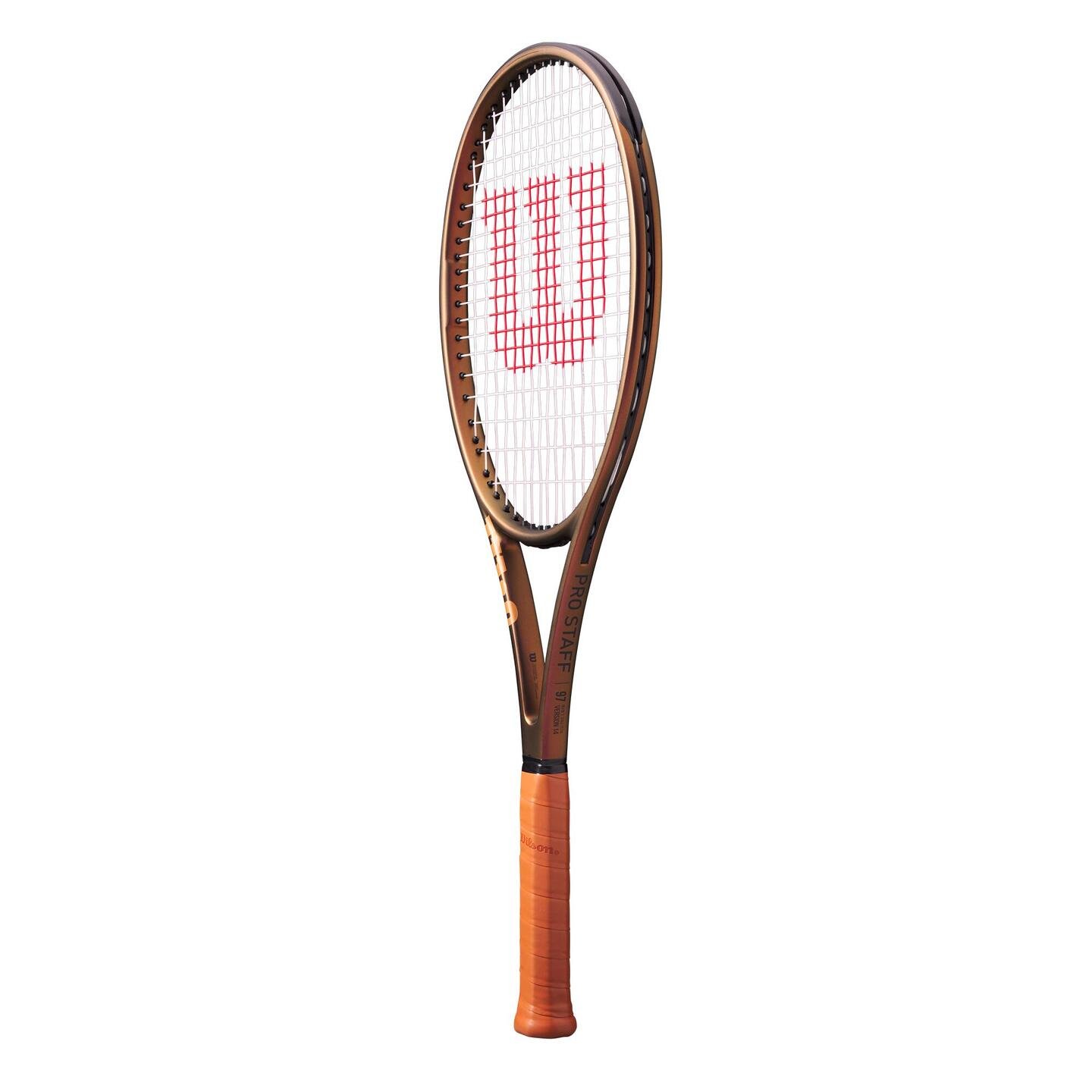
Wilson Pro Staff 97 v14
The benchmark precision brief — 315 grams unstrung, a 97 head, a constant 21.5 mm beam and Wilson’s Paradigm Bending layup.
The Pro Staff is the frame this segment measures itself against, and the v14 publishes the most complete advanced specification in this guide. The numbers, as Wilson states them: 315 grams unstrung, a 97 square-inch head, a 31 cm unstrung balance that settles at 32 cm strung, a constant 21.5 mm flat beam and a 16×19 pattern at a published 66 RA. Nothing in that list donates power. The head is small, the beam is thin, the balance keeps the mass toward the hand, and the weight is high enough to hold its line when an opponent’s ball arrives with pace. It is a specification written for a player who supplies the swing and asks the frame only for direction and feedback.
Wilson’s named technologies explain how it pursues that brief. Wilson describes Paradigm Bending as a carbon construction that tunes the bending profile between hoop and shaft, Braid 45 as double-braided fibres angled at 45 degrees for stability and pocketing, and String Mapping as a denser spacing in the centre of the bed for precision with wider spacing toward the edges. Those are Wilson’s published descriptions of its own layup, reported as such. Against the rest of the guide, the Pro Staff’s identity is balance: it is neither the densest bed nor the smallest head nor the softest flex here, and that middle position — proven, legible, tunable with string choice — is exactly why it takes the top card. If you want one advanced frame with no explaining to do, this is it.
What we like
- The complete published brief: 315 g, 97 in², 21.5 mm, head-light both ways
- Wilson publishes strung and unstrung balance — full transparency
- An open 16×19 bed in a true control frame
- The segment’s benchmark — easy to demo, easy to replace like for like
Worth knowing
- A 97 in² head punishes late, off-centre contact — it assumes a full swing
- Not the Blade 98 v9 carded in the pillar guide — check the “Pro Staff 97” name
- Sold unstrung — budget a string job into the purchase
As an Amazon Associate we earn from qualifying purchases.
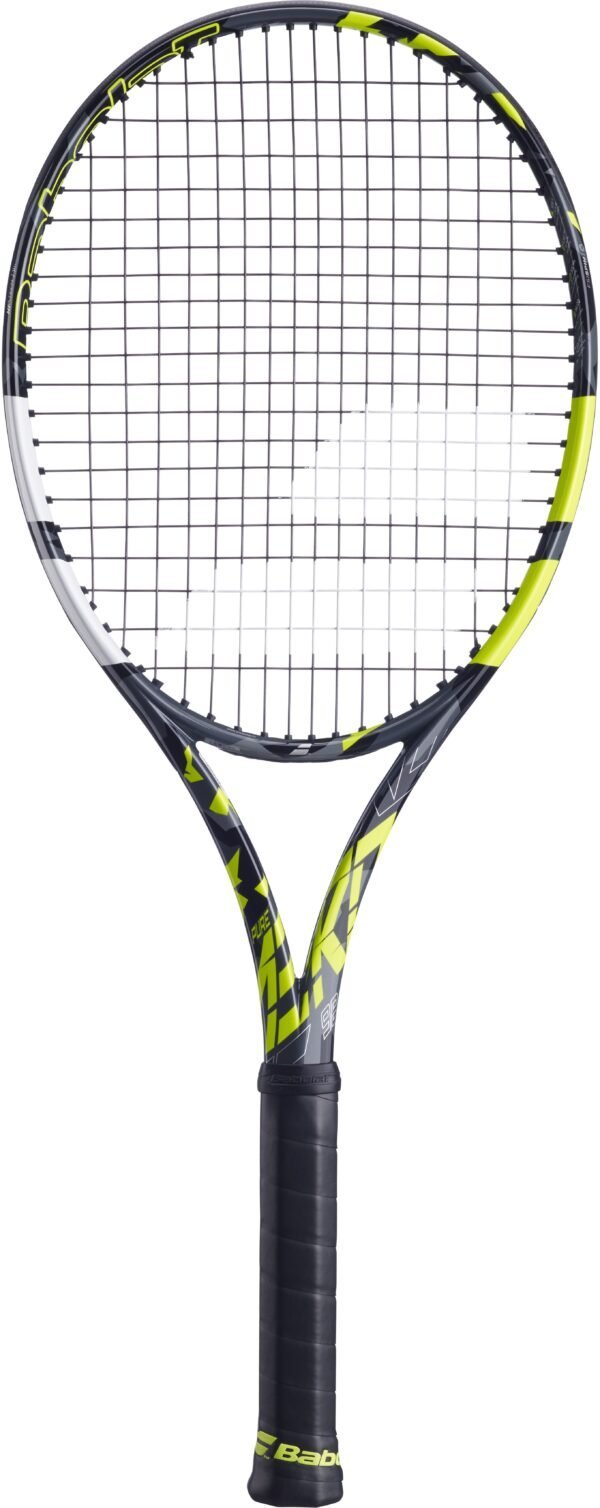
Babolat Pure Aero 98
The Aero brief, tightened — the family’s smallest head and densest Aero pattern, at 305 grams unstrung.
Do not confuse this card with the standard Pure Aero. That 100 square-inch frame is carded in our pillar guide and is a different brief. The Pure Aero 98 is Babolat’s control member of the Aero family: 98 square inches, 305 grams unstrung, a 315 mm unstrung balance, a 21/23/22 mm section and — the defining choice — a 16×20 pattern where the 100 uses 16×19. Babolat publishes the frame for fast, attacking players who move forward and hit with spin and precision, and the spec sheet backs the positioning: the extra cross string tightens the bed’s response while the Aero throat geometry, which Babolat describes as its aerodynamic frame design, keeps the swing fast. It is the only card here built from a spin family’s DNA and then reined in.
Babolat’s named systems complete the published picture. FSI Spin is Babolat’s name for its string-interaction design, Aeromodular for the integrated bumper-and-grommet aerodynamic construction, and NF2-Tech for the flax inserts Babolat places at strategic points in the frame, which Babolat describes in feel and sound terms — Babolat’s descriptions, reported as attribution. The honest counterweight is the published stiffness: Babolat lists 69 RA with a tolerance, the firmest figure in this guide, and that firmness is part of how the frame returns energy on a fast swing. Players who want the Aero shape with a softer published flex have the Percept card below; players who want spin access with a tightened bed will find this card the most direct route.
What we like
- The only spin-family frame here re-specced for control: 98 in², 16×20
- Lightest unstrung tier in the guide at 305 g, shared with the TF40
- Full Babolat technical table published, tolerances included
- A shaped 21/23/22 section — thicker through the middle for stability
Worth knowing
- 69 RA as listed is the firmest published stiffness here
- Not the pillar’s Pure Aero 100 — check the “98” on the listing
- Sold unstrung in most markets
As an Amazon Associate we earn from qualifying purchases.
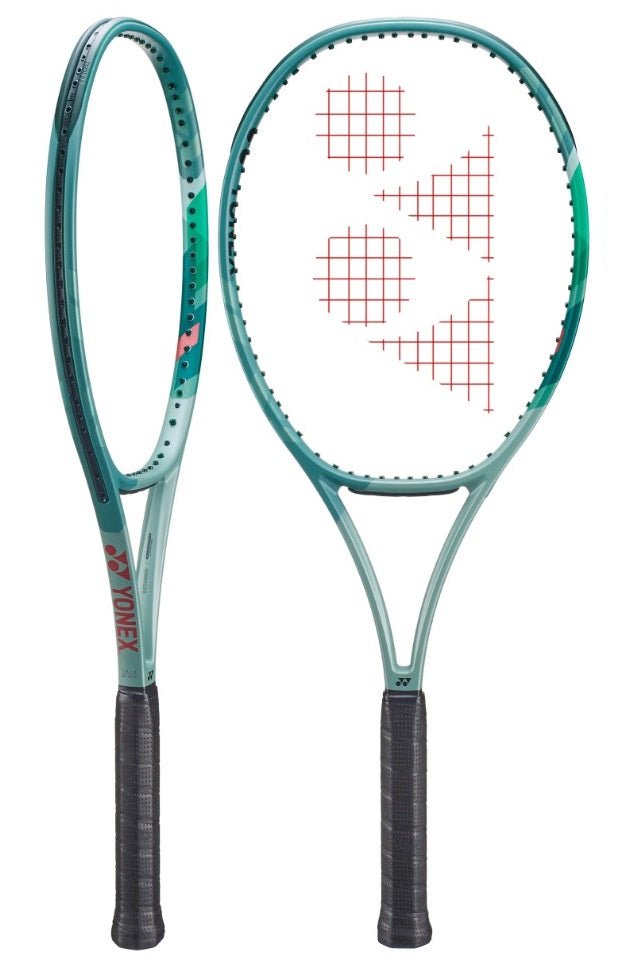
Yonex Percept 97
Yonex’s control line in its most approachable weight — 310 grams, a 21 mm beam and the softest flex figure in the guide.
Yonex publishes the Percept 97 on its own US store for intermediate and advanced players, and its headline numbers are the gentlest in this guide: 310 grams unstrung, a 310 mm balance, a 97 square-inch head and a 16×19 pattern, with stringing advice of 45–60 lbs printed by Yonex itself. The beam is a constant 21 mm in the retailer tables that reproduce Yonex’s specification, and the measured stiffness of 60 RA — a laboratory figure, labelled as measured wherever this guide prints it — is the lowest here. Read together, that is a flexible, head-light, fast-moving control frame: the card for the advanced player whose game is built on timing, shape and touch rather than on driving through every ball.
Yonex’s materials list is published in full on its own page: HM Graphite with 2G-Namd Flex Force and Servo Filter, under its ISOMETRIC head shape, a FlexCon System and a Stiff Racquet Face Design. Yonex describes Servo Filter as a film in the shaft and the FlexCon System as its route to flex and pocketing at impact — Yonex’s published descriptions of its construction, reported as such, with no claim adopted beyond them. The practical trade is printed plainly: at 310 grams unstrung this is five grams under the Pro Staff and Gravity Pro, and on the very fastest exchanges that lighter, softer brief asks your swing to supply the stability the heavier cards build in. For the player who values feel above all, that is the right trade, made with open eyes.
What we like
- Yonex publishes the full spec on its own store — weight, balance, materials
- The softest measured flex and thinnest-tier beam here
- An open 16×19 bed in a genuinely flexible control frame
- 310 mm balance — the most head-light published figure in the guide
Worth knowing
- The 60 RA figure is a retailer laboratory measurement, not a Yonex headline spec
- Lighter than the 315 g cards — stability comes from your swing
- Sold unstrung
As an Amazon Associate we earn from qualifying purchases.
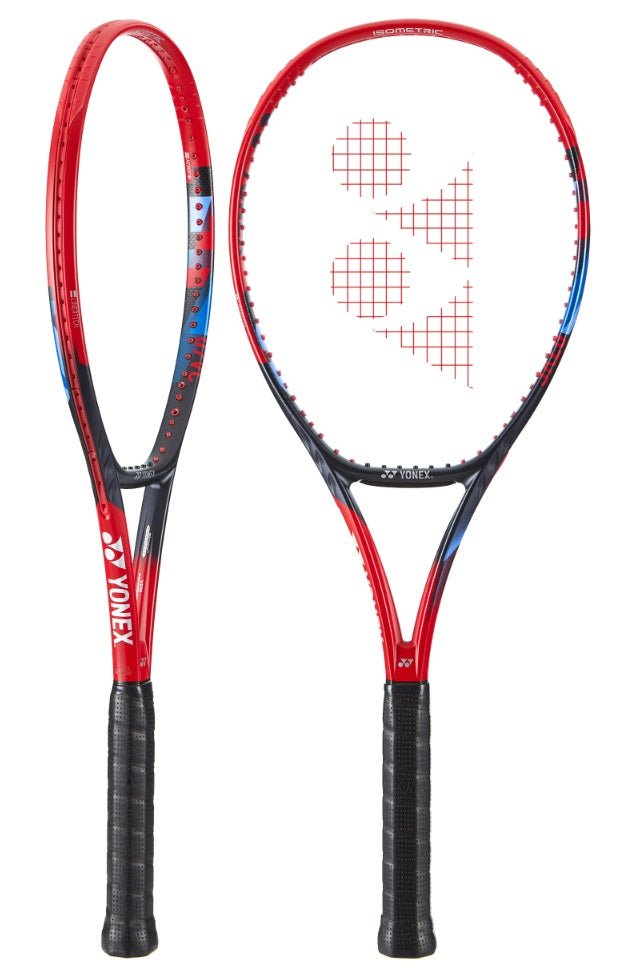
Yonex VCORE 95
The true midsize of the guide — a 95 head and a 16×20 bed in Yonex’s spin line, at 310 grams unstrung.
The VCORE 95 is the connoisseur’s card: the joint-smallest head in this guide, in the family Yonex positions for spin. The published specification reads 95 square inches, 310 grams unstrung and 326 grams strung, a 32 cm strung balance at 7 points head-light, a 22 mm beam and a 16×20 pattern at 62 RA. That combination — compact head, dense-enough bed, moderate beam, head-light balance — is the fastest-moving specification here, and Yonex’s retailers describe the frame in exactly those terms: for advanced players looking for a compact, manoeuvrable racket. It rewards the player who takes the ball early, changes direction with a short lever, and treats the 95 not as a handicap but as a scalpel.
Two honest qualifications belong on this card. First, the small head is a real demand: the margin on off-centre contact is the tightest in the guide, shared only with the Dunlop 95 below, and players whose contact point wanders under pressure will feel it. Second, the family name needs care at the listing — the VCORE 100 is carded in our intermediate guide and the VCORE line runs several head sizes under near-identical cosmetics, so check the “95” before you pay. What you get for that care is a frame no other card replicates: Yonex’s ISOMETRIC geometry, which Yonex describes as enlarging the effective hitting area for its size, applied to the smallest canvas here, with a 16×20 bed that keeps the launch controlled when you swing out.
What we like
- A true 95 in² midsize — the fastest-swinging published spec here
- 16×20 bed keeps a spin family’s launch under control
- Both strung and unstrung weights published in its retailer tables
- 62 RA — a moderate published flex, softer than the Pro Staff
Worth knowing
- The tightest off-centre margin here, shared with the CX 200 Tour
- Not the intermediate guide’s VCORE 100 — check the “95”
- Sold unstrung
As an Amazon Associate we earn from qualifying purchases.
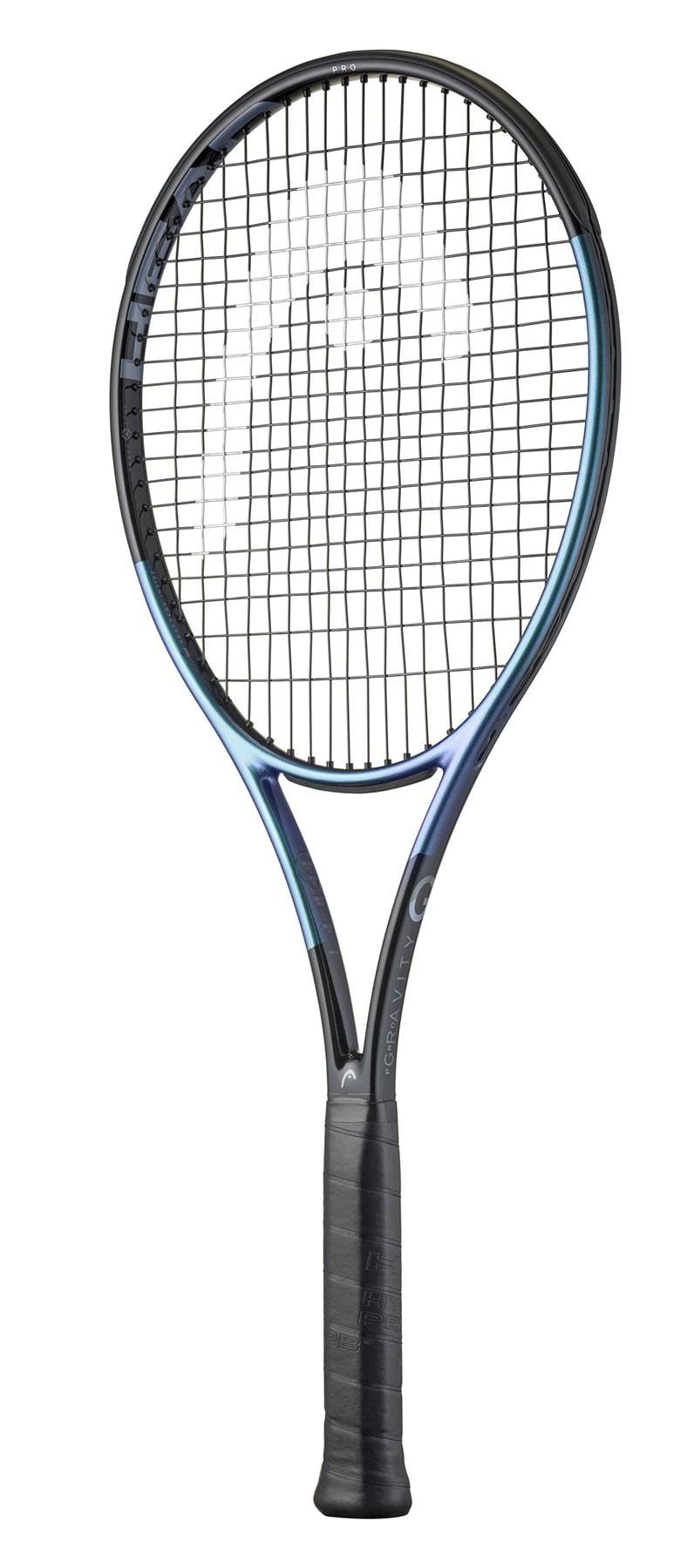
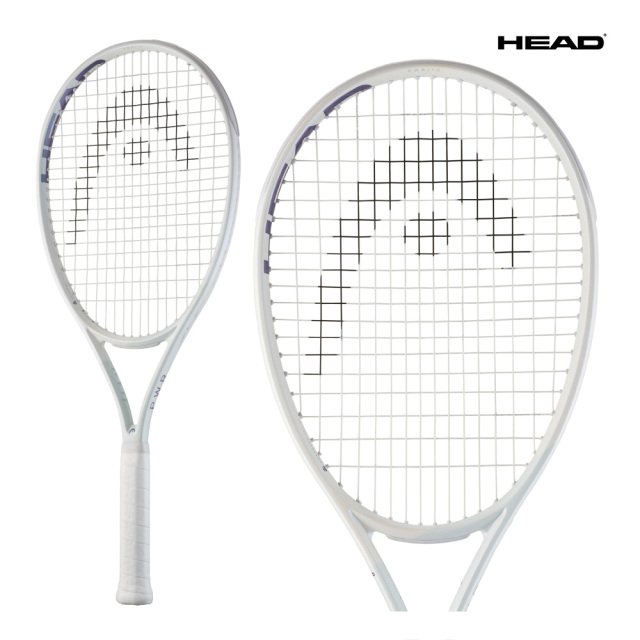
HEAD Gravity Pro
The big-head control exception — 100 square inches disciplined by an 18×20 bed, a 20 mm beam and 315 grams.
Every guide needs the card that breaks its own pattern intelligently, and the Gravity Pro is this one’s. It carries the largest head here at 100 square inches — the size the rest of the guide treats as intermediate territory — and then disciplines that head with the segment’s classic control tools: an 18×20 pattern, a thin constant 20 mm beam, 315 grams unstrung and a 310 mm unstrung balance. HEAD describes the Gravity head shape as rounded, with the widest part of the string bed raised toward the tip, and positions the Pro for aggressive tournament players — HEAD’s published positioning, reported as such. The result on paper is the most forgiving control specification here: the biggest bed in the guide, held on a short leash by its pattern and beam.
The construction is HEAD’s current Auxetic 2.0, which HEAD describes as its responsive feel technology, with a half cap construction HEAD adds in this generation. One transparency note, printed in the header and repeated here because it matters: HEAD does not publish a headline RA for this frame, so the 59 flex on this card is Tennis Warehouse University’s measured laboratory rating — the softest measured figure in the guide, but a measurement, not a maker claim, and labelled accordingly wherever it appears. Practical details are strong: grip sizes 1 to 5 cover the full adult ladder. And the family warning applies — the Gravity MP is carded in the intermediate guide and the Gravity MP L in the women’s guide; the Pro is the 315-gram, 18×20 frame, and the listing should say so.
What we like
- The most forgiving control spec here: 100 in² on an 18×20 leash
- Thin 20 mm beam and 315 g — a true player’s frame, not a tweener
- Full grip ladder, sizes 1 to 5
- HEAD’s rounded head shape, as HEAD publishes it, suits modern grips
Worth knowing
- The 59 flex is a measured lab figure — HEAD publishes no headline RA
- Not the intermediate guide’s Gravity MP — check the “Pro” and the 315 g
- Sold unstrung
As an Amazon Associate we earn from qualifying purchases.
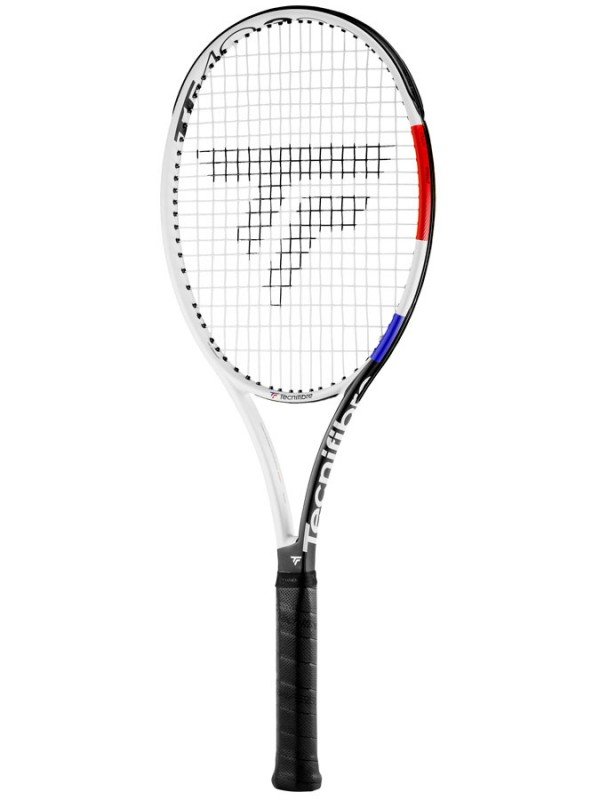
Tecnifibre TF40 305 (18×20)
The lightest route into a dense bed — 305 grams, a 22 mm beam and Tecnifibre’s foam-filled construction.
The TF40 305 answers a specific advanced-player question: how light can a dense-pattern control frame go before it stops holding its line? Tecnifibre’s published answer is 305 grams unstrung — the joint-lightest figure in this guide — under a 98 square-inch head, with a 325 mm unstrung balance, a constant 22 mm beam, an 18×20 pattern and a published 64 RA. The balance deserves a second look: at 325 mm unstrung, this is the least head-light card here, which is how a 305-gram frame keeps enough mass in play through the hitting zone. Tecnifibre positions the TF40 line for players seeking control and feel, and the spec sheet is that positioning in numbers.
The construction is where Tecnifibre differentiates. The RS Sharp Section is its five-sided beam geometry, Dynacore XTC its layup material, and Foam Inside — Tecnifibre’s name for the foam filling inside the frame — is the feature Tecnifibre describes in solid-feel terms at impact; Tecnifibre’s published descriptions, reported as attribution. Against the guide, the TF40’s trade is clear: it gives the Pro Staff and Gravity Pro ten grams of static weight and takes in return the most manoeuvrable dense-bed swing here, at a strung weight of 323 grams in its retailer tables. Players who customise will also note the platform logic — a 305-gram dense frame is the easiest card in this guide to weight up to a personal specification, because you can add mass but you cannot remove it.
What we like
- The lightest dense-pattern card: 305 g with an 18×20 bed
- A 325 mm unstrung balance keeps mass in the hitting zone
- Full Tecnifibre spec published, strung and unstrung
- The easiest frame here to customise upward in weight
Worth knowing
- Ten grams under the 315 g cards — heavy incoming pace tests it
- Check the “18×20” — a 16×19 TF40 305 exists under the same name
- Sold unstrung
As an Amazon Associate we earn from qualifying purchases.
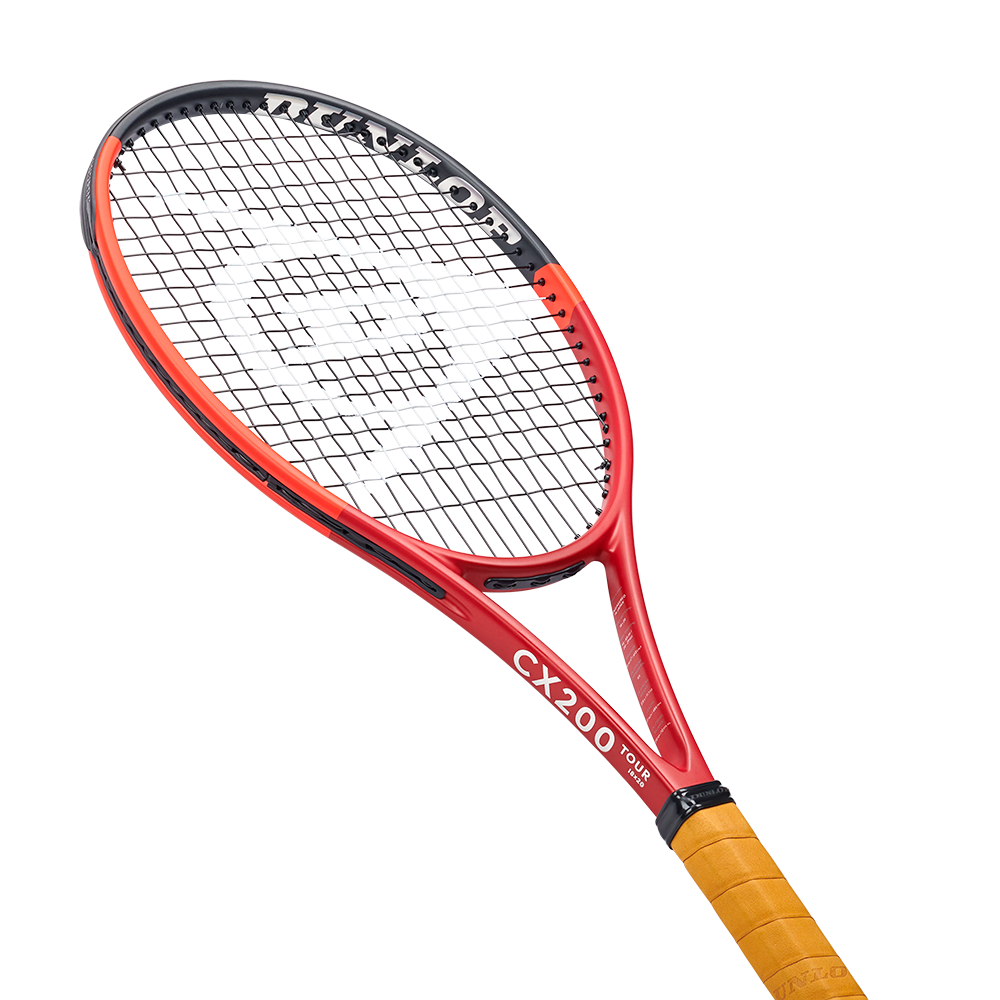
Dunlop CX 200 Tour (18×20)
Dunlop’s control flagship, on Dunlop’s own numbers — a 95 head, a 20.5 mm beam and an 18×20 bed at 315 grams.
This card’s authority is its source: every headline figure is printed on Dunlop’s own store. Dunlop publishes the CX 200 Tour (18×20) at a 95 square-inch head, 315 grams unstrung, a 310 mm unstrung balance at 10 points head-light, a 20.5 mm beam, a 65 RA stiffness and an 18×20 pattern, and describes the frame for advanced players with big swings who want to hit aggressively without over-hitting — Dunlop’s published positioning, in Dunlop’s own words, reported as such. It is, on paper, the most traditional specification in the guide: the joint-smallest head, the joint-thinnest beam class, the densest pattern tier and full player’s weight, with nothing in the list aimed at anyone but a confident ball-striker.
Against its natural rival, the VCORE 95 at #4, the Dunlop’s choices are instructive. Same 95 canvas, opposite instincts: Dunlop takes the denser 18×20 bed to Yonex’s 16×20, the thinner 20.5 mm beam to Yonex’s 22 mm, and five extra grams of static weight, while Yonex answers with the ISOMETRIC head shape and a softer published flex. Neither is the “better 95” — they are the two honest ways to build one, and the comparison table lets you choose by pattern and beam the way advanced players actually choose. Dunlop notes the racket ships unstrung, so the final practical point is the standing one: budget the string job, choose a control-oriented setup, and this frame is ready to be exactly what its spec sheet promises.
What we like
- Every headline spec verified on Dunlop’s own store
- The most traditional brief here: 95 in², 20.5 mm, 18×20, 315 g
- Dunlop publishes its own RA — no measured substitute needed
- A genuine alternative 95 to the VCORE, built the opposite way
Worth knowing
- A 95 in² head with an 18×20 bed is the most demanding combination here
- Ships unstrung, per Dunlop — factor in stringing
- Check the “Tour 18×20” — the CX 200 line includes lighter, open-pattern models
As an Amazon Associate we earn from qualifying purchases.
Side-by-Side Comparison Table
| Model | Best For | Weight (as maker states it) | Head Size | Pattern | Beam |
|---|---|---|---|---|---|
| Wilson Pro Staff 97 v14 | Best overall | 315 g unstrung | 97 in² | 16×19 | 21.5 mm |
| Babolat Pure Aero 98 | Spin control | 305 g unstrung | 98 in² | 16×20 | 21/23/22 mm |
| Yonex Percept 97 | Flexible feel | 310 g unstrung | 97 in² | 16×19 | 21 mm |
| Yonex VCORE 95 | Compact head | 310 g unstrung · 326 g strung | 95 in² | 16×20 | 22 mm |
| HEAD Gravity Pro | 100 in² control | 315 g unstrung | 100 in² | 18×20 | 20 mm |
| Tecnifibre TF40 305 (18×20) | Dense-pattern 98 | 305 g unstrung · 323 g strung | 98 in² | 18×20 | 22 mm |
| Dunlop CX 200 Tour (18×20) | Thin-beam 95 | 315 g unstrung | 95 in² | 18×20 | 20.5 mm |
Read the pattern column first, because it divides the guide into its three real families: two open 16×19 frames (Pro Staff, Percept) for the player who wants the liveliest bed, two 16×20 compromises (Pure Aero 98, VCORE 95) for spin with a tightened launch, and three dense 18×20 frames (Gravity Pro, TF40, CX 200 Tour) for the flattest, most directional ball flight. Then read weight by its labels: the unstrung spread is only ten grams, from the 305-gram pair to the 315-gram trio, and each maker spends that mass differently — Wilson and Dunlop on a head-light traditional balance, Tecnifibre on a 325 mm balance that keeps weight in the hitting zone. Head size, finally, is the margin dial: 95 at the demanding end, the Gravity Pro’s disciplined 100 at the forgiving end, and everything honest in between.
Buying Guide: Matching the Spec Sheet to Your Game
1. Choose your pattern family before your brand
Pattern changes ball flight more than any other single spec in this guide, so decide it first. If your misses fly long, shop the 18×20 family — Gravity Pro, TF40, CX 200 Tour — where the denser bed, as makers describe it, flattens the launch and rewards driving through the ball. If your misses dump into the net or lack shape, shop the open 16×19 pair — Pro Staff, Percept — where the wider grid is the livelier published layout. If you play heavy topspin but want the safety of a tighter bed, the 16×20 compromise cards — Pure Aero 98 and VCORE 95 — exist precisely for you. Brand loyalty applied before pattern logic is how advanced players end up fighting their own frame.
2. Head size: buy the margin your contact point earns
Be honest about your contact, not your best contact. The 95 square-inch cards — VCORE 95 and CX 200 Tour — are the fastest and most precise here, and the least forgiving when contact drifts late in a long rally. The 97–98 cards are the segment’s centre of gravity for a reason: near-identical precision with a step more margin. And the Gravity Pro proves the 100 is not a beginner’s size when it is paired with an 18×20 bed and a 20 mm beam. A useful test: if your current frame’s string bed shows wear centred tightly, you have earned the small heads; if the wear wanders, take the margin and let the pattern supply the control.
3. Static weight and balance: the stability budget
The ten-gram unstrung spread in this guide — 305 to 315 grams — is your stability budget, and balance decides how it is spent. The head-light cards (Percept at 310 mm, Pro Staff at 31 cm unstrung, CX 200 Tour at 310 mm) swing fastest and suit the player who generates racket-head speed easily and plays at the net. The TF40 spends its lighter weight on a 325 mm balance, keeping mass through the hitting zone for the baseliner who redirects pace. Remember the basis rule when you compare across brands: every figure here is labelled unstrung or strung as its maker states it, and strings add roughly 15 to 20 grams to any of them. Compare like with like, then demo the two finalists back to back if you can.
4. Beam and stiffness: read them as a pair, with sources
A thin beam with a low flex figure — the Percept’s 21 mm and measured 60 RA, the Gravity Pro’s 20 mm and measured 59 — is the flexible end of this guide, which makers describe in feel and pocketing terms. A firmer pairing — the Pure Aero 98’s shaped section at Babolat’s listed 69 RA, the Pro Staff’s 21.5 mm at 66 RA — holds its shape more and returns more of the swing. Neither end is better; they are different published personalities, and this guide labels every stiffness figure as maker-published or measured so you know exactly what kind of number you are trusting. If a listing elsewhere shows a stiffness with no source, treat it as decoration.
5. Strings complete the specification — plan them at purchase
Every card here is sold unstrung in most markets, which advanced players should treat as a feature: the string bed is half the control equation, and you get to choose it. Dense-pattern frames pair naturally with thinner gauges that restore some string movement; open-pattern frames take control-oriented setups without going dead. Stay inside each maker’s published tension advice — Yonex, for example, prints 45–60 lbs for the Percept 97 on its own page — and change one variable at a time when you restring, or you will never know which change worked. The frame is the platform; the string job is the tuning.
Frequently Asked Questions
What racket specs suit an advanced tennis player?
Shop the published envelope this guide is built on: heads from 95 to 100 square inches, unstrung weights from 305 to 315 grams, thin beams from 20 to 23 millimetres and head-light balances. Every card here sits inside that band — the Wilson Pro Staff 97 v14 at 315 grams and 97 square inches is its centre. Advanced frames trade the free power of larger, lighter rackets for string-bed density, stability and feedback, because an advanced swing already supplies the pace.
Is an 18×20 or 16×19 string pattern better for control?
They are two published routes to control, not a ranking. A dense 18×20 bed — the HEAD Gravity Pro, Tecnifibre TF40 305 and Dunlop CX 200 Tour in this guide — tightens the grid, which makers describe as the flatter, more directional layout. An open 16×19 bed — the Wilson Pro Staff 97 v14 and Yonex Percept 97 — is the livelier layout makers describe for spin access. The 16×20 cards, the Babolat Pure Aero 98 and Yonex VCORE 95, split the difference. Choose by your misses: long misses point dense, netted misses point open.
What head size should an advanced player use?
Most of this guide clusters at 97 to 98 square inches — the Pro Staff 97, Percept 97, Pure Aero 98 and TF40 — because that size pairs precision with a workable margin. Confident, centred ball-strikers can step down to the 95 square-inch cards, the Yonex VCORE 95 and Dunlop CX 200 Tour, for the fastest swing here. Players who want more margin without leaving the control segment should read the HEAD Gravity Pro: a 100 square-inch head disciplined by an 18×20 pattern and a 20 mm beam.
How heavy should an advanced player’s racket be?
On the makers’ published figures in this guide, 305 to 315 grams unstrung — which lands at roughly 323 to 332 grams strung. The lightest unstrung cards are the Babolat Pure Aero 98 and Tecnifibre TF40 305 at 305 grams; the heaviest are the Wilson Pro Staff 97 v14, HEAD Gravity Pro and Dunlop CX 200 Tour at 315 grams. Always compare on the same basis: makers publish unstrung weights, and strings add roughly 15 to 20 grams.
What is the difference between the Pure Aero 98 and the Pure Aero 100?
They are distinct models in the same family, with distinct published specifications. The Pure Aero 98 in this guide has a 98 square-inch head, a 16×20 pattern, a 21/23/22 mm section and a 305-gram unstrung weight, and Babolat positions it as the family’s control frame. The standard Pure Aero 100 — carded in our all-player pillar guide, not here — has a 100 square-inch head and a 16×19 pattern. Check the “98” on the listing before you buy; the cosmetics are close.
Does a thinner beam give more control?
A thinner beam is one of the control segment’s consistent published traits: the frames here run from 20 mm on the HEAD Gravity Pro and 20.5 mm on the Dunlop CX 200 Tour up to the Babolat Pure Aero 98’s 21/23/22 mm section. Makers describe thinner beams in flex and feedback terms and thicker sections in stability and energy-return terms. Read beam together with stiffness and pattern rather than alone — the Percept pairs a 21 mm beam with the softest measured flex here, while the Pro Staff pairs 21.5 mm with a firmer published 66 RA.
What is the difference between this guide and the intermediate racket guide?
The intermediate guide owns the step-up segment — larger heads, lighter weights and more forgiving published specifications for players still building consistency. This guide narrows the same sport to one decision: the control frames makers publish for advanced players, compared on head size, labelled weight, string pattern, beam width and stiffness. No racket from the all-player, intermediate, beginners or seniors guides is re-ranked here — read those for their segments, and this page for the advanced specification.
The Verdict
Buy the specification, not the story. The Wilson Pro Staff 97 v14 is the complete advanced answer — 315 grams, 97 square inches, a 16×19 bed in a 21.5 mm beam. The Babolat Pure Aero 98 owns spin with control, the Yonex Percept 97 owns flexible feel, and the Yonex VCORE 95 is the compact scalpel. The HEAD Gravity Pro is the disciplined 100, the Tecnifibre TF40 305 (18×20) the lightest dense-pattern route, and the Dunlop CX 200 Tour (18×20) the traditional thin-beam 95, verified on Dunlop’s own store. Seven frames, four honest decisions — head size, weight, pattern and beam — every one of them printed as its maker states it.
Affiliate disclosure: AliShuttler is a participant in the Amazon Services LLC Associates Program. Links marked “Check Price on Amazon” are affiliate links — if you buy through them, we may earn a commission at no additional cost to you. Every specification in this guide is taken from the manufacturer’s own published listings, checked at build time in 2026; weights are labelled strung or unstrung exactly as their makers state them, and stiffness figures are labelled maker-published or measured.