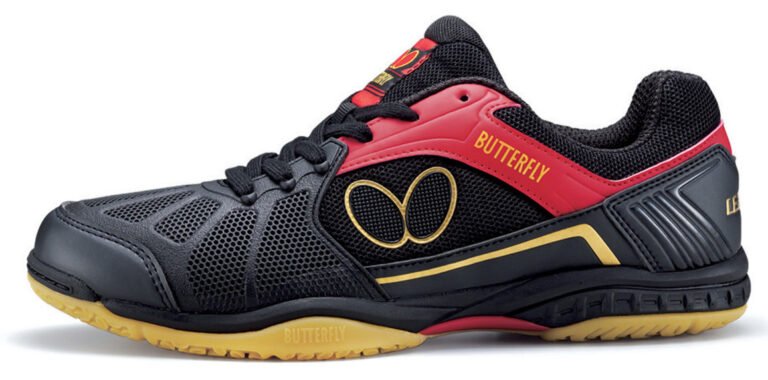
A table tennis bag is not bought by brand — it is bought by what you actually carry. Is it one bat that needs a proper case, two bats that must not rub against each other, or a full match-day load of shoes, towel, clothing, spare rubbers and balls? These seven bags and cases cover the whole ladder, from a single padded bat case to a 120-litre wheeled tournament holdall, with every capacity, dimension and material taken from the manufacturers’ own listings — or, where a maker publishes through specialist retailers, from a retailer page that reproduces the maker’s specification.
⚡ TL;DR — The Short Answer
Most club players should buy the Butterfly Sports Bag Kashiwa: 60 litres, a spacious main compartment plus a very spacious inner one, inside and outside pockets, and a laundry/shoe bag included. If all you carry is the bat itself, the Butterfly Single Case Tokai covers one bat, and the JOOLA Vision Safe Double and STIGA Batcover Cybercase cover two — one soft and foam-padded, one in the hardcase format STIGA itself names. Backpack carriers take the Nittaku Tanto Daypack at about 32 litres, team and heavy kit loads take the Cornilleau Fittcare Sports Bag, and travelling tournament players finish at the Butterfly Maxi Bag Kanoy: 120 litres on wheels.
Quick Picks — Best Table Tennis Bags at a Glance
60 L at 70 × 31 × 26 cm in Polyester 1680D, with a laundry/shoe bag and pockets inside and out.
One bat at 30 × 21 × 5 cm in Polyester 900D, with metal zips and an outside carrying strap.
Two lined compartments with encased foam padding — one pocket per racket — plus an accessory compartment.
STIGA’s own “Hardcase” format for two rackets, separated by a padded divider, in black.
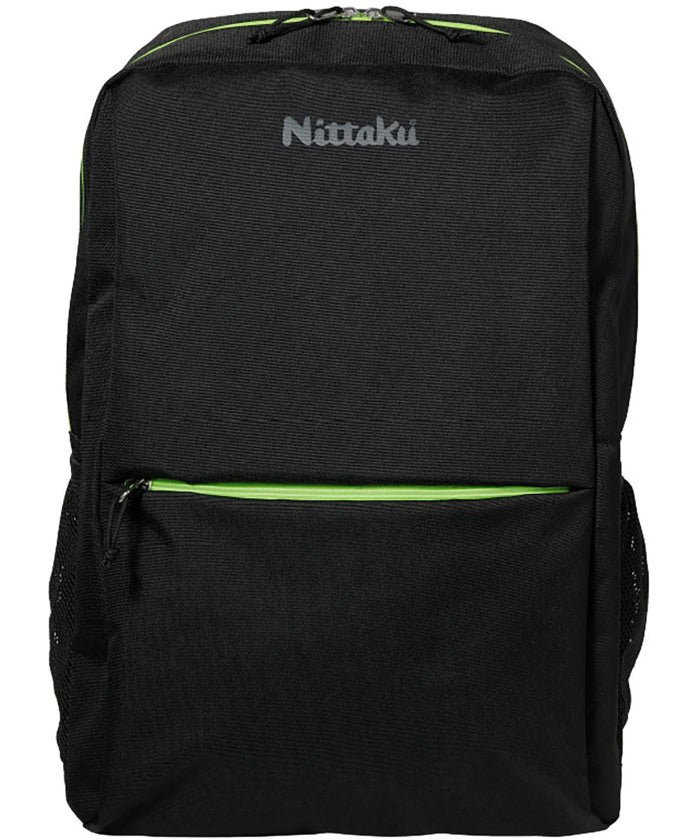
About 32 L in a square 33 × 47 × 20.5 cm daypack, 100% polyester, multiple pockets, 570 g.
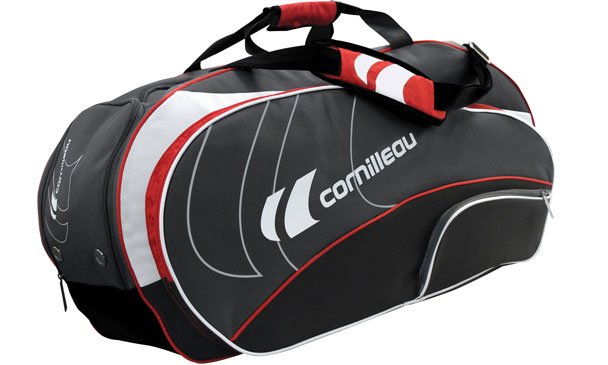
78 × 38 × 33 cm with two large side pockets and two compartments for shoes or damp clothes.
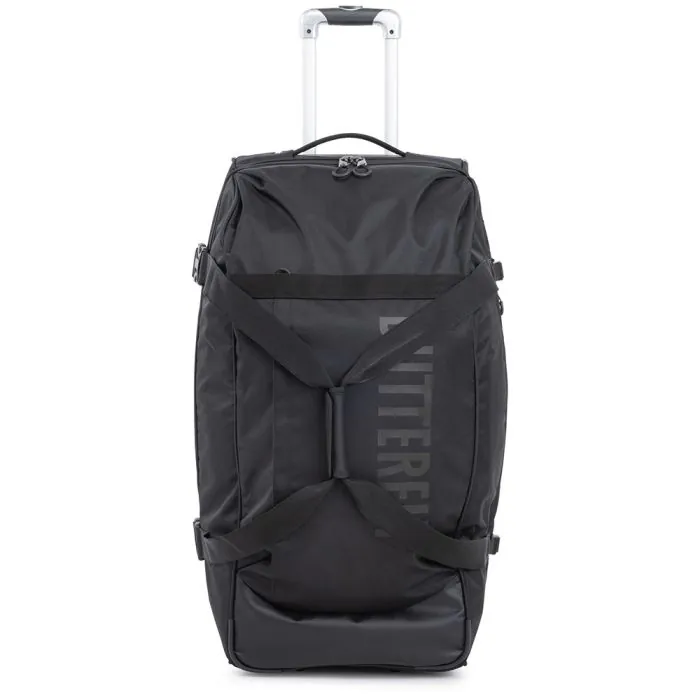
120 L on transport wheels with an aluminium extendable handle, a removable wet bag and a lower compartment.
In This Guide
Start With the Carry: Case, Backpack or Holdall?
Table tennis kit splits into two very different loads, and confusing them is how players end up with the wrong bag. The first load is the bat alone. A bat is a flat, fragile-edged object with two rubber faces that should not be pressed, scraped or left loose in a general bag — which is why the first three picks in this guide are not bags at all, but cases: a single case for one bat, and double cases for the player who carries a match bat and a spare. The second load is everything else: shoes, towel, a change of clothing, water, spare rubbers, glue and cleaner, and balls. That load needs volume, compartments and a way of keeping damp kit away from dry kit — and it is what picks 1, 5, 6 and 7 are built around.
Many serious players buy one of each, and this guide is organised so you can do exactly that: choose your bat case from picks 2, 3 and 4, then choose the bag it travels inside from picks 1, 5, 6 and 7. A double case dropped into a 60-litre kit bag is the standard club setup; a single case inside a backpack is the training-night setup; and the wheeled 120-litre holdall is the tournament-weekend setup, where the bag also has to swallow team kit and everything a long day — or two — away from home demands. Everything that follows is specified the way the makers spec it: bat counts, volumes and dimensions are their published figures, and where a maker publishes nothing for a field, the card says so instead of borrowing a number.
The Specs That Actually Decide It
For a bat case, the deciding specs are format and separation. Format first: a soft padded case (the Tokai, the Vision Safe Double) flexes and slips easily inside a bigger bag, while a hardcase-format cover (the Cybercase, in STIGA’s own wording) holds a rigid shape of its own. Separation second: a double case earns its name only if the two bats are kept apart — JOOLA lists two separate lined compartments with encased foam padding, and STIGA lists a padded divider — because two rubber faces stored against each other, or against a zip, are the thing the case exists to prevent. Ball and accessory storage is the third check: JOOLA adds a secondary compartment for small accessories, which is where spare rubbers, edge tape and a cleaner actually live.
For a kit bag, volume and compartments decide it — in that order, together. Butterfly publishes both volume and dimensions for its bags (60 litres for the Kashiwa, 120 for the Kanoy), Nittaku’s daypack is listed at about 32 litres, and Cornilleau’s Fittcare is sold on dimensions (78 × 38 × 33 cm) with no volume figure — so read the two kinds of listing as a set, and never compare a litre figure from one maker against a bare dimension from another as if they were the same measurement. Then look at what the compartments are for: a separate place for shoes or damp clothes (two of them on the Fittcare, a laundry/shoe bag with the Kashiwa, a removable wet bag in the Kanoy) is the difference between an organised bag and a single damp compartment that everything shares. Materials are the last honest spec: Polyester 900D on the Tokai, 1680D on the Kashiwa, 600D on the Fittcare and plain 100% polyester on the Tanto Daypack — denier figures are the maker’s own fabric designations, reported here as published, not converted into durability promises this guide cannot verify.
The 7 Best Table Tennis Bags, Compared
Ranked by how most players should shortlist them: the all-round kit bag first, then the bat cases, the backpack and the big holdalls. Every figure is the manufacturer’s own, or a specialist retailer’s reproduction of it; gaps are labelled, not filled.
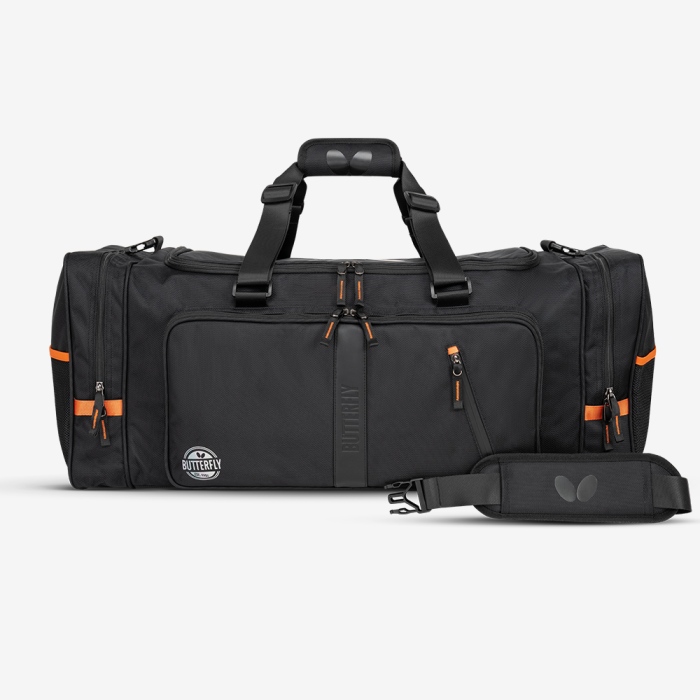
Butterfly Sports Bag Kashiwa
The 60-litre all-rounder: a spacious main compartment, a second very spacious inner compartment, and a laundry/shoe bag in the box.
Butterfly’s Kashiwa is the bag most club players actually need, and its specification is unusually complete for a table tennis kit bag. The maker lists a spacious main storage compartment alongside a very spacious inner compartment, with many inside and outside pockets in which, as Butterfly puts it, everything can be stored in an organised manner. That two-compartment layout is the practical heart of the bag: match kit and clothing in one space, the bat case, rubbers and smaller gear in the other, and the pockets taking the bottles, tape, cleaner and phone that otherwise sink to the bottom of every sports bag.
The extras are the ones that matter after the match, not before it. An included laundry/shoe bag gives damp clothing and court shoes a separate home instead of letting them share air with clean kit — the single most useful feature a training bag can have, and one many rival bags leave you to improvise with a carrier bag. Carry is covered both ways: an adjustable shoulder strap for the walk from the car park, and adjustable carrying straps for grab-and-go. The shell is Polyester 1680D, which Butterfly itself describes as highly tear-resistant — that is the maker’s wording, reported as such; what this guide can verify is the published designation, and 1680D is the heaviest fabric figure carded in this guide. At 70 × 31 × 26 cm and 60 litres, it is sized for a full club night or a one-day competition — league players who travel for whole weekends should look at pick 7 instead.
✅ What we like
- Main plus very spacious inner compartment, per Butterfly’s own description
- Laundry/shoe bag included — damp kit stays separate
- Many inside and outside pockets; shoulder strap and carry straps both adjustable
⚠️ Worth knowing
- 60 L is a club-night / one-day size, not a tournament-weekend holdall
- No separate bat compartment is listed — your bat still needs its own case (picks 2–4)
As an Amazon Associate we earn from qualifying purchases.
Butterfly Single Case Tokai
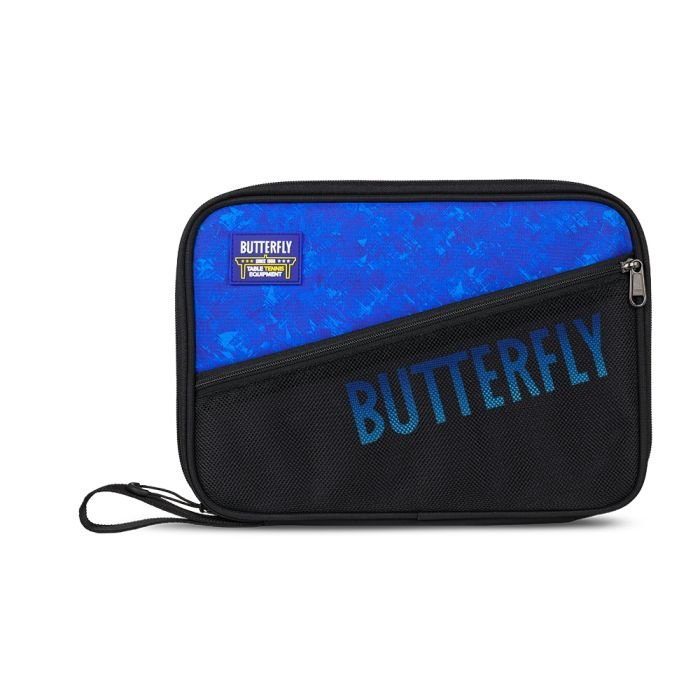
One bat, properly cased: 30 × 21 × 5 cm in Polyester 900D, with metal zips and an outside carrying strap.
The Tokai is the simplest product in this guide, and for a player who carries a single bat it is the right one. Butterfly describes it as having breakage protection, sturdy metal zips and a practical carrying strap on the outside, and calls it the reliable, safe storage place for your racket — that is the maker’s own description, and the copy here keeps it attributed to Butterfly rather than upgrading it into a test result. What can be stated plainly from the specification is the format: a single cover at 30 × 21 × 5 cm, which is bat-shaped and bat-sized, in Polyester 900D — a heavier fabric designation than the 600D of the big Cornilleau bag at pick 6.
Buy it as the bat’s permanent home, not as an occasional accessory. A bat that lives in its case between sessions is a bat whose rubbers are not being pressed against kit-bag contents, whose edge is not catching on zips and bottles, and which can be dropped into any of the bigger bags in this guide — the Kashiwa above, the Tanto Daypack at pick 5 — knowing the bat itself is already sorted. The outside carrying strap means it also works on its own for the shortest trips: bat in case, case in hand, nothing else needed. If you carry a spare bat as well, though, a single case is the wrong tool by definition — that is exactly the job of the two double cases that follow.
✅ What we like
- Maker-stated breakage protection and sturdy metal zips
- Polyester 900D shell — the heaviest fabric figure on any case here
- Outside carrying strap; works alone or inside any kit bag
⚠️ Worth knowing
- One bat only, and no ball or accessory pocket is listed by Butterfly
- Protection wording is Butterfly’s description, not a measured result
As an Amazon Associate we earn from qualifying purchases.
JOOLA Vision Safe Double
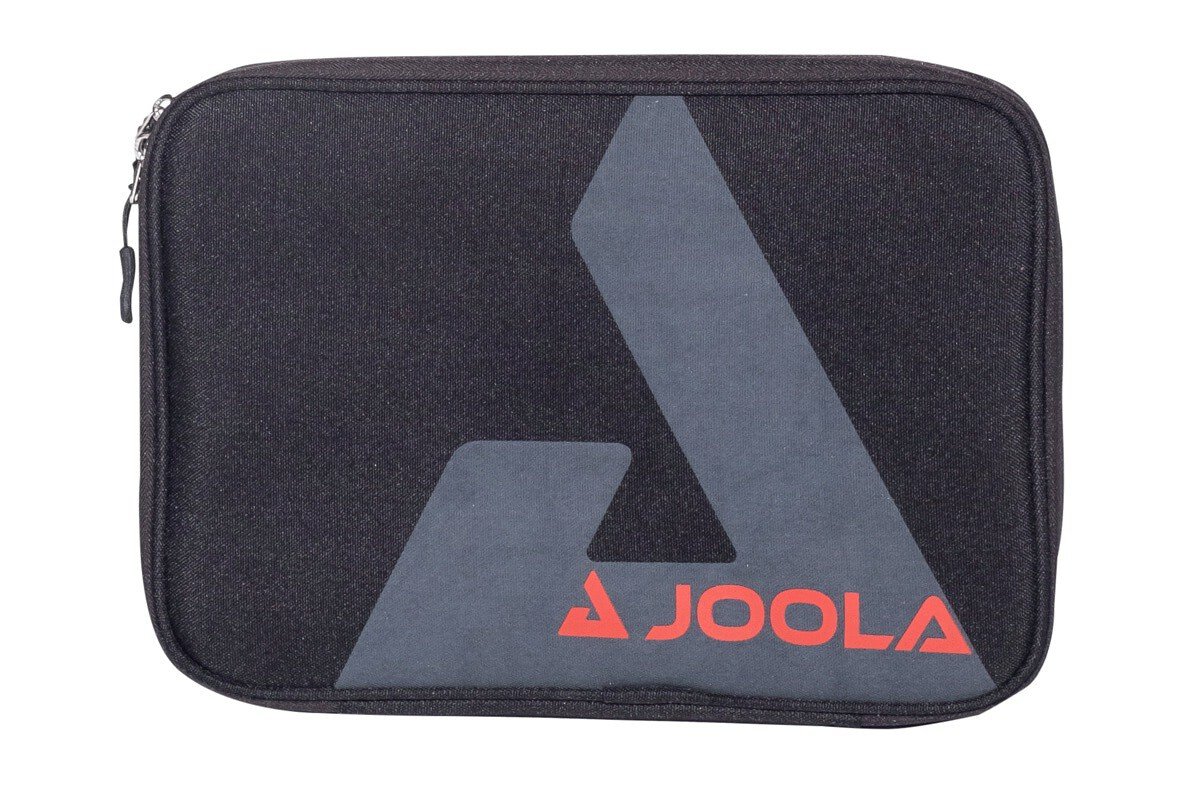
Two bats, kept apart: two lined compartments with encased foam padding, one pocket per racket, plus a compartment for small accessories.
JOOLA positions the Vision Safe Double for the serious player, and its published specification is the most detailed of any bat case in this guide. Two separate, lined interior compartments with encased foam padding — JOOLA’s stated construction — are organised as two unique pockets that hold one racket each, so the match bat and the spare never share a space or a surface. A secondary compartment takes small accessories: the spare rubbers, edge tape, scissors and cleaner that a two-bat player is, by definition, also carrying. The zippers are custom-molded SBS units per JOOLA’s listing, and the whole case measures 9 × 12 × 2 inches — flat enough to slide into a kit bag or backpack without dictating how the rest of the bag is packed.
Two honest notes on this card. JOOLA publishes no shell material for the Vision Safe Double, so none is carded here — the specification stands on its compartments, padding and hardware, which are the parts of a double case that actually decide whether it does its job. And the padding claim is reported exactly as JOOLA states it: encased foam padding in lined compartments is the maker’s description of the construction, not a protection rating, and no maker in this guide publishes one. Choose this case when your second bat is a real part of your setup — a different rubber combination, a backup for a damaged edge mid-match — rather than an occasional extra.
✅ What we like
- Two separate lined compartments — one pocket per racket
- Secondary accessory compartment for rubbers and small kit
- Custom-molded SBS zippers, per JOOLA’s own listing
⚠️ Worth knowing
- JOOLA publishes no shell material for this model
- Soft-case format — for a rigid shell, see the Cybercase below
As an Amazon Associate we earn from qualifying purchases.
STIGA Batcover Cybercase
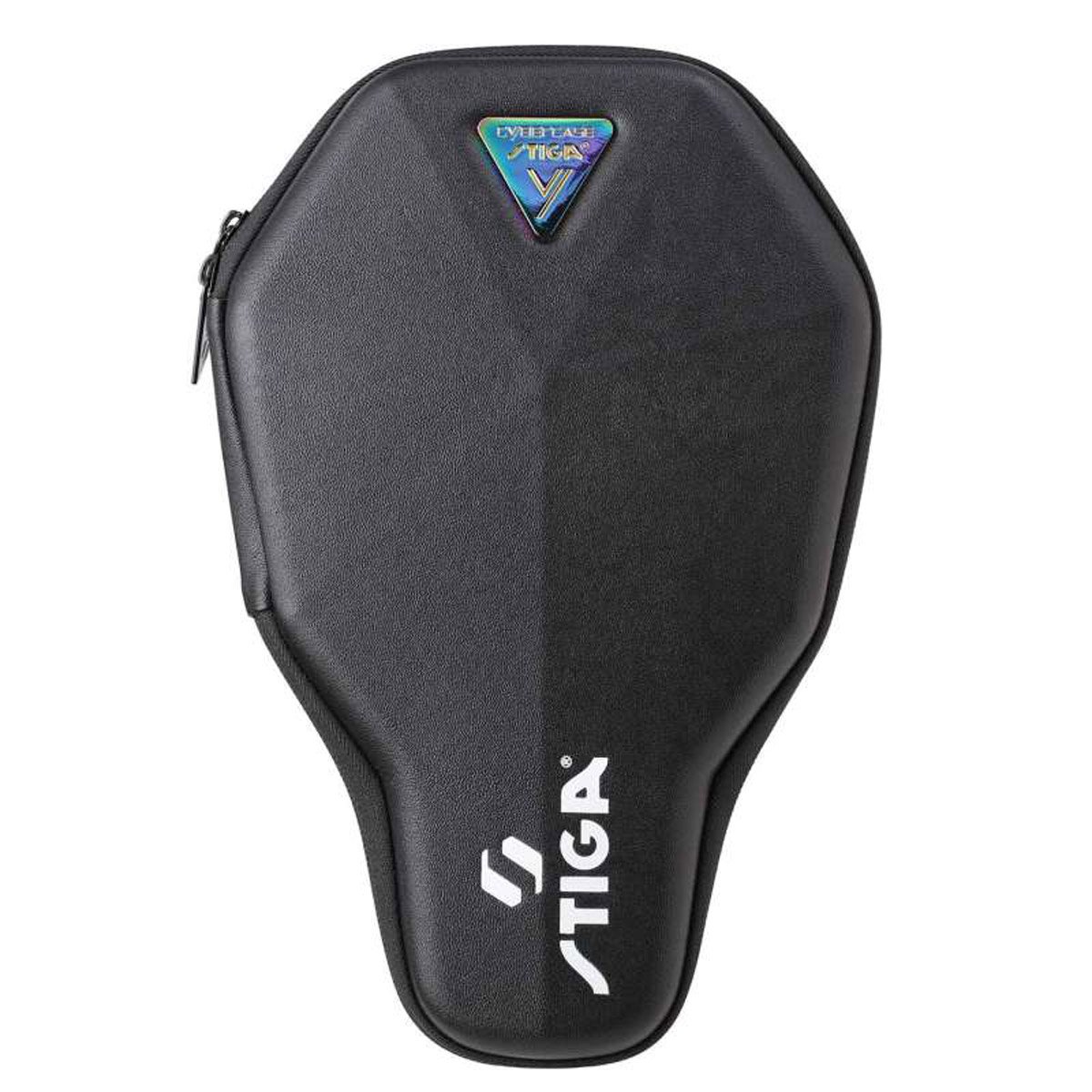
The rigid alternative: STIGA’s own “Hardcase” batcover for two rackets, separated by a padded divider.
The Cybercase is the format alternative to the JOOLA above. Where the Vision Safe Double is a soft, padded case, STIGA describes the Cybercase as a durable “Hardcase” batcover — the maker’s own word for the format, quoted here as STIGA states it — with a spacious interior designed to accommodate two rackets and a padded divider that keeps each racket in its own space. STIGA also lists the zippers and zip pullers among its top features for this model. The colour is black, per the specialist retailers who reproduce STIGA’s feature list for the model.
The transparency note matters more on this card than any other: STIGA’s own product pages for the Cybercase publish a feature list, not a specification table — no dimensions, no material and no weight are stated by the maker, so none are carded here, and any listing that quotes you precise measurements for this case is sourcing them from somewhere other than STIGA. What is verifiable is the format and the layout: hardcase shape, two rackets, padded divider. That is enough to choose it on the right grounds — pick the Cybercase if you want a case that holds its own rigid shape in a crowded kit bag or a car boot, and pick the JOOLA if you want the accessory compartment and the fully separated lined pockets instead. Players building a bat from our best table tennis blades guide will know the value of that choice: the more you have invested in the blade and rubbers, the more the case format matters.
✅ What we like
- Hardcase format, in STIGA’s own naming, holds a rigid shape
- Padded divider separates the two rackets
- The understated black option in this guide’s case line-up
⚠️ Worth knowing
- STIGA publishes no dimensions, material or weight for this model
- No accessory compartment is listed in STIGA’s feature list
As an Amazon Associate we earn from qualifying purchases.
Nittaku Tanto Daypack
The backpack carry: about 32 litres in a square daypack shape, with multiple pockets and breathable mesh fabric.
Not every table tennis trip needs a holdall. For the training night — bat case, shoes, towel, a change of top and a bottle — a backpack is the better shape, and the Tanto Daypack is the one in this guide built specifically for the sport. Its published specification, reproduced by specialist retailer Nishohi Japan from Nittaku’s own product data, lists a capacity of about 32 litres at 33 × 47 × 20.5 cm, a shell of 100% polyester and a weight of 570 g. The design is square rather than tapered, which is the right shape for flat table tennis kit: a bat case sits flat against the back panel instead of curling around it, and the listing notes multiple pockets so items of different sizes stay accessible rather than stacked.
The detail Nittaku’s listing leads with, after capacity, is the breathable mesh fabric used in the design — reported here as the listing states it, as a construction feature, not a comfort test result. Two colours are listed, black and gray, and the pack is made in Vietnam per the same specification. One sourcing note, because this guide owes you precision on dimensions: at least one marketplace listing for the NK-7528 transposes the width and height figures. The figures carded here — 33 cm wide, 47 cm tall — are the Nishohi listing’s, and they are the ones consistent with a daypack’s proportions. At about 32 litres this is deliberately not a tournament bag; it is the everyday carry that the Kashiwa and Kanoy bookend from above.
✅ What we like
- Square shape suits flat bat cases better than a tapered daypack
- Full spec published: capacity, dimensions, material and weight
- 570 g is a light starting point before kit goes in
⚠️ Worth knowing
- About 32 L covers training nights, not full tournament loads
- No separate shoe compartment is listed in Nittaku’s specification
As an Amazon Associate we earn from qualifying purchases.
Cornilleau Fittcare Sports Bag
The big rectangular kit bag: 78 × 38 × 33 cm, two large side pockets and two compartments built for shoes or damp clothes.
The Fittcare is the bag in this guide organised most explicitly around separation. Its specification — reproduced by specialist retailer Table-Tennis-Tables.co.uk from Cornilleau’s published product data — lists one main compartment, two large side pockets, and two compartments designed especially for shoes or damp clothes. Read that layout as a system: playing kit in the main space, bats, balls and accessories in the side pockets where they can be reached without unpacking, and the post-match problem — wet clothing and court shoes — given not one but two dedicated compartments of its own. No other bag carded here splits the damp load twice.
The shell is polyester 600D per the same listing, the shoulder strap is adjustable and ergonomic with padding — the retailer’s description of Cornilleau’s design, reported as such — and there are carry handles as well as two metal rings in the specification. At 78 × 38 × 33 cm this is a long bag, closer in footprint to the Kanoy below than to the Kashiwa at the top of the guide, but carried on a strap rather than wheels: it suits the player, coach or school department moving several sets of kit between venues by car, which is exactly the use the retailer describes for it. Cornilleau publishes no volume figure for the Fittcare through this listing, so none is carded — judge it on its dimensions and compartment layout, which are the figures that are actually verified.
✅ What we like
- Two separate shoe/damp-clothes compartments — unique in this guide
- Two large side pockets keep bats and balls reachable
- 78 cm length swallows full team and coaching loads
⚠️ Worth knowing
- No volume figure is published for this model
- Strap-carried at 78 cm — the wheeled Kanoy is easier for long walks
As an Amazon Associate we earn from qualifying purchases.
Butterfly Maxi Bag Kanoy
The full travel holdall: 120 litres on wheels, with an extendable aluminium handle, a removable wet bag and a lower compartment.
The Kanoy is Butterfly’s biggest bag in this guide by a factor of two, and everything about its published specification is aimed at travel rather than the club night. Butterfly lists durable transport wheels and an aluminium extendable handle alongside adjustable straps, two spacious outer compartments adding to an already generous main compartment, and a total of 120 litres of usable volume at 80 × 39 × 39 cm. A removable wet bag is included, and there is an additional lower compartment on the underside of the bag — a separate zone that keeps one part of the load entirely apart from the main space, which is precisely what multi-day tournament packing needs: clean kit above, used kit below, damp kit in the wet bag.
Butterfly itself calls the Kanoy a perfect companion for travel and big tournaments — the maker’s positioning, reported as such — and the dimensions back the category if not the adjective: at 80 cm long this is luggage, and it should be bought as luggage. One specification note this guide will not tidy away for you: Butterfly’s own page is internally inconsistent on the shell material, with its specification table listing Polyester 1620D and its description footer listing Polyester 1680D. Either way it is a heavy-denier polyester in the same family as the Kashiwa’s 1680D, but the honest card is the inconsistency itself — if the exact fabric designation matters to you, confirm it with the retailer before ordering. Everyone else should decide on the verified figures: 120 litres, wheels, handle, wet bag, lower compartment. Pair it with the shoes from our best table tennis shoes guide and the balls from our best table tennis balls guide, and the bag has a tournament’s worth of kit to organise.
✅ What we like
- 120 L — double the Kashiwa — on wheels with an extendable handle
- Removable wet bag plus a separate lower compartment
- Two spacious outer compartments over the main space
⚠️ Worth knowing
- Butterfly’s own page conflicts on material (1620D vs 1680D)
- 80 cm is luggage-sized — overkill for ordinary club nights
As an Amazon Associate we earn from qualifying purchases.
Side-by-Side Comparison Table
Manufacturer-published figures only; where a maker publishes no figure for a field, the table says so instead of borrowing one.
| Bag / Case | Carries | Volume / Size | Key Compartment | Carry |
|---|---|---|---|---|
| Butterfly Sports Bag Kashiwa | Full kit | 60 L · 70 × 31 × 26 cm | Main + very spacious inner; laundry/shoe bag | Shoulder strap + carry straps |
| Butterfly Single Case Tokai | 1 bat | 30 × 21 × 5 cm | Single cover, metal zips | Outside carrying strap |
| JOOLA Vision Safe Double | 2 rackets | 9″ × 12″ × 2″ | 2 lined compartments + accessory compartment | Case (travels inside a bag) |
| STIGA Batcover Cybercase | 2 rackets | Not published by STIGA | Padded divider in a hardcase format | Case (travels inside a bag) |
| Nittaku Tanto Daypack | Training-night kit | About 32 L · 33 × 47 × 20.5 cm | Multiple pockets | Backpack |
| Cornilleau Fittcare Sports Bag | Team / heavy kit | 78 × 38 × 33 cm | 2 shoe/damp compartments + 2 large side pockets | Padded shoulder strap + handles |
| Butterfly Maxi Bag Kanoy | Tournament travel kit | 120 L · 80 × 39 × 39 cm | Removable wet bag + lower compartment | Wheels + extendable handle + straps |
Buying Guide: Padding, Pockets and Wet Kit
1. Case the bat first, then size the bag
The bat is the one item in your kit that a general bag cannot look after on its own, so choose the case before the bag. One bat: the Tokai. Two bats: the JOOLA Vision Safe Double for separated lined compartments and accessory storage, or the STIGA Cybercase for the hardcase format. Only then size the bag around everything else — and if you are still building the bat itself, start with our guide to the best table tennis bats for beginners before you buy a case to put it in.
2. Read padding claims the way the maker writes them
Makers describe their padding in their own terms — JOOLA’s encased foam padding, STIGA’s padded divider, Butterfly’s breakage protection wording on the Tokai — and those descriptions are what this guide reports, attributed to the maker in each card. No manufacturer in this guide publishes a measurable protection standard or a test result you can compare across brands, so treat any review that ranks these cases by a protection score as inventing data. The verifiable differences are structural: lined separate compartments versus a divider, soft case versus hardcase format.
3. Give damp kit somewhere to go
After a session, something in your bag is damp: the towel, the shirt, often the shoes. Bags that plan for it — the Kashiwa’s laundry/shoe bag, the Fittcare’s two shoe/damp compartments, the Kanoy’s removable wet bag — keep that load apart from clean clothing and from the bat case. Bags that do not plan for it need you to: a separate wet sack of your own does the same job, but decide before you buy, not after the first league night.
4. Match the volume to the trip you make most
About 32 litres (Tanto Daypack) covers a training night. 60 litres (Kashiwa) covers a full club or one-day competition load. 120 litres (Kanoy) is travel luggage for tournament weekends. Buying the biggest bag for a twice-a-week training carry means hauling empty space most of the year; buying the smallest for tournament travel means a second bag anyway. Size for the regular trip, and let the exceptional one borrow a case or a holdall.
5. Learn what goes in the bag
A bag organises a game you still have to play. If you are new to the sport, our how to play table tennis guide covers the grip, strokes and rules that decide what kit you will actually end up carrying — most players find their bag settles into a pattern within a few weeks, and that pattern, not a catalogue, is what should pick the size.
Frequently Asked Questions
What size table tennis bag do I need?
Match it to the load you carry most often. A training night — bat case, shoes, towel and a change of top — fits the roughly 32-litre Nittaku Tanto Daypack. A full club or one-day competition load fits the 60-litre Butterfly Sports Bag Kashiwa. Tournament travel is the 120-litre Butterfly Maxi Bag Kanoy, which is luggage-sized and wheeled for exactly that job.
Do I need a bat case as well as a bag?
Yes, if the bat matters to you. A kit bag organises clothing, shoes and accessories, but it does not hold a bat flat and separate the way a case does. The standard setup in this guide is a case inside a bag: a single case like the Butterfly Tokai for one bat, or a double case like the JOOLA Vision Safe Double or STIGA Cybercase for two.
What is the difference between a soft bat case and a hardcase?
Format and structure. A soft case — the Butterfly Tokai or the JOOLA Vision Safe Double — is padded, flexible and slips easily inside a bigger bag. The STIGA Cybercase is sold in what STIGA itself calls a “Hardcase” format, holding a rigid shape of its own. Both formats here separate the bats they carry; they differ in how they behave inside a crowded bag.
How do the double cases keep two bats apart?
Each uses its own stated method. JOOLA lists two separate, lined interior compartments with encased foam padding — one pocket per racket. STIGA lists a padded divider between the two rackets in the Cybercase. Those are the makers’ own descriptions of their constructions, and no maker in this guide publishes a measurable protection standard beyond them.
Where do shoes and damp clothes go in a table tennis bag?
In the better-organised bags, somewhere separate. The Butterfly Kashiwa includes a laundry/shoe bag, the Cornilleau Fittcare has two compartments designed for shoes or damp clothes, and the Butterfly Kanoy includes a removable wet bag. If your bag has none of these, plan on a wet sack of your own so damp kit never shares a compartment with clean clothing.
Is a backpack big enough for table tennis?
For training, yes. The Nittaku Tanto Daypack is listed at about 32 litres (33 × 47 × 20.5 cm, 100% polyester, 570 g) with multiple pockets — enough for a bat case, shoes, towel and a change of clothes. What it will not do is swallow a tournament load; that is what the 60-litre Kashiwa and the 120-litre Kanoy are for.
Why do some bags in this guide have no dimensions listed?
Because the maker does not publish them. STIGA’s own pages for the Batcover Cybercase list features — two rackets, a padded divider, a hardcase format — but no dimensions, material or weight, so the card says so rather than borrowing a figure from a retailer. Where a figure in this guide comes from a specialist retailer reproducing a maker’s specification, the card and the header notes say that too.
The Verdict
Buy by carry and the choice makes itself. The Butterfly Sports Bag Kashiwa is the default kit bag for most players — 60 litres, two spacious compartments, pockets inside and out, and a laundry/shoe bag included. Case the bat separately: the Butterfly Single Case Tokai for one bat, the JOOLA Vision Safe Double for two bats in separated lined pockets, or the STIGA Batcover Cybercase if you want STIGA’s hardcase format instead. Training-night carriers take the Nittaku Tanto Daypack; heavy and team loads take the Cornilleau Fittcare Sports Bag with its twin shoe and damp compartments; and travelling tournament players finish at the Butterfly Maxi Bag Kanoy — 120 litres on wheels, with a wet bag and a lower compartment keeping a long weekend organised.
Ali Shuttler is reader-supported. When you buy through links on our site we may earn an affiliate commission from Amazon, at no extra cost to you. Bag and case specifications are manufacturer-published figures checked at the time of writing; where a maker publishes no figure for a model, this guide says so rather than substituting a retailer number, and retailer-sourced details are attributed in the text. Padding and protection features are reported as the manufacturers describe them; no protection performance is claimed.