A standard pickleball paddle is around 15.5 to 16 inches long, weighs 7.5 ounces or more, and wraps a grip of about 4 1/4 inches around an adult hand. None of that was designed for a child. Junior paddles close the gap the honest way — shorter lengths, weights that start near 5 ounces, and grips published as small as 3 3/4 inches — and this guide compares the junior models the major makers actually publish, states every size exactly as the maker states it, and is clear about the ages the makers themselves do, and do not, specify.
⚡ TL;DR — The Short Answer
For the youngest players, buy the HEAD MiniMe — 150 g, just 13 inches long, with a 3 3/4-inch grip size; HEAD positions it for toddlers up to 5. The lightest full junior paddles are the Niupipo Junior at 6.35 oz (Niupipo positions it for under-12s) and the Onix Z Junior at 6.2–6.8 oz with a reduced 14.5-inch length. Baddle sizes its Baddle Junior grip for ages 6–12, the Franklin Forte Youth is the near-full-size junior at 7.2–7.6 oz, and the JOOLA Megalodon Junior is the largest junior here. When a junior grip and length are genuinely outgrown, the step-up is a light standard paddle — the Selkirk SLK Neo, published at 6.9–7.5 oz — not a heavier adult performance model.
Quick Picks — Best Pickleball Paddles for Kids at a Glance
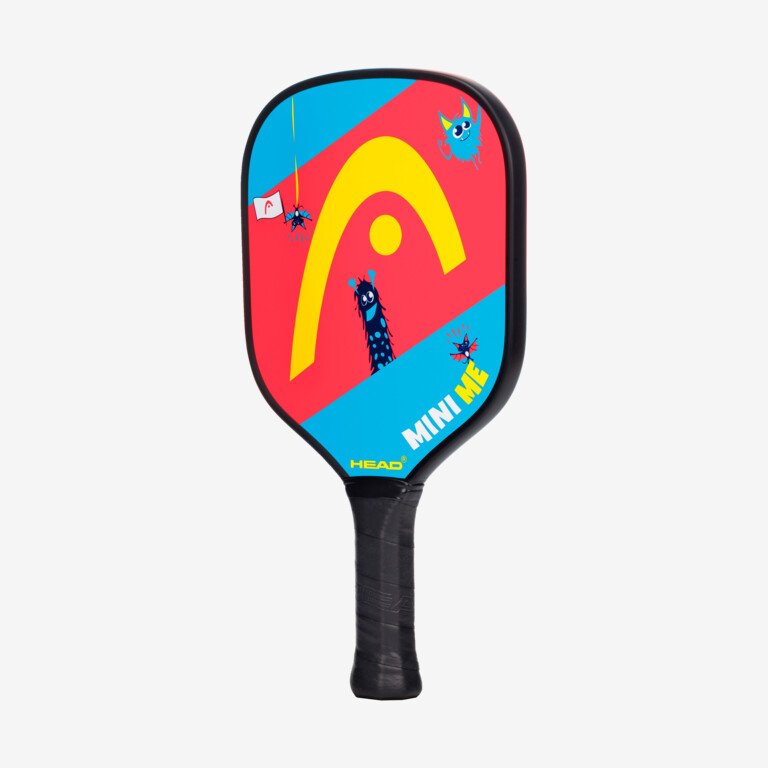
150 g and 13 inches long with a 3 3/4-inch grip size — HEAD positions it for toddlers up to 5.
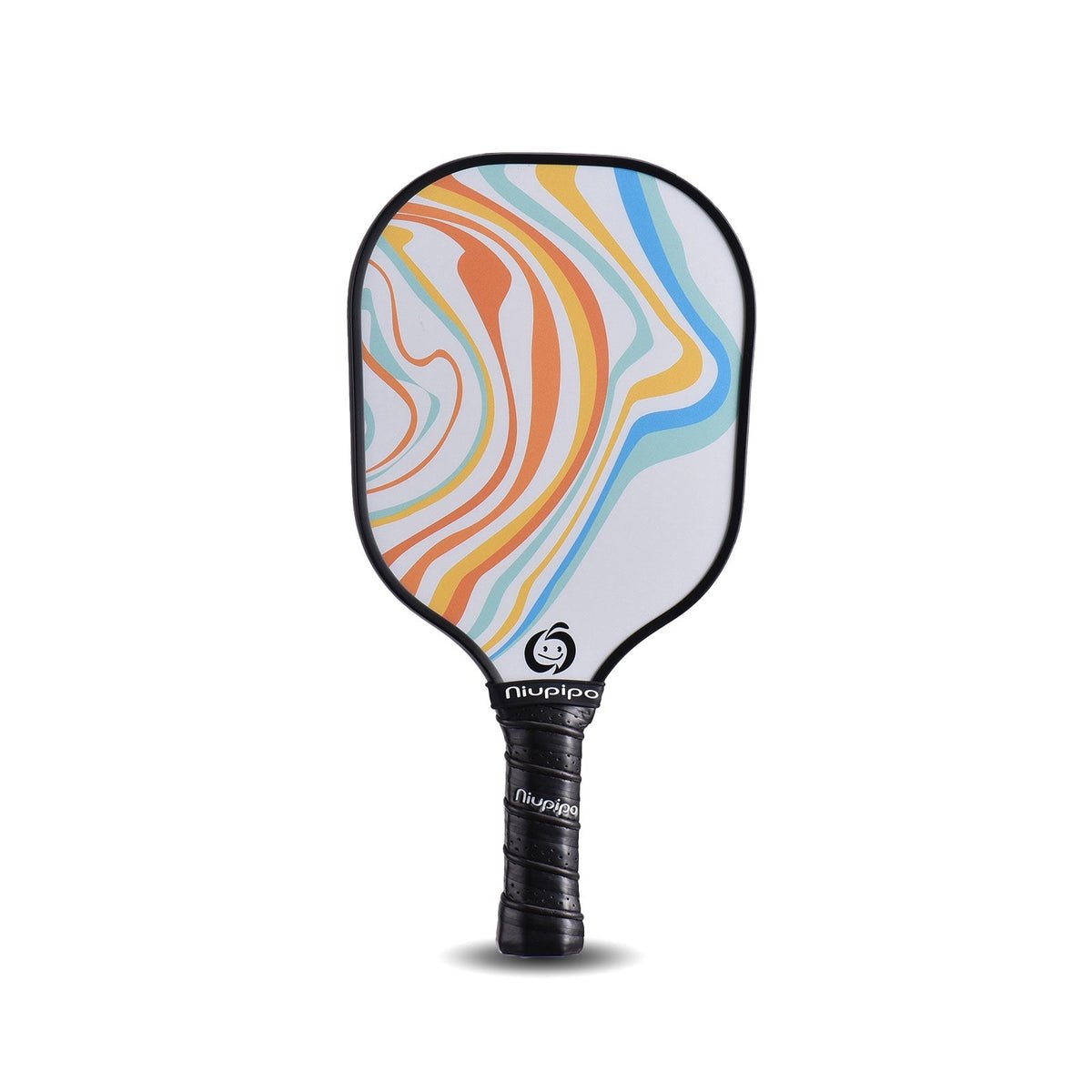
6.35 oz with a 4.1-inch grip circumference; Niupipo positions the junior model for under-12s.
6.2–6.8 oz, shortened to 14.5 inches, with a 3.875-inch grip circumference on Onix’s own listing.
6.8 oz and a 3.875-inch grip — Baddle states its grip is sized for the hands of 6–12 year olds.
15.7 x 7.8 inches at 7.2–7.6 oz, with a shorter 4.75-inch handle for smaller hands, per Franklin.
15.75 inches and 7.9 oz with a 4-inch grip — the full-size end of the junior ladder.
A standard paddle, not a junior model — published at 6.9–7.5 oz, for the junior who has outgrown junior sizes.
In This Guide
Why Junior Paddles Exist: Size, Not Marketing
Pickleball looks like the most child-friendly racket sport ever invented — a small court, a slow plastic ball, an underhand serve — right up to the moment a child picks up the equipment. A standard paddle is built around an adult: roughly 15.5 to 16 inches of length, a weight that usually starts around 7.5 oz, and a grip circumference around 4 1/4 inches. In a seven-year-old’s hand that paddle is not a smaller version of the game. It is a lever the child has to wrestle: the swing starts late because the paddle is long, the wrist does the work because the grip does not close, and rallies end early because the weight wins. Junior paddles exist to remove those three problems, and only those three. Everything in this guide is judged against them.
That is also the boundary of this page. Our pillar guide to the best pickleball paddles owns the all-player buying decision — every style, weight and budget across the whole market — and our guide to the best pickleball paddles for beginners owns the adult beginner lane. The lightweight, smaller-grip decision for adult women is owned by its own dedicated guide on this site. This page owns one narrower decision inside all of that: junior sizing. Six of the seven cards below are junior-specific paddles, published by their makers as junior models with junior dimensions. The seventh is deliberately different — a light standard paddle, labelled as a standard paddle throughout, included only because every junior ladder needs a visible top rung: the point where a child has outgrown junior sizes altogether.
One honesty rule runs through everything below, because children’s equipment invites invented precision: age guidance appears only where the maker publishes it, and it is attributed to that maker. HEAD positions the MiniMe for toddlers up to 5. Baddle designs its Junior for ages 6–12. Niupipo positions its Junior for under-12s, and JOOLA’s published retailer copy describes the Megalodon Junior for ages 4–14. Onix and Franklin publish no age guidance for their junior paddles at all — for those cards this guide sizes by weight, grip and length, and says so, rather than dressing a guess up as a recommendation. If your child is completely new to the sport, pair this guide with our walkthrough of how to play pickleball — the rules and the serve take ten minutes to learn, and the right paddle makes those ten minutes considerably more fun.
The Three Numbers: Weight, Length, Grip
Weight is the junior number that matters most, and the ladder in this guide runs from 150 g (5.3 oz) at the bottom to 7.9 oz at the top — against standard paddles that usually start around 7.5 oz and run upward from there. Read the ladder as the makers built it: the youngest players sit at 5.3 to 6.8 oz, where the paddle can be swung with the arm rather than the whole body; developing juniors sit in the same band on slightly longer frames; and the largest junior models reach 7.2 to 7.9 oz, where a junior line meets standard sizes. A paddle a child has to heave teaches a heave. A paddle light enough to swing teaches pickleball.
Length is the second number. A standard paddle is roughly 15.5 to 16 inches long. The MiniMe cuts that to 13 inches, the Onix Z Junior and Baddle Junior to 14.5 inches, and only the top of the junior ladder — Franklin’s Forte Youth at 15.7 inches and JOOLA’s Megalodon Junior at 15.75 inches — reaches standard length, on junior weights and junior grips. Width follows the same pattern where makers publish it: 6.9 inches on the MiniMe, 7.4 to 7.625 inches on the mid-ladder juniors, and 7.8 to 7.9 inches at the top. Shorter and narrower is not a compromise for a small player; it is the correct geometry, because reach a child cannot control is not reach at all.
Grip is the third number, and the least standardised — which is why every card below states it exactly as its maker states it, including the makers who state it differently. HEAD publishes a grip size of 3 3/4 inches for the MiniMe. Onix, Niupipo, Baddle and JOOLA publish grip circumferences between 3.875 and 4.1 inches for their juniors. Franklin, unusually, publishes no grip circumference for the Forte Youth at all — only a shorter 4.75-inch handle length — and the card says so instead of estimating one. The practical test at any size is physical: the child holds the paddle and the fingers should wrap with a small gap left to the palm. For the full method of measuring a hand and matching it to a paddle, our dedicated guide on how to choose the right pickleball paddle size owns that depth — this page applies its conclusions to junior models only.
The 7 Best Pickleball Paddles for Kids, Compared
The order is the ladder: shortest and lightest first, climbing by size to the largest junior paddle, and finishing with the standard-paddle step-up. Every specification is the maker’s published figure, stated in the maker’s own terms; every age statement is attributed to the maker that publishes it.
HEAD MiniMe
The true starter paddle: 150 g, 13 inches long, and a grip sized for the smallest hands in this guide.
Every other paddle in this guide is a scaled-down standard paddle. The MiniMe is designed from the toddler outward, and HEAD’s own description is the shortest summary of why it exists: HEAD calls it the ideal tool to introduce little ones to pickleball, crafted for toddlers up to 5 years old, lightweight and easy for tiny hands to hold. The dimensions carry that brief further than any other card here. At 150 g — 5.3 oz — it is the lightest paddle in the guide by a full ounce. At 13 inches long and 6.9 inches wide it is the shortest and narrowest. And its grip size, published by HEAD at 3 3/4 inches, is the smallest grip figure on the page.
The specification is stated on the card exactly as HEAD states it, including the materials line: PP + GF, HEAD’s own shorthand on its product listing, over an 11mm thickness. That is the honest way to read this paddle — not as a performance model with features to rank, but as an introduction tool with a play brief: backyard games, first rallies against a wall or over a lowered net, and a child learning that the paddle belongs in one hand and can be swung without help. A toddler will not keep score, will not dink, and will not care about core construction. What matters is that the paddle is light enough to lift, short enough to control, and grippy enough to stay in the hand — and on the published numbers, the MiniMe is the only paddle in this guide built to exactly that scale.
Know its ceiling before you buy it, because the ceiling is the point: a keen five- or six-year-old will outgrow 13 inches quickly, and that is the MiniMe doing its job. Buy it as the first rung, expect to climb, and move up to the 14.5-inch rung below when the MiniMe starts to look like a toy in the child’s hand rather than a paddle.
What we like
- Lightest paddle here at 150 g / 5.3 oz, and the shortest at 13 inches
- Smallest published grip in the guide: 3 3/4 inches
- The clearest maker age position here — HEAD: toddlers up to 5
- Sized for first rallies and backyard play, not adapted from an adult model
Worth knowing
- A determined five-year-old will outgrow it — that is its job
- HEAD publishes grip size, not grip circumference, for this model
As an Amazon Associate we earn from qualifying purchases.
Niupipo Junior (MX-23)
6.35 oz with a 4.1-inch grip — the lightest conventional junior paddle here, in a forgiving widebody brief.
Niupipo’s junior model is the lightest full junior paddle in this guide once the toddler-scale MiniMe is set aside: a published weight of 6.35 oz, with a grip circumference of 4.1 inches on a 4.25-inch grip length. Niupipo positions the model plainly — a junior and kids specific paddle, suitable for junior and kids under 12 years old, in the description carried on its junior listing — and the rest of the brief follows that positioning. The construction is the classic junior recipe stated in Niupipo’s own terms: a fibreglass surface over a polypropylene honeycomb core, which the listing describes as a combination for power from the face and control from the core, in a forgiving widebody shape.
Two honesty notes belong on this card, and both are stated rather than smoothed over. First, Niupipo’s junior listing does not publish a total paddle length or width for this model, so none is carded — the verified junior story here is the weight and the grip, which are the two numbers that decide whether a paddle fits a child anyway. Second, Niupipo is best known for family paddle sets, and its junior paddle also appears inside parent-and-child set configurations; if you are buying the single junior paddle, check the listing is for the junior model (MX-23) and not an adult paddle from the same range, because the adult models publish standard grips and standard weights that defeat the entire purpose of this page.
Within the ladder, this is the card for the child who has outgrown the MiniMe’s 13 inches — or who is starting at seven, eight or nine with no paddle at all — and needs the lightest possible next step. At 6.35 oz there is very little paddle to fight, and the widebody brief keeps off-centre contact forgiving while technique is still forming.
What we like
- 6.35 oz — lighter than every other conventional junior here
- Maker-stated age position: Niupipo positions it for under-12s
- Widebody brief is forgiving while contact is still developing
- Fibreglass face and polypropylene honeycomb core, stated as the maker states them
Worth knowing
- Niupipo’s listing publishes no total length or width — judge it by weight and grip
- Check you are buying the junior model, not an adult paddle from a family set listing
As an Amazon Associate we earn from qualifying purchases.
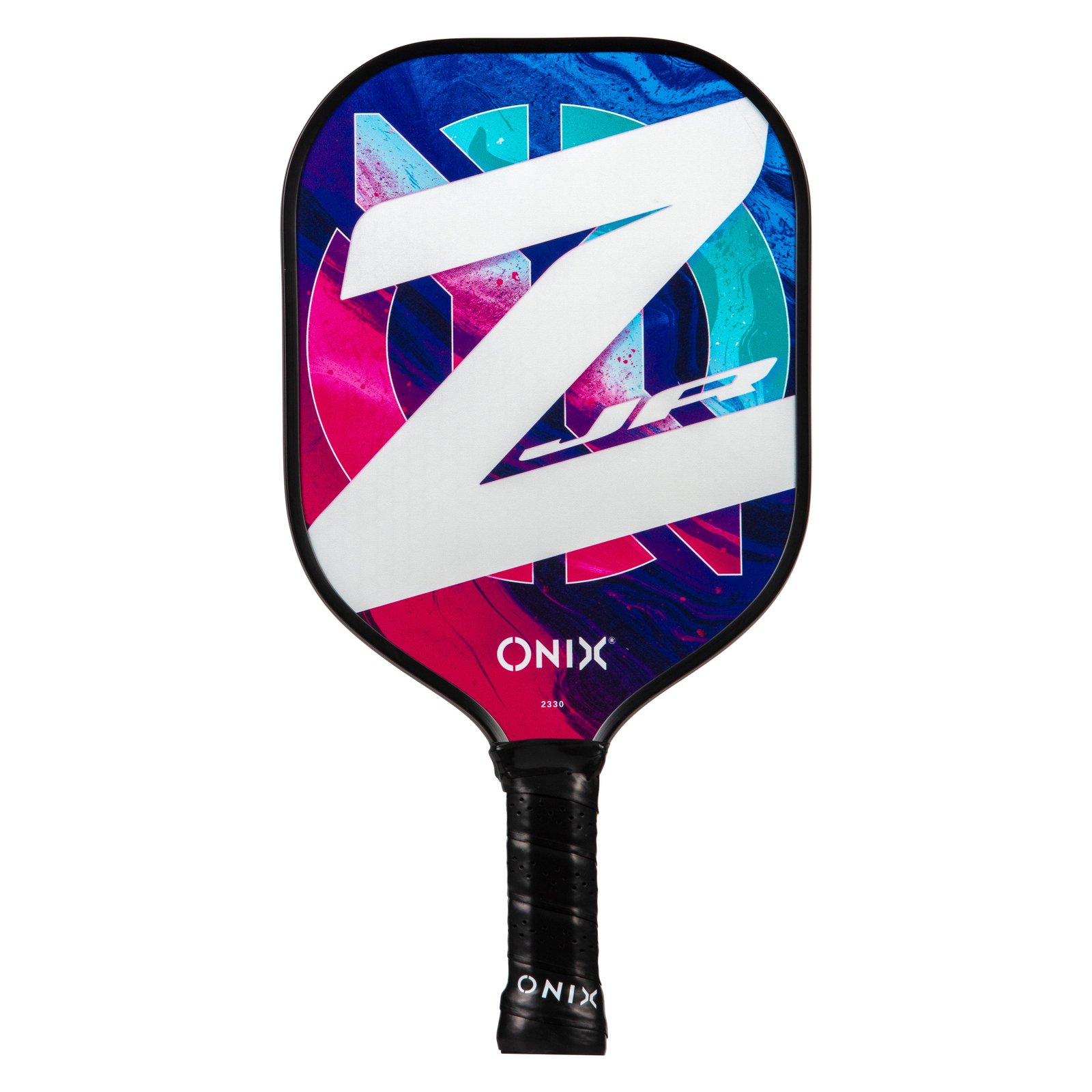
Onix Z Junior
A proper junior scale from a major paddle maker: 14.5 inches, 6.2–6.8 oz, and one of the smallest grips here.
Onix builds the Z Junior as a junior member of its established Z series, and its own product page is the most complete junior specification in this guide — every number on this card comes directly from Onix’s listing. The scale is the story: a paddle length of 14.5 inches, a full inch or more shorter than a standard paddle; a face width of 7.625 inches; a handle length of 4.5 inches; and a weight range of 6.2–6.8 oz that makes it, at the bottom of the range, the lightest conventional junior here alongside the Niupipo. The grip circumference on Onix’s main listing is 3.875 inches — and Onix also lists a variant of the same model at 4 inches, so check which grip the listing in front of you is selling before you order.
The construction is stated as Onix states it: a composite face, which Onix describes as offering medium-weight characteristics for added power and touch, over a polypropylene honeycomb core at 12mm, in a standard shape with a tennis-shaped handle — Onix’s term for a handle that mimics a tennis racket’s shape, aimed at players transitioning between the sports — and an edge guard. Onix positions the model for junior players entering the sport, citing its balanced performance, light weight and reduced size, and that is as far as Onix goes: Onix publishes no age guidance for the Z Junior, so this guide sizes it by its numbers — a 14.5-inch, sub-7-ounce paddle suits a junior who needs a genuinely reduced frame, not a first-day toddler, for whom the MiniMe’s 13 inches is the right rung.
One specification deserves a plain warning, because Onix itself prints it: Onix lists the Z Junior as not meeting USAPA requirements. For school, club, family and recreational play that changes nothing. For a junior entering sanctioned tournament play, it matters — check the event’s equipment rules, and look at the approved junior models above and below this card instead.
What we like
- Complete junior scale: 14.5 inches long and 6.2–6.8 oz
- 3.875-inch grip circumference published on Onix’s own listing
- The fullest maker specification of any card in this guide
- Composite face and 12mm polypropylene core — a real paddle build, scaled
Worth knowing
- Onix lists it as not meeting USAPA requirements — check tournament rules before sanctioned play
- Onix publishes no age guidance; a 4-inch grip variant also exists, so check the listing
As an Amazon Associate we earn from qualifying purchases.
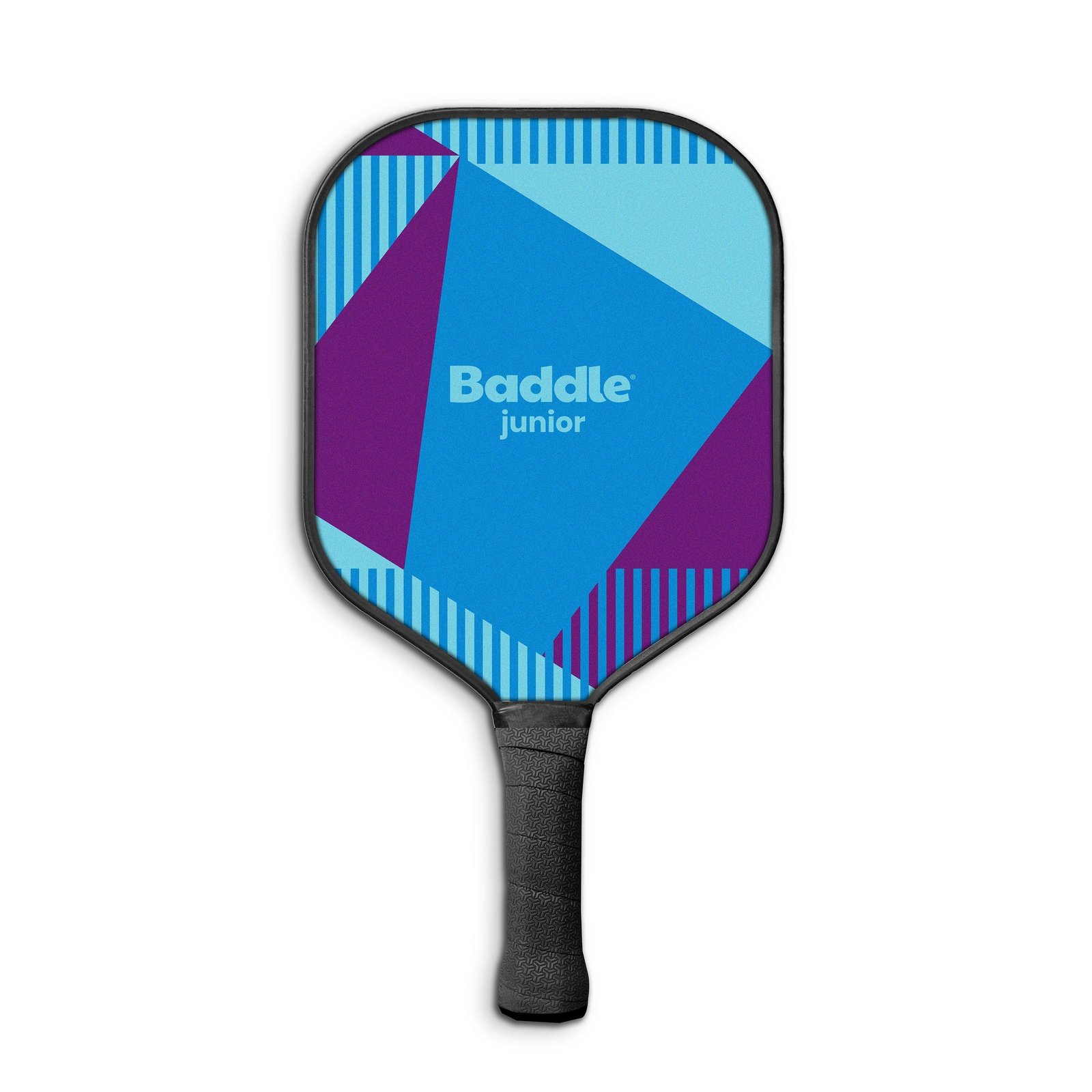
Baddle Junior
Designed for ages 6–12, in Baddle’s own words — with the grip sized, Baddle says, for exactly those hands.
Baddle is the specialist on this page — a brand built around junior pickleball — and its Junior paddle is the most explicitly age-designed card in the guide. Baddle’s own product copy states the brief without hedging: the paddle is specifically designed for kids’ play, its grip is sized for the hands of 6–12 year olds, and the model is designed for ages 6–12. Where other makers leave parents to infer an age from a weight, Baddle publishes the age band itself, and this guide reports it as exactly that — Baddle’s published position for its own paddle.
The dimensions sit in the heart of the junior ladder: 14.5 inches long and 7.4 inches wide — the narrowest face among the 14.5-inch juniors here — at 6.8 oz, with a grip circumference of 3.875 inches, level with the Onix as the smallest published junior circumference in the guide. The build is a fiberglass surface, which Baddle describes as keeping the paddle light and manoeuvrable, over a polymer honeycomb core, at a slim 0.41-inch thickness, and Baddle points to a large-proportioned sweet spot intended to help kids learn the game. The range of colourful designs is not a trivial detail at this age either: a paddle a child recognises as theirs, in a design they chose, is a paddle that gets carried to the court without negotiation.
One gap to note honestly: Baddle’s listing does not publish a grip length for the Junior, so none is carded — the sizing story rests on the circumference and the maker’s stated age design, both of which are published and clear. For a parent shopping for a six- to twelve-year-old and wanting the decision made by the maker’s own age brief rather than by inference, this is the most direct card in the guide.
What we like
- Maker-stated age design: Baddle designs it for ages 6–12
- 3.875-inch grip circumference — joint smallest published junior grip here
- Narrow 7.4-inch face at 14.5 inches keeps the swing manageable
- A junior specialist’s paddle, in designs kids actually choose
Worth knowing
- Baddle publishes no grip length for this model
- At 6.8 oz it is a touch heavier than the Niupipo and the lightest Onix examples
As an Amazon Associate we earn from qualifying purchases.
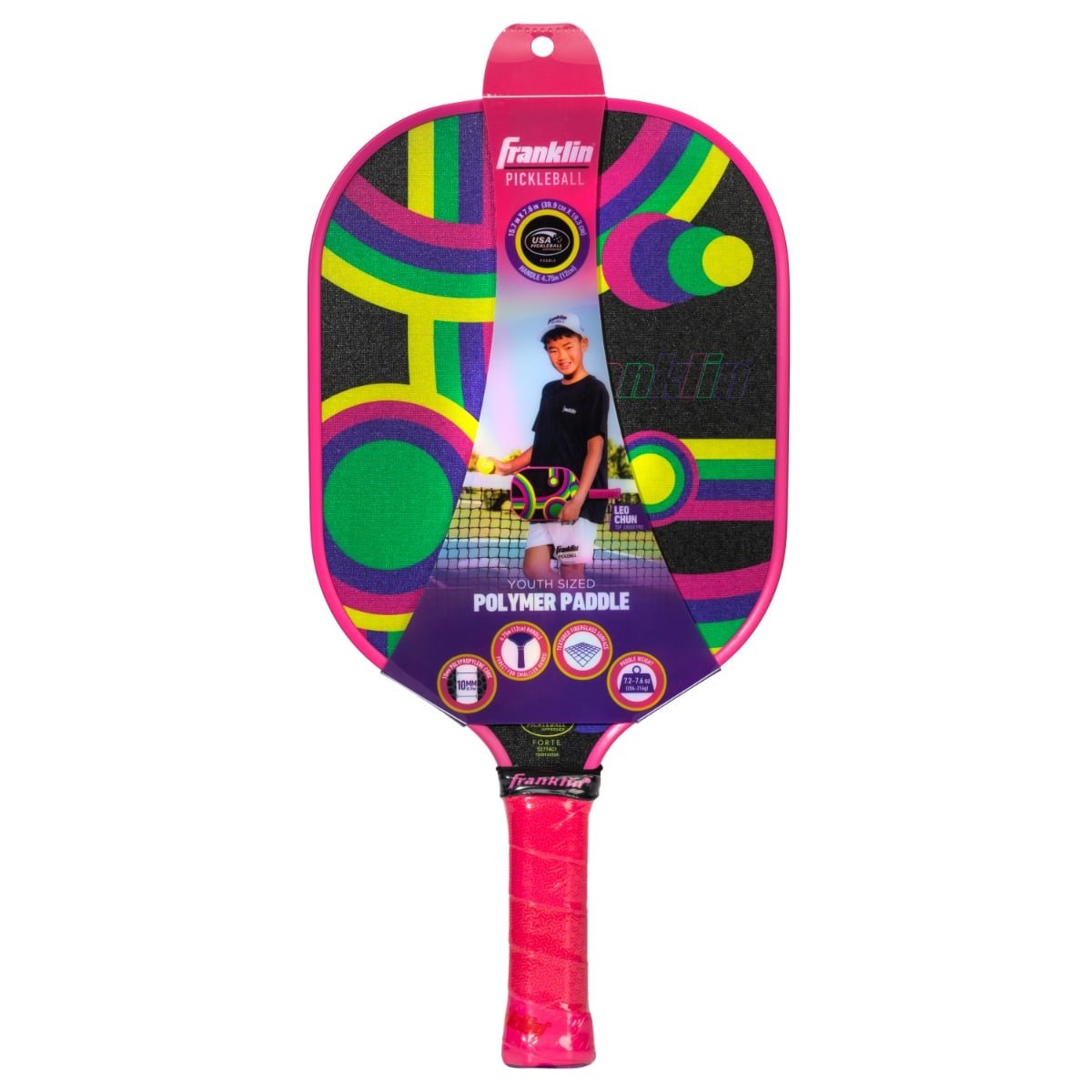
Franklin Sports Forte Youth
Franklin’s junior series at near-standard size: 15.7 x 7.8 inches, a shorter handle, and a 7.2–7.6 oz weight.
Franklin is the name most American families meet first in pickleball — its X-40 is the ball on courts everywhere — and its Forte youth paddle is the junior model in Franklin’s own range, verified here directly on Franklin’s product page. Franklin describes the design brief in its own terms: a junior paddle created with young players in mind, with a shorter 4.75-inch handle for smaller hands to grip comfortably, and a lightweight 7.2–7.6 oz frame that Franklin says is easier for kids to control. The face reaches near-standard dimensions — 15.7 x 7.8 inches — which is precisely this card’s role on the ladder: it is the junior paddle for the older junior whose hands and swing have outgrown 14.5-inch frames but who is not yet at a standard paddle’s weight and grip.
The construction is Franklin’s established recipe stated as Franklin states it: a 10mm polypropylene core, which Franklin describes as providing an ample sweet spot, under a textured fiberglass surface that Franklin positions for spin, with a non-slip comfort grip. Franklin also states the Forte junior paddles are USA Pickleball approved for competitive play — the opposite position from the Onix card above, and a genuine deciding factor for a junior heading toward sanctioned events.
Two absences are flagged rather than filled in. Franklin publishes no grip circumference for this model — only the shorter handle length — and no age guidance. So judge this card by what is published: if the deciding factor is a measurably smaller grip circumference, the Onix, Baddle, Niupipo and JOOLA cards state theirs and this one does not. If the deciding factor is a near-full-size junior frame from a maker whose approval status is stated outright, this is the card.
What we like
- Near-standard 15.7-inch length on a junior weight of 7.2–7.6 oz
- Shorter 4.75-inch handle, per Franklin, for smaller hands
- USA Pickleball approved for competitive play, per Franklin
- Textured fiberglass face over a 10mm polypropylene core
Worth knowing
- Franklin publishes no grip circumference — the grip story is handle length only
- Franklin publishes no age guidance for this model
As an Amazon Associate we earn from qualifying purchases.
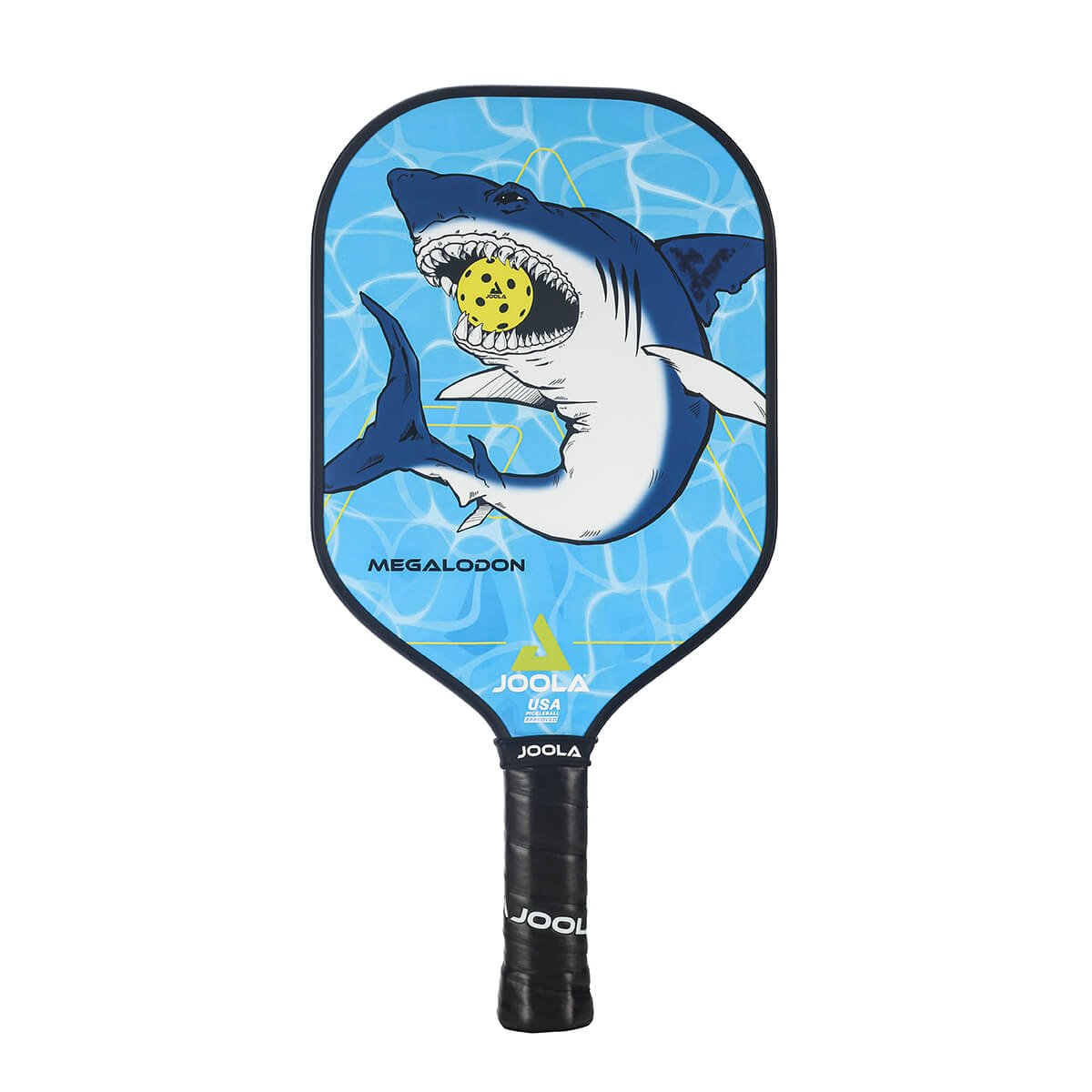
JOOLA Megalodon Junior
The full-size end of the junior ladder: 15.75 inches and a 4-inch grip, in JOOLA’s junior line.
JOOLA’s Megalodon Junior is the junior paddle a child graduates within the junior category to reach. Its published dimensions are the largest here: 15.75 inches long and 7.9 inches wide — standard-paddle territory — with a grip circumference of 4 inches on a 4.75-inch grip length, and an average weight of 7.9 oz. JOOLA’s technology list for the model, as reproduced on its retailer listings, describes a Response Honeycomb polymer core at 12mm, a multi-layer process combining multiple layers of carbon, edge-shield protection, and a Feel-Tec Pure grip, and JOOLA’s specification table lists the paddle as USAPA approved. The shark design is the junior line’s signature, and for an older junior who wants a paddle that looks like the game rather than like a toy, that presentation is part of the brief.
The age question needs the honest treatment this guide gives every card. JOOLA’s published retailer copy describes this youth paddle for ages 4–14. That is JOOLA’s stated position, and it is reported here as JOOLA’s — but read it alongside the numbers on this card: at 7.9 oz and 15.75 inches, the Megalodon Junior is heavier and longer than every other junior in this guide, and a small four-year-old and a fourteen-year-old are not the same player. The sensible reading of JOOLA’s own range is that the age span describes the junior line’s audience, while this specific model — the largest in it — fits the older, stronger end of that span. Size by the weight and length, as this guide recommends throughout, and the Megalodon is the right final junior paddle for a player approaching standard sizes.
That is also its comparison point: against the Franklin Forte Youth one card up, the JOOLA is longer, wider and heavier, with a published grip circumference the Franklin lacks. Against the step-up card below, it remains a junior paddle with a 4-inch grip — the last stop before a standard 4 1/4-inch grip becomes the only option.
What we like
- Standard-size dimensions — 15.75 x 7.9 inches — in a junior model
- Published 4-inch grip circumference on a 4.75-inch grip
- Response Honeycomb core and multi-layer carbon process, as JOOLA states them
- USAPA approved in JOOLA’s specification table
Worth knowing
- Heaviest junior here at 7.9 oz — size by the numbers, not by JOOLA’s broad 4–14 age span alone
- Too much paddle for a young beginner; this is the top of the junior ladder, not the bottom
As an Amazon Associate we earn from qualifying purchases.
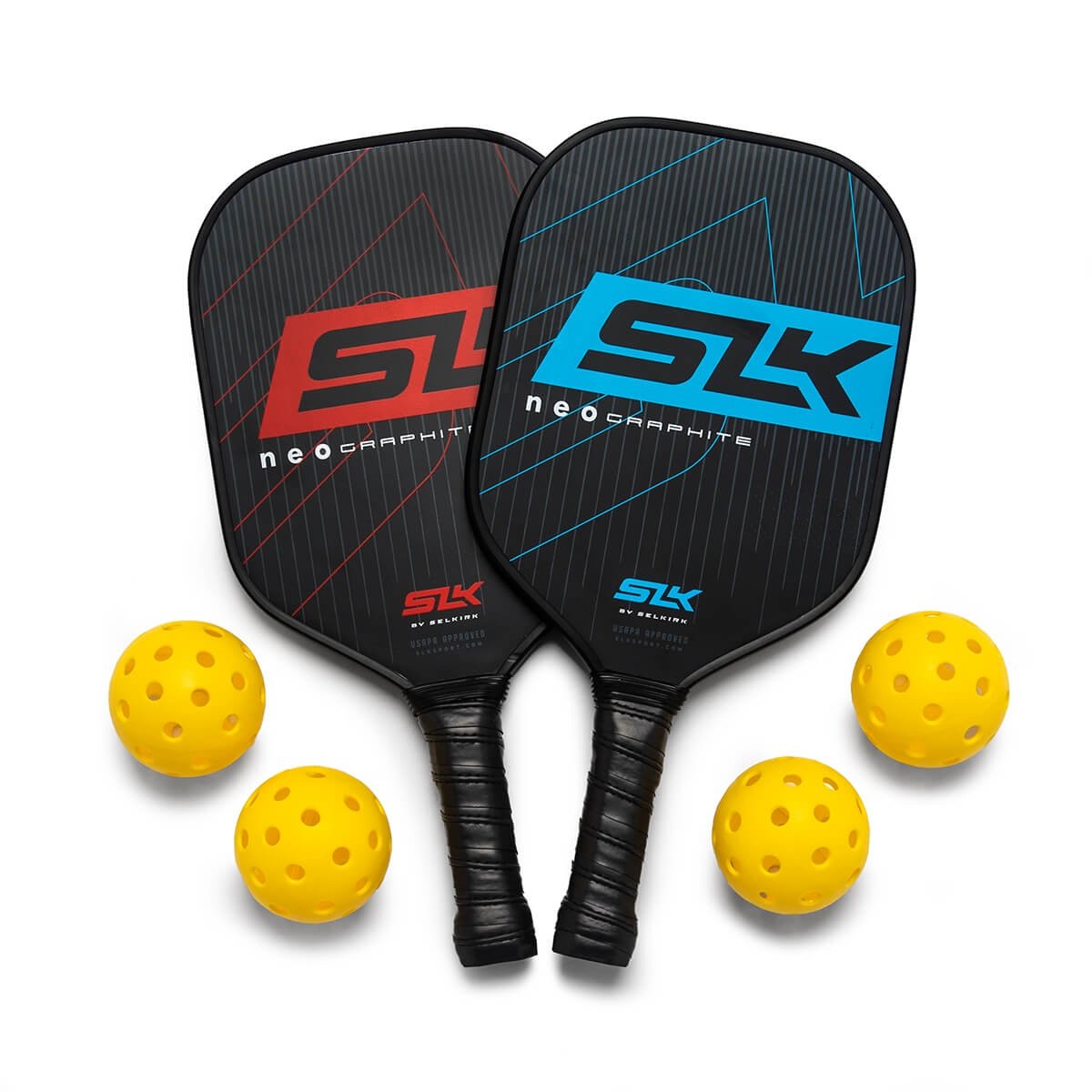
Selkirk SLK Neo Graphite (Step-Up)
A standard paddle — labelled as one — at the lightest standard weight range Selkirk publishes: 6.9–7.5 oz.
Every ladder needs a top rung that is not a junior product at all. The SLK Neo is a standard recreational paddle from Selkirk’s SLK line — standard length, standard width, and a standard 4 1/4-inch grip circumference — and it is carded here for one published reason: its weight range of 6.9–7.5 oz is lighter than most junior paddles’ bigger siblings and lighter than the standard paddles around it, which makes it the natural first standard paddle for an older junior whose hands have outgrown a 4-inch grip and whose game has outgrown a shortened frame. This card is a step-up option with the maker’s specs stated, nothing more: the all-player ranking lives in our pillar guide and the adult beginner ranking lives in the beginner guide, and neither is repeated here.
Selkirk’s own product copy positions the Neo line as its recreational beginner paddle — Selkirk describes the Neo paddles as the perfect paddle for beginner players and a reliable entry point — with a graphite face and a polymer PowerCore, in Selkirk’s stated terms, and an SLK Ultra-Comfort grip. For the transitioning junior, the practical changes to expect are all on the spec card: the grip grows from a junior 3.875–4.1 inches to the standard 4 1/4 inches, the handle lengthens to 5.25 inches, and the face reaches a full standard width. What does not change is the weight — and that continuity is the entire argument for this bridge. A junior stepping up in size should not simultaneously have to step up in weight.
Buy the Neo when the junior paddles feel small — the grip closing too tightly even with an overgrip, the shortened length costing reach the player now has the strength to use — not merely when they feel familiar. From this rung, the next step is the standard game itself, which the pillar and beginner guides linked in the verdict own.
What we like
- 6.9–7.5 oz — a standard paddle at a junior-friendly weight
- Full standard dimensions for the junior who has outgrown junior frames
- Graphite face and Selkirk’s beginner-line positioning, as Selkirk states them
- The designed bridge before the standard paddle guides take over
Worth knowing
- It is a standard paddle — standard 4 1/4-inch grip, no junior scaling
- Players not yet outgrowing junior sizes should stay on the junior rungs
As an Amazon Associate we earn from qualifying purchases.
Side-by-Side Comparison Table
| Model | Best For | Weight | Size (L x W) | Grip | Core / Face | Maker’s Age Guidance |
|---|---|---|---|---|---|---|
| HEAD MiniMe | Youngest players | 150 g / 5.3 oz | 13 x 6.9 in | 3 3/4 in grip size | 11mm / PP + GF | Toddlers up to 5 (HEAD) |
| Niupipo Junior MX-23 | Lightest junior | 6.35 oz | Not published | 4.1 in circumference | Polypropylene honeycomb / Fibreglass | Under 12 (Niupipo) |
| Onix Z Junior | Reduced-size junior | 6.2–6.8 oz | 14.5 x 7.625 in | 3.875 in circumference | Polypropylene 12mm / Composite | None published |
| Baddle Junior | Ages 6–12, per maker | 6.8 oz | 14.5 x 7.4 in | 3.875 in circumference | Polymer honeycomb / Fiberglass | Ages 6–12 (Baddle) |
| Franklin Forte Youth | Near-full-size junior | 7.2–7.6 oz | 15.7 x 7.8 in | Not published; 4.75 in handle | Polypropylene 10mm / Textured fiberglass | None published |
| JOOLA Megalodon Junior | Largest junior | 7.9 oz avg | 15.75 x 7.9 in | 4 in circumference | Response Honeycomb 12mm / Multi-layer carbon process | Ages 4–14 (JOOLA retailer copy) |
| Selkirk SLK Neo Graphite (standard) | Step-up to standard | 6.9–7.5 oz | 15.67 x 7.875 in | 4 1/4 in circumference (standard) | Polymer PowerCore / Graphite | None — standard beginner paddle |
The last column is the one most kids’ paddle guides invent. Here it is copied from the makers: four publish an age position (HEAD’s up-to-5 brief for the MiniMe, Niupipo’s under-12 position, Baddle’s 6–12 design, and JOOLA’s broad 4–14 span for the Megalodon Junior), and the rest publish none — so their rows are sized by weight, grip and length, which is the honest way to choose them. Note also the two grip gaps the table makes visible: Franklin publishes no grip circumference at all, and the step-up to a standard paddle is, in grip terms, a jump from around 4 inches to 4 1/4 inches — small on paper, obvious in a child’s hand.
Buying Guide: Sizing by the Maker’s Numbers
1. Start at the right rung of the ladder
The ladder in this guide is the buying guide. The youngest players start at 150 g and 13 inches (HEAD MiniMe, which HEAD positions for toddlers up to 5). The lightest conventional juniors sit at 6.2–6.8 oz on reduced or unpublished-length frames (Niupipo Junior, Onix Z Junior), with Baddle’s Junior — designed by Baddle for ages 6–12 — at 6.8 oz on the same 14.5-inch rung. Older juniors who need near-standard size take the 7.2–7.9 oz pair (Franklin Forte Youth, JOOLA Megalodon Junior). And the junior who has physically outgrown junior grips and lengths graduates to the lightest standard paddle (Selkirk SLK Neo at 6.9–7.5 oz) and then the standard range. Skipping rungs is the classic mistake: a paddle bought to grow into teaches a season of compensating swings first.
2. Check the grip in the hand, not just on the chart
Junior grip figures are barely standardised — one maker publishes a grip size, four publish circumferences, one publishes neither — so the final test is physical: the child holds the paddle in a forehand grip and a small gap should remain between the fingertips and the palm. If the fingertips dig in, the grip is too small; if the fingers cannot wrap, it is too large, and an overgrip only ever makes a grip bigger, never smaller. That asymmetry is why starting on the smaller published grip is the safe direction at every rung. For the full hand-measuring method behind this test, use our guide on how to choose the right pickleball paddle size — it owns the sizing depth this page deliberately does not repeat.
3. Soft, light constructions are features, not compromises
Parents comparing spec sheets sometimes read fibreglass faces and polypropylene cores as the cheap option next to carbon adult paddles. In junior paddles they are the correct option, and the makers’ own junior lines prove it: every junior card in this guide uses a fibreglass, composite or multi-layer junior construction over a polymer or polypropylene honeycomb core, because those builds return the ball at junior swing speeds and keep the published weights in the 5.3 to 7.9 oz band a child can actually swing. Judge a junior paddle by whether its weight, length and grip fit the child — not by whether its materials list resembles an adult performance paddle’s.
4. Check approval status if your junior will compete
Approval is a published specification too, and this guide’s cards differ on it in ways that matter for organised play. Franklin states the Forte Youth is USA Pickleball approved for competitive play, and JOOLA’s specification table lists the Megalodon Junior as USAPA approved. Onix, by contrast, lists the Z Junior as not meeting USAPA requirements. None of that affects school, club, family or recreational play in the slightest — but if your junior is entering sanctioned events, read the approval line on the card before you read anything else, and confirm the event’s own equipment list.
5. Budget for the whole starter kit
A junior paddle is one line of the first-season budget. Court shoes matter in pickleball as in any racket sport — our guide to the best pickleball shoes covers the range a parent will wear for family sessions, and junior court shoes follow the same fit principles. Balls are the other consumable: indoor and outdoor balls differ in hole pattern and pace, so read our roundup of the best pickleball balls before stocking up for practice. An overgrip or two completes the kit — useful for tack, and for building a junior grip up by a fraction as hands grow between paddle purchases.
Frequently Asked Questions
What age should a child start with a junior pickleball paddle?
Start with the maker’s own guidance where it exists. HEAD positions the MiniMe — 150 g, 13 inches long, 3 3/4-inch grip size — for toddlers up to 5 years old. Baddle designs its Junior for ages 6–12, Niupipo positions its Junior for under-12s, and JOOLA’s published retailer copy describes the Megalodon Junior for ages 4–14. Whatever the starting age, the test is the equipment: if the child can hold the paddle one-handed with a small gap between fingertips and palm, and swing it without the whole body turning, the size is right.
What weight pickleball paddle should a child use?
Follow the ladder the makers publish. Youngest players: 150 g / 5.3 oz (HEAD MiniMe). Developing juniors: 6.2–6.8 oz (Onix Z Junior, Niupipo Junior at 6.35 oz, Baddle Junior at 6.8 oz). Older juniors on near-standard frames: 7.2–7.9 oz (Franklin Forte Youth, JOOLA Megalodon Junior). Standard paddles usually start around 7.5 oz and run heavier, which is why the lightest standard paddle — Selkirk’s SLK Neo, published at 6.9–7.5 oz — works as the step-up once junior sizes are outgrown.
What grip size should a child look for in a pickleball paddle?
Look for a published junior figure, stated as the maker states it: a 3 3/4-inch grip size (HEAD MiniMe), or grip circumferences of 3.875 inches (Onix Z Junior, Baddle Junior), 4 inches (JOOLA Megalodon Junior) or 4.1 inches (Niupipo Junior) — all below the standard adult circumference of about 4 1/4 inches. Franklin publishes no grip circumference for the Forte Youth, only a shorter 4.75-inch handle. A grip can be built up with an overgrip but never made smaller, so erring small is the safe direction.
When does a child outgrow a junior pickleball paddle?
When the junior equipment is outgrown, not when it merely feels familiar: the grip is too small even with an overgrip, the shortened length is costing reach the player now has the strength to use, and junior weights feel insubstantial against older juniors’ pace. The step from the junior ladder is a light standard paddle — the Selkirk SLK Neo at 6.9–7.5 oz keeps the weight familiar while the grip and length become standard — and beyond it, the standard paddle guides own the ladder.
Can a child just use a light adult pickleball paddle?
Only at the top of the ladder. Standard paddles are roughly 15.5 to 16 inches long with grips around 4 1/4 inches, and most weigh 7.5 oz or more — too much length and grip for a young child, whatever the weight. The exception proves the rule: the lightest standard paddles, such as Selkirk’s SLK Neo at a published 6.9–7.5 oz, work as a step-up for an older junior who has outgrown junior grips and lengths. Below that transition point, a junior paddle’s shorter length, lighter weight and smaller grip fit the player better than any standard frame.
Do all makers publish age guidance for their junior paddles?
No. HEAD (toddlers up to 5 for the MiniMe), Baddle (ages 6–12), Niupipo (under 12) and JOOLA (ages 4–14 in its retailer copy for the Megalodon Junior) publish an age position. Onix and Franklin publish no age guidance for the Z Junior or the Forte Youth on their own listings — for those paddles this guide sizes by the published weight, grip and length instead of inventing an age range, and we recommend you do the same.
How is this guide different from your main best pickleball paddles guide?
Our main best pickleball paddles guide owns the all-player decision — every style, weight and grip across the market — and our beginners’ guide owns the adult beginner lane. This page owns one narrower decision inside them: junior sizing. Every paddle here is either a junior model published with junior dimensions by its maker, or, in the single step-up card, a light standard paddle framed only as the bridge for older juniors who have outgrown junior sizes. Adult rankings are in the pillar and beginner guides, not repeated here.
The Verdict
Buy the rung your child is standing on. The HEAD MiniMe is the first paddle — the lightest and shortest here, and the one its maker positions for toddlers up to 5. The Niupipo Junior and Onix Z Junior share the lightest junior rung at around 6.2–6.8 oz, Niupipo’s with a maker-stated under-12 position, Onix’s with the fullest published junior specification and the honest caveat that Onix lists it as not meeting USAPA requirements. Baddle’s Junior is the age-designed pick, built by its maker for ages 6–12. Older juniors step up in size to the Franklin Forte Youth and the JOOLA Megalodon Junior, the largest junior here. And when junior grips and lengths are genuinely outgrown, the Selkirk SLK Neo bridges into standard paddles at a junior-friendly weight, before the all-player pillar and the adult beginner guide take over. Size honestly, by the makers’ numbers — a child swinging the right paddle learns the game; a child swinging the wrong one learns to cope with it.
Affiliate disclosure: AliShuttler is reader-supported. When you buy through links on this page we may earn an Amazon commission at no extra cost to you. Specifications and age positions are taken from manufacturers’ published product information and were verified at the time of writing; manufacturers revise models, configurations and cosmetics between generations, so confirm the exact specification, weight and grip option on the product page before ordering.