Your second proper pair, chosen the honest way: seven intermediate badminton shoes from Yonex, Victor, Mizuno, Babolat and Li-Ning, compared only on the specs the makers themselves publish — carbon plates, dial and strap lockdown, dual-density midsoles, named grip rubbers, and stated weights read with the size basis each brand gives.
There is a moment in every improving player’s second season when the first pair of badminton shoes stops being enough. The rallies are longer now, the footwork is faster and more deliberate, and the lunges reach further — and the shoe starts telling on itself. The soft upper that felt forgiving as a beginner now stretches over the edge of the sole on a hard side lunge. The plain midsole that felt fine for social games feels flat and dead by the third game of a club night. The tread that gripped in September has polished smooth by spring. That moment is what this guide is for: the step-up purchase, where the makers stop selling you a generic court shoe and start selling you hardware.
This guide owns one decision only — the intermediate step-up. Our main best badminton shoes comparison covers the all-player flagship selection, and every model below is different from the ones ranked there. If you are still buying a first pair, our best badminton shoes for beginners guide owns that decision, and women players have their own segment in our best badminton shoes for women comparison. Read those for their jobs; read this one when your game has outgrown your first shoes and you want to know exactly what the extra money buys at this tier — in the makers’ own published terms, not in marketing adjectives.
One promise before the picks: we only print what the maker publishes. Where a brand declines to publish a weight — and Victor does, on all three of its shoes here — the card says “not published” instead of borrowing a number from a retailer’s spreadsheet. Where a figure exists, we print it with its basis: Yonex’s Infinity 2 weight is stated at a specific size, Babolat states the Shadow Team 2’s weight at a UK size, and Mizuno’s Wave Fang ST figure arrives with no basis at all, which the card flags. Learning to read those differences is half of shopping at this tier, and the spec section below teaches it before you spend anything.
TL;DR — The Short Version
Buy the Yonex Power Cushion Infinity 2 if you want the complete step-up package: two independent Boa dials, a knit Inner Bootie, POWER CUSHION+ and a Power Graphite Sheet underfoot. Buy the Victor S82 III if your game is built on speed — HYPEREVA, a NEO DUPLEX wedge and a Carbon Power sheet in Victor’s Speed line. Buy the Victor A930 if lateral support is your limiting factor, for its LS-S forefoot hardware. Buy the Victor A830 NitroLite if your feet are wide — it is the only published wide fit here, on Victor’s U-Shape 3.5 last. Buy the Mizuno Wave Fang ST for its belt-strap ankle hold over the proven flat Fang sole. Buy the Babolat Shadow Team 2 for Michelin grip rubber and the lightest maker-stated weight in this guide. And buy the Li-Ning Saga II SE if you want a substantial, traditionally built all-rounder in classic gum rubber.
Quick Picks
In This Guide
- The step-up decision: what actually changes
- What the step-up spec sheet really tells you
- Yonex Power Cushion Infinity 2
- Victor S82 III
- Victor A930
- Victor A830 NitroLite
- Mizuno Wave Fang ST
- Babolat Shadow Team 2
- Li-Ning Saga II SE
- Side-by-side comparison
- Intermediate buying guide: five checks before you pay
- Frequently asked questions
- The verdict
The Step-Up Decision: What Actually Changes
Start with what does not change. A step-up shoe is still an indoor badminton shoe: a soft rubber outsole that bites wooden hall floors and court mats rather than skating on them, a low platform that keeps your foot close to the floor, and a life lived inside a kit bag — grit and concrete chew the rubber your grip depends on, so these shoes never go outdoors. If you are still learning the movement patterns themselves, our how to play badminton guide walks through the lunges, pivots and split-steps every shoe below is built around. The step-up tier does not reinvent any of that. It reinforces it.
What changes is the hardware aimed at the four things an improving player actually does harder. First, you change direction more violently, so the step-up tier adds torsional hardware — carbon fibre or graphite sheets under the midfoot (Victor’s Carbon Power, Yonex’s Power Graphite Sheet) that the makers build in to keep the midsole stable when the shoe twists. Second, you land more often and from higher, so cushioning stops being a single slab of foam: this tier layers two densities (Victor’s NEO DUPLEX wedge), pairs a named foam with a named top layer, or adds a plus-grade compound (Yonex’s POWER CUSHION+) over the standard one. Third, you lunge further, so lockdown becomes a system rather than a lace pattern — a knit bootie, a dual-dial closure, a belt strap over the ankle, or a stability structure on the outside of the forefoot. Fourth, you slide and drag more, so uppers grow guards, coatings and leather exactly where the wear happens.
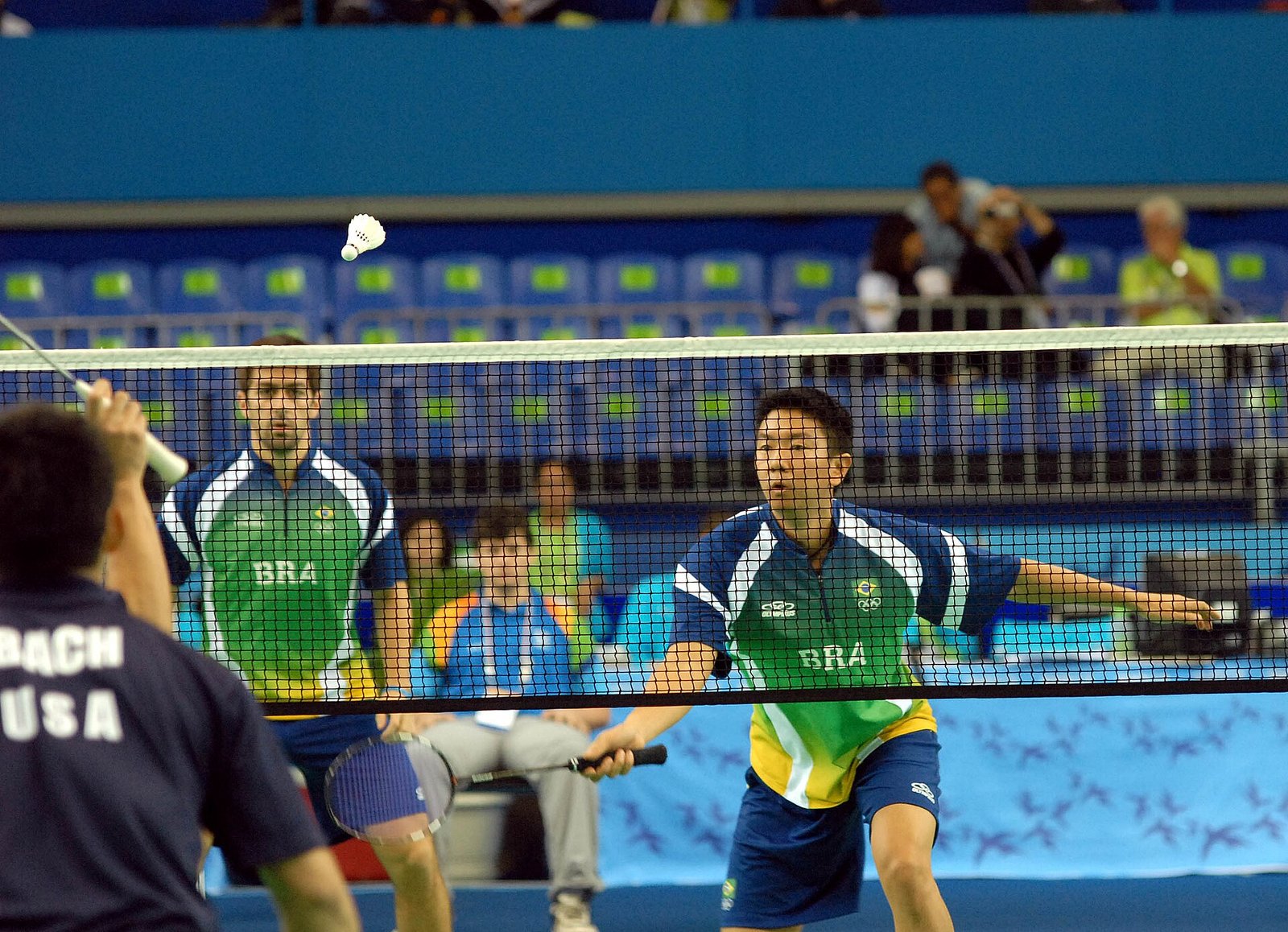
The honest way to shop this tier is to name your limiting factor before you name a shoe. If your current pair slides when you plant hard, your problem is the outsole compound, and the answer sits in the grip rubbers below — Victor’s VSR, Babolat’s Michelin, Mizuno’s XG. If your foot rolls or slides inside the shoe, your problem is lockdown, and the answer is a closure or fit system — the Infinity 2’s dials and bootie, or the Fang ST’s belt. If your forefoot feels unsupported when you push off sideways, your problem is lateral hardware — the A930’s LS-S structure or a carbon sheet. And if every standard shoe has simply felt tight across the toes, your problem is the last itself, and the A830 NitroLite’s published wide shape is the only card here that answers it directly. Buy the upgrade that matches the limitation; the rest of the spec sheet is supporting cast.
Finally, a word on what the extra money is actually buying, since this guide prints no prices: at the step-up tier you are paying for named materials — carbon and graphite sheets, branded outsole rubber developed with a tyre maker, dual-density midsole moulds, dial closures — instead of the generic EVA-and-rubber recipe of an entry shoe. Those materials are why this tier exists as a separate decision from the first-pair one. They are also why the spec sheets get longer and stranger from here on, which is exactly what the next section is for.
What the Step-Up Spec Sheet Really Tells You
Outsole compounds get names. At entry level, “gum rubber” is the whole story. At this tier each maker names its rubber and its pattern: Victor’s VSR Rubber (Victor attributes a 21% improvement in slip resistance on dry PU floors to its upgraded VSR ANTISLIP compound — that is Victor’s own test figure, printed here as a maker claim, not a measurement of ours), Babolat’s Michelin rubber, developed with Michelin specifically for badminton, Mizuno’s XG Rubber, its extra-grade grip compound, and Li-Ning’s classic non-marking gum rubber on the Saga II SE. Pattern matters alongside compound: Victor’s V-BRAKE and Radiation layouts arrange the tread around the pivot and braking zones badminton footwork uses most. The qualification line never changes — the sole must be indoor rubber, non-marking, covering the whole footprint including the outer forefoot edge you plant in a lunge.
Cushioning becomes a stack, not a slab. Read the midsole line as a recipe. Yonex layers POWER CUSHION+ over POWER CUSHION. Victor’s NEO DUPLEX is a double-wedge structure — two densities overlapped so one layer absorbs and the other supports, with different foams named per model: HYPEREVA and ENERGYMAX V in the S82 III, Feather Resilient EVA with E-TPU and an ENERGYMAX3.0 top layer in the A930, and the nitrogen-foamed NitroLite midsole in the A830 NitroLite. Mizuno pairs MIZUNO ENERZY CORE with PoWnCe and its Wave structure. Babolat keeps it simpler — an EVA midsole in a rocker shape — and says so. A longer recipe is not automatically a better shoe; it is a more specific one, tuned for a job the card will name.
Weight, and its basis — the tier’s biggest trap, again. Three of the seven shoes here publish a weight. Yonex’s Infinity 2 figure — approximately 290 grams — is stated at a 26.0 cm size, which makes it a real, comparable fact. Babolat states the Shadow Team 2 at 285 grams in a UK 9: also a real fact, on a different basis, so the two numbers sit close without being perfectly interchangeable. Mizuno’s footwear information lists the Wave Fang ST at 320 grams with no size stated on the same line — treat it as orientation, not precision. And Victor and Li-Ning publish no weights at all for the S82 III, A930, A830 NitroLite and Saga II SE (one retailer lists a 374 g average for the Li-Ning; that is the retailer’s figure, and the card labels it as such). A missing weight is not a heavy shoe. It is a maker that does not publish one, and at this tier that is common enough that your decision should rest on fit, compound and hardware first.
Fit becomes a code you can decode. Victor prints its last as a shape code on every listing: V-Shape 2.5 and U-Shape 2.5 are its standard fits, while U-Shape 3.5 is a genuinely wider last — a published width, not a sizing-up workaround. Yonex sells the Infinity 2 as a unisex run from 25.0 to 31.0 cm with the fit adjusted by its dials rather than by width options. Mizuno’s Fang ST is a unisex shoe whose fit feature is mechanical — a belt over the ankle. Babolat builds the Shadow Team 2 in separate men’s and women’s versions, which means two lasts, not two colourways. Players who need published wide fits or dial closures as a starting point — rather than as an upgrade — will find that conversation continued in our best badminton shoes for seniors guide, where wide lasts and a dial shoe headline the whole comparison.
The Picks: 7 Intermediate Badminton Shoes Compared
Yonex Power Cushion Infinity 2
The full step-up package: dual-dial fit, a knit bootie, POWER CUSHION+ and graphite underfoot — Yonex’s fit flagship, built for players whose footwork has outgrown laces-and-hope.
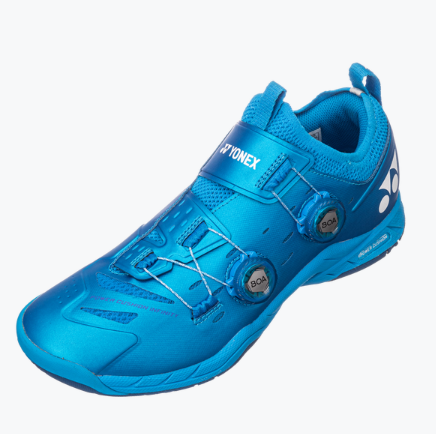
The Infinity 2 is the shoe Yonex builds around fit, and its spec table reads like a checklist of everything the step-up tier adds. The closure is the headline: two independent Boa dials, one tensioning the toe area and one the ankle, so the two zones that loosen at different rates during a match can be adjusted separately — a click at the change of ends instead of a full re-lace. Inside, a knit Inner Bootie replaces the conventional tongue, and Yonex’s Synchro-Fit Insole is shaped to close the gap between foot and shoe at the heel, which is where the foot slides forward from when you brake at the net. The upper is synthetic leather with Double Raschel Mesh sections and Yonex’s Durable Skin Light material, shaped with its Toe Assist contouring at the forefoot, midfoot and heel.
Underfoot, the midsole stacks POWER CUSHION+ — the plus grade of Yonex’s cushioning material — over standard POWER CUSHION, with the Power Graphite Sheet running along the sole and a 3D Power Graphite plate in the midsole that Yonex builds in for stability on landing; Hyper msLITE keeps the midsole material itself light. The rubber outsole carries Yonex’s Round Sole shaping for the smooth, rolling transitions between split-step, lunge and recovery. Yonex’s own spec table prints no weight; the approximately 290 g figure at 26.0 cm shown in the chips is Yonex’s specification as reproduced by its authorised retailers, and it makes the Infinity 2 one of the lighter shoes at this tier on a stated basis. If your step-up budget stretches to one flagship purchase, this is the most complete one in the guide.
Pros
- Two independent dials tension toe and ankle zones separately — mid-match adjustment in seconds
- Full Yonex material stack: POWER CUSHION+, graphite sheet and plate, Synchro-Fit Insole
- Inner Bootie plus insole shaping is the strongest anti-slide package here
- Broad unisex size run, 25.0–31.0 cm, suits most adult feet
Cons
- Yonex’s own table omits the weight — the 290 g figure comes via retailer listings of its spec
- The dial system is the most complex closure here; a broken lace is simpler to replace than a dial
- More leather than mesh in the upper — the pure speed shoes breathe freer
As an Amazon Associate we earn from qualifying purchases.
Victor S82 III
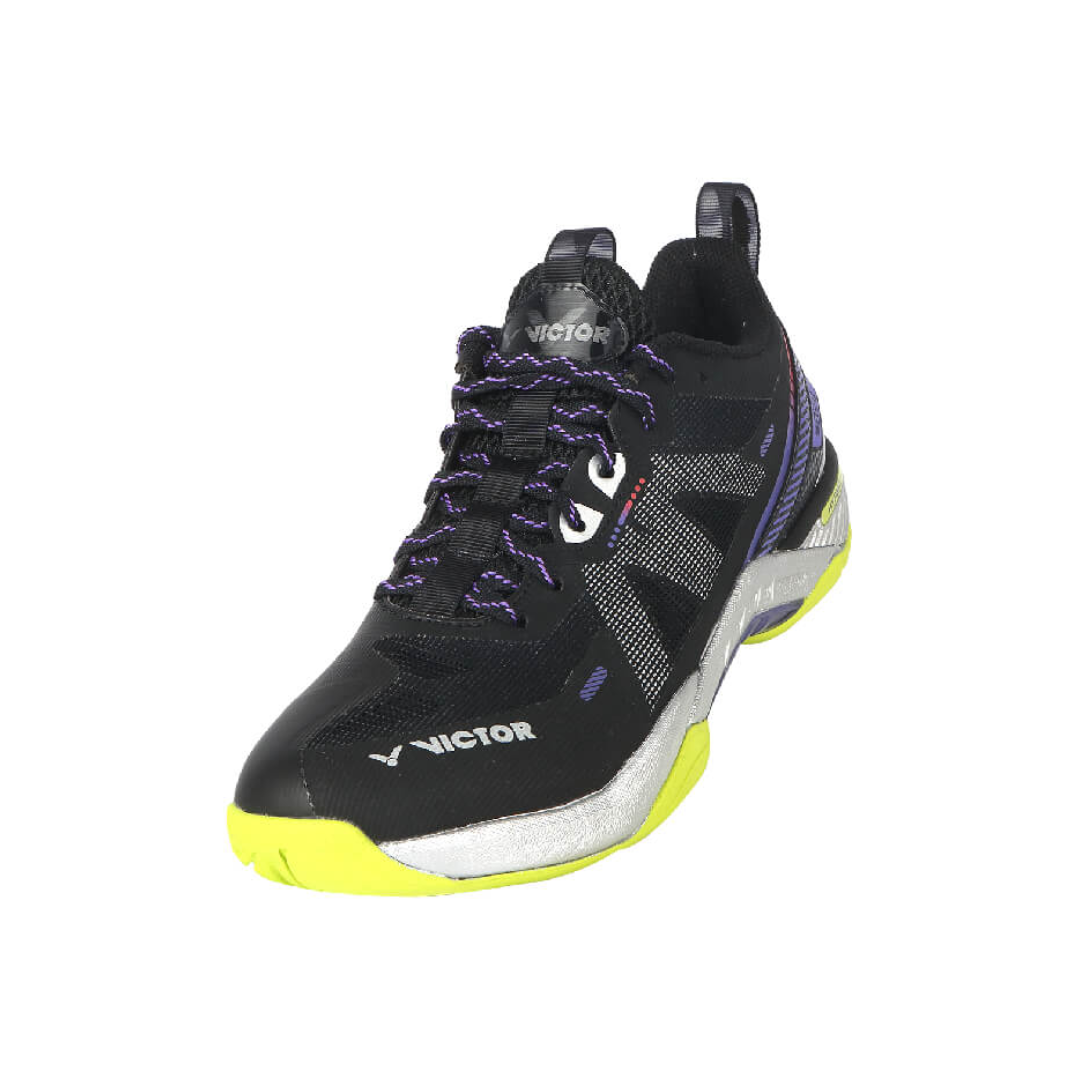
Victor’s Speed-line step-up: HYPEREVA and ENERGYMAX V over a NEO DUPLEX wedge, a Carbon Power sheet, and the grippiest version of Victor’s VSR rubber.
Victor sorts its shoes into Speed, All-Around and Support families, and the S82 III is the third generation of its Speed flagship line — the natural step-up for the player whose game is built on getting there first. The midsole is the fullest recipe Victor publishes: HYPEREVA, its resilience-and-cushioning foam, combined with ENERGYMAX V, which Victor positions for heel absorption and rebound when you stride and defend, arranged in the NEO DUPLEX double-wedge structure with a Light Resilient EVA layer. A Carbon Power sheet — a three-dimensional carbon fibre plate — runs through the midsole for torsional stability, so the shoe can be light in brief without being loose in construction. The upper is Double Mesh with PU leather and Victor’s V-Durable+ toe treatment; Victor’s wear testing rates that toe treatment at eight times the wear resistance of average PU leather, a maker claim printed here as Victor states it.
The outsole is where the speed brief meets the floor. The VSR Rubber carries Victor’s VSR ANTISLIP upgrade — Victor attributes a 21% improvement in slip resistance on dry PU floors to it, again a maker figure — and the V-BRAKE tread layout uses a squared, V-shaped pattern that keeps the landing area small for responsive movement while adding braking grip in vertical and lateral directions. A BREATHING mesh layer works on ventilation through the upper. Victor publishes no weight for the S82 III, and this card will not invent one: the honest summary is that every material choice in the listing is a lightening choice, and the fit is Victor’s standard V-Shape 2.5 — a speed fit, snug by design. Players with wide feet should skip to the A830 NitroLite below rather than sizing up in this shoe.
Pros
- The fullest Victor speed stack: HYPEREVA, ENERGYMAX V, NEO DUPLEX and a carbon sheet
- VSR ANTISLIP outsole is Victor’s highest-grip rubber, with a brake-oriented tread layout
- Reinforced toe treatment aimed at drag wear, with Victor’s wear-test figure behind it
- Double-mesh upper and a dedicated breathing layer for long club nights
Cons
- Victor publishes no weight for this model
- V-Shape 2.5 is a standard, snug speed fit — no wide option in this model
- The spec sheet’s percentage claims are Victor’s own test figures, not independent measurements
As an Amazon Associate we earn from qualifying purchases.
Victor A930
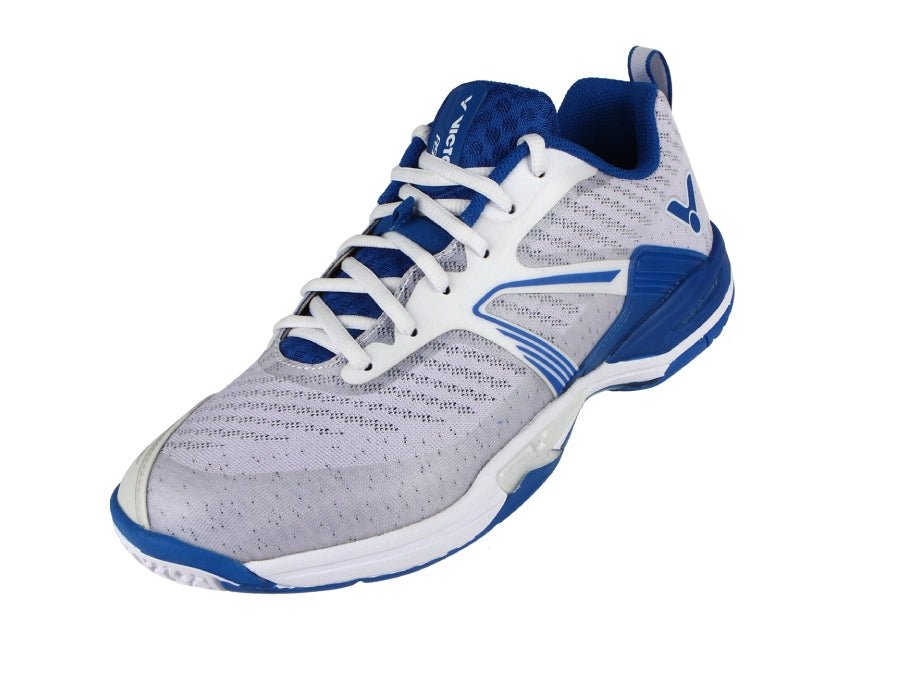
The support-hardware pick: an LS-S stability structure on the forefoot, a carbon sheet, and Victor’s toughest toe package — for players who push off sideways, hard.
Every shoe in this guide claims lateral support somewhere in its copy; the A930 is the one that shows you the part. Its LS-S structure is a panel of high-strength TPU built onto the outside of the forefoot — the exact edge your foot loads when you plant and push off sideways — and Victor describes it as enhancing lateral stability during the rapid changes of direction badminton is made of. It is the most literal piece of support hardware in this comparison, and it is why this card, rather than a plusher one, owns the lateral-support slot. Behind it sits the same Carbon Power three-dimensional carbon sheet as the S82 III for midsole torsional stability, and the NEO DUPLEX dual-density wedge, here built with an ENERGYMAX3.0 top layer over Light Resilient EVA.
The midsole recipe pairs Feather Resilient EVA with E-TPU — a pairing Victor uses for a lighter, springier base than plain EVA — and the upper combines JACQUARD EM engineered mesh with PU leather and Victor’s V-Tough toe material. In Victor’s wear-level testing, V-Tough is rated sixteen times more wear-resistant than average PU leather; that is Victor’s test figure, printed as a maker claim, but the placement is the point — the reinforced zone sits exactly where the toe-drag of a forehand lunge chews through lesser uppers. Sizing runs 220 to 310 mm on the standard U-Shape 2.5 last, the outsole is VSR Rubber with Victor’s anti-slip upgrade, and a breathing mesh layer handles ventilation. Victor publishes no weight for the A930 either; what the listing promises instead is structure, and on paper it is the most structured Victor here.
Pros
- LS-S forefoot hardware is dedicated lateral-support engineering, not a marketing line
- Carbon Power sheet plus a dual-density NEO DUPLEX wedge underfoot
- V-Tough toe is the toughest drag-zone package in this guide, per Victor’s own testing
- Broad 220–310 mm size run on a standard last
Cons
- Victor publishes no weight for this model
- The most structured Victor here — players who want a minimal, slipper-like feel should look at the S82 III
- U-Shape 2.5 is standard width only; the wide-fit answer is the A830 NitroLite
As an Amazon Associate we earn from qualifying purchases.
Victor A830 NitroLite
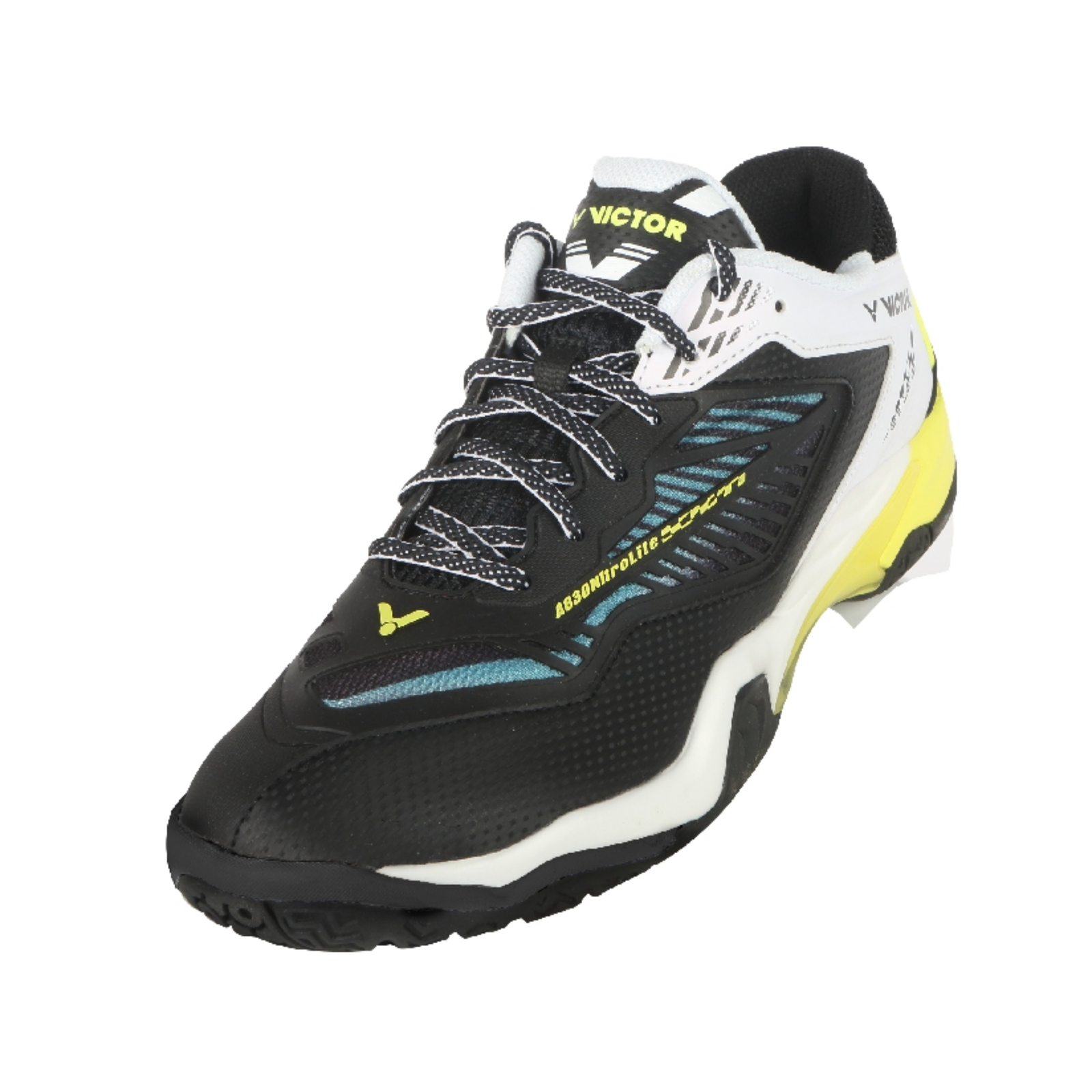
The published wide fit of the guide: Victor’s U-Shape 3.5 last, a nitrogen-foamed NitroLite midsole and the Radiation pivot tread — room, without giving up the hardware.
Wide feet are badly served at most tiers of badminton footwear: the standard advice is to size up, which buys toe room at the cost of a heel that no longer holds. The A830 NitroLite is the honest alternative — a shoe whose width is in the last itself. Victor’s shape code for it is U-SHAPE 3.5, its wider fit, against the 2.5 standard of the other two Victors in this guide. That single published fact makes this the card for any intermediate whose forefoot has spent two seasons pressed against a standard shoe’s upper, and Victor does not ask you to trade the hardware away for the room: the Carbon Power sheet is here, the V-Tough toe treatment is here, and the outsole is the same VSR Rubber with the anti-slip upgrade.
The model’s other headline is its midsole. NitroLite is Victor’s nitrogen-foamed midsole technology — N2 foaming, in Victor’s description, aimed at lightness with rebound and durability — layered here with HYPEREVA and ENERGYMAX 3.0 plus TPU and Solid EVA. The upper is Double Mesh with PU leather, the tread is Victor’s Radiation pattern, which arranges triangular shapes around a rounded centre point for grip through the lateral and vertical movements of a rally — the pattern is a pivot design for a game that turns constantly. The A830 NitroLite launched in 2024, making it the newest design in this comparison. Victor publishes no weight for it; given the width, compare it on fit and hardware rather than grams, and note that a wider last is roomier through the whole shoe — players with narrow heels may find the rear of the shoe loose even when the forefoot is right.
Pros
- U-Shape 3.5 is a genuinely wider published last — the only wide fit in this guide
- NitroLite nitrogen-foamed midsole is Victor’s newest cushioning technology
- No hardware tax for the width: carbon sheet, V-Tough toe and VSR Rubber all included
- Radiation tread is designed around badminton’s constant pivoting
Cons
- Victor publishes no weight for this model
- The roomier last runs through the whole shoe — narrow heels may feel loose at the back
- Wide lasts sell through sizes unevenly in some markets; check your size early
As an Amazon Associate we earn from qualifying purchases.
Mizuno Wave Fang ST
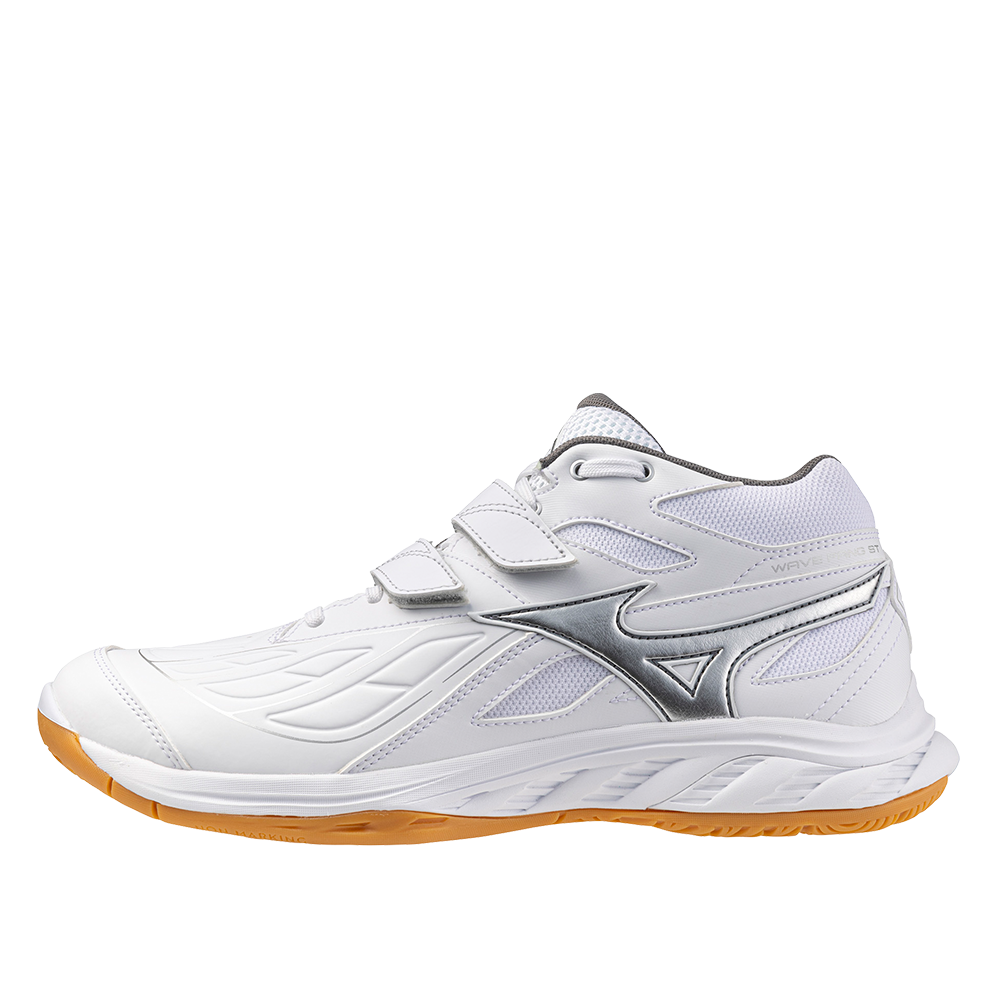
The lockdown specialist: a belt-strap upper that cinches the ankle, over the flat, stability-first sole of Mizuno’s Fang family — Mizuno builds it for mid- to top-level players.
Mizuno’s Fang family is its stability line — flat-soled shoes built for players who hit from a planted, balanced position — and the Wave Fang ST is the family’s fit experiment: the same sole as the Wave Fang 2, under an upper redesigned around a belt. The strap-style upper wraps and cinches at the ankle, and Mizuno describes the result plainly: a tight, supportive fit at the ankle and a more secure, fitted feel. It is a mechanically different answer to the lockdown problem from the Infinity 2’s dials — a strap you pull to your tension and forget — and on a player whose heel lifts in conventional uppers, it is the most direct piece of fit engineering in this guide after the Yonex. Mizuno positions the shoe for middle- to top-level players, which is precisely this guide’s reader.
The sole it shares with the Fang 2 is the flat Fang platform Mizuno builds for stability and quick turns, in its XG Rubber — the extra-grade compound Mizuno specifies for grip and durability during fast, intense movement. The cushioning stack is fully published: MIZUNO WAVE structure, MIZUNO ENERZY CORE, an ENERZY insole, PoWnCe (Mizuno’s lighter midsole material) and a U4ic X insole board, with MB-HOLD FIT shaping the fit through the shoe and Dynamotion Fit structuring the upper. Mizuno also publishes the sustainability side of the build — more than 90% recycled content in the upper’s synthetic leather. Mizuno’s footwear information lists the shoe at 320 grams without stating the size it was measured at; the card prints the figure with that gap flagged rather than tidied away. One unisex last, no separate wide version published — wide feet should treat the A830 NitroLite as their card and this one as a try-before-committing fit.
Pros
- Belt-strap ankle hold is a genuine point of difference — lockdown you set once per session
- Shares the proven flat Fang sole platform, in Mizuno’s XG Rubber
- The fullest Mizuno tech list published at this tier: WAVE, ENERZY CORE, PoWnCe, MB-HOLD FIT
- More than 90% recycled content in the upper’s synthetic leather
Cons
- The 320 g figure arrives with no stated size basis — orientation only
- The strap adds a step to putting the shoes on and taking them off
- One unisex last and no published wide version
As an Amazon Associate we earn from qualifying purchases.
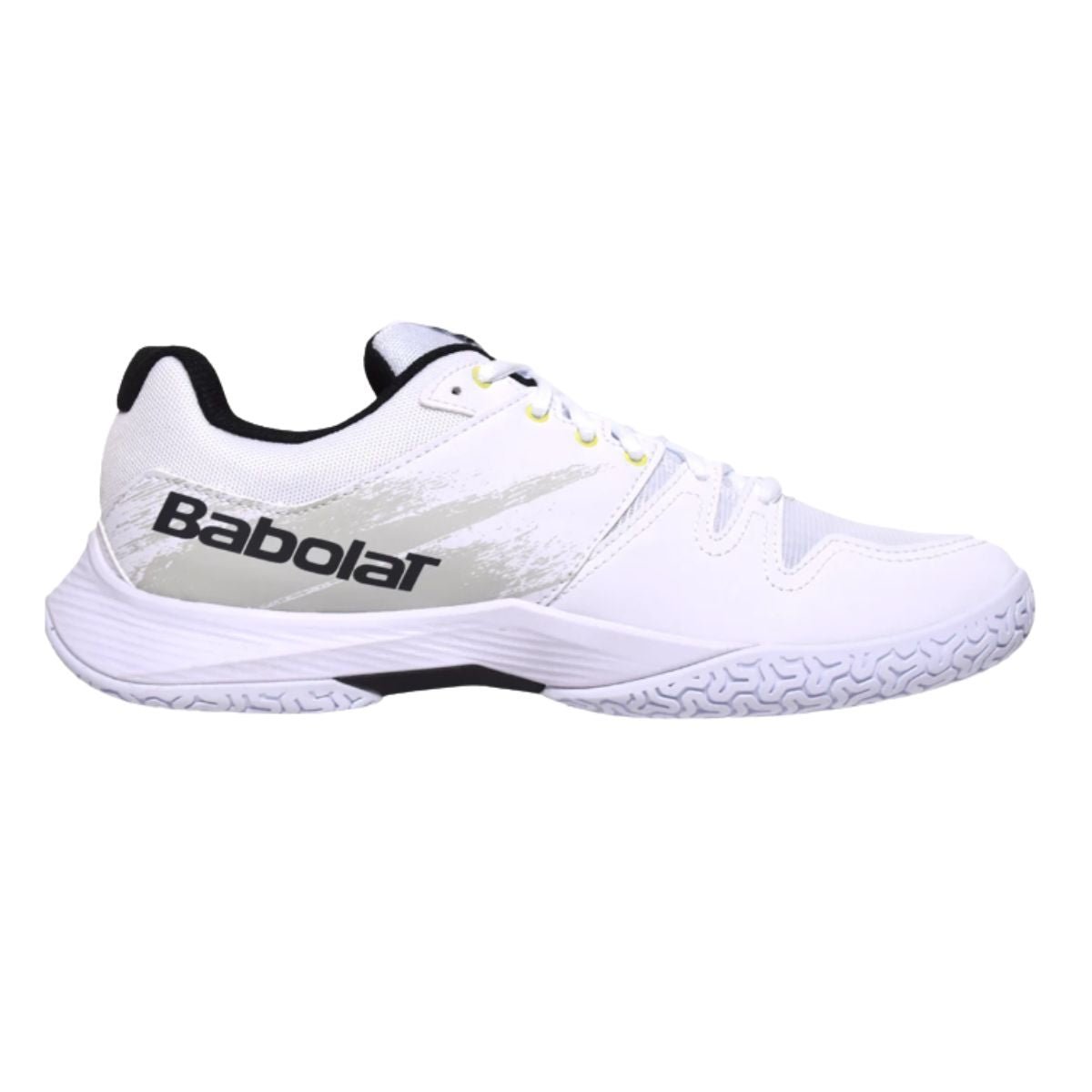
Babolat Shadow Team 2
The grip-and-lightness pick: Michelin rubber developed for badminton, a rocker-shaped EVA midsole, and the lightest maker-stated weight in this guide — 285 g at UK 9.
Babolat’s contribution to badminton footwear is a partnership: its outsoles are Michelin rubber, and in Babolat’s own description the collaboration has reworked both the compound and the stud pattern to balance grip, durability and lightness across indoor surfaces. On a hall floor that dusts over by the second hour of a club night, outsole compound is the spec that decides whether your plant holds — and a rubber developed for the sport by a tyre maker is the strongest single grip claim in this guide that comes with a name attached. The sole under it has been completely redesigned for this generation, with a rocker-style shape and an EVA midsole that Babolat describes as easing the transition from defence to attack.
The rest of the build is honest, mid-tier engineering with two standout details. The first is Babolat’s Active Sculpture — a three-dimensional construction the maker designs for fast, powerful movements and sudden changes of direction, which does the foot-holding work here in place of carbon or straps. The second is durability where it counts: a heavy-duty rubber guard covers the inner forefoot up to the toes, the exact drag zone of the lunge, and the synthetic upper is built ultra-light and breathable — Babolat states the result directly: 285 grams in a UK size 9, the lightest maker-stated weight in this guide, with its basis printed. The Shadow Team 2 comes in men’s and women’s versions on their own lasts. What it does not have is the step-up tier’s underfoot hardware — no carbon sheet, no dual-density wedge — which is the fair trade for its simplicity and its weight.
Pros
- Michelin rubber developed specifically for badminton — the named-compound grip pick
- 285 g at UK 9 is a maker-stated weight with its basis, and the lightest here
- Heavy-duty rubber guard covers the inner forefoot to the toes, where lunges drag
- Separate men’s and women’s versions, each on its own last
Cons
- A single EVA midsole is simpler than the dual-density and carbon builds above it
- No torsional plate or sheet — support comes from the Active Sculpture construction alone
- Babolat publishes fewer raw spec details than Yonex or Victor for this model
As an Amazon Associate we earn from qualifying purchases.
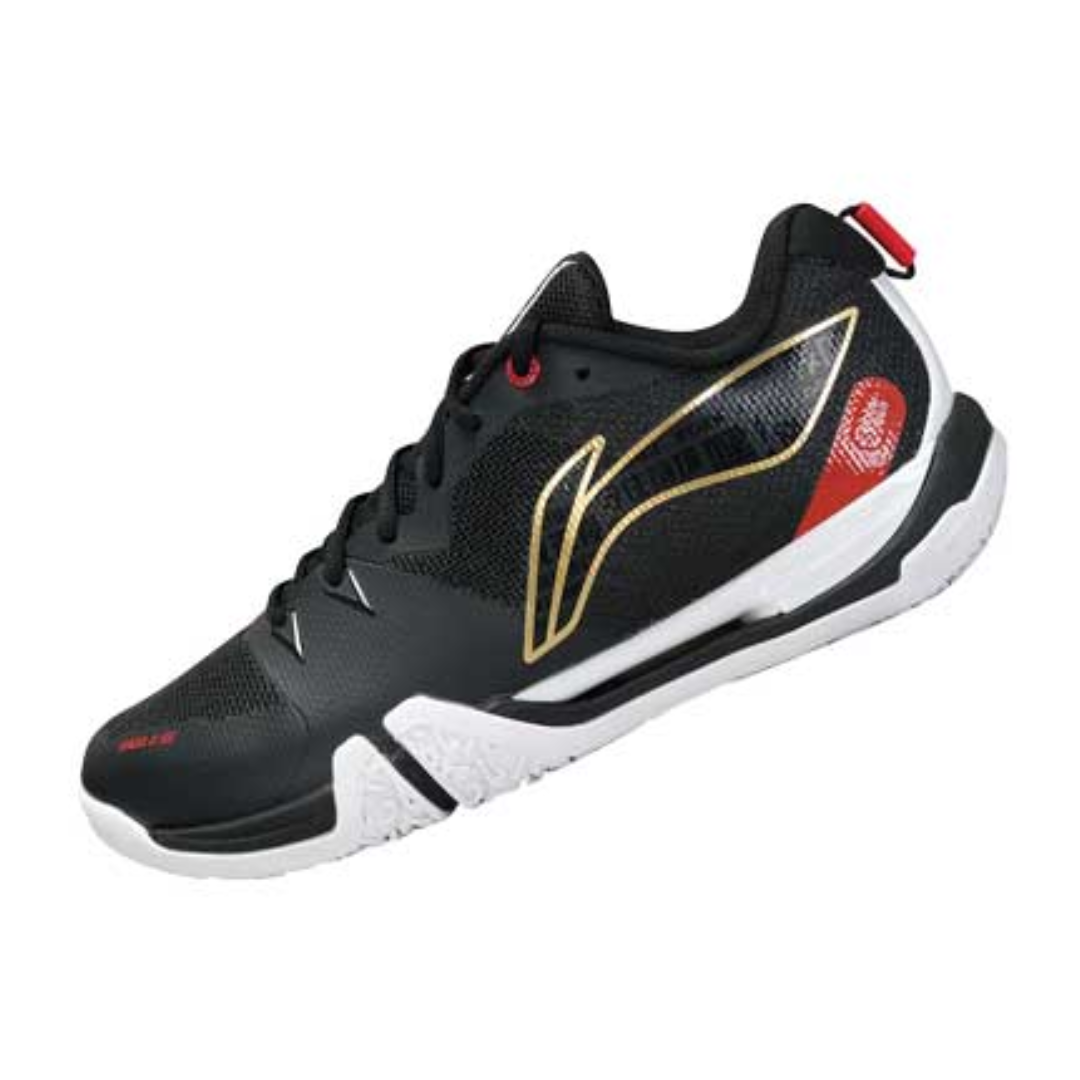
Li-Ning Saga II SE
The traditionalist’s step-up: Li-Ning’s international-grade unisex shoe in classic non-marking gum rubber, with a leather-and-TPU upper — and the guide’s most honest spec sheet.
Li-Ning occupies a strange and honourable position in this guide: it is the biggest badminton brand in the world by tournament presence, and the Saga II SE is the shoe its own channels position at the serious end of its range — an international-grade, unisex model — yet its published listing is the shortest here. What Li-Ning states is the construction, and the construction is sound traditional badminton engineering: an upper of synthetic leather, textile and TPU, which puts drag-resistant material where the lunge wears and breathable textile where it does not, over a non-marking gum rubber sole — the classic hall compound every shoe in this guide is ultimately compared against, in its original form.
What Li-Ning does not state matters to this guide’s method, so the card states it instead: no published weight, and no named cushioning system in the maker’s listings for this model. One major retailer lists an average weight of 374 grams per shoe for the Saga II SE — that figure is the retailer’s, not Li-Ning’s, and it is printed here labelled as such rather than promoted into a maker spec. Read fairly, the Saga II SE is the pick for the intermediate who distrusts spec-sheet theatre: a substantial, conventionally built shoe from the sport’s other superpower, whose case rests on its materials and its grade rather than on a foam with a trademark. If your buying decision needs a number for every line of the table, the six cards above serve you better; if it needs leather, gum rubber and a shoe built for heavy weekly court time, this is the honest one.
Pros
- Classic non-marking gum rubber — the reference hall compound, unmodified
- Synthetic leather in the upper where toe drag wears, textile where it does not
- Positioned by Li-Ning at the international grade of its range, in a unisex run
- Substantial traditional build suits heavy weekly court schedules
Cons
- Li-Ning publishes no weight for this model — the only figure available is a retailer’s average
- No named cushioning system appears in the maker’s listings
- Specification detail varies by market, so check the listing for your region carefully
As an Amazon Associate we earn from qualifying purchases.
Side-by-Side Comparison
Every line below is a maker-published specification or a maker-labelled gap. Weights are printed with the basis each maker states — compare them only with that basis in mind.
| Shoe | Best for | Cushioning (maker-named) | Outsole | Fit | Weight |
|---|---|---|---|---|---|
| Yonex Power Cushion Infinity 2 | Best overall step-up | POWER CUSHION+ / POWER CUSHION, Power Graphite Sheet | Rubber sole, Round Sole shaping | Unisex 25.0–31.0 cm, dual-dial Boa | Approx. 290 g at 26.0 cm |
| Victor S82 III | Speed | HYPEREVA + ENERGYMAX V, NEO DUPLEX wedge, Carbon Power sheet | VSR Rubber, V-BRAKE pattern | V-Shape 2.5 (standard) | Not published by Victor |
| Victor A930 | Lateral support | Feather Resilient EVA + E-TPU, NEO DUPLEX wedge, Carbon Power sheet | VSR Rubber | U-Shape 2.5 (standard), 220–310 mm | Not published by Victor |
| Victor A830 NitroLite | Wider feet | NitroLite (N2 foam) + HYPEREVA + ENERGYMAX 3.0, Carbon Power sheet | VSR Rubber, Radiation pattern | U-Shape 3.5 (wider fit) | Not published by Victor |
| Mizuno Wave Fang ST | Secure ankle fit | MIZUNO ENERZY CORE + PoWnCe, MIZUNO WAVE | XG Rubber, flat Fang sole | Unisex, belt-strap ankle design | 320 g (size basis not stated) |
| Babolat Shadow Team 2 | Michelin grip | EVA midsole, rocker shape | Michelin rubber, non-marking | Men’s and women’s versions | 285 g in UK 9 |
| Li-Ning Saga II SE | Cushioned all-rounder | Not named in Li-Ning listings | Non-marking gum rubber | Unisex | Not published by Li-Ning |
Intermediate Buying Guide: Five Checks Before You Pay
1. Name your limiting factor — then buy that upgrade
The step-up tier sells solutions, not shoes: grip compounds for sliding, sheets and structures for rolling and twisting, dials, booties and belts for internal slip, and one published wide last for width. Decide which of those four limits your current game before opening a single product page. A player whose plants slide gains nothing from a carbon sheet; a player whose foot rolls gains nothing from softer foam. The cards in this guide are organised by exactly these jobs — match the job first and the shortlist writes itself.
2. Read every weight with its basis — or ignore it
Three of these seven shoes publish a weight, on three different wordings: a stated size in centimetres, a stated UK size, and no basis at all. The four that publish none include three of the most technically complete shoes here. Treat a basis-stated figure as a fact, a basis-less figure as orientation, and a missing figure as neutral — then make the decision on fit, compound and hardware, which you can verify line by line in the listings.
3. Decode the fit before you order
Fit is the spec that decides returns. Learn the codes on the cards you are comparing: Victor’s shape numbers (2.5 standard, 3.5 wide), Yonex’s centimetre-based unisex run, Babolat’s separate men’s and women’s builds. Then do the unglamorous part properly: measure both feet in the evening, when they are at their largest, size to the bigger foot, and leave roughly a thumb’s width ahead of your longest toe for the lunge, when your foot drives toward the front of the shoe.
4. Choose a closure you will actually use
Lockdown only works if you maintain it. The Infinity 2’s dials reward a player who tweaks tension between games; the Fang ST’s belt rewards one firm pull per session; laces reward nobody and punish nobody, and a snapped lace is a two-minute fix with a spare from any kit bag. Be honest about which of those players you are. A closure you never adjust is just decoration with a weight cost.
5. Keep them indoor-only — and replace on condition, not calendar
Gum and performance rubber grip because they are soft; soft rubber wears. Keep step-up shoes for the hall only, wipe the soles before sessions, and let them dry in the open after playing. Replace the pair when the tread has visibly smoothed at the forefoot and heel, when the midsole feels dead rather than responsive, or when the upper can no longer hold your foot on a hard lunge — whichever arrives first. A calendar cannot tell you any of that; the shoe can.
Frequently Asked Questions
When is it time to step up from beginner badminton shoes?
When the shoe, not your legs, becomes the limit: the upper stretching over the edge of the sole on hard lunges, the midsole feeling flat late in long sessions, or the tread polishing smooth so your plants start to slide. Those are the design limits of entry-level builds. A step-up shoe answers them with named grip rubber, dual-density or plus-grade cushioning, torsional sheets and real lockdown systems — the hardware compared in this guide.
Are carbon plates worth it at intermediate level?
They do a specific job. Victor’s Carbon Power and Yonex’s Power Graphite Sheet are built into the midsole to keep it stable when the shoe twists during hard plants and sideways push-offs. If your current shoe feels like it rolls or twists on side lunges, a sheeted shoe — the Infinity 2, S82 III, A930 or A830 NitroLite — is a rational upgrade. If your limitation is grip or fit instead, spend on the outsole compound or the last first; a plate fixes neither.
How much should an intermediate badminton shoe weigh?
There is no single right number, and published figures are only comparable with their size basis attached: Yonex states the Infinity 2 at approximately 290 g at 26.0 cm, Babolat states the Shadow Team 2 at 285 g in a UK 9, and Mizuno lists the Wave Fang ST at 320 g without a stated basis, while Victor and Li-Ning publish no weights for their models here. Judge weight after fit, compound and support — a well-fitting heavier shoe plays lighter than a loose light one.
How do Victor’s fit codes work — V-Shape, U-Shape, 2.5 and 3.5?
Victor prints the last on every listing: the letter is the shape family and the number is the width grade. V-Shape 2.5 (S82 III) and U-Shape 2.5 (A930) are Victor’s standard fits, while U-Shape 3.5 (A830 NitroLite) is a genuinely wider last. If standard shoes pinch your forefoot, the 3.5 is a published wide fit — a better answer than sizing up, which lengthens the shoe and loosens the heel hold.
Dials, a belt strap or laces — which closure is best for badminton?
Each solves lockdown differently. The Infinity 2’s two Boa dials tension the toe and ankle zones independently and adjust in seconds between games. The Wave Fang ST’s belt strap cinches the ankle in a single pull. Laces, on the Victor, Babolat and Li-Ning models, are the simplest system and the cheapest to repair. None is universally best — choose by where your current shoe slips: forefoot, heel or ankle.
Can I use these badminton shoes for squash or other indoor sports?
The outsoles are non-marking indoor rubber, so they will not mark other halls’ floors, and the low, stable platforms travel reasonably to other court sports for an occasional session. But the cushioning layouts, tread patterns and support structures in this guide are designed around badminton’s lunging and pivoting, and the makers sell them as badminton shoes. For a sport you play every week, a shoe built for that sport is the better purchase.
How do I keep a step-up pair gripping for longer?
Keep them indoor-only — outdoor grit and concrete wear soft rubber faster than matches do. Wipe the soles with a damp cloth before sessions to clear hall dust, let them air dry away from direct heat after playing, and store them out of the kit bag between sessions. Replace the pair when the tread has visibly smoothed in the forefoot and heel zones, or when the upper no longer holds your foot on a hard lunge — those are condition judgements, not a fixed date.
The Verdict
The step-up purchase is not about buying a “better” shoe — it is about buying the specific hardware your game has started to demand. For most improving players that is the Yonex Power Cushion Infinity 2: the dials, bootie, insole shaping and graphite sheet answer lockdown and stability in one purchase, on a wide unisex size run. Speed-first players should take the Victor S82 III; players who plant and push sideways hardest, the Victor A930; wide feet, the Victor A830 NitroLite and its published 3.5 last. The Mizuno Wave Fang ST is the fit experiment worth trying for heel and ankle hold, the Babolat Shadow Team 2 is the grip-and-lightness answer with an honestly stated weight, and the Li-Ning Saga II SE is the traditional gum-rubber all-rounder. When you are ready to look beyond the step-up tier altogether, our main best badminton shoes guide ranks the flagship end of the market.
Affiliate disclosure: Alishuttler is reader-supported. The Amazon buttons in this guide are affiliate links — if you buy through them, we may earn a commission at no additional cost to you. Every specification above is taken from the maker’s own published listing or spec table; where a maker does not publish a figure, this guide says so rather than estimating one, and percentage figures attributed to a maker’s own testing are labelled as maker claims.