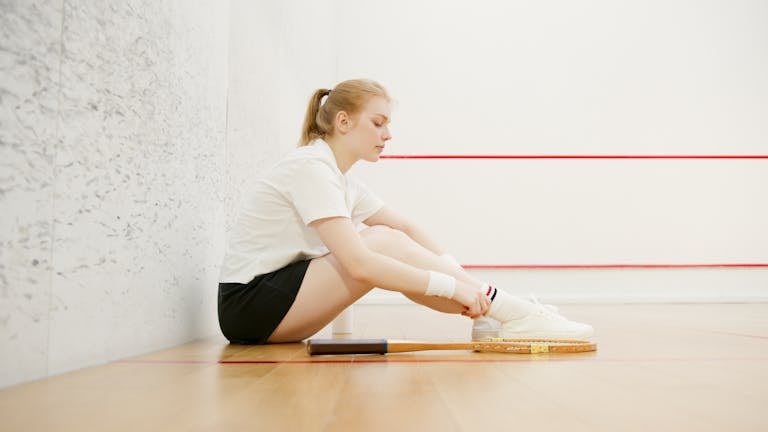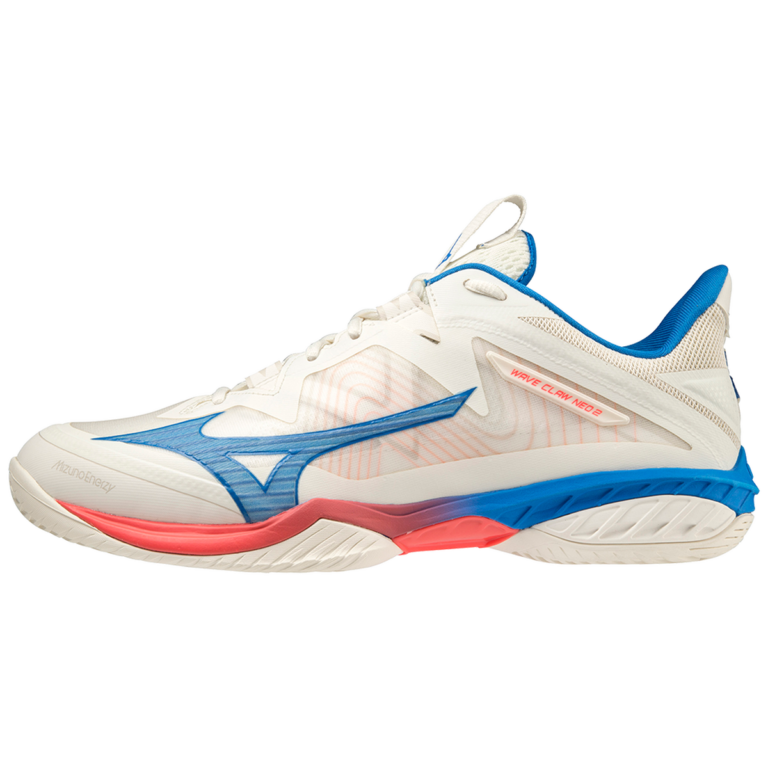

Your second squash shoe is a different decision from your first. The beginner shoe taught you the movement; now the load has changed — more sessions a week, harder lunges into the front corners, ghosting drills that repeat the same split-step and recovery hundreds of times, and rallies that punish a soft platform and a worn gum sole. The step-up tier is where makers answer with plates, wraps and published geometry: carbon torsion units, midfoot trusses, three-layer uppers, rounded heel radii and drops printed to the half millimetre. This guide compares seven step-up squash shoes on exactly what their makers publish — the outsole compound and pattern as each maker states it, the cushioning system by the name each maker gives it, the stability construction as each maker describes it, the weight exactly as each maker states it (or an honest “not published” where a maker states none), and the fit as each maker labels it — and nothing else. No prices, no health claims, no invented numbers: just the spec sheets, read the way an improving player needs them.
⚡ TL;DR — The Short Answer
For the best all-round step-up, buy the ASICS Blade FF — the shoe ASICS’s own copy names for “squash and badminton players engaging in multi-directional movements,” with TWISTRUSS, X GUIDANCE flex grooves and a raised heel collar. The UNSQUASHABLE TOUR-TEC PRO is the torsional-stability pick: a carbon plate between outsole and midsole, a wraparound lacing design and a maker-published 12.5 mm drop. The ASICS Netburner Ballistic FF 3 is the cushioned pick, with FLYTEFOAM Propel and the highest published drop here, 15 mm. The Mizuno Wave Claw EL 2 is the lightweight pick at a maker-published 290 grams in an E-width last. The Karakal SuperPro is the lockdown pick, with asymmetric lacing, a 3D heel cup and a four-part SuperGel insole. The Salming Viper Pro is the low-profile pick — a 6 mm drop and a three-layer ViperSKIN 2.0 upper. And the Karakal KF ProLite is the turning-circle pick, with a built-in pivot point in its gum rubber sole and extra lace holes for width adjustment.
Quick Picks — Best Squash Shoes for Intermediate Players at a Glance
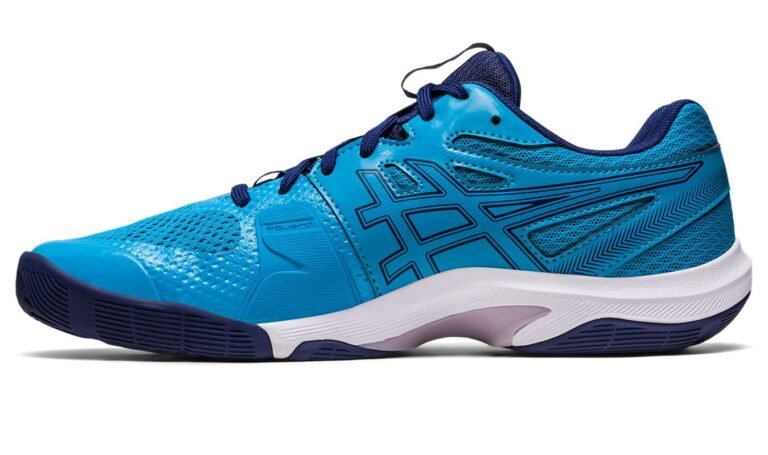
The shoe ASICS names for squash players — TWISTRUSS direction changes, X GUIDANCE flex and a raised heel collar in one complete spec.
A carbon torsion unit, a wraparound lacing design and a rounded heel radius, from a squash-only maker.
FLYTEFOAM Propel cushioning and a 15 mm drop — the most cushioned, highest-built construction in the guide.
A maker-published 290 g, the lightest model in Mizuno’s Wave Claw series, in an E-width last.
Asymmetric lacing with a built-in tongue, a high-strength 3D heel cup and a four-part SuperGel insole.
A 6 mm drop, an XR200 outsole and a three-layer ViperSKIN 2.0 upper for players who play close to the floor.
A gum rubber sole with a built-in turning circle, a gel insole and extra lace holes for width adjustment.
In This Guide
The Step-Up Decision: Why Your First Shoe Stops Being Enough
Almost every improving player reaches the same month. The sessions have doubled, the drills have started — ghosting patterns, boast-and-drive rotations, conditioned games — and the shoe that carried the first season begins to show its brief. It is rarely one dramatic failure. The gum rubber that once bit the floor has polished smooth at the forefoot, so the first step out of the T slips a fraction before it grips. The upper that felt snug in October has stretched, so the foot travels inside the shoe on a hard lunge and the stop happens a shoe-length later than planned. And the platform itself feels vague: where a beginner needs softness and forgiveness, an intermediate needs a shoe that holds its shape through the hundred-and-first split-step of the session, not just the first. None of this is the first shoe’s fault. Beginner shoes are specced for learning — simple midsoles, basic gum soles, standard lasts — and the step-up tier exists because the demands change before the player notices them change. Makers answer with a recognisable toolkit: a published stability construction (a carbon plate, a midfoot truss, a torsion unit, a wraparound lacing system) that keeps foot and platform aligned through harder direction changes, a named cushioning system built for repeated loading rather than first impressions, and durability engineering — reinforced toes, three-layer uppers, high-wear compounds — aimed at the drag and abrasion zones an improving player’s footwork actually creates. Every card in this guide publishes all three, as its maker states them. That is the entry ticket to this tier, and it is a construction fact, not a marketing label.
The intermediate version of the decision has its own shape, and it is more personal than the beginner’s. You now know things about your game that no size chart can tell a stranger: whether you live at the front and lunge deep, or hold the T and volley; whether your sessions are two long matches a week or five shorter drill-heavy ones; whether width has ever been your problem. The step-up shoe’s job is to match that knowledge. A front-court player reads the heel geometry and toe reinforcement columns first. A T-player reads the stability construction and the drop. A heavy-hours player reads the outsole compound and the upper’s layer count. Weight still matters, but read it the way this guide prints it — exactly as each maker states it, with the size basis where the maker gives one. Only one of the seven makers here publishes a weight for the model carded, and the other six cards say so in plain words rather than borrowing a number from somewhere else. A step-up purchase made on honest specs beats one made on borrowed numbers every time, because this is the shoe you will judge every future shoe against.
One boundary before the picks. This page owns the intermediate step-up decision only. The full all-player field belongs to our pillar guide to the best squash shoes, where the flagship models from every major maker are compared; the first-shoe decision belongs to our guide to the best squash shoes for beginners; the women’s fit and size-range decision belongs to our guide to the best squash shoes for women; and the comfort-and-support decision for veteran players is covered in our guide to the best squash shoes for seniors. None of their models is re-carded here — every shoe below is a different model, chosen because its published specification suits a player whose game has outgrown the starter tier. If your footwork itself is still the project, work through our guide on how to play squash alongside: the movement patterns it teaches are exactly what these plates, wraps and heel geometries are built to serve.
How to Read a Squash Shoe Spec Sheet: Gum Rubber, Plates and Honest Weights
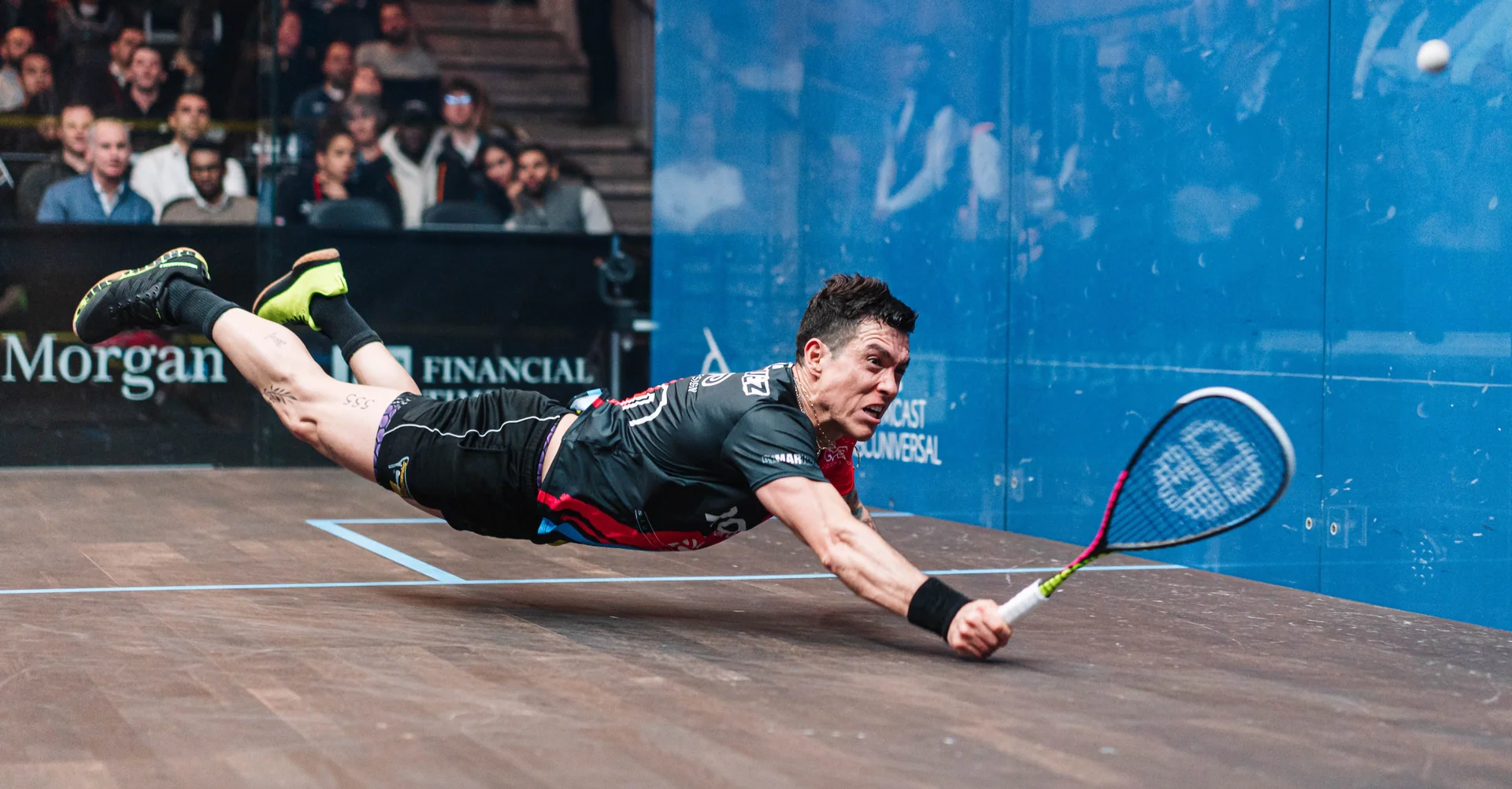
The outsole is the first spec, because it is the squash-specific one. Every card here runs a gum rubber outsole of some description, and the makers’ differences are in the pattern and the geometry around it. UNSQUASHABLE moulds its full gum rubber into an AbraZone hexagon pattern and adds diagonal flex grooves at the forefoot; Karakal builds a turning circle into both of its cards’ soles — a pivot point under the forefoot, ringed by deep grooves that let the toes bend naturally; Salming’s XR200 is the compound-and-pattern pairing under its lowest-profile card; and ASICS and Mizuno pair their gum soles with X GUIDANCE-style flex grooves (ASICS) and the D-Flex Groove (Mizuno) that shape how the forefoot bends through a push-off. Two makers also publish heel geometry: UNSQUASHABLE’s Rounded Heel Radius curves the back of the heel so it can roll into and out of the lunge rather than landing on a thin edge, and it is the kind of spec that never appears on a beginner shoe because beginners do not lunge hard enough, often enough, to need it. Read the outsole column for your movement pattern first — pivot-heavy, lunge-heavy or stop-start — and the technology columns second.
Cushioning and stability are vocabularies, not scores. Each maker names its own systems, and the names are not interchangeable grades of the same thing. ASICS’s FLYTEFOAM is a midsole technology and FLYTEFOAM Propel is its tuned, higher-rebound variant; Mizuno pairs a WAVE plate with ENERZY foam and a PoWnCe layer; Karakal stacks a Phylon midsole under gel insoles on both of its cards; UNSQUASHABLE names a foam, U-FOAM, placed in the rear and forefoot. Stability names divide the same way, into three families. Plates and trusses underfoot — UNSQUASHABLE’s Carbon Torsion Unit, ASICS’s TWISTRUSS on both of its cards, Salming’s LMS Torsion Unit — control how the platform itself twists. Wraps and bands above it — UNSQUASHABLE’s Dynamic Wrap and U.W.A.D. lacing design, Karakal’s heel-and-forefoot band with its lace loop system — hold the foot down onto the platform. Geometry — a published drop, a rounded heel radius, an 11-degree torsion angle — shapes the stance before you move at all. The cards print each system as its maker describes it, attributed, so you can compare structures rather than slogans. Weight is the last spec to interrogate, and the least standardised. Mizuno publishes 290 grams for its card here without stating a size basis on the listing; Salming publishes nothing, so its card prints a retailer-listed figure, labelled as one; ASICS, UNSQUASHABLE and Karakal publish nothing for their models in the listings checked, so their cards print no weight at all. Read the basis on each card, compare like with like, and never let a listing’s shipping weight stand in for a maker’s specification.
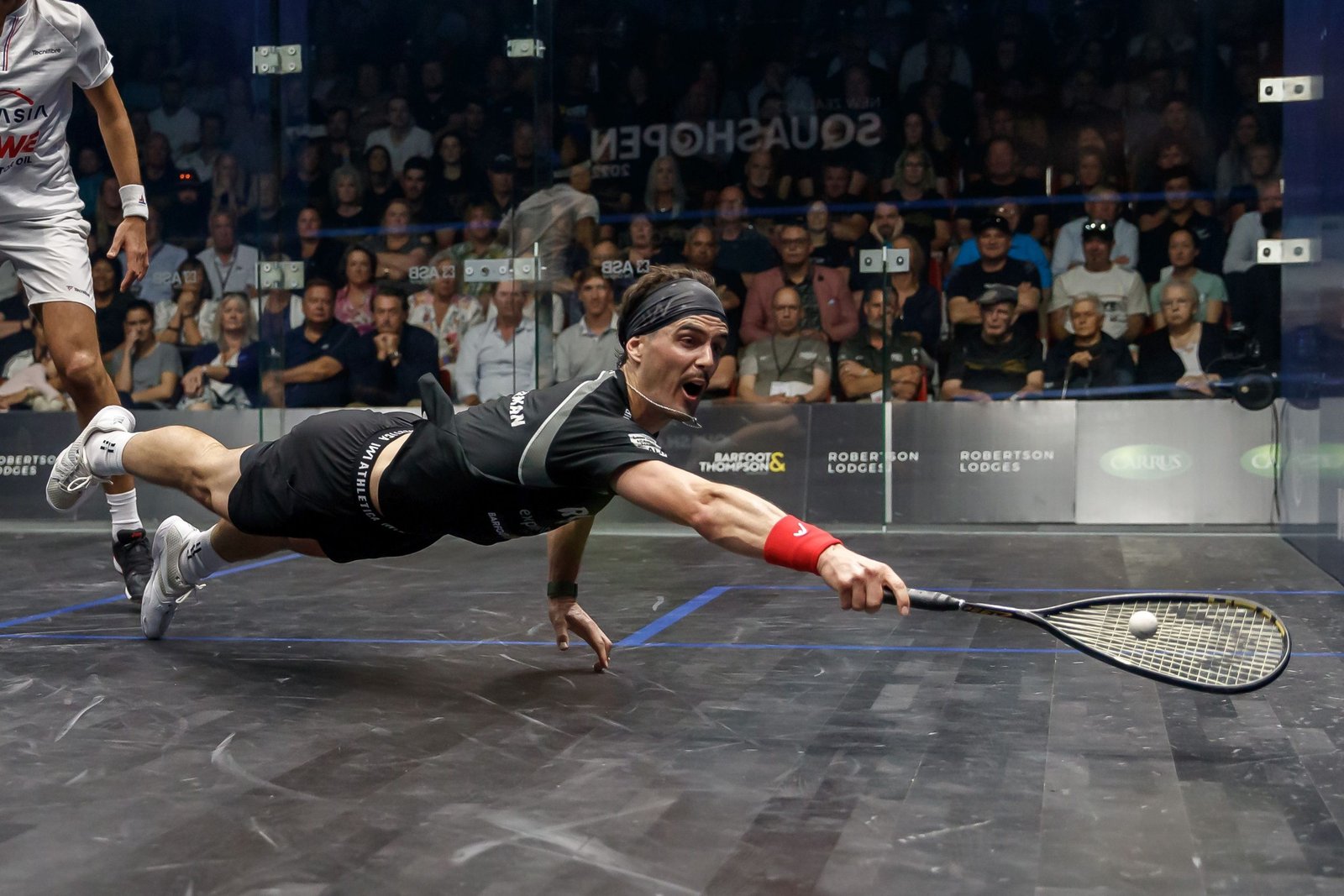
The 7 Best Squash Shoes for Intermediate Players, Compared
Seven shoes, one shared brief — a gum rubber squash outsole, a named cushioning system and a published stability construction, read the way an improving player actually uses them. Start with the card that matches the player you have become.
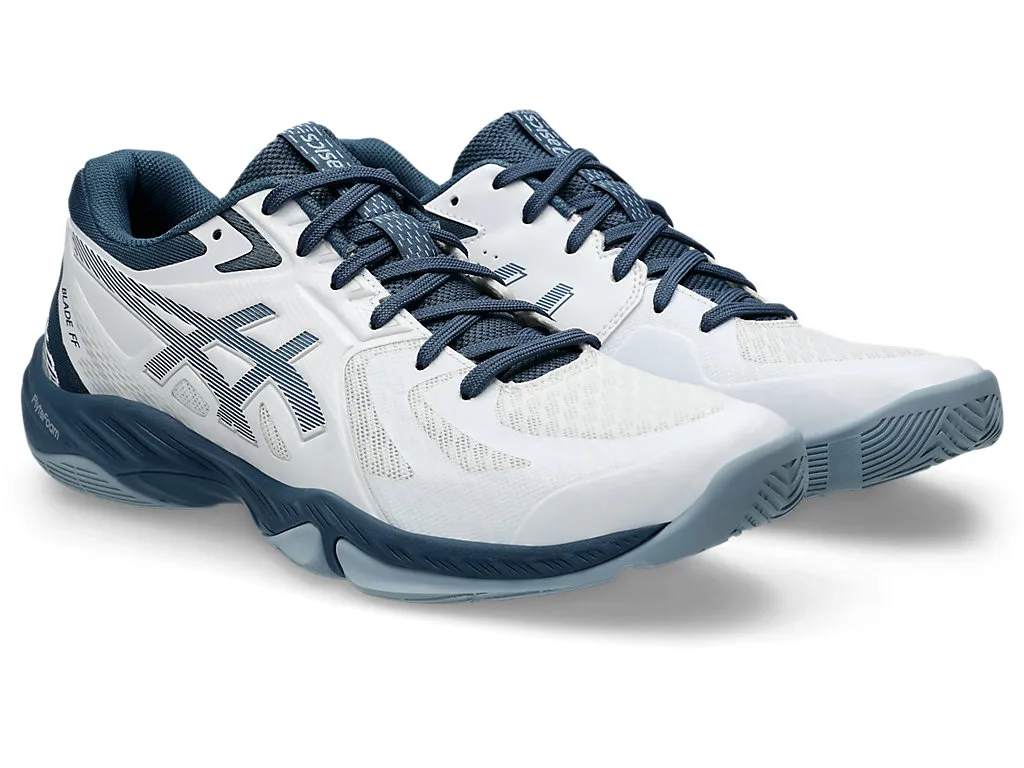
ASICS Blade FF
The complete step-up brief from the biggest court-shoe maker in the game — and the only card here whose maker names squash in the shoe’s own description.
ASICS’s own description of the Blade FF is the shortest shortlist argument in this guide: the shoe, ASICS says, “helps create good support and flexibility for squash and badminton players engaging in multi-directional movements.” That sentence matters because of who wrote it. ASICS sells more indoor court shoes than anyone, and when its copywriters name squash first among the shoe’s sports, the Blade FF is being positioned exactly where an intermediate squash player is shopping. The construction underneath the positioning is a full step-up toolkit. The upper has been reconstructed, per ASICS, to promote a more supportive foothold, and it uses minimal no-sew reinforcement films that ASICS describes as lighter than traditional overlays — the intermediate’s version of support, structure without the weight penalty of the stitched panels on older court shoes. The raised heel collar height is published as a stability feature in its own right: ASICS says it improves stability and keeps the foot from slipping out of the shoe, which is the heel-lock problem every player discovers the first time a stretched beginner shoe lets the heel lift mid-lunge.
Underfoot, the card runs two of ASICS’s established court systems. TWISTRUSS is the midfoot stability unit, which ASICS describes as supporting faster direction changes between a stop and a full sprint — squash’s exact stop-start loop, played out of the T rather than down a baseline. X GUIDANCE works the other side of the same movement: flex grooves in the outsole that ASICS says improve flexibility and agility during multi-directional movement, so the forefoot can bend through a push-off instead of fighting a rigid platform. Between them sits FLYTEFOAM, ASICS’s lightweight cushioning technology, and a heel drop ASICS describes as raised, positioning the foot for faster forward transitions — on a squash court, the repeated drive from the back and centre toward the front wall. Read as a whole, this is the most balanced card in the guide: no single extreme spec, and no missing column either. If your game has no single overriding need — you simply need a better shoe in every direction your first one was basic — this is the card the ranking puts first.
What we like
- Named for squash in ASICS’s own copy — the maker positions this shoe for exactly this court
- TWISTRUSS and X GUIDANCE cover both halves of the stop-start movement: stability and flex
- No-sew film overlays give published support structure without traditional overlay weight
- Raised heel collar addresses heel slip, the most common second-shoe complaint
Worth knowing
- ASICS publishes no weight for this model — none is claimed here
- A second generation, the Blade FF 2, is also on sale — check which version a listing is selling
As an Amazon Associate we earn from qualifying purchases.
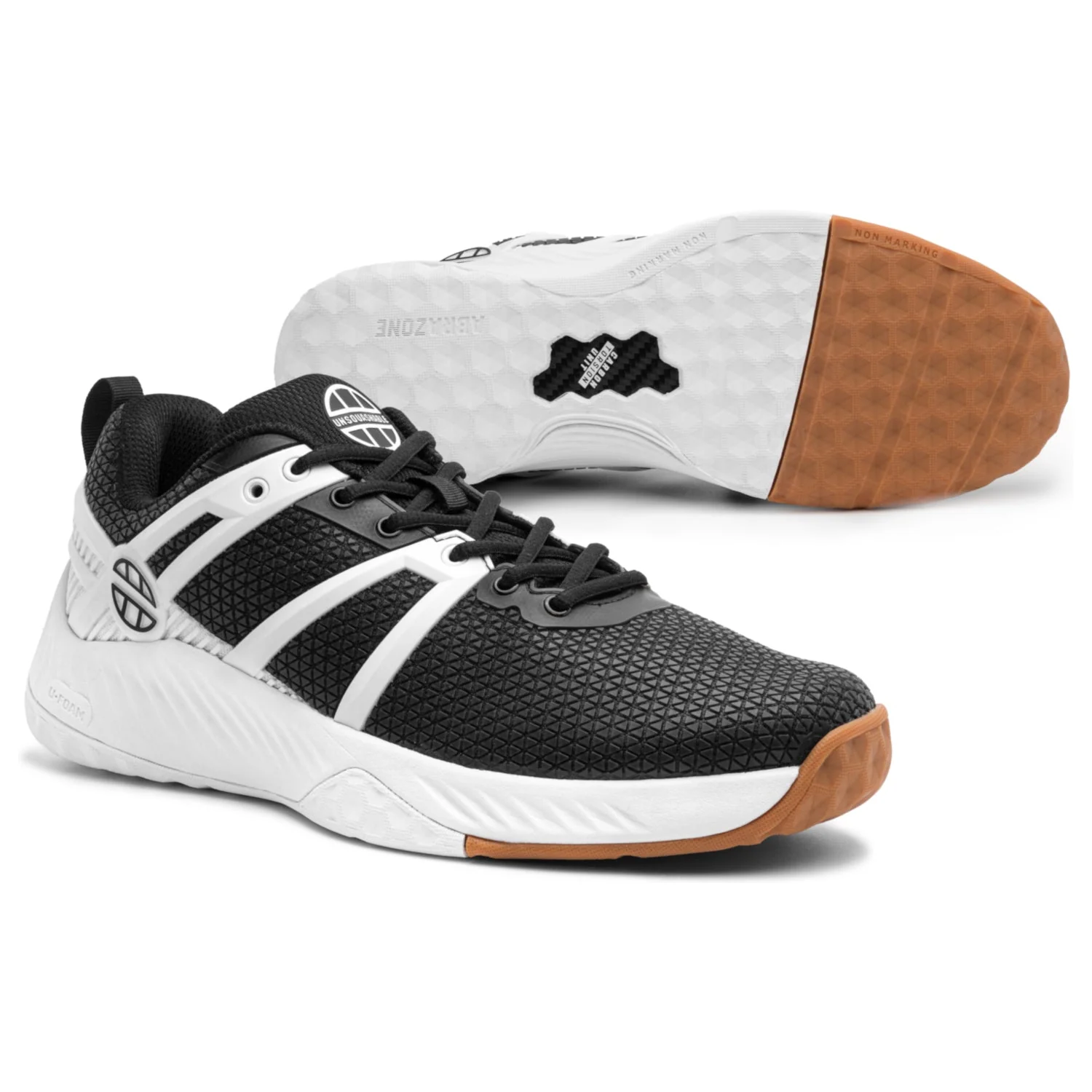
UNSQUASHABLE TOUR-TEC PRO
The specialist’s step-up — a carbon plate, a wraparound lacing design and a rounded heel radius, from the one maker in this guide that builds nothing but squash.
UNSQUASHABLE calls the TOUR-TEC PRO “the world’s most technically advanced specialist squash shoe,” and while that is the maker’s own positioning rather than a verdict this guide repeats, the published construction underneath it is genuinely the most squash-specific in this line-up — because every system on the card answers a squash movement by name. Start underfoot: the outsole is full gum rubber moulded into an AbraZone hexagon pattern, which UNSQUASHABLE describes as maximising grip through its hexagonal chambers while keeping dust clear of the gripping surface, with diagonal flex grooves at the natural gum rubber forefoot for the push-off bend. Between that outsole and the midsole sits the card’s headline: an ultra-lightweight Carbon Torsion Unit, a carbon-fibre arch plate that UNSQUASHABLE describes as allowing the forefoot and rearfoot to move independently for better surface adaptation and stability. That is the torsional-stability brief stated as plainly as any maker states it — the platform controls twist without locking the two halves of the foot into one rigid piece.
The upper and heel are engineered with the same specificity. The DuraZone upper is published as a durability-and-weight construction; the Dynamic Wrap and the U.W.A.D. (Upper Wrap Around Design) integrate the lacing into the shoe’s structure so the wrap, not just the lace tension, locks the foot in place; a Moulded Custom-Fit heel cup shapes the back of the shoe; and the Rounded Heel Radius — with the midsole extended at the heel — curves the heel’s landing surface so it can roll into and out of the deep front-court lunge instead of balancing on a thin rear edge. U-FOAM cushioning sits in both the rearfoot and the forefoot, and the drop is one of only two published to the half millimetre in this guide: 12.5 mm. UNSQUASHABLE’s own size guidance is equally specific — measure both feet and add 1 to 1.5 cm for the playing length. If your step-up decision is really a stability decision, and you want it answered by a maker that designs for one sport only, this is the card.
What we like
- A real carbon plate, positioned and described in print by the maker — the clearest torsional spec here
- The Rounded Heel Radius is a published answer to squash’s deepest repeated movement, the lunge
- Wraparound lacing (U.W.A.D.) plus Dynamic Wrap: lockdown built into the design, not just the laces
- A published 12.5 mm drop and the most detailed maker size guidance in the guide
Worth knowing
- UNSQUASHABLE publishes no weight for this model — none is claimed here
- The most specialised card in the guide: players who want a general indoor shoe should read the ASICS cards
As an Amazon Associate we earn from qualifying purchases.
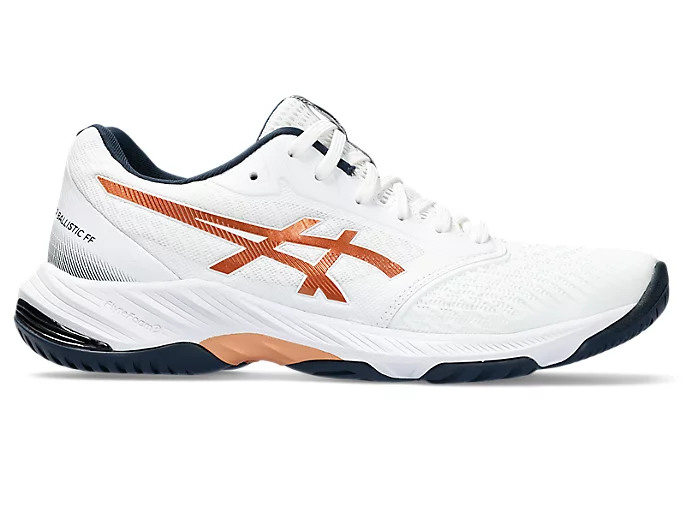
ASICS Netburner Ballistic FF 3
The cushioning-first card — ASICS’s higher-built indoor court construction, carded openly from its indoor range for players whose step-up need is underfoot substance.
Honesty first, the way this guide cards every cross-line shoe: the Netburner Ballistic FF 3 comes from ASICS’s indoor court range rather than a squash-named line, and it earns its place here the way the test is set out in the buying guide below — on the maker’s published construction, not on a retailer’s shelf label. That construction is the most cushioned in the guide. The midsole runs FLYTEFOAM Propel, the tuned, energy-return variant of ASICS’s FLYTEFOAM cushioning, under a published 15 mm heel drop — the highest drop on any card here, and a genuinely different stance from the low profiles of the Salming and the Mizuno: more shoe under the heel, a more forward-rolled transition, a softer landing platform for players whose weekly hours have climbed and who feel a thin beginner midsole by the third game. ASICS pairs it with a two-piece TWISTRUSS unit, which ASICS describes as supporting stability when pivoting and twisting — the rotational half of squash movement that a pure cushioning shoe usually leaves unanswered.
Two more published systems complete the card. 3D SPACE CONSTRUCTION is ASICS’s gender-specific internal shaping, built into the men’s and women’s versions separately rather than scaled between them, and X GUIDANCE flex grooves in the non-marking rubber outsole keep the forefoot bending through multi-directional movement despite the taller midsole above it. That combination — substance underfoot, structure through the middle, flex at the front — is why this card sits third rather than in the cross-line footnote. It is the step-up for a specific and common intermediate profile: the player whose game is built on repeated hard stops and recoveries, who plays long sessions several times a week, and whose first buying question is no longer “which shoe is lightest” but “which shoe still feels like a shoe in the fifth game.” If that is your profile, the published spec sheet here is the fullest answer in the guide.
What we like
- FLYTEFOAM Propel is the most advanced named cushioning on any card here
- A published 15 mm drop — the clearest stance specification in the guide
- Two-piece TWISTRUSS answers the pivot as well as the straight stop
- Gender-specific 3D SPACE CONSTRUCTION, published for both versions
Worth knowing
- Carded from ASICS’s indoor court range, openly — judge it on the published construction, as this guide does
- ASICS publishes no weight for this model — none is claimed here
As an Amazon Associate we earn from qualifying purchases.
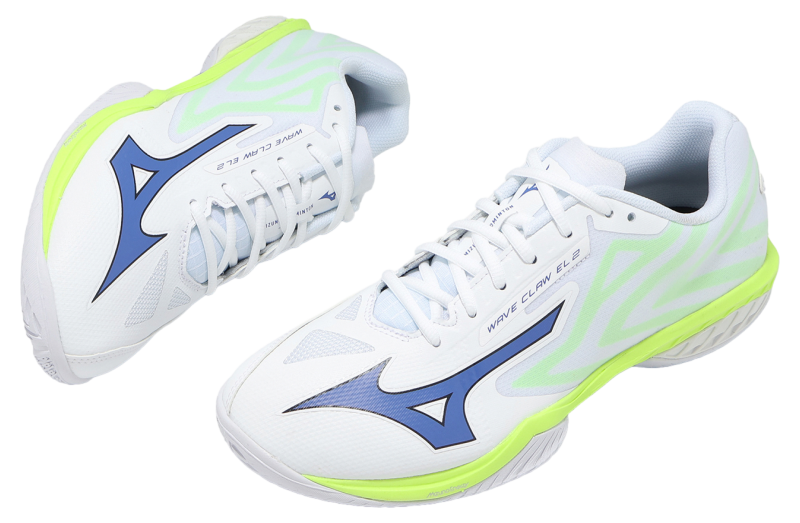
Mizuno Wave Claw EL 2
The documented light build — Mizuno’s extra-light Wave Claw line, with the only maker-published weight in the guide and a genuine wide last.
Most step-up guides make you guess at lightness; this card publishes it. Mizuno’s own regional listings put the Wave Claw EL 2 at 290 grams — stated without a size basis, and printed here with that basis flagged rather than tidied away — and describe the shoe as the lightest model in the Wave Claw series. The “EL” line is Mizuno’s extra-light branch of its long-running indoor family, and the weight is achieved without stripping the step-up toolkit out of the shoe. The MIZUNO WAVE plate still runs through the midsole as the stability-and-cushioning structure Mizuno builds the series around; the cushioning stack still names its materials — MIZUNO ENERZY foam with a PoWnCe layer — over a U4ic X insole board; and the outsole is Mizuno’s XG Rubber with a D-Flex Groove shaping the forefoot’s bend through the push-off. Lightness here is a materials decision, not a missing-features decision.
The fit column is this card’s second distinction. Mizuno lists the EL 2 in a Men’s-E (Wide) width on its regional store, in unisex sizing — a published width option in a tier where most makers offer a single standard last and say nothing. For the intermediate whose first shoe was bought a half-size long to get the width, and who has played a season with a foot that moves forward inside the shoe on every lunge, a step-up that publishes a wide last at a published light weight is a rare double answer. The upper is a monofilament mesh with Mizuno’s MB-HOLD FIT shaping, and the listed heel-toe drop is 12.0, which keeps the stance closer to the traditional court profile than the ASICS Netburner’s 15 mm. Read the 290 grams the way this guide prints every figure — as Mizuno’s published number, basis unstated — and the card still stands: the lightest documented step-up in the guide, with a wide fit in print. If your first filter is the scales and your second is the last, start here.
What we like
- The only maker-published weight in the guide: 290 g, straight off Mizuno’s own listing
- A published E (wide) width — the fit option no other card here prints
- A full step-up stack despite the weight: WAVE plate, ENERZY foam, PoWnCe, XG Rubber
- Unisex sizing on one spec sheet — no separate versions to cross-check
Worth knowing
- Mizuno states the 290 g weight without a size basis — compare it as a published figure, not a lab measurement
- A speed-first brief: players who want maximum structure should read the UNSQUASHABLE and Karakal SuperPro cards
As an Amazon Associate we earn from qualifying purchases.
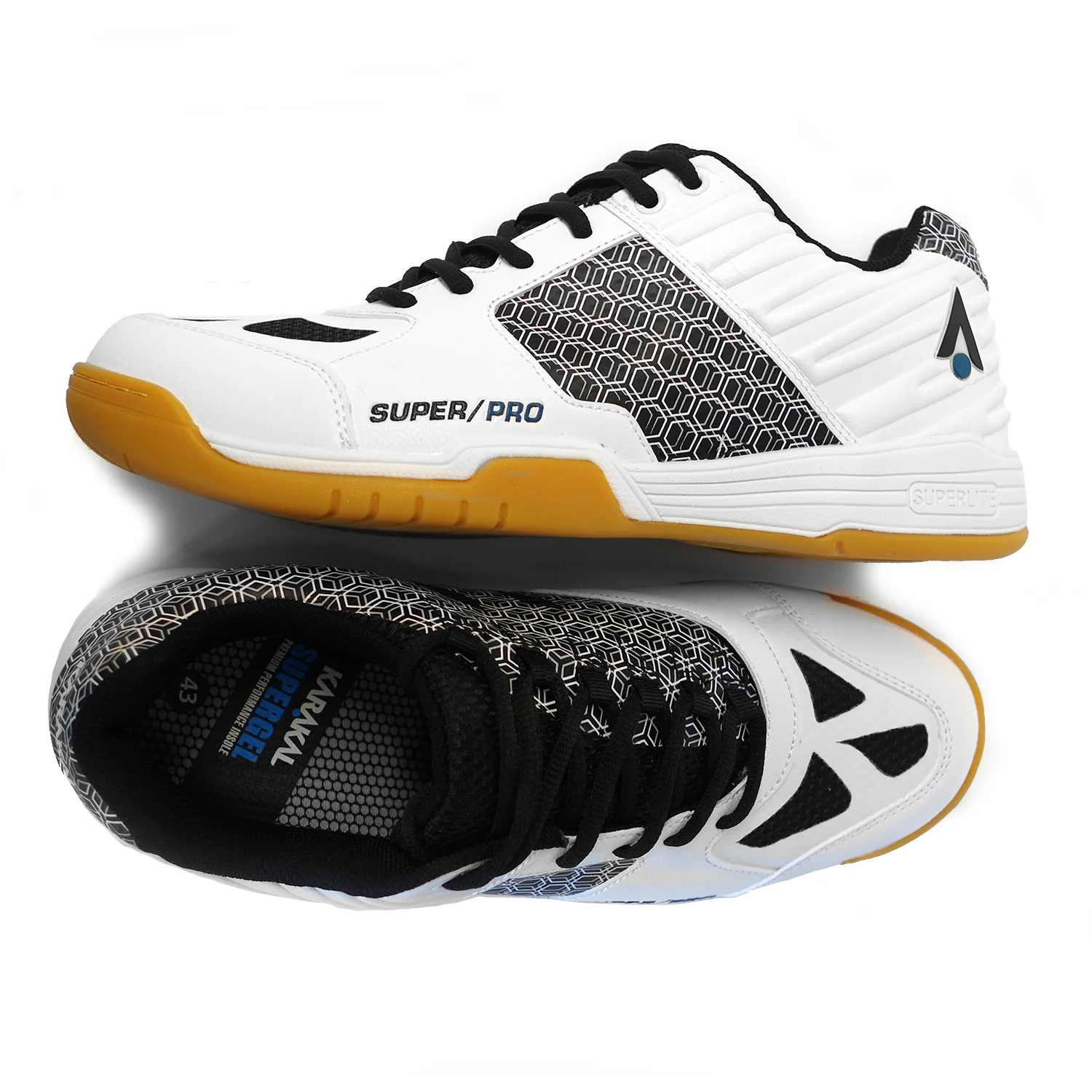
Karakal SuperPro
Karakal’s flagship indoor shoe — the lockdown card, built around an asymmetric lace system, a 3D heel cup and the thickest published insole story in the guide.
Karakal launched the SuperPro in 2023 as its flagship indoor court shoe — the top of a range from a racket-sports specialist whose footwear has been built around the lateral game for decades — and its published design attacks the intermediate’s core fit problem from three directions at once. The first is the lacing: an asymmetric lace system with a built-in tongue, which Karakal’s copy describes as delivering a secure, comfortable fit with lateral stability and reduced foot roll on sideways movement. Asymmetric lacing routes the closure diagonally across the midfoot rather than straight up it, so the tightening force follows the direction the foot actually loads in a side stop; the built-in tongue removes the loose-tongue drift that lets a standard shoe’s closure wander during a long match. The second direction is the heel: a high-strength 3D heel cup that Karakal positions as the support-and-stability anchor for quick changes of direction. The third is the upper itself — a strong microfibre construction with TPU stability elements and a high-wear microfibre toe cap, aimed squarely at the toe-drag abrasion that deep front-court lunging produces.
Underfoot, the card stacks the guide’s most layered insole story on a classic squash foundation. The four-part 4G SuperGel Impact Comfort Insole is Karakal’s gel cushioning system, sitting over a shock-absorbing Phylon midsole, with a TPU stability foot support in the structure — and the whole shoe stands on an extra tacky gum rubber sole with control grooves, Karakal’s published grip brief. The fit consequence of that layered insole is printed in retailer listings and worth more than most spec lines: the thicker 4G insole makes the fit feel snug, and if you are between sizes, the advice is to take the next half size up. That is exactly the kind of published, checkable fit fact this guide exists to surface — the SuperPro is the lockdown pick for the player whose foot moved inside their first shoe, offered with the sizing note that makes the lockdown buyable first try.
What we like
- Asymmetric lacing plus a built-in tongue: the most deliberate lockdown design in the guide
- A high-strength 3D heel cup and TPU stability — structure at both ends of the shoe
- A four-part SuperGel insole over a Phylon midsole: the deepest published cushioning stack here
- High-wear toe cap answers the lunge-drag zone in print
Worth knowing
- Karakal publishes no weight for this model — none is claimed here
- The fit runs snug because of the 4G insole — retailer advice is the next half size up if you are between sizes
As an Amazon Associate we earn from qualifying purchases.
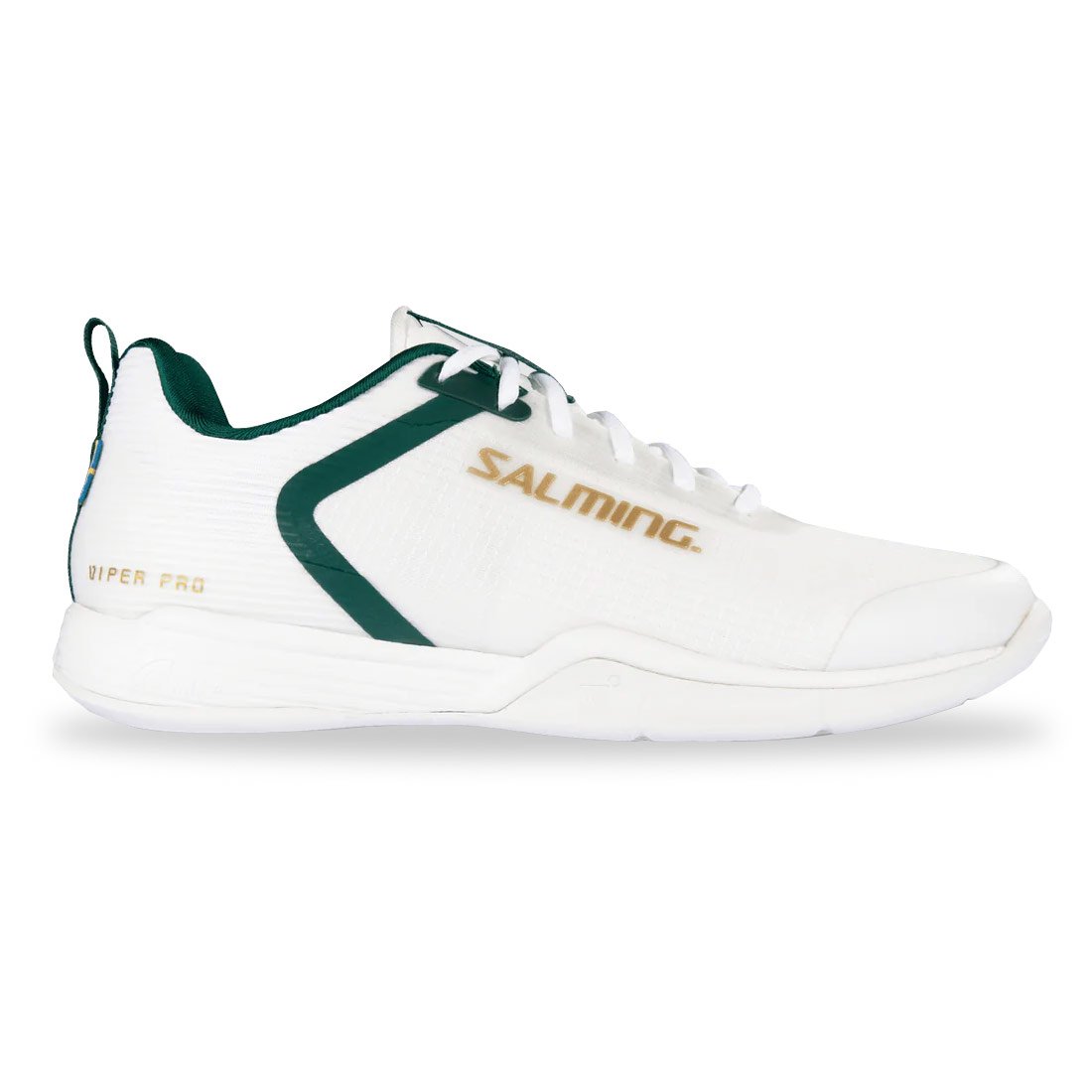
Salming Viper Pro
The court-feel card — the lowest drop in the guide and a three-layer upper, from the Swedish indoor specialist’s Viper line.
Every other card in this guide builds upward — more stack, more structure, more published machinery. The Viper Pro is the step-up for the opposite instinct: the player who improved fastest in a low, plain shoe and wants the tier’s engineering without losing the floor. Its headline figure is a 6 mm drop, less than half the Netburner Ballistic’s published 15 mm, which sets the stance Salming’s whole design then serves. The outsole is the XR200, and built into its inside edge is Salming’s RollBar — a rounded construction that Salming describes as making push-offs and transitions between lunges smoother, so the low profile rolls through the movement instead of catching on it. The stability answer is geometric rather than bulky: the LMS Torsion System sets an engineered 11° angle on the shoe’s outer side, which Salming describes as supporting the foot against outward twist in dynamic movements. And the RunLite2 midsole is Salming’s responsiveness compound — a thin, firmer brief than the cushioning-first cards, chosen by players who read the court through their feet.
The upper is where the Pro earns its place in the step-up tier rather than the speed-shoe shelf. ViperSKIN 2.0 is a three-layer construction — a soft mesh inner layer for comfort, an Exo-skeleton layer for structural support, and a durable outer layer over the top — which is the layer-count answer to the stretched single-mesh uppers that end first shoes’ useful life. Salming pairs it with a flexibly attached, padded tongue designed to relieve instep pressure under tight lacing, and its anatomically shaped HeelCup, built slightly higher at the back. Weight is the honest gap on this card: Salming publishes none, and a specialist retailer lists the men’s shoe at 12.4 ounces without stating a size basis — printed here labelled as exactly that, a retailer figure, or not printed at all in the table’s spirit of like-for-like. Buy this card for the stance and the upper, not for a number nobody official has published.
What we like
- A published 6 mm drop — the true low-profile stance in a guide of higher builds
- ViperSKIN 2.0’s three named layers answer upper stretch with construction, not claims
- RollBar plus the 11° LMS angle: Salming’s stability is geometry you can read
- The XR200 and RunLite2 pairing keeps the fast, close-to-court brief consistent top to bottom
Worth knowing
- Salming publishes no weight — the 12.4 oz figure is one retailer’s, basis not stated, and is labelled as such
- A firmer, thinner midsole brief: players who want maximum cushioning should read the Netburner card
As an Amazon Associate we earn from qualifying purchases.
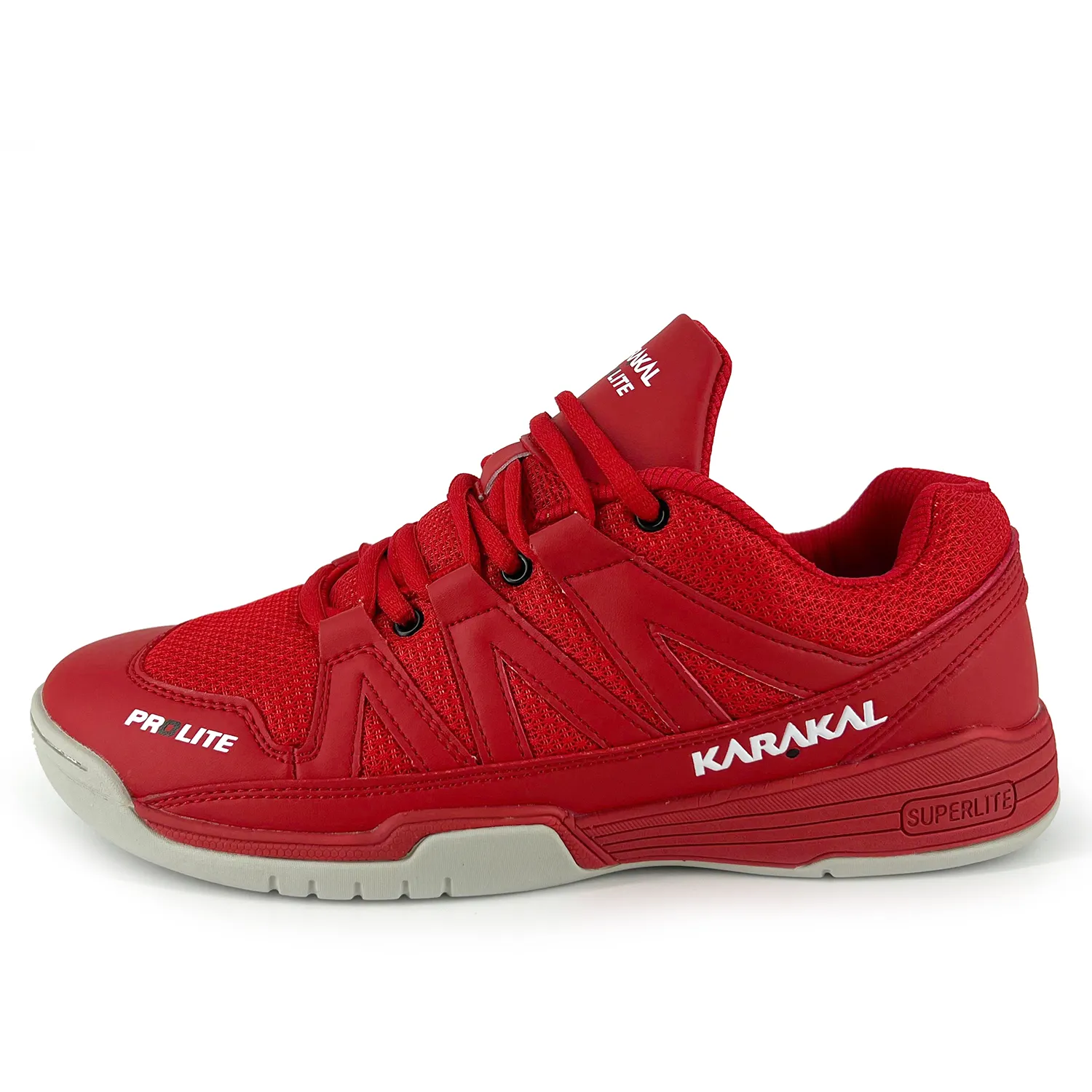
Karakal KF ProLite
The pivot specialist’s own brand — a turning circle moulded into the sole, a band-and-loop hold system, and an “Intermediate” player level on the spec table itself.
One detail on this card appears nowhere else in the guide: a specialist retailer’s spec table for the KF ProLite lists its player level, in so many words, as Intermediate. That is a retailer’s classification rather than Karakal’s own headline, and it is printed attributed — but it matches the construction underneath, which is a pivot player’s brief executed with unusual literalness. The outsole is Karakal’s exclusive non-marking gum rubber, described by the maker as extra tacky when the foot is planted, with a built-in turning circle under the forefoot designed to make direction changes easier and deep grooves across the forefoot that let the toes bend naturally through the movement. Squash is a game of planted-foot rotation — the split-step lands, the hips turn, the recovery drives back to the T — and this is the only card whose outsole publishes a named feature for the rotation itself rather than for the grip around it.
The hold system is equally specific. A heel and forefoot band with a lace loop system is Karakal’s published answer to sideways foot roll: the band structure works with the lacing to keep the foot on the platform during lateral movement, and Karakal has reinforced the lace support with long-fibre microfibre in the current version of the shoe. A TPU anti-reverse bend insert in the outsole adds the platform stability, the Phylon midsole carries a shock-absorbing gel insole over an EVA layer with an under-heel shock absorber, and the upper mixes microfibre support zones with breathable mesh. The fit details are the practical kind this guide values: extra lace holes for width adjustment — a published, mechanical answer to fit that no app or scan replaces — and retailer fit notes that describe a snug fit in a shoe not sold in half sizes, so a between-sizes player should expect to take the next full size up. If your improving game is built on turning under pressure at the front and the middle, this is the card written for it.
What we like
- The only named pivot feature in the guide: a turning circle built into the gum sole itself
- Band-and-loop hold system plus a TPU insert — stability published at both levels of the shoe
- Extra lace holes for width adjustment: a real fit tool, in print
- A gel insole over a Phylon midsole with a dedicated heel shock absorber
Worth knowing
- Karakal publishes no weight for this model — none is claimed here
- Not sold in half sizes, per retailer listings — between-sizes players should plan a full size up
As an Amazon Associate we earn from qualifying purchases.
Side-by-Side Comparison Table
| Shoe | Weight | Outsole, As Maker States | Stability Tech | Cushioning | Fit |
|---|---|---|---|---|---|
| ASICS Blade FF Best Overall Step-Up | Not published | Gum outsole · X GUIDANCE flex grooves | TWISTRUSS · Raised heel collar | FLYTEFOAM | Men’s and women’s versions |
| UNSQUASHABLE TOUR-TEC PRO Best Torsional Stability | Not published | Full gum rubber · AbraZone hexagons | Carbon Torsion Unit · U.W.A.D. wrap lacing | U-FOAM (rear + forefoot) | Men’s and women’s · 12.5 mm drop |
| ASICS Netburner Ballistic FF 3 Best Cushioned Step-Up | Not published | Non-marking rubber · X GUIDANCE grooves | TWISTRUSS (two-piece) | FLYTEFOAM Propel | Men’s and women’s · 15 mm drop |
| Mizuno Wave Claw EL 2 Best Lightweight Step-Up | 290 g (published, basis not stated) | XG Rubber · D-Flex Groove | MIZUNO WAVE plate | ENERZY foam · PoWnCe | Unisex · E (wide) width |
| Karakal SuperPro Best Lockdown & Support | Not published | Extra tacky gum rubber · Control grooves | Asymmetric lacing · 3D heel cup · TPU support | 4G SuperGel insole · Phylon | Snug — half size up if between (retailer) |
| Salming Viper Pro Best Low-Profile Court Feel | Not published — 12.4 oz per retailer (basis not stated) | XR200 · RollBar inside edge | LMS Torsion System, 11° angle | RunLite2 | 6 mm drop · HeelCup fit |
| Karakal KF ProLite Best Turning-Circle Grip | Not published | Non-marking gum rubber · Turning circle | TPU anti-reverse bend insert · Band + lace loops | Gel insole · Phylon | Extra lace holes · No half sizes (retailer) |
Read honestly, the table teaches the step-up market’s real shape. The weight column has exactly one maker-published entry — Mizuno’s 290 grams, stated without a size basis — plus one retailer-listed figure for the Salming. Five makers publish no weight at all for these models, and this guide prints that fact in the table rather than filling the gaps with estimates: an improving player comparing step-up shoes anywhere else should expect the same honesty and be suspicious of any table with a precise weight in every row. The drop column is where the stance choice lives: a published spread from Salming’s 6 mm through Mizuno’s listed 12.0 and UNSQUASHABLE’s 12.5 mm to the Netburner’s 15 mm — three genuinely different postures, all in print. The stability column divides into the three families the spec section described — plates and trusses underfoot (carbon, TWISTRUSS, WAVE, LMS), wraps and bands above it (U.W.A.D., the Karakal band-and-loop system), and geometry (drops, a rounded heel radius, an 11-degree angle). And the fit column is the quietest and often the deciding one: an E-width last on the Mizuno, gender-specific versions on both ASICS cards, extra lace holes on the KF ProLite — so if fit has ever been your problem in court shoes, read that column first and the technology columns second.
Buying Guide: Matching Your Step-Up Shoe to Your Game
1. Start With the Way You Actually Move
Your second shoe should be bought against your own match footage, not against a general idea of quality. Front-court players — the ones who lunge deepest and drag a toe through the shot — read the UNSQUASHABLE card first (its Rounded Heel Radius is published heel geometry for the lunge itself) and the Karakal SuperPro second (its high-wear toe cap answers the drag zone in print). T-players and volleyers, whose game is split-steps and first steps in every direction, read the stability column: the TOUR-TEC PRO’s carbon plate, the Blade FF’s TWISTRUSS, the Viper Pro’s 11-degree LMS angle. Pivot-heavy players who turn under pressure at the front read the KF ProLite’s turning circle and the Netburner’s two-piece TWISTRUSS, which ASICS describes for pivoting and twisting. Every pattern in the table is a maker’s published answer to a movement; match the movement you repeat most, and the card chooses itself.
2. Decide Your Stance: The Drop Is a Published Choice
Drop — the height difference between heel and forefoot — is one of the few numbers this tier publishes precisely, and the spread here is the widest of any spec: 6 mm on the Salming Viper Pro, a listed 12.0 on the Mizuno, 12.5 mm on the UNSQUASHABLE, 15 mm on the ASICS Netburner Ballistic FF 3. A lower drop sits you closer to the floor with a firmer, more direct platform; a higher drop builds more shoe under the heel and rolls the transition forward. Neither is a grade of the other — they are stances, and intermediates have usually formed a preference without knowing its name. If your first shoe felt best the flatter it was, start at the Salming and Mizuno cards. If you have always wanted more under your heel by the fifth game, start at the Netburner. The Blade FF sits between, with a heel drop ASICS describes as raised for faster forward transitions. Buy the stance you already play in, upgraded — not a new stance and a new shoe in the same month.
3. Read Every Weight With Its Basis — and Respect “Not Published”
Weight is the spec improving players compare most and makers standardise least. Of the seven cards here, one carries a maker-published weight (the Mizuno at 290 grams, basis not stated), one carries a retailer-listed figure (the Salming at 12.4 ounces from a specialist retailer, basis not stated), and five carry none, because their makers publish none. Compare published with published and retailer with retailer, treat a cross-basis comparison as approximate, and treat any listing that invents a precise weight for the ASICS, UNSQUASHABLE or Karakal cards as a listing to distrust — if the maker has not published it, nobody else knows it either. For a step-up shoe, the practical read is simple: the Mizuno is the documented light build; the rest are bought on outsole, stability construction, stance and fit, and none of them is worse for that.
4. Fit Is a Specification: Buy the Last, Not Just the Length
A step-up shoe has to hold your foot centred on its platform through harder stops than your first shoe ever faced, with the shoe’s structure — not overtightened laces — doing the holding. The published fit facts in this guide are unusually good, so use them: the Mizuno lists an E (wide) width; UNSQUASHABLE’s own size guide tells you to add 1 to 1.5 cm to your measured foot length; the Karakal SuperPro runs snug on its thick 4G insole, with retailer advice to take the next half size up if you are between sizes; the KF ProLite adds extra lace holes for width adjustment but is not sold in half sizes; and both ASICS cards come in separate men’s and women’s versions whose internal shaping differs — ASICS’s 3D SPACE CONSTRUCTION is gender-specific by design. Measure both feet in the evening, in your playing socks, and buy the version — men’s or women’s, standard or wide — whose chart you actually measured against.
5. Cross-Check the Version Before You Buy
Step-up shoes are bought by name and played by version, and squash’s near-name families make the check essential. The ASICS carded here is the Blade FF — not the older Gel-Blade 8 in our pillar guide, and not the newer Blade FF 2, which changes the outsole and the drop. The UNSQUASHABLE carded here is the TOUR-TEC PRO — not the FAST-TEC PRO in the pillar. The Mizuno is the Wave Claw EL 2 — not the Wave Claw 3 in our seniors guide. The Salming is the Viper Pro — not the Viper 5. Check the weight basis the same way: if a listing quotes a weight its maker does not publish, treat it as the retailer’s figure, not the maker’s. And if your movement patterns themselves are still the project, read our how to play squash guide alongside your first sessions in the new pair — the footwork it teaches is what every plate, wrap and heel radius above was designed around.
Frequently Asked Questions
When is a squash player ready for a step-up shoe?
The signals are practical rather than ceremonial. Your weekly hours have climbed beyond a single social session; your first shoe’s gum sole has polished smooth at the forefoot or its upper has stretched enough that your foot moves inside it on a hard stop; and your training now includes repeated patterns — ghosting, boast-and-drive rotations, conditioned games — that load the same movements hundreds of times a session. At that point the beginner shoe’s simple construction is the limiting factor, and the step-up tier’s published answers become relevant: a stability plate, truss or wrap, a named cushioning system, reinforced uppers and toes, and a drop you can choose by number. Every card in this guide is specced for exactly that transition.
What makes a squash shoe different from a general indoor court shoe?
Three published construction traits recur across this guide. The outsole is gum rubber, in patterns built for wooden and synthetic squash floors — hexagon mouldings, flex grooves, a turning circle. The stability construction is explicit: a carbon torsion plate, a TWISTRUSS or WAVE unit, an angled torsion system, wraparound lacing or a band-and-loop hold, each named and described by its maker. And the heel is treated as squash geometry — a rounded heel radius for rolling in and out of the lunge, a raised collar for heel lock, a moulded cup. A general indoor shoe may share one of these traits; the shoes carded here publish all three families, as their makers state them.
How much do intermediate squash shoes weigh?
Only one maker here publishes a weight: Mizuno lists the Wave Claw EL 2 at 290 grams, without stating a size basis on the listing. Salming publishes no weight for the Viper Pro, so its card prints a specialist retailer’s figure of 12.4 ounces, labelled as a retailer figure with its basis not stated. ASICS publishes no weight for the Blade FF or the Netburner Ballistic FF 3, UNSQUASHABLE publishes none for the TOUR-TEC PRO, and Karakal publishes none for the SuperPro or the KF ProLite — and none is claimed for them. Compare published figures with published figures only, and treat any precise weight quoted for the other five models as unverified.
How should squash shoes fit?
Fit is a sizing question, and this tier publishes unusually specific answers. UNSQUASHABLE’s own size guide advises adding 1 to 1.5 centimetres to your measured foot length. Karakal’s SuperPro runs snug because of its thick 4G SuperGel insole, and retailer advice is the next half size up if you are between sizes; the KF ProLite adds extra lace holes for width adjustment but is not sold in half sizes. Mizuno lists the Wave Claw EL 2 in an E (wide) width. Both ASICS models come in men’s and women’s versions. Measure both feet in your playing socks, and buy against the maker’s chart for the exact version — men’s, women’s, standard or wide — that you measured for.
Can I play squash in badminton or other indoor court shoes?
Some indoor court shoes are retailed for squash, and two are carded in this guide with their positioning stated openly: the ASICS Blade FF, whose maker names squash in the shoe’s own description, and the ASICS Netburner Ballistic FF 3, carded from ASICS’s indoor court range on its published construction. The test is the maker’s own published data — a gum or non-marking outsole, a named stability structure, cushioning and fit information you can verify — not the retailer’s shelf label. A shoe whose maker publishes none of that does not belong on a squash shortlist, and running shoes or outdoor-court soles are a different pattern family from anything carded here.
How does this guide relate to your other squash shoe guides?
This page owns the intermediate step-up decision only: step-up models, read on maker-published outsoles, cushioning names, stability constructions, drops, weights and fits. The all-player field is covered in our best squash shoes pillar guide, the first-shoe decision in our best squash shoes for beginners guide, the women’s fit decision in our best squash shoes for women guide, and the senior decision in our best squash shoes for seniors guide. None of their models is re-carded here — all seven shoes in this guide are different models, including the deliberate near-names: the Blade FF is not the pillar’s Gel-Blade 8, and the Wave Claw EL 2 is not the seniors guide’s Wave Claw 3.
When should I replace my step-up squash shoes?
Watch the outsole and the upper, not the calendar. When the gum rubber tread has worn smooth in the forefoot, the pattern can no longer grip the way its maker moulded it to, and the first step out of the T starts to slip — that is the clearest replacement signal a maker-independent eye can use. Check the toe zone next: lunge drag thins uppers there first, and reinforced toes and three-layer uppers exist because makers know it. Brush dust out of the tread between sessions so the pattern can do its work, let the shoes dry naturally rather than on a heat source, and when you do replace them, you will be choosing as a specialisation — lighter, lower, more cushioned or more structured — against the same spec columns this guide uses.
The Verdict
Buy the ASICS Blade FF if you want the complete step-up brief from the maker that names squash in the shoe’s own copy: TWISTRUSS stability, X GUIDANCE flex, FLYTEFOAM cushioning and a raised heel collar in one balanced card. Buy the UNSQUASHABLE TOUR-TEC PRO if stability is the decision: a carbon torsion plate, wraparound U.W.A.D. lacing, a rounded heel radius and a published 12.5 mm drop, from a squash-only maker. Buy the ASICS Netburner Ballistic FF 3 if cushioning is the decision: FLYTEFOAM Propel under the highest published drop here, 15 mm, with a two-piece TWISTRUSS for the pivot. Buy the Mizuno Wave Claw EL 2 if lightness and width are the decision: 290 grams as Mizuno publishes it, in an E-width last, with the full WAVE and ENERZY stack intact. Buy the Karakal SuperPro if lockdown is the decision: asymmetric lacing, a 3D heel cup and a four-part SuperGel insole, with the half-size-up note read before you order. Buy the Salming Viper Pro if court feel is the decision: a 6 mm stance, an XR200 sole with a RollBar edge and a three-layer ViperSKIN 2.0 upper. Buy the Karakal KF ProLite if your game turns on the pivot: a turning circle moulded into the gum sole, a band-and-loop hold and extra lace holes for width. Seven step-up shoes, seven different first filters: read the column that matches yours, cross-check the version before you order, and your second pair will teach you what your third should be.
Affiliate disclosure: Ali Shuttler is a participant in the Amazon Associates Program. Product links on this page are affiliate links — if you buy through them we may earn a commission, at no additional cost to you. Rankings are editorial: they follow the manufacturers’ published specifications checked at build time, not commission rates. Specifications, weights and fit options can change between model years; always confirm the current listing’s spec sheet before buying. This guide reports construction and specification facts only and makes no health claims of any kind.