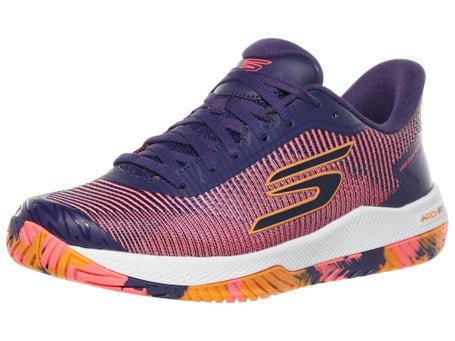

Your first court shoes got you playing. Now your hours are up, your rallies are longer and your footwork is doing real work — this guide compares the step-up models on the specs that decide the upgrade: outsole grip and durability, named cushioning, lateral support for kitchen-line movement and honest fit options.
There is a specific moment when a first pair of pickleball shoes stops being enough. It usually arrives a few months in: you are playing two or three times a week, your dink rallies run twenty shots instead of five, you are split-stepping without thinking about it, and the shoe that felt fine for casual games now slides a half-step too far on a hard stop, or goes quiet and flat under your heel in the third game. That is the intermediate step-up moment, and it is a different purchase from your first pair. You are no longer buying “a court shoe.” You are buying grip that survives outdoor acrylic, cushioning with a name and a job, lateral support built for the kitchen line, and an upper that will not blow out at the toe by the end of the season.
This guide covers seven adult step-up models chosen for exactly that moment: the Diadem Court Burst, the Selkirk CourtStrike Pro 3.0, the JOOLA R4LLy, the Tyrol Striker Pro V, the SQAIRZ XRZ2, the Babolat Jet Mach 3 and the Acacia DinkShot II. Every model is carded here for the first time — none of them appears in our pillar guide to the best pickleball shoes, our women’s guide, our beginners guide or our seniors guide, so if you have read those, everything below is new. Every specification is taken from the maker’s own listing or spec sheet; where a figure comes from a retailer instead, it is labelled with the retailer and the size it was measured on, and where a maker publishes no weight at all, the card says so rather than guessing. If you are still learning the game itself, start with our guide on how to play pickleball, then come back here when your shoes become the thing holding your footwork back.
Quick Picks — Best Pickleball Shoes for Intermediate Players at a Glance
Rebound X stability, a Pro Stance X shank and a high-abrasion herringbone outsole in a breathable knit build.
Lighter, cooler third generation with a TPU shank, outrigger and a 6-month outsole warranty.
Qubit Foam supercritical midsole, carbon fiber shank and a Cordura upper at 350 g per shoe.
A Vibram outsole, Power Clip and exterior heel counter on Tyrol’s wide, stable platform.
Patented roomier toe box geometry, an anti-torsion plate and four lateral outriggers.
The tennis speed shoe pickleball players adopt: Matryx EVO upper, Michelin outsole, 325 g.
Kevlar drag guards and a genuinely wide unisex fit from pickleball’s footwear specialist.
- What actually changes at intermediate level
- How to read the specs like a step-up buyer
- Diadem Court Burst — Best Overall
- Selkirk CourtStrike Pro 3.0 — Best Stability & Warranty
- JOOLA R4LLy — Best Premium Speed
- Tyrol Striker Pro V — Best for Outdoor Durability
- SQAIRZ XRZ2 — Best Wide Toe Box
- Babolat Jet Mach 3 — Best Crossover Speed Shoe
- Acacia DinkShot II — Best Wide-Fit Value
- Comparison table
- Buying guide: choosing your step-up pair
- FAQs
- Our verdict
What Actually Changes at Intermediate Level — and What Your Next Shoe Must Do About It
A beginner’s shoe has one job: be a proper court shoe instead of a running shoe. An intermediate shoe has four jobs, and they pull in different directions. Your weekly hours have roughly doubled or tripled, which means outsole rubber and upper materials are now wear items with a lifespan you can measure in months. Your movement has changed shape: instead of reacting late and lunging, you are split-stepping at the kitchen line, shuffling sideways through long dink exchanges, and planting hard to change direction on drives. And your games run longer, so the cushioning that felt plush in a shop has to still be working in the ninth game of a round-robin morning. The seven shoes in this guide are the ones whose spec sheets answer those demands with named, checkable hardware — a branded outsole compound, a stability system you can point to, a cushioning foam with a name — rather than generic foam and hope.
The kitchen line is where intermediate shoes are decided
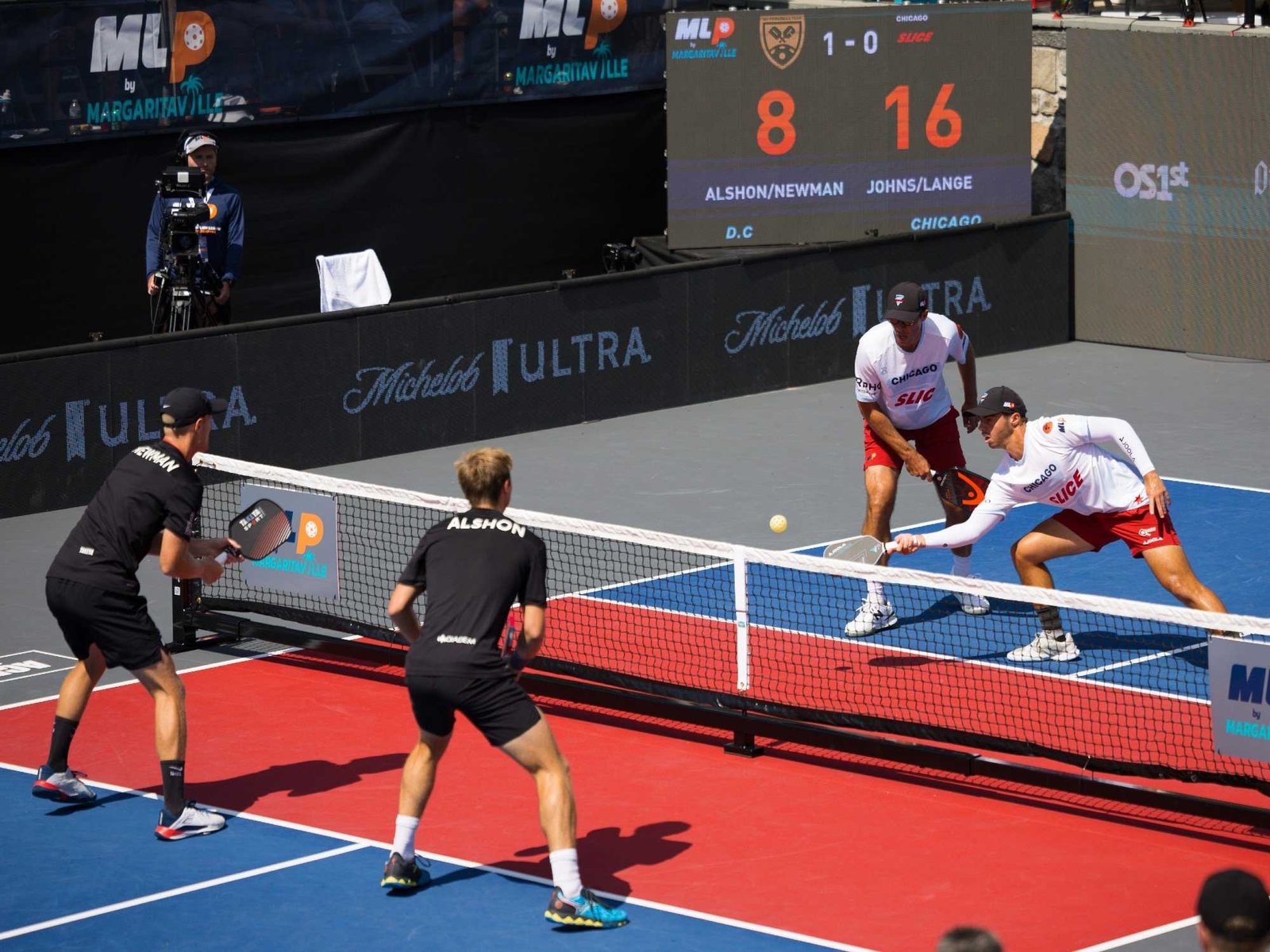
Most intermediate rallies are won and lost in the non-volley zone, and the movement there is unlike anything in the rest of the sport: short lateral shuffles, sudden split-steps, a lunge to one side and an immediate recovery back. That pattern punishes two things — a smooth or shallow outsole tread that lets the shoe skate on the plant, and a soft, tall upper that lets the foot roll over the edge of the midsole. The step-up answers are structural. Look for an outsole pattern that grips in several directions at once (full herringbone, or a multi-directional pattern with a forefoot pivot point), a stability device under the midfoot — a shank or plate that stops the shoe twisting when you plant and turn — and some form of lateral containment: an outrigger flare, a roll guard, a structured overlay or a power clip that keeps your foot centred over the platform when the shuffle turns into a sprint. Every card below names the exact hardware each maker uses for this, because at intermediate level this is the difference that matters most.
Outdoor acrylic eats beginner soles — plan for it
If your games happen on outdoor acrylic over asphalt or concrete — the surface most community and dedicated outdoor courts use — your outsole is grinding against a gritty, abrasive texture every session, and heavier weekly hours simply wear it faster. This is where the step-up tier separates itself: high-abrasion rubber compounds, deeper tread, and outsoles from specialist rubber makers (Vibram on the Tyrol, Michelin on the Babolat) exist specifically to stretch the life of a shoe played hard outdoors. Two cards in this guide — the Selkirk CourtStrike Pro 3.0 and the SQAIRZ XRZ2 — go further and carry written 6-month outsole warranties, which convert durability from a promise into a contract. Indoor wood and sport-court surfaces are far kinder: grip matters more than wear resistance there, and a softer gum rubber like the XRZ2’s is at home. The buying guide at the end of this post walks through matching the outsole to your main surface; the honest starting point is that one shoe can do both, but no shoe is best at both.
How to Read the Specs Like a Step-Up Buyer
Maker spec sheets reward a sceptical reader. Five things to check on every card below — and on any shoe you compare against them.
Outsole: compound name, pattern, and whether a warranty stands behind it
The outsole line is the single most informative line on the sheet. A named compound — carbon rubber, Vibram, Michelin, SmartTraction gum rubber — tells you the maker bought rubber engineering rather than pouring generic stock. The pattern tells you the intent: full herringbone grips and releases in every direction; multi-directional patterns with pivot points are drawn around pickleball’s turn-on-the-spot movement; chevron-style patterns are outdoor wear designs. Finally, check whether anyone guarantees it. A 6-month outsole warranty is the maker putting a date on its durability claim, and for a player logging serious outdoor hours it is worth more than any marketing line about toughness.
Cushioning: a named foam beats a thick foam
Intermediate legs notice cushioning quality in the last games of a session, which is exactly when unnamed EVA starts to feel dead. The step-up tier names its foams: Diadem’s Impact EVA Foam sits in the heel under its Rebound X system, Selkirk’s PureFoam midsole pairs with a removable supercritical foam insole, JOOLA’s Qubit Foam is a supercritical foam reformulated from running-shoe applications, and SQAIRZ builds its Blumaka footbed into the XRZ2 as standard. Supercritical foams are the current step-change in this category — lighter and livelier than standard EVA at the same thickness — and two of the seven cards below use them. What matters for your buying decision is simpler: if the maker names the foam and explains its job, you can compare it; if the listing just says “cushioned midsole,” you are buying blind.
Stability hardware: shanks, plates, outriggers and roll guards
Read the stability line as a parts list. A midfoot shank (Diadem’s Pro Stance X, Selkirk’s TPU shank, JOOLA’s carbon fiber shank, SQAIRZ’s anti-torsion TPU plate) resists twisting when you plant and pivot. An outrigger — a flare of outsole at the lateral forefoot on the Selkirk and the XRZ2 — widens the base exactly where a hard plant tries to roll the shoe. Roll guards and power clips (Diadem’s Rebound X TPU inserts, Tyrol’s medial Power Clip) brace the upper and the toe for drag and push-off. None of this requires faith: each card lists the hardware the maker itself publishes, and shoes with more named parts are, as a rule, the shoes built for harder movement.
Weight: check the basis before you compare the number
Weights in this guide come in three kinds, and mixing them up produces nonsense comparisons. Maker-stated weights carry a size basis — JOOLA’s 350 g per shoe and Babolat’s 325 g in an EU 42.5 are the two clean examples here. Retailer figures are measured or listed on a stated size — the Court Burst’s 14.5 oz in a men’s 10.5 and the Pro 3.0’s 13 oz in a men’s 9 — and are labelled as retailer figures wherever they appear. And some makers publish nothing: Tyrol, SQAIRZ (for the XRZ2) and Acacia list no weight, so those cards print “Not published” instead of borrowing a number from a review. As a rough orientation, step-up pickleball shoes cluster between about 325 g and 415 g per shoe depending on size and build — the stability models sit at the heavier end because support hardware has mass, and that trade is usually worth making.
Fit systems: the intermediate upgrade nobody talks about
Your first shoe fit if your toes survived. Your step-up shoe should fit with intent. The useful fit facts are specific: Tyrol advises ordering the Striker Pro V half a size down because its wide platform fits large; JOOLA advises half a size up in the R4LLy because its performance fit runs snug, and includes a free size exchange; SQAIRZ builds one standard width around a roomier forefoot instead of offering a wide size; Babolat sells the Jet Mach 3 in separate Standard and Wide versions; Acacia’s DinkShot II is a wider fit across its whole unisex range. Extra top eyelets — Diadem’s additional lace loop, Acacia’s PlusLace-style offset eyelet concept on its signature line, Tyrol’s additional heel eyelet — are the small print that lets you lock a heel down without strangling the forefoot. Read the fit line on every card; it is where returns are prevented. For women reading this guide, note that most of these models run in men’s and women’s versions, and our dedicated guide to the best pickleball shoes for women covers the women’s-specific cards in the range.
The 7 Best Pickleball Shoes for Intermediate Players
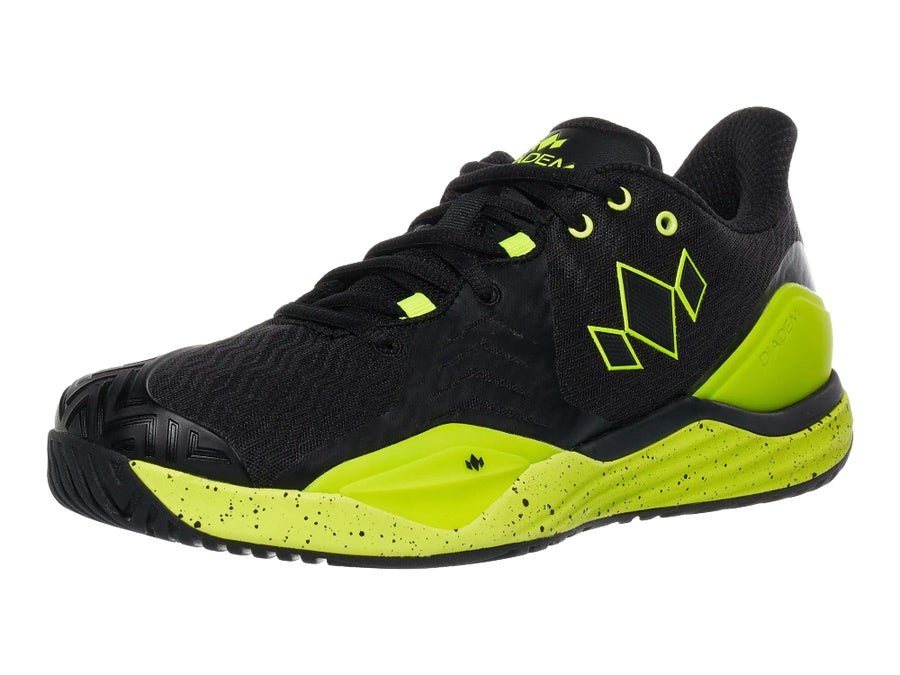
1. Diadem Court Burst
The complete step-up: knit comfort, named stability hardware and a high-abrasion outsole in one shoe
Why it earns the step up. Diadem built the Court Burst as its performance pickleball shoe — the model its own range positions above the recreational Court Flo — and the spec sheet reads like a checklist of everything an intermediate player’s first shoe lacks. Start with the stability system, because it is the most complete in this guide. Diadem’s Rebound X design wraps the shoe in TPU inserts, working with structured tongue wings, as a guard against the foot rolling during lateral movement; underneath, a Pro Stance X shank runs through the midfoot to keep the platform stable when you plant and turn; and under the heel sits Impact EVA Foam for the cushioning layer. Those are three named systems doing three distinct jobs, which is exactly what “step-up” should mean.
Outsole and upper. The outsole is a non-marking, high-abrasion carbon rubber with a full herringbone pattern, plus tighter mini-herringbone sections through the middle of the shoe for extra grip where the foot loads during shuffles. Herringbone is the right default pattern for pickleball’s stop-start movement, and the high-abrasion compound is the detail that matters for outdoor hours: it is Diadem’s answer to acrylic wear. The upper is a lightweight performance knit chosen for ventilation and a conforming fit, with a clear Max Shield toe guard bonded over the toe box — Diadem built it to shrug off the toe drag that kitchen-line lunges inflict on knit uppers. An extra lace loop lets you fine-tune lockdown at the top of the foot, and the insole is removable if you run your own.
Fit, weight and the honest gaps. Retailer listings describe a true-to-size length and medium width, with a slight break-in period before the knit settles; men’s and women’s versions are both sold, in unisex sizing running from women’s 5 to men’s 14. Diadem publishes no official weight and no drop figure — the 14.5 oz in a men’s 10.5 and the 8 mm drop quoted in the chips above come from retailer listings, and they place the Court Burst mid-pack for this guide: not the lightest step-up shoe here, but a reasonable mass for the amount of stability hardware it carries. Two honest trade-offs to weigh. A knit upper will never shrug off abrasion like a leather or heavily overlaid one, Max Shield guard notwithstanding, so committed toe-draggers should inspect the toe area as the season goes on. And unlike the Selkirk and SQAIRZ cards below, the Court Burst carries no written outsole warranty to fall back on.
Who should buy it. The intermediate player who wants one shoe that does everything well — league nights, open play, the occasional tournament — and whose game is built on movement rather than standing power. If your first shoe’s weakness was a bit of everything (grip going, cushioning flat, foot moving inside), this is the balanced correction.
- Three named stability and cushioning systems (Rebound X, Pro Stance X, Impact EVA)
- High-abrasion carbon rubber herringbone outsole for outdoor hours
- Max Shield toe guard protects the knit where toe drag lands
- Extra lace loop and removable insole for fit tuning
- No written outsole warranty
- Knit upper needs watching at the toe over a long season
- Maker publishes no official weight or drop; figures are retailer-listed
As an Amazon Associate, AliShuttler earns from qualifying purchases.
2. Selkirk CourtStrike Pro 3.0
Third-generation step-up: lighter and cooler, with the strongest warranty in this guide
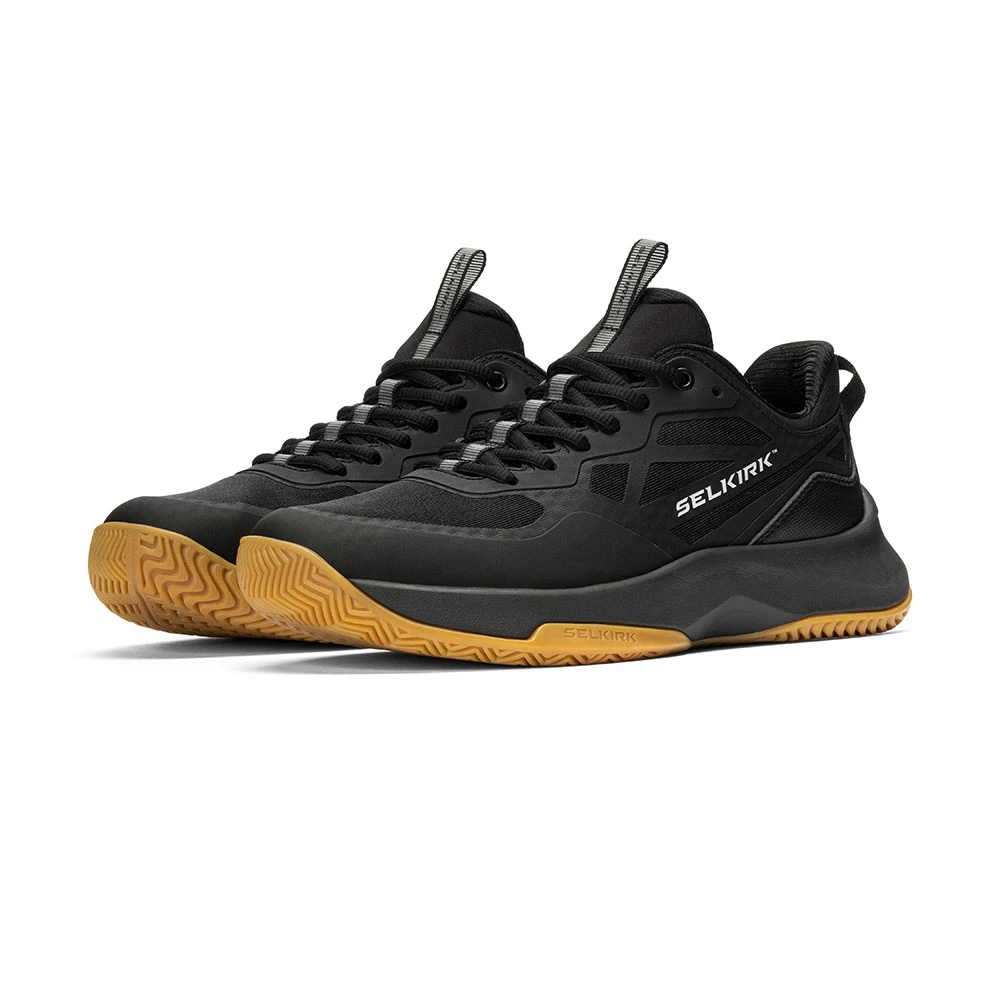
Why it earns the step up. A quick clarification first, because Selkirk’s range now spans three generations: this is the CourtStrike Pro 3.0, the current flagship. Our beginners guide cards the CourtStrike 2.0 — the 3.0 is a different, lighter shoe, redesigned around a new mesh weave upper, an upgraded interior lining and a lighter die-cut insole board, all aimed at cutting weight and heat while keeping the Pro line’s stability character. For an intermediate player, that combination — performance structure without the heavy build — is precisely the step-up formula, and Selkirk backs the outsole with a 6-month warranty, the clearest written durability commitment in this guide alongside the SQAIRZ.
The cushioning stack is the headline. Selkirk calls it a multilayer cushioning system: an EVA PureFoam midsole does the main work, and a removable supercritical foam insole sits on top of it, so the layer your foot actually stands on is the liveliest foam in the shoe. The midsole is Selkirk’s High-Rebound design, paired with a TPU shank for torsional stability through aggressive lateral cuts. Underneath, the abrasion-resistant rubber outsole uses Selkirk’s 4-Way Grip pattern with a stability outrigger flaring at the forefoot — grip in every direction the kitchen line demands, on a widened base for the plant. An ergonomic heel cockpit and performance lacing finish the lockdown picture, and the supportive overlays on the mesh weave are placed in the high-wear zones so the lighter upper keeps its structure.
Fit and the honest gaps. The fit is performance-oriented, in men’s sizes 7–14 with a women’s line alongside. Selkirk does not publish an official weight for the 3.0; the 13 oz figure in the chips is a retailer listing for a men’s 9, and on that basis it is one of the lighter stability builds here. The trade-offs are the honest ones that come with a lighter shoe: there is less material between your foot and the court than in the heavy-duty cards, so players who prioritise maximum upper armour over speed should compare the Tyrol below. And while the 6-month outsole warranty protects the rubber, it does not cover the upper — read it as an outsole promise, not a whole-shoe one.
Who should buy it. The intermediate who plays a fast, hands-at-the-net game and wants stability hardware without a heavy shoe — and anyone whose previous step was ruined by a sole that wore smooth in a season. The warranty makes this the lowest-risk upgrade in the list.
- 6-month outsole warranty — durability as a written promise
- Supercritical foam insole over a PureFoam midsole
- Lighter, cooler third-generation build with real stability hardware
- Outrigger and 4-Way Grip pattern drawn for pickleball movement
- Lighter build means less upper armour than the heavy-duty options
- Maker publishes no official weight; figure is retailer-listed
- Warranty covers the outsole, not the upper
As an Amazon Associate, AliShuttler earns from qualifying purchases.
3. JOOLA R4LLy
The pro-designed flagship: supercritical foam, a carbon shank and a Cordura upper at 350 g
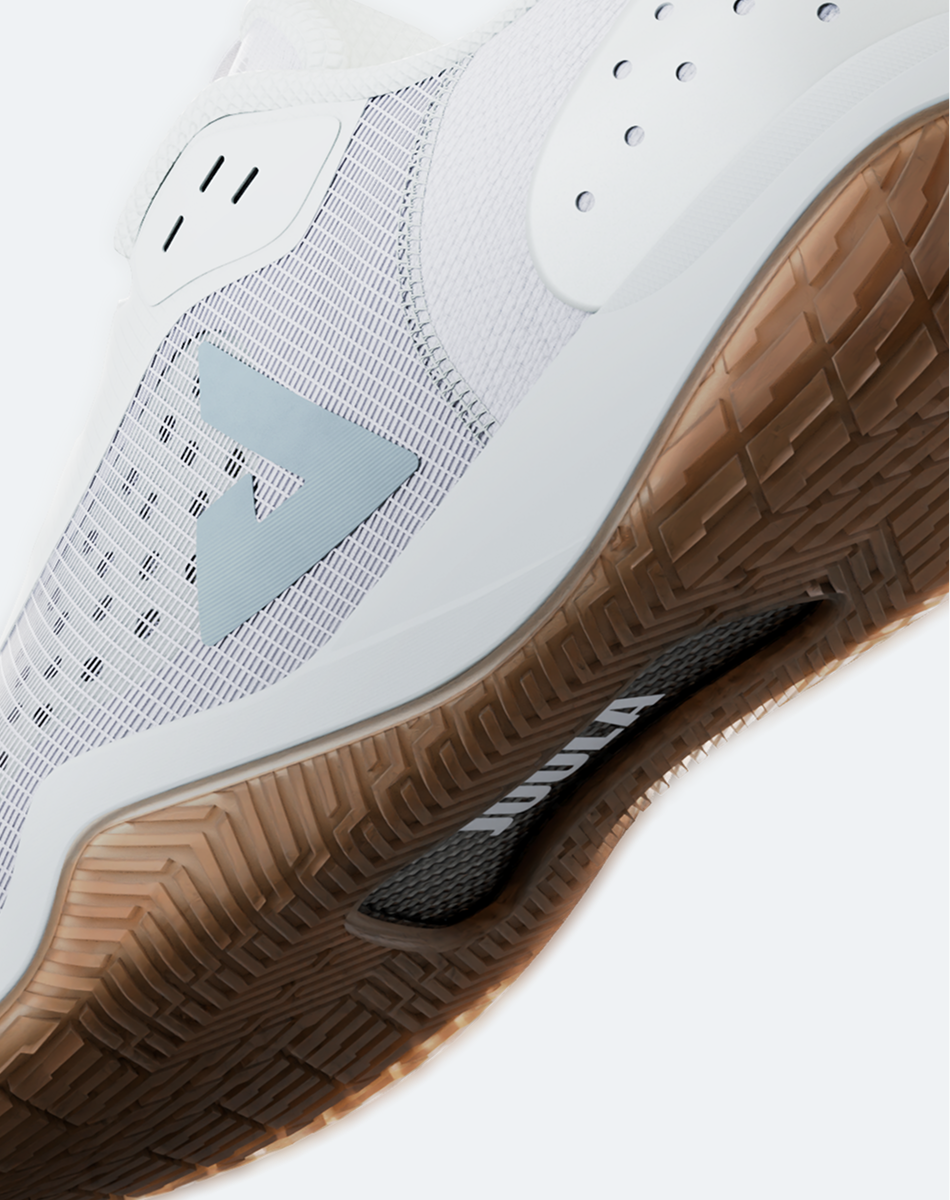
Why it earns the step up. The R4LLy is JOOLA’s first performance pickleball shoe, designed top-down for the sport with input from world No. 1 Ben Johns — and “top-down” is the point for an intermediate buyer. Nothing here is adapted from another sport. The midsole is Qubit Foam, a supercritical foam of the kind used in performance running shoes, reformulated by JOOLA for pickleball’s stop-start load: it is there to keep the shoe responsive through long rallies rather than packing down into a dead slab. Through the midfoot runs a carbon fiber shank — the stiffest stability material in this guide — reinforcing the platform for twist-free lateral cuts and pivots. At JOOLA’s stated 350 g per shoe, it is also one of the lightest cards here, and the only one whose low weight comes with a carbon plate rather than simply less shoe.
Upper and fit system. The upper is Cordura Advanced Fabric, an abrasion-resistant textile JOOLA chose specifically because pickleball players drag a foot at the kitchen line; it is built to survive that friction without going stiff, and a CPU2K protective toe cap shields the highest-wear zone at the front. The fit comes from a Dynamic Fit Sleeve that wraps the midfoot for a locked-in, customisable hold, reducing in-shoe movement on cuts and split steps. The forefoot is deliberately wider, allowing natural toe splay for balance during kitchen resets. JOOLA is unusually direct about sizing: the performance fit runs snug, it recommends going half a size up, and it includes one free size exchange with every pair — the most buyer-friendly fit policy in this guide, and a sign of a maker that knows its last is aggressive.
The honest gaps. The R4LLy sits at the premium end of this list, and it is a young model: the long-term wear record that older shoes carry simply does not exist yet, and JOOLA offers no outsole warranty of the kind Selkirk and SQAIRZ publish. The snug performance fit that makes it feel fast will not suit a genuinely wide foot even a half size up — wide-foot players should start with the XRZ2 or the DinkShot II below. And the outsole, while rated by JOOLA for both indoor and outdoor courts, is a durability-graded rubber rather than a branded high-abrasion compound, so the heaviest outdoor grinders should weigh the Tyrol’s Vibram sole carefully against it.
Who should buy it. The intermediate moving toward competitive play — ladders, leagues, first tournaments — who wants the fastest, most modern build in the guide and is willing to pay the premium tier for a carbon shank and a supercritical midsole at 350 g.
- Carbon fiber shank — the strongest stability hardware in the guide
- Qubit Foam supercritical midsole built for pickleball loads
- Cordura upper and CPU2K toe cap designed around kitchen-line drag
- Maker-stated 350 g weight; free size exchange included
- Premium tier of this list
- No written outsole warranty
- Snug performance fit is the wrong shape for wide feet
As an Amazon Associate, AliShuttler earns from qualifying purchases.
4. Tyrol Striker Pro V
The outdoor grinder’s shoe: a Vibram outsole on Tyrol’s wide, braced platform
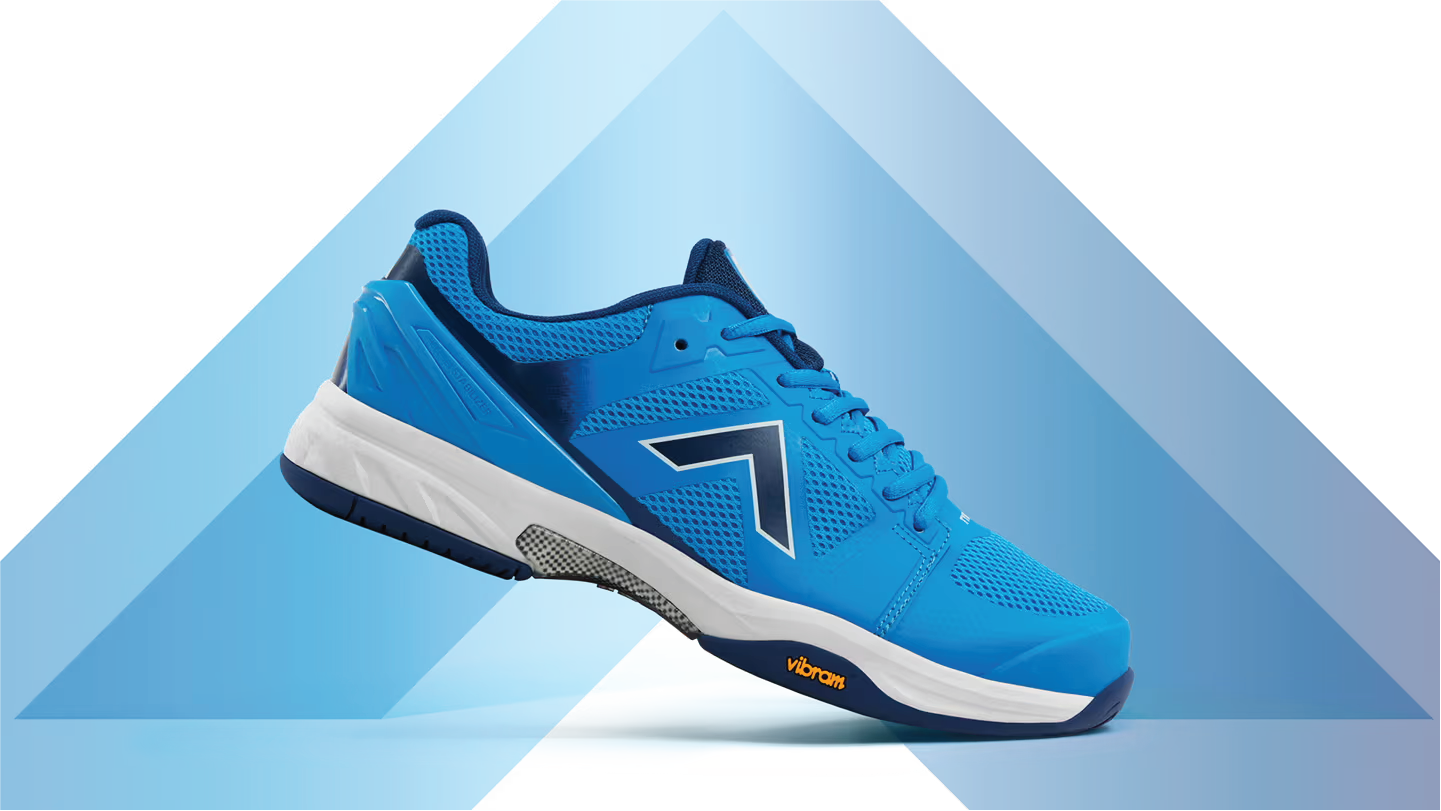
Why it earns the step up. Tyrol is a pickleball-only footwear maker, and the Striker Pro V is the outdoor-performance end of its V platform — the same platform the beginners guide met in lightweight knit form in the Velocity V, here in its braced, hard-wearing specification. The headline is the outsole: Tyrol worked with Vibram to develop a pickleball outsole that holds up to outdoor play, and fits it to the Striker Pro V and its Drive V sibling. Vibram is the name outdoor and work footwear trusts for abrasion resistance, and on gritty acrylic that compound choice is the difference between a sole that lasts the season and one that polishes smooth by midsummer. Tyrol builds outdoor versions with a harder rubber and a chevron pattern for exactly this reason, and the Striker Pro V is its multi-surface execution of that idea.
The bracing is the second half of the story. The Striker Pro V adds two pieces of hardware the lighter Tyrols skip. The Power Clip is a rubber toe bumper that continues up the medial side of the shoe, supporting the foot as you step into a shot and giving toe-draggers material to drag on instead of upper fabric. An exterior heel counter, paired with an additional lacing eyelet, holds the heel and keeps the foot aligned through direction changes. Underneath, the phylon midsole is Tyrol’s anti-fatigue layer, the platform is wide with a sculpted heel, and Tyrol states a low 4 mm heel-toe drop across its line, keeping the shoe close to the court for balance at the kitchen line. Everything about this shoe is biased toward the player who plays outdoors, plays often, and destroys shoes.
Fit and the honest gaps. Tyrol’s own sizing guidance is essential reading: the Striker Pro V fits large because of its toe box width and height, and Tyrol recommends going down half a size from your usual athletic shoe size — follow that advice rather than ordering your normal size and hoping. Tyrol publishes no weight for the model, so this card prints Not published; the braced build is not the lightest thing in this guide, and players chasing the lightest possible shoe should look at the JOOLA or the Babolat. Tyrol also sells the indoor Striker Pro line separately; if your play is mostly on wood or sport court, that softer-compound sibling is the better-matched Tyrol, and the V’s harder outdoor rubber is more shoe than you need.
Who should buy it. The outdoor intermediate — park leagues, dedicated acrylic courts, summer heat — whose previous shoe died at the outsole or the toe, and who wants a wide, stable platform with the most credible outdoor rubber in the guide.
- Vibram outsole developed with Tyrol for outdoor pickleball wear
- Power Clip and exterior heel counter brace the shoe for hard play
- Wide toe box and low 4 mm drop suit kitchen-line balance
- Clear maker sizing guidance (half a size down)
- No published weight
- Fit runs large — sizing mistake is the common failure here
- Outdoor-biased rubber is more than indoor-only players need
As an Amazon Associate, AliShuttler earns from qualifying purchases.
5. SQAIRZ XRZ2
Built around a patented roomier toe box, with an anti-torsion plate and four outriggers
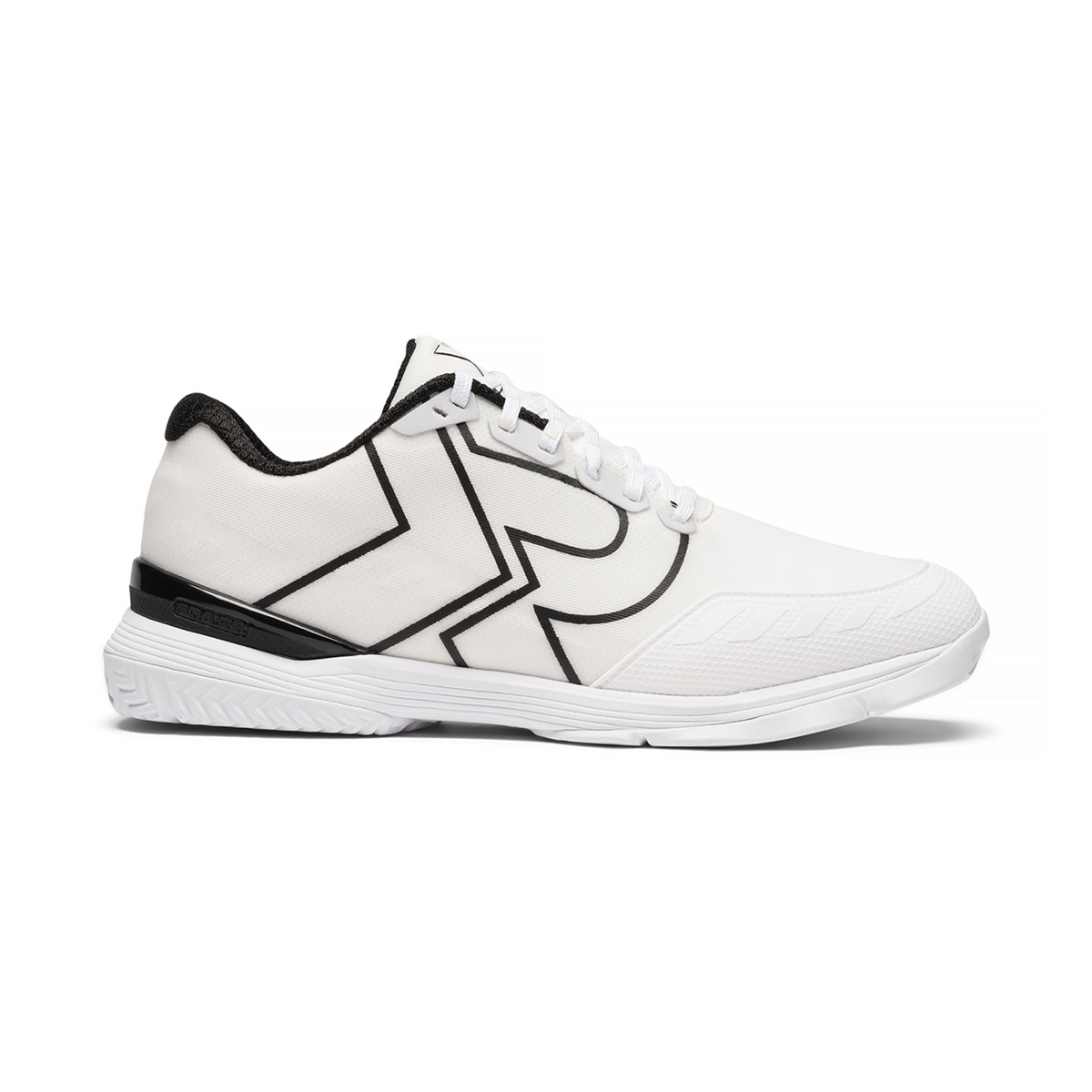
Why it earns the step up. The XRZ2 is SQAIRZ’s second-generation pickleball shoe, and its whole design starts from one idea: the toe box. SQAIRZ’s patented geometry gives the forefoot a roomier, squarer shape so the toes can spread and engage the ground naturally, building a wider, more stable base under the ball of the foot for cuts and pivots. If you have ever felt your forefoot cramp or your toes jam in a tapered court shoe during a long morning of kitchen-line play, this is the card aimed at you — and it delivers the room inside a single standard width, so the midfoot and heel stay secure instead of swimming the way they can in a generic wide size. For intermediate players whose feet have started objecting to narrow shoes, it is the most distinctive fit proposition in this guide.
The stability hardware matches the fit idea. An external Anti-Torsion TPU plate runs heel to forefoot to control twisting and keep every step planted. The open-cell mesh upper carries a HexGuard hot-melt structural overlay across the lateral and medial stress zones, limiting unwanted flex when you load the shoe sideways. A redesigned CPU abrasion-resistant toe cap handles drag wear. Underfoot, the SmartTraction gum rubber outsole runs a multi-directional herringbone tread with forefoot pivot points and four lateral outriggers — the widest stability base in this guide. The NRG foam midsole is tuned for responsive cushioning and energy return, and the Blumaka non-slip footbed is built in as standard to stop the foot sliding inside the shoe; its Sta-Put lace system and reinforced eyelets keep the whole assembly locked. SQAIRZ then backs the shoe twice: a 6-month sole warranty and a 30-day performance guarantee — try it on court, and the decision is reversible.
The honest gaps. SQAIRZ publishes no weight for the XRZ2, so the card prints Not published rather than borrowing the original XRZ’s figures. The gum rubber outsole is at its best on indoor and clean hard courts; players whose game lives on gritty outdoor acrylic should compare the Tyrol’s Vibram compound and the Selkirk’s written warranty with outdoor wear in mind. And the roomy forefoot is a genuine shape commitment: players with narrow feet may find more room than they want up front, even with the Sta-Put laces cranked down. SQAIRZ’s own sizing guidance (your usual size if you wear K-Swiss, ASICS, New Balance or Babolat; half a size down from Nike, Skechers, adidas or Wilson) is worth following precisely.
Who should buy it. The intermediate with a wider forefoot, or anyone whose current shoe pinches at the toes during long sessions — and players who value being able to test a step-up shoe on court for 30 days before the decision is final.
- Patented roomier toe box solves a real fit problem without a sloppy wide size
- Anti-torsion plate, HexGuard overlay and four outriggers — serious stability parts
- Blumaka performance footbed included as standard
- 6-month sole warranty plus a 30-day performance guarantee
- No published weight
- Gum rubber is happiest indoors and on clean courts
- Roomy forefoot can feel like too much shoe for narrow feet
As an Amazon Associate, AliShuttler earns from qualifying purchases.
6. Babolat Jet Mach 3
The tennis speed shoe competitive pickleball players adopt: Matryx EVO, Michelin rubber, 325 g
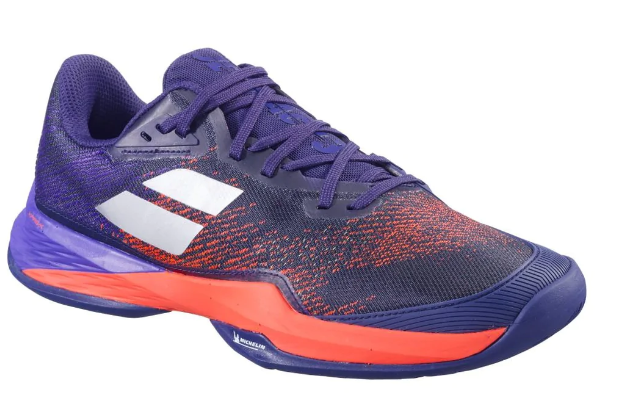
Why it earns the step up — with the honest framing up front. The Jet Mach 3 is a tennis shoe. Babolat sells it as its competitive speed model for tennis players, it is not carded as a pickleball shoe by its maker, and we are not going to pretend otherwise. It earns its place in this guide because a large number of competitive pickleball players wear it anyway, and when you read the spec sheet you can see why: it is the lightest shoe in this guide at Babolat’s stated 325 g, its outsole is a Michelin compound, and its upper is one of the most engineered textiles in court footwear. Retailers file it for tennis and pickleball alike. For the intermediate player coming from a tennis background — or simply prioritising speed above everything — it is the crossover benchmark the purpose-built shoes are measured against.
The technology, piece by piece. The upper is Matryx EVO, a patented fabric Babolat developed with French technical textile specialist Chamatex: high-tenacity Aramid and PAHT polyamide yarns are woven in precise zones, so the upper is light and abrasion-resistant where it needs to be and flexible where it should be, with the “Stability Arch” system holding the midfoot. Cushioning is the KPRS-X system, upgraded for this generation with a softer, lower-hardness EVA pad through the whole heel area and a heel rocker that helps the foot roll from braking into acceleration. The Michelin Premium outsole has been redesigned with more tread surface and thickness in the highest-abrasion zones and less where wear is low — exactly the wear map an outdoor pickleball player produces. A rubber forefoot protection piece guards the drag zone.
Fit and the honest gaps. The Jet Mach 3 is sold in Standard and Wide fits, which quietly makes it one of only two cards in this guide with a true wide option. Retailer fit notes describe a slightly snug length and medium width on the standard version, so wide-foot players should start with the Wide. The crossover compromises are real: the tread pattern was drawn for tennis movement rather than pickleball’s pivot-heavy game, the 10 mm drop (a retailer spec-listing figure; Babolat does not headline it) sits higher than the low platforms purpose-built pickleball shoes favour, and there is no pickleball-specific outrigger or roll guard. What you get instead is pace, a proven Michelin sole and the best textile upper in the list.
Who should buy it. The tennis convert playing pickleball at intermediate level, and any player whose step-up priority is outright speed and a lightweight, breathable shoe — with eyes open that it is a brilliant court shoe adopted by pickleball rather than designed for it.
- Lightest card in the guide at a maker-stated 325 g
- Michelin Premium outsole with wear-mapped tread thickness
- Matryx EVO woven upper — support engineered into the textile itself
- Sold in Standard and Wide fits
- A tennis shoe by design — tread and geometry are not pickleball-specific
- Higher 10 mm drop than purpose-built pickleball platforms
- No outrigger or roll-guard hardware for hard lateral plants
As an Amazon Associate, AliShuttler earns from qualifying purchases.
7. Acacia DinkShot II
The accessible step-up: Kevlar drag guards and a true wide fit from a pickleball-only brand
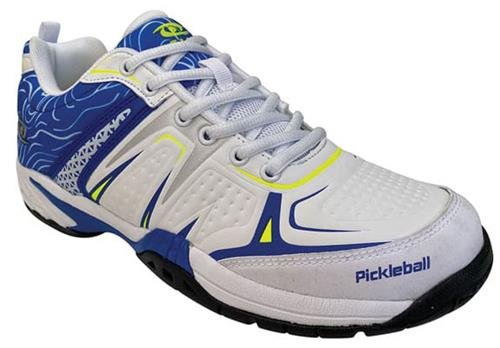
Why it earns the step up. Not every step-up has to be a flagship. The DinkShot II is Acacia’s accessible performance shoe — Acacia being one of the few brands that makes nothing but pickleball footwear — and for the intermediate whose main problems are a narrow, pinching first shoe and a toe area wearing through, it solves both at the sensible end of the range. The defining feature is fit: every DinkShot II is a wider fitting (Acacia marks the line W) with a wide toe box, in unisex sizing across men’s and women’s ranges. If your first shoe was a standard-width model that your forefoot has been fighting since month two, the step up here is simply room — real room, built into the last, not achieved by sizing up and accepting a sloppy heel.
The hardware is honest and pickleball-specific. The outsole is a high-abrasion contoured design in non-marking anti-wear natural rubber, with an elevated heel that Acacia builds in for leverage and balance. Kevlar drag guards reinforce the zones that kitchen-line lunges and defensive scrambles grind away — Kevlar is the same fibre family Acacia uses on its signature shoes’ guards, and it is the right material for the job. The upper is a polymer microfiber with reinforced ankle support and metal grommets at the eyelets, small details that hold up over a season of hard lacing. Cushioning is Acacia’s water-resistant ARK-Technology EVA midsole, with a honeycomb-memory foam insole that adds airflow channels to the step-in comfort. Nothing on this spec sheet is borrowed from another sport, and nothing is oversold: there is no shank and no supercritical foam, and the card does not pretend otherwise.
The honest gaps. Set against the top of this guide, the DinkShot II’s platform is simpler — EVA rather than a named rebound system, no midfoot shank or plate — so players whose games have become genuinely explosive, with hard plants and sharp direction changes every rally, will feel the ceiling sooner here than in the Diadem, Selkirk or JOOLA. Acacia publishes no weight for it, and there is no written outsole warranty. What you get instead is the widest standard fit in the guide, drag protection in the right material, and a pickleball-only design at the accessible end of the step-up tier.
Who should buy it. The wide-foot intermediate whose step-up problem is fit and toe wear rather than top-end hardware — and any player who wants a purpose-built second pair for outdoor rotation without paying flagship money twice. If you are still in your first season and deciding between this and a first pair, our best pickleball shoes for beginners guide will help you place it.
- Genuinely wide fit across the whole unisex range
- Kevlar drag guards where intermediate toe wear actually happens
- Purpose-built pickleball design at the accessible end of the tier
- Honeycomb-memory foam insole and metal-grommet eyelets — durable small print
- Simpler platform: plain EVA, no shank or plate
- No published weight and no outsole warranty
- Explosive players will find its ceiling sooner than the flagships
As an Amazon Associate, AliShuttler earns from qualifying purchases.
Comparison Table — Best Pickleball Shoes for Intermediate Players
| Shoe | Best For | Outsole | Cushioning | Stated Weight & Basis | Fit & Widths |
|---|---|---|---|---|---|
| Diadem Court Burst | Best overall step-up | High-abrasion carbon rubber, full herringbone | Rebound X with Impact EVA Foam heel | 14.5 oz, men’s 10.5 (retailer listings) | True to size, medium; men’s and women’s |
| Selkirk CourtStrike Pro 3.0 | Stability with a warranty | Abrasion-resistant rubber, 4-Way Grip, outrigger | EVA PureFoam + supercritical foam insole | 13 oz, men’s 9 (retailer listing) | Performance fit; men’s and women’s |
| JOOLA R4LLy | Premium speed | Durable rubber, indoor and outdoor | Qubit Foam supercritical midsole | 350 g per shoe (JOOLA) | Snug performance fit — half a size up advised |
| Tyrol Striker Pro V | Outdoor durability | Vibram rubber, multi-surface chevron | Phylon midsole | Not published | Wide platform; fits large — half a size down advised |
| SQAIRZ XRZ2 | Wide toe box | SmartTraction gum rubber, pivot points, four outriggers | NRG foam + Blumaka footbed | Not published | Standard width with a roomier forefoot |
| Babolat Jet Mach 3 | Crossover speed | Michelin Premium DIN20 rubber | KPRS-X EVA heel system | 325 g, EU 42.5 (Babolat) | Standard and Wide versions |
| Acacia DinkShot II | Wide-fit value | Anti-wear natural rubber, contoured, elevated heel | ARK-Technology EVA; honeycomb-memory foam insole | Not published | Unisex wider fit (W) |
Read the weight column with its basis attached: maker-stated figures (JOOLA, Babolat) are measured on the sizes shown, retailer figures (Diadem, Selkirk) are labelled as such, and “Not published” means the maker lists no weight at all — we would rather show the gap than fill it with a number from a review.
Buying Guide — Choosing Your Step-Up Pair
Start with your surface, not with the shoe
Your main surface decides which half of this guide you should shop from. Mostly outdoor acrylic: prioritise outsole compound and written cover — the Tyrol’s Vibram sole, the Babolat’s Michelin rubber, and the Selkirk’s 6-month outsole warranty are the three durability answers, in different shapes. Mostly indoor wood or sport court: grip and court feel lead, wear is a minor issue, and the XRZ2’s gum rubber and the herringbone shoes come into their own. Genuinely mixed play is the Court Burst’s home ground — a high-abrasion herringbone outsole with no surface specialisation. Be honest about the split; most players overestimate their indoor share because indoor sessions feel more “serious,” while the outdoor hours do the wearing.
Match the shoe to your movement, not your rating
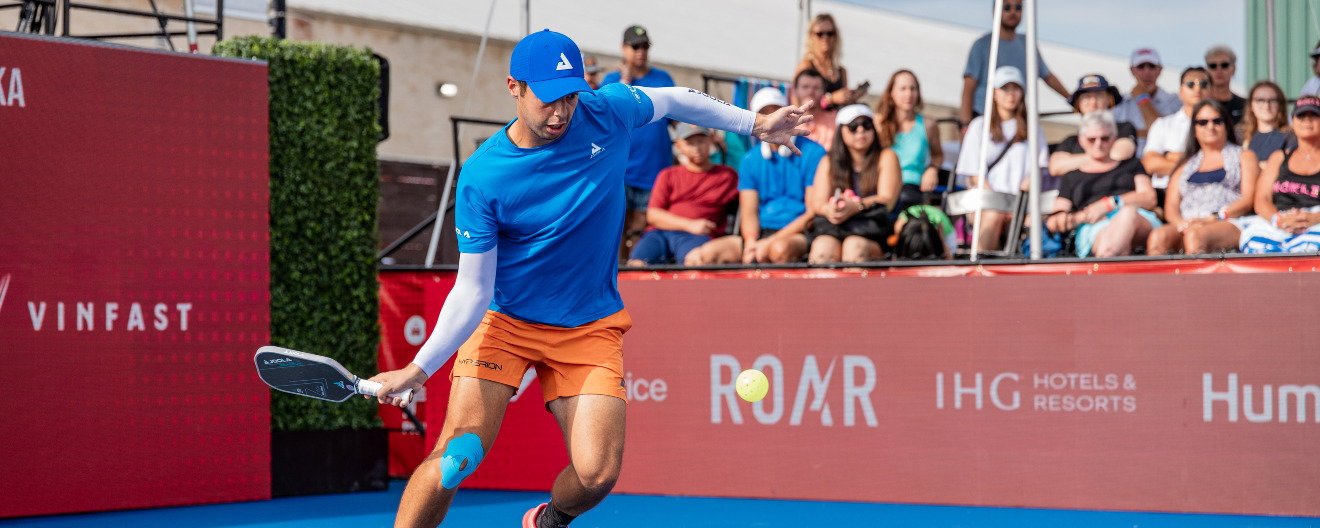
Ratings do not wear shoes out; movement does. If your game is built on kitchen-line patience — long dink exchanges, hands battles, constant lateral shuffling — weight stability and lockdown first: the CourtStrike Pro 3.0’s outrigger and shank, the XRZ2’s anti-torsion plate and outriggers, the Court Burst’s Rebound X system. If your game is built on court coverage — running down lobs, singles, aggressive drives followed by sprints to the net — the light builds earn their keep: the R4LLy’s carbon-shanked 350 g platform and the Jet Mach 3’s 325 g speed build. If you are honestly both, the Court Burst is the compromise the guide ranked first precisely because it gives up the least on either side.
Buy the fit system, not just the size
At intermediate hours, fit mistakes stop being annoyances and start ending sessions early. Use the makers’ own guidance — it is unusually specific in this guide. Tyrol: half a size down in the Striker Pro V. JOOLA: half a size up in the R4LLy, with a free exchange if you still miss. SQAIRZ: standard width, roomier forefoot; follow its brand-conversion advice if you are coming from Nike, Skechers, adidas or Wilson. Wide feet have three genuine doors here — the XRZ2’s toe box geometry, the Jet Mach 3’s separate Wide version, and the DinkShot II’s wider fit throughout. Narrow feet should avoid all three and start with the R4LLy or the CourtStrike Pro 3.0. Whatever you choose, leave a thumb’s width in front of your longest toe and lace the runner’s loop for your first sessions; a shoe that fits at the kitchen line is laced differently from a shoe that fits in the shop.
Rotate if you can, replace on evidence
Two practical habits extend a step-up shoe’s life. First, if you play four or more times a week, rotating two pairs lets each midsole recover between sessions and roughly doubles the calendar life of both — the DinkShot II exists in this guide partly as the sensible second pair. Second, replace on evidence rather than on the calendar: tread worn smooth at the forefoot pivot, visible midsole creasing that no longer springs back, an upper tearing at the drag zone, or a heel counter that folds under thumb pressure. A worn step-up shoe does not announce itself; it just starts giving back a half-step of slide and a little less platform every week. Players stepping up from our seniors coverage will find the same replacement logic in the best pickleball shoes for seniors guide, tuned for support-first priorities.
The one-sentence filter
If you only remember one line from this section, make it this: buy the shoe whose spec sheet answers the specific way your first pair failed — sole, cushioning, lockdown or fit — instead of the shoe with the longest feature list. Every card above names its hardware precisely so you can run that test.
Frequently Asked Questions
What makes a pickleball shoe an intermediate shoe rather than a beginner shoe?
Named, job-specific hardware. A beginner shoe needs to be a proper court shoe; an intermediate shoe adds a branded or high-abrasion outsole compound, a named cushioning system (ideally a supercritical foam), explicit stability parts such as a shank, plate, outrigger or roll guard, and drag protection where kitchen-line play wears uppers through. The intermediate player plays more hours and moves harder, so the shoe has to be built — and specified — for wear and lateral load, not just for grip on day one.
Should intermediate players buy indoor or outdoor pickleball shoes?
Buy for the surface you play most. Outdoor acrylic is abrasive and wears soles quickly, so outdoor players should favour high-abrasion compounds (Vibram, Michelin, high-abrasion carbon rubber) and written outsole warranties. Indoor wood and sport-court surfaces reward grip and court feel, where softer gum rubber excels and wear is slow. Versatile builds like a full herringbone outsole sit between the two; no shoe is simultaneously the best indoor and best outdoor option.
How long should a step-up pickleball shoe last?
It depends on hours and surface more than on the calendar. Outdoor acrylic at several sessions a week is the hardest use case in this guide; indoor play is the kindest. Replace on evidence: forefoot tread worn smooth, a midsole that stays creased and feels flat, upper damage at the drag zone, or a heel counter that has gone soft. Shoes carrying a 6-month outsole warranty (the Selkirk CourtStrike Pro 3.0 and the SQAIRZ XRZ2 in this guide) put a written floor under outsole life.
Are tennis shoes like the Babolat Jet Mach 3 okay for intermediate pickleball?
They can be, with eyes open. The Jet Mach 3 brings the lightest build in this guide, a Michelin outsole and a superb woven upper, which is why competitive pickleball players adopt it. The compromises are that its tread and geometry were designed for tennis movement, its drop sits higher than purpose-built pickleball platforms, and it has no pickleball-specific outrigger or roll guard. If speed is your priority and you accept the crossover trade-offs, it is a legitimate step-up; if kitchen-line stability is your priority, choose a purpose-built card.
Do intermediate players need a wide toe box for pickleball?
Only if your feet tell you so. A roomier toe box helps if your forefoot feels pinched in standard shoes, your toes jam on hard stops, or you play long sessions in heat, when feet swell. The XRZ2 builds the room into a standard-width shoe, the DinkShot II is a wider fit throughout, and the Jet Mach 3 sells a separate Wide version. If standard shoes fit you comfortably, a performance last like the R4LLy’s will feel more secure, not less.
What does a 6-month outsole warranty actually cover?
It covers the outsole wearing through within six months of purchase, under the maker’s terms — typically wearing down to the midsole in normal play. It does not cover the upper, the cushioning feel, or damage from misuse. For an intermediate player logging heavy outdoor hours, it converts the maker’s durability claim into something enforceable, which is why this guide treats the Selkirk and SQAIRZ warranties as genuine buying factors rather than fine print.
How should intermediate pickleball shoes fit?
Snug through the heel and midfoot with roughly a thumb’s width in front of your longest toe, and no sideways slop at the forefoot when you plant. Follow each maker’s guidance where it exists: half a size down for the Tyrol Striker Pro V, half a size up for the JOOLA R4LLy, and use extra top eyelets or a runner’s loop to lock the heel for your first sessions. Fit them at the end of the day, in your playing socks, and judge them on a lateral shuffle — not on a walk around the shop.
Our Verdict
For most intermediate players, the step up to make is the Diadem Court Burst: it is the only shoe in this guide with a named answer for every intermediate problem — Rebound X and Pro Stance X for the kitchen line, Impact EVA for the late-session legs, a high-abrasion herringbone outsole for the outdoor hours, and a guarded knit upper for the drag zone. If durability certainty matters more than all-round balance, take the Selkirk CourtStrike Pro 3.0 and its 6-month outsole warranty. If you are moving toward competition, the JOOLA R4LLy is the fastest, most modern build here. Outdoor grinders belong in the Tyrol Striker Pro V, wide feet in the SQAIRZ XRZ2 or the Acacia DinkShot II, and tennis converts in the Babolat Jet Mach 3. Whichever you choose, you are buying named hardware over generic foam — and that, at this level, is the whole game. For the full spread of pickleball footwear at every level, return to our pillar guide to the best pickleball shoes.
Affiliate disclosure: AliShuttler is reader-supported. When you buy through links on this page we may earn an Amazon commission at no extra cost to you. Every specification above is taken from the maker’s own listing or a named retailer source, checked on the build date; models were chosen on their published specs, never on commission. Prices are intentionally not listed because they change — check the current price on the product page.