Your racket gets the credit, but the string does the hitting. Every smash, clear and tumbling net shot is decided by a bed of nylon thinner than a credit card is thick — and the difference between a 0.70 mm durability string and a 0.63 mm repulsion string is bigger than the difference between two rackets. This guide decodes gauge properly, then matches the best string to every style of player.
TL;DR — The short answer
Buying your first real string? Get the Yonex BG65 — the 0.70 mm durability classic that survives beginner mishits and feels soft while you learn. Break strings but hit hard? The BG65 Titanium adds a titanium hydride coating for power at the same gauge. Power player? The Yonex BG80 wraps its core in Vectran fibre for a hard, crisp, tension-holding bed. Want maximum repulsion? The Exbolt 63 is the thinnest string here at 0.63 mm. Prefer Li-Ning? The No.1 is its 0.65 mm high-repulsion flagship. All-court club player? Victor’s VBS-66 Nano balances repulsion and durability at 0.66 mm, and control players should look at the Exbolt 68 — an oval forged-fibre string built for shuttle hold. The full reasoning is below.
Yonex BG65
0.70 mm. The durability default — soft feel, survives off-centre hits, kind to new arms.
Yonex BG65 Titanium
0.70 mm plus a titanium hydride coating — BG65 toughness with a harder, punchier hit.
Yonex BG80
0.68 mm with a Vectran-wound core. Hard feel, sharp repulsion, holds tension.
Yonex Exbolt 63
0.63 mm forged fibre. The fastest snap-back and sharpest sound in this guide.
Victor VBS-66 Nano
0.66 mm nano-core all-rounder — Victor rates it 9/10 repulsion and 8/10 durability.
Yonex Exbolt 68
0.68 mm oval forged fibre with an elasticity coating — built for shuttle hold.
On this page
- Why the string decides more than the racket
- Gauge explained: what 0.63 to 0.70 mm really changes
- Inside a string: cores, braids and coatings
- 1. Yonex BG65 — Best for Beginners
- 2. Yonex BG65 Titanium — Best Durable Trainer
- 3. Yonex BG80 — Best for Power & Hard Hitters
- 4. Yonex Exbolt 63 — Best for Maximum Repulsion
- 5. Li-Ning No.1 — Best High-Repulsion Alternative
- 6. Victor VBS-66 Nano — Best Balanced Control
- 7. Yonex Exbolt 68 — Best for Control & Feel
- Comparison table
- Buying guide: style, tension and when to restring
- FAQs
Why the string decides more than the racket
Here is the uncomfortable truth of badminton equipment: the shuttle never touches your racket. It touches the string bed — for a few milliseconds, on a surface woven from synthetic fibres each about as thick as a human hair is wide, several times over. The frame’s job is to hold that bed at tension and deliver it to the shuttle; everything you describe as a racket’s “power” or “feel” is mostly the string stretching, gripping and snapping back. Change the string and the same racket becomes a different weapon. Keep the factory string too long and even the best frame plays dead.
That is exactly where most beginners sit. If you bought a racket from our best badminton rackets for beginners guide, it almost certainly arrived strung with a basic, durable factory string at a modest tension — sensible for shipping, forgettable for playing. Your first restring is the cheapest genuine upgrade in the sport: one packet of string and a stringer’s labour transforms the racket you already own. This guide is about choosing that packet well — by gauge first, by construction second, and by brand last.
One discipline note before the picks: every number in this guide is a manufacturer’s published specification — gauge, length, core and coating materials, and the makers’ own chart ratings where listings publish them. There are no break-frequency statistics or durability hour-counts here, because no honest standardised test produces them. Where a brand prints a rating, we say whose chart it is — and the scales are not comparable across brands, a point the buying guide returns to.
Gauge explained: what 0.63 to 0.70 mm really changes
Gauge is simply the string’s diameter in millimetres, and badminton strings live in a narrow band — roughly 0.61 mm at the extreme thin end to 0.72 mm or so at the durable end. Seven-hundredths of a millimetre sounds like nothing. On court it is the single biggest variable in how a string plays, because of how a string bed generates power. When the shuttle lands, the bed deflects and stretches, storing energy like a trampoline, then snaps back and returns that energy to the shuttle. A thinner string stretches more easily and snaps back faster: more repulsion, a sharper sound, a livelier feel. A thicker string stretches less and feels firmer and duller — but it has far more material to wear through before it fails.
That is the whole trade, and it runs in one direction: the thinner the string, the more repulsion and feel you get, and the faster it wears; the thicker the string, the longer it lasts, and the less free power it hands you. Thin strings also concentrate the same impact force onto less material, and they die most often not in the middle of a clean smash but on an off-centre mishit near the frame, where a thin cross-section has nothing spare. This is why gauge should be chosen by how cleanly you strike the shuttle, not by how hard you swing:
| Gauge band | The zone | What you gain | What you give up | Who it suits |
|---|---|---|---|---|
| 0.61–0.65 mm | Repulsion zone | Maximum trampoline effect, crisp sound, delicate feel | Shortest life; mishits near the frame can end a string in one rally | Advanced players with a grooved, centred strike |
| 0.66–0.68 mm | Performance middle | Most of the repulsion, real durability, firmer feel options | A step behind the thinnest strings for raw snap | Intermediate and club players — the sweet spot for most |
| 0.69–0.72 mm | Durability zone | Long life, soft or hard feel, survives mishits and shared rackets | Muted repulsion; you supply the power yourself | Beginners, trainers, coaches and heavy-use rackets |
Everything in the top seven below sits inside these bands on purpose. The one notable string thinner than our thinnest pick is Yonex’s own 0.61 mm Aerosonic — a fascinating extreme, but so specialised that it belongs in a conversation about elite repulsion setups, not a buying guide for players choosing a string they intend to keep for a while. Start from your honest band, then pick the construction inside it.
Inside a string: cores, braids and coatings
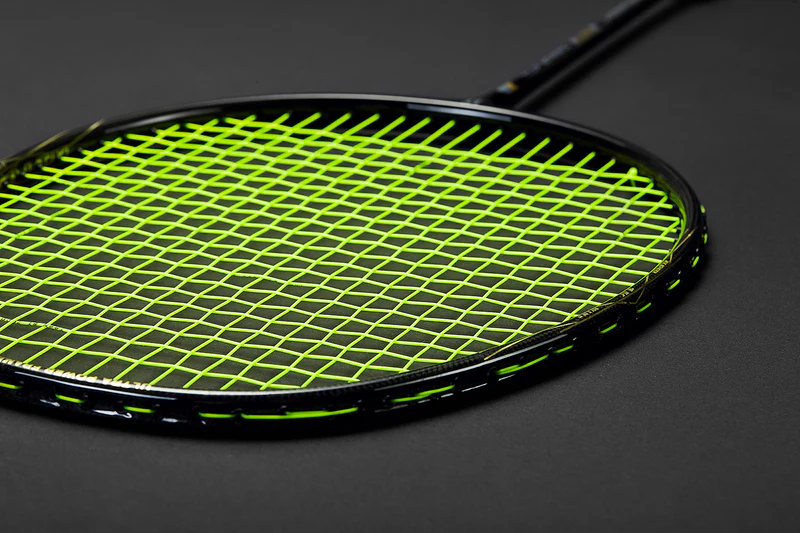
Gauge sets the physics; construction decides the flavour. Nearly every modern badminton string is a multifilament: a core of thousands of fine nylon filaments, wrapped in an outer layer that protects the core from the sawing friction of the crosses. Yonex’s standard recipe — a high-polymer nylon multifilament core with a specially braided high-polymer nylon outer — is the template most of this guide is built on, and its braiding exists for one reason: to slow the abrasion that notches and eventually severs strings at the intersections.
From that template, each brand modifies one variable. Vectran, the liquid-crystal polymer fibre in the BG80, is coiled around the core to stiffen the string and fight tension loss — the bed feels harder and stays honest longer. Forged Fiber, Yonex’s Exbolt material, rebuilds nylon fibres at a molecular level so a thin string keeps a strength ordinary nylon cannot reach at that diameter; the Exbolt 68 goes further and forges the fibre oval to resist deformation. Titanium hydride, the coating on the BG65 Titanium, hardens the surface for a punchier hit. Li-Ning builds its No.1 around a heat-resistant, high-intensity multifilament core with its 3D Knit structure, and Victor’s VBS-66 Nano puts a nano-technology core under a multifilament wrap. None of these is magic — each trades a little of one quality for a little of another — but together with gauge they fully explain why two strings of identical thickness can feel like different sports.
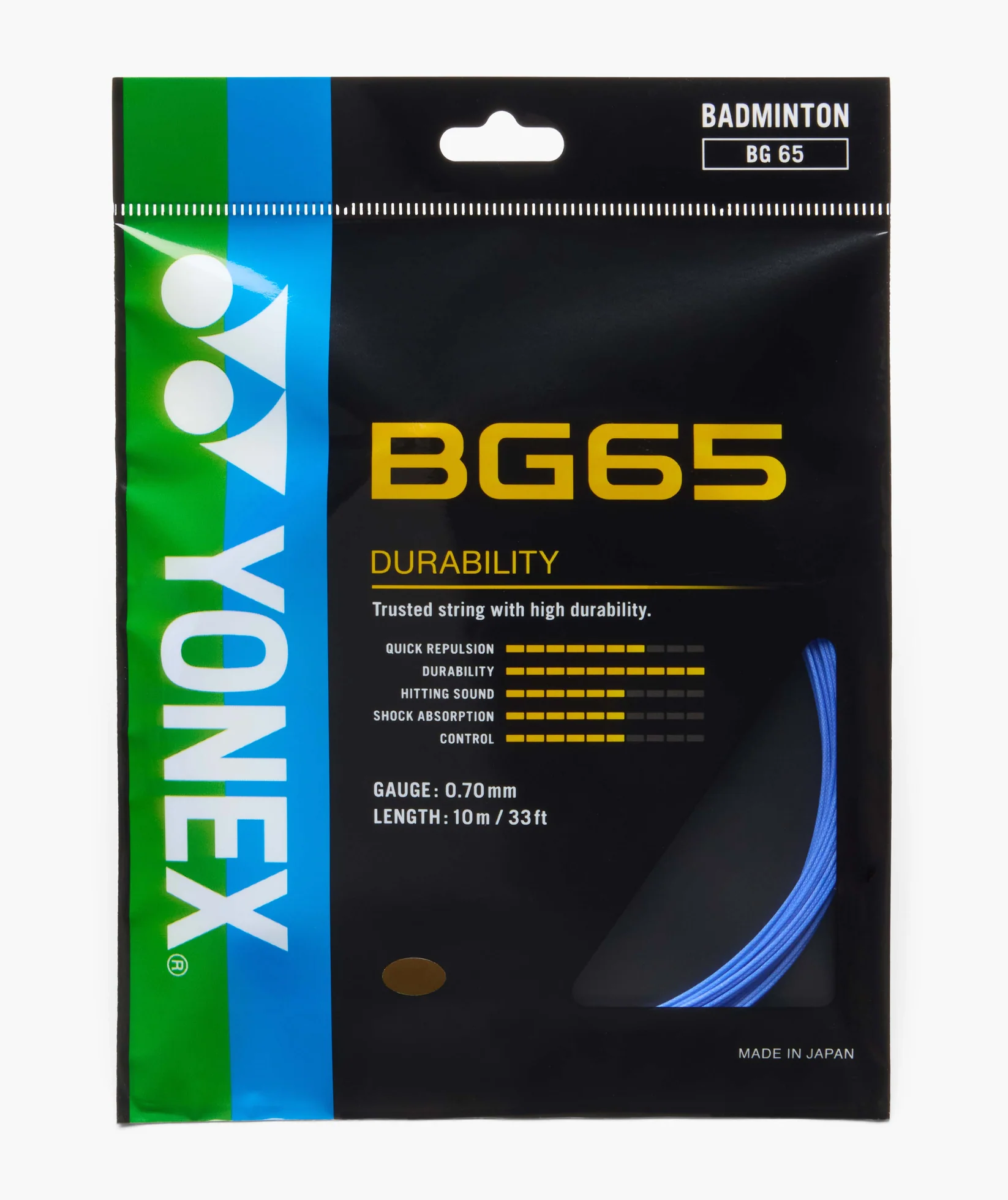
Yonex BG65
The 0.70 mm durability classic — the string every stringer reaches for first
Yonex files the BG65 under one word — Durability — and it has been the sport’s default restring for decades. At 0.70 mm it carries the fullest cross-section of any mainstream string, and that single fact makes it the right first string for almost every player reading this guide.
Start with what the thickness buys a learner. A developing swing contacts the shuttle off-centre constantly — high on the bed, out toward the frame — and those mishits are what actually kill strings. A 0.70 mm string has the material to absorb them where a thin repulsion string simply snaps. The BG65 also plays soft: its multifilament core cushions impact instead of ringing it up your arm, which matters more than beginners expect across a long evening of clears. While your technique is forming, the string should be invisible — never the reason a session ended early or an elbow started complaining. The BG65 is invisible in exactly that way.
It is also the string the sport’s infrastructure is built around. Club stringers stock it by the reel, coaches fit it to training rackets, and a broken BG65 anywhere in the world can be replaced like-for-like in an hour. Yonex makes it in a long list of colours — white, black, yellow, orange, amber, royal blue and violet among them — which sounds trivial until you are identifying your racket in a hall of forty identical ones.
The honest limitation is the mirror of its strength. The same full cross-section that survives mishits deflects less, so the BG65 returns the least free repulsion of any string here, and its soft feel can read as muted once your hitting sharpens. That is not a flaw to fix but a graduation signal: when the BG65 starts to feel dull rather than dependable, your strike is clean enough to spend on one of the thinner strings below.
Pros
- Thickest mainstream gauge — survives beginner mishits
- Soft, arm-friendly feel while technique develops
- Stocked by virtually every stringer, in sets and reels
- One of the lowest-cost restrings from a major brand
Cons
- Least repulsion of any string in this guide
- Soft feel can seem muted to advanced players
As an Amazon Associate we earn from qualifying purchases.
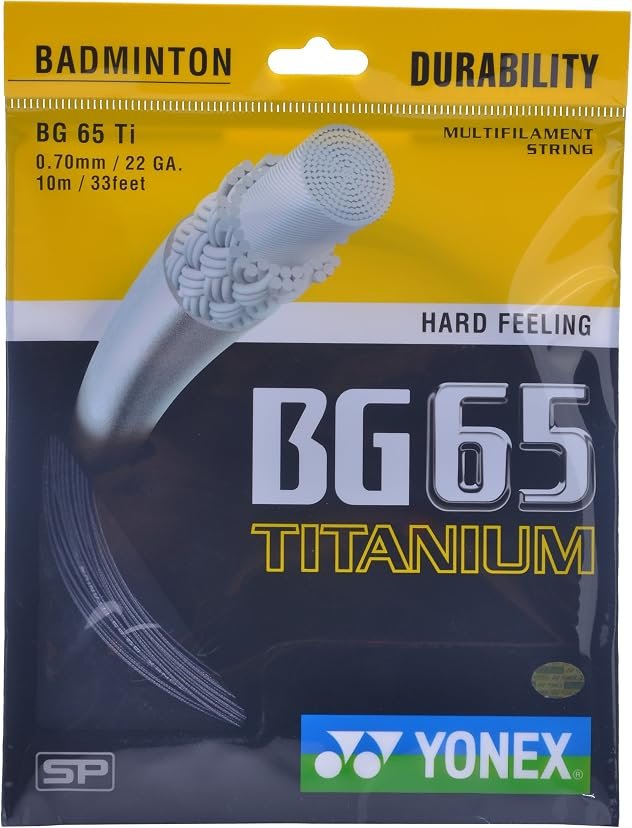
Yonex BG65 Titanium
BG65’s tough 0.70 mm build with a titanium hydride coating for hard hitters
Take the BG65 exactly as it is — same gauge, same core, same braid — and add one variable: a compound titanium hydride coating that hardens the surface. The result is the durability string for players who hit too hard for the plain one to excite them.
The coating changes the hit in a way you can feel in the first rally. Where the plain BG65 wraps the shuttle softly, the Titanium’s hardened surface bites and releases it with a sharper, punchier contact — Yonex positions it for hard hitters, and the packet carries the same “Durability” banner with a “Hard Feeling” stripe the standard string does not have. Clears carry a little deeper for the same swing, drives come off flatter, and the bed talks back to you more honestly about where the shuttle landed on it.
Crucially, it does all this without leaving the durability zone. The cross-section is still 0.70 mm of multifilament, so the mishit forgiveness that makes the BG65 a training staple survives the upgrade. Club players who train several sessions a week and smash at volume — the exact profile that shreds thin strings — are the natural owners: they get a harder, more responsive bed that still treats a framed smash as an inconvenience rather than a restring bill.
The trade is feel at the soft end. The coating that adds punch also takes away some of the plain string’s cushion, and delicate net play feels less forgiving; players building a touch game, or anyone nursing a sensitive elbow, are usually happier on the standard BG65 or the medium-feel Victor below. Think of the Titanium as the same tool with the safety padding removed — better in strong hands, less kind in learning ones.
Pros
- 0.70 mm durability with a harder, punchier hit
- Titanium hydride coating adds bite and repulsion
- Built for high-volume training and heavy smashers
- Same easy availability as the BG65
Cons
- Firmer feel is less kind on touch shots and arms
- Gives back a little of the plain BG65’s softness
As an Amazon Associate we earn from qualifying purchases.
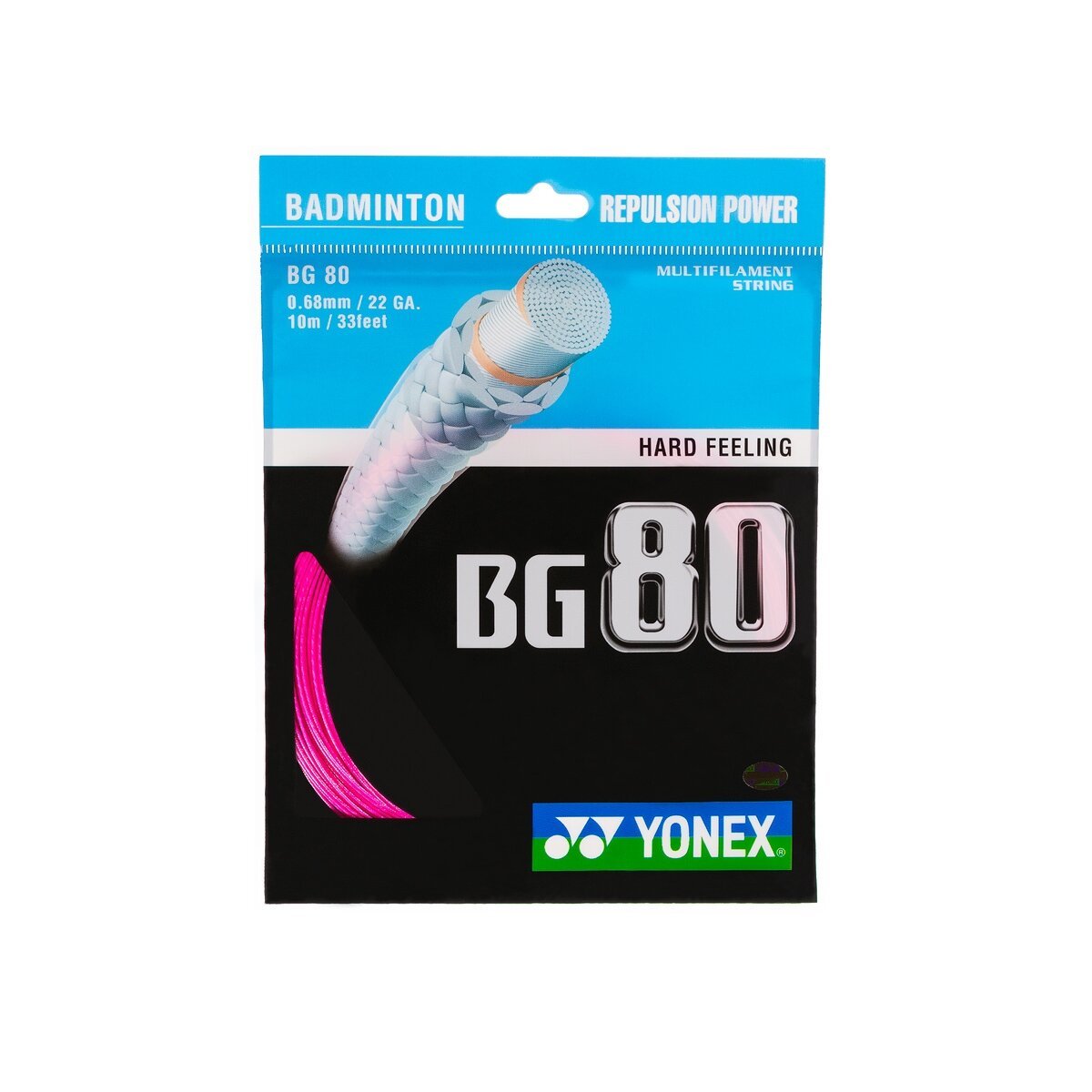
Yonex BG80
0.68 mm with a Vectran-wound core — hard feel, sharp power, serious tension hold
The BG80 coils high-modulus Vectran fibre — an exceptionally strong, stiff liquid-crystal polymer — around its multifilament core. That one construction choice makes it the power player’s reference string: hard-feeling, crisp off the bed, and unusually resistant to tension loss.
Most strings lose their personality in a predictable way: the bed softens, the timing drifts, and a string that felt crisp in week one feels vague by week four. The Vectran coil exists to fight exactly that. By winding a low-stretch, high-strength fibre around the core, Yonex limits how far the string can permanently deform, so a BG80 bed strung at 28 lbs keeps playing like 28 lbs long after an ordinary multifilament has sagged. For a player whose game depends on the bed answering identically every night — flat drives, counter-hitting, smashes struck on timing rather than hope — that consistency is the product.
The power itself is of the hard, connected kind rather than the trampoline kind. A BG80 bed does not fling the shuttle for you the way a thin repulsion string does; it returns what your swing puts in, immediately and with feedback, which is why strong-armed players describe it as honest. Yonex’s own chart, as published across its retailer listings, rates it 8 for repulsion against 6 for durability — the brand telling you plainly that this is a performance string with a performance lifespan.
Which is the caution. At 0.68 mm with a hard surface, the BG80 asks for a clean strike and regular restringing, and it passes more shock to the hand than the softer strings here. Players who mishit under pressure will spend more time at the stringer than on court. Yonex also sells a sibling, the BG80 Power, which adds a cup-stack carbon nanotube coating for a fractionally softer take on the same idea — worth knowing about, but the original remains the hard-hitter’s benchmark.
Pros
- Vectran coil holds tension far better than plain multifilament
- Hard, crisp repulsion that rewards a full swing
- Superb feedback — you feel exactly where contact was
- The reference power string at 0.68 mm
Cons
- Mid-pack durability — plan regular restrings
- Hard feel transmits more shock to the arm
As an Amazon Associate we earn from qualifying purchases.
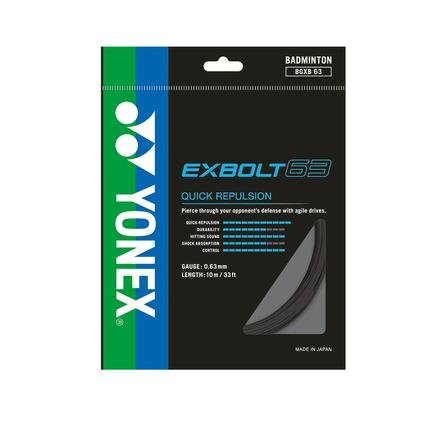
Yonex Exbolt 63
0.63 mm forged fibre — the thinnest string here, built for speed off the bed
The Exbolt line exists to break the oldest rule in strings: that thin means fragile. Its forged fibre is nylon rebuilt at a molecular level for strength, letting Yonex cut the gauge to 0.63 mm — and the packet’s promise is written on the front: Quick Repulsion.
Play one rally with a 0.63 mm bed after a season on 0.70 mm and the difference is theatrical. The shuttle leaves the string faster and with a sharp, high crack that Yonex’s own chart scores a maximum 10 for hitting sound — the same 10 it awards for repulsion and, strikingly, for control, because a bed this responsive reports contact so precisely. Drives skim flatter, stick smashes jump off the face, and defensive blocks that used to die at the tape suddenly carry to mid-court. It is the closest thing in this guide to free speed.
The forged fibre is why the string survives the experience at all. Ordinary nylon at 0.63 mm would be a one-evening novelty; Yonex’s molecularly rebuilt fibre carries a durability chart score of 7 — respectable, and better than thin strings of earlier generations managed — because the material itself, not extra bulk, supplies the strength. The Exbolt 65 in the middle of the range adds an elasticity coating for a more comfortable take, but the 63 is the pure expression of the idea: thinnest gauge, fastest snap-back.
None of that rescues it from physics. There is simply less string to wear through, and an off-centre strike near the frame at advanced tension concentrates force exactly where a thin string is weakest. The Exbolt 63 is a specialist’s tool: it belongs on the racket of a player whose contact is reliably central, who restrings on a schedule rather than on a breakage, and who values speed off the bed above all else. If that description is not yet you, it is a promise of what to graduate to — the BG80 above, or its own thicker sibling at pick 7, will serve you better today.
Pros
- Maximum repulsion — fastest snap-back in this guide
- Sharp, addictive hitting sound on clean contact
- Forged fibre keeps a 0.63 mm string genuinely playable
- Precise feedback for fast, flat exchanges
Cons
- Least forgiving of mishits — demands a centred strike
- Needs scheduled restringing at heavy training loads
As an Amazon Associate we earn from qualifying purchases.
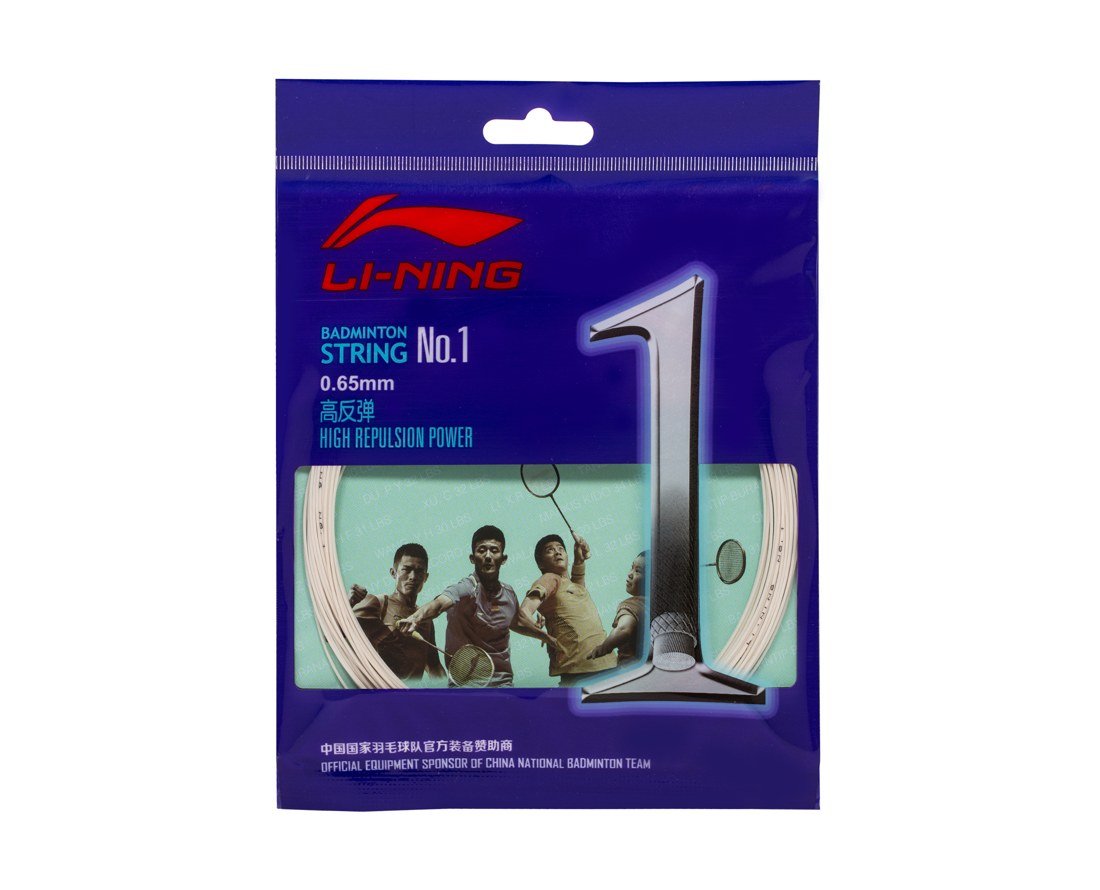
Li-Ning No.1
0.65 mm high-repulsion flagship — the string on China’s national team rackets
Li-Ning’s numbering is refreshingly honest: in its own string guide, the No.1 is the range’s repulsion flagship, the No.5 the 0.69 mm all-rounder and the No.7 the 0.70 mm durability model. The packet says it in two languages — High Repulsion Power — and at 0.65 mm it earns the billing.
The pedigree is not marketing decoration: Li-Ning is the official equipment sponsor of China’s national badminton team — it is printed on this packet — and the No.1 is the string its own guide places at the top of the repulsion tree, the model associated with the brand’s sponsored international players. A 0.65 mm bed sits right at the top of the repulsion zone in our gauge table: thin enough to trampoline hard, with a fraction more substance than the very thinnest strings when a rally turns chaotic.
Construction is where the No.1 makes its claim. Li-Ning builds the core from heat-resistant, high-intensity multifilament — heat resistance matters because friction at the cross intersections is what notches strings — and finishes it with the brand’s 3D Knit structure, which listings credit for the string’s combination of repulsion, a metallic hitting sound and a clean, direct shuttle feel. On court the character is crisp and lively: clears spring, the sound is sharp, and the shuttle leaves with the sense of being struck rather than pushed.
Two practical notes. First, the same 0.65 mm honesty applies here as to any thin string — mishits near the frame are its weakness, and it is a string for players who already find the middle of the bed. Second, know the family before you buy: a “No.1 Boost” variant exists at 0.66 mm with a slightly different brief, while the No.5 and No.7 step steadily toward durability. Make sure the packet in your basket is the one you meant.
Pros
- Li-Ning’s flagship repulsion string at 0.65 mm
- Heat-resistant core fights friction notching
- Crisp feel and a sharp, metallic hitting sound
- Pro-tour pedigree through China’s national team
Cons
- Thin gauge — unforgiving of framed mishits
- Availability varies by market; check the variant
As an Amazon Associate we earn from qualifying purchases.
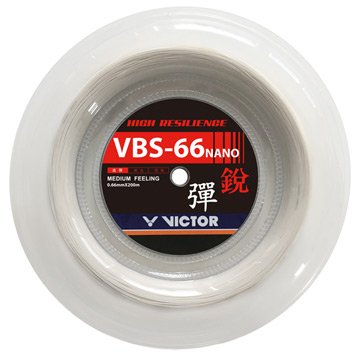
Victor VBS-66 Nano
0.66 mm nano-core all-rounder — repulsion and durability in near-equal measure
Victor files the VBS-66 Nano under “High Resilience” and rates it on its own chart at 9 for repulsion and 8 for durability — a rare string whose maker claims both ends of the trade at once. At 0.66 mm with a medium feel, it is the most balanced card in this guide.
Read Victor’s numbers the way the brand intends them: within its own range, the VBS-66 Nano is the string that refuses to choose. A 0.66 mm gauge sits at the forgiving edge of the performance middle — thin enough for real snap-back on clears and drives, thick enough that a hard training week does not automatically end at the stringer. The nano-technology core is Victor’s route to resilience: a core built to rebound rather than merely stretch, wrapped in conventional nylon multifilament for a familiar, medium-feel contact.
That medium feel is the string’s personality and its pitch. The BG80 tells you everything, harshly; the BG65 cushions everything, quietly. The VBS-66 Nano sits between them — enough feedback to place a drive, enough give to take the sting out of a defensive block — which is precisely the compromise an all-court club player, playing singles one night and doubles the next, actually needs. Control is rated 7 on Victor’s chart, and the bed behaves accordingly: composed rather than electric, accurate rather than explosive.
It is also a practical buy: Japanese-made, sold in both 10 m sets and the 200 m reels pictured here, and easy to find through Victor’s racket-sport retailers. The player it will not satisfy is the extremist at either end — the repulsion chaser should buy the Exbolt 63 or the No.1, and the out-and-out string breaker the BG65 pair. For everyone between those poles, this is the string with the fewest wrong answers.
Pros
- Victor rates it 9/10 repulsion and 8/10 durability
- Medium feel suits mixed singles and doubles play
- 0.66 mm — performance gauge that still lasts
- Japanese-made, in sets and club-friendly reels
Cons
- Neither as crisp as BG80 nor as springy as 0.63–0.65 mm strings
- Brand ratings compare within Victor’s range only
As an Amazon Associate we earn from qualifying purchases.
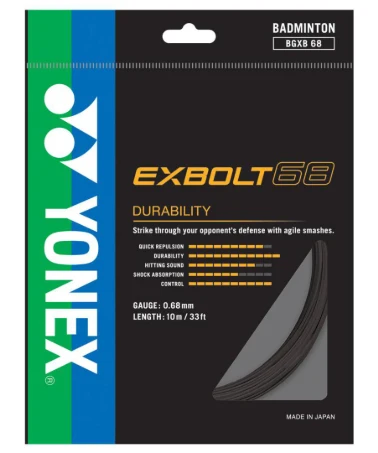
Yonex Exbolt 68
0.68 mm oval forged fibre — the Exbolt built for shuttle hold, and Yonex’s durability benchmark
The Exbolt 68 takes the family’s forged fibre and rethinks its shape: forged oval instead of round, so the string resists deformation on impact. Yonex positions it as the most durable string in its entire line-up — while tuning the surface for the quality control players care about most: hold.
Control in badminton is mostly a story about time — how long the shuttle stays on the bed, and how completely the bed obeys your hand while it is there. The Exbolt 68 is engineered for that fraction of a second. Its outer fibres are forged into an oval profile that limits how much the string flattens and twists under load, so the bed deforms less and recovers in the direction you swung; Yonex layers its Elasticity Outer coating — built on the brand’s Nanoalloy technology — over the top to add the grip that keeps the shuttle held rather than skidding. Sliced drops, tumbling net shots and tight spinning replies are where owners feel the difference.
Then there is the headline claim, and it comes straight from Yonex: this is the most durable string the company makes — a striking position for a 0.68 mm performance string, and one the construction explains. Forged fibre supplies strength ordinary nylon needs thickness for, and the oval profile spreads wear instead of concentrating it. The packet still files the string under “Durability”, like the BG65 at the top of this guide — but this durability arrives with a performance bed attached, at advanced tensions and with real repulsion from the high-intensity core.
Choose it if your game is built on placement rather than raw speed: the net player, the counter-puncher, the doubles defender who turns defence into attack with placement. If your heart is set on the fastest possible bed, its own sibling — the Exbolt 63 at pick 4 — is quicker and sharper, and honestly more fragile. The 68 is the Exbolt you can build a season around.
Pros
- Yonex’s most durable string, per the manufacturer
- Oval forged fibre resists deformation for control
- Elasticity coating adds shuttle hold for net play
- Performance repulsion at a 0.68 mm gauge
Cons
- A step behind the Exbolt 63 for raw speed and sound
- Firmer, heavier-feeling bed than medium strings
As an Amazon Associate we earn from qualifying purchases.
Comparison table
| String | Gauge | Construction highlight | Feel | Maker’s focus | Best for |
|---|---|---|---|---|---|
| Yonex BG65 | 0.70 mm | Braided nylon over multifilament core | Soft–medium | Durability | Beginners; shared and training rackets |
| Yonex BG65 Titanium | 0.70 mm | BG65 build + titanium hydride coating | Hard | Durability with power | Hard hitters who break strings |
| Yonex BG80 | 0.68 mm | Vectran fibre coiled around the core | Hard | Power + tension retention | Power players; scheduled restringers |
| Yonex Exbolt 63 | 0.63 mm | Braided forged fibre, high-intensity core | Hard, crisp | Quick repulsion | Advanced players; maximum snap-back |
| Li-Ning No.1 | 0.65 mm | Heat-resistant core, 3D Knit structure | Crisp | High repulsion power | Repulsion players; Li-Ning loyalists |
| Victor VBS-66 Nano | 0.66 mm | Nano-technology core, multifilament wrap | Medium | High resilience (balance) | All-court club players |
| Yonex Exbolt 68 | 0.68 mm | Oval forged fibre + elasticity coating | Firm | Durability + shuttle hold | Control and net players |
* “Common tension” figures in the cards are the bands players generally use for each class of string — general practice, not manufacturer mandates. Your racket’s printed maximum always wins. † Brand chart ratings are each maker’s own published scale and are only comparable within that brand’s range.
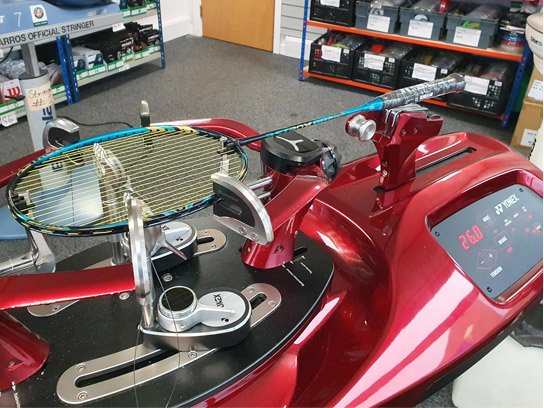
Our verdict
For most players, the best badminton string is the one matched to their strike, not their ambition. Start on the Yonex BG65 and let it teach you the game without punishing your mistakes; step to the BG65 Titanium when you hit hard enough to want more back from the same toughness. Power players belong on the BG80, repulsion specialists on the Exbolt 63 or the Li-Ning No.1, and all-court club players on the Victor VBS-66 Nano. If control is your currency, the Exbolt 68 is the most interesting string Yonex makes. Pick your gauge band honestly, string it inside your frame’s limits, and restring before the bed dies — that discipline, not any single packet, is what the best string really is.