Two rackets can weigh exactly the same on a scale and feel completely different in your hand. This guide explains the three numbers that actually describe a padel racket’s weight — static weight, balance point and swing weight — gives you the right ranges for your level, and shows you how to choose your grams without guesswork.
TL;DR — The short answer
Most beginners should start at 350–365g with a low-to-even balance. Most intermediates play best at 360–375g. Advanced attackers go up to 375–385g, usually in head-heavy diamond frames. But the scale weight is only the starting point: the balance point decides how heavy a racket feels, and a head-light 370g racket can swing easier than a head-heavy 360g one. Change weight in small steps of 5–10g at a time, weigh your current racket as you actually play it (overgrip on), and never jump straight to a professional’s setup. The full method — including how weight interacts with shape, and how to keep your elbow and shoulder happy — is below.
350–365g
Low or even balance, round or teardrop. Manoeuvrability first while technique forms.
360–375g
Even to medium-high balance. Enough mass for volleys and overheads, still quick in defence.
365–385g
Medium-high to high balance for attackers; control players can stay at the lighter end.
Lighter & shorter
Junior rackets are built lighter and shorter than adult frames — never hand a child a full-weight adult racket.
On this page
- Why weight matters more than any other spec
- The three numbers: weight, balance, swing weight
- Weight ranges by level
- Static weight vs swing weight
- Balance point: head-heavy vs head-light
- How weight interacts with shape
- Weight and your arm: elbow & shoulder comfort
- Worked examples: three rackets, three weights
- How to choose: the step-by-step method
- Common weight mistakes
- FAQs
Why weight matters more than any other spec
Ask a room of padel players what matters in a racket and you will hear about shape, carbon and core foam. All of those matter. But weight is the spec you feel on every single shot — every volley reaction, every bandeja, every desperate defensive flick off the glass — and it is the spec that decides how much work your arm does across two hours of play. A racket that is 15 grams too heavy for you does not feel 15 grams too heavy on the first rally. It feels fine. It feels heavy in the third set, when your wrist starts arriving late, your volleys start floating instead of punching, and your shoulder starts doing the work your timing used to do.
Weight also governs the two things every player wants more of: power and control. Mass is what puts the ball away — a heavier head carries more momentum through contact, which is why attacking players drift heavier as their technique improves. But mass is also what slows the racket down, which is why defenders and beginners suffer on heavy frames: padel is played at close quarters, rallies are won and lost on reaction speed at the net, and a racket you cannot reposition quickly is a racket that turns your volleys into blocks and your blocks into errors.
The good news is that weight is the most knowable spec in padel. Unlike “power” or “feel”, it can be measured on a kitchen scale in ten seconds, compared across brands on equal terms, and adjusted in small, reversible steps. This guide treats it that way: as a number to understand and manage, not a mystery to guess at. If you are choosing a racket at the same time as you read this, pair it with our best padel rackets guide for the flagship tier, and keep this page open as your weight reference.
The three numbers that describe a racket’s weight
“How heavy is it?” sounds like one question. It is actually three, and the differences between them explain almost every confusing racket experience — the 370g racket that felt light, the 360g racket that felt like a hammer, the two “identical” frames that played nothing alike.
Hold those three definitions and most racket marketing becomes readable. When a brand says a racket is “lightweight but powerful”, it usually means a moderate static weight with the mass pushed toward the head — low grams, high swing weight. When a control racket advertises “fast handling”, it means the opposite trade: the mass sits low, so the head whips around quickly even if the scale weight is unremarkable. Neither is a lie; they are just describing different numbers. Your job as a buyer is to know which number you are actually shopping for.
One more measurement habit worth building now: brands quote a weight range (for example 360–375g) because the same model genuinely varies within that window. If you are sensitive to weight — and after this guide, you may become so — the only way to know what your racket weighs is to weigh it. Sellers who let you pick a specific frame from a range, or weigh one in the shop, are doing you a real favour.
Padel racket weight ranges by level
These are the ranges the market has settled into, cross-checked against the line-ups of the major brands: beginner frames cluster at the light end, professional frames at the heavy end, and the vast majority of adult rackets sold sit between 350g and 385g. Treat them as starting zones to narrow a shortlist, not as rules — your arm and your role get the final vote.
| Player | Sensible weight zone | Typical balance | Why |
|---|---|---|---|
| Juniors | Below adult weights (junior models are lighter and shorter) | Low | Growing arms and developing technique need a frame they can swing freely and control |
| Beginners | 350–365g | Low to even (up to ~265mm) | Manoeuvrability and forgiveness while contact and timing are still forming |
| Women (starting out) | 350–365g | Low to even | Same logic as any beginner — technique first, mass later |
| Women (intermediate+) | 355–375g | Even to medium-high | Plenty of competitive women’s models sit here; arm strength and style decide, not gender |
| Intermediates | 360–375g | Even to medium-high (~265mm+) | Enough mass for volleys and overheads to carry, still quick enough for defence |
| Advanced / attackers | 370–385g | Medium-high to high | Maximum momentum on smashes and volleys for players whose contact is already clean |
| Advanced / control players | 355–370g | Low to even | Placement, hands speed and defensive reliability over raw finishing power |
A note on the women’s rows, because this is where bad advice concentrates. There is no separate physics for women: a racket does not know who is holding it. What differs is what the market markets — women’s models are often the same frames in lighter lay-ups — and the honest variables are the same ones that matter for men: how long you have played, how clean your contact is, how strong your arm and shoulder are, and whether your game is built on attack or placement. Plenty of advanced women play 370g and plenty of men are happiest at 355g. Our best padel rackets for women guide picks models on those terms, and so should you.
Budget buyers get one extra wrinkle: entry-level lines often quote a single target weight with a wide tolerance, so two “identical” budget rackets can feel noticeably different. That is another argument for weighing the actual racket you are buying where you can. The picks in our best budget padel rackets round-up sit in the beginner-friendly zones above — check their weights against this table and you will see the pattern hold.
Static weight vs swing weight: why two 370g rackets feel different
Here is the experiment that makes swing weight click. Hold a racket by the grip and swing it. Now hold the same racket by the head, grip pointing out, and swing again. Same racket, same static weight — and the second swing feels absurdly heavier, because the mass is now far from your hand and your wrist has to accelerate and brake all of it at arm’s length. That, in miniature, is the difference balance makes inside a normal grip: every millimetre the balance point climbs, the head carries its mass further from your hand, and the racket swings heavier than the scale suggests.
This is why comparing rackets by scale weight alone misleads. A 370g racket balanced at 258mm — mass low, head light — will feel quick and easy at the net, and it will ask your arm to supply the power on smashes. A 360g racket balanced at 272mm will feel oddly substantial, hold its line when you block a hard drive, and put real weight behind a bandeja — while tiring your forearm faster in a long defensive scramble. On the scale, the first racket is “heavier”. In your hand, the second one is.
It also explains the deliberate weight step most players take as they improve. Our guide to intermediate padel rackets describes the pattern: players start around 350–360g with low balances, and the step-up rackets cluster at 360–375g with the balance point creeping upward. The extra grams are not machismo — mass is stability. A slightly heavier, slightly more head-weighted racket flutters less on off-centre contact, holds its line against hard-hit balls, and puts more behind volleys. The cost is a fractionally slower swing start, which is exactly why the step should be small and why it should wait until your technique has earned it.
Practical translation: when you shop, compare two numbers, not one. If two rackets are within 5g of each other, the balance point will decide which feels heavier. If you cannot find a published balance figure, the in-shop test is simple — balance the racket on one finger, or on the edge of a table, and see where it settles relative to a racket you know. Your hand learns the rest in about thirty seconds of shadow swings.
Balance point: head-heavy, head-light, and everything between
Balance is where weight stops being an abstract number and becomes a playing personality. Three zones cover almost everything on sale:
Head-light (low balance, roughly under 260mm). The mass sits toward your hand. The head comes around quickly, which makes these rackets feel effortless in fast net exchanges, defensive reactions and last-second flicks off the glass. The trade is at the top of the swing: with less mass in the head, smashes and aggressive volleys need more of your own arm speed to finish the point. Most beginner and control-oriented rackets live here, and so do the rackets of advanced players whose game is hands, angles and patience.
Even balance (roughly 260–268mm). The compromise zone, and the biggest one. Enough head mass for overheads to carry, enough hand speed for defence to stay honest. Teardrop shapes naturally land here, which is why teardrops are the default recommendation for improving players: the balance, like the shape, refuses to specialise.
Head-heavy (high balance, roughly 270mm and up). The mass sits in the head, and you feel it as authority: volleys punch through instead of floating, bandejas bite, and a well-struck smash has genuine finishing weight behind it. You also feel it in the third set, in fast defensive scrambles, and in any rally where you are late — a head-heavy racket punishes late contact twice, once because the head arrives slowly and once because it is harder to rescue when it gets there. Diamond shapes concentrate here by design, and so do most professional attacking rackets.
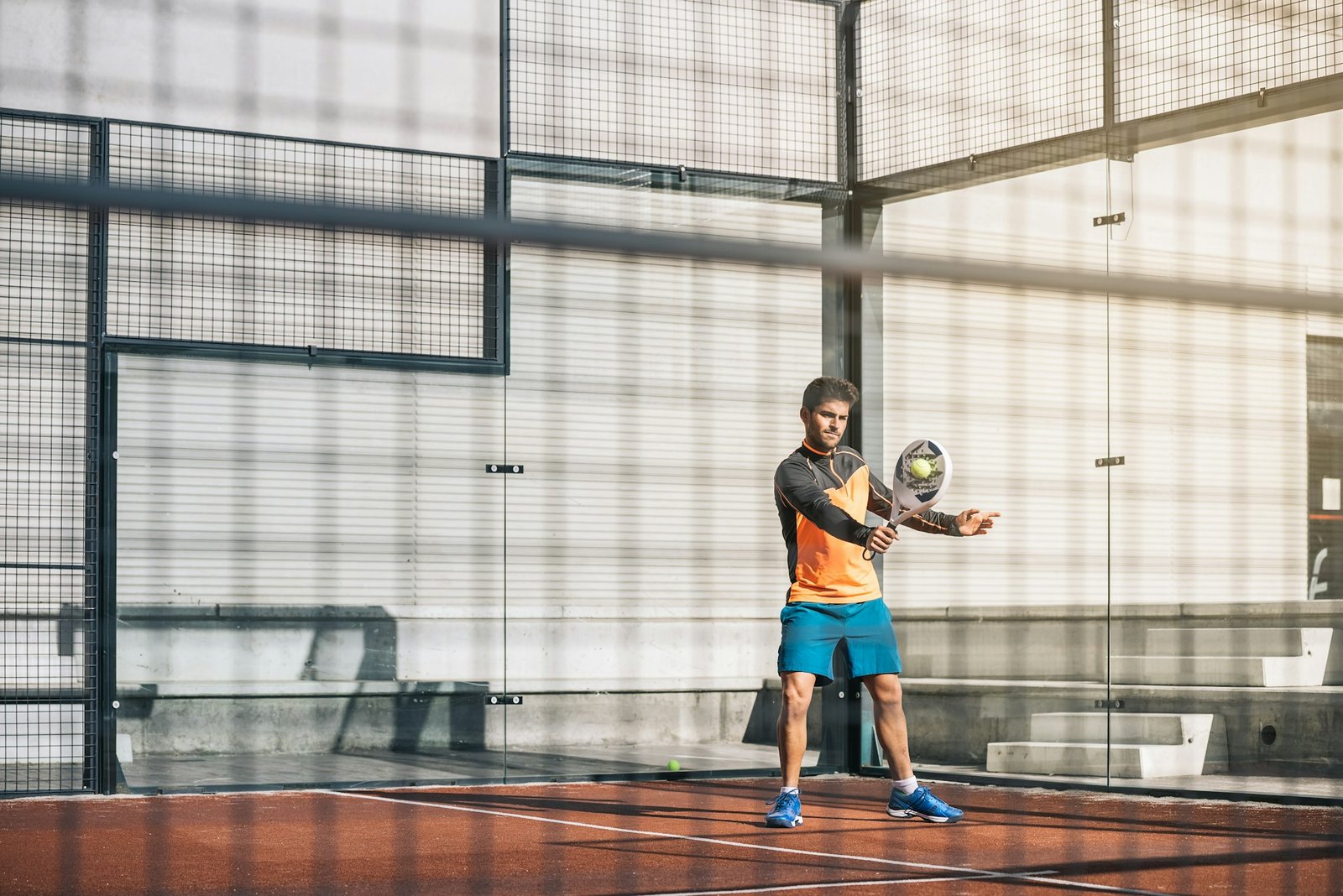
How to find your racket’s balance point at home: rest the racket across a finger or the sharp edge of a book, sliding it until it balances level, then measure from the butt of the grip to that point in millimetres. Thirty seconds, no equipment beyond a ruler. Do it to your current racket before you shop for the next one — knowing you currently play 262mm turns “this one feels heavier in the head” from a vibe into a number you can shop against.
One caution about comparing figures: some brands publish balance, many do not, and quoted figures are measured on the bare racket. Overgrips, frame protectors and added weights all move the point — a protector sits at the very top of the head, the place where added grams move balance most. Small numbers, real effect: it is why two players can own “the same” racket and honestly report different balances.
How weight interacts with shape
Weight and shape are not independent choices — each shape drags the weight distribution in its own direction, which is why the two decisions should be made together. If shape is new territory, start with our padel racket shapes guide; here is the weight side of each one.
| Shape | Where the weight sits | Feels like | Weight advice |
|---|---|---|---|
| Round | Low and central; sweet spot near the middle of the face | Quick, forgiving, easy to reposition | You can afford the top of your weight zone — the low balance keeps it manageable |
| Teardrop | Even to medium-high; sweet spot lifted toward the head | Balanced all-court handling with real overhead help | The natural home of the 360–375g step-up; the shape forgives a few extra grams |
| Diamond | High; mass and sweet spot pushed to the top of the face | Heavy-swinging, powerful, demanding on late contact | Drop 5–10g versus your teardrop weight when you first try one — the balance adds swing weight the scale doesn’t show |
The diamond row deserves emphasis because it is the most common expensive mistake in padel. A player who is comfortable at 370g in a teardrop picks up a 370g diamond and has effectively added far more swing weight than the zero grams the scale reports — the mass has moved several centimetres further from the hand, to the part of the racket that travels fastest and brakes hardest. The same logic in reverse is why round rackets are so forgiving for beginners: the weight sits low and central, so even a slightly-too-heavy round frame stays controllable while technique is forming.
Face and core materials ride along with this. Carbon faces are stiffer than fibreglass, and stiffer faces are usually paired with the heavier, higher-balance builds aimed at stronger players — not because carbon itself is heavy, but because the whole package is designed for swings that can handle it. Softer cores absorb more of the ball’s pace, which slightly forgives an overweight racket on touch shots; firm cores transmit everything, including your timing errors. Weight first, then shape, then materials — in that order — is the sequence that keeps the variables from confounding each other.
Weight and your arm: elbow and shoulder comfort
Let us be careful and honest here: this is a gear guide, not medical advice, and no racket choice diagnoses or treats anything. If you have persistent elbow or shoulder pain, the right move is a physiotherapist or sports-medicine professional, full stop. What gear selection can do is manage load — the total amount of work and shock your arm is asked to handle — and weight is one of the main load variables you control.
The load logic runs in two directions, which is why glib advice fails. A racket that is too heavy for your current strength and technique asks your forearm and shoulder to accelerate and brake more mass on every shot, hundreds of times a session; fatigue then degrades your contact, and sloppy late contact is itself a source of jarring, off-centre impacts. But a racket that is too light is not automatically kinder: very light frames give the ball more say in the collision, fluttering and twisting on hard-hit shots, and they tempt players to swing harder to manufacture the power the mass would have provided. Comfort usually lives in the middle — the heaviest weight you can swing with clean, repeatable technique for a full session, and no heavier.
The combination players most often report problems with is the sudden stack: jumping 15–20g in weight and moving to a head-heavy balance and switching to a stiff carbon face and a firm core, all in one purchase. Each change alone is manageable; together they multiply the load before your arm has adapted to any of them. Change one variable at a time, in the small steps this guide keeps recommending, and give each step a few weeks of normal play before judging it. Discomfort that appears with a change and settles as you adapt is information; pain that persists or sharpens is a stop sign, not a training phase.
Two smaller levers matter too. Vibration management — handle inserts and softer grips exist across the brands precisely because shock up the handle is part of the load picture — and the overgrip habit: a worn, slippery overgrip makes you squeeze harder on every shot, and grip tension is arm tension. Fresh overgrips are the cheapest comfort upgrade in the sport. But none of this replaces technique: the players with the happiest arms are usually the ones whose contact is early and central, whatever weight they play.
Worked examples: three rackets, three points on the weight map
Theory is easier to hold with three real rackets pinned to the map. These are not a ranking — they are the light end, the middle and the adjustable case, using models whose specs are already verified in our intermediate guide. Notice that all three sit within 20 grams of each other on the scale, yet they are built for noticeably different players. That gap is balance and intent doing the work.
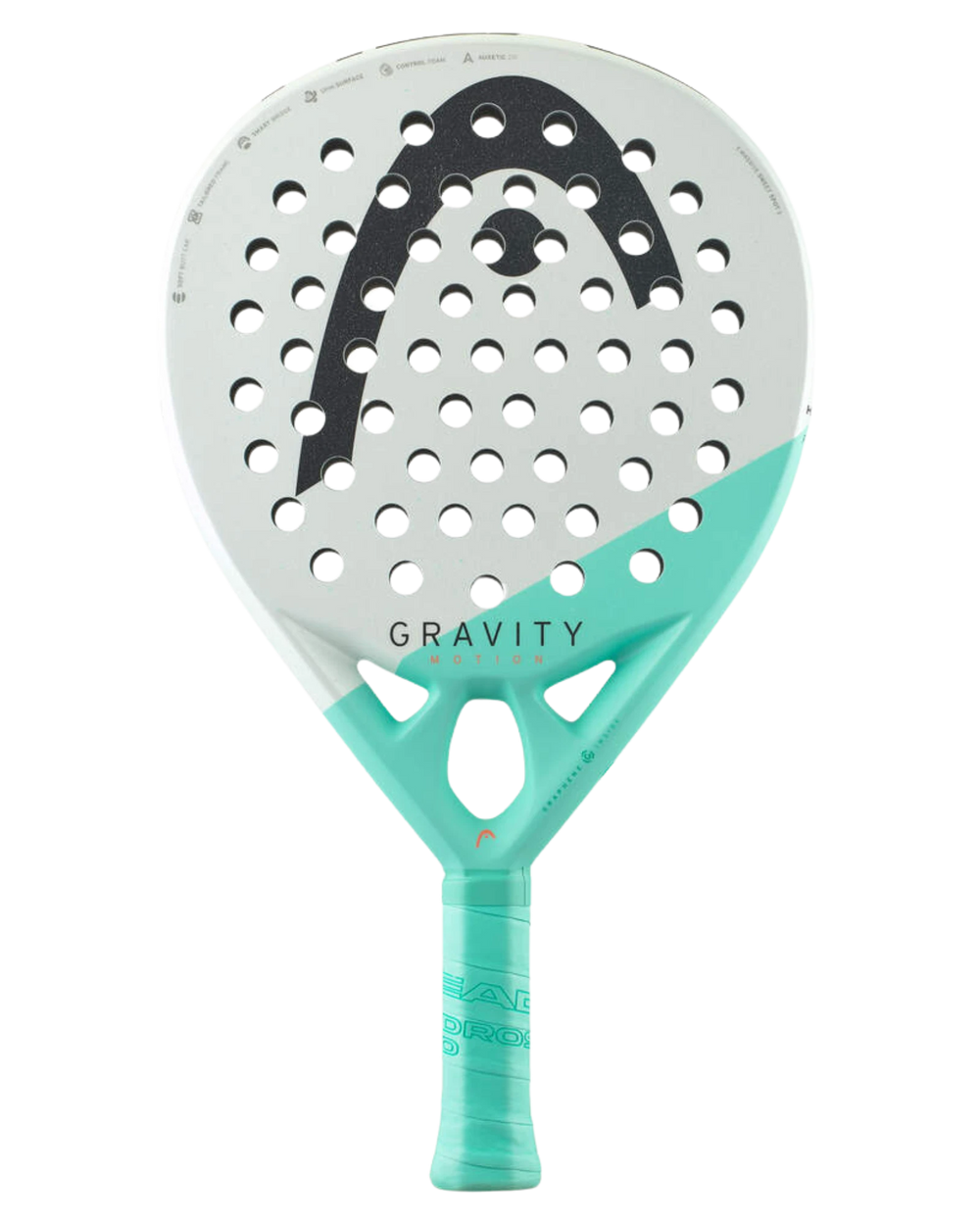
HEAD Gravity Motion
355g, round shape, low balance — control that stays quick
The Gravity Motion keeps the round shape and central sweet spot a beginner learned on, then sharpens the response. At 355g with the mass held low, it is the clearest illustration on this page that “stepping up” does not have to mean “getting heavier”.
Use this as your reference for the bottom of the intermediate zone: if your game is built on placement, defensive reliability and fast hands at the net, a well-made 355g round racket is not a compromise — it is the correct tool, and plenty of advanced control players never leave this weight. It is also the sensible landing spot for anyone whose arm has complained about heavier frames.
Check Price on AmazonAs an Amazon Associate we earn from qualifying purchases.
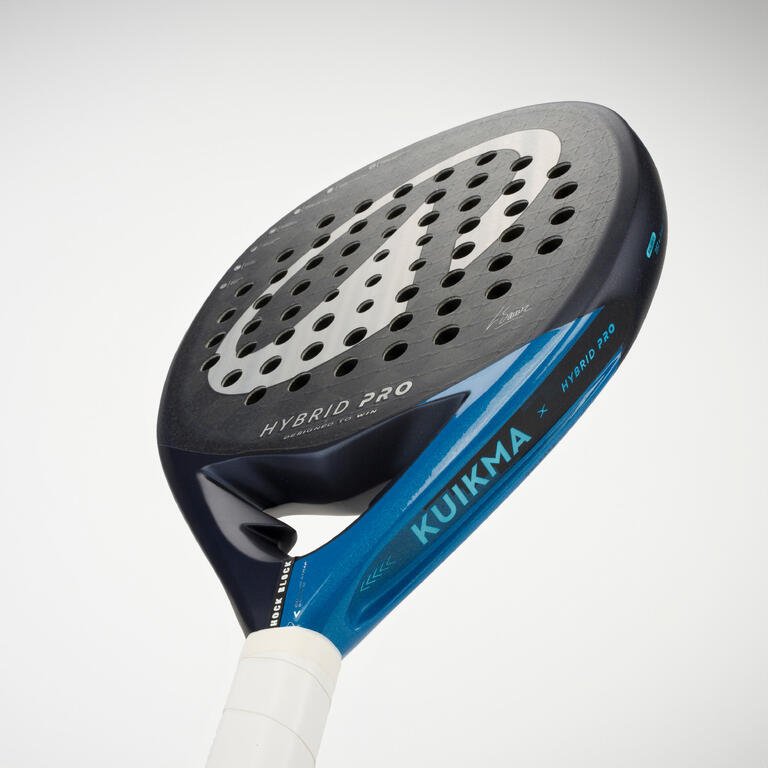
Kuikma PR 990 Hybrid Soft
362g, teardrop, even balance — the textbook step-up weight
Decathlon’s Kuikma pairs a teardrop shape with 12K carbon faces over a soft EVA core at 362g — almost exactly the middle of the intermediate zone, with the balance where a teardrop naturally puts it: even, helpful overhead, honest in defence.
This is the profile to picture when the ranges table says “intermediates, 360–375g”. The soft core does quiet work here, too: it absorbs some pace on defensive shots, which makes the 362g feel calmer than the same grams would in a firm-core frame. If you are changing weight and materials in one purchase, a forgiving core is how you keep the total step small.
Check Price on AmazonAs an Amazon Associate we earn from qualifying purchases.
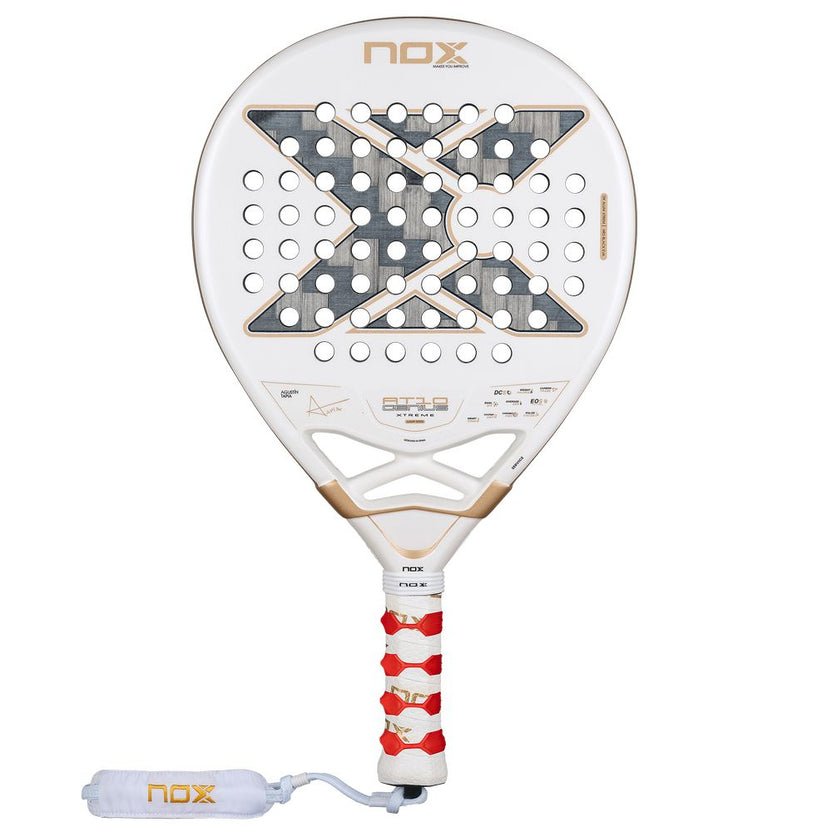
Nox AT10 Genius 12K Alum XTREM 2026
360–375g, teardrop — and a balance you can tune yourself
Agustín Tapia’s teardrop is the complete step-up benchmark: 12K carbon faces, a layered HR3 Black EVA core, a spin-gripping Dual Spin surface — and Nox’s Weight Balance system, a set of small counterweights you add or remove to shift the balance as your overhead game matures.
The AT10 is the worked example for a different lesson: weight is not always a fixed property of the racket you bought. Adjustable systems — Nox’s counterweights here, similar plates and screws in the Adidas and Bullpadel ranges — let one frame cover a band of weights and balances. For a developing player, that turns a one-time guess into a dial you can turn as your game changes, and it is the strongest argument for spending more when the budget allows.
Check Price on AmazonAs an Amazon Associate we earn from qualifying purchases.
How to choose your weight: the step-by-step method
Common weight mistakes
Buying the professional’s weight. The racket a tour player uses is built for a tour player’s forearms, timing and daily training load. Copying the model is understandable; copying its weight and balance without their arm is how technique and shoulders suffer. Play the weight your current game has earned — it changes as you improve, and that is the point.
Judging by the scale alone. A head-heavy 360g can out-swing a head-light 372g. If you only compared grams, you would pick the “lighter” racket and feel the heavier one. Always read weight and balance as a pair.
Forgetting the accessories. Overgrips, frame protectors and added weights all count, and protectors sit exactly where grams move the balance most. Weigh the racket as played, not as shipped — and re-check after you dress a new frame up the way you like it.
Changing everything at once. New weight, new shape, new face material, new core — four variables, one purchase, no way to know which one your arm is objecting to (or applauding). One meaningful change at a time, a few weeks apart, is slower shopping and much better science.
Assuming lighter is always safer for the arm. Very light frames flutter on hard contact and invite over-swinging. Comfort lives at the heaviest weight you can swing cleanly for a full session — which for many players is mid-range, not minimum.
Copying a partner’s setup. Your doubles partner’s perfect 375g may be your misery, and vice versa — different arms, different roles, different contact points. Borrow their racket for a session by all means; just judge it by your drills and your third set, not their enthusiasm.
Padel racket weight FAQs
How heavy should a padel racket be for a beginner?
Start at 350–365g with a low-to-even balance, in a round or teardrop shape. That combination keeps the head quick and forgiving while your contact and timing are forming. There is no prize for starting heavy — you can add grams later, in 5–10g steps, as your game asks for them.
What is the difference between static weight and swing weight?
Static weight is what the scale says. Swing weight is how heavy the racket feels when swung, and it depends on where the mass sits: weight far from your hand (a high balance point) swings much heavier than the same grams near the grip. Padel brands don’t publish swing weight, so use the balance point as your proxy — two rackets of equal grams can feel very different.
Is a heavier padel racket more powerful?
It can be — more mass, especially in the head, carries more momentum through contact, which is why attackers drift heavier as their technique improves. But the power only counts if you can still arrive on time and swing freely in the third set. A racket you swing at full speed beats a heavier one you are muscling around late.
What balance point should I choose?
Roughly under 260mm is head-light (quick hands, defence, control). Around 260–268mm is even (the all-court compromise most teardrops aim for). Around 270mm and above is head-heavy (finishing power for clean strikers). Measure your current racket’s balance on a finger or book edge so you know where you are starting from.
Can a racket that is too heavy hurt my arm?
Extra load is extra load: a big jump in weight — especially combined with a higher balance and a stiffer frame — asks more of your forearm and shoulder on every shot, and tired arms make sloppy, jarring contact. But very light rackets can flutter and invite over-swinging, so comfort usually sits mid-range. This is gear guidance, not medical advice: persistent pain means a physio, not a new racket.
Do overgrips and protectors change a racket’s weight?
Yes — each adds a few grams, and a frame protector adds them at the very top of the head, where they also nudge the balance point up. That is why you should weigh your racket exactly as you play it, and re-check the balance after adding accessories to a new frame.
What weight do professional padel players use?
Professional rackets sit at the heavy end of the adult range — broadly the 365–385g zone, often with medium-high or high balances and adjustable weight systems — built for players with the strength and timing to swing them all match. Treat that as the far end of the map, not a target: the right weight is the heaviest one you can swing cleanly for a full session.
The verdict
Start light and earn your grams. Beginners: 350–365g, balance low or even. Intermediates: 360–375g, letting the balance creep up only as your overheads demand it. Advanced attackers: up to 385g if — and only if — your contact stays clean at that weight in the third set. Whatever zone you are in, measure what you own, change one variable at a time in 5–10g steps, and let balance share the decision with the scale. Weight is the one spec you can know exactly. Know it.
Affiliate disclosure: Alishuttler.com is a participant in the Amazon Services LLC Associates Program. The Amazon buttons on this page use our affiliate tag — if you buy through them, we may earn a commission at no extra cost to you. Prices shown on Amazon are live and may differ from any figures mentioned here.