A double-digit budget does not have to mean a toy racket. This price band hides two very different kinds of value — yesterday’s flagship frames on closeout, and honest graphite rackets built to a price — and the seven picks below are the ones whose spec sheets survive scrutiny, verified model by model against brand and specialist listings.
TL;DR — The short answer
Best value under $100: Dunlop Sonic Core Revelation 135. It is a genuine performance frame — premium carbon, Sonic Core damping, a 500 cm² PowerMax head — that used to sit in flagship territory and now closes out inside this budget. Best for control: the Eye X.Lite 130 Control, a closed-throat player’s frame from a pro-tour brand. On the tightest budget: the Prince Shadow Response 400, a full-graphite 135 g frame with nothing cut except the price. Buying your very first racket? Start with our best squash rackets for beginners guide — this page is for players who know the game and want to cap the spend.
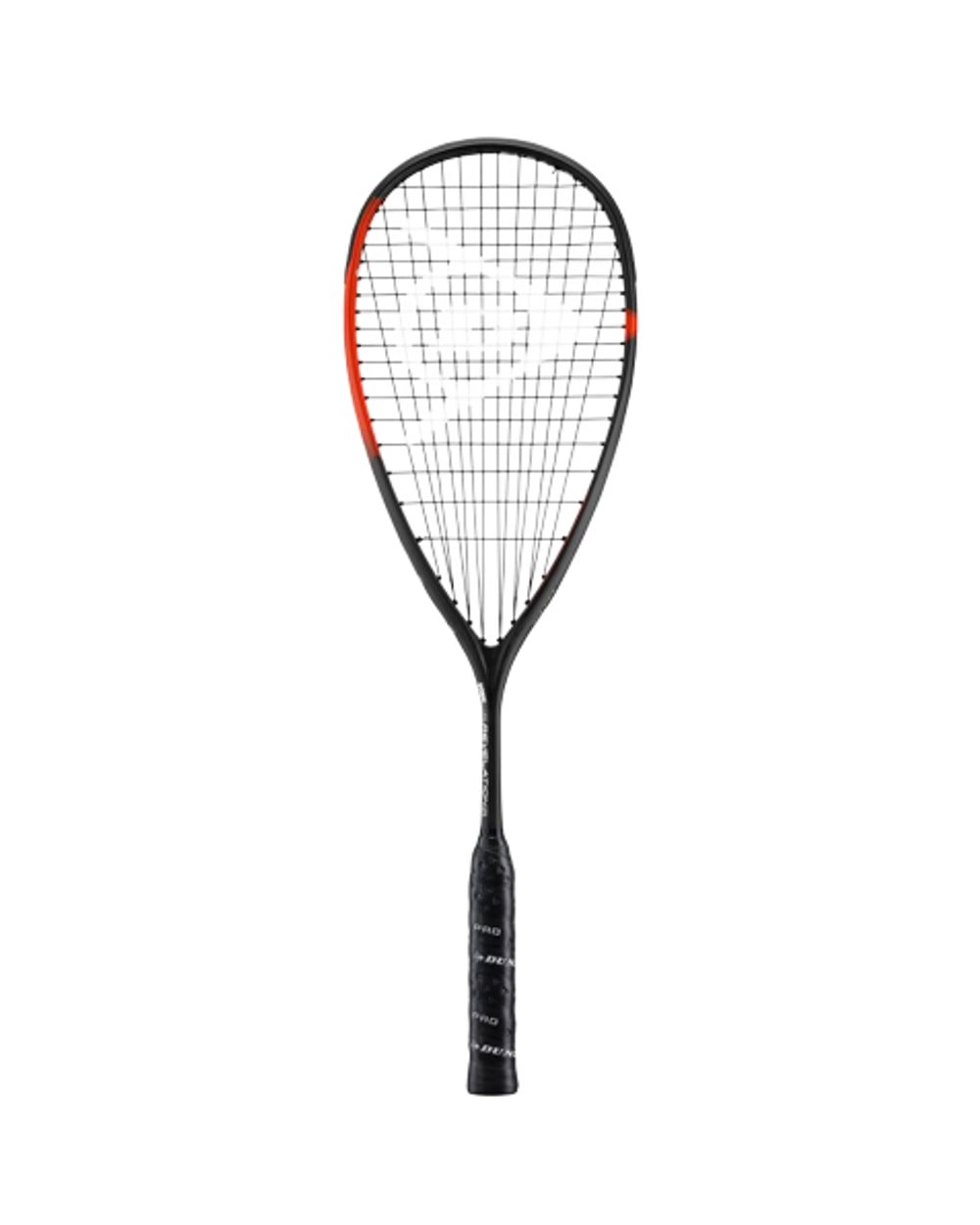
Dunlop Sonic Core Revelation 135
A flagship-grade carbon frame on closeout: 500 cm² head, Sonic Core damping, head-light speed.
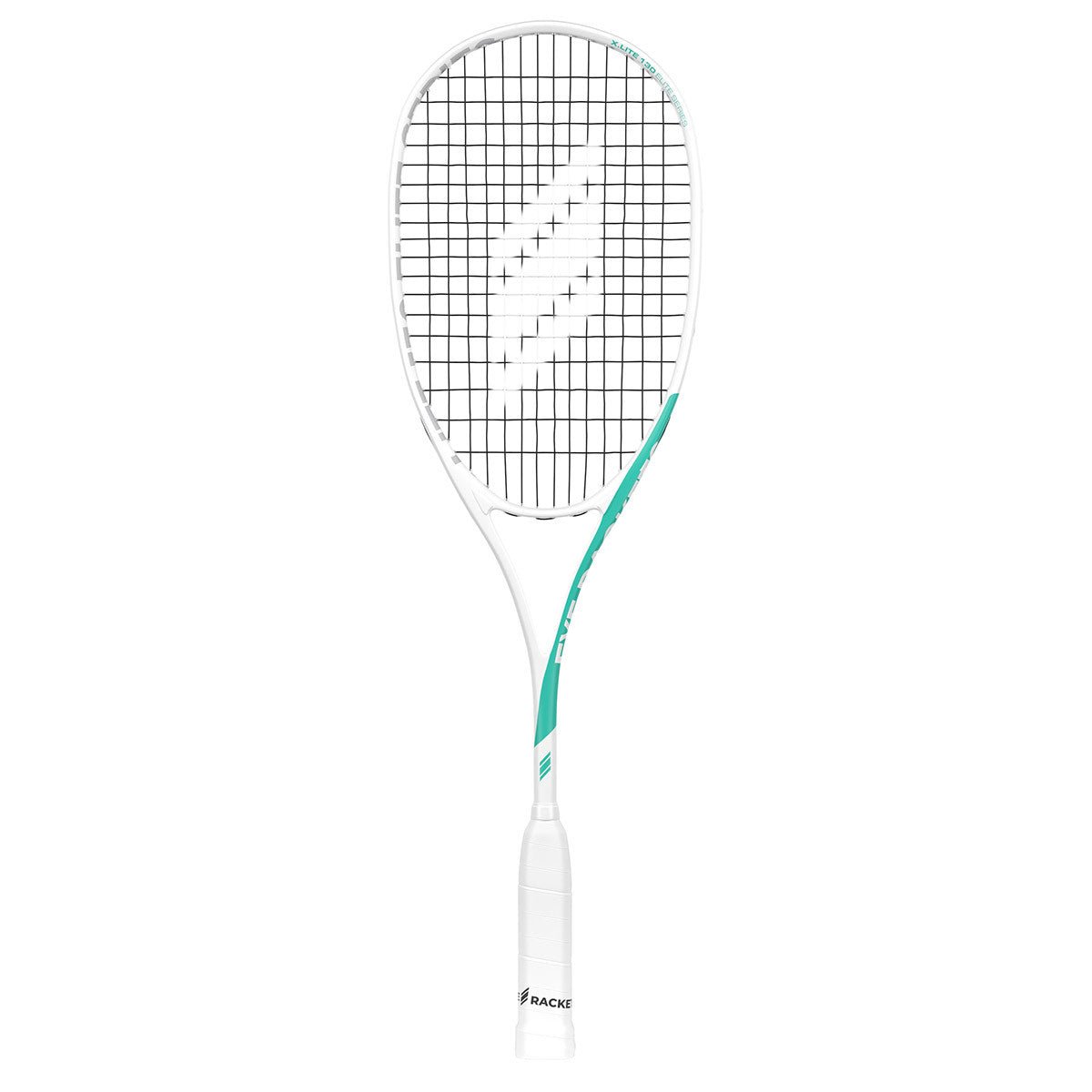
Eye X.Lite 130 Control
Closed-throat precision from the pro-tour specialists at Eye, with a proper multifilament factory string.
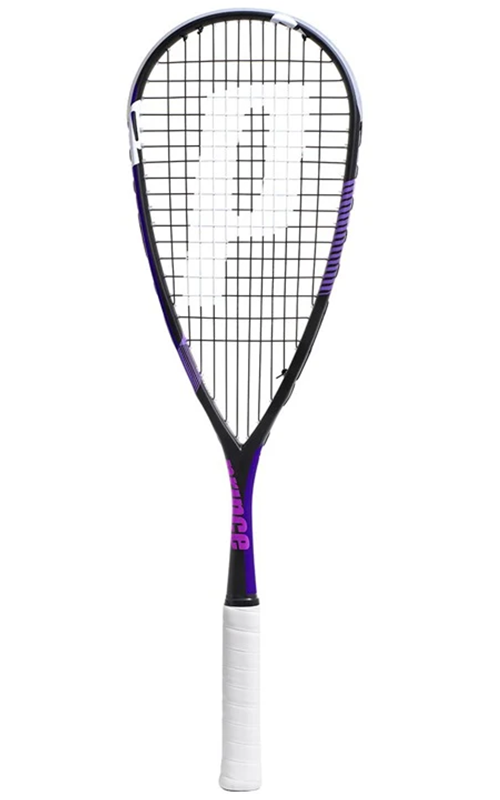
Prince Axel Response 450
135 g of 100% graphite with an even balance — the honest middle of the band, no gimmicks.
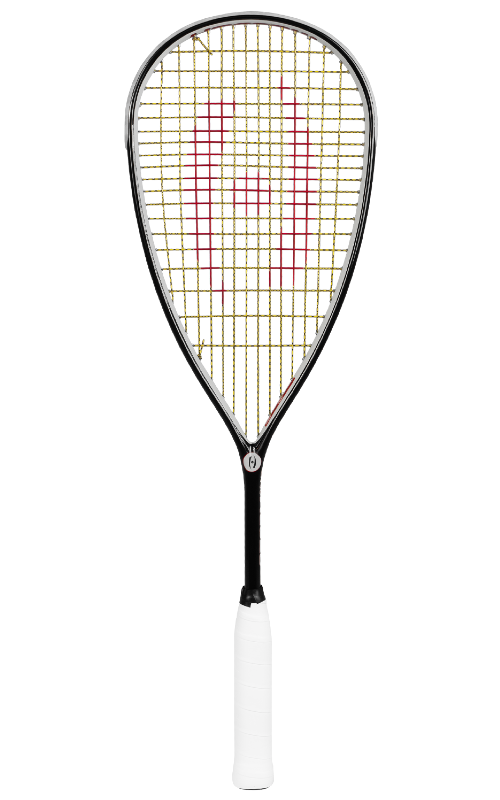
Harrow Storm 145
Head-heavy, generously headed and built for newbies who meet the walls as often as the ball.
Manta Big Foot
A 100% carbon frame at composite money — the rental-fleet favourite that outlasts its price.
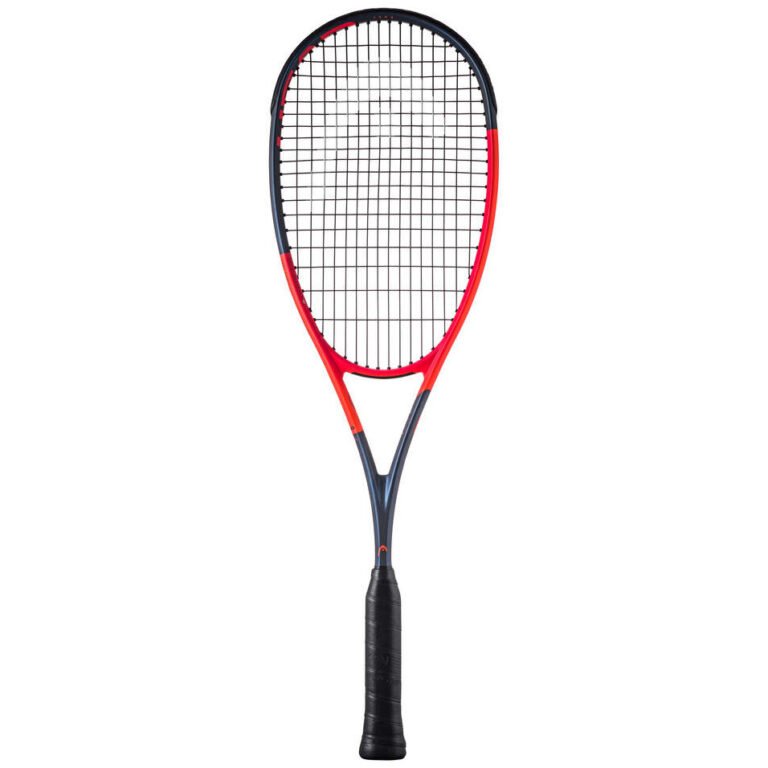
HEAD Cyber Tour
HEAD’s lightest Cyber: a head-heavy 500 cm² teardrop that hands new arms free depth.
Prince Shadow Response 400
The cheapest full-graphite frame on the page — same platform as the Axel, lower trim.
On this page
- The under-$100 buying guide (what the money buys)
- 1. Dunlop Sonic Core Revelation 135 — Best Overall Value
- 2. Eye X.Lite 130 Control — Best for Control
- 3. Prince Axel Response 450 — Best All-Rounder
- 4. Harrow Storm 145 — Best for Durability
- 5. Manta Big Foot — Best Carbon Value
- 6. HEAD Cyber Tour — Best Casual Power
- 7. Prince Shadow Response 400 — Best Rock-Bottom Budget
- Comparison table
- What to buy with it
- Care basics & when to upgrade
- FAQs
The two kinds of value hiding under $100
Squash has a pricing quirk that works entirely in your favour: flagship frames are replaced on a short cycle, the replacement is usually a new paint job on a familiar mould, and the outgoing model gets discounted hard to clear the shelves. That is how a premium-carbon Dunlop with tour-level damping technology ends up in a budget guide. The first kind of value in this band is the closeout flagship — a racket engineered without a budget ceiling, sold at one because its successor exists. The second kind is the built-to-budget frame: designed from the start to hit a price, usually by simplifying the layup, speccing a basic factory string and skipping the cover. Done well — and the Prince and Manta frames below are done well — it is an honest racket that plays properly for years.
What the band will not buy you is the current season’s tour frame, the lightest 110–120 g layups, or much in the way of exotic materials. It also will not buy you out of the laws of physics: the very cheapest rackets in any sports shop are still heavy aluminium or steel bundles that teach your wrist bad habits, which is why every pick here comes from a real squash brand with a verifiable spec sheet. One positioning note before we start: if you have never played and this is literally your first racket purchase, our beginners’ racket guide is the better starting point — it ranks by forgiveness first. This page assumes you already rally, and ranks by value inside a hard budget: league players on a budget, improvers buying a second frame, returning players, and anyone stocking a spare for doubles partners.
The under-$100 buying guide — what the money can and can’t buy
Dunlop Sonic Core Revelation 135
The flagship that fell into the budget band
This is the closeout effect at its best. The Revelation 135 was engineered as the most powerful frame in Dunlop’s Sonic Core range — premium carbon fibre, a full-size 500 cm² teardrop head, and Infinergy® damping in the frame — and it is the racket endorsed by Malaysian pro Eain Yow Ng. Its successor generation (the same frame now continues in Dunlop’s FX line) pushed it into closeout, and straight into this guide’s top spot.
Start with the head, because it is doing two jobs at once. The 500 cm² teardrop is the largest hitting area squash allows in practice, and Dunlop’s PowerMax pattern fans the main strings through the throat so they run longer and move more at impact — power and forgiveness from the same design. The Sonic Core technology places Infinergy®, BASF’s super-elastic foam, at the 2 and 10 o’clock positions in the head to absorb impact shock before it reaches your arm, so the frame hits cleaner and quieter than a plain carbon layup at this price has any right to. Retailer measurements put a strung sample at 149 g with a 356 mm head-light balance — light and quick in the hand, with the head size doing the stabilising. (One spec-sheet quirk worth knowing: a couple of listings print 125 g against this model; Dunlop’s own data and the frame’s name both say 135 g, and the measured strung weight is the number that matters on court.)
Who should buy it? The improver who wants one racket that plays like a serious frame — because it is one — and the league player who would rather spend the savings on court time. The honest caveats are the closeout caveats: stock and colourways are finite, and as the model ages its exact grommet strips get harder to source, so buy the bumper strip replacement early if you scrape walls often. It also arrives without the flagship-tier extras of a current model. None of that changes the maths: on pure frame quality per dollar of budget, nothing else in the band is close.
Pros
- Genuine flagship engineering: premium carbon, Sonic Core damping
- Full 500 cm² head with the power-friendly PowerMax fan pattern
- Head-light and quick — measured 149 g strung at 356 mm
- Performance factory string (Iconic Pro AF) instead of a placeholder
Cons
- Closeout stock is finite — colourways and grip stock vary
- Model-specific grommets get scarcer as the line ages
As an Amazon Associate we earn from qualifying purchases.
Eye X.Lite 130 Control
Pro-tour DNA, closed-throat precision
Eye is the squash-only European brand whose frames were developed with input from legends of the game — Jonah Barrington, Amr Shabana and Borja Golán all shaped the X.Lite line. The X.Lite 130 Control is that line’s precision instrument: a 130 g closed-throat frame with an even balance and Eye’s dense Control string pattern, pre-strung with a proper multifilament.
Everything about this frame points the same way: control. The closed throat (a bridge across the shaft) shortens the main strings, which flattens the trampoline effect and sends the ball where the racket face points; the Control pattern packs the strings densely enough to hold the ball on the face a fraction longer; and Eye rates the frame’s flex as “Touch” — it bends just enough to feed back what the shot is doing. The even 363 mm balance keeps the head honest rather than eager, and retailer-measured strung weights of 154–157 g put it squarely in the all-round club class. It is made from 100% premium graphite and — unusually — Eye skips the heavy bumper strip entirely, arguing that it saves roughly 16% of head weight and that bumpers rarely prevent real breakages anyway. Eye backs its rackets with a one-year warranty, a rarity at any price.
The trade is the mirror image of the Dunlop’s: you give up free power and a little forgiveness. At 490 cm² the head is generous for a control frame, but the dense pattern and honest flex mean your swing supplies the pace — players who under-hit will find the Revelation 135 or the Harrow kinder. Buy the Eye if your game is built on length, placement and taking the ball early, or if you are the improver whose coach keeps saying “slow the swing down and place it.” It is also the connoisseur’s pick of this list: the brand most casual players have never heard of, and the one a striking number of tour players chose when they could play anything.
Pros
- True control spec: closed throat, dense Control pattern, even balance
- 100% premium graphite from a squash-only pro-tour brand
- Proper multifilament factory string — no instant restring needed
- No-bumper design keeps the head light; one-year racket warranty
Cons
- Least free power of the top picks — your swing does the work
- Smaller US retail footprint; specialist stockists mainly
As an Amazon Associate we earn from qualifying purchases.
Prince Axel Response 450
Honest graphite, no gimmicks, mid-band money
Prince’s Response platform is the brand’s answer to a simple brief: a proper graphite squash racket for beginner-to-intermediate players, without the tour tax. The Axel Response 450 is the upper trim of that platform — a 135 g frame in 100% graphite with an even 355 mm balance and a factory stringing around 25 lbs.
Read the spec sheet again, because its plainness is the point. There is no proprietary foam, no trademarked throat geometry — just the three numbers that actually decide how a racket plays, all sitting exactly where an improving player wants them. 135 g is the classic all-round frame weight; an even balance neither drags the head through the swing nor leaves it feeling empty on drives; full graphite construction gives the crisp, connected feel that composites below this standard can’t imitate. The moderate factory tension around 25 lbs keeps the string bed lively rather than boardy, which flatters developing technique and is kind to the arm. Prince positions the Response line squarely at beginner-to-intermediate players, and US specialist listings carry it as a current model, so grips and grommets follow the platform rather than a one-off mould.
One transparency note: Prince’s published data for this platform covers weight, construction, balance and tension — the head size is not published for the Response frames, and we would rather tell you that than estimate it. On court, the Axel plays like the reference all-rounder it is: no shot it refuses, no speciality it owns. Choose it over the Dunlop if closeout stock has run dry near you, and over its own Shadow sibling below if you catch it at the keener price — the two share a platform, and the smarter buy is usually whichever is cheaper on the day.
Pros
- Textbook all-round spec: 135 g, even balance, full graphite
- Lively factory tension suits developing swings and arms
- Current platform — parts and grips stay available
- The no-drama pick: nothing to outgrow quickly, nothing weird to adapt to
Cons
- Head size not published for the platform — spec sheet is minimal
- No flagship technology story; it wins on balance, not features
As an Amazon Associate we earn from qualifying purchases.
Harrow Storm 145
Head-heavy muscle built for the learning curve
Harrow redesigned the Storm as its entry-level frame, and the design brief shows: a generous sweet spot, added head weight for strength through the ball, and a carbon/graphite layup that expects to be introduced to the walls. Harrow’s own guide describes the Storm as having a large, long sweet spot that needs less effort to drive the ball consistently — which is precisely the help a developing swing wants.
First, the weight riddle, because this racket is the perfect illustration of the two-numbers problem from the buying guide. Retailers list the Storm’s frame weight as 145 g; Harrow’s own racquet guide quotes the Storm at 170 g — because Harrow publishes finished weights (strung, gripped, ready to play) rather than bare frame weights. Both are right; just don’t compare the 170 against a rival’s 135 g frame weight and conclude the Harrow is a club. It is the heaviest-playing racket here, but honestly so: the mass sits in the head (370 mm balance), where it stabilises contact, punches drives to the back wall with a compact swing, and gives the frame the substance to absorb wall scrapes that would rattle a lighter layup. The closed throat adds torsional stiffness, and Harrow strings it with its Barrage string at 28 lbs — a firmer, more controlled factory setup than most budget frames get.
Who is it for? The physical player — the ex-tennis or badminton convert, the gym-strong beginner, the improver whose current lightweight frame twists on off-centre hits and chips if you look at it. The trade: that head weight is slower to reposition in frantic front-court exchanges, and smaller or slighter players may find a full match tiring. If durability and drive depth top your list and your arm is up to it, this is the budget frame least likely to need replacing — which, over two seasons, makes it cheaper than the cheap rackets.
Pros
- Head-heavy momentum manufactures drive depth for developing swings
- Generous sweet spot and a layup built to survive wall contact
- Quality factory stringing: Harrow Barrage at 28 lbs
- Backed by the US squash specialist brand’s support network
Cons
- Heaviest-playing pick here — slighter players may tire over a match
- Head-heavy feel is slower in front-court scrambles
As an Amazon Associate we earn from qualifying purchases.
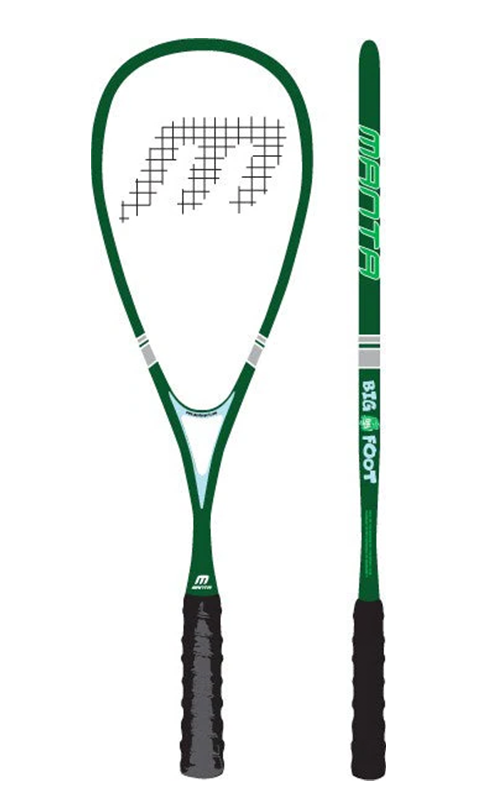
Manta Big Foot
100% carbon at a composite price
Manta is the Canadian brand most US players meet through club rental fleets — which tells you exactly what the Big Foot is engineered for. It is a 145 g frame built from 100% carbon, with a 490 cm² head and a strung, gripped weight of 159 g that specialists describe as great for beginners and perfect for rental programmes. Rental gear survives because it has to.
The Big Foot’s trick is material honesty at a price where rivals start blending in cheaper fibres. A full-carbon layup at this money buys you the two things composites can’t fake: a crisper response off the string bed and better vibration behaviour over a long session. The numbers around it are sensibly club-player rather than tour-player: a 490 cm² head keeps the sweet spot useful, the 365 mm strung balance leans slightly head-heavy for drive depth, and the 159 g all-in weight sits in the stable middle — heavy enough to feel planted on volleys, light enough to play twice a week without thinking about your arm. Manta has built its name in North American clubs and school programmes, where a racket that survives being lent, dropped and clashed is worth more than a fragile gramme-saving here or there.
The compromises are visible and acceptable. The factory synthetic poly string is the budget item on the spec sheet — playable, durable, and the first thing to upgrade when it dulls; a mid-range multifilament restring turns this into a noticeably classier hit. There is no flagship technology narrative and distribution runs through squash specialists rather than every marketplace. Buy it if you want the best raw material in the band, a spare racket for the household or the club bag, or a first serious frame for a junior who will absolutely test its durability claims against the architecture.
Pros
- 100% carbon construction at a price where rivals blend fibres
- Rental-fleet durability brief — built to be lent, dropped and clashed
- 490 cm² head and a stable 159 g all-in weight
- Honest strung-and-gripped specs published by the retailer
Cons
- Basic synthetic factory string — plan an upgrade restring eventually
- Specialist distribution only; the least-known brand on this page
As an Amazon Associate we earn from qualifying purchases.
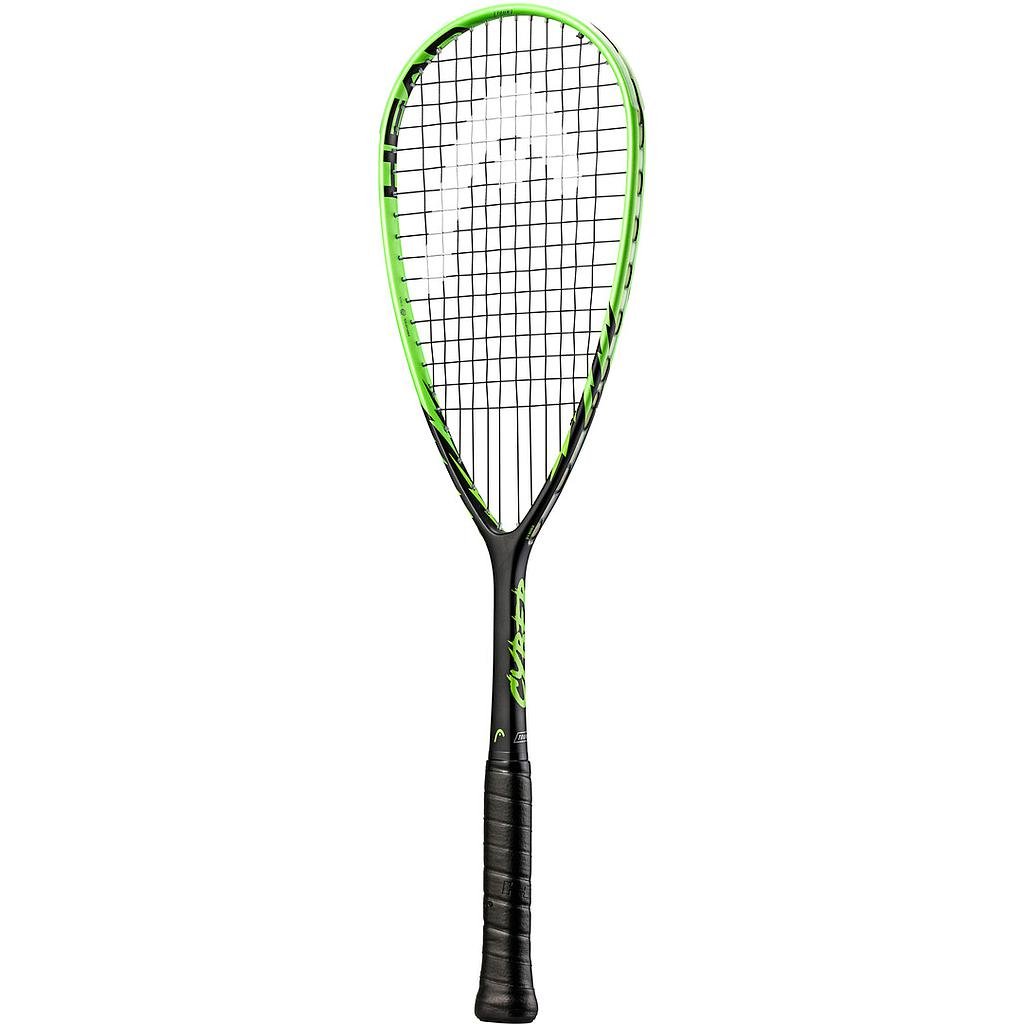
HEAD Cyber Tour
Big head, head-heavy help for casual players
The Cyber Tour is the lightest racket in HEAD’s recreational Cyber series, built for new and casual players who want power on tap: a 500 cm² teardrop head, a head-heavy balance and an open 12 × 17 string pattern, with HEAD’s Amplified Fibre Technology stiffening the frame where the power is made.
Every spec here answers the same question: how does a casual player get the ball to the back of the court without a grooved swing? The teardrop head runs the main strings long, the sparse 12 × 17 pattern lets the bed trampoline, the head-heavy balance parks momentum behind the ball, and Amplified Fibre Technology — HEAD’s fibre treatment that increases stiffness in the frame — keeps that power from dissolving into wobble. At 160 g the frame is the heavyweight of this list, which cuts both ways in exactly the ways the buying guide predicts: slower to flick around at the front of the court, and substantially harder to break. The composite layup makes the same bargain — a little less crisp than full graphite, noticeably more forgiving of wall contact and clashes.
Position it honestly and it is a very good racket: this is the pick for the once-a-week player, the social doubles regular, the household second racket and the newcomer whose current problem is depth, not placement. Serious improvers playing several times a week will feel its weight and composite softness within a season and should take the Dunlop, the Eye or either Prince instead. But within the casual brief it might be the most fit-for-purpose frame on the page — HEAD aimed it at exactly the player who buys it, which is rarer in this band than it should be.
Pros
- Free power everywhere: 500 cm² teardrop, open 12 × 17 pattern, head-heavy
- Composite layup and 160 g build shrug off casual-play abuse
- AFT stiffness keeps the big head from feeling vague
- Current HEAD recreational line — widely stocked, easy parts
Cons
- 160 g is heavy for committed improvers or long sessions
- Composite feel is softer and less crisp than full graphite
As an Amazon Associate we earn from qualifying purchases.
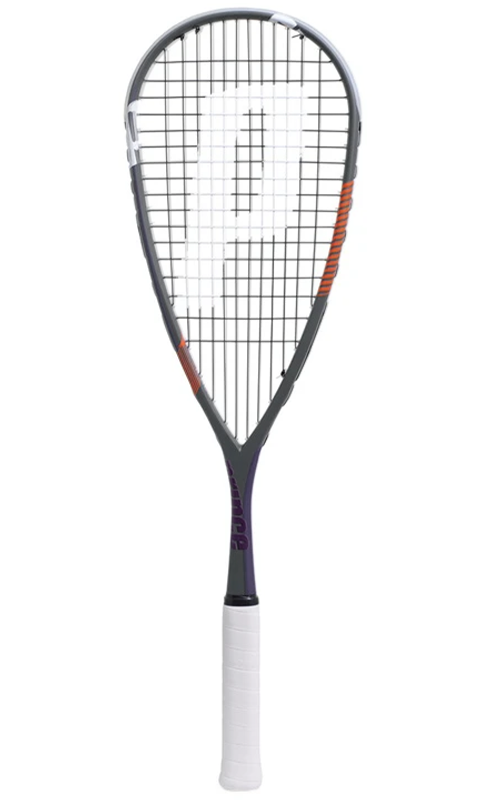
Prince Shadow Response 400
The cheapest way into real graphite
The Shadow Response 400 is the entry trim of the same Prince platform as the Axel above — and that is its whole appeal. The published core specs match its sibling exactly: a 135 g frame in 100% graphite, an even 355 mm balance (unstrung), factory stringing around 25 lbs, aimed by Prince and its retailers at beginner-to-intermediate players. It simply asks the least money on this page to get there.
Context is what makes this card matter. Drop below this rung in most shops and the material changes underneath you: frames become graphite-aluminium fusions or plain composites, weights balloon, and the racket stops teaching you anything about how squash feels. The Shadow refuses that drop. Full graphite keeps the response crisp and the vibration honest; the even balance and mid-weight frame play the same all-round game as the Axel; and the moderate factory tension is the same lively, arm-friendly setup. In the Response line-up the number denotes the trim level, and Prince’s own published figures for the two frames are identical — so the honest buying advice is refreshingly simple: if the Axel is discounted close to the Shadow on the day you shop, take the Axel; otherwise take the Shadow and put the difference towards court time, where it will do more for your game than any trim difference.
The caveats match the platform’s: Prince publishes no head size for these frames, the spec sheet is minimal, and there is no technology narrative to hide behind — what you are buying is graphite, balance and weight, executed plainly. As a first serious racket it is outclassed for forgiveness by our beginners’ guide picks, but as a budget frame for a player who already rallies, a club spare, or a second racket for a growing junior, it is the floor of this band — and it is a floor made of the right material.
Pros
- Full graphite at the lowest rung of the band — no material downgrade
- Same all-round platform numbers as the Axel: 135 g, even balance
- Ideal spare, club or growing-junior racket economics
- Lively factory tension; nothing about it fights a developing swing
Cons
- Indistinguishable spec sheet from the Axel — buy on price, not trim
- Head size not published for the platform
As an Amazon Associate we earn from qualifying purchases.
Budget squash rackets compared
| Racket | Frame weight | Head size | Balance | String pattern | Best for |
|---|---|---|---|---|---|
| Dunlop Sonic Core Revelation 135 | 135 g | 500 cm² | Head light | 14 × 18 PowerMax | Best overall value (closeout flagship) |
| Eye X.Lite 130 Control | 130 g | 490 cm² | Even, 363 mm | Control, 14 × 18 | Control and placement players |
| Prince Axel Response 450 | 135 g | Not published | Even, 355 mm | Not published | Honest all-round graphite |
| Harrow Storm 145 | 145 g (~170 g finished) | Closed throat | Head heavy, 370 mm | Barrage at 28 lbs | Durability and drive depth |
| Manta Big Foot | 145 g (159 g strung) | 490 cm² | 365 mm, strung | Synthetic poly (factory) | 100% carbon on a budget |
| HEAD Cyber Tour | 160 g | 500 cm² | Head heavy | 12 × 17 | Casual power, social play |
| Prince Shadow Response 400 | 135 g | Not published | Even, 355 mm | Not published | Cheapest full-graphite buy |
What to buy with it
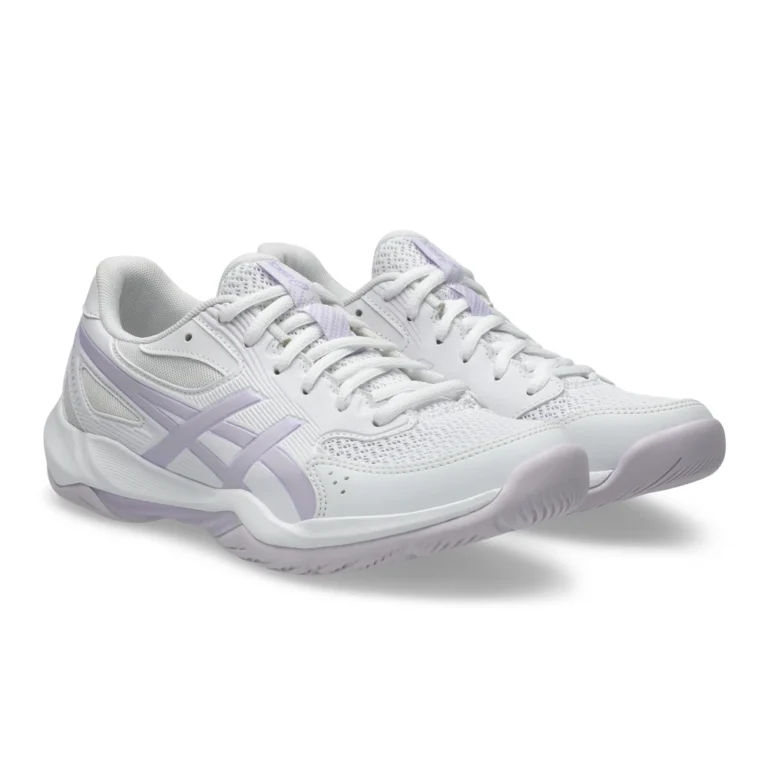
A budget racket leaves money on the table for the rest of the kit — spend it where it changes your squash most. Shoes before a second racket: squash is played in explosive lateral bursts, and running shoes roll ankles; a proper non-marking court shoe is the biggest performance and safety upgrade available at any price, which is why we maintain a dedicated best squash shoes guide. Balls second: match the ball to your level — a Dunlop Pro (single yellow dot) is the club standard once your rallies run long, while newer players still rally better with a bouncier progression ball. Eyewear third: mandatory for juniors in many federations and a habit worth forming at any age. And keep a multi-pack of overgrips in the bag: a fresh grip is the cheapest feel upgrade in the sport, and a budget frame with a tacky grip plays above its price.
Dunlop Pro Squash Balls
The single yellow dot club standard from the maker of the tour ball. Buy the double-pack so a cold spare never ruins a session. Check on Amazon →
Protective Squash Eyewear
Small ball, high speed, close quarters. Full-coverage anti-fog eyewear is the non-negotiable extra, whatever your racket cost. Check on Amazon →
Overgrips (Multi-Pack)
Restores tack, fine-tunes grip thickness and makes a budget frame feel a class higher. Swap the moment your hold starts to slip. Check on Amazon →
Care basics — and when to upgrade out of the band
Budget frames reward exactly the same four habits as flagship ones. Use the cover or a padded bag compartment — most frame damage happens in transit, not on court. Keep it out of hot cars, where heat sags string tension and stresses frame resins. Inspect after wall contact: scrapes that cost paint are cosmetic, but a crack, a creak or a new buzz in the head means the frame is done. Maintain the consumables: replace the grip when it slips, restring when the bed frays, notches or feels dead, and at every restring have the bumper and grommet strip checked — it is the cheapest insurance your frame can buy, doubly so on a closeout whose parts are ageing out of catalogues.
And the upgrade question, because this band has an honest ceiling: you have outgrown it when your contact is consistently central, when you play competitive league squash several times a week, or when your shots need a control and touch that budget layups blur. At that point the money goes further on technique first — our how to play squash guide covers the grips, swing shapes and movement patterns that turn a decent racket into a weapon — and on a current-season frame second. Players moving up typically land on the tour-tier frames in our other guides; the racket you bought from this page becomes the spare, the lender and the doubles partner’s frame, which is exactly the second career a good budget racket deserves.
Squash rackets under $100 — FAQs
Can a squash racket under $100 actually be any good?
Yes — because of how squash pricing works. Flagship frames are replaced on short cycles and the outgoing models are discounted hard, so this band regularly contains genuine performance rackets like the Dunlop Sonic Core Revelation 135, alongside honestly built graphite frames like the Prince Response models. What the band excludes is the current season’s tour frames and the lightest 110–120 g layups. For club and league play, a good sub-$100 frame is not a compromise that shows.
What’s the difference between a closeout flagship and a racket built to be cheap?
A closeout flagship was engineered without a budget ceiling — premium carbon, named frame technologies, a performance factory string — and reached this price because a successor model replaced it. A built-to-budget frame was designed to hit the price from day one, usually with a simpler layup and a basic synthetic factory string. Check the spec sheet: premium materials and a real factory string signal a closeout; vagueness about anything beyond weight signals a budget build. Both appear on this page, and each card says which is which.
Full graphite, carbon composite or fused aluminium — which should I choose?
Full graphite if you play regularly: it is lighter, crisper and more responsive, and this budget band is high enough to afford it (the Dunlop, Eye, Prince and Manta picks are all full carbon or graphite). Carbon composite, like the HEAD Cyber Tour, trades some feel for toughness and suits casual players. Fused graphite/aluminium sits below this band in most line-ups — heavy and dull-feeling, but it bends where carbon cracks, so it still makes sense for rackets that will be shared, lent or genuinely abused.
I’m a complete beginner — should I buy from this list?
You can, but our best squash rackets for beginners guide is the better starting point: it ranks by forgiveness first — head size, balance and how a frame treats off-centre contact while your swing forms. This page assumes you already rally and ranks by value inside a budget. If you do buy from here as a beginner, the Dunlop Revelation 135 and the HEAD Cyber Tour are the most forgiving choices; the Eye X.Lite 130 Control is the least forgiving and the best left to players with reliable contact.
Do budget squash rackets come strung?
Yes — every racket on this page arrives strung and gripped, ready to play. Factory string quality is where the band splits: closeout flagships wear performance strings (the Dunlop’s Iconic Pro AF, Eye’s multifilament), while built-to-budget frames usually wear a durable basic synthetic. Play the factory string until it frays, notches or feels dead; then restring with a mid-range multifilament rather than replacing the racket — it is the best value upgrade in the band.
How long will a squash racket under $100 last?
Frames rarely die of old age; they die of wall contact. A budget graphite frame played a few times a week, kept in its cover and restrung with its bumper strip maintained will serve for seasons. The heavier, head-heavy frames here (Harrow Storm, HEAD Cyber Tour, Manta Big Foot) are the most abuse-tolerant. Inspect the head after any hard scrape: paint chips are cosmetic, but cracks end a frame at any price — flagship carbon is no more immortal than budget carbon.
What weight and head size should I look for under $100?
The same numbers as at any price: a frame weight around 130–140 g for an all-round improver’s racket, 145 g if you value stability and durability, and a head of 490–500 cm² for a forgiving sweet spot. Compare weights carefully — most brands quote bare frame weight, but Harrow quotes finished (strung) weights, which run 20–30 g higher for the same racket. Balance is taste: head-light for quick hands, even for neutrality, head-heavy for manufactured drive depth.
When is it worth spending more than $100 on a squash racket?
When the frame becomes the limiting factor: your contact is consistently central, you play competitive league squash several times a week, and you want the lighter layups, denser control patterns and current-season moulds that live above this band. Until then, the difference between a good budget frame and a flagship shows up far less in results than the same money spent on court time, coaching or proper squash shoes. Buy out of the band because your game demands it, not because the marketing calendar does.
The verdict
Buy the Dunlop Sonic Core Revelation 135 if you want flagship engineering at budget money — it is the value pick of the band while closeout stock lasts. Buy the Eye X.Lite 130 Control if placement is your game and you want pro-tour DNA. Buy the Prince Axel Response 450 if you want honest graphite with nothing to adapt to. Buy the Harrow Storm 145 if your racket meets the walls as often as the ball. Buy the Manta Big Foot if 100% carbon at composite money sounds like your kind of arithmetic. Buy the HEAD Cyber Tour if casual power is the whole brief. Buy the Prince Shadow Response 400 if the budget is the budget — it is the cheapest route into real graphite we can verify. Whatever you choose, choose the spec before the discount: the right balance in a built-to-budget frame beats the wrong balance in a closeout, every single rally.
Affiliate disclosure: Alishuttler.com is a participant in the Amazon Services LLC Associates Program. The Amazon buttons on this page use our affiliate tag — if you buy through them, we may earn a commission at no extra cost to you. Prices shown on Amazon are live and may differ from any figures mentioned here.