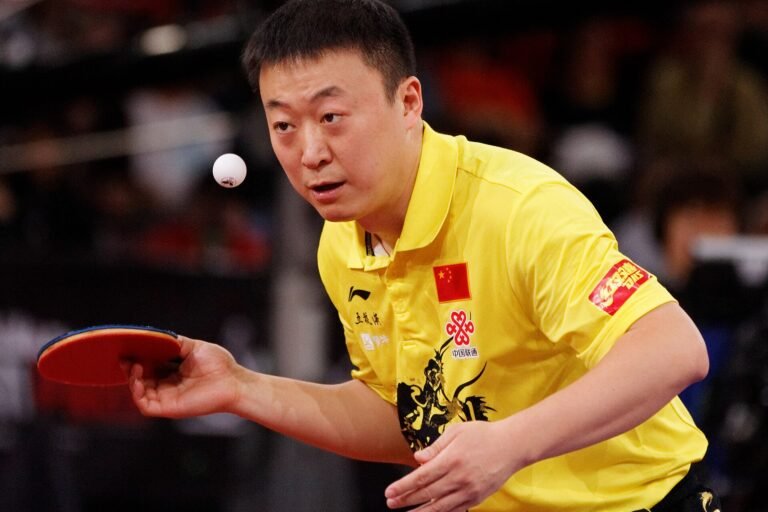
The best table tennis shoes are built for a game played in a two-metre box: thin gum-rubber soles that bite hall floors, a low profile that keeps you balanced through side-to-side footwork, and just enough cushioning for the short, sharp lunges the sport demands. These seven are the pairs that do it properly — from Butterfly’s flagship to a genuine wide-fit option and a pro shoe with a carbon plate.
The Short Answer
For most players, the Butterfly Lezoline Rifones is the best table tennis shoe on this list: a flagship built around footwork, with a shock-absorbing forefoot, a bridge-shaped midsole that supports the sliding steps table tennis runs on, and a grippy wingtip outsole. Speed players should look at the Mizuno Wave Drive 9 — at roughly 235 grams a shoe (Mizuno’s figure) it is the barefoot-feel racer here. Wide feet are properly served for once, by the Mizuno Wave Kaiserburg 8 and its 3E last. The Li-Ning Ma Long is the pro-grade splurge with a carbon plate, and the Victas V-Shoes 613 is the honest value pick that still gets the grip right.
Our Top Picks at a Glance
Butterfly Lezoline Rifones
Butterfly’s flagship footwork shoe: B-Absorber forefoot cushioning, Wingrip outsole and a midsole shaped for sliding steps.
Mizuno Wave Drive 9
Around 235 g a shoe with a thin, flexible sole and Mizuno’s diagonal D-Flex Groove for fast turns at the table.
Li-Ning Ma Long
The Chinese national-team shoe: Boom foam over a carbon-fibre plate, with an anti-rollover structure for hard lateral plants.
Mizuno Wave Kaiserburg 8
A true 3E wide last at roughly 245 g a shoe — the table tennis shoe wide feet have been waiting for.
Donic Spaceflex
A flexible natural rubber sole and cushioned TPR insole in Donic’s light competition shoe.
Victas V-Shoes 613
Big mesh inlets, soft heel padding and a non-marking sole that grips even on slippery hall floors — for sensible money.
In This Guide
Why Table Tennis Needs Its Own Shoes
Table tennis footwork looks gentle from the stands and feels anything but on your feet. Almost everything happens inside a box about two metres wide: a split step as your opponent serves, two quick side-steps to reach a wide forehand, a short lunge in towards the table for the flick, a shuffle back out again. You are rarely running — you are starting, stopping and changing direction on the balls of your feet, dozens of times a game, on hall floors that range from sprung sports timber to dusty vinyl. That movement pattern writes a very specific footwear brief, and it is not the brief running shoes, gym trainers or even other racket-sport shoes are designed around.
Running shoes fail at the table in two mechanical ways. Their tall, soft heel stacks are built to cushion straight-line heel strikes, so when you plant sideways the high foam lever tips your ankle over instead of holding it — the bevelled heel that makes a runner roll smoothly forwards is precisely what makes it roll sideways at the table. And their uppers are built for ventilation over structure, so the lateral push-off that starts every side-step stretches the mesh instead of driving you across. Gym trainers share the height problem in milder form. Even badminton and squash shoes — the closest cousins — skew heavier and more armoured than table tennis needs: this sport’s steps are shorter, the lunges shallower, and the premium is on feeling the floor through the sole, not on surviving a toe drag. Get the base of your game right first — our best table tennis tables guide covers the surface you play on — then match it with shoes built for how you actually move around it.
A proper table tennis shoe answers the brief with a thin, flexible gum-rubber or gum-style sole that grips at very low pressure, a low midsole that keeps your centre of gravity over your feet during lateral plants, enough lateral structure to stop your foot spilling over the edge of the sole, and a fit that runs deliberately snug — there is no room inside the shoe for your foot to travel when you brake. It is also why the rubber matter extends beyond the shoes: the same obsession with grip and contact runs through the playing side of the sport, as our best table tennis rubbers guide shows. Footwork is the foundation everything else is built on, and the shoes below are the seven we would build it on.
What Makes a Great Table Tennis Shoe
1. Grip: thin gum rubber on hall floors
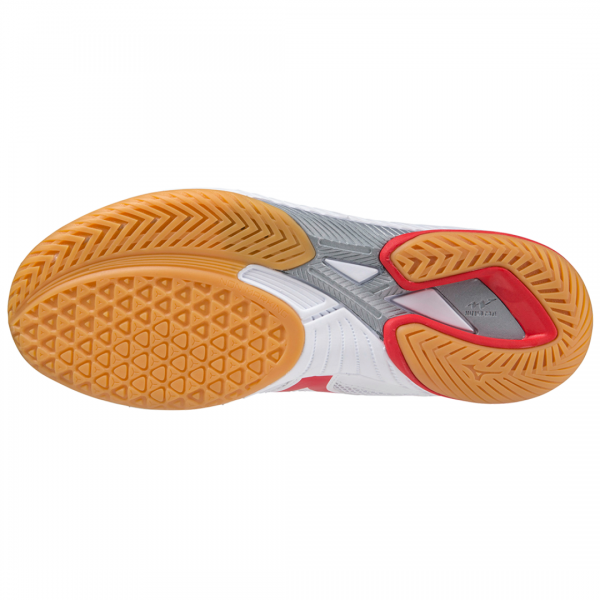
Table tennis is played on smooth indoor surfaces, and grip at the table comes from soft rubber compounds and tread that works at light loads — you are pushing off with part of your bodyweight, not landing from a jump. Gum rubber and gum-style soles are the benchmark because the compound stays tacky on wood and synthetic hall floors alike, and every shoe on this list uses a rubber outsole shaped for it: Butterfly’s wingtip-formed Wingrip, Donic’s flexible natural rubber, Victas’ non-marking sole that keeps holding on slippery halls. Just as important is what the tread does not do: deep, chunky lugs belong outdoors. At the table you want a fine pattern with flex grooves, so the sole can bend with your foot and keep maximum rubber in contact with the floor.
2. Lateral support for side-to-side footwork
The defining load in table tennis is sideways. Every wide ball asks your outside foot to plant and drive while your bodyweight tries to carry your foot over the outside edge of the shoe. Good table tennis shoes fight that with structure, not height: a reinforced forefoot frame (Butterfly calls its KPU forefoot cover B-Armor), an anti-rollover flare on the Li-Ning, a midfoot bridge or shank that stops the shoe twisting (Butterfly’s B-Ridge and STB systems, Mizuno’s Wave plate), and a heel counter that keeps the rear of the foot centred over the sole. Wring a shoe in your hands before you buy: if it twists like a towel through the middle, it will twist under your hardest side-step too.
3. Low profile versus cushioning — the trade-off to get right
Table tennis shoes sit lower than almost any other court shoe, and that is deliberate: the closer your foot is to the floor, the faster direction changes feel and the less leverage there is to roll an ankle. The cost is impact protection — the landings here are small but relentless, and they add up over a long session. The shoes on this list solve the trade-off in targeted ways rather than with tall foam: a shock-absorbing sponge in the Rifones’ forefoot, Mizuno’s Wave plate spreading load in the Drive 9, a carbon plate over Boom foam in the Li-Ning, a cushioned TPR insole in the Spaceflex. If your knees or heels complain after long sessions, favour those cushioned builds; if your game is built on being first to every ball, favour the lowest, thinnest soles — and accept you will feel the floor.
4. Fit: table tennis shoes run snug — plan for it
A table tennis shoe should hold your foot like a firm handshake: no heel lift, no sideways slide, and roughly a thumbnail of space in front of your longest toe for the braking step into the table. Most models here are cut on Japanese or European lasts that run snugger than American trainers, and brands size differently — Butterfly and Mizuno both size in centimetres, Li-Ning’s shoes famously run small (retailer Contra advises ordering one to one and a half sizes up), and Mizuno’s standard last is a 2E, with the Kaiserburg line going wider at 3E. Measure your feet in centimetres, in playing socks, late in the day, and buy by the centimetre column of the brand’s own chart rather than by the size you wear in trainers. The sizing section below the comparison table pulls the brand-by-brand notes together.
5. Weight: light is fast, but structure has a cost
The lightest shoes here — Mizuno publishes about 235 g per shoe for the Wave Drive 9 at 26.0 cm — feel like they disappear, and for players whose game is anticipation and quick feet that matters more than any other spec. But grams come off somewhere: thinner uppers, less reinforcement, less cushioning. Heavier-built shoes like the Rifones trade a little of that vanish-feel for forefoot armour and a more planted platform. Neither is automatically better. Match the weight class to your game: retrievers and counter-drivers who live on footwork speed should shop at the light end; players who plant hard, play long sessions or carry knee and heel niggles should take the structure and not apologise for it.
6. Breathability for long sessions
Hall play gets hot, and a soaked upper stretches, slides and rots from the inside. Mesh is doing real work in these shoes, not decorating them: large mesh inlets are the Victas 613’s headline feature, the JOOLA Pro Blast vents through mesh inserts at the front and sides, and the Rifones and Drive 9 both run mesh-and-synthetic uppers that trade a little armour for airflow. If you play in a warm hall or train several times a week, breathability belongs on your checklist alongside grip — and so does the habit, covered in the care section, of airing shoes out between sessions instead of sealing them in a kit bag.
The 7 Best Table Tennis Shoes, Reviewed
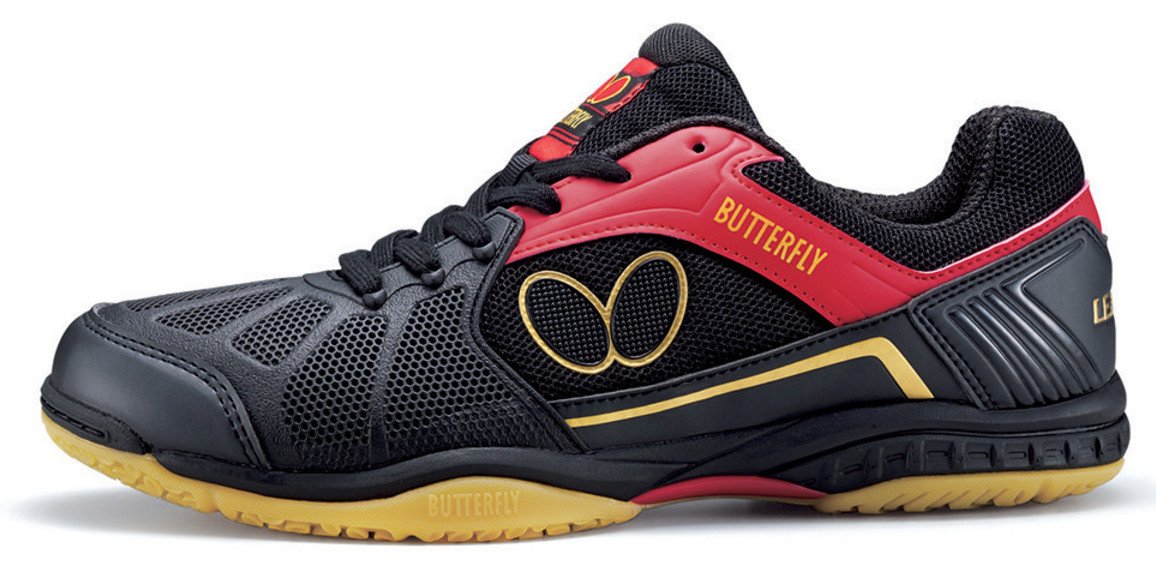
Butterfly Lezoline Rifones — The Footwork Flagship
B-Absorber forefoot sponge, Wingrip outsole, B-Ridge midsole shaped for the slide step
Butterfly’s flagship table tennis shoe (model 8035) is designed around the way the sport actually moves, and every named system in it answers a footwork problem. It is the most complete shoe on this list — the one to buy when you want a single pair that does everything at the table well.
Start underneath. The Wingrip outsole is formed in a wingtip shape that Butterfly says is designed for grip and correct movement, and the midsole carries B-Ridge — a bridge-shaped section whose job is to support the sliding motion table tennis footwork uses to glide into position rather than stamping to a stop. Between the outer and midsole in the forefoot sits B-Absorber, a shock-absorbing sponge that adds cushioning and flexibility exactly where you load the shoe during the push-off and the short lunge in. It is a more thoughtful stack than “thin sole, good luck” — the Rifones keeps the low, connected feel the sport wants while taking the sting out of the forefoot work.
Up top, a stiff KPU covering Butterfly calls B-Armor protects the forefoot and cushions it against rapid movements, the tongue is attached on one side only so it cannot wander and bunch mid-match, and an STB system resists the distortion that table tennis movement twists into a shoe over a season. The upper mixes mesh and synthetic fibre over a KPU inner, so it breathes better than its armoured feel suggests. Retailer fit notes describe the Rifones as true to size, and Butterfly’s own chart runs in half sizes from a 22.5 cm foot — measure and buy by centimetres. It is not the lightest shoe here and it asks flagship money, but as the default answer to “which table tennis shoe should I buy,” nothing else on this list is as complete.
What we like
- Every system in the shoe targets a real table-tennis load — slide, plant, push-off.
- B-Absorber forefoot cushioning without a tall, tippy stack.
- One-sided tongue stays put; KPU forefoot armour shrugs off scuffs.
- Half-size run from 22.5 cm makes a precise fit genuinely possible.
Worth knowing
- Flagship pricing; pure speed players may still prefer the lighter Wave Drive 9.
- Buy by the centimetre chart, not by your trainer size.
Live price shown on Amazon · men’s and women’s sizes in the run
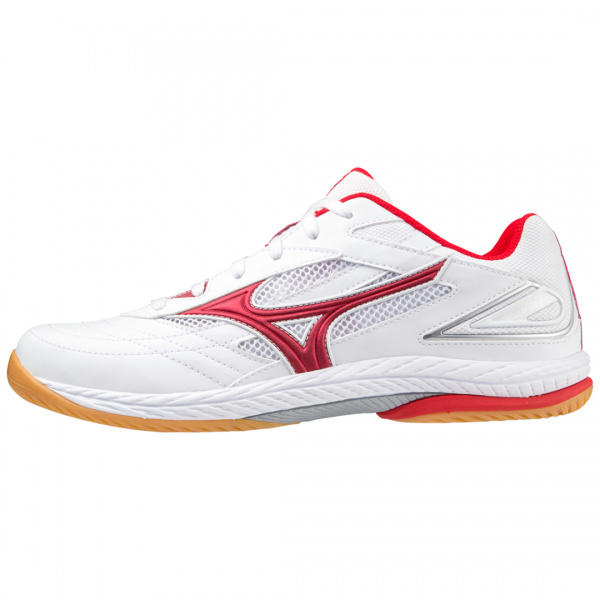
Mizuno Wave Drive 9 — The Barefoot-Feel Racer
Approx. 235 g a shoe, D-Flex Groove for turning, thin sole with genuine court feel
The Drive line is Mizuno’s lightest, most flexible table tennis family, and the ninth generation (81GA2205) is the shoe for players who want to feel the floor and move first. If your game is built on anticipation and quick feet, this is your pair.
Mizuno publishes the number most brands won’t: about 235 grams per shoe at 26.0 cm, on a standard 2E last. The sole is deliberately thin — retailers describe the feel as close to barefoot — but it is engineered rather than minimal. A diagonal D-Flex Groove cut through the midfoot lets the shoe bend along the line your foot twists through in a turn, so direction changes at maximum speed don’t fight the sole. The Mizuno Wave plate runs through the midsole doing its double job of cushioning and stability, over a lightweight PoWnCe midsole compound, and the XG Rubber outsole provides the grip. A Dura Shield guard protects the toe area where the inside foot scuffs and drags during footwork.
The trade-offs are the honest ones of any speed shoe. The thin sole that makes it feel alive also transmits more of the floor, so players with sore knees or heels should look at the cushioned builds further down this list. And while the Drive 9 is current in Mizuno’s Japanese line-up (sizes 22.5–29.0 cm), US and European shelf stock leans on specialist importers — worth it for the right feet, but check the centimetre sizing carefully before ordering from overseas. Mizuno also notes that over half the upper’s material content is recycled, a small bonus that costs the shoe nothing in performance.
What we like
- Published weight around 235 g — genuinely light, not marketing light.
- D-Flex Groove makes the thin sole turn with you instead of against you.
- Wave plate keeps a speed shoe honest on stability.
- Dura Shield guards the toe drag zone most speed shoes leave bare.
Worth knowing
- Thin sole transmits the floor — not the pick for sore knees or heels.
- US/EU availability is importer-led; order by centimetres.
Live price shown on Amazon · also at specialist table tennis retailers
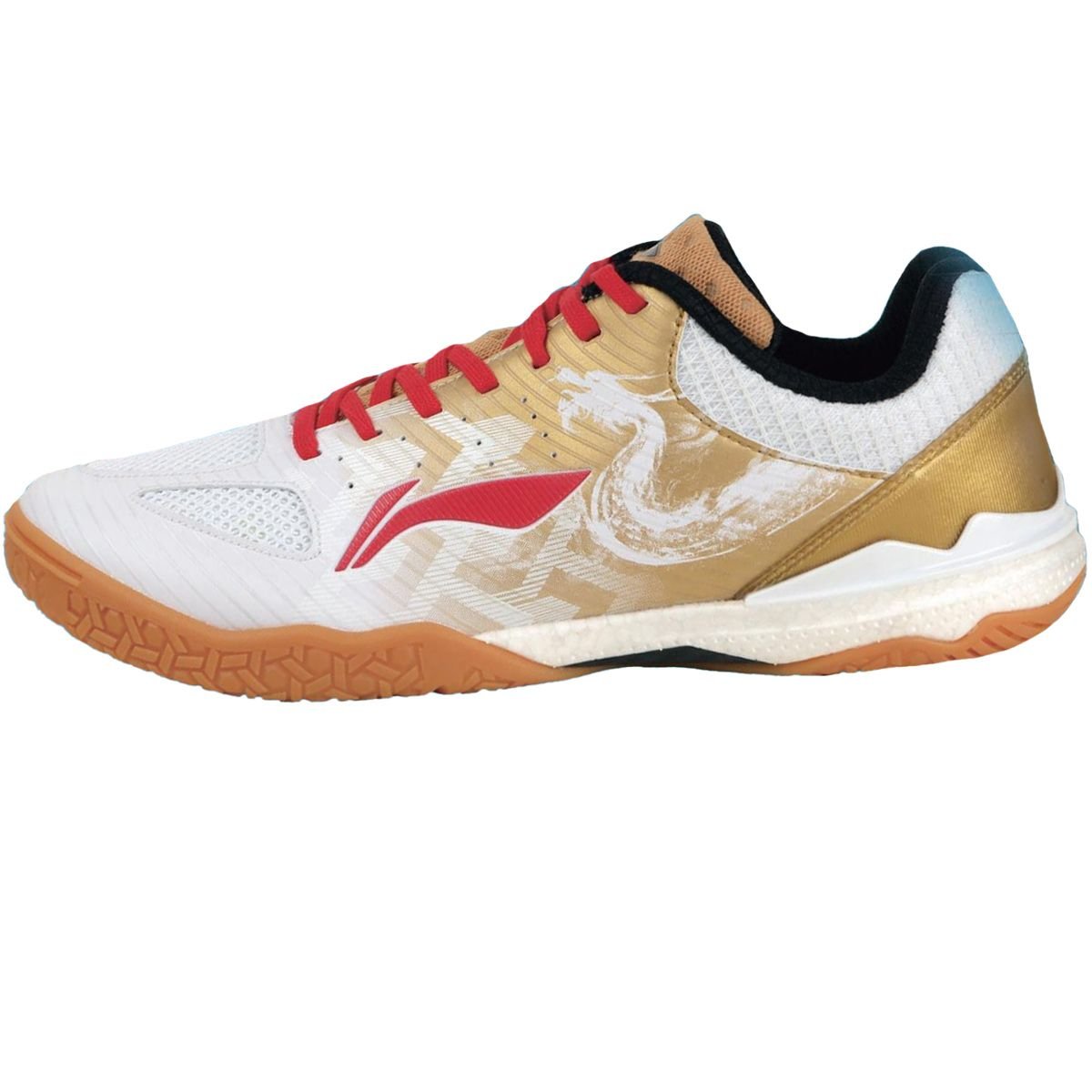
Li-Ning Ma Long — The National-Team Shoe
Boom foam over a carbon-fibre plate, anti-rollover structure, dragon-scale outsole
Li-Ning supplies China’s national team, and this is the shoe built to that programme and named for its most decorated player. It is the most technically ambitious shoe on this list — and the one that most rewards a player who already knows their footwork is worth investing in.
The headline is under your midfoot: an integrated carbon-fibre plate set into the sole unit for torsional stability, paired with Li-Ning’s Boom lightweight foam for cushioning that stays responsive instead of marshmallowy. Around the outside of the shoe, an anti-rollover structure flares the platform where a hard lateral plant tries to tip you over the edge — the same design problem Butterfly solves with B-Armor and STB, solved here with geometry. The rubber outsole carries a polygonal texture Li-Ning styles as dragon scales, over a synthetic leather and textile upper with the gradient dragon detailing the national-team shoes are known for.
Two honest cautions. First, sizing: European retailer Contra, which stocks the shoe, warns plainly that Li-Ning’s shoes run small and advises ordering one to one and a half sizes larger than usual — treat that as mandatory homework, and buy by centimetres wherever the chart allows. Second, availability: outside China this is an importer shoe (Contra in Europe, specialist sellers elsewhere), so sizes come and go. Neither point dents what it is — the pro-grade option for players who plant hard and want a plate under them when they do.
What we like
- Carbon plate torsional stiffness no other shoe here matches.
- Anti-rollover structure answers the hardest lateral plants.
- Boom foam cushions without the tall, soft feel of a trainer.
- National-team pedigree — this is the genuine pro article.
Worth knowing
- Runs small: order one to one and a half sizes up, per Contra.
- Importer-led availability outside China; sizes can be patchy.
Live price shown on Amazon · also via specialist importers such as Contra
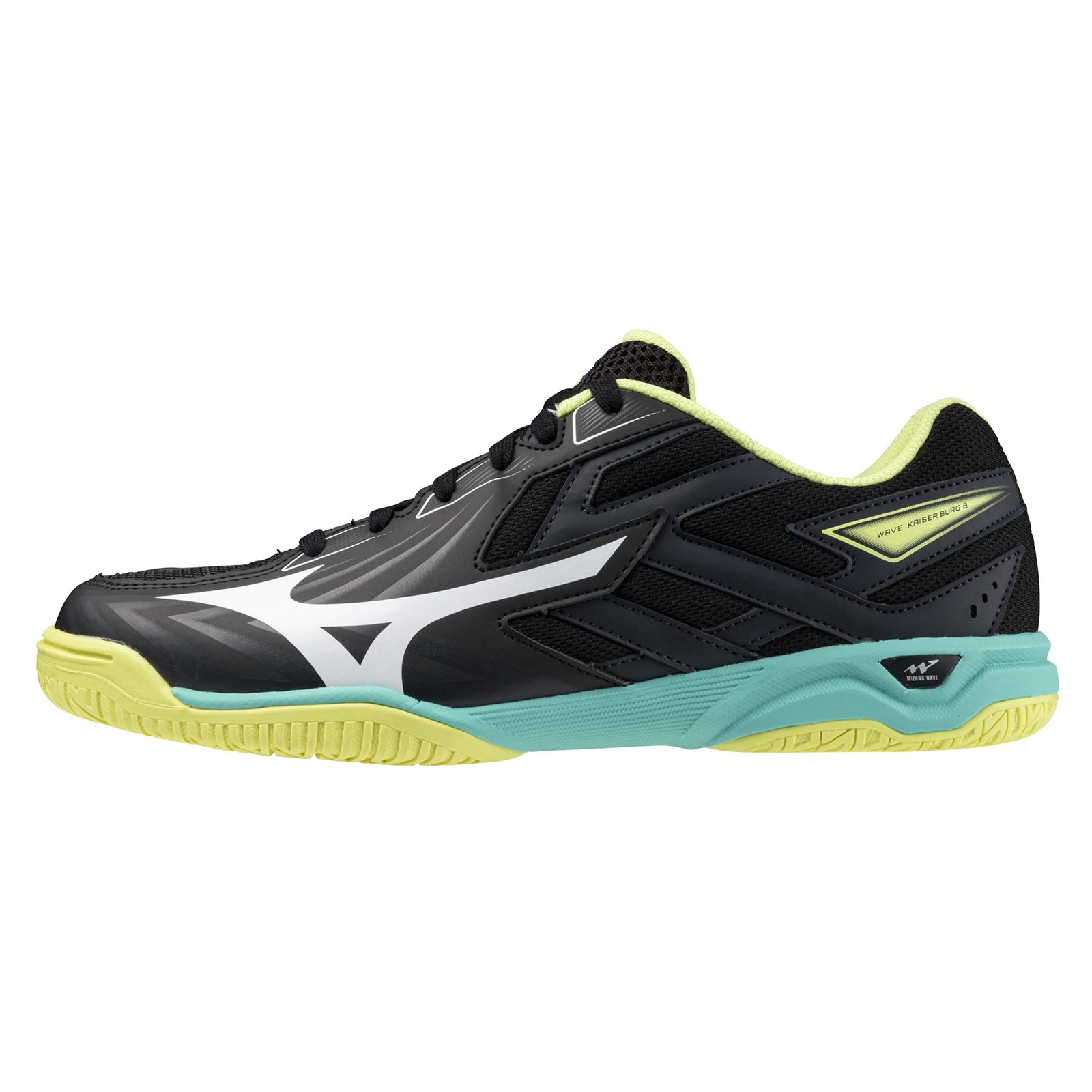
Mizuno Wave Kaiserburg 8 — Room to Actually Move
A true 3E wide last at approx. 245 g, with the Kaiserburg tread and Wave plate
Table tennis shoes run snug, and for wide feet “snug” usually means “someone else’s sport.” The Kaiserburg line is Mizuno’s answer — a shoe built on a genuinely wide last that still plays like a table tennis shoe, now in its eighth generation (81GA2420).
The spec that matters is the last: 3E, a full width grade beyond the 2E standard of the Drive line, so the forefoot has room to splay and grip the floor instead of being clamped into the shoe. Remarkably, width doesn’t arrive with a weight penalty — Mizuno publishes about 245 grams per shoe at 26.0 cm, only a sip more than the Drive 9. Underneath, the KAISERBURG outsole uses a wide tread pattern suited to the broader platform, with the Mizuno Wave plate carrying the same cushioning-and-stability double act as the flagship Drive. Mizuno positions the Kaiserburg as the accessible, beginner-to-intermediate friendly branch of its table tennis family, which makes it a double win: the wide shoe, and also one of the easier entry points into proper footwear on this list.
Mizuno also states that over 70% of the upper textile is recycled content on this generation — the highest figure in its table tennis line. The compromises are the family’s usual ones: availability outside Japan runs through specialist importers, and if your feet are narrow, the standard 2E Drive last will hold you better than this roomier one. But if you have ever finished a session with numb toes from shoes built for narrower feet, the Kaiserburg 8 is the first table tennis shoe designed to end that.
What we like
- A genuine 3E wide last — not just a bigger size of a narrow shoe.
- Only around 245 g despite the wider platform.
- Wave plate stability and Kaiserburg tread carry over from the flagship tech.
- Positioned by Mizuno as the accessible line — friendlier pricing tier.
Worth knowing
- Narrow feet will swim in it — those players should take the Drive 9’s 2E.
- Importer-led availability outside Japan, as with the Drive.
Live price shown on Amazon · also at specialist table tennis retailers
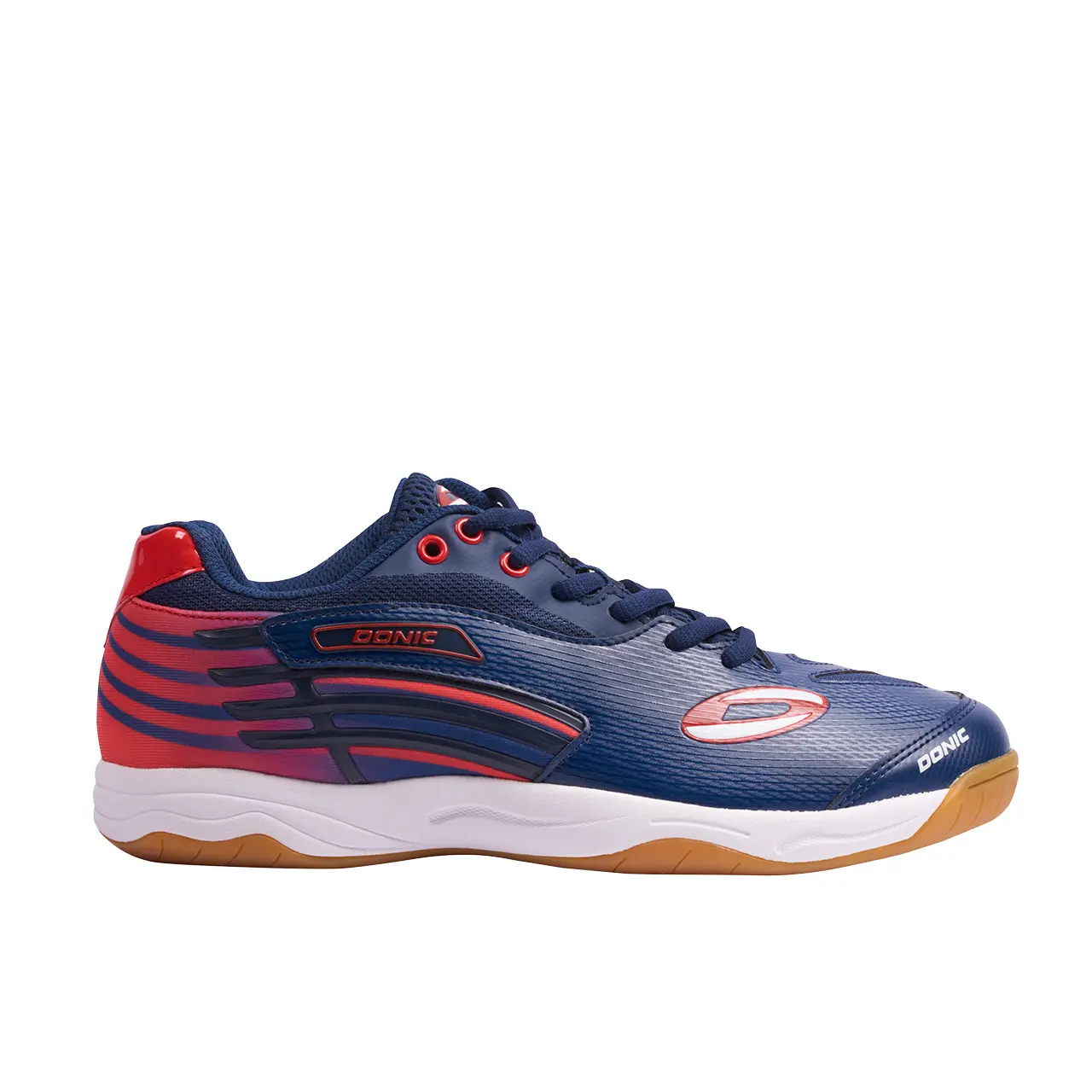
Donic Spaceflex — The Grip Purist’s Shoe
Flexible natural rubber sole, cushioned TPR insole, feather-light mesh and TPU upper
Donic builds the Spaceflex as its competition shoe for players who care about one thing first: the connection between rubber and floor. Its natural rubber sole is the purist’s choice on this list, and everything else in the shoe is arranged to stay out of its way.
The outsole is natural rubber, kept flexible so it can wrap the floor through the plant and the pivot rather than skating on a stiff platform — Donic pairs that grip with a last shaped for stable support through the fastest sidesteps. Inside, the TPR foam insole handles cushioning duties, which is a neat division of labour: the sole stays thin and grippy for feel, while the comfort layer sits above it where it doesn’t blunt the connection to the floor. The upper pairs breathable nylon mesh with soft, elastic TPU synthetic material — light, close-fitting, and quick to air out after a session.
The Spaceflex comes in three colourways (white-blue, black-yellow and navy-red) in a long size run, EU 36–47, which makes it one of the easier shoes here for bigger feet to actually find. It does not carry a plate, a named sponge or a pro signature — players chasing maximum torsional tech should look at the Li-Ning or the Rifones. What it offers instead is the classic European club shoe done properly: natural rubber, honest cushioning, sensible money. On a dusty hall floor where synthetic compounds start to polish, that natural rubber is the one players reach for.
What we like
- Natural rubber sole — the grip benchmark on hall floors.
- Cushioning moved to the insole keeps the sole thin and connected.
- Feather-light mesh/TPU upper airs out fast between sessions.
- EU 36–47 run covers feet most Asian-last shoes stop short of.
Worth knowing
- No plate or torsion tech — the Rifones and Li-Ning are stiffer tools.
- US availability runs through table tennis specialists like Paddle Palace.
Live price shown on Amazon · also at Paddle Palace and EU table tennis shops
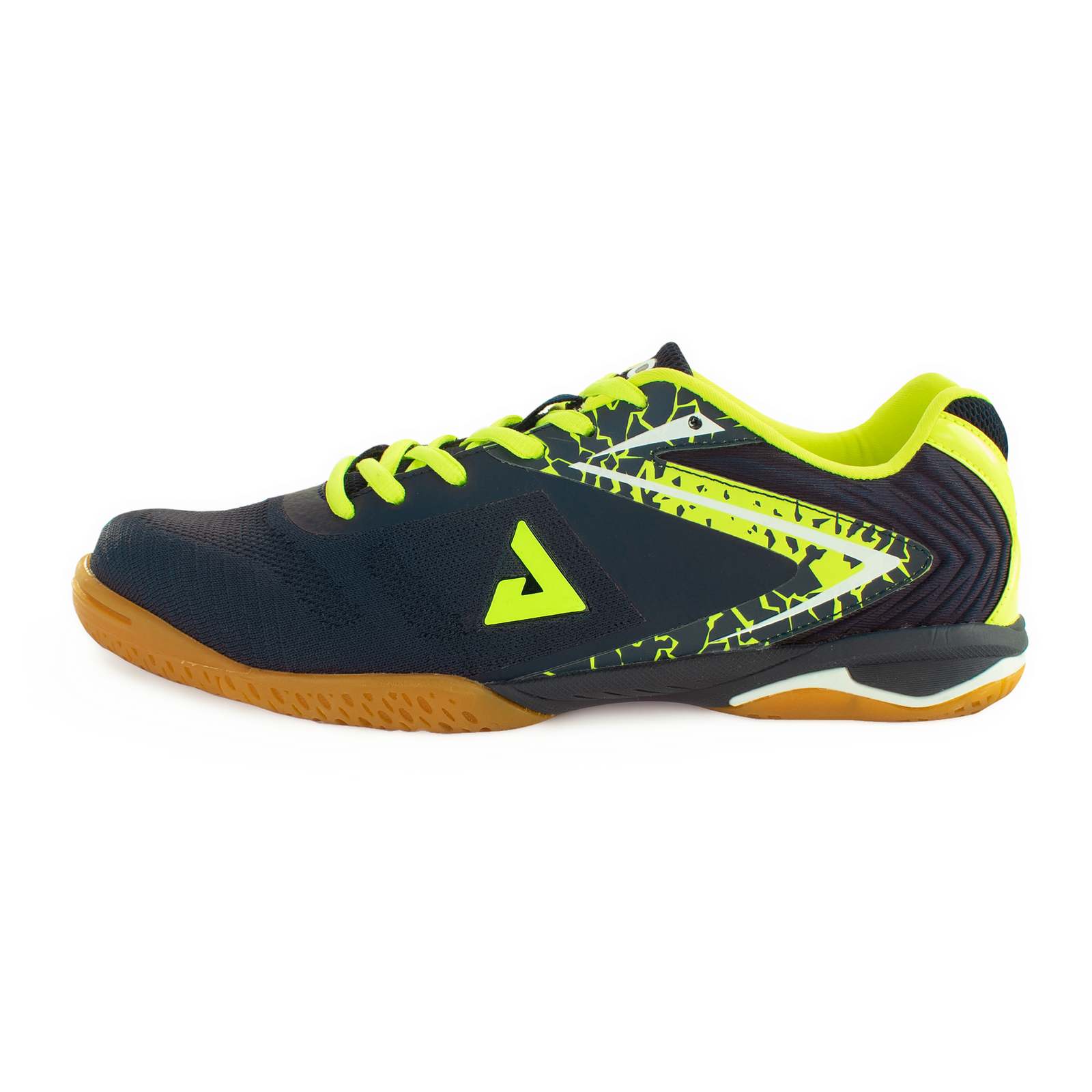
JOOLA Pro Blast — Flex First, Everything Fast
Ultra-flexible non-slip outsole, padded insole, mesh vents front and sides
JOOLA’s current competition shoe takes the opposite design bet to the plated Li-Ning: instead of stiffness, it sells freedom. The Pro Blast is built to bend, breathe and change direction — the shoe for players whose footwork is constant, scrambling and close to the table.
The outsole is the personality of the shoe: JOOLA describes it as extremely flexible with a non-slip grip, made to keep freedom of movement through quick directional changes rather than locking the foot into a rigid platform. For the shuffle-and-pivot rhythm of close-to-the-table play, that pliability is a feature — the sole folds through the split step and the recovery step instead of fighting either. Comfort comes from a padded insole that JOOLA says provides the support and comfort each step needs, and mesh fabric inserts at the front and sides of the upper keep air moving through long sessions in warm halls.
JOOLA sells the Pro Blast in a full EU 36–46 run and several colourways (navy, white/grey, pink and teal among them), and because JOOLA has real retail presence in the US and Europe, it is one of the easiest shoes on this list to actually buy and return if the fit isn’t right. What you give up for the flexibility is torsional armour: there is no plate and no anti-rollover structure, so the hardest plant-and-drive players — and anyone whose ankles already grumble — are better served by the Rifones or the Li-Ning. For everyone else, the Pro Blast is the flexible, breathable, easy-to-live-with competition shoe.
What we like
- Outsole flexibility suits constant close-to-the-table footwork.
- Mesh vents front and sides — a genuinely breathable match shoe.
- Padded insole takes the edge off long sessions.
- Easy US/EU retail availability through JOOLA’s own store and dealers.
Worth knowing
- No plate or anti-rollover structure for the hardest lateral plants.
- Flexible build trades maximum support for freedom of movement.
Live price shown on Amazon · full size run at JOOLA’s own store
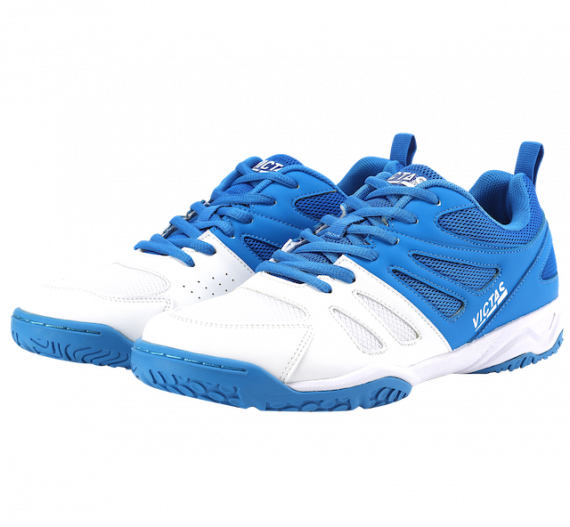
Victas V-Shoes 613 — Light, Breathable, Honest
Large mesh inlets, extra-soft heel padding, non-marking sole for slippery halls
The V-Shoes 613 is what a value table tennis shoe should be: light, breathable and grippy, without pretending to be a flagship. If you are buying your first proper pair — or a second pair that lives in the training bag — this is the sensible money on this list.
Victas builds the 613 around airflow and low weight. Large mesh inlets across the upper keep the shoe breathing through long sessions, and the outer material mix is chosen to keep overall weight down while preserving flexibility and stability where the foot needs holding. An optimised, extra-soft heel padding looks after the landing gear — the heel is where the recovery step lands, and it is where cheap shoes usually save their money first. The non-marking outsole is the detail that matters most at the table: Victas rates it for very good grip and stable support even on slippery hall floors, which is precisely the surface most club players actually play on.
The 613 comes in blue and black across an EU 36–46 run, at a street price well below the flagships here — it is the shoe to recommend to the beginner who needs to spend the rest of the budget on coaching, or to the league player who rotates two pairs. You are not getting a plate, a named cushioning system or forefoot armour, and heavy players who plant brutally will wear through its kindness faster than through a Rifones. Judged as what it is — a light, honest, properly grippy table tennis shoe at a value price — it earns its place on the list outright.
What we like
- Non-marking sole that holds on slippery hall floors — the real club test.
- Big mesh inlets make it the coolest shoe here for warm halls.
- Extra-soft heel padding where budget shoes usually cut corners.
- Proper table tennis shoe at a genuine value price.
Worth knowing
- No plate or forefoot armour — heavy, hard-planting players should step up.
- US availability runs through specialist table tennis retailers.
Live price shown on Amazon · also at EZ Table Tennis and EU specialists
Head-to-Head: All Seven Compared
| Shoe | Best for | Outsole | Cushioning / tech | Key strength |
|---|---|---|---|---|
| Butterfly Lezoline Rifones | Most players | Wingrip rubber | B-Absorber forefoot sponge | Complete footwork package |
| Mizuno Wave Drive 9 | Speed & court feel | XG Rubber | Wave plate + PoWnCe | Approx. 235 g, barefoot feel |
| Li-Ning Ma Long | Pro-grade support | Rubber, polygonal tread | Boom foam + carbon plate | Torsional stiffness, anti-rollover |
| Mizuno Wave Kaiserburg 8 | Wide feet | KAISERBURG wide tread | Mizuno Wave plate | True 3E last at approx. 245 g |
| Donic Spaceflex | Grip purists | Natural rubber | TPR foam insole | Natural-rubber bite, EU 36–47 |
| JOOLA Pro Blast | Fast direction changes | Flexible, non-slip | Padded insole | Flexibility + breathability |
| Victas V-Shoes 613 | Value / first pair | Non-marking rubber | Extra-soft heel padding | Light, breathable, honest price |
Fit, Sizing & Care
How a table tennis shoe should fit. Locked at the heel and midfoot with no sideways travel — any internal slide becomes a blister at best and a rolled ankle at worst — and roughly a thumbnail of space ahead of your longest toe for the braking step into the table. Table tennis shoes are cut deliberately snug, closer to a climbing shoe’s fit than a trainer’s, because the footwork is all short plants and pivots rather than heel-toe rolling. Try them on in the evening, in your playing socks, and do a few side-steps and short lunges on a hard floor: the heel should stay seated, your toes should brush rather than slam the front, and nothing should fold or crease across the top of your toes.
Brand-by-brand sizing notes. Measure both feet in centimetres and buy from the centimetre column — it removes most of the guesswork across Japanese and European brands. Butterfly’s Rifones is described by retailers as true to size, and its chart runs in half sizes from 22.5 cm, so a careful measure gets a precise fit. Mizuno sizes its table tennis line in centimetres too (the Drive 9 runs 22.5–29.0 cm): its standard last is a 2E, and the Kaiserburg’s 3E is the choice when the 2E pinches. Li-Ning is the outlier — Contra, which retails the Ma Long, advises ordering one to one and a half sizes larger than usual. The European brands here (Donic, JOOLA, Victas) size in EU numbers and run closest to a standard court-shoe fit. New to the sport and still learning how the game is scored and played? Our table tennis rules explainer is the place to start — then come back and buy the shoes.
Making them last. Keep table tennis shoes for the hall only — walking to the venue on pavement grinds the fine gum tread and packs grit into it, and grit carried onto a hall floor ruins your grip and the surface alike. Brush or wipe the outsoles with a damp cloth when grip starts to feel dusty; most “worn out” soles are simply dirty ones, and a clean gum sole bites like a new one. After playing, loosen the laces fully and air the shoes out rather than sealing them in a kit bag — damp mesh weakens and smells, and Butterfly makes the same point about its heel counters: never crush the heel down slipping shoes on and off, because a deformed heel counter never recovers its hold. Replace the shoe when the tread under the ball of the foot is worn smooth, when the upper splits at the flex point, or when the midsole stays creased and dead — by then the support that protects your ankles has gone with it.
When to upgrade. If your V-Shoes 613 or Spaceflex has carried you from beginner to league play and your footwork is now the best part of your game, the Rifones is the graduation shoe. If matches are decided by how fast you reach wide balls, the Wave Drive 9 matches that identity. And if hard plants are starting to talk to your ankles, the Li-Ning’s plate and anti-rollover build is the upgrade that matters most. Match the shoe to the player you are becoming — the rest of the kit, from the table up, is covered across our table tennis guides.
Table Tennis Shoes: Frequently Asked Questions
Can I play table tennis in running shoes?
It is the most common beginner mistake, and the shoes fight you in two ways. A runner’s tall, soft heel stack is built for straight-line cushioning, so when you plant sideways it levers your ankle over instead of holding it — the bevelled heel that rolls a runner forwards is exactly what rolls it sideways at the table. The outsole compounds and tread are also wrong for smooth hall floors, so you get less grip precisely on the dusty patches where you need it most. Any shoe on this list, including the value Victas V-Shoes 613, will feel faster and safer from the first session.
Why do table tennis shoes have such thin soles?
Because the sport is played close to the floor. A thin sole lowers your centre of gravity for balance through side-to-side footwork, lets you feel the floor for the split second of timing that good footwork runs on, and removes the leverage that tips a tall shoe over on a lateral plant. The impact cost is real but smaller than in jumping sports — steps are short and landings are low — and the better shoes here recover it with targeted cushioning: a forefoot sponge in the Rifones, a Wave plate in the Mizunos, Boom foam over a carbon plate in the Li-Ning.
Are badminton or squash shoes OK for table tennis?
They are the closest cousins and they do work — gum or non-marking soles, low profiles, lateral support — so if you already own a pair, play in them. The difference is emphasis: badminton shoes are built for jumping and lunging with more cushioning and height, and squash shoes are armoured for the toe drag, so both tend to be heavier and less floor-connected than table tennis needs. If you play several racket sports, buy for the one you play most; if table tennis is the main game, a dedicated shoe like the Wave Drive 9 or Rifones is lighter on its feet than either cousin.
How should table tennis shoes fit? Do they run small?
Snug through the heel and midfoot — no lift, no sideways slide — with about a thumbnail of space before your longest toe. Most table tennis shoes are cut on Japanese or European lasts and feel smaller than American trainers, so measure your feet in centimetres and buy from the brand’s centimetre column. Known quirks on this list: the Butterfly Rifones is described by retailers as true to size, Mizuno’s standard last is a 2E with the Kaiserburg at a wider 3E, and Li-Ning runs small — retailer Contra advises ordering one to one and a half sizes up.
My hall floor is dusty and slippery. Will these shoes still grip?
Mostly, yes — and keeping them gripping is partly your job. Gum rubber and natural rubber bite at the light loads table tennis applies, and the Victas 613’s non-marking sole is specifically rated by its maker for slippery hall floors. But dust coats any sole: wipe the outsoles with a damp cloth before playing (many players keep a damp mat or towel at the table for exactly this), and never wear the shoes outside, where pavement grit embeds in the tread and polishes it. A clean gum sole on a dusty floor grips; a dirty one skates.
How long do table tennis shoes last?
Judge by hours and signs, not months. A player training three or four times a week will typically smooth the tread under the ball of the foot or flatten the cushioning within a season or two of heavy use; a once-a-week player gets considerably longer. Shoes kept for the hall only, aired after play and with soles wiped clean last far longer than shoes walked to the venue in. Retire them when the pivot area is smooth, the upper splits at the flex point, or the midsole no longer springs back — past that point the ankle support has gone too.
What is the best table tennis shoe for beginners?
The Victas V-Shoes 613. It gives a new player the essentials — a light, breathable shoe with a non-marking sole that grips even on slippery hall floors and extra-soft padding under the heel — at a value price while you find out how deep into the game you’ll go. Wide feet should start with the Mizuno Wave Kaiserburg 8 instead, and when you are ready to upgrade, the Butterfly Lezoline Rifones is the natural next step. Pair your first shoes with the right rubber and blade as your game develops, and stock up from our balls guide so a lost ball never ends a session early.
Final Verdict: Which Table Tennis Shoe Should You Buy?
If you only read one paragraph, make it this one. Buy the Butterfly Lezoline Rifones if you want the safest all-round answer — the most complete footwork shoe here, with cushioning exactly where the sport loads it. Buy the Mizuno Wave Drive 9 if your game is speed and court feel, the Li-Ning Ma Long (a size or more up) if you plant hard and want a carbon plate under you, and the Mizuno Wave Kaiserburg 8 if wide feet have ended every other shoe early. Buy the Donic Spaceflex if natural-rubber grip on real hall floors is your priority, the JOOLA Pro Blast if you want flexibility and easy availability, and the Victas V-Shoes 613 if you’re starting out and want proper table tennis footwear for the least money. Whichever you choose, keep them for the hall only — and put the money you saved on ruined trainers towards the balls in our best table tennis balls guide, because a session always ends at the last ball, never at the last rally.
Affiliate Disclosure: AliShuttler.com is reader-supported. When you buy through links on this page we may earn an Amazon commission at no additional cost to you. All seven shoes above are current models selected on their manufacturer specifications and table-tennis-specific design merits; prices and availability are shown live at Amazon.