A new racket gets the attention, but the string bed is what your hand actually meets on every shot. Change the string and the same frame gains spin, loses sting, or starts launching balls two feet long. These seven strings are organised by the decision that really matters — material, matched to player type.
⚡ TL;DR — The Short Answer
Advanced players with full, fast swings should start with Luxilon ALU Power — the control-and-durability benchmark of the polyester era. Heavy topspin players get more bite from the square-profiled Solinco Hyper-G or the octagonal Babolat RPM Blast. If comfort is the priority, Wilson NXT is the reference multifilament and Tecnifibre X-One Biphase is the premium step up. Babolat VS Touch remains the natural gut standard for feel and tension holding. And for beginners, juniors and as a hybrid cross, Prince Synthetic Gut with Duraflex is still the value answer.
Quick Picks — Best Tennis Strings at a Glance
The aluminium-fibre co-poly that defined the modern control string. For fast swings that supply their own power.
A square-shaped co-polyester that bites the ball hard. Five gauges, down to a feathery 19 (1.10 mm).
Octagonal profile plus a silicone coating for snap-back spin — the string Babolat built its spin story on.
The benchmark multifilament: thousands of microfibres in polyurethane for a soft, gut-leaning ride.
H2C fibres and a Biphasic treatment push a synthetic closer to natural gut than anything else here.
The original performance string, still unmatched for feel, power and holding tension until it breaks.
A solid-core nylon with an aramid wrap: crisp, durable for its class, and the classic hybrid cross.
In This Guide
Start With Material, Not Brand
String choice confuses players because the marketing starts with names and technologies, when the honest first question is much simpler: what is the string made of? Material decides the broad character — stiff or soft, dead or lively, durable or fragile — before any brand technology refines it. A polyester monofilament will always play firmer and deader than a multifilament of the same gauge, and natural gut will always hold tension better than either. Get the family right for your swing and your arm, and the specific model almost chooses itself.
So this guide runs material first, player type second. The three polyester picks suit players who swing fast enough to bend a stiff string and want control and spin in return. The two multifilaments and the natural gut suit players who want the string to add power and absorb shock. The synthetic gut is the sensible default for developing players and the working half of half the hybrids ever strung. If you arrived here from our best tennis rackets guide, treat this as the second half of that decision: the frame sets the stage, the string writes the script.
One topic is deliberately kept short here: tension. It matters — it is the other dial on every setup in this guide — but it already has a dedicated home on this site. The buying guide gives you the one-paragraph version and links our full tension explainer and calculator rather than repeating them.

The Five String Families in 60 Seconds
Polyester (co-poly). A single stiff filament — modern versions are co-polymers with additives and shaped profiles. Low-powered, durable and spin-friendly because the mains slide and snap back. The trade is shock: poly transmits more of it, and it loses playability long before it breaks. For advanced players with full swings; a poor default for beginners and sore arms.
Multifilament. Hundreds or thousands of tiny nylon fibres bundled and bound in polyurethane resin. The fibres stretch and absorb, giving the softest synthetic ride, easy power and a close approximation of gut feel — at the cost of durability and some control for the fastest swings.
Natural gut. Made from cow intestine fibres, twisted and coated. Still the benchmark for elasticity, feel and tension maintenance: it keeps playing well until the day it snaps. The costs are a premium price, sensitivity to moisture, and fragility in the hands of hard hitters.
Synthetic gut. The misleading name for a solid-core nylon string with one or more outer wraps. Crisp, balanced and inexpensive — no extremes in any direction, which is exactly why it suits beginners, juniors, and anyone who would rather spend on court time than string.
Hybrid. Not a material but a layout: two different strings in one frame, usually a durable poly in the mains and a softer gut, multifilament or synthetic in the crosses. It buys a middle setting — much of poly’s control and spin with some of the sting removed — and several picks below earn their place as much for hybrid duty as for a full bed.
The 7 Best Tennis Strings, Compared
Seven strings, five families, four player decisions. Read the card that matches your game first — the order runs from the advanced control benchmark through spin, comfort and feel, down to the value default, not from “best” to “worst”.
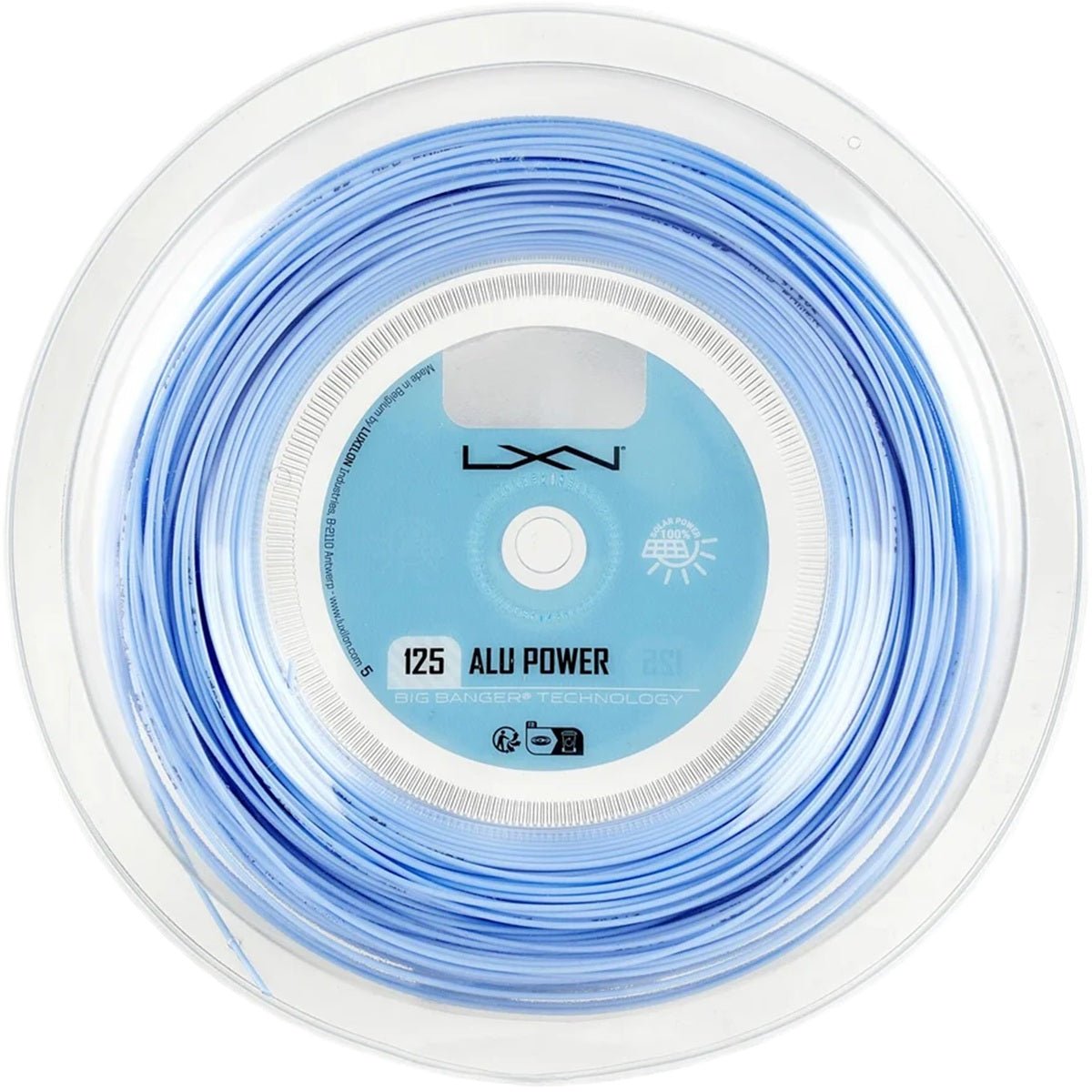
Luxilon ALU Power
The string that started the polyester era — crisp control and durability for players who swing out.
ALU Power is the reference point every control string is still measured against. Its construction explains why: a co-polyester (poly-ether-ether) monofilament carrying aluminium fibres, drawn round and smooth. The aluminium is part of the formulation rather than a metal core, and Luxilon credits it with the string’s consistent, predictable response at high swing speeds. What you feel is a crisp, connected contact that stays honest when you swing harder — the faster you swing, the more the string seems to settle, which is the exact behaviour big hitters want and tentative ones do not.
Be clear about the name, though: “Power” is relative. Against gut or a good multifilament this is a low-powered string, and players with compact swings will find depth hard to buy. Its natural homes are the full bed of an advanced baseliner and the mains of a hybrid, where a softer cross takes the edge off. The four-gauge range runs from 16 (1.30 mm) for string-breakers down to 18 (1.15 mm) for feel players, with 16L (1.25 mm) the tour-standard middle. A textured sibling, ALU Power Rough, swaps the smooth surface for a dented one if you want the same formula with more bite.
What we like
- The control benchmark — full swings stay predictable and placed
- Crisp, connected feel that most polys have chased ever since
- Durability that suits frequent string-breakers
- Four gauges and a Rough variant cover most advanced briefs
Worth knowing
- Firm and low-powered — compact swings get little help
- Like all poly, it goes dead well before it breaks; budget for restringing
As an Amazon Associate we earn from qualifying purchases.
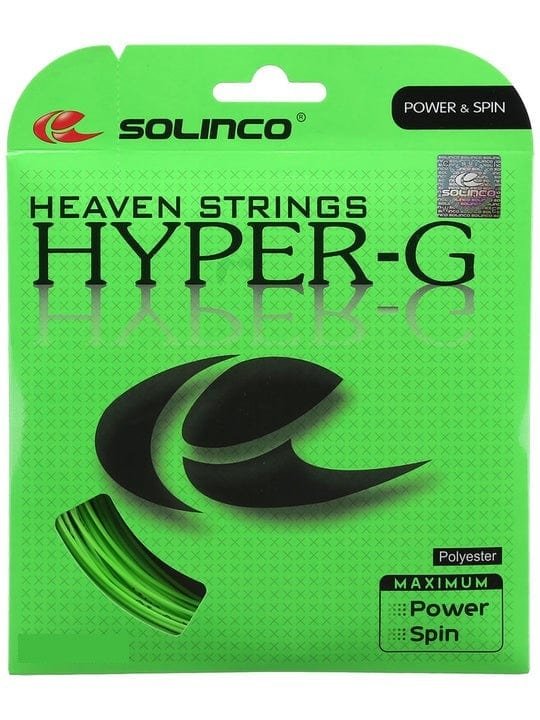
Solinco Hyper-G
The square-profiled spin machine — maximum bite from a co-poly that still behaves on flat contact.
Hyper-G’s whole design is one idea executed well: shape the string so it grips. Instead of a round profile, Solinco extrudes this co-polyester monofilament with a square cross-section, so four edges meet the ball on every contact. The edges bite, the mains displace and snap back, and the ball leaves with the heavy rotation modern baseline tennis is built on. Solinco’s own copy says the string was developed for a Top 50 ATP player who wanted to take massive swings without overhitting — and that balance, spin with a ceiling on launch, is precisely what separates Hyper-G from grabbier, wilder spin strings.
The gauge range is the widest here: 16 (1.30 mm) down through 16L (1.25) and 17 (1.20) to 18 (1.15) and even a 19 (1.10) for players who treat string as a consumable and want maximum feel and bite per set. Most club players should start at 16L or 17 — thin enough for the shape to work, thick enough to survive a few weeks of it. If the full bed feels firm, Solinco sells a Hyper-G Soft sibling with a softened formula; treat it as the same idea with the volume on your arm turned down, not as a different string.
What we like
- Serious, usable spin — bite without a runaway launch angle
- Crisp, stable response on full swings, offensive and defensive
- Five gauges, the widest range in this guide
- A Soft version exists for the same game with a friendlier ride
Worth knowing
- Still a firm co-poly — not the answer for a sore elbow
- The thinnest gauges are for committed restringers only
As an Amazon Associate we earn from qualifying purchases.
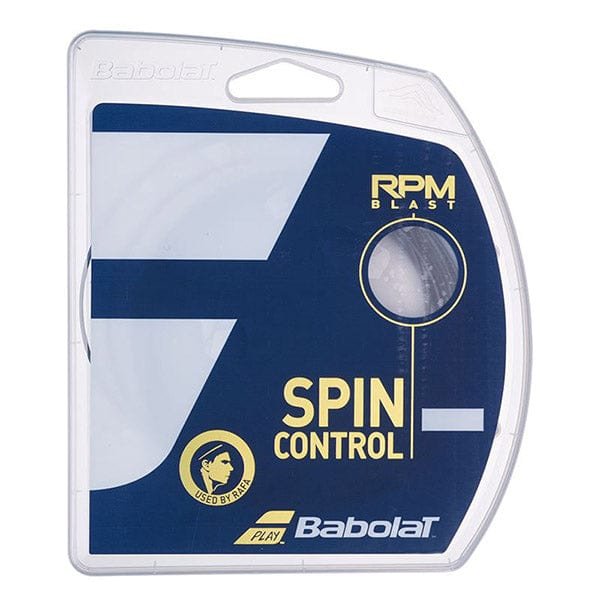
Babolat RPM Blast
The octagonal icon — Babolat’s high-density co-poly built around one job: revolutions per minute.
RPM Blast attacks spin from two directions at once. The string itself is an octagonal monofilament — eight edges to grip the ball — moulded from a high-density co-polyester that holds its shape under load. Over it sits a cross-linked silicone coating, and that coating is the quiet half of the design: it lets the mains slide sideways on contact and snap back to position quickly, which is where the extra ball rotation comes from. Babolat built its spin story on this string — its own copy names Rafael Nadal as the headline user — and the combination of grip plus snap-back still defines how a spin-first poly is supposed to behave.
Against Hyper-G, the choice is one of flavour. RPM Blast plays a touch livelier — there is more pop on offer for the same swing — while Hyper-G feels the more controlled of the two at the extremes. The gauge range runs unusually wide at the top: a 15L (1.35 mm) for outright string-breakers, then 16 (1.30), 17 (1.25) and 18 (1.20). Most spin players will live at 17, where the octagonal profile bites hardest without giving up the frame. As with every poly here, the feel fades before the string breaks — plan restrings by the calendar of your hitting, not by breakage.
What we like
- Two spin mechanisms — shaped profile and low-friction coating — in one string
- A livelier response than most control polys
- 15L option for genuine string-breakers
- Proven at the very top of the game for over a decade
Worth knowing
- Firm feel — sensitive arms should hybrid it or look below
- Playability fades before breakage, like all polyester
As an Amazon Associate we earn from qualifying purchases.
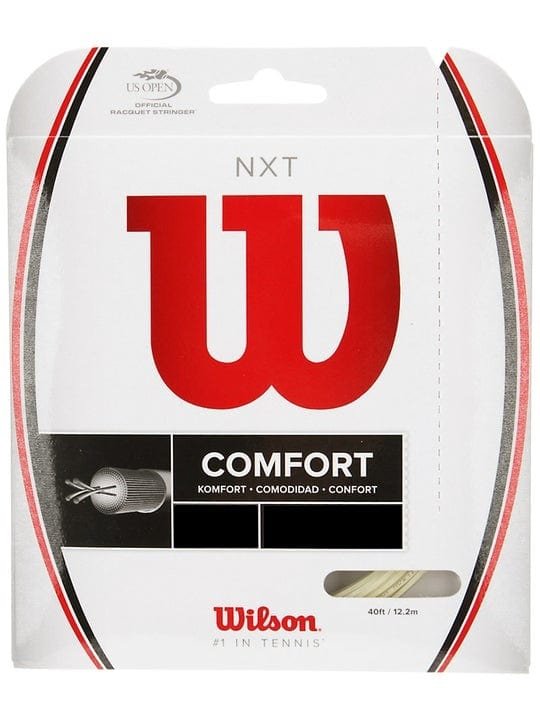
Wilson NXT
The benchmark multifilament — the soft, easy-power default for arms that poly has punished.
NXT is the string the comfort category is judged by, and its construction is the reason multifilaments exist. Instead of one solid filament, NXT bundles a mass of fine Xycro Micro fibres and bonds them with polyurethane. On contact the fibres move against each other and absorb the hit, so the ball pockets softly, power comes easily from a shorter swing, and the shock that reaches your arm is a fraction of what a polyester sends up the handle. For a player returning from elbow trouble, or simply one who hates the boardy feel of poly, this is the first string to try.
Two gauges keep the choice simple: 16 (1.30 mm) for a little more durability and control, 17 (1.24 mm) for maximum softness and pop. Wilson sells a whole family around the name — NXT Power is the livelier sibling, NXT Control the firmer one, NXT Soft does what it says — but the original remains the balanced centre of the range and the one to start with. The honest costs are the classic multifilament ones: it frays as the outer fibres wear, it will not last a heavy topspin hitter long, and big swingers can spray it. Within its brief — comfort with real playability — nothing here does the job more completely.
What we like
- The softest, most forgiving ride of any synthetic here
- Easy power for medium and developing swings
- A genuine gut-leaning feel at a synthetic’s price class
- Simple two-gauge range — both easy to live with
Worth knowing
- Frays and breaks quickly under heavy topspin
- Fast, full swingers may find it too lively to control
As an Amazon Associate we earn from qualifying purchases.

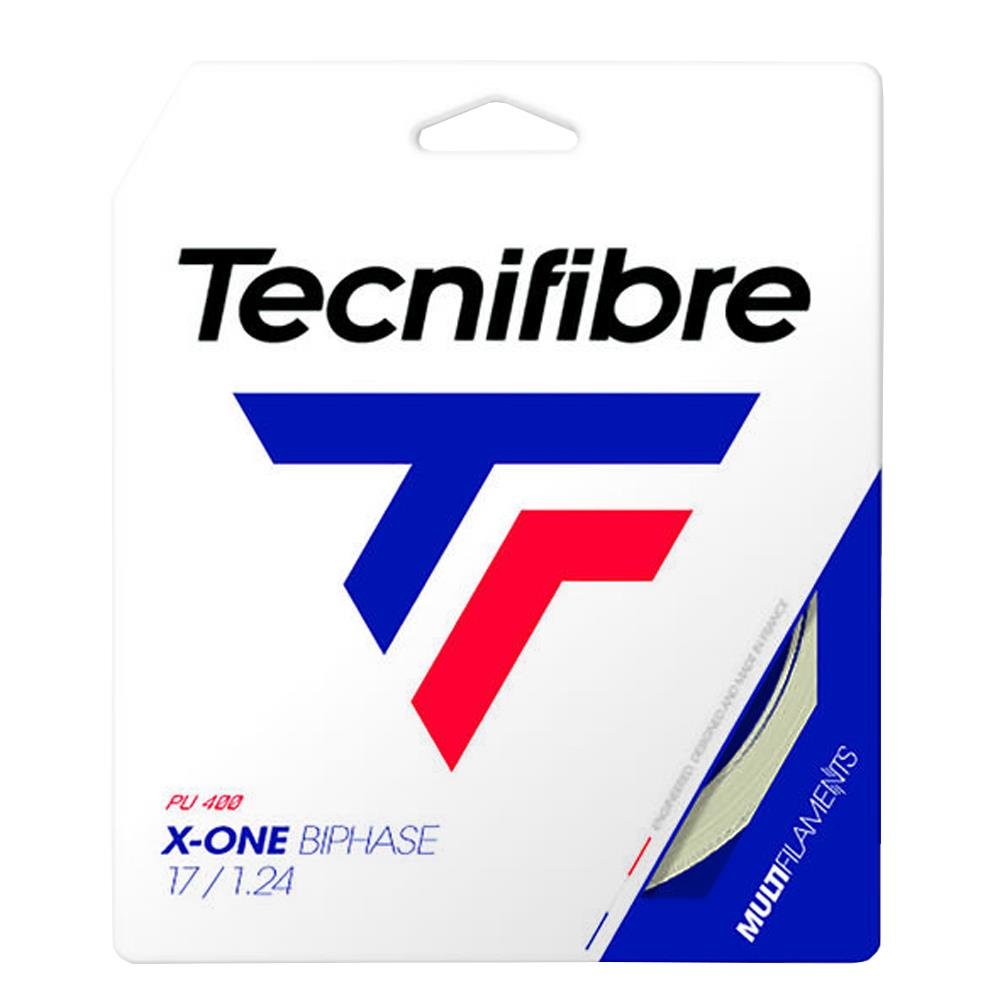
Tecnifibre X-One Biphase
The connoisseur’s multifilament — H2C fibres and a Biphasic treatment chasing natural gut’s feel.
X-One Biphase is what happens when a string maker treats a multifilament like a flagship instead of a compromise. The fibres are Tecnifibre’s H2C — High Heat Capacity — strands, put through a Trimerization process that uses extreme temperature variation to tighten the links between molecules, then immersed in polyurethane for shock absorption. A final patented Biphasic treatment, visible as faint marks along the string, is the durability play: Tecnifibre says the process extends string life by 20% over an untreated equivalent, which matters because premature fraying is the usual tax on strings that feel this good.
And feel is the point. Of the synthetics here, this is the one that most convincingly imitates natural gut’s combination of pocketing, touch and easy power — crisp rather than mushy, with a cleaner response on volleys and drop shots than NXT’s softer cushion. The gauge range runs from 15L (1.32 mm) down to a fine 18 (1.18 mm); feel players should take the 17 (1.24) and accept the shorter life as the price of admission. Players choosing between this and VS Touch below are really choosing between nine-tenths of the gut experience with synthetic manners, or the whole thing with gut’s costs and care needs.
What we like
- The closest synthetic approximation of natural gut feel
- Crisp touch on volleys and drop shots, not just baseline comfort
- Biphasic treatment targets multifilament’s fraying weakness (maker’s claim)
- Four gauges, including a genuinely fine 18
Worth knowing
- Premium pricing for a synthetic — gut money is not far away
- Still frays under heavy topspin, treatment or not
As an Amazon Associate we earn from qualifying purchases.
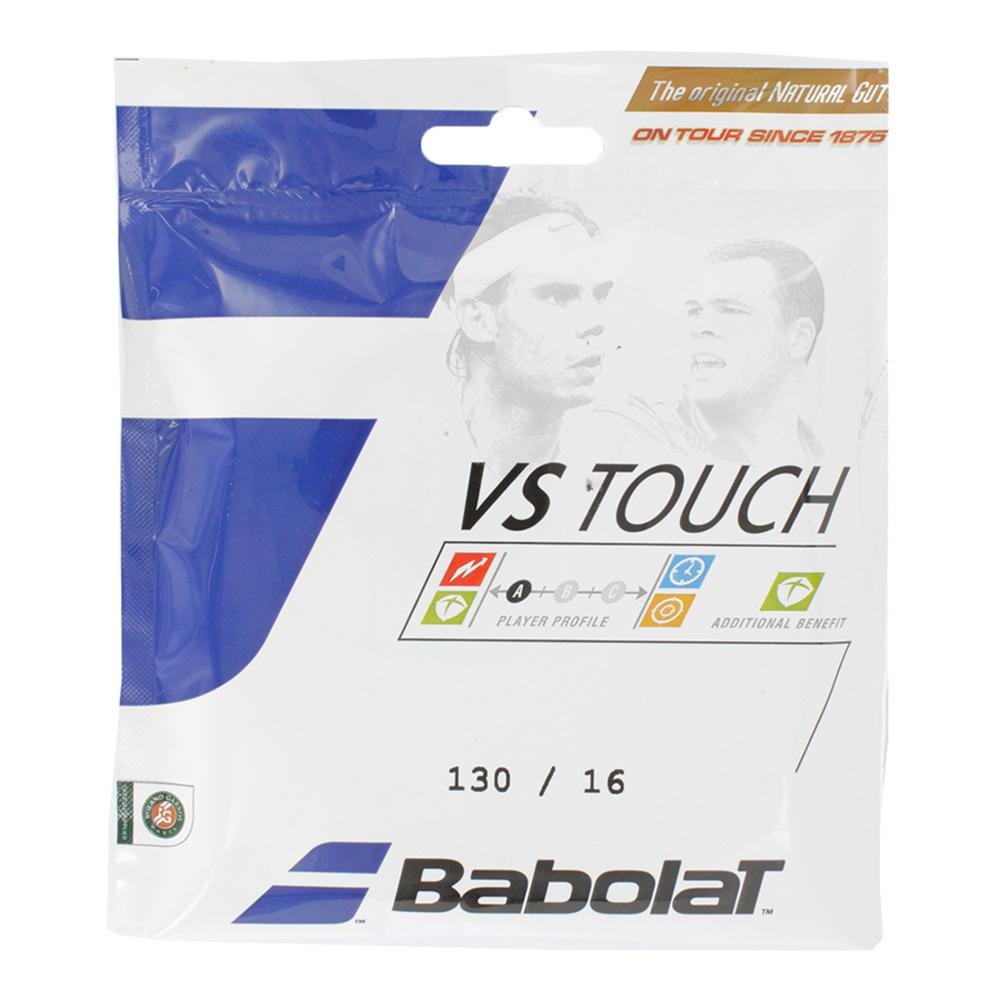
Babolat VS Touch
The original — natural gut’s benchmark for feel, power and holding its tension until the end.
Every synthetic in this guide is, in some way, an attempt to copy this string. VS Touch is natural gut — fibres drawn from cow intestine, twisted into string and protected by Babolat’s Thermogut coating, now layered with its BT7 treatment. Babolat says BT7 improves on the old coating’s durability and humidity resistance, and humidity is worth taking seriously: gut is the one material here that weather can genuinely ruin, so the coating is functional, not cosmetic. What no synthetic has fully matched is the combination gut delivers — maximum elasticity for power, a soft pocketing feel at contact, and tension maintenance that keeps the string playing freshly until the day it finally snaps.
That last trait changes the value maths. A multifilament is cheaper per set but fades; gut costs the most per set and plays its best for most of its life. The practical limits are equally clear: heavy topspin hitters will shred it, wet-weather players will shorten it, and the 15L (1.35 mm) gauge exists precisely to buy back some durability at a small cost in feel, with the 16 (1.30 mm) the standard choice. The other classic route is the hybrid — VS Touch in the mains for feel, a smooth poly like ALU Power in the crosses for control and economy — which is how a large share of the pro game actually uses it.
What we like
- Unmatched feel and pocketing — the reference every synthetic chases
- Holds tension and playability until it breaks
- The most arm-friendly string material there is
- Superb as hybrid mains with a poly cross
Worth knowing
- The premium price class — and moisture is its enemy
- Hard topspin hitters will get through it quickly
As an Amazon Associate we earn from qualifying purchases.
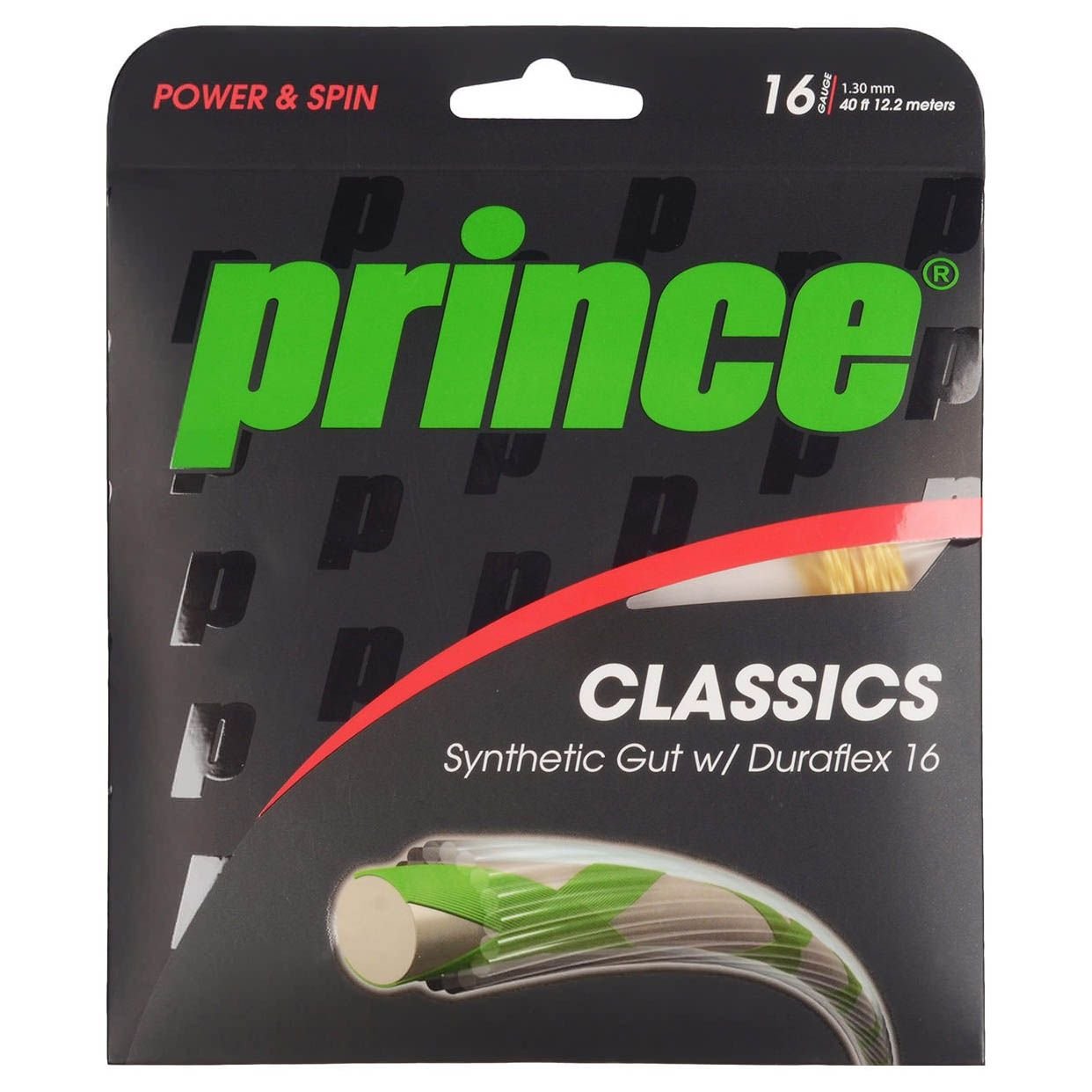
Prince Synthetic Gut with Duraflex
The workhorse — a solid-core nylon with an aramid wrap, and the default string of club tennis for decades.
Despite the name, there is no gut in synthetic gut. Prince’s construction is a solid nylon core wrapped in outer layers that include Duraflex, Prince’s aramid fibre — the same family of fibre used in Kevlar strings — added to stiffen and protect the core. Prince’s own positioning is that the result plays slightly firmer and more durable than its Synthetic Gut Original, and that crisp, balanced response is exactly the point: no extremes of power, softness or spin, just an honest string bed that lets a developing player learn what their swing does.
That balance is why this string wears so many hats. It is the sensible first string for beginners and juniors, the budget restring for recreational players who break strings rarely, and — crossed with a poly main — the classic hybrid cross that softens a stiff bed and keeps the cost of the experiment low. Gauges run 15L (1.35 mm), 16 (1.30) and 17 (1.25); take the 16 as the default and the 17 if you want a livelier feel. It will not out-play anything else on this page at its own game — but it is not playing their game. It is playing the long one, and it has been winning it for a very long time.
What we like
- Balanced, predictable response — ideal while technique is forming
- Aramid wrap adds durability rare at this end of the market
- The classic hybrid cross: softens poly mains, controls cost
- Three gauges and a rainbow of colours, including junior-friendly setups
Worth knowing
- Firmer than a multifilament — not a comfort string
- Advanced players will want more spin and control than it offers
As an Amazon Associate we earn from qualifying purchases.
Side-by-Side Comparison Table
| String | Best For | Material | Construction | Gauges | Set |
|---|---|---|---|---|---|
| Luxilon ALU Power | Advanced control | Co-polyester + aluminium | Round monofilament | 16–18 (1.30–1.15) | 12.2 m |
| Solinco Hyper-G | Spin | Co-polyester | Square-profile monofilament | 16–19 (1.30–1.10) | 12.2 m |
| Babolat RPM Blast | Spin + power | Co-polyester (PET) | Octagonal monofilament, silicone coat | 15L–18 (1.35–1.20) | 40 ft |
| Wilson NXT | Comfort | Multifilament | Xycro Micro fibres in PU | 16, 17 (1.30, 1.24) | 40 ft |
| Tecnifibre X-One Biphase | Premium feel (synthetic) | Multifilament polyamide | H2C fibres, PU 400, Biphasic | 15L–18 (1.32–1.18) | 40 ft |
| Babolat VS Touch | Natural gut feel | Natural gut | Gut fibres, BT7 coating | 15L, 16 (1.35, 1.30) | 12.2 m |
| Prince SynGut Duraflex | Value & beginners | Nylon synthetic gut | Solid core + aramid wrap | 15L–17 (1.35–1.25) | 40 ft |
Buying Guide: Gauge, Hybrids and Restringing
1. Gauge: thinner is livelier, thicker lasts
Gauge is the string’s thickness, and the numbering runs backwards to intuition: the higher the gauge number, the thinner the string. A 17 or 18 plays livelier — more bite, more feel, more power — and breaks sooner. A 15L or 16 is the durability end. The practical default for most players is the middle of any string’s range (16L or 17 in the polys, 16 in the soft strings), moving one step thinner once you know your breakage rate, and one step thicker if you are snapping beds faster than your budget enjoys.
2. Full bed or hybrid?
A full bed of one string is the simplest decision and the right starting point. A hybrid — poly mains with a softer cross, or gut mains with poly crosses — buys a blended character: most of the main string’s spin and control, with some of its harshness or cost removed. If you love a poly’s control but your arm files complaints, keep the poly and soften the crosses before you abandon the family. If you love gut’s feel but not its lifespan in your hands, poly crosses tame both the launch and the bill.
3. When to restring
Broken is obvious; dead is not, and dead arrives first. Polyester loses its elasticity and snap-back gradually — the signs are strings that stay out of line after contact, a duller, harsher feel, and shots that need more and more restraint to land. Multifilaments announce themselves by fraying; gut simply plays well until it snaps. The old rule of thumb — restring about as many times a year as you play in a week — is a starting point, not a law, but the principle behind it is sound: strings are a consumable, and a fresh bed of a modest string beats a dead bed of a famous one.
4. Tension, in one paragraph
Every string above plays across a tension range, and tension trades power against control: lower tensions let the bed trampoline for easier depth and a softer ride, higher tensions firm the bed for placement and spin. That is the summary — the depth lives in our guide to attaining optimal string tension, and our tennis string tension calculator turns your racket, string and playing style into a specific number to hand your stringer. Change one variable at a time — material first, then gauge, then tension — or you will never know which change did the work.
Frequently Asked Questions
What is the best tennis string for beginners?
A balanced synthetic gut such as Prince Synthetic Gut with Duraflex, or a soft multifilament if comfort is a concern. Beginners do not yet swing fast enough to bend a stiff polyester, so poly gives them the harshness without the control it exists for. Synthetic gut’s even response lets technique — not the string — explain where the ball goes.
Polyester or multifilament — which should I choose?
Choose polyester if you swing fast and fully, break strings, and want control and spin — and your arm tolerates a firm bed. Choose multifilament if you swing at medium speed, want easier power, or have any elbow or shoulder sensitivity. Natural gut sits beyond multifilament on the same comfort-and-feel path, at a premium price.
What gauge tennis string should I use?
Start in the middle of your chosen string’s range — 16L (1.25 mm) or 17 (1.20 mm) for polyester, 16 (1.30 mm) for soft strings. Higher gauge numbers mean a thinner string: livelier, better feel and bite, shorter life. Move thinner for feel, thicker if you break strings quickly.
Is natural gut worth the money?
For feel, arm comfort and tension holding, yes — no synthetic fully matches it, and because it plays well until it breaks rather than fading, the cost per good hour is closer than the sticker suggests. It is poor value for heavy topspin string-breakers and for regular play in wet conditions, where its moisture sensitivity shortens its life.
What is a hybrid string setup?
Two different strings in one racket — typically a durable polyester in the mains paired with a softer string in the crosses, or natural gut mains with polyester crosses. A hybrid blends the main string’s control and spin with some of the cross string’s comfort, and it is the standard way to soften a poly bed without leaving the family.
How often should I restring my tennis racket?
When the string breaks, frays badly, or goes dead — whichever comes first. Polyester usually goes dead long before breaking: watch for strings that no longer snap back into line and a harsher feel. The traditional rule of thumb is to restring roughly as many times per year as you play per week, adjusted for your string type and budget.
What tension should I string my racket at?
It depends on your racket, string material and game — lower tensions add power and comfort, higher tensions add control. Rather than a generic number, use our full guide to attaining optimal string tension and the tennis string tension calculator on this site, which work out a specific tension from your setup.
The Verdict
The best tennis string is the one matched to your swing, not the one with the longest technology list. Luxilon ALU Power remains the advanced control benchmark, Solinco Hyper-G and Babolat RPM Blast are the spin picks in two flavours — bite-first and livelier — and Wilson NXT and Tecnifibre X-One Biphase cover comfort from sensible to premium. Babolat VS Touch is still the feel standard everything else imitates, and Prince Synthetic Gut with Duraflex is the honest default for developing players and hybrid crosses. Choose the frame from our best tennis rackets guide, choose the string family from this one, then fine-tune gauge and tension — that order gets you a setup you understand, and a setup you understand is one you can actually improve.
Specifications are taken from the manufacturers’ published product information at the time of writing. Where a performance figure is a manufacturer’s own claim — such as Tecnifibre’s string-life improvement for its Biphasic treatment or Babolat’s BT7 figures — it is attributed to the maker in the text. This page contains affiliate links to Amazon; product images via Amazon and manufacturer media.