An adult padel racket is 455 mm long and usually weighs 360 g or more — a lot of racket for a child’s arm. Junior models exist precisely to close that gap: shorter lengths, weights from 290 g, thinner profiles and softer cores, sized for smaller hands. This guide compares the junior rackets the major makers actually publish, states their sizes exactly as the makers state them, and is honest about the ages the makers themselves do — and do not — specify.
⚡ TL;DR — The Short Answer
For the youngest beginners, buy the Babolat Alioth Mini Junior — 290 g, a shorter 42.5 cm length and a reduced grip, the one racket here its maker aims at under-8s. For a first full junior racket, the Wilson Bela Junior V2 and HEAD Coello Junior sit at 310 g with soft cores and forgiving shapes. Competitive juniors aged 10 or older are HEAD’s stated audience for the HEAD Extreme Junior (320 g), while advanced juniors ready for near-adult weight get the Bullpadel Vertex Junior or Hack Junior (335–345 g). When a junior outgrows junior sizes, the HEAD Zephyr UL — 340 g, the lightest adult racket in HEAD’s range — is the bridge HEAD itself recommends for that move.
Quick Picks — Best Padel Rackets for Kids at a Glance
290 g, 42.5 cm long and 33 mm thin, with a reduced grip — Babolat aims it at beginners under 8.
310 g and a shorter 450 mm length, with a soft low-density EVA core and a legend’s name on the strap.
310 g teardrop with Power Foam and a 525 cm² head — easy power in a design made with the world No. 1.
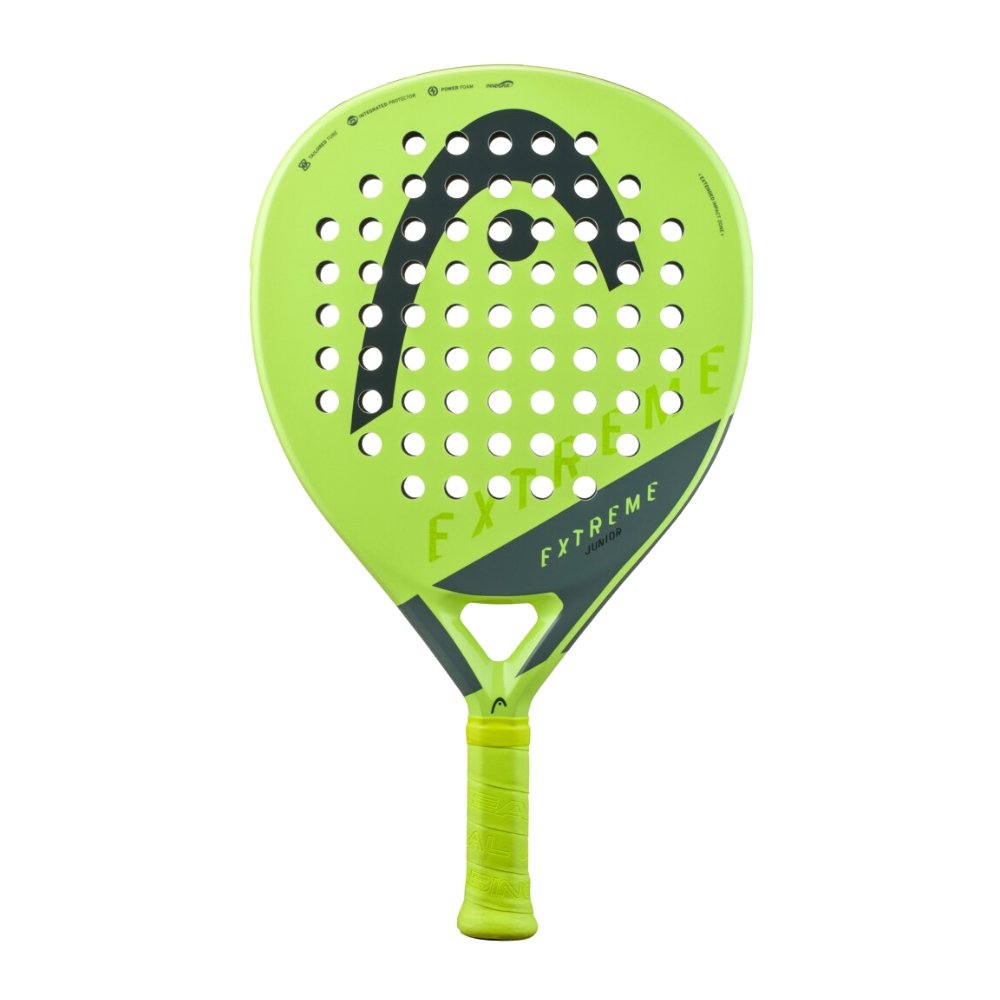
320 g with a fibreglass face and Power Foam; HEAD states it plainly: for juniors aged 10 or older.
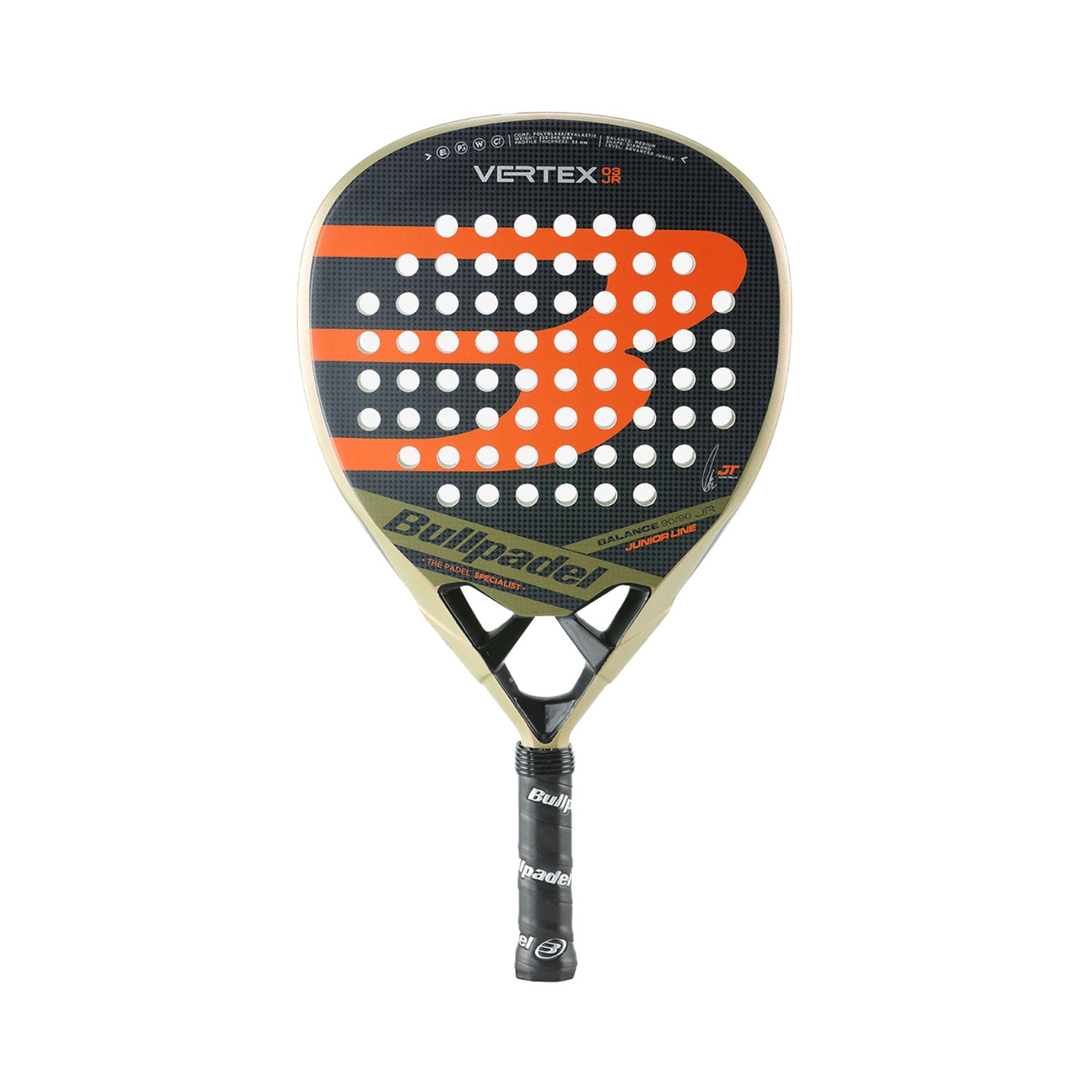
335–345 g diamond with a carbon frame and EVAlastic core — the adult Vertex, adapted to junior hands.
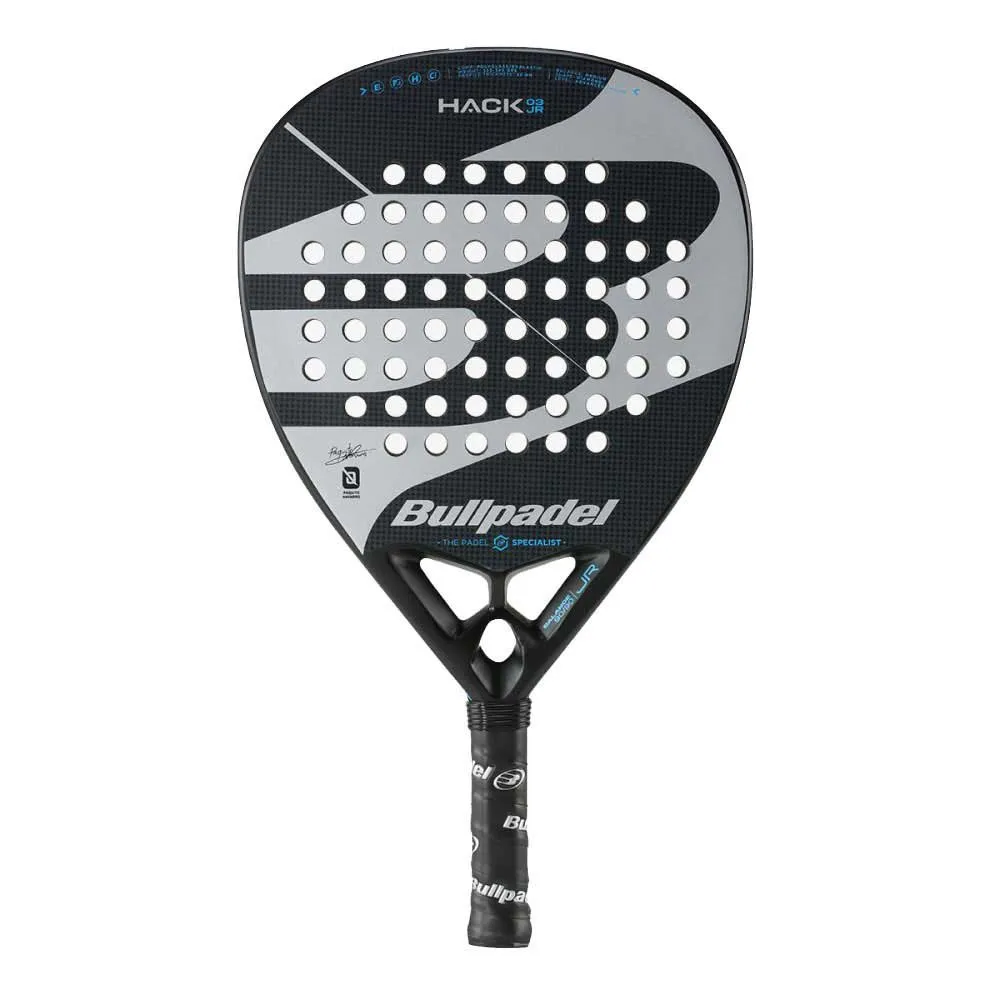
Paquito Navarro’s Hack, rebuilt for juniors at 335–345 g with a slim 35 mm profile.
An adult racket at a junior-friendly 340 g — the step HEAD itself suggests when junior sizes are outgrown.
In This Guide
Why Junior Rackets Exist: Size, Not Marketing
Padel’s adult equipment is standardised in a way that leaves no room for small players. An adult racket is 455 mm long, up to 38 mm thick, and the adult models in our best padel rackets pillar start around 360 g. Hand an eight-year-old that racket and every shot becomes a two-handed negotiation: the swing is late, the wrist does the work the shoulder should do, and the fun drains out of the session. Junior rackets are the equipment answer — the same sport, scaled: shorter overall lengths (42.5–45.5 cm across this guide), weights from 290 g, thinner profiles, softer EVA or foam cores that return the ball without demanding a full swing, and grips reduced for smaller hands.
This guide owns that junior-sizing decision only. It does not re-rank the adult game: the pillar owns adult selection, and the adult segment guides own their steps. What it does is lay the junior ladder out in the order a parent actually climbs it — youngest beginners first, competitive juniors next, and the bridge into adult sizes at the top — using the makers’ own published dimensions for every rung. Where the adult game is the destination, the links in the verdict point to the guides that own it, and how to play padel covers the game itself for a child who is just starting.
One honesty rule runs through everything below, because children’s equipment invites invented precision: age guidance appears only where the maker publishes it. Babolat aims the Alioth Mini Junior at beginners under 8; HEAD states the Extreme Junior is for juniors aged 10 or older. Wilson, Bullpadel and HEAD (for the Coello Junior) publish no age band at all — for those rackets this guide sizes by weight, length and grip, and says so, rather than dressing a guess up as a recommendation.
The Three Numbers: Weight, Length, Grip
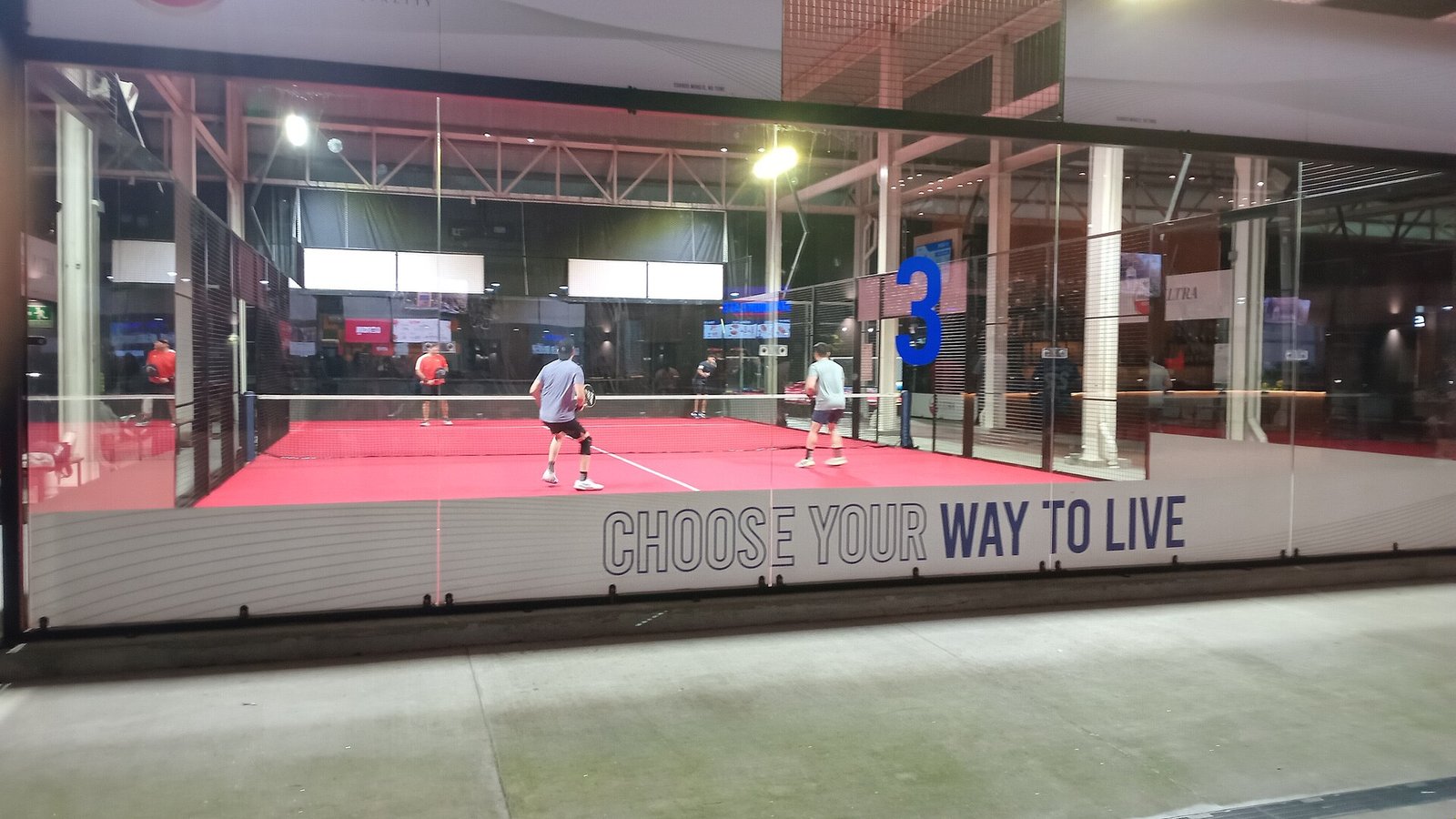
Weight is the junior number that matters most, and the range here runs from 290 g to 345 g — against 360 g and up for adult rackets. As a working ladder from the makers’ own line-ups: the youngest beginners sit at 290–310 g, developing juniors at 310–320 g, and advanced juniors who already play competitively at 335–345 g, where the junior lines meet adult weights. A racket a child has to swing with the whole body teaches a whole-body swing; a racket light enough to swing with the arm teaches padel.
Length is the second number. A standard adult racket is 455 mm. The Wilson Bela Junior V2 shortens that to 450 mm, and Babolat’s Mini goes to 425 mm — 3 cm shorter than standard — because leverage a small arm cannot control is not leverage, it is a lever working against the player. Profile (thickness) shrinks with it: 33 mm on the Mini, 35–36.5 mm on the Bullpadel and Wilson juniors, against the full 38 mm on the HEAD junior models and adult rackets.
Grip is the third number, and the least standardised — most makers do not publish a junior grip measurement at all. What is published: Babolat states the Alioth Mini Junior has a reduced grip size, and prints hand-position markings (its IMPROVER grip) on the handle so a child can learn where the hand belongs; Bullpadel’s junior descriptions note a slimmer grip than the adult models. The practical test at any size: the child should hold the racket with fingers wrapped and a small gap to the palm — if the fingertips dig into the palm, the grip is too small; if they cannot reach around, it is too large, and an overgrip only ever makes a grip bigger.
The 7 Best Padel Rackets for Kids, Compared
The order is the ladder: lightest and shortest first, climbing by weight to the advanced junior rackets and the adult bridge pick. Every specification is the maker’s published figure; every age statement is attributed to the maker that publishes it.
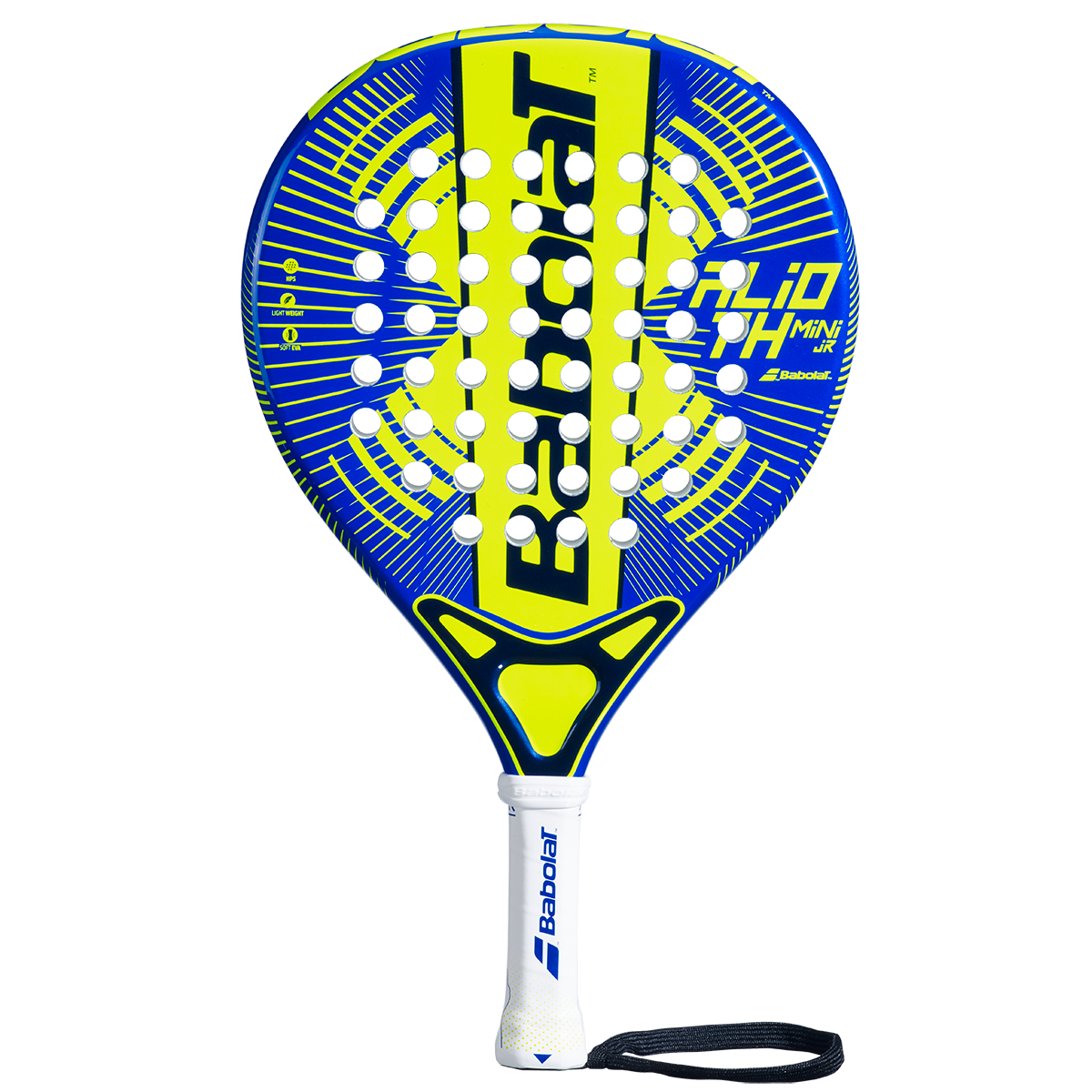
Babolat Alioth Mini Junior
The true starter: 290 g, 3 cm shorter than standard, with a grip sized — and marked — for a child’s hand.
Every other racket in this guide is a scaled-down adult racket. The Alioth Mini Junior is designed from the child outward. Start with the dimensions: at 290 g it is the lightest racket here by a clear margin, its 42.5 cm length is a full 3 cm shorter than a standard racket, and its 33 mm profile is the thinnest on the page. The shape is round — the most forgiving head geometry in padel, with the sweet spot centred where a beginner’s contact actually happens — and the low, head-light balance keeps the head easy to move and easy to stop.
The detail that sells the card is the grip. Babolat fits a reduced grip size for smaller hands and prints its IMPROVER grip markings on the handle, showing the child where the hand should sit — a coaching aid built into the equipment. The materials follow the same brief: an EVA core and fibreglass surface return the ball softly without demanding swing speed, in a carbon hybrid frame for stiffness. Babolat positions the Alioth Mini line for the youngest beginners — under the age of 8, in Babolat’s own product description. That makes this the one card in the guide with a maker-stated age, and the default first racket for a young child starting padel.
What we like
- Lightest (290 g), shortest (42.5 cm) and thinnest (33 mm) racket here
- Reduced grip with printed hand-position markings
- Round head and low balance — the most forgiving junior geometry
- The only card with a maker-stated age: Babolat’s under-8 beginner pick
Worth knowing
- A determined 8- or 9-year-old will outgrow it — that is its job
- Round shape and soft core cap out early for competitive juniors
As an Amazon Associate we earn from qualifying purchases.
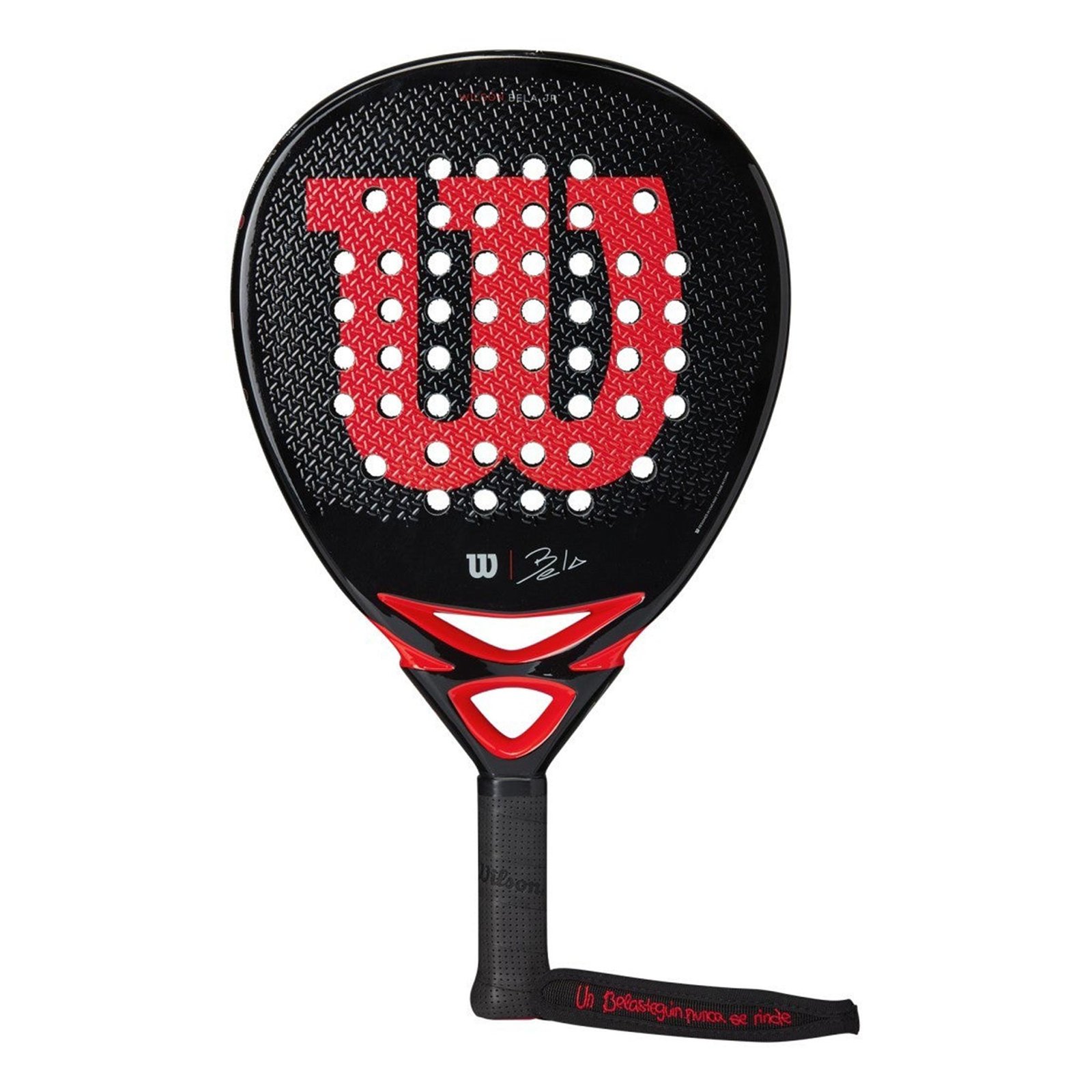
Wilson Bela Junior V2
A proper junior racket with a champion’s signature: 310 g, shortened to 450 mm, with a soft core for learning swings.
Wilson’s junior flagship carries the name of Fernando Belasteguín — for two decades the sport’s reference player — and Wilson’s own description of the V2 is the honest summary of the category: co-designed with Bela for junior players, with a shorter 450 mm length and a lighter 310 g weight than the adult rackets in his signature line. Inside the junior brief, the construction is grown-up: a low-density Core EVA foam chosen for comfort and a soft feel at impact, a fibreglass weave face, and Sharp Hole Technology — Wilson’s drilled-hole pattern, which it says improves grip on the ball.
The shape deserves a parent’s attention: where Babolat’s starter is round, the Bela Junior V2 is a diamond — the head-heavy geometry of attacking adult rackets — softened for juniors by its 261 mm balance, which stays on the manageable side. A child stepping up from a mini racket, or a confident beginner starting at 310 g, gets a racket that points toward the attacking game without demanding it yet. One transparency note: Wilson publishes no age range for this model, so size it by the numbers — 310 g and 450 mm suit a junior who has outgrown the Mini class, not a first-day five-year-old.
What we like
- 310 g with a shortened 450 mm length — a true junior scale
- Soft, low-density EVA core is forgiving on learning contact
- Diamond shape introduces attacking geometry at a junior balance
- Co-designed with Fernando Belasteguín, per Wilson
Worth knowing
- Wilson publishes no age band — size by weight and length
- Diamond shape is less forgiving than the round Mini for absolute beginners
As an Amazon Associate we earn from qualifying purchases.
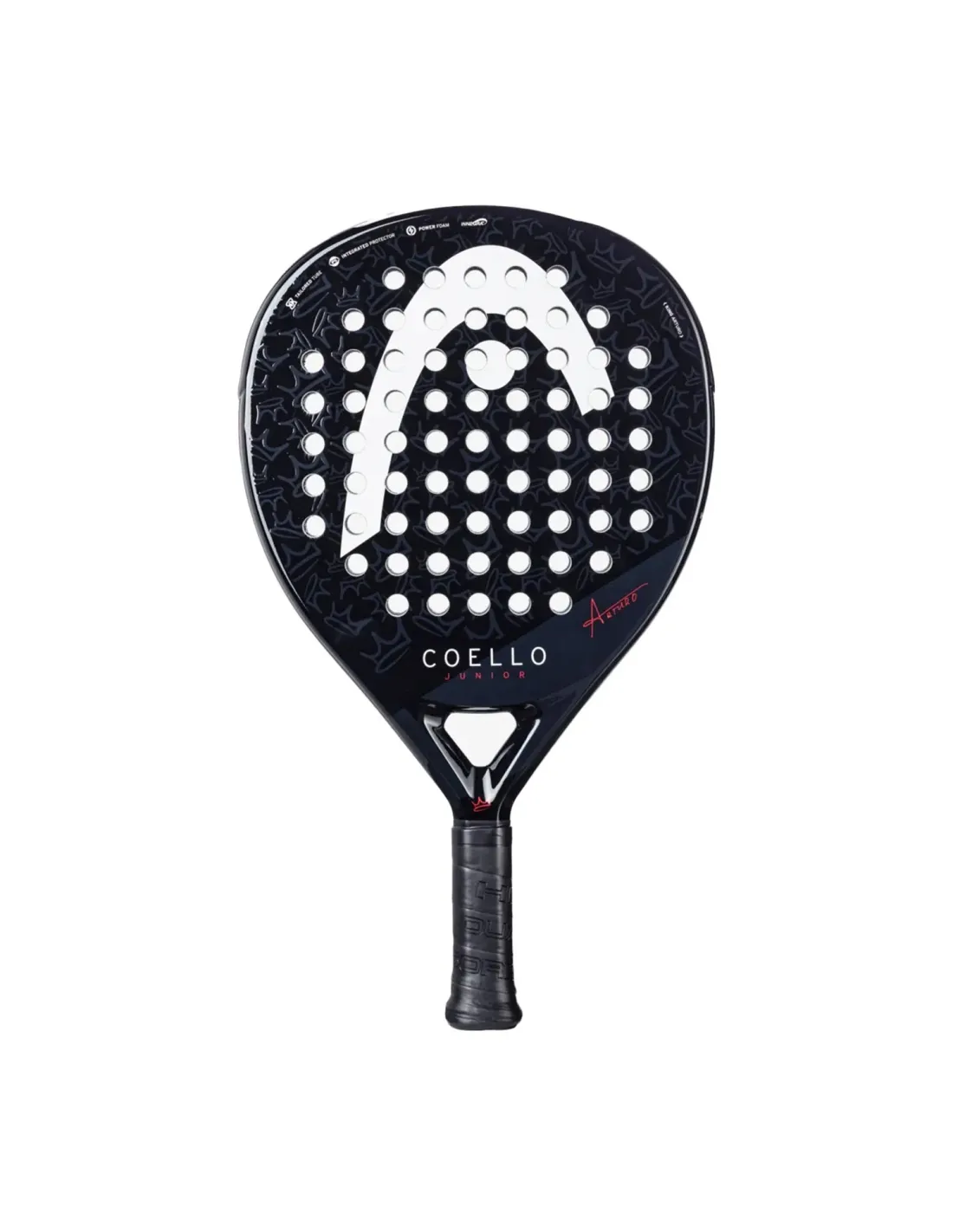
HEAD Coello Junior (2026)
The world No. 1’s junior model: 310 g teardrop with Power Foam and the biggest junior head in this guide.
HEAD’s junior range is the deepest in this guide, and its newest member is built with the biggest name in the modern game: the Coello Junior, designed in collaboration with Arturo Coello and carrying his signature and crown motif. The specification is a study in junior priorities. The weight stays at 310 g — the same rung as the Bela Junior — but the head is an oversize 525 cm² teardrop, the largest hitting area among the junior cards here, with HEAD’s Power Foam core doing the work of returning the ball with pace the swing has not fully supplied yet.
The build details are adult-grade where it counts: a fibreglass hitting surface for a soft, controlled touch on the wall game, Innegra hybrid fibres in the layup for shock absorption, and an Integrated Protector System bumper guarding the frame’s top edge — the part of a junior racket that meets the glass, the cage and the floor most often. HEAD publishes no age band for the Coello Junior; at 310 g with a full 38 mm profile it sizes as the step for a junior who attacks already — smashes in ambition, if not yet in execution — rather than a first racket for a small beginner.
What we like
- Only 310 g, with the largest junior head here (525 cm²)
- Power Foam core donates pace to developing smashes
- Fibreglass face keeps touch shots soft and controlled
- Designed with Arturo Coello — the junior racket kids ask for by name
Worth knowing
- Full 38 mm profile — chunkier in a small hand than the 33–36.5 mm options
- HEAD publishes no age band for this model
As an Amazon Associate we earn from qualifying purchases.
HEAD Extreme Junior
The 320 g step: HEAD’s junior power racket, and the one card whose maker states its age outright — 10 or older.
HEAD’s Extreme family is its power line, and the Extreme Junior is the rung between the 310 g junior models and the adult game: 320 g, the same oversize 525 cm² teardrop head as the Coello Junior, and the same Power Foam core and fibreglass surface pairing — power donated by the foam, touch kept by the glass fibres. Innegra in the layup and the Integrated Protector System carry over too, which matters at this level: a competitive junior’s racket lives a harder life than a beginner’s.
What earns this card its own slot rather than a mention inside the Coello card is one sentence of HEAD’s own product copy: the Extreme Junior is made for juniors aged 10 or older. It is the only age statement HEAD publishes in its junior range, and it anchors the middle of this guide’s ladder with a maker’s fact instead of an inference: under-8s start with Babolat’s Mini, and from 10 upward — for a junior already playing and competing — HEAD itself points at this racket. The extra 10 g over the 310 g models sounds trivial on paper; on court it is the difference between a racket a child swings and a racket a young player drives.
What we like
- Maker-stated age: HEAD positions it for juniors 10 or older
- 320 g — the bridge weight between junior and adult rackets
- Oversize 525 cm² head keeps the sweet spot generous as pace rises
- Power Foam + fibreglass pairs donated power with touch
Worth knowing
- Too much racket for under-10 beginners — stay on the 290–310 g rungs
- Shares most of its spec sheet with the Coello Junior; choose by weight and name appeal
As an Amazon Associate we earn from qualifying purchases.
Bullpadel Vertex Junior
Near-adult weight, junior brief: 335–345 g diamond with a full carbon frame and Bullpadel’s EVAlastic core.
At the top of the junior ladder the equipment stops being a toy version of anything. Bullpadel’s Vertex Junior takes the adult Vertex — one of the most played attacking rackets on the professional tour — and adapts it for a junior with a high level of play, in Bullpadel’s own positioning. The numbers tell the story: a diamond head at a full adult 455 mm length, a weight of 335–345 g that meets the lighter adult rackets, a 100% carbon CarbonTube frame, and the Vertex heart geometry in the throat. What keeps it a junior racket is the brief around those numbers — a Polyglass fibreglass hitting surface that softens contact, the responsive EVAlastic core, and a slimmer junior grip noted in Bullpadel’s retailer descriptions.
This is not a first racket, and the guide will not dress it as one: it is the card for the junior who already trains, competes, and has the technique to use a diamond’s head-weighted leverage. Bullpadel publishes no age band for it — at 335–345 g it sizes itself, to older, stronger, advanced juniors. The line also includes a girls’ variant (Vertex JR Girl, associated with Delfi Brea), so the junior Vertex shelf covers more of the advanced-junior market than a single model.
What we like
- Adult-grade build: 100% carbon frame, Vertex heart, diamond head
- 335–345 g — real racket weight for juniors who play competitively
- Polyglass surface and EVAlastic core keep junior-friendly touch
- A girls’ variant exists in the same junior line
Worth knowing
- Too heavy and too head-weighted for beginners of any age
- Bullpadel publishes no age band — judge by the 335–345 g weight
As an Amazon Associate we earn from qualifying purchases.
Bullpadel Hack Junior
Paquito Navarro’s Hack, rebuilt for juniors: 335–345 g, a slim 35 mm profile, and the Hack heart.
Every advanced junior wants the racket their favourite professional plays, and Bullpadel’s Hack Junior is the direct answer for fans of Paquito Navarro: his Hack, adapted — in Bullpadel’s own description — to junior players who already play at a high level. The specification mirrors the Vertex Junior’s rung of the ladder with its own personality: the same 335–345 g weight band and diamond shape, a CarbonTube 100% carbon frame and Evalastic core, but a slimmer 35 mm profile and a medium balance around the Hack heart — the distinctive throat geometry of Navarro’s line, carried into the junior version rather than simplified away.
The Polyglass outer layer keeps the brief junior: glass fibres instead of the adult Hack’s harder composite face, so contact stays softer while the frame and weight teach adult habits. Choose between this card and the Vertex Junior on shape of game and allegiance — the Hack is the power replica with the slimmer profile, the Vertex the tour-proven all-round attacker — and apply the same honesty test to both: Bullpadel publishes no age band, and at 335–345 g these are rackets for advanced juniors, full stop.
What we like
- The genuine Hack design — heart geometry included — at junior spec
- Slim 35 mm profile suits smaller hands at this weight
- Carbon frame and Evalastic core: adult build, junior brief
- Polyglass face softens contact versus the adult Hack
Worth knowing
- Advanced juniors only — the weight rules out younger players
- No maker age band published
As an Amazon Associate we earn from qualifying purchases.
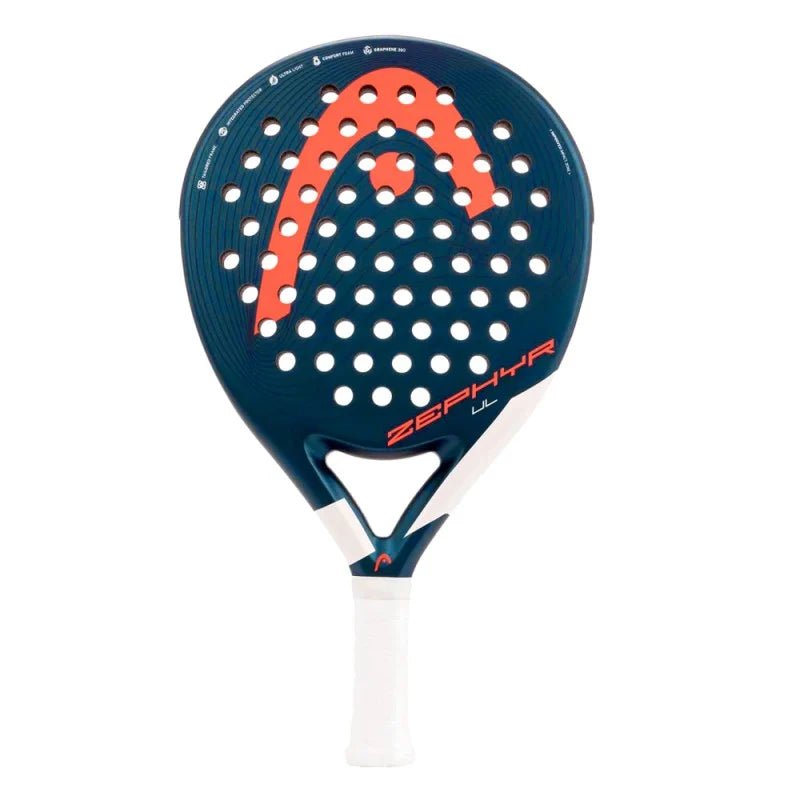
HEAD Zephyr UL
An adult racket — labelled as one — at 340 g: the lightest adult frame in HEAD’s range, and HEAD’s own suggested bridge.
Every ladder needs a top rung that is not a junior product at all. The Zephyr UL is an adult racket — full 38 mm profile, adult length, adult range — that happens to weigh 340 g, less than the Bullpadel junior pair above and far below the 360 g-plus adult mainstream. HEAD’s own product copy makes the bridge role explicit: the Zephyr UL is, in HEAD’s words, ideal for younger players who are moving from a junior to an adult model. That is this card’s entire argument, and it is the maker’s argument, not ours.
The playing brief fits the transition: a round head with its sweet spot in the middle, a manageable 265 mm balance, and Power Foam donating pace while technique catches up with the adult game’s speed. A junior arriving here has outgrown junior grips and junior lengths but not yet the strength for a mainstream adult frame — and from this rung, the next step is the adult ladder itself, which our best padel rackets pillar and its linked segment guides own. Buy the Zephyr UL when the junior rackets feel small, not when they feel light: the distinction is the whole card.
What we like
- 340 g — lighter than the advanced junior pair, in a full adult frame
- HEAD itself positions it for juniors moving to adult models
- Round head and 265 mm balance keep the step forgiving
- The natural graduation point before the adult ladder
Worth knowing
- It is an adult racket — adult length and grip, no junior scaling
- Players not yet outgrowing junior sizes should stay on the junior rungs
As an Amazon Associate we earn from qualifying purchases.
Side-by-Side Comparison Table
| Model | Best For | Weight | Shape | Length | Profile | Maker’s Age Guidance |
|---|---|---|---|---|---|---|
| Babolat Alioth Mini Junior | Youngest beginners | 290 g | Round | 42.5 cm | 33 mm | Under 8 (Babolat) |
| Wilson Bela Junior V2 | First junior racket | 310 g | Diamond | 450 mm | 36.5 mm | None published |
| HEAD Coello Junior | Young attackers | 310 g | Teardrop oversize | 455 mm class | 38 mm | None published |
| HEAD Extreme Junior | Competitive juniors | 320 g | Teardrop oversize | 455 mm class | 38 mm | 10 or older (HEAD) |
| Bullpadel Vertex Junior | Advanced juniors | 335–345 g | Diamond | 455 mm | 36 mm | None published |
| Bullpadel Hack Junior | Power replica | 335–345 g | Diamond | 455 mm class | 35 mm | None published |
| HEAD Zephyr UL (adult) | Bridge to adult | 340 g | Round | Adult length | 38 mm | HEAD: for juniors moving to adult models |
The last column is the one most kids’ racket guides invent. Here it is copied from the makers: two publish an age position (Babolat’s under-8 brief for the Mini; HEAD’s 10-or-older brief for the Extreme Junior), one publishes a transition role (HEAD’s Zephyr UL), and the rest publish none — so their rows are sized by weight, length and profile, which is the honest way to choose them.
Buying Guide: Sizing by the Maker’s Numbers
1. Start at the right rung of the ladder
The ladder in this guide is the buying guide. Youngest beginners start at 290 g with the shortest racket (Alioth Mini Junior). A junior who has the basics — or an older beginner starting fresh — starts at 310 g (Bela Junior V2, Coello Junior). A competitive junior of 10 or older, per HEAD’s own guidance, steps to 320 g (Extreme Junior). Advanced juniors who train and compete take the 335–345 g pair (Vertex Junior, Hack Junior). And the junior who has physically outgrown junior lengths and grips graduates to the 340 g adult bridge (Zephyr UL) and then the adult range. Skipping rungs is the classic mistake: a racket bought “to grow into” teaches a season of bad swings first.
2. Check the grip in the hand, not on the chart
Junior grip sizes are barely standardised, so the test is physical: the child holds the racket in a forehand grip and a small gap should remain between the fingertips and the palm. Babolat’s Mini goes furthest to help — a reduced grip with printed hand-position markings — and Bullpadel’s junior models are described by their retailers as slimmer-gripped than the adult equivalents. If a child is between sizes, choose the smaller grip: an overgrip adds a size, but nothing removes one, and a too-large grip is the one that forces the wrist to do the swinging.
3. Soft cores and fibreglass faces are features, not compromises
Parents comparing spec sheets sometimes read “fibreglass surface, EVA core” as the cheap option next to carbon adult rackets. In junior rackets it is the correct option. Soft cores and glass-fibre faces return the ball at junior swing speeds, keep mishits from stinging small hands, and let technique — not equipment stiffness — produce the shot. Carbon arrives where it belongs in this guide: in the frames of the advanced junior pair, whose players have the swings to use it. Match the material to the swing, not to the price ladder.
4. Budget for the whole starter kit
A junior racket is one line of the first-season budget. Court shoes matter as much in padel as in any racket sport — our guide to the best padel shoes covers the adult range a parent will wear for family sessions, and junior court shoes follow the same fit rules. Balls, an overgrip or two, and court time complete the kit; if you are starting as a family in the UAE, our padel beginners’ tips cover the first sessions themselves, and the courts guide linked above maps where to play.
Frequently Asked Questions
What age should a child start padel with a junior racket?
Start with the maker’s own guidance where it exists. Babolat designs the Alioth Mini Junior — 290 g, 42.5 cm long, reduced grip — for the youngest beginners, stating under the age of 8 in its product description. Below school age, most clubs begin with soft-ball games rather than full padel. Whatever the starting age, the test is the equipment: if the child can hold the racket one-handed with a small gap between fingertips and palm, and swing it without the whole body turning, the size is right.
What weight padel racket should a child use?
Follow the ladder the makers publish. Youngest beginners: 290 g (Babolat Alioth Mini Junior). Developing juniors: 310–320 g (Wilson Bela Junior V2, HEAD Coello Junior, HEAD Extreme Junior). Advanced juniors who train and compete: 335–345 g (Bullpadel Vertex Junior and Hack Junior). Adult rackets start around 360 g, which is why the lightest adult frame — HEAD’s 340 g Zephyr UL — works as the bridge once junior sizes are outgrown.
Can a child just use a light adult padel racket?
Only at the top of the ladder. Adult rackets are a standard 455 mm long with adult grips, and most weigh 360 g or more — too much length and grip for a young child, whatever the weight. The exception proves the rule: HEAD’s Zephyr UL is an adult racket at 340 g that HEAD itself positions as ideal for younger players moving from a junior to an adult model. Below that transition point, a junior racket’s shorter length, smaller grip and softer core fit the player better than any adult frame.
Do the makers recommend ages for these rackets?
Two do, plainly: Babolat positions the Alioth Mini Junior for beginners under the age of 8, and HEAD states the Extreme Junior is for juniors aged 10 or older. Wilson and Bullpadel publish no age band for their junior models, and neither does HEAD for the Coello Junior — for those rackets this guide sizes by the published weight, length and profile instead of inventing an age range, and we recommend you do the same.
When should a junior move up to an adult padel racket?
When the junior equipment is outgrown, not when it merely feels familiar: the grip is too small even with an overgrip, the shorter length is costing reach the player now has the strength to use, and junior weights feel insubstantial against older juniors’ pace. HEAD’s Zephyr UL (340 g) is the designed bridge — HEAD positions it for exactly this move — and beyond it, our best padel rackets pillar owns the adult ladder from beginner frames upward.
Round, teardrop or diamond — which shape for a child?
The same logic as the adult game, scaled. Round heads (Alioth Mini Junior, Zephyr UL) centre the sweet spot and forgive off-centre contact — the beginner shapes. Teardrops (HEAD’s Coello and Extreme Juniors) split the difference toward power as technique forms. Diamonds (Bela Junior V2, the Bullpadel pair) weight the head for attacking play and suit juniors who already swing with intent. Match the shape to the stage: forgiveness first, leverage later.
How long will a junior padel racket last before it is outgrown?
It depends on the child’s growth and the rung you start on, and no maker publishes a lifespan — so treat any exact answer with suspicion. What the ladder implies: the Mini class is a first racket, typically replaced as the child approaches the 310 g rungs; the 310–320 g models carry a junior through the developing years; and the 335–345 g advanced pair and the Zephyr UL bridge are bought once, near adult size. Buy the rung the child is on now rather than two rungs ahead.
The Verdict
Buy the rung your child is standing on. The Babolat Alioth Mini Junior is the first racket — the only one here its maker aims at under-8s, and the only one with a grip designed down to a child’s hand. The Wilson Bela Junior V2 and HEAD Coello Junior share the 310 g rung for developing juniors, Wilson’s the softer all-round brief, HEAD’s the attacker’s oversize head. From 10 upward, HEAD’s own guidance points competitive juniors to the Extreme Junior at 320 g; advanced juniors graduate to the Bullpadel Vertex Junior or Hack Junior at near-adult weight. And when junior sizes are genuinely outgrown, the HEAD Zephyr UL bridges into the adult game before the adult ladder takes over. Size honestly, by the makers’ numbers — a child swinging the right racket learns the game; a child swinging the wrong one learns to cope with it.
Affiliate disclosure: AliShuttler is reader-supported. When you buy through links on this page we may earn an Amazon commission at no extra cost to you. Specifications and age positions are taken from manufacturers’ published product information and were verified at the time of writing; manufacturers revise models between seasons, so confirm the exact specification on the product page before ordering.