The serve is the only shot in table tennis that nobody can rush, block or spoil for you — the rally starts exactly when you decide it starts. This guide teaches five serves in the order a beginner can actually learn them: the safe backhand push first, then the pendulum, the backspin chop, the topspin change-up and a simple sidespin variation — with the grip, the contact point, the spin each one makes, the error that ruins it, and a drill for every serve.
Every other shot in table tennis is a reaction. The forehand loop answers a long ball, the block answers a fast one, the push answers a spinny one — but the serve answers nothing. You hold the ball, you choose the spin, the speed and the placement, and only then does the rally begin. That is why coaches treat the serve as free territory for beginners: it is the one skill you can practise alone, at your own pace, with a bucket of balls and nobody on the other side of the net, and still carry it straight into your next match exactly as practised.
It is also why beginners waste it. The classic first serve is a hopeful tap — ball tossed vaguely, bat waved vaguely, ball posted over the net at a comfortable height for the receiver to attack. This guide replaces the tap with a small, ordered toolbox. Five serves sounds like a lot until you see the design: every serve below uses the same legal frame, the same grip and the same toss. Only the racket’s path through the ball changes. Learn the frame once, then spend your practice time on the part that actually varies — where and how the rubber brushes the ball.
Two boundaries before the technique. First, legality: this page summarises the serving laws only as far as technique needs them, because the full rulebook treatment — warnings, lets, doubles rotation, hidden-serve rulings — already lives in our complete guide to the table tennis rules. Read that when a ruling argument starts; read this when you want your serve to work. Second, names: whether you call the game table tennis or use the older casual name is a history question, not a technique one, and it is settled in table tennis vs ping pong. Here, it is serving.
The five serves on one card
Every serve starts the same legal way: ball resting on an open, flat palm, tossed near vertically at least 16 cm with no spin added, struck as it falls, bouncing once on your side, then once on theirs, all from behind your end line and in plain view. Then the five, in learning order: 1. Backhand push — a short, low tap under the ball; the safe starter. 2. Forehand pendulum — the forearm swings like a pendulum and brushes the ball’s left underside (for a right-hander), making sidespin mixed with backspin. 3. Backspin (chop) serve — an open racket chops down and brushes under the back of the ball for heavy backspin that stays short. 4. Topspin serve — the racket brushes up the back of the ball so it kicks forward off the bounce; the surprise change-up. 5. Sidespin variation — contact on the side of the ball so it curves in the air and kicks sideways. Master them in that order and each one makes the next easier.
Serve 1 — Backhand push
The first serve every beginner should own: short, low, safe, and it teaches you the toss and the two bounces with almost nothing else to go wrong.
Serve 3 — Backspin chop
The first serve that wins points by itself at beginner level, because receivers who lift it carelessly feed it straight into the net.
Serve 2 — Forehand pendulum
The most imitated serve in the sport. One swing shape, several spins — the foundation of every advanced service game.
Serves 4 & 5 — Topspin & sidespin
Worth little alone, priceless as a surprise: the same-looking motions with a different brush turn your safe serves into traps.
In this guide
The legal serve in 60 seconds
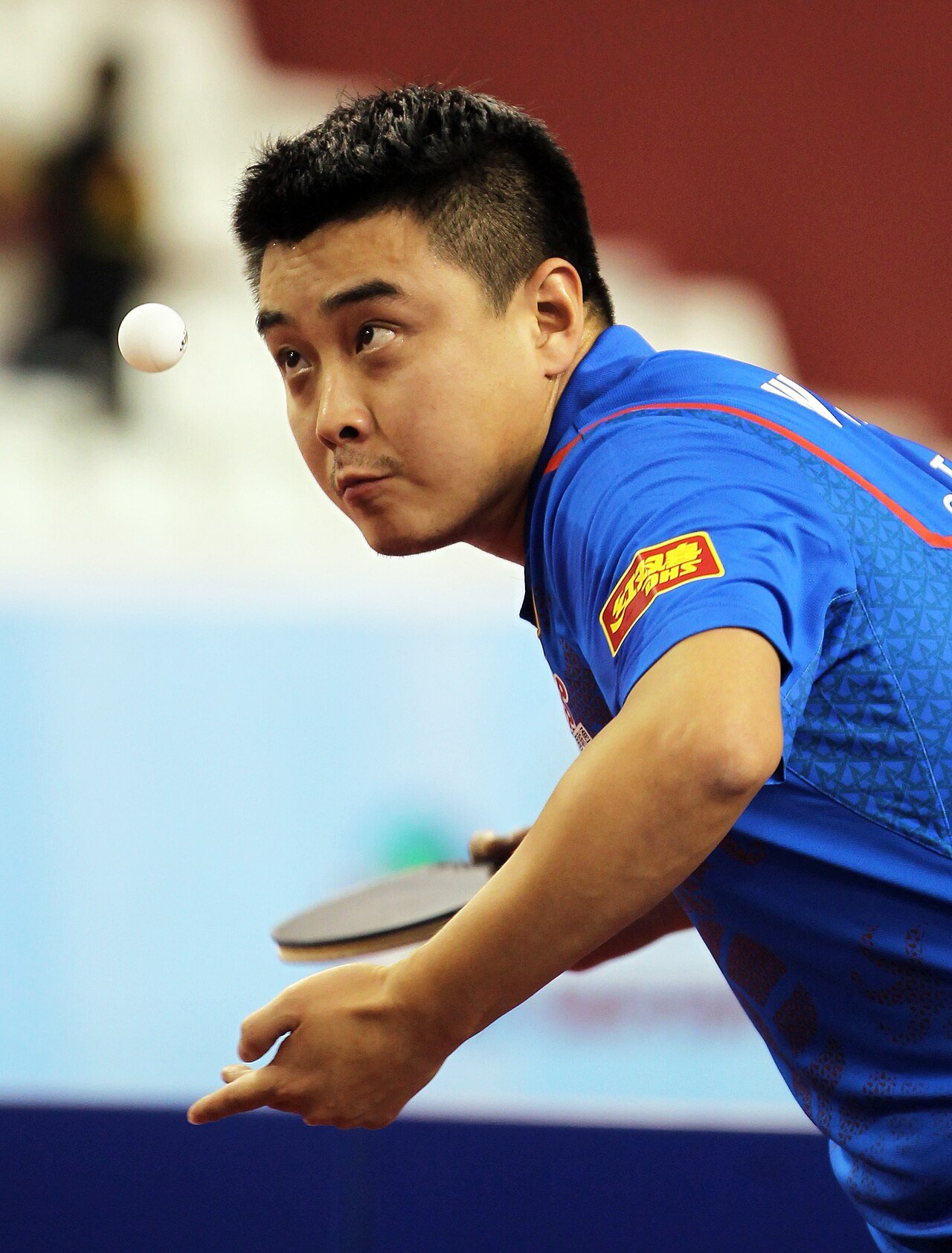
Technique comes second; the frame comes first, because a beautiful serve hit from a closed fist is not a serve at all — it is a fault. The Laws (ITTF Law 2.6) ask for six things, and every serve in this guide is built inside them. The ball starts resting freely on the open palm of your stationary free hand — not pinched in fingers, not cupped, not already moving. You project it near vertically upwards, without imparting spin, so it rises at least 16 cm after leaving your palm. You strike it as it falls, never on the way up. It must bounce first on your own side of the table, then on your opponent’s side — in doubles, specifically in your right half-court and then the receiver’s right half-court. From the moment the serve starts until the ball is struck, it stays above the level of the playing surface and behind your end line, and it must not be hidden from the receiver — which is why your free arm, having done the tossing, moves out of the corridor between ball and net immediately.
That is the whole frame, and it is genuinely all a beginner needs to hold in their head: open palm, honest toss, hit it falling, two bounces, nothing hidden. The edge cases — what happens if your toss drifts, when an umpire warns instead of faulting, the disability relaxations, the let when a legal serve clips the net — are ruling questions with their own home in the table tennis rules guide. One practical tip that belongs here, though: the 16 cm minimum is a floor, not a target. Most beginners settle on a toss roughly twice that height, because a higher toss gives the falling ball more speed at contact and gives your racket arm time to complete its swing shape. Toss for time, not for drama.
The foundations all five serves share
Before the individual serves, four habits carry across all of them. Build these first and each new serve becomes a variation instead of a fresh invention.
One grip, held a little looser
Serve with your ordinary shakehand grip — the same one you rally with — but hold the handle slightly more in the fingers and a touch looser than you would for a power loop. Spin is made by the rubber brushing the ball, and the brush is finished by a small, quick wrist movement at the end of the swing; a white-knuckle grip locks the wrist and kills exactly that movement. Nothing about the grip changes between serves 1 to 5. That is deliberate: a receiver who can read your spin from your grip has beaten your serve before you have hit it, so the grip stays boringly identical while the racket’s path does the talking.
A toss you could set a watch by
Serve quality starts before the racket moves. Stand side-on enough to give your arm room, feet a comfortable distance apart, and toss the ball from a palm held roughly in front of your body at about net height — the same place, the same height, every single time. A wandering toss forces a wandering swing, and beginners blame their racket for errors their tossing hand made. Practise the toss alone until ten tosses in a row land back in your open palm without you moving it: that is the standard, and it takes one short session to reach.
Brush, don’t hit
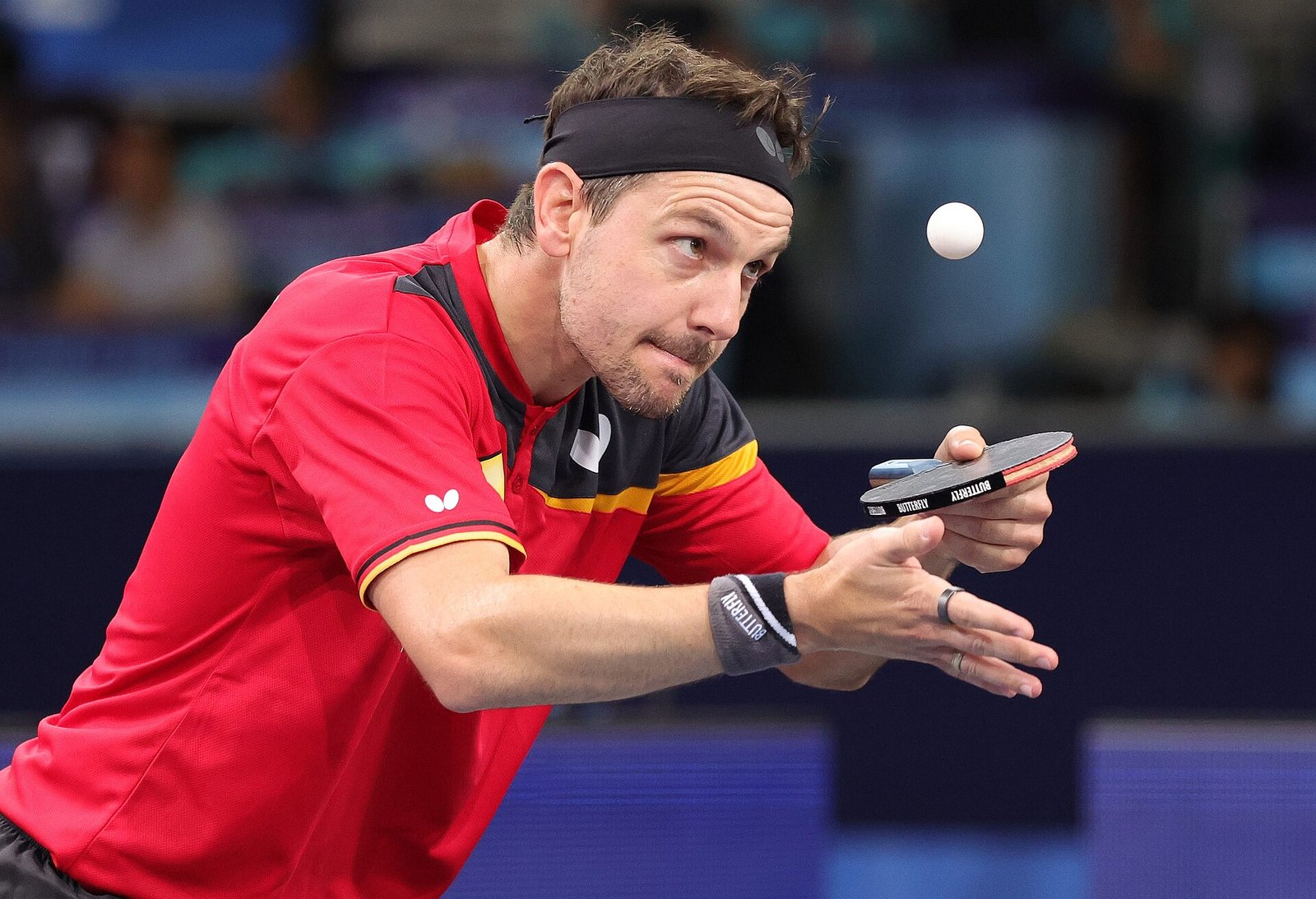
The single most useful sentence in serving: spin comes from fine, fast contact — the rubber grazing the ball — while a flat, solid contact just pushes the ball forward. A beginner who “hits” a serve gets a plain ball that travels fast and sits up. A beginner who brushes the same ball gets rotation, a lower flight and a bounce that behaves oddly for the receiver. Each serve below is described by its brush: which part of the ball the racket grazes, and in which direction. If you remember nothing else from a section, remember its contact point.
Contact low, first bounce close
Strike the ball as it falls to roughly net height or just above the table — low contact keeps the flight low. Then aim your first bounce: for the short serves that dominate beginner table tennis (serves 1, 3 and 5 in their standard form), the ball should bounce on your side closer to the net than to your end line, because a ball that bounces near your end line is travelling too fast and too far to stay short at the other end. And whatever serve you have hit, finish by recovering into your ready position: a serve is the start of a rally, not the end of one, and the third ball is yours to win or waste.
Serve 1: The backhand push serve — your safe starter
The first serve to learn is the one with the least that can go wrong. The backhand push serve is struck from a compact position directly in front of your body, with a short swing and a gentle contact — which means your beginner toss, still a work in progress, has very little machinery to disrupt. It produces a short, low ball with light backspin or almost no spin, and its job is not to win the point outright: its job is to start the rally on safe terms, deny the receiver an easy attack, and give you a legal, repeatable serve while everything else in this guide is still under construction.
Grip and stance
Stand square-ish to the table, slightly left of centre (for a right-hander), close behind the end line. Ordinary shakehand grip, held loosely; for the backhand serve the thumb rests up along the back of the blade a little more than in a rally grip, which naturally presents the backhand face to the ball. Tossing hand in front of your stomach, racket held just to its side, both around net height. Nothing reaches across your body and nothing hides the ball — the whole action happens in the open, in front of you.
Contact point and swing
Toss the ball a comfortable height and let it fall to about net height. The swing is a short push: the racket, face tilted slightly open, moves forward and a little down in one small motion — think of sliding the bat under the ball rather than striking through it. Contact is on the back-bottom of the ball, a gentle brush-and-carry rather than a hit. The ball should float low over the net, bounce first on your side around the middle of your half, and then again near the net on the receiver’s side — ideally bouncing twice on their side if they were to leave it, which is the practical test of a genuinely short serve.
The spin you produce
Light backspin to almost none, depending on how much your brush catches the bottom of the ball. That sounds like a weakness and at this level is a strength in disguise: a float ball and a light-backspin ball look identical off this motion, so even your first serve contains the seed of the game’s great trick — two different balls wearing one disguise. Later, varying the brush under the same push gives you both.
When to use it
As your default serve while you are learning, as the safe serve at nervous moments, and against receivers who stand back waiting to attack long balls — a short push serve gives them nothing to swing at and forces them to play a return they did not choose.
The beginner error that kills it
Scooping. Frightened of the net, beginners lift the racket upward under the ball like a spoon, and the serve floats high and slow — an engraved invitation to be attacked. The fix is in the contact: racket starts around net height, ball is met as it falls to that height, and the push goes forward, not up. If your serves keep floating, lower your contact point before you change anything else.
Drill: the two-bounce target
Solo: place a sheet of paper (or a towel) on the far side of the table covering the first third beyond the net. Serve 20 backhand push serves aiming to land the ball’s second bounce on the paper. Count how many would bounce twice on the table if untouched — that double-bounce count, not raw success, is your score to beat next session.
With a partner: serve short, partner pushes the return short back to you, you push again — a cooperative short-game rally that turns your serve into live practice for the exact rally it creates.
Serve 2: The forehand pendulum serve — the classic
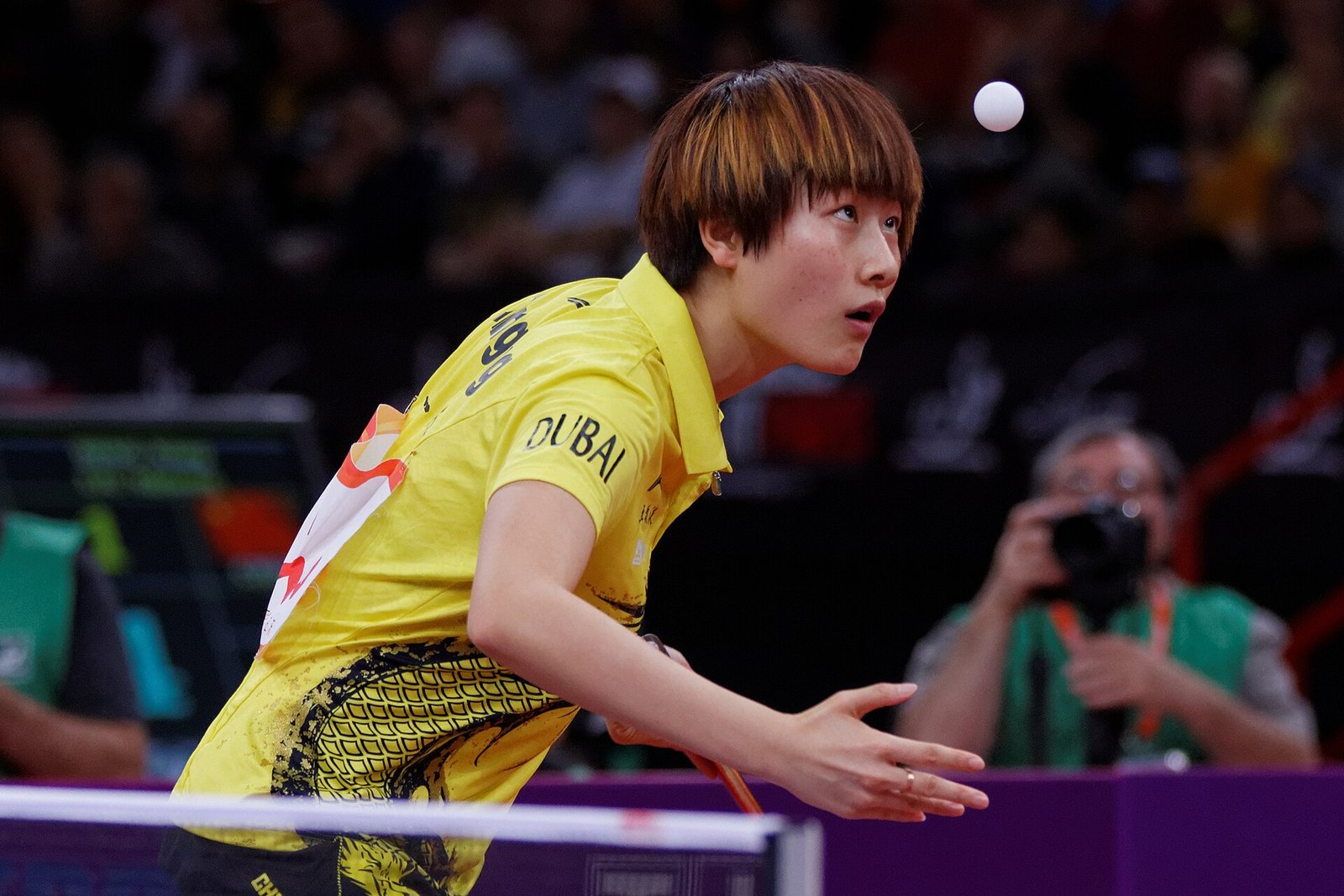
If you have watched any table tennis at all, you have seen this serve: it is the most widely used service action in the sport, from club nights to world finals, because one pendulum-shaped swing can brush the ball in several different places and send out several different spins. The beginner version taught here is deliberately the simple one — a single contact point producing sidespin mixed with backspin — because the pendulum’s real lesson is the swing shape itself. Once the shape is automatic, new contact points become new serves without new mechanics.
Grip and stance
Stand side-on, mostly behind and slightly to the left of the table’s corner (for a right-hander), so your forehand arm has a clear corridor to swing across your body. Same shakehand grip, held loosely, with the racket starting up around chest height beside your non-racket shoulder. The tossing hand presents the ball just in front of your chest. Side-on matters: a square stance leaves your own hip in the swing’s path and shortens the pendulum to a jab.
Contact point and swing
The forearm swings down and across the front of your body like a pendulum — hence the name — with the elbow acting as the hinge and the wrist adding a flick at the very end. For this beginner version, the racket brushes the left underside of the ball (from a right-handed server’s perspective): the face comes across and slightly under the ball as the wrist flicks through, contacting it late in its fall at about net height beside your body, never in front of the end line. Let the swing finish naturally across your body; do not stop it dead at contact, because a strangled follow-through usually means the wrist flick — the spin-maker — never happened.
The spin you produce
Sidespin blended with backspin: the ball curves gently in flight, and after bouncing on the receiver’s side it wants to kick sideways while its backspin checks its forward pace. Receivers misjudge the curve, push into a ball that is also spinning backwards, and pop it up or net it. That two-part behaviour, from one contact, is why the pendulum is the classic.
When to use it
As your first “real” serve once the backhand push feels reliable — against receivers who handle plain balls comfortably and need something to actually read, and whenever you want the rally to start with the receiver under a small, immediate problem.
The beginner error that kills it
Throwing the whole arm at it. Beginners recruit the shoulder and upper arm, the swing turns into a wide swipe, and the brush becomes a shove: the ball flies flat, fast and spinless. The pendulum is a forearm-and-wrist action; the upper arm stays almost still. If your serve has effort but no curve, shrink the swing until it feels almost lazy — the wrist flick at the end is where the spin was hiding.
Drill: chase the curve
Solo: stand a bottle or spare ball on the far side of the table, a racket’s width to the right of the net (for a right-hander serving to curve away). Serve pendulums aiming to make the ball curve around the near side of the marker before its second bounce. Success is visible without any judgement calls: a curving ball bends, a shoved ball goes straight.
With a partner: alternate five pendulum serves and five plain push serves from similar-looking setups while your partner calls the spin before returning. Reading practice for them, disguise practice for you — and the moment your partner starts guessing wrong, the serve is working.
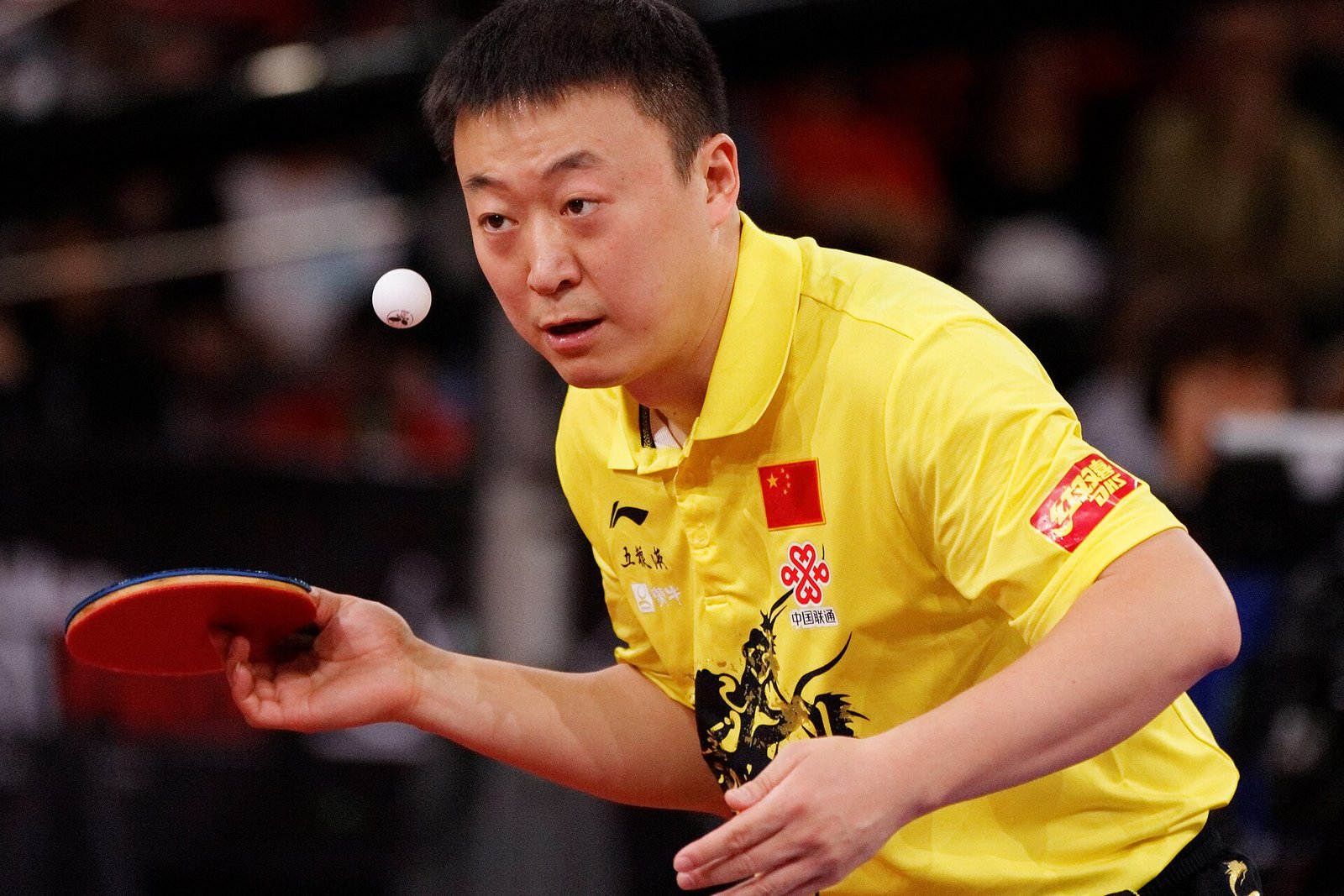
Serve 3: The backspin (chop) serve — your first point-winner
Now the serve that changes beginner matches. The chop serve brushes hard under the ball to load it with heavy backspin, delivered short and low. A receiver who treats it like an ordinary ball and pushes it back firmly will watch their return dive into the net, because the spin they failed to account for is dragging the ball down throughout its flight. At beginner level this is the first serve that regularly wins points by itself — and the technique that produces it, the fine downward brush, is also the doorway to every heavier spin serve you will ever learn.
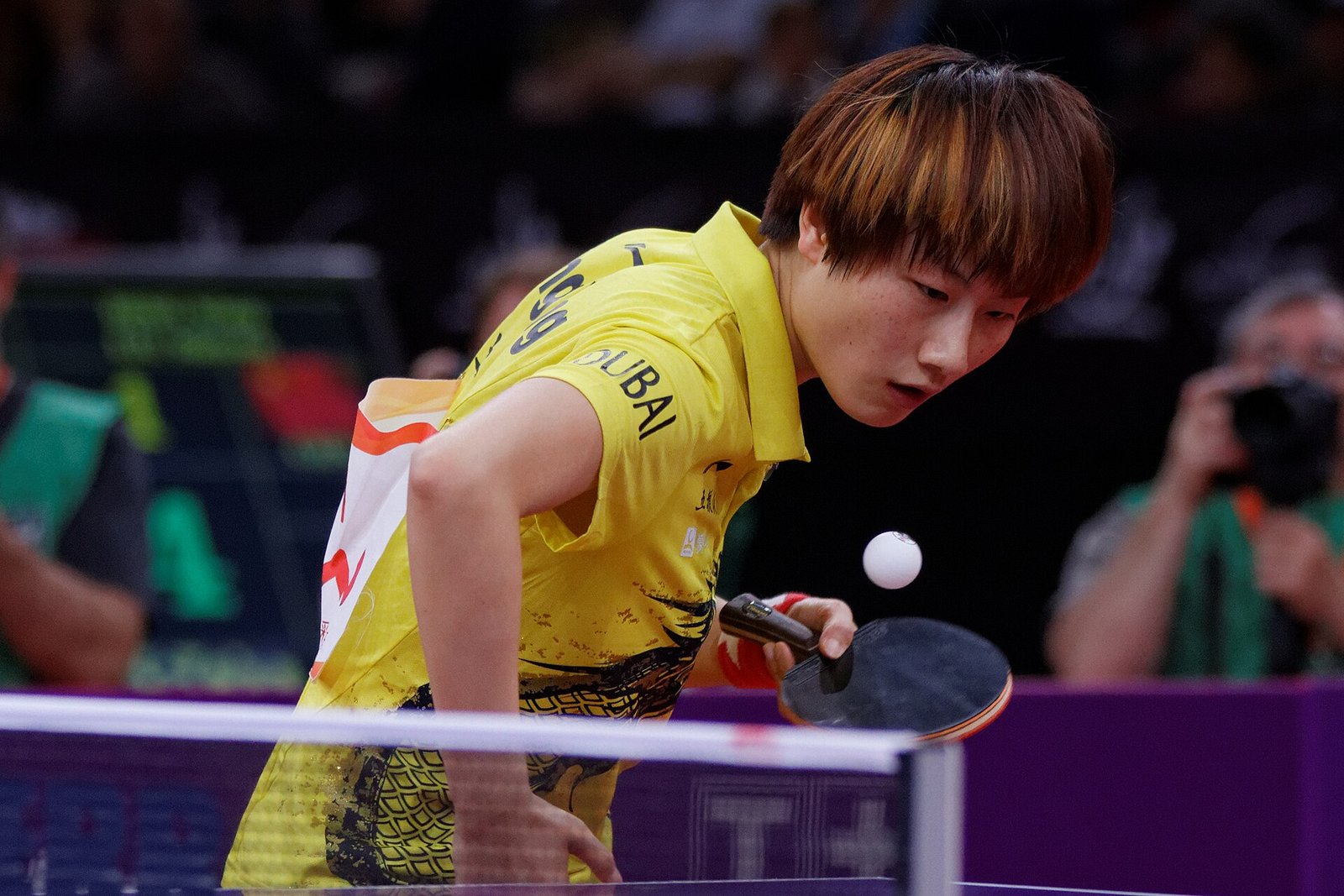
Grip and stance
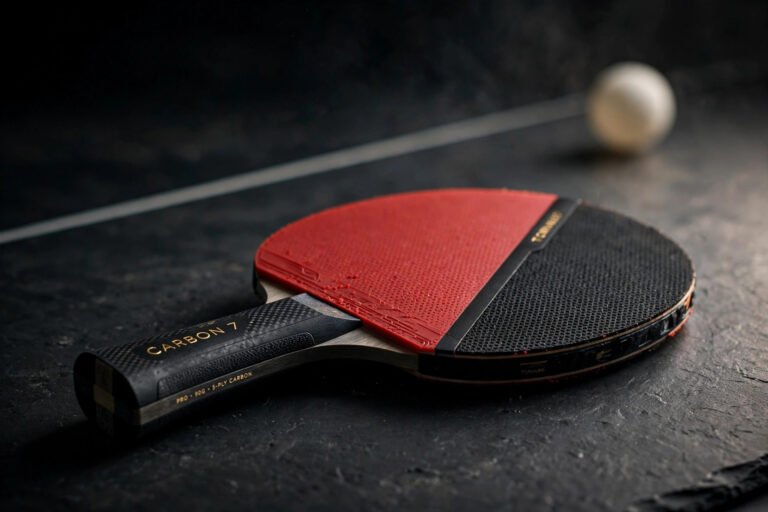
Two stances work; pick the forehand chop as your main version. Stand in the same side-on position as the pendulum serve, racket starting up near your non-racket shoulder with the face already open — tilted back so the forehand rubber looks partly up at the ceiling. The open face is set before the toss, not adjusted during the swing. (A backhand chop from the Serve 1 position works too, and the photo above shows its low contact; the mechanics below are identical, mirrored.)
Contact point and swing
The racket chops down and forward in a short, sharp motion — the path of a small axe, not a pendulum — and the wrist snaps the face under the ball at the last instant. Contact is on the back-bottom of the ball, as close to underneath as you can brush while still sending the ball forward: the racket’s edge of contact should feel like it is shaving the ball’s lower rear surface. Because so little of the swing pushes the ball forward, the first bounce belongs very close to the net on your side, and the finished serve is the classic double-bouncer — short enough to bounce twice on the receiver’s side if left alone, spinning hard enough that it may even start creeping back toward the net after landing.
The spin you produce
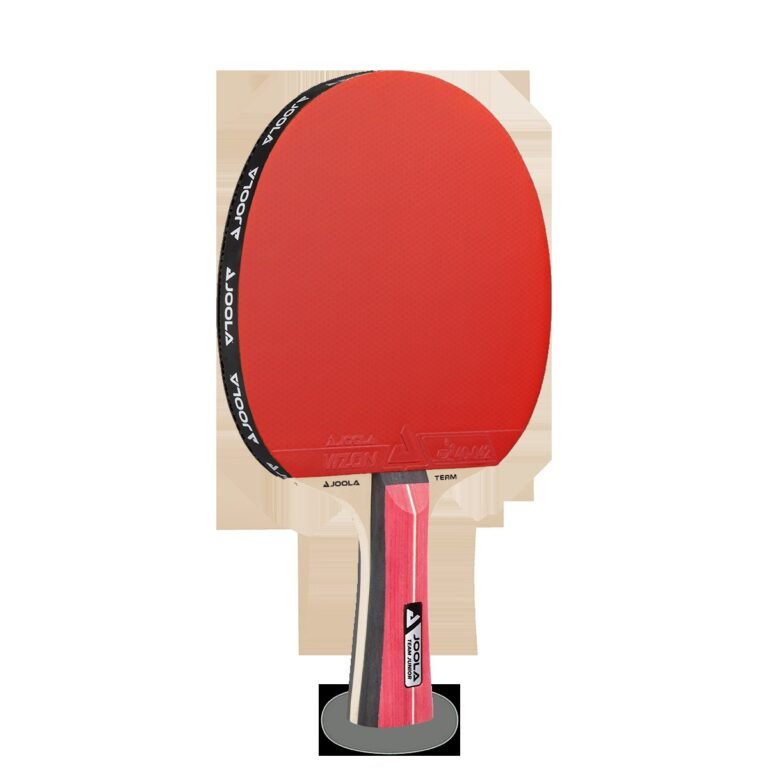
Heavy backspin — the heaviest of the five serves here. It comes from the speed and fineness of the brush, not from the size of the swing, and this is the one serve where your rubber genuinely matters: a fine, fast brush only grips the ball if the surface is grippy inverted rubber; on a worn or hard, shiny surface the same action slips off and produces half the spin. If your chop serves feel mysteriously weaker than your action looks, the rubber is the first suspect — our guide to the best table tennis rubbers explains the surfaces and sponge thicknesses that serve spin well, in the spin sections where it genuinely matters.
When to use it
Against receivers who push everything back on autopilot, at the start of games while you learn how an opponent handles spin, and whenever you need a serve that cannot be attacked — a genuinely short, low, heavy ball offers no attacking shot at all. It also sets a trap for later: a receiver leaning in, braced for heavy backspin, is perfectly placed to be beaten by Serve 4.
The beginner error that kills it
Hitting through the ball instead of brushing under it. A beginner chop that contacts the back of the ball with any solid push becomes fast and long, and its spin is spent on speed — the receiver gets a long ball to attack, the exact opposite of the serve’s purpose. The diagnostic is the bounce: if your first bounce is nearer your end line than the net, you pushed. Chop serves are brushed hard and travelled hardly at all; when in doubt, swing faster and aim the first bounce closer to the net.
Drill: the roll-back test
Solo: serve chops with no receiver and watch the second bounce. A serve with real backspin visibly checks, hesitates, and on a grippy table may roll back toward the net after landing. Count in 20s: first, how many stay short (double bounce if left); then, how many show that check-and-creep. The second number is your spin gauge, and watching it climb week to week is the most honest progress chart in beginner serving.
With a partner: your partner attempts only push returns. Any return that nets is a point of evidence your spin is real; any that floats long tells you the brush was too thin. Swap roles every ten serves.
Serve 4: The topspin serve — the surprise change-up
Every serve so far has spun the ball backwards or sideways. The topspin serve reverses the script: the racket brushes up the back of the ball, the spin drags the ball down in flight and then kicks it forward off the bounce, arriving faster and lower than it looked. On its own it is nothing special — served repeatedly, it is just a quick ball to deal with. Its power is entirely contextual: delivered from a swing that resembles your chop serve, against a receiver braced for heavy backspin, it hurries them into a return that sails long. You are not really serving a topspin ball; you are serving the receiver’s wrong expectation.
Grip and stance
Identical to the chop serve: same side-on stance, same grip, racket starting high on the same path. The disguise is the serve, so nothing visible may change. The one hidden difference is the racket face: where the chop held the face open, the topspin closes it — face tilted forward, rubber looking partly down at the table — a change small enough to make during the toss.
Contact point and swing
The arm follows the same downward-then-forward path as the chop, but at contact the wrist turns the racket over the ball: contact is on the back of the ball, brushing upward — the rubber travels from the ball’s lower back to its upper back in one quick motion. Because topspin makes the ball dip, you can — and should — aim this serve a little firmer and longer than your chop: the classic version lands deep, close to the receiver’s end line, rushing them before they can settle. Contact a fraction higher than the chop’s, around net height, keeps the dipping flight clearing the net safely.
The spin you produce
Moderate topspin, and deliberately so: you are trading spin volume for speed and surprise. Expect the ball to hold a flatter, faster arc, bounce, and then jump forward and stay low — the bounce behaviour, more than the flight, is what catches a backspin-expecting receiver.
When to use it
Sparingly: a rough guide is once or twice in every handful of serves, after at least a couple of chop or pendulum serves have taught the receiver what to expect. Its favourite moment is mid-game, when a pattern is established and a rushed long return wins you the point or hands you a loose ball to attack.
The beginner error that kills it
Telegraphing it. Beginners serve topspin from a different stance, with a bigger wind-up and a visibly faster arm, then wonder why nobody is fooled. The change-up only works inside the disguise: same stance, same toss, same arm speed, and the difference hidden in the last movement of the wrist. If your practice partner can call “topspin!” before you make contact, your disguise — not your brush — is what needs drilling.
Drill: same motion, two balls
With a partner: serve in pairs from an identical setup — one chop, one topspin, in random order — while your partner must call the spin out loud as the ball crosses the net, before returning it. Score your disguise, not their returns: the session is working when the calls come late or wrong.
Solo: place two targets — a paper sheet short by the net, a second deep at the far end line. Alternate chop to the short sheet and topspin to the deep one without changing your preparation. Ten pairs, counting how many topspins land deep without your stance or toss visibly changing (film yourself on a phone if you can; the camera catches telegraphs you cannot feel).
Serve 5: The sidespin variation — the curve ball
The last of the five is less a brand-new serve than a deliberate exaggeration of something Serve 2 already does. Take the pendulum or the backhand motion and move the contact around to the side of the ball: the brush now points the spin axis sideways, the ball curves visibly in the air like a miniature football free kick, and after the bounce it kicks off to one side instead of travelling straight. Receivers who judge the ball by its flight line reach for where it was going, not where it goes — at beginner level, that gap is worth points and, just as valuably, it makes every straight serve you own look straighter and harder to read by contrast.
Grip and stance
Your pendulum stance works unchanged. Most beginners find the sidespin easiest first from the forehand pendulum action, because the swing already travels across the ball; simply finishing the contact further around the ball’s side converts backspin-sidespin into something close to pure sidespin. A backhand version — brushing across the front-side of the ball from the Serve 1 position — is equally legal and worth adding once the forehand version curves reliably.
Contact point and swing
Contact is on the side of the ball — for a right-hander’s forehand pendulum, the left side — with the racket travelling across the ball’s face as much as forward. Aim is the hidden skill: because the ball curves in flight and kicks on the bounce, you aim at a point noticeably inside your intended landing spot and let the spin do the steering. Start your target line roughly a ball’s width or two toward the side the curve bends away from, then calibrate from where balls actually land. Contact at the usual falling-ball, net-height point; higher contact produces curve without control.
The spin you produce
Sidespin, nearly pure in this version: the ball bends in the air, and on bouncing it deviates sideways — to the receiver’s discomfort and, if they contact it carelessly, sideways off their racket as well. Any backspin or topspin blended in depends on whether your brush also travels under or over the ball; pure side contact is the beginner target because its behaviour is the easiest to predict.
When to use it
As the third look in your service rotation, once push/pendulum and chop have established straighter expectations — and specifically against receivers who camp in one spot, because the kick on the bounce moves the ball away from (or into) their body in a way a straight serve cannot. It is also the natural wide serve: curved out toward the receiver’s wide forehand corner, it drags them off the table.
The beginner error that kills it
All curve, no plan. The beginner sidespin serve bends beautifully — into the side of the table, or wide past the corner for a fault. Curve is a means of moving the landing spot, not decoration. The fix is boring and total: pick a landing target first (a paper sheet works again), start the ball’s line inside it by a fixed offset, and only adjust the offset, never the swing, until ten serves land within a racket’s length of the sheet.
Drill: bend it around the bottle
Solo: stand a water bottle upright on your own side of the table, just past the net on the line your serve would naturally travel. Serve sidespins that must pass around the bottle — curving in the air — and still land on the table. Then move the bottle to the receiver’s side and curve serves around it there. This is the pendulum drill from Serve 2 with the difficulty honestly raised, and landing five in a row around the far bottle means your curve is match-ready.
With a partner: your partner stands still and simply catches (or blocks) each serve, calling where it would have kicked. Their calls calibrate your aim offset faster than any amount of solo guessing.
Using your five serves in a match
Five serves are a toolbox, not a list to perform in order. In a match you serve two balls at a time before the serve passes to your opponent, and the pair is a tiny tactical unit: the first serve gathers information or sets a trap, the second acts on it. A reliable beginner pattern is short and spinny first — chop or push, forcing a careful return you can read — then a decision: repeat what worked, or change one variable only. Change placement (short to their backhand, then short to their forehand) more often than you change spin; placement changes cost you no disguise, and beginners defend one side measurably worse than the other.
Placement deserves its own sentence, because at beginner level where a serve lands beats how much it spins. The three addresses that matter: short to the forehand, which drags a right-handed receiver in over the table where their backswing has no room; short to the backhand, the default safe address; and long and fast to the elbow — the crossover point where a receiver must decide forehand or backhand — which is where your topspin change-up does its best work. Vary the address before you vary the spin, and keep your most reliable serve — for most beginners, Serve 1 or Serve 3 — as the one you trust when a game reaches its tense final points.
Finally, the half-second after contact: recover to your ready position immediately, racket up, weight balanced, expecting the return you planned for. The serve is the first shot of a two-shot plan — serve plus your third ball — and beginners lose points they had already won by admiring a good serve while the return goes past them. Practise recovering as part of the serve itself, in every drill above, and it will never need thinking about in a match.
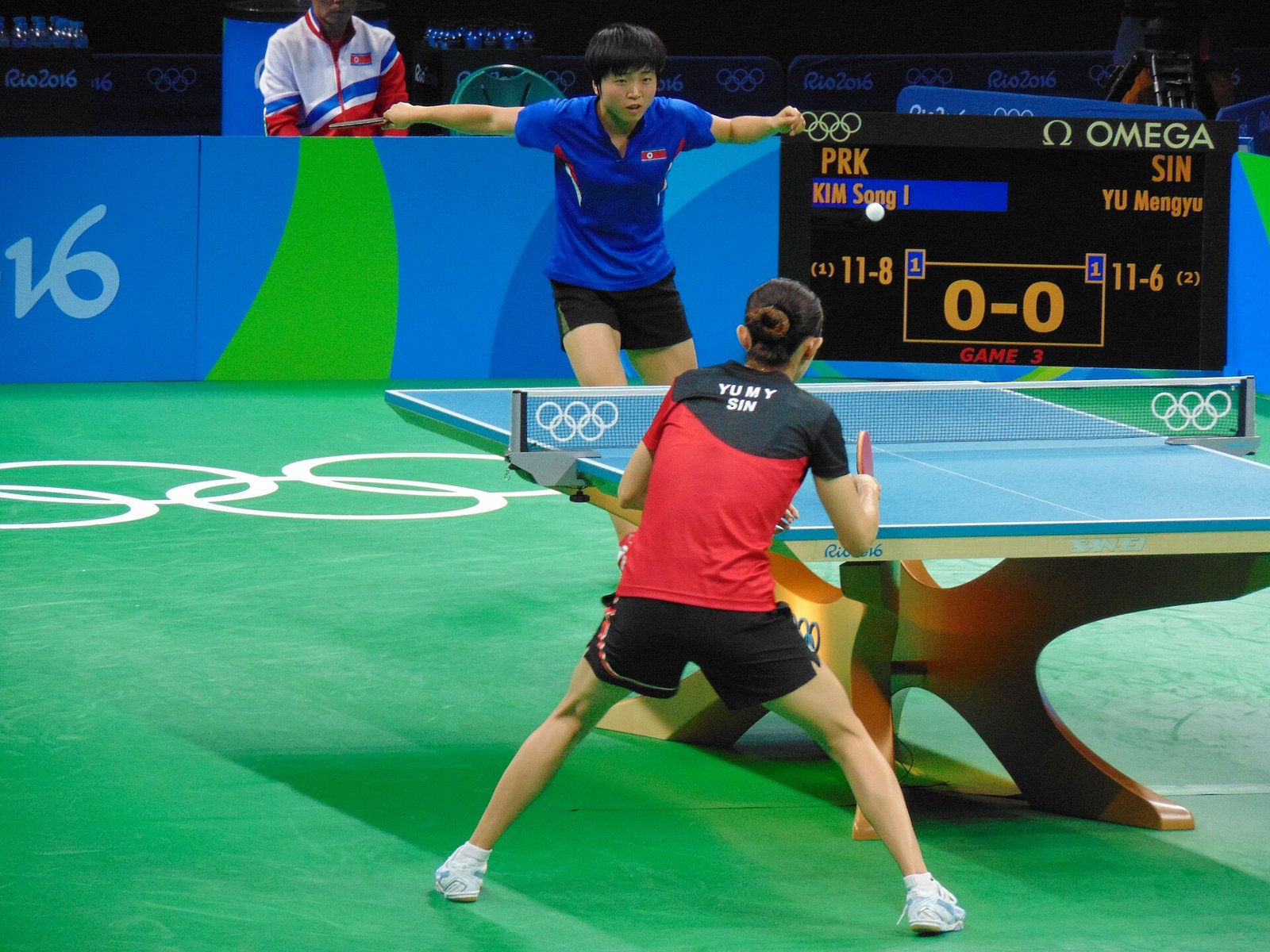
A simple practice plan
Serving improves fastest in short, frequent, solo-capable sessions, because almost everything here can be drilled with a bucket of balls and no partner. Take one serve at a time, in the guide’s order, and do not move on until the current serve passes its test. A workable weekly rhythm:
| Stage | Serves | Session shape | Move on when… |
|---|---|---|---|
| 1 | Toss + Serve 1 (backhand push) | 10 min toss-only, then 3 × 20 push serves at the paper target | Most serves bounce twice on the far side if left alone |
| 2 | Serve 2 (pendulum) | Shadow swings, then 3 × 20 serves at the curve drill | The ball visibly curves on most serves, with your toss unchanged |
| 3 | Serve 3 (backspin chop) | 3 × 20 chop serves, scoring the roll-back test | Short serves regularly check or creep back after the second bounce |
| 4 | Serves 4 & 5 (topspin, sidespin) | Paired-motion drills, then bottle drill | A partner cannot call your topspin early, and sidespins land near the target |
| 5 | All five, match-style | Serve in pairs with a partner returning everything | You can pick any serve, in pairs, and execute it under mild pressure |
Two habits make any of these sessions worth more. Keep score of something specific in every drill — a count out of 20 beats “that felt better” — and end each session with ten serves of the oldest serve you own, so the toolbox stays stocked rather than being replaced serve by serve. If you are still choosing the surface your serves will be played on, note that every drill above only needs a table that returns a true bounce; the comparison of home and club options is in our guide to the best table tennis tables.
The verdict
If you learn only two serves from this guide, make them Serve 1 and Serve 3: the backhand push for safety, the chop for menace — together they cover most beginner rallies before they start. Then add the pendulum for class, the topspin for treachery and the sidespin for variety.
- Best first serve: backhand push — reliable from your very first session.
- Best point-winner: backspin chop — the first serve receivers genuinely fear.
- Best long-term investment: forehand pendulum — one action, a career of variations.
- Best surprise: topspin change-up — useless alone, ruthless after two chops.
Table tennis serves — FAQs
What is the easiest table tennis serve for a beginner to learn first?
The backhand push serve. It is struck from a compact position in front of your body with a short swing, so your still-developing toss has little machinery to disrupt, and it produces a short, low serve with light backspin that starts rallies safely. It also teaches the two foundations every other serve uses — the consistent toss and the brushing contact — which is why it is Serve 1 in this guide’s learning order.
How do you serve legally in table tennis?
Rest the ball on the open palm of your stationary free hand, project it near vertically upwards without imparting spin so that it rises at least 16 cm, and strike it as it falls so it bounces first on your side of the table and then on your opponent’s. Throughout the serve the ball stays above the level of the playing surface and behind your end line, it must not be hidden from the receiver, and your free arm moves out of the way at once (ITTF Law 2.6). Edge cases and rulings are covered in full in the table tennis rules guide on this site.
How do you put backspin on a serve?
Open the racket face and brush quickly under the back-bottom of the ball as it falls, chopping down and slightly forward so the rubber grazes the ball rather than hitting through it. The finer and faster the brush, the heavier the spin; a solid push through the back of the ball simply makes the serve fast and long. Contact the ball low, around net height, and aim the first bounce close to the net on your side, and the serve stays short enough to bounce twice on the receiver’s side if it is left alone.
What is a pendulum serve in table tennis?
A forehand serve in which the forearm swings down and across the front of the body like a pendulum, hinging at the elbow, with a small wrist flick finishing the action. Where the racket brushes the ball decides the spin: across the left underside of the ball (for a right-handed server) gives sidespin mixed with backspin, which is the beginner version taught in this guide. Other contact points on the same swing shape produce the variations that advanced players build their whole service game on.
Why does my serve keep hitting the net or flying off the end of the table?
Almost always one of two contact faults. Net errors come from contacting the ball too low, or brushing so finely that no forward travel remains: raise the contact point slightly and put a little more of the swing behind the ball. Balls flying long come from the opposite fault — a solid contact through the back of the ball and a first bounce too close to your own end line. Aim the first bounce nearer the net on your side, and brush more while hitting less.
Do I need a special bat to serve with spin?
You need a grippy surface, not an expensive one. Spin comes from the rubber brushing the ball, and a worn, smooth or very hard surface lets the ball slip instead of gripping, halving the spin from an identical action. Any bat with decent inverted rubber in reasonable condition can produce every serve in this guide; the fine, fast brushing technique does the rest. The rubber types and sponge thicknesses that serve spin best are compared in the table tennis rubbers guide on this site.
How often should a beginner practise serving?
Little and often beats rare and long: short sessions built around one serve at a time, scored out of 20 against one clear measure — double bounces for the short serves, visible curve for the pendulum and sidespin, roll-backs for the chop. Most serving drills need no partner, just a bucket of balls and a target sheet, so ten focused minutes before or after your regular play, several times a week, will move you through the five stages in this guide faster than an occasional serving marathon.
About this guide: The technique taught here follows standard coaching practice for beginner serving: one legal frame (ITTF Laws, Law 2.6, summarised briefly because the full rulings live in our table tennis rules guide) and, per serve, the grip, contact point and brushing action that produces its spin. Drill counts and session lengths are practice prescriptions, not performance statistics, and no serve here is described as tested or measured. This page links only to guides on Alishuttler.com — any affiliate relationships are disclosed on the pages concerned.