Your first bat teaches your hand what table tennis is supposed to feel like — which is why the wrong one teaches you the wrong game. This guide explains what a starter bat actually is, decodes the speed, spin and control ratings every brand prints, and ranks the seven pre-assembled bats worth starting on.
TL;DR — The short answer
Best overall: Palio Expert 3.0. Proper ITTF-approved CJ8000 rubbers on a control-first all-wood blade, rated 6/10 speed and 10/10 control by its maker — slow enough to learn on, spinny enough to learn with. Want the big-brand route? The Butterfly 401 pairs Yuki rubbers with the most control-heavy published ratings in its class. Want featherweight? The STIGA Titan builds its blade around balsa. And when a starter bat starts holding you back — it will, and that is a good sign — the last section maps the upgrade path into your first custom setup. Everything else — premade vs custom, sponge thickness, why ratings cannot be compared across brands — is explained below.
Palio Expert 3.0
CJ8000 rubbers, 10/10 maker-rated control. The default first bat.
Butterfly 401
Yuki 2.1mm rubbers, control-led ratings of 80/80/85.
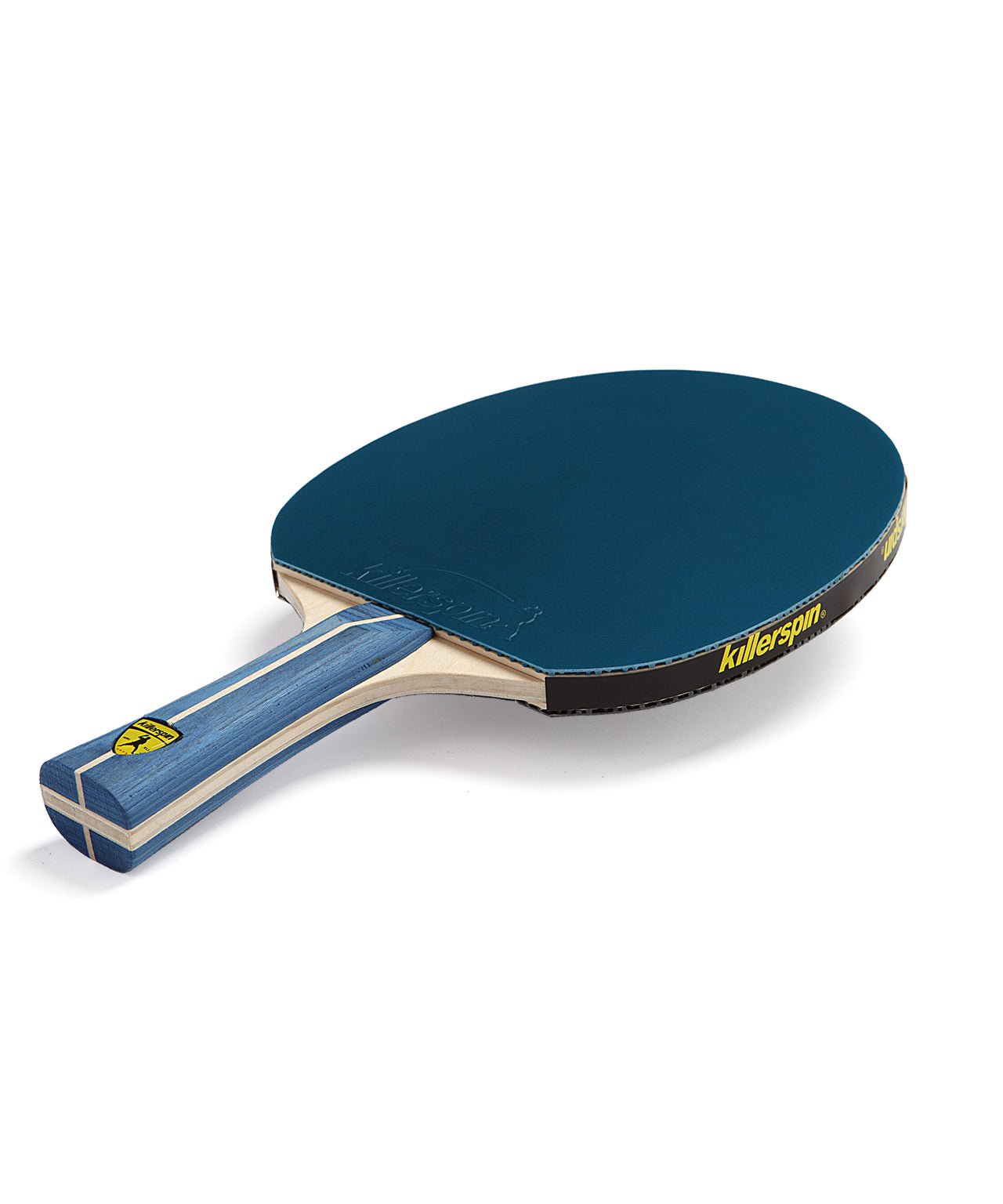
Killerspin JET200
Maker-rated 8.5/10 control, with the Memory Book case included.
STIGA Titan
Balsa-core 5-ply listed at 0.35 lb. Easy on younger arms.
Cornilleau Perform 800
5-star ITTF rubber and an 8/10 spin rating from the maker.
Palio Legend 3.0
Hadou rubbers at 10/10 maker-rated speed. The second Palio.
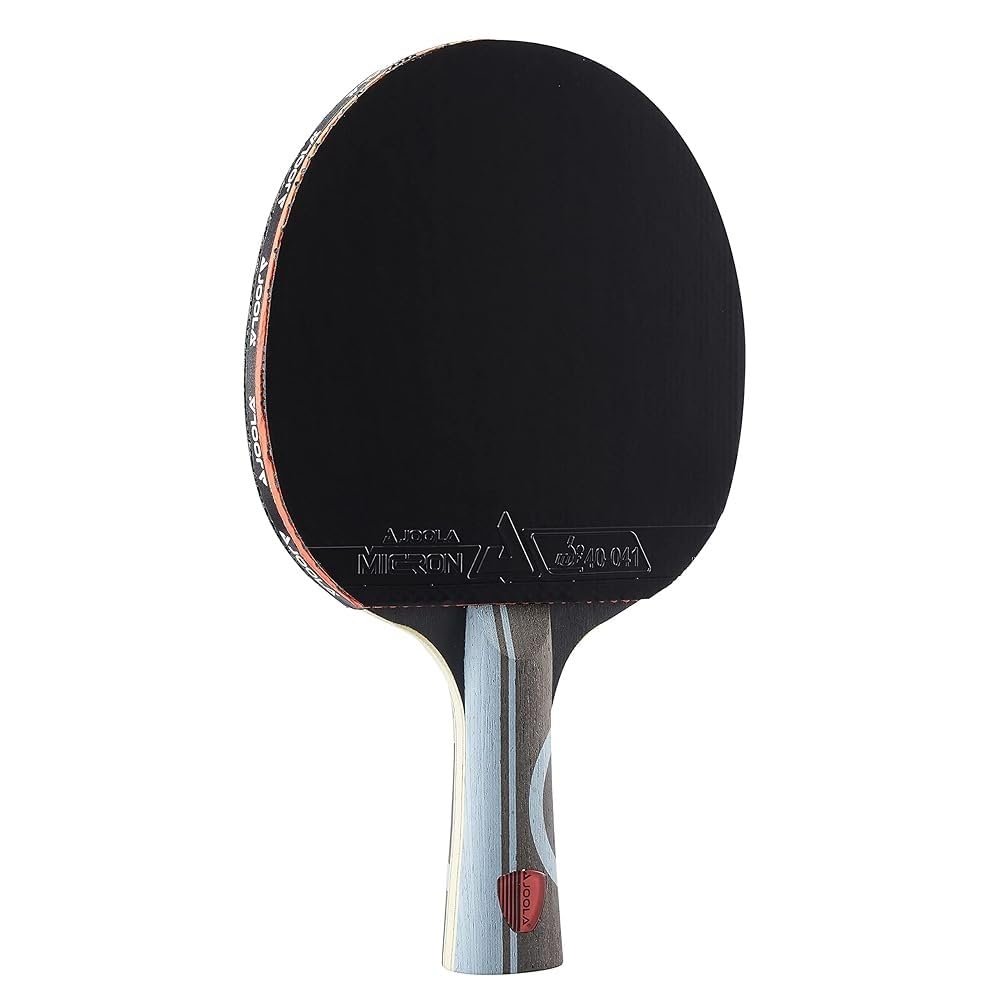
JOOLA Infinity Edge
Carbon-composite blade, Driver 42 rubbers. The ladder’s top rung.
On this page
- Why your first bat matters more than your second
- Pre-assembled vs custom-assembled: the two routes
- Anatomy of a bat: blade, sponge, rubber, handle
- Speed, spin and control ratings, decoded honestly
- The spin–control trade-off (and why speed is last)
- 1. Palio Expert 3.0 — Best Overall
- 2. Butterfly 401 — Best Big-Brand Starter
- 3. Killerspin JET200 — Best for Control-First Learning
- 4. STIGA Titan — Best Lightweight
- 5. Cornilleau Perform 800 — Best for Developing Spin
- 6. Palio Legend 3.0 — Best Step-Up
- 7. JOOLA Infinity Edge — Fastest Premade
- Comparison table
- When a starter bat holds you back — and the upgrade path
- FAQs
Why your first bat matters more than your second
Every beginner buys one of two wrong bats. The first is the toy: a supermarket paddle with a millimetre of sponge, a rubber surface closer to sandpaper than to grip, and a blade that returns almost no information about where the ball actually struck. The second is the rocket: a stiff carbon blade wearing thick, fast rubbers, bought because the listing promised professional speed. Both teach bad habits. The toy cannot produce real spin, so you never learn to read it or create it. The rocket launches the ball long on half-swings, so you learn to poke and pat instead of stroking — the exact opposite of the full, relaxed swings the sport is built on.
A proper starter bat sits between those extremes and is defined by three things. Real inverted rubbers — smooth, grippy, ITTF-approved sheets over a genuine sponge — so spin exists in your game from the first week. An all-round all-wood blade with a medium-soft feel, so contact lasts long enough for you to feel it and correct it. And control-led ratings: whatever scale the brand uses, the control number should sit at or near the top of it, and the speed number should not. Add a decent surface to play on — our best table tennis tables guide covers that half of the equation — and a box of balls you are not afraid to lose (the table tennis balls guide explains the training-tier maths), and you have a learning setup instead of a lottery.
One more reassurance before the shopping starts: a starter bat is not a life sentence or a sunk cost. Every bat in this guide is a complete, competition-legal racket you can play league matches with, and the upgrade section at the end explains exactly when and how to move on. Buy the bat that fits the player you are this season, not the player a listing flatters you into imagining.
Pre-assembled vs custom-assembled: the two routes to a real bat
There are two ways to own a proper table tennis bat, and beginners constantly get talked across the border between them too early.
Pre-assembled (premade) means the manufacturer chose the blade and both rubbers, glued them at the factory, and sold the finished racket as one product. Every bat in this guide is premade. The advantages for a first buyer are real: the combination is balanced by someone who knows what the components do together, the total cost is a single known figure, and you can play within minutes of opening the box. The honest limitations are just as real: you cannot choose your forehand and backhand rubbers separately, and on most factory bats the rubbers are glued down permanently — when they wear out, the bat is done (two of our seven picks are exceptions, and their cards say so).
Custom-assembled means you buy a bare blade and two rubber sheets separately, then glue them yourself or have a retailer assemble them. This is how nearly all experienced players buy, because it lets you match each side of the bat to your game and replace rubbers as they age. The catch for a beginner is that the choice space is enormous and mostly invisible: hundreds of blades across speed classes, thousands of rubbers, and no way to judge any of them before your strokes exist. Choosing custom parts before you can loop is like tailoring a suit for someone who is still growing — the fit will be wrong by the time it matters.
One middle path deserves a mention because two of our picks offer it: a premade bat whose rubbers are replaceable. Expert Table Tennis assembles the Palio bats with rubbers that can be peeled and swapped when they wear, which quietly turns a starter bat into a platform — new rubbers on a familiar blade is the cheapest meaningful upgrade in the sport. If you already suspect you will play for years, that detail is worth weighting heavily.
Anatomy of a bat: blade, sponge, rubber, handle
A table tennis bat is a three-layer sandwich wearing a handle, and each layer has one job. Learn the layers once and every specification in the cards below reads itself.
The blade — the engine and the ears
The blade is the wooden core, built from glued veneers called plies. Five-ply all-wood is the classic beginner construction — five of our seven picks use it — because wood flexes slightly on contact, which lengthens the ball’s stay on the bat (dwell time) and sends clear feedback up the handle: you feel whether you struck the centre or the edge, early or late. Seven-ply blades and carbon-composite blades are stiffer and faster, with a bigger sweet spot but a shorter, less informative contact; they reward finished technique and punish developing technique, which is why only the final pick in this guide goes there. Blade speed classes run DEF, ALL−, ALL, ALL+, OFF−, OFF, OFF+ — a beginner belongs in the ALL band, whatever the marketing says.
The sponge — the throttle
Between blade and rubber sits a layer of sponge, and its thickness is the simplest honest spec on any listing. Thin sponge (around 1.5mm) absorbs pace: more control, less catapult, a ceiling on spin. Thick sponge (2.1–2.2mm) stores and returns energy: more speed and more spin potential, and less forgiveness when your timing is off, because the ball leaves before you have finished shaping the shot. The beginner sweet spot across this guide is roughly 1.8–2.1mm — thick enough that spin technique works, thin enough that the bat still helps you. Sponge hardness matters too: softer sponges let the ball sink in and suit touch play; harder sponges (common under Chinese tacky rubbers) demand a fuller stroke and repay it with spin.
The rubber — where spin lives
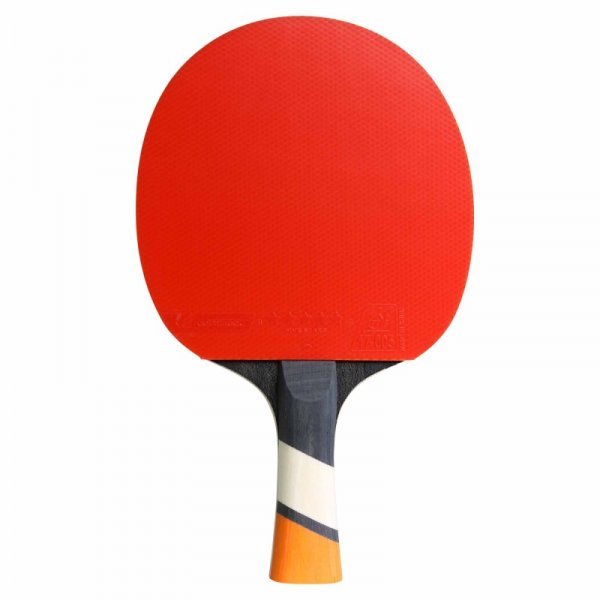
All seven picks wear inverted (smooth, pips-in) rubbers on both sides: the pimples point inward against the sponge, presenting a flat, grippy surface that grabs the ball and converts brushing contact into spin. That grip comes in two flavours. Tacky rubbers (the Palio CJ8000 and Hadou sheets, Butterfly’s Yuki) have a slightly sticky surface that holds the ball a fraction longer — spin-friendly at low and medium power, and they need regular cleaning because the tack collects dust. Grippy European-style rubbers generate spin mechanically through surface friction and sponge engagement instead, and shrug off dust better. Neither is superior; they are two roads to the same rotation, and beginners succeed on both. What matters at this level is that the rubber is a genuine ITTF-approved sheet — every pick here is — rather than the unbranded skin on a toy paddle, which cannot grip a ball enough to teach a single spin stroke.
The handle — the part you actually hold
Shakehand handles come mainly in flared (concave — widening at the base, the most popular shape and the one most of these picks use), straight, and anatomic profiles. Flared suits a relaxed grip that can shift between forehand and backhand; it is the safe default and the right first choice. Penhold bats exist across the same ranges, but shakehand is what coaches teach first in most clubs and what every pick in this guide ships as, so it is what this guide assumes.
Speed, spin and control ratings, decoded honestly
Every bat listing prints three numbers. Almost none of them mean what a first-time buyer thinks they mean, so here is the honest decoder before the cards begin.
What the numbers are actually proxying is physical. Speed tracks blade stiffness and sponge thickness: how much pace the bat adds to your swing. Spin tracks the rubber’s grip and the sponge’s ability to let the ball bite and dwell. Control is the residual category — makers score it high when the combination is slow, soft and predictable, which is a roundabout way of measuring how much the bat forgives off-centre contact and rushed timing. Notice the seesaw built into the physics: the same stiffness and thick sponge that raise the speed number shorten dwell and lower forgiveness. That is why the beginner pattern to look for, on any scale, is control at or near the brand’s ceiling, spin healthy, speed modest — and why this guide treats a high speed rating on a “beginner” bat as a warning label, not a feature.
Read the cards that follow with that lens. Each card quotes the maker’s published ratings in the maker’s own scale and says whose scale it is. Where a brand’s numbers are famously generous, the card says that too.
The spin–control trade-off (and why speed is last)
Beginners shop for speed because speed is legible — everyone can see a fast ball. But watch what learning actually consists of in your first year: keeping the ball on the table while your strokes form, then learning to brush it so it dips and kicks. Both projects run on dwell time and predictability, not pace. A slower, grippier bat keeps your developing loops on the table, and every loop that lands is a rep your nervous system keeps. A fast bat turns the same stroke into a miss, and a miss teaches nothing except caution — you start shortening your swing to keep the ball down, and the shortened swing becomes the habit.
Spin sits in the middle of the trade-off and it is where a starter bat earns its keep. Enough grip to make serve and loop spin real — the serves in our table tennis serves for beginners guide only behave as described when the rubber can actually hold the ball — but not so much catapult that incoming spin throws your blocks off the table. The seven bats below all live in that middle band by design of their makers, except the last two, which are labelled step-ups precisely because they start trading forgiveness for pace.
So the buying rule for a first bat is one sentence: control first, spin second, speed last — and reverse the order only when your results, not your impatience, say it is time. The cards are ranked in exactly that spirit.
Palio Expert 3.0
The control-first starter the rest of the list is measured against
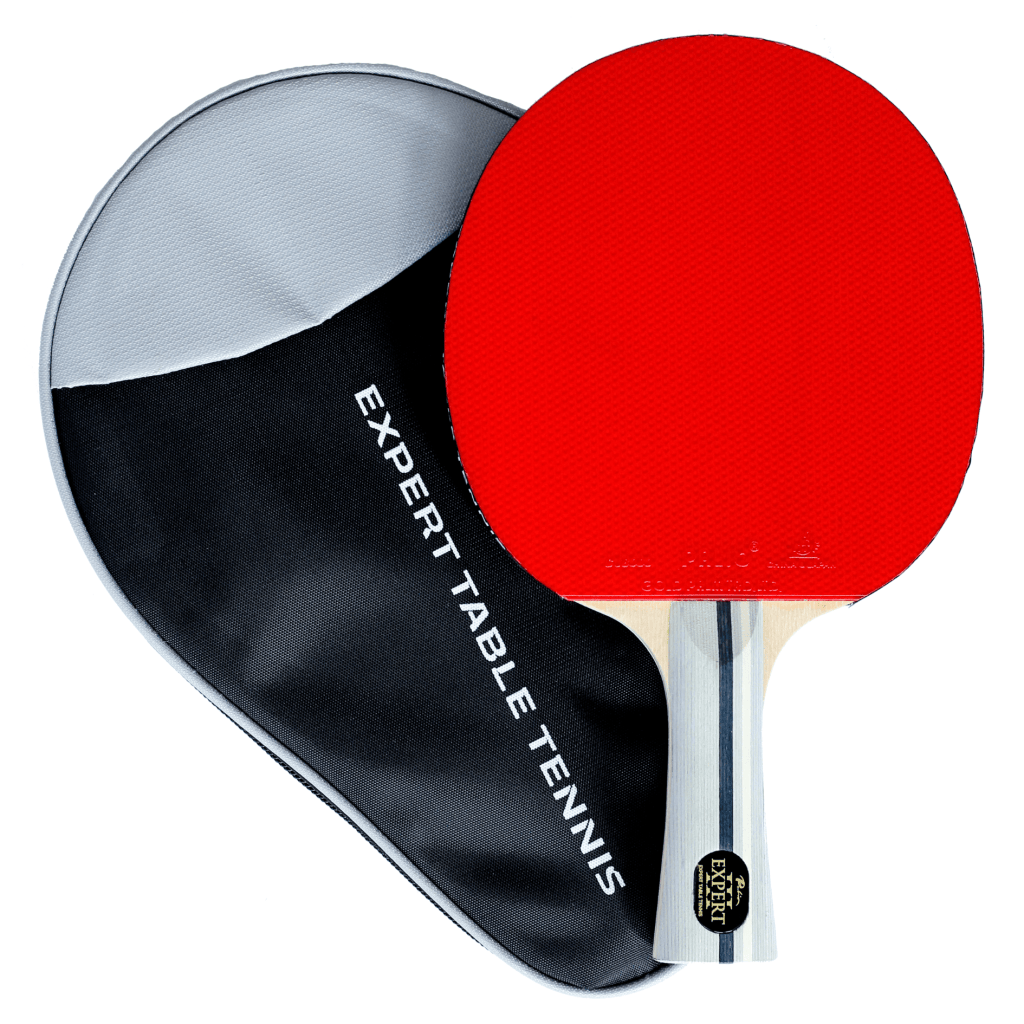
Expert Table Tennis builds the Expert 3.0 around a simple beginner brief — genuine ITTF-approved rubbers, an all-wood blade tuned for feeling, and ratings that put control at the maximum and speed near the floor — and it has become the default recommendation for a first real bat.
The specification that decides this card sits in the ratings line. Expert Table Tennis rates its own range out of 10, and within that range the Expert 3.0 is the control extreme: speed 6, spin 9, control 10. Translated out of marketing, that is a blade and rubber pairing chosen so the ball stays on the bat long enough for a beginner’s stroke to shape it. The CJ8000 rubbers are the enablers — a soft, tacky Chinese inverted sheet, ITTF-approved for competition, that grips hard for its class. Your first topspin strokes will actually bite and dip, and your first spin serves will curve, which is the feedback loop that makes a beginner practise.
The construction supports the same brief. The all-wood Expert blade gives the flex and vibration feedback that teaches contact quality, the flared handle suits the relaxed shakehand grip coaches teach, and the wider edge tape protects the rubber edges that beginners inevitably catch on the table. It ships with a proper bat case — not a trivial extra, because the tacky CJ8000 surface collects dust, and a cased bat keeps its grip for the next session.
The detail that separates this bat from every other pick except its sibling is at the end of its life, not the start: the rubbers are replaceable. When the CJ8000s eventually tire, you can peel them and glue fresh sheets onto a blade your hand already knows — the cheapest genuine upgrade in the sport, and the reason this bat can serve as a platform rather than a disposable. Its limits are the mirror of its virtues: rated 6/10 for speed because it is genuinely not fast, so a player who develops an attacking game will outgrow its pace (that is pick six’s job). Buy it as the bat you learn on, and it is very hard to buy wrong.
Pros
- Maximum control rating in its maker’s range — built for learning
- ITTF-approved CJ8000 rubbers with real, tacky grip for spin
- Rubbers are replaceable — the bat upgrades instead of expiring
- Case and wide edge tape included
Cons
- Deliberately slow — attacking players will outgrow its pace
- Tacky rubbers need regular cleaning to keep their grip
As an Amazon Associate we earn from qualifying purchases.
Butterfly 401
The famous-name route into a proper racket
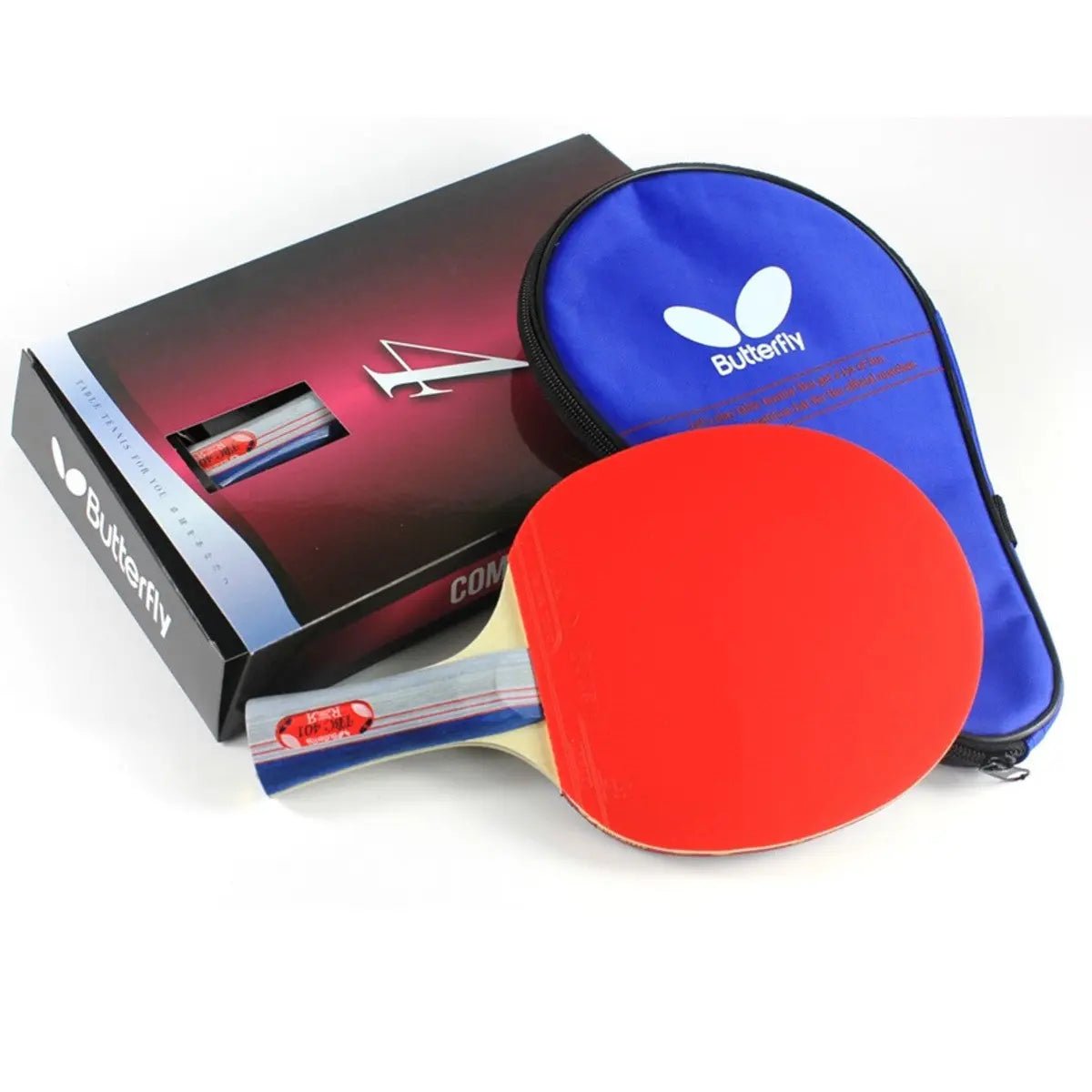
Butterfly’s entry shakehand racket pairs a 5-ply wood blade with its Yuki inverted rubber at a full 2.1mm on both sides — and Butterfly’s own published ratings put control (85) ahead of both speed and spin (80), which is exactly the order a beginner wants.
Plenty of beginners want the badge they see on tournament tables, and the honest question is whether the entry racket behind the badge is any good. In the 401’s case the published numbers argue yes. Butterfly rates its rackets out of 100, and the 401’s spread — 80 speed, 80 spin, 85 control — is the profile of an all-round learning racket, not a detuned pro bat. The Yuki rubber helps: a tacky-surfaced inverted sheet on a slightly firm sponge, at 2.1mm, which is at the generous end of starter sponge thickness. There is enough sponge under the ball for brushing strokes to engage properly, so spin technique learned on this racket transfers directly to better equipment later.
The 5-ply wood blade keeps the feedback honest, the listed weight of around 166 grams sits comfortably mid-range for an adult starter bat, and the set presentation is the neatest here — gift box and a racket case included. Butterfly also positions the 401 explicitly for beginning-level players, and the rubber is ITTF-approved, so the racket is legal for sanctioned play from day one.
One structural caveat, stated by Butterfly’s own dealer network: like most recreational rackets, the 401 is assembled with a glue intended to keep the rubber attached for the life of the racket. Treat it as a complete, finished product — when the Yuki sheets wear out, the upgrade is a new bat (or the custom route), not a rubber swap. If you want the famous name and a balanced, control-led spec sheet, that is a fair trade; if replaceability matters more, pick one keeps its crown.
Pros
- Control-led published ratings (85) from the maker itself
- Full 2.1mm sponge — spin strokes engage properly
- ITTF-approved rubber; case and gift box included
- Mid-weight at ~166g — easy to manoeuvre
Cons
- Rubber is factory-glued permanently — no rubber swaps
- Tacky Yuki surface needs cleaning to stay grippy
As an Amazon Associate we earn from qualifying purchases.
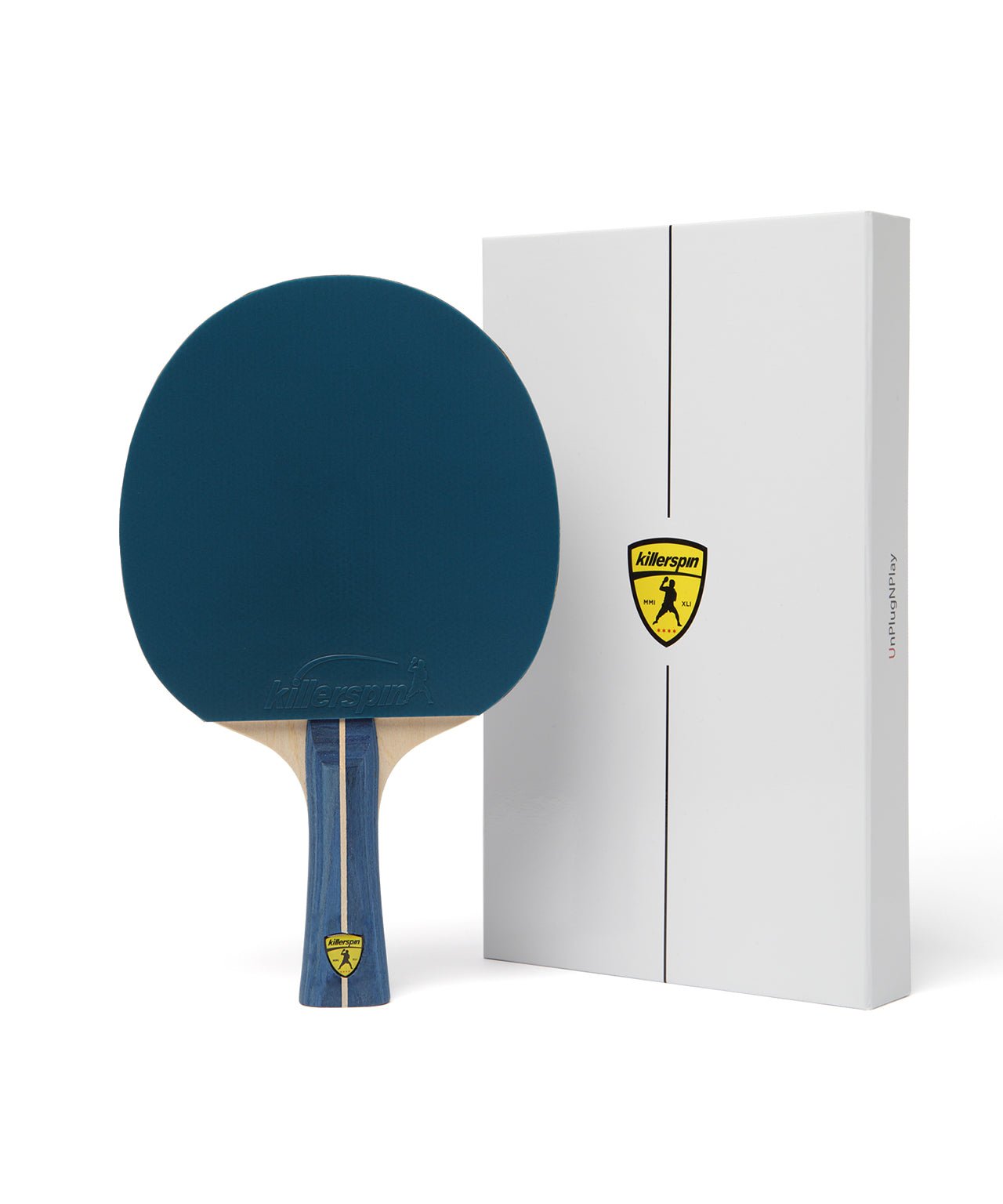
Killerspin JET200
The American recreational favourite, rated for control above all
Killerspin describes the JET200 in its own words as an entry-level paddle for beginners improving their strokes — and rates it 8.5/10 for control against 6/10 for speed, the most control-tilted spread of any bat in this guide.
Start with the maker’s intent, because Killerspin states it unusually plainly: the JET200 is an entry-level paddle for beginners looking to improve their strokes and ball control. The numbers back the sentence. On Killerspin’s own scale the control rating of 8.5/10 towers over the speed rating of 6/10, with spin between them at 7/10 — moderate grip, modest pace, maximum placement help. For the player whose first-year problem is balls flying long, that is the correct hierarchy in a single spec line.
The build is straightforward and durable: a five-layer plywood blade, Killerspin’s Jet Basic rubbers, a flexible PVC edge tape that shrugs off the table-edge knocks beginners dish out, and a flared handle on a balanced, even-weight frame. Killerspin lists the weight as a range — 0.397 to 0.419 lb, roughly 180–190 grams — which puts it at the solid end of this guide; players who like to feel the bat in the hand will approve, smaller juniors should look at pick four instead. Each JET200 ships in Killerspin’s Memory Book case, a hard book-style box with room for scores and signatures — a giftable touch that also happens to be genuinely good rubber protection.
Two honest notes. The colourways are blue/black and brown/black; under the ITTF’s current colour rules one side must be black and the other a permitted colour (blue qualifies) — so the blue version is the one to take anywhere near organised play, while the brown is a recreational look. And the Jet Basic rubber, while grippy enough to learn spin with, is a proprietary recreational sheet rather than a famous competition rubber; when it wears, this bat’s story ends and the upgrade path begins.
Pros
- Most control-tilted maker ratings in this guide (8.5 vs 6 speed)
- Durable build with PVC edge tape for table knocks
- Memory Book case included — protection and a keepsake
- Maker explicitly designs and rates it for beginners
Cons
- Heavier end of the guide at ~180–190g
- Brown colourway is recreational only under ITTF colour rules
As an Amazon Associate we earn from qualifying purchases.
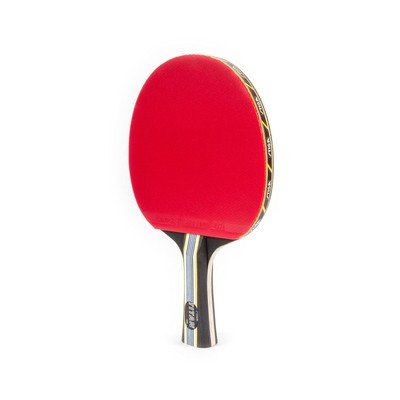
STIGA Titan
A balsa-core blade that keeps the bat — and your arm — light
STIGA builds the Titan around an ultra-light balsa centre ply and lists the finished racket at just 0.35 lb, with its Triumph ITTF-approved rubber over 2.0mm of sponge and published ratings that keep control (82) level with speed (80).
Weight is a real variable for new players and an invisible one on most listings — a heavy bat tires a junior’s wrist and slows an older player’s recovery between shots. The Titan is STIGA’s answer: an extra-light 5-ply blade with an ultra-lightweight balsa centre ply (STIGA’s Balsa Tech), finished at a listed 0.35 lb, the lightest racket in this guide by a visible margin. Balsa also changes the feel — livelier and crisper off the blade face, with STIGA’s Crystal Technology hardening the surface for a touch more pace than the weight suggests.
The rest of the spec is properly grown-up. The Triumph inverted rubber is ITTF-approved tournament rubber over a full 2.0mm sponge, so spin strokes work as they should. STIGA’s published ratings — speed 80, spin 77, control 82 on its 100-point scale — describe an all-round racket with control holding a narrow lead, which matches the brief. The concave Italian composite handle carries STIGA’s WRB system: the handle is hollowed to shift balance towards the blade face and sharpen touch feedback, a small piece of real engineering in a starter-priced racket.
The trade-offs are the balsa’s own. That crisp, light feel gives a little less of the soft, woody dwell that pure beginners use to sense contact — the Titan feels livelier than the Palio or the JET200 from the first rally — and the composite handle divides opinion against plain wood. Neither matters if the alternative is a bat too heavy to enjoy. For younger players, smaller hands, or anyone who simply wants the lightest legitimate starter here, this is the pick.
Pros
- Lightest bat in the guide at a listed 0.35 lb
- ITTF-approved Triumph rubber on a full 2.0mm sponge
- Control (82) edges speed (80) in STIGA’s own ratings
- WRB handle system adds genuine touch feedback
Cons
- Balsa feel is crisp rather than soft — less dwell for pure beginners
- Composite handle feel is a matter of taste
As an Amazon Associate we earn from qualifying purchases.
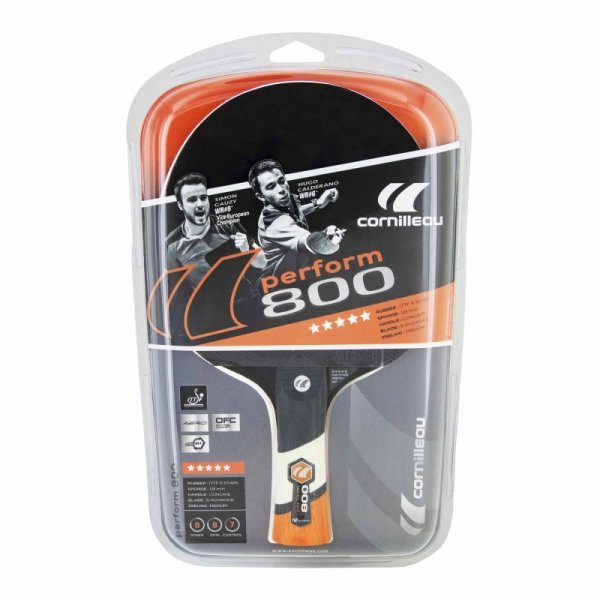
Cornilleau Perform 800
The European school bat — top of the Perform ladder
Cornilleau’s Perform 800 tops its Perform range with a 5-star ITTF-approved covering, a Dynacell sponge for energy return, and maker ratings of 8/10 for both speed and spin — the spin-development pick for a beginner who is already taking the game seriously.
An honesty note before the praise: Cornilleau positions the Perform 800 for improving and offensive-minded players rather than absolute first-timers, and its ratings agree — this is the fastest profile among the five true starter bats here. It earns its place for a specific beginner: the one already having lessons, joining a club, or returning to the sport after years away, who wants a bat they will not need to replace the moment their loops come together. If that is you, the spec sheet is the strongest of the European school bats — a 5-ply blade with Cornilleau’s Opti Feel Concept layup for stability, an Aero-profiled concave handle, and a covering the maker classes as its 5-star ITTF rubber.
The sponge deserves a precise word. Cornilleau’s own store specifies 1.8mm for the Perform 800 (some UK retailers print 2.0mm), and that slightly thinner sponge over the Dynacell foam is a sensible learning compromise: Dynacell is Cornilleau’s energy-return sponge material, so the bat still drives the ball with intent, while the thinner layer keeps a margin of control that a full 2.0mm-plus setup would spend. The published balance — spin 8, speed 8, control 7 — describes a bat that wants you brushing the ball and playing positively, and rewards exactly that.
At a listed 192 grams it is also the heaviest bat in this guide, which cuts both ways: stability and plough-through on contact, more load on a young wrist. Adults with coaching in their plans will not notice; small juniors should pick from the top of this list instead. Within its intended brief — a serious starter for a committed improver — nothing else here is quite as complete.
Pros
- Highest spin rating (8/10) among the true starter bats
- 5-star ITTF covering with Dynacell energy-return sponge
- Built for improvers — a bat you grow into, not out of, for longer
- Stable, solid feel at a listed 192g
Cons
- Fastest starter profile here — too much for a tentative first-timer
- Heaviest bat in the guide; not for small juniors
As an Amazon Associate we earn from qualifying purchases.
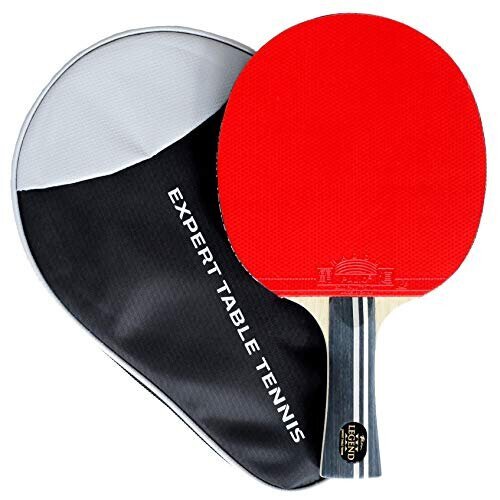
Palio Legend 3.0
Where the Palio ladder leads when the Expert feels slow
The Legend 3.0 keeps the Expert’s formula — ITTF-approved rubbers, replaceable sheets, case included — and turns every dial towards attack: Hadou rubbers on a harder all-wood blade, rated by its maker at 10/10 for speed and 9/10 for spin.
This card is deliberately not labelled “for beginners” without qualification, because its maker does not either: Expert Table Tennis aims the Legend 3.0 at experienced players who generate power and spin from full strokes. It is in this guide as the ladder’s next rung — the bat to buy when a season on the Expert (or any control bat) has built your strokes and the old bat’s ceiling, not your technique, is what clips your attacks. Returning players with schooldays table tennis behind them can also start here honestly.
The changes from pick one are mechanical and logical. The Hadou rubbers replace the CJ8000s: a harder-sponged Chinese sheet in the classic mould — less tacky on the surface, more demanding of a full brushing stroke, and capable of heavier spin and pace when that stroke arrives. The blade’s harder wood adds stiffness and speed, and the published ratings show the trade plainly: speed climbs to the maker’s maximum 10/10 and control gives back three points to 7/10. That is the spin–control seesaw from earlier in this guide, printed on a spec sheet.
Everything that made the Expert a platform survives: the rubbers are ITTF-approved and replaceable, the case and wide edge tape are included, and the listed weight of around 173 grams keeps it wieldy despite the pace. Think of the two Palios as a two-bat plan sold one bat at a time — start at pick one, and when the rallies tell you it is time, this is the premade step that delays the custom decision by another season or two.
Pros
- Maximum maker-rated speed (10/10) with 9/10 spin
- Hadou rubbers reward full, developed strokes
- Replaceable ITTF-approved rubbers; case included
- The natural second step on the Palio ladder
Cons
- Too fast as a genuine first bat — control drops to 7/10
- Hard sponge punishes half-swings and tentative contact
As an Amazon Associate we earn from qualifying purchases.
JOOLA Infinity Edge
A carbon premade built for trained strokes — handle with care
JOOLA assembles the Infinity Edge the way custom builders do — a 7-ply blade of hinoki, koto and ayous reinforced with two carbon layers, wearing its Driver 42 rubbers — and rates it 95 for speed. It is the fastest way to buy a premade bat, and the easiest way to buy too much bat.
Why does a beginner guide include a racket its maker describes as suited to sport-level players with trained technique? Because some readers will buy a carbon bat anyway — the listings are loud and the promise is seductive — and if a carbon premade is going to be bought, it should be an honest one from a real table tennis house, with its nature stated plainly. The Infinity Edge is that bat: the second model in JOOLA’s Infinity series, built on a 5.7mm 7-ply blade where carbon layers stiffen the wood sandwich and enlarge the sweet spot, with JOOLA’s Driver 42 pips-in rubber at 2.2mm on both faces.
The ratings require the decoder from earlier in this guide. JOOLA scores the Edge at 95 speed, 94 spin and 94 control on its own 100-point scale — numbers that sit at the top of JOOLA’s premade range and cannot be set against Butterfly’s or STIGA’s hundreds, let alone the /10 scales. What they do tell you truthfully is placement: within its own family, this is a speed-first racket with spin to match, and the carbon construction delivers exactly the short, crisp contact that makes developing strokes harder to feel and easier to rush.
So the recommendation is narrow and conditional. If you are a genuine first-season beginner, buy pick one and close this tab in your head — the Edge will still exist when your strokes are ready, likely as the premade alternative to going custom. If you are a returning player with real technique from another era, or a coached improver whose current bat is visibly the bottleneck, the Edge is a legitimate one-purchase jump to near-custom pace without choosing components. Everyone else is buying a faster way to miss.
Pros
- Custom-style construction: carbon-composite blade, named wood layup
- Driver 42 rubbers at full 2.2mm — real spin and pace
- The fastest premade here, from a genuine table tennis brand
- Large sweet spot forgives off-centre hits at speed
Cons
- Carbon pace shortens dwell — the wrong teacher for new strokes
- Maker positions it for trained players, not beginners
As an Amazon Associate we earn from qualifying purchases.
Comparison table: all seven starter bats at a glance
Every rating below is the manufacturer’s own published figure, in the manufacturer’s own scale — /10 and /100 numbers sit in the same table for layout, not because they convert. Use the table to compare construction; use each brand’s numbers only against that brand’s other bats.
| Bat | Blade | Rubber | Sponge | Speed | Spin | Control | Best for |
|---|---|---|---|---|---|---|---|
| Palio Expert 3.0 | All-wood | CJ8000 | — | 6/10 | 9/10 | 10/10 | Best overall first bat |
| Butterfly 401 | 5-ply wood | Yuki | 2.1mm | 80/100 | 80/100 | 85/100 | Big-brand starter |
| Killerspin JET200 | 5-ply plywood | Jet Basic | — | 6/10 | 7/10 | 8.5/10 | Control-first learning |
| STIGA Titan | 5-ply balsa core | Triumph | 2.0mm | 80/100 | 77/100 | 82/100 | Lightest pick |
| Cornilleau Perform 800 | 5-ply plywood | 5-star ITTF | 1.8mm | 8/10 | 8/10 | 7/10 | Developing spin |
| Palio Legend 3.0 | All-wood, hard veneers | Hadou | — | 10/10 | 9/10 | 7/10 | Step-up power |
| JOOLA Infinity Edge | 7-ply wood + carbon | Driver 42 | 2.2mm | 95/100 | 94/100 | 94/100 | Fastest premade |
Two cells carry dashes on purpose: Palio does not publish a sponge thickness for the Expert 3.0 or Legend 3.0 in its own product copy, and Killerspin does not publish one for the JET200 — so this table leaves them blank rather than borrowing numbers from third-party listings. A comparison that admits its gaps is worth more than one that fills them with guesses.
When a starter bat holds you back — and the upgrade path
A starter bat expiring is a milestone, not a failure — it means your strokes outgrew your equipment. The signs are observable, and none of them is a date on a calendar. The rubber sign: the surface has gone smooth and shiny, a fingertip slides instead of gripping, and serves that used to bend stop bending — dead rubber cannot be revived by cleaning once the topsheet itself has polished. The power sign: your loops land consistently with full strokes, yet the ball arrives without pace or dip, and stronger partners block you without effort — the blade and sponge have become the ceiling. The sponge sign: hard-hit balls “bottom out” with a woody crack as the sponge compresses fully against the blade, most obvious on the softest starter setups. The context sign: you are playing organised matches where every opponent’s bat is a chosen combination, and equipment is the only variable you have not chosen.
The upgrade path, in order. Step one, if you bought a Palio: keep the blade and replace the rubbers. One new pair of control-class sheets on a familiar blade is the cheapest transformation in the sport, and it teaches you what rubber alone changes. Step two, for everyone else — and for Palio owners one cycle later — is a full custom build with training wheels: an all-round (ALL/ALL+) all-wood blade and mainstream control rubbers in moderate sponge, assembled for you by the retailer if you prefer. That is a rubber-selection decision, and it has its own guide: our best table tennis rubbers guide walks through hardness, thickness and the Chinese-versus-European choice in full. Step three is simply repetition: from there, upgrade one component at a time, so you always know what changed.
Care that keeps the first bat alive until then: wipe the rubber with a damp cloth or dedicated cleaner after sessions (tacky sheets especially — their grip is a dust magnet), let it dry, and cover it with the protective plastic sheet most rubbers ship with, or cling film in a pinch. Store the bat in its case, away from radiators and sunny windowsills, and replace edge tape when it tears rather than letting the wood take the knocks. Do those unglamorous things and the bat you bought to learn on stays honest until your game — not its decay — tells you to move on.
Table tennis bat FAQs
What makes a table tennis bat good for beginners?
Three things: genuine ITTF-approved inverted rubbers that can actually grip and spin the ball, an all-round all-wood blade that gives clear feedback on contact, and control-led ratings — control at or near the top of the maker’s scale, speed modest. Add a sponge around 1.8–2.1mm and a flared handle, and you have the formula every starter bat in this guide follows.
Should a beginner buy a pre-assembled or a custom bat?
Pre-assembled. A premade bat is a balanced combination chosen by the manufacturer, playable out of the box, at one known total cost. Custom assembly — choosing a bare blade and two rubber sheets separately — suits players whose strokes already exist, because only then can you judge what you are choosing. Start premade, go custom when the starter bat becomes the limiting factor.
Can I compare speed, spin and control ratings between brands?
No. There is no industry standard or governing test behind these numbers: each manufacturer rates its own products on its own scale — out of 10 for some brands, out of 100 for others — and calibrates generously. Ratings are only meaningful within one brand’s range. Use them to place a bat inside its own family, and compare across brands on construction instead: plies, sponge thickness, rubber type.
How thick should the sponge be on a first table tennis bat?
Around 1.8–2.1mm is the beginner sweet spot. Thinner sponge (about 1.5mm) absorbs pace and adds control but caps your spin; maximum sponge (2.2mm) adds speed and spin potential but shortens the ball’s stay on the bat, punishing half-formed strokes. The picks in this guide cluster in the middle band for exactly that reason.
Are carbon bats better for beginners?
Generally, no. Carbon stiffens the blade, which enlarges the sweet spot but shortens dwell time — the ball leaves before a developing stroke has finished shaping it, and feedback turns crisp and vague at once. Carbon suits trained technique. This guide includes one carbon premade (the JOOLA Infinity Edge) as the top of the ladder for returning or coached players, and recommends all-wood for genuine first-season beginners.
Can I replace the rubbers on a pre-assembled bat?
It depends on the maker, and it is worth checking before you buy. Expert Table Tennis assembles the Palio Expert 3.0 and Legend 3.0 with replaceable rubbers, so those bats can be refreshed — or upgraded — with new sheets. Most other factory bats, including the Butterfly 401, are glued with adhesive intended to be permanent; when their rubbers wear out, the bat is finished.
How long should a beginner bat last before upgrading?
Judge the bat, not the calendar. Upgrade when you can observe a limit: the rubber surface has polished smooth and stopped gripping, your full strokes land but arrive without pace, or hard shots bottom out against the blade. With basic care — cleaning, a protective sheet, storage in its case — a starter bat stays honest until your game outgrows it, which is the outcome you are hoping for.
The verdict
Buy the Palio Expert 3.0 if you want the default correct answer — maximum maker-rated control, real spin, replaceable rubbers. Buy the Butterfly 401 if you want the big-brand racket with control-led published numbers. Buy the Killerspin JET200 if placing the ball matters more than hitting it hard, and you like a solid-feeling bat. Buy the STIGA Titan if light wins — a junior, a smaller hand, a tired wrist. Buy the Cornilleau Perform 800 if you are a committed improver with lessons in the diary. Buy the Palio Legend 3.0 if your strokes already exist and your current bat is the ceiling. Buy the JOOLA Infinity Edge only if you know exactly why you want carbon — everyone else should let it wait a season. Whoever you are: control first, spin second, speed last.
Affiliate disclosure: Alishuttler.com is a participant in the Amazon Services LLC Associates Program. The Amazon buttons on this page use our affiliate tag — if you buy through them, we may earn a commission at no extra cost to you. Prices shown on Amazon are live and may differ from any figures mentioned here.
Similar Posts
Best Table Tennis Rubbers: Top Picks Compared
2026 Buyer’s Guide · Rubbers Only Best Table Tennis Rubbers: Top Picks Compared The rubber…
Table Tennis Footwork for Beginners: Move & Recover
Beginner Technique Guide Table Tennis Footwork for Beginners: Move & Recover Table tennis is not…
Table Tennis Serves for Beginners: 5 Serves to Learn
Beginner Technique Guide Table Tennis Serves for Beginners: 5 Serves to Learn The serve is…
Best Table Tennis Shoes: Top Picks for Grip & Speed
Buying Guide · 2026 Edition Best Table Tennis Shoes: Top Picks for Grip & Speed…
Best Table Tennis Shoes for Women: Lightweight Court Picks
Table Tennis Gear · Shoes · 2026 Best Table Tennis Shoes for Women: Lightweight Court…