
Your second proper table tennis shoe is a different decision from your first. The rallies are longer now, the footwork is deliberate — two-step moves to the forehand corner, crossover steps, lunges you actually recover from — and the shoe has to match a game played harder and more often. This guide compares seven step-up shoes on exactly what their makers publish: thin, grippy outsoles described for indoor wooden and synthetic floors, weights stated with their size basis where a maker states them at all, named cushioning systems, and fit statements that go beyond a size chart.
⚡ TL;DR — The Short Answer
For the best step-up pair, buy the Mizuno Wave Drive Neo 4 — the head of Mizuno Japan’s current Drive line at about 265 grams for one shoe at 26.0 cm as Mizuno states it, on a 2E last. For more cushioning, the Mizuno Wave Medal Neo, with its Stepillar sole construction, FOAM WAVE cushioning and Dyna-Heel Lock fit system. The most on-brief card in the guide is the Butterfly Lezoline Reiss — a shoe Butterfly states it developed specifically for beginner and intermediate level players. The lightest published build is the Mizuno Wave Drive EL 2 at about 225 grams at the same 26.0 cm basis. The andro Cross Step 2 is the grip-led all-rounder, the GEWO Ultra Force Pro the midfoot-support build, and the VICTAS V-Shoes 614 the everyday club step-up. One discipline runs through the guide: three cards carry maker-stated weights with their basis printed, and where a maker publishes no weight, the card says so instead of inventing one.
Quick Picks — Best Table Tennis Shoes for Intermediate Players at a Glance
About 265 g for one shoe at 26.0 cm as Mizuno Japan states it, on a 2E last — the current head of the Drive line.
Stepillar sole construction, FOAM WAVE cushioning and a Dyna-Heel Lock — the Medal family’s stability-and-cushioning brief.
Developed by Butterfly specifically for beginner and intermediate level players, in Butterfly’s own published words.
About 225 g for one shoe at 26.0 cm as Mizuno Japan states it — the lightest published build in this guide.
Tiny profile structures andro describes as guaranteeing extreme grip, over a 3D Sole and a TPU+ midfoot stabiliser.
GEWO’s Flexxion stabilising element in the midsole, reinforced side areas and a non-slip, non-marking indoor profile.
A grippy indoor sole and a lightweight, flexible build, positioned for club players and regular training use.
In This Guide
- The Step-Up Decision: What Changes After Your First Pair
- Reading the Spec Sheet: Stated Weights, Named Cushioning and Lasts
- The 7 Best Table Tennis Shoes for Intermediate Players, Compared
- Side-by-Side Comparison Table
- Buying Guide: Matching Your Step-Up Shoe to Your Game
- Frequently Asked Questions
- The Verdict
The Step-Up Decision: What Changes After Your First Pair
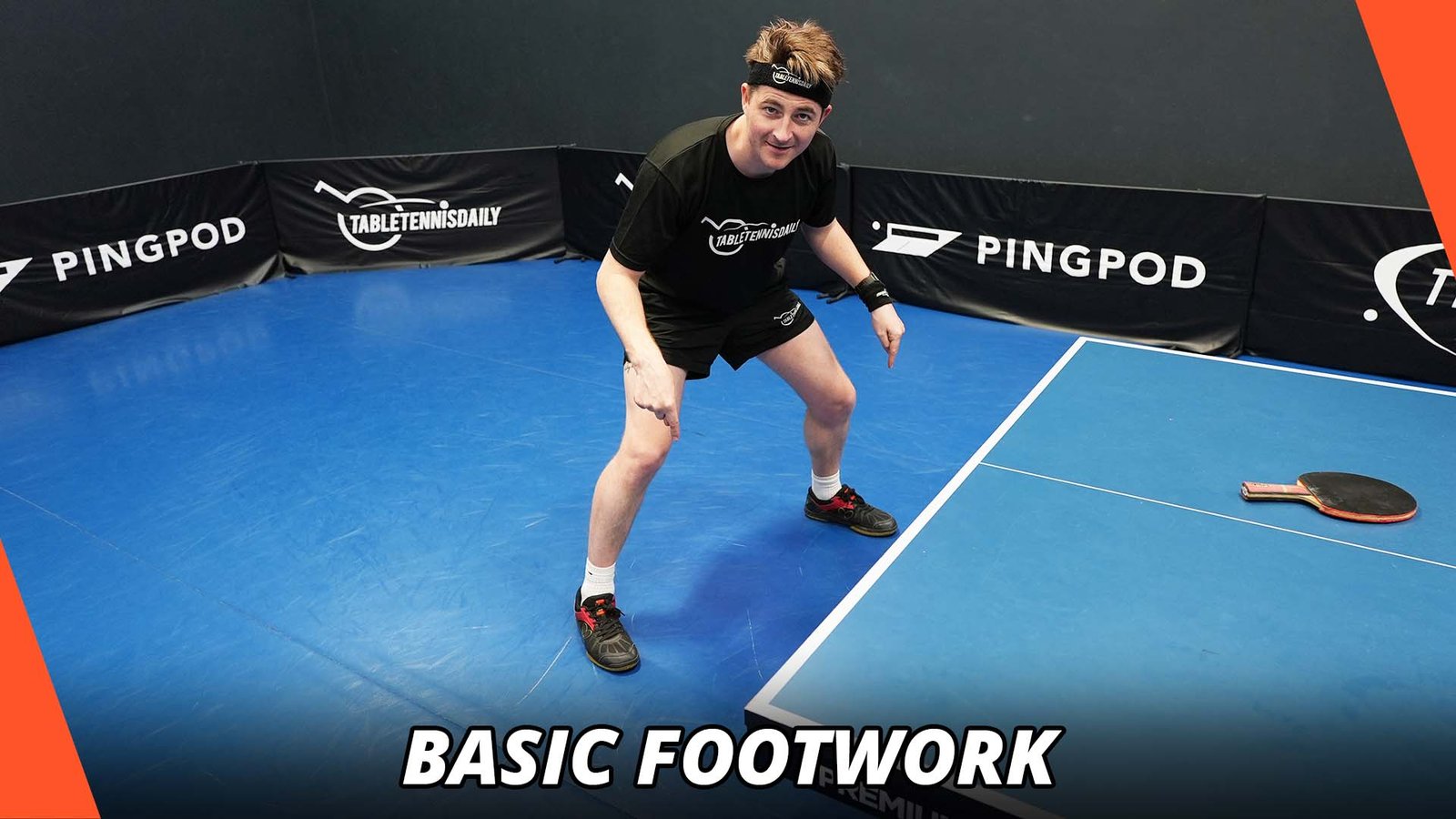
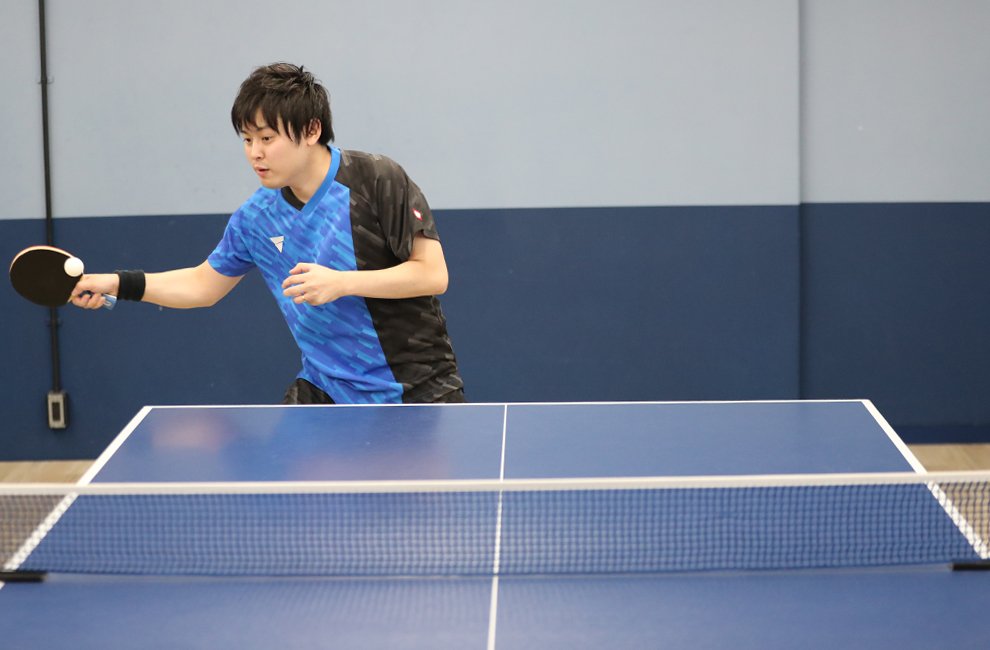
Start with what has actually changed in your game, because the step-up decision is not “a better shoe” in the abstract — it is a shoe matched to movements you did not make as a beginner. An improving player’s footwork gets wider and faster: the two-step to the wide forehand, the crossover step to recover, the lunge at full stretch on the backhand side. What those movements ask for is consistent across this guide: a thin, grippy outsole that holds on indoor wooden and synthetic floors in every direction, a low, flexible profile that keeps the foot close to the ground through fast lateral sequences, and an upper built to hold the foot when the movement is sideways rather than forward. Every card below is read against those three demands first.
The second change is volume, and it is the one first shoes are not built around. Entry models are specified for a session or two a week; intermediate training adds drilling blocks, multi-ball and league nights, and the shoe works harder per session and rests less between them. That is why this guide reads construction detail the entry tier skips: named cushioning systems rather than a foam layer, outsole structures a maker describes in print, heel-stabilising fit systems, reinforced zones. Not because detail is decoration, but because at higher volume the difference between a named system and a generic one is the difference between a shoe specified for the workload and a shoe merely shaped like it.
Fit is the third part of the step-up decision, and it sharpens rather than changes. By now you know whether your feet run narrow or wide, and whether your first pair’s compromises were sizing or shape. The makers in this guide publish more fit information than the entry tier typically offers: Mizuno Japan lists its Drive models on a 2E last with centimetre size runs; Butterfly describes the Reiss’s fit as deliberately enhanced for its level; GEWO publishes reinforced side areas and a padded lining on the Ultra Force Pro. The practical rule is unchanged from your first purchase — measure, read the maker’s own fit statements for the exact model, and test indoors before the tags come off — but at this tier the makers give you more published fit detail to decide with.
One boundary before the picks. This page owns the adult intermediate step-up decision only. The full all-player field belongs to our pillar guide to the best table tennis shoes, the women’s segment has its own guide to the best table tennis shoes for women, the first-shoe decision belongs to our guide to the best table tennis shoes for beginners, and players shopping on maximum-cushioning builds and stated senior fits are served by our guide to the best table tennis shoes for seniors. None of their models is re-carded here — every shoe below is a different model, chosen because its maker publishes it in terms an improving player can act on. Working on the footwork these shoes are built for? Our how to play table tennis guide covers the strokes and movement patterns in full.
Reading the Spec Sheet: Stated Weights, Named Cushioning and Lasts
Weight is the first line to read at this tier — and the step-up tier is where makers start publishing it properly. Mizuno Japan’s own lineup table states a weight for every model it lists, on a single stated basis: one shoe at 26.0 cm. That basis is what makes the two Drive cards in this guide genuinely comparable — the Wave Drive Neo 4 at about 265 grams and the Wave Drive EL 2 at about 225 grams are the same maker’s figures, measured the same published way, forty grams apart. The Wave Medal Neo’s figure arrives differently: Mizuno’s retailer Contra lists it at about 295 grams “depending on size”, with no exact basis stated, and this guide prints it labelled exactly that way — a retailer figure, not a Mizuno Japan table figure. The remaining four makers publish no weight at all. Butterfly states none for the Reiss, andro none for the Cross Step 2, GEWO none for the Ultra Force Pro, and VICTAS none for the V-Shoes 614. As in every guide on this site, the blank is printed as a blank: a stated weight with its basis can be compared, an adjective cannot, and no card here converts a maker’s “lightweight” positioning into an invented gram figure.
Cushioning is the second line, and at step-up level it is read by name. Entry shoes mostly offer an unnamed foam layer; the step-up tier names its systems, and a name is a comparable spec. Mizuno’s Medal Neo carries FOAM WAVE — foams of varying hardness arranged in a wave formation, as Mizuno describes it, for cushioning and stability together — over a Stepillar sole construction Mizuno describes as improving lateral cushioning. GEWO names its Flexxion element, a stabiliser built into the midsole. Butterfly keeps the Reiss’s cushioning plain — rubber and EVA in the sole — and says so, which is its own kind of honesty at the level the shoe is aimed at. Where a maker names a system, the cards print the name and the maker’s description of its job; where a maker names nothing, the cards do not promote a generic foam into a technology.
The last is the third line, and Mizuno’s published grouping is the clearest way to read it. Mizuno Japan sorts its own families by brief: Drive for lightweight, flexible and a barefoot feel; Medal for stability and cushioning; Kaiserburg for lightweight and wide. The two Drive cards and the Medal card in this guide are those first two briefs in Mizuno’s own words — the same 2E last, two different published intentions. The wide Kaiserburg line is covered in our pillar guide and is not re-carded here; within this guide, width is read model by model, from the fit each maker actually states. Read together, the three lines give you the whole step-up method: a weight with its basis, a cushioning system with its maker’s name and described job, and a fit statement attached to a specific shoe. A listing that offers none of the three is not answering the intermediate question, whatever else it promises.
The 7 Best Table Tennis Shoes for Intermediate Players, Compared
Seven step-up shoes, one shared brief — built for indoor floors and faster lateral movement as their makers describe them, with the weight, cushioning and fit information each maker actually publishes. Read the card that matches your game and your feet first.
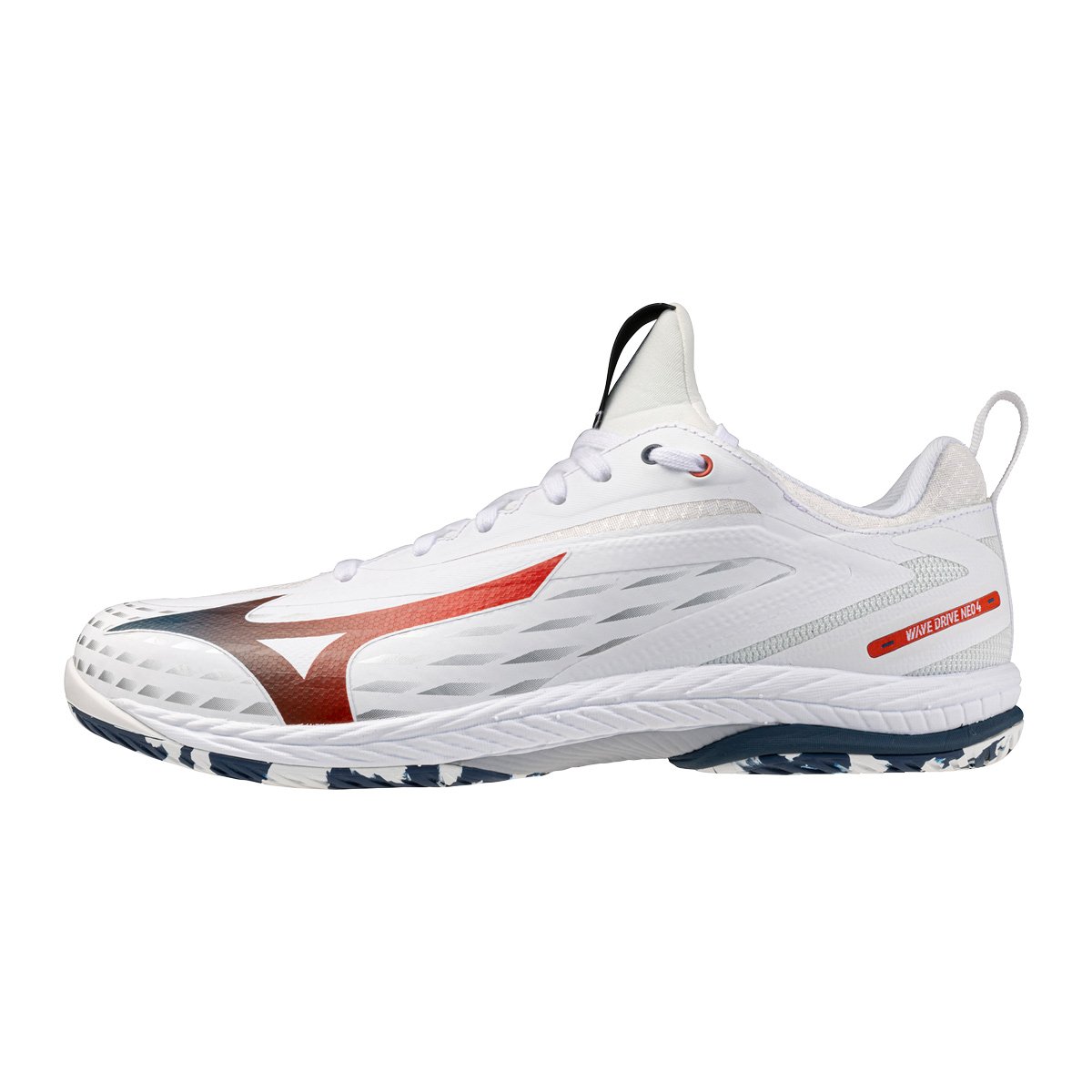
Mizuno Wave Drive Neo 4
The complete step-up pair — head of Mizuno Japan’s current Drive line at about 265 g for one shoe at 26.0 cm, as Mizuno states it, on a published 2E last.
The Neo 4 leads this guide because it is the most completely specified step-up shoe in the sport right now. On Mizuno Japan’s own lineup table it sits at the head of the Drive family with a published weight of about 265 grams for one shoe at 26.0 cm — a figure printed here with its basis, as Mizuno states it — a 2E last, and a size run of 21.0 and 22.0 to 29.0 cm that covers smaller and larger adult feet inside one model rather than splitting them across lines. And the family brief matters as much as the numbers: Mizuno groups Drive as its lightweight, flexible, barefoot-feel line, which is the published description of exactly what an improving player asks a step-up shoe to be — close to the floor, quick to change direction, and light enough that the footwork drills of an intermediate session never become a negotiation with the shoe.
Read against the entry tier, the difference is specification depth. A beginner shoe asks to be believed; the Neo 4 publishes its weight on a stated basis, its last, its size run and its family intention, and lets the buyer compare all four against the rest of this guide line by line. The 265-gram figure also places it honestly inside its own family: forty grams above the EL 2 card below, in exchange for the Neo’s position as the line’s fullest expression — and a player whose game is built on recovery speed above everything can read that trade directly off Mizuno’s table and choose the EL 2 instead. That is what a step-up guide is for. If you want one pair from the sport’s deepest footwear range, specified well enough to buy without guessing, this is the card.
What we like
- A maker-stated weight with its basis printed: about 265 g for one shoe at 26.0 cm, from Mizuno Japan’s own lineup table
- The Drive brief in Mizuno’s own grouping — lightweight, flexible, barefoot feel — matched to faster intermediate footwork
- A published 2E last and the widest size run here: 21.0 and 22.0–29.0 cm
- The current head of the Drive line (style 81GA2500) — a step-up model, not a re-carded entry shoe
Worth knowing
- Forty grams above the EL 2 on the same published basis — players who want the lightest Drive build should read that card first
- Mizuno’s centimetre sizing needs a measured foot, not a converted street size — check your cm length against the run before ordering
As an Amazon Associate we earn from qualifying purchases.
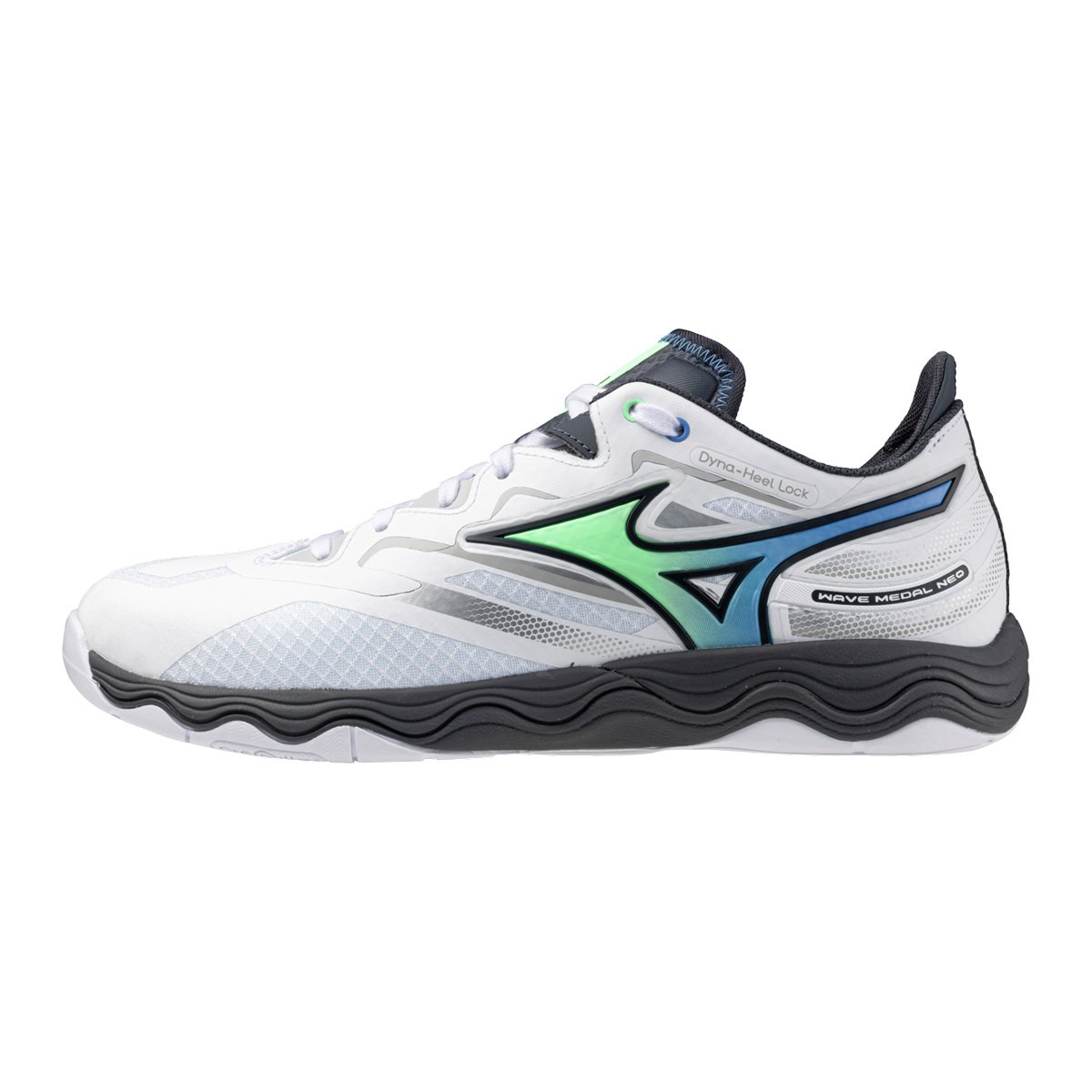
Mizuno Wave Medal Neo
The cushioned step-up — Stepillar sole construction, FOAM WAVE cushioning and a Dyna-Heel Lock, in the family Mizuno groups for stability and cushioning.
Where the Neo 4 is the Drive family’s answer, the Medal Neo is the Medal family’s — and Mizuno’s own grouping tells you the intention before any other spec does: Medal is the stability and cushioning line. The Neo builds that brief from three named systems. Its Stepillar sole construction is described by Mizuno as improving lateral cushioning during fast, dynamic movements; its FOAM WAVE midsole combines foams of varying hardness in a wave arrangement to deliver cushioning and stability together with a softer ground contact; and its Dyna-Heel Lock works on the fit end, stabilising the heel and ankle area so the shoe holds its position through the same movements. For an intermediate whose sessions have lengthened and whose footwork now loads the shoe sideways at full stretch, that is a coherent published package: cushion the lateral load, stabilise the platform, lock the heel.
The honest notes belong on the card. The weight — about 295 grams — reaches this guide through Mizuno’s retailer Contra, which states it as size-dependent without printing an exact basis, so it is labelled here as a retailer figure and is not directly comparable with the Mizuno Japan table figures on the Drive cards: different source, different stated basis. Read it as the heaviest build in this guide by design rather than by accident — the Medal brief spends grams on cushioning and structure that the Drive brief spends on lightness. The upper is published as breathable, and the outsole as a special rubber compound for traction on indoor floors and support through quick direction changes and abrupt stops. If your step-up question is “more shoe, properly engineered”, this is the card that answers it in the maker’s own named terms.
What we like
- Three named systems, each with Mizuno’s described job: Stepillar lateral cushioning, FOAM WAVE cushioning-and-stability, Dyna-Heel Lock fit
- The Medal brief in Mizuno’s own grouping — stability and cushioning — for longer, harder intermediate sessions
- Breathable upper and an indoor rubber compound described for quick direction changes and abrupt stops
- A deliberate contrast card: the built-up end of this guide, against the Drive cards’ lightness
Worth knowing
- The 295 g figure is a retailer figure via Contra with no exact size basis stated — do not compare it gram-for-gram with the Mizuno Japan table figures
- The heaviest, most built-up ride here by design — players who prize floor feel should start at the Drive cards
As an Amazon Associate we earn from qualifying purchases.
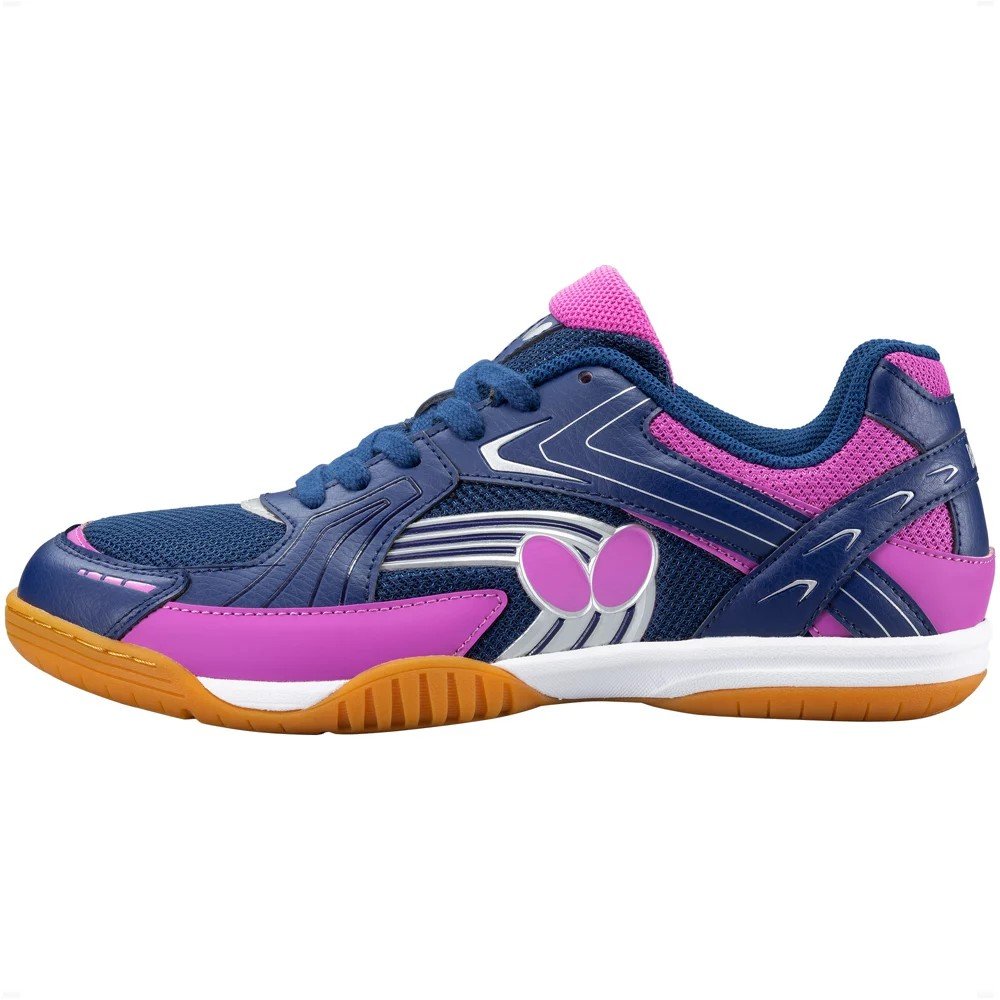
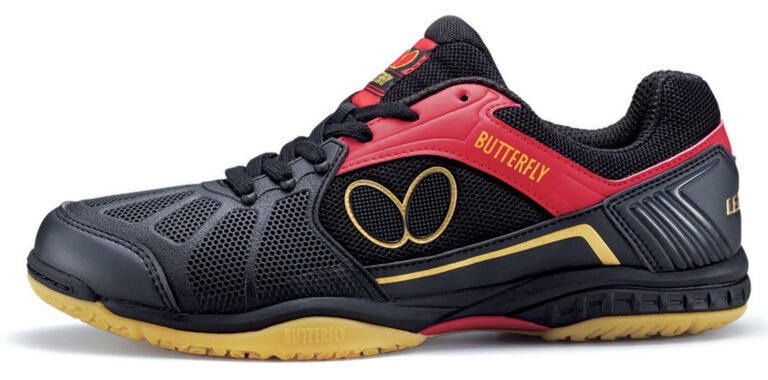
Butterfly Lezoline Reiss
The level-honest pick — a shoe Butterfly states it developed specifically for beginner and intermediate level players, with the essential grip, cushion and durability for the game.
Every other card in this guide is a shoe this guide positions for intermediates. The Reiss is the one shoe whose maker positions it there itself. Butterfly’s own description states it plainly: the Lezoline Reiss shoes are indoor table tennis competition shoes developed specifically for beginner and intermediate level players, offering “the grip, cushioning, and durability necessary for table tennis” in a modern design. That sentence is worth more than a page of inference. Butterfly — the sport’s most established footwear name — looked at the improving-player segment and built and labelled a shoe for it, and this card simply takes the maker at its word. For a player stepping up who wants the decision made at exactly their level, by the maker, the Reiss is the most direct answer in the guide.
The published build matches the brief. The upper combines mesh, synthetic fiber and artificial leather — breathability where the foot needs air, structure where lateral movement stresses the shoe — and the sole is rubber and EVA, the grip material and the cushioning material stated without a technology name attached, because at this level Butterfly sells the essentials rather than a named system. Butterfly adds that the Reiss enhanced the fit to bring comfort, and its retail listings carry the standard Lezoline care note about the resin heel counter — loosen the laces fully and never step on the heel, because the counter does the protective work. The honest limit is the familiar one: Butterfly publishes no weight for the Reiss, so it competes on its level brief and its stated materials, not on grams. Within those published terms, it is the card that requires the least translation between the maker’s intention and the buyer’s game.
What we like
- The only maker-positioned intermediate shoe here — Butterfly states the level it was developed for, in its own words
- Materials stated plainly: mesh, synthetic fiber and artificial leather above; rubber and EVA below
- An enhanced fit, per Butterfly — the comfort half of its published brief
- The essential-spec approach: grip, cushion and durability named as the brief, with no technology theatre
Worth knowing
- Butterfly publishes no weight for this shoe — compare it on its level brief and construction, not grams
- No named cushioning system — players who want a named step-up technology should compare the Medal Neo’s FOAM WAVE card
As an Amazon Associate we earn from qualifying purchases.
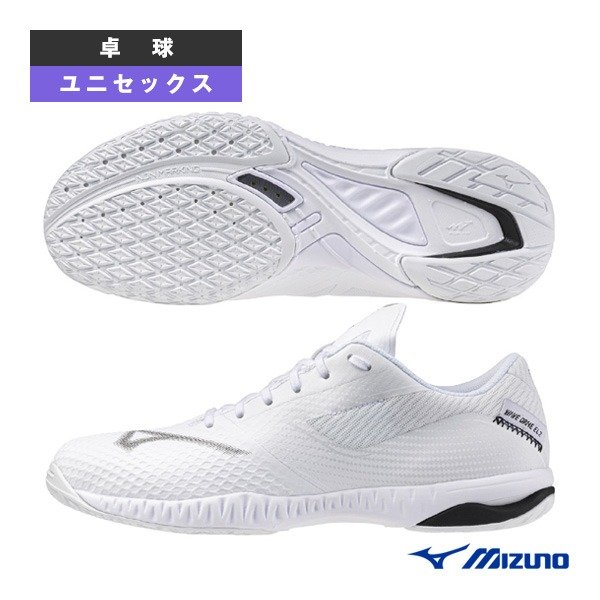
Mizuno Wave Drive EL 2
The lightest published step-up — about 225 g for one shoe at 26.0 cm as Mizuno Japan states it, the lightest figure in Mizuno’s own current lineup table.
Some step-up decisions are about more shoe. This one is about less — measurably less, on a published basis. Mizuno Japan’s lineup table gives the Wave Drive EL 2 at about 225 grams for one shoe at 26.0 cm, the lightest figure in the maker’s current table and forty grams below the Neo 4 on the identical basis. That is not a rounding difference; it is a different build philosophy inside the same family, and Mizuno publishes both so the buyer can choose with the numbers in front of them. The rest of the specification holds the family line: the same 2E last, a centimetre size run of 22.0 to 29.0 cm, and the Drive brief — lightweight, flexible, barefoot feel — taken to its lightest expression in the range.
Who is this card for? The intermediate whose game is recovery speed: the player who wins points by getting back to the ready position first, whose footwork volume is high and whose sessions are built on repeated lateral sequences rather than planted power. For that player, a published 225 grams is the spec that matters most, and the EL 2 is the only card in this guide that can state its lightness as a number with a basis instead of an adjective. The trade is printed on the same table that makes the case: the Neo 4 carries the fuller flagship brief at 265 grams, and the Medal Neo spends more grams again on named cushioning and structure. Mizuno’s table lets you pick your point on that line honestly — and the EL 2 is the line’s light end, specified as precisely as its heavy end.
What we like
- The lightest maker-stated weight in this guide — about 225 g for one shoe at 26.0 cm, from Mizuno Japan’s own table
- Directly comparable with the Neo 4: same maker, same published basis, forty grams apart
- The Drive brief at its purest — lightweight, flexible, barefoot feel — for recovery-speed footwork
- A published 2E last and a full adult centimetre run: 22.0–29.0 cm
Worth knowing
- The size run starts at 22.0 cm — smaller adult feet are covered by the Neo 4’s run, which starts at 21.0 cm
- The lightest build is a deliberate trade: players wanting named cushioning systems should read the Medal Neo card
As an Amazon Associate we earn from qualifying purchases.
andro Cross Step 2
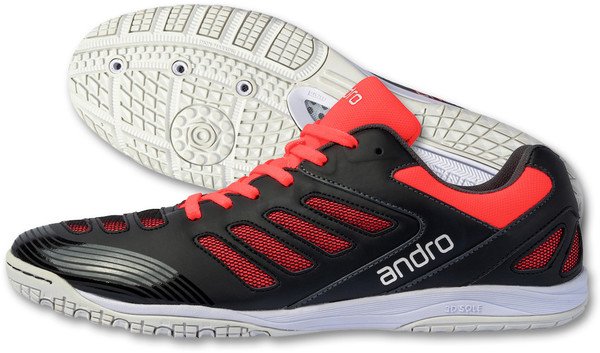
The grip-led all-rounder — tiny profile structures andro describes as guaranteeing extreme grip, over a 3D Sole, a TPU+ midfoot core and a ventilated soft upper.
andro publishes the Cross Step 2 under a one-line verdict — “the allround talent among table tennis shoes” — and then specifies it like a shoe that expects to be cross-examined. The grip claim comes first and is stated as a mechanism, not a mood: tiny structures on the surface of the profile guarantee extreme grip, in andro’s words. Underneath, a 3D Sole is described as cushioning the step while enabling fast, ground-level movement sequences, and a core made of TPU+ material supports the midfoot area — the torsional half of the step-up brief, the part of the shoe that works when a crossover step twists the platform. For an intermediate whose hall floors vary — club wood one night, dusty synthetic the next — a shoe whose maker leads with the grip mechanism is a rational place to start.
The upper half of the brief is comfort engineering, equally specifically stated. The upper is a comfortably soft material that adapts to the foot; ventilation holes in the front support moisture transport, backed by andro’s Air Ventilation Window for ventilation through the shoe; and the insole is anatomically shaped and removable — the only card in this guide whose maker publishes a removable insole, a practical detail for players who train often enough to air or swap insoles between sessions. The colour range runs from black and neon red to a hologram finish, the widest published palette here. The honest limit is weight: andro publishes no gram figure for the Cross Step 2, so the card competes on its grip mechanism, its sole construction and its ventilation — all stated — rather than on a number that does not exist.
What we like
- A grip claim stated as a mechanism: tiny profile structures for extreme grip, in andro’s own description
- A named sole package — 3D Sole for fast ground-level movement, TPU+ core supporting the midfoot
- The most detailed ventilation brief here: front ventilation holes plus the Air Ventilation Window
- The only removable, anatomically shaped insole published in this guide
Worth knowing
- andro publishes no weight for this shoe — compare it on grip and construction, not grams
- The soft, adaptive upper is a comfort brief — players wanting a structured, reinforced upper should compare the GEWO card’s reinforced side areas
As an Amazon Associate we earn from qualifying purchases.
GEWO Ultra Force Pro
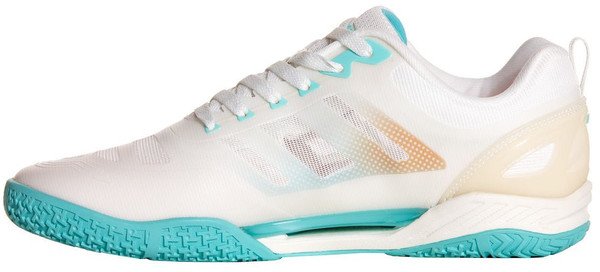
The support-led step-up — GEWO’s Flexxion stabilising element built into the midsole, reinforced side areas and a cushioned midsole over a non-slip, non-marking sole.
GEWO describes the Ultra Force Pro as “the ultimate fusion of stability and agility” and then does something rarer than the slogan: it names the component doing the work. The Flexxion technology is, in GEWO’s own description, a stabilising element built into the midsole that lets the heel and forefoot move independently — the midfoot answer to the crossover step, where the shoe is loaded diagonally and a plain foam platform simply twists with the foot. Around that element, GEWO publishes reinforced side areas for more support during lateral movements and a cushioned midsole — the support package stated part by part, each part with its job. For an intermediate whose game has added wide lunges and hard direction changes, this is the card that treats the middle of the shoe as seriously as the sole.
The rest of the published brief covers the hall realities. The sole is non-slip and non-marking, stated by GEWO for grip on all indoor floors — the non-marking half matters in hired halls with floor rules, and it is printed here because GEWO states it, not assumed. The upper is breathable, the inner lining carries comfort padding for fit, and the closure is classic lacing. GEWO’s copy frames the shoe for serious players and long matches, where, in its words, every gram and every lack of support becomes noticeable — which makes the card’s one honest blank easy to state plainly: GEWO publishes no weight for the Ultra Force Pro, so despite that framing, this guide prints no gram figure for it. Compare it on the Flexxion element, the reinforcement and the sole — the specifications GEWO actually publishes.
What we like
- A named midfoot system with its job described: Flexxion lets heel and forefoot move independently, per GEWO
- Reinforced side areas published for lateral movement — the step-up support brief, stated part by part
- A non-slip, non-marking sole stated by the maker — hall-friendly by spec, not by assumption
- Breathable upper and a comfort-padded lining for longer sessions
Worth knowing
- GEWO publishes no weight for this shoe — its “every gram” framing is positioning, and no figure is printed here
- A support-led build is the opposite end of the ladder from the EL 2’s minimal lightness — choose by the brief your game needs
As an Amazon Associate we earn from qualifying purchases.
VICTAS V-Shoes 614
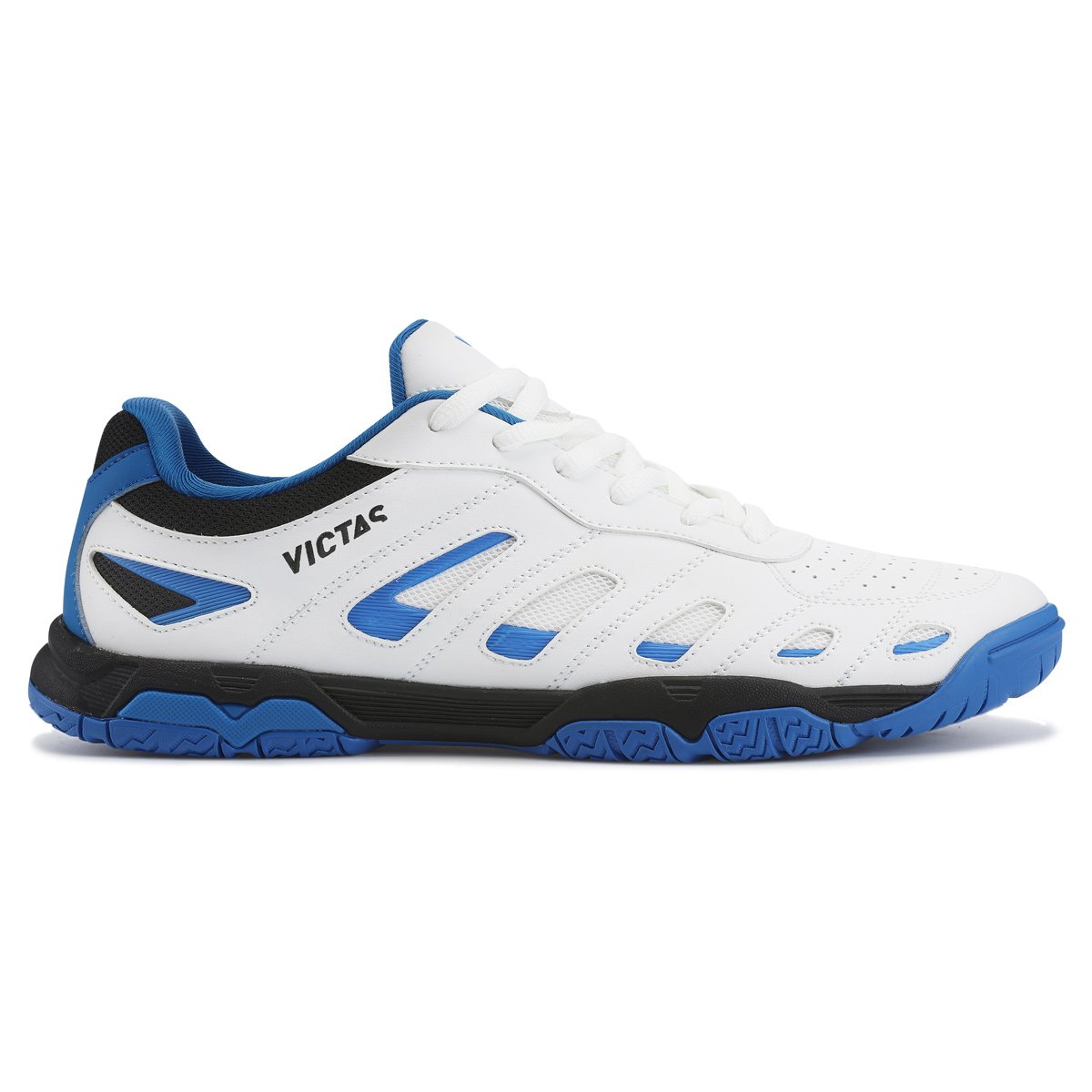
The everyday club step-up — a grippy indoor sole, a lightweight upper and a flexible construction, positioned by its listing for club players and regular training.
Not every step-up decision is a flagship decision. The V-Shoes 614 is VICTAS’s functional indoor shoe, and its listing describes it in the vocabulary of weekly club life: a grippy indoor sole for dependable traction on indoor surfaces, a flexible construction that allows quick reactions and a direct feel for the game, and a lightweight upper balancing stability with freedom of movement across long training sessions and matches. VICTAS positions it, in its retailer’s words, as ideal for beginners, club players and regular training — which, read honestly, is the intermediate mainstream: players past their first shoe who train twice a week and want the essential step-up construction without paying for a flagship’s named systems. This card exists for them, and it is labelled as exactly that.
Two clarifications keep the card honest. The 614 is a different model from the V-Shoes 613 carded in our pillar guide — a separate listing, a separate shoe, carded here on its own published brief; the shared name is a range, not a repeat. And VICTAS publishes no weight for the 614, so its “lightweight feel” is the listing’s positioning language, printed as such — the shoe competes on its grippy sole, its flexibility and its classic fit, all stated, rather than on a gram figure that does not exist. Within those terms it does its job cleanly: the secure, unrestricted classic fit its listing describes, a clean sporty design, and the essential indoor construction — grip, flex, low profile — that the whole step-up tier shares. The sensible second-or-third pair in the guide, and the straightforward one for a player whose budget went to rubbers this season.
What we like
- The essential step-up brief stated plainly: grippy indoor sole, flexible construction, direct feel
- Positioned by its own listing for club players and regular training — the intermediate mainstream, honestly labelled
- A lightweight upper and a classic fit described for long sessions without restriction
- A different model from the pillar’s V-Shoes 613 — carded on its own listing, not a repeat
Worth knowing
- VICTAS publishes no weight — “lightweight feel” is positioning, and no figure is printed here
- No named cushioning or fit system — players wanting named step-up technology should compare the Medal Neo and GEWO cards
As an Amazon Associate we earn from qualifying purchases.
Side-by-Side Comparison Table
| Model | Best For | Weight (as stated) | Fit / Width Options | Cushioning | Outsole (as maker states) |
|---|---|---|---|---|---|
| Mizuno Wave Drive Neo 4 | Best overall step-up | About 265 g, one shoe at 26.0 cm (Mizuno Japan) | 2E last · 21.0, 22.0–29.0 cm | Drive family build — lightweight, flexible (Mizuno) | Thin, grippy Drive-family sole (Mizuno brief) |
| Mizuno Wave Medal Neo | Cushioned step-up | About 295 g (retailer figure via Contra; basis not stated) | Dyna-Heel Lock fit system | FOAM WAVE · Stepillar sole construction | Special rubber compound for indoor traction (Mizuno) |
| Butterfly Lezoline Reiss | True intermediate design | Not published by Butterfly | Enhanced fit (Butterfly) | Rubber and EVA sole build | Rubber outsole — essential grip (Butterfly) |
| Mizuno Wave Drive EL 2 | Lightest step-up | About 225 g, one shoe at 26.0 cm (Mizuno Japan) | 2E last · 22.0–29.0 cm | Drive family build — lightest expression (Mizuno) | Thin, grippy Drive-family sole (Mizuno brief) |
| andro Cross Step 2 | Grip-led all-rounder | Not published by andro | Soft adaptive upper · removable anatomical insole | 3D Sole · TPU+ midfoot core | Tiny profile structures for extreme grip (andro) |
| GEWO Ultra Force Pro | Midfoot support | Not published by GEWO | Reinforced side areas · padded lining | Flexxion element · cushioned midsole | Non-slip, non-marking (GEWO) |
| VICTAS V-Shoes 614 | Everyday step-up | Not published by VICTAS | Classic fit | Flexible construction, lightweight upper | Grippy indoor sole (VICTAS listing) |
Read this table by its labels, because the labels are the lesson. The weight column carries three figures from two different kinds of source: two Mizuno Japan table figures on an identical stated basis — 265 grams and 225 grams, one shoe at 26.0 cm, honestly comparable — and one retailer figure of about 295 grams whose basis no listing states, labelled as such and not comparable gram-for-gram with the other two. The remaining four cells carry an honest blank where no maker figure exists. That pattern is the step-up market as published: one maker specifies weight completely, and the rest compete on named construction — a Stepillar sole, a Flexxion element, a 3D Sole, a grip profile described structure by structure. Start from the brief your game needs — lightness, cushioning, support or grip — then check the fit column against your feet, and the table lands you on the right card.
Buying Guide: Matching Your Step-Up Shoe to Your Game
1. Name the brief your first shoe stopped covering
The step-up purchase starts with a diagnosis, not a catalogue. Ask what your current shoe actually fails at, in movement terms. If long sessions leave the shoe feeling flat and unsupportive under repeated lateral load, your brief is cushioning and structure — start at the Medal Neo and the GEWO cards. If your footwork is quick but the shoe feels like it arrives a half-step late, your brief is weight — start at the EL 2 and Neo 4, the two cards with published gram figures on the same basis. If your hall floors vary and grip is the variable you notice, start at the Cross Step 2, whose maker specifies the grip mechanism itself. And if nothing is failing except the calendar — the first pair is simply worn into its second season — the Reiss and the V-Shoes 614 are the honest like-for-like step-ups, positioned by their own makers at this level. A named brief turns seven cards into one decision.
2. Weight: compare only what shares a basis
This guide prints three weights, and the buying skill is knowing which comparisons are real. The two Mizuno Japan figures — about 265 grams for the Neo 4 and about 225 grams for the EL 2, each for one shoe at 26.0 cm — come from the same maker’s table on the same stated basis, so the forty-gram gap between them is a genuine, usable difference: it is the published trade the flagship brief makes over the lightest one. The Medal Neo’s roughly 295 grams arrives through a retailer with no stated basis, so treat it as an orientation — the heaviest build here, by design — and not as a number to subtract from the Drive figures. The other four makers publish nothing, and their cards’ words — lightweight feel, extremely light class positioning and the like — are adjectives to weigh, not figures to rank. Be suspicious of any listing that attaches a precise gram figure to those four models without stating whose size was weighed and who weighed it; that is how invented specs enter a buying decision.
3. Cushioning and support: read the named systems
At this tier, cushioning is a named-system decision, and the names in this guide describe three different jobs. FOAM WAVE, on the Medal Neo, is Mizuno’s cushioning-and-stability arrangement — foams of varying hardness in a wave formation — paired with a Stepillar sole construction described for lateral cushioning: the package for a player whose load is repeated and sideways. The Flexxion element, on the GEWO, works the midfoot instead: a stabiliser that lets heel and forefoot move independently, aimed at the twisting load of crossover steps. The 3D Sole and TPU+ core, on the andro, split the difference — ground-level speed with a supported midfoot. None of these positions is a health claim, and this guide makes none; they are construction descriptions in the makers’ words, matched to the movement that dominates your game. If your footwork is mostly close-to-table and quick, the Drive cards’ light flexible builds answer it; if it ranges wide and lands hard, the named systems earn their place.
4. Fit: lasts, centimetres and the fit each maker states
Fit information improves at this tier, and the cards publish four different kinds. A stated last: both Mizuno Drive models are listed on a 2E last, with centimetre runs — 21.0 and 22.0 to 29.0 cm on the Neo 4, 22.0 to 29.0 cm on the EL 2 — so measure your foot in centimetres and buy the measurement, not a converted size. A stated fit intention: Butterfly describes the Reiss’s fit as enhanced for comfort at its level. Stated fit hardware: the Medal Neo’s Dyna-Heel Lock, GEWO’s reinforced side areas and padded lining, andro’s soft adaptive upper and removable anatomical insole. And a stated standard: the V-Shoes 614’s classic fit. Players whose feet need a genuinely wide last beyond these options are served by Mizuno’s wide Kaiserburg line, covered in our best table tennis shoes pillar guide, and by the wide-fit cards in our best table tennis shoes for seniors guide — summarised here, not re-carded. Whatever you choose, test indoors on a clean floor, in playing socks, with side-steps and a lunge each way, before the tags come off.
5. If you are not stepping up yet — and when you are
Honesty cuts both ways: some readers of this guide should not buy from it yet. If you are still in your first months and your current pair is a proper table tennis shoe that fits, the step-up tier’s named systems will not fix what practice fixes — the first-shoe decision, and the shoes that own it, live in our guide to the best table tennis shoes for beginners. The step-up moment announces itself differently: your footwork patterns have lengthened, your sessions have multiplied, and you can name the movement your current shoe handles worst. When that is true, buy the card that answers the named brief — and keep developing the footwork itself alongside it with our how to play table tennis guide, because the shoe is the platform, never the technique.
Frequently Asked Questions
When should an intermediate player step up from a beginner table tennis shoe?
When you can name the movement your current shoe handles worst. Beginner shoes are specified for learning the movements — a split-step, a side-step, a short lunge. Intermediate footwork is patterned and repeated: two-step moves to the forehand corner, crossover steps, full lunges with a recovery push, across longer rallies and more weekly sessions. The step-up tier answers that workload with published construction the entry tier mostly does not offer — maker-stated weights on a stated basis, named cushioning and support systems such as Mizuno’s FOAM WAVE and GEWO’s Flexxion element, and fit systems such as Mizuno’s Dyna-Heel Lock. If your shoes still match your game, keep them; the step-up is a response to a named gap, not a schedule.
How much do intermediate table tennis shoes weigh?
It depends on the maker — and this guide prints the published state of the market rather than filling its gaps. Mizuno Japan’s own lineup table states its figures on one basis, one shoe at 26.0 cm: the Wave Drive Neo 4 at about 265 grams and the Wave Drive EL 2 at about 225 grams. The Wave Medal Neo is listed by Mizuno’s retailer Contra at about 295 grams with no exact size basis stated, so it is printed here as a retailer figure. Butterfly publishes no weight for the Lezoline Reiss, andro none for the Cross Step 2, GEWO none for the Ultra Force Pro, and VICTAS none for the V-Shoes 614. Read every weight with its source and basis attached; a figure without either is not comparable.
What is the difference between Mizuno’s Drive and Medal shoe families?
Mizuno Japan groups its own families by brief, and the grouping is the clearest shortcut in this guide. Drive is Mizuno’s lightweight line — lightweight, flexible and a barefoot feel, in the maker’s own words — represented here by the Wave Drive Neo 4 and the lighter Wave Drive EL 2, both on a published 2E last. Medal is the stability and cushioning line, represented by the Wave Medal Neo with its Stepillar sole construction, FOAM WAVE cushioning and Dyna-Heel Lock. Mizuno’s third family, Kaiserburg, is its lightweight and wide line and is covered in our pillar guide rather than re-carded here. Choose Drive for floor feel and recovery speed, Medal for the built-up, cushioned platform.
Which intermediate table tennis shoe fits wide feet?
Start with the published lasts. Both Mizuno Drive cards in this guide — the Wave Drive Neo 4 and the Wave Drive EL 2 — are listed by Mizuno Japan on a 2E last with centimetre size runs, the most specific width information any card here publishes. Beyond that, the fit answers differ by maker: Butterfly describes the Lezoline Reiss’s fit as enhanced, GEWO publishes reinforced side areas and a padded lining on the Ultra Force Pro, and andro publishes a soft, adaptive upper on the Cross Step 2. Players who need a genuinely wide last beyond these options are served by Mizuno’s wide Kaiserburg line, covered in our best table tennis shoes pillar guide, and by the wide-fit cards in our seniors guide — summarised here, not re-carded. Measure in centimetres and test indoors before removing tags.
What does a named cushioning system actually change at this level?
A name means the maker is describing a specific construction with a stated job, which makes it comparable in a way generic foam is not. On the Wave Medal Neo, FOAM WAVE combines foams of varying hardness in a wave arrangement for cushioning and stability, and the Stepillar sole construction is described as improving lateral cushioning. On the GEWO Ultra Force Pro, the Flexxion element is a stabiliser built into the midsole that lets the heel and forefoot move independently. On the andro Cross Step 2, the 3D Sole and TPU+ core pair ground-level movement with midfoot support. These are construction descriptions in the makers’ words, matched to movement patterns — not health claims, and this guide treats them as specifications to compare, not promises to repeat.
How should intermediate table tennis shoes fit?
By the maker’s own published terms for the exact model. Mizuno Japan lists its Drive models in centimetres on a 2E last — 21.0 and 22.0 to 29.0 cm for the Neo 4, 22.0 to 29.0 cm for the EL 2 — so measure both feet in centimetres, in your playing socks, and buy the measurement rather than a converted street size. Other cards publish their fit differently: an enhanced fit on the Butterfly Reiss, a classic fit on the VICTAS V-Shoes 614, a soft adaptive upper on the andro Cross Step 2. In the shoe you are checking for a secure heel, room at the toes and no pinch across the ball of the foot: walk, side-step both ways and lunge each side on a clean indoor floor, and only remove the tags once the shoe passes on the surface it was bought for.
Can I use these intermediate table tennis shoes for other indoor sports?
The makers publish these as indoor table tennis shoes, and their shared construction — thin, grippy outsoles, low flexible profiles, uppers built for lateral movement — is the indoor court pattern generally. One card here, the GEWO Ultra Force Pro, is stated by GEWO as non-marking, which matters in halls with floor rules. The specialist descriptions, though, are written for table tennis movement specifically: the Drive family’s barefoot-feel brief, the Medal Neo’s lateral cushioning, the Cross Step 2’s ground-level sole. If table tennis is your main game, buy for its footwork first and treat any other hall use as a bonus the construction happens to allow, not the purpose it was published for.
The Verdict
Buy the brief your game has grown into, then the fit, then the name. The Mizuno Wave Drive Neo 4 is the complete step-up pair — about 265 g for one shoe at 26.0 cm as Mizuno Japan states it, on a 2E last, at the head of the family Mizuno groups for lightweight, flexible, barefoot-feel footwork. The Mizuno Wave Medal Neo owns the cushioned step-up, with Stepillar, FOAM WAVE and Dyna-Heel Lock named and described by their maker. The Butterfly Lezoline Reiss owns level honesty — the one shoe Butterfly states it developed for beginner and intermediate players. The Mizuno Wave Drive EL 2 owns lightness, at a published 225 grams on the same basis as its flagship sibling. The andro Cross Step 2 owns the grip mechanism, the GEWO Ultra Force Pro the midfoot support, and the VICTAS V-Shoes 614 the everyday club step-up. Seven step-up shoes, every specification printed as its maker states it — including the four honest blanks in the weight column, which tell their own story about how this tier is sold.
Affiliate disclosure: AliShuttler is a participant in the Amazon Services LLC Associates Program. Links marked “Check Price on Amazon” are affiliate links — if you buy through them, we may earn a commission at no additional cost to you. Every specification in this guide is taken from the manufacturer’s own published listings, checked at build time in 2026; weights are printed with the source and size basis their listings state, and where a maker publishes no weight, the guide says so.