
Seven pickleball shoes chosen the honest way: every card carries a published weight with its size basis — Skechers, Wilson, adidas, ASICS, New Balance, HEAD and Mizuno — compared on exactly what the makers publish: cushioning systems, outsole compounds and lateral-support hardware.
Speed in pickleball is not about sprinting. The court is small, the points are short, and the decisive movement happens in the last two steps: the split step before the return, the lunge to the kitchen line, the plant-and-push that turns a dink rally into a put-away. That is why shoe weight matters more in pickleball than the spec sheet suggests — every gram rides on the end of your leg through thousands of short, violent direction changes. A shoe that feels fine for the first game can feel like an anchor by the fourth, and the players who move fastest in the evening session are usually wearing the lightest shoe that still holds them laterally.
But “lightweight” is the most abused word in shoe marketing, so this guide owns exactly one decision and enforces one rule: every card carries a published weight with its size basis. No maker in this guide publishes a weight on its own product pages — not Skechers, Wilson, adidas, ASICS, New Balance, HEAD or Mizuno — so every figure below is a retailer’s measured or listed figure, labelled with the size it was weighed in. Where no figure can be verified for a model, the model is not in this guide: five task candidates were dropped at build for exactly that reason. Read the weight column in the table as carefully as the cushioning column, because the size basis is what makes two numbers comparable.
This guide does not re-rank our segment guides. The all-player flagship selection lives in our best pickleball shoes comparison, women’s picks belong to our best pickleball shoes for women guide, first purchases to our best pickleball shoes for beginners guide, the skill-level ladder to our intermediate and advanced players guides, and the footwork fundamentals those shoes are built for live in our how to play pickleball guide. Every model below is different from the ones ranked in those guides. Read those for their jobs; read this one when the scale weight on the listing is the first number you check.
TL;DR — The Short Version
Buy the Skechers Viper Court Reload if you want the lightest verified shoe here — 9.4 oz in a men’s US 9 with ULTRA FLIGHT cushioning, an Arch Fit insole and a Goodyear rubber outsole. Buy the Wilson Pickle Pro for the lightest purpose-built pickleball shoe: OrthoLite cushioning, a Duralast outsole and a widened toebox at 11.1 oz. Buy the adidas GameCourt 2 for the best value in light: 11.9 oz with an EVA midsole and Adiwear traction. Buy the ASICS Gel-Renma Pickleball for flexible, grippy lightness — forefoot GEL and a wrap-up outsole at ~12 oz. Buy the New Balance SmashStep PKL for propulsive FuelCell foam and an NDurance outsole at 12.1 oz, in standard and 2E widths. Buy the HEAD Revolt Pro 4.0 Pickleball if you want light with real hardware — TRI-NRG midsole, Hybrasion+ outsole and a lateral stability trigger at 13 oz. And buy the Mizuno Wave Exceed Tour 7 AC for the speed-shaped crossover: ENERZY XP cushioning, a WAVE plate and D-Flex Groove under 13 oz.
Quick Picks
In This Guide
- The weight decision: why the size basis matters
- What a speed-first pickleball player should check before buying
- Skechers Viper Court Reload
- Wilson Pickle Pro
- adidas GameCourt 2
- ASICS Gel-Renma Pickleball
- New Balance SmashStep PKL
- HEAD Revolt Pro 4.0 Pickleball
- Mizuno Wave Exceed Tour 7 AC
- Side-by-side comparison
- Lightweight buying guide: five checks before you pay
- Frequently asked questions
- The verdict
The Weight Decision: Why the Size Basis Matters
A shoe weight without a size is not a number; it is a rumour. Shoe weight scales with size — the same model can differ by more than an ounce between a men’s US 9 and a men’s US 11 — which is why the size basis is the load-bearing part of every weight claim in this guide. The Skechers Viper Court Reload’s 9.4 oz is a men’s US 9 in a D width. The Wilson Pickle Pro’s 11.1 oz is a men’s US 9; the same shoe lists at 12.8 oz in a men’s US 10.5. The Mizuno Wave Exceed Tour 7 AC’s “under 13 oz” was weighed in a men’s US 10.5. If you compare the Reload’s 9.4 against the Mizuno’s sub-13 without reading the sizes, you are comparing two different rulers. Read the basis first, the number second.
The second honest fact is that no maker in this guide publishes a weight on its own product pages. Skechers, Wilson, adidas, ASICS, New Balance, HEAD and Mizuno all describe their shoes as “lightweight” in marketing copy and none of them prints an ounce or gram figure next to it. That is why every weight in this guide is a retailer’s figure — measured by a retailer or lab (RunRepeat’s lab scale, Zappos’s published measurements, Tennis Warehouse’s spec tables) — and labelled that way. A guide that printed “lightweight” without a number would be adjectives doing the work of facts; a guide that printed a maker’s number would be fiction. Retailer figures with their size basis are the honest middle ground, and this guide lives there.
The third thing to understand is what lightness costs. Grams leave the shoe in three places: the upper gets thinner and more flexible, the midsole gets lower and less plush, and the outsole gets shallower and grippier rather than tougher. The lightest shoe here, the Skechers at 9.4 oz, is a slip-in with a breathable mesh upper and a Goodyear rubber outsole — fast, but not the shoe for a toe-dragger on rough outdoor acrylic. The heaviest shoes here, the HEAD at 13 oz and the Mizuno under 13, carry visible hardware — a triple-density midsole, a wave plate, stability triggers — that the lighter shoes simply do not have. Neither trade is wrong. The question this guide answers is not “which shoe is lightest” but “which lightness still does your job” — kitchen-line lateral support, cushioning for your session length, and an outsole that survives your actual surface.
Finally, a naming caution: lightweight lines are families, and families blur. The Viper Court Reload is not the Viper Court Pro, the Viper Court Pro 2 or the Viper Court Elite 2.0 — all different shoes, some carded in our other guides. The Gel-Renma is not the Gel-Renma 2. The Revolt Pro 4.0 is not the Motion Pro or the Sprint Pro 4.0. Check the exact model name and the size basis on the listing before you buy, because the lightweight pick and the heavy sibling often share a brand, a look and a naming root — and only one of them belongs in this guide.
What a Speed-First Pickleball Player Should Check Before Buying
Weight: read the basis, then the number. Every card’s weight chip prints the figure exactly as its source states it — ounces, the US size, the width where given, and whether the maker or a retailer published it. No maker here publishes one, so every chip names the retailer: Zappos’s measurements, Tennis Warehouse’s spec tables, RunRepeat’s lab scale, an independent review’s scale. When you shop, do the same: if a listing prints a weight without a size, it has told you nothing. If two listings print weights in different sizes, they cannot be compared directly. The table below prints every basis so you never have to guess.
Outsole: match the compound to your surface, as the makers state it. Pickleball is played on two very different surfaces — smooth indoor courts and rough outdoor acrylic — and lightweight outsoles are where the surface decision bites. Goodyear rubber (Skechers Reload) and the Adiwear compound (adidas GameCourt 2) are built for traction and control; Duralast (Wilson Pickle Pro) and Hybrasion+ (HEAD Revolt Pro 4.0) are the durability-first compounds, formulated for abrasion resistance on outdoor courts; NDurance (New Balance SmashStep PKL) is placed specifically in the high-wear zones where pickleball players drag and pivot; the Gel-Renma’s wrap-up rubber grips confidently on indoor and smooth outdoor courts but, as an independent long-term review noted, shows wear on rough acrylic sooner than the durability compounds; and Mizuno’s DX Rubber comes with the maker’s own six-month outsole warranty behind it. Buy the compound for the court you actually play on most.
Lateral support: lightness must not mean looseness. Kitchen-line play is lateral play — the dink, the speed-up, the Erne all load the shoe sideways — and a light shoe that rolls is worse than a heavy shoe that holds. Read the lateral line on every card as carefully as the weight line: HEAD’s Lateral Control stability trigger in the outsole is built to avoid rollovers; Mizuno’s D-Flex Groove enhances lateral stability; the Gel-Renma’s TRUSSTIC midsole resists twisting and its wrap-up outsole runs up the sides with a wider gauge; the Wilson Pickle Pro’s midfoot saddle and supportive chassis lock the midfoot for pivots; the SmashStep PKL’s supportive upper is built for midfoot security. The Skechers Reload is the honest outlier — a slip-in with a Heel Pillow rather than a lace-down lockdown — which is why it is carded as the pure speed pick, not the lateral pick.
Cushioning: learn the makers’ names. Every card names the cushioning exactly as its maker does. Skechers: ULTRA FLIGHT with a removable Arch Fit insole. Wilson: OrthoLite foam in the midfoot over an EVA midsole, with a 6mm OrthoLite Performance Sockliner. adidas: EVA midsole (Cloudfoam is named on adidas’s women’s listing of the same model). ASICS: forefoot GEL technology. New Balance: FuelCell foam. HEAD: TRI-NRG — a triple-density midsole that neutralises impact in the heel, stays rigid in the midfoot and generates energy in the forefoot. Mizuno: ENERZY XP in the forefoot and heel with a Mizuno WAVE plate. A longer name is not a better foam: the adidas EVA and the Wilson OrthoLite are simpler recipes in shoes built for everyday speed, and that is a legitimate choice. Read cushioning as character — plush, firm, low, propulsive — and match it to your session length.
Upper construction: the weight you feel is the upper you see. The cheapest grams to remove are the ones above the midsole, and the cards show it. The Skechers Reload and adidas GameCourt 2 use athletic and open mesh uppers — maximum breathability, minimum structure. The ASICS Gel-Renma pairs mesh with synthetic leather overlays for a touch more support. The HEAD Revolt Pro 4.0 and Mizuno Wave Exceed Tour 7 AC carry the most structure — PU-moulded chassis and engineered mesh respectively — and they are the heaviest cards here. The Wilson Pickle Pro and New Balance SmashStep PKL sit in the middle: breathable mesh with supportive overlays, built for a locked-in midfoot. If you play long outdoor sessions in heat, breathability is not a luxury; if you plant hard laterally, structure is not optional. The upper tells you which priority the shoe chose.
The Picks: 7 Lightweight Pickleball Shoes Compared
Skechers Viper Court Reload
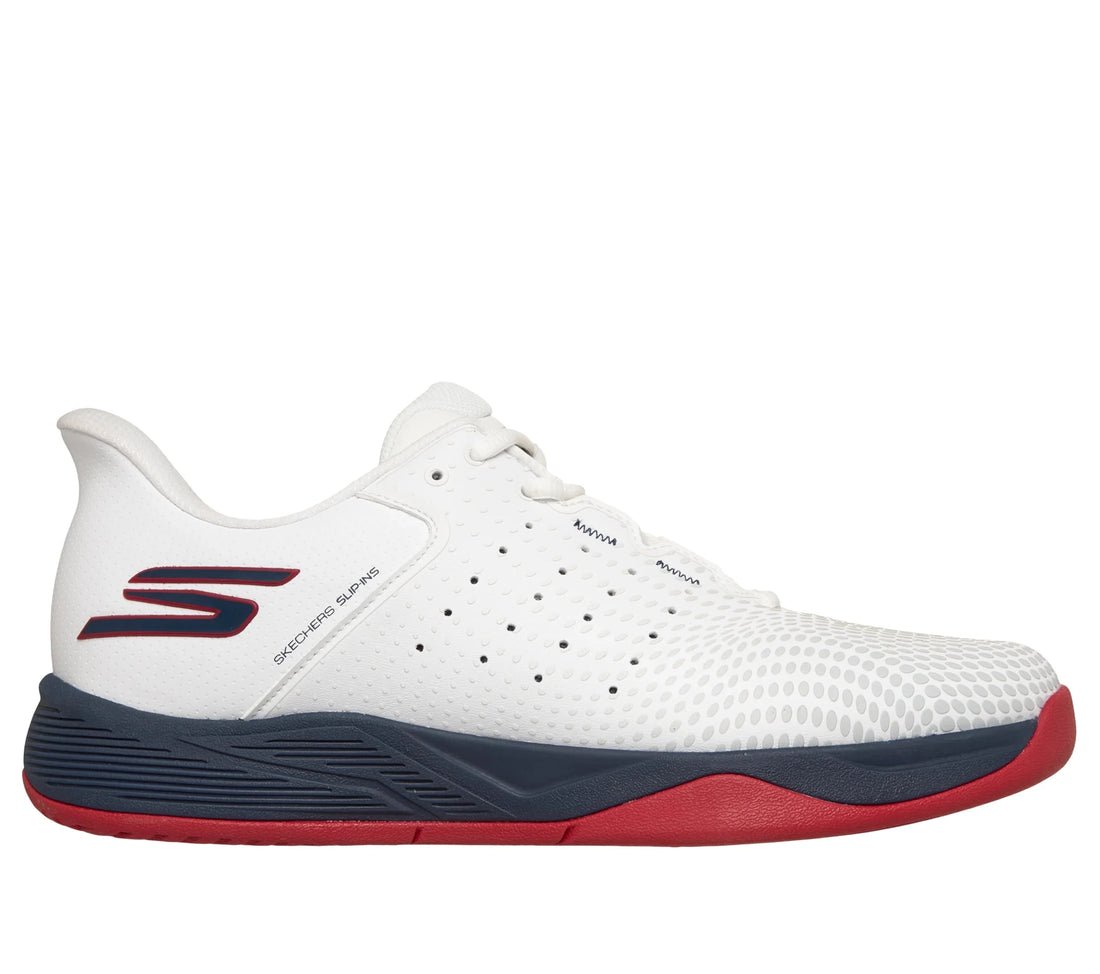
The lightest verified shoe in this guide: 9.4 oz with ULTRA FLIGHT cushioning, a removable Arch Fit insole and a Goodyear rubber outsole — in a hands-free slip-in.
There is lightweight, and then there is 9.4 ounces in a men’s US 9 — a full ounce and a half lighter than anything else in this guide, and the reason the Viper Court Reload opens it. This is Skechers’s slip-in answer to the speed question: the Hands Free Slip-ins design uses the brand’s Heel Pillow — a padded collar you step into without touching the shoe — over an athletic mesh and synthetic upper, with ULTRA FLIGHT cushioning underfoot and Skechers’s removable Arch Fit insole inside. Arch Fit is Skechers’s podiatrist-certified insole system, and its being removable matters: it gives the shoe its underfoot shape and lets you swap in your own insole if you prefer. The outsole is Goodyear rubber, the performance compound Skechers builds across its court line for traction and control on court surfaces.
The honesty this guide keeps promising starts here, because the Reload’s lightness has a shape you should understand. This is a relaxed-fit slip-in, not a lace-down lockdown shoe: the Heel Pillow holds the heel and the upper wraps the foot, but there is no lacing to tune the midfoot the way the Wilson’s saddle or the HEAD’s TPU elements do. For players who move in straight-ish lines and value pure speed and convenience — the doubles player who covers the kitchen line and the middle, the evening-session regular who plays four games back to back — that is a fair trade. For the aggressive lateral slider, it is not; the lateral cards below exist for that player. And note the family caution from the intro: the Reload is a different shoe from the Viper Court Pro, the Viper Court Pro 2 and the Viper Court Elite 2.0 carded in our other guides — check the name on the listing, because the siblings share a look.
Pros
- 9.4 oz in a men’s US 9, D — the lightest verified weight in this guide, by a clear margin
- ULTRA FLIGHT cushioning with a removable Arch Fit insole (Skechers’s podiatrist-certified system)
- Goodyear rubber performance outsole for traction and control on court surfaces
- Hands Free Slip-ins design: step in and play, no lacing routine
Cons
- Slip-in fit means no lace-down lockdown tuning — the lateral cards suit aggressive sliders better
- Skechers publishes no weight; the 9.4 oz figure is a retailer’s measurement on a stated size basis
- A different model from the Pro, Pro 2 and Elite 2.0 in our other guides — check the name when ordering
As an Amazon Associate we earn from qualifying purchases.
Wilson Pickle Pro
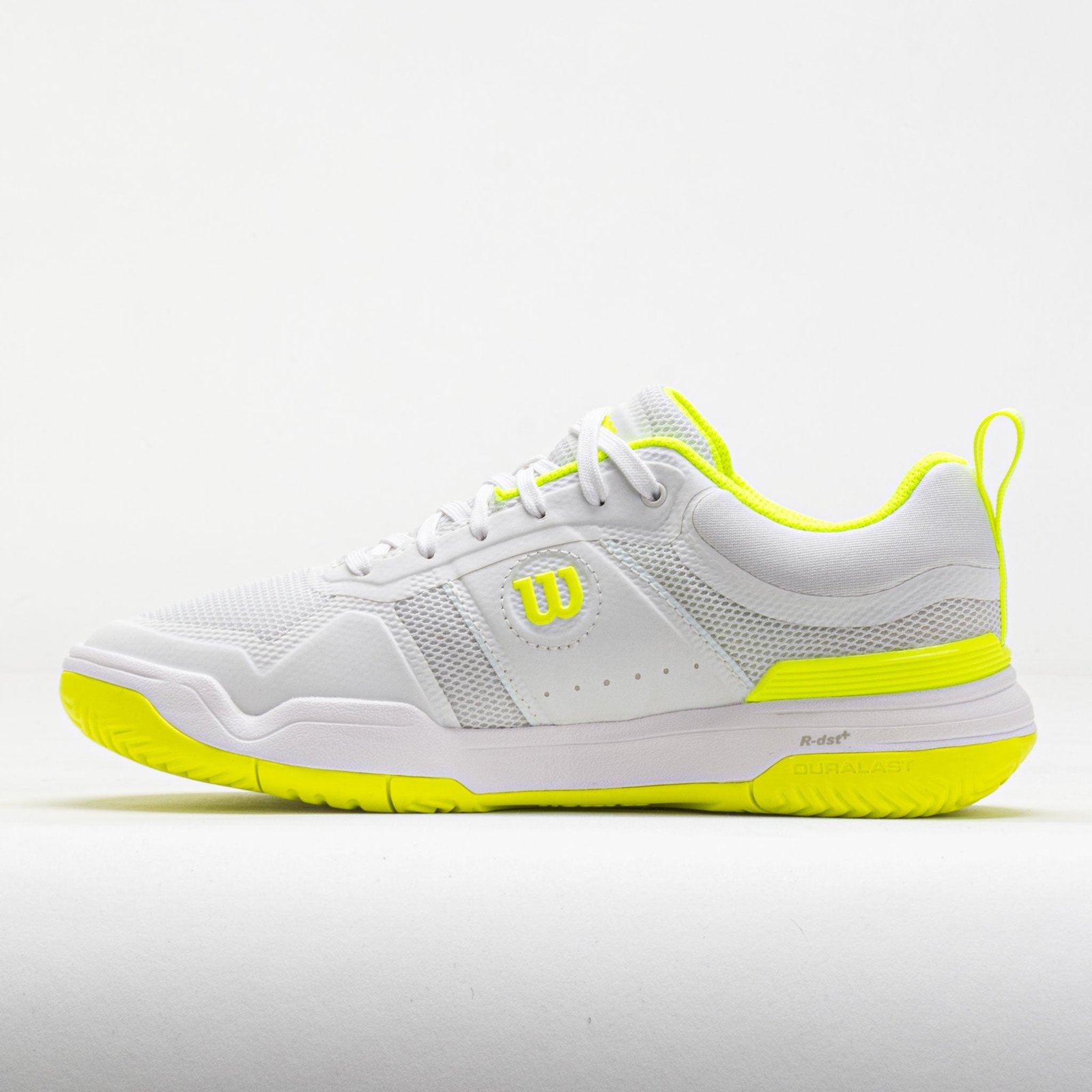
Built for pickleball from the first sketch — not adapted from tennis: OrthoLite cushioning, a Duralast outsole and a widened toebox at 11.1 oz.
Most “pickleball shoes” are tennis shoes with pickleball marketing. The Wilson Pickle Pro is the card for players who want the reverse: a shoe engineered for pickleball’s stop-and-pivot demands from the start. The headline feature is the last — a widened toebox that lets the toes spread on lateral lunges, paired with a midfoot saddle and a supportive chassis that lock the midfoot for pivots. Underfoot, Wilson pairs OrthoLite foam in the midfoot with an EVA midsole, topped by a removable 6mm OrthoLite Performance Sockliner — OrthoLite being the compressed foam that holds its shape over long sessions rather than packing down. The upper is breathable TPU mesh with a plush collar, and the whole package reads as comfort-first without the bulk that usually comes with it.
The outsole is Wilson’s Duralast rubber — the brand’s proprietary high-density compound, formulated to balance traction and wear resistance — in a multidirectional tread with grooves that grip on lateral pushes without catching on pivots. That makes the Pickle Pro one of the two genuinely outdoor-honest light shoes here (the other is the HEAD): the compound is built for abrasion resistance on rough acrylic, not just grip on smooth gym floors. On weight: retailers list 11.1 oz in a men’s US 9 and 12.8 oz in a men’s US 10.5, and Wilson itself publishes none — the chip prints the size-9 figure with its basis. One model caution: this is not the Rush Pro line — our pillar guide cards the Wilson Rush Pro Ace Pickler, a different shoe — so order the Pickle Pro by its own name. Buy it if you want the lightest shoe here that was designed for pickleball rather than adapted to it.
Pros
- Designed specifically for pickleball — widened toebox, midfoot saddle and supportive chassis for pivots
- OrthoLite foam midfoot cushioning over an EVA midsole, with a removable 6mm OrthoLite sockliner
- Duralast high-density rubber outsole built for abrasion resistance on outdoor courts
- 11.1 oz in a men’s US 9 — light for a purpose-built shoe with real structure
Cons
- Wilson publishes no weight; the 11.1 oz figure is a retailer’s, on a stated size basis
- A different shoe from the pillar guide’s Rush Pro Ace Pickler — check the model name
- Comfort-first character: the most aggressive movers should compare the HEAD and Mizuno cards
As an Amazon Associate we earn from qualifying purchases.
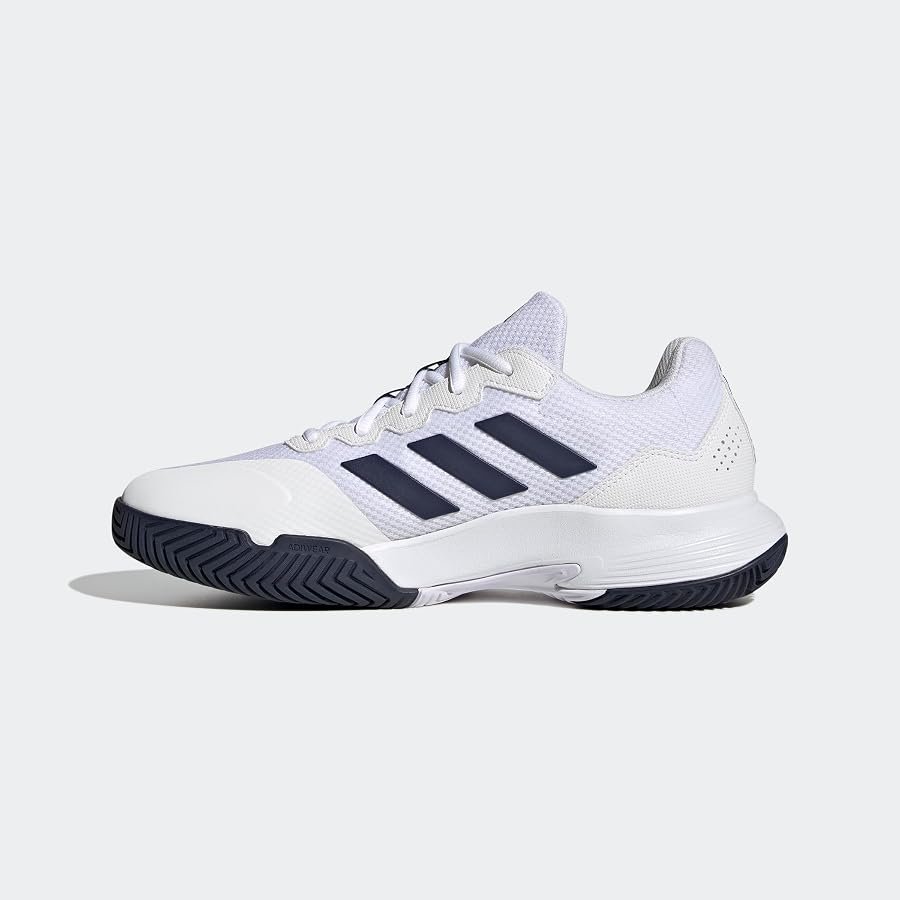
adidas GameCourt 2
The honest value pick in light: 11.9 oz on the lab scale, an EVA midsole and adidas’s Adiwear outsole — a tennis shoe thousands of players use for pickleball.
The GameCourt 2 is the shoe that proves lightness does not need a flagship price or a flagship name. It is an entry-level adidas tennis shoe — and one of the most widely used crossover shoes in recreational pickleball — that happens to weigh 11.9 oz on an independent lab scale, below the average for court shoes. The recipe is deliberately simple: a lightweight open-mesh upper with synthetic overlays and TPU reinforcement, a padded heel collar for step-in comfort, and a full EVA midsole for cushioning. On the women’s listing adidas names the cushioning Cloudfoam — the brand’s comfort foam — while the men’s copy describes the EVA midsole directly; the chip states both, because the listings genuinely differ.
The outsole is Adiwear rubber — adidas’s durable traction compound — which the brand’s own copy positions as delivering traction on hard courts without sacrificing durability. That makes the GameCourt 2 a hard-court shoe first: right at home on the outdoor acrylic most pickleball is played on, and non-marking for indoor gym floors. Two honest notes complete the card. First, an independent lab review found cushioning — especially in the forefoot — to be the shoe’s weakest point: the EVA is dense and does not compress much, so this is a connected-to-the-court ride, not a plush one. Second, the fit runs with a snug toe box and the sizing runs large on some colourways, so check the listing’s fit notes. Buy the GameCourt 2 if you want the lightest honest money in this guide: verified light, simply built, and easy to replace when the season eats it.
Pros
- 11.9 oz on an independent lab scale — verified light at the value end of the market
- Adiwear rubber outsole for hard-court traction with durability
- Open-mesh upper with TPU reinforcement: breathable, simple, no break-in drama
- A widely used tennis-to-pickleball crossover with non-marking traction for indoor play
Cons
- adidas publishes no weight; the 11.9 oz figure is a retail lab’s measurement
- Dense EVA rides firm — forefoot cushioning is the weakest point per independent lab review
- Snug toe box and large-running sizing on some colourways — read the fit notes before ordering
As an Amazon Associate we earn from qualifying purchases.
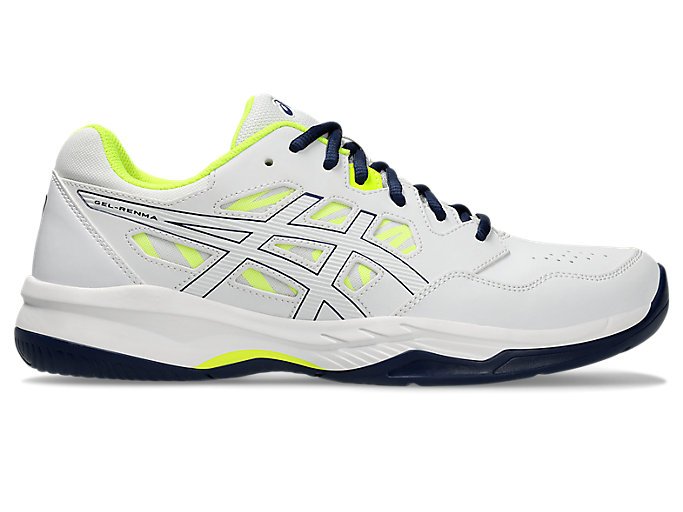
ASICS Gel-Renma Pickleball
ASICS’s flexible speed answer for pickleball: forefoot GEL, a TRUSSTIC midsole and a wrap-up outsole at ~12 oz — a different shoe from the pillar’s Gel-Renma 2.
If the Skechers is the lightness play and the Wilson is the purpose-built play, the Gel-Renma is the flexibility play. ASICS built this shoe for players who stay on the balls of their feet — which is most of pickleball — so the cushioning lives where the game happens: GEL technology in the forefoot, absorbing the impact of push-offs, dink lunges and jump-smash landings. Under that, the TRUSSTIC system in the midsole resists excessive twisting on sharp cuts, and the wrap-up outsole runs the rubber up the sides of the sole with a wider gauge — so when you plant for a lateral lunge, you land on rubber rather than the edge of the midsole. Flex grooves are cut into the outsole to keep the whole platform bending with the foot through multi-directional movement.
The outsole is where this card earns its honest paragraph. The wrap-up rubber grips confidently on indoor gym floors and smooth outdoor courts, and the shoe is positioned by ASICS for indoor and outdoor hard-court play. But rubber built for grip is not rubber built for abrasion: one long-term independent review reported visible outsole wear at around 70 hours of court time on rougher surfaces, and this guide will not dress that up. If your home court is rough outdoor acrylic and you play daily, the Duralast, Hybrasion+ or NDurance cards below are the more honest buys; if you split indoor and smooth outdoor, or you rotate shoes, the Gel-Renma’s flexibility-per-ounce is unmatched here. A fit note from retailers: the last runs narrow in a standard D, and several reviewers suggest sizing with care. Buy the Gel-Renma if your game is built on staying light on your feet and bending with the court.
Pros
- Forefoot GEL where pickleball impact happens, with a TRUSSTIC anti-twist midsole
- Wrap-up outsole with flex grooves and a wider gauge for lateral plants
- ~12 oz in a men’s US 9 — genuine lightness with real court structure
- A different model from the pillar guide’s Gel-Renma 2
Cons
- ASICS publishes no weight; the ~12 oz figure is an independent review’s, on a stated size basis
- Grip-first rubber shows wear on rough outdoor acrylic sooner than the durability compounds
- Narrow-running standard D last — check the fit notes before ordering
As an Amazon Associate we earn from qualifying purchases.
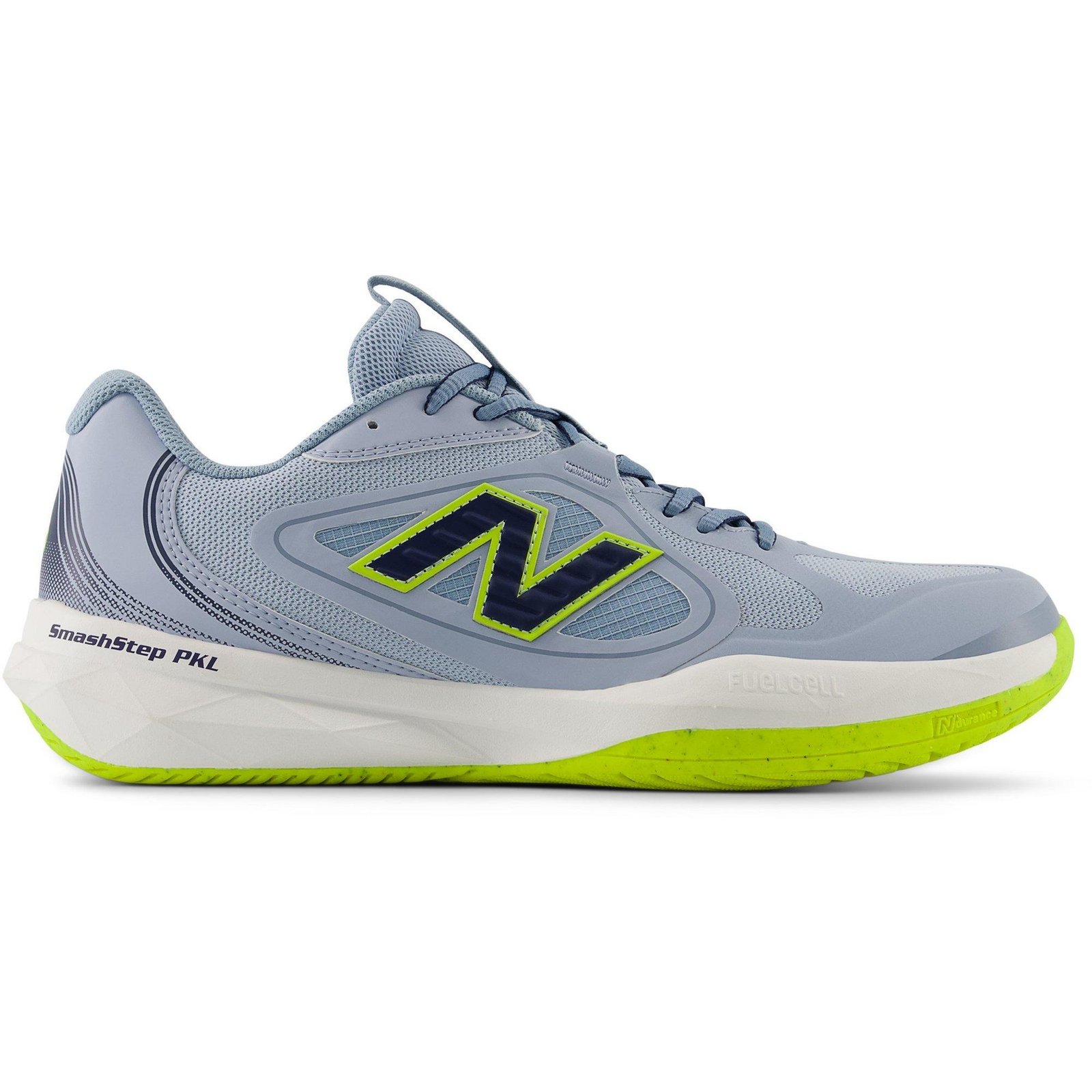
New Balance SmashStep PKL
New Balance’s own pickleball shoe: propulsive FuelCell foam, NDurance rubber in the wear zones and a supportive upper at 12.1 oz — in standard and 2E widths.
The SmashStep PKL is New Balance’s pickleball-specific shoe — designed exclusively for pickleball court play, down to the pickleball branding on the heel and midsole — and it brings the brand’s best-known foam to the weight class. FuelCell is New Balance’s propulsive compound, tuned for forward energy return: it is the foam that makes the shoe feel like it is helping you out of the split step rather than just absorbing you into it. The upper is a breathable mesh and synthetic build designed for midfoot security, and New Balance’s own listings stock the shoe in a standard width and a 2E wide — the width is a listing fact, stated here without further comment. Tennis Warehouse rates the shoe for hard (all-court) surfaces.
The outsole is NDurance rubber, and the placement is the point: New Balance puts its harder-wearing compound specifically in the high-wear areas — the toe and forefoot zones where pickleball players drag and pivot — rather than running it uniformly. That is the honest engineering answer to the lightweight-durability tension: save rubber where the foot does not wear, armour it where it does. On weight, Tennis Warehouse lists 12.1 oz in a men’s US 9 2E and other retailers list 12.5 oz; New Balance publishes none, and the chip prints the TW figure with its basis. One reviewer-noted caution: some players found the ride stiffer and less flexible than expected for a shoe in this weight class — the propulsive character is real, but it is not a soft shoe. Buy the SmashStep PKL if you want New Balance’s foam technology in a shoe built only for this sport.
Pros
- FuelCell foam midsole: the most propulsive cushioning recipe in this guide
- NDurance rubber placed in the high-wear toe and forefoot zones
- Pickleball-specific design with a supportive, midfoot-secure upper
- Standard and 2E widths stocked on New Balance’s own listings
Cons
- New Balance publishes no weight; the 12.1 oz figure is Tennis Warehouse’s, on a stated size basis
- Firm, propulsive ride — players wanting plush softness should look at the Wilson or Skechers cards
- Limited independent long-term wear data; the durability story is maker-specified
As an Amazon Associate we earn from qualifying purchases.
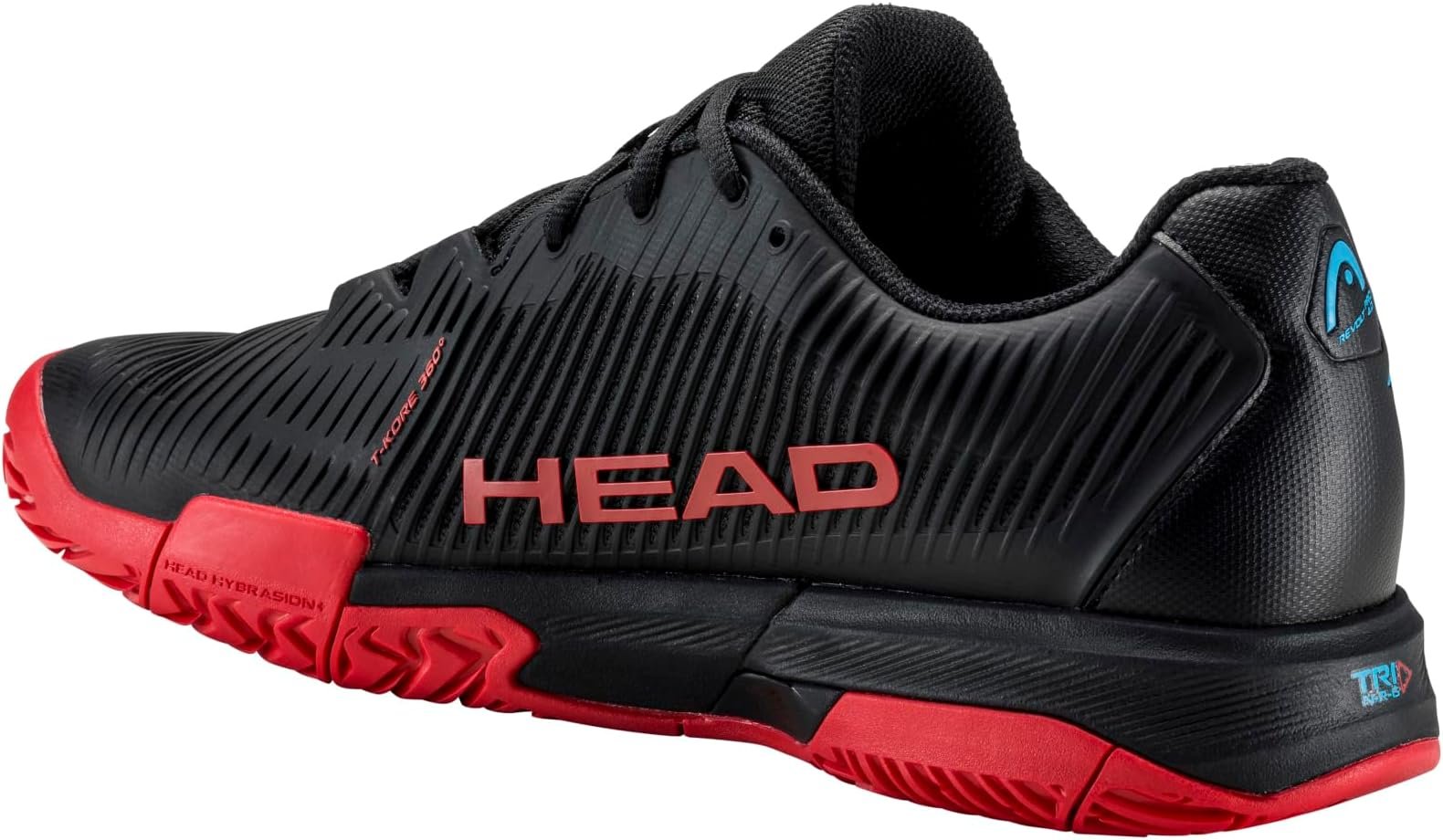
HEAD Revolt Pro 4.0 Pickleball
The heaviest card here — and the most engineered: TRI-NRG midsole, Hybrasion+ outsole and a lateral stability trigger at 13 oz.
This card is the guide’s argument that “lightweight” and “engineered” are not opposites. The Revolt Pro 4.0 is the heaviest shoe here at 13 oz in a men’s US 9 — and it is here because 13 oz with this much hardware is still light, and because no other card holds the foot laterally the way this one does. The midsole is HEAD’s TRI-NRG: a triple-density build that neutralises impact in the heel, stays rigid through the midfoot for torsional support, and generates energy in the forefoot for faster acceleration — with a 3D anti-torsion shank and lateral and medial TPU Energy Frame elements wrapping it. Around the shoe sit HEAD’s T-KORE 360 technologies: core strength, stability, abrasion resistance and torsional support in the sole and upper, with a Cooling System for 360-degree ventilation.
The lateral story is the card’s reason to exist. The outsole carries a Lateral Control stability trigger — a raised element in the lateral forefoot built to avoid rollovers — plus the hybrid outsole profile HEAD designs for all court surfaces, with special durability zones for hard-court players and ventilation holes. The upper is strong mesh over a PU-moulded durability chassis, and Drift Defense protects the toe and medial forefoot with abrasion-resistant material where toe-draggers wear shoes out. The Hybrasion+ rubber compound is HEAD’s traction-and-durability answer. Two honest notes: HEAD’s own retail guidance recommends going up half a size in this shoe, and 13 oz is the top of this guide’s weight range — you are trading the last ounce for the most complete stability hardware here. Buy the Revolt Pro 4.0 if your speed comes from planting hard and trusting the shoe to hold.
Pros
- TRI-NRG triple-density midsole with 3D anti-torsion shank and TPU Energy Frame
- Lateral Control stability trigger in the outsole, built to avoid rollovers
- Hybrasion+ rubber in a hybrid all-surface profile with hard-court durability zones
- Drift Defense toe and medial protection for toe-draggers
Cons
- HEAD publishes no weight; the 13 oz figure is a retailer’s measurement on a stated size basis
- The heaviest card in this guide — the hardware costs the last ounce
- HEAD’s retail guidance says go up half a size; check fit before committing
As an Amazon Associate we earn from qualifying purchases.
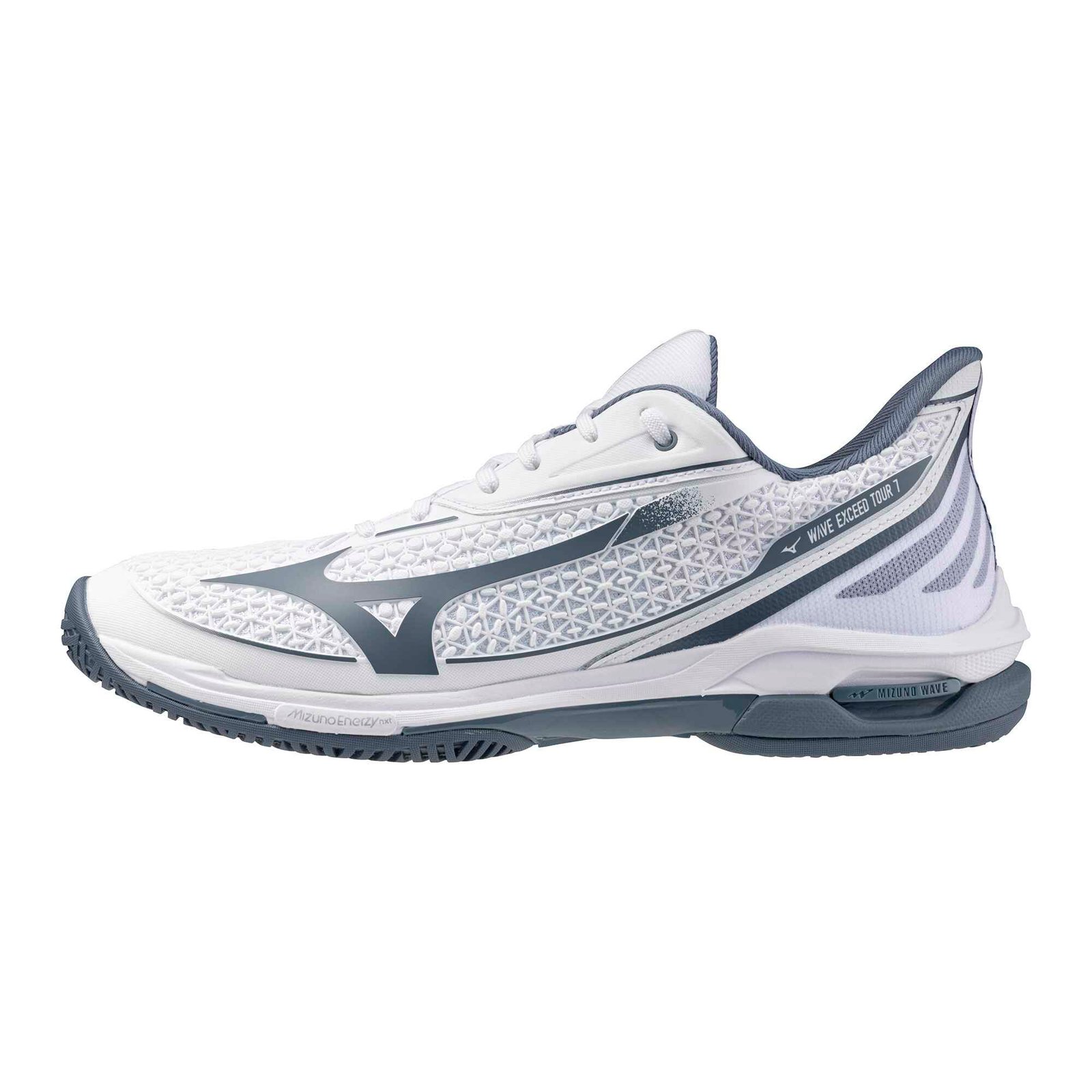
Mizuno Wave Exceed Tour 7 AC
The tennis-built speed shoe Mizuno pitches at pickleball players too: ENERZY XP cushioning, a WAVE plate and D-Flex Groove, under 13 oz.
The Wave Exceed Tour 7 AC closes this guide as the crossover card — and it is an honest crossover, because Mizuno itself pitches the shoe at “advanced tennis and pickleball players alike,” describing it as engineered for speed and stability. The cushioning stack is Mizuno’s ENERZY XP foam in the forefoot and heel — the brand’s energy-return compound — over the Mizuno WAVE plate, the thermoplastic wave the brand has built its court shoes around for decades: it disperses impact and stabilises the midfoot without adding a heavy chassis. The D-Flex Groove in the forefoot is cut to enhance lateral stability on direction changes — the kitchen-line movement this guide keeps coming back to. The upper is an engineered mesh in a speed-shaped last: minimal, breathable, and cut close.
The outsole is DX Rubber, and it carries something no other card here has: Mizuno’s own six-month outsole warranty. That is the maker’s own durability statement, and it matters in a lightweight guide — it is Mizuno putting its name behind the lightest part of the shoe. On weight, a retail playtest weighed a pair at under 13 oz in a men’s US 10.5; Mizuno publishes none, and the chip labels the figure accordingly. The honest framing: this is a tennis shoe that Mizuno invites pickleball players into — not a pickleball-specific build like the Wilson or the New Balance cards. Buy it if you want the speed-shoe shape and the WAVE plate’s stability, with a warranty standing behind the outsole.
Pros
- ENERZY XP cushioning in forefoot and heel over the Mizuno WAVE plate
- D-Flex Groove cut for lateral stability on direction changes
- DX Rubber outsole backed by Mizuno’s own six-month outsole warranty
- A different model from the women’s guide’s Wave Enforce Tour 2 Women
Cons
- Mizuno publishes no weight; the sub-13 oz figure is a retail playtest’s, on a stated size basis
- A tennis shoe pitched at pickleball players — not pickleball-specific like the Wilson and NB cards
- Speed-shaped last runs close — check fit against the roomier cards if you prefer volume
As an Amazon Associate we earn from qualifying purchases.
Side-by-Side: The Seven Lightweight Shoes at a Glance
Every weight below is printed with the honesty this guide keeps promising — a retailer’s figure with its size basis, because no maker here publishes one. Because the sources weigh different sizes, the figures are not a ranking; read the basis before you compare the numbers.
| Shoe | Weight (retailer’s figure + basis) | Cushioning (maker-named) | Outsole | Lateral support | Best for |
|---|---|---|---|---|---|
| Skechers Viper Court Reload | 9.4 oz, men’s US 9 D | ULTRA FLIGHT + Arch Fit insole | Goodyear rubber | Heel Pillow slip-in hold | Lightest overall |
| Wilson Pickle Pro | 11.1 oz, men’s US 9 | OrthoLite foam + EVA midsole | Duralast rubber, multidirectional tread | Midfoot saddle + supportive chassis | Best pickleball-specific light |
| adidas GameCourt 2 | 11.9 oz (lab-measured) | EVA midsole (Cloudfoam on women’s listing) | Adiwear rubber, hard-court | TPU-reinforced upper | Best value lightweight |
| ASICS Gel-Renma Pickleball | ~12 oz, men’s US 9 | Forefoot GEL | Wrap-up rubber, flex grooves | TRUSSTIC midsole, wide-gauge wrap-up | Best light flex & grip |
| New Balance SmashStep PKL | 12.1 oz, men’s US 9 2E | FuelCell foam | NDurance rubber, high-wear zones | Supportive midfoot-secure upper | Best FuelCell energy |
| HEAD Revolt Pro 4.0 Pickleball | 13 oz, men’s US 9 M | TRI-NRG triple-density | Hybrasion+ rubber, hybrid profile | Lateral Control trigger, TPU Energy Frame | Best lateral hardware light |
| Mizuno Wave Exceed Tour 7 AC | Under 13 oz, men’s US 10.5 | ENERZY XP + WAVE plate | DX Rubber (six-month outsole warranty) | D-Flex Groove | Best speed crossover |
Lightweight Buying Guide: Five Checks Before You Pay
1. Read the weight by its basis — or reject the number. A weight without a size is marketing, not data. The only honest weight claims in this category read like the chips above: ounces, the US size, the width where stated, and who published it. If a listing prints a number with no size, ignore it. If two listings print numbers in different sizes, they cannot be compared — a men’s US 11 is a different shoe-weight than a men’s US 9. And if a listing prints a precise weight for any of these seven shoes attributed to the maker, be sceptical: none of the seven makers publish one.
2. Match the outsole compound to your real surface. Rough outdoor acrylic is the great eraser of lightweight shoes — it wears shallow, grippy rubber fast. Players on rough outdoor courts should buy the durability compounds: Duralast (Wilson Pickle Pro), Hybrasion+ (HEAD Revolt Pro 4.0), NDurance in the wear zones (New Balance SmashStep PKL), or the DX Rubber with Mizuno’s six-month outsole warranty. Indoor and smooth-court players can buy for grip and flex: the Gel-Renma’s wrap-up rubber, the Goodyear compound on the Skechers, or the Adiwear on the adidas. Buying a grip-first outsole for a rough outdoor season wastes whichever weight advantage you just paid for.
3. Check lateral hold the way a kitchen-line rally will. Lightness must not mean looseness. Before the return window closes, plant hard on the outside of the foot and push off laterally — the movement the dink and the speed-up demand. The heel should stay seated and the forefoot should not roll over the outsole’s edge. The HEAD’s Lateral Control trigger, the Mizuno’s D-Flex Groove, the Wilson’s midfoot saddle, the Gel-Renma’s TRUSSTIC midsole and the SmashStep’s supportive upper are all answers to this check; the Skechers slip-in is the one card where the check matters most, because convenience and lockdown are a genuine trade.
4. Buy cushioning for your session length, not the spec sheet. A light shoe with firm cushioning is perfect for a one-hour session and punishing for a four-hour tournament day. The Wilson’s OrthoLite and the Skechers’ ULTRA FLIGHT with Arch Fit are the comfort-first recipes here; the New Balance FuelCell and Mizuno ENERZY XP are the energy-return recipes; the adidas EVA is the firm, connected recipe; the HEAD TRI-NRG is the structured recipe. Match the foam’s character to how long you actually play, not to how the names sound.
5. Respect the model names — the families are full of lookalikes. The Viper Court Reload is not the Pro, Pro 2 or Elite 2.0. The Gel-Renma is not the Gel-Renma 2. The Revolt Pro 4.0 is not the Motion Pro or the Sprint Pro 4.0. The Pickle Pro is not the Rush Pro line. The SmashStep PKL is not the Fresh Foam X 1007 or the Coco CG2. The Wave Exceed Tour 7 AC is not the Wave Enforce Tour 2. Our other guides card several of those siblings; this guide cards only the seven names in the table. Check the exact model name in the listing’s title — not the brand, not the line — before you pay.
Frequently Asked Questions
What counts as a genuinely lightweight pickleball shoe?
There is no official threshold, so this guide sets its bar with numbers, not adjectives: every card carries a published weight with its size basis, and the seven range from 9.4 oz (men’s US 9) to 13 oz (men’s US 9). As a working rule, anything at or under roughly 13 oz in a men’s US 9–10.5 is light for a court shoe with real structure. The essential discipline is reading the size basis — a 12 oz figure in a men’s US 9 and a 12 oz figure in a men’s US 11 describe different lightness — and rejecting any “lightweight” claim that prints no weight at all.
Why don’t any of the makers publish weights?
None of the seven makers here — Skechers, Wilson, adidas, ASICS, New Balance, HEAD or Mizuno — prints a weight on its own product pages for these models. That is normal in court shoes: weights vary by size and colourway, and the makers prefer the marketing word “lightweight” to a number that invites comparison. Every figure in this guide is therefore a retailer’s figure — measured by a retailer or lab, or listed in a retailer’s spec table — and each is labelled with its source type and size basis. Treat any “official” weight you see elsewhere with the same scepticism.
Do lighter shoes wear out faster on outdoor courts?
The upper usually survives; the outsole is the question. Lightweight shoes save grams with shallower rubber, and rough outdoor acrylic erases shallow rubber fast. The honest answer per model: the Wilson’s Duralast, the HEAD’s Hybrasion+, the New Balance’s NDurance in the wear zones and Mizuno’s DX Rubber (with the maker’s six-month outsole warranty) are the durability-first compounds here. The ASICS Gel-Renma’s grip-first wrap-up rubber shows wear on rough acrylic sooner — one long-term review noted it around 70 hours. Match the compound to your surface, not just the weight to your wish list.
Will a lightweight shoe still support my lateral kitchen-line movement?
Weight and lateral support are separate engineering decisions. A light shoe with real lateral hardware — HEAD’s Lateral Control stability trigger, Mizuno’s D-Flex Groove, the Wilson’s midfoot saddle, the Gel-Renma’s TRUSSTIC midsole — holds the foot as firmly as heavier shoes. The risk is not lightness but structure-less lightness: the Skechers Reload’s slip-in convenience trades lace-down lockdown, which is why it is carded as the pure speed pick. Whatever you buy, plant and cut hard laterally before the return window closes and confirm the heel stays seated.
Are these shoes for indoor courts, outdoor courts, or both?
As the makers state them: the adidas Adiwear and the Gel-Renma’s wrap-up rubber are hard-court compounds (the Gel-Renma is positioned for indoor and outdoor hard courts); the Wilson Duralast, HEAD Hybrasion+ hybrid profile and NB NDurance are built for outdoor abrasion as well as indoor grip; Mizuno’s DX Rubber is an all-court compound with the maker’s six-month outsole warranty; and the Skechers Goodyear rubber is a court-surface traction compound. If you play exclusively indoors on gym floors, any of the seven works; if you play daily on rough outdoor acrylic, buy one of the four durability-first outsoles.
Can I wear these for tennis or padel too?
Some, with the makers’ own positioning as the guide. The adidas GameCourt 2 is a tennis shoe full stop, and the Mizuno Wave Exceed Tour 7 AC is pitched by Mizuno at advanced tennis and pickleball players alike. The HEAD Revolt Pro 4.0’s retail copy lists tennis and pickleball among its courts, and the Skechers Reload’s product copy mentions padel as well as pickleball. The Wilson Pickle Pro, New Balance SmashStep PKL and ASICS Gel-Renma are pickleball-specific builds. If tennis is your main sport, buy the shoe specified for it; if pickleball is the job, the purpose-built cards are the honest picks.
Which of the seven is actually the lightest?
The Skechers Viper Court Reload, by a clear margin: 9.4 oz in a men’s US 9, D — a retailer’s measured figure, since Skechers publishes none. Next come the Wilson Pickle Pro at 11.1 oz (men’s US 9) and the adidas GameCourt 2 at 11.9 oz (lab-measured). Remember the basis rule: these figures were weighed in different sizes, so treat the ordering as approximate and always read the size column in the comparison table before deciding that one shoe is lighter than another.
The Verdict
If one shoe has to answer the lightweight question completely, it is the Skechers Viper Court Reload — 9.4 oz verified, with real cushioning tech and a Goodyear outsole, at a weight no other card here touches. But the honest verdict in a weight guide is that the best shoe is the one whose lightness still does your job. Purpose-built pickleball lightness is the Wilson Pickle Pro. Value lightness is the adidas GameCourt 2. Flexible, grippy lightness is the ASICS Gel-Renma Pickleball. Propulsive lightness is the New Balance SmashStep PKL. Engineered, hold-you-laterally lightness is the HEAD Revolt Pro 4.0 Pickleball. And speed-shaped crossover lightness is the Mizuno Wave Exceed Tour 7 AC.
Still weighing the wider field? Our pillar comparison of the best pickleball shoes covers the all-player flagships this guide deliberately avoids repeating, the women’s pickleball shoes guide owns the women’s lasts, beginners should start with their own guide, the intermediate and advanced players guides own the skill ladder, and the movement patterns behind every pick here are taught in our how to play pickleball guide. Buy the weight that is actually published — ounces, size, source — and the shoe wall stops being a wall of adjectives and becomes seven clear answers.
How we built this guide: every weight above is a retailer’s measured or listed figure with its size basis, because no maker in this guide publishes a weight on its own product pages. Every cushioning system, outsole compound and support feature is named exactly as its maker names it. Five task candidates were dropped at build: the Skechers Viper Court Pro 2 (carded in our advanced guide), the K-Swiss Pickleball Supreme (its women’s variant is carded in our women’s guide), the Wilson Rush Pro 4.5 at 14.3 oz (too heavy), the Babolat SFX 3 AC at ~13.9 oz (not a lightweight build), and the adidas Barricade pickleball line (~15 oz, durability-first). We do not publish prices, we make no durability or medical claims, and nothing here is presented as hands-on testing. Some links on this page are affiliate links: if you buy through them, AliShuttler may earn a commission at no additional cost to you. As an Amazon Associate we earn from qualifying purchases.