Badminton is played on your feet: six-direction lunges, jump landings and direction changes that no running shoe is built to survive. These seven court shoes — from Yonex, Victor, Li-Ning, Mizuno and Asics — cover every level from first club night to league play, with the tech translated into plain English.
TL;DR — The short answer
Best overall badminton shoe: Yonex Power Cushion 65 Z3. It is the all-rounder the pros actually wear — Power Cushion+ in the heel, a graphite midfoot plate, a lateral shell that keeps hard lunges honest, and standard, slim and wide fits. On a tighter budget, the Asics Gel-Rocket 12 is the dependable all-court staple. Live on speed? The 240-gram Yonex Aerus Z2 is the lightest shoe Yonex makes. Need maximum support for heavy training loads, the Victor P9200 III is the tank. Scroll for the plain-English buying guide, full reviews and comparison table.
Yonex Power Cushion 65 Z3
Power Cushion+, graphite plate, lateral shell. The complete all-round court shoe.
Yonex Aerus Z2
240 g of Feather Light X and Power Cushion+. Built for pure footwork speed.
Victor P9200 III
Drop-in HYPEREVA midsole, Tri-Arch support, armoured toe. Maximum protection.
Victor A970cADV
NitroLite foam, dual carbon plates, ENERGYMAX 3.0. Victor’s flagship formula.
Mizuno Wave Claw 3
3E wide fitting, ENERZY NXT forefoot, Foam Wave stability at 305 g.
Li-Ning Ranger Lite Z1
LN Cushion, Tuff Tip toe armour, 320 g. Big-league tech, training-shoe money.
Asics Gel-Rocket 12
Forefoot GEL, TRUSSTIC stability, wide fit. Badminton, squash, volleyball — one shoe.
On this page
- The shoe buying guide (plain English)
- 1. Yonex Power Cushion 65 Z3 — Best Overall
- 2. Yonex Aerus Z2 — Best Lightweight
- 3. Victor P9200 III — Best Support
- 4. Victor A970cADV — Best Premium All-Round
- 5. Mizuno Wave Claw 3 — Best for Wide Feet
- 6. Li-Ning Ranger Lite Z1 — Best Li-Ning Value
- 7. Asics Gel-Rocket 12 — Best Budget Crossover
- Comparison table
- Fit, sizing and care
- FAQs
Why your running shoes are the wrong tool for badminton
Badminton footwork is nothing like running. A rally is a loop of lunges in six directions, split-steps, scissor kicks and jump landings — and almost none of it is straight ahead. Running shoes are engineered for exactly one of those things: forward motion, heel first, in a straight line. Their tall, soft, bevelled heels are designed to roll you forwards, which on a badminton court translates into three concrete problems.
First, ankle rolls. A running shoe’s high, narrow heel stack lifts your ankle pivot point and gives it a curved edge to roll over the moment you land sideways from a lunge or a jump. Court shoes sit low and flat with a wide base and reinforced sidewalls, so the platform your ankle balances on is stable in every direction, not just forwards. Second, grip. Running treads are lugged for roads and trails; on polished wood or PU courts they skate. Badminton shoes use soft gum rubber with fine multi-directional tread that is designed to bite on indoor floors — and to be non-marking, which most halls require. Third, durability in the wrong places. Badminton destroys the inside of the non-racket foot’s toe, where you drag during lunges. Running uppers have no armour there and hole quickly; every shoe on this page has a reinforced drag zone.
None of this means buying the most expensive shoe. It means buying a shoe whose outsole, stack height and support were designed for lateral work — which is precisely what separates the seven below from everything in the running aisle. If your racket is already sorted (our beginner badminton racket guide covers that side), shoes are the next upgrade that actually changes how you move.
The badminton shoe buying guide — every feature in plain English
Yonex Power Cushion 65 Z3
The tour-proven all-rounder, in standard, slim and wide
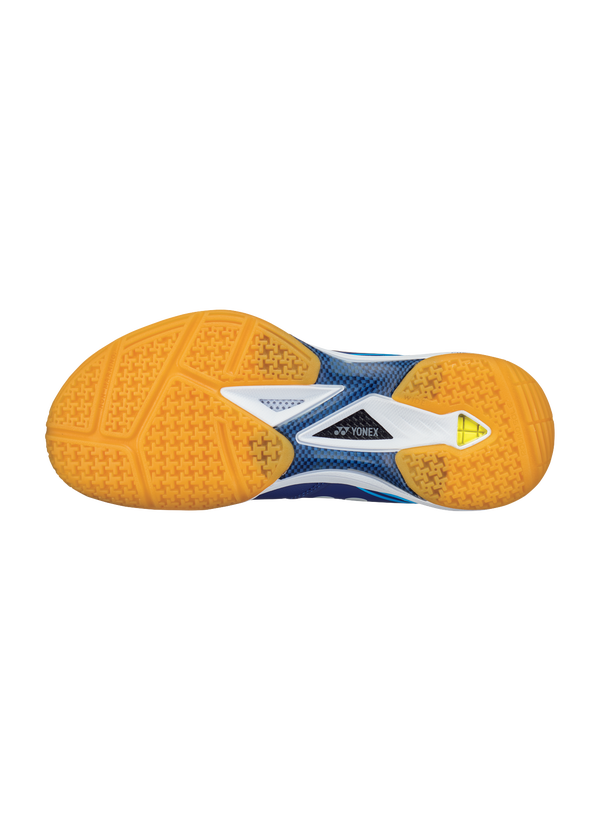
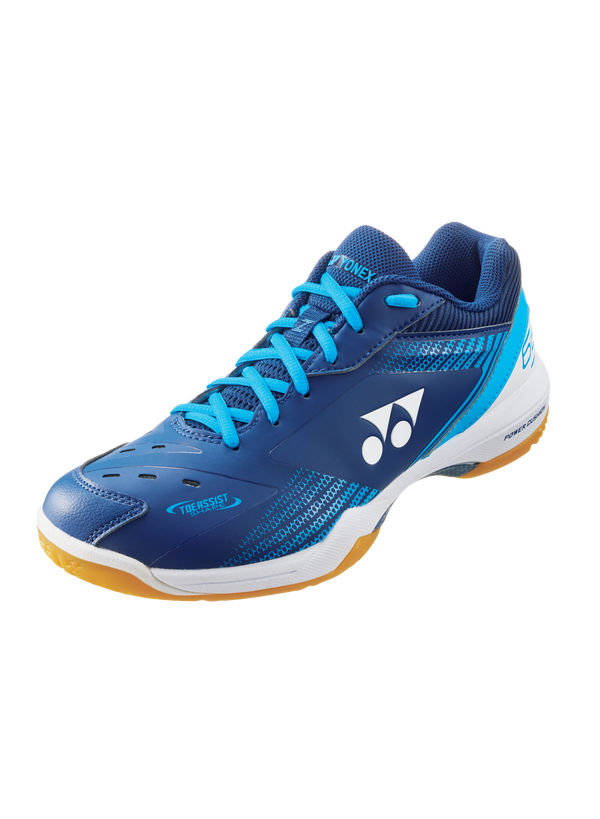
The 65 series is the shoe you see on professional feet more than any other, and the Z3 is its most complete form: Power Cushion+ where landings land, a graphite plate through the midfoot, and a fit menu — standard, slim and wide — that almost no rival matches.
The recipe works because it refuses to pick a side. Power Cushion+ in the heel takes the sting out of jump landings and deep lunges, and Yonex builds it to rebound rather than just absorb, so the shoe gives a little back on the recovery step. The Power Graphite Lite plate keeps the midfoot from twisting when you plant and turn, while the Lateral Shell — a reinforced section on the outside of the forefoot — stops the shoe rolling at the edge of the sole during exactly the lunges that end rallies. Toe Assist shaping up front supports the midfoot and heel and reduces pressure on the big toe, a small detail you feel in the third game, not the first.
Who should buy it? Almost anyone who plays regularly and wants one shoe that does everything well: fast enough for doubles, cushioned enough for singles, durable enough for a full season of drag-heavy lunging thanks to the PU leather sections over the toe. The fit range is the clincher — narrow feet take the Slim, wide feet take the Wide, and nobody has to compromise. If out-and-out lightness is your religion, the Aerus Z2 below beats it; if you want the most planted stability Yonex makes, look at the Eclipsion Z3. For everyone between, this is the reference shoe of the category.
Pros
- Complete package: cushioning, stability and grip in one shoe
- Standard, slim and wide fits — rare at this level
- Lateral Shell genuinely helps on hard lunges
- Graphite plate keeps landings planted
Cons
- Not the lightest shoe here — speed purists have the Aerus
- Flagship pricing tier
As an Amazon Associate we earn from qualifying purchases.
Yonex Aerus Z2
240 grams of pure footwork speed
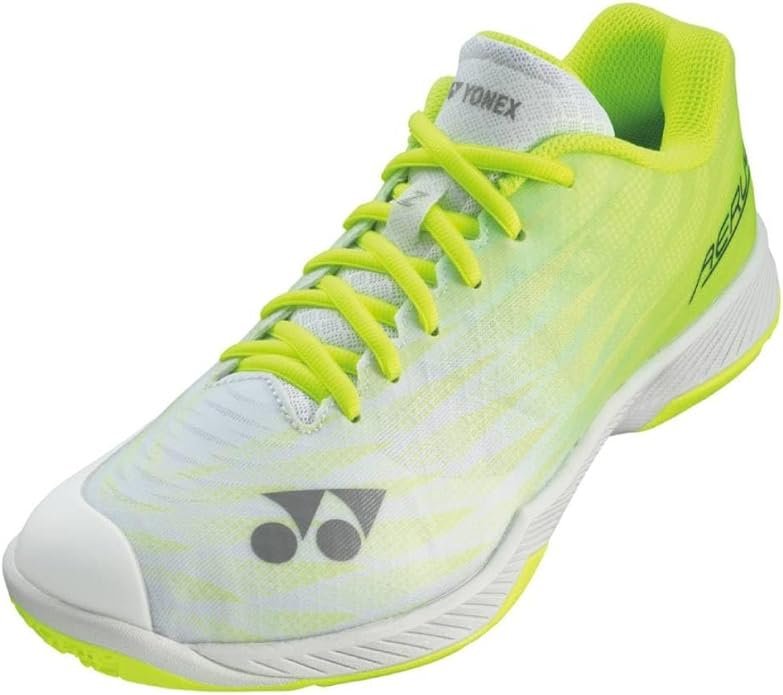
The Aerus line exists for one job: disappear. At roughly 240 grams per shoe (Yonex’s figure, 26.0 cm), the Z2 is the lightest badminton shoe Yonex has ever made — and unlike earlier minimalist shoes, it keeps real cushioning and a graphite stability sheet while doing it.
Every component is a weight decision. Feather Light X is Yonex’s lightest midsole material — the brand rates it 12% lighter than the compound in the previous Aerus — and it still returns energy rather than feeling dead. The upper is a single seamless piece fusing Durable Skin Light with Double Raschel Mesh, made entirely from recycled materials, so there are no stitched overlays adding grams or hot spots. Underneath, the Radial Blade Sole arranges its tread like a windmill to spread load and keep grip while the shoe stays low and flexible.
The honest trade-offs: you give up the armoured, locked-down feel of the support shoes. The Aerus is built for players who win with recovery speed — doubles defenders, front-court interceptors, anyone whose split-step is their best shot — and it asks your ankles to do more of the stabilising work. Heavier players and heavy trainers will likely prefer the structure of the 65 Z3 or P9200 III. But if your game is speed and your feet are healthy, nothing else on this page feels this fast, and the Wide version means wide feet no longer have to sit out the lightweight category.
Pros
- Lightest shoe here by a wide margin — 240 g
- Power Cushion+ retained despite the diet
- Wide model available, unlike most speed shoes
- Seamless upper, no stitch hot spots
Cons
- Least lateral armour of the Yonex pair here
- Not the pick for heavy players or sore ankles
As an Amazon Associate we earn from qualifying purchases.
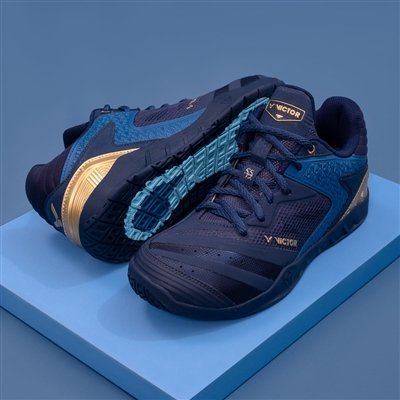
Victor P9200 III
The support flagship — built like protective equipment
Victor’s P-series is the Support line, and the third-generation P9200 is its flagship: a drop-in midsole with tri-arch pressure equalising, an armoured KPU toe, and a wide U-Shape 3.0 last. It is the shoe for players who land hard, train often and want their joints looked after.
The clever part is the drop-in midsole: the insole and midsole are one unit shaped with Victor’s Tri-Arch system, which supports all three arches of the foot, lifts the outer rim and cups the heel. Pressure spreads evenly instead of spiking through your heel and forefoot, and the raised rim physically helps keep the foot centred during lateral loads. The foam itself pairs HYPEREVA with a NEO DUPLEX wedge — bouncier under the forefoot, firmer and more stable towards the heel, angled to ease the load through knees and ankles across thousands of lunges.
This is deliberately the opposite philosophy to the Aerus Z2. You feel the structure: the shoe is planted, protective and confidence-inspiring rather than barely-there. Singles players, heavier players, coaches who live on court, and anyone nursing knees or ankles will get the most from it — including on hard PU courts where thin shoes punish you. Pure speed players will find it more shoe than they need. Colourways rotate, including a blue-and-gold anniversary edition of this same model; the shoe underneath is identical.
Pros
- Best joint protection on this page
- Tri-Arch drop-in midsole spreads landing pressure
- Wide U-Shape 3.0 last suits broader feet
- Serious toe armour for heavy drag
Cons
- Most structured feel here — not a speed shoe
- Victor’s US stock rotates by colourway
As an Amazon Associate we earn from qualifying purchases.
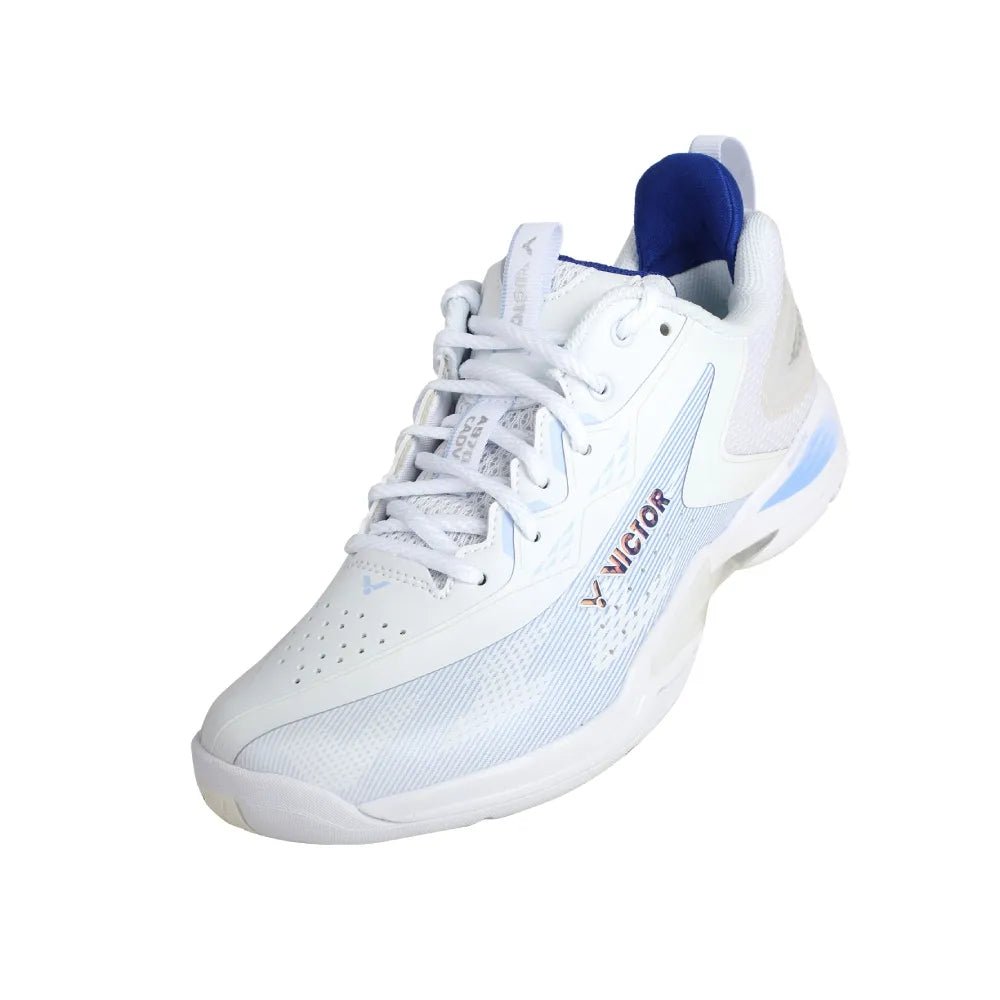
Victor A970cADV
NitroLite foam and dual carbon plates
The A970 is Victor’s All-Around flagship, and the current cADV generation is its most advanced form: a NitroLite midsole, two carbon elements doing two different jobs, ENERGYMAX 3.0 cushioning and the LS-S lateral brace. It’s the technology showcase of this page.
The dual-carbon layout is the headline. One carbon plate works as a stability plate through the arch, cutting torsional strain when you plant and twist; a second plate under the forefoot works as a launch element, stiffening the push-off so more of your effort goes into the next step instead of bending the shoe. Around them, the NitroLite midsole — a nitrogen-infused foam structure — keeps the stack light and resilient, while the NEO DUPLEX wedge layers ENERGYMAX 3.0 over Light Resilient EVA for absorption with a stable base. The LS-S brace on the outside of the forefoot handles the lateral side of the game.
Where the P9200 III is protective equipment, the A970cADV is performance equipment: it suits advanced all-round players who move explosively in every direction and want energy back from the shoe. The V-Shape 2.5 last is a regular fit — wide feet should look at the P9200 III’s 3.0 last or the Wave Claw 3 instead. It’s worn on tour (it’s the shoe associated with Lee Zii Jia’s explosive style), and priced like a flagship, but the technology under your foot is genuinely a generation beyond basic court shoes.
Pros
- Dual carbon plates: stability plus launch
- NitroLite foam keeps a flagship shoe light
- Strong lateral brace for aggressive movers
- V-Durable+ toe for heavy drag wear
Cons
- Regular-width last only — wide feet look elsewhere
- Flagship price for flagship tech
As an Amazon Associate we earn from qualifying purchases.
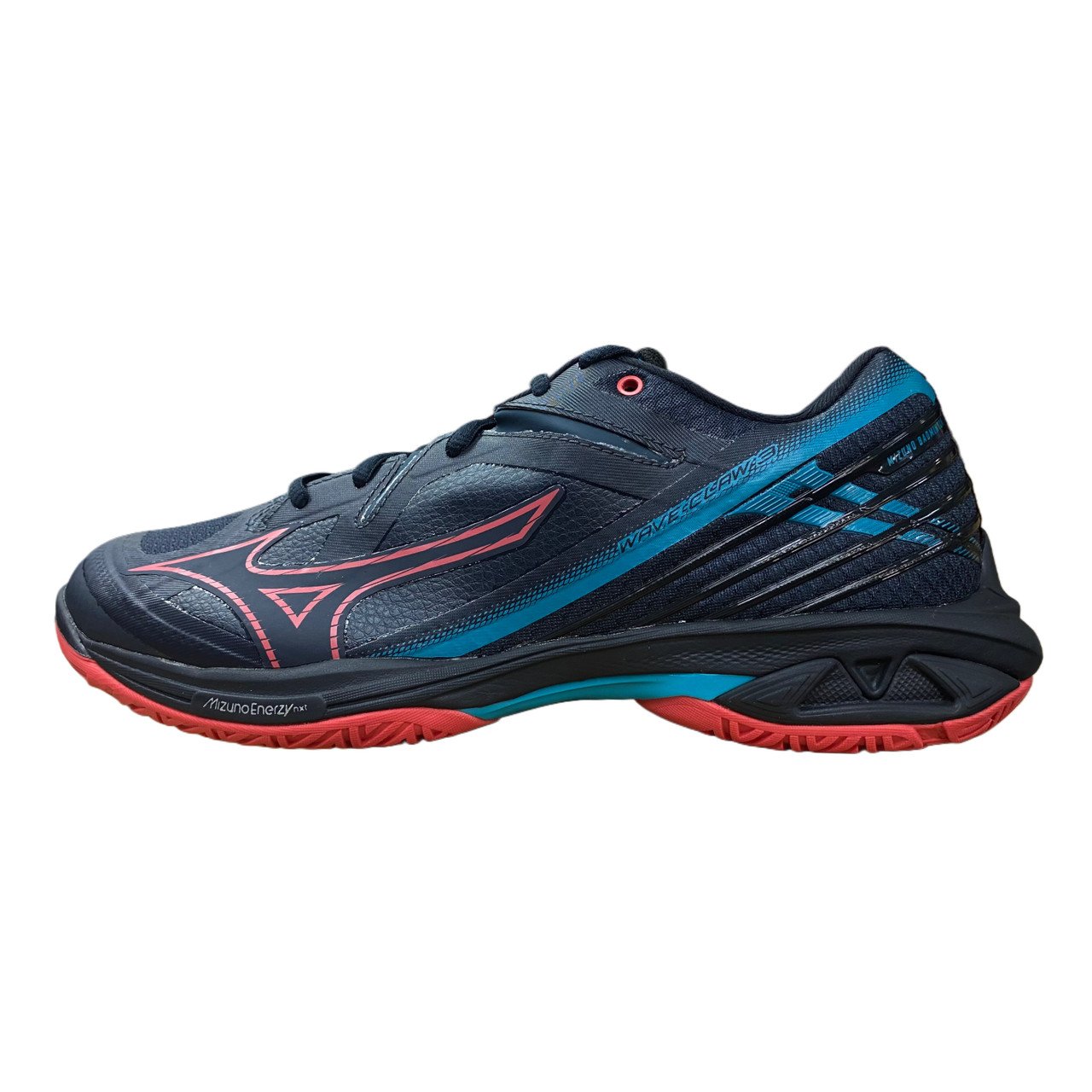
Mizuno Wave Claw 3
A genuine 3E wide fit with a Wave-plate ride
Mizuno is the connoisseur’s court-shoe brand, and the Wave Claw 3 is its premier badminton shoe: a Foam Wave plate for stability, ENERZY NXT foam in the forefoot, and — the reason it anchors this slot — a roomy 3E fitting that wide feet can actually lunge in.
The Wave plate is Mizuno’s signature idea: a wave-shaped plate in the midsole that does two jobs at once — dispersing impact like a cushion and bracing the shoe against lateral roll like a support. In the Claw 3 it’s a Foam Wave, paired with soft, high-rebound ENERZY NXT foam under the forefoot for push-off and U4icX cushioning in the heel for landings. A D-Flex Groove cut diagonally through the midfoot lets the shoe flex the way a lunging foot actually bends, and the wider, flatter outsole extends under the little toe to keep hard turns stable.
Fit is the story, though. The 3E last gives wide feet real volume instead of the usual “size up and swim in length” compromise, and the Dyna-Eyelet Wrap lacing pulls the upper around your foot’s contours rather than clamping one spot. It’s roughly 10 grams lighter than the Claw 2 while keeping the structure. If you’ve spent years squeezing into standard-width Yonex and Victor lasts, this is the shoe to try first — and its all-round balance of cushion, stability and speed makes it far more than a niche pick for the wide-footed.
Pros
- Genuine 3E wide fitting — best here for broad feet
- Wave plate blends cushioning and stability
- ENERZY NXT forefoot feels lively on push-off
- Wrap lacing gives a custom, secure fit
Cons
- Narrow feet may find the volume generous
- Smaller retail footprint than Yonex/Victor
As an Amazon Associate we earn from qualifying purchases.
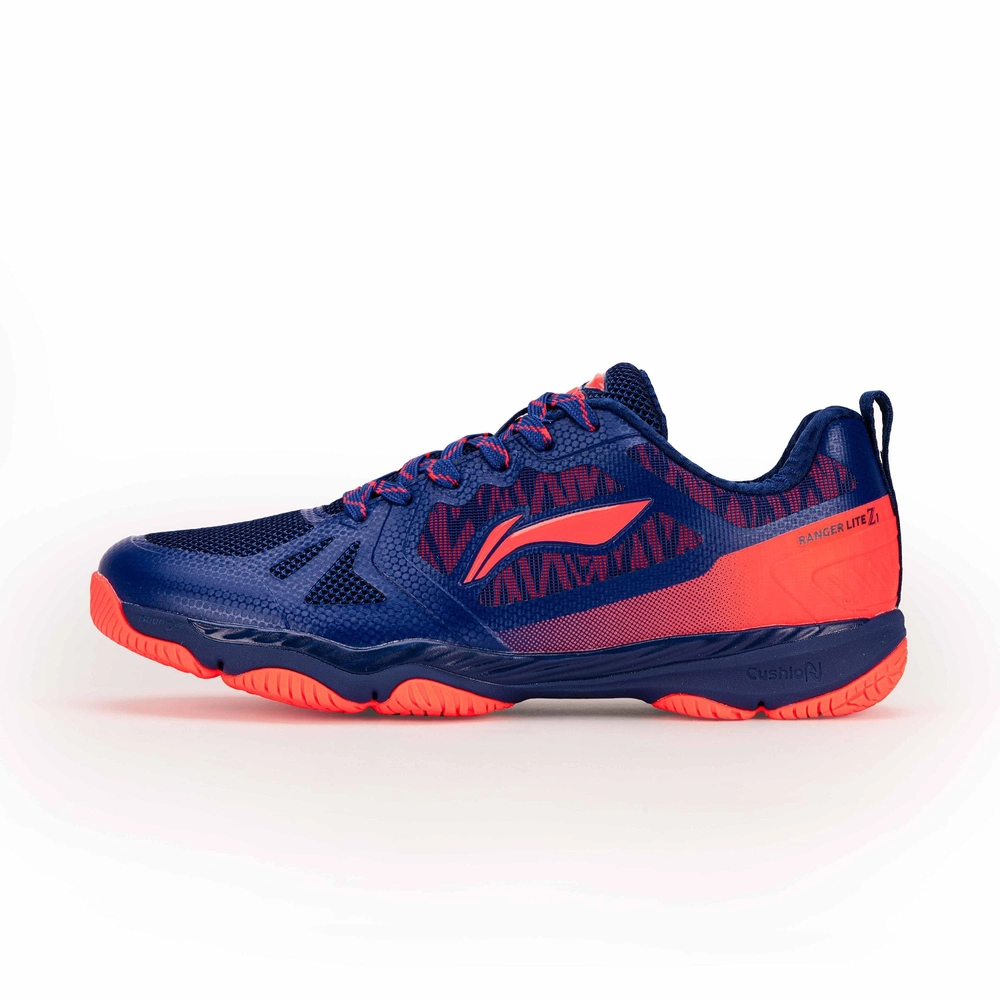
Li-Ning Ranger Lite Z1
LN Cushion tech at a training-shoe price
Li-Ning’s Ranger family is its court-shoe workhorse line, and the Lite Z1 distils it: LN Cushion impact foam, Light Foam to keep the weight at a listed 320 grams, a Tuff Tip armoured toe and a padded ankle collar — the full badminton checklist without the flagship tax.
The Z1’s cushioning story is straightforward and honest: LN Cushion in the midsole absorbs landing impact and returns a portion of it, Light Foam keeps the shoe from feeling heavy across a long session, and a TPU insert in the heel adds the stability that pure foam shoes lack. Breathable mono-yarn panels on the sides move air surprisingly well for a shoe with this much synthetic leather, and the high foam collar around the ankle is a thoughtful touch for players who like a little padding where the shoe meets the Achilles.
Set expectations by tier: this is a value pick, not a flagship rival. You don’t get carbon plates or nitrogen foams — you get correct badminton geometry (low profile, gum-style grip, drag protection) and Li-Ning’s cushioning tech at the price point where most players actually shop. One practical note: Li-Ning’s shoe distribution is led by Asia, so US availability runs through marketplace sellers and sizes can be patchy — if your size is showing in stock, that’s the moment to move. Players who want Li-Ning’s top-end Boom-foam flagships will find them harder to source stateside; the Z1 is the Li-Ning most readers can actually buy.
Pros
- Real badminton tech (LN Cushion, Tuff Tip) at value money
- TPU heel insert adds stability cheap shoes skip
- Padded ankle collar, breathable sides
- Non-marking outsole grips wood and synthetic courts
Cons
- US sizing availability can be patchy
- No plate tech — a tier below the flagships
As an Amazon Associate we earn from qualifying purchases.
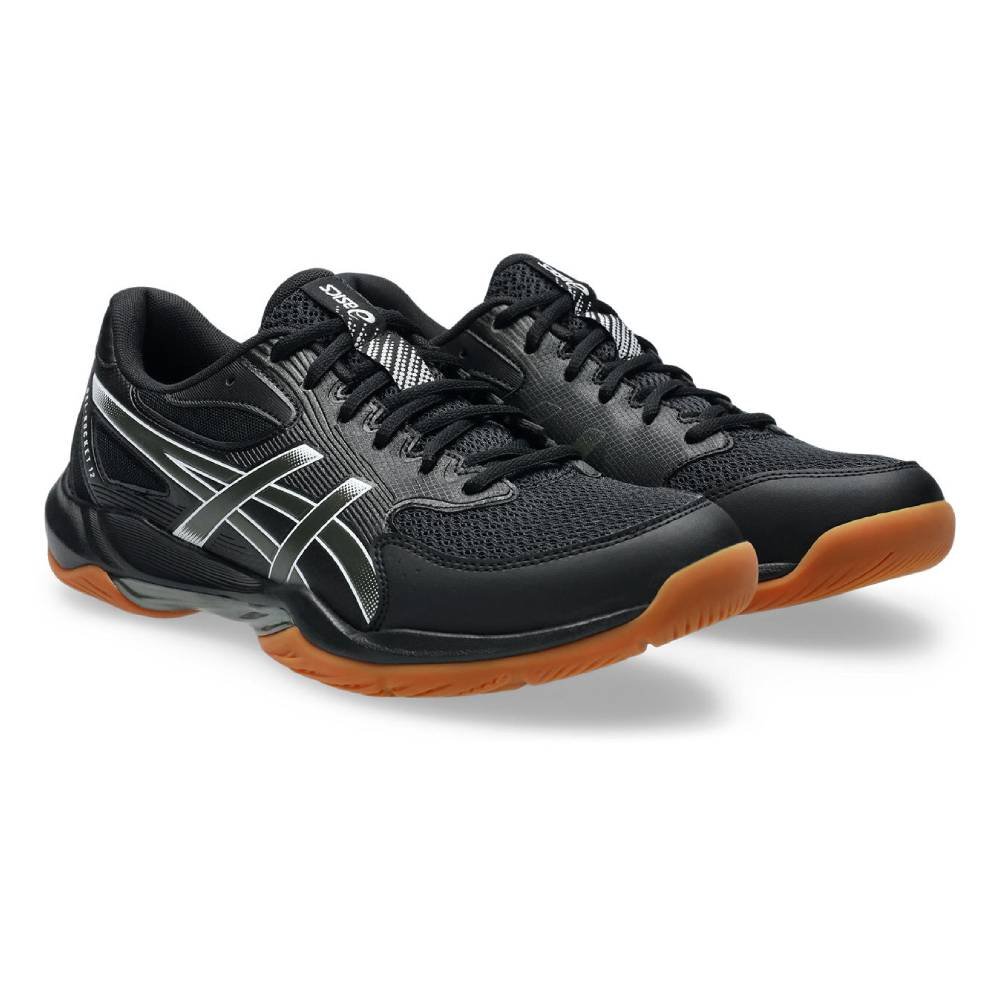
Asics Gel-Rocket 12
The dependable all-court staple, wide fit included
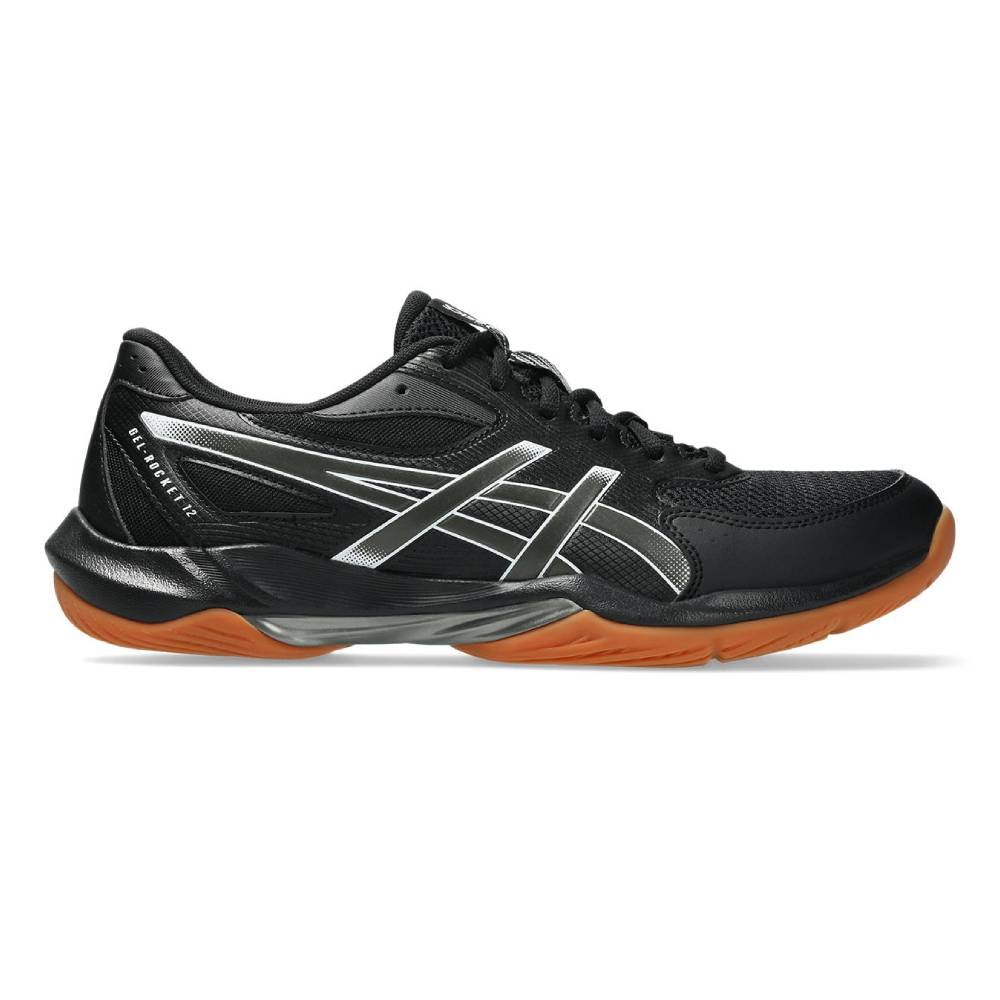
The Gel-Rocket is the shoe half the world’s club players already own, and the 12th generation keeps the formula: forefoot GEL cushioning, a TRUSSTIC midfoot brace, flex grooves for natural movement and a non-marking gum outsole — for badminton, squash or volleyball nights alike.
Asics builds the Rocket as an indoor-court generalist, and for a lot of players that’s exactly right. The GEL unit in the forefoot takes the edge off landings and hard braking at the net, the TRUSSTIC application under the midfoot stops the shoe twisting during quick transitions, and the supportive upper holds the foot through lateral movement without needing carbon or TPU exoskeletons. Flex grooves in the outsole keep the shoe bending naturally, which newer players especially notice — nothing about the Rocket fights your footwork while you’re learning it.
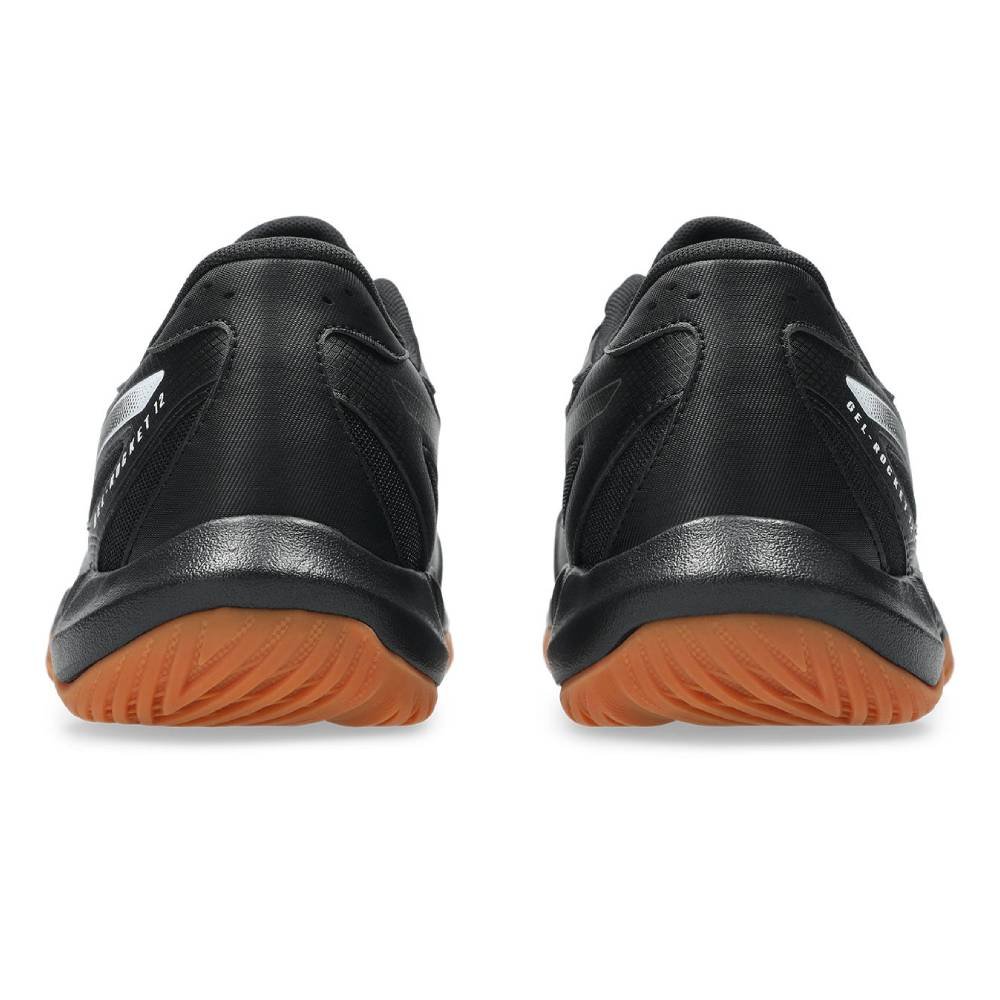
The compromises are the honest ones of its tier: no plate tech, less drag armour than the badminton-specific shoes, and cushioning that’s adequate rather than plush. In return you get the easiest purchase on this page — sold everywhere, in men’s and women’s versions, in regular and wide fits, and priced for people who play three indoor sports in the same week. If you want to go deeper on Asics specifically — Gel-Blade, Court Control and the rest of the range — our Asics badminton shoes guide covers the whole line; the Rocket 12 is simply the one we’d hand a beginner or a budget.
Pros
- The budget benchmark for indoor courts
- Wide fit available — rare at this price
- One shoe for badminton, squash and volleyball
- Sold everywhere, easy sizing
Cons
- Less drag armour than badminton-specific picks
- Cushioning is adequate, not flagship-plush
As an Amazon Associate we earn from qualifying purchases.
Badminton shoes compared
| Shoe | Weight class | Cushioning | Outsole | Fit / width | Best for |
|---|---|---|---|---|---|
| Yonex Power Cushion 65 Z3 | Midweight all-round | Power Cushion+ | Rubber, non-marking | Standard / Slim / Wide | Best overall — every level |
| Yonex Aerus Z2 | ~240 g — lightest here | Feather Light X + Power Cushion+ | Radial Blade Sole | Standard / Wide | Speed, doubles defence |
| Victor P9200 III | Support flagship | HYPEREVA drop-in, Tri-Arch | VSR rubber | U-Shape 3.0 (wide) | Maximum support & cushioning |
| Victor A970cADV | Premium all-round | NitroLite + ENERGYMAX 3.0 | VSR rubber | V-Shape 2.5 (regular) | Explosive all-round play |
| Mizuno Wave Claw 3 | ~305 g | ENERZY NXT + U4icX, Wave plate | XG rubber | 3E (wide) | Wide feet, secure wrap fit |
| Li-Ning Ranger Lite Z1 | ~320 g (listed) | LN Cushion + Light Foam | Non-marking rubber | Regular | Li-Ning value, training |
| Asics Gel-Rocket 12 | All-court staple | Forefoot GEL | Non-marking rubber, flex grooves | Regular / Wide | Budget, multi-sport players |
Fit, sizing and care — getting the most from your shoes
Measure in centimetres, in the evening. Feet swell through the day and through a match. Stand on a sheet of paper, mark heel and longest toe, and buy to that cm figure in the brand’s chart — Japanese brands (Yonex, Victor, Mizuno, Li-Ning) all size natively in centimetres, which removes the US/UK conversion guesswork. You want a snug heel with zero lift, a locked midfoot, and roughly a thumbnail of space ahead of your longest toe: on a full lunge your foot slides forward, and toes that meet the front of the shoe will let you know about it.
Test them like you play. In the shop or on a clean floor at home, do three things: a full forehand lunge (heel should stay planted, toes shouldn’t jam), ten hard lateral shuffles (the upper should hold your foot over the midsole, not spill over the edge), and a few jump landings (no heel slip). Wear your actual playing socks — thickness changes fit more than half a size does.
Care is mostly subtraction. Never machine-wash or tumble-dry court shoes: heat warps the midsole foams and kills the cushioning you paid for. Air them out after every session with the insoles pulled, stuff them with newspaper if they’re soaked, and keep them out of hot car boots. Rotate two pairs if you play four-plus times a week — foams recover between sessions and both pairs last longer. Replace them when the tread smooths out in the forefoot (grip goes first), when the midsole feels dead and packed down, or when the drag patch wears through to the mesh — whichever arrives first. Finally, keep court shoes for the court: gum rubber worn on concrete and car parks picks up grit and loses the bite that makes it special indoors.
Badminton shoe FAQs
What makes badminton shoes different from running shoes?
Three things: the outsole (soft gum rubber with fine multi-directional tread that grips indoor courts and doesn’t mark them, versus lugged road tread that skates), the profile (low and wide with lateral sidewall support for lunges, versus a tall, bevelled heel built to roll you forwards), and the upper (reinforced at the inner toe where lunging players drag their foot, a spot running shoes leave bare). Playing badminton in runners raises your ankle-roll risk and wears the shoes out in the wrong places.
What are the best badminton shoes for beginners?
Start with correct court geometry and a forgiving fit rather than flagship tech. The Asics Gel-Rocket 12 is the classic beginner answer — GEL cushioning, TRUSSTIC stability, wide fit available, and a price that doesn’t punish a new hobby. Beginners who already know they’ll play weekly can start a tier up with the Yonex Power Cushion 65 Z3 and simply not need to upgrade later.
Which badminton shoes are best for wide feet?
The Mizuno Wave Claw 3 is built on a genuine 3E wide last and is the widest native fit on this page. Yonex sells wide versions of both the 65 Z3 and Aerus Z2, Victor’s P9200 III uses a wide U-Shape 3.0 last, and the Asics Gel-Rocket 12 comes in a wide fitting. Avoid sizing up in a narrow shoe to fake width — you gain length you don’t need and your heel starts slipping.
How should badminton shoes fit?
Snug heel with no lift, locked midfoot, and about a thumbnail’s width of space in front of your longest toe. Measure both feet in centimetres in the evening and buy to the larger foot’s cm figure. On court, your toes will splay and slide slightly forward on lunges, so a shoe that feels perfect standing still in the morning can be half a size small by the third game.
Are badminton shoes non-marking?
Real badminton shoes are — it’s a category requirement, not a bonus. Every shoe on this page uses a non-marking (usually gum rubber) outsole, because most halls and clubs ban marking soles. If a shoe doesn’t state non-marking on the listing, don’t risk it on a wooden court.
Can I use badminton shoes for squash, volleyball or pickleball?
Generally yes for indoor court sports — the movement patterns are cousins. Squash players are the natural crossover (the Asics Gel-Rocket 12 is marketed for exactly this multi-court role), and volleyball players often use cushioned models like the P9200 III. Indoor pickleball works too. What you shouldn’t do is take them outdoors: pavement destroys gum rubber and packs the tread with grit.
How long do badminton shoes last?
It depends on hours, not months. Regular players typically replace court shoes when one of three things goes: the forefoot tread smooths out and grip fades, the midsole foam feels packed and dead, or the drag patch on the non-racket foot wears through. Rotating two pairs and keeping shoes off concrete stretches all three timelines considerably.
The verdict
Buy the Yonex Power Cushion 65 Z3 if you want one shoe that does everything at the highest level. Buy the Aerus Z2 if speed is your game and every gram counts. Buy the Victor P9200 III if your knees, ankles or training load demand maximum support. Buy the A970cADV if you play explosively and want flagship carbon-plate tech. Buy the Mizuno Wave Claw 3 if wide feet have ended every other shoe trial. Buy the Li-Ning Ranger Lite Z1 if you want real badminton tech on a training budget. Buy the Asics Gel-Rocket 12 if you’re starting out or splitting time across indoor sports. Whatever you choose: gum rubber, low profile, locked heel — and never let a running shoe talk you out of it.
Affiliate disclosure: Alishuttler.com is a participant in the Amazon Services LLC Associates Program. The Amazon buttons on this page use our affiliate tag — if you buy through them, we may earn a commission at no extra cost to you. Prices shown on Amazon are live and may differ from any figures mentioned here.